Kia Kaha Kia maia Kia manawanui - Be strong Be Brave Be steadfast www.army.mil.nz issue498 | nov/Dec 2018 - NZ Army
←
→
Page content transcription
If your browser does not render page correctly, please read the page content below
Kia kaha
kia maia
kia manawanui
Be strong · Be brave · Be steadfast

  www.army.mil.nz
  Issue498 | Nov/Dec 2018
sma.net
   Nov/Dec 2018                                               By Warrant Officer Class One Clive Douglas

                                                              As we near year end, it is timely to
   ISSUE 498                                                  do a stocktake of our private affairs.
                                                              Ensuring our private affairs are
                  Contents                                    in order is linked to being combat
                                                              ready. Is my Will up to date, and
                                           NEWS               does it reflect my current family
          Soldier of the Year 02                              circumstances? Am I on track for
     Volunteer of the Year 03                                 saving for my first home and for my
   5/7 win shooting comp 03                                   retirement? Have I got a certificate                                     an exciting new feature which shows members how their savings
                                                              for my MIBP Tier 1 insurance and                                         are tracking to provide the funds for a comfortable retirement at
                                      people                  is it time to buy more insurance for                                     age 65. This is a very useful tool, particularly for those who are
            Kiwi firefighters in                                                                                                       established in their own home and turning their focus to saving
                   Sacramento
                                 05                           myself or my partner? Do I have                                          for their retirement. Recent Massey University research reflects
                                                              adequate insurance cover for my car,                                     that a couple living in either Auckland, Christchurch or Wellington
Farewell MAJGEN Tim Gall 08                                                                                                            will require between $494,000 and $783,000 in savings for a
                                                              house or contents?                                                       comfortable retirement; those living in other locations will require
        Supporting the SAS
                       16
                                                              The Force Financial Hub provides a range of benefits and                 between $425,000 and $494,000. These figures assume that
MHOV community gathers 30                                     services, aimed at enhancing the financial security of us as             the retiree owns their own home.
                                                              NZ Army members and our families, and much of this is either               For many of us, these figures are a bit frightening. However,
                         operations                           provided for free or at a reduced price.                                 don’t be put off by this. The younger we start saving for our
                                                                You and your partner are able to obtain a free Will or to get          retirement the better, but it is never too late to start saving, either.
                           Antarctica 09
                                                              an out of date Will updated through the Force Financial Hub.             Put your name down for one of the NZDF financial capability
                             Te Auraki                11      Having an up to date Will is important for all of us. In event of        programmes to learn more about how best to accumulate savings;
                                                              death it helps ensure that the MIBP insurances and any other life        and look at what the NZDF KiwiSaver Scheme is able to offer.
                                                              insurances as well as our KiwiSaver funds and other assets are             To find out more about any of these offerings, Google the Force
                             exercises                        paid out in accordance with our wishes, and in a timely manner.          Financial Hub, and share the details with your partner and other
  Aeromedical evacuation                             12       Without a Will, it may take 12 months or more to get assets paid         family members.
                    Ex Whakatipu                     14       out, and they may not go to our intended recipients.                       SMA Jungle Tip: if you do nothing else, at the end of the year
                                                                Each month we are seeing more members using their NZDF                 please ensure you have an up-to-date Will.
                                      EOD            15       Savings Scheme’s funds to buy their first home, and this incudes           As the year ends, AJ and I would like to thank you all for
                              Sari Bair              31       monthly purchases in the Auckland region. Members have access            the continued commitment and sacrifice you make in serving
                                                              to a free mortgage broker service provided through the Force             New Zealand. To those deployed overseas and those performing
        commemorations                                        Financial Hub and they and their partners are able to attend one         duties over the Christmas period our thoughts are with you and
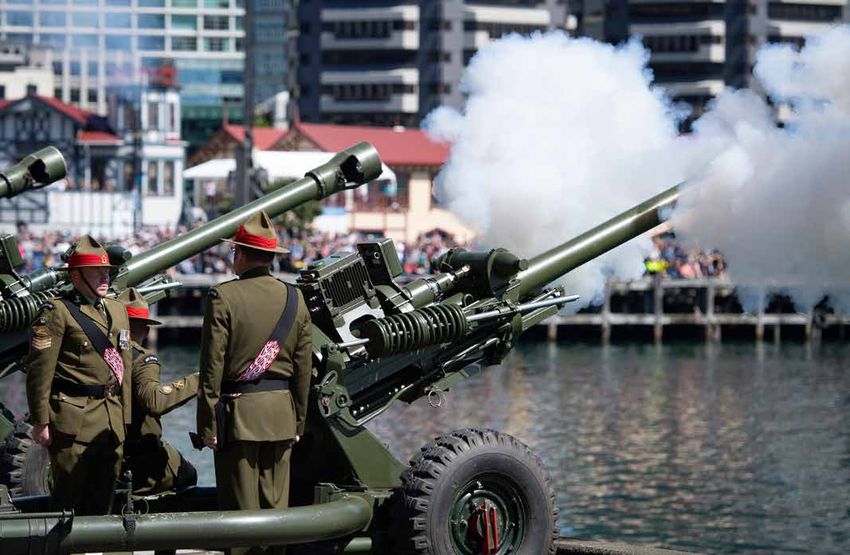
           The guns fall quiet
                            21                                of the NZDF “financing a home” seminars provided regularly to            your families. Look after yourselves, support your families and I
                                                              learn more about how to go about buying a house.                         look forward to working alongside you all in 2019. Rest stand clear.
   Armistice in the capital 22                                  For the 8,600 members of the NZDF Savings Schemes, there is              Nga mihi – see you on patrol.
      Mono 75th marked 25

                                         Sport
                                 Cycling 33
                                                              Soldier of the Year CPL Tom Grant
                              Triathlon 34                    One of the New Zealand Army’s
                                Invictus 36                   outstanding emergency responders,
                                                              CPL Tom Grant, has been selected as
                                                              Soldier of the Year.
                                                              CPL Grant (25) serves in the 2nd Engineer Regiment and is
                                                              based at Waiouru Military Camp as a first responder for the Shift
                                                              in Charge at 4th Emergency Response Troop.
                                                                 The Soldier of the Year award citation said CPL Grant
                                                              had clearly demonstrated the NZ Army’s values of courage,
                                                              commitment, comradeship and integrity throughout the year. This
         The Army News is published for the Regular           included responding to a motor vehicle accident while off duty
         and Territorial Force and civilian staff of the      and providing life-saving first aid to an injured civilian – for which
                                  New Zealand Army.
                                                              he received a commendation from the Chief of Army.
                                     Editor: Judith Martin
                                   Phone: 021 240 8578
                                                                 He is a nationally ranked Emergency Responder who competed
                           Email: armynews@nzdf.mil.nz        in New Zealand’s Fire Fighter Combat Challenge contests and
                               Website: www.army.mil.nz
                               Printing: Bluestar, Petone.
                                                              was selected to compete at the World Fire Fighter Combat
                  Design: Vanessa Edridge, DPA, NZDF          Challenge in Sacramento, USA in October.
      Editorial contributions and letters are welcomed.
   They may be sent directly to the Army News and do             Earlier in the year he was in Northern California fighting fires
   not need to be forwarded through normal command            with a group from Fire and Emergency New Zealand (FENZ),
     channels. Submit them to The Editor, Army News,
                                           DPA, HQ NZDf,      first as crew leader and then promoted to Task Force Leader in
             Private Bag 39997, Wellington, or by email.      charge of six crews. That was his fourth overseas deployment as
    Deadline instructions: Army News is published on
     the third Tuesday of each month, except January.         a fire fighter.
           Please have all contributions to the editor by        When CPL Grant left Thames High School he was looking for
                                    the first of the month.
          Nothing in the Army News should be taken as         a challenging career that would be respectable, active and
            overriding any New Zealand Defence Force          include travel. Both his grandfathers had done compulsory
        regulation. Readers should refer to the relevant
   service publication before acting on any information       military training with the Army and his great grandfather served
                given in this newspaper. ISSN 1170-4411
             All material is copyright, and permission to
                                                              in World War 1.
             reproduce must be sought from the editor.           He joined the Army in February 2011 and has excelled from
                                                              the start, including becoming Top Student in both his Physical            The Chief of Army, MAJGEN John Boswell presents the
                                                              Training Instructors course and Senior Command and Control                Soldier of the Year trophy to CPL Grant.
                                                              Firefighting course.
                                                                 His day job includes equipment checks, training, fitness work         at Waiouru.
                                                              and responding to civilian 111 callouts in the Waiouru/Desert            “We work alongside FENZ who recognise our fire station and
                                                              Road area. Those can include car accidents, medical assists,             respond us to any 111 calls in the area,” he says. “It’s a big
                                                              hazardous substances and scrub fires.                                    turnout area and we can also support the fire stations in Turangi,
                                                                 He’s also on call as a first responder during military exercises      Ohakune, and Taihape.”
NZDF VOLUNTEER
OF YEAR                                                                                                                  A Message From
GENEROUS WITH                                                                                                            chief
TIME AND SKILLS
New Zealand Defence Force                                                                                                of army
Volunteer of the Year Sergeant
Maaka McKinney carries four
pagers – he’s on call 24/7 to
Coastguard Tutukaka, the
Rural Fire Service, St John
Ambulance, and his local fire
brigade in Northland.
Sergeant McKinney is employed fulltime by Fire and
Emergency New Zealand (FENZ), as a trainer conducting
training and development for regional and national
volunteer firefighters.
   He is also employed by the NZDF for Reservist
training and serves as a member of the New Zealand
Army’s 3/6 RNZIR, Northland Company, as the
company’s weapons sergeant. He served more than
20 years in the Regular Force.
   As a local volunteer, he is a Deputy Rural Fire
Controller for Kaikohe District Rural Fire Force, a           SGT Maaka McKinney
member of the district’s long-duration scrub and bushfire
firefighting team, a volunteer ambulance officer with St
John in the Whangarei/Tutukaka area, and an operator         “I wanted to motivate others to
for Coastguard Tutukaka.                                     not be scared or embarrassed
   That strong commitment to volunteering his time and
skills to benefit his local community has earned him the     about having any form of mental
NZDF Volunteer of the Year award for 2018.                   health issue, to put aside that                           As we wind up the year and look
   Sergeant McKinney also raises awareness and funding
for NZDF personnel and first responders who suffer from
                                                             stigma and to take that step                              to 2019 I encourage you all to do
post-traumatic stress disorder and depression.               forward towards healing,” he said.                        three things.
   In May last year he walked and cycled the length of       “And so I decided to take a journey, walking and          Firstly, you should all look back on your service over the
New Zealand with no support crew, living on the side of      cycling through New Zealand with the aim of               past 12 months with both considerable satisfaction and
the road, to help raise awareness for mental health.         encouraging first responders and NZDF personnel to        pride. Kiwis by nature are an unassuming bunch and all
   This year he walked from his home in Tutukaka to          seek professional help when they need it.                 too often we don’t give ourselves nearly as much credit
Auckland with his dog Blaze to compete in the Sky Tower        “I wanted to promote awareness and normalise the        as we should for what we achieve. On operations, during
Challenge, raising money for mental health charities         emotions that come with mental health issues – not to     training here in New Zealand, and as you went about
along the way.                                               try and hide it, but to talk about it and share it.”      your day to day business you all have, time and again,
                                                                                                                       clearly demonstrated just how capable you are. I take
                                                                                                                       great pride, and am often humbled, by just how incredibly
Reservist takes shooting honours in Waiouru                                                                            talented our people are and how professional you all are
                                                                                                                       in the execution of your respective responsibilities. Can
Lance Corporal Mark Lupi, 5/7 Battalion, RNZIR won          Once again 5/7 Battalion, Royal New Zealand Infantry       I ask you all, for a moment, to pause and take stock – if
the prestigious Queen’s Medal Champion Shot from a          Regiment took out top honours for the NZASC team           you’re honest with yourself 2018 has been an incredibly
field of 132 competitors in the 2018 New Zealand Army       trophy and also the Freyberg Trophy with 16th Field        impressive year and we got a lot right.
Shooting Competition (NZASC) in Waiouru in November.        Regiment, Royal Regiment New Zealand Artillery                What is also important however, in reviewing 2018, is
   Described by Land Component Commander Brigadier          winning the Hardham Trophy.                                that we should also reflect on those things we could’ve
Jim Bliss as Army’s premier shooting competition the          Chief Umpire Major Matt Tucker said a lot of work        done better. As soon as we start patting ourselves on the
NZASC is an opportunity for soldiers from any unit to       goes on behind the scenes each year to make the            back and claiming that “this is as good as it gets’ then
compete against each other to win both individual and       competition successful and this year was no different.     we’re kidding ourselves and mediocrity will set in. This
team honours. The numbers in this year’s competition          “The organising team do this work as well as their day   is no more stark a reality than on operations where our
were the largest for some time.                             jobs and they’ve done an exceptional job, as have the      adversary is constantly adapting, and constantly looking
   Shooting is a core skill and small arms excellence,      scorers, umpires, range control officers and all other     to new and innovative ways to defeat us. This then is my
effective application of fire and accurate target           support staff over the duration of the competition.”       second ask. As you wrap up the year in your units, or in
engagement are critical components of survival in the                                                                  slow time this summer over a beer, when you’re out for
                                                            Army News will have more on the shooting competition
contemporary operational environment.                                                                                  a run, or when the fish aren’t biting, challenge the way
                                                            in its February issue.
                                                                                                                       we do things and give thought to how we can be better,
                                                                                                                       faster, and achieve greater effect. Only by a process of
                                                                                                                       honest review will we not only continuously improve as an
                                                                                                                       Army, but maintain our competitive edge.
                                                                                                                          Finally, it is really important that you all take the
                                                                                                                       opportunity to enjoy your Christmas. You can’t keep
                                                                                                                       performing at the pace you do, to the standards that
                                                                                                                       you all are, without regularly recharging the batteries. It
                                                                                                                       doesn’t matter what rank or appointment you hold the
                                                                                                                       coming leave break is important – to you and to your
                                                                                                                       families. Make the absolute most of your time off and
                                                                                                                       look to hit 2019 with the same levels of enthusiasm and
                                                                                                                       energy that you did in 2018.
                                                                                                                          In wishing you and your families a great Christmas I
                                                                                                                       thank you for your continued service, and them for their
                                                                                                                       continued support. Be left in absolutely no doubt it is
                                                                                                                       both acknowledged, and valued.

                                                                                                                       Merry Christmas all

                                                                                                                       Major General John Boswell
 5/7 Top Guns with their support team.                                                                                 Chief of Army
04 armyNEWS

MAXIMISING OUR
WARFIGHTING
CAPABILITIES
 By Land Component Commander Brigadier Jim Bliss

 In the October issue of the                                  2. Securing Resources and Opportunities.
 New Zealand Army News, our
                                                              Some of the resources we need to generate our wide
 Chief of Army Major General                                  range of land outputs reside outside of the Land
 Boswell provided his vision of a                             Component either in other components, Services
                                                              or, at times, Government departments. We also have
 modern, agile, highly adaptive,                              opportunities to leverage partner military training,
 light fighting force.                                        especially capabilities like close air support and high
                                                              end collective training where platforms and larger
 For those who have been in the Service for a few
                                                              formation activities are more readily available overseas.
 years, this will resonate well as it harnesses the best
                                                              It is the Land Component Command’s responsibility
 attributes and characteristics of the NZ soldier and
                                                              to chase these opportunities and resources on behalf
 how we approach the profession of arms. Our Army
                                                              of our Formations and Units. What does this look
 has always been a comparatively light force, but has
                                                              like? Exercise Lightning Matawai (see p.6) with 25th
 punched above its weight by its resilience, adaptability                                                                 4. Building Relationships.
                                                              (US) ID in Louisiana and Exercise Steel Knight with
 and innovation, the calibre of Officers and NCOs,
                                                              MARFORPAC in California are good examples for two           One of the key responsibilities of the Land Component
 and the fighting spirit of its soldiers. For those new
                                                              of our combat units training in environments, and with      is to remove barriers to success. This includes
 to the Service, we are at a unique point in time as
                                                              capabilities, that are not readily available at home.       championing innovation, hooking up organisational
 we “up-gun” our operational capacity and lethality
 through both modernisation and integration of our                                                                        experts with the war-fighters in the unit to progress
 weapons, vehicle and communications fleets, and we           3. Owning the Combat Narrative.                             initiatives and capability integration, growing cross-
 introduce and enhance capabilities to meet current and                                                                   component and cross-military interoperability, and
                                                              The Land Component is responsible for the preparation       shaping understanding of what the Land Component
 future operating environments. As the incoming Land
                                                              of Force Elements and individuals for military              brings to the fight. We all have our part to play in this,
 Component Commander, perhaps the most compelling
                                                              operations, and in particular, combat operations. This      and leveraging the power of a conversation or face
 statement that struck me in CA’s article, however, were
                                                              includes training and preparing for potential mission       to face engagement. As a visiting U.S. Army General
 the last two words – “crack on”.
                                                              sets that might appear outside of our stated outputs        remarked recently “we don’t want to start making
    What does “cracking on” in the Land Component look
                                                              and responses. It is to the credit of our individual        friends when the shooting starts”.
 like? The purpose of the Land Component is to deliver
                                                              training system within TRADOC and our collective               One of the challenges of our Land Force is how
 the land force of today and posture the land force for
                                                              training environment at 1 (NZ) Bde that we have the         do we grow or enhance our lethality? This is the
 tomorrow. To me, that entails four key responsibilities to
                                                              agility to adapt to emerging and complex missions           question I put to our Formation Leadership Teams
 bridge the strategic direction (from Government, NZDF
                                                              with relatively little reorientation or extra training.     earlier this month, and one I would ask you to
 and CA) to the tactical actions and activities to be
                                                              Our NCO and Officer promotion courses are prime             consider. Recent exercises Sari Bair and Phantom
 undertaken by 1st (NZ) Bde and TRADOC (NZ) units at
                                                              examples where these skills immediately transfer into       Major would suggest that through the combined
 home and on operations.
                                                              military capability such as the BPC mission in Iraq,        arms effect of our combat teams (and the robustness
                                                              or Coalition Staff appointments in South Sudan, Iraq,       of our combat support and combat service
 1. Setting the Land Training Environment.                    Sinai or Afghanistan. The Land Component is currently       support elements training in complex scenarios),
                                                              reviewing how we train and prepare for the Integrated       development of multi-mission capability forces,
 This is about creating the environment to empower
                                                              Land Missions set; Joint Land Combat, Capacity              operational experience, and safe but challenging
 and support tactical commanders to prepare land
                                                              Building, Population Protection, and Population Support.    training environment, we are making some good
 capabilities for operations, whilst holding them
                                                              More on this later, but what we are seeking is greater      progress. I would offer that even greater interaction
 accountable and responsible for outputs, performance
                                                              alignment of the Land Tasks and METs with missions,         and interoperability with the Special Operations
 and stewardship of their units. It also includes
                                                              outputs and outcomes, and ultimately more focused           Component, enhancing our personal and unit
 operationalising (and simplifying where possible) land
                                                              individual and collective training; in essence “getting     deployability states, and investment in innovation and
 outputs for both the Regular and Reserve Forces to
                                                              better bang for our buck”.                                  technology on the fringes of our core capabilities, will
 prepare to. We intend to do this by the end of the year.
 If this sounds like mission command and directive                                                                        help pull us toward our goal of mastery of operations
 control, then, yep, you are bang on.                                                                                     in the land domain. I look forward to catching up and
                                                                                                                          hearing your thoughts in the near future.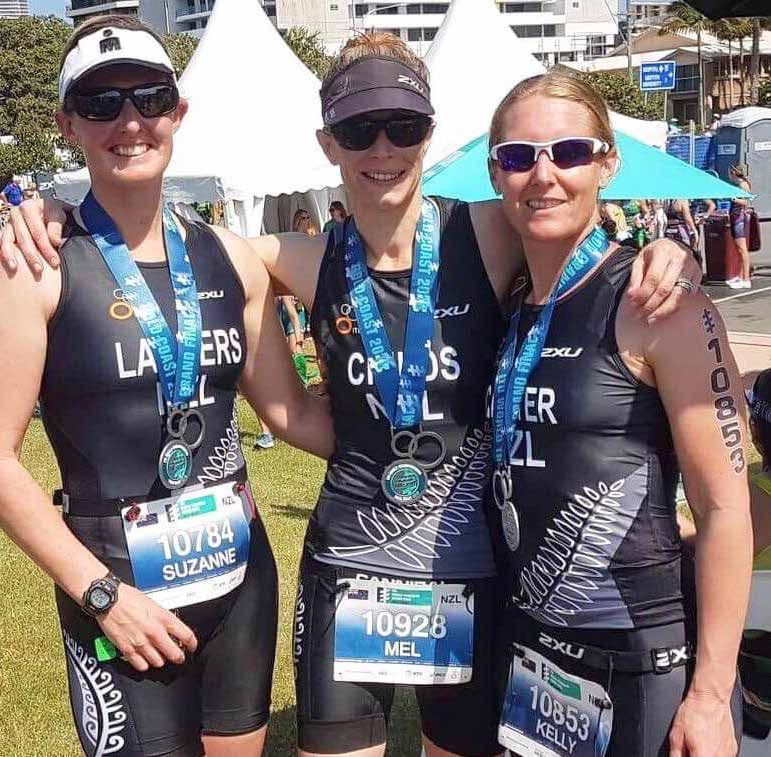
armypeople 05

Kiwi fire fighters compete
in international challenge
Four emergency responders                              competitors from more than 16 different countries.”
                                                         He said the biggest take away for himself was being        Confirmed results for the week long competition:
from 2nd Engineer Regiment,                            able to bench mark on what “the best” actually looks like.
                                                                                                                    Category: Open Male
Corps of Royal New Zealand                               “This perspective will be invaluable for future
                                                       competitors taking on the regional, national and             Aidan Grant
Engineers represented the                              international competitions.”                                 Placing: 54th Overall            Time: 1:38.59
New Zealand Army in the                                  Sapper Aidan Grant ran a time equivalent to that of the
                                                                                                                    Thomas Grant
New Zealand team at the World                          top ranked NZ competitors putting him in a good position
                                                       leading into next year’s regional and national events.       Placing: 76th Overall            Time: 1:41.55
Fire Fighter Combat Challenge                          Sapper Petra Dye-Hutchinson and Corporal Thomas
Championships in Sacramento,                           Grant were on the verge of smashing Lion’s Den runs, but     Dan Klaassen
                                                                                                                    Placing: 144th Overall           Time: 2:00.08
                                                       due to an unfamiliar course they were unable to find the
California. Team leader Sergeant                       fault free run they had trained so hard to achieve.
Dan Klaassen described it as an                          “However they have also positioned themselves in a         Category: Open Female
                                                       great place leading into next season.”
amazing experience.                                      SGT Klaasen said the international bonds that were
                                                                                                                    Petra Dye-Hutchinson
                                                                                                                    Placing: 15th overall            Time: 3:02.85
“For us to compete alongside the 16 other Kiwis        made over the competition have increased exposure
showing the world’s best what New Zealand is made of   to the New Zealand competition platform and should
                                                                                                                    Category: Tandem Female
was amazing.                                           see international competitors visiting New Zealand to
  “New Zealand Army proved to be an asset for the      compete over the coming years.                               The Blondies (Amelia Wood & Petra Dye-Hutchinson)
Kiwi contingent as we faced off against 300 other                                                                   Placing: 7th overall             Time: 2:15.76

                                                                                                                    Category: Tandem Male
                                                                                                                    Mrs Grants Boys (Aidan Grant & Tom Grant)
                                                                                                                    Placing: 15th overall           Time: 1:24.90

                                                                                                                    Category: Co-Ed Tandem
                                                                                                                    Who Wears the Pants (Petra and Aidan)
                                                                                                                    Placing: 17th                   Time: 1:51.82

                                                                                                                    Category: Team Relay Open
                                                                                                                    NZ Army Relay Team (Daniel, Petra, Thomas, Aidan)
                                                                                                                    Placing: Not placed              Time: 1:24.69

                                                                                                                    Category: Team Relay Female
                                                                                                                    New Zealand Female Relay Team (Kiwi Chicks)
                                                                                                                    Including Petra Dye-Hutchinson
                                                                                                                    Placing: 3rd Overall              Time: 1:50.56
                                                                                                                    (Fastest ever by an NZ Female relay team)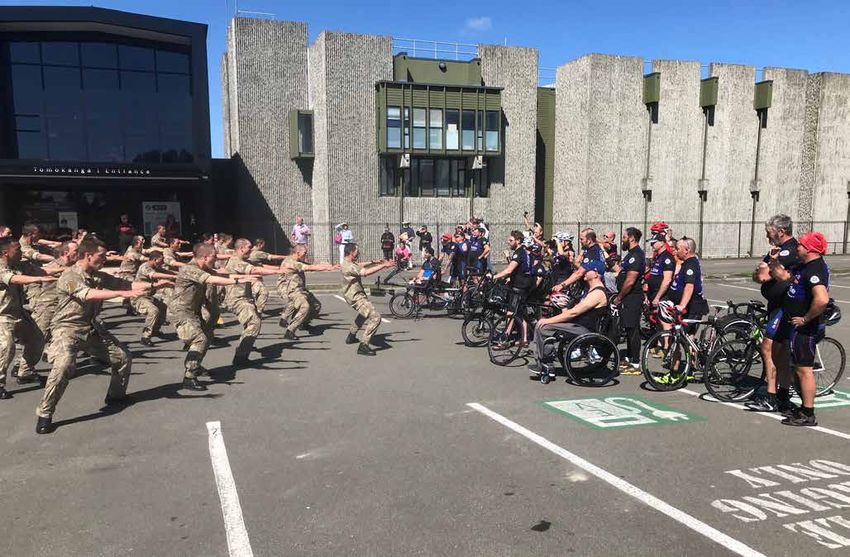
06 armyexercise

 Exercise Lightning
 Matawai 18
armyexercise 07

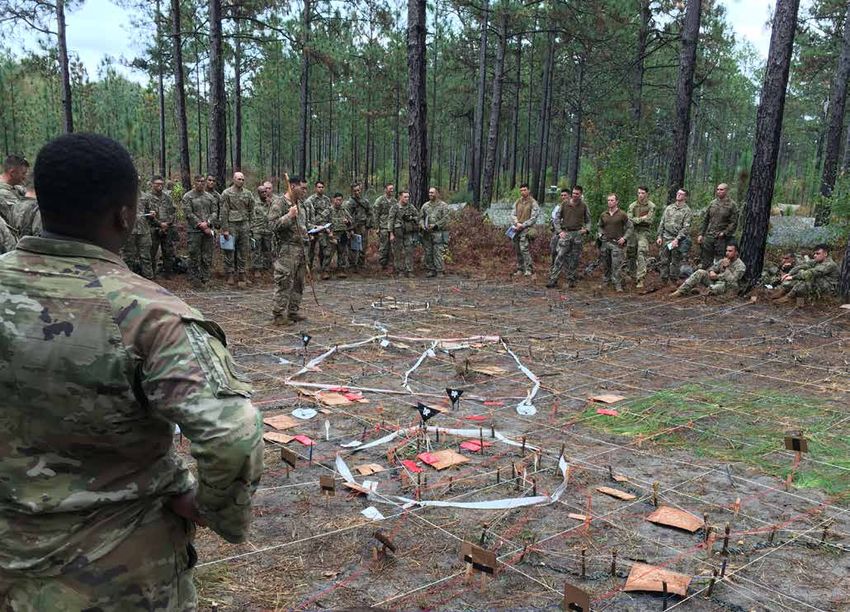
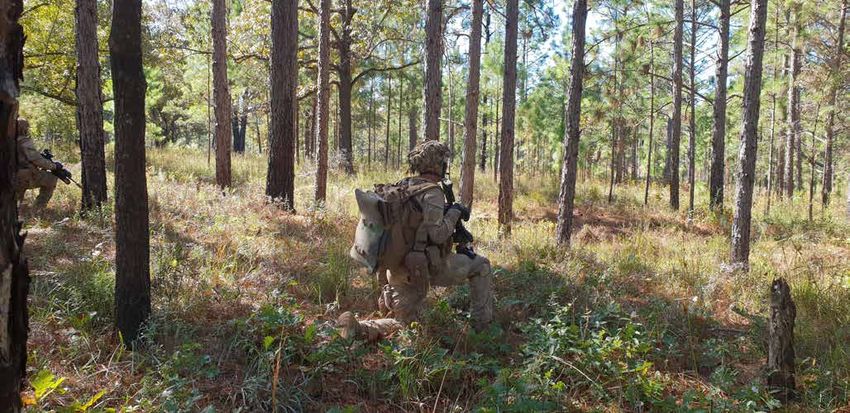
By LT Jono Healey                                        similar in size to Waiouru. Each infantry brigade in the
                                                         US Army rotates through it, on an eighteen month
A Combat Team from 2/1                                   cycle, to be evaluated for operational readiness.
RNZIR has just completed a                                  The New Zealand combat team, based around
                                                         Alpha Company included 140 soldiers from across
two-week exercise with 4400                              2nd/1st Battalion, a joint fires team from 16 Field
United States Army soldiers                              Regiment, and sappers from 3 Field Squadron. It was
in Louisiana.                                            an opportunity for both nations’ armies to practise
                                                         integrating with a coalition partner in an operational
The coalition force took part in Exercise Lightning      setting. The rotation included an 11-day tactical
Matawai at the Joint Readiness Training Centre           exercise involving a free play conventional enemy
(JRTC) in Fort Polk.                                     battalion and a three day Brigade live field firing
  The exercise ranged from population protection         period. The tactical exercise saw Alpha Combat Team
to land combat operations, and involved an array of      facing a mechanised battalion, armed with T-80 main
combat planes, helicopters and artillery, said Major     battle tanks and BMP armoured fighting vehicles with
Craig Thorne, the Officer Commanding of Alpha            a host of artillery as well as drone surveillance and
Company of 2nd/1st Battalion Royal New Zealand           attack helicopters.
Infantry Regiment.                                          It was a very different and challenging environment
  “Among the range of skills tested was our readiness    for the Kiwis to operate in. Alpha Combat Team traded
to deploy quickly from New Zealand to Hawaii and         the open alpine tussock of Tekapo and Waiouru
then onwards to Fort Polk in the United States,” Major   training areas for forested swamps in the American
Thorne said.                                             South. They also faced an enemy with superior
  “We tested our ability to operate with a coalition     mobility and fire power. In this environment the combat
partner, as well as our skills in conducting offensive   team was forced to adapt, we went back to the basics
and defensive manoeuvres – from undertaking combat       of soldiering, avoided roads, patrolled in the tree lines
operations during battalion attacks to dealing with      and hit the enemy when they were vulnerable.
internally displaced civilians and media.”                  The live field firing saw the Kiwis clear an enemy
  The Combat Team travelled to Hawai’i to integrate      town. Before the attack artillery and Apache gunships
with the 1st-27th Battalion, based at Schofield          live fired onto the target area. The perimeter wire was
Barracks. As part of the 2nd Infantry Brigade Combat     then breached with explosives and the infantry poured
Team (2 IBCT) we participated in a rotation at the       through, and cleared house to house. It was a unique
JRTC which is the United States Army’s brigade level     experience for a NZ Army unit to live fire as part of a
testing facility.                                        much larger force, with divisional assets available to
  Fort Polk in Louisiana is home to a three hundred-     support our assault.
strong permanent opposition force and a training area
08 armypeople

 MAJGEN Gall talks to a New Zealand Defence Force soldier                                    MAJGEN Gall and Republic of Fiji Military Forces Commander Rear Admiral Viliame Naupoto
 helping train Iraqi troops in Camp Taji.                                                    during the NZDF’s humanitarian assistance and disaster relief operation to Fiji in March 2016.

  Tributes to Major General Tim Gall’s
  ‘tireless passion, energy and leadership’
By Luz Baguioro, Public Affairs Manager –                    commitment and service as a soldier and as a leader.              In the past 18 months alone, HQJFNZ planned, supported
Joint Forces New Zealand                                        “He has been tireless in his passion and energy in             and commanded missions in response to a devastating
                                                             the role, leading through moments that not only                   cyclone in Tonga, an erupting volcano in Vanuatu, a
Major General Tim Gall                                       challenged our Defence Force but our country generally,”          massive earthquake in Papua New Guinea, bushfires in
highlighted the role of the                                  Air Marshal Short said.                                           the Chatham Islands, the Coromandel and Christchurch,
                                                                Under Major General Gall’s command, the NZDF
New Zealand Defence Force                                    launched three large humanitarian assistance and
                                                                                                                               floods in Canterbury and Otago, and an earthquake and
                                                                                                                               tsunami in Indonesia, among many others.
as an enabler of New Zealand’s                               disaster relief operations – Vanuatu in the aftermath of             “For me, there is no greater honour than to serve our
                                                             Cyclone Pam in March 2015, Fiji after Cyclone Winston
foreign policy when he handed                                in February 2016, and Kaikoura in the wake of the
                                                                                                                               country and it has been a privilege to command our joint
                                                                                                                               forces,” said Major General Gall, who had served as the
over command as Commander                                    devastating earthquake in December 2016.
                                                                                                                               Commander Joint Forces New Zealand since March
Joint Forces New Zealand and                                    Major General Gall also oversaw the start of
                                                                                                                               2014 and is retiring after a distinguished 40-year career
                                                             New Zealand’s Building Partner Capacity mission in Iraq
completed 40 years of service in                             in May 2015. Together with Australian Defence Force
                                                                                                                               in the NZDF.
                                                                                                                                  “Apart from managing 17 missions overseas, we at
the military at the end of October.                          personnel, NZDF troops have helped train more than
                                                                                                                               HQJFNZ are at the sharp end of the NZDF’s response to
                                                             39,000 Iraqi soldiers and Federal Police over the past
“Our work not only helps New Zealanders but also             three years.                                                      crisis in New Zealand and across the region,” he said.
people in other countries where we operate. We carry            During his tenure, the NZDF expanded its contributions            “I have been privileged to serve with our men and
the New Zealand flag wherever we serve,” he said.            to the United Nations peacekeeping missions in Africa, the        women in uniform, our civilian staff as well as our civilian
  In a ceremony at Headquarters Joint Forces                 United Nations Command Military Armistice Commission              officials and coalition partners. The past 40 years have
New Zealand at Trentham, Chief of Defence Force Air          in South Korea, the mentoring mission in Afghanistan and          been extraordinary and I will always cherish my time in
Marshal Kevin Short paid tribute to Major General Gall’s     other coalition operations in the Middle East.                    our Defence Force.”

Strong NZ and PNG Defence Force bonds
behind APEC support
Story and photo by AB Kieren Whiteley, ADF                   bonds and laid the foundations for a well-oiled partnered         PNGDF colleagues.”
From freezing in the snow together in the trenches of        task force.                                                       JTF658, under the command of Australian Army officer,
Waiouru to baking in the harsh Port Moresby sun, Major         “Knowing Ezron and Adrian for eight years has allowed           Major General Paul McLachlan, provided security support
Ezron Dekatavara, Major Adrian Soti and Major Dominic        us to communicate effectively to drive our combined task          to Papua New Guinea for the hosting of APEC 2018.
Wylie have shared a lot in eight years.                      force further than anyone thought possible,” he said from           Through the work of NZDF liaison officers and their
   They can now add the delivery of a safe and secure        the JTF658 headquarters in central Port Moresby.                  counterparts from Papua New Guinea, Australia and the
Asia Pacific Economic Cooperation (APEC) 2018                  “We’ve all done the same training, we all talk the same         United States, JTF658 and Joint Task Force Kibung – the
Leaders’ Week to their list of common experiences.           language, and this has made the Joint Task Force an               PNGDF’s contribution to the host nation’s Joint Security
   Major Wylie from the New Zealand Army and his Papua       enjoyable place to walk into.                                     Task Force – ensured the largest event ever held on
New Guinea Defence Force (PNGDF) counterparts,                 “I and the other NZDF liaison officers have been in             Papua New Guinea soil went off without a hitch.
Major Dekatavara and Major Soti, formed part of a small      Port Moresby for several months, and the joint planning             APEC was established in 1989 to promote free trade
contingent of liaison officers who worked side-by-side       and execution would not have been possible without                throughout the Asia-Pacific region and comprises 21
under the multinational Joint Task Force 658 (JTF658).       the strong personal relationships we all share with our           Pacific Rim member-economies.
   “The bonds we’ve formed over eight years or so have
made for a very open and honest working environment.
I think that has definitely contributed to the success we
have seen at APEC,” Major Dekatavara said.
   “Dominic and I have been great sounding boards for
each other, and that has helped to ensure free and open
communications.”
   “This was the first time PNGDF personnel had
worked in a headquarters of this size, so it was a great
experience that was beneficial for everyone involved.”
   The three officers first met at the New Zealand Army’s
Officer Cadet School in Waiouru, where they instructed
the commissioning course together in 2010. Their paths
have since crossed numerous times throughout their
careers, leading up to their most significant challenge to
date – APEC 2018.
   The New Zealand Defence Force (NZDF) and the
PNGDF have had ongoing training commitments for
many years, mainly with the Incident Response Group, to
                                                              New Zealand Army officer Major Dominic Wylie (centre) and his Papua New Guinea Defence Force counterparts Major Adrian
help develop niche capabilities within the PNGDF.             Soti (left) and Major Ezron Dekatavara formed part of a small contingent of liaison officers who worked side-by-side as part of
   Major Wylie said this relationship had built lasting       a multinational force protecting world leaders who attended the APEC summit.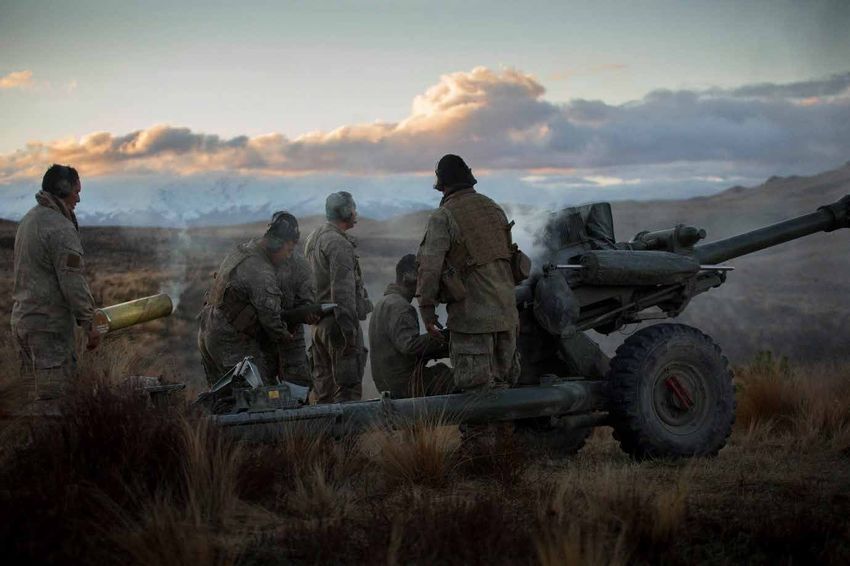
armypeople 09

Army chef helps plan
Christmas feast
in Antarctica
by Luz Baguioro, Public Affairs Manager –                 “Supplies are delivered by ship to Antarctica only once
Joint Forces New Zealand
                                                          a year so we have to make do with what we currently
Christmas lunch can be                                    have,” said Corporal Quentin Hathaway, a New Zealand
                                                          Army chef working at Scott Base, New Zealand’s
stressful even for experienced                            permanent research support station on the continent.
cooks. But if you are a chef in                              “If we lack certain ingredients, it’s not as simple as
                                                          popping down to a supermarket to grab a few things.”
Antarctica, where the nearest                                Although fresh fruits and vegetables are flown
supermarket is 4,500 km away                              from Christchurch every two weeks during summer,
                                                          Antarctica-based chefs mainly use frozen vegetables and
in Christchurch, preparing for                            tinned fruit.
the year’s most anticipated feast                            “We cannot have certain vegetables like leeks due to
can be even more challenging.                             the biosecurity risks they pose. We also don’t have any
                                                          meat products that contain bones to reduce on waste,
                                                          which is sent back to New Zealand every year.”
                                                             To avoid a culinary crisis on Christmas Day, CPL
                                                          Hathaway and the two other chefs at Scott Base have
                                                          already begun planning the menu for Christmas. Turkey
                                                          and champagne ham will be the centrepiece of the
                                                          Christmas table, he said.                                     “The first thing I do is bake bread, which is made fresh
                                                             There will also be cranberry stuffing, roast potatoes      every day. I then prepare morning tea, with sausage rolls
                                                          and kumara, brandy snaps, pavlova, Christmas cake             the favourite here.”
                                                          and pudding.                                                    In addition to his kitchen duties, he also forms part of
                                                             CPL Hathaway arrived in Antarctica in mid-October          the Scott Base fire crew.
                                                          for a five-month posting at Scott Base. He helps prepare        On Sundays, his usual day-off, he joins other Scott
                                                          four meals a day – morning tea, lunch, afternoon tea and      Base staff to explore ice caves and historic huts, get
                                                          dinner – for about 85 scientists, researchers and support     up close with penguins and seals or experience being
                                                          personnel.                                                    lowered into a crevasse.
                                                             “Sunday is when they get to enjoy a cooked brunch            “Two of the highlights for me so far were carrying the
                                                          including make-your-own waffles, followed by roast,”          New Zealand flag during the Armistice Day centenary
                                                          he said.                                                      commemoration at McMurdo Station and getting up
                                                             If he is on the morning shift, CPL Hathaway clocks in at   close with Emperor penguins.”
 CPL Quintin Hathaway                                     6am and finishes at 2pm.

   Cover dog Iris
   now mum-of-six

  The NZDF and NZ Police have partnered in a Service      ability to detect a range of explosives that could be         The six puppies are the ‘P’ litter which means all their
  Dog Breeding Programme – with success as Explosives     a threat to NZDF personnel or civilians at home and           names will begin with the letter P (still unnamed at the
  Detector Dog Iris whelped six puppies on 15 November.   overseas. It is hoped Iris’ puppies will themselves           time of printing). Keep a look out in future Army News
  EDD Iris is part of 2nd Engineer Regiment, Corps of     become Service Dogs.                                          editions for more stories on what we hope will become
  Royal New Zealand Engineers and has a highly-trained                                                                  our latest four-legged capability.
10 armymission

The pristine purity of an
Antarctic deployment
Plant operator Corporal Brendon                               Summer (October to late February) is the busy season
                                                              for science, and is the period we are deployed. During
                                                                                                                                scratch or a sprain may need to be seen at the nearest
                                                                                                                                hospital, which is in Christchurch.
Richards, currently working in                                this time it is continuous daylight; I never thought I would         I have been fortunate in that this is my second trip to
Antarctica, sees his deployment                               say I would be applying sunscreen at 2am as I track               the ice. I came down six years ago and always wanted
                                                              across the ice in a bulldozer. At the end of the summer           to return. The place gets under your skin, and the
as a once-in-a-lifetime                                       season, only a few will remain to maintain the base during        experience is like nothing else you can get anywhere in
opportunity.                                                  the winter. Science events do not generally happen in             the world. Emperor penguins at over a metre tall will walk
                                                              the winter as it is continuous darkness and the climate is        up to you and follow you around, and you know you are
We deployed south in October as part of NZDF’s
                                                              less survivable.                                                  standing on deep ocean with only about 1 metre of ice in
Operation Antarctica in support of science carried out at
                                                                 Living on the ice is unique, every impact is kept as           some places under your feet, or in my case a 20 tonne
Scott Base, Antarctica.
                                                              minimal as possible, and nothing can be left to the               dozer. In other places, the ice can be kilometres thick.
  NZDF personnel at Scott Base include two air cargo
                                                              environment. When away from Base, all rubbish must be             The air smells clean, and with no traffic noise or general
handlers, four communications operators, a chef, two
                                                              contained and any spills removed. Even if you need to do          population, the place is silent to the point it is deafening.
plant operators, and a Senior National Officer (SNO)
                                                              your ‘business’, you use a bottle or a bucket and bring it        In the warmer months, the ice may break away in front of
who oversees the team at Scott Base and also a team of
                                                              back for disposal.                                                the base and whales will appear. I have enjoyed meeting
NZDF personnel who deploy to the American McMurdo
                                                                 Surviving the harsh climate requires a lot more                people who come to Scott Base to work and the people
Station 3km away at various stages of the season.
                                                              preparation and thought. From first arriving, we                  who come to Antarctica to study its climate, atmosphere,
  Scott Base is the staging post for New Zealand’s
                                                              experience average temperatures of around -35                     oceans, life, and the ice itself.
science and research events. Researchers come down
                                                              degrees. This means just going outside is not simple;                People from various lifestyles come to work in
and set up, deploy to the field etc. and are able to focus
                                                              it takes time to prepare with smart layering of clothing,         Antarctica for the experience and provide their specialist
on their work, with the Base team providing the logistical
                                                              as any exposed skin will freeze rather quickly. Safety            skills. It is a close team environment at Scott Base, with
and environmental survival support.
                                                              is high priority and every aspect of work needs to be             everyone pitching in to help each other out as some of
  As a plant operator, we are responsible for many
                                                              considered before starting. Materials and equipment               even the simplest tasks take more time and effort to
aspects of the support, maintenance, and upkeep of
                                                              behave differently at these temperatures and more time            do. The footprint of the base itself is minimal, and as
the base and science operations with the use of heavy
                                                              is required for machinery to warm up before use, and              everyone lives in close confines, everyone needs to get
machinery such as bulldozers, a digger, forklift, snow
                                                              moving around must be done slowly and carefully. Even             on well with each other.
groomer, and a loader. The role includes removing snow
                                                              the snow is very dry and fine like dust; it will blow into any       We all make efforts to make the place as homely as
build up from around the buildings and keeping the
                                                              tiny space and sets down firm, almost like concrete. This         possible, as we are away from home for five months, or
roadways open, lifting and moving equipment including
                                                              makes operating machinery here much more intricate                13 months for some people, and with limited comforts
delicate scientific equipment, transporting field camps to
                                                              compared to anywhere else. You may find the engine bay            such as no cell phone reception, no TV (except for the
remote locations by traversing the sea ice, loading and
                                                              completely packed in with snow, or the pile of snow you           news), and very little internet bandwidth (so YouTube
unloading vehicles and aircraft, and processing waste
                                                              push away from a structure will take the structure with it        is out). There are opportunities to go out and explore
for returning to New Zealand. Everything comes back,
                                                              as it has solidified around it.                                   the continent and visit the historic huts from the early
so that we keep this place pristine. We are also involved
                                                                 Due to the remote location, any medical or fire                expeditions, our own ski field to ski or board on, bicycles
with the ship offload at the end of the season in February,
                                                              emergencies are dealt with by personnel on site, as there         for the snow, and there is even a ‘bach’ so you can get
when the fuel and container ships come to resupply both
                                                              is no 111 call centre here. As part of pre-deployment             away for a break.
Scott Base and McMurdo. An icebreaker is needed to
                                                              training, all Scott Base staff train in firefighting, and there      Antarctica is truly an amazing experience.
break a pathway to the bases.
                                                              is a medic on site. However, anything more than a bump,

 CPL Brendon Richards (right) with colleague LCPL Trent Puketapu.
armymission 11
Māori elders, a Māori cultural group and soldiers escort
the returned men across the tarmac.
BRINGING OUR
PEOPLE HOME
By Andrew Bonallack closure in returning them.” After the speeches, the
Americans watch in fascination as the bearers shoulder
Army Driver Herbert Lester the caskets, a completely different style to the carrying The Definitive Answer
Humm and Navy Telegraphist of the heavy refrigerated coffins of the more recently
Major Joanne Wallace, a Regular Forces dentist
dead. The steps of the bearers, two-in, two-out, rather
Peter James Mollison have been than left-right, promotes a rock-steady march out.
based at Ohakea, took part in tranches three and
four, the England and Korean repatriations.
repatriated to New Zealand from The walk into the cemetery is slow and measured, to a
“I volunteered for the repatriation,” she says.
Korea where they have been karakia from kaumatua Ruawhitu Pokaia, and proceeds
gently uphill to the highest point.
“I viewed it as a once-in-a-lifetime opportunity. I knew
buried for more than 60 years. Immediately to one side of Mollison is a plaque
it would be a unique and valuable experience and
something that I could be called on to do in future.”
in memory to another sailor, Able Seaman Robert
The soldier and sailor are the last of 35 New Zealand MAJ Wallace, with Major James Hannah and
Marchioni, who died assaulting a North Korean gun
personnel to be repatriated from six countries during Lieutenant Hao Wu, all NZDF dental officers, were
emplacement in 1951. His body was never recovered.
project Te Auraki. Humm, 24, was killed in 1955 after the tasked with matching the dental records of the
Chaplain FLTLT Russell Bone asks for understanding.
truck he was a passenger in overturned. Mollison, 19, repatriated servicemen. There would be plenty of
“We disturb them so that they may be returned to the
who was posted to HMNZS ROYALIST, died of influenzal circumstantial evidence of a compelling nature prior
land of Aotearoa, the land where Peter’s family longs to
meningitis in 1957. to the dental examination, namely the headstone
meet with him. We pray for his family, that they will be at
“Te hei mauri ora!” Kaumatua Ruawhitu Pokaia’s and cemetery records, but scientifically the dental
peace through this process. May the Holy Spirit settle
speech easily resonates across the terminal. In examination makes a significant contribution to the
their minds and hearts. May the joy of reunion replace
comparison, the voice of General Vincent K Brooks, identification.
the natural concerns of disturbing a loved one.”
Commander United States Forces Korea, is quiet, but “I was very impressed with the work of
Back at the entranceway, in the sunshine, everyone
he matches the dignity and keeps it brief. “Their remains bio-archaeologist Dr Stuart Hawkins. Each dig
seems to consciously release themselves from their
rested in Busan, among other warriors, but it was never was different, and he had to adapt his approach
own thoughts. There’s a realisation that these were the
their home. We pray for their families that they find according to each situation. I found it fascinating,
last bodies out of 35. GPCAPT Carl Nixon, who has led
watching him work with the different soil conditions
all four missions, congratulates the team. “Back home,
to confirm the outline of the grave. Watching the
the families see the ceremony, the caskets marching off,
forensic anthropologists at work was fascinating as
Standing Watch but they don’t get to see your hard work, over and over
well – we couldn’t have done our work without them.”
again. You have exceeded expectations, with extreme
Acting Corporal Nix Vunipola says it was an honour She says the forensic dental identification was
professionalism, massive integrity, and always thought
to be part of the vigil and bearer party for the vital for the operation. “The archaeologists and
about the families. It’s them we have worked for. And
Korean repatriation. anthropologists had a huge part to play, but it was
those we are bringing home, we haven’t considered them
“It was awesome to be given the opportunity. the dental examination that proved the definitive
to be anyone else other than people.”
Once I took in what it was about, it was less about identification. We all respected the role that each
an overseas trip, and more of an honour to do it. other played.”
There weren’t many people getting a chance.” Having three dental experts for two servicemen
She and five other army personnel, and six naval in Korea and two in England might have seemed
personnel, took it in turns in pairs to stand watch more than enough, but everyone had a role to play.
over the two caskets, ensuring they were never left “James had a wealth of forensic experience and
alone throughout their process in Korea and their Hao’s IT abilities were invaluable to the reconciliation
journey home. Much of this took place in a serene process. We had to all agree on each identifying
room near the mortuary at the United States’ feature before concluding the investigation, and this
Yongsan Garrison in Seoul. “We did shifts of six to was a vital part of the team effort.
eight hours. We were told to treat them like they “We were then able to return these soldiers to
were there, and not change the way we acted. We their families, and I was proud to have a played a
stay with them for their final journey, until they met part in bringing their loved ones home.”
with their families.”12 armytraining
Training medical staff
to cope with the worst
The Army and Air Force have
trained 12 new medics and
nurses to prepare to deploy
as part of an Aeromedical
Evacuation (AE) team.
The team has been training for NZDF AE operations
such as a disaster relief missions in the South Pacific or
to support civilian services in New Zealand.
The course was run by the Aviation Medical Unit
from the Directorate of Air Safety and Health from
the Air Force. The course students and instructors
were selected from both the Army and the Air Force.
Senior Instructor Officer Commanding, Northern Health
Support Squadron Major David Greenhough said
Aeromedical Evacuation was an essential capability for
the New Zealand Defence Force. “It is another example
of how Navy, Army and Air Force must work together
to ensure the NZDF meets the expectations set by the
government in the latest defence strategy.”
The team completed their training over three weeks
at Whenuapai and Ohakea. The AE course included
training with both fixed wing aircraft with 40 SQN, and Nursing Officer Lieutenant Lina Wei: a wheelchair!” “We will not be taking this casualty!”
rotary wing 3 SQN. This included practical training and “A scenario during our training involved the situation Everything we learnt in the classroom was leading up
simulation both on the ground and in the air. In the last in ‘Tatooine’, where a natural disaster had struck. to this moment. How do we as a team get everyone
days of the course the team flew multiple missions There were numerous New Zealanders amongst the on board, secured, and ready for take-off within the
including evacuating mass casualties and missions by casualties who needed to be repatriated. We were restrictive time allowance?
day and night. tasked with prioritising and retrieving these individuals. “The experiences I gained from this course was
The aim of the course is prepare NZDF health “On arrival to Tatooine, the team walked into a enlightening and invaluable. The scenario realistically
personnel for the dynamic aviation environment. AMU did scenario where it was utter chaos. There were simulated pandemonium and being overwhelmed with
this by teaching about crew recourse management, the casualties everywhere. Some crying out for help, some the confronted mass casualty. It tested my ability
use of flight rated AE equipment, conducting movement too unwell to call out for themselves. As one of the as an individual as well as a team leader. The mock
of the AE patient and providing clinical management. team leaders, pertinent information was thrown at me scenario helped relieve the fear of the unknown so
AMU is planning to run the course again early next year. from every direction. “There are two priority ones!” that when the scenario next turns into a real time
“There is a 34 weeks pregnant woman who will require event I am all that better prepared.”armyexercise 13 161 Battery on Exercise Sari Bair By Second Lieutenant Gary Dunseath During Exercise Sari Bair, which was a combined arms combat team level exercise conducted recently, 161 Battery provided offensive support throughout through the use of the 81mm Mortar and the 105mm Light Gun. The exercise was an excellent opportunity for 161 Battery to train and display our ability to provide effective supporting fire to a combat team. Exercise Sari Bair was broken down into three phases in which we supported 2/1 RNZIR, 1 RNZIR and QAMR in a series of live firing scenarios over three weeks. Being able to use our skills in a live firing environment, in support of troops, provided a massive increase in training outputs by allowing us to adopt procedures that we do not often get to practise with real troops on the ground, in support of the defence of a Weapon Line and troop commander while Sergeant Toma RA, assumed as well as being able to access new technology such as improving standard operating procedures. command of a gun as a Gun Sergeant. a PUMA RPAS provided by the USMC. As well as a team from 5th ANGLICO USMC, personnel Overall Exercise Sari Bair 2018 was an excellent The exercise tempo also allowed time for additional from the Royal Artillery (RA) and Royal Australian Artillery opportunity for 161 Battery to develop its skills in training such as standing patrols, fighting patrols and (RAA) also joined our ranks and fulfilled various positions support of troops through a live firing activity while cordon and search tasks which provided valuable and within the Battery during the exercise. This included also developing a better understanding of our own enjoyable training. This gave the soldiers, NCO’s and LT Jack Cailes from 4 Regiment, RAA and LT Robert procedures across all areas as a modern, agile, adaptive, officers of 161 Battery opportunity to refresh their skills Shaw RA, who conducted the duties of a weapons deployable light artillery battery.
14 armyexercise

   EX WHAKATIPU II
The recently held Exercise                                   BMS/Sitaware familiarisation for commanders. This
                                                             was also an opportunity for Training Wing to test and
                                                                                                                          elements including Transport, Workshops, Supply and
                                                                                                                          Catering, Combat Health Support, and Force Protection,
Whakatipu tested 3rd Combat                                  continue to develop new Standard Operating Procedures        with support from 4 Sig Sqn. This phase included multiple
Service Support Battalion’s                                  for Combat Logistics Patrols through the conduct of          scenarios for each functional area along with multiple
                                                             Live Field Firing boxes. These boxes graduated soldiers      re-deployments into different locations. The CSST
ability to provide second and                                through pairs fire and manoeuvre, firing from stationary     first deployed to Cromwell for three days, followed by
third line combat service support                            and moving vehicles and culminated with Live Field Firing    Roxburgh, then finally up to an area in vicinity of Kyeburn.

to a Light Task Group (Lt TG).                               Battle Handling Exercises (BHEs). The BHEs saw Force
                                                             Protection platoon and Combat Drivers from 3 Transport
                                                                                                                          These three deployment locations provided varied
                                                                                                                          environments offering commanders the opportunity to
The exercise saw the deployment of a Combat                  Company identifying and supressing targets out to            debate the age-old logistics question of functionality
Service Support Team (CSST) and a National Support           800 metres, conducting break contact drills and fixing       versus defendability. With each deployment the CSST HQ
Element into the Republic of Beccara, a fictitious Area      targets. This capability enables logisticians to protect     tested different configurations ranging from old-fashioned
of Operations in the South Island, dominated by the          and defend themselves while in a kinetic environment         tents and containers, to an inflatable HQ.
Wesso Freedom Army (WFA) an anti-government militia.         to complete the mission. This was the first time in             While conducting Support and Stability Operations
It consisted of 194 Army personnel from 3 CSSB, 2            six years that 3 CSSB has conducted live firing from         the CSST conducted troop movement tasks, established
CSSB, 4 SIG SQN, 3 ER and our Five Eyes partners             vehicles which brought new challenges to commanders          distribution points to resupply forward fighting elements,
from Australia and the United Kingdom, and enabled           and soldiers. These shooting packages ushered in new         conducted forward repair and recovery tasks, conducted
inter-corps and inter-nation operations, including NEA       capabilities for CSS battalions that will be built upon in   key leadership engagements, and route reconnaissance.
capabilities.                                                future exercises.                                            The route reconnaissance tasks were conducted for
   Prior to the deployment into the area of operation, the     The WFA OPFOR scenario consisted of three different        both in and out of exercise and were designed to test
CSST went through a Theatre Induction and Compliance         militia groups each with their own Tactics, Techniques       the CSST’s ability to identify alternate supply routes
phase based out of Tekapo Military Training Area. This       and Procedures (TTPs), Command and Control (C2)              throughout the AO if the primary lines of communication
phase included a New Zealand Defence Force first             structure and motivations. This complex environment was      were interdicted. This also doubled to confirm the
aid course, Combat Life Saver Course re-qualification,       reflected in the BHEs which tested exercise participants     suitability of secondary roads in support of future
conduct of individual, section and platoon training and      both physically and mentally. Emphasis was placed on         real time disaster relief OP AWHINA deployments.
                                                                                            the “strategic Private”       The CSST conducted battle drills triggered by the
                                                                                            mentality with the actions    numerous contacts with the WFA using both active and
                                                                                            of individual soldiers        passive measures. Soldiers were required to engage in
                                                                                            steering scenarios down       conversations with exercise players and conduct a root
                                                                                            different paths. The local    cause analysis to de-escalate conflicts.
                                                                                            population also joined in        An organic Force Protection Platoon was deployed
                                                                                            some scenarios, further       as part of the CSST to provide additional security as
                                                                                            complicating the BHEs.        the tactical situation escalated. They provided a quick
                                                                                            Soldiers had to identify      reaction force for the CSST and security to sub-elements
                                                                                            threats and OPFOR intent      while conducting tasks. The CSST was operating under a
                                                                                            so commanders could           strict set of ROEs which the OPFOR were keen to push
                                                                                            identify the correct course   to the limit to test soldiers understanding of the laws of
                                                                                            of action to be taken in      armed conflict. This helped provide realistic and relevant
                                                                                            accordance with Rules of      training to many junior soldiers who had not experienced
                                                                                            Engagement.                   these complex and fluid environments before.
                                                                                               The exercise tempo            Exercise Whakatipu 2 2018 enabled the testing of
                                                                                            increased as the CSST         Combat Service Support to a Lt TG making use of both
                                                                                            entered the tactical field    a CSST and a National Support Element. The exercise
                                                                                            phase with the fictitious     was a big step forward in the implementation of Combat
                                                                                            Lt TG closing in on the       Driver and CLP TTPs that the unit will look to build on in
                                                                                            WFA’s strategic stronghold    future training. Following on, 3 CSS Bn will look to further
                                                                                            of Dunedin. The CSST          develop its soldier skills and SOP’s for future exercises
                                                                                            deployed into the AO with     and Humanitarian Aid and Disaster Relief missions.
armytraining 15 EOD pers train for all eventualities The Army’s Explosive Ordnance Disposal (EOD) personnel trained recently to ensure they are well versed in dealing with all eventualities. They were tested on various scenarios they may come across in chemical, biological and radiological casualty rescues. This was the first time the team had been tested to this level and the two days of training at Linton Military Camp threw all sorts of dynamic, multi- level, realistic scenarios at them. EOD personnel must train for all eventualities and in all environments to ensure they are ready to deploy into any situations both at home and overseas.
16 armypeople

    1 NZSAS Regiment
    Support Squadron
‘The beauty of being part of
the SAS’s Support Unit is that
everyone earns their place,
regardless if you are a badged
operator, enabler or support
role. This creates a solid work
environment full of motivated
individuals. It helps keep us
honest and ensures everyone is
putting their best foot forward.
One of the unit’s tenets –
Unrelenting pursuit of excellence
– springs to mind.’
That’s the view of an enabler who is part of the Support
Squadron who accompanies the troopers whenever
necessary.
   The 1st New Zealand Special Air Service Regiment’s
Support Squadron is a multi-functional sub-unit made up
of personnel from across the three Services employed
over 17 different trade groups. It supports both business-
as-usual and operational activities of the Regiment.
As Corporal O explains, ‘A posting with the NZSAS is
very rewarding and full of challenges, I tell those who ask,
it’s just a different job within the realm of being within the
NZDF. Not necessarily better or worse than any other
role, just different!’
   On posting, all individuals within Support Squadron
must complete the New Zealand Special Operations
Force (NZSOF) Support Enabler Special Operations                 quarter battle, to list a few. At the completion of SESOT,   of humour and a good dose of humility ingrained in your
Training (SESOT). This course is held over 12 days and           enablers would have met their entry requirements, and        personality you will thoroughly enjoy your time within
is designed to provide individuals with the requisite            this completion and shared achievement provides the          this unit. We all agree there is no “us and them” mentality
skill sets to operate effectively within the Regiment.           foundation of integration in the Regiment.                   up here and have all been pleasantly surprised at how
It covers a wide range of activities, from the physical            Once SESOT is completed, individuals will be               welcoming and friendly all members of this unit have
barrier testing, familiarisation with NZSOF weapons and          introduced to their workplace and job area. Those filling    been to us. There has been an arms wide open approach
equipment, combat shooting package, refreshes medical            enabler roles such as communications, intelligence           to support personnel within the unit and as the NZSAS
skills, and educates individuals on 1 NZSAS Regiment             and medics will move onto more specific training to be       Regiment is well aware most SOF operations require
processes, ethos and values.                                     integrated into the current Operational Squadrons.           non-SOF support.
   Roles within Support Squadron are tri-Service, so for         A normal day sees all personnel down at the gym at
                                                                 0800 hrs for PT Monday–Friday before starting the day’s
those coming from different trades that haven’t had the                                                                       But it’s Auckland!?
exposure to these different elements of training, this is a      work. This can take some getting used to, but after a
                                                                 couple of months, your fitness will be markedly improved.    This one I can attest to as I spent much of my life in the
good opportunity to learn new skills and improve military
                                                                                                                              South Island. We all imagined hours of mind-numbing
proficiency. After initial introductions, individuals move       To help those thinking about a posting within NZSOF,         traffic and latte-sipping locals saying “Auckland’s not that
into two days of physical testing which consists of the          here are some thoughts from current serving Support          bad”. I have to admit (as hard as it may be) I was dead
Army Required Fitness Level (2.4km run, press ups, curl          Squadron personnel that may help dispel any myths:           wrong. As a city there is a reason why quarter of the
ups and pull ups), a Battle Efficiency Test (8km pack
                                                                                                                              country’s population lives here. There is a lot to do, with
walk and generic tests such a body drag, carry, wall and
                                                                 Will I be fit enough to pass Support Enablers                vast areas of coastline and beaches to explore. Fishing
rope climb), 8km Battle run in Patrol Order, finishing Day
                                                                 Special Operations Training (SESOT)?                         and hunting areas are accessible and the summers
One with a basic water swim test. Day Two is an 18km
                                                                                                                              are long and hot. Yes, buying a home might not be an
challenge through hilly terrain.                                 The requirements are well documented on the NZSOF            option for many posting up. But there are nice modern
   The rest of the course moves through an introduction          recruitment page, and the standards are very achievable      military rental homes at a subsidised rate available.
to the combat shooting package, navigation, Special              if you are motivated and put a bit of training in. We have   The operational accommodation regional assistance
Operations mental agility, combat first aid, Conduct             had individuals posted short notice with minimal extra       allowance has also improved this. The barracks have
after Capture Level B, close vehicle ambush and close            training show up and meet all the standards.                 large rooms, and as we know no posting lasts for ever. If
                                                                                                                              living in Auckland seems a deterrent it shouldn’t be.
                                                                 Are my military skills good enough?
                                                                 Generally Regimental initial training and courses use        Always searching
                                                                 the “Crawl, Walk, Run” approach to training. We have         If you have any desire to work within the NZSOF
                                                                 adopted the phrase within the med troop of “mastering        environment regardless of service or seniority, please
                                                                 the basics” as it’s easy in Special Operations to get        discuss this option with your chain of command and put
                                                                 wrapped up in the cool high speed skills. But if you         this in your PDR. More information about the roles or
                                                                 haven’t mastered the basics how can you begin to             specific training can be found on the NZSOF Website.
                                                                 perform the advanced skills?                                     If an opportunity arises where you are in Papakura
                                                                                                                              and want to meet up with someone within your current
                                                                 Will I fit in with the team?                                 trade, this can be organised. There is no secret regarding
                                                                                                                              supporting the NZSAS Regiment, it is a highly demanding
                                                                 This is an interesting question and is difficult to
                                                                                                                              yet equally rewarding posting. Train hard, stay safe.
                                                                 generalise but, if you brook no sense of class, have a bit
You can also read


