Lacquer and Paint Testing Machine Model 202 EM - Erichsen
←
→
Page content transcription
If your browser does not render page correctly, please read the page content below
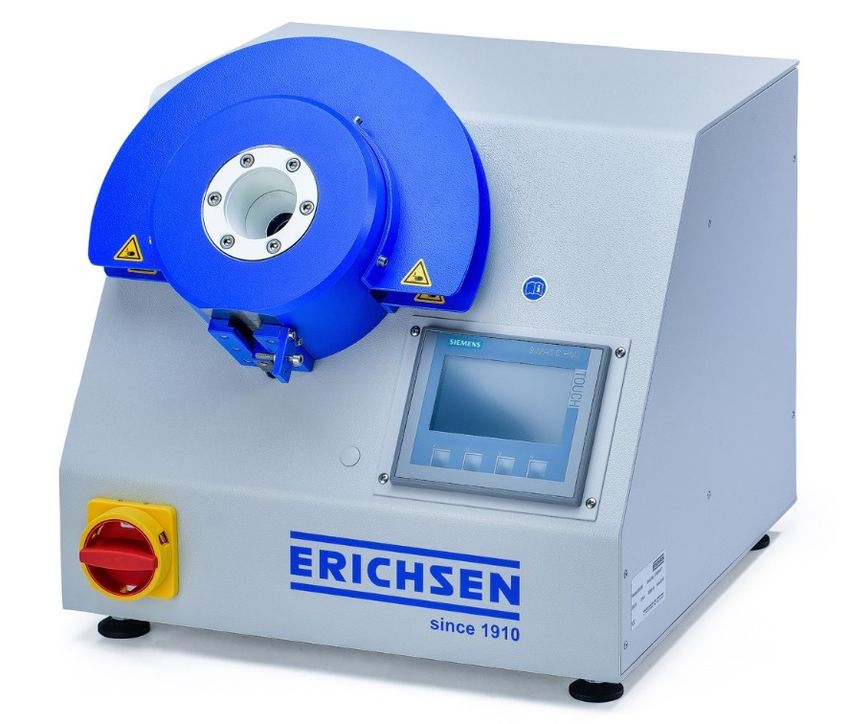
Digital microscope                              Lacquer and Paint
       with holder and                               Testing Machine
         illumination                                Model 202 EM

testing equipment for quality management

                                                        Technical Description

                                                      Equipped with
      ERICHSEN                         DIN EN ISO,    electromotive
      Cupping Test                     BS, NF, SIS    drive and laterally
                                                      opened cylinder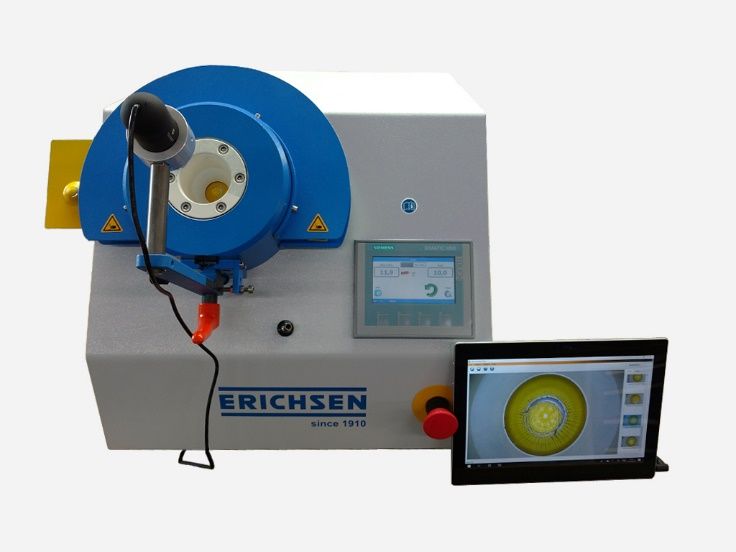
Product
Lacquer and Paint Testing Machine, Model 202 EM,             The "Start" screen displays all the required parameters,
with electromotive drive, equipped with a laterally          such as the drawing distance and the drawing speed.
opened test head, test tool in accordance with DIN EN        After pressing the start button, the specimen is
ISO 1520, electric installation for connecting the           clamped and then automatically starts the "forming
illumination of the microscope as well as a digital          process". The sample surface is subjected to bilateral
display for the acquisition of the ERICHSEN cupping          bending and stretching during the cupping process. As
value, with integrated preselection counter for setting      soon as the first crack is visible on the surface the
the maximum cupping value required. The machine is           movement of the ball punch is stopped by pushing the
operated via touch panel.                                    stop function. The ERICHSEN Cupping Depth reached
                                                             can be seen on the display. On completion of the test
                                                             both the drawing and the clamping piston return to their
Application                                                  starting position, and the specimen panel can be taken
                                                             out of the test head.
This simple to operate Lacquer and Paint Testing
Machine is used for rapid and accurate measurement           The system of the Lacquer and Paint Testing Machine,
of the elongation and adhesion properties of protective      Model 202 EM, is secured by a limit switch and an
paints and other coatings of all types using the             overload protection, when reaching the final position.
ERICHSEN CUPPING TEST
in accordance with
                                                             Accessories
DIN EN ISO 1520                                              Special Test Tool
BS 3900 : Part E4                                            For special cases the standard cupping test tool to DIN
NF T 30-019                                                  EN ISO 1520, which has a 20 mm diameter ball punch,
SIS 18 41 77                                                 can be exchanged against a special test tool (Test Tool
                                                             No. 11) with an 8 mm diameter ball punch. This tool is
on sheet metal specimens up to 1.5 mm thick.
                                                             used in cases where only narrower sheet metal
                                                             specimens (30 mm to 55 mm wide) are available for
The ERICHSEN Cupping Test provides valuable
                                                             testing.
information on the suitability of a coating material for
application in practise. Low cupping test values mean
that the coated product may not withstand elongation
stresses arising, resulting in corrosion of the substrate.

Model 202 EM is versatile and can be further enhanced        Microscopes for observing the test procedure
                                                             (option)
by the various accessories available. The machine is
a valuable tool for the quality control both for producers   The microscope can not be retrofitted and has to be
of paints and coating materials and for users .              ordered together with the base unit.

                                                             For the purpose of observing the test area and deciding
Principle of the Test                                        when a crack has formed, the use of a microscope with
                                                             integrated illumination is recom-mended. Before the
The Lacquer and Paint Testing Machine, Model 202             forming process has started the microscope is focused
EM, is a bench mounted unit with a sheet steel               on the illuminated surface. It is not necessary to adjust
housing, test cylinder and operator’s control panel.         the microscope during the cupping process as the
The coated specimen panel is entered into the opening        microscope holder moves in synchronisation with the
of the test cylinder with the coated surface facing          drawing piston.
upwards. Due to the laterally opening of the cylinder
also larger sheet metal panels can be accommodated
in the test head. On Model 202 EM the sheet metal
specimen is clamped automatically using a separate
clamping piston.

The machine is operated via the touch panel in the front
area. The clear and clear menu navigation via the touch
panel has password-protected levels that protect
against unauthorized access (such as program
changes).
Test parameters such as speed (2 - 60 mm /min) or            Fig. Microscope (02350132)
punch stop are entered before the test begins.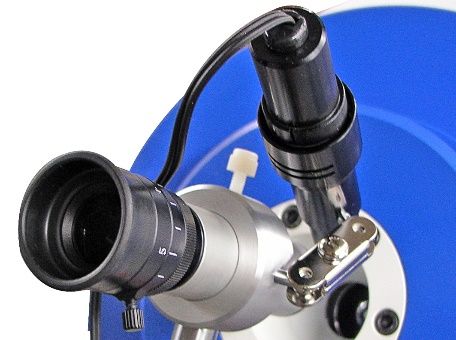
Technical Data
Digital Microscope (option)                                 (Basic machine Model 202 EM)
                                                            Dimensions:                             Width:       470 mm
The microscope can not be retrofitted and has to be                                                 Depth:       530 mm
ordered together with the base unit.                                                                Height:      410 mm
The high-resolution Digital Microscope with                 Weight, net:                                  approx. 80 kg
integrated light (8x white LED, adjustable) to be           Mains connection:         1L/N/PE AC 230 V 50 Hz, 0.5 kW
connected with PC/Laptop is a convenient way to                                             (other voltages on request)
digitally  assisted    visual    detection/collection/
documentation of damage profiles.                           Depth of draw display:
                                                            (Preselection counter)                                  digital
This digital microscope is equipped with a 2 million                                                  (accuracy 0.1 mm)
pixels CMOS image sensor and scalable precision             Drawing speed:                                 2 mm/min to
measurement and is excellently suitable for direct                                                           60 mm/min
image capture directly from the object, with live-view as                                              (infinitely variable)
well as video function for shooting with microscopic
precision.

It is not necessary to adjust the microscope during the                        Order Information
cupping process as the microscope holder moves in
synchronisation with the drawing piston.                      Ord.-No.        Product Description
                                                               26660131       Lacquer and Paint Testing
A 10’’ tablet and software are included in the scope of                       Machine, Model 202 EM,
supply.                                                                       with electromotive drive and a
                                                                              laterally opened test head; operation
                                                                              via touch panel
                                                                               The scope of supply includes:
                                                                               ♦ Test Tool No. 27
                                                                               ♦ Operating instructions

                                                                                     Accessories
                                                              Ord.-No.        Product Description
                                                              00010132        Test Tool No. 11 acc. to EN ISO 20482,
                                                                              for strips 30 - 55 mm wide and 0.1 - 1 mm
                                                                              thick, consisting of ball punch 8 mm Ø,
                                                                              drawing die and sheet holder ring
                                                               00040132       Test Tool No. 27 acc. to EN ISO 20482
                                                                              and DIN EN ISO 1520 (spare part),
                                                                              consisting of ball punch 20 mm Ø, drawing
                                                                              die with 27 mm bore and blank holder
                                                               15970132       Digital Microscope with holder and
Fig. Modell 202 EM mit Digital-Mikroskop und Tablet                           illumination, incl. 10’’ tablet; software
     (15970132)                                                02350132       Microscope with holder and Illumination,
                                                                              10-fold magnification and 17.5 mm field of
                                                                              vision

                                                            Subject to technical modifications.
                                                            Group 1 - TBE 202 EM – VIII/2020
ERICHSEN Cupping Test Values specified in the Conditions of Purchase for Surface
Coatings by some German Public Authorities
DEUTSCHE BAHN AG, TL 918 300 (Technical conditions of purchase for coating materials)
The Cupping Test is conducted on 1 mm thick sheet metal specimen strip after 3 days drying. The cupping test is
repeated after ageing at elevated temperature, on another part of the specimen.
Ageing: The specimen panel is held at 100°C for 3 hours, and is then allowed
to cool for 1 hour at room temperature.
Cupping Test values in mm
Coating Material
Before Ageing After Ageing
Phthalate resin coating 6 6
Phthalate resin coating, silk finish 4 4
Quick drying synthetic resin coatings 6 4
Nitro combination coatings and coatings for rail
6 6
vehicles
Acid hardened clear lacquers 6
Nitro combination coatings for road vehicles 4 4
Metal primers 6
Stoving paints after stoving 4
Dip coatings 6 4
FEDERAL MINISTRY OF DEFENCE, VTL 7100-002 (Interim Technical Conditions of Purchase)
The treatment of surfaces of accommodation equipment made of steel:
Requirement: The Erichsen Cupping Test Value (DIN ISO 1520) must not be less than 3 mm.
DEUTSCHE TELECOM AG, KPZ (X) 41430/1
Coating materials for equipment for Deutsche Telekom AG (Coating thickness 20 µm, sheet thickness 1 mm):
a) before heat treatment Cupping Test Value:
Oil and chlorine rubber coatings 10 mm
Synthetic resin coatings - air drying 8 mm
- stove drying 6 mm
Nitro coatings and combination coatings
depending on specified drying time 4 - 6 mm
b) after ageing at elevated temperature
(72 hours drying, including 3 hours at 100°C)
Oil and chlorine rubber coatings 8 mm
Synthetic resin coatings - air drying 6 mm
The special coatings used for sheet aluminium must reach the following cupping test values on 1 mm thick sheet
metal specimens, as a minimum:
a) before ageing at elevated temperature
- air drying 4 mm
- stove drying 3 mm
b) after ageing at elevated temperature
- air drying 3.5 mm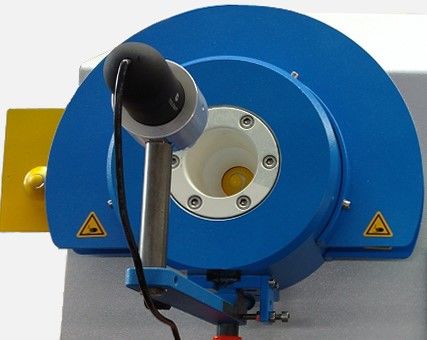

You can also read


