Larger than life - Who is afraid of the Big Bad Russia? - Grassroots vulnerability to Russian sharp power in Slovakia Country Report - Political ...
←
→
Page content transcription
If your browser does not render page correctly, please read the page content below
Larger than life - Who is
afraid of the Big Bad Russia?
G ras sroot s vulnerabilit y to Rus sian sharp power in S lovakia
Countr y Repor t

Authors
Daniel Milo
Katarína Klingová
Dominika Hajdu

                             Budapest
                             April, 2019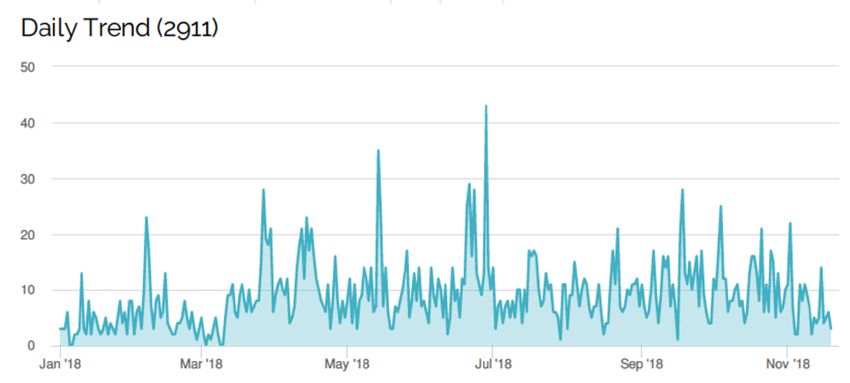
TABLE OF CONTENTS

TABLE OF CONTENTS
FOREWORD                                                                3
EXECUTIVE SUMMARY                                                       3
SLOVAK-RUSSIAN POLITICAL RELATIONS                                      5
THE SLOVAK MEDIA LANDSCAPE AND GEOPOLITICAL ATTITUDES                   6
THE PRESENCE OF RUSSIAN SOFT AND SHARP POWER, DISINFORMATION IN SLOVAKIA7
RUSSIA’S PERCEPTIONS AMONG SLOVAKS – PERCEPTIONS AND NARRATIVES         9

Perception of China in Russia-related conversations                    12
Analysis of Slovak Facebook pages and narratives                       12
    Crimea                                                             16
    1968                                                               17

Slovak public segments on Russia                                       17
DRIVERS OF PRO-RUSSIAN ATTITUDES IN SLOVAKIA                           18

                                          2
Foreword
FOREWORD
The current research presents a novel approach to the understanding of Russian soft and sharp power in
Slovakia. Our analysis is part of a regional project led by Political Capital institute and funded by the Na-
tional Endowment for Democracy that explores the vulnerability and resilience to everyday Russian hostile
influence in Central Eastern Europe (CEE), focusing on the horizontal, online “grassroots” communication
between citizens. An explicit aim of the research was to leave behind the “elitist,” top-down approach of
analyses on hybrid warfare and investigate ordinary conversations taking place day-by-day between citizens
by mapping 686 thousand spontaneous online conversations related to Russia in Slovakia and more than 3
million online messages in the three countries under revision (Slovakia, Hungary and the Czech Republic).
The regional comparative analysis, country reports and policy recommendations are available on Political
Capital’s thematic website titled Russian sharp power in CEE1.
EXECUTIVE SUMMARY
• Of the three countries analysed, online conversations in Slovakia appear to be the most pro-Russian
with 28% having positive sentiments towards Russia. This comes as no surprise as it is in line with other
sociological data confirming relatively high support for pro-Russian views and attitudes in Slovakia.
• While in the Czech Republic and Hungary, the majority of sentiments appearing in the online
conversations were anti-Russian, these constituted only 23% in Russia-related conversations in the
Slovak online sphere in line with other data on Slovak geopolitical attitudes.
• Despite Slovakia having the most pro-Russian online conversations out of the three countries
analysed, neutral perceptions of Russia dominate in online conversations collected by
Bakamo.Social. This can be explained by a variety of factors:
1. The use of mainstream, credible media still dominates over disinformation outlets.
Disinformation outlets play a crucial role in spreading pro-Russian narratives, but their
reach is still marginal.
2. The dominant perceptions of Russia in the observed period were anti-Russian - viewing
Russia as an “Aggressor” and an “invisible Influencer.” These attitudes are mostly prevalent in
mainstream media reporting both on current issues and conflicts such as Skripal poisoning,
the Crimea annexation or the Syrian war, as well as historical events, such as the 1968
occupation.
3. Facebook data confirm that disinformation outlets cover Russia-related news
disproportionately more than mainstream media. Moreover, in their coverage of those events,
they reproduce the Kremlin narratives and try to portray Russia as an ally and a protector.
Out of 40 sources analysed, the two top Facebook Pages posting the most about Russia were
disinformation outlets Hlavné správy and Slobodný vysielač, both pushing various strands
of the ‘mighty Russia’ protector and ally narrative.
4. Furthermore, pro-Russian narratives are promoted by dedicated Facebook groups and pages
of the far-right extremist and paramilitary groups. These project the image of the Russian
Federation as the only protector of the so-called ‘traditional values’ against the decadent
West, which is in line with Kremlin’s strategic objectives.
1 http://www.politicalcapital.hu/russian_sharp_power_in_cee/index.php
3Executive summary
5. Another explanation of the high share of neutral and pro-Russian sentiments could be lin-
ked to potential psychological drivers, namely the Slovaks’ strive for individual or national
survival, geopolitical self-definition or the lack of it, and the inferiority complex. The
existence of such identity crisis is clearly supported by findings of the GLOBSEC Trends
2018 on geopolitical orientation of Slovakia, according to which the majority of Slovaks think
that their country belongs somewhere in between the West and East. This is in contradiction
to the fact that Slovakia, as an active member of the European Union and NATO, is and for
the past 15 years has been a fully integrated member of western international organizations.
However, strategic communication explaining the benefits of the membership of Slovakia in
the EU and NATO is severely lacking in the country.
6. The lack of clear communication about Slovakia’s geopolitical orientation by state
representatives and their own contradictory perceptions and public declarations further
deepen the public’s identity crisis in terms of Slovakia’s geopolitical belonging. This lack of
understanding of where Slovakia belongs to causes feelings of insecurity, which is utilized
by pro-Kremlin actors fuelling pro-Russian perceptions.
7. Both the overall pro-Russian Slovak sentiments and existing negative perceptions of Russia
can be attributed to a limited number of core users based on the analysis. Within 686 000
conversations analysed online, only 20,900 unique users were identified, which potentially
hints at either a strong presence of bots and trolls in the conversations occurring in Slovak on-
line outlets or passionate individuals engaging in related online conversations and spreading
pro-Russian narratives.
4Slovak-Russian political relations
SLOVAK-RUSSIAN POLITICAL RELATIONS
The position of Slovakia towards Russia has historically been that of pragmatic realism. Due to the high level
of energy dependency and strong pro-Russian sentiments in the population (13% of the population would
like to be affiliated with the East),2 Slovakia tried to balance its EU and NATO membership with overtures to
have some kind of special relations with Russia. Since the formation of the current ruling coalition, composed
of the social democratic SMER, the nationalist Slovak National Party (SNS) and the centre-right Most-Híd
party in March 2016, the official position of Slovakia towards Russia oscillated between two poles. First, the
Slovak government programme adopted in March 2016 clearly states that EU and NATO membership are
the cornerstones of Slovakia’s foreign policy.3 This orientation was also supported also during Slovakia’s EU
presidency in late 2016 and confirmed by a 2017 Joint Declaration on the EU and NATO signed by President
Andrej Kiska, Speaker of the National Council Andrej Danko and the then Prime Minister Robert Fico.4 The
declaration was a public pledge of the three highest public officials in Slovakia to support the pro-European
and pro-Atlantic orientation of the Slovak Republic, including support for the measures included in the newly
adopted Security and Defence strategies.
However, this official position was rather short-lived. It is SNS chairman Andrej Danko especially who has
been undermining the official position of the government during his frequent visits to Russian Federation,5
where he met repeatedly with his counterpart Vyacheslav Volodin, the speaker of the Russian Duma, and
criticised the sanctions regime.6 Even more importantly, the final adoption of the strategic security and
foreign policy documents – The Security Strategy and Defence Strategy – in the National Council has failed
so far. According to available reports by Mr. Danko himself,7 this is due to his objection to parts related to
Russia and the Crimea annexation.8
Such policy seems to be the continuation of a long-held SNS party position, which has historically been
against EU and NATO membership and instead advocated for a close relationship with Russia, tapping into
the rather widespread pro-Russian sentiments in the population.
Nevertheless, the official position of the current Slovak government supports the sanction regime and
the Ministry of Foreign Affairs clearly and openly rejected the annexation of Crimea.9 Moreover, Slovakia
played a crucial role at the height of the Ukraine conflict by providing a reverse flow of natural gas to Ukraine,
in effect neutralising Russian attempts to blackmail Ukraine through energy.10 Slovakia also provided hu-
2 GLOBSEC, ‘GLOBSEC Trends 2018’, May 2018, https://www.globsec.org/wp-content/uploads/2018/05/GLOBSEC-Trends-2018.pdf.
3 ‘Programové vyhlásenie vlády SR na roky 2016-2020’ (The Program Manifesto of the Government of the Slovak republic for 2016-2020) ,
16 March 2016, https://www.vlada.gov.sk/data/files/7179.pdf The Programme manifesto was re-adopted by the reconstructed government
after forced abdication of prime minister Fico in March 2018 and re-approved by the National Council on 26 March 2018 https://www.nrsr.
sk/web/Default.aspx?sid=zakony/zakon&ZakZborID=13&CisObdobia=7&CPT=913
4 ‘Vyhlásenie prezidenta, predsedu Národnej rady a predsedu vlády k EÚ a NATO’23 October 2017, https://www.prezident.sk/article/vyhlasenie-
prezidenta-predsedu-narodnej-rady-a-predsedu-vlady-k-eu-a-nato/
5 Mr. Danko visited Moscow three times since 2017, each time meeting with Vyacheslav Volodin, Speaker of Duma and other individuals. See
the list of his official trips abroad available at: https://www.nrsr.sk/web/?sid=predseda/informacie/podujatia
6 ‘Andrej Danko sa v Rusku stretol so šéfom Dumy’, TASR, accessed 18 February 2019 https://www.teraz.sk/slovensko/andrej-danko-sa-v-
rusku-stretol-so-sef/378332-clanok.html
7 ‘Danko prinútil koalíciu stiahnuť strategické dokumenty, ktoré označujú Rusko za hrozbu’, DennikN, accessed 18 February 2019, https://
dennikn.sk/1308036/danko-prinutil-koaliciu-stiahnut-strategicke-dokumenty-ktore-oznacuju-rusko-za-hrozbu/
8 The Security and Defence Strategies of the Slovak Republic were adopted unanimously by the Slovak government on October 4, 2017. The
adopted texts are available at: http://www.rokovania.sk/Rokovanie.aspx/BodRokovaniaDetail?idMaterial=26912 and http://www.rokovania.
sk/Rokovanie.aspx/BodRokovaniaDetail?idMaterial=26914
9 ‘Ministerstvo zahraničných vecí pripomína, že Slovensko neuznáva pripojenie Krymu k Rusku’ Webnoviny, accessed 19 February 2019 (The
MFA reminds tahat Slovakia does not recognise the annexation of Crimea by Russia) https://www.webnoviny.sk/ministerstvo-zahranicnych-
veci-pripomina-ze-slovensko-neuznava-pripojenie-krymu-k-rusku/
10 ‘Foreign Minister pledges to continue reverse flow deliveries to Ukraine’, The Slovak Spectator, accessed on 20 February 2019, https://spectator.
sme.sk/c/20051963/foreign-minister-pledges-to-continue-reverse-flow-deliveries-to-ukraine.html
5The Slovak media landscape and geopolitical attitudes
manitarian aid to displaced persons in Ukraine fleeing the conflict in Donbas and Luhansk. This also enjoys
the support of the main opposition parties - SaS and OLANO. The exception is the far-right Kotleba-LSNS
People’s Party Our Slovakia. Its chair, Marian Kotleba, during his tenure as a regional governor, issued an
open letter to then president of Ukraine Viktor Yanukovych in January 2014, urging him not to resign and
warning him of “the terrorist organisation NATO.”11 Kotleba’s party won 14 seats in the national parliament
in 2016 and Mr. Kotleba was a candidate in the March 2019 presidential elections.
THE SLOVAK MEDIA LANDSCAPE AND GEOPOLITICAL ATTITUDES
Media independence in Slovakia is still relatively well preserved due to the segmented ownership of private
media outlets not necessarily subjected to direct governmental influence. As a result, the media landscape
is quite balanced in terms of content and independent reporting despite media freedom not being in an
ideal state. Generally, mainstream media promote balanced or more pro-Western narratives in line with the
country’s interests and membership in the EU and NATO.
Compared to last year, Slovakia dropped from 17th to 27th place in the World Press Freedom Index rank-
ings due to several factors with a strong impact on societal and political developments in the country.12 First,
it was the murder of an investigative journalist, Jan Kuciak in February 2018, which sparked mass protests
resulting in a government reshuffle involving key members, the resignation of then-Prime Minister Robert
Fico, because the investigation pointed to the murder being linked to Kuciak’s work on political corruption.
Second, a subsequent mobilisation of civil society and increased criticism from independent media journalists
towards the government caused a steep rise of verbal attacks on journalists from political representatives,
including government officials. Third, the replacement of key management personnel in the public service
broadcaster RTVS resulted in the resignations of more than a dozen journalists, many of whom had helped in
improving the broadcaster’s reporting. In their own words, their resignation was caused by the deterioration
of their working conditions, harassment and restrictions to journalistic autonomy.13 Combined with the new
director-general’s links to the Slovak National Party, there were concerns over the possible deterioration of
RTVS’ objective coverage with shifts towards more pro-government or even pro-Russian stances, although
these have not materialised yet.14
In terms of media consumption, the distribution between traditional and new media is more or less
even. According to the Digital News Report, around 80% of Slovaks use TV as well as online outlets as a
source of information.15 Privately owned non-conspiratorial media are the most watched, read and listened
to. Nevertheless, the public broadcaster plays a significant role as a source of information, with their TV
station “Jednotka” being the third and the main radio station “Radio Slovensko” the second most consumed
in the country.16 Except for popular tabloid-style information portals topky.sk and cas.sk, the news outlets
aktuality.sk (news portal where Jan Kuciak was working) and sme.sk (quality journalism, centre-right daily
newspaper partially owned by a Slovak financial group Penta) belong to the most visited as well.17 According
11 ‘Kotleba napísal Janukovyčovi list: Neustúpte!’, Aktuality.sk accessed on 21 February 2019, https://www.aktuality.sk/clanok/245111/
kotleba-napisal-janukovycovi-list-neustupte/
12 ‘2018 Media Freedom Index’, Reporters without Boarders, https://rsf.org/en/ranking#
13 ‘Z RTVS odchádza ďalších 12 novinárov’, Etrend.sk, May 2018, https://medialne.etrend.sk/televizia/z-rtvs-odchadza-dalsich-12-novinarov.
html
14 A director-general of the RTVS is elected by the National Council by a secret vote. Although key decisions related to the management and
finances are controlled by the Council of RTVS (elected in thirds every six years), significant positions such as the programmatic director or a
director of news and reporting sections have changed after the appointment. This makes the institution particularly vulnerable to potential
influences should any openly pro-Russian figures get on the top.
15 ‘Reuters Institute Digital News Report 2018’, Reuters Institute for the Study of Journalism, 2018, http://media.digitalnewsreport.org/wp-
content/uploads/2018/06/digital-news-report-2018.pdf?x89475
16 ‘Public opinion poll of Market & Media & Lifestyle –TGI’, median.sk, January 2019, http://www.median.sk/pdf/2018/ZS184SR.pdf
17 ‘Reuters Institute Digital News Report 2018’, Reuters Institute for the Study of Journalism, 2018 http://media.digitalnewsreport.org/wp-
content/uploads/2018/06/digital-news-report-2018.pdf?x89475
6The presence of Russian soft and sharp power, disinformation in Slovakia
to estimates, the strongest disinformation portal hlavnespravy.sk has around 400,000 real users, which
corresponds to around a half the user numbers of other quality newspapers Dennik N (liberal daily) or
Pravda (centre-left daily).18
The disinformation outlets remain practically the only sources strongly and openly pushing pro-Russian
and anti-Western narratives, so the majority population might not normally be exposed to them. However,
with 80% of the Slovaks using online outlets as a source of information and with a half of the population
on Facebook,19 which is a hub for key Slovak disinformation actors and pages, the reach and indirect impact
through social media can be higher than the numbers of regular readers suggest. GLOBSEC Trends 2017 data
show that around 12% of Slovak respondents mark online conspiracy outlets either as their first or second
most important source of information.20
Surveys have also demonstrated that Slovakia remains the most pro-Russian of the V4. According to GLOB-
SEC Trends 2018, 13% of Slovaks would prefer their country to geopolitically belong to the East. The figure
is strongly influenced by the oldest generation of 65 years and older, of whom almost 23% would position
their country to the East and among whom there is a strong nostalgia for the pre-1989 regime.21
The same survey shows that only 21% of Slovak respondents would ideally position their country to the West
and more than half of the population see their country being “somewhere in between.” In Slovak media,
especially disinformation media, the West is often associated with the United States, which might be one
of the reasons why pro-Western orientation is low in the country despite generally high pro-EU attitudes.
The surveys have been showing stronger anti-US sentiments among Slovaks than Czechs and Hungarians.22
TH E PR E S E N CE O F RU S S IAN SO F T AN D S HAR P POWE R ,
DISINFORMATION IN SLOVAKIA
While Slovakia does not have a significant Russian minority,23 the notions of pan-Slavism and Slavic unity
are quite widespread and used as one of the most important sources of soft and sharp power. Russian soft or
sharp power in Slovakia is based on several factors, combining historic memory, economic factors, political
divisions and current geopolitical and cultural issues.
First, it is capitalising on the nation-building period in the mid-19th century and on the notion of Russia
being a big Slavic brother protecting the small Slovak nation from outside (mostly Hungarian) oppression.
Second, the heritage of the Soviet Red Army liberating Slovakia from fascism and the heavy casualties
suffered in this process is another factor, important especially for the older generation. Culture and sports
are the third factor of Russian soft or sharp power. Frequent cultural events of Russian state-sponsored
groups (such ach the Russian army choir Alexandrov Ensemble or Russian Cossacks) held in Slovakia or the
fact that Slovakia’s best ice hockey team Slovan Bratislava is a member of the Russia-founded Continental
Hockey League (KHL) could also be regarded as a soft power instrument. Fourth, Slovakia is a major transfer
18 Lukáš Kosno, ‘Akú návštevnosť mali najsilnejšie slovenské weby v novembri (poradie a graf)’, zive.azet.sk, December 2018, https://zive.azet.
sk/clanok/136406/aku-navstevnost-maju-najsilnejsie-slovenske-weby-v-novembri-poradie-a-graf/; Filip Struhárik a Radoslav Augustín,
‘Spravodajské médiá dosiahli v marci rekordy, Hlavné správy majú čítanosť takmer na úrovni TA3’, Dennik N, April 2018, https://dennikn.
sk/1086874/spravodajske-media-dosiahli-v-marci-rekordy-hlavne-spravy-maju-citanost-takmer-na-urovni-ta3/
19 ‘Reuters Institute Digital News Report 2018’.
20 GLOBSEC, ‘GLOBSEC Trends 2017: Mixed Messages and Signs of Hope from Central and Eastern Europe’, 2017, https://www.globsec.org/
wp-content/uploads/2017/09/globsec_trends_2017.pdf
21 GLOBSEC, ‘Generation Trends Central Europe: Mosaic of Perspectives’, 2019 https://www.globsec.org/publications/generation-trends-central-
europe-mosaic-of-perspectives/
22 ‘PRIESKUM: Rusku najviac dôveruje z krajín V4 Slovensko’, TASR, May 2016, http://www.teraz.sk/slovensko/prieskum-rusku-najviac-
doveruje-z-v4-s/198140-clanok.html
23 According to latest census, there are some 2000 inhabitants of Slovakia of Russian minority see Statistical office 2011 Census report https://
census2011.statistics.sk/tabulky.html
7The presence of Russian soft and sharp power, disinformation in Slovakia
corridor for Russian gas and oil to western Europe and as such is almost completely dependent on Russian
energy imports. Economic ties and business connections in the energy sector, but manufacturing and other
sectors also create opportunities for exerting sharp power. Slovakia operates two Russian nuclear reactors
and imports all the uranium fuel from Russia. As for the pro-Russian actors, the most important ones are
politicians - both mainstream and fringe ones. Aside from the Slovak National Party, which has always been
openly sympathetic towards Russia, segments of the ruling social-democratic SMER party share similar views
and some MPs seem to build their public image on the open admiration of Russia and objection to NATO
and the US. On the opposite side of the political spectrum lies the far right and its local hegemon - Marian
Kotleba and his LSNS party, which is fiercely anti-EU and anti-NATO and openly praises Russia. In Decem-
ber 2018, Marian Kotleba called on Prime Minister Pellegrini to “stop the anti-Russian madness” and vote
against the extension of the sanctions regime at the European Council.24
In addition to political parties, there are several very active civil society groups such as the Slovak-Russian
society,25 established by a former dissident and Prime Minister Ján Čarnogurský and a number of unregis-
tered groups ranging from paramilitary groups (Slovak Conscripts) to motorcycle clubs, such as the newly
established European branch of the notorious Russian Night Wolves, stationed in Slovakia.26 Such groups
serve as important vehicles for spreading pro-Russian narratives, as they have a clout of legitimacy because
they seem to originate in Slovakia.
Last but certainly not least, there are impactful disinformation media outlets operating in the country.27
They range from the glossy 140-pages-long conspiracy-spreading Zem a Vek (Earth and Age) magazine,28
through the internet radio Slobodný vysielač, to major online news sources such as Infovojna or Hlavné
Správy and many other smaller online outlets. Their combined impact is quite considerable and comparable
to the audience of some major TV stations. According to GLOBSEC Trends data,29 12% of Slovaks consider
disinformation media to be relevant sources of information. Their real impact is much wider and seem to
penetrate wide segments of the population. This could be illustrated by the fact that 41% of Slovaks view
Putin’s policies favourably, by far the highest support in the region.30
24 ‘Vyzývame Pellegriniho, aby zastavil protiruské besnenie a nehlasoval za predĺženie sankcií’ Kotleba-Ľudová Strana Naše Slovensko (official
webpage), accessed on 20 February 2019, http://www.naseslovensko.net/nase-nazory/zahranicna-politika/vyzyvame-pellegriniho-aby-
zastavil-protiruske-besnenie-a-nehlasoval-za-predlzenie-sankcii/
25 Slovensko-Ruská spoločnosť http://www.srspol.sk/
26 Laurence Peter, ‘Slovakia alarmed by pro-Putin Night Wolves bikers’ base’,
BBC News, July 31st, 2018, https://www.bbc.com/news/world-europe-45019133
27 According to www.konspiratori.sk, as of beginning of March 2019, there are more than 140 disinformation portals in Slovak and Czech
language operating on the Slovak online scene.
28 www.zemavek.sk
29 ‘GLOBSEC Trends 2018’.
30 ‘GLOBSEC Trends 2017’.
8Russia’s perceptions among Slovaks – Perceptions and narratives
RUSSIA’S PERCEPTIONS AMONG SLOVAKS – PERCEPTIONS AND
NARRATIVES
Over 686 thousand online conversations in the past two years have been examined for the purpose of this
analysis. Approximately 69.8% came from online news outlets, 15% from blogs and 6% from Twitter.31
Chart 1. Main sources of communication surveyed in Slovakia
The overall results confirm that Slovakia is the most pro-Russian of the three countries observed in this
study - 28% of all the references analysed had a positive connotation towards Russia. 23% of the voices were
clearly anti-Russian and around a half turned out to be neutral, as seen on the chart below. The neutrality
of conversations reflects the balanced reporting produced by online non-conspiracy media platforms. How-
ever, a lot of pro-Kremlin disinformation outlets are very active in spreading pro-Russian and pro-Kremlin
narratives.32
When looking into specific perceptions of Russia, the most prevalent images of the country were of an Ag-
gressor (31%) and invisible Influencer (28%). This suggests the majority seeing Russia in the frame of a strong
force interfering in others’ affairs, either bluntly or in a manipulative way. Only 9% of the conversations
portrayed the country in the opposite sense; i.e., as a “Strong Protector.” These are probably deriving from
the segments of the society who are sympathetic towards strong leaders and autocratic regimes and who still
have positive, nostalgic sentiments towards the “Russian Chart 2. Sentiment ratios of 686 thousand public
Liberation Army.” conversations
The dominant neutral stance towards the Russian Fed-
eration and the fact that the most pro-Russian discussions
were found in Slovakia are in the line with GLOBSEC’s rep-
resentative polling data.33 Slovakia has had close historical,
cultural, ideological and political ties with the Russian
Federation as well as its predecessor the USSR. As seen
on the communication peak of the chart below - Slovak
online perception of Russia, analysed by Bakamo.Social,
was driven by important international meetings, such
31 Data provided by Bakamo.Social does not include Facebook, which is the main social media platform in Slovakia used by 70% of population,
while according to GlobalStats only 2.76% of Slovaks use Twitter. http://gs.statcounter.com/social-media-stats/all/slovakia-(slovak-republic)
32 Katarína Klingová, ’What Do We Know About Disinformation Websites in the Czech Republic and Slovakia?’, GLOBSEC, 2018, https://www.
globsec.org/news/what-do-we-know-about-disinformation-websites-in-the-czech-republic-and-slovakia/
33 ‘GLOBSEC Trends 2018’.
9Russia’s perceptions among Slovaks – Perceptions and narratives
as the July 2018 Helsinki Summit between the US President Donald Trump and his Russian counterpart
Vladimir Putin.
Chart 3. Distribution of 686K Slovak online conversations encompassing term “Russia” between November 20, 2016
and November 19, 2018
The positive sentiments are mainly driven by the “Known bad” narrative (11%) and the perceptions of
Russia being a “Strong protector” (9%), as shown on the chart below.
Chart 4. Positive and negative perceptions of Russia among Slovaks (in %)
The leading positive perception of the “Known bad” is based on the comparison of the West to the East,
eventually coming to the conclusion that Russia is a “safer bet” based on the shared cultural and historical
experience deriving from the communist era. This perception of Russia is supported by the findings of the
GLOBSEC Trends 2018 poll. In comparison with the other CEE countries, Slovakia is the most nostalgic
towards the communist regime: 41% of respondents think that their lives were better before 1989.34 This
is possible to observe in the case of nostalgia for Russian food which, according to the online discussions,
“brings back nice childhood memories” or:
“In the past my parents knew where I was cycling even when I passed by Russian soldiers, I was safe and
could move around alone.”35
In addition, the nostalgia for the “Known bad” of the communist regime plays into the idea of Slovakia
being a bridge between the West and the East; i.e., being geopolitically situated somewhere in between. This
idea is predominant among 56% of Slovaks, according to polling.36 The positive perception of Russia as a strong
34 ‘GLOBSEC Trends 2018’.
35 Information collected by Bakamo.Social.
36 ‘GLOBSEC Trends 2018’.
10Russia’s perceptions among Slovaks – Perceptions and narratives
ally and protector dominating over 9% of online discourse can be linked to the pro-Kremlin disinformation
outlets spreading false narratives about the weak and underdeveloped NATO in contrast to the strong Rus-
sia led by President Putin. Indeed, Vladimir Putin is perceived as a likeable leader by 41% of Slovaks, which
is more than the support for the German Chancellor Angela Merkel,37 and, similarly, 41% of Slovaks agree
with Putin’s policies in polling results.38
However, negative sentiments towards Russia are much more widespread in Slovakia. 31% of online con-
tent describes Russia as a military aggressor, 28% as a manipulator and 19% as a “Forsaken” or backward
country in terms of low living standards, poor infrastructure, social inequalities and weak rule of law. Rus-
sia’s aggressive measures, especially in the past years, like the annexation of Crimea, conflict in Eastern
Ukraine or the Kerch Strait incident, pose a security threat not only to Slovakia, but also to the European
Union. In addition, the invasion and consequent occupation of Czechoslovakia by the Warsaw Pact troops
is an important historical milestone that had significant impact on the democratic development of Slovak
society. Therefore, the current expansionist policies of the Russian Federation are perceived as malevolent
and dangerous in a country that experienced such an invasion. Furthermore, in some cases many Slovaks
expressed sentiments that the West is not dealing with the Russian threat appropriately, claiming that the
EU should take a stronger stance against Russia and its expansionist policies should be discussed more
openly. For example:
“The fact is that Russia remains a dangerous country for its neighbours. I just do not understand that
while you are defending the occupation of a neighbour with some cultural relations arguments and
similar nonsense. (...) It is a fact that Russia attacked and occupied its neighbour, and that is far behind
a line of politeness.”
The aggressor perception could be further supported by the second most widespread perception of the
Kremlin being an invisible Influencer. Despite the fact that the notion that Russia meddled in the last US
presidential election in 2016 and in other elections in Europe is less pronounced in Slovakia than the oppo-
site viewpoint,39 some Slovaks understand the scope of Russian willingness to manipulate domestic politics
of other countries. In other words, around 30% of Slovaks might be aware that Russia employs various
measures and actors to accomplish its goals, for example, online trolls, disinformation, spies or hackers
to influence democratic elections. This perception even included a narrative that Russia is waging a hybrid
war against Slovakia and an understanding that Russian foreign subversive efforts might be utilizing and
consequently increasing Slovak dependence on Russian gas. The typical Slovak narrative supporting this
sentiment would read:
“Russian trolls are now connected to the Saint Petersburg Internet Science Agency, in the same way like
they were connected to it before the 2016 elections to spread news to polarize society. However, their
techniques have changed.”
The perception that Russia does not play fairly and adhere to the principles of democratic societies con-
tinues to play a role in the perception of the Russian Federation as a forsaken country. 19% of Slovak online
content showcases the sentiment that Russia and Putin do not adhere even to their own domestic laws and
international standards, including issues such as fair play in sports, the protection of animal rights or envi-
ronmental policies.40 This sentiment shows that a lot of Slovaks are contemplating about Russia beyond the
traditional political narratives and are perceiving Russia as a poorer country still backwards in many areas
and with pertaining domestic problems. The typical Slovak narrative supporting this sentiment would read:
“Do you know what poverty is? In Russia, poor children do not have shoes, are hungry and have measles.
Wake up and realize what you have.”
37 ‘GLOBSEC Trends 2017’.
38 ‘GLOBSEC Trends 2018’.
39 ‘GLOBSEC Trends 2018’.
40 As was the case of the systemic doping of Russian athletes enabled by the Russian Anti-Doping Agency.
11Russia’s perceptions among Slovaks – Perceptions and narratives
The “Foe” perception of Russia is almost non-existent among Slovaks with a 1% share in the total sample.
Slovaks have irrationally positive perception of Russia dating back to 19th century that stems from their
literature and culture. This has further been promoted by various Slovak politicians and opinion leaders.
The fact that Slovaks posted the most neutral and pro-Russian comments in the region also reflects the
lack of strategic communication of Slovak state representatives about the geopolitical orientation of the
country and a need for public debate about it. The Russian Federation has just been utilizing the existing
vulnerabilities of Slovak society, whose state institutions and representatives have neglected the importance
of communicating the benefits of being the member of the EU and NATO to the public. This vacuum was
filled with pro-Kremlin disinformation. However, nostalgia for communism or romantic perceptions dating
back to the 19th century should not overweight rational debate about Russia, its political leaders and policies.
PERCEPTION OF CHINA IN RUSSIA-RELATED CONVERSATIONS
Bakamo.Social also looked at statements regarding China in the grassroots communication about Russia.
As a result, four main narratives linked to China were revealed in Slovak everyday conversations. First and
foremost, the two powers were jointly referred to as the “East” and identified as the opposite geopolitical
bloc to the “West” made up of the US or other Western European countries. Second, Russia and China were
perceived as having some kind of a special “friendship” based on the similarities between the two politi-
cal regimes, either with regard to the shared Communist past or to the current oppressive, authoritarian
political systems. Third, despite the special bond between Moscow and Beijing, China was perceived as an
independent international actor who pursues its specific economic and political interests, even in Russia.
Lastly, the “forsaken” perception was also applied to China as another country that lacks environmental
protection or produces low-quality goods when compared to the West or Central Eastern European countries.
Thus, negative views on Russia tend to reinforce negative perceptions of China along the same economic,
military or human rights issues, which hints at the same grassroots societal resilience factors against any
authoritarian influence in CEE.
ANALYSIS OF SLOVAK FACEBOOK PAGES AND NARRATIVES
The analysis of Slovak Facebook pages is based on the top 19 most significant mainstream media and news
portals and the top 21 most relevant pro-Russian Facebook pages or disinformation portals as seen in the
tables below.
Table 1. Top 21 disinformation media in Slovakia41
Name Profile Number of likes
Slobodný vysielač Conspiracy, pro-Russian 85379
Sila pravdy Visual memes, pro-Russian 60287
Milujeme Rusko pro-Russian, pan-Slavism 51125
Slovenske Huntie obrody Far-right, pro-Russian 47334
Nezavislé správy conspiracy, pro-Russian 42308
Hlavné Správy conspiracy, pro-Russian 36969
Štefan Harabin conspiracy, pro-Russian 36333
41 Information about the likes of Facebook pages relevant to February 11, 2018.
12Russia’s perceptions among Slovaks – Perceptions and narratives
Zem a Vek conspiracy, pro-Russian 31921
Konzervatívny výber conspiracy, pro-Russian 27262
Infovojna conspiracy, pro-Russian 23461
Slovenskí Branci Paramilitary 14314
Zdrojj (ex-Lubo Hudo) Far right, pro-Russian 11337
Na Palete pro-Russian, pan-Slavism 6386
Pán Občan, magazín patriaci občanom conspiracy, pro-Russian 5597
Nazor Občana conspiracy, pro-Russian 4891
Extra plus pro-Russian, pan-Slavism 4681
Slobodný Výber Anti-establishment, pro-Russian 3936
DAV DVA - kultúrno-politický magazín Left-wing, pro-Russian 3139
Slovensko- ruská spoločnosť pro-Russian 2295
Tartaria pro-Russian 535
Na dlani conspiracy 148
Table 2. Top 19 mainstream media in Slovakia42
Name Profile Number of likes
Daily printed tabloid and online
cas.sk 479023
news portal
Topky.sk Daily online tabloid 381933
refresher.sk Online news portal focused on 312796
Tvnoviny.sk Commercial television channel 273061
aktuality.sk Online news portal 244906
startitup.sk Online news portal focused on 196342
Dobrenoviny.sk Online news portal 163573
noviny.sk Online news portal 161833
sme.sk Daily print newspaper and on- 137683
pluska.sk Daily printed tabloid and online 130792
Hnonline.sk Daily print newspaper and on- 113399
trend.sk Weekly printed magazine and 75000
Pravda.sk Daily print newspaper and on- 57198
Teraz.sk Online news portal of official 36955
42 20 most influential mainstream media and news portals were selected from the list of websites compiled by of Medialne.etrend.sk ranking
Slovak websites based the number of their visitors in January 2019 and were re-ordered according to the number likes at Facebook. The 20
selected websites included centrum.sk, however this portal does not have a Facebook page, thus the analysis Facebook includes data only
from the 19 relevant news media and 21 pro-Russian disinformation pages and portals.
13Russia’s perceptions among Slovaks – Perceptions and narratives
interez.sk Online news portal focused on 31262
webnoviny.sk Online news portal 24935
DennikN.sk Online news portal and printed 12958
Dnes24.sk Online news portal 2227
zoznam.sk Online news portal 2022
centrum.sk Online news portal N/A
The blue chart below displays admins’ posts on Facebook containing a term “Russia”43 in the time period
from 1 January 2018 – 19 November 2018 collected by an online tool Zoomsphere.44
Chart 5. Number of Russia-related posts on the 40 Slovak pages between 1 January and 19 November 2018
From the data received, we identified the 4 following peaks when the term occurred the most in the out-
lets analysed. At those peaks, the most common perceptions of Russia identified by Bakamo, i.e. Russia as
an aggressor and invisible Influence were dominant too. All in all, Facebook data confirm the premise that
while the well-known online disinformation channels are promoting predominantly pro-Kremlin narratives,
the “regular/mainstream” non-conspiracy media present a more realistic picture of Russia and its actions.
Another finding is the disproportionately high coverage of any Russia-related issues by these so called these
pro-Kremlin disinformation outlets, which often characterize themselves as providing “alternative news.”
This is also possible to observe from the list of top Facebook pages that have published or shared posts
with the term “Russia.” The flagship of Slovak disinformation outlets Hlavné správy (Main News) leads
with 442 posts, followed by another conspiracy-spreading outlet Slobodný vysielač with 310 posts and the
non-conspiratorial online portal Topky (231 posts).45
43 In Slovak, “Rusko”.
44 Facebook data generated by Zoomsphere collects administrators’ posts containing the term “Russia” from sources monitored by Zoomsphere,
including 40 Facebook pages of Slovak mainstream media and pro-Kremlin disinformation websites. https://www.zoomsphere.com/help
45 The chart below also indicates that the term “Russia” was included in Facebook posts of pro-Russian Facebook pages as Milujeme Rusko (We
love Russia), the page of the Slovak-Russian association and the far right extremist group called the Slovak Revival Movement.
14Russia’s perceptions among Slovaks – Perceptions and narratives
The dominating perceptions of Russia are those of Chart 6. Top Facebook sources disseminating Russia-related
an aggressor and invisible Influencer, which were articles between 1st of January and 19th of November 2018
mostly present in social media articles under re-
view when referring, for example, to the annex-
ation of Crimea or the Skripal case. In contrast,
disinformation media often pushed forward a per-
ception of Russia as a protector (of the peace). In
addition to perceptions identified by Bakamo data,
conspiracy portals were also portraying Russia
as a strong actor and player on the international
scene, an image they would use to excuse Russian
aggression or its illegitimate actions. Additionally,
there were also attempts to try shift the percep-
tion of the “Foe” to other actors, particularly the
US or the “West” generally.
In March, 2018,46 two main events were driving
the increased coverage – the Skripal case and the
fire in a Russian shopping mall in Kemerovo. Most
of the mentions were related to the Skripal case,
specifically to the decision of most EU member
states and NATO allies to expel Russian diplomats
in retaliation to the involvement of Russian intel-
ligence services in the poisoning of Sergei Skripal
and his daughter (45 mentions of Skripal in the
given period). Disinformation media dominated the coverage with the internet radio “Slobodný vysielač”
accounting for 24% of the total coverage (15 cases). There was a clear difference in the coverage between
disinformation media and mainstream media. The disinformation outlets were pushing mainly the narrative
that there was a UK- and US-led conspiracy against Russia and the alleged lack of evidence pointing to Russia’s
role in the poisoning. The second narrative, closely related to the first one, focused on Slovakia’s position in
this situation and the “undue pressure” to expel Russian diplomats without presenting clear evidence. The
decision of the Slovak government not to expel any Russian diplomats was hailed by many pro-Russian
politicians and analysts and amplified by these outlets. Mainstream media dedicated less attention to the
Skripal case and focused more on the decision of Slovakia not to expel Russian diplomats and the reaction of
President Kiska and opposition parties. The meta-narrative of a strong Russia, which is an ally and a partner,
was dominant in the coverage of disinformation media, but was also featured in the official press release of
Mr. Fico informing of the decision not to expel Russian diplomats.47
In mid-April,48 following a chemical attack on civilians in Syria, a tense period in international relations
sparked a lively debate about Russia on Slovak Facebook, with 54 mentions in 3 days. Two types of articles
dominated - reference to Russia condemning the attack of the US and its allies and warnings about possible
conflict escalation between the US and Russia. Several attempts of disinformation sources to portray Rus-
sia as a strong player and protector of peace could be identified. Non-conspiracy media reported the events
mostly in the context of the analysis of both sides’ next steps and a possibility of conflict escalation to open
46 Peak 26-28 March
47 ‘Rusko potrebujeme odkazali Fico a Danko’ (We need Russia said Fico and Danko), topky.sk, March 2018 https://www.topky.sk/
cl/100535/1699429/VIDEO-Rusko-potrebujeme--odkazali-Fico-a-Danko--Koalicia-chysta-velky-socialny-balik?utm_source=facebook&utm_
medium=social&utm_campaign=topky
48 April 12 - 14
15Russia’s perceptions among Slovaks – Perceptions and narratives
war. Some articles supported the perception of Russia as a “manipulator” in terms of not admitting to having
been informed about the US attacks in advance.49
The biggest buzz around Russia was on 14 May, on the date of a hockey match with Slovakia during the
world championship when Russia was mentioned 30 times. While mainstream media kept informing about
the match in a neutral and informative way, disinformation media did not seem to be interested in sports.
Only the most popular hlavnespravy.sk posted an informative article on Slovakia losing against Russia.50
Hlavné správy produced two more articles on geopolitical games, both portraying Russia as a strong protector
and ally, and a skilled and powerful player in the conflict with the not-so-powerful US and the “West.” In
such articles, the US is usually identified as the key aggressor.
Another peak in the number of hits for the term “Russia” occurred on 18 September 2018. Russia was
mentioned 27 times in connection with various geopolitical events; however, 18 posts were published by
pro-Russian and disinformation outlets. Most of the posts (8) were connected to the incident in Syria when
Israel shot down a Russian military plane with 15 personnel on board. The majority of the posts portrayed
Russia as a dangerous “foe” who will retaliate and take revenge for the death of its soldiers.51 Other posts
presented the potential “foe” perception of Russia in connection with the conflict with Turkey in Idlib, Syria,
since both parties are supporting opposite sides of the conflict.52
Some pro-Kremlin outlets focused on the meeting of Russian President Putin and Hungarian Prime Min-
ister Viktor Orbán in Moscow, pointing out that their cooperation is based on shared Christian values,
anti-immigration perceptions and Russian gas exports to Hungary. During the visit, President Putin even
declared that Hungary was one of Russia’s key European partners, which supports and further disseminates
the perception of Russia being a “Strong protector and ally.”53 This narrative also dominated the coverage of
Russia’s cooperation with China and Japan.54
CRIMEA
There were altogether 435 mentions of Crimea (Krym in Slovak) during the respective period. The articles
were mostly related to the trip of Slovak MP Peter Marček (independent) to Crimea, where he met with
the representatives of the Crimean administration and the resulting reaction by various political forces in
Slovakia. The whole situation culminated when the Foreign Relations Committee of the National Council
adopted a decision denouncing the trip and the annexation of Crimea by the Russian Federation as such.
While mainstream media highlighted the illegal annexation of Crimea and the fact that referendum was
illegitimate, thus using the narrative frame of the aggressor, disinformation outlets highlighted the fact that
Crimea had always been Russian and thus the annexation was a restoration of its historical place. The cover-
age was heavily dominated by the flagship of disinformation media outlets Hlavné správy, which accounted
49 ‘Rusi vedeli o útokoch na Sýriu, tvrdia Francúzi’, aktuality.sk, April 2018, https://www.aktuality.sk/clanok/581095/rusi-vedeli-o-utokoch-
na-syriu-tvrdia-francuzi/
50 ‘Rusko – Slovensko 4:0; Sekera: “Nepožičali nám puk”’, hlavnespravy.sk, May 2018, https://www.hlavnespravy.sk/rusko-slovensko-40-
sekera-nepozicali-nam-puk/1401738#
51 ‘Rusko má teraz právo na odvetu voči Izraelu, vyhlásil Šojgu. Netanjahu: My s tým nič nemáme, na vine je Sýria’, hlavnespravy.sk, September
2018, https://www.hlavnespravy.sk/rusko-ma-teraz-pravo-na-odvetu-voci-izraelu-vyhlasil-sojgu/1524534
52 ‘Koniec krviprelievania je na dosah: Rusko a Turecko sa dohodli na zóne bez zbraní’, topky.sk, September 2018, https://www.topky.sk/
cl/11/1738613/Koniec-krviprelievania-je-na-dosah--Rusko-a-Turecko-sa-dohodli-na-zone-bez-zbrani?utm_source=facebook&utm_
medium=social&utm_campaign=topky
53 ‘Putin Orbánovi: Maďarsko je jedným z našich kľúčových partnerov v Európe’, hlavnespravy.sk, September 2018, https://www.hlavnespravy.
sk/putin-orbanovi-madarsko-je-jednym-z-nasich-klucovych-partnerov-v-europe/1524644
54 ‘Člena Pussy Riot pravdepodobne otrávili’, sme.sk, September 2018, https://svet.sme.sk/c/20916562/clena-pussy-riot-pravdepodobne-otravili.
html?ref=FB
16Russia’s perceptions among Slovaks – Perceptions and narratives
for more than 20% of the total coverage (89 mentions). Other disinformation outlets also had a significant
share of coverage - 10% by Slobodný vysielač (The Free Broadcaster) and 8% by Infovojna (Infowar).
1968
The peak of 1968 mentions, was, unsurprisingly, on the 50th anniversary of invasion of Warsaw Pact troops
to Czechoslovakia on August 21 2018 (1968 was mentioned 91 times). Independent, credible media pre-
dominantly reported on personal stories and witnesses, remembering the victims of the invasion while
condemning the occupation and the following normalisation. The USSR was thus openly portrayed as an
aggressor. Some media, particularly the left-leaning Pravda, also reported on Russian domestic coverage of
the commemoration, mostly describing the posts in a critically cynical manner and marking it as “propaganda”,
thus portraying Russia within the frame of the invisible Influencer.55 Disinformation sources, on the other
hand, did not commemorate the event by testimonies. Most articles aimed at shifting the attention away
from Russia or tried to spread the guilt among other actors. Such attempts of spreading the guilt included
narratives such as “70% of the troops were actually Ukrainian”,56 or “Russia had apologised for their actions
so our politicians could have, during the commemoration of the troops, apologised for what had happened in
Iraq”,57 or that “perhaps the invasion was a better option than a complete Russophobia into which a Prague
Spring could have culminated”.58 Clearly, these articles appearing on disinformation sources are mostly
attempts to soften the perception of Russia as a Foe or Aggressor in relation to 1968.
SLOVAK PUBLIC SEGMENTS ON RUSSIA
Chart 7. Distribution of Slovak public segments on Russia (in %)
Data collected from online conversations identified more than half of the sample as either pro-Western or
anti-Russian in terms of attitudes towards these two powers. Of these, around 43% would fall under the
segment of “Westernizers” and 12% of “Scared of Russia”. Among these users, we can find more informed
citizens aware of the economic, social and political benefits of being part of the “West” compared to Russia.
Based on earlier survey results, in Slovakia, it is primarily younger people and people with higher education
55 Facebook post of Pravda, August 2018, https://www.facebook.com/pravdadennik/posts/10156585500861624; Facebook post of Pravda,
August 2018, https://www.facebook.com/pravdadennik/posts/10156585305356624
56 ‘Peter Marček: Nebola to “ruská okupácia” Československa’, hlavnepsravy.sk, August 2018, https://www.hlavnespravy.sk/peter-marcek-
nebola-ruska-okupacia-ceskoslovenska/1496958?fbclid=IwAR09I8P9Mmj8CVi2gAbg77th4T2FXQjegpNEUNz5569POeFDlVZok6LPssc
57 Branislav Fábry, ‘Slovensko-ruské vyrovnanie, priznanie zločinov Slovenska chýba’, slobodnyvyber.sk, August 2018, https://slobodnyvyber.
sk/slovensko-ruske-vyrovnanie-priznanie-zlocinov-slovenska-chyba/
58 ‘Pražská jar a “Vltava-666”, dá sa hovoriť o chybe Moskvy?’, hlavnespravy.sk, August 2018, https://www.hlavnespravy.sk/prazska-jar-vltava-
666-da-sa-hovorit-chybe-moskvy/1497808
17Drivers of pro-Russian attitudes in Slovakia
who are generally more supportive of the EU and NATO membership.59 These segments of the society are
also usually the ones who have experienced the “West” in terms of working, studying or travelling abroad.
People who perceive Russia as an aggressor would generally derive this perception either from personal
experience, informed opinion, or a feeling of insecurity and inferiority. Therefore, older segments of the pop-
ulation with negative views of the communist regime, many of whom still remember the 1968 invasion, can
fall into this segment, together with those sceptical about Slovakia’s ability to protect itself against foreign
influence. The latter segment is likely to be influenced by the military conflict in Ukraine, which is covered
extensively in the Slovak media due to the shared borders between the two countries.
On the other hand, around 20% of participants in online conversations are leaning towards pro-Russian
perceptions with the largest segment of Admirers (11%), followed by the perception of “Russia as a safer bet”
(5%) and “Russian fanboys” (4%). Admirers generally encompass those parts of the population that have a
strong nostalgia for the communist past, as well as those with strong positive sentiment towards Russian
culture and products. Both admirers and fanboys can be linked with a narrative of pan-Slavism (with Russia
playing a role of a big protecting “brother” securing traditional values and culture), which is strongly pushed
forward on social media and being picked up by many disinformation actors and portals.
Key factors contributing to perceiving “Russia as a safer bet” can be linked to scepticism towards NATO
and the US as protectors, as well as to the EU migration crisis, which has been strongly exploited by prom-
inent political actors to spread fear and hate in Slovakia around 2014-2016. However, this view can also
be prevalent among segments feeling disillusioned and betrayed by the democratic system and who would
rather lean towards undemocratic regimes to be granted basic needs in return for the loss of freedom.60 These
perceptions were observed also in a recent survey, when 24% of Slovaks chose the authoritarian leadership
over liberal democracy for their country.61
The “in-betweeners”, i.e. those without any preference towards either West or Russia were expressed by
those 25% of conversation participants, who were identified as “Suspicious of superpowers”.62 Conspira-
cy-prone as well as strongly nationalistic, far-right segments of the society would fall into this category,
among whom a narrative of “super-“ or “secret” powers controlling the world resonates strongly. Those seg-
ments would usually argue for a neutral and sovereign Slovakia dreaming of their country becoming a “next
Switzerland”, which was one of the narratives spread by a far-right extremist party LSNS.
DRIVERS OF PRO-RUSSIAN ATTITUDES IN SLOVAKIA
The qualitative analysis of the discussions on and around Russia across the three countries under study al-
lowed for the construction of an analytical framework of the underlying psychological drivers of attitudes
towards Russia. The psychological drivers identified by Bakamo.Social were insecurity and inferiority deriving
partially from an identity crisis in each of the three CEE countries analysed. Based on this framework, the
identity crisis of Central European countries significantly influences not only the perceptions of Russia but
also geopolitical orientation, policies or debate about culture and values in Slovakia.
59 ‘Generation Trends Central Europe: Mosaic of Perspectives’.
60 According to a poll conducted in 2016, 40% of Slovaks perceived the quality of democracy in Slovakia as bad or terrible and around a fourth
of the respondents perceived the autocracy as a viable alternative to democracy. INEKO ‘Zneužívanie moci ženie ľudí k extrémizmu’, ineko.
sk, December 2016, http://www.ineko.sk/clanky/zneuzivanie-moci-zenie-ludi-k-extremizmu
61 ‘GLOBSEC Trends 2017’.
62 More than 50% of the Slovaks would prefer Slovakia to be geopolitically positioned somewhere between the East and the West according to
GLOBSEC Trends data.
18You can also read


