LIFE Call 2021 Subprogramme Climate Action - Call priorities, application and selection of proposals - cinea
←
→
Page content transcription
If your browser does not render page correctly, please read the page content below
LIFE Call 2021
Subprogramme Climate Action
Call priorities, application and selection of proposals

LIFE Infoday July 2021                           LIFE Clima Team

Content

• Call structure
• Call priorities
• Call document
• Application forms
• Evaluation process

Introduction to Call 2021 and
Call structure
Focus on Standard Action Projects (SAP)

LIFE at Funding & tender opportunities website

Call structure

• Finding the correct call and topic
• Climate action: three topics!
   • Climate Change Mitigation (CCM)

   • Climate Change Adaptation (CCA)

   • Climate Governance and
     Information (GOV)
Call priorities

Topic LIFE-2021-SAP-CLIMA-CCM
    Climate Change Mitigation
Contribute to the socially just and sustainable transition towards a climate neutral economy by 2050 and to
reaching the EU emission reduction target for 2030 of at least 55% compared with 1990 levels.
Contribute to the Union climate policy and legislation to reduce greenhouse gas emissions focuses in
particular on:
•   renewable energy,
•   energy efficiency,
•   the emissions trading system,
•   energy and greenhouse gas intensive industrial production,
•   land use, agriculture and forestry,
•   conservation and enhancement of natural carbon sinks,
•   transport and fuels,
•   fluorinated gases and ozone depleting substances,
•   carbon capture and use; as well as carbon capture and storage,
•   greenhouse gas monitoring and reporting,
•   efforts by all sectors of society and economy to reduce greenhouse gas emissions, including public bodies
    (national, regional and local authorities); private commercial entities; or non-commercial organisations
    (unions, civil society organisations, educational institutions, consumer groups), and
•   behavioural change, also through activities of the European Climate Pact.
Climate Change Mitigation
Scopes overview
#   Scope

1   Actions to reduce greenhouse gas emissions in the sectors not covered by the EU Emissions
    Trading System, including the reduction of use of fluorinated greenhouse gases and ozone-depleting
    substances.

2   Actions which enhance the functioning of the Emissions Trading System and which have an impact on
    energy and greenhouse gas intensive industrial production

3   Increase the generation and use of renewable energy and improvement of energy efficiency (as far
    as not covered by specific calls under the Clean Energy Transition sub-programme)

4   The development of land and sea management practices which have an impact on emissions and
    removals of emissions, conservation and enhancement of natural carbon sinks
Climate Change Mitigation
 Scope 1 – Sectors not covered by ETS
Scope                       Possible areas of intervention

                            a) Hydrofluorocarbons (HFCs) and other fluorinated greenhouse gases
1. Actions to reduce            •   Availability of suitable alternatives to fluorinated gases
greenhouse gas                  •   Reclamation and recycling of fluorinated greenhouse gases
emissions in the sectors        •   Removal of barriers posed by standards
not covered by the EU
Emissions Trading           b) Actions to support the shift to zero-emission mobility
System, including the           •   Fast and/or superfast electric recharging infrastructure
reduction of use of             •   High pressure hydrogen refueling facility
fluorinated greenhouse          •   Removing barriers (common technical standard for charging infrastructure
gases and ozone-depleting           interoperability)
                                •   Focus on renewables
substances.
Climate Change Mitigation
Scope 2 – ETS sectors: energy and greenhouse gas
intensive industrial production
Scope                      Possible areas of intervention

                           Focus on energy-intensive industries (EIIs) and in particular those
2. Actions which enhance   exposed to a significant risk of carbon leakage.
the functioning of the
Emissions Trading          Priority will be given to:
System and which have
an impact on energy        •   Design, development and implementation of innovative and cost-effective
                               technologies allowing significant reduction in GHG emission intensity
and greenhouse gas
                           •   Actions with TRL starting at 4-5 and targeting 8-9
intensive industrial       •   Actions including the transferability of the developed technologies processes
production                     or products within the sector and possibly to other sectors solutions
                           •   Proposals may address a variety of technological solutions and processes
Climate Change Mitigation
Scope 3 – Renewable energy and energy efficiency
Scope Possible areas of intervention
Renewable energy
3. Increase the
generation and use of
renewable energy and Energy efficiency
improvement of energy
efficiency (as far as not
covered by specific calls !! as far as not covered by specific calls under the Clean Energy
under the Clean Energy Transition sub-programme!!
Transition sub-
programme).Climate Change Mitigation
Scope 4 – Land and sea management practices
Scope Possible areas of intervention
4. The development of • Practices that enhance carbon removals in soils and biomass
land and sea • Practices that protect existing carbon stocks in soils and biomass
management practices • Use of harvested biomass in long-lived products to ensure long-term carbon
storage
which have an impact on
• Practices that decrease non-CO2 emissions from agricultural activities
emissions and (e.g. sustainable livestock and manure management, precision farming)
removals of emissions,
conservation and
enhancement of natural Projects are encouraged to include carbon farming approach.
carbon sinks.Climate Change Mitigation Project Examples • LIFE15 OPTIMELT • LIFE17 Carbon 4 Retail
Climate Change Mitigation
Project Examples

•   LIFE17 UrbanWind.PL
Climate Change Mitigation
Project Examples

•   LIFE CLIMARK
Topic LIFE-2021-SAP-CLIMA-CCA
Climate Change Adaptation

• Achieving the long-term vision of the new EU Strategy on Adaptation to
  Climate Change and support to Paris Agreement and the proposed
  European Climate Law
• Making adaptation smarter, more systemic and faster
• Creating synergies with 2030 Climate Target Plan, EU Covenant of Mayors,
  European Climate Pact, Biodiversity strategy 2030, disaster risk management
  and other policies under the European Green Deal
• Partnership with all sectors of society
• Mobilising additional investments
Climate Change Adaptation
#   Scope

1   Adaptation policy development, and adaptation strategies and plans

2   State-of-the art tools and solutions for adaptation

3   Nature-based solutions in the management of land, coasts and marine areas

4   Adapting cities and regions to climate change

5   Climate-proofing and resilience of infrastructure and buildings

6   Adaptation solutions for farmers, forest managers, Natura 2000 managers and other land managers

7   Water management

8   Preparedness for extreme weather events

9   Financial instruments, innovative solutions and public-private collaboration on insurance and loss data
Climate Change Adaptation

Scope                               Possible areas of intervention
1. Adaptation policy development,   Cooperation across borders through EU strategies (Interreg,
and adaptation strategies and       CAP, etc.)
plans                               Support to national and regional adaptation strategies and plans
                                    Exchange of best practices among outermost regions and
                                    neighbours
                                    Policy coherence of climate risk management
Climate Change Adaptation
Scope Possible areas of intervention
2. State-of-the art tools and State-of-the-art tools and solutions for adaptation modelling, risk
solutions for adaptation assessment, management and decision support
Adaptation monitoring, reporting and evaluation
Ex-ante project assessment tools to better identify co-benefits
and positive impacts on the economy of adaptation and
prevention projectsClimate Change Adaptation
Scope Possible areas of intervention
3. Nature-based solutions in the provide the necessary assessments, guidance, capacity building,
management of land, coasts and and suitable financial approaches and products
marine areas quantify the benefits of nature-based solutions and better
communicate them to decision-makers and practitioners at all
levels to improve take-up;
leverage more investments in nature-based solutions to generate
gains for adaptation, mitigation, disaster risk reduction,
biodiversity, and health;
work in synergy with carbon farming approaches which support
land-based carbon removals.Climate Change Adaptation
Scope Possible areas of intervention
4. Adapting cities and regions to Work with and through the Covenant of Mayors, the European
climate change Climate Pact, and the Education for Climate Coalition
Enhance resilience in a just and fair way
Local uptake of data, digital and smart solutions (European
Innovation Partnership on Smart Cities and Communities , the
Digital Europe Programme, Horizon Europe, and the Intelligent
Cities Challenge)
Inspire, engage, empower and connect individual Europeans to
take direct adaptation action
Support education, training and reskilling initiatives and economic
diversification strategies that lead to green jobsCCA example urban resilience
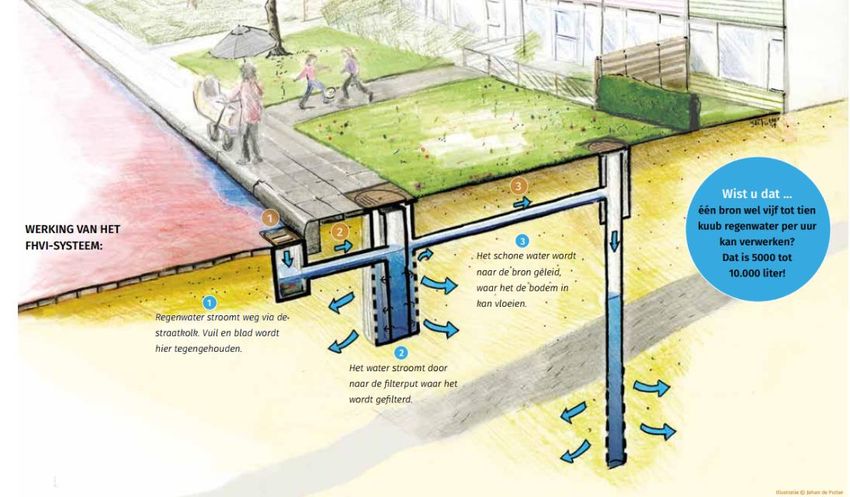
LIFE Aerfit: FHVI-technique
• Direct cooperation between
private sector and local authority
• Technological innovation
• Clear intervention logic with
concrete activities
• Quantified targets
• Relevant project partners and
key stakeholdersClimate Change Adaptation
Scope Possible areas of intervention
5. Climate-proofing and Synergies with broader work on disaster risk prevention and
resilience of infrastructure and reduction
buildings Construction and renovation of buildings and infrastructure,
including cooperation with national standardisation organisations
to climate-proof national standardsClimate Change Adaptation
Scope Possible areas of intervention
6. Adaptation solutions for incentivise and assist the rollout of nature-based solutions
farmers, forest managers, through assessments, guidance, and capacity building
Natura 2000 managers and other encourage the better use of genetic diversity and non-harmful
land managers plant genetic resources
speed and improve the delivery, accessibility and uptake of
climate resilience decision support systems and technical advice;
encourage solutions in enhancing water retention capacity of the
landscape, in particular through participatory landscape planning
and management
promote the transition to water-saving technologies and practices
in agriculture through knowledge-based approaches, high-tech
(e.g. precision farming) and nature-based solutions
pilot new business models and financial incentives for land-based
carbon removals (‘carbon farming’) which offer climate adaptation
co-benefitsExample: LIFE FORECCAST • Beneficiaries: Parc naturel régional du Haut-Languedoc, le Centre National de la Propriété Forestière, coopérative forestière Alliance Forêts Bois • Issues: increased dieback of forests and lack of precise tool to diagnose the risk • LIFE FORECCAST provided forest managers with an easy to use decision-making tool to be applied in usual forest management activities • 100 Deep Soil Pits, 30.824 trees of 32 species planted, 25 test sites • The tool is now being used at national level
Climate Change Adaptation

Scope                 Possible areas of intervention
7. Water management   Climate-resilient, sustainable use and management of water
                      across sectors and borders by improving coordination of thematic
                      plans and other mechanisms
                      Reduce water use by raising the water-saving performance of
                      products, encouraging water efficiency and savings, and by
                      promoting the wider use of drought management plans as well as
                      sustainable soil management and land-use
                      Guarantee a stable and secure supply of drinking water
Climate Change Adaptation Scope Possible areas of intervention 8. Preparedness for extreme Preparedness for extreme weather events, notably at a local level weather events and in the outermost regions
Climate Change Adaptation

Scope                                Possible areas of intervention
9. Financial instruments,            identify and promote best practices in financial instruments for
innovative solutions and public-     risk management
private collaboration on insurance   promote natural disaster insurance penetration
and loss data
                                     strengthen dialogue between insurers, policymakers, local and
                                     regional authorities and other stakeholders
Example: LIFE DERRIS • CINEAS academic consortium, UNIPOL, Coordinamento Agende 21 Locali , Municipality of Turin, ANCI • Issues: SMEs in Italy are highly subject to climate events and they don’t have adequate tools to manage them • LIFE DERRIS tool allows SMEs to evaluate climate risks and adopt prevention and emergency management measures • Private-public partnerships between insurers, Public Administration and businesses, to increase urban resilience – “ Torino che protegge”
Topic LIFE-2021-SAP-CLIMA-GOV
Climate Governance and Information
• Supports the development, implementation, monitoring and enforcement
  of EU legislation and policy on climate change, contributing to climate
  change mitigation and/or adaptation
• Awareness raising activities on their own insufficient to achieve these
  objectives
• Project developing tools or studies to include concrete actions to implement
  these tools and studies during the duration of the project
Topic LIFE-2021-SAP-CLIMA-GOV
Climate Governance and Information
#    Scope and areas of intervention

1    Support to the operation of the European Climate Pact

2    Incentivising behavioural change, mainstream emission reduction and resource and energy efficiency
     actions
3    Awareness-raising activities addressing adaptation and mitigation needs
4    Activities linked to the development and implementation of the Sustainable Finance actions
5    Greenhouse gas emission monitoring and reporting
6    Implementation/further development of national 2030 climate and energy strategies plans and/or long-
     term strategies
7    Development and implementation of greenhouse gas accounting and climate change mitigation in the land
     use sector
8    Assessment of the functioning of the EU ETS
9    Building capacity, raising awareness among end-users and the equipment distribution chain of
     fluorinated greenhouse gases
10   Climate policy monitoring, assessment and ex-post evaluation
GOV Example: LIFE BEWARE • Beneficiaries: 2 municipalities, NGO, innovation agency, academia • Objective: prevent flood risks by increasing water infiltration and storage in urban and rural areas • Informing citizens on water retention and storage + creation group investment programme,local participatory process to create local climate action plan, training farmers on adaptation farm management practices, update building codes in participating municipalities • Development sites with Sustainable Urban Drainage Systems, preparation retention basin in a farming area storing water during floods to be used for irrigation during droughts
GOV Example: ClimatePath2050
• Beneficiaries: National Technological Institute, sectoral research institutes,
  private companies
• Issues: lack of climate data to inform decision-making
• Results
   • GHG emissions projections up to 2050 for LULUCF, energy, industrial processes,
     agriculture and waste sectors + alternative scenarios with additional climate mitigation
     measures;

   • model with macro-economic and social effects of particular climate-energy scenarios;

• Models used by SI Government to prepare the Integrated National Energy
  and Climate Plan, the Mid-century Climate Strategy embedded into the Long-
  term low emission strategy
Call document One Call document for LIFE Climate Action
Call document structure                         Clima topics and priorities

                                               3. Available budget
0. Introduction
1. Background                                  4. Timetable and deadlines
What is the LIFE Programme?
                                               5. Admissibility and documents
  Nature and Biodiversity
  Circular Economy and Quality of Life         6. Eligibility
  Climate Change Mitigation and Adaptation       Eligible participants (eligible countries)
  Clean Energy Transition                        Consortium composition
                                                 Eligible activities
2. Type of action — Objectives — Themes and      Geographic location (target countries)
priorities — Activities that can be funded —
                                               7. Financial and operational capacity and
Expected impact
                                               exclusion
  Type of action
                                                 Financial capacity
  Objectives
                                                 Operational capacity
  Scope — Activities that can be funded
                                                 Exclusion
  Expected impact
  Funding rate                                 8. Evaluation and award procedure
  Additional conditions
                                               9. Award criteria
Call document structure (2) 10. Legal and financial set-up of the Grant Agreements (n/a for FPA) Starting date and project duration Milestones and deliverables Form of grant, funding rate and maximum grant amount Budget categories and cost eligibility rules Reporting and payment arrangements Prefinancing guarantees Certificates Liability regime for recoveries Provisions concerning the project implementation Other specificities Non-compliance and breach of contract 11. How to submit an application 12. Help 13. Important
Application Forms
Types of application forms

• Application Form SAP, OAG and TA
• Application Form SIP and SNAP
• Application Form TA PP
• Application Form TA PP LS
• Application Form FPA, OG and FR NGOs
• Application Form TA CAP

Submission via EU “Funding & tender opportunities” portal
Structure of the proposal

Structure
   • Part A: Administrative Forms > generated from your information in the Portal Submission
     System

   • Part B: Technical Description > uploaded as pdf (+annexes) in Submission System

   • Part C: Key Performance Indicators
Proposal Part A
• Part A: Administrative Forms > generated from your information in the Portal
Submission System
• Description of the action
• Project summary
• List of participants
• List of work packages
• Staff effort
• List of deliverables
• List of milestones
• List of critical risks
• Climate relevant Sector
• Participant information (key staff, projects/activities, affiliates)Proposal Part B • Structure of Part B Watch out: Cover page • character and page limits! Table of contents • DO NOT REMOVE INSTRUCTIONS! Project Summary (from Part A)
Proposal Part B (2)

1. Relevance                                   Award criterion 1: Relevance (0-20)

  • Background and general objectives          • Relevance of the contribution to one or several of the specific
                                                 objectives of the LIFE programme and the targeted sub-
  • Specific objectives                          programme;

  • Compliance LIFE and call topic             • Extent to which the project is in line with the description
                                                 included in the call for proposals, including, where relevant, its
  • Concept and methodology                      specific priorities;

  • Upscaling of other EU projects             • Soundness of the overall intervention logic;

  • Complementarity with other actions         • Extent to which the project offers co-benefits and promotes
                                                 synergies with other policy areas relevant for achieving
  • Synergies and co-benefits LIFE               environment and climate policy objectives.

  • Synergies and co-benefits other policies
Proposal Part B (3)
2. Impact Award criterion 3: Impact (0-20)
• Ambition and credibility of impacts expected during and/or after the
• Ambition of the impacts project due to the proposed activities, including potential negative
impacts on the other specific objectives of the LIFE programme,
• Credibility of the impacts including ensuring that no substantial harm is done to those
objectives.
• Sustainability of results • Sustainability of the project results after the end of the project.
• Exploitation of results • Potential for the project results to be replicated in the same or other
sectors or places, or to be up-scaled by public or private actors or
• Catalytic potential – replication and through mobilising larger investments or financial resources
upscaling (catalytic potential).
• Quality of the measures for the exploitation of project results.Proposal Part B (4)
3. Implementation
• Workplan Award criterion 2: Quality (0-20)
• Stakeholder input and engagement • Clarity, relevance and feasibility of the work plan;
• Work packages and activities • Appropriate geographic focus of the activities;
• Quality of the plan to monitor and report impacts;
• Objectives and results
• Identification and mobilisation of the relevant
• Activities and tasks stakeholders;
• Milestones and deliverables • Appropriateness and quality of the proposed measures
to communicate and disseminate the project and its
• Timetable results to different target groups.
• Impact monitoring and reporting
• Communication, dissemination and visibilityProposal Part B (5)
Award criterion 4: Resources (0-20)
4. Resources
• Composition of the project team - of a consortium or of a sole
beneficiary - in terms of expertise, skills and responsibilities
• Consortium set-up and appropriateness of the management structure.
• Project management • Appropriateness of the budget and resources and their
consistency with the proposed work plan.
• Green management • Transparency of the budget, i.e. the cost items should be
sufficiently described.
• Budget
• Extent to which the project environmental impact is considered
• Risk management and mitigated, including through the use of green
procurement.. The use of recognised methods for the
calculation of the project environmental footprint (e.g. PEF or
OEF methods or similar ones) or environmental management
systems (e.g. EMAS) would be an asset;
• Value-for-money of the proposed project.Proposal Part B (6)
5. Other Annexes
• Detailed budget table
• Ethics
• Annual activity reports (optional for some calls)
• Security
• List of previous projects
6. Declarations (funding rate, double • other
funding, third parties)Annex: Detailed budget table 1. Summary of staff effort 2. Subcontracting 3. Other direct costs • Travel • Equipment • Other goods • Infrastructure • Third parties • Land purchase
Passing the eligibility check
 Admissibility                        Eligibility
❑Submitted before deadline &          ❑Eligible participants
 electronically
                                      ❑Consortium composition
❑Complete & using the
 forms/templates provided             ❑Eligible activities

❑Readable (no smaller than Arial 9)   ❑Geographic location
 printable (A4)
❑Max 120 pages (including the
 instructions)
Recommendations • Start early … start now! • Read the relevant information • Limit your objectives and build a credible intervention logic • Build a relevant consortium • Link the budget to activities – check value for money • Follow the template and instructions • Submit on time
Evaluation process
Selection of LIFE Climate Action projects

Per year                              Best
                                      use
150-270 proposals:                      of
                                      bud-               Indicative budget 2021
CCM: ~45%                              get
                                                                   CCM: 30 Mio
CCA: ~45%
                             Moti-
                                                                   CCA: 30 Mio
GIC: ~10%                    vating
                             appli-
                                                                   GIC: 8 Mio
                             cants

                                             Selecting
                                             excellent
                                             projects
           Selected:                                       EU Co-funding: 60%
           ~ 40+ projects;
LIFE climate action Call 2021: tentative evaluation phase
one-stage application!
of applicants
Submission
Agreement
Notification
Start of the
Proposal
project
Grant
Revision
30 Nov 2021 Dec 21 – Feb 22 Mar/Apr 22 Jul 22 from Aug 22Thank you © European Union 2021 Unless otherwise noted the reuse of this presentation is authorised under the CC BY 4.0 license. For any use or reproduction of elements that are not owned by the EU, permission may need to be sought directly from the respective right holders. Slide xx: element concerned, source: e.g. Fotolia.com; Slide xx: element concerned, source: e.g. iStock.com
You can also read


