Local Government Climate Change Adaptation Roles and Responsibilities under Victorian legislation - Guidance for local government decision-makers
←
→
Page content transcription
If your browser does not render page correctly, please read the page content below
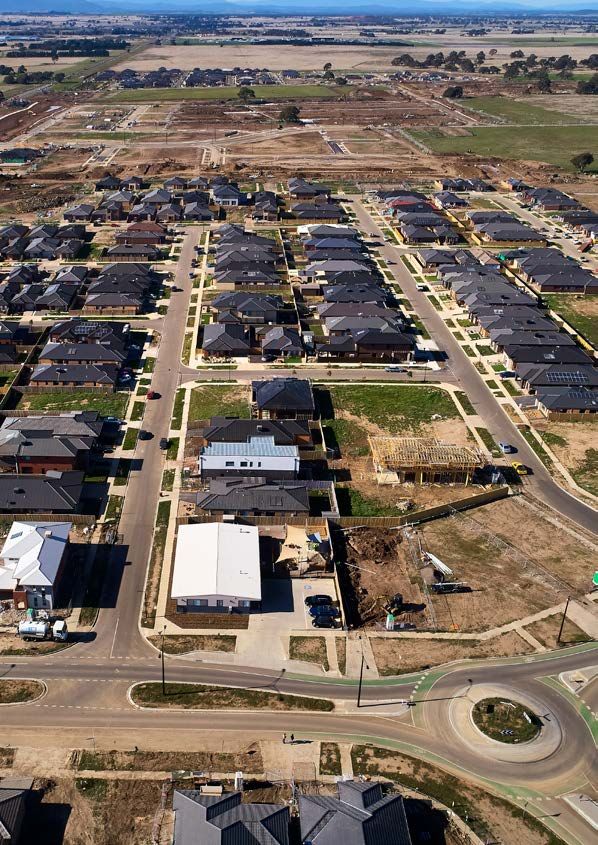
Local Government Climate Change
   Adaptation Roles and Responsibilities
             under Victorian legislation
Guidance for local government decision-makers
Authors

Project team was comprised of academics Dr. Tayanah O’Donnell, Associate Professor Susie Moloney,
Associate Professor Andrew Butt and Georgie Juszczyk, and representatives from the Climate Change
Adaptation Policy team with the Department of Environment, Land, Water and Planning.

Acknowledgments

The project team would like to thank the local government attendees to stakeholder workshops that
informed the design of this guidance brief, and the project Stakeholder Advisory Group for their review and
feedback throughout the development of this document.

Photo credit

Photo Credit: Craig Moodie, DELWP

   Acknowledgment
   We acknowledge and respect Victorian Traditional Owners as the
   original custodians of Victoria's land and waters, their unique
   ability to care for Country and deep spiritual connection to it.
   We honour Elders past and present whose knowledge and wisdom
   has ensured the continuation of culture and traditional practices.
   We are committed to genuinely partner, and meaningfully engage, with
   Victoria's Traditional Owners and Aboriginal communities to support the
   protection of Country, the maintenance of spiritual and cultural practices
   and their broader aspirations in the 21st century and beyond.

© The State of Victoria Department of Environment, Land, Water and Planning 2020

This work is licensed under a Creative Commons Attribution 4.0 International licence. You are free to re-use the
work under that licence, on the condition that you credit the State of Victoria as author. The licence does not apply
to any images, photographs or branding, including the Victorian Coat of Arms, the Victorian Government logo
and the Department of Environment, Land, Water and Planning (DELWP) logo. To view a copy of this licence, visit
creativecommons.org/licenses/by/4.0/
Disclaimer
This publication may be of assistance to you but the State of Victoria and its employees do not guarantee that the
publication is without flaw of any kind or is wholly appropriate for your particular purposes and therefore disclaims all
liability for any error, loss or other consequence which may arise from you relying on any information in this publication.

Accessibility
If you would like to receive this publication in an alternative format,
please telephone the DELWP Customer Service Centre on 136 186, or email
customer.service@delwp.vic.gov.au, or via the National Relay Service on 133 677,
www.relayservice.com.au. This document is also available on the internet at
www.delwp.vic.gov.au
Department of Environment, Land, Water and Planning

Contents
Executive summary                  4

Climate change adaptation
and local government               6

Responsibilities under the
Climate Change Act 2017 (Vic)       8

Responsibilities under the
Local Government Act 2020 (Vic)    10

Decision-making in climate
change adaptation: discharging
your duty of care                  12

Climate change adaptation
decision-making in the Victorian
planning system                    16

Appendix A: Case study             20

Appendix B: Reference materials
for informed decision-making       22

                                        Guidance for local government decision-makers    3
Department of Environment, Land, Water and Planning

Executive summary
This guidance brief delivers on a commitment under Victoria’s Climate
Change Adaptation Plan 2017–2020 to assist local government
decision-makers to understand the scope and deliver on their roles
and responsibilities for adaptation under current Victorian legislation.

This guidance brief points to the key legislation           Overview of the guidance brief
supporting climate change adaptation decision
making by local government in Victoria, and provides        This guidance brief is broken up into the following
practical advice to help meet the on-the-ground             key sections:
needs of Council staff.                                     1. Climate change adaptation responsibilities
Legislative responsibility for decision-making in the          under the Climate Change Act 2017 (Vic) and
context of climate change risk and adaptation is an            Local Government Act 2020 (Vic), and a checklist
increasingly significant issue for federal, state, and         to guide local government decision-makers
local government in Australia. The legislative                 through their duty of care in the context
framework is complex and clarifying accountabilities           of adaptation.
for managing climate change risks and adaptation            2. Climate change adaptation responsibilities
responses can be challenging.                                  under the Planning and Environment Act 1987
                                                               (Vic) and considerations for sound planning
There are three fundamental messages based on                  decisions in relation to climate change adaptation.
established legal principles relating to risk and
                                                            3. Resources including a case study and reference
liability management. First, statutory authorities,
                                                               materials to support informed decision-making.
including local government, have a duty of care in
exercising their functions and powers to manage
foreseeable risks. Secondly, climate change hazards         Who is this guidance brief for?
and risks are significant and foreseeable, so
                                                            This guidance brief has been prepared for senior
decision-makers are accountable for considering
                                                            decision-makers of Victorian local governments.
these matters in making a decision as part of
                                                            It sets out their duties in relation to climate change
exercising their duty of care. Thirdly, good decision-
                                                            under Victorian legislation and describes a process
making is enabled by acting as a ‘reasonable
                                                            to help discharge those duties with due diligence.
person’ in making decisions guided by law.

                                                            Disclaimer
    To do this effectively, Councils need to:               While this brief refers to legislative and other
    • be alert to the decisions they make where             legal frameworks, it is intended as general
      a duty of care will arise                             guidance only and does not constitute legal
    • ensure robust and transparent processes               advice. In addition, each decision-maker must
                                                            consider their own circumstances in effectively
      when they make these decisions
                                                            discharging their obligations. Individual local
    • undertake effective consultation with                 government decision-makers are encouraged
      experts and community as to specific                  to seek independent legal advice specific to their
      decisions being made at the time                      unique factual or legal circumstances.
    • ensure appropriate record keeping and
      risk management process are in place
    • ensure the information that has led
      to a decision is made publicly available
      where possible

4      Local Government Climate Change Adaptation Roles and Responsibilities under Victorian legislation
Department of Environment, Land, Water and Planning

Guidance for local government decision-makers    5
Department of Environment, Land, Water and Planning

Climate change adaptation
and local government
Climate change adaptation is defined as action taken to prepare for
actual or expected changes in the climate, in order to minimise harm,
act on opportunities, or cope with the consequences1.

The projected impacts of climate change cut                         Legislative framework for
across almost all areas of local government
responsibility, including the critical assets,
                                                                    local government adaptation
infrastructure and essential services that Councils                 This guidance brief is based on an independent
provide for their local communities. As a result,                   legal review of roles and responsibilities for local
increasing attention is being paid to climate change                government climate change adaptation under
adaptation and the role of local governments in                     current Victorian legislation, conducted by the
managing climate risks.12                                           project team from Australian National University
                                                                    and RMIT University.

    Climate change risks include both                               The framework for the legislative review was
                                                                    developed in consultation with local government
    physical and transition risks:2                                 stakeholders and incorporated an assessment
                                                                    of the legislation listed below:
    Physical risks
                                                                    1. Climate Change Act 2017 (Vic) and legislation
    Arise from the increased frequency and                             listed in Schedule 1
    severity of extreme weather events, long-                       2. Local Government Act 2020 (Vic)
    term changes in weather patterns, and sea
                                                                    3. Planning and Environment Act 1987 (Vic)
    level rise. They have serious implications for
    land use planning, infrastructure, transport,                   4. Wrongs Act 1958 (Vic;
    food and water security, and human health.                      5. Common law principles, where relevant
                                                                       to actions in negligence under tort and
    Transition risks                                                   land-use planning law only, and
                                                                    6. Relevant case law, where this aids in the
    Arise from the social and economic                                 interpretation of the above legislation.
    changes associated with adjusting
    to a low-carbon economy. They include
    policy, legal, technology, market,
    reputational, social and financial risks.

1 Climate Change Act 2017 (Vic)
2 Taskforce on Climate Related Financial Disclosures (TCFD), Final Report Recommendations of the Task Force on Climate-Related
  Financial Disclosures – June 2017

6       Local Government Climate Change Adaptation Roles and Responsibilities under Victorian legislation
Department of Environment, Land, Water and Planning

This guidance was developed based
on expert legal review and the outcomes
from four consultation workshops held
with local government in different regions
of Victoria in 2019.

 Guidance for local government decision-makers     7
Department of Environment, Land, Water and Planning

Responsibilities under the
Climate Change Act 2017 (Vic)
The Climate Change Act 2017 lays out a long-term framework for
mitigation and adaptation action on climate change, and requires
decision-makers have regard to climate change for specific decisions
and actions in a set of legislation listed in Schedule 1 to the Climate
Change Act 2017.

Policy objectives and                                       d. to promote and support the State’s regions,
                                                               industries and communities to adjust to the
guiding principles                                             changes involved in the transition to a net zero
The Climate Change Act 2017 lists the policy                   greenhouse gas emissions economy, including
objectives and guiding principles relevant for                 capturing new opportunities and addressing any
climate change decisions, policy, processes                    impacts arising from the need to reduce
or programs for the state of Victoria. Mitigation              greenhouse gas emissions across the economy;
and adaptation are considered in these objectives              and
and principles as a whole (indicated by the word            e. to support vulnerable communities and promote
‘and’ after each listed objective). The Climate                social justice and intergenerational equity.
Change Act 2017 provides government and
                                                            Section 23–28 of the Climate Change Act 2017
legislative endorsement for these considerations
                                                            lists the ‘guiding principles’ for a decision, policy,
where there is discretion to do so.
                                                            program, or process –
Section 22 lists the policy objectives of the               • Principle of informed decision-making
Climate Change Act 2017 –
                                                            • Principle of integrated decision-making
a. to reduce the State’s greenhouse gas emissions
                                                            • Principle of risk management
   consistently with the long-term emissions
   reduction target and interim emissions reduction         • Principle of equity
   targets; and                                             • Principle of community engagement, and
b. to build the resilience of the State’s infrastructure,   • Principle of compatibility
   built environment and communities through
   effective adaptation and disaster preparedness           These principles provide criteria for assessing the
   action; and                                              suitability of council decision making, in conjunction
                                                            with consideration of the factors listed under
c. to manage the State’s natural resources,                 section 17 of the Act, and provide a means of
   ecosystems and biodiversity to promote their             demonstrating the application of due process
   resilience; and                                          (see page 14 for a checklist for decision-makers).

8      Local Government Climate Change Adaptation Roles and Responsibilities under Victorian legislation
Department of Environment, Land, Water and Planning

Decision-makers must have regard                          Subsection 17(2) states:
to climate change                                         In considering climate change, the relevant
                                                          decision-maker must have regard to:
Under section 17 of the Climate Change Act 2017 a         a. the potential impacts of climate change relevant
specific set of decisions made or action taken under         to the decision or action; and
one of the Schedule 1 listed Acts (or a subordinate
                                                          b. the potential contribution to the State’s
instrument of one of those Acts such as Municipal
                                                             greenhouse gas emissions of the decision or
Public Health and Wellbeing Plans) must follow a
                                                             action; and
certain process (described below).
                                                          c. any guidelines issued by the Minister under
                                                             section 18.
 Within the Schedule 1 listed Acts, the
                                                          Subsection 17(3) specifies:
 only specified decision or action that
 creates an explicit obligation for local                 In having regard to the potential impacts of climate
                                                          change, relevant considerations are:
 government is in the preparation of
 a Municipal Public Health and Wellbeing                  a. potential biophysical impacts; and
 Plans (MPHWP) by a Council under Public                  b. potential long and short term economic,
 Health and Wellbeing Act 2008.                              environmental, health and other social impacts;
                                                             and
                                                          c. potential beneficial and detrimental impacts; and
The inclusion of the word ‘must’ in section 17 means      d. potential direct and indirect impacts; and
that the relevant decision-maker must fulfil all          e. potential cumulative impacts.
requirements outlined in the subsection. In particular,
all of the subsections in section 17 are to be read
together. Subsection 17(2) sets out the parameters
of the decision-making process and 17(3) establishes
the relevant considerations, which are cumulative.

                                                 Acts listed in Schedule 1

                                                  Catchment and Land Protection Act 1994 (Vic)

           Climate
                                                  Marine and Coastal Act 2018 (Vic)
           Change
           Act 2017
           (Vic) (s17)
                                                  Environment Protection Act 1970 (Vic)

                                                  Flora and Fauna Guarantee Act 1988 (Vic)

     Specified decisions
     or action taken                              Public Health and Wellbeing Act 2008 (Vic)
     under one of the
     Schedule 1 listed
     Acts, must consider                          Water Act 1989 (Vic)
     climate change

Figure 1

                                                             Guidance for local government decision-makers       9
Department of Environment, Land, Water and Planning

Responsibilities under the
Local Government Act 2020 (Vic)
The Local Government Act 2020 sets out a framework of the
broad roles and responsibilities for local government and provides
the primary legislative authority for local government in Victoria.

The Local Government Act 2020 became law in                  Several of these overarching governance principles
Victoria on 24 March 2020, amending the previous             create obligations for Councils in the context of
1989 Act in numerous ways including strengthening            climate change, including:
the mandate for considerations of climate change             • Under 9(2)(c) Councils are required to promote the
risk in Council decision-making processes.                     economic, social and environmental sustainability
Under s8(1) of the Local Government Act 2020,                  of the municipal district, including mitigation and
the role of a Council is to provide good governance            planning for climate change risks.
in its municipal district for the benefit and wellbeing      • Under 9(2)(b) Councils are required to give priority
of the municipal community. Section 8(2)(a)                    to achieving the best outcomes for the municipal
states that a Council is considered to provide                 community, including future generations.
‘good governance’ where it performs its role                 • Under 9(2)(h) regional, state, and national plans
in accordance with the overarching governance                  and policies are to be taken into account during
principles and supporting principles. These                    Council’s strategic planning.
principles are defined in s9(1) stating that a council       • Under 9(2(i) Council must ensure its decisions,
must in the performance of its role give effect                actions, and information are transparent.
to the overarching governance principles.
                                                             This means that processes like strategic planning
                                                             must incorporate consideration of climate change
     At law, statutory requirements for                      and relevant state and national plans. There is now a
     ‘must’ are to be strictly interpreted.                  clear expectation that decision-making is supported
     The use of the word ‘must’ under s9(1)                  by robust and transparent practices, and that the
     of the Local Government Act 2020                        long-term adverse consequences of climate change
     indicates that the overarching governance               for future generations are incorporated into council
                                                             planning, decisions and actions
     principles are compulsory obligations,
     rather than aspirational objectives.

10      Local Government Climate Change Adaptation Roles and Responsibilities under Victorian legislation
Department of Environment, Land, Water and Planning Guidance for local government decision-makers 11
Department of Environment, Land, Water and Planning

Decision-making in climate change
adaptation: discharging your duty of care
Statutory authorities, including local government, have duties of care
in exercising their functions and powers. At law, a failure to effectively
discharge your duty of care may give rise to a cause of action against
you – that is, you can be sued in a court of law.

The threat of climate change is now clearly                             and internal compliance with guidelines and
established through legislation, national and state                     manuals (Pyrenees Shire Council v Day (1998)
policy and international agreements. It is likely a court               192 CLR 330). Generally, where reliance on
will construe that the risks and impacts of climate                     information results in foreseeable harm, a legal
change are now reasonably clearly foreseeable.                          action may arise (L Shaddock & Associates Pty
Councils have a duty of care in the context of climate                  Ltd v Parramatta City Council (1981) 150 CLR 225).
change adaptation, this has been recognised by
VCAT3 since 2010 and other jurisdictions4.                              Discharging duties under the Local Government Act
                                                                        2020 in the context of climate change adaptation
                                                                        requires engagement with the Climate Change Act
Claims in negligence56                                                  2017. Where other legislation requires a specific ‘duty’,
Negligence claims may arise in a variety of                             those requirements must be followed. The courts have
circumstances. Typically to establish an adverse                        stated that aspirational duties can fall somewhere in
finding against a local government, three main                          between either specific legislative duties, or broader
elements of negligence must be satisfied:                               common law duties (South East Water Ltd v
                                                                        Transpacific Cleanaway Pty Ltd (2010) VSC 46).
• the defendant must owe a duty of care
• the defendant must have breached that                                 To establish an evidence base to support robust
   duty through an act or omission, and                                 decision making and to demonstrate due diligence,
• the plaintiff must have suffered damage                               it is advisable that councils:
   or loss caused by that breach.                                       • follow a rigorous process for higher risk decisions,
                                                                          such as Australian Standard AS 5334-2013:
Other considerations include the cause of the
                                                                          Climate change adaptation for settlements and
damage, as well as how closely related the decision
                                                                          infrastructure – a risk-based approach
that led to the damage and the cause of the damage
itself are. Importantly, the level of control and levers                • undertake effective consultation with experts
of influence over the risk of harm is relevant as to                      and community as to specific decisions being
whether a duty of care is owed. For local government,                     made at the time
their duty of care may arise in the context of:                         • ensure the relevant information that led to
• development approvals                                                   the decision is accounted for and appropriate
                                                                          records maintained
• the provision (or lack thereof) of protective works
                                                                        • make the information that has led to a decision
• or the provision (or lack thereof) of information
                                                                          publicly available.
  or statements which are considered by a court
  to be negligent.                                                      Anticipating outcomes in legal proceedings is
                                                                        fraught. It is always prudent to obtain legal advice
The standard of care is higher for governments                          where decisions may involve the consideration of
than others who may have duties. This is particularly                   climate risk.
so if the duty relates to operational procedures

3    Gippsland Coastal Board v South Gippsland Shire Council [2008] VCAT 1545; Printz v Glenelg SC [2010] VCAT 1975 (10 December 2010).
4    Land and Environment Court [Gloucester Resources Limited v Minister for Planning [2019] NSWLEC 7] New South Wales
5    Legal tools for managing climate risk in Victoria’ (Godden, 2013) p 19.
6    http://classic.austlii.edu.au/au/journals/MelbULawRw/2017/34.html

12        Local Government Climate Change Adaptation Roles and Responsibilities under Victorian legislation
Department of Environment, Land, Water and Planning Establishing negligence requires establishing ‘whether a party did any act that a reasonable person would not have done, and thus cause injury to another which was reasonably foreseeable’. Importantly, this definition includes both an act and the omission of an act, so that negligence may be found not only when a decision has been made badly, but also in failing to do something that a reasonable decision-maker ought to have been reasonably expected to do. The definition of a ‘reasonable person’ will differ, depending on the context and circumstances surrounding the act or omission in question.6 What constitutes a ‘reasonable person’ at law is determined by considering what a prudent person of ordinary experience, skill and intelligence would do in all of the circumstances. Guidance for local government decision-makers 13
Department of Environment, Land, Water and Planning

Checklist for decision-makers
The guiding principles of the Climate Change Act 2017 can be used to inform a decision, policy or
program, assist Council decision-makers in discharging their duties under the Local Government Act 2020
in the context of climate change adaptation, and prompt necessary conversations between council staff
and Councillors.

 Examples of decision-making          Questions to ask

 Principle of informed decision-making: making informed decisions

 Should be based on                       Are there processes in place to access the best practically
 a comprehensive analysis                 available information on climate impacts, exposure and
 of information about                     vulnerability? See Appendix B for a list of available resources
 potential impacts                        Are there processes in place to routinely check accuracy
 of climate change                        and currency of climate information?
                                          Is the information that has led to a decision made
                                          publicly available?

 Ensure that decisions                    Have we calculated and taken into account the potential
 to manage climate risk                   contribution of this decision or action to the State’s greenhouse
 are not maladaptive and                  gas emissions?
 do not perversely contribute
 to the State’s greenhouse
 gas emissions.

 Principle of integrated decision-making: making integrated decisions

 Ensure that the short, medium            Have we identified the competing considerations relating
 and long-term impacts of                 to climate change over the short, medium, and long term?
 climate change are considered            Does decision-making balance the immediate and long-term
 in decision-making processes             needs in managing climate risks?
                                          Are climate risks being considered in the yearly operational
                                          plans, four-yearly Council plans, and 10-yearly Community Vision,
                                          Financial and Asset Plans?

 Ensure that the direct and               Have we identified the direct and cross cutting social, health,
 cross-cutting issues relating to         economic and environmental issues relevant to climate change?
 climate change are considered            Have we taken relevant regional, state, and national climate
 in decision-making processes             change plans and policies are to be taken into account?
                                          Has effective and proportionate consultation been undertaken
                                          with experts and the community to identify issues and inform
                                          critical decisions that need to be made?
                                          Have we considered all relevant issues during the decision-making
                                          process? Use of a risk management framework can assist,
                                          such as Australian Standard 5334-2013: Climate change adaptation
                                          for settlements and infrastructure: A risk-based approach

14    Local Government Climate Change Adaptation Roles and Responsibilities under Victorian legislation
Examples of decision-making Questions to ask
Principle of integrated decision-making: making integrated decisions
Ensure any measures adopted Have we costed the adopted measures considering direct
are cost effective and in costs, operation and consequential costs over time?
proportion to the problems Have we assessed if they are proportionate to the problems
relating to climate change that relating to climate change?
are relevant to the decision,
policy, program, or process
Principle of risk management: effective risk management
Careful evaluation of the Have we developed a process for evaluating the potential impacts
potential climate impacts of climate change using best practicably available information?
to avoid, wherever practicable, Are we identifying and monitoring the vulnerabilities of our
serious or irreversible damage community in a changing climate?
resulting from climate change
Managing and allocating the Have we developed a climate change risk register which enables
risks associated with the the tracking of physical and transitional risks?
potential climate impacts Are accountabilities for managing climate risks across council
in a manner that is easily clearly assigned and understood?
seen and understood
Have we documented our process of decision-making and kept
appropriate records?
A decision, policy, program, or Where there is a lack of scientific certainty, have we adopted
process should not rely on a lack a precautionary approach to decision-making to prevent serious
of full scientific certainty as a or irreversible loss or damage?
reason to postpone appropriate Are processes in place to revise risk management practices in
measures to prevent serious response to new information or changes in risk level following
or irreversible loss or damage effective implementation of adaptation actions?
as a result of climate change
Principle of community engagement: effective community engagement
Providing appropriate Are we providing appropriate information on climate change and
information to the community expected climate impacts to the community?
Are we continually developing new and effective ways to engage
different populations?
Providing opportunities Are we providing opportunities for community involvement in
for the community to be decision-making relating to climate change, especially members
involved in the decision, policy, of vulnerable or marginalised communities?
program, or process How are we monitoring and evaluating these processes?
Guidance for local government decision-makers 15Department of Environment, Land, Water and Planning
Climate change adaptation decision-
making in the Victorian planning system
The planning system in Victoria sets out some of the accountabilities
and opportunities in relation to local climate change adaptation,
as land use planning plays a key role in managing responses to climate
risks and natural hazards including bushfires, flooding, heatwaves,
sea-level rise, and storm surges.
The Planning and Environment Act various state-wide planning policies on climate
change and its impacts, which planners must take
1987 (Vic) and climate change into account and give effect to through their
The Planning and Environment Act 1987 sets decisions. Some examples of clauses specifically
out the framework for the use, development, and referencing climate change adaptation include:
protection of land in Victoria in the present and • Clause 13.01 Climate change impacts – includes
long-term interests of all Victorians. policy on natural hazards, coastal inundation
and erosion considerations (see extract).
While the Planning and Environment Act 1987 does
• Clause 11.03 Planning for places – requires
not specifically reference the phrase ‘climate
greenfield planning to respond to climate change.
change’, a purpose of the Act is for the planning
framework to support decision in the ‘long-term • Clause 14.01 Agriculture – seeks to support
interests of all Victorians’, and it does establish agricultural adaptation to climate change.
broad objectives for planning in Victoria that are • Clause 15.02 Energy and resource efficiency –
relevant to climate change responses – such as supports a cooler environment and minimisation
sustainable land use and development, the of greenhouse gas emissions.
protection of biodiversity and natural resources, • Clause 19.03 Integrated water management
and the maintenance of ecological processes. (see further information listing relevant clauses
The Planning and Environment Act 1987 broadly in the VPP).
requires that planners facilitate development in
accordance with these objectives. There are also a range of clauses focussed on
planning responses to hazards such as bushfire,
The subordinate instruments of the Planning and flood, erosion and heat. Further examples of
Environment Act 1987, such as the Victoria Planning planning responses to climate change adaptation
Provisions (VPP - standard provisions from which may be incorporated within the local section of
planning schemes are derived), and planning individual planning schemes in the municipal-wide
schemes, give more detailed direction in this regard. strategic statement, a local planning policy or a
The VPP and all planning schemes in Victoria contain specific planning control for a site or a broader area
the Planning Policy Framework which incorporates (e.g. a schedule to a zone or an overlay).
16 Local Government Climate Change Adaptation Roles and Responsibilities under Victorian legislationDepartment of Environment, Land, Water and Planning
Planning Policy Framework (extract):
13 ENVIRONMENTAL RISKS AND AMENITY
Objectives include:
Planning should prepare for and respond to the impacts of climate change.
13.01-1S Natural hazards and climate change
Objective:
To minimise the impacts of natural hazards and adapt to the impacts of climate change through
risk-based planning.
Strategies:
• Consider the risks associated with climate change in planning and management decision
making processes.
• Identify at risk areas using the best available data and climate change science.
• Integrate strategic land use planning with emergency management decision making.
• Direct population growth and development to low risk locations.
• Develop adaptation response strategies for existing settlements in risk areas to accommodate
change over time.
• Ensure planning controls allow for risk mitigation or risk adaptation strategies to be implemented.
• Site and design development to minimise risk to life, property, the natural environment and
community infrastructure from natural hazards.
• Site and design development to minimise risk to life, property, the natural environment and
community infrastructure from natural hazards.
13.01-2S Coastal inundation and erosion
Objective:
To plan for and manage the potential coastal impacts of climate change.
Strategies:
• Plan for sea level rise of not less than 0.8 metres by 2100 and allow for the combined effects
of tides, storm surges, coastal processes and local conditions such as topography and geology
when assessing risks and coastal impacts associated with climate change.
• In planning for sea level rise, an increase of 0.2 metres over current 1 in 100 year flood levels
by 2040 may be used for new development in close proximity to existing development (urban infill).
• Ensure that land subject to coastal hazards is identified and appropriately managed to ensure
that future development is not at risk.
• Ensure that development or protective works that seek to respond to coastal hazard risks avoid
detrimental impacts on coastal processes.
• Avoid development in identified coastal hazard areas susceptible to inundation (both river and
coastal), erosion, landslip/landslide, acid sulfate soils, bushfire and geotechnical risk.
Policy guidelines to consider as relevant:
Any applicable Land Conservation Council recommendations. Any applicable coastal action plan
or management plan approved under the Coastal Management Act 1995 or National Parks Act 1975.
Policy documents:
Consider as relevant - Victorian Coastal Strategy (Victorian Coastal Council, 2014)
Guidance for local government decision-makers 17Department of Environment, Land, Water and Planning
Further considerations for
climate change adaptation and Making decisions under uncertainty
planning decisions In climate change adaptation planning,
decision-makers will often find themselves
There is an existing policy and statutory basis in with incomplete or imperfect information upon
planning schemes to ensure that land use and which to base decisions. However, uncertainty
development responds to many of the physical surrounding future climate impacts should
hazards affected by climate change such as bushfire not stand in the way of action, and decisions
and flooding, although measures to account for should not be deferred until more definitive
enhanced or accelerated impacts due to climate data is available, especially for long lived assets
change are not yet well developed. or high consequence risks.
A planners’ ability to apply these policies and Victoria’s Climate Science Report and
controls effectively is often contingent on access to long-term observed records show that the
accurate, up-to-date data, clear standards and state’s climate is changing under the influence
authoritative guidance. Various authorities, including of both natural variability and global warming.
local governments, must also have the resource Victorian Climate Projections provide robust
capacity and oversight to support consistent downscaled projections of the future climate
application of these policies and controls. to assess the risks of climate change across
a range of plausible futures.
The following section outlines the Climate projections provide a solid evidence
issues, shared challenges, and base to assess future climate scenarios, but
it is important to factor in a degree of
suggestions to support sound planning
uncertainty to consider the range of plausible
decisions in relation to climate change futures and not lock in a single path of action
adaptation. These include: when managing climate risk. Projections
• making decisions under uncertainty associated with future impacts vary from high
• the need to be pre-emptive to low certainty depending on the hazard. These
resources provide endorsed State Government
and precautionary in responding
reference information to inform planning and
to climate change
decision-making processes that will support
• communicating climate change the resilience of Victoria into the future.
adaptation within your community, and
• incorporating climate change
adaptation across all aspects
of planning. Making precautionary decisions
The principal approach for dealing with
uncertainties and information gaps regarding
risks is the precautionary principle. Climate
change adaptation includes planning decisions
that incorporate precautionary responses to
consider future risk and hazards such as fire,
heat, flooding and sea-level rise.
A precautionary decision-making response
evaluates whether risks can be minimised to an
acceptable level based on the best available
evidence, and adopts a prudent approach to
refuse proposals if risks of harm are considered
too high.
These decisions also involve relationships
with partners beyond local government,
such as statutory and non-statutory
referral authorities who provide data and
authoritative advice based on their technical
or organisational expertise.
18 Local Government Climate Change Adaptation Roles and Responsibilities under Victorian legislationDepartment of Environment, Land, Water and Planning
Communicating climate change Incorporating climate change
adaptation in your community adaptation across all aspects
Community expectations about the need and
of urban and regional planning
consequences for climate change adaptation Many land use and development decisions
vary, and planning decisions are often contested. enable small, incremental changes in the
Incorporating consideration of adaptation to landscape or in an urban area. Consequently,
climate change into planning decisions can often it is not easy to foresee decisions at a
mean a change in past practices, with planning whole-of-system level. Planning for climate
controls applying to additional areas or requiring change adaptation extends beyond the risk
more resilient built responses. This can result in and impacts of individual decisions to include
surprise and concern about blighting broader elements of design in urban and
development opportunities. rural environments.
To minimise conflict over anticipated and The complexity of potential adaptation risks and
actual development outcomes clear strategies the possibility for their interaction emphasises
are needed to communicate with and engage the need for integrated decision-making
the community about how future changes processes to deal with this complexity. Strategic
to planning schemes will impact development planning processes, including settlement
outcomes. This is especially important in planning, rezoning, the 4-yearly Council Plan and
instances where more stringent planning 10-yearly Community Vision provide critical
responses are required, such as in areas with opportunities to build in longer term resilience
increased exposure to climate risk including across a whole municipality or shire.
coastal areas, flood-prone areas and
bushfire-prone environments. This does not Victoria’s legislative, policy and knowledge
mean development cannot proceed, but it framework have changed significantly over
does require a suitable risk based response. the last decade, particularly since the passage
of the Climate Change Act in 2010. These
If the rationale for adaptation is clear to the reforms provide a strong foundation for
community, this can create support for the responses through land use planning and the
merit of council forethought, strengthening development process more broadly.
adaptation responses, and greater upfront
investment to reduce vulnerabilities
and risks.
Guidance for local government decision-makers 19Department of Environment, Land, Water and Planning Appendix A: Case study This case study highlights a council demonstrating positive leadership by embedding climate change adaptation in planning responses. In this case, success and buy-in for updating the planning scheme coastal inundation controls was supported by an evidence-based, integrated, and strategic approach with broad community and expert engagement. The amendment was informed by the best practically available information of current and projected future coastal inundation, and council took a precautionary approach to plan for inundation risks over the long-term. CASE STUDY Amendment C394 to the Greater Geelong Planning Scheme – implementation of planning scheme coastal inundation controls The City of Greater Geelong has implemented updated planning scheme flood controls, with its local planning scheme amendment approved and coming into effect on 4 September 2020. The City of Greater Geelong was one of the original state-funded pilot Local Coastal Hazard Assessment project partners, working with DELWP, the Borough of Queenscliffe, the Corangamite Catchment Management Authority, and the Barwon Coast and Bellarine Bayside coastal committees of management to progress the hazard assessment and risk analysis through the Our Coast coastal adaptation program. The amendment was the ‘next strategic planning step’ taken by the City of Greater Geelong, supported by state partner agencies, including funding through the Coastal Planning Grants Program (Minister for Planning) building on the community engagement undertaken throughout the Our Coast project. The amendment underwent a public exhibition and submissions review process, with the independent Planning Panel appointed to review submissions to the amendment recommending the planning scheme amendment’s approval. Amendment C394 includes policy changes to the Municipal Strategic Statement, introduces a new Land Subject to Inundation Overlay Schedule 2 (LSIO2) and applies the LSIO2 to private and public land identified through the Geelong-Bellarine Local Coastal Hazard Assessment and Geelong-Queenscliff Coastal Climate Change Risk Assessment as being subject to coastal inundation as a result of the combined effects of storm surge and a minimum 0.8 metre sea level rise by 2100. The amendment ensures that coastal hazard and inundation risk is considered in planning decisions on land subject to current and projected future coastal inundation. 20 Local Government Climate Change Adaptation Roles and Responsibilities under Victorian legislation
Department of Environment, Land, Water and Planning

Guidance for local government decision-makers    21
Department of Environment, Land, Water and Planning

Appendix B: Reference materials
for informed decision-making
Climate change resources                                   Victorian Climate Projections 2019
for informed decision-making                               The Victorian Government partnered with
                                                           CSIRO’s Climate Science Centre in 2019 to
Different questions or decisions need
                                                           develop local-scale climate projections for
information at various levels of detail and
                                                           Victoria at a 5 km by 5km scale for intermediate
complexity. It is important to choose information,
                                                           and high emissions pathways, and include
tools and data sources that are fit for purpose,
                                                           a range of variables such as average and extreme
and using a range of sources will increase the
                                                           temperature and rainfall, relative humidity, and
robustness of climate change decision-making.
                                                           evaporation. These publicly available datasets
The following list of relevant sources for local           use a range of climate models, making these the
government is up-to-date at the time of                    most scientifically credible information about the
publication and may therefore be a useful                  future climate under different emissions scenarios
starting point for gaining information. Always check,      at the time of publication. Links to the Technical
however, for the most up-to-date information.              Report, Regional Reports, fact sheets, datasets and
                                                           guidance to help users identify and obtain the most
Victoria’s Climate Science Report                          relevant data for their needs are available at:

Victoria’s Climate Science Report (2019)                   www.climatechange.vic.gov.au/vcp19.
provides a synthesis of the best available
climate change science and its implications for            Victorian Water and Climate Initiative
Victoria. The report summarises the knowledge
                                                           The Victorian Climate Initiative (VCI) is
gained from the Victorian Government’s ongoing
                                                           a Victorian Government program that supports
investment in climate science, such as the
                                                           research into the impact of climate change and
Victorian Climate Projections 2019 and the
                                                           climate variability on Victoria’s water resources.
Victorian Water and Climate Initiative, as well as
                                                           The VCI produces projections for water supply
research from our leading academic institutions.
                                                           planning, and the streamflow and recharge
https://www.climatechange.vic.gov.au/climate-              projections through the water sector guidelines
science-report-2019                                        remain the set of projections that are recommended
                                                           for use for water sector applications.

                                                           https://water.vic.gov.au/__data/assets/pdf_
                                                           file/0014/52331/Guidelines-for-Assessing-the-
                                                           Impact-of-Climate-Change-on-Water-Availability-
                                                           in-Victoria.pdf

22    Local Government Climate Change Adaptation Roles and Responsibilities under Victorian legislation
Department of Environment, Land, Water and Planning
Cooling and Greening Melbourne Interactive How Well Are We Adapting: Western Alliance
Map: Victorian Government (2019) for Greenhouse Action (WAGA)
Mapping and analysing vegetation helps to How Well Are We Adapting is a web-based climate
understand the relationship between urban change adaptation monitoring, evaluation and
vegetation cover and the urban heat island effect. reporting tool for Victorian local governments.
The Cooling and Greening Melbourne Interactive Through an internal reporting section the tool allows
Map covers the city’s metropolitan areas and local governments to track climate change impacts
brings together three main datasets: vegetation on council services and assets and evaluate
cover, urban heat, and the heat vulnerability index. responses over the long term. As this Guide points
This interactive map consolidates data captured out, strategies, pathways and plans are often
in 2014 and 2018 into a single platform, and offers implemented with the intention of assisting climate
a visual capture of data at local government, change adaptation, but it needs to be asked whether
suburb, ABS Statistical Area Level 1 (SA1) and Mesh we are doing things right or doing the right things.
Block levels. With the long timeframes and uncertainty of climate
change impacts, not asking those questions can
http://www.planmelbourne.vic.gov.au/current- lead to adverse outcomes. Monitoring impacts and
projects/a-cooler-greener-melbourne-project/ learning about our responses over time develops
cooling-and-greening-melbourne-interactive-map knowledge and skills for implementing adaptation
actions. Using this tool is also assisting participating
Guidance for Considerations of Climate councils to raise institutional awareness and
Change in Municipal Public Health and capacity around the issue of climate change
Wellbeing Plans (2020) adaptation, identify where services might be
impacted in the future and ensure residents most
The Department of Health and Human Services
at risk to the impacts will be protected.78
has developed guidance to support councils
to tackle climate change and its impacts on health http://adapt.waga.com.au/
through municipal public health and wellbeing
planning. This guidance supports councils
in meeting their obligations under the Climate
Change Act 2017, and in taking action in line with Further reading
the climate change focus area in the Victorian
Public and private sector accountabilities
Public Health and Wellbeing Plan 2019-2023.
for managing climate risk
https://www2.health.vic.gov.au/public-health/ • The Centre for Policy Development and
environmental-health/climate-weather-and-public- The Future Business Council ‘Climate
health/climate-change-and-health
Change and Directors’ Duties’
National Climate Change Adaptation memorandum of option, Mr Noel Hutley
Research Facility : Online Library SC and Mr Sebastian Hartford-Davis for
Minter Ellison, Solicitors, 7 October 2016,
The NCCARF Adaptation Online Library holds and Supplementary Memorandum of
research reports and information to help support Opinion, 26 March 2019.
decision-makers throughout Australia as they
prepare for the risks of climate change and
• Taskforce on Climate Related
sea-level rise, with specific resources available Financial Disclosures – final Report
for the local government sector. Recommendations of the Task Force
on Climate-Related Financial Disclosures,
https://www.nccarf.edu.au/adaptation-library June 2017.
• Centre for International Climate
Research, Climate Finance which sets out
the ‘shades of climate risk’ and which
categorises climate risks for investors7.
• Public Authority Directors’ Duties and
Climate Change: Managing the latent
financial and governance risks discussion
paper. Centre for Policy Development,
January 20198.
7 https://www.cicero.oslo.no/en/CF-scenarios-and-shades
8 https://cpd.org.au/2019/02/public-authorities/
Guidance for local government decision-makers 23delwp.vic.gov.au
You can also read


