Los Angeles County Citizens Redistricting (CRC) Commission
←
→
Page content transcription
If your browser does not render page correctly, please read the page content below
Los Angeles County Citizens Redistricting (CRC) Commission

                                                      1
Topics
                          ▪ New Approach with LA County Citizens
                            Redistricting Commission (CRC)
                          ▪ Significance, diversity, and size of Los
                            Angeles County
                          ▪ Redistricting overview
                          ▪ What your organization can do
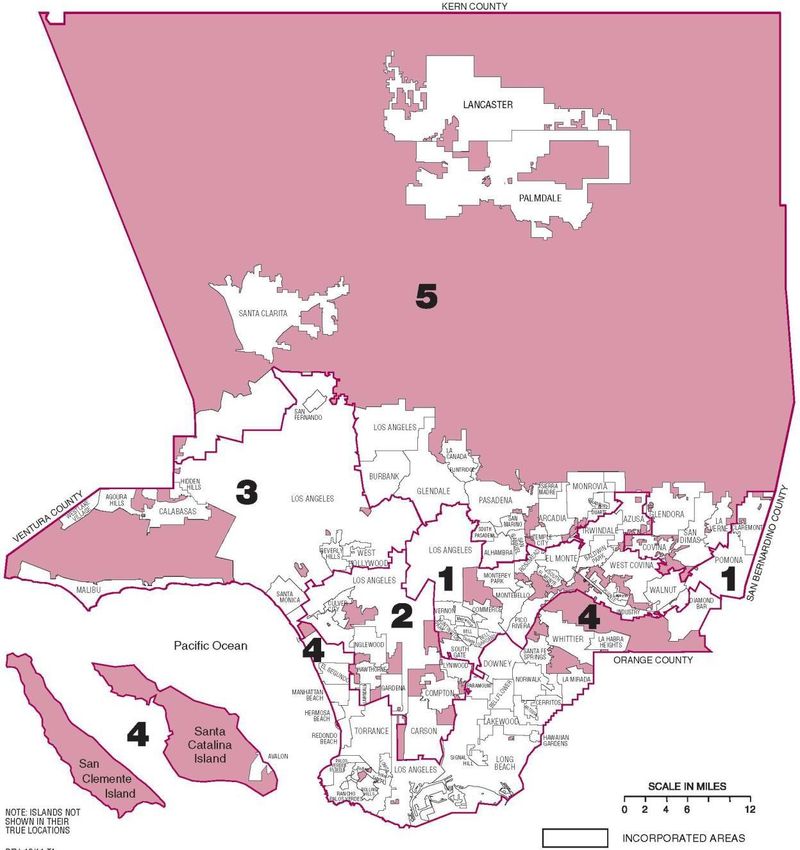
   5 newly drawn
Supervisorial Districts

                                                                       2
Topics
                          ▪ New Approach with LA County CRC
                          ▪ Significance, diversity, and size of Los Angeles
                            County
                          ▪ Redistricting overview
                          ▪ What your organization can do
   5 newly drawn
Supervisorial Districts

                                                                         3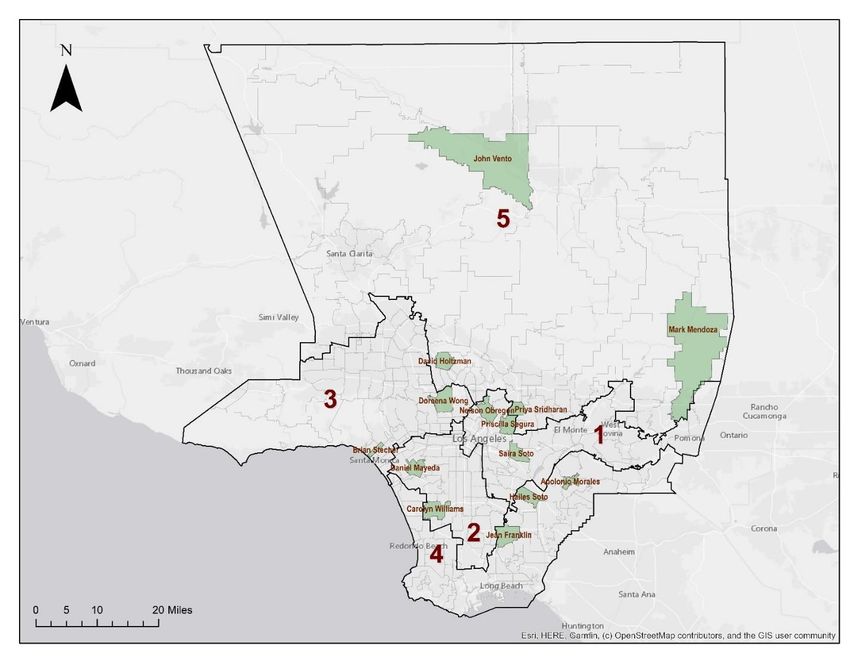
LA County Redistricting Approach
Past Approach                                          New Approach with California SB 2016

▪ The Board of Supervisors appointed an advisory       ▪ Formation of Citizens Redistricting
  Boundary Redistricting Committee (BRC) to study        Commission to draw the boundary lines of the
  proposed changes to the boundaries.                    five single-member supervisorial districts for
                                                         the next 10 years
▪ The Board of Supervisors could make revisions
  before adopting the final redistricted boundaries.   ▪ Independent from the influence of the Board
                                                       ▪ Reasonably representative of the County’s
                                                         diversity

                                                                        5 newly drawn
                                                                     Supervisorial Districts

                                                                                                     4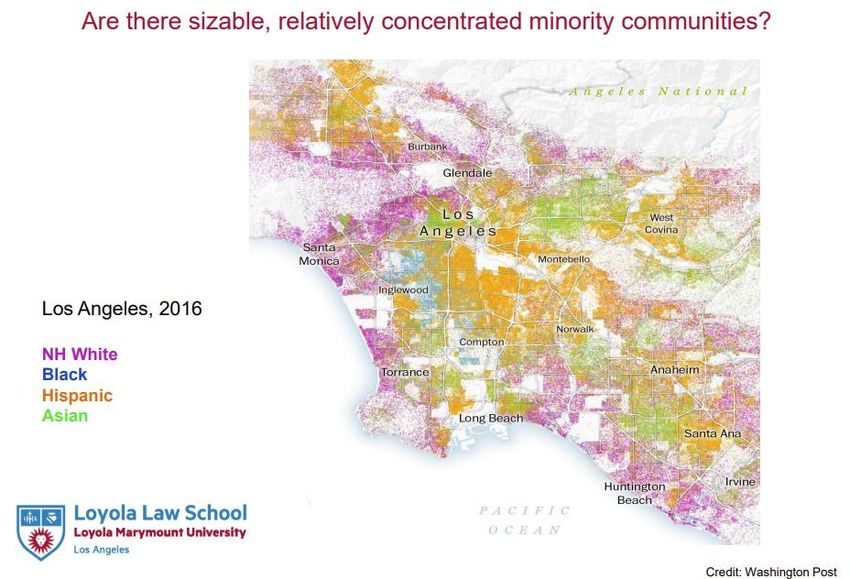
Trend for California
                       ∎
                               Sacramento   cities and counties to
                               Roseville
Oakland
Berkeley
                ∎                           move to independent
                                            commissions

Santa Barbara County       ∎
                                            Los Angeles County
                                ∎           Long Beach
                                        ∎   San Diego County
                                            Escondido
                                            Chula Vista
                                            San Diego

                                                                     5
Our Values
Accountability: We are accountable to the process and each other to serve all the constituents of
Los Angeles County.
Transparency: We are committed to openness in all aspects of the redistricting process.
Objectivity: We are careful, intentional, fair-minded, and impartial and will actively resist undue
influence in establishing supervisorial district boundaries in an equitable manner.
Integrity: We are honest, truthful, ethical, principled, respectful, and professional.
Inclusion & Equity: We seek to create and foster a true sense of belonging and eliminate
potential barriers by being purposeful, deliberate, and effective in comprehensive public
outreach, engagement, and feedback.

                                                                                                6
Our Independence:
 Commissioner Selection Process
         Phase 1:                     Phase 2:                      Phase 3:
        Registrar-              Auditor-Controller               Selection of 6
   Recorder/County             Random Drawing of 8                Additional
 Clerk Identification of          Commissioners                 Commissioners
   60 Most Qualified
       Applicants

▪ 741 applications           ▪ 1 randomly drawn per      ▪ Ratings of all 60 applications
▪ 533 qualified applicants     Supervisorial District        ▪ Holistic approach
▪ 60 most qualified          ▪ 3 randomly drawn from         ▪ Scale of 1-10
                               remaining 55 applicants   ▪ List narrowed to reflect:
                                                             ▪ Political party affiliations
                                                             ▪ Diverse demographics
                                                         ▪ Slate of 6
Who We Are:
Our CRC Commissioners
                                                                       % CRC
Race/Ethnicity                                 # CRC Commissioners                     % of LA County
                                                                      (rounded)
Hispanic/Latino/Latina/Latinx                            6              43%                 46%
Asian (incl. Pacific Islander)                           3              21%                 15%
White (Not of Hispanic Origin)                           3              21%                 25%
Black/African American                                   2              14%                  9%
Other (incl. American Indian/Alaskan Native)                            0%                   5%

 Gender                       # CRC Commissioners             % CRC               % of LA County
Female                                 6                        43%                      50%
Male                                   6
                                       8                        57%                      50%
Non-Binary                             0

                                    Percent of                        Commissioners Selected
                                                    Percentages
Political Party Affiliation         Registered
                                                    Applied to 14     Number               Percent
                                      Voters
Democratic                               52.449%              7.343                8              57%
NDR                                     30.400%               4.256                4              29%
Republican                              17.151%               2.401                2              14%
             Totals                    100.000%              14.000               14              100%

                                                                                                         8
Topics
                          ▪ New Approach with LA County CRC
                          ▪ Significance, diversity, and size
                            of Los Angeles County
                          ▪ Redistricting overview
                          ▪ What your organization can do
   5 newly drawn
Supervisorial Districts

                                                                9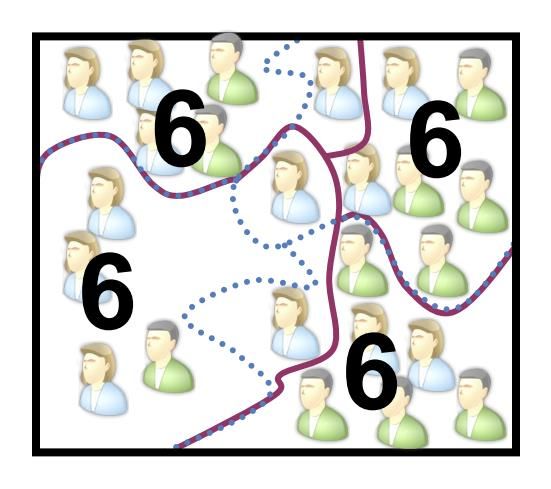
Why Redistricting is Important
▪   At the local level, periodic redistricting and redrawing
    of the boundaries are important to:
      ▪   Rebalance district populations
      ▪   Ensure the Board of Supervisors fairly reflects the
          County's diverse population
      ▪   Design districts that are reasonably equal in
          population
      ▪   Meet the constitutional principal of “one person,
          one vote”
            ▪   Vote for the supervisor of your choice
            ▪   Ensure your voice is heard

                                                                10
Why Redistricting
is Important
▪ Board of Supervisors should be responsive
to the preferences and needs of residents:
▪ Public policies to improve lives
▪ Services provided and resources in
your community
▪ Public health and public medical
centers
▪ Tax assessments
▪ Public social services
▪ Sheriff
▪ Municipal services to
unincorporated areas and
contract cities
▪ …and many other public services
11Complexity of Los Angeles County
U.S. Census Population estimates,
July 1, 2019, (V2019)
10,039,107
Most populous U.S. county: 10
million people
▪ 25% of California’s population
▪ Population greater than 41
individual U.S. states
3rd largest metropolitan economy
in the world
▪ 88 cities and 100+
unincorporated areas
▪ Los Angeles City is the 2nd most
populous city with 4 million
residents
One of the most ethnically diverse
U.S. counties
12U.S. Census Population estimates,
10,039,107
July 1, 2019, (V2019)
5 supervisorial districts – about
2 million people per district
Each with an elected Board of
Supervisor to represent the
residents in their supervisorial
district
Supervisors must reside in their
districts during their
incumbency
LA County will continue to have
5 supervisorial districts for
redistricting in 2021. (Any
change would require voter
approval.)
13Historical Context in Los Angeles County
Garza v. County of Los Angeles, 918 F. 2d 763 (9th Cir. 1990)
▪ 1959 Intentional discrimination against Latino community
▪ 1965 Intentional discrimination against Latino community
▪ 1971 Intentional discrimination against Latino community
▪ 1981 Intentional discrimination against Latino community
▪ 1990 Intentional discrimination against Latino community
▪ 2001 Redistricting under supervision of U.S. Department of Justice (DOJ)
▪ 2010 Redistricting plan approved over objections; 4th Board of Supervisors’ vote provided to
expedite Federal court action – no Federal court action occurred
Source: Justin Levitt, Esq., Loyola Law School faculty:
https://redistricting.lacounty.gov/wp-content/uploads/2021/03/Justin_L_presentation_03_10_21.pdf
14Historical Context in Los Angeles County
Garza v. County of Los Angeles, 918 F. 2d 763 (9th Cir. 1990)
For decades, the County:
“…intentionally fragmented the Hispanic population among the various districts in order to
dilute the effect of the Hispanic vote in future elections and preserve incumbencies of the
Anglo members of the Board of Supervisors.”
“When the dust has settled and local passions have cooled, this case will be remembered for
its lucid demonstration that elected officials engaged in the single-minded pursuit of
incumbency can run roughshod over the rights of protected minorities…. The record is littered
with telltale signs that reapportionments going back at least as far as 1959 were motivated,
to no small degree, by the desire to assure that no supervisorial district would include too
much of the burgeoning Hispanic population.”
Source: Justin Levitt, Esq., Loyola Law School faculty:
https://redistricting.lacounty.gov/wp-content/uploads/2021/03/Justin_L_presentation_03_10_21.pdf
15Topics
▪ New Approach with LA County CRC
▪ Significance, diversity, and size of Los
Angeles County
▪ Redistricting overview
▪ What your organization can do
5 newly drawn
Supervisorial Districts
16Where to draw the lines?
U.S. Constitution, 52 U.S.C. § 10301, Cal. Election Code § 21534
District lines will be adopted using the following criteria in order of priority:
1. Each district shall be reasonably equal in total resident population to the other districts, except
where deviation is required to comply with the Federal Voting Rights Act of 1965 or allowable
by law.
2. Districts shall comply with the Federal Voting Rights Act of 1965.
3. Districts shall be geographically contiguous.
4. The geographic integrity of city, local neighborhood, or community of interest shall be
respected in a manner that minimizes its division.
5. To the extent practicable, and where it does not conflict with numbers 1-4 above, districts shall
be drawn to encourage geographic compactness.
Besides the above criteria, districts shall not be drawn for purposes of favoring or discriminating
against an incumbent, political candidate, or political party.
17Where to draw the lines?
U.S. Constitution, 52 U.S.C. § 10301, Cal. Election Code § 21534
Simply put:
▪ Equal population – about 2 million people per
supervisorial district, based on U.S. Census 2020 data
▪ Race and ethnicity
▪ Contiguity
▪ Cities, neighborhoods, and communities of interest
▪ Compactness
▪ Partisan favoritism
18Every 10 years,
the district
lines have to
be redrawn to
make each
district even in
size again.
Source: Common Cause of California, https://www.commoncause.org/california/wp-content/uploads/sites/29/2021/01/Kathay-
Redistricting-101.pdf
19Where to draw the lines?
U.S. Constitution, 52 U.S.C. § 10301, Cal. Election Code § 21534
Simply put:
▪ Equal population
▪ Race and ethnicity
▪ Contiguity
▪ Cities, neighborhoods, and communities of interest
▪ Compactness
▪ Partisan favoritism
20Voting Rights Act Implications
▪ Are there sizable, relatively
concentrated minority
communities?
▪ Do the minority communities
have distinct electoral
preferences?
▪ Did (or do) underrepresented
minorities face discrimination?
▪ Can we design districts to give
minorities a fair shot?
21Example of how
redistricting can
take away the
minority voting
rights.
Minorities make up only
¼ in all 4 districts.
Source: Common Cause of California, https://www.commoncause.org/california/wp-content/uploads/sites/29/2021/01/Kathay-
Redistricting-101.pdf
22If a majority can be drawn, the Voting Rights Act requires it.
Example of how
redistricting can
allow communities
to elect candidates
of their choice.
Minorities make up only
¾ of this district.
Source: Common Cause of California, https://www.commoncause.org/california/wp-content/uploads/sites/29/2021/01/Kathay-
Redistricting-101.pdf
23Where to draw the lines?
U.S. Constitution, 52 U.S.C. § 10301, Cal. Election Code § 21534
Simply put:
▪ Equal population
▪ Race and ethnicity
▪ Contiguity – All parts of a district must be
connected to each other
▪ Cities, neighborhoods, and communities of
interest
▪ Compactness
▪ Partisan favoritism
Source: Justin Levitt, Esq., Loyola Law School faculty:
https://redistricting.lacounty.gov/wp-
content/uploads/2021/03/Justin_L_presentation_03_10
_21.pdf
24Where to draw the lines?
U.S. Constitution, 52 U.S.C. § 10301, Cal. Election Code § 21534
Simply put:
▪ Equal population
▪ Race and ethnicity
▪ Contiguity
▪ Cities, neighborhoods, and communities
of interest
▪ Compactness
▪ Partisan favoritism
25Communities of Interest
Minimize division of a city, local neighborhood, or local community of interest:
“A community of interest is a contiguous population that shares common social and
economic interests that should be included within a single district for purposes of its
effective and fair representation. Communities of interest shall not include relationships
with political parties, incumbents, or political candidates.”
26Where to draw the lines?
U.S. Constitution, 52 U.S.C. § 10301, Cal. Election Code § 21534
Simply put:
▪ Equal population
▪ Race and ethnicity
▪ Contiguity
▪ Cities, neighborhoods, and communities of
interest
▪ Compactness
▪ Partisan favoritism No Yes
Source: Justin Levitt, Esq., Loyola Law School faculty:
https://redistricting.lacounty.gov/wp-
content/uploads/2021/03/Justin_L_presentation_03_10
_21.pdf
27Where to draw the lines?
U.S. Constitution, 52 U.S.C. § 10301, Cal. Election Code § 21534
Simply put:
▪ Equal population
▪ Race and ethnicity
▪ Contiguity
▪ Cities, neighborhoods, and communities of interest
▪ Compactness
▪ Partisan favoritism
28Why
where
you draw
the lines
matter
Source: League of Women Voters of Georgia, https://my.lwv.org/georgia/redistricting
29Topics
▪ New Approach with LA County CRC
▪ Significance, diversity, and size of Los
Angeles County
▪ Redistricting overview
▪ What your organization can do
5 newly drawn
Supervisorial Districts
30Public Outreach and Input
Centering Creating Adopting
Centering Creating a Adopting equitable
community input transparent and district maps
inclusive process
5 newly drawn
Supervisorial Districts▪ Inform residents about redistricting
What can ▪ Educate residents about the redistricting process
and encourage participation
your
▪ Work with “communities of interest” who share
social, economic, or other interests/priorities
and are geographically concentrated
organization ▪ Collaborate with residents and other
organizations to submit proposed redistricting
maps for CRC’s consideration
do? ▪ LA County is providing free mapping
software for the public to use.How can the public participate in
Redistricting?
Get Involved Workshops and Public Hearings
▪ Sign up to stay informed about and participate in
▪ Attend workshops
Redistricting
▪ 7 public forums and 7 public hearings in May-
▪ Attend CRC virtual meetings: 2nd and 4th
July 2021 before the release of the U.S. Census
Wednesday at 7p at:
Bureau data in late September 2021
▪ Submit redistricting plans once the Census 2020 ▪ 2 public hearings in Fall 2021 to review
data are available
proposed CRC Redistricting Plan options
Sign Up and Participate in Redistricting:
https://redistricting.lacounty.gov
33Upcoming Public Hearings
Tentative Dates Public Forum Public Hearing
SD 1 Wed., May 19 5:00-6:30 pm 7:00 pm on
SD 2 Wed., June 2 5:00-6:30 pm 7:00 pm on
SD 3 Wed., June 16 5:00-6:30 pm 7:00 pm on
SD 4 Wed., June 30 5:00-6:30 pm 7:00 pm on
SD 5 Wed., June 30 5:00-6:30 pm 7:00 pm on
Spanish Sat., May 22 10:00-11:30am Noon on
General Sat., July 10 10:00-11:30am Noon on
34CRC 2021 Milestones
Oath of Office Public Outreach Plan CRC Education Sept. 30: 2020 U.S. CRC Review of Public Final Redistricting Plan
Orientation approved (ongoing) Census Data Available Input on Redistricting (with time built-in for
Plan initiated with Public Outreach Redistricting Mapping Maps and Plans County to develop final
CRC Bylaws maps)
2 Outreach Workshops At least 7 Public Software Available for CRC Proposed
Co-Chairs Public Use Redistricting Plan
CRC Education Hearings
Brown Act Training Options
2 Public Hearings
7-Day Posting of CRC
Redistricting Plan for
public comment
Feb-Mar-Apr May-Jun-Jul Aug-Sep-Oct Oct-Nov
Jan 2021 Dec 15, 2021
2021 2021 2021 2021
35For more information: redistricting.lacounty.gov Any questions?
Our CRC Commissioners

                                 Co-Chair Daniel Mayeda
                                Co-Chair Carolyn Williams

Commissioner Jean Franklin                        Commissioner Hailes Soto
Commissioner David Holtzman                       Commissioner Saira Soto
Commissioner Mark Mendoza                         Commissioner Priya Sridharan
Commissioner Apolonio Morales                     Commissioner Brian Stecher
Commissioner Nelson Obregon                       Commissioner John Vento
Commissioner Priscilla Orpinela-Segura            Commissioner Doreena Wong

                                                                                 37
Sign up and stay informed: https://redistricting.lacounty.gov
Attend or participate virtually in CRC meetings and public hearings:
https://us02web.zoom.us/j/82726060927
Listen only to CRC meetings and public hearings by calling:
(669) 900-9128, enter: 827 2606 0927#
View CRC meetings and public hearings on YouTube:
https://www.youtube.com/LACountyRedistricting/
Submit written comments via:
https://publiccomment.redistricting.lacounty.gov/
By mail: Los Angeles County CRC, P.O. Box 56447, Sherman Oaks, CA 91413
38LA County CRC Staff
Executive Director Independent Legal Counsel
Gayla Kraetsch Hartsough, Ph.D. Holly O. Whatley, Esq., Shareholder
(818) 907-0397 Pamela Graham, Esq., Senior Counsel
ghartsough@crc.lacounty.gov
Colantuono, Highsmith & Whatley, PC
CRC Staff 790 E. Colorado Blvd., Suite 850
Pasadena, CA 91101-2109
Thai V. Le (Doctoral Candidate, USC) (213) 542-5700 tel
GIS, Public Policy, and Technical Support (213) 542-5710 fax
hwhatley@chwlaw.us
Carlos De Alba
Marketing, Media, and Outreach Consultant
39Additional
Information
40Supervisorial
District
Representation
on CRC
# CRC
Districts % CRC
Commissioners
District 1 3 21%
District 2 3 21%
District 3 2 14%
District 4 2 14%
District 5 4 29%
41What is Redistricting?
▪ Process of drawing the lines of legislative districts to ensure equal and equitable political
representation of residents
▪ Occurs once very decade in the year following the decennial census
▪ Affects political districts at:
▪ Federal level – congressional districts
▪ State level – assembly and senate districts
▪ Local level – county supervisorial, city council, school board, and special districts
42Census 2020 Update
▪ U.S. Census Bureau provides a snapshot of how many people there are and where they live.
▪ Every 10 years, the United States attempts to count every person in the country in its
Decennial Census, as mandated in the U.S. Constitution (Article I, Section 2), to:
▪ Determine the number of seats each state has in the U.S. House of Representatives (a
process called apportionment)
▪ Distribute billions in Federal funds to local communities
▪ Because of COVID-19, the end date for the 2020 Decennial Census was extended to October
15, 2020.
▪ Census 2020 was first time done online; therefore, increased County focus to reach out to
“Hard to Count” populations
▪ Will not know Census 2020 outcomes until September 30, 2021
43Public Outreach Plan
I. Overview: Plan Purpose and Redistricting Overview
II. Public Access and Outreach: Website, Other CRC Communication Vehicles, Building on
Existing Organizational Networks, Media Outlets and Media Buys
III. Public Involvement: Overview, Threshold Languages, Timetable, Redistricting Map
Submissions, Metrics
Sign Up to Stay Informed about and Participate in Redistricting:
https://redistricting.lacounty.gov
44Common Cause Example
Source: Common Cause of California, https://www.commoncause.org/california/wp-content/uploads/sites/29/2021/01/Kathay-
Redistricting-101.pdf
45You can also read


