Lower-Darling Operations Plan - November 2018 - waternsw.com.au
←
→
Page content transcription
If your browser does not render page correctly, please read the page content below
Lower-Darling
Operations
Plan
November 2018

                waternsw.com.au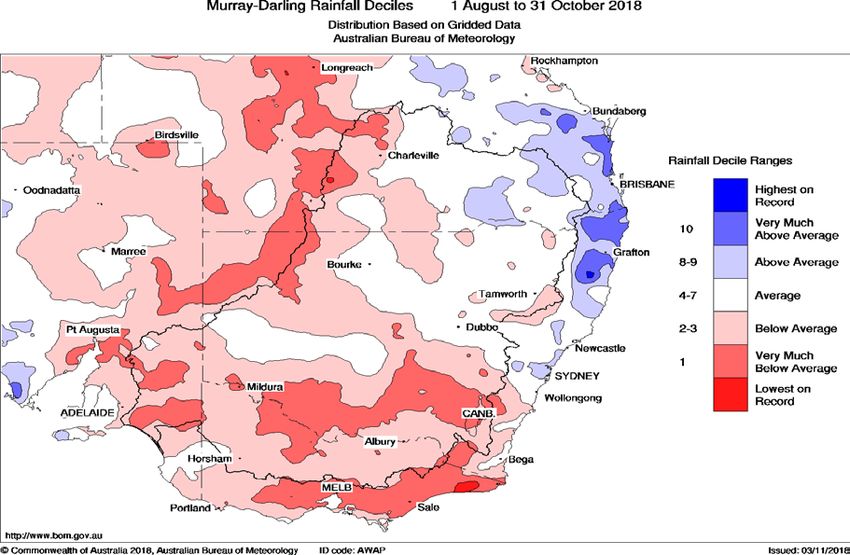
Contents

1.     Highlights ........................................................................................................................................................ 3

2.     Operational objectives................................................................................................................................. 4

3.     Operational rules........................................................................................................................................... 5

3.1    Water Sharing Plan (WSP) .................................................................................................................................. 5

3.2    Murray-Darling Basin agreement ..................................................................................................................... 6

4.     Customers ...................................................................................................................................................... 7

4.1    Domestic and stock ............................................................................................................................................ 7

4.2    Local water utility – Broken Hill, Pooncarrie .................................................................................................... 8

4.3    Regulated river (high security) .......................................................................................................................... 9

4.4    Regulated river (general security) ................................................................................................................. 10

5.     Drought management measures .............................................................................................................. 11

6.     Resources analysis ...................................................................................................................................... 13

7.     Operational strategy................................................................................................................................... 20

7.1    Drought strategy................................................................................................................................................ 22

7.2    Dry scenario (80th percentile inflows) ............................................................................................................ 24

7.3    Water quality ...................................................................................................................................................... 25

7.4    Key operational decisions and dates ........................................................................................................... 27

7.5    Key messages regarding drought measures ............................................................................................... 29

Lower-Darling Operations Plan – November 2018                                                                                                                        2
1. Highlights

WaterNSW has developed the Lower-Darling Operations Plan to ensure water supplies for Broken Hill
and surrounding communities and reliable water supply to the customers along the Lower-Darling
can be maintained through a repeat of the worst drought of record. This plan is a living document
and will be updated regularly based on changing conditions.

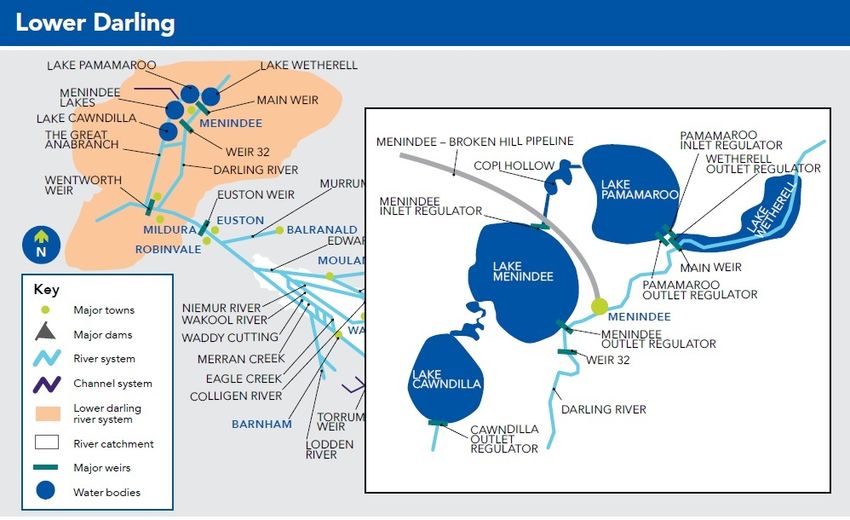
Water is stored in Menindee Lakes to meet water needs including provision for water losses
(seepage and evaporation), maintaining the Lower-Darling environment supply for essential
requirements (e.g. town water supply, domestic and stock and basic land holder rights) and
General Security Licenses in the Lower-Darling and Lower Murray systems.

This plan looks to optimise water delivery through maximising releases from the lower storages
(Menindee and Cawndilla) and retaining water in the more efficient Upper Lakes (Wetherell and
Pamamaroo) until demands and outlet capacity constraints of the lower storages necessitates
releases from the upper lakes.

We have analysed the lowest inflow sequences and maximum evaporation rates for the region to
ensure operations of the lakes are optimised for supply through a repeat of the drought of record
and drier scenarios.

Lower-Darling Operations Plan – November 2018                                                   3
2. Operational objectives

The aim of the plan is to maximise the use of the resource to meet customer demands within the
Lower-Darling water source and to meet NSW and Victoria’s contribution to the Murray while
ensuring that essential water needs can be met through a repeat of the worst drought on record.
The plan also identifies the key actions required to extend supplies if inflows are lower than previous
droughts.

The plan therefore has been developed to ensure that critical water needs can be met, and the
environmental needs of the Lower-Darling river are maintained for as long as possible.

Key operational objectives
    •    Maintain supply to Broken Hill.
    •    Maintain a continual flow of water along the Lower-Darling (maintain flow at Burtundy)
         through a repeat of the lowest inflows on record.
    •    Maximise use of water in the lower Lakes to meet customer demands first.

The operations plan has considered three inflow scenarios that will guide operational decisions.
They provide assessment of a range of conditions that may occur in the coming 12-24 months.
    •    Scenario 1: Sahara – no inflow occurs at Wilcannia through to resource being exhausted;
    •    Scenario 2: Drought – minimum statistical inflow sequence on record - applied from Dec
         2018 – with resources managed to the next significant inflow; and
    •    Scenario 3: Dry scenario - 80th percentile inflow sequences applied from Dec 2018 to
         represent the likely no inflow scenario. The dry scenario considers an inflow sequence that
         could be expected to be exceeded 8 years out of 10 based on historical records.

We will continue to review the system operations forecast with the aim to implement drought
measures as the volume of water in the lakes reduce.

As there is no guarantee that the next drought will not be more severe than the last, the design
scenario is considered to be scenario 1, it is the worst-case, no inflow scenario.

Scenario 2 provides for a repeat of the worst inflow sequence; this scenario considers the measures
required to manage the systems water resources through a repeat of these conditions to provide
the best outcome possible.

Lower-Darling Operations Plan – November 2018                                                         4
Scenario 3 provides scope of the potential system operations in the event of some inflows, but
overall the system remains relatively dry, and what this would mean for river flows and town water
supplies.
Overall it is unlikely that the conditions presented in these scenarios will be repeated. Rather they
will be used to help inform customers and community about potential system operations over the
next 12 – 24 months and guide operational decisions as time progresses. Ultimately the decisions
made will be in response to the conditions that do occur.
3. Operational rules
3.1 Water Sharing Plan (WSP)
The WSP provides a framework for sharing of water resources within the Lower-Darling, aiming to
provide a balance between environmental, economic and social objectives. The plan establishes
a bulk access regime for the extraction of water under access licences providing for environmental
water rules or planned environmental water, water for basic landholder rights and extraction under
a number of access licence categories.
The WSP was originally gazetted in 2003 and as such the framework has been established based on
inflow sequences prior to this time. Since gazette of the plan, the minimum inflow sequence prior to
2003 has been exceeded (by lower inflows) on at least 2 occasions.
The WSP provides for licenced entitlements of:
• Domestic & stock
• Local water utility
• Regulated river (high security)
• Regulated river (general security)
• Supplementary – although all supplementary entitlement is now held by government and
has essentially be retired from extractive use
The WSP provides that minimum releases be delivered at Weir 32 for the suppression of algae,
noting the seasonal variability, the minimum release requirements are as follows:
January-March 350 ML/d
April 300 ML/d
May-October 200 ML/d
Lower-Darling Operations Plan – November 2018 5November-December 300 ML/d
These releases total 95.6 GL/year.
3.2 Murray-Darling Basin agreement
The Commonwealth Water Act 2007 provides the Murray-Darling Basin Agreement within Schedule
1 of the Act. Clause 95 of Schedule 1 provides the New South Wales entitlement to water from
Menindee Lakes.
Clause 95 provides that:
• Whenever water in the Menindee Lakes storage falls below 480 GL, New South Wales may
use stored water as it requires until the volume next exceeds 640 GL.
• Whenever sub clause 1 does not apply, the resources within the storage are shared in
accordance with Clause 94 (c), meaning that inflows to the storage are shared 50:50
between Victoria and New South Wales.
The agreement provides that the Murray-Darling Basin Authority, acting on behalf of the signatories
to the agreement, shall manage the access and delivery of resources held within the Menindee
Lakes storage in accordance with system operating requirements.
Lower-Darling Operations Plan – November 2018 64. Customers
4.1 Domestic and stock
There are 115 Domestic & Stock licences with a total share component of 1,370 ML. Domestic &
Stock use in the Lower-Darling generally exceeds 400 ML/year. Average annual use has been
impacted by periods of no access in the Lower-Darling in recent years. Figure 1 shows the annual
historical use for domestic and stock from 2012/13. Domestic & stock water is required all year
round and requires a continual flow along the Lower-Darling between Weir 32 and Burtundy Weir.
Domestic & stock
800
700
600
500
Usage (ML)
400
300
200
100
0
2012/13 2013/14 2014/15 2015/16 2016/17 2017/18 Average
Figure 1: Historical Use - Domestic & Stock
Lower-Darling Operations Plan – November 2018 74.2 Local water utility – Broken Hill, Pooncarrie
There are two Local Water Utility (LWU) with share component of 9,975 ML for Broken Hill and 160 ML
for Pooncarie. Broken Hill demand varies from 15 ML/d over winter to 35 ML/d over summer.
Historical use shown in figure 2 indicates that use is usually over 3,500 ML/year, and regularly
exceeds 5,000 ML/year.
Water quality can be a major issue for town water supplies with salinity content above 1,000 EC
resulting in taste concerns and above 1,500 EC resulting in corrosive issues on residential,
commercial and industrial equipment. Once water quality exceeds these levels additional levels of
treatment is required to ensure the water can be used for town supply.
Local water utility
8000
7000
6000
5000
Usage (ML)
4000
3000
2000
1000
0
2012/13 2013/14 2014/15 2015/16 2016/17 2017/18 Average
Figure 2: Historical use – Local water utility
Lower-Darling Operations Plan – November 2018 84.3 Regulated river (high security)
There are 69 High security access licences with a total share component of 7,771 ML. Out of which,
Consumptive use account for 4,196 ML and environmental water account for 3,575 ML. Historical
use shows that use is in most years over 3,000 ML/year, and regularly exceeds 3,500 ML/year (refer
to figure 3). The exceptions being years in which use restrictions have been in place for drought
management.
High security
5000
4500
4000
3500
3000
Usage (ML)
2500
2000
1500
1000
500
0
2012/13 2013/14 2014/15 2015/16 2016/17 2017/18 Average
Figure 3: Historical use - high security
Lower-Darling Operations Plan – November 2018 94.4 Regulated river (general security)
There are 92 General security access licences with a total share component of 79,507 shares. Out
of which, Consumptive use account for 10,143 shares and environmental water account for 69,364
shares. The history of general security use has been highly variable. Recent years has been
boosted by significant allocation assignments into the Lower-Darling system by both consumptive
users and the environmental water managers.
While the average use is calculated as 91,100 ML/year, that annual use ranges from 900 ML in
2015/16 to 185,000 ML in 2016-17, where e-water holders used 183,000 ML. Figure 4 shows the
historical general security uses since 2012/13.
General security
200000
180000
160000
140000
120000
Usage (ML)
100000
80000
60000
40000
20000
0
2012/13 2013/14 2014/15 2015/16 2016/17 2017/18 Average
Figure 4: Historical use - general security
Lower-Darling Operations Plan – November 2018 105. Drought management measures 5.1 Reduce water sharing plan minimum flow requirements The WSP provides 95.6 GL (Section 3.1) of water for release over Weir 32, in a seasonal pattern for improved water quality in the Lower-Darling. Meeting the WSP requirement is a significant draw on the available resources, once the system reaches 480 GL and access to resources transfers solely to NSW. WaterNSW has allocated a budget of 63 GL per year for releases downstream of Weir 32, once the 480 GL trigger is achieved – when no significant inflows are in transit upstream of the storage. The WSP minimum flow requirements have been set based on what is assumed necessary to maintain ecological function and minimise risk of Blue Green Algal outbreaks. Reducing below the minimum required flows during Summer will create an increased risk of algal outbreak, that is unlikely to be mitigated through increased flow. The option of maintaining minimum flow requirements at Weir 32 will reduce the duration of time that flow through the system can be maintained if no further inflows occur. That is, the resources will be depleted sooner, and as such, without inflow, cease to flow at weir 32 will occur sooner. In this plan greater value has been placed on maintaining a reliable supply to the Lower-Darling water users, extending the duration of stock, domestic and town water supplies. However, if higher rates of release are supported by community and customers for management of water quality, these would be considered. 5.2 Pumping to Copi Hollow (maximum storage volume 12GL) Additional storage in Copi Hollow requires the installation of a block bank across the interconnecting channel between Copi Hollow and Lake Pamamaroo. Pumping from Lake Pamamaroo to Copi Hollow needs to commence before the water level and water quality in Pamamaroo drops too low, commencing when Pamamaroo reaches 108GL, and can only be achieved to a volume of 72 GL. Pumping to Copi Hollow extends the period of time that supply can be made to Broken Hill without the need for reverse osmosis. Lower-Darling Operations Plan – November 2018 11
5.3 Pumping lake Tandure to lake Wetherell

Lake Tandure is a small flat storage lake that is usually connected to Lake Wetherell. Naturally the
two lake bodies separate when the storage reaches 57.8 m or approximately 9.4 GL.
However, efficiency in system storage can be achieved by installing a bank and isolating Lake
Tandure when the Lake Wetherell total storage reaches around 53 GL, and pumping the volume
held in Lake Tandure to Lake Wetherell. This reduces the surface area of the stored volume and
provides efficiency through reduced evaporation.

Pumping from Lake Tandure can extend the period that supply can be made to Broken Hill.

5.4 Reverse osmosis (Broken Hill)

Water quality in Lake Wetherell decreases as the water evaporates and leaves the salt behind. The
electrical conductivity (measurement of salinity) increases to a point where it becomes unsuitable
for domestic supply (above 1,500 E.C.). Essential Water has capacity to install a reverse osmosis
treatment plant for use when water supplies from the Menindee scheme exceed 1,500EC. This
requires some work by Broken Hill to re-instate the facility.

Essential Water have a primary extraction point for supply from upstream of Weir 32. The Weir 32
weir pool has continuous monitoring of E.C. at the WaterNSW hydrometric gauging station. Essential
Water may also source water from Copi Hollow for drought supplies. Monthly monitoring of Lake
water quality is the normal regime, however, this would be increased during drought management
periods or algal outbreaks.          Essential water is also likely to complete a rigorous water quality
monitoring program of all supplies.

5.5 Lower-Darling River block banks

When the water supply is insufficient to secure both Broken Hill and maintain continuous flows in the
Lower-Darling, block banks are constructed as temporary weirs in the Lower-Darling. The water
behind these block banks would then extend the supply of stock and domestic and high security
supplies in these locations. However, they supply only a limited number of customers and do not
address the need of all customers along the Lower-Darling.

Lower-Darling Operations Plan – November 2018                                                         12
5.6 Temporary bore field for Broken Hill and Menindee

Bores have been installed in the Menindee Lake and Tallyawalka aquifers. The water quality in
these aquifers is suitable for supply to Broken Hill and Menindee township, although the Menindee
bore-field would still require reverse osmosis treatment due to salinity marginally above the 1,500 EC
threshold. Commissioning of these bore-fields would require; power, pumps and substantial
pipelines that would take about six months to construct.

This action has been strongly opposed by the Broken Hill community in past years.

6. Resources analysis

6.1 2017/18 water year

Inflows to Menindee Lakes System have been very low during 2017/18 water year. Storage volume
peaked at 1,585 GL on 17 December 2016 and since then has decreased due to releases to meet
downstream demands and system losses, including evaporation, seepage, etc.

As shown in figure 5, the storage volume was 768 GL at the start of 2017/18 water year which has
depleted to 209 GL at the end of water year by 30 June 2018.

The 2017/18 total flow at Willcannia was 52 GL and inflows to the lake system was 21 GL. Most of the
inflows arrived during July to Dec 2017 and a small inflow arrived at the end of the water year from
Northern Connectivity Event i.e. when Environmental water was released from Gwydir and Border
River Catchments and s324 order was in place to protect the water.

Around 2 GL inflow was recorded since the start of 2018/19 water year and that was mostly from
Northern Connectivity Event. Figure 6 shows the recorded flows along the Barwon Darling River
system since July 2017.

Lower-Darling Operations Plan – November 2018                                                       13
Darling river flows and Menindee storage volume
                    3,500                                                                                                                                                                     900,000

                                                                                                                                                                                              800,000
                    3,000                                                                 Menindee storage

                                                                                                                                                                                              700,000
                    2,500
                                                                                                  Weir 32 release                            Evaporation (30
                                                                                                                                                                                              600,000

                                                                                                                                                                                                        Storage volume (ML)
                                                                                                                                             day moving
    Flow (ML/day)

                    2,000
                                                                                                                                             average)                                         500,000

                    1,500                                                                                                                                                                     400,000

                                                                                                                                                                                              300,000
                    1,000
                                                                                                                                                                                              200,000

                     500
                                                                                                                                                                                              100,000

                       0                                                                                                                                                                      0
                                                      30-Aug-17

                                                                  29-Sep-17

                                                                                             28-Nov-17

                                                                                                         28-Dec-17

                                                                                                                     27-Jan-18

                                                                                                                                                                      27-May-18

                                                                                                                                                                                  26-Jun-18
                            01-Jul-17

                                          31-Jul-17

                                                                              29-Oct-17

                                                                                                                                 26-Feb-18

                                                                                                                                              28-Mar-18

                                                                                                                                                          27-Apr-18

Figure 5: Menindee Lakes Total Volume, Storage release and Evaporation – 2017/18

Lower-Darling Operations Plan – November 2018                                                                                                                                                                        14
Period 16 Month 01/07/2017 to 01/11/2018 2017-18
416001 BARWON R @ MUNGINDI 141.00 1 Day Mean Discharge (ML/d)
422001 BARWON @ DANGAR BDGE141.00 1 Day Mean Discharge (ML/d)
425003 DARLING@BOURKE TOWN 141.00 1 Day Mean Discharge (ML/d)
425008 DARLING@WILC. MAIN C 141.00 1 Day Mean Discharge (ML/d)
2000
1600
1200
800
400
0
Jul Aug Sep Oct Nov Dec Jan Feb Mar Apr May Jun Jul Aug Sep Oct
Figure 6: 2017/18 Recorded system Inflows
6.2 2018/19 water year forecast
6.2.1 Water allocations
Water allocation for the Lower-Darling were announced in early July with 100% allocation provided
to High Security customers and no allocations for General Security customers. Average carryover
was 15%.
Customer group Account volume (ML)
Local water utility 10,135
Domestic and stock 1,370
High security, irrigation 4,196
High security, environment 3,575
General security (AWD) 0
General security, irrigation (carryover) 2,152
General security, environmental (carryover) 10,061
Table 1: Available water as at 1 July 2018
Lower-Darling Operations Plan – November 2018 156.2.2 Water availability in 2018/19
This information was current as 31 October 2018.
Licence Share Carryover in AWD Allocation Allocation Usage Balance
category component volume assignments assignments
in out
Domestic
and stock 335 0 335 0 0 31 304
Domestic
and stock
(domestic) 424 0 424 0 0 62 362
Domestic
and stock
(stock) 612 0 612 0 0 5 607
Local water
utility 10,135 0 10,135 0 0 1,949 8,186
Regulated
river
(general
security) 79,507 12,213 0 5 43 517 11,658
Regulated
river (high
security) 7,771 -1 7,771 224 186 757 7,051
Supplement
ary water 250,000 0 250,000 0 0 0 250,000
Grand total 348,784 12,212 269,277 229 229 3,321 278,168
Table 2: Account balance
Lower-Darling Operations Plan – November 2018 166.2.3 Current situation
As of 6 November 2018, the total storages were at 124.7 GL and about 77 GL of that is active
volume. Table below shows the storage breakdown of the lakes as of 6 November 2018.
Lake ending Current storage Dead storage Active storage
volume (ML) (ML) (ML)
Tendure 9,488 6,188 3,300
Wetherell 22,387 490 21,897
Copi and Pamamaroo 81,706 31,710 49,996
Cowndilla 11,102 8,950 2,152
Total 124,683 47,388 77,345
Table 3: Storage breakdown as of 6 Nov 2018
The Barwon – Darling River system was mostly disconnected during the second half of 2017/18
water year. Wilcannia was at cease to flow condition for 97 days starting from 27 January 2018.
Flow arrived at Wilcannia during 1st week of May from rainfall events of Moonie and Culgoa in
Queensland then continued with Northern Connectivity Event. Barwon Darling River is not currently
flowing, and flow ceased at the end of Northern Connectivity Event. The Menindee Lakes system
has received around 1.5 GL of inflow over the winter months.
Currently, with the total storage is below the trigger volume of 480 GL, several drought mitigation
measures are in place:
• Installation of block bank between Lake Tandure and Lake Wetherell was completed on
15/03/2018. Water was pumped from Lake Tandure into Lake Wetherell to reduce the
evaporation loss from the former. About 7,200 ML was pumped into Lake Wetherell
between 26/03/2018 and 17/05/2018
• Reduced flow targets at Weir32 to target minimal flows at Burtundy, since 15 December
2017.
• Installation of block banks in the LowerDarling River to provide a reliable supply to water
users in the Lower-Darling River.
o Jamesville Bank: Located near Pooncarrie the bank was constructed on 4 July 2018
and filling has commenced with reduced supply to Lower-Darling River. The bank
was about 3.65m full on 19 November 2018.
Lower-Darling Operations Plan – November 2018 17o Ashvale Bank: Located near Burtundy the bank was constructed on 3 August and
filling has commenced with reduced supply to Lower-Darling River. The bank was
about 1.41m full on 19 November 2018.
o In addition, approvals have been received for two more banks at Karoola and at
Court Nareen. Installation of those block banks will start soon.
• Installation of a bank to isolate Copi Hollow from Lake Pamamaroo has been completed on
24 August as originally planned. Around 11 GL was pumped to Copi Hollow between 25
September and 5 November with an aim to extend the supply to Broken Hill.
With low storage volume and nil inflows, demands for town water supply, stock and domestic and
expected to be delivered during this summer. Very limited supply will be available only for
permanent plantings during the summer months. Any supply will be dependent upon future inflows
and after ensuring enough water is available to provide connectivity and critical human water
needs.
Supply for town water, stock and domestic will be varied depending location within the system.
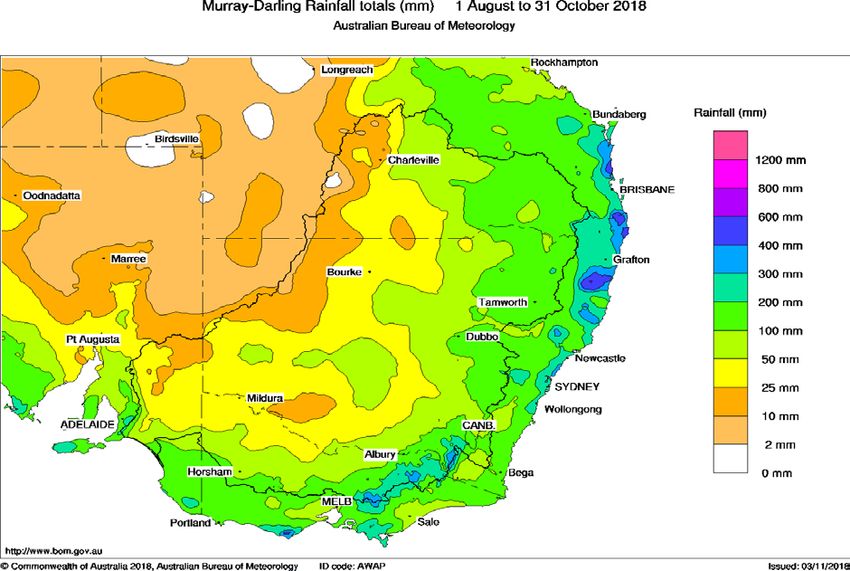
6.2.4 3-months rainfall
Rainfall over last three months has been average to very much below average across NSW, with
large areas especially in the north west receiving below to very much below average rainfall. Areas
west of the Great Dividing Range has received less than 200mm of rain during last three months.
South West Queensland has experienced average to below average rainfalls with the Murray
Darling basin catchment receiving less than with only 2-25mm of rain falling.
Northern Connectivity Event, with s324 order in place, delivered more than 7.4 GL at Wilcannia with
a peak of 500 ML/day. Flow ceased at Wilcannia by the end of August. Since then, there has been
no flow generated along the Barwon Darling catchment from rainfall and hence no inflow has
arrived at the lake system.
Lower-Darling Operations Plan – November 2018 18Figure 7: Last 3 months rainfall in the Murray Darling Basin Lower-Darling Operations Plan – November 2018 19
Barwon-Darling flows
                   600

                   500
   Flow (ML/day)

                   400

                   300

                   200

                   100

                     0
                                     11/07/2018

                                                    21/07/2018

                                                                 31/07/2018

                                                                              10/08/2018

                                                                                           20/08/2018

                                                                                                        30/08/2018

                                                                                                                                    19/09/2018

                                                                                                                                                 29/09/2018

                                                                                                                                                                          19/10/2018

                                                                                                                                                                                       29/10/2018
                         1/07/2018

                                                                                                                     9/09/2018

                                                                                                                                                              9/10/2018
                                                  416001-Barwon R. @ Mungindi                                                    425003 - Darling R. @ Bourke
                                                  425008 - Darling R. @ Wilcannia

Figure 8: Flows in the Barwon Darling since 1 July 2018.

7. Operational strategy

WaterNSW will operate the storages to ensure that key objectives can be met based on the worst-
case scenario (repeat of the drought of record) inflow sequence. However, the plan also looks at
a less conservative strategy (80th percentile) to show the variability of water to allow for broader
planning.
WaterNSW has engaged with customers to understand demands for the current year and has
developed a release strategy that addresses the system key objectives including ensuring a
continuous flow along the Lower-Darling and supply to Broken Hill.

The main drivers for customer demands in 2018/19 will be to:

           •         Maintain the supply for Broken Hill town water supply until delivery of the Wentworth to
                     Broken Hill pipeline (8-9 GL)

           •         Maintain the supply for Menindee and Pooncarrie for the longest duration possible;

           •         While flow connectivity can be achieved:

                                o    Supply consumptive high security and general security licence holders;

Lower-Darling Operations Plan – November 2018                                                                                                                                                       20
• Provide critical supply for stock, domestic and permanent planting once resources reach
critical levels – the priority will be to fill in river storages for drought supply.
As outlined in the Operational Objective (Section 2) WaterNSW has consider a number of scenarios
within the operational strategy. All strategies assume that there will be no inflows until the end of
November 2018. Figure 9 shows the Menindee lakes storage volume forecasts for three different
scenarios.
Menindee Lakes volume (ML)
1800000
1600000
1400000
Storage volume (ML)
1200000
1000000
800000
600000
400000
200000
0
Nov-16
Jan-17
Sep-16
Nov-17
Jan-18
Nov-18
Jan-19
May-17
Sep-17
Nov-19
Jan-20
May-18
Sep-18
Nov-20
Jul-16
Mar-17
May-19
Sep-19
Jul-17
Mar-18
May-20
Sep-20
Jul-18
Mar-19
Jul-19
Mar-20
Jul-20
80th percentile inflow Minimum inflow Zero inflow Actual
Figure 9. Menindee Lakes volume based on the three inflow scenarios
Lower-Darling Operations Plan – November 2018 217.1 Drought strategy
To ensure that customer demands and operational objectives are met a number of drought
management measures will be needed as the drought sequence intensifies. These drought
management measures include reducing the minimum environmental releases along the Lower-
Darling and implementing drought storages (Copi Hollow) and treatment options (Broken Hill
Reverse Osmosis). Timeframes for implementing these measures have been identified in the
Operational Plan based on storage triggers.
Lake storage under minimum inflow scenario
600,000
500,000
400,000
Storage (ML)
300,000
200,000
100,000
0
Nov-16
Jan-17
Sep-16
Nov-17
Jan-18
Nov-18
Jan-19
May-17
Sep-17
Nov-19
Jan-20
May-18
Sep-18
Nov-20
Jul-16
Mar-17
May-19
Sep-19
Jul-17
Mar-18
May-20
Sep-20
Jul-18
Mar-19
Jul-19
Mar-20
Jul-20
Wetherell (total) Pamamaroo (total) Menindee Cawndilla
Figure 10. Individual lakes total volume (minimum inflow scenario)
Quarter Inflows during the ending quarter End of quarter storage
Sahara Minimum 80th percentile Sahara Minimum inflow 80th percentile
(Zero Inflow) inflow inflow (Zero Inflow) inflow
Dec-Feb 18 6,917 6,917 6,917 316,654 316,654 316,654
Mar-May 18 0 0 0 216,310 216,310 216,310
Jun-Aug 18 3,198 3,198 3,198 178,618 178,618 178,618
Sep-Oct 18 0 0 0 127,663 127,663 127,663
Nov-Feb 19 0 0 32,760 33,769 33,769 52,274
Mar-May 19 0 0 84,240 16,371 16,371 82,750
Lower-Darling Operations Plan – November 2018 22Jun-Aug 19 0 3,640 141,090 9,019 12,000 179,061
Sep-Nov 19 0 12,870 49,180 5,948 15,617 117,884
Dec-Feb 20 0 18,380 247,540 3,426 21,197 240,495
Mar-May 20 0 0 176,180 2,426 12,946 303,150
Jun-Aug 20 0 3,640 189,880 1,960 10,573 406,239
Sep-Nov 20 0 12,870 159,056 1,145 16,440 454,982
Table 4: Total Lake Inflow Scenarios
WaterNSW has adopted the drought scenario recommencing in Dec 2018 (24-months of minimum
inflows based on historical records), as the basis for its drought preparedness. The tables below
outline the likely inflows, releases and evaporation from the storages to enable the development of
a drought management plan to be prepared for the system.
Total Lakes
Quarter ending Inflows Release Evaporation End of quarter Weir 32 daily
storage flow (ML/d)
Dec-Feb 18 6,917 73,450 141,960 316,654 285
Mar-May 18 0 30,305 65,180 216,310 189
Jun-Aug 18 3,198 20,160 29,320 178,618 182
Sep-Oct 18 0 15,860 32,077 127,663 219
Nov-Feb 19 0 15,694 79,786 33,769 129
Mar-May 19 0 3,887 12,778 16,371 42
Jun-Aug 19 3,640 4,724 3,259 12,000 51
Sep-Nov 19 12,870 5,097 4,388 15,617 56
Dec-Feb 20 18,380 5,460 7,467 21,197 60
Mar-May 20 0 5,244 3,051 12,946 57
Jun-Aug 20 3,640 4,724 1,255 10,573 51
Sep-Nov 20 12,870 5,097 2,045 16,440 56
Table 5: Total Lake Forecast Data (minimum inflow sequence)
Lower-Darling Operations Plan – November 2018 23Upper Lakes (Wetherell and Pamamaroo)
Quarter Inflows Release Evaporation End of quarter Weir 32 daily
ending storage average flow
(ML/d)
Dec-Feb 18 6,917 30,240 69,010 238,344 285
Mar-May 18 0 23,250 38,210 179,714 189
Jun-Aug 18 3,198 20,160 18,470 152,248 182
Sep-Oct 18 0 15,860 22,000 115,640 219
Nov-Feb 19 0 15,694 67,572 33,741 129
Mar-May 19 0 3,887 12,666 16,369 42
Jun-Aug 19 3,640 4,724 3,167 11,998 51
Sep-Nov 19 12,870 5,097 4,297 15,615 56
Dec-Feb 20 18,380 5,460 7,376 21,195 60
Mar-May 20 0 5,244 2,959 12,944 57
Jun-Aug 20 3,640 4,724 1,163 10,571 51
Sep-Nov 20 12,870 5,097 1,981 16,438 56
Table 6: Upper lakes (Wetherell and Pamamaroo) forecast data (minimum inflow sequence)
Lake Cawndilla
Quarter Release Evaporation End of quarter storage
Dec-Feb 18 43,210 51,090 78,310
Mar-May 18 7,055 26,970 36,596
Jun-Aug 18 0 10,850 26,370
Sep-Oct 18 0 14,327 12,043
Nov-Feb 19 0 12,015 28
Mar-May 19 0 26 2
Table 7: Lake Cawndilla forecast data (minimum inflow sequence)
7.2 Dry scenario (80th percentile inflows)
The dry scenario considers the 80th percentile inflow sequence to the lakes, inflows that would be
exceed 8 years in 10.
Under this scenario the volume of water held within the lakes would start to increase from Dec 2018.
Refer to figure 11 for Menindee lakes storage volume forecast for this scenario. No major drought
management measures will be required.
Lower-Darling Operations Plan – November 2018 24Under this scenario supply along to customers would continue. However, depending upon timing of
the inflows it is high likelihood the total volume in the Lakes will remain below the 480GL and not
increase above the 640GL over the two-year period. This means no water will be available for the
MDBA to meet demands in the Murray over that period.
Menindee Lakes volume (ML)
1,800,000
1,600,000
1,400,000
Storage volume (ML)
1,200,000
1,000,000
800,000
600,000
400,000
200,000
0
Nov-16
Jan-17
Sep-16
Nov-17
Jan-18
Nov-18
Jan-19
May-17
Sep-17
Nov-19
Jan-20
May-18
Sep-18
Nov-20
Jul-16
Mar-17
May-19
Sep-19
Jul-17
Mar-18
May-20
Sep-20
Jul-18
Mar-19
Jul-19
Mar-20
Jul-20
80th percentile inflow
Figure 11: Lakes total volume under the 80th percentile inflow sequence.
7.3 Water quality
Based on current minimum inflow sequence forecasts the salinity levels will reach 1,000 electrical
conductivity (E.C.) in November 2018 and 1,500 E.C. in April 2019. Figure 12 shows the lake Wetherell
salinity levels for minimum inflow sequence. Figure 13 shows the lake Wetherell salinity levels for zero
inflow sequence.
If raw water salinity levels increase above 1,000 E.C. it will begin to have an impact on the taste of
the Broken Hill water supply and once salinity levels reach 1,500 E.C. the water quality will have a
corrosive impact on water using appliance and equipment.
Lower-Darling Operations Plan – November 2018 25Water quality in Lake Wetherell will be key to the time of alternating supply from Weir 32 to Copi
Hollow for supply to Broken Hill. Future of Broken Hill water supply will depend on the completion of
Wentworth to Broken Hill pipe line project.
Lake Wetherell salinity
2,500
2,000
Lake salinity (EC µm/cm)
1,500
1,000
500
0
29-Oct-17
28-Dec-17
19-Oct-19
18-Dec-19
13-Oct-20
26-Feb-18
27-Apr-18
24-Oct-18
23-Dec-18
21-Feb-19
22-Apr-19
16-Feb-20
16-Apr-20
30-Aug-17
26-Jun-18
25-Aug-18
21-Jun-19
20-Aug-19
15-Jun-20
14-Aug-20
01-Jul-17
Figure 12: Salinity levels in lake Wetherell (minimum inflow sequence)
Lower-Darling Operations Plan – November 2018 26Lake Wetherell salinity
20,000
18,000
16,000
14,000
Lake salinity (EC µm/cm)
12,000
10,000
8,000
6,000
4,000
2,000
0
29-Oct-17
28-Dec-17
24-Oct-18
23-Dec-18
19-Oct-19
18-Dec-19
13-Oct-20
26-Feb-18
27-Apr-18
21-Feb-19
22-Apr-19
16-Feb-20
16-Apr-20
30-Aug-17
26-Jun-18
25-Aug-18
21-Jun-19
20-Aug-19
15-Jun-20
14-Aug-20
01-Jul-17
Figure 13: Salinity levels in lake Wetherell (zero inflow sequence)
7.4 Key operational decisions and dates
The below table outlines dates for key operational changes required to ensure operational
objectives are met. The model optimises the use of Lake Wetherell first drawing water from
the flood plain then transferring releases to Pamamaroo. The model has also used the
worst recorded evaporation data.
Key operational changes
Assumptions Sahara (zero inflow) Minimum inflow 80th percentile inflow
Inflow No inflow beyond Statistical worst inflow 80th % Inflow sequence -
recession of current sequence on record - Applied from Dec 2018
inflow Applied from Dec 2018
Broken Hill reserve Planned 50 GL of active storage - but due to switch to Copi Hollow
when Weir 32 EC forecast to exceed 1,500 EC.
Lower-Darling Operations Plan – November 2018 27MDBA delivery Ceased since second week of December 2017
MDBA delivery cease - 480 15-Dec-17 15-Dec-17 15-Dec-17
trigger
Volume in Wetherell + 307 GL 307 GL 307 GL
Pamamaroo @ 480GL
Volume in Cawndilla + 172 GL 172 GL 172 GL
Menindee @ 480 GL trigger
Results Sahara (zero inflow) Minimum inflow 80th percentile inflow
Weir 32 Flows - NSW control - Currently 200ML/day Currently 200ML/day Per Water Sharing Plan
post 480 GL Releases will be Releases will be
reduced depending reduced depending
on Pamamaroo on Pamamaroo outlet
outlet capacity. capacity.
Flow cease by end Flow cease by end of
of Dec 2018 / early Dec 2018 / early Jan
Jan 2019 2019
MDBA volume accessible Not available Not available Not available
Tandure pumping First phase First phase completed First phase completed –
completed – 25 Mar – 25 Mar to 17 May 25 Mar to 17 May 2018.
to 17 May 2018. 2018.
Pumping to Copi Hollow First phase First phase completed First phase completed 25
completed 25 Sep to 25 Sep to 5 Nov 2018 Sep to 5 Nov 2018
5 Nov 2018
Lower-Darling Cease to Flow End of Dec End of Dec 2018/early No supply issue forecast
2018/early Jan 2019 Jan 2019
Switch Supply to Copi Hollow Dec 2018 Dec 2018 Dec 2018
(depending upon EC level in
Wetherell)
Broken Hill Supply switch Late April 2019* Late April 2019* End of Feb 2019
back to lake Wetherell On hold pending On hold pending
W2BHill pipeline W2BHill pipeline
Broken Hill supply fail September 2019 Secure end of forecast Secure end of forecast
On hold pending period 30 Nov 2020 period 30 Nov 2020
Lower-Darling Operations Plan – November 2018 28W2BHill pipeline * Salinity is likely to be high Table 5: Key Operational changes required 7.5 Key messages regarding drought measures Drought measures have been progressively implemented since Dec 2017. WaterNSW is continuously monitoring the situations and implemented various measures to manage the resources during drought. Following are the highlights regarding key drought management measures • WaterNSW has numerous works in place to secure water supply to Broken Hill until the pipeline is available, and to extend Lower-Darling supplies to S&D and High Security. • Block Bank in place between Wetherell and Tandure isolating lake Tandure providing efficiency through reduced evaporation. • Block Bank between Copi Hollow and Lake Pamamaroo is in place to continue supply to Broken Hill without the need for reverse osmosis. • Two temporary block banks downstream of Pooncarie (Ashville and Jamesville) have already been installed to maintain continuous flows with limited supply to number of customers. • Approvals have been received for two additional temporary block banks upstream of Pooncarie at Karoola and at Court Nareen to secure S&D supply. • Increased frequency of lake water quality monitoring of all water supplies. Broken Hill Pipeline project is expected to provide assistance supplying the Broken Hill community after December 2018. More information Subscribe to our customer information (weekly water availability reports, e-newsletters, etc.) at waternsw.com.au/subscribe. Lower-Darling Operations Plan – November 2018 29
You can also read


