LSE-UCT July School Cape Town, South Africa - 25 June - 6 July 2018
←
→
Page content transcription
If your browser does not render page correctly, please read the page content below

LSE-UCT July School
Cape Town, South Africa
         25 June – 6 July 2018
Contents                                                                                          Welcome to the LSE-UCT July School

 1 Welcome
 2 Why choose the LSE-UCT July School
 4 The programme

 7 Courses

  8 Africa and Global Transformation: The Rise of Emerging Powers and a New International Order
                                                                                                                     The London School of Economics and Political Science (LSE) and the University

  9 Citizens, Elections, and Democracy in Europe, the US, and South Africa   NEW FOR 2018
                                                                                                                     of Cape Town (UCT) are delighted to offer the sixth LSE-UCT July School in

  10 Economic Challenges for African Development
                                                                                                                     2018. This innovative programme provides students and professionals from
			12 Poverty and Development
                                                                                                                     across the globe with an exciting opportunity to study important social sciences

  13 Urban Development and Planning in Africa
                                                                                                                     issues relevant to Africa today in the beautiful and vibrant city of Cape Town.
                                                                                                                     The programme is taught by outstanding faculty from UCT and LSE, two of the
16 Life in Cape Town                                                                                                 world’s leading institutions for teaching and research.

19 Admission criteria                                                                                                The first five LSE-UCT July Schools attracted on average 101 participants
                                                                                                                     representing 28 nationalities. Whilst a majority of participants have been
20 Fees and payments                                                                                                 university-level students, some 32 per cent on average have been graduate
22 How to apply                                                                                                      professionals working in a variety of fields including business, finance,
                                                                                                                     education, government, banking, diplomatic services, charities and NGOs.
24 About UCT and LSE                                                                                                 This diversity in the classroom enables interaction between a wide range of
                                                                                                                     perspectives and helps bring together theoretical analysis with real-world,
                                                                                                                     practical experience.
                                                                                                                     If you are interested in gaining a global perspective on issues relevant to
                                                                                                                     Africa at the continent’s top university, we encourage you to apply to the LSE-
                                                                                                                     UCT July School and look forward to meeting you in Cape Town in July 2018.

                                                                                                                     Associate Professor Suellen Shay                     Professor Chris Alden
                                                                                                                     Dean, Centre for Higher Education Development, UCT   Professor of International Relations, LSE
                                                                                                                     Academic Director LSE-UCT July School                Academic Director LSE-UCT July School

                                                                                                                                        |1
                                                                                                                                         1|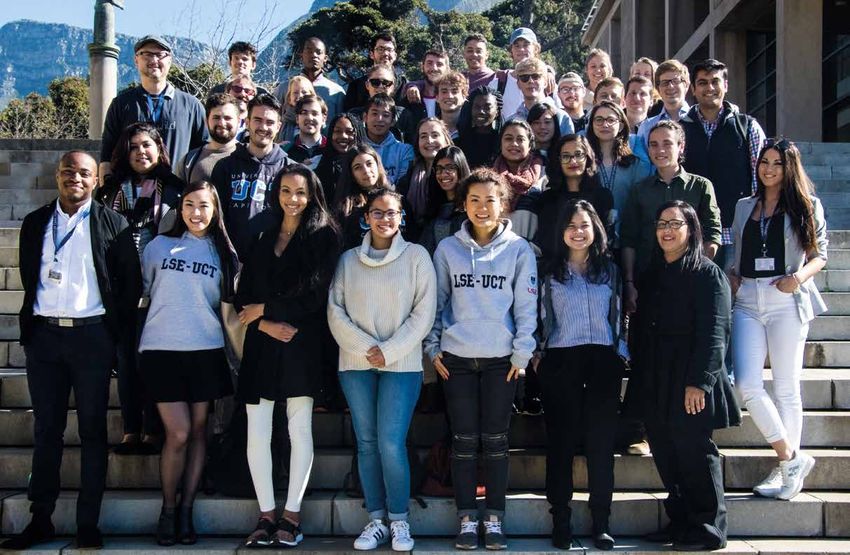
Why choose the LSE-UCT July School                      Share a unique educational
                                                        experience with a global mix
                                                        of students and professionals
                                                        The LSE-UCT July School is as diverse as it is
Study one of our distinctive                            interesting. Our participants come from across
courses, taught by LSE or UCT                           Africa, Europe, Asia, Australasia and the Americas
                                                        and vary in age too (the average age is around 25,
The London School of Economics and Political
                                                        but we welcome qualified applicants from university
Science (LSE) and the University of Cape Town
                                                        level upwards). Around one third of our attendees
(UCT) are two of the world’s leading institutions
                                                        are graduate professionals representing industries
for teaching and research. The LSE-UCT July
                                                        as diverse as banking, the charity sector and NGOs,
School offers participants the opportunity to
                                                        law, government agencies or diplomatic missions,
attend one of five exceptional courses, all of
                                                        commerce and media. Our participants always
which are taught by outstanding faculty from
                                                        tell us that the diversity of attendees is partly what
either LSE, UCT, or a combination of both.
                                                        makes the programme so unique and rewarding,
Our courses are carefully curated to provide
                                                        as it enriches class discussions, social events and
the best opportunities for those who wish to
                                                        networking opportunities.
investigate and learn more about contemporary
Africa, whether as part of university studies or
continuing professional development.

                                                                 Meeting and interacting with                                  I learned so much during my two weeks
                                                                very interesting students from                                 in Cape Town! Not only did I learn a lot
                                                        all over the world together with top                          about African economic development through
                                                        experts in their respective fields was                        exciting classroom discussions and the
                                                        amazing. This environment is incredibly                       inspiring field trips, but I also learned that
                                                        intellectually enriching.                                     it is possible to become close friends in only
                                                        Alexandre Maaza, who attended the                             two weeks. I miss them already!
                                                        July School in 2016 and 2017                                  Julian Slotman, United Nations, Cameroon

                                                    2                                                            33
Explore Cape Town, one of the                                                                                                 Working and learning with such a diverse group of
world’s most exciting cities                                                                                                  people was an amazing and enriching experience.
                                                                                                                      We benefitted from passionate professors and motivated
Cape Town (or “the Mother City” as it is known to locals)
                                                                                                                      students, using the wonderful location of Cape Town to
is a beautiful, complex and cosmopolitan city which is,
in many ways, the gateway to Africa. The city provides
                                                                                                                      explore some of the greatest global challenges.
a fascinating context in which to learn more about the                                                                Victoria Hikachula, Accountant, Zambia

politics, economics and geography of Africa, and to
understand why Africa’s role internationally, and issues
within the continent itself, are so important to the
world in the 21st century. We integrate the city into our
courses where possible, with trips to relevant places
of interest. Finally, the stunning UCT campus, at the foot
of Table Mountain, also offers an inspirational location
for study and lively debate.

                                                                      The range of sightseeing activities
                                                                      is amazing! From going to the
                                                             beach, to wildlife spotting (penguins,
                                                             seals, birds …) to the national botanic
                                                             garden and Table Mountain. The nightlife
                                                             is also great with plenty of restaurants
                                                             and bars. A must-visit city!
                                                             Wei-Heng Yen, National Taiwan Ocean University, Taiwan

                                                                                                                                                                         55
The programme
                                                                                                                                                                               Courses
                                                                                                                                                                               For an updated list of 2018 courses and for more
                                                                                                                                                                               detailed course outlines, please refer to:
The LSE-UCT July School is an exciting programme combining the strengths of LSE and UCT in
                                                                                                                                                                               lse.ac.uk/study/summerSchools/LSEUCTJulySchool/Courses
the social sciences. Each course is taught by a specialist in their field who holds a position at one
of these world-class institutions, and several courses are co-taught by faculty from LSE and UCT
so that students can take advantage of the teaching and research from both institutions.

Contact hours and teaching methods                                                        length and held on the final day of the programme, Friday 6 July. Please note that
                                                                                          these examinations cannot be rescheduled.
The LSE-UCT July School is an intensive, two week programme. Each course
is full-time and consists of a total of 48 contact hours between Monday                   A transcript showing the final grade achieved on the course is provided to all
and Friday over the two weeks. Usually this involves a total of 36 hours                  participants who successfully complete all elements of assessment. Participants
of lectures, attended by all participants each morning, and 12 hours of                   who do not complete all elements of assessment but who attend at least 80 per
seminar classes in groups of up to 15, held each afternoon. However, other                cent of the taught sessions will receive a statement of completion.
teaching methods appropriate to the individual courses may be used and
                                                                                          Full details of the assessment criteria, marking schemes and deadlines will
schedules may vary. Due to the rigorous, academic nature of the programme,
                                                                                          be provided at the start of the programme.
participants are strongly encouraged to consult the online course outlines
and to prepare as appropriate for the demands of their chosen course.
                                                                                          Obtaining academic credit
                                                                                          The quality of LSE-UCT July School courses is given the highest priority.
Assessment and certificates
                                                                                          Participating students are often able to receive academic credit toward their
Courses are generally assessed on a mid-term paper and a final examination,               degree from their home university upon presentation of their transcript and
but other elements such as mid-term quizzes, group projects and presentations             course syllabus. Students who wish to receive credit should speak to their
may also contribute. All courses feature a final examination, which is two hours in       home university as soon as possible. The LSE-UCT July School office is very
                                                                                          pleased to provide any further information which may be helpful to students
                                                                                          or their institutions.

                                                                                          Study facilities
         I am forever indebted to the LSE-                                                During the LSE-UCT July School, participants will have access to study
         UCT July School for submerging me                                                facilities at UCT, including the library, computer and printing facilities,
intellectually in such a superlative way with                                             web and Wi-Fi access. However, considering the intensive nature of
such world class academics. I am infinitely                                               the programme and the requirement for written papers and research,
                                                                                          participants are strongly advised to bring their own laptop or similar device
grateful for the privilege and honour to have                                             with them. Participants will be assisted in setting up access to IT networks
been a July School participant.                                                           on their portable devices on arrival at UCT.
Paballo Chauke, UCT and University of Oxford graduate

                                                                                      6                                                                                                                            7
NEW FOR 2018
Africa and Global Transformation: The Rise of Emerging Powers and a New International Order Citizens, Elections, and Democracy in Europe, the US, and South Africa
Nowhere in the world is the rise of the emerging powers more evident than Professor Chris Alden is a Professor of International In the past two years, elections have taken a dramatic turn in Europe, the Professor Michael Bruter is a Professor of political
in Africa. From the multi-billion dollar investments in oil and minerals to the Relations at LSE. He is recognised as a leading scholar on US, and South Africa alike. All three areas have seen results that upset polls science in the Department of Government at LSE, specialising
influx of thousands merchants, labourers and consumer goods, the growing the dynamic role of the emerging powers in Africa, and his expectations, contested the parties in power, and/or revealed significant levels in elections, political behaviour, and electoral psychology. He
political and economic reach of emerging powers like China, India and Brazil are research interests include foreign policy analysis; African of dissatisfaction and emotionality amongst voters. has published seven books including Citizens of Europe?,
redefining Africa’s traditional ties with the international community. At the same interstate relations; south-south relations, and post-conflict Political Science Research Methods in Action (with Lodge),
This course offers a unique perspective on comparative elections, democracy,
time, mobilised in part by this accelerated interest from abroad, the African peace building. Professor Alden is the co-convenor of this and Youth Participation in Democratic Life (with Cammaerts,
and citizens’ behaviour in Europe, South Africa, and the US, linking both
continent is experiencing unprecedented growth, a rising middle class and signs course and has has also published widely on his research; most recently, this Banaji, Harrison, and Anstead) and numerous articles in journals such as
traditional and cutting edge theories with empirical reality, including unique data
of a new international assertiveness on the global stage. included an edited collection of essays, analytical insights and case studies Comparative Political Studies, Public Choice, and the Journal of European Public
that has emerged from our comparative projects which cover South Africa,
about the growing security links between China and the African continent titled Policy. Bruter has taught at the LSE since 2001 and was recipient of one of the
Is a new pattern of economic development, led by emerging power investment the US, and many European countries. The course also has a unique practical
China and Africa – Building Peace and Security Cooperation on the Continent first new Education Excellence Awards in 2016-17 recognising teaching quality
and robust political engagement, transforming not only Africa but challenging component as it relies on our continued fieldwork and collaborations in South
(Palgrave 2017). and innovation.
the established conventions which framed the continent’s relationship with the Africa and will include a group project whereby students will assess the specific
rest of the world? How are African interests aligning with new global actors Dr Karen Smith teaches International Relations at the electoral needs of key categories of South African residents such as young Dr Sarah Harrison is an Assistant Professorial Research Fellow
and what are the areas of divergence? What are the implications of this global University of Cape Town (UCT). Her current research interests voters and socially disadvantaged citizens. It is intended that in that sense, the in the Department of Government at LSE and a leading scholar
power transformation for African development and security on the continent? In include South Africa’s foreign policy, the emerging powers – course will also make a contribution to democracy in South Africa. in the ECREP initiative. She specialises in the fields of political
order to understand the burgeoning relationship between emerging powers and especially India, new global governance groupings like IBSA psychology, extreme right politics, and youth political behaviour.
This course will cover key concepts and models of electoral behaviour,
Africa, we need to recognise the range of economic, diplomatic and security and BRICS, and Africa as an object and agent of International Her recent books include Mapping Extreme Right Ideology
quality, access, and transparency of electoral democracy, political participation,
rationales behind emerging power engagement with the continent. Relations theory. Dr Smith is also a research associate at the (2011), and The Future of our Democracies (2009) both co-
protest, extremism, and electoral change, and cutting edge themes such as
Institute of Global Dialogue, an associate editor of the journal International authored with Michael Bruter, as well as Youth Participation in Democratic Life
This dynamic course will investigate the deepening relationship between Africa electoral psychology, electoral ergonomics, and the vote of young people and
Political Sociology, and previously served as Secretary-General of the United (2015, with Cammaerts, Bruter, Banaji, and Anstead), and she has published
and emerging powers, providing students with insights in the opportunities and notably first time voters. For every element, we will compare the European,
Nations Association of South Africa. articles in journals such as Comparative Political Studies.
challenges posed by this global transformation for Africa in the 21st century. South African, and US realities, thereby enabling students to get a unique
perspective on contemporary evolution of electoral democracy in the three
Key themes to be addressed include: Are emerging powers progressive forces
regions. The course will also emphasise practical research skills which students
for African development or potential hegemons? How can Africans best
will be able to develop throughout the course, such as how to conceive and
leverage the economic opportunities presented by emerging powers? How
interpret surveys, how to run qualitative research and how to study human
will these new modalities on aid and development affecting African economic
behaviour and opinion.
practices and democratic principles? What are the security implications for
fragile states and those emerging from conflict? Is South Africa’s role in BRICS Course Code: LCS-GV202
It was a very interesting course and
transforming its aspirations and position as continental leader?
the staff were exceptionally good and
Course Code: LCS-IR201
very knowledgeable.
Priyanshi Shah, City, University of London, United Kingdom
8 9
Economic Challenges for African Development                                                               Professor Mark Ellyne is an Adjunct Associate Professor
                                                                                                                                                                                                          Nicole Crozier                                 What impact did this programme have on you?
                                                                                                          in the School of Economics at UCT. He previously worked
This course offers an examination of a wide range of important economic                                                                                                                                   Researcher/Development Economist,              The course had a positive impact on me by introducing me to a circle of
                                                                                                          as a senior economist in the African Department of the
development issues that have faced Sub-Saharan Africa (SSA) over the                                                                                                                                      based in South Africa, who studied             interesting people from across the globe – I say circle rather than network,
                                                                                                          International Monetary Fund for 20 years. During that time he
past several decades. The course is aimed at undergraduate students and                                                                                                                                   Urban Development in Africa                    as we have become friends and network sounds too cold and official! Our
                                                                                                          had extensive experience with IMF lending and adjustment
postgraduates who wish to develop their knowledge of SSA economies and                                                                                                                                                                                   lecturers were very inspiring teachers and I learnt a lot about development
                                                                                                          programs in many African countries and served as the IMF
issues. The course is suitable for non-economists who have some familiarity
                                                                                                                                                                                                          Why did you choose the                         issues within different international contexts and how different and similar
                                                                                        Resident Representative in Uganda (1992-95) and Zambia (2001-03). More
with economic concepts and with African countries. The course is designed to                                                                                                                              LSE-UCT July School                            South Africa is to the rest of world and Africa. We also got to travel the city
                                                                                        recently, he has served as a consultant to the Southern African Development
build-up students’ economic knowledge with a relatively non-technical approach                                                                                                                             I wanted to have an experience at an          of Cape Town – we took public transport, met local traders, chatted to them,
                                                                                        Community (SADC) on the issue of liberalising exchange controls in the region
toward issues facing African countries.                                                                                                                                    international university but which did not involve leaving my job, taking     walked through inner city areas, newly gentrified areas, shopping malls,
                                                                                        and done consultancy work on external debt for the South African Treasury.
                                                                                                                                                                           a sabbatical or going overseas at the present time. I also wanted to          townships, historic quarters – we did it all! We engaged with people and
Although SSA countries are far from homogeneous, it is possible to identify             Professor Ellyne’s research interests include macroeconomic policy, monetary
                                                                                                                                                                           undertake a course on urban development that offered access to new/           experienced the city by walking through it. That is the only way to teach the
common economic trends over the past few decades. After an initial post-                policy, and regional integration.
                                                                                                                                                                           latest thinking and which I hoped could influence a topic of my PhD thesis.   course – it makes the issues come to life.
independence expansion, most countries in Africa suffered relative economic                              Professor Anthony Black is a Professor in the School
decline or stagnation during the lost decades of the 1980s and 1990s, leading                            of Economics at UCT. His main research areas include                                                                                            What are your future plans?
The Economist magazine in 2000 to dub Africa the hopeless continent. Much                                international trade, foreign investment, industrial development                                                                                 I would like to write a paper for a national conference on city/urban
changed subsequently and many countries experienced booming growth over                                  and the automotive industry. His main fields of expertise are                                                                                   development issues and submit a PhD topic by the end of the year.
the next decade, driven in part, by rapidly growing investment in their abundant                         development economics, trade and industrial policy and in
resource sectors. Since the global financial crisis (2008) and the end of the                            particular the automotive industry. He has acted as an advisor
commodity super-cycle, the Africa Rising scenario has been called into question         to the Department of Trade and Industry (South Africa) and played a key role
as big challenges persist, including widespread poverty, aid dependence, on-            in the establishment and implementation of the Motor Industry Development
going conflict in some regions, and the stresses of providing infrastructure for        Programme. He has also acted as a consultant to the Government of
burgeoning urban populations.                                                           Mozambique as well as to a number of organisations including the United
The topics covered in the course include: a review of economic development              Nations Industrial Development Organisation (UNIDO), the Development Bank
since independence; the Role of the IMF and World Bank in Africa; the role              of Southern Africa and the International Development Centre of Japan.
of globalization and its impact on policy; can regional integration work for
Africa; investigating the sources of financing for development; the role the                      The best part of my course was the content itself
state and alternative government policies; does inequality affect growth; the                     and the teaching crew who were remarkable!
impact of changing demographics in Africa; and the challenges of poverty and
                                                                                        I will use a lot of what I learnt in this course when I go
unemployment for the continent. The focus is applied and policy-oriented with
                                                                                        further in my life with any field because the course did
considerable use of country cases. In addition, the course will have two local
field trips to acquaint students with South African economic issues.
                                                                                        not just restrict itself to International Relations; we learnt
                                                                                        Economics, Bargaining, Developmental theories, culture
Course Code: LCS-EC201                                                                  and of course learning about Africa inside Africa is a
                                                                                        different experience altogether.
                                                                                        Sumona Bose, University of Cape Town, South Africa

                                                                                   10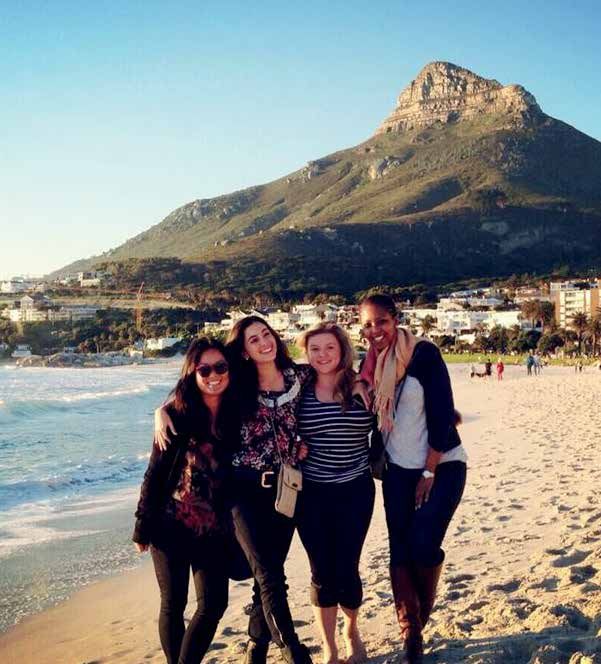
Poverty and Development Dr Elliott Green is an Associate Professor of Development Urban Development and Planning in Africa contemporary African urban development and planning. We take full advantage
Studies in the Department of International Development at of our location in South Africa to provide field-based lessons, but we also aim to
The course is an interdisciplinary analysis of poverty and development, where LSE. He holds degrees from Princeton University (BA) and This course explores the challenges and opportunities of African urban draw connections and comparisons by using wider theoretical frames as well.
the focus is on how, and why, some countries can achieve poverty reduction the LSE (MSc, PhD), and has been teaching at the LSE since development, taking a close look at planning cities on the continent through This enables us to analyse sites that may be geographically distant yet worth
and development while others do not. he received his PhD in 2005. His current research focuses intensive field engagement with sites in Cape Town while drawing critically on thinking about together -- to reconsider linkages between them, and bring them
on ethnic politics in modern Africa with empirical interest lessons from elsewhere in Africa. In order to understand contemporary African into larger discussions about transforming space, economy, and society in
The course pays particular attention to the political economy of development,
in Uganda, Tanzania and Botswana, among other countries. He sits on the cities, we examine histories of development and inequality, and contemporary urban Africa today.
investigating the way we conceive of poverty and development both
editorial boards of such journals as the Journal of Development Studies and dynamics in making, transforming, and managing cities. Through the work
philosophically and practically. In particular the course examines the political Course Code: LCS-GY202
the Journal of Modern African Studies. of major urban scholars – many from Africa themselves – and five field trips
and economic incentives that can drive governments to focus on development
around Cape Town, we explore some of the ideologies, economic activities, and Professor Gareth Jones is a Professor of Urban Geography
and poverty reduction, especially in Sub-Saharan Africa. We also focus
social relations through which cities are developed and planned today. Overall, in the Department of Geography and Environment at LSE.
on such topics as the relationship between poverty and inequality, health,
the course aims to develop critical comparative thinking about urban processes Professor Jones is an urban geographer, where he teaches
democratization, urbanization, and demography.
in different parts of the African continent today. urban theory and ethnography on the MSc Urbanisation
The aim of the course is to enable participants to: and Development. He is a founding member of the recently
The course begins with a broad introduction to regional patterns of key urban
established International Institute on Inequalities at LSE. He
•Understand the concept of development and its different forms; trends across Africa. We then narrow our focus to the historical legacies of
colonialism, and then apartheid in the South African city. We explore how is also the first director of the LSE’s new Latin American & Caribbean Centre.
• Critically analyse the differences between poverty reduction and development; segregation continues to be built into the city through enclave and fortress Professor Jones’ research has focused on the politics and representations
• Examine the poverty-inequality-growth nexus; spaces. We look at how division and difference in the city can be contested – of the urban poor, youth and violence, elite identities and gated communities,
and emancipatory spaces opened – as well as how the South African city is and comparative urban theory. He has mostly conducted research in Mexico,
• and Critically evaluate the relationship between poverty and violence. governed, secured, branded, and projected for future development. We take Brazil and South Africa, and is presently involved with an ESRC-NWO-DFG
Course Code: LCS-DV202 an especially close look at how Cape Town has attempted to represent itself grant with colleagues at the Universities of Amsterdam and Munich on the
as a world-class, high-design, liveable city, and participated in the pursuit commodification of poverty and violence in Brazil, Jamaica, Mexico, and the
of megaevents and other ways of placing itself “on the map” as an African United States.
metropolis of a very particular kind. Dr Ryan Centner is an Assistant Professor of Urban
The second half of the course turns to examples of African urban development Geography in the Department of Geography and Environment
from across the continent in order to deepen understanding of diverse local at LSE. Dr Centner contributes to the Regional and Urban
Planning as well as the Urbanisation & Development
The best part of the programme was experiences and experiments. We first survey a range of African development
programmes at the LSE. His research and writing focus
“alternatives,” then closely examine a series of regional cases outside of
Amazing experience. The course and learning about the factors that caused southern Africa: (1) West African cities, (2) Addis Ababa, Ethiopia, and (3) an on city transformations in connection to large-scale shifts
range of people who attended profoundly Africa’s lack of development and industrialisation; emerging ensemble of development sites known as “the East African corridor.” in economic structure, development models, and political orientations. He
enriched the discussions and learning. Would urbanisation and slum incidence; and the tutorials Although we cultivate detailed case-based knowledge, we always focus on concentrates on the local, everyday forms of these changes in neighbourhoods,
symbolic landscapes, and uses of urban space. Dr Centner’s work has mostly
highly recommend it. Thank you for providing because there were many views expressed which comparisons and potential applicability of lessons across other African cities.
delved into urban change in middle-income countries (especially Argentina,
students and professionals with this opportunity. opened my learning experience. In total, this course assembles a range of disciplinary perspectives – from Brazil, South Africa, and Turkey). An avid fieldworker, he has collected much
geography, history, sociology, and urban studies – in order to delve into of the lecture material from his own time spent in cities across Africa.
Didier Serre, LSE student from Canada Malebo Alice Maloka, University of Cape Town, South Africa
12 13
Torin Greenhill                              What impact did this programme have on you?
                              BSc Politics and Philosophy                  It enabled me to truly broaden my academic experience. Not only was I
                              student at LSE                               able to receive intimate seminars and tuition by leading professionals on
                                                                           a continent I wished to understand; it also allowed me to do this within the
                              Why did you choose the                       continent itself. This experience gives an invaluable dimension to learning
                              LSE-UCT July School?                         that academic texts alone cannot provide... It opened my eyes to a rich and
                               Having studied sub Saharan Africa within    beautiful part of the world and helped to shape and inspire my aspirations
                               my second year at LSE, I sought a more      for where I wished to be in the future.
                               in-depth analysis of the main areas of
academic debate on the continent and the July school offered the perfect   What are your future plans?
opportunity for me to gain the basis of this understanding with leading    I am about to embark on my final year of study in my undergraduate
professionals and direct my future studies more precisely.                 degree and plan to write a dissertation centred on the history and politics
                                                                           of the African continent. The July school had a direct impact to inspire
                                                                           this academic choice, and has helped encourage my aspirations for
                                                                           further study in this area.

                                                                           14
Life in Cape Town

Visas                                                 walk or short campus bus ride from the LSE-UCT            Cultural and social events                                details throughout the programme. Please note
                                                      July School teaching buildings. A number of                                                                         that the LSE-UCT July School cannot be held
Nationals of many countries are able to travel to                                                               A programme of social and cultural events will
                                                      rooms have been allocated to the July School,                                                                       responsible for theft, loss or injury to participants.
South Africa for two weeks without a visa, or to                                                                be scheduled during the July School and include
                                                      including some with disabled access, and Wi-Fi
apply for a tourist visa on arrival in the country.                                                             optional trips during the middle weekend of the
                                                      internet is available in all rooms. Details of how
However, all participants are strongly advised to     to book accommodation at Graca Machel will be
                                                                                                                programme to allow participants to experience             Health care
                                                                                                                Cape Town and its environment in a range of               Cape Town has a Mediterranean climate and is
check their personal situation and to apply for any   provided to all registered participants. Rooms are
                                                                                                                different ways (please note: the optional events can      therefore not susceptible to tropical diseases.
visa required in good time. Please note that as       limited and will be offered on a first come first
                                                                                                                be booked during registration in Cape Town and            However, if you are planning to explore Africa
you will be enrolled on the LSE-UCT July School       serve basis. Please note that accommodation is
                                                                                                                additional charges are payable for those events).         more widely, please seek advice from a medical
for a short course and not as a degree-seeking        not included in the tuition fee.
                                                                                                                A free farewell dinner with traditional South             practitioner prior to travelling.
student of the University of Cape Town, a student     There is no requirement for LSE-UCT July School
                                                                                                                African food is also arranged for the final evening       South Africa has an excellent, modern health
visa or study permit is not required.                 participants to stay in UCT accommodation.
                                                                                                                of the programme for all participants, staff and          system with facilities and services meeting high
                                                      Individuals are free to make alternative
                                                                                                                faculty, and is normally one of the highlights of         international standards. UCT also maintains an
                                                      arrangements to fit their budget and personal
Arrival                                                                                                         the programme.                                            on-campus health service (the Student Wellness
                                                      circumstances. Participants are advised to consider
Participants are advised to arrive in Cape            transport options, personal security and facilities for   As the LSE-UCT July School is an intensive                Centre), for registered students.
Town on Friday 22 or Saturday 23 June, when           personal study when choosing accommodation.               academic programme with limited time for
representatives will be available at the airport                                                                sightseeing, participants may wish to arrive earlier or
to welcome participants and to facilitate safe                                                                                                                            Health and personal insurance
                                                                                                                stay longer in Cape Town so that they can see more
and reliable transfer to UCT’s campus.                Registration                                              of the region, South Africa or even other areas of the    Please note that the LSE-UCT July School does
                                                      Registration for the LSE-UCT July School will take        continent. Please bear this in mind when making any       not provide any health or personal insurance
                                                      place on the afternoon of Sunday 24 June on the                                                                     cover on your behalf, and no cover is provided
Travel within Cape Town                                                                                         travel or accommodation arrangements.
                                                                                                                                                                          through any UCT accommodation.
                                                      UCT campus. Students will be asked to check and
UCT’s free Jammie Shuttle bus service                 sign their registration forms, and will also be given                                                               Please ensure that you have health and personal
(uct.ac.za/students/services/jammieshuttle)           a pack of information relating to the July School,        Safety and personal security
                                                                                                                                                                          insurance cover that is sufficient for the whole
is available to LSE-UCT July school participants,     including reading packs where appropriate.                Personal vigilance is key to remaining safe in            period that you will be in South Africa, and
including links to the Gardens area of central Cape                                                             South Africa. Like any big city throughout the            sufficient to cover any theft or medical emergency
Town, although a reduced service operates during                                                                world, Cape Town has its share of crime. The LSE-
vacation periods. Parking can also be arranged on
                                                      Orientation                                               UCT July School staff will provide detailed safety
                                                                                                                                                                          which may arise. Copies of this insurance
                                                                                                                                                                          documentation may be lodged with the LSE-UCT
campus where necessary.                               Following registration, the LSE-UCT July School           advice before and after arrival in Cape Town, and         July School office on arrival, in case a need to
                                                      provides a free orientation and welcome, also on          all participants are urged to consider it carefully.      consult them arises.
                                                      the afternoon of Sunday 24 June. This provides            If you have particular queries, please feel free to
Accommodation                                         a great opportunity for participants and staff to         email us at lse-uct.july.school@lse.ac.uk. It is the
Participants are able to book accommodation in        meet each other in a more informal environment            responsibility of all participants to keep the LSE-
the secure and modern Graca Machel residence          before courses begin the following day, and light         UCT July School office and their family/friends
on UCT’s lower campus, which is a ten minute          refreshments and local music are provided.                at home informed of their address and contact

                                                                               16
Admission criteria
The LSE-UCT July School in Cape Town is a university-level
programme and accepts applications from university students,
graduates and professionals from all over the world.
There is no minimum grade requirement for
National Benchmark Proficient
applications to the programme, but applicants
Test in Academic
should be prepared to actively participate in a
Literacy
rigorous, intensive academic programme run by
(South Africa)
two leading research and teaching universities.
It is expected that all participants will engage TOEFL (internet 107 or above (including
with the extensive reading list as required by their based) 25 in each component)
course and contribute in class discussions. IELTS 7.0 or above (including
7 in all components)
A limited number of places are available to
students who will have completed high school
by June 2018 and hold a confirmed offer of a CAE with grade B or better
university place. or 185 points overall
and a minimum of 185
points in each individual
Proficiency in English component.
As the LSE-UCT July School is delivered in English, it CPE with grade C or better
is essential that all participants have a good standard or 185 points overall
of English language to enable them to fully participate and a minimum of 185
in the programme and interact with colleagues. We points in each individual
appreciate that applicants may show their English component.
ability in a range of ways, such as:
Pearson Test academic test with a
• Native speaker of English of English score of 65 in all four
(Academic) (PTEA) components
• Experience of studying in English at university level
If you have any questions about whether your
• Having studied English at school (eg, South proof of English Language is suitable, please
African Matric Certificate, GCSE, iGCSE,
contact the LSE-UCT July School Office.
O Level, A Level, International Baccalaureate)
and received a good passing grade.
• Having taken an approved English Language
test and met the standard in the table.
18 19Fees and payments
Application fee • Standard rate – early bird applicants: £1,350
A non-refundable £50 application fee applies to all applications, and is paid
by credit/debit card online through the secure LSE Online Store as part of the
• Student rate – early bird applicants: £1,150
application process. Application fees must be paid before an application can Please note that the tuition fee does not include the cost of travel,
be submitted, and applications cannot be processed without the fee having accommodation or other living costs.
been received. Please note that the application fee is not refundable in the
event of an unsuccessful application or a decision to withdraw or decline an
Tuition fee payment
offered place. Tuition fees must be paid in order to secure a place on the
LSE-UCT July School. The payment must be received by the deadline
given on the offer email, usually four weeks from the dated offer, or
Tuition fees the offered place may be made available to another applicant. These
The tuition fee for taking one course on the LSE-UCT July School is as below: timescales may be shortened closer to the start of the LSE-UCT July
School. Under no circumstances will a participant be permitted to attend
• Standard rate: £1,500 the LSE-UCT July School if their fees have not been paid in full in advance.
• Student rate: £1,300 If your fees will be paid by a third party (for example, if your
A £150 discount is available for all fully completed applications received by university or employer is providing sponsorship), please contact us
31 March 2018. at lse-uct.july.school@lse.ac.uk so that we can arrange an invoice
for your sponsor. We are happy to liaise with sponsors and full receipts
The student rate is available to current full-time university and high school
are provided for payments.
students. Professional participants who are no longer in full-time education
but who are alumni of LSE or UCT (including alumni of the LSE-UCT July
School or the LSE-PKU Summer School), are also able to take advantage of Participants from SADC member states
the student rate. The reduced rates are as follows:
Participants from the 15 member states of the Southern African
Development Community (SADC), or their sponsors, can pay their
application and tuition fees in South African Rand (ZAR) directly
to the University of Cape Town. More information, including about
eligibility to pay in ZAR, is on our website:
lse.ac.uk/study/summerSchools/LSEUCTJulySchool/Fees-and-Payments
Course cancellation policy
I really enjoyed the whole
In the event that an LSE-UCT July School course is cancelled, participants
experience – both the registered for that course will be offered a place on an alternative course on
educational and cultural. the 2018 LSE-UCT July School, or a full refund of their tuition fees. Registered
Christina Saadalla, MSc Population and participants will be informed as early as possible if a course is at risk of
Development student from Egypt, at LSE cancellation, and by 15 May 2018 at the latest.
20 21How to apply
When to apply
Applications for the 2018 LSE-UCT July School
are now open. The deadline for applications to be
received is 27 May 2018, and applications will only
be considered after that date if places are available.
How to apply
All applications should be submitted through
the online application form on the LSE-UCT July
School website. Due to the intensive nature of
the programme, applicants can only select one
course on the 2018 programme.
As part of the application process, you will be
required to provide:
• A copy of your most recent transcript or
qualification if you are a current student;
• Proof of your English language ability; and
• Proof of payment of your application fee.
More details about the application form and
the documents required are available online at
lse.ac.uk/LSE-UCTJulySchool
Receipt of your application will be acknowledged
within five working days and a decision will
normally be made within ten working days.
23About UCT and LSE
The University of Cape Town is The London School of
South Africa’s oldest university, Economics and Political Science
founded in 1829 as the South is one of the foremost social
African College. Its campus is science universities in the world.
located in one of the most beautiful Founded in 1894, it is a specialist
spots on the Cape Peninsula, on the slopes university with an international intake and a
of Table Mountain. This vantage point offers global reach. Its research and teaching span the
panoramic views and easy access to the city of full breadth of the social sciences and from its
Cape Town itself. location in the heart of London, LSE engages with
the city, the UK and the world. 39 past or present
UCT is a university that prides itself not only on its
world leaders have studied or taught at LSE, and
undergraduate education, but also on its graduate
18 Nobel prize winners in economics, peace and
programmes and the excellent research carried
literature have been either LSE staff or students.
out by its faculties. During the period of apartheid,
UCT was designated as a “whites only” institution. LSE and UCT became institutional partners in May
However, today’s campus has been transformed 2010. Both institutions aim to form partnerships
to reflect the diversity of the entire South African with a small number of high-quality universities
population in terms of students and academic across the world in order to broaden their academic
and administrative staff. It is also consistently reach by creating innovative opportunities for
ranked as the number one university in Africa. students and promoting world-class research
dealing with problems and issues that are relevant
on a national and international scale.
24 25Contact us
If you would like further information about
the LSE-UCT July School, please contact us:
LSE-UCT July School London Office
Academic Partnerships Office
TW3.1.02.A
Houghton Street
London WC2A 2AE
United Kingdom
Email: lse-uct.july.school@lse.ac.uk
lseuctjulysch
lseuctjulyschool
lseuctjulyschool lse.ac.uk/LSE-UCTJulySchoolYou can also read


