Mahere Rautaki / Strategic Plan 2021 2023 - St Thomas's School
←
→
Page content transcription
If your browser does not render page correctly, please read the page content below
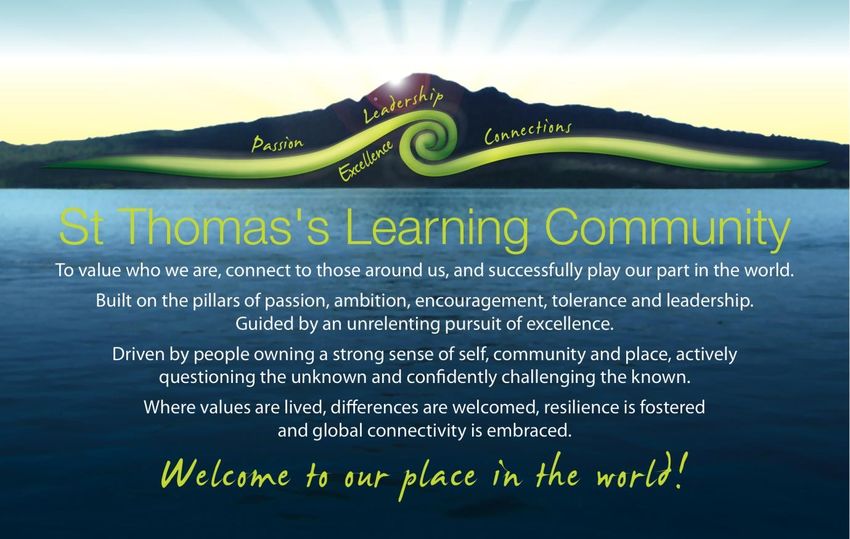
Mahere Rautaki / Strategic Plan 2021 - 2023
Mahere Rautaki / Strategic Plan 2021-2023

 This Mahere Rautaki (Strategic Plan) explains what we intend to do over the
 next three years to improve student outcomes. It outlines key goals, targets
 and initiatives for improvement, which in turn guide resourcing priorities. It   The July 2019 ERO’s External Evaluation Report reported that St Thomas’s is
 provides an important means for involving the school community in setting        ‘well placed’ for success:
 the school’s direction.
                                                                                  Whirikoka / Strengths:
 Our school is located in Kohimarama and caters for students from Years 1 to         • the principal's inclusive approach to building collaborative leadership
 8. Our roll of 758 students (as at December 2020) shows increasing cultural             that promotes high expectations and a culture of professional
 diversity, with a large number of students speaking more than one language.             learning
 The School employs 78 staff and engages with a range of local educational           • teaching and learning strategies that enable students to lead their
 and service organisations to deliver the curriculum and extra-curricular                own learning
 learning opportunities for students.
                                                                                  Whakapakari / Continue to develop:
 Consultation process:                                                              • students’ sense of agency as curious, collaborative, resilient, critical
                                                                                        learners
 St Thomas’s School Documentation Review, Community, Staff, Board of
                                                                                    • teachers’ capability to accelerate student progress and achievement
 Trustees. This Strategic Plan was ratified by the Board of Trustees on
                                                                                    • a more culturally responsive curriculum
 17/02/2020 and will be submitted to the Ministry of Education by 1/03/2020.
                                                                                    • educationally powerful learning partnerships with whānau and
                                                                                        parents
 Board of Trustees Chairperson: Michael Morton
 6
                                                                                  Whakaarotau / Priorities for further development:
                                                                                    • board training to strengthen stewardship
                                                                                    • extending the use of effective teaching strategies that accelerate
 Date: 08/12/2021
                                                                                        student progress and learning
                                                                                    • strengthening teachers’ analysis and use of assessment information
                                                                                    • continuing to build leadership capability at all levels to support the
                                                                                        school’s achievement of parity for its Pacific students

St Thomas’s Strategic Plan 2021-2023
                                                                                                                                                    2|Page
Tūruapō / Vision

St Thomas’s Strategic Plan 2021-2023
                                       3|Page
Mahere Rautaki / Strategic Plan 2021-2023
Changing Learning for a Changing World
Kaupapa Learner Outcomes Learner Attributes Graduate Profile
Through learning at St Thomas’s School we are: We show progress in our learning at St Thomas’s School by: HONONGA / CONNECTIONS – I have a strong sense of who I am as a person and I am connected to my
(Our Why) • Striving for HIRANGA / EXCELLENCE in all we do
• Being MAHI TAHI / COLLABORATIVE family, friends, community and the world.
• Making HONONGA / CONNECTIONS at every opportunity HAUTŪTANGA / LEADERSHIP – I manage myself, am ambitious and a team player.
• Being AUMANGEA / RESILIENT
• Willing to take on HAUTŪTANGA / LEADERSHIP as we HIRANGA / EXCELLENCE – I have experienced my personal best & have confidence in my own potential.
• Being AUAHA / CREATIVE
grow
• Showing a NGAKAU WHIWHITA / PASSION for our
• Being PĀKIHI / CURIOUS NGAKAU WHIWHITA / PASSION – I embrace a passion for life-long learning.
learning
. . . in all areas of the curriculum
Nga 1. Ako / Learning 2. Pāhekoheko / Engagement 3. Taiao / Environment
Whāinga
Academic excellence - Develop high levels of Parents as Partners - Engage with parents, whanau Safety - Ensure a safe learning environment that
(Goals) and care givers as key partners in students’ learning supports different learning styles and connects us
competency in literacy and numeracy with
2021-2023 opportunities to participate and excel in the and wellbeing, welcoming their voice and to each other & the natural world.
arts, sciences, sports and leadership. contribution to our school.
Wellbeing/Hauora – Strengthen our student-
Quality Teachers - Develop staff capability, Māori & Pasifika - Reflect Māori & Pasifika identity, centred culture where we live our St Thomas’s
with particular focus on learner agency. language and culture within the curriculum, improving values and prioritise hauora/wellbeing (physical,
parity, learning opportunities and outcomes. social, emotional, mental).
Nga 1. Academic Achievement *Existing Initiative* 1. Hauora/Wellbeing Plan Rollout *Existing Initiative* 1. 5 Year Property Plan (5YA) *New Initiative*
2. Learner Agency *Existing Initiative* 2. Māori and Pasifika Connections *Existing Initiative* 2. Implement and reflect on learning spaces across Year 0-8
Hinonga - St Thomas’s Language of Learning *Existing Initiative* 3. Hero Communications & Reporting App *New Initiative* and communal spaces *Existing Initiative*
- Learning Through Play *Existing Initiative* 4. Board training and succession planning *Existing Initiative* 3. School Environment Plan – Outdoor Spaces *Existing
(Initiatives) - Coherent Pathways (Y8 to Y9) *Existing Initiative* Initiative*
- Self Perception Tool *New Initiative*
2021 3. COL Initiatives (see also COL strategic goals)
- Learner Agency Self-Perception Tool *Existing Initiative*
- Reporting on Learning Progressions *New Initiative*
4. STEAM Centre *New Initiative*
Nga whanonga
pono Hiranga / Excellence, Hautūtanga / Leadership, Hononga / Connection, Ngakau whiwhita / Passion
(Values)
St Thomas’s Strategic Plan 2021-2023
4|PageSt Thomas’s Strategic Plan 2021-2023
5|PageNga hinonga / Initiatives
2021 2022 2023
Ako / Learning Ako / Learning Ako / Learning
− Academic Achievement − Academic achievement − Academic achievement
o Develop contingency plan for learning disruption COL initiatives
− COL initiatives −
o Develop learning support centre
− New Zealand history curriculum
− Learner Agency
− New entrant transition review Pāhekoheko / Engagement
o St Thomas’s ‘Language of Learning’
o Learning Through Play − Māori and Pasifika connections
− COL initiatives Pāhekoheko / Engagement
o Reporting on Learning Progressions − Wellbeing/hauora plan – rollout Taiao / Environment
o Self-Perception Tool
− Board training, elections and succession − School environment plan rollout – 5YA
− STEAM centre with specialist teachers
planning
− Māori and Pasifika connections
Pāhekoheko / Engagement
− Wellbeing/hauora plan – rollout Taiao / Environment
o Positive Behaviour for Learning (PB4L)
− School environment plan rollout – 5YA
− Hero communications and reporting app
− Review STEAM programme and
− Māori and Pasifika connections
requirements for space
− Board training and succession planning
Taiao / Environment
− School environment plan – 5YA
− Implement and reflect on teaching and learning
spaces across Year 0-8 and communal spaces
− School environment plan - design and begin to
implement outdoor spaces based on the intent
for them across the school
St Thomas’s Strategic Plan 2021-2023
6|PageGoal 1 – Ako / Learning
1.1 Academic Achievement
GOVERNANCE OPERATIONAL
Initiative/Strategy Objective Key Performance Indicators Actions
1.1.1 • St Thomas’s students • Achievement of targets at each year level. • Develop a contingency plan for learning disruptions.
Academic Achievement achieve to their • eAsTTle data shows St Thomas’s students • Develop learning support centre to include all ESOL and SENCo functions.
potential. achieving at higher level than national • Year level teams to set targets for academic learning. Achievement against these targets to
average. be reported back to the Board by team leaders.
• Learning Progressions data shows evidence • Comparative eAsTTle data to be presented to Board end Term 1 and end Term 3.
of student learning. • OTJ data, broken down by target groups, to be presented to Board start Term 3 and start
• OTJ data shows overall achievement level Term 1 (for previous year).
for individual and groups of students. • Collect and analyse data on the number of students receiving learning interventions (SEN)
• Learning support interventions (SENCo & and ESOL support (ELLPs) school-wide.
ESOL) are improving student academic • Compare pre- and post-data for all students receiving learning interventions (SEN).
outcomes.
1.2 Learner Agency
GOVERNANCE OPERATIONAL
Initiative/Strategy Objective Key Performance Indicators Actions
1.2.1 • St Thomas’s Language • Language is evident within team planning, • All staff to use tool during planning to ensure Language of Learning is embedded within
St Thomas’s Language of Learning tool is the teaching and learning. learning activities.
of Learning foundation for planning • Staff use the language to describe teaching • Include Language of Learning within classroom observations and appraisal discussions.
at all year levels and learning.
including STEAM, ESOL
and Learning Support.
1.2.2 • The strategic • Learning Through Play opportunities, • Longworth Education to be contracted to support Year 0-2 staff with ongoing
Learning Through Play implementation plan for underpinned by sound curriculum implementation and professional development.
Learning Through Play is planning, are evident within Years 0 - 2. • Learning Through Play to be included within planning, assessment, and team meetings at
rolled out within Years 1 Year 0-2 level.
& 2.
St Thomas’s Strategic Plan 2021-2023
7|Page1.3 COL Initiatives
GOVERNANCE OPERATIONAL
Initiative/Strategy Objective KPI’s Actions
1.3.1 • The Learner Agency Self- • An aspect of the Learner Agency Self- • All students complete the full Learner Agency Self-Perception Tool twice per year.
Learner Agency Self- Perception Tool data is used Perception Tool is focused on each term • Selected aspects of the Learner Agency Self-Perception tool are re-surveyed at the
Perception Tool and understood by staff and within each year level. end of terms 1-3 in years 4-8.
students in Years 4-8. • Data shift is analyzed to assess agentic • Learner Agency Self-Perception Tool results are used as a basis for discussion at Term
initiatives as developed by teams and the 3 Student Led Conferences for years 4-8.
classroom teacher. • Year 0-3 teachers begin to use Learner Agency Self-Perception language with learners
to prepare them for completing the survey in Year 4.
1.3.2 • Reporting to parents against • Parents have access to details of their • Teachers use previous year’s Learning Progressions (and results of Term 1 eAsTTle for
Reporting on Learning Learning Progressions is child’s learning goals and achievement of Years 4-8) to set initial learning goals in Reading, Writing and Maths within Hero by
Progressions established and rolled out these in real-time throughout the year. end of Week 3, Term 1.
throughout the year. • Student learning goals are set within Hero • More than one learning goal may be set in each learning area to ensure learning
• Teachers use digital version and achievement of these goals is reported progress is evident.
of Learning Progressions on in real-time. • Student’s learning goals are signed off within Hero and on the paper copy as they
(Hero system) and students • All students have at least one learning goal, achieve them in real time. A new learning goal is set at the same time.
use paper copy version of set within Hero, in each of Reading, Writing
Learning Progressions to and Maths at any time.
track goal achievement.
1.4 STEAM Centre
GOVERNANCE OPERATIONAL
Initiative/Strategy Objective KPI’s Actions
1.4.1 • All students at St Thomas’s • A STEAM Centre with specialist teachers is • A school-wide roster is established to ensure all students visit the STEAM Centre for
STEAM centre School have regular access set up and operational. learning for a minimum of 6 learning blocks per term.
to learning in the key STEAM • Students within each year level partake in • STEAM Centre activity planning should follow whole-school overarching theme for
areas. STEAM activities for a minimum of six each term.
learning blocks per term. • Year level planning is shared with STEAM Centre leader to ensure learning activities
• GATE Programmes (e.g. EPro8, Food are aligned with or support in-class learning where possible.
Technology, TV Studio, Future Problem • The STEAM Centre leader is available one day per week to facilitate small group and
Solving) are run through the STEAM Center GATE learning in STEAM subject areas.
and involve a wide variety of students from
across the school.
St Thomas’s Strategic Plan 2021-2023
8|PageGOAL 2 – Pāhekoheko / Engagement
2.1 Hauora/wellbeing plan rollout
GOVERNANCE OPERATIONAL
Initiative/Strategy Objective Key Performance Indicators Actions
2.1.1 • Our approach to school • Recommendations from 2020 Wellbeing • Refer to Wellbeing Review documentation upon completion.
Hauora/wellbeing plan culture and Review are implemented throughout the • PB4L team to be established and follow programme recommendations for launching.
rollout hauora/wellbeing supports year. • SLT to schedule 2x staff wellbeing Teacher Only Days.
the needs of our community. • Tier 1 of the Positive Behaviour for Learning • Wellbeing team to schedule 4x staff wellbeing initiatives/events.
Programme is launched school-wide. • Year Level Leaders to schedule 1x wellbeing initiative/event for their team.
• A minimum of 4 staff wellbeing initiatives
(e.g. functions, activities) and 2 staff
wellbeing Teacher Only Days are
implemented.
2.2 Maori and Pasifika Connections
GOVERNANCE OPERATIONAL
Initiative/Strategy Objectives Key Performance Indicators Actions
2.2.1 • Our Māori students enjoy • Establish a formal plan for Māori student • Allocate a Māori/Pasifika leader role within the school. This leader would consult with
Hononga Māori education success as Māori engagement and roll out plan throughout teaching staff and SLT regarding all Māori/Pasifika matters.
(Māori connections) and whanau are given the year. • Māori/Pasifika leader to consult with teachers in a coaching capacity around strategies
opportunities to share their • Continue to monitor progress of Māori to support Māori student achievement, informed by results from eAsTTle, termly
cultural expertise within the students as a separate group (eAsTTle, assessments, OTJs, Learner Agency survey.
school setting. termly assessments, OTJs, Learner Agency • Continue with Kapa Haka group using Whaea Vikki Demant.
survey). • Develop contingency plan for continued disruption to ensure a full year of traction
then embed learning throughout school from 2020.
• Continue with informal discussions with Māori whanāu.
• Continue holding Pōwhiri for new staff, students and whanau (termly).
2.2.2 • Our Pasifika students enjoy • Establish a formal plan for Pasifika whānau • Allocate a Māori/Pasifika leader role within the school. This leader would consult with
Hononga Pasifika education success as Pasifika engagement and roll out plan throughout teaching staff and SLT regarding all Māori/Pasifika matters.
(Pasifika connections) and whanau are given the year. • Māori/Pasifika leader to consult with teachers in a coaching capacity around strategies
opportunities to share their • Record Pasifika whānau engagement to support Pasfika student achievement, informed by results from eAsTTle, termly
cultural expertise within the throughout the year (e.g. sasa teaching, assessments, OTJs, Learner Agency survey.
school setting. sports involvement, cultural day, in-class
• Establish STS programme for Pasifika learners using elements of Kohiko Mai.
expertise shared). • Develop contingency plan for continued disruption to ensure a full year of traction
then embed learning throughout school from 2020.
• Continue to develop relationship with St John's College Principal and Deans.
• Continue with informal discussions with Pasifika families.
St Thomas’s Strategic Plan 2021-2023
9|Page2.3 Hero Communications and Reporting App
GOVERNANCE
Initiative/Strategy Objective Key Performance Indicators Actions
2.3.1 • Hero is used a our main • All parents have downloaded and are using • Information about downloading and using Hero is made available regularly and to all
Hero Communications method of communication the Hero app to receive push notifications. new parents.
and Reporting App with our parent community. • Parents engage with real-time reporting of • Admin staff follow up parents without access, to support them to download and use
learning goals and St Thomas’s Learner the app.
Attributes through the Hero app. • Parents are requested to provide feedback/comment on their child’s progress twice
per year.
• Data on usage and engagement is gathered and reported to the Board.
2.4 Board training and succession planning
GOVERNANCE
Initiative/Strategy Objective Key Performance Indicators Board Actions
2.4.1 • The Board understands its • A training plan is developed to maximise • Review findings from the NZSTA Governance Internal Evaluation Tool to formulate a
Board training strengths and weaknesses the Board’s strengths and support any shortlist of focus areas for 2021.
and has a plan to address weaknesses. • Work with each other and the NZSTA to address these areas.
these throughout the year. • Continue to attend NZSTA courses and training.
2.4.2 • The Board identifies skill and • Skill sets and gaps versus the current • Identify if there are any gaps.
Board succession diversity gaps and seeks to Strategic Plan are identified and a plan is • Identify a list of suitable candidates. The Board/Board Sub Group to approach and
planning co-opt new board members established to fill these. gauge the interest in being co-opted onto the Board.
as and if required.
2.4.3 • Board Policies & Operational • One policy to be reviewed at each Board • List of Policies to be reviewed and added to the Annual Work Plan.
Board policy reviews Policies and Delegations are Meeting, rotating between a Board Policy • Policies reviewed and any changes to them, or to delegations, agreed and actioned.
reviewed and understood. and Operational.
St Thomas’s Strategic Plan 2021-2023
10 | P a g eGOAL 3 – Taiao / Environment
3.1 5 Year Property Plan (5YA)
GOVERNANCE OPERATIONAL
Initiative/Strategy Objectives Key Performance Indicators Actions
3.1.1 • Our Ministry funded • A 5-year plan is developed. • Develop a 5-year plan for the school property in consultation with Ministry consultants
5 Year Property Plan allocation of money for the • St Thomas’s School is allocated 5YA and the Board of Trustees.
(5YA) next 5 years is used to funding by the Ministry of Education • 5YA funding allocation is communicated with the Board.
improve the quality of
teaching and learning
spaces.
3.2 Implement and reflect on teaching and learning spaces across year 0-8 and communal spaces
GOVERNANCE OPERATIONAL
Initiative/Strategy Objectives Key Performance Indicators Actions
3.2.1 • Learning and communal • Student and teacher voice shows that • Survey students and teachers in Years 3-8 about new learning space set ups and their
Implement and reflect spaces are optimised around teaching and learning spaces are set up to functionality for teaching and learning.
on teaching and learner needs and the intent maximise learning. • Continue to look at how our environment supports teaching and learning
of the learning taking place. • Students and teachers have a sense of programmes e.g. purposeful (designed with intent), agile (responsive to change over
learning spaces across
belonging within their spaces. time, Diverse (catering for all students).
year 0-8 and communal • Teaching and learning spaces have a range • Engage with Lisa Horton as required to ensure all spaces are functioning effectively.
spaces of learning settings to accommodate the • Continue to reflect on spaces and track our journey through this process via the
various needs of all learners. existing Google Form.
• Student, staff and community voice • Develop a resource for staff to use in future.
indicates that communal spaces are set up • Purchase furniture to support the needs of staff, various learning spaces and the
in a manner that is suited to their purpose. learners within them.
• Transition in and out of communal spaces • Engage an external agency to develop a school-wide vocabulary around learning and
is seamless and considers health and spaces (e.g. learners vs students, hubs vs pods, whānau vs family) including dual
safety. signage and naming of spaces.
• Spaces around the school are clearly
labelled in both Maori and English and
there is a consistent use of terminology
relating to learning and spaces.
St Thomas’s Strategic Plan 2021-2023
11 | P a g e3.3 School Environment Plan
GOVERNANCE OPERATIONAL
Initiative/Strategy Objectives Key Performance Indicators Actions
3.3.1 • Design and begin to • Environment plan developed and signed • Continue to develop a plan for the intent of all outdoor spaces.
School environment implement outdoor spaces off for implementation in 2021 and • Engage a specialist/outside agency to develop a plan for outdoor spaces which
plan – outdoor spaces based on the intent for them beyond. includes student, staff and parent voice.
across the school. • Implementation of plan begins in at least 1 area of the school (e.g. front entrance,
bank)
St Thomas’s Strategic Plan 2021-2023
12 | P a g eCultural Diversity at St Thomas’s School
Including specific reference to Te Ao Māori and Pasifika
Cultural Diversity
St Thomas’s School acknowledges Aotearoa, New Zealand’s unique cultural diversity and values the histories, traditions and beliefs of all its peoples.
Bicultural Partnership
St Thomas’s School acknowledges the principles of Te Tiriti o Waitangi, The Treaty of Waitangi and the bicultural foundations of Aotearoa, New Zealand. The school will continue to
develop an understanding of Te Ao Māori, including tikanga and kawa Māori and Te Reo Māori. This will include developing a stronger relationship with our local iwi, Ngāti Whātua o
Ōrākei and utilising the expertise and environment of our local Ngāti Whātua o Ōrākei Marae.
Tikanga and Kawa Māori*
St Thomas’s School will incorporate Tikanga Māori into the school’s curriculum by:
• Using the strengths of teachers and visiting experts
• Having dual signage, art and artefacts in the physical environment
• Welcoming manuhiri (guests) and new whānau to our school with pōwhiri
• Acknowledging annual celebrations including Matariki and Te Wiki o te Reo Māori, Māori Language Week
• Creating a garden area of native plants suitable for raranga (weaving) and rongoā (medicine)
• Have school-wide kapa haka rōpū (groups)
• Selecting a karakia for our school to use at the start of the day or to begin a hui
Te Reo Māori**
St Thomas’s School will incorporate Te Reo Māori into the school’s curriculum by:
• Classrooms having visible greetings, commands, labels and calendar in Te Reo Māori
• A school-wide expectation for Te Reo Māori instruction in the classroom to be set
• Including Te Reo Māori vocabulary across curriculum areas
• Promoting the correct pronunciation of all Te Reo Māori words
St Thomas’s will provide fulltime instruction in Te Reo Māori for learners whose whānau request it.
The school will take all reasonable steps to meet the needs of parents who request fulltime Te Reo Māori. Such requests must be made in writing to the BoT. The BoT will consider
personnel, finance and property options. If none of these are viable options, the whānau will be advised of alternative places in the community which may meet their needs.
NZ History 2022
St Thomas’s will work towards the 2022 expectation for NZ History to be part of the curriculum and taught in all classrooms by:
• Informing staff in 2021 of the expectations for 2022
• Gathering further information in 2021 regarding the expectation’s outlines
• Locating resources in 2021 to support the teaching of these expectations
• Considering and organising Professional Learning and Development for 2021
• Supporting teachers to deliver NZ History expectations to students
St Thomas’s Strategic Plan 2021-2023
13 | P a g e• Include connections to Ōrākei and Ruapotaka Marae
Pasifika
St Thomas’s will implement the recommendations from the 2019 Pasifika Review by:
• Establishing a formal plan for Pasifika student engagement and roll-out plan throughout the year
• Continuing to monitor the progress of Pasifika students as a separate group (e-AsTTle, Termly Assessments, OTJs, Agency Survey).
• Establish a formal plan for Pasifika whanau engagement and roll-out plan throughout the year.
• Record Pasifika whanau engagement throughout the year (e.g. Sasa teaching, sports involvement, cultural day, in-class expertise shared).
Community
St Thomas’s School will ensure a relationship with our Māori and Pasifika communities is strengthened by:
• Consulting with our Māori and Pasifika learners and whānau to help identify ways the school can support learners and whānau to feel valued as Māori and/or Pasifika
• Talking with whānau about ways to ensure all Māori and Pasifika whānau are welcomed into our school
• Finding opportunities that allow St Thomas’s School and the local Ngāti Whātua o Ōrākei Marae to collaborate together
• Offering regular Whānau Hui (1 per term) to gather together collectively
• Curriculum reports to the Board of Trustees (BoT) on literacy and numeracy contain specific reference to the achievement of Māori and Pasifika learners
*Correct procedure, custom, habit, lore, method, manner, rule, way, code, meaning, plan, practice, convention, protocol - the customary system of values and practices that have developed
over time and are deeply embedded in the social context.
Taken from māoridictionary.co.nz
**The Māori Language
St Thomas’s Strategic Plan 2021-2023
14 | P a g eYou can also read


