MANAGING THE CUMULATIVE EFFECTS OF NATURAL RESOURCE DEVELOPMENT IN B.C - May 2015
←
→
Page content transcription
If your browser does not render page correctly, please read the page content below

May 2015

           MANAGING THE CUMULATIVE EFFECTS OF
           NATURAL RESOURCE DEVELOPMENT IN B.C.

           www.bcauditor.com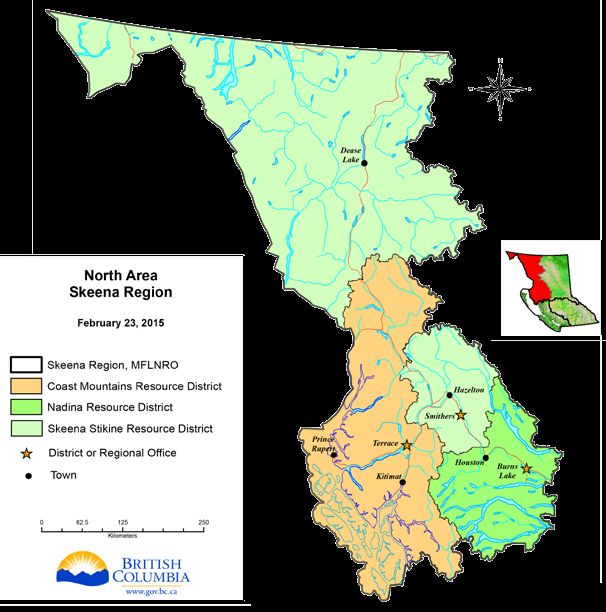
623 Fort Street
CONTENTS                                                                                       Victoria, British Columbia
                                                                                                    Canada V8W 1G1
                                                                                                       P: 250.419.6100
Auditor General’s Comments                       3                                                     F: 250.387.1230
                                                                                                     www.bcauditor.com

Executive Summary                               5
                                                     The Honourable Linda Reid
Report Highlights                                7   Speaker of the Legislative Assembly
                                                     Province of British Columbia
Summary of Recommendations                       8   Parliament Buildings
                                                     Victoria, British Columbia V8V 1X4
Response from the Ministry of Forests,
Lands and Natural Resource Operations            9   Dear Madame Speaker:

Background                                      15   I have the honour to transmit to the Legislative Assembly of
                                                     British Columbia, Managing the cumulative effects of natural
Audit Purpose, Objectives and Scope             22   resource development in B.C.

Audit Conclusion                                25   We conducted this audit under the authority of section 11 (8)
                                                     of the Auditor General Act and in accordance with the standards
Key Findings and Recommendations                26   for assurance engagements set out by the Chartered Professional
                                                     Accountants of Canada (CPA) in the CPA Canada Handbook –
Direction and responsibility
                                                     Assurance, and in accordance with Value-for-Money Auditing in
for managing cumulative effects in
                                                     the Public Sector.
natural resources use decisions                 26

Use of cumulative effects to inform decisions   29

Efforts to improve the management
                                                     Carol Bellringer, CPA, FCA
of cumulative effects                           31
                                                     Auditor General
                                                     Victoria, British Columbia
Appendix A:
                                                     May 2015
Audit Criteria And Sources Of Criteria          35
AUDITOR GENERAL’S
COMMENTS
British Columbia is               rich in land and natural resources
such as water, timber, minerals and natural gas. Natural resource
development is a key sector of the provincial economy, and government
has committed to pursuing growth in this sector in an environmentally
sustainable manner.

To manage the environment, government conserves parts of the province
through parks and protected areas. For land open to natural resource
development, government regulates and manages development to mitigate
environmental impacts. However, residual impacts from development can
remain even after mitigation, and then combine and accumulate to cause
changes to the environment.

                                                                                      Carol Bellringer, CPA, FCA
Cumulative effects are changes to the environment caused by the
                                                                                                    Auditor General
combined effect of past, present and potential future human activities.
Achieving sustainable growth, and maintaining the well-being of British
Columbians, requires managing the cumulative effects of development.

In this audit we found that the Ministry of Forests, Lands and Natural
Resource Operations (FLNRO) is not adequately addressing cumulative
effects in its recent natural resource use decisions, in northwestern B.C.
where we looked. For FLNRO and other natural resource ministries and
agencies to effectively manage cumulative effects, government needs to
provide them with clear direction and the responsibility to do so.

We’re encouraged that government has directed FLNRO to undertake
much-needed work to support the management of cumulative effects.
FLNRO’s Cumulative Effects Assessment Framework aims to help B.C.’s
natural resource ministries and agencies make more informed decisions
that are consistent with government’s objectives for the economy and
the environment.

    Auditor General of British Columbia | May 2015 | Managing the Cumulative Effects of Natural Resource Development in B.C.   3
AUDITOR GENERAL’S COMMENTS
For the assessment framework to succeed though, more needs to be done.
Government must clarify how its social, economic and environmental
expectations apply to managing Crown land. Government must then
determine how the assessment framework will be used to support
decisions. The assessment framework is slated for full implementation by
2021. In the meantime, decisions regarding natural resource development
continue to be made.
The tension between the need to protect the environment and the
need to grow our economy is well documented in the news. Managing
cumulative effects will become more complex as development pressures
on the province’s land continue to increase. It’s in the interest of British
Columbians to address cumulative effects management without delay.
Our audit contains nine recommendations to encourage improvements
with managing cumulative effects and help government meet its
expectation for sustainable development.
I wish to thank the Ministry of Forests, Lands and Natural Resource
Operations for their cooperation throughout this audit.
Carol Bellringer, cpa, fca
Auditor General
Victoria, BC
May 2015
Auditor General of British Columbia | May 2015 | Managing the Cumulative Effects of Natural Resource Development in B.C. 4EXECUTIVE SUMMARY
British Columbia is actively pursuing economic growth through the development of natural
resources, most notably in the mining and liquid natural gas (LNG) sectors. The provincial government has
stated that such growth will happen in an environmentally sustainable manner, which necessarily includes
managing the cumulative effects of development.
The term cumulative effects refers to changes to the The ministry is not effectively considering or
environment caused by the combined impact of past, addressing cumulative effects in its decision-
present and potential future human activity. making, as demonstrated by recent activity
audited in the Skeena Region of northwest B.C.
If not managed, these changes to the environment
The ministry is working to improve
can compound and eventually harm the environment.
cumulative effects management by developing
Managing the cumulative effects of human activities
an assessment framework, but how the
is important because the ability to derive long-term
Government of B.C. and natural resource
benefits from the land requires an underlying natural
ministries will use it to inform and support
resource system that is healthy and sustainable.
development decisions across the natural
resources sector is not clear.
We conducted this audit to determine whether the
government and the Ministry of Forests, Lands and We found that neither legislation nor other
Natural Resource Operations (the ministry) have government directives explicitly requires this ministry,
established a sound basis for managing cumulative or any other government ministry or agency, to
effects to the environment so that B.C.’s lands and manage cumulative effects when authorizing the
natural resources can provide long-term social, use of natural resources. And current legislation and
economic and environmental benefits. The ministry directives do not effectively support the management
is responsible for authorizing most of the province’s of cumulative effects across all of B.C.’s natural
natural resource use requests, and for coordinating resource sector ministries and agencies. Each body
decisions across the natural resource sector. operates under its own mandate and, therefore,
may undertake its decisions and activities without
Our overall conclusions: considering the impacts on, or by, other sectors.
Government has not provided the ministry From a selection of land use plans and related material
with clear direction or the powers necessary to we reviewed for the Skeena Region, we concluded
manage cumulative effects when deciding on that government has not provided decision-makers
natural resource use. with information they need to manage cumulative
effects. Although values (factors identified as
Auditor General of British Columbia | May 2015 | Managing the Cumulative Effects of Natural Resource Development in B.C. 5EXECUTIVE SUMMARY
important to manage) have been established to the implications for values that are important for the
guide natural resource management, these values province’s well-being.
are potentially dated or incomplete. The current
condition of most values is also unknown; and few How government and the ministry will use the
thresholds (levels at which values might be at risk and Cumulative Effects Framework assessments in the
in need of appropriate management responses) are in decision-making process for future natural resource
place. These gaps in information make it difficult for development proposals has not yet been determined.
decision-makers to interpret risk and make informed This is concerning because if the assessments are to
decisions about development proposals. be of value, they must inform and support decisions
about if and how development should proceed.
The ministry has identified key barriers to the
effective management of cumulative effects, and has Decision-makers need better direction, information
developed a Cumulative Effects Framework to guide and support to ensure that land and natural resources
the assessment of those effects for certain values. can continue to provide social, economic and
The ministry expects to complete province-wide environmental benefits. Accordingly, we make nine
implementation by 2021. The lengthy timeframe recommendations to support the government and the
for full implementation means that, in the interim, ministry in their efforts to understand and manage the
decisions about natural resource development will cumulative effects of natural resource development
continue to be made without fully understanding in B.C.
Auditor General of British Columbia | May 2015 | Managing the Cumulative Effects of Natural Resource Development in B.C. 6REPORT HIGHLIGHTS
Managing cumulative effects helps
Ministry (FLNRO) is
Approximately
BALANCE WORKING
160
MAJOR NATURAL
proposed
economic development
with environmental
TO IMPROVE
how the province assesses
cumulative effects, but
protection
RESOURCE PROJECTS MORE IS
on B.C. land worth $billions
(as of 2014) NEEDED
Cumulative
effects
CHANGES TO THE Managing
ENVIRONMENT cumulative
Government should effects is
caused by the combined
CHALLENGING,
impact of past, present PROVIDE but must
and potential future
DIRECTION BE A PRIORITY
HUMAN ACTIVITIES
AND TOOLS
1.
to manage cumulative effects
2.
94 3.RECOMMENDATIONS
4.
5. to government
6.
7. 5
to Ministry
(FLNRO)
8.
9.
FLNRO = Ministry of Forests, Land and Natural Resource Operations
Auditor General of British Columbia | May 2015 | Managing the Cumulative Effects of Natural Resource Development in B.C. 7SUMMARY OF
RECOMMENDATIONS
WE R EC OM M END TH AT T HE G OV ERN M EN T
OF BR ITISH C OLUM B IA:
RECOMMENDATION 1: assign the province’s natural resource ministries and agencies
clear roles and responsibilities for managing the cumulative effects of development activities on the
land base.
RECOMMENDATION 2: introduce tools, such as legislation and policy, that will enable
all of the province’s natural resource sector ministries and agencies to coordinate cumulative effects
management across all the sectors.
RECOMMENDATION 5: establish and/or update, as the foundation for cumulative effects
management, values that are important for the province to sustain, and the acceptable conditions
for those values.
RECOMMENDATION 7: establish how assessments resulting from the Cumulative Effects
Framework will be used to inform and support natural resource development decisions by ministries
in all resource sectors.
WE R EC OM M END TH AT T HE M IN IST RY O F F O REST S,
LANDS AND NATUR A L RESO U RC E OPERAT IO N S:
RECOMMENDATION 3: provide its decision-makers with instruction and training on how
to assess and manage cumulative effects when authorizing natural resource use.
RECOMMENDATION 4: consider cumulative effects when authorizing natural resource
development, and document the rationale for its decisions.
RECOMMENDATION 6: monitor the condition of values and make that information
available to decision-makers.
RECOMMENDATION 8: annually report to the Legislative Assembly on progress in
implementing the Cumulative Effects Framework, and how risks are being managed to ensure its
successful implementation.
RECOMMENDATION 9: assess options for accelerating full implementation of the
Cumulative Effects Framework, and submit a proposal to Cabinet for decision.
Auditor General of British Columbia | May 2015 | Managing the Cumulative Effects of Natural Resource Development in B.C. 8RESPONSE FROM
THE MINISTRY
OF FORESTS, L ANDS AND NATUR AL RESOURCE OPER ATIONS
Government and the Ministry of Forests, Lands, and Natural Resource Operations appreciate
the efforts of the Office of the Auditor General (OAG) of British Columbia in their audit of “Managing the
cumulative effects of natural resource development in British Columbia”. Government has a responsibility to
manage resource development in a responsible manner to ensure that future generations can enjoy the benefits
of British Columbia’s abundant natural resources. We manage cumulative effects and the potential of cumulative
effects using a number of existing stewardship tools. Over the past decade, government has also taken progressive
steps toward an integrated approach to land and resource management that enhances its ability to effectively
manage cumulative effects.
Government manages cumulative effects through inform authorization of oil and gas activities; and,
the land use designations and practice requirements the Ministry of Forests, Lands and Natural Resource
that the Auditor General notes limit and mitigate Operations refers many authorization applications
impacts to the environment from natural resource to the appropriate specialists to assess specific risks
development. Specifically, through public processes, and provide mitigation recommendations to both
government has completed regional land-use plans applicants and statutory decision-makers. Inventory
over 90% of the provincial land base; approximately and monitoring activities help inform how practices
37% of the province’s land base is designated as should be adapted to better achieve sustainable
parks, protected areas and under other conservation resource management. Government-to-government
designations for various environmental values; strategic land management agreements with First
and, other designations exist for cultural and Nations help ensure management at the landscape
social values. As well, multiple statutes governing level accounts for First Nations’ interests. Collectively,
resource development activity ensure environmental this systems’ approach to stewardship is intended
sustainability, for example the Water Act, Drinking to ensure the benefits society gains from natural
Water Protection Act, Forest and Range Practices Act, resources are maintained through time.
Land Act, Oil and Gas Activities Act, etc.
In 2010, government began development of the
Further, the Environmental Assessment Office Cumulative Effects Framework. The framework’s
requires proponents to complete project-scale strategic orientation is reflected in the decision to
cumulative effect assessments; the Oil and Gas avoid terms such as “thresholds” which would be
Commission uses Area-Based Analysis to help subjective and indicate a false precision that isn’t
Auditor General of British Columbia | May 2015 | Managing the Cumulative Effects of Natural Resource Development in B.C. 9RESPONSE FROM THE MINISTRY
OF FORESTS, LANDS AND NATURAL RESOURCE OPERATIONS
achievable on a land base as ecologically diverse as support tools to further enhance the assessment and
B.C.’s. The framework focuses on mitigating increasing management of cumulative effects in natural resource
levels of risk with graduated management responses decisions; with province-wide implementation by
to help achieve and maintain desired outcomes April 2016, not 2021 as the audit report indicates.
for environmental, social and economic values. The framework is already being actively applied in
Overall, the Cumulative Effects Framework builds the North-East, Thompson-Okanagan, and Cariboo
on the foundation of British Columbia’s underlying regions and expanding throughout the North Area and
legislative and policy framework and collectively, specific areas like the Elk Valley and Howe Sound. The
this approach establishes strong environmental suite of values assessed will increase over time and, by
safeguards for resource development activities while 2021, government anticipates beginning the first cycle
enabling economic opportunities that support British of periodic reviews of the assessments. Engagement
Columbia communities and the people that live and with First Nations, stakeholders and communities is an
work here. important part of the implementation process.
Implementation of the Cumulative Effects Framework Government wishes to thank the Auditor General for
was approved in December 2013 (one month after the her recommendations which are aligned with current
audit period for the Office of the Auditor General’s commitments endorsed by government in July 2014
report began). Government is now in the process of and are reflected as actions in this response.
implementing the policy, procedures and decision
PART 1: Recommendations for Government:
Recommendation 1: Response: The creation of the Ministry of Forests, Lands and
assign the province’s natural Natural Resource Operations and the Natural Resources Board
resource ministries and agencies (Deputy Ministers from each natural resource sector agency and
clear roles and responsibilities for the Deputy Commissioner from the OGC), which oversees the
managing the cumulative effects full range of government’s natural resource regulatory activities,
of development activities on the has allowed government to better align its policies and initiatives
land base. to address issues such as cumulative effects. Government has
established inter-agency committees and teams at the regional and
provincial levels to support this work. Model terms of references,
to support and direct interagency teams specifically on roles and
responsibilities related to cumulative effects of development
activities, will be completed in Fall 2015.
Auditor General of British Columbia | May 2015 | Managing the Cumulative Effects of Natural Resource Development in B.C. 10RESPONSE FROM THE MINISTRY
OF FORESTS, LANDS AND NATURAL RESOURCE OPERATIONS
Recommendation 2: Response: Policy for consideration of cumulative effects
introduce tools, such as legislation in natural resource decisions will be completed by fall 2015. By
and policy, that will enable all of April 2016, a comprehensive policy and procedures manual will
the province’s natural resource be completed; as well as an assessment of, and recommendations
sector ministries and agencies for, any potential legislative changes. Government, through the
to coordinate cumulative effects Natural Resource Permitting Project, is also developing the
management across all the sectors. systems to ensure that cumulative effects information will be easily
accessible to proponents early on in the permitting intake process,
as well as to decision-makers.
Recommendation 5: Response: An initial set of values have been selected as part
establish and/or update, as of the Phase 1 Cumulative Effects Framework Implementation
the foundation for cumulative Plan. They were selected based on their relevance throughout the
effects management, values that province, their importance to First Nations’ interests and rights,
are important for the province the availability of data to support development of assessment
to sustain, and the acceptable methods, and their establishment in existing legal or policy
conditions for those values. objectives. The first suite of provincial assessments for forest
biodiversity (old forest and seral stage distribution), aquatic
ecosystems, grizzly bear and moose are scheduled for completion
by summer to mid-fall 2015.
Acceptable conditions for these values are defined by existing
objectives through legislation, land use plans, and policy, not
defined through a cumulative effects assessment.
Auditor General of British Columbia | May 2015 | Managing the Cumulative Effects of Natural Resource Development in B.C. 11RESPONSE FROM THE MINISTRY
OF FORESTS, LANDS AND NATURAL RESOURCE OPERATIONS
Recommendation 7: Response: As part of comprehensive policy and procedures
establish how assessments being developed, a cross-sector government committee will
resulting from the Cumulative review the cumulative effects assessment results and may develop
Effects Framework will be used recommendations that support:
to inform and support natural
resource development decisions by • Operational-level decisions: (e.g., potential permit conditions
ministries in all resource sectors. that are consistently considered across the natural resource
sector to mitigate risks to values, consistent consideration
of assessment results for coordinated operational plans,
site-specific assessment of condition of value and proposed
mitigation).
• Strategic-level decisions: (e.g., government to government
agreements; resource plans; special designation or objectives;
priorities for research, inventory, or monitoring)
• Impact assessment of Aboriginal and Treaty Rights: (e.g.,
current and potential future condition of the values as
a factor in the assessment within the consultation and
accommodation process or agreements)
Auditor General of British Columbia | May 2015 | Managing the Cumulative Effects of Natural Resource Development in B.C. 12RESPONSE FROM THE MINISTRY
OF FORESTS, LANDS AND NATURAL RESOURCE OPERATIONS
PART 2: Recommendations for the Ministry of Forests, Lands and Natural
Resource Operations:
Recommendation 3: Response: A detailed training and extension plan is being
provide its decision-makers with completed. Training will start with select staff as part of
instruction and training on how finalizing the policy for the consideration of cumulative effect
to assess and manage cumulative assessments in natural resource decisions. A full training
effects when authorizing natural package will be implemented throughout 2015 to support
resource use. province-wide implementation of the Cumulative Effects
Framework (April 2016).
Recommendation 4: Response: Cumulative effects are considered in authorization
consider cumulative effects when decisions, both with and without formal cumulative effects
authorizing natural resource assessments. The consideration depends on the regulatory and
development, and document the policy context for the decision, as set by regulatory requirements.
rationale for its decisions. Further, land use plans, other land objectives, and best
management practice standards already account for much of
the management of cumulative effects in the context of natural
resource development authorizations.
At the time of publication of the Auditor General’s report a policy
document to improve consistency of these considerations is being
finalized and a comprehensive policy and procedures manual will
be completed by April 2016.
Recommendation 6: Response: Monitoring condition and tracking condition of
monitor the condition of values a value is a key principle of the Cumulative Effects Framework.
and make that information Assessments of condition will be regularly updated and reviewed
available to decision-makers. by regional interagency management committees to consider any
emerging risks.
Auditor General of British Columbia | May 2015 | Managing the Cumulative Effects of Natural Resource Development in B.C. 13RESPONSE FROM THE MINISTRY OF FORESTS, LANDS AND NATURAL RESOURCE OPERATIONS Recommendation 8: Response: The ministry is already reporting to the annually report to the Legislative Environment and Land Use Committee on a biannual basis. Assembly on progress in implementing the Cumulative Effects Framework, and how risks are being managed to ensure its successful implementation. Recommendation 9: Response: The ministry will complete an options analysis assess options for accelerating to accelerate implementation and value assessments and submit full implementation of the proposal to Cabinet in fall 2015. Cumulative Effects Framework, and submit a proposal to Cabinet for decision. Auditor General of British Columbia | May 2015 | Managing the Cumulative Effects of Natural Resource Development in B.C. 14
BACKGROUND
What are cumulative effects?                                   Why effective management of
                                                               cumulative effects is important
Individually, human activities can have minimal
effect on the environment. Over time, however,                 Ecological systems (all living things in an area,
the combined impact of those activities can lead to            interacting with each other and with their physical
unintended results. Changes to the environment as              environment) are essential to our well-being. They
a result of the combined effect of past, present and           stabilize climate, regulate water flow and provide clean
potential future human activities are called                   water and soil. As well, those systems provide the
cumulative effects.                                            natural resources (e.g., minerals, oil, natural gas and
                                                               trees) that the B.C. economy depends on.
Imagine, for example, a watershed with a stream that
provides spawning habitat for salmon and drinking              The ability to derive benefits from the land depends
water for a nearby community. A logging company                on the condition of the underlying ecological system.
builds a road in the watershed, and the construction           Managing the cumulative effects of human activities
causes sediment to enter the stream. A year or two             is therefore important for ensuring that the land
on, the road enables a rancher to have his cattle access       continues to provide sustainable social, economic and
range land. The cattle trample the stream banks, and           environmental benefits.

                                                               “
their waste enters the stream. Later, water is diverted
from the stream to supply a new mine and irrigate                   Collectively, we can neither maintain the quality of
nearby crops.                                                       what we have nor expand opportunities without
                                                                    considering the cumulative effects on the basic systems
Each of these activities – forestry, ranching, mining               that provide the means for sustaining economic
and agriculture – are individually regulated and                    activities and human well-being.” ~ Business Council of
managed to limit and mitigate their environmental                   British Columbia (2012), Environment and Energy Bulletin,

impacts. However, residual impacts (effects expected                Volume 4, Issue 6, November 2012

to remain even after mitigation) can combine and have
a greater effect than any one individual activity could.       In B.C., the need to manage cumulative effects is both
                                                               implicit and explicit in government and ministry plans.

                                                               “
For the stream just described, the cumulative effects
of the water diversions combined with the sediments                 Our responsibility as a government is to develop our
and contaminants entering the stream could make the                 economy in an environmentally sustainable manner,
water unsafe for human consumption, and unsuitable                  while we get to ‘yes’ with every possible measure to
for supporting salmon. Human health, a commercial                   draw investment and create jobs.” ~ Province of British
fishery and wildlife that rely on salmon, would now all             Columbia Strategic Plan 2014/15–2017/18

be at risk.

    Auditor General of British Columbia | May 2015 | Managing the Cumulative Effects of Natural Resource Development in B.C.    15
BACKGROUND
“ The growth in natural resource sectors creates
competition for the land base, water and resources. As
“ This year will be transformative for the mining and
energy sector. Over the next few years, there is an
development levels increase, corresponding pressures opportunity to create thousands of new jobs and
are placed upon environmental and social values billions more in new investment … In 2015, your
on the landscape. There is a need to recognize and government will continue to work with stakeholders,
balance the cumulative footprint of development on First Nations, communities, and proponents, and lead
social, economic and environmental outcomes that the way on natural gas development and export.”
are of primary importance to British Columbians.” ~ Premier Christy Clark, Throne Speech 2015
~ Ministry of Forests, Lands and Natural Resource Operations,
2014 Service Plan According to B.C. Statistics, developers have currently
proposed 160 major natural resource development
Increasing concerns in the face projects in the province, each valued at a minimum of
of expanding natural resource $15 million (see Exhibit 1).
development
Of these proposals, 24% are in northwestern B.C.
The Government of B.C. has committed to pursuing (the Nechako and North Coast regions, which
economic growth, most notably through the mining approximate the area of the Skeena Region). Not
and liquid natural gas (LNG) industries. The included in this count are many smaller development
province’s aim is to have three LNG facilities in B.C. proposals involving forestry, water, land, quarries and
by 2020, and eight new mines, plus expand nine exploration and drilling for oil.
existing mines, by 2015. The government has stated
this will happen in an environmentally sustainable
manner. That necessarily includes cumulative
effects management.
“ All signs are currently pointing to British Columbia
taking its place among the global leaders in natural
gas production and export. We will seize this
opportunity by moving without delay, and we will not
waver from our commitment to a sector that is built
according to clear, strong and rigorous environmental
standards.” ~ Premier Christy Clark, 2012 in B.C.’s LNG Strategy:
One Year Update
Auditor General of British Columbia | May 2015 | Managing the Cumulative Effects of Natural Resource Development in B.C. 16BACKGROUND
Exhibit 1: Proposed major natural resource development projects in B.C., by region
Region
Major Vancouver Mainland/ Thompson/
Projects Island/Coast Southcoast Okanagan Kootenay Cariboo North Coast Nechako Northeast Total
Mines 3 1 4 3 7 9 5 10 42
LNG 2 3 0 0 0 9 0 6 20
Crude oil 0 2 0 0 1 3 0 0 6
Utility* 12 29 14 3 7 8 4 15 92
Total 17 35 18 6 15 29 9 31 160
%
of Total 11 %
22 %
11 %
4 %
9 %
18 %
6 %
19 %
100%
Source: B.C. Major Projects Inventory, March 2014, B.C. Statistics.
Major projects have capital costs of over $15 million, or $20 million in the Lower Mainland.
*Utilities include biofuel, biomass, hydroelectric (run-of-river and dam), wind, geothermal and other.
British Columbians have expressed concerns about the to have their questions about cumulative effects
extent of this proposed development and the potential recognized and addressed—for example,
for increased cumulative effects. For example, the West Moberly First Nations v. British Columbia
City of Burnaby in 2014 submitted a letter to the (Chief Inspector of Mines).
National Energy Board stating that residents had not
been provided with sufficient information about the The Ministry of Forests, Lands and Natural
cumulative effects of the proposed Kinder Morgan Resource Operations expects that, as the number of
Trans Mountain Pipeline project. development proposals increases, so will concerns
about potential cumulative effects and corresponding
Citizens have also contacted B.C.’s Environmental impacts to First Nations.
Assessment Office with concerns about the potential
cumulative effects of several other large natural
resource development proposals, such as those for the The process for authorizing
Peace River Site C hydroelectric dam, the Woodfibre natural resource development
LNG plant in Squamish, and TransCanada’s Prince on Crown land
Rupert Gas Transmission project. Crown land – land that is owned by the Province
of British Columbia – accounts for 94% of the total
First Nations, concerned about developments in their
province. The government manages this land base
traditional territories, have initiated legal proceedings
on behalf of British Columbians, as well as the
Auditor General of British Columbia | May 2015 | Managing the Cumulative Effects of Natural Resource Development in B.C. 17BACKGROUND
development of natural resources on it, such as oil Development proposals may require more than one
and gas extraction, electricity generation, mining, authorization. For example, development of a mine
and forestry. may require several authorizations from five of the six
different ministries and agencies listed in Exhibit 2.
B.C.’s regulatory regime requires that, before any
development of Crown land or natural resources If a proposal is above a certain size, it may require an
can go ahead, the government must grant environmental assessment under the Environmental
specific permissions – commonly referred to as Assessment Act before authorizations will be granted.
authorizations. These permissions include permits, If the assessment is positive, the project receives
tenures, licenses, leases, notices of work and rights an environmental assessment certificate and the
of way. Authorizations are the responsibility of four developer can then apply for authorizations. Most
different natural resource sector ministries, and two authorizations and permits issued by the province are
agencies within them (see Exhibit 2). Collectively, for proposals that fall below the size threshold for an
these ministries (and, to lesser degrees, some other environmental assessment. However, these projects
ministries) are responsible for managing all of B.C.’s may still be evaluated for environmental impacts, and
natural resources. conditions of the permits may be tied to approvals.
Exhibit 2: British Columbia ministries and agencies with the power to authorize the use of natural resources on
Crown land in the province
Entity Predominant natural resource authorizations
Ministry of Forests, Lands and land
Natural Resource Operations forests
water
minerals and other (non-major mines)
range
Ministry of Environment pollution and waste management
parks, wilderness and protected areas
Environmental Assessment Office environmental assessment of certain major projects
Ministry of Energy and Mines mines (major)
mineral, coal, oil and natural gas
Ministry of Natural Gas Development
Oil and Gas Commission land, forests and water for oil and gas industry activity
pollution and waste management
Source: Office of the Auditor General of British Columbia
Auditor General of British Columbia | May 2015 | Managing the Cumulative Effects of Natural Resource Development in B.C. 18BACKGROUND
As of February 2015, the Environmental Assessment establishing special land use designations and
Office oversaw environmental assessments for 73 management requirements
projects representing over $115 billion in potential More recently, in 2011, the Ministry of Forests, Lands
capital investment in the provincial economy. Of these and Natural Resource Operations (the ministry),
projects, 45% are mining, 33% are energy/power, and jointly with the Ministry of Environment, proposed
14% are LNG projects. a new initiative – the Cumulative Effects Assessment
Framework – to manage cumulative effects in B.C. (see
Exhibit 3). Cabinet endorsed piloting the approach.
Progress towards
By late 2013, the ministry had tested the approach and
managing cumulative effects
deemed it viable. In 2013, Cabinet endorsed phasing
Efforts to consider and manage the cumulative effects in the implementation of the framework across the
of natural resource development began in the 1980s in province. The ministry expects to fully implement the
Canada. It was, and remains, a fledgling practice. Only framework province-wide by 2021.
“
a few Canadian jurisdictions have established, or are
working to establish, a system to assess and manage I cannot stress enough that while we’re promoting
cumulative effects. B.C. is one of them. Others include resource development, we’re promoting it in a way
Alberta, Yukon, the Northwest Territories and Canada. that upholds the strong environmental standards that
British Columbians are rightly proud of. Over the
In 1992, the government of B.C. began a strategic next few years, we’ll be implementing a cumulative
land use planning process, under the Commission on effects assessment framework into our decision-
Resources and Environment (CORE), in response to a making processes.” ~ Honourable Steve Thomson, Minister of
growing number of land use conflicts. The results were Forests, Lands and Natural Resource Operations, 2014 Service Plan
captured in documents known as land use plans (today
referred to as Strategic Land and Resource Plans).
Exhibit 3: Overarching goals of the
Cumulative Effects Framework
These plans contain a framework of values that are
important to British Columbians, and that can serve
as a basis for balancing economic and environmental To improve the quality and benefits of
objectives and managing cumulative effects. There are development by proactively avoiding and/
or mitigating potentially adverse cumulative
currently 164 of these plans, covering nearly 94% of
effects to values of primary importance to
the province. These plans, along with natural resource British Columbians
statutes, determine how the land base is managed, by:
To improve the transparency, consistency,
durability and efficiency of natural resource
setting out practice requirements management decision processes
designating parks and protected areas
Source: Ministry of Environment and Ministry of Forests, Lands and
Natural Resource Operations, 2011
Auditor General of British Columbia | May 2015 | Managing the Cumulative Effects of Natural Resource Development in B.C. 19BACKGROUND
How cumulative effects are managed
Managing cumulative effects includes three key components (see Exhibit 4):
Exhibit 4: Components of cumulative effects management
Establishing Values
1
Identify what is important to
manage and maintain (values).
Determine how much change
to the condition of each value is
acceptable (acceptable condition).
Establish the existing state for
each value (current condition). Assessing
Project Proposals
2 Identify the likely
impacts that natural
resource development
could have an values.
Making Decisions
3
Decide if and how natural
resource development should
proceed.
Source: Office of the Auditor General of British Columbia, based on a review of literature, consultations
with subject matter experts and discussions with the ministry (see Appendix A for details)
Auditor General of British Columbia | May 2015 | Managing the Cumulative Effects of Natural Resource Development in B.C. 20BACKGROUND
The first step in managing cumulative effects for Governments can establish values and acceptable
a given area is to identify values – what is needed conditions through: legislation, regulations, policies
to ensure the well-being of people, communities, and plans.
economies and ecological systems. Values are the
foundation of cumulative effects management. They Current condition: Managing cumulative effects also
can be social (e.g., community heritage, outdoor requires understanding the current condition or state
recreation), environmental (e.g., clean air, water and of the identified values. Comparing the current
soil; sufficient wildlife habitat), or economic (e.g., condition with the acceptable condition (threshold for
employment). unacceptable change) shows whether a value is at risk
or not.
Ideally, values are managed over an area that matches
the natural boundaries of the value being managed. Because directly monitoring and measuring the
For example, the value of fish might be best managed condition of values can be challenging and expensive,
over a watershed that contains key fish streams. a simpler, more cost-effective method is used. First,
values are described by their components, or attributes.
Acceptable condition: Managing cumulative effects Then, the condition of the component is assessed
requires understanding how much change a value through indicators – surrogate measures for directly
can tolerate before the value’s integrity is deemed assessing the condition of a value.
compromised. That threshold, or limit, beyond
which change becomes a concern, is called the As shown in Exhibit 5, the value of fish could be
value’s acceptable condition. Again, using the value of described in terms of two components: water quality
fish, the acceptable condition might be a maximum and quantity. One assessment indicator of water
concentration of pollutants in the water beyond which quality is sediment discharge, which can be measured
water quality and sustainable fish habitat could be in terms of the kinds and amount of substances found
adversely affected. How much change to a value that dissolved and suspended in the water. When current
government considers acceptable reflects its decisions sediment concentrations (current conditions) exceed
to balance social, economic and environmental the specified thresholds (acceptable conditions), the
considerations. water quality – and hence the fish that rely on that
water – is considered at risk.
Exhibit 5: Example of how the value fish is managed through components, indicators and acceptable conditions
Value Component Indicator Acceptable condition Current condition
(threshold)
Fish Water quality Sediment Maximum of 200 150 milligrams per litre
discharge milligrams per litre
Water quantity Water flow Minimum of 50 70 cubic metres per minute
cubic metres per minute
Source: Adapted from the Canadian Environmental Assessment Agency and South Saskatchewan River Basin Instream Flow Needs Determination
Auditor General of British Columbia | May 2015 | Managing the Cumulative Effects of Natural Resource Development in B.C. 21BACKGROUND
The next step in managing cumulative effects is are not well suited for an area. This approach also
assessing how new development proposals will impact reduces the risk of approving a development proposal
values. Project assessment predicts a development when better, future opportunities may exist.
proposal’s environmental effects and suggests how
they will have to be mitigated, before the proposal is
carried out. For example, the project assessment for a Audit purpose,
new mine proposed in the watershed where the value objectives and scope
of fish is managed would try to predict how the mine
We conducted this audit to determine whether the
would change sediment concentrations and water flow.
Government of B.C. and the Ministry of Forests,
It would also suggest what mitigation measures the
Lands and Natural Resources Operations (the
developer could take if the development proposal
ministry) have established a sound basis for managing
were approved.
cumulative effects to the environment, so that B.C.’s
lands and natural resources can provide long-term
The third step in managing cumulative effects is to
social, economic and environmental benefits.
use the information about the values, their current
and acceptable conditions, and the expected impacts
Our three objectives were to assess whether:
to make decisions. If the new mine proposal in the
example above were likely to result in sediment 1. the Government of B.C. and the Ministry
concentrations exceeding the specified threshold of Forests, Lands and Natural Resource
of 200 milligrams per litre, this would trigger a Operations have established clear direction
discussion and decision as to if and how the proposed and responsibilities for managing
development should proceed. cumulative effects
“ The objective under any assessment framework is to
find ways of accommodating what we want to do in
2. the Ministry of Forests, Lands and Natural
Resource Operations is considering and
addressing cumulative effects in its decision-
a manner that makes explicit the consequences of our
making, as demonstrated by recent activity
choices and decisions – or to say no, if the impacts
audited in the northwest region of B.C.
are judged to be too large.” ~ British Columbia Business
Council, 2012, Environment and Energy Bulletin, Volume 4, 3. the Ministry of Forests, Lands and Natural
Issue 6, November 2012 Resource Operations is working to improve
cumulative effects management
Ideally though, before developers undertake detailed For the first two objectives, we examined the current
project assessments, governments will determine the approach and practices in use by the government and
appropriate type and amount of development that the ministry for managing cumulative effects. For the
is compatible with the values for that area. Doing third objective, we examined the ministry’s work to
so could save time and resources associated with improve cumulative effects management for the future.
preparing and reviewing development proposals that
Auditor General of British Columbia | May 2015 | Managing the Cumulative Effects of Natural Resource Development in B.C. 22BACKGROUND
We focused on the Ministry of Forests, Lands and To focus our work, we reviewed a selection of
Natural Resource Operations (the ministry) because it natural resource use decisions (and supporting
is the province’s designated one land manager, meaning documentation) made by the Skeena Regional Office
it is responsible for granting the majority of natural and the Skeena-Stikine District Office, both located
resource use authorizations and for coordinating in Smithers, B.C. About 80% of the decisions we
decisions about natural resource use across the natural reviewed were made between 2012 and 2014. We
resource sector. The government expects the ministry chose to focus on this region of the province (shown
to consider all resource activity for a complete view of in Exhibit 6) because:
the land base.
it has B.C.’s highest concentration of major
Our audit work was carried out between November natural resource development proposals (see
2013 and July 2014, and was substantially completed Nechako and North Coast in Exhibit 1)
on April 17, 2015. it has a diversity of natural resource uses
We developed the objectives and criteria for this and it was a pilot area under the Cumulative
audit based on a review of guidance documents on Effects Framework
cumulative effects assessment and management, We conducted our audit in accordance with the
discussions with ministry staff, advice received standards for assurance engagements set out by the
from three subject-matter experts, and our Chartered Professional Accountants of Canada (CPA)
knowledge of good practices in public sector in the CPA Handbook – Assurance, and in accordance
governance and managing for results. See with Value-for-Money Auditing in the Public Sector,
Appendix A for further details. Section PS 5400.
In carrying out our work, we interviewed ministry
staff and reviewed relevant documentation (including
legislation, policies, land use plans and guidance
documents) that the ministry uses when making
authorizations that impact B.C.’s natural resources.
We also met with other natural resource sector
ministries and agencies to obtain opinions and
perspectives about how well the ministry coordinates
with them when managing cumulative effects on
the environment.
Auditor General of British Columbia | May 2015 | Managing the Cumulative Effects of Natural Resource Development in B.C. 23BACKGROUND
Exhibit 6: Profile of the Skeena Region in Northwestern British Columbia
The largest, geographically, of the ministry’s Highest unemployment rate in B.C.,
eight regions and the most sparsely populated as of August 2014
Mountainous terrain, a varied climate, and globally Government expects significant expansion
significant river systems and wildlife populations in mining and energy, and expansion of port
Many residents depend on forestry, mining and facilities and commodity exports through
fishing for their income Prince Rupert and Kitimat
Auditor General of British Columbia | May 2015 | Managing the Cumulative Effects of Natural Resource Development in B.C. 24AUDIT CONCLUSION
We concluded that:
The Government of B.C. has not provided The ministry is working to improve cumulative
the Ministry of Forests, Lands and Natural effects management, and has developed an
Resource Operations (the ministry) with clear assessment framework, but government has not
direction or the powers necessary to manage resolved how it will use the framework to make
cumulative effects when deciding on natural and coordinate decisions across ministries.
resource use.
The ministry is not effectively considering or
addressing cumulative effects in its decision-
making, as demonstrated by recent activity in
the Skeena Region of northwest B.C.
Auditor General of British Columbia | May 2015 | Managing the Cumulative Effects of Natural Resource Development in B.C. 25KEY FINDINGS AND
RECOMMENDATIONS
Direction and responsibility for No clear direction for the ministry
managing cumulative effects in to manage cumulative effects when
natural resource use decisions making natural resource use decisions
If the province is to effectively manage the cumulative We found that no existing legislation or other
effects from natural resource development, clear government directives explicitly requires the Ministry
ministry and agency direction, and a clear decision- of Forests, Lands and Natural Resource Operations,
making framework, need to be in place. We looked for or any other government ministry or agency, to
evidence that: manage cumulative effects when authorizing the use
of natural resources.
the Government of B.C. has established clear
direction and responsibilities for managing Four natural resource sector ministries in B.C. (see
cumulative effects in natural resource use Exhibit 2) are responsible for administering 92
decisions environmental and natural resource statutes. Only
the ministry has been coordinating cumulative one of those statutes provides explicit discretion to
effects management across resource agencies assess cumulative effects: the Environmental Assessment
and ministries Act, administered by the Environmental Assessment
Office. The Act gives the executive director of the
the ministry has provided its staff with
Office discretionary authority to evaluate cumulative
guidance for addressing cumulative effects in
environmental effects as part of an environmental
their natural resource use decisions
assessment. However, the majority of natural resource
Overall, we found that the government has not use proposals are not large enough to prompt an
provided the ministry with clear direction and environmental assessment.
responsibility for managing cumulative effects during
the process of authorizing the use of natural resources. Some of the other 92 statutes do not apply
As a result, the ministry cannot effectively coordinate to cumulative effects specifically, but do give
the management of cumulative effects across resource ministry staff the authority to require that specific
agencies and ministries when making natural resource environmental impacts be addressed by developers
use decisions. applying for approval.
As well, we found that the ministry has not provided Furthermore, the decision maker is required to
staff with the guidance and training they need to consider whether a Forest Stewardship Plan is
manage cumulative effects in natural resource consistent with objectives for 11 values. These
use decisions. include biodiversity, wildlife and timber that are
Auditor General of British Columbia | May 2015 | Managing the Cumulative Effects of Natural Resource Development in B.C. 26KEY FINDINGS AND RECOMMENDATIONS
Current legislation and directives
WHAT IS A FOREST do not effectively support the
STEWARDSHIP PLAN? management of cumulative effects
across natural resource sectors
A Forest Stewardship Plan is a map-based, landscape-
level plan of how a forestry company proposes to We found that, with few exceptions, laws, regulations
harvest timber and build roads. It describes potential and government directives are natural resource sector
forest development activities over a period of up to specific (e.g., forestry, mining, oil and gas) and are
five years (or, if extended, up to 10 years). The ministry carried out by ministries and agencies with different
must approve the forest company’s plan before issuing mandates (See Exhibit 7). Accordingly, ministry
associated harvest authorizations (e.g., cutting permits, activities may be conducted within one sector without
road permits) to the industry representative. considering the impacts of, or by, other sectors. For
Source: Ministry of Forests (now Ministry of Forests, Lands and
example, the ministry’s objectives for biodiversity
Natural Resource Operations), Administrative Guide for Forest under the Forest and Range Practices Act do not apply
Stewardship Plans (FSPs), Volume 1, Preparation and Approval of
an FSP to other natural resource sectors, such as mining.
This separation can lead to inconsistencies in how
established under the Forest and Range Practices Act
environmental values are identified and assessed,
or the Land Act. Such provisions could contribute to
and also prevent decision-makers from being able
the management of the cumulative effects of natural
to properly manage cumulative effects. Managing
resource development.
cumulative effects requires managing all resource
activity, not just in one sector in the applicable area.
Some ministry staff told us that these provisions and
policies enable them to assess and manage cumulative
effects when authorizing resource development. The ministry is not coordinating the
However, other ministry staff told us they do not have management of cumulative effects
the authority to assess and manage cumulative effects with other natural resource ministries
at all. The fact that ministry staff do not share and agencies when making natural
resource use decisions
a common understanding about whether they can,
or should, consider cumulative effects, indicates to Although the ministry is just one of several entities
us that government needs to provide clearer direction responsible for making decisions about land use in the
on the matter. province (Exhibit 2), its 2012/13–2014/15 Service
Plan states, “As the Province’s ‘one land manager,’ we
are uniquely situated to bring together all stakeholders
RECOMMENDATION 1: We recommend
and natural resource agencies”. We therefore expected
that the Government of B.C. assign the province’s
the ministry to be coordinating the management of
natural resource ministries and agencies clear roles
cumulative effects with B.C.’s other natural resource
and responsibilities for managing the cumulative
sector ministries and agencies.
effects of development activities on the land base.
Auditor General of British Columbia | May 2015 | Managing the Cumulative Effects of Natural Resource Development in B.C. 27KEY FINDINGS AND RECOMMENDATIONS
We found that the ministry is collaborating with other Ministry staff lacks guidance on
natural resource sector entities to better coordinate how to manage cumulative effects
and streamline the processing and assessment of
We found that the ministry has not provided staff
natural resource development proposals, but it is
responsible for making natural resource use decisions
not doing so for the purposes of managing
with guidance and training on cumulative effects
cumulative effects.
management.
Collaboration in evaluating development proposals
The ministry does have some general good-practice
happens through committees, memorandums of
guidance to promote transparent, well considered
understanding, and other initiatives. For example,
decisions based on best information. This could help
the ministry has a memorandum with the Oil and
inform cumulative effects management. However,
Gas Commission to cooperate, coordinate and
we found that much of that guidance is not readily
consult in areas of common interest. However, this
available to staff, some is dated, and none of it provides
memorandum does not address cumulative effects
explicit direction for the assessment and management
management.
of cumulative effects.
This lack of coordinated cumulative effects
management creates the risk that authorizations
RECOMMENDATION 3: We recommend
will be approved by one ministry in the absence of
that the Ministry of Forests, Lands and Natural
information from other ministries or agencies.
Resource Operations provide its decision-makers
with instruction and training on how to assess
RECOMMENDATION 2: We recommend and manage cumulative effects when authorizing
that the Government of B.C. introduce tools, such natural resource use.
as legislation and policy, that will enable all of
the province’s natural resource sector ministries
and agencies to coordinate cumulative effects
management across all the sectors.
Auditor General of British Columbia | May 2015 | Managing the Cumulative Effects of Natural Resource Development in B.C. 28You can also read


