Managing video growth for competitive advantage - IBM
←
→
Page content transcription
If your browser does not render page correctly, please read the page content below
IBM Industries                                           January 2017
Telecommunications, Media & Entertainment

Managing video growth for
competitive advantage
Video is the lifeblood of the Telecommunications and
Media and Entertainment business. Delivering the right
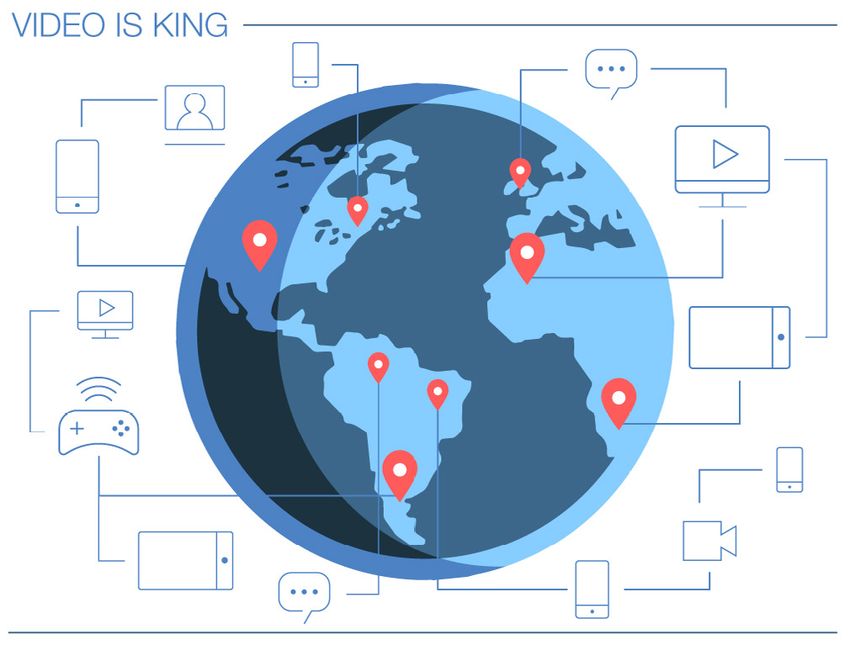
video content—anytime, anywhere, and on any device—
drives exceptional customer experience and revenue.
2    Managing video growth for competitive advantage

Contents                                                            service upon unexpected hardware failure and secure to
                                                                    manage identities and protect valuable assets. It also needs to
    2 Executive summary                                             support advanced analytics and real-time targeted advertising
    3 Key trends impacting telecommunications, media and            and campaign management to drive revenue and growth.
      entertainment industry
                                                                    This paper will outline key trends impacting the
    6 What will it take to deliver video content anytime,           telecommunications, media and entertainment industry and
      anywhere and on any device?
                                                                    show how IBM is helping content providers select, build and
    6 IBM has a portfolio of cloud-based video solutions that can   manage video delivery systems that can handle today’s
      deliver on these market requirements                          workloads, have the flexibility and scalability required to meet
                                                                    new consumer needs, can grow rapidly and can support a
    9 Conclusion
                                                                    variety of revenue-generation opportunities.
10 Endnotes
                                                                    Key trends impacting
                                                                    telecommunications, media and
Executive summary
Video is the most prevalent type of data on the planet and it       entertainment industry
                                                                    There are several trends disrupting the telecommunications,
continues to grow as digital technology evolves. The struggle       media and entertainment industry. These include a growing
for Telecommunications, Media and Entertainment (TME)               amount of video content, shifting distribution and revenue
content providers is how and where to store and deliver this        models and tech-savvy consumers wanting a consistent media
much data. The momentum behind video consumption has                experience across devices and audience-of-one segmentation.
made content choices, content delivery and quality of               Each of these is discussed below:
experience critical. Tech-savvy consumers want a fluid media
experience with platform-agnostic content available on an
                                                                    What keeps you up at night?
assortment of devices using a growing variety of distribution
                                                                    •   How do I manage all this video content and the associated rights?
channels—and they are willing to change content providers if
                                                                    •   How do I keep the content secure?
they don’t like their viewing experience.
                                                                    •   How do I meet demand and scale quickly?

This changes the nature of competition. Telecommunication           •   How do I operate with efficiency and flexibility?
organizations that supply both wired and wireless network           •   How do I understand—and anticipate—the audiences’ preferences
                                                                        and demands?
connectivity are merging with the media and entertainment
industry. More competitors are going after the same content         IBM’s Cloud Video solutions can help solve these and many
consumer, resulting in an unprecedented choice of content           other issues.
distribution models and a corresponding shift in how revenue
is generated. In addition, audience demographics are changing.
                                                                    Digital video streaming drives exponential growth in
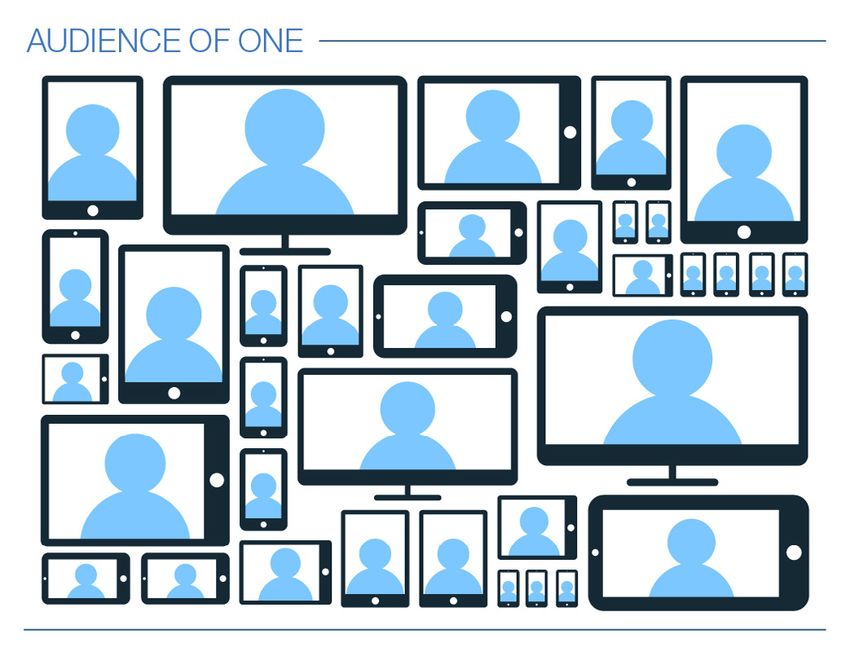
Consumers are so segmented that content distributors now
                                                                    content
target an audience of one and align the distribution of content
                                                                    The vast amount of content created, stored, transported and
assets to individual preferences.
                                                                    consumed will continue to grow through 2020, driven in large
                                                                    part by the expansion of video streaming content. Within four
This video content system needs to accommodate all types of
                                                                    years, nearly a million minutes of video content will cross IP
content including licensed assets, self-published content, news,
                                                                    networks every second. To put this in perspective, it would take
sports, business, education and training content. It needs to be
                                                                    an individual more than five million years to watch the amount
scalable to accommodate growth, resilient to ensure ongoing
                                                                    of video that will cross global IP networks each month in 2020.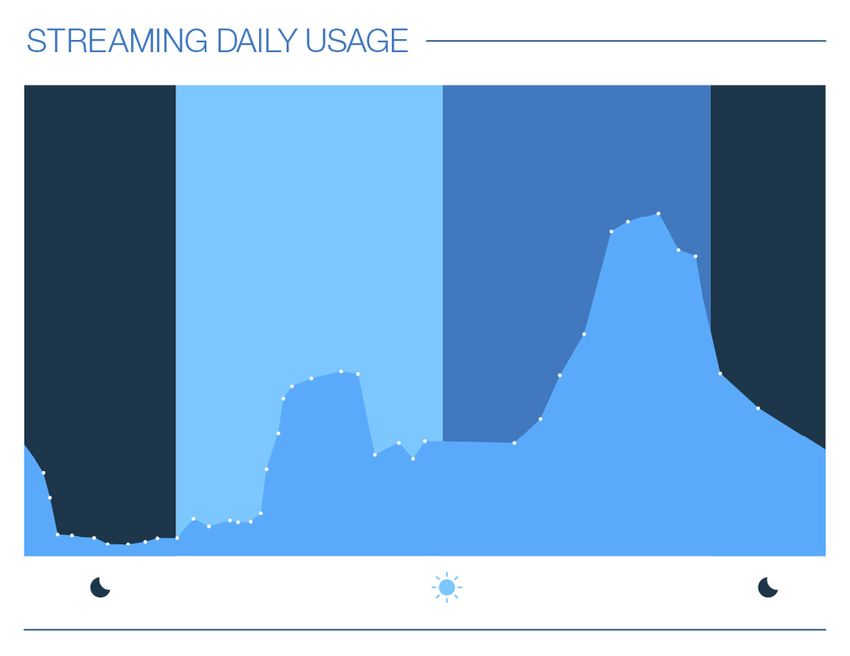
Telecommunications, Media & Entertainment   3

According to PwC, in 2015, video drove more revenue than            chats among team members and traditional training videos.
any other TME sector, generating nearly USD $420 billion            Video streaming, webcasting and video conferencing also allow
globally in subscription and advertising revenue. Cisco             viewers to interact with video in various ways. Videos can be
estimates that internet video traffic will grow fourfold from       streamed live or recorded and viewed on demand. Market
2015 to 2020, with a compound annual growth rate (CAGR) of          research firm MarketsandMarkets estimates that the global
31 percent. Globally, they estimate that IP video traffic will be   enterprise video market will grow from USD $16.98 billion in
82 percent of all consumer internet traffic by 2020.                2015 to USD $36.84 billion in 2020, at a CAGR of 16.7
                                                                    percent.

                                                                    With the emergence of popular video-streaming services that
                                                                    deliver internet video to the TV and other device endpoints,
                                                                    content-delivery networks (CDNs) have prevailed as a
                                                                    dominant method to deliver such content. Internet video-to-
                                                                    TV traffic will be 26 percent of consumer internet video traffic
                                                                    by 2020. Consumer video-on-demand (VoD) traffic will nearly
                                                                    double by 2020 and ultra-high definition (UHD) content will
                                                                    be 20.7 percent of IP VoD traffic in 2020.

                                                                    The opportunities are significant for TME companies.
                                                                    However, there are questions that must be addressed: How can
                                                                    organizations manage the sheer volume of this much data?
                                                                    Should it be stored on site, in the cloud or both? How is video
                                                                    transported to consumers in a fast, high-quality and reliable
                                                                    manner without incurring buffering interruptions or network
                                                                    performance slowdowns during peak traffic periods? How do
Much of this growth is being driven by new digital                  companies ensure digital rights management and protect
technologies used to create and view videos. Considering that       assets?
camera image resolution and frame rates are increasing and
multi-camera videos are becoming more common, it is not             Diverse content distribution and viewing devices shift
surprising that a single movie at 4K resolution can require         revenue allocation
several petabytes of raw data storage. As production and digital    Organizations that depend on advertiser support are finding
video techniques improve, experts estimate that by the next         their revenue and profitability under increasing pressure as
decade, total video captured for a single, high-end digital         audiences continue to evolve and market segments continue to
production could be measured in the hundreds of petabytes,          fragment. Simultaneously, digital technology continues to
approaching one exabyte. So not only is the amount of               evolve. Content is being viewed on an increasing number of
available content growing, the size of each content asset is also   devices, using a growing variety of distribution channels. This
growing.                                                            is creating new routes to consumers as well as new technology
                                                                    infrastructure challenges for telecommunication, media and
Simultaneously, businesses are adopting video for several           entertainment providers.
purposes including: corporate communication, collaboration,
training, sales enablement, knowledge sharing and                   Companies are finding new ways to produce, distribute and
management and learning and development. These                      monetize this content, which is restructuring the TME
applications include everything from town hall meetings, video      industry. Revenue is typically driven by advertising fees,
4 Managing video growth for competitive advantage
subscription fees or both. Many traditional media and digital video recorders (DVR) across devices, with enhanced
entertainment companies have been licensing their libraries of platform integration, social sharing capabilities and
movies and television shows as well as new originals to personalized recommendations.
over-the-top (OTT) streaming services such as Netflix,
Consumers expect to have the same quality, availability and
Amazon and Hulu that deliver film and television content via
the internet. Some content creators such as NFL Now, Sesame
Street Go and Comic-Con HQ are offering assets directly to
consumers—bypassing traditional studios and distribution
channels.
As a result, today’s consumers have many choices. In addition
to vast amounts of available content, they decide how, where
and when they want their content delivered. Historically,
consumers have had subscriptions for paid TV packages from
cable and satellite providers such as U-verse, Comcast,
DirecTV or Dish. Today, people can choose from subscription
video-on-demand (SVOD) services such as Netflix (where they
pay a set amount per month for all the content they can watch
[with no advertising]). There are also transactional video-on-
demand (TVOD) pay-per-view models where consumers pay
only for what they actually watch, as well as advertising
video-on-demand (AVOD) models such as Hulu where they
experience from their video streaming services as they get from
pay for all they can watch but with limited advertising.
their pay television service and vice versa. In a recent IBM
study, 55 percent of U.S. respondents said they primarily use
According to Juniper Research, global revenue for over-the-
their smart TV, Roku, Apple TV, game console or other
top video services will reach USD $32 billion by 2019. This is
connected TV device to watch their favorite streaming service,
being driven by growth in established markets such as North
while 25 percent use tablets or smartphones as their primary
America and Western Europe as well as by the emergence of
viewing device. Unfortunately, 75 percent of SVOD users
new OTT providers in Asia Pacific. In the United States, 78
report experiencing buffering and slow stream starts while
percent of consumers subscribe to at least one OTT service.
viewing, and nearly 1 in 5 consider technical problems so
Of these, most have added OTT offerings to their existing
serious they are likely to cancel their service because of it.
pay-TV subscriptions rather than replace them. However,
younger demographics such as millennials frequently choose
As the number of devices being used to access content grows,
video streaming services instead of pay TV. As a result,
the level of support required also increases. According to
advertising revenues are shifting to different distribution
Cisco, the number of devices connected to IP networks will be
models and the companies that operate them.
three times as high as the global population by 2020. This
means that by 2020, every person on the planet will have on
Customer experience is paramount
average three or more networked devices with which to view
Audience demographics are not the only thing changing.
content.
Consumers use multiple devices and they want the same media
experience with platform-agnostic content available across all
However, greater workloads and infrastructure systems for new
their devices. They want to watch shows and movies on their
services require a tremendous investment in separate server
own schedule—streaming in real time, on-demand and using
farms dedicated to storage, processing, streaming and otherTelecommunications, Media & Entertainment 5
functions. Connecting and managing these disparate network During 2016, there were a record breaking 455 new episodes
environments while delivering popular and time-shifted for viewing each week. Because each customer cannot consume
content to millions of users and devices simultaneously is all available content, TME providers need to understand which
difficult and takes time to build, support and manage. viewers are consuming which types of content, which assets are
most popular and at what point viewers drop out—among
Media, entertainment and telecommunications providers need many other attributes. Understanding audience preferences
to deliver the content consumers crave in a high-quality, and content performance metrics enables TME providers to
non-interrupted fashion to ensure a positive customer make educated decisions about content acquisition and
experience that will enhance loyalty and improve customer production while allowing them to personalize the user
relationships. As live-streaming grows in importance and experience to each individual’s habits and preferences.
prevalence, content providers must have the technology to
handle massive spikes in viewer traffic at any given time to Content distributors now need to target an audience of one
prevent site crashes and streaming disruptions. Likewise, they and customize the packaging and distribution of content assets
must safeguard against single points of failure in video delivery to accommodate individual preferences. By targeting specific
systems that could cause widespread service interruptions. content to an audience of one, organizations can better manage
They must also be able to provide content across a wide variety how vast amounts of content are stored and transported. They
of devices. Data analytics can help TME providers to better can also offer more targeted advertising options as specific
understand viewing habits and plan for peak demand and types of products and services typically appeal to specific
device preferences. audience demographics who watch certain types of content. To
drive subscription and advertising revenue, telecommunication,
media and entertainment organizations need advanced data
analytics to better target content to receptive consumers.
What will it take to deliver video content
anytime, anywhere and on any device?
To match the services provided by over-the-top (OTT) content
providers, media, entertainment and telecommunication
providers need robust content delivery systems. These systems
should make it faster, easier and more profitable to deliver any
media content, whether live or recorded, to any device with
anytime and anywhere convenience. They must also be
high-performance video processing and storage systems that
combine computing systems, sophisticated analytics and
powerful management software, along with innovative
clustered storage and video processing.
Audience-of-one segmentation needs advanced
analytics This requires an entirely new way to integrate siloed systems.
It requires data analytics which offer the opportunity to drive
In the race to capture share in today’s increasingly crowded revenue higher through real-time ad insertion, precise
market and compete for audience attention, it is imperative subscriber targeting, campaign management and churn
that content providers understand their viewers’ needs, prediction. TME providers should look for a system that offers
concerns and expectations. This requires advanced analytics these critical benefits:
capabilities.6 Managing video growth for competitive advantage
• Scalability to reach consumers wherever they are around the environment. IBM can help service providers deliver
globe, whenever they want and to do so in a way that differentiated experiences that are more relevant and increase
meets demand peaks and flexes when demand is lower. customer value. IBM works with clients around the world and
has a video solutions portfolio for DVR, OTT and streaming
• Resiliency to assure there is no single point of failure. The delivered via the cloud in any of the three required ways
system architecture should compensate for unexpected enterprises demand: Public, Private (also called on-premise) or
hardware failure automatically without impacting the Hybrid.
service.
The following market challenges can be answered with public
• Security-rich environment to manage identities. cloud solutions from the IBM Cloud Video Business Unit:
Authentication and cross-platform encryption should also
be supported. • Live events: Live video enhances streaming experiences,
bringing a sense of excitement, connection and immediacy.
• Analytics to perform detailed segmentation which can be IBM Cloud Video offers placement capabilities that can
used to better choose which programming and channels to serve the live video in an ad unit on targeted websites to
offer subscribers. This can also help providers better provide an in-the-moment dynamic for high-profile events
understand their customers’ usage patterns, preferences and speakers that help to draw huge audiences. It is
and even gain personality insights. A high-performance interactive and provides tight integration with social tools
video processing and storage system can help expand the and chat functionality.
intelligence and insight gathered from subscribers’ content
selection, use and preferences to make smarter decisions • Multiscreen streaming: Today, mobile consumers expect to
about programming. have access to content at the tips of their fingers,
regardless of timing, location or bandwidth. As consumers
• Real-time targeted advertising and campaign increasingly look to connected devices for video content,
management to allow real-time, unicast and per-user the IBM Cloud Video Multiscreen Streaming solution
targeted advertising insertion for both linear and enables you to interact and meet this demand, whether live
nonlinear content in the compressed domain. Predictive or on demand, while opening new revenue streams. This
analytics can help TME providers understand what types solution unites powerful content management capabilities
of ads interest the subscriber. It can also determine which with robust catalog management and subscriber
device is most used by the subscriber and where to direct administration functionality, providing a single platform to
advertising dollars or initiate campaigns. A content manage and administer all components of an OTT
delivery system could also be used for network streaming service.
management and capacity planning to determine which
areas and demographics are most likely to subscribe to a • Corporate communications: Forming connections and
new enhanced service. humanizing company leadership is more important than
ever. Video can help reinvigorate communications,
IBM has a portfolio of cloud-based video connect employers to employees and engage personnel
solutions that can deliver on these market with the company’s mission. Implementing video into your
corporate communications strategy delivers company
requirements
messages in a way employees are used to, which helps
IBM collaborates with telecommunications, media and
boost productivity.
entertainment clients, bringing together business insight,
advanced research and powerful technologies to help give them
The IBM Cloud Video platform empowers HR and
a distinct advantage in today’s rapidly changing videoTelecommunications, Media & Entertainment 7
company leadership by offering flexibility for quick setups, computing DVR helps TME providers create new
such as a built-in webcam or even a mobile app, alongside converged consumer experiences that bring fixed and
professional setups, with external equipment. Employees mobile assets together to work synergistically and create
can engage content both on premise and off premise, with sticky services. This enables TME providers to offer
full support for viewing on mobile devices along with add-on services that make a product experience more
content security to restrict access to intended parties. valuable, which leads to increased subscriber loyalty.
• Workflow and distribution: IBM Cloud Video delivers The IBM Video Grid™ private cloud solution provides a
powerful multiscreen video logistics capabilities to cloud computing-based DVR to deliver increased
simplify content management and distribution, enabling marketing flexibility, create new services dynamically,
providers to maximize operational efficiencies and take increase average revenue per user and reduce churn. The
advantage of additional monetization opportunities like IBM Video Grid™ solution provides an on-premise,
C3 and D4+ windows. The multiscreen monetization flexible video building block, built on a low-cost
solution manages and implements all aspects of content commodity server and storage system with integrated
preparation from postproduction to delivery, including element management and a node provisioning system.
content ingest, multi-platform transcoding, sophisticated IBM Video Grid™ enables multi-room remote storage
metadata management and preparation for dynamic digital video record (RS-DVR) capabilities by turning each
advertising, packaging, scheduling and distribution. In existing non-DVR set-top box already in the home into a
addition, intelligent workflow tools can be configured for virtual DVR.
manual or automatic publishing from any ingest source to
any end destination. IBM Video Grid™ tightly integrates storage and video
processing functions, allowing higher performance in a
• Marketing: One of the biggest barriers to understanding smaller form factor that reduces overall capital and
how your videos are actually performing is the inability to operational expenses. The solution is architected with
track and measure their use. Video, like any marketing logically unified storage units; each part of the video is
asset, must be managed and measured to ensure that 1) stored in a different part of the cluster so there is no single
you are using the assets effectively and 2) you can tie their point of failure.
use to specific campaigns and measurable goals.
The IBM Video Grid™ is designed with cognitive
IBM Cloud Video provides tools to ensure key metrics like capabilities and leverages a framework built on open
viewing times and completion rates are captured, thereby standards and APIs. This gives organizations access to a
helping to determine how consumers absorb video content large portfolio of industry tools like encoders and
and what effect it can have on buying behavior. As a result, transcoders. It also provides API access to additional value
the analytics captured around viewing sessions are critical. added services like analytics and media services as well as
easy integration with back office systems.
In addition, the IBM Video Grid™ private-cloud solution
enables cloud-based DVR capabilities: Across all the use cases above, enhanced by insights and
analytics from IBM cognitive solutions, the IBM Cloud Video
• Cloud-based DVR: Cloud computing DVR offers lower platform can provide 360-degree views into viewer habits and
costs for storage, encoding and other video processing behavior. Content protection and digital rights management
functions and can exploit fast file-transfer capabilities. are also provided to ensure valuable assets are protected. The
Centralized storage of DVR content takes advantage of IBM Cloud Video platform provides availability and reliability
existing set-top boxes without hardware upgrades. Cloud on an international scale with comprehensive security across8 Managing video growth for competitive advantage
data, content and the physical environment. With proven and
unparalleled reliability and real-time scalability, IBM Cloud Canadian Broadcasting delivers multiscreen
Video helps enable new opportunities to leverage and monetize streaming
video to enhance business goals.
The Canadian Broadcasting Corporation (CBC) provides
Solutions for a hybrid cloud environment Canadian-based, ad-supported streaming services. They have a
IBM can craft a hybrid solution using elements of our public growing content library with more than 600 titles (over 400
and private Video Cloud solution portfolio to meet your hours) including items such as CBC-TV, digital originals,
unique needs. This enables you to quickly and easily scale as documentaries and children’s programming.
needed while leveraging investments in existing infrastructures.
CBC needed a video platform to support their strategy of
If you’re starting with on-premise solutions, but are looking to
building an audience in an aggressively competitive
move to the cloud to reduce storage costs, perhaps it makes
environment. They wanted to expand their streaming video
sense to keep origin storage on premise but move your
capabilities and be able to rapidly scale to accommodate huge
workflow to the cloud. Or perhaps you’re concerned about
volumes of additional digital content. They wanted a partner
managing spikes in demand? With IBM, it’s easy to keep your
that understood what it means for a broadcaster to be digital.
on-premise solution but manage bursting in the cloud to better
They also wanted flexible video technology, a depth of
scale for peak demand periods.
experience in digital workflow and the ability to leverage their
existing infrastructure. CBC turned to IBM.
Regardless of where you’re starting, IBM has you covered. Our
video delivery solutions can be tailored to meet various With support from IBM Cloud Video, CBC now features
configurations for any video requirements, such as the geo-fencing capabilities, enhanced accessibility including
following examples: closed captioning and described video, complete search-and-
discover functionality and management of an enhanced user
IBM Cloud Video Solutions experience. For the initial launch, CBC chose to support
• Private: Private instance of content in the cloud Android devices and has now added support for additional
platforms such as iOS devices, Google’s Chromecast and
• Hybrid: Origin storage on premise with workflow in the Apple’s AirPlay. With just a few clicks, fans can enjoy popular
cloud original dramas like the espionage thriller “The Romeo
• Public: Sharing of storage resources but content is secured Section” and the comedy series “22 Minutes” on devices of
and private their choosing using a web browser.
IBM Video Grid™ solution
• Private: On-premise solution Conclusion
Growing video content and a rapidly evolving business model
• Hybrid: On-premise solution with bursting into the cloud
brings many challenges for telecommunications, media and
to scale for peak demand
entertainment providers. Consumer demand for new delivery
channels and better video to new and smarter devices, as well
• Public: Using cloud platform as a service
as an on-demand appetite is forcing the TME industry to
evolve more quickly than ever. IBM can help TME providers
select, build and manage a video delivery system that can
handle today’s workloads, has the flexibility and scalabilityTelecommunications, Media & Entertainment 9 required to meet new consumer needs, can grow rapidly and can support a variety of revenue generation opportunities. IBM can help TME providers deliver differentiated experiences that are more relevant and increase customer value. We bring business insight, advanced research and powerful technologies to the media, entertainment and telecommunication industries. IBM is ideally positioned to engage industry clients to develop deeper customer insights, formulate revenue and business model change and optimize and revitalize core operations to fuel innovation. We help media and TME providers build solutions that address a rapidly changing market through capabilities that help build an agile digital supply chain to quickly bring new products and services to market, meet the increasing demands of the digitally-savvy customer and pursue cost savings and new revenue opportunities. About IBM Cloud Video Unit Created in January 2016, IBM Cloud Video brings together innovations from IBM’s R&D labs with the cloud video platform capabilities of Clearleap and Ustream. Through the unit, IBM delivers a powerful portfolio of video services that spans open API development, digital and visual analytics, simplified management and consistent delivery across global industries. IBM Cloud Video supports top media and enterprise companies with reliable video-on-demand and streaming services. For more information on IBM Cloud Video, please visit ibm.com/cloud-computing/solutions/video. Find out more about IBM in the Telecommunications, Media & Entertainment Industry ibm.com/industries/telecom-media-entertainment
10   Managing video growth for competitive advantage

Endnotes                                                        12. Strategy& “2016 Entertainment & Media Industry
1. http://www.cisco.com/c/en/us/solutions/collateral/service-       Trends” 2016, Deborah Bothun and Christopher A. H.
     provider/visual-networking-index-vni/complete-white-           Vollmer, http://www.strategyand.pwc.com/trends/2016-
     paper-c11-481360.html                                          entertainment-media-industry-trends

2. http://www.strategyand.pwc.com/perspectives/2016-            13. Phys.org, “New record for US original television series in
     entertainment-media-industry-trends                            2016” December 22, 2016, http://phys.org/news/2016-12-
                                                                    television-series.html
3. Cisco, “Cisco Visual Networking Index: Forecast and
     Methodology, 2015–2020 White Paper,” 2015.

4. https://www.storagevisions.com/Press%20Releases/Media_
     and_Entertainment_Report-080215.htm

5. “An Era of Growth: The Cross-Platform Report.” The
     Nielsen Company. (March, 2014)

6. Hollywood Reporter, “Proof of “Too Much TV”? The
    Full List of 1,400-Plus Primetime Series That Aired Last
    Year,” January 27, 2016, Lesley Goldberg, http://www.
    hollywoodreporter.com/live-feed/proof-tv-full-
    list-1400-859851.

7. Adbrands, “CBS,” http://www.adbrands.net/us/cbs_us.htm.

8. http://www.telecompetitor.com/ott-video-revenue-forecast-
     to-reach-32-billion-in-2019/

9. IBM, “Everybody Wants to Rule the Streaming World:
     How Advanced Data & Analytics Alleviate Video
     Streaming Pain Points,” April, 2016.

10. Leichtman, Bruce, “Major Multi-Channel Video Providers
    Lost About 105,000 Subscribers in 2013,” Leichtman
    Research Group, Inc., March 14, 2014.

11. Consumer Reports, “How to save money on triple-play
    cable services: Navigate the changing world of TV,
    Internet, and home phone service—and save money doing
    it.” March 2014, LBE12347.
Telecommunications, Media & Entertainment 11
12   Managing video growth for competitive advantage

                                                       Written by Michael Clanton, Global Video Solutions and Cable Industry
                                                       Leader

                                                       © Copyright IBM Corporation 2017

                                                       IBM Corporation
                                                       Route 100
                                                       Somers, NY 10589

                                                       Produced in the United States of America, January, 2017

                                                       IBM, the IBM logo, ibm.com, IBM Video Grid are trademarks of
                                                       International Business Machines Corp., registered in many jurisdictions
                                                       worldwide. Other product and service names might be trademarks of IBM
                                                       or other companies. A current list of IBM trademarks is available on the
                                                       web at “Copyright and trademark information” at http://www.ibm.com/
                                                       legal/us/en/copytrade.shtml.

                                                       This document is current as of the initial date of publication and may be
                                                       changed by IBM at any time. Not all offerings are available in every country
                                                       in which IBM operates. The performance data and client examples cited are
                                                       presented for illustrative purposes only. Actual performance results may
                                                       vary depending on specific configurations and operating conditions. It is the
                                                       user’s responsibility to evaluate and verify the operation of any other
                                                       products or programs with IBM products and programs.

                                                       THE INFORMATION IN THIS DOCUMENT IS PROVIDED “AS IS”
                                                       WITHOUT ANY WARRANTY, EXPRESS OR IMPLIED,
                                                       INCLUDING WITHOUT ANY WARRANTIES OF
                                                       MERCHANTABILITY, FITNESS FOR A PARTICULAR PURPOSE
                                                       AND ANY WARRANTY OR CONDITION OF NON-
                                                       INFRINGEMENT.

                                                       IBM products are warranted according to the terms and conditions of the
                                                       agreements under which they are provided.

                                                                Please Recycle

                                                                                                           MEW03016-USEN-00
You can also read


