Manawatū Te Mahere Hauora Health and Wellbeing Plan 2018-2023 - MidCentral DHB
←
→
Page content transcription
If your browser does not render page correctly, please read the page content below
Manawatū
Te Mahere Hauora
Health and Wellbeing Plan
2018-2023
He Mihi Greetings
Kua hau mai te rongo he ao hou kei te waihangatia e tātou. Arā, he ao hou e noho nei ko te tangata e tino ora
ana, ko te hauora te tino aronga, ko te whai whakaaro o tētahi ki tētahi, ahakoa ko wai, ahakoa nō hea. Nau
mai e hika mā ki tēnei whakaaro kua marara ki ngā tōpito katoa o Manawatū whenua. Nei te mihi kau ake o
Te Pae Hauora o Ruahine o Tararua. Ka tukua ko ngā waiora o ngā wai kaukau e kawe atu i ēnei kupu ki ngā
kāinga katoa o Manawatū.
The word is out there a new world being created. A new world where everyone is very healthy and health is
the focus, along with thoughtful to each other, regardless of who or where we are from. So welcome to this
new perspective being dispersed to all corners of the Manawatū district. This is an unconditional greeting
from Te Pae Hauora o Ruahine o Tararua. Let us leave it the healthy waters of bathed by the ancestors to
convey these words to all homes of Manawatū.

He Kupu Whakataki Foreword
To achieve Quality Living – Healthy Lives – Well Communities we need to think and work differently.
We want nothing but the best health care, and the best health and wellbeing for everyone. Every day in
our communities people face a range of challenges; some live with mental illness, some live with a chronic
disease, others may become acutely unwell and need emergency care.
Thinking beyond health, some live in cold, damp houses, some may experience violence, and others struggle
to afford the everyday costs of living. Health and its partners need to work together as one team, taking a
more collaborative approach so that we can achieve better health outcomes for our communities. This also
means partnering with individuals, accepting them as experts in their own health and in their own lives.

                                                                                                             2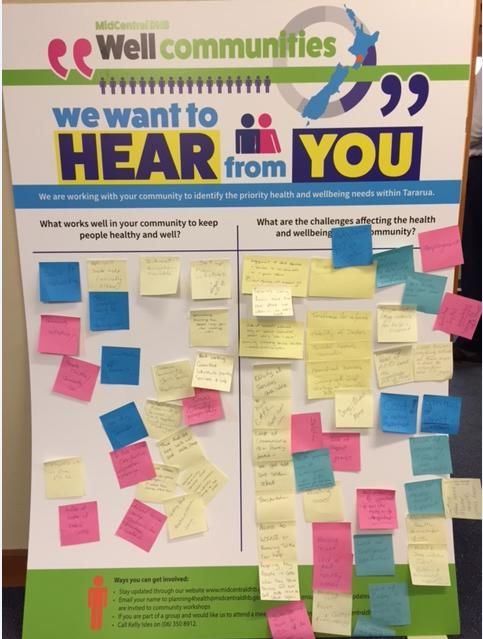
Ngā Rautaki What strategies guide the Health and Wellbeing Plan?
The strategic intentions guiding this Health and Wellbeing Plan for Manawatū District are our Strategic
Imperatives:

•   Partner with people to support health and wellbeing
•   Connect and transform primary, community and specialist care
•   Achieve quality and excellence by design
•   Achieve equity of access across communities, and
Our Vision...

Te Mahere Hauora Manawatū District Health and Wellbeing Plan
The Manawatū District Health and Wellbeing Plan has two parts;
Locality Approach: This outlines the approach taken, what we did and how we did it. It highlights the
key findings at each stage, providing a snapshot of Manawatu District’s population and their strengths and
challenges in regards to health and wellbeing.
Plan of Action: This section looks at what can be done to improve the priority areas identified by the
Manawatū District community. Each of the four priority areas has a series of actionable steps that are
intended to be carried out within a five-year time frame.
The Health and Wellbeing Plan aims to make a positive contribution to the health outcomes of the
Manawatū District. It will be used to make changes necessary to continuously improve our health system,
as part of the wider heath sector and social service network. The Plan places Manawatū District residents
and their families/whānau at the centre of planning decisions and design to best meet the needs of the
communities.

                                                                                                             3
Part 1 Locality Approach

He Whakarongo Ki Te Hapori Listening To The Community
We need to better understand our communities, people’s lifestyles, their health needs, their experience of
care and what their priorities are. Understanding our communities will enable us to work in partnership with
them to better design services that meet that community and its people’s needs.
A locality approach:
• Provides a voice for communities; acknowledging different needs, cultures and priorities.
• Places people, families/whānau at the centre of planning decisions and design to best meet the needs of
    their community. Providing local solutions for local issues.
• Engages with other sectors in common community health and wellbeing agendas to reduce inequity and
    improve health outcomes.
• Helps to develop active partnerships with people, communities and other agencies who work within or
    across health at all levels.
• Will help inform investment decisions and provide focus for future planning.
• Acknowledges that health and wellbeing is affected by many factors, including the environment, housing
    and employment.

What is a locality?
A locality is a defined geographical area. In this case it is the area within the Manawatū District Council
boundary. This plan encompasses all people who usually live in this area (not just those enrolled with local
general practice teams).
Health and Wellbeing plans have also been developed for other localities (based on TLA boundaries) within
the MidCentral DHB area. Plans for the Tararua District, Horowhenua District and the Ōtaki ward of the Kāpiti
District are completed with a Palmerston North City plan under development.

What will be the impact for people and communities?
•   Health care that is flexible, responsive and adaptive to meet their needs.
•   People receiving health care services delivered on time and closer to home where possible.
•   People will have positive experiences of care from a joined-up health system.
•   The health and wellbeing of all people in the community will be improved as a result of collaborative
    work between health, social services and community agencies.

Building upon existing work
It’s important to acknowledge other plans and strategies that have been done in the Manawatū District.
Documents, such as the current Community Plans, were used to inform our planning process.

                                                                                                            4
Nā wai i āwhina? Who helped to guide and support this plan?
A Local Advisory Group was established to guide and support the locality planning process. It was important
to have local leaders, who reside within the Manawatū District, to guide the process as they have an in-depth
knowledge of the best way to engage with a diverse range of people within their community.
Representation at the Local Advisory Group
• Manawatū District Council
• Non Government Organisations
• Consumers
• Ngā Kaitiaki o Ngāti Kauwhata Inc
• Feilding Health Centre
• Private Sector
• Central PHO
• Older Persons Health Portfolio Manager for MidCentral District Health Board
• Public Health
• Other health and social services
Te hanga Mahere Creating the Plan
Creating a Health and Wellbeing Plan for the Manawatū District involved three main stages.
These were:
Population Health Intelligence
1) gathering population intelligence and health information
2) community engagement health
& Community Engagement
3) establishing priorities and actions for service provision
wellbeing
plan Service Provision
Manawatū Tangata, Manawatū Hauora Population Intelligence and Health
information
• Information and data was gathered about the population of the Manawatū District and research was
undertaken, including analysis of current and previous strategies and plans.
• A district-wide Health Needs Assessment was completed.
So, what did we find?
The following pages are a snapshot of some of the interesting data and information gathered about the
population of the Manawatū District.
5MANAWATŪ POPULATION SNAPSHOT
Manawatū Population 2017
30,300 17.6% were 65 years and over. This is compared
to 15.1% nationally.
17.6%
65 years and
over 20.8% were 0-14 years. This is compared
to 19.5% nationally.
12%
Of people in the Manawatū District
live in areas designated as being
among the most deprived in New
Zealand.
Higher levels of deprivation are associated with higher mortality rates, and
higher rates of many diseases as well as social problems such as crime,
family violence, disengagement from education and risk-taking behaviours.
In the 2013 Census:
20.9% of families with dependent children in the Manawatū District were
single-parent families, 48% of single-parent families had a total annual family
income of less than $30,000.
Sources: Infometrics Manawatū District Economic Profile, Statistics NZ, NZ Deprivation Index – Otago University, educationcounts.govt.nz
6By 2038 Statistics NZ predict that:
There will be a 109% increase in The proportion of residents
residents aged 65 years and over. identifying as Māori is expected to
(9,400 residents aged 65+ compared to 4,500 in 2013) increase to 24% (from 14% in 2013).
These trends are important because Māori and older people are known to have poorer health status than other New Zealanders.
• The proportion of residents identifying as Pacific is expected to increase to
3.6% (from 1.5% in 2013).
• The proportion of residents identifying as Asian is expected to increase to 3.9%
(from 1.8% in 2013).
Te Kāinga Housing
Home ownership rates in Manawatū are above the national
average (2013 Census). 71.2% of households own their own
71.2%
own their
dwelling in the Manawatū District compared to 64.8% nationally.
own home
$287
The estimated mean weekly rent for the year to May 2017 was $287 in
Manawatū compared to $273 for the Manawatū/Whanganui region
and $421 for New Zealand.
Mātauranga Education
73-77% The increase for all Māori school leavers
with NCEA level 2 or above since 2009.
75-80% The increase for all school leavers with
NCEA level 2 or above since 2009.
Pūtea Income
In 2013, 52.1% of people aged 15 years and over had an annual
personal income of $30,000 or less.
7Ngā Ratonga Services
This section lists some of the key health services for Manawatū District residents. For a more
comprehensive list of services in the district please refer to www.healthpoint.co.nz
Services available in Feilding include:
Feilding Health Care: 7 Duke Street, Feilding. Services provided include:
• Primary Health Care (General Practice team • Public Health Nursing,
of GPs and nurses), • Community Podiatry,
• After hours Acute walk-in clinic, • Hearing,
• Child and Adolescent Oral Heath, • Ultrasound,
• Community Mental Health, • Pharmacy – Feilding Health
• District Nursing, Pharmacy.
Feilding Health Care Practice Stats:
• Feilding Health Centre caters for 19,500 patients (3,034
are Māori = 15%).
• A GP team of 11 GPs and 14 nurses provide over 10,000
consultations per month.
• Caters for 5,771 people with high health needs.
• 8% of patients have high or very high risk of hospital
admission (compared with 6.9% of enrolled patients
across the MidCentral DHB District).
Other Health Services in the District include:
• MedLab Central open Monday to Friday.
• Himatangi Beach Health Clinic runs Tues, Wed and Thurs mornings.
• Raukawa Whanau Ora Health Service – a kaupapa Māori iwi health provider delivering a range of services
specifically for Māori but not excluding non-Māori work within the district. They deliver mobile services to
homes, marae, kōhanga reo, community venue, one of the base clinics or venues deemed appropriate.
• Best Care (Whakapai Hauora) Charitable Trust provide Māori Health services in the district.
• 9 Rest Homes in the Manawatū District catering for 485 residents.
• A school based health service is provided at Hato Paora College.
• Central PHO provides primary health care services across the district.
• Various providers deliver Child Health Services in the district, including: Pregnancy and Parenting
Services, Well Child Services, Oral Health Services and Outreach Immunisation Services.
8Manawatū District Residents visiting
Palmerston North Hospital:
7581 Manawatū District residents presented
to ED in 2016 and 2394 were admitted.
Attendances at Palmerston North outpatients clinics
by people from Manawatū District in 2016
ElderHealth 340
Medical 8,586
Paediatric 1,073
Cancer 4,698
Rehab 37
Surgical 12,046
Women’s Health 2,219
Total 28,999
Te Pae Hauora o Ruahine o Tararua MidCentral District Health Board
(DHB)
MidCentral DHB is the organisation responsible for providing publicly-funded hospital and public health
services for our population. The DHB has a vision to ensure people in the region experience quality living and
healthy lives as they thrive in well communities.
The DHB is currently adopting an integrated service model which organises services into seven clusters
based on population groups and service areas. This arrangement links different levels of healthcare so a
patient’s journey between primary, specialist and hospital care is simple and seamless. It aims to increase
consumers’ involvement in healthcare at all levels, supporting them with wrap-around care to meet their
personal needs and those of their family and whānau.
Clusters will be responsible for planning, commissioning and delivering services with partners from within
health and from other sectors while also supporting greater clinician engagement and removing some of the
layers of bureaucracy. The DHB aims to work as one team across our district to improve health equity for the
communities it serves.
9Place Holder I Community Engagement
te
e qua
-month-long engagement m e nt processntwas da d
s ha undertaken to ensure residents had adequate
nd opportunityng
Kōrero ageTahi
to provide feedback
Community
e
resid and co-design the plan.
Engagement
y E
it • received e n s u r e
ucknwas ta k
from
A three-month-long
o
en t over
p l a n . 370 residents
engagement e d
.
ums through
iprocess iswas
o he a variety
f tundertaken of mediums.
to ensure residents had adequate time and
der for
ey Priorityuopportunity
nAreas n
eprovide
ttohimprovement t of m were
feedback
y and
a n ys
lidentified
aco-design the using
plan. thematical analysis of the
w a s e sig a r i e i c a l
co-d uwas av t
cess • ndFeedback
ock. g h received t h emaover 370 residents through a variety of mediums.
from
main a
ck • Four o
thr Priority ingeach ck. identified
edba areas nof
ts focus
e
key under
d usAreas
e
Priority dwere
for improvement bawere from
identified using the feedback.
thematical
fee Priority were identified
analysis of the feedback.
r e•sid Threeidmaine ntifiareas of focus under t heeach nd
r 20
0
e r e f ro m t i ngs a from the feedback.
w ed meThe e pin
ecieved
e m ent from across ethe n t ifiManawatu District.
ps ,
ov the spread of elocations re id o
nt w we received w o rkshfeedback from.
ty us the Manawatū District.
h P riori was recieved from
Feedback
v a rioacross
ac The pin points represent ed the spread of locations we
er ecompleted
re and a t tend than
more 190 people attended
e ple
receivedofeedback from. 180 surveys were completed and
ops and more
n 0 pthan 190 people attended various workshops and
8forums.
t h a
ore forums. i M ail
a k
t h e Ōt
in ons
r t i cles e y s c a t i
A rv o
ngagement Methods of engagement:
li n e su arious l
- Community workshops On s in
v - Advertise within the Feilding-Rangitikei Herald
s t e r
- Newsletters distributedPto a wide o d ia
l me
database - Online surveys k
rkshops -t a b a
Surveys
s e
left at various S o
locationsc i a
Advertise - A
within
stall at the
the
t o seeMarket
Farmers
Feilding-Rangitikei
d a le
wide - Posters in various locations Herald eop
d pDelivery mail out
- Rural
ons - MidCentral ly p an
ssurveys
itributed to a wide DHBr edatabase
c tWebsite Online
o u - Social media
a g
di
eremail a n y gr
various- Option locations
Ma n to or phone Project Manager
h
directly
m A stall at the Farmers Market
e c t w i t d
us
j
Prolocations a g ed Rural Delivery mail out
i de rs an
We attended a d
number
n engof meetings and engaged v e s many
with c e prov and people to seek further feedback
groups
B Website a i
Social
t mediav i
including: e t i ngs re s enta ons, ser
eProject Manager directly d re
p ti
l or phone
r o •f mFeilding Youth Ambassadors u d e rg a nisa
mbe in•g: Manawatū Community e e
cl
s inTrust u n ity o
d tend Prescription mm Class ts,
naclunumber ( a
ofs,meetings t c o i de n
er te and engagedth with res many groups and people to seek
• Manawatū Green n
k s
• rCommunityhop s o v
Committees’ (including i
Feilding,
w
ack, n i t wo Halcombe,
yincluding: s w ell a Sanson and Cheltenham) e a king
mu y a at Heart - parent ys p
m u• nitYoung L i brarsupport r,
yogroup
c om • ncPresentation ies), t a k i M a
l
e Ōby Sir oMason unci
g Youth Durie: Kauwhata 2040
ag•eAmbassadors t thRefugee C ,
matue n t
p e n t
Feildinga
i s t r ic t Services
G roup
Community s i Trust
D ry
a y was• Enable K ā pitNZ A d viso
datu Green e Prescription alth
w i th• thNgā
• Feilding
i H eHealthcare Class
e n tre,
itManu Tāiko C
ting Committees’
unity t h K p e d ical Hui
(including Feilding, Halcombe,
w i
• Manawatū i M Community Workshop
ting Cheltenham)
eand Ōtak d.
• ithSINCOSS r
at e t i ng w• - Manchester
Heart parent
ga Boa support House group
e n
raMASH
tation a •O Trust
n by Sir Mason Durie: Kauwhata 2040
e Pu
g Refugee Services
NZ
g Healthcare
anu Taiko Hui
10
atu Community WorkshopRapu Whakaaro Seeking Answers
Ngā pātai What we asked
The key questions we put to the community were:
• what works well in your community to keep people healthy and well?
• what are the key issues/challenges affecting the health and wellbeing of your community?
• what actions could be taken to improve the health and wellbeing of your community?
Below is a list of the strengths that were highlighted by the people of the Manawatū District and the following
two pages summarise the key messages that came through in regards to the challenges faced and how
improvements could be made.
Ngā Huapai Strengths
• A wide range of community groups and support services.
• Friendly, close-knit community with good values, care for others and a real neighbourhood spirit.
• Fantastic recreation assets – parks, playgrounds, sports fields, the Makino swimming pools and lots of
sports clubs.
• Lots of hard working, pragmatic and passionate local people who care and can get things done.
• Health Shuttle and bus to Palmerston North – limited hours but important transport link.
• Great District and Public Nurses present in all corners of the community.
• Rural lifestyles that are healthy and active.
• Access to fresh healthy food – including lots of gardeners and farmers’ markets.
• Active Community Boards and Committees who do a great job.
• Strong advocacy networks for youth, the elderly and people with disabilities.
• Green Prescription programme and social exercise opportunities.
• Feilding Health Care delivering more services closer to where we live.
• Manawatū Rural Support Service offering valuable proactive support no matter where we live.
• Himatangi Beach Community Clinic.
• Rescue Helicopter.
• Strong iwi leadership with vision and community focus.
• Active Community Patrol and Neighbourhood Support.
• Community and Youth Aid Police staff who take leadership on issues and back local initiatives.
• Feilding Health Care provide education on specific health and wellbeing topics for the community.
Ngā Whakaaro Common Themes
With over 370 people engaging in this process, it is important to note that many different strengths and
challenges were identified. The themes identified were based on most commonly stated challenges for
residents of the Manawatū District.
11e o p l e s a i d . . .
w hat p “If I go to the doctor
it’s $40 out of our food
budget.”
“I worry about how isolated
many older people are –
please do something to “Waiting for over a week
give them more access to to see the GP then tell-
everything our community ing my story to another
has to offer.” person is frustrating.”
“The rural support workers are
absolutely amazing, it doesn’t
matter where or how far away
you live. They are at the door
asking if we are ok – real people
who really care.”
“You’re the first person from the
N A W A T U
MA
DHB we’ve ever seen out here; next
time could you bring a doctor or
nurse – mobile or drop-in clinics in
Cheltenham, Apiti and Kimbolton
would mean the world.”
“I really appreciate what the
Health Centre is trying to
“There are so many women do; it’s great to have lots of
in this community who know services in the same place but
how to make a dollar go a long I do miss the friendliness of my
way – they can mentor young old GP practice.”
families to cope much better.”
“My husband carries the weight
“Friendly Feilding is more
of the world on his shoulders and
I worry about him – he’d never
than a billboard or bumper
leave the farm to ask for help but if sticker – this town is truly
“There are no services here someone he could relate to came to full of people who care
in Rongotea so we travel the pub for a chat he’d open up.” about each other and would
about 25km to anywhere do even more for others if
– on a benefit with 3 kids they had the chance.”
it’s not a trip I can afford or
manage easily.”
“Schools are the heart and
“Get with the times
soul of our communities and
– use technology, be “I’m so proud of my Iwi they could be used as hubs
mobile and think like a – Kauwhata care about
local to try new things.” for health far more.”
our people thriving now
and into the future.”
12MidCentral DHB
Well communities
Whakahokinga Kōrero
Common Themes
from our community
engagement
Improve our awareness of local
Reduce the impact of time, distance
services available and how to access
and transport on access to the
health services we need.
them.
Provide better access to more health Encourage and support healthy and
services in our communities and active living for everyone.
closer to home.
Improve easy access to local Communicate clearly, openly and
community mental health and alcohol/ often – to build and maintain a
drug support – earlier, without waiting relationship with us.
and in the communities where we live.
Reduce the presence and impact of Allow me to build and maintain a
drugs on our community, especially trusted relationship with my GP
young people and vulnerable
team.
families.
Support our neighbourhoods and Improve our ability to get a GP
community to connect with each appointment when needed.
other even more.
Provide youth friendly health Ensure people involved in my health
services. and wellness work as one team.
Reduce the total cost impact of
healthcare – especially for the elderly Improve the quality, affordability and
and our most vulnerable. availability of rental accommodation.
Reduce the impact of isolation -
especially for rural families and the
elderly.
13He tāutu huarahi Identifying Priorities
Priority areas were identified through a second round of engagement.
We went back out to the Manawatū District community with the common themes identified after the initial
engagement and asked:
1) what are the top 4 priorities?
2) within these priority areas, what should we focus on first?
The top four identified priorities through this process were:
Community Priority #1 Access to Healthcare
Easy access to Healthcare when people need it
Community Priority #2 Mental Health and Addiction
Improved Mental Health and Addiction support in communities
Community Priority #3 Healthy Living
A well community where everyone is supported to have quality living and healthy and active lives
Community Priority #4 Better Communication and Connection
A district that has quality communications and connections between health services, people, whānau and
communities
It is interesting to note that in developing Health and Wellbeing Plans for other localities within the
MidCentral District area (Tararua District, Horowhenua District and Ōtaki) the identified main priority areas
were consistent, however, there were differences in the focus areas within these priority areas.
Part 2 Mahia te Mahi Plan of Action
So, what can we do?
The following pages summarise the four identified priority areas for the Manawatū District and the plan of
actions for each priority area. The plan takes a one to five year approach and focuses on how health and its
partners can work together to make improvements within the priority areas.
14Community Priority: Access to Health Care
Common things heard from Manawatū District residents:
“The new
Feilding Health
“The health Care Centre is great
shuttle is a great but we are not sure
service but not “We often of all the things
everyone has struggle to get available there and
access to one.” appointments how to access
“Rural people with our own GP them.”
would be more when we need
them.”
likely to access “Travel,
healthcare if it time and cost
was provided are barriers
in the local to getting
community.” healthcare.”
What does the community want us to focus on first?
People are able to get help when Improving people’s access to Health working together as
they need it hospital and specialist care one team
Improve people’s ability to access general Provide more “people focused” systems, Improve the ability for health services to work
practice teams in a timely manner. and provide easier access to specialists together supporting people’s health journey.
Support people with long term conditions to where appropriate. Work in partnership with communities and
have better continuity of care. consumers when designing healthcare.
What will health and its partners do and how will it make a difference over the next 1- 5 years?
Help people to have better access to Improve hospital booking system Improved experience
health services • People’s circumstances (such as locality • People will be better supported by
• People (particularly in rural communities) and family/whānau responsibilities) will health providers who can access the
will be able to connect more with health be taken into consideration by more notes they need through improved IT
services through improved technology (eg flexible hospital booking systems. systems.
virtual consults). • Locality-based teams will be put in place
• People in need will be able to get Providing phone or online consult to help address the unique needs of the
appointments easier through new systems, options community.
which include GP triaging. • A DHB digital strategy is being
• People will be provided with options of a
• General Practices will increase the number consult over the phone or online where developed to identify priority areas for
of patient consultations over the phone appropriate for follow-up specialist improvement, ensuring people and
or online, which will save people time and appointments. This will be piloted with whānau have a more connected health
travel costs. some hospital specialist areas first. journey by services working together as
• Communities will be able to use online one team.
•
tools to get repeat prescriptions, make • People feel better informed about their
Emergency Department Improvements health by making it easier for them to
appointments and receive test results
through a patient portal. • People attending Palmerston North access their health information through
• People with complex conditions will have Hospital’s Emergency Department will find improved technology.
a care coordinator to help build a trusted a more welcoming environment as the
relationship and have continuity of care. reception and waiting areas are improved Better utilise community feedback
(2018/2019).
• People will have more choice by increasing • There will be more opportunities to
awareness of what different health • Patients will have improved privacy in
provide feedback, which will be used to
professionals can do and which service to redeveloped Emergency Department triage
constantly improve health services. The
choose when. Eg your pharmacist may be rooms.
Consumer Council will be involved in
able to give your flu shot. the design of this.
• People will be more aware of how to access
the right health service to get the help they
need through the “Right Choice” campaign.
15Community Priority: Mental Health and Addiction
Common things heard from Manawatū District residents:
“Rural support
“Isolation and “There is a workers are
depression are growing concern great. There needs
a real concern for in regards to Mental to be more support
our older adults; Health and Addiction in for our rural men
we need to look our community; we want in ways that work
after them.” for them.” “We don’t know
to support our friends
and whānau. We need what’s available
support to do this.” locally, especially
if you want to talk
face to face with
someone.”
What does the community want us to focus on first?
People are able to find help when they Support for our Youth Rural Mental Health
need it locally Provide youth friendly mental health and Further develop Rural Mental Health Services,
Increase knowledge of mental health and addiction services and support locally. with a particular focus on supporting farmers
addiction support available in communities so and people that are socially isolated.
that it is easier to find and access.
What will health and its partners do and how will it make a difference over the next 1- 5 years?
Services closer to home Youth Development Supporting Rural Communities
• People will receive help and support within • The Mates and Dates programme will • People who go out into isolated
their General Practice Team in a timely be available and promoted to local communities will receive training and
manner. Mental health teams will be based secondary schools, helping our youth support to help them recognise the
on site with GPs and Nurse Practioners to build healthy relationships. signs of depression and help isolated
offer free accessible help for people with • Manawatū Youth Ambassadors are and vulnerable people to seek help
mental health issues. focusing on increasing awareness of when needed. Health will work in
• Better support for communities locally by services available locally for youth. partnership with Rural Support Services
having a Suicide Prevention Local Response Guidance is provided to support them to achieve this.
team in place in the district in 2019. This will with their project where needed.
involve local agencies working collectively
as one team. • Health will work with other agencies
in linking our vulnerable youth to
Increase visibility and awareness of employment opportunities and work
services and resources experience.
• Mental Health and Addiction Services
will be more visible in our community as
the DHB develop a relevant and modern
communications strategy.
• Promote the online directory of Mental
Health and Addiction Services, linking
services and people to what is available in
the community and how to access them.
• People will be more easily able to find
information on alcohol and drugs through a
more coordinated and modern approach to
how information is distributed.
• People will be able to see how all services
work and where they should seek help and
support through the promotion of a service
mapping document.
16Community Priority: Healthy Living
Common things heard from Manawatū District residents:
“There “We want our
are great kaumatua and
recreation older adults to be
areas, facilities, healthy and connected
community groups “The quality, to their community so
and support services affordability they can stay at home
available for people and availability for longer and have
to connect with of rental a good quality of
if they know “Our young accommodation is life.”
how to.” people need to be having a real impact
on the wellbeing of “The
supported to make environment
good choices, eat some people and
whānau.” is a growing
well and be active so concern and is
they can grow to be important to
healthy adults.” our health and
wellbeing.”
What does the community want us to focus on first?
Quality living for older adults Wider determinants of health Link local people to local activities
Support older adults to stay well longer in their Work alongside others to improve housing, Better link people to community initiatives
own homes. transport, employment opportunities and so people can stay active, eat well and be
other factors that can have an impact on connected to their community.
health and wellbeing.
What will health and its partners do and how will it make a difference over the next 1- 5 years?
People feel well informed Creating a healthy and well Increasing healthy eating and
• People working with older adults in the community active living
community will be kept up-to-date with • A training programme for screening • Support people to eat well, be active
the different types of support, services and patients for family violence will be offered and lead a healthy lifestyle through
community activities available for older to all GP practices who will support increased promotion of the Green
adults through an annual workshop. They people to talk about and seek help for Prescription programme in the
will then be able to link the people they family violence. Manawatū.
are working with to relevant things in the • People will be more aware of the financial • Encourage more kids to ride bikes,
community. support that is available to them and how by advocating to Council for a bike in
to access it, through workshops run in schools programme and encourage
Quality Living partnership with other organisations in schools to adopt it.
• Older adults will be assisted to maintain Manawatū. • Promote the “Health Promoting School”
their strength and balance and remain • Identify and increase support for adult programme where schools partner with
independent through a new in-home literacy programmes, including computer the community to make positive steps
strength and balance exercise support literacy skills within the Manawatū. to improve the health and wellbeing of
programme starting in the Manawatū • The DHB will advocate, where students.
District in 2018. appropriate, for positive changes in
• Community groups will be better supported areas outside of health which have a
to provide strength and balance classes for fundamental impact on people’s health
older people. and wellbeing within the Manawatū
District.
Workshops on using technology • The DHB will advocate for change in the
National Travel Assistance Policy to help
• Support older adults to easily access their make the process for registering and
test results, book appointments online claiming travel expenses easier.
and see their health information through
the patient portal by running two free • Actively lead connecting community
workshops in 2018 on how to use the portal. groups and services; as collectively
they can have a greater impact on the
wellbeing of community members. 17Community Priority: Better Communication
and Connections
Common things heard from Manawatū District residents:
“We
don’t often
“Local see MidCentral
services for District Health Board
local people; our at meetings in the
community should “Communication Manawatū District. We
have input into new from the hospital think it’s great you are
services. It’s for is often not very getting to know us
us so why not “We people friendly; it and understand
include us?” have strong can be difficult to us better.”
community understand where
committees it you need to go and
would be good if you what you need “People don’t
could keep them to do.” know what’s
informed of what’s available in the
happening in community.“
health.”
What does the community want us to focus on first?
Improving Communication People are aware of their choices Increasing engagement and visibility
Make correspondence more people friendly. and what’s available Engage with local people when designing new
People feel well informed when coming to Support the sharing of knowledge, services for the Manawatū District.
hospital. resources and skills across communities to Stronger health leadership and presence in the
increase awareness and empower people. Manawatū District from health.
What will health and its partners do and how will it make a difference over the next 1- 5 years?
People-Friendly Communication Knowledge Sharing Finding local solutions to
• Community members and the Consumer • Share local success stories, promoting local issues
Council will be involved in the redesign of programmes and initiatives that are • When designing a new health service in
correspondence so that communications working well in the Manawatū District. the Manawatū District people, families/
are clear and friendly. • Identify opportunities to work with other whānau will be placed at the centre of
• People will receive more relevant health agencies to increase awareness of planning decisions and design to best
information when attending a hospital what’s available in the community. meet the needs of their communities.
appointment, including parking and shuttle • People will be more up-to-date with • Continue to engage and seek feedback
services. what’s happening in the Manawatū from Manawatū District residents about
• People will be able to access the new PN community by ensuring communication strengths, challenges and areas of
Hospital Navigation App through increased is distributed through: local newspapers, priority, with an annual forum.
promotion of the App; helping people to social media channels, community • Feedback from the Manawatū
navigate their way around the hospital. committees and other key groups. community locality project will be
• To ensure our communities are receiving • It will be easier for people to choose used to help shape and support DHB
clear and people-friendly messaging a service appropriate to their needs planning and future services.
the DHB will continue to find new and through a website which offers reliable
innovative ways to communicate. information on local and district health Working together to achieve more
services.
• Develop a health and wellbeing group
for the Manawatū District, or connect
People feel more informed to an existing group, where we all work
• Communication will be sent out on a together on a common agenda to tackle
more regular basis, with opportunities the bigger issues.
for people to provide suggestions and • Health will be aware of key issues for the
feedback. Manawatū by having a greater presence
at key meetings.
18Mehemea he pātai, whakapā mai ki a mātou
For any enquiries please contact us at:
Email: Planning4health@midcentraldhb.govt.nz
Visit our website www.midcentraldhb.govt.nz
Phone 06 356 9169You can also read


