MARKETING INNOVATIVE DEVICES FOR THE BASE OF THE PYRAMID - Lessons from 15 global pioneers that challenge conventional sales & marketing ...
←
→
Page content transcription
If your browser does not render page correctly, please read the page content below
A report by

MARKETING INNOVATIVE
DEVICES FOR THE
BASE OF THE PYRAMID

Lessons from 15 global pioneers
that challenge conventional sales &
marketing approaches to successfully
serve the poorest

                                         Final report – March 2013

                                   Sponsored by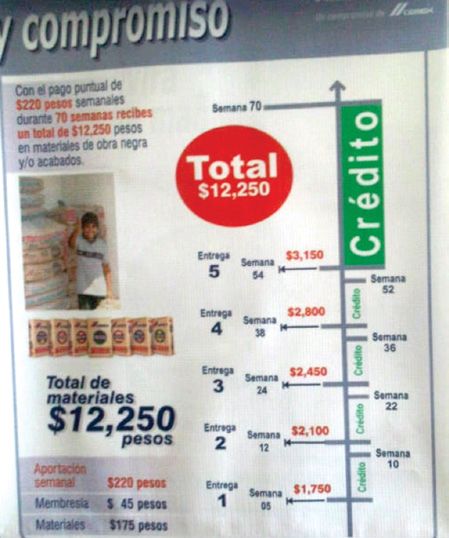
Cover pictures (anti-clockwise from left):
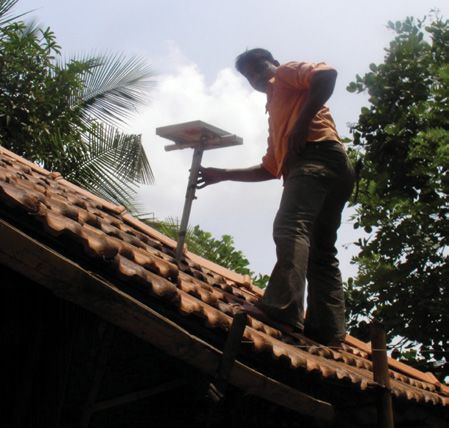
1   Project Dharma demonstration of solar lanterns at night in rural India.
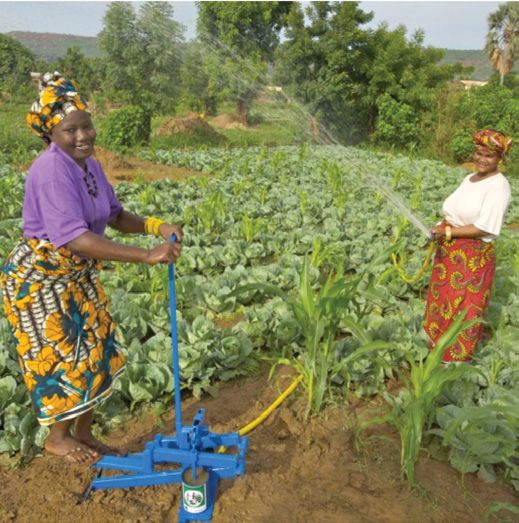
2 KickStart clients working their irrigation pump.
3 Cambodian family with Hydrologic water filter.
ABOUT HYSTRA

Hystra is a global consulting firm that works with business and social sector pioneers
to design and implement hybrid strategies and innovative business approaches that are
profitable, scalable and eradicate social and environmental problems. In order to “be the
change we want to see in the world”, Hystra itself is a hybrid consulting firm – a for-profit tool
for social change. Hystra’s team combines top-tier business strategy consultants and senior
entrepreneurs with a passion for development, present in 12 countries. Since its creation in
2009, Hystra has conducted in-depth sectoral studies on clean energy, safe water, affordable
housing and ICT-based business models for development, designed new strategies to serve
low-income communities with home improvement packages, irrigation pumps, solar lights,
safe water, and improved nutrition products, prepared business plans for pioneering social
businesses and supported the creation of a social impact fund. In four years Hystra has
worked in close to 20 countries serving 25 clients, including large corporations, international
aid agencies, foundations, and a government, to support business models that change the
lives of low-income communities across the globe.

For more information and to download Hystra reports on Energy for the BoP, Safe Water for
the BoP and ICT for the BoP, visit www.hystra.com.
1   MARKETING INNOVATIVE DEVICES FOR THE BASE OF THE PYRAMID

      Contents
      Introduction                                                            2

      1. It’s about economics!                                                5

      2. BoP customers want risk‑free solutions, not cheap products           6

      3. Financing is best done in house, whenever possible                   7

      4. Below the line marketing works better                                9

      5. Word-of-mouth matters most –
         Responsible and effective marketing occurs after the sale           11

      6. Serving the BoP is a high gross margin business                     12

      7. Sales force churn can and must be avoided                           13

      8. Four direct sales force models are emerging                         14

      9. It is worth investing in a modern sales force for the BoP           17

      10. The overhead curse: too much or not enough!                        19

      Conclusion: toward more collaboration                                  20

      Appendix A: Analytical framework                                       21

      Appendix B: Acknowledgements                                           22

      Appendix C: Descriptions of the 15 organizations                       23
         BRAC WASH Sanitation                                                 23
         CEMEX Patrimonio Hoy                                                 25
         GERES (Group for the Environment, Renewable Energy and Solidarity)   27
         Grameen Shakti                                                       29
         Greenlight Planet                                                    32
         Hydrologic                                                           34
         IVDP – HUL partnership                                               36
         KickStart                                                            38
         Living Goods                                                         40
         Project Dharma                                                       42
         Sakhi Retail Private Limited (SRPL)                                  44
         SaniShop                                                             46
         SELCO                                                                49
         Soluciones Comunitarias (SolCom)                                     51
         Toyola Energy Ltd                                                    54
2   MARKETING INNOVATIVE DEVICES FOR THE BASE OF THE PYRAMID

      Introduction

      Over the last two decades, a range of affordable devices and equipment have
      been designed and manufactured that can provide the 4 billion people at the
      Base of the Pyramid (BoP) with life-changing benefits.

      Yet, progress in marketing1 these devices has been                         marketers, distributors, financiers and maintenance service
      frustratingly slow as marketers struggle to convince BoP                   generally does not exist or is inefficient. These challenges
      families that future benefits (cost savings or increased                   are quite different from the ones faced by distributors of
      income) justify these investments. These families usually do               consumer goods, without maintenance or financing needs.
      not have the cash at hand to make these investments and
      are wary of unknown technology and of the unavailability                   In short, engineers have done their job but marketers
      and/or cost of maintenance services or replacement parts.                  have not. As a result, addressing the marketing bottleneck
      Because of geographic dispersion and poor infrastructure,                  has become a priority on the development agenda.
      they are also costly to reach in regard to their small
      transaction size. The “downstream ecosystem” of

      1   In this document, otherwise specified, we intend “marketing” in the broader sense, including all marketing techniques, end-client
          financing, sales organization, physical distribution, and after-sales activities, as well as related overhead, needed to successfully bring
          devices to BoP families.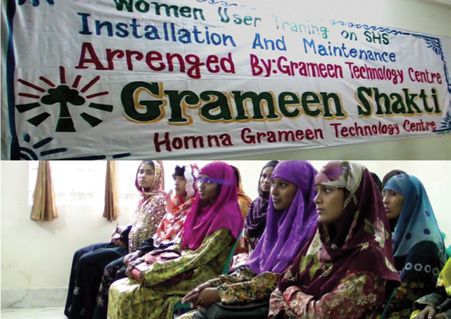
3   MARKETING INNOVATIVE DEVICES FOR THE BASE OF THE PYRAMID

      While this bleak picture is generally true, there are fortunately a number of encouraging exceptions that can be learnt
      from. Building upon our previous research,2 we identified 15 organizations3 that have developed “best practices” in
      marketing life-changing devices to the BoP in Asia, Africa and Latin America.

      While these 15 organizations address very different needs, the nature of the marketing challenges they face and the
      innovative solutions they have developed are remarkably similar across products and geographies. Yet local marketers are
      generally not aware of best practices developed by their fellow practitioners active in different sectors and geographies.

                                                                       Sakhi Retail

      Home improvement                   Sanitation                         Solar lanterns                     Irrigation pumps
      projects                           BRAC WASH program,                 Greenlight Planet                  KickStart
      Patrimonio Hoy                     SaniShop                           Water purifiers                    Multiproduct distributors4
      Improved Cook Stoves               Solar Home Systems                 Hydrologic, IVDP-Pureit            Living Goods, Project
      GERES, Toyola                      Grameen Shakti, SELCO                                                 Dharma, Sakhi Retail,
                                                                                                               Soluciones Comunitarias

      2 See Hystra reports on Energy, Water and ICT for Development on www.hystra.com, and on Affordable Housing on
        http://india.ashoka.org/sites/india/files/AccesstoHousing.pdf
      3 We do not infer that these organizations are necessarily the “best” in the world. They however are reasonably successful and
        represent a diversified set of devices (including some marketing multiple products) and geographies. We learnt both from their
        successes and difficulties. We are grateful for their honesty.
      4 Multiproduct distributors distribute products such as Barefoot Power and d.light solar lanterns, and First Energy and Envirofit cook
        stoves, that also helped us shape this analysis.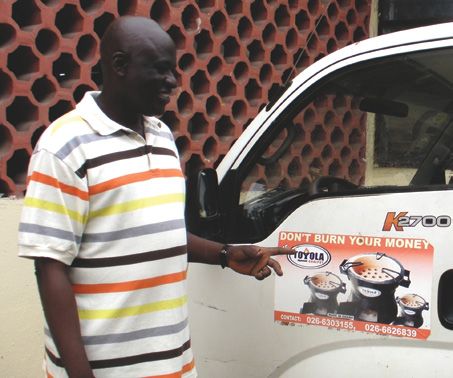
4   MARKETING INNOVATIVE DEVICES FOR THE BASE OF THE PYRAMID

      To help all businesses and NGOs involved in marketing life-changing devices to the BoP learn from existing best
      practices, this paper summarizes the 10 key lessons we have learned from these 15 BoP marketing masters.

        Caveats:
        1)   In an effort to illustrate the common features among best practices, we are aware that we have had to
             overlook some important nuances. For example:
                We treat “the BoP” as a homogeneous group, whereas there would be distinctions to make by culture,
                level of wealth etc.
                Given the wide range of products sold by the organizations we analyzed, it is possible that not all lessons
                summarized here are relevant to all products and geographies.
        2) As mentioned above, our study exclusively analyzes the marketing of consumer durables, not FMCGs.
           Some of the lessons learned here might apply to FMCGs, but we do not claim they all do.
        3) We draw conclusions from a limited set of 15 examples, and choose to put forward our views while
           acknowledging the risk of being proven wrong. We are however comforted by the fact that the 15
           organizations generally support our conclusions.
5   MARKETING INNOVATIVE DEVICES FOR THE BASE OF THE PYRAMID

      1. It’s about economics!

      Advertisers in the US spend a staggering $140 billion5 each year with the aim
      of convincing American consumers to switch brands ($440 per individual).
      Marketing to BoP families is a totally different challenge. Indeed BoP families
      face a radically different predicament from their US counterparts.

      Their decision is not one between two brands of solar          KickStart Irrigation pumps can repay for themselves
      lanterns, but rather between a brighter solar lantern and      in a season from increased agro-production.
      a smoky kerosene lamp. Within the inelastic constraints        The name of the pump, called MoneyMaker,
      of a typical monthly budget of $100 (70% of which goes         makes this economic argument clear.
      to food), the question is whether a $10-25 investment
                                                                     Solar lanterns and SHS are very popular in
      will indeed positively replace a $2-3 monthly cost in
                                                                     unelectrified areas because they provide cost savings
      kerosene, candles and batteries, and what other goods
                                                                     in candles or kerosene, and additional income
      might need to be sacrificed for this purchase.
                                                                     (by extending working hours). They are also safer
      Best selling devices do provide economic benefits to           and provide a better light than traditional options.
      the families, the more tangible (i.e. direct short-term        Reading glasses have huge success in rural areas
      cost savings) the better:                                      where many people rely on their sight for livelihood,
         Improved cook stoves are much easier to sell to             e.g. to make crafts and fabrics. Local entrepreneurs
         families who purchase charcoal daily than to the            of Soluciones Comunitarias (SolCom), a company
         ones who get their children (or housewife) to collect       selling a range of beneficial products in Guatemalan
         “free” biomass. Despite the major health benefits of        rural areas, can easily sell 20 pairs in one morning
         improved cook stoves (that can eliminate toxic fumes        of market campaign. The benefits of the glasses are
         that kill 1.8m people a year), Toyola, a Ghanaian           immediately visible to prospects, even more so as
         company that has sold over 250,000 improved                 the entrepreneurs encourage them to try on the
         cook stoves, has chosen a slogan that makes a               glasses to put a thread through a needle.
         straightforward economic argument: “Don’t burn
                                                                  Purchasing such devices are extremely lucrative
         your money”, focusing the sales pitch on the 50%
                                                                  investments for BoP families: generating annual IRR6
         reduction in energy cost to cook the family food
                                                                  of 5000% for cook stoves (for families who previously
         (see picture below).
                                                                  purchased charcoal), 2200% for irrigation pumps, 400%
                                                                  for water purifiers (for families who previously boiled
                                                                  water or purchased bottled water), 150% for solar
                                                                  lanterns and 60% for SHSs, and so on. Such high returns
                                                                  explain why BoP families can afford to pay annual
                                                                  interest rates as high as 50% when borrowing money
                                                                  for such purchases. An (arguably provocative) definition
                                                                  of being poor is to be surrounded with inaccessible
                                                                  lucrative investment opportunities.

                                                                  5 Kantar Media Intelligence.
                                                                  6 Internal Rate of Return, calculated on the basis of new income
      Toyola logo on a company vehicle                              generated and/or savings on previous expenses.
6   MARKETING INNOVATIVE DEVICES FOR THE BASE OF THE PYRAMID

      2. BoP customers want risk‑free
         solutions, not cheap products
      Given such high promised returns, what deters BoP customers from making
      these investments is the fear that something will go wrong. Experience shows
      that far from seeking the cheapest device, customers are not price sensitive
      as evidenced by their willingness to pay substantial price premiums to reduce
      their (perceived) risk of being disappointed.

         Toyola cook stove customers are offered an 11% discount
         on their $10 cook stove if they pay cash. However 50% of
         them prefer to forego this discount in order to be able
         to test their stoves at home for a month. During their
         trial period, Toyola’s sales agent provides families with the
         famous “Toyola box,” a small can for families to deposit
         savings from reduced charcoal usage. A month later, the
         agent comes back to open the box (while neighbors
         watch) and demonstrate to the family that the cook
                                                                         Choice of toilet
         stove is indeed delivering the promised savings!                structure: Zinc and
                                                                         cement cubicle
         Similarly, the customers of Patrimonio Hoy, a subsidiary        or Bamboo shelter?
         of cement manufacturer CEMEX selling home
         improvement packages, are willing to pay a 26% premium
                                                                         It thus makes sense that the successful organizations studied
         over the cost of building materials in exchange for
                                                                         here were all focused not on reducing their price as much
         complementary services. Through this “membership
                                                                         as possible, but rather on offering their clients the best
         fee”, they gain access to a range of services, which
                                                                         possible value for their money (meaning a risk-free, good
         protect them from the many risks involved in building
                                                                         quality, comprehensive solution at a price comparable
         an additional room: architect advice to avoid poor
                                                                         to alternatives). In fact, before launching Patrimonio Hoy,
         construction design, fixed material price during the
                                                                         CEMEX tried to sell smaller (and thus less expensive) bags of
         scheme to eliminate the risk of price increase, flexible
                                                                         cement in lower income neighborhoods – sales never took
         delivery to avoid waste, theft or damage to building
                                                                         off. The company realized that their customers were not
         materials purchased in advance, and – probably most
                                                                         interested in buying cement, but in building a room. Focusing
         critically – fixed weekly payments with strong penalty
                                                                         on their customers’ needs, Patrimonio Hoy added additional
         for non compliance to overcome the family’s own lack
                                                                         products and services to cement in order to provide the
         of discipline in complying with the savings program they
                                                                         comprehensive offer described above. The program has
         have set for themselves.
                                                                         experienced great success with more than 350,000 families
      BoP families are not price sensitive either when purchasing        served, and what’s more Patrimonio Hoy is today one of the
      products with less immediate economic benefits. Once               most profitable sales channels of Cemex, with sales tripled
      convinced to buy, many are willing to pay more for the same        compared to selling cement alone. Other organizations have
      functional benefits in a premium version, if they see it as        added 15 to 30% to their revenues by providing services and
      enhancing their social status.                                     financing for a fee.

         Hydrologic, which sells water purifiers in Cambodia, offers     These same successful organizations also go to great lengths
         two versions of their products to customers. Twice as           to build consumer trust and hence reduce risk perception.
         many families opt for the slicker $24 model than the $14        For instance, many invest into building a recognizable brand,
         entry price model. Furthermore when credit is offered,          and many others pick their sales force among reputable
         90% of customers opt for the more expensive version.            local officials.
         Similarly, 80% of SaniShop customers would rather
         purchase a $90 latrine with a solid zinc and cement
         cubicle than a $45 latrine with an effective but
         modest bamboo shelter.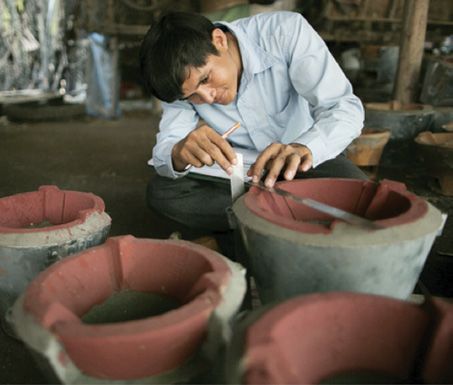
7   MARKETING INNOVATIVE DEVICES FOR THE BASE OF THE PYRAMID

      3. Financing is best done in house,
         whenever possible
      Many manufacturers and distributors are wary of getting involved in the
      complex world of finance. Dealing with the risk assessment of customers and
      handling default payments are activities they much prefer to leave in the
      hands of specialized banks or MicroFinance Institutions (MFIs).

      Some of the 15 organizations we analyzed have taken          Patrimonio Hoy enables families to pay for their
      a radically opposite view and demonstrated that in-          $1,000 project over 70 weeks, through a membership
      house financing can provide value to customers, reduce       fee which also includes their financing cost. Clients
      operating costs, increase revenues and allow their           do not need any collateral (the only administrative
      organization to reach more clients!                          requirement is an ID), but are instead requested to
                                                                   save money for 5 weeks before receiving their first
        Grameen Shakti, the largest company worldwide
                                                                   5 weeks of credit. The last cycle, at the end of the
        selling Solar Home Systems (SHSs) to the BoP, offers
                                                                   70 weeks, asks for only 2 advance payments to get
        its customers in Bangladesh to pay for their $150-
                                                                   16 weeks of credit. The credit granted increases again
        300 SHSs over up to three years through a monthly
                                                                   for repeat clients, making the advantages of being in
        service charge that combines the cost of the
        equipment, maintenance and financing. Technicians          the program – and thus the cost of default – higher
        collect installments during their monthly service          for the most loyal clients. This, combined with
        visits. Customers know that the technician-cum-            steep penalties in case of non-compliance with the
        money-collector will not miss a visit, and reciprocally,   weekly payment, ensures that customers adhere to
        Grameen Shakti knows customers will not miss a             their plan and realize their dreams. Not involving an
        payment for fear of losing maintenance. This way           external financier results in leaner operations, very
        consumers only pay the operator if and as long as it       low default rates and a cash positive business as a
        delivers its promise.                                      significant proportion of customers request deferred
                                                                   deliveries, and in effect pay Patrimonio Hoy before
                                                                   receiving the material.

      Patrimonio Hoy savings and
      credit scheme
8 MARKETING INNOVATIVE DEVICES FOR THE BASE OF THE PYRAMID
In addition to reducing the risk both for customers and Only a limited percentage of the BoP families can
operators, in-house financing can be a profit-making be reached through these partnerships. Despite
activity that has been seen to increase returns on sales a very rapid growth, MFIs and other providers of
by 3 to 15% percentage points! This implies that operators microfinance only reached about 10% of the world’s
manage to find very low-cost funds (e.g. relying on poorest at the end of 2010.7 In addition, marketers
customer savings or concessional loans) or charge a high report that only a fraction of these organizations are
interest to customers (e.g. foregoing an 11% discount for able and willing to build effective partnerships
cash purchase in order to pay a month later equates to (one practitioner revealed that at best one in ten of
paying a 311% annualzed interest rate!), or both. these partnerships actually worked in the long term).
The alternative to in-house financing is working through Some practitioners indicate that there is a risk that
banks or MFIs. This is sometimes compulsory in MFI or SHG members feel pressured to buy the
countries such as India where only financial institutions devices promoted by the institutions they trust and
can offer interest-bearing credit. Working in partnership depend on, resulting in higher sales in the short-term
with MFIs is indeed enticing as they can provide easier but potential customer dissatisfaction and low usage
access to large groups of prospects (e.g., at monthly MFI rates in the long-term. This may explain why up to
customer meetings) and faster penetration thanks to a 69% of families who had bought water purifiers in
combination of loans and endorsement by trusted MFI such a group event had stopped using them two
representatives. Yet, our discussions with organizations years later.
that have built partnerships with MFIs, networks of While in theory MFIs or banks are taking a credit risk
Self Help Groups (SHG) or rural banks indicate some (and get paid for it), in practice, distributors are still
limitations and challenges: compelled to handle default payment situations as
failure to do so will lead the financiers to stop giving
loans to future customers.
In short, offering financing in-house comes with a
handful of issues (e.g., where to find working capital
financing, how to keep collection costs low in particular
for smaller ticket items); but even when working with
MFIs and banks is a necessity, marketers should also
know that they cannot just “outsource” the credit
issue to financiers.
HUL sales agent conducts water purification
demonstrations for a Self Help Group, with its partner
IVDP that will arrange the product financing.
7 As of Dec 31, 2010, there were 137,000 MFI clients earning below 1.25$/dayPPP out of 1.4 billion people in this income bracket.
Source: http://www.microcreditsummit.org/pubs/reports/socr/2012/WEB_SOCR-2012_English.pdf9 MARKETING INNOVATIVE DEVICES FOR THE BASE OF THE PYRAMID
4. Below the line marketing
works better
The BoP market is won one village at a time. Each village takes several steps:
first making villagers aware of and tempted by the offer, second overcoming
the last barriers to purchase, and finally ensuring that buyers use and are
satisfied with the products ... and tell their friends about it.
Aware, tempted Satisfied, loyal
Village Buyers
prospects users
Positive word of mouth
Dissatisfied users
Negative word of mouth
Many organizations place greater emphasis on raising Upmanyu Patil, the CEO of Sakhi Retail, a network
awareness of their products by investing in “above the of hundreds of women selling various beneficial
line” marketing campaigns, i.e. billboards, radio ads and products in India, adds: “A TV campaign would [never
even TV advertising. While these investments do raise reach most people in the rural areas]. And people are
awareness they generally fail to translate into actual sales. very averse to change here. The only way to convince
most of them is for them to see the product work
For example, a year-long marketing push combining long enough at their neighbors.”
demonstrations by field staff and radio ads raised
awareness and understanding about irrigation pumps Iwan Baskoro, the Director of GERES Improved
among small farmers to respectively 84% and 63%, up Cook Stove Program in Cambodia, which oversaw the
from 65% and 44%. Yet sales penetration only increased distribution of over 1.8 million cook stoves, concurs:
to 13% (from 8% initially). Similarly, a marketing campaign “[After 3 marketing campaigns through posters, TV,
stressing the health benefits of improved cook stoves and radio] only 20% customers had bought based
resulted in an impressive 69% awareness of health on the campaigns. Word-of-mouth was the most
impact among potential customers and a staggering important information source for their
83% stated intention to buy, but a disappointing purchase decision.”
2% made actual purchases.
Interestingly, in our sample of 15 organizations, the six
Leading practitioners are plainly aware of the limitations largest (in yearly sales) were not spending any money
of (above the line) marketing campaigns: on above the line marketing (they never had, even in
Deepak Saksena, Head of Partnerships for Pureit their earlier years). Best BoP marketers shy away from
at HUL, acknowledges that its sales of hundreds expensive above the line marketing campaigns, the
of thousands of water purifiers to the BoP in only exception being if they are paid for by a willing
India “benefitted from the aspirational marketing foundation or aid agency: clearly these campaigns
campaign done for the middle-high class market. cannot have a negative impact on sales, but their
However, rural people would never have bought positive impact is notoriously hard to measure. And
without further below the line marketing bringing most importantly they do not replace the need for village-
them to trust the product.” level demonstrations, allowing the targeted populations10 MARKETING INNOVATIVE DEVICES FOR THE BASE OF THE PYRAMID
to verify for themselves the product benefits. In one Understanding and leveraging village politics is also
word, above the line marketing can in some cases help key. Marketers seek endorsements from village chiefs,
increase sales, while below the line marketing is an absolute recruit vendors from trusted locals, and offer free trials
requirement to sell at the Base of the Pyramid. It is thus to opinion leaders. The sanitation program of BRAC, the
not surprising that all the organizations studied here focus world’s largest NGO based in Bangladesh, even organizes
most – if not all – of their efforts on excelling at village- Water Sanitation and Hygiene (WASH) committees. Six
level tactics: women and five men, including the imam and the local
teacher, map out the village, singling out the homes that
Demonstrations in public places or small groups
do not have proper latrines and pollute the water table.
are essential for communicating product benefits.
This peer pressure is combined with financial support
For example, Soluciones Comunitarias sales agents
to the poorest to ensure the village eradicates open
conduct free eye exams during their village-level
defecation. Through this system BRAC has provided
campaigns. Visual and tangible proof works best, the
over 2.4 million latrines to rural Bengalis.
more sensational the better. Sales agents of Greenlight
Planet, an Indian company whose direct sales channel
is distributing close to 25,000 solar lanterns per month,
pour water on solar panels to prove their durability.
Similarly d.light’s sales agents throw their lanterns on
the floor. It is also common for solar light vendors to
conduct demonstrations at night, when the lighting
superiority of a solar versus kerosene lamp is obvious. SolCom agents
Similarly, improved cook stoves marketers such as the conducting
reading tests
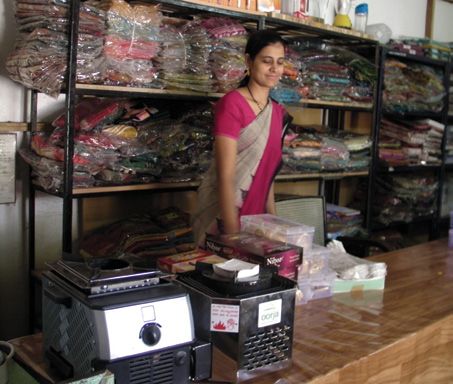
Sakhi ladies selling Oorja stoves in India, host live cooking during a village
demonstrations to illustrate their stove’s shorter cooking campaign
time and good-tasting results, while at the same time
attracting prospects with free delicacies!
Greenlight Planet prospect checking
the solar panel water resistance
BRAC WASH village committee with the village map11 MARKETING INNOVATIVE DEVICES FOR THE BASE OF THE PYRAMID
5. Word-of-mouth matters most
– Responsible and effective
marketing occurs after the sale
A large percentage of BoP customers make a purchasing decision based
on what their neighbors and relatives recommend to them: 92% for SHSs,
60% for home improvement packages, 60% for improved cook stoves and
49% for irrigation pumps.8
Given this acknowledged fact, it is surprising that many lever takes time to produce results – time which may be
marketers do not place sufficient attention on measuring considered too long in the impatient donor community.
and ensuring that their customers are satisfied users.
The reason may be that, in many cases, unsatisfied buyers It may then not be surprising that it is Patrimonio
are not visible (though they are certainly not silent!). Hoy, a social business but subsidiary of a corporation,
In 4 out of the 15 organizations we analyzed, customers which stands out in their efforts to measure customer
had to make a proactive effort to continue using their satisfaction, using the Net Promoter Score (NPS).
device, e.g. actually working the pump or replacing the This wide spread methodology in the commercial world
filter in the water purifier. An annoyingly significant share calculates NPS as the number of clients who say they
of these customers (20 to 69%) were no longer using will recommend the product or service minus those
the product two years after purchase. This meant tens who say they never will. Patrimonio Hoy uses NPS to
of thousands of families that had invested months of track its monthly performance (a remarkable 90% on
savings into a disappointing device (hardly the objective average in 2011) to immediately identify and follow-up
of these socially-minded marketers) and many more with dissatisfied customers, preventing negative word-
individuals who would actively discourage their friends of-mouth. It also ties sales force compensation with
and neighbors from making the same mistake. their individual NPS scores to ensure immediate action.
What is even more troubling is that many of the Positive word-of-mouth can also be encouraged.
marketers failed to investigate the cause of these users’ Toyola sales agents enroll “evangelists” among their
dissatisfaction or to try to address their problems. first clients, who inform agents of cook stove demand
It has indeed been proven that an initially dissatisfied in their local village, allowing agents to visit in priority
customer whose problem has been solved through an villages with guaranteed sales and avoid missing existing
effective after-sales service becomes an even more demand. Evangelists receive a commission for their work
vocal supporter. (e.g. around 5% cash commission or a free stove if they
convince 10 friends to purchase).
Frank discussions with some of these marketers revealed
that their dependency on donors’ money led them to
focus on meeting short-term sales goals rather than on
ensuring actual use and ensuing social benefits of these
devices. Less donor-dependent organizations (i.e., more
dependent on customers) were much more focused on
activating word-of-mouth and hence ensuring customer
satisfaction. These organizations however acknowledge
that the powerful and cost-efficient word-of-mouth
8 Data from customer surveys conducted by 4 of the 15
organizations analyzed, asking their clients what triggered
their purchase. Grameen Shakti clients attend women user training12 MARKETING INNOVATIVE DEVICES FOR THE BASE OF THE PYRAMID
6. Serving the BoP is a high gross
margin business9
As we have seen, effectively marketing products for the BoP demands
the deployment of significant field resources able to conduct village-level
demonstrations, provide technical assistance and after-sales service, and
arrange financing. This amounts to a sizable cost to generate a relatively
small transaction. In other words, BoP marketers need to ensure they have
hefty gross margins in order to hope to be sustainable when they reach
their targeted volumes.
While this is ideologically difficult to accept for some, Distributors of single (manufactured) products
successful marketers are pricing their products to have (e.g. solar lanterns or water purifiers) need gross
sufficient gross margins for financial sustainability while margins of 35-45%.
keeping prices at a level that ensures their customers
Multiproduct distributors need gross margins of
still enjoy very attractive returns on their investments.
30-50%, as the increased complexity of their product
Given the range of returns we described in the first
range offsets the revenues generated by an increase
section, there is often room for marketers to ethically
in sales per sales person.
increase their prices, provided they do indeed provide
a risk-free, holistic solution to their customers. Equipment and service suppliers (e.g. SHSs) need
One organization we worked with, encouraged by the gross margins of 25-40% as the larger transaction
benchmarking exercise, decided to break an internal amounts (more than $100) help pay for their full suite
taboo and raise prices for a new product by 40%, with of installation, maintenance and financing services.
no observable negative impact on sales.
These gross margins are quite high when compared with
With this in mind, what gross margins should marketers “rich world” benchmarks such as Best Buy, a leading US
target to sustainably serve the BoP? distributor of consumer electronics that enjoys a 19% return
on equity while operating with gross margins of 26%.10
To provide an answer to this question, we analyzed the
data provided by the 15 organizations, looking at the Perhaps controversially, our finding is that marketing
current gross margins of companies that are currently innovative products to the BoP must be a high gross
profitable or that could be if they were managed to margin business if it is to ever be sustainable. Volume
solely maximize profits. We also calculated the gross will not compensate for low margins, given the
margins required for currently unprofitable companies geographic dispersion of the market and the required
in order to breakeven when they reach their volume village level marketing efforts.
targets. The gross margins required depend on the type
The good news is that as long as marketers provide
of business model of each organization:
solutions that indeed change the lives of BoP families,
Organizations that focus on working with existing customers will be willing to pay and able to afford the
local value chains (e.g., providing networks of masons price that is needed for the organizations that serve
with efficient designs to build latrines) need to them to be sustainable.
ensure their local partners enjoy gross margins
of 25-30% to be sustainable.
9 Gross margin is defined for the whole downstream value chain, from distributor to end-consumers, independently of the number of
intermediaries. Gross margin = (price for end-consumer – COGS for distributor) / price for end-consumer.
10 5-year average performance. http://finapps.forbes.com/finapps/jsp/finance/compinfo/Ratios.jsp?tkr=BBY.13 MARKETING INNOVATIVE DEVICES FOR THE BASE OF THE PYRAMID
7. Sales force churn can and must
be avoided
Many marketers we have met say they struggle with reducing their sales force
churn (i.e., the proportion of their sales force that leave within a year of hire
and need to be replaced).11 Some organizations operate with churns between
40% and 80%, incurring high costs in recruiting and training.
There is often some confusion as marketers include In addition, some best practices in recruitment can
in their “churn” numbers two very different types of help lower recruitment mistakes: referrals of candidates
sales agents: lead generators who occasionally get a by existing performing sales agents (Project Dharma);
commission when they provide a referral and naturally and village level conferences to present the product
drop out when they have saturated their contact and company and the opportunity, offering interested
list; and sales people who earn most of their income candidates to come to a next session (Soluciones
through sales activities. Confusion also comes from the Comunitarias). Clearly stating the difficulties of the
fact that organizations do not remove from their lists job during the recruitment process, and finalizing it
of “sales agents” individuals who have stopped actively with shadow training with a more experienced sales
selling for some time. Finally, “short term” churn (i.e. person, helps avoid misconception about the job and
experienced during the first three months after hiring) subsequent churn.
is quite different from longer term churn.
Some organizations such as Sakhi Retail go even a step
While offering career opportunities and organizing team further, recruiting sales agents with a minimum vetting
events may help, the lesson from our benchmarking process, paying them on commission only and waiting
is clear: providing a competitive compensation is for a couple of months to observe the ones that have
a necessary condition for keeping churn below the right skills and motivation. Only then do they invest
manageable levels. When compensation is sufficiently in training, coaching or a partly fixed compensation.
attractive, churn can be reduced to a manageable
30%, even with purely variable commission-based
incentives. For products requiring customization (and
thus a long lead-time, discouraging a sales force on
commission only), providing a fixed compensation is key
for sales force retention. SELCO, a social business that
has installed over 135,000 SHSs in Indian rural homes,
achieves a record single digit percentage churn of its
sales force through its attractive compensation package,
with a fixed salary and performance-based commissions.
SELCO is also applying two good practices for retention:
its sales force is full-time (among the 15 organizations,
full-time sales force averaged a 22% churn versus 48%
for organizations using part-time sales force), and is
tightly managed (i.e. with less than 8 sales agents per
manager), which also appears to reduce churn.
SELCO technician paid like SELCO sales
people a fixed salary with commission
on each system installed
11 Depending on the models, sales people can either be
employees or independent entrepreneurs.14 MARKETING INNOVATIVE DEVICES FOR THE BASE OF THE PYRAMID
8. Four direct sales force models
are emerging
Most of the organizations we have analyzed fall into four sales force models.
As they market consumer durables (as opposed to consumer goods that
families buy every day or week), all these marketers face the challenge
of progressively saturating the markets they serve and having to choose
between redeploying their sales force to other areas, diversifying their
product range or disbanding an organization that took much efforts to build.
The organizations studied have found different ways of
ensuring sales people generate sufficient sales to pay for Number of
Average client Sales per
their salary, by increasing the number of clients served,
clients per X spending = salesperson
salesperson
or by increasing average client spending per year.
As the graph below shows, four different models are emerging, partly driven by the products sold.12
12 FTE (on the graph) means Full-time Equivalent. For companies employing a full-time sales force, the sales per sales person FTE equals
the sales per sales person. For companies employing a part-time sales force, the sales per sales person FTE have been computed as the
sales one sales person would make if working full-time. One household is counted as one client.15 MARKETING INNOVATIVE DEVICES FOR THE BASE OF THE PYRAMID
Organizations providing equipment and related services For devices priced below $50 such as improved cook
with a price point above $100 need to have a constant stoves, water purifiers, or solar lanterns (or a combination
local presence to serve their clients well, leading them of them), three very different models emerge:
to adopt a “farming” model:
“Hunting”: Organizations selling “simple”, low-cost
“Farming”: Organizations such as Grameen Shakti or products (less than $20) such as Toyola with its cook
Patrimonio Hoy, selling equipment and services as stoves in Ghana, employ full-time mobile sales agents
a package, organize their sales force in hundreds or serving each many thousands of households. They
thousands of local branches, each sales agent serving cover extensive, non-exclusive areas, leveraging lead
a few hundred clients per year. They offer credit generators (called “evangelists” at Toyola) or retailers
and maintain regular contact throughout the year to to aggregate demand. They will be successful as long
ensure after-sales service and customer satisfaction. as the products they promote are new and cannot
They take over a decade to reach full penetration be found in traditional distribution channels.
in a given village. These models are the only ones They will probably need to switch products or
that have reached tens of millions of dollars in revise their business model when this happens.
sales. Their model is very robust, provided there
“Shifting cultivation”: Organizations dealing with
is no technological discontinuity that would make
more complex products such as Pureit-IVDP selling
servicing useless. They still show large discrepancies
water purifiers in India, set up highly specialized
in sales per sales person, ranging from $20,000 to
marketing and sales teams that focus on a region
more than $120,000/year/FTE.13 Given their limited
until they have achieved their target penetration;
reach (a radius of 50km max around each branch),
then they shift to the next area, and go back only
the main lever for them to increase sales per FTE is to
when replacement needs start. These distributors
provide the widest possible range of complementary
face the same challenge of finding a new product
products and services to holistically fulfill their
to sell once theirs becomes mainstream.
clients’ needs. This unique set of services, paid for
by clients, also allows and justifies sufficient gross “Gardening”: Distributors such as Project Dharma
margins for these businesses to be sustainable. or Sakhi Retail in rural India employ a local, mainly
part-time sales force reaching a relatively limited
number of households in a 3-10km radius. Whether
single product or multiproduct distributors, they sell
goods that throughout the year will amount to $15-
40/client household. These entrepreneurs typically
manage to sell $3-12,000 worth of products per year
on an FTE basis, a fraction of what a full-time sales
force achieves for similar devices ($40-60,000 in the
hunting and shifting cultivation models).
13 Estimating that the part-time sales force works half time and is 5 times less productive than a full-time one ($10,000 of sales/
FTE versus $50,000/FTE)16 MARKETING INNOVATIVE DEVICES FOR THE BASE OF THE PYRAMID
For sales agents, this corresponds to annual revenues These four models of direct sales force make sense for
of $300-1,000/FTE only, sufficient as complementary products that require either personalized advice and
revenue for households with other income sources. Such local services in addition to products (farming model),
distributors are faced with additional challenges compared or consumer education (hunting, shifting cultivation and
to their full-time model peers: gardening models). Yet, once products become widely
known and trusted, retail will probably take over, as it
Their sales force, part-time with a lower sales
has already done for kerosene lamps or mobile phones.
productivity, must be at least ten times bigger
than a full-time one to generate the same amount A fifth model consists in upgrading local value chains,
of revenue. integrating new products in traditional production
Higher churn (due to lower salespeople revenues) and sales channels. For example, GERES in Cambodia
increases management time (and cost) spent on trained existing cook stove manufacturers in making
recruiting and training new agents. improved cook stoves, while organizing the value chain
so that each player would make more money than
Day to day management of a larger, dispersed with traditional stoves. GERES also promoted quality
sales force is also more costly than that of standards to protect consumers, set up a professional
full-time models. association of producers and distributors, and paid for
To increase their agents’ income and avoid churn, the initial below the line marketing to get sales started.
some distributors try to diversify their product range. In such models, it is key that the industry building
They are then faced with additional complexity of sourcing organization be willing to hand over power to long
and distributing multiple products, often resulting in lasting partners: GERES is currently trying to get the
higher overhead costs as % of sales than a monoproduct government to take over enforcement of the quality
leaner model. Sales agents themselves struggle to master standards countrywide.
all the marketing techniques of such diverse products.
Multiproduct distributors recognize these challenges
and are busy refining their business models, redefining
their range of products to ensure greater coherence,
empowering their more seasoned entrepreneurs to
recruit and coach new ones and leveraging IT to
cost-efficiently manage their large sales forces.
Sakhi Retail urban store, complementing the direct
GERES stove manufacturer sales channel of Sakhi ladies in rural areas17 MARKETING INNOVATIVE DEVICES FOR THE BASE OF THE PYRAMID
9. It is worth investing in a
modern sales force for the BoP
While different types of sales force organization exist, the most effective
marketers have developed a number of operational best practices that are
quite consistent. By combining these, we can sketch out the key features of
what may become the model of a modern sales force for the BoP, relying on
sound Human Resources management and smart utilization of technology.
Such a modern sales force marketing innovative devices for the BoP would
combine four elements:
A mobile, full-time sales force: The beauty of a this aggregator role. Toyola has such a network of
local, part-time sales force is that it leverages local about 100 evangelists and retailers per vendor.
relationships and avoids travel time. Indeed, part- An alternative is to work with NGOs who can request
time sales people spend 82% of their time facing their social workers to play this role once they are
clients against 58% for a full-time mobile sales convinced of the product benefits, as does NGO
force that spends 26% of their time on the road.14 IVDP for Pureit water purifiers as well as d.light solar
In practice however, a full-time sales force benefits lanterns, among other beneficial goods.
from at least three times more hours of training in Good coaches as managers: Some of the 15
part because they are twice as loyal. As a result they organizations have a very “loose” management,
are better trained and as we saw in the previous with 16 salespeople FTE per manager. This keeps sales
chapter, become more productive sales persons, management cost down (3% of sales) but seems to
more than compensating the time spent on the road negatively affect churn (60% in average). The most
with increased sales success rates. At the end of the effective model seems to be a “tight” management,
day, the cost of direct sales force as a percentage of with 7 full-time salespeople per manager on
sales is comparable be they part-time or full-time. average, resulting in a higher cost (4-6% of sales)
A local network of “lead generators”: A key element but much lower churn (25%). Importantly, the most
to make a mobile sales agent efficient is a network effective sales managers are not necessarily the best
of commission-based local individuals who inform salespeople, but are selected based on their coaching
him or her that it is worth coming to a village, and skills, and usually paid twice as much as the sales
aggregate orders. They can for example be chosen people they manage.
during the first visit to a village by the sales agent, A mobile technology platform for Customer
who identifies motivated individuals among first Relationship Management (CRM) and sales force
clients or interested prospects. Lead generators can management: An effective sales management relies
also take care of collecting payments for the sales on a smart use of technology to reduce reporting
person who then only does delivery on his or her time: Greenlight Planet collects sales and training
subsequent visits, saving a lot of time to promote the attendance data over the phone, Project Dharma
product in new areas. Such lead generators typically automates their sales agent reporting through
cost 2 to 3% of sales. In dense enough areas and once a JAVA application which sends data directly to
the product gets better known, retailers can also play headquarters, Soluciones Comunitarias does live
14 Based on our sample of 15 organizations18 MARKETING INNOVATIVE DEVICES FOR THE BASE OF THE PYRAMID
tweets of its entrepreneurs’ performance. Living
Goods, selling a wide range of life-saving and life-
changing products through over 800 Community
Health Promoters (CHP) in Uganda, has gone further
with a (cloud-based) mobile platform that combines
sales force management and CRM:
Sales agents (the CHP) use their mobile phone to
register patients’ treatment real-time, as well as
report on daily sales;
The central platform automatically sends
reminders of client follow up to sales agents
and also announces new products, promotions
or programs;
Living Goods sales lady sending report
Sales managers track sales agent performance
and can send text messages or call for
coaching sessions;
Clients receive text messages encouraging
them to comply with their treatment, providing
timely information (e.g., to pregnant mothers) or
informing them of promotions. Clients can also
use messages to ask for a sales agent visit.
Such a platform could probably easily integrate text
messages from local “lead generators” and optimize the
routing of the sales agents.19 MARKETING INNOVATIVE DEVICES FOR THE BASE OF THE PYRAMID
10. The overhead curse:
too much or not enough!
Last but not least, we looked at the cost of overhead as a percentage of total
revenues.15 We defined overhead as any costs that are above the field level layers of
sales managers to whom sales agents report. This is a broad category that includes
the local back office, general management, recruiting and training (other than the
ones done by sales managers), fund raising teams, and impact monitoring.
The resulting map (see below) features five types of their first years. They keep their overheads below
organizations with strikingly differing situations: $200,000 and might be trapped, unable to scale up
if they do not raise the necessary funds...
1 At the bottom right, very large, successful
organizations have reached the “overhead heaven”, 4 ... which is what several fast-growing organizations
keeping it below 10% of revenues while benefiting have done, investing ~30% of their revenues in
from substantial professional management structures. building professional overheads (hopefully this
number will decrease to 10% as they grow and join
2 Other quite mature organizations have voluntarily
the ranks of the first group).
maintained low overheads as % of sales, often by
sticking to social sector salary levels below the 5 A last group has made a “big bet” in staffing their
commercial sector for their highest positions. These overhead substantially from the beginning. These
players seek to achieve greater impact by influencing organizations have made themselves heavily donor-
others rather than growing their organization. dependent, which in turn explains their high overhead
as they have high fundraising expenses (including
3 A number of local social entrepreneurs are
impact monitoring often requested by donors). These
“bootstrapping” their launch, relying on their own
organizations have a short few years to demonstrate
savings, their families and small grants to fund
they can innovate enough and reach scale.
15 We defined revenues as the revenues of the entire value chain, including product revenues at the price at which they are sold to
clients (including entrepreneurs’ commissions when relevant), servicing, financing and consulting revenues, and output-based subsidies
such as carbon credits, directly linked to the sales made. We did not include other subsidies and grants.20 MARKETING INNOVATIVE DEVICES FOR THE BASE OF THE PYRAMID
CONCLUSION:
TOWARD MORE COLLABORATION
The 15 pioneering organizations that have been our masters have shared their insights with generosity and honesty
because they know that this emerging field needs more collaboration.
Indeed, across the globe, dozens of management teams are building similar sales and marketing organizations.
Collaboration among peers will enable them to share best practices, benchmark and improve their performance, and
ultimately bring the benefits of innovative products and services to more families living at the Base of the Pyramid.
The virtuous cycle of collaboration
Benchmarking performance against KPIs
Learning from best practices21 MARKETING INNOVATIVE DEVICES FOR THE BASE OF THE PYRAMID
Appendix A: Analytical framework
In our analysis we have followed the following framework. For each question we have developed a set of KPIs that
we have used to benchmark the various organizations studied here, allowing to identify best practices and potential
areas for improvements.
A. Are you offering 1. Is your price competitive compared to alternatives?
a comprehensive
and competitive 2. Are you providing a comprehensive solution to
solution compared to users and society?
alternatives?
3. Are you reaching your target users?
4. Is your Gross Margin sufficient?
B. D
oes your marketing
leverage/reinforce 5. Are you efficiently allocating your marketing
positive community budget along the penetration cycle?
Are you sustainably* dynamics?
providing as many
people as possible C. Is your sales strategy 6. Is your sales organization cost-efficient?
with access to your both economically
products’ benefits? and socially effective? 7. Are you creating attractive local income
opportunities?
8. Are you maximizing sales force productivity?
9. Is your sales management well organized?
D. Is your central
organization able 10. Can you sustainably finance core central activities?
to drive network
performance,
11. Are your headquarters equipped to scale up and
impact, growth and
replicate while continuously improving quality?
replication?
*Sustainably: guaranteeing your clients quality service in a long-term financially viable way for your company22 MARKETING INNOVATIVE DEVICES FOR THE BASE OF THE PYRAMID
Appendix B: Acknowledgements
We would like to give special thanks to the teams without whom this study
would not have been possible, who have welcomed us and given us their time
and insights over the past few months.
BRAC WASH: Dr. Babar Kabir, Senior Director Project Dharma: Gaurav Mehta, CEO; Pankaj Kumar,
Product Development & Research Manager; Saurav
GERES: S. Yohanes Iwan Baskoro, ICS Program Director Kumar, District Sales Manager; Mritunjay Kumar Vaday
& Technical Advisor and Amit Kumar, Block Supervisors; Gautam Kumar
Grameen Shakti: Abser Kamal, Acting Managing Pandey, Anil Kumar Pandey, and Sashibushan Kumar,
Director Village Level Entrepreneurs
Greenlight Planet: A. Thakkar, co-Founder and CEO; Sakhi Retail: Patil Upmanyu, CEO; Prashant Dange,
S. Mohanty, Zonal Business Manager for Orissa; M. Account/ Admin executive
Mohanty, Regional Sales Manager; A. Pradhan, District SaniShop: Jack Sim, founder, Mr. Pich Sen, latrine
Sales manager; P. Behera, Team Leader; P. Shaw, Saathi; manufacturer and Yam Yorn, sales agent, Sokun Sum,
and B. Mishra, HR manager Country Program Manager
Hydrologic: Ros Kimsan, Managing Director SELCO: Dr Harish Hande, Founder and Managing
IVDP-Pureit: Mr. Francis Kulandei, President of Director, Mrs. Revathi, CFO; Sree Harsha Karanam,
IVDP; Deepak Saksena, Head of Partnerships for Senior Manager; Ananth Aravamudan, Senior Technical
Water Business, Hindustan Unilever Ltd; Prakash Manager at SELCO Labs; Mrs. Ramamani Rao, Manager –
Satyavageeswaran, National Manager of Partnerships Mission Projects; Mr. Krishnaraj, Puttur Branch Manager,
Mr. Radhakrishna, Sullia Branch Manager
KickStart: Martin Fisher, CEO; Alexandre de Carvalho,
COO; Oscar Ochieng, Budgets & Grants Finance Officer Soluciones Comunitarias: Greg Van Kirk, co-Founder;
Miguel Brito, CEO; Ricardo Guzmán, Regional Manager;
Living Goods: Chuck Slaughter, CEO; Molly Christiansen, Luke Burchell and Anna Moccia-Field, CE Solutions field
Director of Research and Partnerships; Chris Murphy, consultants
Director of Marketing & Development
Toyola: Suraj Wahab, co-Founder and CEO; Ernest Kyei,
Patrimonio Hoy: Israel Moreno, former CEO; Henning co-Founder
Alts Schoutz, Marketing Manager23 MARKETING INNOVATIVE DEVICES FOR THE BASE OF THE PYRAMID
Appendix C: Descriptions of
the 15 organizations
BRAC WASH Sanitation
www.brac.net/content/environment-water-sanitation-hygiene
Program for sanitary latrines in Bangladesh
History of organization: BRAC is the largest Southern NGO in the world. In 2006, it scaled up its Water, Sanitation,
and Hygiene (WASH) program to solve the problem of unsanitary latrines, contaminated water and unsafe hygiene
practices in rural areas. For sanitation only, the program aimed to reach 18m people in 150 districts. The core of the
program is to set up local Village Water Committees (VWC) of 11 members (6 women and 5 men) in each village
(~300 households), to promote the use of toilets by everyone in the village. The program targeted and reached over
80% coverage in each area to have maximum health effect. The total program budget is ¤58m with a total financial
contribution of ¤52m by a donor (the Netherlands), ¤4m by BRAC, and ¤2m by local communities. In addition, WASH
set up 2 revolving funds: $190k to support local entrepreneurs manufacturing slabs and rings, and $10m to support
poor households for the installation of slab latrines.
Product/service offering and value proposition: BRAC WASH Sanitation program makes sanitary latrines essential
and affordable for each income segment through segmented offerings (1) for the non poor, it ensures proper design
and site selection for the installation of latrines by providing technical support; (2) for the poor, it provides micro-
loans through WASH microfinance program for slab latrines; (3) for ultra-poor households, it offers subsidies (BRAC
and governmental) for two-pit latrine construction materials. BRAC also builds shared latrines for schools and other
public places.
Non poor Poor Ultra poor Shared latrines
BRAC WASH brings: Technical support Microcredit for Grants for two-pit
for installation latrines (~$12.5 latrine construction
loans, 10% interest materials
rate in 11 monthly
installments)
How many latrines Jun 07-Apr 2011: Jun 07-Apr 2010: Jun 08-Apr 2011: May 06-Apr 2011:
/ year? 370k/yr 1.8m/yr 240k/yr 13K
What model of Septic tank, brick Twin pit (ring-slab), Twin pit, Single pit,
latrines? wall and ceramic superstructure of superstructure with superstructure with
pan CGI Sheet bamboo wall bamboo wall or
plastic wall
Price of the latrines $ 225 $44 $22.5 $6-18
Paid by the all all $6 (cash & kind) Govt. fund /NGOs
consumer? or clients
Value chain: BRAC WASH Program is active both at fostering demand and supply. On the demand side, BRAC
WASH trains VWC members who then meet bi-monthly, monitor usage and maintenance of latrines, monitor latrine
quality, select poor households eligible for micro-loan to help them install sanitary latrines, and identify ultra-poor
households eligible for grants. BRAC WASH also provides support to organize community events about sanitation.
On the supply side, to manufacture the latrines, BRAC WASH program relies on over 1.5k local entrepreneursYou can also read


