MARKETING STRATEGY FOR START UP BUSINESS OF BROILER PEKING DUCK FARM WITH ECO-GREEN INTEGRATED
←
→
Page content transcription
If your browser does not render page correctly, please read the page content below
RJOAS, 4(76), April 2018

DOI https://doi.org/10.18551/rjoas.2018-04.28

   MARKETING STRATEGY FOR START UP BUSINESS OF BROILER PEKING DUCK
                  FARM WITH ECO-GREEN INTEGRATED

                        Silitonga N.*, Syah T.Y.R., Erni N.
Master Program of Management, Faculty of Economy and Business, Esa Unggul University,
                                Jakarta, Indonesia

                          *E-mail: nelsonsilitonga76ueu@gmail.com
                               ORCID: 0000-0001-7725-8153

ABSTRACT
The increasing number and the rate of Banten population growth from year to year make it
as a potential market which is quite large for the development of broiler duck farming
business in the future. In this case, intensive system broiler Peking duck farming which is
integrated, economic, and eco-green intensive, eco-green commonly utilizes Azolla
microphylla and flour of pluchea leaves and other germ plasmas as the feed supplements.
As a company in Peking duck farming with Eco Green concept, it requires the right marketing
strategy to get into the target market. Therefore, the focus of this study is the marketing
strategy to start up the business of eco-green integrated Peking duck farming. The results of
the analysis of this study are that the marketing strategies used are: objectives and target
marketing; analysis of market situation, market size, market share, market description;
strategy of marketing, segmenting, targeting, positioning; tactics of marketing, networking,
interaction, common interest, experience; CRM, continuity marketing, one to one marketing,
partnership; blueprint for building a winning sales force; marketing budget, sales estimation,
net marketing contribution.

KEY WORDS
Marketing, strategy, start-up business, animal farming, eco-green.

       The increase and the rate of Banten population growth from year to year make Banten
as a quite large potential market to develop the duck breeding farming business in the future.
As it is predicted by Central Bureau of Statistics (BPS), the number of Banten citizen is 13.1
million people or 4.85% of 271 million of Indonesian citizens in 2020. Moreover, it is
predicted that the number of Banten citizen will be 16 million people or 5.24% of 305.6 million
people of the number of Indonesian citizen in 2035.
       According to Federation of Indonesian Poultry Society (FPMI), the average number of
Indonesians who consume meat is 15 kg/capital/year from the number of production or
provided 3.75 million ton; with the portion of duck meat is 0.2 kg/capital/year (50 thousand
ton provided). The low contribution of duck becomes an opportunity for those who want to
develop the potency of duck in order to increase the need of meat per kg/capital/year.
Nowadays, people show the high interest on duck meat which is supported by the
improvement of their prosperity which is shown by the crowded restaurants and food courts
providing duck meat as the main menu. Some of those culinary businesses are Fried Duck
H. Slamet Restaurant – BSD, Bebek Kaleyo Restaurant – Gading Serpong which is recently
open the 17th branch in Gading Serpong, The Ducking Restaurant, a quality restaurant in the
mall culinary area, the center of culinary, and restaurant in hotels.
       Based on the Central Bureau of Statistics data in 2011-2014, the number of restaurant
797 restaurants in Banten in 2011 is 797, and it continuously increases up to 1110 in 2014.
This fact gives an opportunity to market duck meat from duck breeding farms; therefore, it
will increase the role of duck in fulfilling the needs and the availability of meat in Indonesia,
especially in Banten as an operational area of Peking duck farming business. In fact, it is
also supported by the increase of demand in fulfilling animal protein in Banten.

                                              264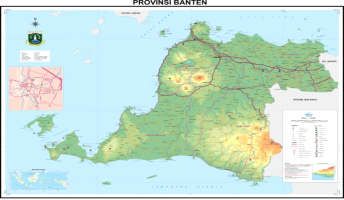
RJOAS, 4(76), April 2018
Duck farming productivity can be improved through the implementation of government
policies to support the development of livestock production systems and designing
technological innovations which are appropriate for the animal farmers. Other factor that
should be considered is duck raising management involving: the quality of breeds used,
proper raising procedures, quality and appropriate feeding methods, appropriate research
and technology use, the business system and good financial analysis, sufficient experience
in raising ducks, strict biosecurity system and livestock product marketing.
Peking duck farming which system is intensive, integrated, economic, and eco-green
uses Azolla microphylla and pluchea leaf flour and other germ plasmas as food supplement
(Ventura and Watanabe, 1993). The eco-green-concept Peking duck farming applies six
steps of farming management, such as: 1) Eco-Green Housing Farm Management; 2)
Breeding Management, 3) Hatchery Management, 4) Growing Management of Duck for
Slaughter, 5) Feeding Management; 6) Azolla microphylla pond management and pluchea
management, 7) Management of Cutting Ducks (Processing Management), and 8) Marketing
Management.
Eco-Green Integrated Model of Peking Duck Farming is a model of Peking duck
farming business which is intensively integrated managed beginning from breeding process
(breeder farm), hatchery (hatchery farm), duck for slaughter growing (grower farm), and
carcass processing ( processing farm) to becoming the ready marketed product which is in
the form of good quality duck carcass. Having the cheap cost of production and
environmentally friendly, the price of the product can compete well in the market. In this
case, duck farming business has a concept of "result diversification, low price and fresh
quality delivery order".
As a company in Peking duck farming with Eco-Green concept, it requires the right
marketing strategy to get into the target market. To ensure the implementation of the right
marketing strategy in marketing the product, the company should make a frame work or
process of designing marketing plan which relates to the analysis of business environment.
Besides, the implementation process of marketing strategy relates to the operational strategy
and company's financial strategy which is supported by proper human resources
management in achieving the company's planned goals.
The frame work or the process of designing marketing plan of Prima Duckindo Ltd. is
aimed to ease the marketing department in doing the work project in order to achieve the
planned goals.
The goals of Prima Duckindo Ltd. marketing consist of short-term, mid-term, and long-
term goal.
The strategy of market development is aimed to ensure the results of meat production
process of Peking duck carcass can be optimally accepted in the target market.
The target marketing plan of Prima Duckindo Ltd. in the first year of duck carcass is 88.920
kg.
Mid-Term Goals:
Brand awareness of Duck AZOLLA: As a company producing Peking duck carcass,
brand awareness is one of the goals to achieve in which it proves that the products
produced by Prima Duckindo Ltd. are able to compete with formers who have already
dominated the market.
Achieving 30% of sales growth in every year. To achieve 30 % of sales growth in
every year, the development of market share should be optimally done.
Long-Term Goals:
Holding the half market of Java
Exporting, especially to countries of Asian Economy Market members.
The target of Prima Duckindo Ltd. marketing is as follows:
Achieving 5% of market share and 12% of market share in the fifth year
Achieving 30% of sales growth in every year
Market Situation Analysis. Doing strategic marketing plan, Prima Duckindo Ltd.
primarily analyzes the situation of the target market using three variables, i.e. market size,
market share, and market overview.
265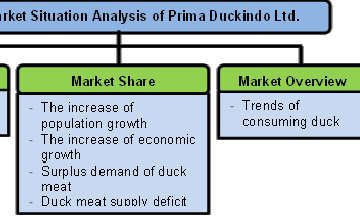
RJOAS, 4(76), April 2018

                          Figure 1 – The Situation of Target Market

      The market situation analysis aims to collect information about the market, analyze the
information in product marketing context, provide the market description, monitor how the
market changes, and determine what action to take by the company and analyze the results
of the company's activities (White et al., 2003). Changes in current market situation are
largely influenced by the population growth of citizen which increases every year, the
changing needs of consumers, the development of technology, the change of socio-
economic power, and competition among producers (Henry, 2005).
      The increase of population growth as well as economic growth development in which
5.4% of the national economic growth affected the ability of the community to fulfill the needs
of animal protein in 2016. However, considering the current market situation in the availability
of animal meat supply is still lacking which encourages business actors to be interested in
doing business in supplying animal protein needs. Then, based on the source of Central
Bureau of Statistics obtained, it is found that National and Banten itself, the basis of the
company business, suffer from duck meat supply deficiency as it can be seen in Table 1.

          Table 1 – National and Banten Duck Meat Supply-Demand in 2015
                                                                   2015-2019

Source: Central Bureau of Statistics / Directorate of Animal Farming Office
                                                                     Office.

      Regarding to the data in Table 1 in 2015, the ability of livestock farming business
actors in producing meat based on national scale was 3,532,000 tons, whereas the
projection of demand for meat reached 9,489,000 tons. Therefore, there is 5,957,000 tons or
a deficit of 63% of total demand of a shortage of meat supply. Similarly, in Banten, which is
the basis of the business in 2018, livestock companies supplying meat can only produce
270,000 tons with 521,000 tons projected demand. Then, it is estimated that there is 251,000
tons or a deficit of 92.96% of total demand of shortage of meat supply. In this case, the result
of 251,000 tons or 251,000,000 kg at a price of Rp 39,000 of the shortage supply is Rp
9,789,000,000. By that supply shortage, there is an opportunity for the company to project
30% of sales growth in every year.
      Market Size. Market size is very important for companies in business development to
conduct sales activities of Peking duck carcass products optimally. In this case, the areas of
the basis of potential market are some part of Banten, DKI Jakarta, and some part of West
Java. The areas which can support potential markets for the company are supported by the

                                              266
RJOAS, 4(76), April 2018
population growth every year and economic growth with increasing income of the population
every year. Those aspects contribute to the movement of the ability of people's purchasing
power in fulfilling their needs.
In the first year of 2018 Peking duck carcass sales, Prima Duckindo Ltd. focuses more
on Banten having quite high population growth in every year which is also supported by good
economic growth, and then developing market in DKI Jakarta and West Java in 2019. In this
case, the population of Banten in 2015 was 12 million people. Based on the analysis
conducted in potential regions in Banten predicted as the market targets of Peking duck
carcasses are Tangerang Regency, Tangerang City, South Tangerang City, Serang City,
Cilegon City and Rangkas Bitung. In this case, the number of population which is quite large
affects the quantity of high meat supply demand.
As an example, if Tangerang Regency having 3,370,594 people is assumed to
consuming meat 0.05 kg in a day, the consumed meat in Tangerang Regency is 168,530 kg
in a day. Mapping is also done to ease the marketing management in distributing products in
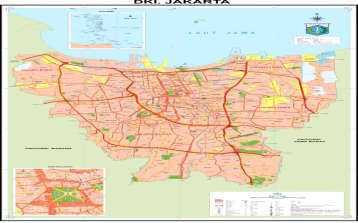
the target market as it is seen in Figure 2.
Serang
Cilegon
Pandeglang
Tangerang Kota
Tangerang Selatan
Kabupaten Tangerang
Rangkas Bitung
Lebak
Depok
Bogor
Bekasi
Bandung
Jakarta Barat
Jakarta Pusat
Jakarta Selatan
Jakarta Utara
Jakarta Timur
Figure 2 – Market Size
Market Share. Market share becomes one of the indicators of the increasing marketing
performance of a company because market share is a part of the market that can be
achieved by the company (Cheptea et al., 2005). The target marketing targets the company
to achieve 5% of market share in the first year of 2018 and 12% of market share
achievement in the fifth year of 2022. In this case, Banten, DKI Jakarta, and West Java
become potential areas for the target market of Prima Duckindo Ltd. One of the indicators
why Banten Province and DKI Jakarta become the basis of the marketing area of Peking
duck carcasses is that the economic growth which is quite good, the increase of population
which is relatively increasing every year, and the increase of population income which
influences people’s purchasing power in fulfilling their needs. The ability of purchasing power
267RJOAS, 4(76), April 2018
of people in Banten and DKI Jakarta is good enough for business actors as it is seen from
the high expenditure of people in purchasing their needs.
The amount of money spent by people in Banten and DKI Jakarta is greater than the
amount of nationally expenditure. The amount of money spent by people in DKI Jakarta for
food expenditure is 36.36% of the total expenditure spent in each month (according to data
from Central Bureau of Statistics DKI, 2014). The high percentage of food expenditure of
people who live in Banten and DKI Jakarta has affected the growth of culinary business,
such as tent stalls, restaurants, and culinary stalls in hotels. According to the survey
conducted by the management of Prima Duckindo Ltd., Banten, DKI Jakarta, and some
areas of West Java are very potential to be the target market with culinary business trend
development which serves duck meat menu. The data can be seen in Table 2.
Table 2 – Market Share
Kinds of Business
Area
Food Stalls Restaurants Hotels Retail
Banten 6,300 1,110 44 50
DKI Jakarta 2,200 1,050 95 232
Depok 450 200 15 40
Bekasi 750 250 17 35
Bogor 600 150 12 48
Source: Survey Team result, Data Central Bureau of Statistics of DKI, Banten, Jawa Barat (Team data result).
Regarding to Table 3, it illustrates a large number of market shares. Thereby, the data
provides an opportunity for the company to sell Peking duck carcasses optimally. Food stalls
and restaurant are the most potential target market with higher percentage of business than
Hotel and Retail, and the management of the business is every day. From the large amount,
the sales activities of Prima Duckindo Ltd. in the beginning of the year focus on Food stalls
and Restaurant in which it allocates larger supply of Peking duck meat to Food stalls and
Restaurants.
Market Overview. Livestock products in the free trade era can provide opportunities to
develop animal farming business in small, medium, and large scale. On the other hand, the
competition faced will also be more severe. Therefore, it is necessary to increase the
competitiveness through the quality improvement, productivity, and business efficiency by
considering the aspects of food safety and environmental conservation in order to win the
competition (Chapple-Sokol, 2013). The development of duck meat culinary business
market, especially in Banten Province and DKI Jakarta, can create opportunities for duck
breeding companies in supplying the market needs. On the other hand, the duck breeding
business nowadays is still in a small amount.
The increasing trend of duck meat consumption which is supported by the increase
number of Tent stalls and restaurants serving various special cuisines with duck meat as the
main menu proves people’s interest of the duck meat consumption is higher. Duck meat
consumption trend also roams up to various star hotels in which they serve duck meat
menus. Then, it is obvious that the people’s trend of consuming meat shifts from consuming
chicken to consuming duck meat which is tastier and more delicious.
The emergence of consuming duck meat trend causes some duck farming centers lack
of stock to meet market demand. Besides, it is also influenced by the interest of people in
developing Peking duck farming business which is not significant enough. Then, the situation
can be an opportunity for Peking duck farming companies in fulfilling the demand of the
community and culinary entrepreneurs to get the supply of duck meat. In addition to the
domestic markets, the opportunity to export the duck is quite potential. The types of duck
commodities which can be potentially exported are duck carcasses to meet the demand of
Asian Economy Community countries, such as Singapore, Malaysia, and even Korea.
Market Strategyю Marketing strategy is a mindset that will be used to achieve the
marketing goals of a company. In developing marketing, first, Prima Duckindo Ltd. identifies
the market segment, chooses which market segment to serve, and designs the right product
268RJOAS, 4(76), April 2018
and marketing program for the selected segment. After identifying the market segment, the
company does target market selection of the segments considered profitable and marketable
(Horng et al, 2012).
The next marketing strategy is the positioning strategy or marketing management in
determining the position to realize. The benefit of positioning for the company is as an act of
designing the offer and the image of the company in order to reach a special place and
unique in the mind of the target market, so it is perceived that the company has superior
Peking duck carcasses than other competitors’ (Armstrong et al., 2015). After segmenting,
targeting, and positioning, the next marketing strategy is marketing tactics which is known as
marketing mix (Cravens and Piercy, 2003). If Prima Duckindo Ltd. implements 95% of
Business To Business (B2B) market share, the application of marketing mix will use NICE
Networking, Interaction, Common Interest, Experience) marketing tactics. The next
marketing strategy of building relationship marketing focuses on customer relation
management (CRM) as a way of marketing to customers which can increase the long-term
development of the company, and it can be an approach that focuses on attracting and
retaining customers through enhanced corporate relationships with customers (Chen and
Popovich, 2003).
Segmenting,Targetting, Positioning. Market segmentation is a method of how to view
markets creatively. According to Kotler and Keller (2009), market segmentation is a market
consisting of a group of customers who have similar set of needs and wants. Kotler and
Keller (2009) also state that market segmentation should meet some criteria, such as
measurable, accessible, substantial, differentiable, and actionable. Market segmentation can
be intended as the division of heterogeneous market which is changed into homogeneous
market groups in which each group is expected to market a product based on customers’
needs, wants, or other characteristics of customers in the market.
Targeting is the process of evaluating and selecting one or more of the most appealing
market segments to be served with a specific company marketing program. According to
Armstrong et al. (2015), targeting is a group of buyers who have the same needs or
characteristics which become the sales goals. Targeting is a very important process because
it will determine who will buy the product from the company. In other words, targeting is to
target the selected market in market segmentation analysis.
Positioning is a way that marketers do to build an image or identity in the minds of
consumers for a particular product, brand, or institution. According to Armstrong et al. (2015),
"Positioning is the act of designing the company's offer so that it occupies a distinct and
value placed in the target customer mind". Positioning is an action or steps from the
manufacturer to design a corporate image and value offering in which consumers, in a
particular segment, understand and appreciate what a particular segment does, understand
and appreciate what a company does, compared to its competitors (Moutinho, 2000 ).
The determination of market segmentation, targeting, and positioning strategies is
beneficial for gaining a more effective competitive position with products of the competitors
who have already entered the target market, and also beneficial for identifying gaps in
markets that indicate opportunities to develop a product of a company. The market
segmentation is effective when the segment can be measured, achievable, and profitable for
the company.
Marketing Tactic. Marketing management recognizes Marketing mix term. Marketing
mix is a set of operational decisions about product decisions, price decisions, promotion
decisions, and place decisions. Because Prima Duckindo Ltd. is the largest market share of
B2B, 4P marketing tactic used is NICE marketing tactics, i.e. Networking (Place), Interaction
(Promotion), Common Interest (Price), and Experience (product). By emphasizing the
achievement of 30% of sales growth in every year, Prima Duckindo Ltd. requires the
implementation of effective and appropriate marketing tactics for marketing management.
Then, the quality products can create better image of the company, and the image of
customers in presenting the products purchased from the company (Peng and Wang, 2006).
The implementation of marketing tactics and their application can be seen in Table 3.
269RJOAS, 4(76), April 2018
Table 3 – The Implementation of 4P Marketing Tactics on NICE (Networking, Interaction,
Common Interest, Experience)
Planning and Implementation
4P Achievement
of 4P Marketing Mix
Peking Duck Carcass Product for Business
Experience Market Retail and Culinary
(Product) Peking Duck Carcass Product for Consumer Consumer Loyalty
Market (end user)
Common
Lower price from other competitors Optimal Sales
Interest
Discounting Consumer Loyalty
(Price)
Networking Peking duck carcass distribution to Banten, Optimal Carcass Supply
(Place) Jakarta, Bogor, Bekasi, Depok Retail and Culinary
Duck Meat Carcass
IMC (advertising, word of mouth, sales
Interaction Peking with Azolla Duck brand is known by
promotion, publicity relationship, direct marketing
(Promotion) consumers as the duck having tasty,
& online marketing, personal selling)
delicious, not raised, and good quality.
Customer Relationship Management (CRM). CRM aims to create customer value, so
customers will be satisfied and it can maximize the company profits. The company will gain
comparative advantage by paying attention to the product quality in order to provide excellent
customer satisfaction (Barnes, 2001). With a CRM marketing strategy, it is intended to create
customer loyalty. The implementation of CRM made by marketing management to business
market customers through continuity marketing, one to one marketing, and partnering (co-
marketing) can be seen in Table 4.
Table 4 – The Implementation of Customer Relationship Management (CRM)
to Business Market Customers
Customer
Treatment to Business Market
Relationship
(Food Stalls, Restaurants, Catering, Hotel, Retail)
Management (CRM)
Monitoring and giving continuous service to customers so that customers’ loyalty is
sustainable. It can be used by the marketing management by forming a member club,
Continuity marketing
such as food stall member club providing membership card and special discount for the
members.
This activity is done to build consumer emotional relationship by always communicating
One to one marketing with the consumers, solving customer complaint, and fast response towards the
consumers.
Animal farming company has created partnering business becoming animal farming
Partnering (co-
partner in raising Peking duck. For the marketing in developing market share, customers
marketing)
can be used as business partners, asking them to invest to the beneficial company.
Establishing a solid long-term relationship with customers requires concentrated effort
of all employees and management to know what satisfies customers and what is valued by
customers. Customer Relationship Marketing (CRM) conducted by Prima Duckindo Ltd.
focuses on customer relation, benefit-oriented product and good service, high commitment
from the customers to the products offered by the company, and the attention of
management and all employees on the quality of Peking duck carcass in fulfilling the
customers’ wishes.
Blueprimnt for Building a Winning Sales Forceю To achieve the success in Peking
duck carcasses sales, the marketing management will build a design for the success of the
sales force (blueprint for building a winning sales force). The purpose of the design is to
succeed in sales. Success in sales requires a strong team from the leadership of the leader
who can build the spirit of the salespeople in doing sales activities and responsiveness of the
salespeople towards response from customers on the products offered. The success of the
sales force in the sales activities of Peking duck carcasses is created if the sales force
prioritizes good service with the customers (Zoltners, 2009). The dimensions that drive the
270RJOAS, 4(76), April 2018
success in sales are sales force structures and roles, sales people, activities, customer
results, company results. The blue print dimension template can be seen in Figure 5.
Source: Building a Winning Sales Force, Powerful Strategies for Driving High Performance Zoltners,
Sinha, Lorimer
Figure 5 – The Five Dimension of Sales Organization Success
Marketing Budgetю The strategy of determining the amount of cost for marketing
activities greatly affects the success of marketing. It will be effective budgets if they have
characteristics, such as predictive skills, authority communication channels and clear
responsibilities, timely and accurate information, comprehensive conformity of information
clarity, and support within the organization from all parties involved. The definition of the
marketing expenses budget is a systematic and more detailed plan about marketing costs
borne by the company from time to time over a certain period in the future (Subagyo, 2010).
The division of Prima Duckindo Ltd.'s marketing cost budget can be seen in Figure 6.
Figure 6 – Marketing Budget Plan
The costs managed by the company for employees’ salaries are based on salary set by
the government, such as Minimum Wages Regional of Banten Province is based on the
provisions of Minimum Wages Regional of Tangerang Regency S by looking at the
effectiveness of sales force work hours. On the other hand, the sales commission is given
based on the provisions that have been made by the company. The sales commissions are
given to the sales as much as the percentage of product sales target achievement.
The cost of supplementary materials managed by the company is in the form of sales
promotion costs, the cost of events conducted by the company's marketing team, and also
discounts given by the company to consumers, especially the sale of products to the
business market (B2B). The purpose of providing sales promotion is as a strategy to
increase sales and to motivate customers to increase the demand of Peking duck meat
products to the company and also to build customer loyalty towards the duck meat products
supplied by the company.
If marketing management develops the market to increase sales growth every year, it
is necessary to increase the budget marketing too. By applying for an increase of marketing
budget every year, the sales activities can maximize the sales activities in achieving the
optimal sales target of Peking duck carcass. The marketing budget can be seen in Table 6.
271RJOAS, 4(76), April 2018
Table 5 – Marketing Budget of Prima Duckindo Ltd. in 2018
Month
Item Cost Activities
October November December
Workers welfare Wage and sales commissions 14,086,596 14,086,596 14,086,596
Sales force official travel expenses 408,826 408,826 408,827
Official Travel and Transportation
Sales force official transportation
Allowance 1,000,000 1,000,000 1,000,000
expenses
Digital marketing advertising expenses 1,666,666 1,666,667 1,666,667
Promotion and Advertisement
Sales Promotion (meat sampling) 2,000,000 - 1.451.957
Rent Rent expenses for expedition 1,972,357 1,972,357 1,972,356
Professional Service Professional service expenses (trainer) 5,071,775 - -
Peking duck carcass transportation
Transportation 4.226,478 4.226,479 4.226,479
expenses
Telephone, electricity, and water use
Telephone, Electricity, and Water 1,127,061 1,127,061 1,127,061
expenses
Depreciation expense of equipment and
Depreciation 841,962 841,962 841,963
building
Table 6 – Marketing Budget Expenses of Prima Duckindo Ltd. in 2018-2022
Year Marketing
No Description 2018 2019 2020 2021 2022 Budget
(Rp) (Rp) (Rp) (Rp) (Rp) Percentage
1 Salary 42,259,788 177,383,554 244,705,354 330,485,741 464,467,310 50%
Promotion and
2 8,451,957 354,476,711 48,941,071 66,097,149 92,893,462 10%
advertisement
3 Transportation 12,679,436 53,215,066 73,411,606 99,145,722 139,340,193 15%
4 Rent 5,917,070 21,286,026 34,258,750 46,268,004 65,025,423 7%
Professional
5 5,071,775 17,738,355 29,364,642 39,658,289 55,736,077 6%
service
Official travel and
6 4,226,479 14,190,684 24,470,535 33,048,574 46,446,731 5%
transportation
Telephone,
7 electricity, and 3,381,183 10.643.014 19,576,428 26,438,859 37,157,385 4%
water
8 Depreciation 2,525,887 354,767,108 14,682,322 19,829,145 27,868,038 3%
Total 84,513,575 354,767,108 489,410,708 660,971,483 928,934,619 100%
Sales Estimation. Most companies do a possible scenario in making sales estimate,
both in the form of sales projections and net marketing contributions. 95% of Peking duck
carcasses sales are sold for B2B (Business to Business) market share needs i.e. for the
needs of Food Stalls, Restaurants, and Retails. On the other hand, the 5% is sold for
consumer market needs (end user). The projection of duck meat carcass from 2018 can be
seen in Table 7 and 2019 - 2022 in Table 8.
Table 7 – Projected Sales of Peking Duck Carcass in 2018
No Market Segment The Percentage of Sales Volume 2018 Period (kg)
1 Consumers 5% 4,446
2 Food Stalls 45% 40,014
3 Restaurants 50% 44,460
- Total 100% 88,920
Table 8 – Projected Sales of Peking Duck Carcass in 2019-2022
The Percentage of Year
No Market Segment
Sales Volume 2019 (kg) 2020 (kg) 2021 (kg) 2022 (kg)
1 Consumers 5% 17,536 22,816 28,936 37,724
2 Retails 15% 52,607 68,449 86,808 113,171
3 Food Stalls 30% 105,214 136,898 173,616 226,342
4 Restaurants 40% 140,285 182,532 231,488 301,789
5 Hotels 10% 35,071 45,633 57,872 75,447
Total 100% 350,712 456,327 578,721 754,473
Source: Authors Processed Data.
Implementation of Peking duck carcasses sales system on market segments targeted
by the company has different ways. For instance, the system implemented in the Retail
272RJOAS, 4(76), April 2018
markets in supplying Peking carcasses is that Retail is destined alternately each week, and
the selected Retail outlets are those which sell meat products, such as Giant, Hypermart,
Clubstore, Hero, Daily Foodhall, Ranch Market, Sabar Subur, Superindo, and Carrefour
which have many branches in the target market size. Moreover, in the product supply system
can be done by consignment, and then mutually beneficial sales scenario is done. Besides,
for the largest market segment, Food Stalls and Restaurants, the supply of meat based on
the needs of business actors is maximized, and the company supplies meat of Peking duck
carcass maximally every day.
Generally, marketing and sales make sales scenarios. In this case, the projected sales
plan recognizes three types of scenarios, i.e. optimistic scenario, normal sales scenario, and
pessimistic sales scenario. Thus, in sales, optimistic sales scenario is made. Table 9 shows
the projected Peking duck carcass sales.
Table 9 – Projected Sales of Peking Duck Carcass in 2018
Month
Optimistic sales Total
October November December
Target Sales Percentage 100% 100% 100% 100%
Target Sales/month (kg) 29,640 29,640 29,640 88,920
Sales Income (Rp) 1,155,960,000 1,155,960,000 1,155,960,000 3,467,880,000
To achieve the sales of Peking duck carcasses which is targeted to increase by 30%
every year, the company begins DOD breeds sales to livestock partners which will start in
2021. The sale of Peking duck breeds (DOD) is to meet the needs of breeds for livestock
partners of Prima Duckindo Ltd. As a business partner, Peking duck raised by livestock
partners will be repurchased by Prima Duckindo Ltd. when the Peking ducks are ready to
harvest. It is a way to maximize the sales volume of Peking duck carcass sales in the
business markets which become the company's customers. The projected sales of Peking
duck breeds (DOD) can be seen in Table 10.
Table 10 – Projected DOD Sales to Animal Farm Partners in 2021-2022
Year
Item 2021 2022 Value (Rp)
Value (Rp)
Quantity Price (Rp) Quantity Price (Rp)
DOD 11,400 18,000 205,200,000 62,310 19,000 1,183,890,000
Net Marketing Contribution (NMC). Net marketing contribution derives from net sales
subtracted by marketing expense. This value is the reference in monitoring market
performance and profit. One of the sales strategies done by marketing management in
achieving sales target is providing discount which aims to stimulate the interest of customers
to purchase Peking duck carcass as many as possible (Hunt and Lambe, 2000). Marketing
management provide budget 2% for sales discount of 2% of Peking duck carcass and DOD
ducklings sales. On the other hand, in distributing Peking duck carcasses to customers,
marketing management analyzes the possibility of the products being returned by the
customers. The claim or return products is estimated at 0.5% of the sales of Peking duck
carcass meats. The net sales of Peking duck carcass meats and DOD Peking duck breeds
after being reduced by discount and product return can be seen in Table 11.
Net Marketing Contribution (NMC) in 2018 is Rp 1,170,391,135 from the net sales of
Peking duck carcasses of Rp 3,381,183,000, COGS is Rp 2,126,262,290, marketing
expense is Rp 84,529,575, ROS marketing (Return On sales) is 93% meaning that each Rp
1 of the net sales of Peking duck carcasses will gain profit Rp 0.93, whereas Rp 0.07 is used
for HPP, marketing and tax operational costs, or from the total Net Marketing Contribution
produced by Prima Duckindo Ltd. which remaining 93 % profit, while the rest is 7% to cover
the HPP, operational and corporate income tax expenses of the company.
273RJOAS, 4(76), April 2018
Table 11 – The Total of Net Sales of Prima Duckindo Ltd. Products in 2018-2022
Discount
Quantity Price Bruto Sales Return (0.5%) Netto Sales
Product Year (2%)
(Unit) (Rp) (Rp) (Rp) (Rp)
(Rp)
Peking Duck
2018 88,920 39,000 3,467,880,000 (69,357,600) (17,339,400) 3.381,183,000
Carcass
Peking Duck
2019 350,721 41,500 14,554,548,000 (291,090,960) (72,772,740) 14,190,684,300
Carcass
Peking Duck
2020 456,327 44,000 20,078,388,000 (401,567,760) (100,391,940) 19,576,428,300
Carcass
Peking Duck
2021 578,721 46,500 26,910,526,500 (538,210,530) (134,552,633) 26,237,763,337
Carcass
DOD 11,400 18,000 205,200,000 (4,104,000) - 201,096,000
Peking Duck
2022 753,473 49,000 36,920,177,000 (738,403,540) (184,600,885) 35,997,172,575
Carcass
DOD 62,310 19,000 1,183,890,000 (23,677,800) - 1,160,212,200
Source: Authors Processed Data.
Table 12 – Net Marketing Contribution (NMC)
Year
Performance
2018 2019 2020 2021 2022
Peking Duck Carcass
3467880000 14,554,548,000 20,078,388,000 26,910,526,500 36,920,177,000
Sales
DOD Sales - - - 205,200,000 1,183,890,000
Discount (2.5% of
69,357,600 291,090,960 401,567,760 542,314,530 762,081,340
Sales Revenue)
Return (0.5% of Sales
17,339,400 72,772,740 100,391,940 134,552,633 184,600,885
Revenue)
Net Sales (Peking
3,381,183,000 14,190,684,300 19,576,428,300 26,438,859,337 37,157,384,775
Duck Carcass & DOD)
CCGS 2,126,262,290 8,269,088,445 11,226,549,958 15,271,414,936 21,994,996,716
Gross Profit 1,254,920,710 5,921,595,855 8,349,878,342 11,167,444,401 15,162,388,059
Marketing Expense 84,529,575 354,767,108 489,410,708 660,971,483 928,934,619
Net Marketing
1,170,391,135 5,566,828,747 7,860,467,634 10,506,472,918 14,233,453,440
Contribution (NMC)
Marketing ROS
93% 94% 94% 94% 94%
(Return on Sales)
Marketing ROI (Return
138% 157% 161% 161% 153%
on Investment)
The amount of marketing ROI (Return on Investment) in 2018 is 138% which means
that for every Rp 1 invested by Prima Duckindo Ltd., shareholders or the company will obtain
additional equity value of Rp 1.38, or the company gains an increase in the value of invested
equity by 138%. By knowing the percentage of ROI of 138%, it describes the ability of the
company's effectiveness in providing income for each investment which is invested by the
company or shareholders.
CONCLUSION
Duck farming business managed by Prima Duckindo Ltd. with Eco-Green concept
becomes a beneficial business and an exemplary farming business with dry cage,
economical, and environmentally friendly method. With various analyzes conducted by the
company, in the development of duck breeding business run by Prima Duckindo Ltd., the
reliable operational management is required. Prima Duckindo Ltd. is an integrated farm
starting from breeding, hatching, farming or growing, and cutting ducks to become
carcasses. Therefore, to achieve the goals, comprehensive mapping of the operational
strategy can be done by making continuous improvement. The emphasis of operational costs
is focused on the cost of feeding through the use of Azolla microphylla and applying eco-
green system, so the quality of the product and the quality of the environment is well
274RJOAS, 4(76), April 2018
preserved. In addition, to increase the production volume based on the marketing demands,
partnering system should be applied as much as possible in accordance with the capacity of
DOD hatchery department.
Then, to market the products of Prima Duckindo Ltd., the marketing management
creates a proper and effective marketing strategy plan. Positioning strategy conducted by the
company is to build public perception about the superiority of the products owned by the
company, such as product price, service, and product quality. Besides, marketing tactic done
by the marketing management is done with marketing mix strategy. The marketing mix based
on 4P is Product, Price, Promotion, and Place.
SUGGESTIONS
Business plan designed by Prima Duckindo Ltd. can be used as an example in other
poultry farm businesses or duck farms that still use traditional concept. For the management
in developing Peking duck farm, innovations and the technology development which are
more effective and efficient technology that can produce better duck breeding results are
required.
Moreover, the business plan designed by Prima Duckindo Ltd. can also be a reference
material for Graduate students as the final project of business plan and research study
materials in establishing a business. For government business plan designed by Prima
Duckindo Ltd. can be developed as a business that can improve people's welfare. Then, this
business plan can be a reference for the community or entrepreneurs who wish to run duck
breeding business.
REFERENCES
1. Armstrong, G., Kotler, P., Harker, M., & Brennan, R. (2015). Marketing: an introduction.
Pearson Education.
2. Barnes, J. G. (2001). Secrets of customer relationship management: It's all about how
you make them feel. McGraw-Hill Companies.
3. Chapple-Sokol, S. (2013). Culinary diplomacy: Breaking bread to win hearts and minds.
The Hague Journal of Diplomacy, 8(2), 161-183.
4. Chen, I. J., & Popovich, K. (2003). Understanding customer relationship management
(CRM) People, process and technology. Business process management journal, 9(5),
672-688.
5. Cheptea, A., Gaulier, G., & Zignago, S. (2005). World trade competitiveness: A
disaggregated view by shift-share Analysis.
6. Cravens, D. W., & Piercy, N. (2003). Strategic marketing (Vol. 8). Boston, MA: McGraw-
Hill Irwin.
7. Henry, P. C. (2005). Social class, market situation, and consumers' metaphors of (dis)
empowerment. Journal of Consumer Research, 31(4), 766-778.
8. Horng, J. S., Liu, C. H., Chou, H. Y., & Tsai, C. Y. (2012). Understanding the impact of
culinary brand equity and destination familiarity on travel intentions. Tourism
management, 33(4), 815-824.
9. Hunt, S. D., & Lambe, C. J. (2000). Marketing’s contribution to business strategy: market
orientation, relationship marketing and resource‐advantage theory. International Journal
of Management Reviews, 2(1), 17-43.
10. Kotler & Keller. (2009). Manajemen Pemasaran (Edisi ke 13 Jilid 1) ERLANGGA.
Jakarta.
11. Moutinho, L. (2000). Segmentation, targeting, positioning and strategic marketing.
Strategic management in tourism, 121-166.
12. Peng, L. Y., & Wang, Q. (2006). Impact of relationship marketing tactics (RMTs) on
switchers and stayers in a competitive service industry. Journal of Marketing
Management, 22(1-2), 25-59.
275RJOAS, 4(76), April 2018
13. Subagyo, Ahmad. (2010). Marketing in Busnis, (Studi Kasus Usaha Mikro Kecil &
Lembaga Keuangan Mikro). Jakarta : Mitra Wacana Media.
14. Ventura, W., & Watanabe, I. (1993). Green manure production of Azolla microphylla and
Sesbania rostrata and their long-term effects on rice yields and soil fertility. Biology and
fertility of soils, 15(4), 241-248.
15. White, J. C., Varadarajan, P. R., & Dacin, P. A. (2003). Market situation interpretation and
response: The role of cognitive style, organizational culture, and information use. Journal
of Marketing, 67(3), 63-79.
16. Zoltners, A. A., Sinha, P., & Lorimer, S. E. (2009). Building a winning sales force:
powerful strategies for driving high performance. AMACOM Div American Mgmt Assn.
276You can also read


