MCGILL-QUEEN'S UNIVERSITY PRESS SPRING 2021 - AMPERSAND INC.
←
→
Page content transcription
If your browser does not render page correctly, please read the page content below

McGill-Queen’s
U ni ve rsi ty Press

Spring 2 0 2 1

McGill-Queen’s University Press acknowl-
                                                 Contents
edges with gratitude the assistance of the       African studies / 45, 52                                      Queer studies / 40, 42
Associated Medical Services, the Beaver-         Anthropology / 2                                              Reference / 17
                                                 Architecture / 28                                             Religious studies / 39
brook Canadian Foundation, the Brian
                                                 Biography / 4, 5, 12, 42                                      Sensory studies / 37
Mulroney Institute of Government, the
                                                 Black studies / 20                                            Social history / 11, 55
Canada Council for the Arts, the Canadian
                                                 British studies / 55                                          Social movement studies / 7
Corporation for Studies in Religion,             Canadian history / 3, 5, 18, 21, 22, 29, 31, 33, 38, 40, 54   Social policy / 56
Carleton University, the Government of           Childhood studies / 44                                        Sociology / 30, 40, 56
Canada, the Humanities and Social Sci-           Colonial history / 55                                         Sports history / 11
ences Federation of Canada, the Jackman          Communication studies / 51                                    Urban studies / 48, 59
Foundation of Toronto, Livres Canada             Cultural studies / 6, 8, 25, 26                               Women’s history, women’s studies / 1, 16, 33
Books, the Smallman Fund of the Univer-          Current affairs / 7, 13
sity of Western Ontario, the Social Sci-         Disability studies / 36
ences and Humanities Research Council            East European studies / 57, 58                                Series
                                                 Education / 59                                                Carleton Library Series / 3, 19, 21
of Canada, and the Wilson Institute for
                                                 Environmental studies / 2, 8, 59                              Democracy, Diversity, and Citizen Engagement Series / 50, 53
Canadian History at McMaster University,
                                                 European history / 12, 54, 58                                 Footprints Series / 27
for their support of its publishing pro-
                                                 Food studies / 3                                              Hugh MacLennan Poetry Series, The / 14, 15, 16
gram. Above all, the Press is indebted           French history / 38, 56                                       Human Dimensions in Foreign Policy, Military Studies, and
to its two parent institutions, McGill           Gender studies / 9, 41, 52                                      Security Studies / 48, 52
and Queen’s universities, for generous,          History / 18, 19, 23, 25, 28, 29, 32, 57                      Intoxicating Histories / 24, 25
continuing support for the Press as an           History of childhood / 56                                     McGill-Queen’s/Beaverbrook Canadian Foundation Studies
integral part of the universities’ research      History of education / 20, 21                                   in Art History / 28
and teaching activities.                         History of energy / 33                                        McGill-Queen’s/Brian Mulroney Institute of Government
                                                 History of religion / 38                                        Studies in Leadership, Public Policy, and Governance / 49
                                                 Indigenous studies / 1, 59                                    McGill-Queen’s French Atlantic Worlds Series / 23
                                                 Intellectual history / 22, 37                                 McGill-Queen’s Indigenous and Northern Studies / 1, 18, 59
Montreal
                                                 International politics / 13                                   McGill-Queen’s Refugee and Forced Migration Studies / 30
McGill-Queen’s University Press
                                                 International relations / 55                                  McGill-Queen’s Rural, Wildland, and Resource Studies / 29
1010 Sherbrooke Street West, Suite 1720
                                                 Law / 16                                                      McGill-Queen’s Studies in Ethnic History / 30, 31, 32
Montreal, qc h3a 2r7                             Literary criticism, literary studies / 41, 42, 43, 44, 45     McGill-Queen’s Studies in Modern Islamic Thought / 39
Canada                                           Media studies / 10                                            McGill-Queen’s Studies in Protest, Power, and Resistance / 11
                                                 Memoir / 27                                                   McGill-Queen’s Studies in the History of Ideas / 22, 34, 37, 46
Kingston                                         Middle Eastern/Islamic studies / 39                           McGill-Queen’s Studies in the History of Religion / 38
McGill-Queen’s University Press                  Migration studies / 29, 30, 32                                McGill-Queen’s Studies in Urban Governance / 48
Douglas Library Building                         Military history, military studies / 48, 54                   McGill-Queen’s Transatlantic Studies / 29, 55
93 University Avenue                             Museum studies / 27                                           Outspoken / 6, 7
Kingston, on k7l 5c4                             Music / 26                                                    Rethinking Canada in the World / 20
                                                 Natural history / 4                                           States, People, and the History of Social Change / 55, 56
Canada
                                                 Performance studies / 41
COVE R D E S IG N
                                                 Philosophy / 6, 34, 35, 36, 37, 46                            mqup.ca
www.salamanderhill.com                           Poetry / 14, 15, 16                                           Check us out online on Facebook and Twi琀er @McGillQueensUP
I N T E R IO R D E S IG N & TY PE S E TT I N G   Policy studies, public policy / 17, 49, 51                    Blog: h琀p://www.mqup.ca/blog/
oneonone@videotron.ca                            Political history / 31
PR I NT I NG
                                                 Political philosophy / 58
Graphiscan Montreal
Printed in Canada                                Political studies / 9, 10, 17, 30, 47, 48, 49, 50, 52, 53
                                                 Political theory / 46, 47
INDIGENOUS STUDIES • WOMEN’S STUDIES

    Daughters of Aataentsic
    Life Stories from Seven Generations
    kat h ry n m ag e e l a b e l l e i n c o l l a b o r at i o n
    w ith the we n dat/wa n dat women’s adv isory council

    A groundbreaking project recounting the life stories of seven significant
    Wendat/Wandat women across North America.

    Daughters of Aataentsic highlights and connects the           Breaking new ground in both historical narratives
    unique lives of seven Wendat/Wandat women whose            and community-guided research in North America,
    legacies are still felt today. Spanning the continent      Daughters of Aataentsic offers an alternative narrative
    and the colonial borders of New France, British North      by considering the ways in which individual Wendat/
    America, Canada, and the United States, this book          Wandat women resisted colonialism, preserved their
    shows how Wendat people and place came together            culture, and acted as matriarchs.
    in Ontario, Quebec, Michigan, Ohio, Kansas, and
    Oklahoma, and how generations of activism became           Kathryn Magee Labelle is associate professor of history
    intimately tied with notions of family, community,         at the University of Saskatchewan.
    motherwork, and legacy from the seventeenth to the                                                                   S P E C I F I C AT I O N S
    twenty-first century. The lives of the seven women tell                                                              McGill-Queen’s Indigenous and Northern Studies
    a story of individual and community triumph despite                                                                  March 2021
                                                                                                                         978-0-2280-0529-2 $34.95T cloth
    difficulties and great loss.
                                                                                                                         6 x 9 240pp 21 photos, 7 diagrams
        Kathryn Magee Labelle aims to decolonize the                                                                     eBook available
    historical discipline by researching with Indigenous
    people rather than researching on them. It is a collabo-
    rative effort, guided by an advisory council of eight
    Wendat/Wandat women, reflecting the needs and de-
    sires of community members. Daughters of Aataentsic
    challenges colonial interpretations by demonstrating
    the centrality of women, past and present, to Wendat/
    Wandat culture and history. Labelle draws from institu-
    tional archives and published works, as well as from
    oral histories and private collections.

1   mqup.ca s p r i n g 2 0 2 1
A N T H R O P O LO G Y • E N V I R O N M E N TA L S T U D I E S

    Flight from Grace
    A Cultural History of Humans and Birds
    r ichard p ope

    An examination of the human shift from worship and reverence of nature
    to open attack on the very environment in which we must live.

    Human animals are despoiling nature and causing a                 Richard Pope, lifelong birder and naturalist, is a retired
    sixth extinction on Earth. Our natural environment is             professor of Russian literature and culture. He lives
    being compromised, and birds and other animals are                with his wife in Cobourg, Ontario.
    disappearing at an alarming rate. Flight from Grace
    does not so much reveal the extent of the damage as
    ask and answer the perplexing question: why?
        This book traces human reverence for birds and                                                                             S P E C I F I C AT I O N S
    nature from the Stone Age and the New Stone Age,                                                                               March 2021
    through the cultures of Mesopotamia, Egypt, Peru,                                                                              978-0-2280-0530-8 $39.95T cloth
                                                                                                                                   8 x 10 304pp 114 photos, colour throughout
    and Greece and through biblical traditions, up to its
    vestiges in the present. Richard Pope takes a hard look
    at Judaeo-Christian and ancient Greek thought to
    demonstrate how the emergence of anthropocentrism
    and belittling of nature led to our present-day ecologi-
    cal dilemma. Striking images of cultural artifacts –
    many little-known – together with extensive discussion
    of art, music, literature, and religion illustrate the para-
    dox in our contemporary relationship to the natural
    world. Humanity, in moving from its paleolithic ori-
    gins to modern times, has simultaneously distanced it-
    self from and disenchanted nature.
        Suggesting that the replacement of an animistic
    worldview with a mechanistic one has led humans to
    deny their animality, Flight from Grace calls on readers
    to appreciate how our past relationship with birds
    might help transform our current relationship
    with nature.

2   mqup.ca s p r i n g 2 0 2 1
FOOD STU DI E S • C A NADIA N H ISTO RY

    Mrs Dalgairns’s Kitchen
    Rediscovering “The Practice of Cookery”
    e d i te d by m a ry f. w i l l i a m s o n
    With modern recipes by Elizabeth Baird

    A nineteenth-century cookbook fusing elements of Acadian, Indian, Mi’kmaq,
    and Scottish cuisine offers readers a taste of the past, along with exciting recipes
    newly adapted for the modern kitchen.

    When The Practice of Cookery first appeared in Edin-            Both an enticing history of the seminal cookbook
    burgh and London editions in 1829, reviewers hailed it       and a practical guide for readers and cooks today, Mrs
    as one of the best cookbooks available. The book was         Dalgairns’s Kitchen offers an intimate look at the tastes
    unique not only in being wholly original, but also for       and smells of an early nineteenth-century kitchen.
    its broad culinary influences, incorporating recipes
    from British North America, the United States, Eng-          Mary F. Williamson is a culinary historian and a
    land, Scotland, France, and India.                           collector of early cookbooks. She lives in Toronto.
        Catherine Emily Callbeck Dalgairns was born in
    1788. Though her contemporaries understood her to
    be a Scottish author, she lived her first twenty-two years                                                               S P E C I F I C AT I O N S
    in Prince Edward Island. Charlottetown was home for                                                                      Carleton Library Series
    much longer than the twelve years she spent in London                                                                    March 2021
                                                                                                                             978-0-2280-0533-9 $39.95T cloth
    or her mere six years’ residency in Dundee, Scotland,
                                                                                                                             6.5 x 9.25 608pp 18 illustrations, 2 maps, 1 table
    by the time of the cookbook’s first appearance. In Mrs                                                                   eBook available
    Dalgairns’s Kitchen, Mary Williamson reclaims Dal-
    gairns and her book’s Canadian roots. During her
    youth, the popular cookbook author would have had
    experience of Acadian, Mi’kmaq, and Scottish High-
    lands foods and ways of cooking. Her mother had
    come from Boston, inspiring the cookbook’s several
    American recipes; Dalgairns’s brothers-in-law lived in
    India, reflected in the chapter devoted to curry recipes.
    Williamson consults the publisher’s surviving archives
    to offer insights into the world of early nineteenth-
    century publishing, while Elizabeth Baird updates
    Dalgairns’s recipes for the modern kitchen.

3   mqup.ca s p r i n g 2 0 2 1
B I O G R A P H Y • N AT U R A L H I S TO RY

    Friend Beloved
    Marie Stopes, Gordon Hewitt, and an Ecology of Letters
    e d i te d by l au r a j e a n c a m e ron

    An intercontinental portrait of two young scientists exploring the nature
    of friendship, love, insects, and life on Earth.

    Friend Beloved invites readers to enter the imaginative          Weaving accounts not only of the professional
    worlds of two ambitious young scientists: Marie               worlds the correspondents traversed in Britain, Japan,
    Carmichael Stopes, the paleobotanist who found inter-         and Canada, but also of intensely personal relation-
    national fame as a birth control advocate and feminist        ships involved in the changing nature of their field,
    icon, and Charles Gordon Hewitt, the housefly expert          Friend Beloved connects careers and emotional trajec-
    who became one of Canada’s trailblazers of nature con-        tories at a key moment in the women’s suffrage move-
    servation before he died in the Spanish flu pandemic.         ment and the making of modern science.
        Ecology was a new science that connected Stopes
    and Hewitt, the word coming from oikos, the Greek             Laura Jean Cameron is professor of historical geogra-
    term for “home.” Reproducing a small but significant          phy at Queen’s University.
    cache of letters written before the First World War, the                                                               S P E C I F I C AT I O N S
    book unearths their respective versions of home and                                                                    April 2021
    shows how these mattered in both domestic affairs and                                                                  978-0-2280-0527-8 $34.95T cloth
                                                                                                                           6 x 9 240pp 36 photos
    scientific passions. Their co-authored 1909 scientific
                                                                                                                           eBook available
    article, which Hewitt called “the one little sin,” is
    reprinted as an appendix, along with a chapter of
    Stopes’s unpublished novel A Man’s Mate, entitled
    “Friends.” Laura Jean Cameron provides a lively,
    thought-provoking introduction, and her epilogue
    considers why Stopes and Hewitt’s friendship was
    largely forgotten. Its recollection reveals early ecology’s
    revolutionary promise but also its colonial and
    eugenic entanglements.

4   mqup.ca s p r i n g 2 0 2 1
BIOGRAPHY • CANADIAN STUDIES

    Joseph Roberts Smallwood
    Masthead Newfoundlander, 1900–1949
    m e lv i n ba ker a n d peter n e a ry

    The making of the most influential Newfoundland politician of the
    twentieth century and a builder of modern Canada.

    No other figure, historical or political, features more          There are multiple J.R. Smallwoods, but the aspir-
    prominently in recent Newfoundland history than              ing and ambitious figure presented in this biography
    Joey Smallwood. During his long career in Newfound-          stands apart. Melvin Baker and Peter Neary use the
    land politics, Smallwood used the literary, rhetorical,      largely untapped sources of Smallwood’s own papers
    and theatrical skills honed in the first five decades of     and his extensive journalistic writing to add a docu-
    his life to create a distinct and celebrated persona.        mentary basis to what is known or conjectured about
    He told his own story in his lively autobiography,           the first five decades of Smallwood’s remarkable life,
    I Chose Canada, published in 1973 only a year after          both public and private.
    he left office.
        Talented, venturesome, and above all resilient, he       Melvin Baker, now retired, is a former archivist at
    was no ordinary Joe. Smallwood was born in Gambo,            Memorial University of Newfoundand.                      S P E C I F I C AT I O N S
    Bonavista Bay, but grew up in St John’s. Leaving school                                                               May 2021
    at fifteen, he quickly established himself as a journalist   Peter Neary is professor emeritus in the Department      978-0-2280-0631-2 $34.95T cloth
                                                                                                                          6 x 9 248pp
    and as a publicist for Sir William Coaker’s Fishermen’s      of History at the University of Western Ontario.
                                                                                                                          eBook available
    Protective Union. In the early 1920s Smallwood so-
    journed twice in New York, where he planned a New-
    foundland labour party. Ambition, however, led him
    to support the Liberal Party of Sir Richard Squires.
    Defeated as a candidate in the general election of June
    1932, he next promoted producer and consumer co-
    operatives, but with mixed results. In 1937 he edited
    The Book of Newfoundland and thereafter enjoyed great
    success on the radio as “The Barrelman.” The book
    culminates with Smallwood’s adoption of the cause of
    Confederation and his swearing in on 1 April 1949 as
    premier of the new Province of Newfoundland.

5   mqup.ca s p r i n g 2 0 2 1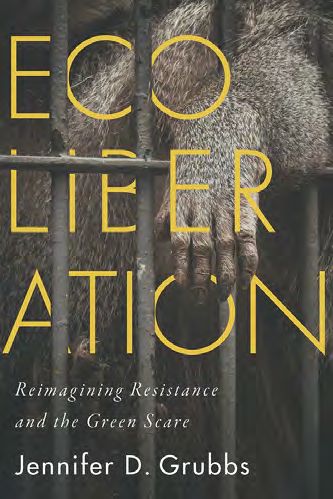
C U LT U R A L S T U D I E S • P H I L O S O P H Y

      ANNOUNCING A NEW SERIES

                                                            Revolutionary Routines
      Outspoken                                             The Habits of Social Transformation
      ser ies editors:                                      c a ro ly n pe dwe l l
      santiago zabal a
      a n d a d r i a n pa r r
                                                            What everyday habits tell us about social
                                                            change, power, and progressive politics.
      Pointed, engaging, and unafraid of controversy,
      books in this series articulate the intellectual
      stakes of pressing cultural, social, environmental,
      economic, and political issues that unsettle
      today’s world. Outspoken books are disruptive:        Although we tend to associate social transformation with
      they shake things up, change how we think, and        major events, historical turning points, or revolutionary up-
      make a difference. The Outspoken series seeks         heaval, Revolutionary Routines argues that seemingly minor
      above all originality of perspective, approach, and   everyday habits are the key to meaningful change.
      thought. It encourages the identification of novel        Through its account of influential socio-political
      and unexpected topics or new and transformative       processes – such as the resurgence of fascism and white su-
      approaches to inescapable questions, whether          premacy, the crafting of new technologies of governance,
      written from within established disciplines or        and the operation of digital media and algorithms – this
      from viewpoints beyond disciplinary boundaries.       book rethinks not only how change works, but also what
      Each book brings theoretical inquiry into a recip-    counts as change. Drawing examples from the affective poli-
      rocally revealing encounter with material realities   tics of Trumpism and Brexit, nudge theory and behaviour          S P E C I F I C AT I O N S
      and lived experience. This series tackles the com-    change, social media and the international refugee crisis,       Outspoken
      plex challenges faced by societies the world over,    and the networked activism of Occupy and Black Lives             May 2021
                                                                                                                             978-0-2280-0622-0 $37.95A paper
      rethinking politics, justice, and social change in    Matter, Carolyn Pedwell argues that minor gestures may be
                                                                                                                             978-0-2280-0621-3 $130.00S cloth
      the twenty-first century.                             as significant as major happenings, revealing the powerful       6 x 9 344pp
                                                            potential in our ability to remake shared habits and imagi-      eBook available
                                                            natively reinhabit everyday life.
                                                                Revolutionary Routines offers a new understanding of the
                                                            logics of habit and the nature of social change, power, and
                                                            progressive politics, illustrating diverse forms of conscious-
                                                            ness and co-operation through which political solidarities
                                                            might take shape.

                                                            Carolyn Pedwell is associate professor of cultural studies,
                                                            University of Kent.

6   mqup.ca s p r i n g 2 0 2 1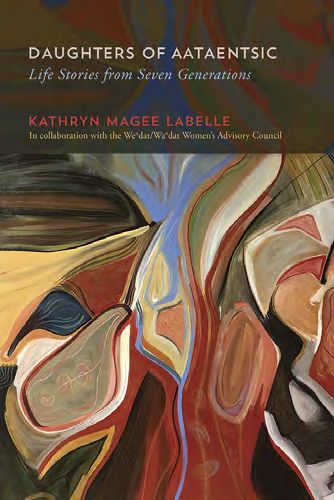
CU RR E NT AF FAI RS • SOCIAL MOVE M E NT STU DI E S

    Ecoliberation
    Reimagining Resistance and the Green Scare
    jennifer d. g rubbs

    A captivating and creative glimpse into the world of direct action, animal and
    earth liberation, and political repression.

    Disenchanted by indirect forms of protest designed to         Jennifer D. Grubbs is assistant professor of anthropol-
    work within existing systems of corporate and state           ogy and the Prison Justice Initiative convener at
    power, animal and earth liberation activists have             Antioch College.
    turned instead to direct action. In this detailed ethno-
    graphic account Jennifer Grubbs takes the reader inside
    the complicated, intricate world of these powerful and
    controversial interventions, nuancing the harrowing
    realities of political repression with the inspiring,
    clever ways that activists resist.
        Grubbs draws on her personal experiences within
    the movement to offer a thoughtful and intersectional                                                                   S P E C I F I C AT I O N S
    analysis. Tracing the strategies of liberationist activists                                                             Outspoken
    as they grapple with doing activism under extreme re-                                                                   June 2021
                                                                                                                            978-0-2280-0682-4 $32.95T paper
    pression, Ecoliberation challenges ubiquitous frame-
                                                                                                                            978-0-2280-0681-7 $110.00S cloth
    works that position protestors as either good or bad by                                                                 5.5 x 8.5 232pp
    showing how activists playfully and confrontationally                                                                   eBook available
    enact radical social change. Nearly a decade in the
    making, the book looks back at the notorious period
    of repression called the Green Scare and draws contem-
    porary connections to the creep of fascism under
    President Donald Trump.
        In stories that are simultaneously heartbreaking,
    riddled with tension and contradiction, and inspiring,
    Grubbs proves that whether or not the revolution is
    televised, it will be spectacular.

7   mqup.ca s p r i n g 2 0 2 1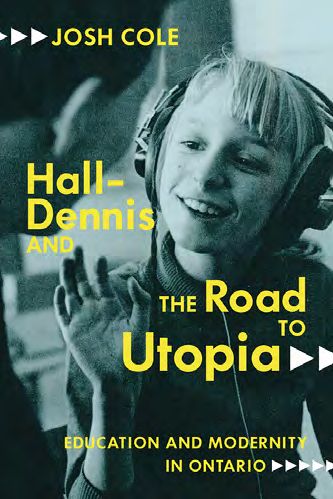
E N V I R O N M E N TA L S T U D I E S • C U LT U R A L S T U D I E S

    Canada’s Waste Flows
    my r a j. hird

    Unearthing the reality of Canada’s waste crisis and what we can do about it.

    From shipments of Canadian waste rotting in develop-                       A critical and compelling book that will generate
    ing countries to overflowing landfills and ineffective                  conversation and incite change, Canada’s Waste Flows
    recycling programs, Canada is facing a waste crisis.                    uncovers how Canada’s role as a global leader in waste
    Canadians are becoming increasingly aware that waste                    production and export is key to changing Canada’s
    is an acute environmental and human health issue –                      waste future.
    and a complex one, the solutions to which are often
    contradictory.                                                          Myra J. Hird is professor of environmental studies
        Canada’s Waste Flows is an honest look at the pro-                  at Queen’s University and directs the Canada’s Waste
    duction and movement of Canadian waste, from                            Flow program.
    region to region and across the globe, and its conse-
    quences. Through a series of timely empirical case                                                                               S P E C I F I C AT I O N S
    studies, the book reveals waste as less of a technological                                                                       February 2021
    problem and more of a material, economic, political,                                                                             978-0-2280-0528-5 $34.95T cloth
                                                                                                                                     6 x 9 336pp 10 photos, 1 map, 2 diagrams,
    historical, and cultural concern. Canada’s Waste Flows
                                                                                                                                     1 table
    demonstrates that Canadians are misdirecting their at-                                                                           eBook available
    tention to post-consumer waste and their responsibil-
    ity for minimizing it through recycling; waste must be
    understood as a social justice issue, and in particular as
    a symptom of ongoing settler colonialism. Through a
    comparative study of waste management in southern
    and northern Canadian communities, Myra Hird
    argues that we will only resolve our waste crisis
    through democratic engagement.

8   mqup.ca s p r i n g 2 0 2 1
GENDER STUDIES • POLITICAL STUDIES
Slut-Shaming, Whorephobia, and the
Unfinished Sexual Revolution
mere dith r alston
Eliminating rape culture and the pleasure gap by ending good-girl privilege
and bad-girl stigma.
The sexual revolution is unfinished. A sexual double Dispelling the myth that all sex workers are victims
standard between men and women still exists, and and all clients are violent, Slut-Shaming, Whorephobia,
society continues to punish bad girls and reward good and the Unfinished Sexual Revolution calls out Western
ones. Until we eliminate good-girl privilege and bad- society’s hypocrisy about sex and shows how stigma
girl stigma, women will not be fully free to embrace and the marginalization of sex workers harm
their sexuality. all women.
In Slut-Shaming, Whorephobia, and the Unfinished
Sexual Revolution Meredith Ralston looks at the com- Meredith Ralston is professor of women’s studies at
mon denominators between the #MeToo movement, Mount Saint Vincent University and a documentary
the myths of rape culture, and the pleasure gap be- filmmaker whose films include Hope in Heaven, Selling
tween men and women to reveal the ways that sexually Sex, and Why Women Run. S P E C I F I C AT I O N S
liberated women threaten the patriarchy. Weaving in June 2021
history, pop culture, philosophy, interviews with sex 978-0-2280-0665-7 $34.95T cloth
6 x 9 232pp
workers, and personal anecdotes, Ralston shows how
eBook available
women cannot achieve sexual equality until the sexual
double standard and good girl/bad girl binary are elim-
inated and women viewed by society as “whores” are
destigmatized. Illustrating how women’s sexuality
is policed by both men and women, she argues that
women must be allowed the same personal autonomy
as men: the freedom to make sexual decisions for
themselves, to obtain orgasm equality, and to insist
on their own sexual pleasure.
9 mqup.ca s p r i n g 2 0 2 1MEDIA STUDIES • POLITICAL STUDIES
reannouncing
Trump, Trudeau, Tweets, Truth
A Conversation
bil l fox
The story of a pivot in technology, politics, and power in Western liberal democracies.
Media has long been identified as a primary site of Bill Fox is a senior fellow at Massey College at the
political discourse in Western liberal democracies. Easy University of Toronto and a fellow at the Riddell
access to digital platforms empowers more content cre- Graduate Program in Political Management at
ators with more reach through more channels, which Carleton University.
means that the way we do politics, talk politics, and
cover politics is undergoing a radical transformation.
The military industrial complex of the 1950s has
given way to the celebrity distribution complex of
the social media age. The well known – from Donald
Trump to Justin Trudeau – make news and, through
channels from Twitter to Instagram, can distribute S P E C I F I C AT I O N S
that news themselves. And in the case of Trump, they Published for the Riddell Graduate Program
can denounce everyone else’s news as “fake.” Trump, in Political Management at Carleton University
March 2021
Trudeau, Tweets, Truth examines how journalism be-
978-0-2280-0111-9 $34.95T cloth
came decentralized and disaggregated. Drawing from 6 x 9 320pp
his experience in the press, politics, and public policy, eBook available
Bill Fox reflects on the seismic shifts technology has
triggered in political discourse and coverage.
The 2020 US presidential campaign provides the
context for a broader examination of this recalibration
of the power equation. Did Trump’s tweets and the
news they generated withstand the scrutiny of tradi-
tional media fact-checkers? And whose view of
reality prevailed?
10 mqup.ca s p r i n g 2 0 2 1SOCIAL H ISTO RY • SPO RTS H ISTO RY
Games of Discontent
Protests, Boycotts, and Politics at the 1968 Mexico Olympics
h a r ry b lu tste i n
What was behind the black power salute, boycotts, and political battles
that characterized the 1968 Summer Olympics?
The year 1968 was ablaze with passion and mayhem as The 1968 Summer Games became a microcosm of
protests erupted in Paris and Prague, throughout the the discord happening around the globe. Describing a
United States, and in cities on all continents. The Sum- range of protest activities preceding and surrounding
mer Olympic Games in Mexico were to be a moment the 1968 Olympics, Games of Discontent shines light on
of respite from chaos. But the image of peace – a white the world during a politically transformative moment
dove – adopted by organizers was an illusion, as was when discontents were able, for the first time, to
obvious to a record six hundred million people watch- globalize their protests.
ing worldwide on satellite television. Ten days before
the opening ceremony, soldiers slaughtered hundreds Harry Blutstein is a research fellow at the University
of student protesters in the capital. of Melbourne.
In Games of Discontent Harry Blutstein presents S P E C I F I C AT I O N S
vivid accounts of threatened boycotts to protest racism McGill-Queen’s Studies in Protest, Power,
in the United States, South Africa, and Rhodesia. He and Resistance
April 2021
describes demonstrations by Czechoslovak gold medal
978-0-2280-0675-6 $34.95T cloth
gymnast Věra Čáslavská against the Soviet-led invasion 6 x 9 248pp
of her country. The most dramatic moment of the eBook available
Olympic Games was Tommie Smith and John Carlos’s
black power salute from the podium. Blutstein fur-
nishes new details behind their protest and examines
how this iconic image seared itself into historical mem-
ory, inspiring Colin Kaepernick and a new generation
of athlete-activists to take a knee against racism
decades later.
11 mqup.ca s p r i n g 2 0 2 1B IOG RAPHY • E U ROPEA N H ISTO RY
Hitler’s Cosmopolitan Bastard
Count Richard Coudenhove-Kalergi and His Vision of Europe
mart yn bond
The story of the Austro-Japanese count – politician and author of the manifesto
Pan-Europa – who blazed a trail to European integration.
In the turbulent period following the First World Charles de Gaulle, Coudenhove-Kalergi was personally
War the young Count Richard Coudenhove-Kalergi invited to the High Mass in Rheims Cathedral in 1961 to
founded the Pan-European Union, offering a vision celebrate Franco-German reconciliation. A provocative
of peaceful, democratic unity for Europe, with no bor- visionary for Europe, Coudenhove-Kalergi thought
ders, a common currency, and a single passport. His and acted in terms of continents, not countries.
political congresses in Vienna, Berlin, and Basel at- For the Count, the United States of Europe was the
tracted thousands from the intelligentsia and the cul- answer to the challenges of communist Russia and cap-
tural elite, including Albert Einstein, Thomas Mann, italist America. Indeed, he launched his Pan-European
and Sigmund Freud, who wanted a United States of Union thirty years before Jean Monnet set up the Euro-
Europe brought together by consent. The Count’s pean Coal and Steel Community, the precursor to
commitment to this cooperative ideal infuriated Adolf the European Union. Timely and capitivating, Martyn S P E C I F I C AT I O N S
Hitler, who referred to him as a “cosmopolitan bastard” Bond’s biography offers an opportunity to explore a April 2021
in Mein Kampf. remarkable life and revisit the impetus and origins 978-0-2280-0545-2 $39.95T cloth
6 x 9 464pp 36 photos
Communists and nationalists, xenophobes and of a unified Europe.
eBook available
populists alike hated the Count and his political mis-
sion. When the Nazis annexed Austria, the Count and “Martyn Bond has written a fascinating biography of
his wife, the famous actress Ida Roland, narrowly es- Count Richard Coudenhove-Kalergi and has offered a
caped the Gestapo. He fled to the United States, where rich portrait of his worlds. It is a welcome and much-
he helped shape American policy for postwar Europe. needed contribution to our understanding of twentieth-
Coudenhove-Kalergi’s profile was such that he served century Europeanism and is a pleasure to read.”
as the basis for the fictional resistance hero Victor Matthew D’Auria, University of East Anglia
Laszlo in the film Casablanca.
A brilliant networker, the Count guided many Martyn Bond, former European civil servant and bbc
European leaders, notably advising Winston Churchill foreign correspondent, is a distinguished senior fellow
before his 1946 Zürich speech on Europe. A friend to at Regent’s University London and a senior fellow of
both Chancellor Konrad Adenauer and President the Salzburg Global Seminar.
12 mqup.ca s p r i n g 2 0 2 1C U R R E N T A F FA I R S • I N T E R N AT I O N A L S T U D I E S
What Ails France?
br ig it te g r anv ille
A provocative but constructive critique of the French model of technocratic,
elite leadership.
As evidenced by the yellow vests protest movement that A refreshing, ideologically freewheeling discussion,
began in France in 2018, the state of the French nation What Ails France? provides a positive take on the inno-
inspires gloom among many of its citizens. Brigitte vations of our digital age, exploring their potential to
Granville views this malaise as a peculiarly French bring about a more representative democracy and a
symptom of the difficulties experienced by many ad- fairer society.
vanced industrial democracies in the face of globaliza-
tion, technology, and mass immigration. Brigitte Granville is professor of international
Granville brings trenchant criticism to bear in this economics and economic policy at Queen Mary
wide-ranging survey of the political economy of con- University of London.
temporary France, building her case for the prosecu-
tion on the self-reinforcing rigidity produced by a S P E C I F I C AT I O N S
narrow Parisian oligarchy that is both entitled and in- May 2021
tellectually hidebound. What Ails France? applies an 978-0-2280-0680-0 $39.95T cloth
6 x 9 328pp 13 tables
economist’s vision to the monetary and fiscal patholo-
eBook available
gies flowing from this ideologically motivated techno-
cratic rule, reflected in Europe’s flawed monetary
union, runaway indebtedness, and chronically high
structural unemployment. The author marshals aca-
demic research from a wide range of disciplines to fuel
a provocative and at times contentious analysis, pro-
posing various treatments for French ailments that
would reinvigorate the republican value of liberté with
a new local slant.
13 mqup.ca s p r i n g 2 0 2 1POETRY POETRY
whereabouts Field Guide to the Lost Flower
edward carson of Crete
eleonore schönmaier
Poems that navigate the emotional intelligence
of the heart and mind.
Island life carries on while a beautiful woman lies
in a coma surrounded by friends and lovers.
in the poem / of the world / there once / was a map / of the map / composed in / Thyme clings, high / and away from the grazing and scents / the air.
the likeness / of a poem
Island reality is interconnected with live-retrieved memories in which a nurse fol-
In this riddling and seeking book of poems, Edward Carson navigates the emotional, lows a violent patient into the northern Canadian bush, a migrant mother faces her
often contradictory intelligence of the heart and mind. In three interrelated seg- new job as the village butcher, an Ojibway man is forced to walk a dangerous route
ments, whereabouts powerfully charts the tight emotional spaces between thinking home alone, teenagers loot the local dump to build their mother’s wheelchair, and
and language, beauty and perception, love and the polemics of self and other. an electrician watches a woman play a grand piano on a ballfield.
Taking on cartographic distortions and dynamics of the map metaphor, “there- A (re)creation of the surreality and altered time within deep states of grieving,
abouts (or the mapmaker’s dilemma)” playfully confronts the quandaries of per- Field Guide to the Lost Flower of Crete juxtaposes sorrow with fragmentary, unapolo-
sonal navigation when the wants and needs of the esemplastic mind are forever getic joy. Eleonore Schönmaier forges compelling symphonic resonances between
devising new places to be. Exploring the brain, its neurons, and serpentine synaptic European musical encounters and a northern working-class childhood. By centring
connections, “hereabouts (in fourteen scans)” advances a poetry of rhizomic com- her experiential empathy on a history of racism and poverty, she guides us into bet-
munication capturing networks of thought and feeling that spring from both con- ter ways of being. Intimate reflections are contrasted with geopolitical and environ-
flict and caress. Within a relationship’s countless masquerades and revelations, mental concerns as Schönmaier’s fierce intelligence focuses on what is most essential
“whereabouts (the lovers’ discourse)” invites the reader to eavesdrop on a series of in our lives.
intimate conversations wherein lovers argue and act out their richly populated inner The arc of this collection offers a rejuvenating meditation on the meaning of loss
lives, addressing issues of gender, pleasure, communication, control, and sex. and love, highlighted by the lyric beauty of the writing.
“Activated by synaptic metaphor, Edward Carson’s whereabouts is love poetry by way Eleonore Schönmaier is the award-winning author of Dust Blown Side of the Journey
of neuroimaging. Embracing the ‘harmonics of the brain,’ the poet breaks down the and Wavelengths of Your Song. She divides her time between Canada and Europe.
world sense by sense, delivering a fever dream that is part map, part destination.
whereabouts is a welcome addition to the significant tradition of science poetry.” Jim
Johnstone, editor of The Next Wave: An Anthology of 21st Century Canadian Poetry
Edward Carson is the author of Look Here Look Away Look Again, Knots, Birds Flock
Fish School, Taking Shape, and Scenes. He lives in Toronto.
S P E C I F I C AT I O N S
S P E C I F I C AT I O N S The Hugh MacLennan Poetry Series
The Hugh MacLennan Poetry Series June 2021
July 2021 978-0-2280-0581-0 $17.95T paper
978-0-2280-0632-9 $17.95T paper 5 x 7.5 152pp
5 x 7.5 96pp eBook available
eBook available
14 mqup.ca s p r i n g 2 0 2 1POETRY POETRY
The Tantramar Re-Vision Unbound
kev i n i r i e g a b r i e l l e m c i n t i re
Lyrical poems of the solitary and celebratory in A debut collection that re-enchants our eyes and
which nature is both paradise and purgatory. hearts to the sublime wonders of our precarious
natural world.
I’ve lived the way a field is sometimes / a shelter for mice / or sometimes a source inside sadness is glory / if you see it right way round, / find the seam, reverse it to
of game / for a hawk perspectivize, / unwind light, joy’s unravelling spool
Inspired by the literary landscape of the late poet John Thompson, Kevin Irie’s Inspired by mystical traditions, birdwatching, tree planting, ethics, neuropsychology,
The Tantramar Re-Vision presents a portrait of nature where the benign and the and quantum physics, Gabrielle McIntire’s poems draw us in with their passionate
bedevilled coexist, collude, or collide. attention to what it means to be human in a still-wondrous natural environment.
The Tantramar Re-Vision charts routes of discovery as it follows trails, waterways, Touching on human frailty, the eternal, and the ecological with a delicate and
flights, and fears, be it through the woods, the wilds, the page, or the mind where evocative brush, Unbound enacts an almost prayerful attentiveness to the earth’s
“it’s hard to admit / you are not to your taste.” It questions an existence in which the creatures and landscapes while it offers both mournful and humorous treatments of
inhuman thrives, ignorant of divinity, while the human psyche continues to search love and loss. McIntire’s finely tuned musical voice – with its incantatory rhythms,
for answers as “life takes directions / away from” it. The Tantramar Marsh setting rhymes, sound play, and entrancing double meanings – invites us to be courageously
of John Thompson’s Stilt Jack resonates with Irie’s landscapes of birds, fish, plants, open to the unexpected.
and wildlife, all still within reach yet part of a world where “wind carries sounds / Unbound stirs us to re-evaluate our place amidst the astonishing beauty and
it cannot hear.” wisdom of an Earth facing the early stages of climate change.
Insightful and meditative, The Tantramar Re-Vision is poetry of the inner self
and the outside observer, a poetic testament to the ways literature creates its own Gabrielle McIntire is professor of English at Queen’s University.
landmarks and nature survives without knowing a word.
Kevin Irie is a poet and the author of five previous collections, including Viewing
Tom Thomson: A Minority Report. He lives in Toronto.
S P E C I F I C AT I O N S S P E C I F I C AT I O N S
The Hugh MacLennan Poetry Series The Hugh MacLennan Poetry Series
July 2021 June 2021
978-0-2280-0637-4 $17.95T paper 978-0-2280-0617-6 $17.95T paper
5 x 7.5 112pp 5 x 7.5 104pp
eBook available eBook available
15 mqup.ca s p r i n g 2 0 2 1POETRY LAW • WOMEN’S STUDIES
Ripping down half the trees n e w i n pa p e r
eva n j Putting Trials on Trial
Sexual Assault and the Failure of the
A poetic confrontation with the structures of
oppression in Ontario’s remote northwest.
Legal Profession
elaine craig
An interrogation of sexual assault law and a legal
process that traumatizes complainants.
Some poems can live without souls / but mine remain ghastly fools flicking / Less than one percent of the sexual assaults that occur each year in Canada result in
uncomfortable narratives like / cigarette butts during class change. legal sanction for those who commit these offences. Survivors often distrust and fear
the criminal justice process, and as a result, over ninety percent of sexual assaults go
One out of every twenty students in the adult education classes Evan J teaches in unreported. Unfortunately, their fears are well founded.
Sioux Lookout, Ontario, dies every year; the surviving students are often afflicted by In this thorough evaluation of the legal culture and courtroom practices preva-
severe racism, poverty, addictions, and violence. Ripping down half the trees engages lent in sexual assault prosecutions, Elaine Craig provides an even-handed account
with these struggles, offering a catalogue of experiences specific to the remote of the ways in which the legal profession unnecessarily – and sometimes unlawfully –
regions of Canada. contributes to the trauma and re-victimization experienced by those who testify as
Tearing down the façade of Canadian justice and equality to expose the racism, sexual assault complainants. Gathering conclusive evidence from interviews with
colonialism, sexism, prejudicial capitalism, and ableism at the nation’s core, these experienced lawyers across Canada, reported case law, lawyer memoirs, recent trial
are poems about cruelty, both the obvious and the ambient. They are unflinching transcripts, and defence lawyers’ public statements and commercial advertisements,
in their sociopolitical criticism, upset by unchanging systemic oppressions, unable Putting Trials on Trial demonstrates that – despite prominent contestations – com-
to overlook the threat of the author’s white skin, unwilling to forget Justin Trudeau plainants are regularly subjected to abusive, humiliating, and discriminatory treat-
in blackface. And while they acknowledge the limits of the author’s privileged ment when they turn to the law to respond to sexual violations.
perspective, they are never willing to let the perpetrating structures of this cruelty In pursuit of trial practices that are less harmful to sexual assault complainants
go unchecked. as well as survivors of sexual violence more broadly, Putting Trials on Trial makes
But these poems also let stand the shelterwood, the upstanding actions of indi- serious, substantiated, and necessary claims about the ethical and cultural failures
viduals, the totems of hope. They work as coping strategies, as therapy, as empathy, of the Canadian legal profession.
offering a glimpse of optimism and a space for discourse. These are poems that listen.
“This book will undoubtedly generate controversy as it delivers a verdict upon
Evan J (he/him) is from Manitoba and now lives and writes in the town of the Canadian legal system: guilty.” The Globe and Mail
Sioux Lookout, Ontario.
Elaine Craig is associate professor in the Schulich School of Law at Dalhousie
University.
S P E C I F I C AT I O N S
The Hugh MacLennan Poetry Series S P E C I F I C AT I O N S
June 2021 January 2021
978-0-2280-0546-9 $17.95T paper 978-0-2280-0653-4 $32.95T paper
5 x 7.5 120pp 6 x 9 324pp
eBook available eBook available
16 mqup.ca s p r i n g 2 0 2 1POLITICAL STUDIES REFERENCE
n e w i n pa p e r new edition
Democracy in Canada Quotations for the Fast Lane
The Disintegration of Our Institutions compiled by r ichard w. p ound
d ona ld j. s avoi e
An indispensable reference for finding the right
“Nobody else but Savoie could have written such thing to say at the right time.
an exhaustive and authoritative critique of Canada’s
institutions – the culmination of all his other work.”
The National Post
Canada’s representative democracy is confronting important challenges. At the top Richard Pound has spent half a lifetime identifying, collecting, and organizing thou-
of the list is the growing inability of the national government to perform its most sands of quotations. Quotations for the Fast Lane is the result of that effort, selected
important roles: namely mapping out collective actions that resonate in all regions as by someone with an impressive range of local, national, and international experi-
well as enforcing these measures. Others include Parliament’s failure to carry out im- ence, and arranged alphabetically by theme to be easily accessible for all readers and
portant responsibilities, an activist judiciary, incessant calls for greater transparency, all occasions.
the media’s rapidly changing role, and a federal government bureaucracy that has Words from personalities ranging from William Blake to Warren Buffett, on all
lost both its way and its standing. topics imaginable, serve to elevate and inspire. The great majority of the quotations
Arguing that Canadians must reconsider the origins of their country in order to in this book are pithy, often humorous and sardonic, but always containing an inter-
understand why change is difficult and why they continue to embrace regional iden- esting perspective on life, conduct, and achievement.
tities, Democracy in Canada explains how Canada’s national institutions were shaped The new edition includes hundreds of new quotations added to the existing col-
by British historical experiences, and why there was little effort to bring Canadian lection of incisive historical, motivational, inspiring, and quirky observations that
realities into the mix. As a result, the scope and size of government and Canadian made the first edition such a success.
federalism have taken on new forms largely outside the Constitution. Parliament
and now even Cabinet have been pushed aside so that policy makers can design Richard W. Pound is an author, lawyer, Olympian and member of the International
and manage the modern state. This also accounts for the average citizen’s belief that Olympic Committee, founding president of the World Anti-Doping Agency, and
national institutions cater to economic elites, to these institutions’ own members, chancellor emeritus of McGill University.
and to interest groups at citizens’ expense.
A masterwork analysis, Democracy in Canada investigates the forces shaping
the workings of Canadian federalism and the country’s national political and
bureaucratic institutions.
Donald J. Savoie is the Canada Research Chair in public administration and gover-
nance at the Université de Moncton and the author of numerous books including
What Is Government Good At? A Canadian Answer and Whatever Happened to the
Music Teacher? How Government Decides and Why.
S P E C I F I C AT I O N S S P E C I F I C AT I O N S
February 2021 April 2021
978-0-2280-0666-4 $34.95T paper eBook only $70.00A
6 x 9 504pp
eBook available
17 mqup.ca s p r i n g 2 0 2 1H ISTO RY C A NADIA N H ISTO RY
Otter Skins, Boston Ships, n e w i n pa p e r
and China Goods Mackenzie King in the Age
The Maritime Fur Trade of the North- of the Dictators
west Coast, 1785–1841, Revised Edition Canada’s Imperial and Foreign Policies
james r. g ibson roy macl aren
The first comprehensive account of the maritime fur “MacLaren tracks in meticulous detail King’s ap-
trade on the Northwest Coast of North America. proach to Canada’s foreign policy, from labour min-
ister in Sir Wilfrid Laurier’s Liberal government to his
interwar stretch as prime minister.” Canada’s History
Before contact with white people, the Indigenous peoples of the Northwest Coast Until the outbreak of hostilities in 1939, Mackenzie King prided himself on never
traded amongst themselves and with other Indigenous groups farther inland, but by publicly saying anything derogatory about Hitler or Mussolini, unequivocally sup-
the end of the 1780s, when Russian coasters had penetrated the Gulf of Alaska and porting the appeasement policies of British prime minister Neville Chamberlain and
British merchantmen were frequenting Nootka Sound, trade had become the domi- regarding Hitler as a benign fellow mystic. In Mackenzie King in the Age of the Dicta-
nant economic activity in the area. The Tlingit, Haida, Tsimshian, Nootka, Salish, tors Roy MacLaren leads readers through the political labyrinth that led to Canada’s
and Chinook spent much of their time hunting fur-bearing animals and trading involvement in the Second World War and its awakening as a forceful nation on the
their pelts to settler traders for metals, firearms, textiles, and foodstuffs. The North- world stage.
west Coast First Nations used their newly acquired goods in intertribal trade while Prime Minister King’s fascination with foreign affairs extended from helping
the Euro-American traders dealt their skins in China for teas, silks, and porcelains President Theodore Roosevelt exclude “little yellow men” from North America in
that they then sold in Europe and America. 1908 to his conviction that appeasement of Hitler and Mussolini should be the
While previous studies have concentrated on the boom years of the fur trade cornerstone of Canada’s foreign and imperial policies in the 1930s. If war could be
before the War of 1812, James Gibson reveals that the maritime fur trade persisted avoided, King thought, national unity could be preserved. MacLaren draws exten-
into the 1840s and that it was not solely or even principally the domain of American sively from King’s diaries and letters and contemporary sources from Britain, the
traders. He gives an account of Russian, British, Spanish, and American participation United States, and Canada to describe how King strove to reconcile French Canadian
in the Northwest traffic, describes the market in South China, and outlines the isolationism with English Canadians’ commitment to the British Commonwealth.
evolution of the coast trade, including the means and problems. He also assesses King, MacLaren explains, was convinced by the controversies of the First World War
the physical and cultural effects of this trade on the Northwest Coast and Hawaiian that another such conflagration would be disruptive to Canada. When King finally
Islands and on the industrialization of the New England states. had to recognize that the Liberals’ electoral fortunes depended on English Canada
Uncovering many Russian-language sources, Gibson also consulted the records having greater voting power than French Canada, he did not reflect on whether a
of the Russian-American, East India, and Hudson’s Bay Companies, the unpublished higher morality and intellectual integrity should transcend his anxieties about
logs and journals of American ships, and the business correspondence of several national unity.
New England shipowners. No more comprehensive or painstakingly researched A focused view of an important period in Canadian history, replete with insight-
account of the maritime fur trade of the Northwest Coast has ever been written. ful stories, vignettes, and anecdotes, Mackenzie King in the Age of the Dictators shows
Canada flexing its foreign policy under King’s cautious eye and ultimately ineffective
James R. Gibson is emeritus professor, Department of Geography, York University. guiding hand.
S P E C I F I C AT I O N S Roy MacLaren has been a diplomat, businessman, minister in three federal cabinets,
McGill-Queen’s Indigenous and Northern Studies and Canada’s high commissioner to the United Kingdom.
September 2021
978-0-2280-0731-9 $47.95A paper
S P E C I F I C AT I O N S
6 x 9 560pp 15 tables, 5 maps
January 2021
eBook available
978-0-2280-0590-2 $34.95T paper
6 x 9 360pp 23 b&w photos
eBook available
18 mqup.ca s p r i n g 2 0 2 1H ISTO RY
Blacks in Canada
A History, Third Edition
robin w. w inks
Foreword by George Elliott Clarke
The definitive history of the African-Canadian experience.
One of the first sweeping and detailed histories of helped found British Columbia, particularly Victoria,
African-Canadians, Blacks in Canada journeys from and Black settlement in the prairie provinces.
the introduction of slavery in 1628 to the first wave of Crucially, Blacks in Canada investigates the French
Caribbean immigration in the 1950s and 1960s. Her- and English periods of slavery, the abolitionist move-
alded in the Literary Review of Canada as one of the ment in Canada, and the role played by Canadians in
one hundred most important Canadian books, this the broader continental antislavery crusade, as well as
enduring work by Yale University’s Randolph W. Canadian adaptations to nineteenth- and twentieth-
Townsend Jr Professor of History Robin W. Winks century racial mores.
(1930–2003) offers a wealth of information for fresh
interpretation. “Winks has laid the lasting structure of the history
Now, fifty years from its original printing, this of Black people in Canada in this monumental work, S P E C I F I C AT I O N S
third edition includes a foreword by George Elliott which will endure as the model against which all future Carleton Library Series
Clarke, E.J. Pratt Professor of Canadian Literature at historians of this ‘event’ must gauge their work.” April 2021
978-0-2280-0789-0 $39.95A paper
the University of Toronto. Clarke’s contribution adds Austin Clarke
6 x 9 584pp
a necessary critical lens through which twenty-first- eBook available
century readers should view Winks’s research. The “No review can do justice to the rich data provided
longevity of Blacks in Canada is due to an impressive by this book. Blacks in Canada will prove a mine of
array of primary and secondary materials that illumi- information to scholars for years to come.”
nate the experiences of Black immigrants to Canada. August Meier, Journal of American History
These experiences include the forced migration of
enslaved Black people brought to Nova Scotia and the Robin W. Winks (1930–2003) was the Randolph
Canadas by Loyalists at the end of the American Revo- W. Townsend Professor of History and chair of the
lution, Black refugees who fled to Nova Scotia follow- Department of History, Yale University.
ing the War of 1812, Jamaican Maroons, and fugitive
slaves who fled to British North America. The book
also highlights Black West Coast businessmen who
19 mqup.ca s p r i n g 2 0 2 1B L AC K S T U D I E S • H I S TO RY O F E D U C AT I O N
Schooling the System
A History of Black Women Teachers
funké al ade jebi
A powerful examination of black women teachers and their contributions
to anti-racist education in Canada.
In post–World War II Canada, black women’s positions As schools continue to grapple with creating diverse
within the teaching profession served as sites of strug- educational programs for all Canadians, Schooling
gle and conflict as the nation worked to address the the System is a timely excavation of the meaningful
needs of its diversifying population. From their entry contributions of black women educators who helped
into teachers’ college through their careers in the class- create equitable policies and practices in schools
room and administration, black women educators en- and communities.
countered systemic racism and gender barriers at every
step. So they worked to change the system. Funké Aladejebi is assistant professor of history at the
Using oral narratives to tell the story of black access University of Toronto.
and education in Ontario between the 1940s and the
1980s, Schooling the System provides textured insight S P E C I F I C AT I O N S
into how issues of race, gender, class, geographic origin, Rethinking Canada in the World
and training shaped women’s distinct experiences April 2021
978-0-2280-0539-1 $37.95A paper
within the profession. By valuing women’s voices and
978-0-2280-0538-4 $130.00S cloth
lived experiences, Funké Aladejebi illustrates that black 6 x 9 304pp 9 photos
women, as a diverse group, made vital contributions to eBook available
the creation and development of anti-racist education
in Canada. As cultural mediators within Ontario
school systems, these women circumvented subtle and
overt forms of racial and social exclusion to create re-
sistive teaching methods that centred black knowledges
and traditions. Within their wider communities and
activist circles, they fought to change entrenched ideas
about what Canadian citizenship should look like.
20 mqup.ca s p r i n g 2 0 2 1C A N A D I A N H I S TO RY • H I S TO RY O F E D U C AT I O N
Hall-Dennis and the Road to Utopia
Education and Modernity in Ontario
josh cole
A groundbreaking examination of the politics of education in postwar Canada.
The quarter century that followed the end of the Its avant-garde research strategies and controversial
Second World War was marked by intense social and “post-literate” curricular reforms were balanced by
economic transformation: the changing face of post- a pedagogical approach designed to mould students
war capitalism, a revolution in communications tech- into obedient citizens and productive economic
nology, the rise of youth culture, and the pronounced actors.
ascent of individual freedom all contributed to a dra- As Canadians once again find themselves asking
matic push to remake, and thus improve, society. This fundamental questions about the aims and objectives
push was especially felt within education, the primary of education under radically changing circumstances,
vehicle for modernizing the postwar world from the Josh Cole revisits Hall-Dennis to show how the com-
ground up. mittee and its report represent a significant moment
Hall-Dennis and the Road to Utopia explores this in Canadian cultural and political history, a prescient S P E C I F I C AT I O N S
moment of renewal through a powerful and influen- document in the history of education, and a revealing Carleton Library Series
tial education reform project: 1968’s Living and Learn- expression of the fragmentary circumstances of global July 2021
978-0-2280-0634-3 $39.95A paper
ing: The Report of the Provincial Committee on Aims modernity in the second half of the twentieth century.
978-0-2280-0633-6 $130.00S cloth
and Objectives of Education in the Schools of Ontario. 6 x 9 352pp 30 photos
The Hall-Dennis report, as it became known, urged Josh Cole is a historian of modern Canada and a eBook available
Ontarians to accept a new vision of education in member of the Theory and History of Education
which students were no longer organized in classes, International Research Group.
their progress no longer measured by grades, and their
experience no longer characterized by the painful
acquisition of subjects, but rather by a joyous and
open-ended process of learning. This new, democratic
system of education was associated with the highest
ideals of postwar progress, liberalism, and humanism,
yet its recommendations were paradoxically both
profoundly radical and fundamentally conservative.
21 mqup.ca s p r i n g 2 0 2 1You can also read


