Books for Fall-Winter 2020-2021 - I V ERSIT - University Press of Mississippi
←
→
Page content transcription
If your browser does not render page correctly, please read the page content below
IVERSIT
    UN
                   Y
                       PRE
                       SS OF

                               Books for Fall–Winter 2020–2021

I                  M
             ISS
    ISSIPP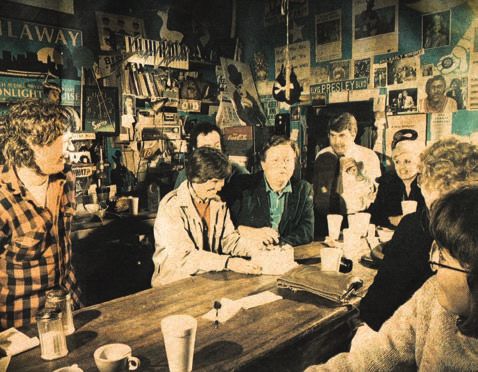
UN
                             IVERSIT                     CONTENTS

                                       Y
                                                         3    Alabama Quilts                    Huff / King

                                           PRE
                                                                                        ✦

                                                         9    The Amazing Jimmi Mayes                                ✦   Mayes / Speek
                                                         9    Big Jim Eastland                  Annis

                                           SS OF
                                                                                         ✦

                                                         27   Bohemian New Orleans                           ✦   Weddle
                                                         32   Breaking the Blockade                   ✦      Ross
                                       M                 5    Can’t Be Faded         ✦       Stooges Brass Band / DeCoste
                    I            ISS                     2    Can’t Nobody Do Me Like Jesus!                                         Stone
                        ISSIPP                                                                                                   ✦

                                                         33   Chaos and Compromise                           ✦   Pugh
                                                         23   Chocolate Surrealism                   ✦       Njoroge
                                                         7    City Son   ✦   Dawkins
OUR MISSION                                              12   Cold War II       ✦   Prorokova-Konrad
University Press of Mississippi (UPM) tells stories      31   The Complete Folktales of A. N. Afanas’ev, Volume III                                            ✦   Haney / Forrester

of scholarly and social importance that impact our       18   Conversations with Dana Gioia                                  ✦   Zheng
                                                         19   Conversations with Jay Parini                              ✦   Lackey
state, region, nation, and world. We are commit-         19   Conversations with John Berryman                                       ✦    Hoffman
ted to equality, inclusivity, and diversity. Working     18   Conversations with Lorraine Hansberry                                          ✦   Godfrey
at the forefront of publishing and cultural trends,      21   Critical Directions in Comics Studies                                      ✦   Giddens
                                                         8    Crooked Snake                  Boteler
we publish books that enhance and extend the                                         ✦

                                                         22   Damaged       ✦    Rapport
reputation of our state and its universities.            10   Dan Duryea        ✦    Peros
    Founded in 1970, the University Press of             7    Emanuel Celler            ✦    Dawkins
Mississippi turns fifty in 2020, and we are proud        30   Folklore Recycled             ✦       de Caro
                                                         26   French on Shifting Ground                                  Dajko
of our accomplishments. Despite uncertain times,
                                                                                                                 ✦

                                                         16   The Green Depression                       ✦   Lambert
a fiftieth anniversary is an important opportunity       22   Groove Theory          ✦      Bolden
to recognize the past and present. Year-to-year,         25   Harmony and Normalization                              ✦       Storhoff

decade-to-decade, UPM has grown in size, out-            17   Haunted Property               ✦      Ford
                                                         11   Hollywood Hates Hitler!                        ✦   Yogerst
put, and reputation. We share these accomplish-          8    The Horn Island Logs of Walter Inglis Anderson                                           ✦   Sugg
ments in the form of the books in this catalog and       6    I AM A MAN            ✦    Ferris
on our website at https://www.upress.state.ms.us/        25   Improvising Sabor                 ✦   Miller
                                                         1    In Faulkner’s Shadow                        Wells
About-the-Press/50th.                                                                                ✦

                                                         15   Intergenerational Solidarity in Children’s Literature and Film                                          ✦   Deszcz-Tryhubczak / Jaques
    An anniversary, especially one as momentous          27   Intimate Partner Violence in New Orleans                                           ✦   Baggett
as the fiftieth, is also an opportunity to look to the   10   José Ferrer    ✦      Peros
future, to plan for the next fifty years. That plan-     13   Kasi Lemmons           ✦      Baker
                                                         32   The Limits of Loyalty                      Ruminski
ning is well underway at UPM with new series,
                                                                                                    ✦

                                                         21   Medievalist Comics and the American Century                                              ✦   Bishop
new endowed funds, and a focus on growth.                20   Mysterious Travelers                   ✦    Kruse
Working with our Board of Directors and with the         4    New Orleans in Golden Age Postcards                                            ✦   Griffis

support of our eight state universities, we are con-     24   New York and the International Sound of Latin Music, 1940–1990                                                   ✦   Lapidus
                                                         12   Nichols and May               ✦       Kapsis
fident about the future of the press and its work.       5    The Nightcrawler King                      ✦   Fagaly
In a challenging publishing environment, UPM             29   No Future in This Country                          ✦   Johnson
has embraced the opportunities presented by              23   Outside and Inside                ✦    Marin
                                                         13   Peter Weir            Tibbetts
new technology, a global marketplace, a thriving                             ✦

                                                         15   A Portrait of the Auteur as Fanboy                                     ✦   Salter / Stanfill
regional market, and an ever-changing academic           28   The Properties of Violence                         ✦       Alexandre
landscape.                                               30   Pussy Hats, Politics, and Public Protest                                       ✦   Saltzman
    Focusing on our mission, and working closely         16   Queer Anxieties of Young Adult Literature and Culture                                            ✦    Mason
                                                         20   R. Crumb          Calonne
with our authors, customers, booksellers, univer-
                                                                         ✦

                                                         28   Racial Terrorism           ✦      Hasian / Paliewicz
sities, and all our partners, we are building a press    17   Reconsidering Flannery O’Connor                                    ✦       Arant / Cofer
for our region and the world. We look forward to         31   Rediasporization              ✦    Richards-Greaves

the next fifty years of growth, change, and suc-         14   SEE! HEAR! CUT! KILL!                      ✦       Clayton
                                                         11   She Damn Near Ran the Studio                                   ✦   Braitman
cess. We invite everyone to join us in the excite-       24   Soul in Seoul      ✦      Anderson
ment of years to come.                                   14   Toxic Masculinity             ✦       De Dauw / Connell
                                                         29   Visionary Women Writers of Chicago’s Black Arts Movement                                                    ✦   Phelps
                                                         33   Your Heritage Will Still Remain                                    Goleman
—Craig W. Gill, Director                                                                                                     ✦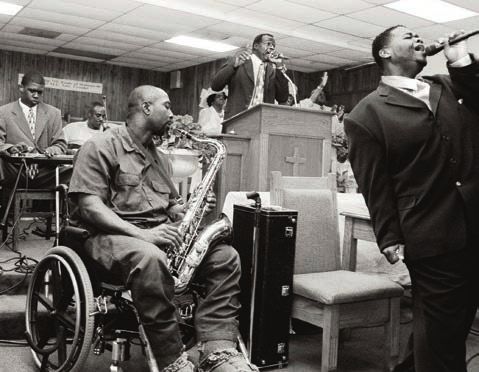
FAUL K N ER / L IT ER AT U R E / BIOGR A PHY

In Faulkner’s Shadow
A Memoir
Lawrence Wells

What happens when you marry into a family that includes a Nobel Prize winner who is
                                                                                                                      An amusing, honest, and sympathetic
arguably the finest American writer of the twentieth century? Lawrence Wells, author of In                              account of literary rivalries and
Faulkner’s Shadow: A Memoir, fills this lively tale with stories that answer just that. In 1972,
Wells married Dean Faulkner, the only niece of William Faulkner, and slowly found himself                             family feuds in Faulkner’s hometown
lost in the Faulkner mystique. While attempting to rebel against the overwhelming influence
of his in-laws, Wells had a front-row seat to the various rivalries that sprouted between his wife
and the members of her family, each of whom dealt in different ways with the challenges and
expectations of carrying on a literary tradition.
     Beyond the family stories, Wells recounts the blossoming of a literary renaissance in
Oxford, Mississippi, after William Faulkner’s death. Both the town of Oxford and the larger
literary world were at a loss as to who would be Faulkner’s successor. During these uncertain
times, Wells and his wife cofounded Yoknapatawpha Press and the quarterly literary journal the
Faulkner Newsletter and Yoknapatawpha Review. In his dual role as publisher and author, Wells
encountered and befriended Larry Brown, Barry Hannah, Willie Morris, and many other writ-
ers. He became both participant and observer to the deeds and misdeeds of a rowdy collection
of talented authors living in Faulkner’s shadow.
     Full of personal insights, this memoir features unforgettable characters and exciting
behind-the-scene moments that reveal much about modern American letters and the southern
literary tradition. It is also a love story about a courtship and marriage, and an ode to Dean
Faulkner Wells and her family.

Lawrence Wells is the director of Yoknapatawpha Press in Oxford, Mississippi, which he
established with his late wife, Dean Faulkner Wells. He cofounded the Faulkner Newsletter and
Yoknapatawpha Review. Author of two historical novels, Rommel and the Rebel and Let the
Band Play Dixie, Wells was awarded the 2014 Faulkner-Wisdom gold medal for narrative non-                                     September 288 pages (approx.), 5.5 x 8.5 inches,
fiction at the Words and Music Festival in New Orleans. He scripted the Emmy-winning 1994                                        52 color illustrations, 11 b&w illustrations, 1 chart
PBS regional documentary Return to the River narrated by James Earl Jones.                                                    Cloth $25.00T 978-1-4968-2991-7
                                                                                                                              Ebook available
Illustrations, clockwise from left: Photo by Barney Sellers, Mid-South Magazine, courtesy of the Commercial
                                                                                                                              Willie Morris Books in Memoir and Biography
Appeal; photo courtesy of the Dean and Larry Wells collection; Square Books by Glennray Tutor.

                                                                                                 CALL 1.800.737.7788 TOLL FREE / UNIVERSITY PRESS OF MISSISSIPPI                         1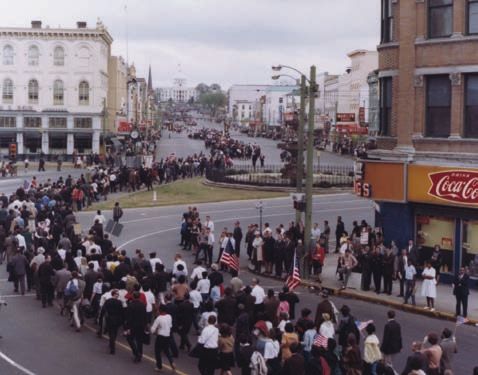
PHOTO GRAPHY / AFRI CAN AME RI CAN STUD I E S / MUSI C

                                                         Can’t Nobody Do Me Like Jesus!
                                                         Photographs from the Sacred Steel Community
                                                         Robert L. Stone
                                                         Foreword by Eric Lewis Williams

             A powerful witness of the                   Folklorist Robert L. Stone presents a rare collection of high-quality documentary photos of the
                                                         sacred steel guitar musical tradition and the community that supports it. The introductory text
             electric steel guitar tuned                 and extended photo captions in Can’t Nobody Do Me Like Jesus! Photographs from the Sacred
                to worship the Lord                      Steel Community offer the reader an intimate view of this unique tradition of passionately
                                                         played music that is beloved among fans of American roots music and admired by folklorists,
                                                         ethnomusicologists, and other scholars.
                                                              In 1992, a friend in Hollywood, Florida, introduced Stone to African American musicians
                                                         who played the electric steel guitar in the African American Holiness-Pentecostal churches
                                                         House of God and Church of the Living God. With the passion, skill, and unique voice they
                                                         brought to the instruments, these musicians profoundly impressed Stone. He produced an
                                                         album for the Florida Folklife Program, which Arhoolie Records licensed and released world-
                                                         wide. It created a roots music sensation.
                                                              In 1996, Stone began to document the tradition beyond Florida. He took the photos in this
                                                         book from 1992 to 2008 in Georgia, the Carolinas, Tennessee, Mississippi, New York, Pennsyl-
                                                         vania, Michigan, and Florida, and at concerts in Italy. The images capture musicians as they play
                                                         for worship services before spirit-filled believers singing, dancing, shouting, praying, and tes-
                                                         tifying. Stone gives the viewer much to witness, always presenting his passionate subjects with
                                                         dignity. His sensitive portrayal of this community attests to the ongoing importance of musical
                                                         traditions in African American life and worship.

                                                         Robert L. Stone is an independent folklorist and photographer based in Gainesville, Florida.
                                                         He has been documenting the steel guitar tradition of African American Holiness-Pentecostal
                                                         churches since 1992. Supported by a grant from the National Endowment for the Arts, Stone
                                                         produced an album for the Florida Folklife Program released by Arhoolie Records as CD 450
                                                         Sacred Steel in 1997. Stone, continuing his work with Arhoolie, has produced eight more CDs
    December 192 pages (approx.), 10 x 10 inches,
                                                         and directed the Sacred Steel documentary video. In 2011, the Florida Department of State
       152 b&w photographs
                                                         honored him with the Florida Folk Heritage Award.
    Cloth $40.00T 978-1-4968-3150-7
    Ebook available
                                                         Photograph credits: © Robert L. Stone

2         WWW.UPRESS.STATE.MS.US / UNIVERSITY PRESS OF MISSISSIPPI
FO L K LO R E / SO U T H ER N C U LTU R E
Alabama Quilts
Wilderness through World War II, 1682–1950
Mary Elizabeth Johnson Huff and Carole Ann King
Foreword by Steve Murray
Alabama Quilts: Wilderness through World War II, – is a look at the quilts of the state from The first book to examine the
before Alabama was part of the Mississippi Territory through the Second World War—a period of
268 years. The quilts are examined for their cultural context—that is, within the community and cultural and historical impact
time in which they were made, the lives of the makers, and the events for which they were made. of Alabama’s quilting legacy
Starting as far back as 1682, with a fragment that research indicates could possibly be the
oldest quilt in America, the volume covers quilting in Alabama up through 1950. There are
seven sections in the book to represent each time period of quilting in Alabama, and each
section discusses the particular factors that influenced the appearance of the quilts, such as
migration and population patterns, socioeconomic conditions, political climate, lifestyle para-
digms, and historic events. Interwoven in this narrative are the stories of individuals associated
with certain quilts, as recorded on quilt documentation forms. The book also includes over 265
beautiful photographs of the quilts and their intricate details.
To make this book possible, authors Mary Elizabeth Johnson Huff and Carole Ann King
worked with libraries, historic homes, museums, and quilt guilds around the state of Alabama,
spending days on formal quilt documentation, while also holding lectures across the state and
informal “quilt sharings.” The efforts of the authors involved so many community people—from
historians, preservationists, librarians, textile historians, local historians, museum curators, and
genealogists to quilt guild members, quilt shop owners, and quilt owners—making Alabama
Quilts not only a celebration of the quilting culture within the state but also the many enthusi-
asts who have played a role in creating and sustaining this important art.
Mary Elizabeth Johnson Huff (1944–2019) was author of numerous books on quilting, including
Martha Skelton: Master Quilter of Mississippi; Threading the Generations: A Mississippi Family’s
Quilt Legacy; and Mississippi Quilts, all published by University Press of Mississippi. Carole Ann
November 256 pages (approx.),
King is curator for Landmarks Foundation at Old Alabama Town, a collection of authentically
10 x 10 inches, 256 color illustrations
restored nineteenth- and early twentieth-century historic structures in downtown Montgomery.
Cloth $60.00S 978-1-4968-3139-2
Paper $40.00T 978-1-4968-3140-8
Photographs, clockwise from left: Alabama Department of Archives and History, Photographs collection, Q5530;
Ebook available
photograph courtesy of Alexander G. Reynolds; collection of Andrew Glasgow, photograph by Dave Martin.
CALL 1.800.737.7788 TOLL FREE / UNIVERSITY PRESS OF MISSISSIPPI 3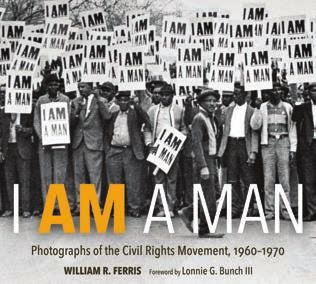
LOU ISIANA / PHOTO GRAPHY / TO URI SM STUD I E S

                                                     New Orleans in Golden Age Postcards
                                                     Matthew Griffis

                                                     New Orleans in Golden Age Postcards showcases over three hundred vintage postcard images of the
               A fascinating tour of                 city, printed in glorious color. From popular tourist attractions, restaurants, and grand hotels to local
                                                     businesses, banks, churches, neighborhoods, civic buildings, and parks, the book not only celebrates
           historic New Orleans as seen
                                                     these cards’ visual beauty but also considers their historic value. After providing an overview of the
            in rare postcards from the               history of postcards in New Orleans, Matthew Griffis expertly arranges and describes the postcards
                                                     by subject or theme. Focusing on the period from 1900 to 1920, the book is the first to offer informa-
              early twentieth century                tion about the cards’ many publishers.
                                                          More than a century ago, people sent postcards like we make phone calls today. Many also
                                                     collected postcards, even trading them in groups or clubs. Adorned with colorized views of urban
                                                     and rural landscapes, postcards offered people a chance to own images of places they lived, visited,
                                                     or merely dreamed of visiting. Today, these relics remain one of the richest visual records of the last
                                                     century as they offer a glimpse at the ways a city represented itself. They now appear regularly in art
                                                     exhibits, blogs, and research collections. Many of the cards in this book have not been widely seen in
                                                     well over a century, and many of the places and traditions they depict have long since vanished.

                                                     Matthew Griffis is associate professor at the University of Southern Mississippi where he teaches in
                                                     the School of Library and Information Science. He has published on the use of postcards in historical
                                                     research and presented on New Orleans postcards at the Louisiana Historical Association’s annual
                                                     conference. Griffis saw New Orleans for the first time in 2011 and has since collected over a thousand
                                                     vintage postcards of the Crescent City.

    October 416 pages (approx.), 9 x 9 inches,
       313 color illustrations
    Cloth $40.00T 978-1-4968-3025-8
    Ebook available

4         WWW.UPRESS.STATE.MS.US / UNIVERSITY PRESS OF MISSISSIPPI
AUTOB IO G R A P H Y / A RT / LOU ISIA NA While growing up in rural Indiana during World War II, William Fagaly
began his first venture—collecting and selling earthworms to locals—from
which he was christened with a childhood moniker. The Nightcrawler King:
The Nightcrawler King Memoirs of an Art Museum Curator is a narrative of Fagaly’s life told in
Memoirs of an Art Museum Curator two parts: first, his childhood experiences and, second, his transformation
into an adult art museum curator and administrator in Louisiana.
William Fagaly With a career that coincided with the dramatic growth of museums in
the United States, Fagaly adds a unique perspective to New Orleans his-
tory, which highlights Louisiana history and establishes how it resonates
around the nation and world. Offering a rare and revealing inside look at
how the art world works, Fagaly documents his fifty years of experience of
work—unusually spent at a single institution, the New Orleans Museum
A moving and fun
of Art. During this past half century, he played an active role in the discov-
account of the man ery and appreciation of new areas of art, particularly African, self-taught,
and avant-garde contemporary. He organized numerous significant art
who influenced fifty exhibitions that traveled to museums across the country and authored the
years of growth at accompanying catalogs.
Fagaly’s cherished memories and the wonderful people who have
the New Orleans touched his life are showcased in this memoir—friends, family, university
professors, museum colleagues, art historians, visual artists, musicians, art
Museum of Art dealers, art collectors, patrons, and partners—even his cats.
William Fagaly is curator emeritus at the New Orleans Museum of Art
where he served for fifty years as curator of African art, contemporary art,
and self-taught art as well as assistant director for over twenty years. He
January 336 pages (approx.), 6.125 x 9.25 organized over ninety exhibitions, most with accompanying catalogs.
inches, 40 color illustrations
Cloth $28.00T 978-1-4968-2981-8
Ebook available
Willie Morris Books in Memoir and
Biography
IVERSIT
UN
Y
5
PRE
CALL 1.800.737.7788 TOLL FREE
SS OF
I M
ISS
ISSIPP
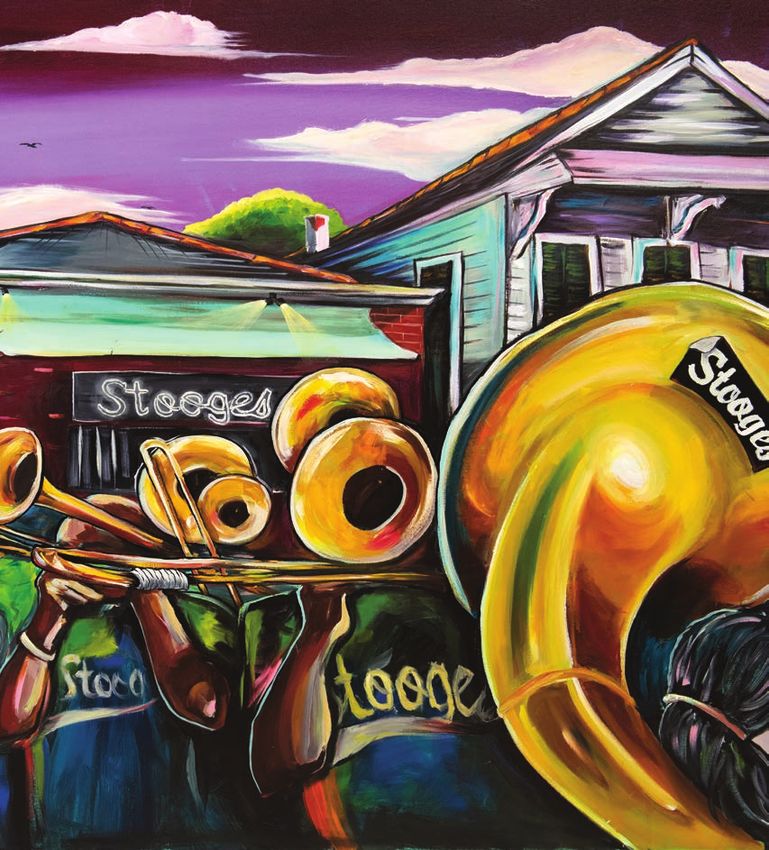
LOUI SI A N A / JA Z Z / B IO G R A PHY The Stooges Brass Band always had big dreams. From playing in the
streets of New Orleans in the mid-1990s to playing stages the world over,
Can’t Be Faded they have held fast to their goal of raising brass band music and musicians
to new heights—professionally and musically. In the intervening years, the
Twenty Years in the New Orleans Brass Band Game band’s members have become family, courted controversy, and trained a
Stooges Brass Band and Kyle DeCoste new generation of musicians, becoming one of the city’s top brass bands
along the way. Two decades after their founding, they have decided to tell
their story.
Can’t Be Faded: Twenty Years in the New Orleans Brass Band Game is a
collaboration between musician and ethnomusicologist Kyle DeCoste and
more than a dozen members of the Stooges Brass Band, past and present.
It is the culmination of five years of interviews, research, and writing. Told
A collaborative with humor and candor, it’s as much a personal account of the Stooges’
blast of history and careers as it is a story of the city’s musicians and, even more generally, a
coming-of-age tale about black men in the United States at the turn of the
inspiration from twenty-first century.
DeCoste and the band members take readers into the barrooms, prac-
top-of-the-line tice rooms, studios, tour vans, and streets where the music is made and
musicians brotherhoods are shaped and strengthened. Comprised of lively firsthand
accounts and honest dialogue, Can’t Be Faded is a dynamic approach to
collaborative research that offers a sensitive portrait of the humans behind
the horns.
September 272 pages (approx.),
The Stooges Brass Band is one of the hardest-working brass bands in
6 x 9 inches, 63 b&w illustrations
New Orleans. Founded in 1996, their discography includes It’s About
Printed casebinding $99.00S
Time (2003), Street Music (2013), and Thursday Night House Party (2016).
978-1-4968-3003-6
Kyle DeCoste is a PhD candidate in ethnomusicology at Columbia Uni-
Paper $25.00T 978-1-4968-3004-3
versity. His articles have appeared in Ethnomusicology and the Journal of
Ebook available
Popular Music Studies.
American Made Music Series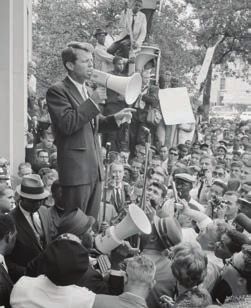
PHOTO GRAPHY / CI VI L RI GHTS / AFRI CAN AME RI CAN STUD I E S
I AM A MAN
Photographs of the Civil Rights Movement, 1960–1970
William R. Ferris
Foreword by Lonnie G. Bunch III
Unforgettable photographs In the American South, the civil rights movement in the 1960s and the struggle to abolish racial
segregation erupted in dramatic scenes at lunch counters, in schools, and in churches. The admission
from flash points of the of James Meredith as the first black student to enroll at the University of Mississippi; the march from
civil rights struggle Selma to Montgomery, Alabama; and the sanitation workers’ strike in Memphis—where Martin
Luther King was assassinated—rank as cardinal events in black Americans’ fight for their civil rights.
The photographs featured in I AM A MAN: Photographs of the Civil Rights Movement, –
bear witness to the courage of protesters who faced unimaginable violence and brutality as well as the
quiet determination of the elderly and the angry commitment of the young. Talented photographers
documented that decade and captured both the bravery of civil rights workers and the violence they
faced. Most notably, this book features the work of Bob Adelman, Dan Budnik, Doris Derby, Roland
Freeman, Danny Lyon, Art Shay, and Ernest Withers. Like the fabled music and tales of the American
South, their photographs document the region’s past, its people, and the places that shaped their lives.
Protesters in these photographs generated the mighty leverage that eventually transformed a
segregated South. The years from 1960 to 1970 unleashed both hope and profound change as deseg-
regation opened public spaces and African Americans secured their rights. The photographs in this
volume reveal, as only great photography can, the pivotal moments that changed history, and yet
remind us how far we have to go.
William R. Ferris is the Joel R. Williamson Eminent Professor of History Emeritus at the University
of North Carolina at Chapel Hill and the senior associate director emeritus of its Center for the
Study of the American South. The former chairman of the National Endowment for the Human-
ities (1997–2001), Ferris has written or edited ten books, created fifteen documentary films, and his
most recent work, Voices of Mississippi, won two Grammy Awards for Best Liner Notes and for Best
Historical Album in 2019. Lonnie G. Bunch III is the fourteenth secretary of the Smithsonian Institu-
tion. Bunch served as curator of history and program manager for the California African American
February 145 pages (approx.), 10 x 10 inches,
Museum in Los Angeles from 1983 to 1989. He is author of A Fool’s Errand: Creating the National
25 color photographs, 113 b&w photographs
Museum of African American History and Culture in the Age of Bush, Obama, and Trump.
Cloth $40.00T 978-1-4968-3162-0
Ebook available Photograph credits: top right, © Don Sturkey; top left, by Warren Leffler and courtesy of Wikimedia; lower left,
courtesy of the Mississippi Department of Archives and History
6 WWW.UPRESS.STATE.MS.US / UNIVERSITY PRESS OF MISSISSIPPI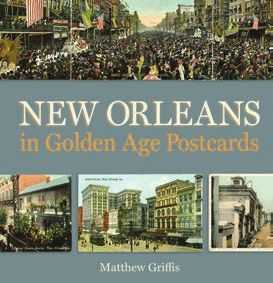
BI O G R A P H Y / P O L IT IC S / A M ER ICA N HISTORY Congressman Emanuel Celler (1888–1981) was a New York City congress-
man who served in the United States House of Representatives from 1923
to 1973. Celler’s almost fifty-year career was highlighted by his long fight
Emanuel Celler to eliminate national origin quotas as a basis for immigration restrictions
Immigration and Civil Rights Champion and his battles for civil rights legislation. In Emanuel Celler: Immigration
and Civil Rights Champion, author Wayne Dawkins introduces new read-
Wayne Dawkins ers to a figure integral to our contemporary political system.
Celler’s own immigrant background framed his lifelong opposition to
immigration restrictions and his corresponding support for reducing bar-
riers for immigrant entry into the United States. After decades of struggle,
he proposed and steered through the House the Hart-Celler Act of 1965,
which eliminated national origins as a consideration for immigration,
The first full-length
profoundly shaping modern America.
biography of one of Celler was also a consistent advocate for civil rights. As chairman of
the House Judiciary Committee from 1949 to 1973 (except for a break from
the longest-serving 1953 to 1955), Celler was involved in drafting and passing the Civil Rights
and most productive Act of 1964, the Voting Rights Act of 1965, and the Civil Rights Act of 1968.
During his career he was also deeply involved in landmark antitrust leg-
American politicians islation, the establishment of US ties with the state of Israel, and the Gun
Control Act of 1968, and was the author of three constitutional amend-
ments, including the 25th that established presidential succession.
Dawkins profiles a complex politician who shaped the central tenets
of Democratic Party liberalism for much of the twentieth century and
whose work remains central to the nation, and our political debates, today.
October 240 pages (approx.), Wayne Dawkins is associate professor at Morgan State University in
6 x 9 inches, 18 b&w illustrations Baltimore, Maryland. A former newspaper reporter and editor, he is
Printed casebinding $99.00S author of Rugged Waters: Black Journalists Swim the Mainstream and Black
978-1-4968-0535-5 Journalists: The National Association of Black Journalists Story, as well as
Paper $25.00T 978-1-4968-2987-0 a contributor to Black Voices in Commentary: The Trotter Group and My
Ebook available First Year as a Journalist.
IVERSIT
UN
Y
7
PRE
CALL 1.800.737.7788 TOLL FREE
SS OF
I M
ISS
ISSIPP
AF R I CA N A M E R ICA N ST U DIES / BIOGR A PHY / CIV IL R IGHTS “Wayne Dawkins devoted seven years to crafting a biography of Cooper,
a former beer company employee whom he has called mentor. Dawkins
City Son documents the explosive times that helped forge a shift in the political
landscape that reached well beyond the borders of Brooklyn, NY.”
Andrew W. Cooper’s Impact on Modern-Day Brooklyn —Dailypress.com
Wayne Dawkins
“Throughout the newspaper’s abbreviated run of 1984–1996, Cooper,
named Journalist of the Year by the NABJ in 1987, kept his finger on the
pulse of the city, culturally and politically, and on the world stage. Some of
the writing talents on its staff are notable for their contributions else-
where: Utrice C. Leid, Armond White, Hugh Hamilton, Errol Louis, Peter
The story of an Noel, Anthony Carter Paige, and Simone Joye. . . . As a project started
in 2005 upon request by Cooper’s widow, Dawkins gives the reader an
unforgettable African intimate, candid look at this remarkable man and his dedicated personal
American journalist mission to speak truth at all costs. It’s a first-class effort, revelatory, coura-
geous, and satisfying.”
and his impact on —African American Literary Book Club
New York City “In City Son, author Wayne Dawkins showcases fresh voices within the
and America black Brooklyn community who helped deliver the 1965 mayoral election
to John V. Lindsay.”
—Milton Mollen, Lindsay associate, retired judge, and leader of the
NEW IN PAPERBACK 1992–94 Mollen commission investigation of police corruption
October 364 pages, 6 x 9 inches, Wayne Dawkins is associate professor at Morgan State University in
16 b&w illustrations Baltimore, Maryland. A former newspaper reporter and editor, he is
Paper $25.00T 978-1-4968-3075-3 author of Rugged Waters: Black Journalists Swim the Mainstream and Black
Ebook available Journalists: The National Association of Black Journalists Story, as well as
Margaret Walker Alexander Series in a contributor to Black Voices in Commentary: The Trotter Group and My
African American Studies First Year as a Journalist.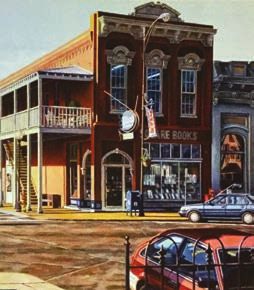
ART / M ISS ISS IP P I / B IO GR A PHY Fontainebleau Beach—Wednesday
[March or April, 1959]
The Horn Island Logs of “I left Ocean Springs on Tuesday at about half past five. I’ve had a musical
Walter Inglis Anderson accompaniment of red wings almost ever since. I heard them in the marsh
coming down to the boat, then again at Leavell’s. Then when I had passed
Edited and with an Introduction by Redding S. Sugg Jr. the marsh, beyond the red caboose, the first tree—bursting into flower—
was full of them, singing and I suppose gorging on the oak flowers.”
Walter Inglis Anderson will astonish you and give you a fresh view of the
natural world. Heralded as a major American watercolorist, this reclusive
Mississippi artist made periodic sojourns to an undisturbed barrier island
Now back in in the Gulf of Mexico where he observed and experienced the mysteries
print, a revelation of nature.
In this volume Anderson’s visionary drawings and watercolors of
of the art and plants and wildlife enhance his narrative of his solitary time on Horn
mind of a unique Island. From his reflections made over a period of twenty years, one
discovers the secrets of a fragile and changing ecology and marvels at
artist alone in the Anderson’s exotic vision.
Available again after great demand, The Horn Island Logs of Walter
world of nature Inglis Anderson reveals the art and the mind of a unique artist alone and
lost in the world of nature.
Redding S. Sugg Jr. (1922–2007) wrote A Painter’s Psalm, a book about
Walter Anderson’s secret room in which he painted murals celebrating the
natural world, a superlative collection of art that was unknown until after
Anderson’s death. Sugg also edited Walter Anderson’s Illustrations of Epic
and Voyage, published by the University Press of Mississippi.
October 240 pages, 9.625 x 9 inches
Cloth $50.00T 978-1-4968-3202-3
IVERSIT
UN
Y
8
PRE
WWW.UPRESS.STATE.MS.US
SS OF
I M
ISS
ISSIPP
T RUE CR IM E / B IO G R A P H Y / SOU THER N CU LTU R E “Absolutely loving your beautifully written book. Wonderful stuff . . . it’s a
damn masterpiece!”
Crooked Snake —Richard Grant, author of Dispatches from Pluto
The Life and Crimes of Albert Lepard “If you enjoyed Cool Hand Luke and O Brother, Where Art Thou? then
Lovejoy Boteler you are primed to appreciate Lovejoy Boteler’s Crooked Snake. A sharp,
unsentimental book.”
—Allen Boyer, author of Rocky Boyer’s War: An Unvarnished History of the
Air Blitz that Won the War in the Southwest Pacific
“A low-down, true Mississippi crime story, populated with prison yards, dusty
Delta back roads, country churches, hot-wired trucks, and bloodhounds.”
The true story of a —Jim Dees, author of The Statue and the Fury
kidnapper’s calamitous
“A vivid and memorable book—I was riveted. . . . Boteler has a gift for
criminal life as told by evoking a scene through well-chosen details and dialogue.”
—Peter Tonguette, film critic and editor of Peter Bogdanovich: Interviews
the man he abducted
“In poignant yet captivating style, Lovejoy chronicles his harrowing ordeal
on that sweltering afternoon with exquisite detail. Crooked Snake—this
gripping account of Lovejoy Boteler’s kidnapping and his years-long quest
to learn more about his captors—is absolutely riveting.”
—William F. Winter, former governor of Mississippi
Lovejoy Boteler spent his early years on Riverdale Farms in Grenada
NEW IN PAPERBACK County. He received a bachelor of science degree in music from Delta
State University. He worked for the Mississippi legislature, as a deckhand
September 225 pages, 5.5 x 8.5 inches,
on the Mississippi River, and in a rodeo in Colorado. Boteler has also
16 b&w illustrations
taught construction technology and instrumental music in public schools.
Paper $18.00T 978-1-4968-3072-2
He builds custom furniture.
Ebook availableME MO I R / MU S IC / A F R ICA N A M ER ICA N STU DIES
Association of Recorded Sound Collections
The Amazing Jimmi Mayes Awards for Excellence
Sideman to the Stars Best Research in Recorded Blues, Hip-Hop,
Rhythm & Blues—Certificate of Merit (2014)
Jimmi Mayes with V. C. Speek
“As you read this book, it is easy to envision the story of Jimmi Mayes
being retold on the big screen. All the elements are there for a movie pro-
duction—the lure of bright lights, compelling music, sex, drugs, and plenty
The unforgettable life of star power. At the end, you wish that Mayes had been more forthcoming
story of one amazing with his tales so that the book stretched out for another hundred pages.
This fascinating saga makes it clear that Mayes was indeed a sideman to
musician touring and the stars. Definitely recommended!”
—Mark Thompson, Blues Blast Magazine
playing with Jimi
Hendrix, Jimmy Reed, “[H]is story is that of a man who has spent most of his life celebrating—
music, friendship, good times—and that’s the tone that permeates his
Marvin Gaye, and book. He sometimes still seems almost awestruck at the breaks he’s gotten,
the opportunities he’s had, and the people he’s known and worked with.
many more Mostly, though, he radiates a deep, hard-won contentment.”
—David Whiteis, Living Blues
NEW IN PAPERBACK
Jimmi Mayes learned his trade as a teenager in the juke joints around
September 209 pages, 6 x 9 inches,
Jackson, Mississippi. He went on to perform with many well-known artists,
36 b&w illustrations
including Little Walter Jacobs, Marvin Gaye, and Martha Reeves and the Van-
Paper $25.00S 978-1-4968-3071-5
dellas. V. C. Speek is author of “God Has Made Us a Kingdom”: James Strang
Ebook available
and the Midwest Mormons. She is a former newspaper reporter and currently
American Made Music Series
works as editor of John Whitmer Books in Independence, Missouri.
IVERSIT
UN
Y
9
PRE
CALL 1.800.737.7788 TOLL FREE
SS OF
I M
ISS
ISSIPP
BI O G R A P H Y / M ISS ISS IP PI / POLITICS “James Eastland was one of the most influential and enigmatic figures in
twentieth-century southern politics. Lee Annis’s deeply researched book
Big Jim Eastland sheds important light not only on Eastland himself but also on the history
of civil rights conflict, Cold War politics, and the US Senate.”
The Godfather of Mississippi —Joseph Crespino, Jimmy Carter Professor of American History at Emory
J. Lee Annis Jr. University and author of Strom Thurmond’s America
“A complex, southern statesman with a reputation as a blunt dealmaker,
Jim Eastland’s larger-than-life persona is masterfully captured in this
comprehensive biography by Lee Annis. Filled with intimate quotes and
stories, this book is a vivid exploration of Eastland’s legacy, from which
there is much to be learned.”
The biography of a —William H. Frist, MD, former Tennessee senator
powerful Mississippi
“Big Jim Eastland is a must-read for those interested in the history of
senator rife with civil rights and Congress through the career of a one-time segregationist
senator. As Judiciary Committee chairman and Senate pro tem, Eastland
contradictions knew power and how to work both sides to get it. Known not only for
his ever-present Havana cigar, he was a listener who valued loyalty and
maintained close relationships with LBJ and Nixon. Lee Annis’s research
and writing make this book a compelling and enjoyable journey.”
—Connie Morella, former Maryland congresswoman and US ambassador
J. Lee Annis Jr. has taught history at Montgomery College for the past
NEW IN PAPERBACK thirty years, and he is currently chairman of the History and Political
Science Department at the Rockville campus. He is author of Howard
January 438 pages, 6 x 9 inches,
Baker: Conciliator in an Age of Crisis, and, with Senator William H. Frist,
19 b&w illustrations
coauthor of Tennessee Senators, –: Portraits of Leadership in a
Paper $28.00T 978-1-4968-3084-5
Century of Change.
Ebook availableF I L M ST U D IES / B IO G R A PHY / POPU LA R CU LTU R E José Ferrer (1912–1992) became the first Puerto Rican actor to win the Best
Actor Academy Award for the 1950 film version of Cyrano de Bergerac. His
portrayal of the lovelorn poet/swordsman had already won him the Tony
José Ferrer in 1947, and he would be identified with Cyrano for the rest of his life. Fer-
Success and Survival rer was a theatrical dynamo; in 1952 he directed Stalag , The Fourposter,
and The Shrike (which he starred in) on Broadway, while New York City
Mike Peros movie marquees were heralding his appearance in Anything Can Happen.
At his apex in the 1950s, Ferrer capitalized on his Oscar with such
triumphs as Moulin Rouge and The Caine Mutiny. He soon became a force
behind the camera, acting and directing such critically well-received films
as The Shrike and The Great Man. Yet in the late 1950s, such ambitious the-
atrical productions as Edwin Booth and Juno were critical and commercial
The first major
flops, and film studios lost their patience. By the mid-1960s, Ferrer took
biography of the whatever roles he could get.
He led a turbulent personal life. His first marriage to actress Uta
Puerto Rican director Hagen ended in divorce and scandal. His personal and professional rela-
and Tony- and tionship with Paul Robeson landed Ferrer before the House Un-American
Activities Committee. Ferrer’s marriage to actress/dancer Phyllis Hill was
Oscar-winning actor marred by his infidelity, while initial wedded bliss with singer Rosemary
Clooney soon eroded. In spite of everything, Ferrer endured and worked
practically right up to his death. Proud of his Puerto Rican heritage, he
donated his Oscar to the University of Puerto Rico and championed the
work of Latino writers. He continuously evolved, stretching his talents.
Ferrer’s life is an American success story and a testament to reinvention
and resilience.
September 320 pages (approx.), 6 x 9 Mike Peros chairs the English Department at Bishop Loughlin High
inches, 31 b&w illustrations School in Brooklyn, New York. He is author of Dan Duryea: Heel with a
Cloth $35.00T 978-1-4968-1662-7 Heart, published by University Press of Mississippi, and also reviews films
Ebook available for NoHoartsdistrict.com.
Hollywood Legends Series
IVERSIT
UN
Y
10
PRE
WWW.UPRESS.STATE.MS.US
SS OF
I M
ISS
ISSIPP
BI O G R A P H Y / F IL M ST U DIES / POPU LA R CU LTU R E “Peros focuses mainly on Duryea’s artistic output, moving the reader through
each credit from the actor’s Hollywood debut, The Little Foxes, through his
Dan Duryea final major role, on the prime-time soap Peyton Place. Peros writes with the
informal enthusiasm of a fan, gifting the reader an exhaustive review of the
Heel with a Heart complete works of Duryea—including true Hollywood classics (Ball of Fire,
Mike Peros The Pride of the Yankees), forgotten flops (Chicago Calling), and guest spots on
early television shows (December Bride, Wagon Train).”
—Publishers Weekly
“Mr. Peros fills the pages of Dan Duryea: Heel with a Heart with detailed
synopses of his subject’s more than sixty films and several dozen television
appearances—a yeoman’s chronicle that brings welcome attention to some
The biography of lesser-known Duryea items (such as the recently restored 1949 noir Too
a devoted family Late for Tears).”
—Tom Nolan, Wall Street Journal
man best known
“If you’re looking for a guided chronological tour of Duryea’s career from
for his roles as the moment of his onstage breakthrough . . . complete with a comprehensive
abusive villains overview of his television work, this is an awfully handy piece of work.”
—Nick Pinkerton, Film Comment
“Mike Peros’s Dan Duryea: Heel with a Heart is an extensively researched
career biography of the talented and memorable actor who has, until now,
NEW IN PAPERBACK received only minimal critical attention. The book clearly represents a
labor of love for its author. . . . It provides useful dates and background
September 255 pages, 6 x 9 inches, 65 information for Duryea’s many roles and charts a clear career trajectory.”
b&w illustrations —William Luhr, author of Film Noir
Paper $25.00T 978-1-4968-3073-9
Ebook available
Mike Peros chairs the English Department at Bishop Loughlin High
Hollywood Legends Series
School. He is author of José Ferrer: Success and Survival, published by Uni-
versity Press of Mississippi. He also reviews films for NoHoartsdistrict.com.BI O G R A P H Y / F IL M ST U DIES Best known as the woman who “ran MGM,” Ida R. Koverman (1876–1954)
served as talent scout, mentor, executive secretary, and confidant to Amer-
ican movie mogul Louis B. Mayer for twenty-five years. She Damn Near
She Damn Near Ran the Studio Ran the Studio: The Extraordinary Lives of Ida R. Koverman is the first full
The Extraordinary Lives of Ida R. Koverman account of Koverman’s life and the true story of how she became a formi-
dable politico and a creative powerhouse during Hollywood’s Golden Era.
Jacqueline R. Braitman For nearly a century, Koverman’s legacy has largely rested on a myth-
ical narrative while her more fascinating true-life story has remained an
enduring mystery—until now. This story begins with Koverman’s early
years in Ohio and the sensational national scandal that forced her escape
to New York where she created a new identity and became a leader among
a community of women. Her second incarnation came in California where
The first biography
she established herself as a hardcore political operative challenging the
of Hollywood’s state’s progressive impulse. As “the political boss of Los Angeles County,”
she was the premiere matchmaker in the courtship between Hollywood
political and national partisan politics, which, as Mayer’s executive secretary,
matchmaker, was epitomized by her third incarnation as “one of the most formidable
women in Hollywood.”
kingmaker, Free to adapt her managerial skills and political know-how on behalf
of the studio, she quickly drew upon her artistic sensibilities as a talent
and MGM’s scout, expanding MGM’s catalog of stars and her own influence on Amer-
movie star maker ican popular culture. Recognized as “one of the invisible power centers in
both MGM and the city of Los Angeles,” she nurtured the city’s burgeon-
ing performing arts by fostering music and musicians and the public
financing of them. As the “lioness” of MGM royalty, Ida Koverman was not
just a naturalized citizen of the Hollywood kingdom; at times during her
November 352 pages (approx.), 6 x 9 long reign, she “damn near ran the studio.”
inches, 17 b&w illustrations
Cloth $35.00T 978-1-4968-0619-2 Jacqueline R. Braitman is a historian of American history who special-
Ebook available izes in California women and politics. She is coauthor of Justice Stanley
Hollywood Legends Series Mosk: Life at the Center of California Politics and Justice.
IVERSIT
UN
Y
11
PRE
CALL 1.800.737.7788 TOLL FREE
SS OF
I M
ISS
ISSIPP
F I L M ST U D IES / A M ER ICAN HISTORY In September 1941, a handful of isolationist senators set out to tarnish
Hollywood for warmongering. The United States was largely divided on
Hollywood Hates Hitler! the possibility of entering the European War, yet the immigrant moguls in
Hollywood were acutely aware of the conditions in Europe. After Kristall-
Jew-Baiting, Anti-Nazism, and the Senate Investigation nacht (the Night of Broken Glass), the gloves came off. Warner Bros.
into Warmongering in Motion Pictures released the first directly anti-Nazi film in 1939 with Confessions of a Nazi
Spy. Other studios followed with such films as The Mortal Storm (MGM),
Chris Yogerst Man Hunt (Fox), The Man I Married (Fox), and The Great Dictator (United
Artists). While these films represented a small percentage of Hollywood’s
output, senators took aim at the Jews in Hollywood who were supposedly
“agitating us for war” and launched an investigation. Studio bosses were
ready and willing to stand up against the government to defend their
The first beloved industry. What followed was a complete embarrassment of the
book-length study United States Senate and a large victory for Hollywood as well as freedom
of speech.
of the investigation Many works of American film history only skim the surface of the
1941 investigation of Hollywood. In Hollywood Hates Hitler! Jew-Baiting,
into Hollywood’s Anti-Nazism, and the Senate Investigation into Warmongering in Motion
anti-Nazi films Pictures, author Chris Yogerst examines the years leading up to and
through the Senate Investigation into Motion Picture War Propaganda,
detailing the isolationist senators’ relationship with the America First
movement. Through his use of primary documents and lengthy congres-
sional records, Yogerst paints a picture of the investigation’s daily events
both on Capitol Hill and in the national press.
September 208 pages (approx.),
6 x 9 inches, 22 b&w illustrations
Chris Yogerst is assistant professor of communication in the Department
Printed casebinding $99.00S
of Arts and Humanities at the University of Wisconsin–Milwaukee. He is
978-1-4968-2975-7
author of From the Headlines to Hollywood: The Birth and Boom of Warner
Paper $25.00S 978-1-4968-2976-4
Bros. His work has appeared in such publications as the Washington Post,
Ebook available
Los Angeles Review of Books, Journal of American Culture, and Historical
Journal of Film, Radio, and Television.F I L M ST U D IES / B IO G R A PHY In the late 1950s, Mike Nichols (1931–2014) and Elaine May (b. 1932) soared
to superstar status as a sketch comedy duo in live shows and television.
After their 1962 breakup, both went on to long and distinguished careers
Nichols and May in other areas of show business—mostly separately, but sporadically
Interviews together again.
In Nichols and May: Interviews, twenty-seven interviews and profiles
Edited by Robert E. Kapsis ranging over more than five decades tell their stories in their own words.
“We found the same Nichols quickly became an A-list stage and film director, while May, like
things funny; we were many women in her field, often found herself thwarted in her attempts to
make her distinctive voice heard in projects she could control herself. Yet,
both mean and Method. in recent years, Nichols’s work as a filmmaker has been perhaps unfairly
devalued, while May’s accomplishments, particularly as a screenwriter and
So that was the strength. director, have become more appreciated, leading to her present widespread
Also, I found him acceptance as a groundbreaking female artist and a creative genius of and
for our time.
hilarious.” Nichols gave numerous interviews during his career, and editor Robert
E. Kapsis culled hundreds of potential selections to include in this volume
—May the most revealing and those that focus on his filmmaking career. May,
however, was a reluctant interview subject at best. She often subverted the
whole interview process, producing instead a hilarious parody or even a
“I found her hilarious.” comedy sketch—with or without the cooperation of the sometimes-obliv-
ious interviewer. With its contrasting selection of interviews conventional
—Nichols and oddball, this volume is an important contribution to the study of the
careers of Nichols and May.
October 336 pages (approx.),
6 x 9 inches Robert E. Kapsis is professor emeritus of sociology and film studies at
Printed casebinding $99.00S Queens College and the Graduate Center of the City University of New
978-1-4968-2833-0 York. He is author of Hitchcock: The Making of a Reputation and editor of
Paper $25.00T 978-1-4968-3104-0 several volumes in the Conversations with Filmmakers Series.
Ebook available
Conversations with Filmmakers Series
IVERSIT
UN
Y
12
PRE
WWW.UPRESS.STATE.MS.US
SS OF
I M
ISS
ISSIPP
F I L M ST U D IES / H ISTO RY
In recent years, Hollywood cinema has forwarded a growing number of
Cold War II images of the Cold War and entertained a return to memories of conflicts
between the USSR and the US, Russians and Americans, and communism
Hollywood’s Renewed Obsession with Russia and capitalism. Cold War II: Hollywood’s Renewed Obsession with Russia
explores the reasons for this sudden renewed interest in the Cold War.
Edited by Tatiana Prorokova-Konrad
Essayists examine such films as Guy Ritchie’s The Man from U.N.C.L.E.,
Contributions by Thomas J. Cobb, Donna A. Gessell, Helena Goscilo, Cyndy Steven Spielberg’s Bridge of Spies, Ethan Coen and Joel Coen’s Hail,
Hendershot, Christian Jimenez, David LaRocca, Lori Maguire, Tatiana Prorokova- Caesar!, David Leitch’s Atomic Blonde, Guillermo del Toro’s The Shape of
Konrad, Ian Scott, Vesta Silva, Lucian Tion, Dan Ward, and Jon Wiebel Water, Ryan Coogler’s Black Panther, and Francis Lawrence’s Red Sparrow,
among others, as well as such television shows as Comrade Detective and
The Americans.
Essays that critique Contributors to this collection interrogate the revival of the Cold War
movie genre from multiple angles and examine the issues of patriotism,
America’s superiority
national identity, otherness, gender, and corruption. They consider cine-
complex and movies and matic aesthetics and the ethics of these representations. They reveal how
Cold War imagery shapes audiences’ understanding of the period in gen-
TV shows that reignite eral and of the relationship between the US and Russia in particular. The
the Cold War authors complicate traditional definitions of the Cold War film and invite
readers to discover a new phase in the Cold War movie genre: Cold War II.
Tatiana Prorokova-Konrad is postdoctoral researcher at the Depart-
ment of English and American Studies at the University of Vienna. She is
author of Docu-Fictions of War: US Interventionism in Film and Literature
December 272 pages (approx.),
and coeditor of Cultures of War in Graphic Novels: Violence, Trauma, and
6 x 9 inches
Memory.
Printed casebinding $99.00S
978-1-4968-3109-5
Paper $30.00S 978-1-4968-3110-1
Ebook availableF I L M ST U D IES / B IO G R A PHY Beginning with her critically acclaimed independent feature film Eve’s
Bayou (1997), writer-director Kasi Lemmons’s mission has been to push
the boundaries that exist in Hollywood. With Eve’s Bayou, her first feature
Kasi Lemmons film, Lemmons (b. 1961) accomplished the rare feat of creating a film that
Interviews was critically successful and one of the highest-grossing independent films
of the year. Moreover, the cultural impact of Eve’s Bayou endures, and in
Edited by Christina N. Baker 2018 the film was added to the Library of Congress’s National Film Regis-
try as a culturally, historically, or aesthetically significant film. Lemmons’s
directing credits also include The Caveman’s Valentine, Talk to Me, Black
Nativity, and, most recently, Harriet, making Lemmons one of the most
prolific and long-standing women directors in Hollywood.
As a black woman filmmaker and a self-proclaimed black feminist, Lem-
“At a certain point I
mons breaks the mold of what is expected of a filmmaker in Hollywood. She
realized—and it became began her career in Hollywood as an actor, with roles in numerous television
series and high-profile films, including Spike Lee’s School Daze and Jonathan
my mission because it Demme’s Academy Award–winning The Silence of the Lambs.
was also just inherently This volume collects fifteen interviews that illuminate Lemmons’s
distinctive ability to challenge social expectations through film and actu-
true—that all of my art alize stories that broaden expectations of cinematic black femaleness and
maleness. The interviews reveal Lemmons’s passion to create art through
is protest art.” film, intimately linked to her mission to protest culturally and structurally
imposed limitations and push the boundaries imposed by Hollywood.
Christina N. Baker is associate professor of American multicultural
January 128 pages (approx.), studies at Sonoma State University. She is author of Contemporary Black
6 x 9 inches Women Filmmakers and the Art of Resistance, the first book-length anal-
Printed casebinding $99.00S ysis of representations of black femaleness in the feature films of black
978-1-4968-3168-2 women filmmakers. Her work has been published in such journals as Sex
Paper $25.00T 978-1-4968-3169-9 Roles: A Journal of Research; Social Psychology of Education; Journal of
Ebook available College Student Development; the Urban Review: Issues and Ideas in Public
Conversations with Filmmakers Series Education; and Women, Gender, and Families of Color.
IVERSIT
UN
Y
13
PRE
CALL 1.800.737.7788 TOLL FREE
SS OF
I M
ISS
ISSIPP
F I L M ST U D IES / B IO G R A PHY “It is the sort of historical document which will get more valuable over the
years, and we should all be grateful to John C. Tibbetts.”
Peter Weir —Kevin Brownlow
Interviews Peter Weir: Interviews is the first volume of interviews to be published
on the esteemed Australian director. Although Peter Weir (b. 1944) has
Edited by John C. Tibbetts acquired a reputation of being guarded about his life and work, these
Foreword by David Thomson
interviews by archivists, journalists, historians, and colleagues reveal him
to be a most amiable and forthcoming subject. He is encouraged, even
“And suddenly, I knew provoked, to tell his own story from his childhood in a Sydney suburb in
this was somehow the 1950s to his apprenticeship in the Australian television industry in the
1960s, his preparations to shoot his first features in the early 1970s, and
meaningful to me in his international celebrity in Australia and Hollywood. An extensive new
interview details his current plans for a new film.
my own life as a film
The eighteen interviews collected in the volume discuss Weir’s diverse
director. Just to be and impressive range of work—his earlier films Picnic at Hanging Rock,
The Last Wave, Gallipoli, and The Year of Living Dangerously, as well as
content with the craft Academy Award–nominated Witness, Dead Poets Society, Green Card, The
and let the art take Truman Show, and Master and Commander. This book confirms that the
trajectory of Weir’s life and work parallels and embodies Australia’s own
care of itself.” quest to define and express a historical and cultural identity.
John C. Tibbetts is associate professor of film and media studies at the
University of Kansas. His books include The Gothic Imagination: Conver-
sations on Fantasy, Horror, and Science Fiction in the Media; Composers in
NEW IN PAPERBACK the Movies: Studies in Musical Biography; Schumann: A Chorus of Voices;
the three-volume American Classic Screen; and (with James M. Welsh)
February 303 pages, 6 x 9 inches
Douglas Fairbanks and the American Century, published by University
Paper $25.00T 978-1-4968-3086-9
Press of Mississippi.
Ebook available
Conversations with Filmmakers SeriesF I L M ST U D IES / H O R RO R / POPU LA R CU LTU R E Sean S. Cunningham and Victor Miller’s Friday the th franchise is one of
the most successful horror film franchises in history. To date, it includes
twelve movies, a television show, comic books, and video games, among
SEE! HEAR! CUT! KILL! other media. In SEE! HEAR! CUT! KILL! Experiencing “Friday the th,”
Experiencing Friday the 13th Wickham Clayton explores several aspects of the films including how the
technical aspects relate to the audience, their influence on filmmaking,
Wickham Clayton and the cultural impact of the franchise.
Clayton looks at how perspective is established and communicated
within the Friday the th films, which is central to the way the audience
experiences and responds emotionally to these movies. Then he considers
how each sequel gives viewers, whether longtime fans or new audiences,
a “way in” to the continuous story that runs through the series. Clayton
The first-ever
also argues that the series has not developed in isolation. These films relate
book devoted to to contemporary slasher films, the modern horror genre, and critically
successful Hollywood films in general. They reflect popular trends of film
close analysis style and often act as key examples in the genre and beyond.
of the modern, Wickham Clayton is a lecturer in film production at the University for the
multimillion-dollar Creative Arts in Farnham, United Kingdom. He is coeditor of Screening
Twilight: Critical Approaches to a Cinematic Phenomenon and editor of
cult classic franchise Style and Form in the Hollywood Slasher Film and The Bible Onscreen in
the New Millennium: New Heart and New Spirit.
October 256 pages (approx.),
6 x 9 inches, 64 b&w illustrations
Printed casebinding $99.00S
978-1-4968-3031-9
Paper $30.00S 978-1-4968-3032-6
Ebook available
IVERSIT
UN
Y
14
PRE
WWW.UPRESS.STATE.MS.US
SS OF
I M
ISS
ISSIPP
P OP UL A R C U LT U R E / GENDER STU DIES / FILM STU DIES The superhero permeates popular culture from comic books to film and
television to internet memes, merchandise, and street art. Toxic Mascu-
Toxic Masculinity linity: Mapping the Monstrous in Our Heroes asks what kind of men these
heroes are and if they are worthy of the unbalanced amount of attention.
Mapping the Monstrous in Our Heroes Contributors to the volume investigate how the (super)hero in popular
Edited by Esther De Dauw and Daniel J. Connell culture conveys messages about heroism and masculinity, considering the
social implications of this narrative within a cultural (re)production of
Contributions by Daniel J. Connell, Esther De Dauw, Craig Haslop, Drew dominant, hegemonic values and the possibility of subaltern ideas, norms,
Murphy, Richard Reynolds, Janne Salminen, Karen Sugrue, and James C. and values to be imagined within that (re)production.
Taylor Divided into three sections, the volume takes an interdisciplinary
approach, positioning the impact of hypermasculinity on toxic masculin-
ity and the vilification of “other” identities through such mediums as film,
An exciting TV, and print comic book literature. The first part, “Understanding Super
exploration of Men,” analyzes hegemonic masculinity and the spectrum of hypermas-
culinity through comics, television, and film, while the second part, “The
the impact of Monstrous Other,” focuses on queer identity and femininity in these same
mediums. The final section, “Strategies of Resistance,” offers criticism
hypermasculinity and solutions to the existing lack of diversity through targeted studies on
on the creation the performance of gender. Ultimately, the volume identifies the ways in
which superhero narratives have promulgated and glorified toxic mascu-
of the modern linity and offers alternative strategies to consider how characters can resist
the hegemonic model and productively demonstrate new masculinities.
superhero
Esther De Dauw is a comics scholar who focuses on the intersection
September 176 pages (approx.),
of gender and race. Awarded her PhD by the University of Leicester
6 x 9 inches, 19 b&w illustrations
in 2018, she teaches and provides student support at the University of
Printed casebinding $99.00S
Leicester. Her work has been featured in the Journal of Graphic Novels.
978-1-4968-2893-4
Daniel J. Connell is an independent researcher whose work focuses
Paper $30.00S 978-1-4968-2894-1
on deconstructing hypermasculinity in various mediums. His PhD,
Ebook available
awarded by Brunel University in 2011, focuses on the hypermasculine
phenomenon in the fledgling comic book literary fiction genre.You can also read


