MCMUN 2021 DELEGATE HANDBOOK
←
→
Page content transcription
If your browser does not render page correctly, please read the page content below

McMUN 2021
     DELEGATE
    HANDBOOK

1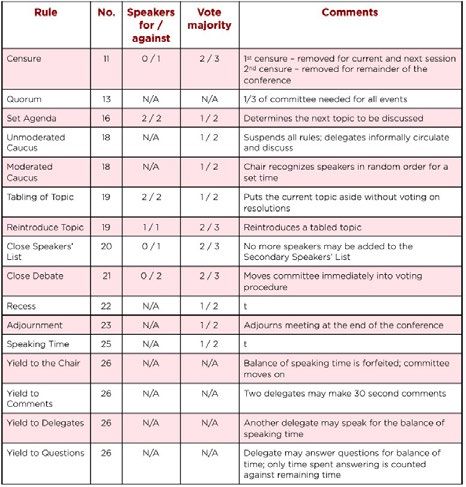
TABLE OF
                           CONTENTS
    Welcome to McMUN 2021                                                                3
      Letter from the McMUN 2021 Secretary-General -----------------------               3
      Letter from the International Civil Aviation
      Organisation (ICAO) Secretary General ---------------------------------            4
      Letter from the President and Chief Executive Officer of the
      International Relations Students’ Association of McGill (IRSAM) ----               6

    Introductions                                                                  7
       The Conference Charities -------------------------------------------------- 7
       The International Civil Aviation Organization (ICAO) ------------------ 8

    During the Conference                                                                9
      Schedule ---------------------------------------------------------------------     9
      Conference Administration ------------------------------------------------         10
      Conference Code of Conduct ---------------------------------------------           10
      Award Policy ----------------------------------------------------------------      10
      The McMUN 2021 Secretariat ---------------------------------------------           12
      Attending Delegations -----------------------------------------------------        13

    MUN Essential Tools                                                            14
      Quick Reference Guide to the Rules of Procedure --------------------- 14
      Guide to Resolution Writing ----------------------------------------------- 16
      Simple Draft Resolution --------------------------------------------------- 17
      Flow of Debate ------------------------------------------------------------- 18
      The Rules of Procedure ---------------------------------------------------- 19

    Links                                                                                38
       Zoom Links ------------------------------------------------------------------     38
       Slack Links -------------------------------------------------------------------   38
       Feedback Sessions ---------------------------------------------------------       41

    Acknowledgements                                                             43
      Thank you to our Sponsors! ----------------------------------------------- 43

    Schedule                                                                        44
      Bloc Schedules -------------------------------------------------------------- 45

2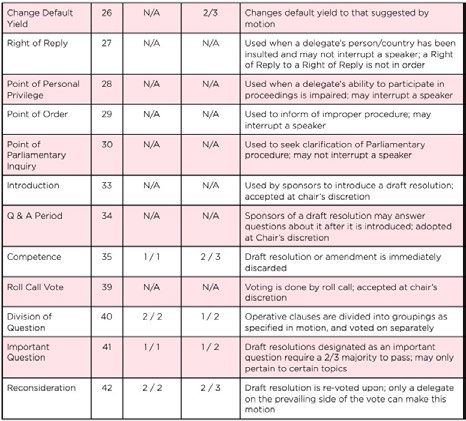
LETTER FROM THE MCMUN
                 2021 SECRETARY GENERAL

    Dear Delegates and Faculty Advisors,

    On behalf of the entire Secretariat and conference staff, it is my distinct honour and
    pleasure to welcome you to the 32nd iteration—and the 1st virtual edition—of the McGill
    Model United Nations Assembly! As Canada’s premiere Model United Nations conference,
    McMUN continuously strives to create an environment to challenge, innovate, and
    empower. After months of hard work from our Secretariat, Coordinators, and Staff, we
    are excited and proud to welcome over 600 delegates to the first online edition of the
    conference.

    I am delighted to announce that the Committee experience at McMUN 2021 will be nothing
    short of excellent. In our General Assembly portfolio, we will offer three committees
    centered on the Sustainable Development Goals of Gender Equality; Industries, Innovation,
    and Infrastructure; and Peace, Justice, and Strong Institutions. In our Specialized Agencies
    portfolio, delegates will participate in an exciting new Second Royal Commission on the
    Future of Healthcare in Canada. In our Crisis portfolio, delegates will enjoy In The Times
    of Harvey Milk: The San Francisco Board of Supervisors committee to hone their skills in
    a Board of Directors setting. No matter the committee, we are prepared to provide the
    perfect mix of rigour and innovation our conference is known for.

    We at McMUN believe a stellar conference experience does not end with committees.
    This is why we are continuing to offer our out-of-committee programming virtually,
    with an exciting new addition. On Thursday afternoon, delegates are welcome to join
    McGill’s International Youth Advisory Delegation, which consults the United Nations, in
    a workshop on re-making policymaking to be more inclusive of diverse perspectives
    and youth. This will be followed-up by the much anticipated Global Leadership Forum
    on Thursday evening, which will discuss grassroots to global activism with an esteemed
    group of panelists. Finally, on Friday evening, delegates can enjoy our virtual McCrawl,
    and on Saturday evening, our livestream with McMUN’s favourite DJ, Chris24!

    Thank you for your interest in McMUN 2021 amidst the challenging year we have all had.
    We are humbled to be able to provide a digital forum for diplomacy and activism, and to
    connect with each other, even though we will not be in person this year.

    I wish you all luck in your committee sessions!

    Kind Regards,

    Natalie Schaller
    McMUN 2021 Secretary-General

3
LETTER FROM THE INTERNATIONAL
       CIVIL AVIATION ORGANISATION
         (ICAO) SECRETARY GENERAL

    This 33rd edition of the McGill Model United Nations (McMUN) is taking place at a very
    important time, with countries now coming together through the United Nations to
    coordinate their global responses and defeat the COVID-19 pandemic.

    I appreciate the challenges these circumstances must have posed in organizing your
    event this year, and also your incredible level of drive and commitment to ensure it took
    place as planned.

    A similar level of youth engagement and commitment has been on display all over the
    world in recent years, driving an increase of grassroots activism on some of the most
    pressing issues of our day in terms of worldwide civil, economic, social, and environmental
    rights.

    United Nations Secretary General Guterres has long appreciated the value and relentless
    energy behind this activism and advocacy, explaining in part his establishment last year
    of a new Youth Advisory Group on Climate Change which now reports directly to him.

    Similarly, when I took the reigns as ICAO Secretary General several years ago, a large
    impetus behind me directing ICAO to reach out to McMUN and other local Model UN
    groups was to help provide support and encouragement for the role which young
    people can play in exploring and determining solutions to some of our most pressing
    contemporary challenges.

    For this reason, I have been highlighting to young generations in events such this one
    the very important role of ICAO in helping countries to optimize global air connectivity’s
    incredible benefits towards local economic growth and sustainable prosperity.

    Fifteen of the UN Sustainable Development Goals are directly augmented by international
    civil aviation. Aviation remains a critical engine of human economic development and
    intercultural exchange, and it will be looked to more than ever to reconnect the world, and
    all of us in it, when COVID-19 is behind us.

    I encourage your generation to recognize international civil aviation for its role in
    connecting the world and as an important catalyst for change as well as a potential career
    path that can help to achieve positive change in the world.

    The 18-28-year olds participating on SG Guterres’ climate advisory group will help to drive
    important changes as we continue to confront the environmental impacts of modern
    societies, but we must also remember that activism has many components, and that the
    vast majority of the hard work it involves happens at a very local level.

4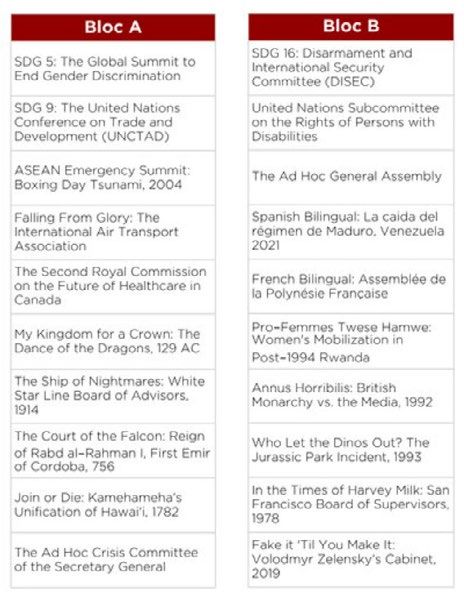
This is because the changes we can make among our neighbours and communities, no
    matter how small, eventually coalesce into a new consensus and help to drive the later
    progress we appreciate taking place more prominently at national, regional, and eventually
    the global level.

    My message to you today therefore is to find a way to make a difference to something
    that matters to you, no matter how small, and to start doing whatever you can to help
    achieve the better world you want for yourselves – and eventually the next generations
    to follow in your footsteps.

    Don’t be dissuaded because it takes longer than you expect, because everything takes
    longer than we originally hope and true consensus and lasting progress are never achieved
    over night.

    The world which emerges post-pandemic will likely be different in many ways from the
    world we knew before it, and it’s our shared responsibility to ensure that in the areas
    concerning our sustainable future, and the dignity and prosperity of all world citizens,
    those changes will all be for the better.

    As young people you will have a critical role to play in serving as humanity’s conscience
    throughout this process, and in pushing the generations ahead of yours to appreciate the
    importance of taking action on our shared future sooner, rather than later.

    Best of luck on that journey, and I wish you all a very productive and engaging 2021
    McMUN.

    Dr. Fang Liu
    ICAO Secretary General

5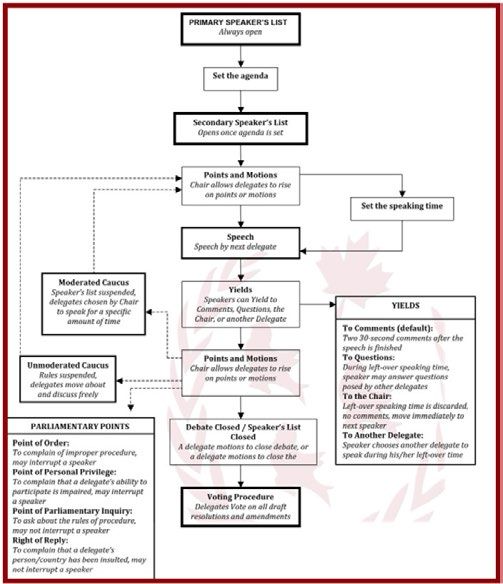
LETTER FROM THE PRESIDENT AND
       CHIEF EXECUTIVE OFFICER OF THE
     INTERNATIONAL RELATIONS STUDENTS’
        ASSOCIATION OF MCGILL (IRSAM)

    Dear Delegates,

    On behalf IRSAM University Board of Directors, members, alumni, and the McGill community,
    it is with great pleasure that I welcome you to the 32nd annual McMUN. McMUN is one of
    IRSAM’s largest of seven portfolios that strive to help students learn about and engage with
    topics in international relations.

    Aside from being one of the largest student-run organizations at McGill University, IRSAM
    holds consultative status with Economic and Social Council of the United Nations. As an
    accredited non-governmental organization, IRSAM is not just the only group at McGill
    University with this status, but it is also one of the only student-run, university-affiliated
    organizations in the world to hold this special consultative status with the United Nations.
    Since its inception, the mission of IRSAM has been to facilitate youth empowerment,
    leadership, and education. Our membership consists of a diverse group of McGill students
    from a range of faculties and academic programs.
    Outside the world of model United Nations and our 2 conference and delegation team,
    Junior Peacemakers is a program which empowers youth by teaching them about the
    United Nations and Human Rights. Our volunteers teach the five-week program to 14-30
    classes in Montreal each semester. Our external portfolio sends delegations to the United
    Nations Headquarters in New York City to attend the Commission on Social Development
    and the Commission on the Status of Women annually, where we meet with Ambassadors
    and partner with permanent missions and other international NGOs.

    Finally, IRSAM has McGill’s only two undergraduate publications dedicated to international
    relations. First established as the McGill International Review (MIR) in 2000, in 2018 the
    academic journal became Flux while the online platform retained the original name. The MIR
    publishes original content daily about contemporary issues and world news. In November
    2019, the MIR hosted a speaker event with Rappler Journalist Patricia Evangelista, the 2019
    Marshall McLuhan Fellow. Check out their website, mironline.ca to see coverage of McMUN
    and learn about opportunities to get your work published.
    Whether you are a first-time delegate or a seasoned professional, McMUN 2021 has so
    much to offer you all from the comforts of your home! For the past four years, McMUN staff
    and delegates never to cease to impress me with their creativity, willingness to learn, and
    ability to have fun and I’m sure that will continue this year on Zoom. I feel very fortunate
    that we will still have the opportunity to host McMUN during these strange times and am
    excited to see us all embrace on this unique journey digitally. The McMUN Secretariat,
    daises, and staff have worked tirelessly to ensure you have an unforgettable weekend and
    I am confident that McMUN 2021 will exceed expectations.

    Sincerely,

    Madeleine Northfield
    Inc. President & Chief Executive Officer

6
INTRODUCTIONS
                        The Conference Charities

    McMUN 2021 is proud to be supporting the Native Women’s Shelter of Montreal
    and Résilience Montréal as our official charities.

    The Native Women’s Shelter is the only shelter in Montreal that provides
    services and resources exclusively to Indigenous women and their children.
    The organization empowers and offers a safe environment and comprehensive
    services for First Nations, Inuit, and Métis women and children to rebuild their
    lives.

    Résilience Montréal, a collaboration between the Native Women’s Shelter of
    Montreal and the Nazareth Community, provides services out of their Cabot
    Square location such as food, shelter, as well as mental health and medical
    support to anyone in need.

    Especially during the COVID-19 pandemic, these organizations have played
    an invaluable role in supporting Indigenous communities in Montreal. We look
    forward to serving these incredible charities with you. Delegates will be able
    to donate on our website, and can look forward to an exciting committee
    fundraising contest. Find out more about them at the resources below:

    Native Women’s Shelter: http://www.nwsm.info
    Facebook: https://www.facebook.com/NativeWomensShelter

    Résilience Montréal: http://www.nwsm.info/resilience-montreal
    Facebook: https://www.facebook.com/ResilienceMontreal

7
The International Civil Aviation
                         Organization (ICAO)

    On December 8, 2016, McMUN and theInternational Civil Aviation Organization
    (ICAO) officially formalized their partnership. The International Civil Aviation
    Organization (ICAO) is a UN specialized agency, established by States in 1944 to
    manage the administration and governance of the Convention on International
    Civil Aviation (Chicago Convention).

    ICAO works with the Convention’s 191 Member States and industry groups to
    reach consensus on international civil aviation Standards and Recommended
    Practices(SARPs) and policies in support of a safe, efficient, secure, economically
    sustainable and environmentally responsible civil aviation sector. These SARPs
    and policies are used by ICAO Member States to ensure that their local civil
    aviation operations and regulations conform to global norms, which in turn
    permits more than 100,000 daily flights in aviation’s global network to operate
    safely and reliably in every region of the world.

    In addition to its core work resolving consensus-driven international SARPs
    and policies among its Member States and industry, and among many other
    priorities and 12 programmes, ICAO also coordinates assistance and capacity
    building for States in support of numerous aviation development objectives;
    produces global plans to coordinate multilateral strategic progress for safety
    and air navigation; monitors and reports on numerous air transport sector
    performance metrics; and audits States’ civil aviation oversight capabilities in
    the areas of safety and security.

    This year, we unfortunately will not have the opportunity to meet in person at
    the ICAO. Nevertheless, we thank them for their continued support and look
    forward to seeing them again at future renditions of McMUN.

8
SCHEDULE
Thursday, January 28th
14:30 - 15:15 IYAD workshop on inclusive policymaking
16:00 - 17:00 Opening Ceremony
17:30 - 19:00 McMUN Global Leadership Forum
19:00 - 19:20 How to ZoomUN - ROPs and Online MUN Workshop
19:30 - 21:15 Committee Session I
- 19:30 - 21:00 Bloc A
- 19:45 - 21:15 Bloc B
Friday, January 29th
12:00 - 2:45 Committee Session II
- 12:00 - 14:15 Bloc A
- 12:30 - 14:45 Bloc B
15:00 - 15:30 Head Delegate Feedback & Optional Educational Workshop
16:00 - 18:45 Committee Session III
- 16:00 - 18:15 Bloc A
- 16:30 - 18:45 Bloc B
21:00 Friday Night Social Event: Zoom McCrawl - an assortment of
breakout sessions, each with its own unique event! One will be for
networking, another will be discussing respective fields of study, and the
other will be a game of virtual Settlers of Catan.
Saturday, January 30th
12:00 - 2:45 Committee Session IV
- 12:00 - 14:15 Bloc A
- 12:30 - 14:45 Bloc B
15:00 - 15:30 Head Delegate Feedback
16:00 - 18:45 Committee Session V
- 16:00 - 18:15 Bloc A
- 16:30 - 18:45 Bloc B
21:00 Saturday Night Social Event: Chris Ballian will be DJ-ing a set via
audio livestream that will be shared to all delegates and staff.
Sunday, January 31st
13:00 - 14:30 Closing Ceremonies Video and Awards
9CONFERENCE
ADMINISTRATION
Awards
In the interest of fairness, whether or not a delegate submitted their position
paper by the designated deadline of January 25th at 11:59PM may be taken
into account when it comes to the allocation of committee awards. However,
delegates will not be disqualified on account of a late submission. In order to
avoid total disqualification, delegates must have submitted position papers by
the end of the evening on Thursday, January 28th at the absolute latest.
Conference Code of Conduct
We ask for your cooperation in maintaining order, both in and out of committee
sessions, so that we may provide a professional, safe, and educational experience
for all delegates attending the conference.
Please see the Delegate Code of Conduct, available on our website, for more
details.
Award Policy
McMUN strives to foster a creative and competitive environment that encourages
delegates to work harder and more efficiently. We believe in recognizing
exceptional performance of delegates in all our committees. Below are the
specific criteria McMUN’s staff will use to evaluate delegate and delegation
awards.
For our Best Delegate Award, the criteria are the following:
• The level of involvement in the committee is the most active and significant
• Level of preparedness for the conference, committee and issues that
extend beyond the scope of the committee
• The contribution to debate is original, substantive, and significant as to
the course of deliberation
• Strong ability to employ diplomacy and discourse eloquently whilst
staying true to the assigned character/country during moderated and
unmoderated debate
• Clear leaders during committee sessions and are central to the generation
of new ideas
10For our Outstanding Delegate Award, the criteria are the following:
• The level of involvement in the committee is significant
• There is a strong understanding of the issues at hand and the positions of
their country/ character
• The contributions to debate are original, innovative, and have relatively
better success in promoting specific objectives and positions
• Displays relative ease and comfort in employing diplomacy and discourse
eloquently whilst staying true to their assigned character/country during
moderated and unmoderated debate
For our Honourable Mention Award, the criteria are the following:
• Strong understanding of the topics and issues at hand
• Active participants in debate
• Strong oratory skills and the ability to present well formulated ideas and
opinions
• Well versed in MUN Rules of Procedures
Each committee will be giving out one Best Delegate, one Outstanding Delegate,
and Honorable Mentions will be given proportional to the size of the committee.
In double delegation, each delegate pair will be evaluated and recognized
together.
11THE MCMUN 2021 SECRETARIAT
Natalie Schaller Megan Coulter Dalton Liggett Vivian Qiang
Secretary-General Chargée d’Affairs Undersecretary-General: Director of
Committee Affairs Public Relations
Omar Nazir Jack Kline Dov Ellis
Undersecretary- Chief of Operations Director of Events
General: Finance
Karin Kassabian Lauren Hill Rachel Diotte-Lyles Kennedy McKee-Braide
Chief of Staff Deputy Director of Director of Equity Deputy Director of PR:
PR: Multimedia External Outreach
Erin Smith Valeria Lau Kainaz Gandhi
Deputy USG Deputy USG Deputy USG
Committee Affairs: Committee Affairs: Committee Affairs:
12 Crises Specialized Agencies GAs & ECOSOCsATTENDING DELEGATIONS
American University College of William and Mary
The University of Western Ontario Vanier College
Clark University Queen’s University
Collège International des Marcellines University of California, San Diego
CUNY - Baruch College Westfield State University
Faculté de droit de l’université Laval Bates College
Collège Jean de Brebeuf The University of Minnesota-Twin Cities
The University of Texas at Austin Dartmouth College
Florida International University Cegep Champlain St. Lawrence
University of California, Los Angeles University of Chicago
Northern Arizona University Wheaton College
University of Alabama Memorial University
Northwestern University Carleton College
John Abbott College Collégial International Sainte-Anne
Saint Louis University Université de Montréal, Faculté de droit
Boston University University of Toronto
University of Wisconsin-Madison University of Ottawa
University of Cincinnati University of Guelph
Oakland University Universidad de Los Andes
Georgetown University Universidad Metropolitana
Marianopolis College University of Arizona
York University (IRSAY) Champlain College Saint-Lambert
Université de Montréal Cornell University
HEC Montréal Michigate State University
Northeastern University University of California, Santa Barbara
Concordia University Dawson College
Johns Hopkins University University of Central Florida
Washington University Rutgers University - New Brunswick
13MUN ESSENTIAL TOOLS
QUICK REFERENCE GUIDE TO THE
RULES OF PROCEDURE
1415
GUIDE TO RESOLUTION WRITING

     Collectively, resolutions are one of the most important policy instruments in international
     law. Resolutions typically represent the opinion of a United Nations body regarding a topic
     or issue on its agenda, while also detailing its recommended course of action.

     Step 1:
     Tne or more delegates collaborate to write a draft resolution. The authors of a draft, also
     known as the sponsors, must then obtain one- fifth of present delegates as signatories.

     Step 2:
     The sponsors must submit the potential draft resolution to a Director, who approves it as a
     draft resolution only if:
     It is properly formatted, does not contain a substantial number of mistakes, and, if handwritten,
     is legible.
     It carries the required number of sponsors and signatories.
     It is consistent with the country policies of sponsoring states It’s subject matter and proposed
     actions are both relevant and within the power of the respective committee, and
     There are no other draft resolutions circulating which are similar in substance.

     Step 3:
     If the conditions outlined above are met, and the Dais approves the document as a draft
     resolution, it will be assigned a number and readied for distribution to the committee.

     Step 4:
     Once copies become available, sponsors may motion to introduce the document as a draft
     resolution. After the sponsors introduce the draft resolution, the Chair may entertain points
     for a question & answer period. Sponsors may also respond to questions and further outline
     their draft resolution using moderated debate or the speakers list.

     Step 5:
     Final refinement of the draft resolution in regular debate occurs through the amendment
     process. An amendment is a clarification or a change to a draft resolution that incorporates
     additional interests or concerns into a formally submitted resolution.

     There are two types of amendments, friendly and unfriendly. An amendment accepted by all
     of the original sponsors is deemed friendly and accepted without a vote. If an amendment
     does not receive the approval of all sponsors of the draft resolution, it is considered
     unfriendly. Unfriendly amendments must be submitted to the dais with the appropriate
     number of sponsors and signatories. The unfriendly amendment will be voted on separately
     upon closure of debate.

     Step 6:
     Upon the closure of debate, and transition into voting procedure, draft resolutions will be
     voted upon in the order that they were received. At McMUN, a committee may pass more
     than one draft resolution.

16
SAMPLE DRAFT RESOLUTION
African Union/1.2
23 January 2016
Sponsors: South Africa, Ghana
Signatories: Angola, Cote d’Ivoire, Madagascar, Niger, Nigeria, Rwanda, Uganda
Topic: The Banning of Mandatory HIV Testing in the African Union
The African Union,
Disturbed by the prevalence of proposals suggesting the adoption mandatory
HIV testing for one or more groups, and by the popularity of the “us-them”
attitude propagated by these proposals with regard to individuals infected with
the virus,
Recalling the disastrous results of mandatory HIV screening policies in Cuba,
which resulted in significant portions of the population dying of curable illnesses
for fear of facing mandatory HIV testing in hospitals,
Noting that the exorbitant costs of mandatory testing programs would not only
all but negate any anticipated benefits in terms of economic development, but
would furthermore divert valuable resources away from effective prevention
measures and programs,
Further Noting that any program of mandatory testing necessarily operates in
contravention of Articles 3 and 12 of the Universal Declaration of Human Rights,
by infringing upon the security of person and interfering with the privacy of test
subjects,
1. the views expressed in the 1992 statement of the World Health Organization’s
Consultation on Testing and Counseling for HIV Infection that “there are
no benefits either to the individual or for public health arising from testing
without informed consent that cannot be achieved by less intrusive means,
such as voluntary testing and counseling”;
2. member states to collaborate on drafting an immediate ban on all forms of
mandatory HIV testing;
3. all member nations to recognize the difficulties facing people who are HIV
positive.
17SAMPLE DRAFT RESOLUTION 18
THE RULES OF PROCEDURE

     Part I: General Rules
     1.    Scope
     2.    Language
     3.    The Secretariat

     Part II: The Dais
     4.    Composition
     5.    Duties
     6.    Powers
     7.    Competence

     Part III: The Delegations
     8.    Rights
     9.    Non-Members States and Observer States
     10.   Censure

     Part IV: The Committee
     11.   Roll Call
     12.   Quorum
     13.   Majorities
     14.   Procedural Voting

     Part V: Debate
     15.   Agenda
     16.   Speakers’ List
     17.   Suspension of Debate
     18.   Tabling of Debate
     19.   Closure of the Speakers’ List
     20.   Moving to Enter Voting Procedure
     21.   Recess
     22.   Motion to Adjourn

     Part VI: Speeches
     23.   Addressing the committee
     24.   Time Limit on Speeches
     25.   Yields
     26.   Right of Reply

19
Part VII: Parliamentary Points
27. Point of Personal Privilege
28. Point of Order
29. Point of Parliamentary Inquiry
Part VIII: Substantive Matters
30. Working Papers
31. Resolutions
32. Mergers
33. Introduction
34. Question and Answer Period
35. Competence of Body
36. Amendments
37. Withdrawal of Documents
Part IX: Voting
38. Voting Procedure
39. Method of Voting
40. Division of the Question
41. Voting on Amendments
42. Voting
Part X: Precedence
43. Precedence
20PART I: GENERAL RULES
1. Scope
These rules shall apply to all regular sessions of McMUN for all committees. These
rules are self-sufficient and no other rules shall apply, unless otherwise outlined
in supplemental rules of procedure for a particular committee. In situations not
covered by the rules, the Chair shall constitute the final authority.
2. Language
The working language of the conference is English, except in bilingual committees
or committees where an additional language has been designated by the
Chair. All documents must be drawn up and speeches delivered in English. No
translation services will be provided in any committee.
3. The Secretariat
The Secretariat shall consist of the Secretary-General and those persons the
Secretary- General has appointed to the Secretariat. Any member of the
Secretariat may address a committee at any time. The ruling of a Secretariat
member on any rule or regulation herein is final and overrides any other ruling
or appeal. Any rule may be altered, suspended or added by a member of the
Secretariat at any time.
21PART II: THE DIAS
4. Composition
Each committee shall have a Dais, composed of several staff members,
designated by the Secretariat. Individually or collectively, members of the Dais
shall have the capacity to assume the office of the Chair.
5. Duties
The Dais shall be responsible for maintaining the Speakers’ List, recording the
Roll Call at the beginning of each committee session, and recording the results
of all votes in the committee.
The Chair shall declare the opening and closing of each meeting, direct
discussion, accord the right to speak, equitably and objectively recognize
points and motions, put questions to a vote, announce decisions, ensure the
observation of these rules, and rule on disputed points.
The Chair is also primarily responsible for the substantive content of the
committee proceedings. The Chair must authorize each draft resolutions for
their introduction to the floor.
6. Powers
The Chair shall be the final authority in each committee, superseded only by the
Secretariat. The Chair may refuse to entertain any procedural motion at their
discretion. At any time, the Chair may propose the adoption of a procedural
motion without a vote by the committee.
7. Competence
The members of the committee may appeal or question the decision of the
Dias through a Point of Parliamentary Order or by addressing the Dias by note.
Delegates may not question the competence of the Dais during committee.
The Undersecretary General of Committee Affairs, with the advice and consent
of the Secretary-General, may remove any member of the Dais if necessary. A
committee member may approach the Secretariat if they so desire.
22PART III: THE DELEGATIONS
8. Rights
Each member shall be represented by one voting delegate on each committee.
In double delegation committees, a delegation may include an alternate. Only
one person may hold speaking and voting rights for the delegation at any given
time.
9. Non-Members States and Observer States
A representative of a State that is not a member of the United Nations, or a
representative of an organization holding observer status, shall have the same
rights as a full member except that they may not vote on substantive matters,
and may not be a sponsor or signatory to a resolution.
10. Censure
Delegates are expected to know their country’s foreign policy. Delegates who
clearly and persistently misrepresent their country’s foreign policy in speeches
and substantive votes are subject to censure. The Undersecretary-General,
Committee Affairs, with the advice and consent of the Secretary-General and
the Chair, must pre-authorise all motions for censure.
Once censure is moved, the delegate in question is allowed two minutes to
explain their actions and speak against the censure. The motion shall then be
voted on. It requires a two-thirds majority to pass. The effects of censure are as
follows:
First censure
The delegate is barred from the committee room for the remainder of the
current committee session and for the duration of the next committee
session.
Second censure
The delegate is barred from the committee room for the remainder of the
conference.
23PART IV: THE COMMITTEE
11. Roll Call
At the beginning of each session the Dais shall complete roll call. Each delegate
must respond either “present” or “present and voting.” Delegates who are
“present” may vote in favour, opposed, or abstain, subject to the rules on
abstention. Delegates who are “present and voting” may only vote in favour
or opposed; abstentions are never permitted. If a delegation is not present at
the time the Roll Call is taken, it is expected to pass a note to the Dais once it
arrives.
12. Quorum
Before formal debate or voting procedure may begin, the committee must meet
quorum. In this case, quorum is defined as one-third of the voting members of
a committee as determined by the roll call list, rounded up. Any delegate may,
at any time, request verification of quorum. The Chair will rule immediately on
the motion, initiating roll call if they deems it necessary. Quorum is assumed to
be met unless it is shown otherwise.
13. Majorities
A simple majority is defined as more votes in favour than opposed, regardless
of abstentions. A motion fails on a tie vote.
A two-thirds majority is defined as at least two votes in favour for each vote
opposed (e.g. a vote of 6 in favour, 3 opposed, would pass regardless of the
number of abstentions).
A unanimous vote is defined no votes against the motion. Any delegate voting
against a motion requiring unanimity shall cause that motion to fail. Abstentions
do not cause the motion to fail. The absence of any number of delegates shall
not affect the success or failure of a motion requiring unanimity unless quorum
is thereby not attained.
14. Procedural Voting
For procedural matters, each delegation has an obligation to vote. Only votes
of “yes” or “no” shall be in order. A motion for a Roll Call Vote on procedural
matters is never in order.
24PART V: DEBATE
15. Agenda
The agenda refers to the order in which the committee shall discuss the topics.
The first order of business for the committee shall be the consideration of the
agenda. Only topics on the provisional agenda shall be considered, except in
committees designated by the Secretariat as crisis committees.
The Chair shall open a primary speakers’ list and entertain a motion to set the
first topic on the agenda. In the event of such a motion, the Chair shall call for
two speakers for and two speakers against.
If the motion carries, a secondary speakers’ list shall be opened to discuss the
agenda topic. If it fails, the committee shall continue general debate.
Once an agenda topic has been closed or tabled and all proposals concerning
the topic have been voted upon, the Chair shall return to the primary speakers’
list to consider the agenda again.
Crisis Committees
In a committee designated by the Secretariat as a crisis committee, the
Dais may call upon the committee to table debate on the current topic
area so that a more urgent matter may be attended to immediately. After
the crisis has been resolved, the committee will return automatically to
debate on the tabled topic.
16. Speakers’ List
The speakers’ list records delegates wishing to speak during committee. A
member may add his or her name to the list, as long as it is not already on the
list, by submitting a written request to the Dais. Debate is closed automatically
upon exhaustion of the speakers’ list.
Primary Speakers’ List
The primary speakers’ list shall be established at first to set the agenda. This
speakers’ list shall remain open throughout the duration of the conference
and will be returned to upon closure or tabling of the individual topics.
Secondary Speakers’ List
Once the first agenda topic is set, a secondary speakers’ list that deals with
the topic in question shall be opened. Separate lists shall be established
for specific procedural motions on an as-needed basis.
2517. Suspension of Debate
During the course of debate, a delegate may move to caucus. When making
such a motion, the delegate must specify a type and purpose, and in the case
of a moderated caucus, a time limit, and speaking time for the caucus. There are
two types of caucus. They are as follows:
Unmoderated caucus
The Dais is not involved. Delegates may move freely in and out of the
committee room to speak to each other in a less formal setting or to
write draft resolutions. No points or motions shall be in order during
unmoderated caucus.
Moderated caucus
Delegates remain in their seats and are recognized at the Chair’s discretion
to speak for the specified amount of time. During a moderated caucus,
the Chair shall call to order delegates who are making speeches unrelated
to the designated topic. Only points of personal privilege and points of
order are in order during a moderated caucus.
18. Tabling of Debate
A motion to table debate may be used to end debate on a given substantive
issue without having voted on the resolution. The Chair may rule such a motion
out of order. If the motion is in order, the Chair may recognize two speakers for
and two against the motion, after which the motion is put to an immediate vote
requiring a simple majority to pass. If the motion passes, debate on the tabled
item or topic is stopped and the item is put aside without further actions of any
kind. Speakers then will be recognized according to the order on the primary
speakers’ list.
The Chair may entertain a motion to reintroduce the tabled topic. A motion to
resume debate on a tabled item requires a two-thirds majority to pass and shall
be debatable to the extent of one speaker for and one speaker against. If this
motion passes, debate is resumed on the tabled topic. The secondary speakers’
list established for that topic automatically will be reopened.
19. Closure of the Speakers’ List
A member may, at any time, move for closure of the speakers’ list. The Chair
may rule such a motion dilatory. This motion requires a two-thirds majority to
pass and is debatable to the extent of one speaker against this motion. If the
motion passes, no new speakers shall be added to the list. Once the speakers’
list has been exhausted, debate is closed automatically, and all draft resolutions
and amendments are brought to an immediate vote. After the speakers’ list has
been closed, it cannot be re-opened.
2620. Moving to Enter Voting Procedure
A member may, at any time, move to close debate by offering a motion to
enter voting procedure on substantive matters under discussion. The Chair may
rule such a motion out of order. If the motion is ruled in order, the Chair may
recognize up to two speakers for and two speakers against this motion. This
requires a two-thirds majority to pass. If the motion passes, all draft resolutions
and amendments are brought to an immediate vote. If specified in the motion
or at the discretion of the chair, up to two speakers for and two speakers against
each item voted upon may be entertained, at the discretion of the Chair.
If the secondary speakers’ list is exhausted, debate is closed automatically and
all draft resolutions and amendments on the floor are brought to an immediate
vote.
21. Recess
A motion to recess is in order only within the final 15 minutes of a committee
session. The Chair may rule this motion out of order. The Chair’s decision on
this matter cannot be appealed. The motion to recess requires no debate and
passes on a simple majority. The effect of the motion is to suspend the meeting
of the committee until the next regularly scheduled committee session.
22. Motion to Adjourn
A motion for adjournment requires a simple majority to pass and is in order only
when either the committee has considered every topic on its agenda, or there
remains fewer than 30 minutes in the last committee session of the conference.
27PART VI: SPEECHES
23. Addressing the committee
No member may address the committee without having obtained the permission
of the Chair. The Chair may call a speaker to order if his or her remarks are
not relevant to the subject matter under discussion. A speech may not be
interrupted by another delegate, unless that delegate is rising on a Point of
Personal Privilege or a Point of Order.
24. Time Limit on Speeches
A member of the committee may move to set a time limit on speeches. Such
a motion requires a simple majority to pass. The Chair may rule such a motion
dilatory without appeal.
25. Yields
Each delegate must yield their time in one of the following four ways:
1. To the Chair: The remaining speaking time is forfeit and the committee
moves on.
2. To comments: Two delegates, selected by the Chair, may make 30
second comments on the speech just delivered. The content of comments
must pertain solely to the preceding speech. The Chair shall call to order a
speaker whose comment does not pertain solely to the preceding speech.
3. To another delegate: The delegate speaking may designate another
delegate to speak for the balance of their speaking time.
4. To questions: The delegate may use the rest of their time to answer
questions posed by other delegates. The Chair shall select delegates to
pose questions. Only the time taken to answer the questions shall be
counted against the speaker’s remaining time. The time taken to pose the
questions is not considered, although the Chair may cut off a delegate
who takes too long to ask a question.
Yields may be declared prior to or after a delegate’s speech. If a delegate fails
to yield their time, it shall be assumed that the delegate has yielded to the Chair.
The committee may, by motion approved by simple majority, choose to assume
any of the other two yields as a default yield. Delegates may not set the default
yield to another delegate. The only yield in order during the primary speakers’
list is to the Chair.
2826. Right of Reply
In the event that a delegate personally insults another delegate during their
speech, the insulted delegate may request a right of reply from the Chair by
writing a note to the dais. If it is granted, the insulted delegate has 30 seconds
to reply to an offensive comment. A right of reply to a speech delivered in a
right of reply is never in order. A right of reply is only in order immediately
following the speech in which the delegate was insulted. No decisions of the
Chair relating to rights of reply are subject to appeal.
29PART VII: PARLIAMENTARY POINTS
27. Point of Personal Privilege
A delegate may rise to a Point of Personal Privilege during the discussion of
any matter when their ability to participate in the proceedings is in any way
impaired or they feel any discomfort. The Chair shall attempt to remove the
cause of the impairment. This point may interrupt a speaker.
28. Point of Order
A delegate may rise to a Point of Order to address improper parliamentary
procedure. The Chair will immediately rule on the Point of Order. They shall rule
out of order any points which they find dilatory or improper; such a decision is
not subject to appeal. A Point of Order may interrupt a speaker. The member
rising to a Point of Order may not speak on the topic of discussion.
29. Point of Parliamentary Inquiry
A delegate may rise to a Point of Parliamentary Inquiry in the case that they have
a question for the Dais regarding the rules of procedure. Points of Parliamentary
Inquiry can neither interrupt a speaker nor be in regard to substantive matters.
30PART VIII: SUBSTANTIVE MATTERS
30. Working Papers
Working papers are informal documents used to communicate ideas with the
entire committee. They should be in resolution format and in order to eventually
become a draft resolution, will require the appropriate number of sponsors or
signatories. Working papers may be introduced following an authors panel and
question and answer period at the discretion of the Chair. To later become draft
resolutions, they require the authorization of a member of the Dais, granted
based on the usefulness of the paper, clarity of expression, whether or not the
idea is already understood by the committee, and whether or not the paper
substantially duplicates a working paper or draft resolution already on the floor.
31. Mergers
Mergers of draft resolutions take place when a limit on the total number of
draft resolutions is imposed at the discretion of the Chair. Such a determination
by the Chair will occur after all eligible working papers are initially introduced.
If after the initial round of introductions, there are more working papers than
permitted by the Chair, delegates may at that point be asked to repurpose
and combine the existing resolutions into a smaller number of draft resolutions,
which will be brought forward in the second round of introductions. Working
papers introduced in the first round of introductions will take the identifier
Working Paper “1.x,” whereas those introduced after the merge process will
take the name Draft Resolution “1.x.”
32. Resolutions
Documents submitted to and approved by the Dais, in proper resolution format,
shall be considered and referred to as draft resolutions. The term “resolution”
is to be used only in reference to documents already passed by that body or
other UN bodies.
Format
Draft resolutions must be written in proper resolution format, as outlined
in the McMUN Delegate Handbook. Copying, distribution, and introduction
of draft resolutions will occur upon approval of the draft resolution by the
Dais and may be done electronically. Any delegate may request a hard
copy on the basis of accessibility.
31Sponsors
A minimum of three states must be designated as sponsors of a draft
resolution in order for it to be approved by the Dais. Delegates sponsoring
a draft resolution are obligated to vote in favour of the draft resolution.
This obligation is waived upon the passage of one or more unfriendly
amendments, or upon the passage of a division of the question motion.
Once a draft resolution has been introduced, delegates may not remove
their sponsorship. Additional sponsors may be added to a draft resolution
with the consent of all existing sponsors and upon approval of the Chair.
Signatories
A draft resolution must have the signatures of a minimum of one-fifth of
the total members of the committee, as determined by the Dais, in order
to be approved and introduced. Sponsors are counted as signatories.
Delegates may sign a draft resolution even if they do not support the
document in question; being a signatory only signals willingness to bring
the draft resolution to debate. Once a draft resolution has been introduced,
delegates may not remove their signatures, and no further delegates may
sign the draft resolution.
33. Introduction
A delegate may motion to introduce a draft resolution or amendment, upon
its approval by the Dais and distribution to members of the body. Adoption of
this motion shall require a simple majority vote. Sponsors will be invited by the
Chair to read the active clauses of the draft resolution or amendment to the
body. The number of delegates who are permitted to come forward to read the
clauses shall be determined at the complete discretion of the Chair.
34. Question and Answer Period
Immediately following the introduction of a draft resolution, any delegate may
move for a question and answer period. When making the motion, the delegate
shall specify a length and speaking time for the question and answer period.
The Chair may accept or refuse this motion at his or her discretion. The decision
of the Chair is not subject to appeal. The motion passes on a simple majority.
Different sponsors may introduce the draft resolution than ones who deliver the
Q&A, if the sponsors so choose. The number of sponsors permitted to come
forward to answer questions is determined at the complete discretion of the
Chair.
Once the period has begun, delegates recognized by the Chair may ask questions
to the sponsors of the draft resolution. These questions must pertain only to
32the draft resolution and the Chair shall call to order any delegate who does not
respect this rule
Once the question has been posed, one sponsor may respond to the question
within the allotted speaking time. This pattern shall continue until the time
allotted for the question and answer period has elapsed or no more delegates
wish to ask questions.
35. Competence of Body
A motion to question the competence of a body to discuss a draft resolution or
amendment is in order only if made immediately following the introduction of
the draft resolution or amendment. The motion requires one speaker in favour
and one opposed and requires a two-thirds majority to pass. If the motion
passes, the document will be withdrawn from the committee and cannot be
reintroduced.
36. Amendments
Non-substantive Amendments
Amendments to draft resolutions to correct errors in spelling or format are
considered non-substantive and shall be incorporated as part of the original
draft resolution without a vote. The Dais will make final decisions on non-
substantive amendments.
Friendly
Substantive amendments approved by all sponsors of the draft resolution
and approved by the Dais are considered friendly and are added to the draft
resolution without a vote; they do not require formal introduction to the
committee prior to voting procedure, and will be read out before voting on the
amended resolution. Friendly amendments may be further amended through
the unfriendly amendment process.
Unfriendly
Substantive amendments not receiving approval from all sponsors of the draft
resolution are considered unfriendly and require signatures from one-fifth of the
total members of the committee, as determined by the Dais, and the approval
of the Dais to be introduced. Unfriendly amendments are formally read out to
the body and then voted on separately upon entering voting procedure.
Amendments to unfriendly amendments are out of order. Substantive
amendments to pre-ambulatory clauses are out of order.
3337. Withdrawal of Documents
A draft resolution and any friendly amendments may be withdrawn from the
consideration of the committee if all the sponsors of the resolution so desire.
Similarly, an unfriendly amendment may be withdrawn from the consideration
of the committee if all the sponsors of the amendment so desire.
Reintroduction
Withdrawn draft resolutions and amendments may be reintroduced by
re-obtaining the signatures of one-fifth of the members of the committee,
as determined by the Dais. Such draft resolutions and amendments will
be voted on following closure of debate.
34PART IX: VOTING
38. Voting Procedure
Voting on draft resolutions, except where otherwise provided, shall occur by
placard vote. Draft resolutions, except where otherwise provided, shall require
a simple majority to pass, and shall be voted upon as a whole.
Once a Secondary Speakers’ List is exhausted or a motion for closure of debate
is passed, the committee moves into voting procedure. Once voting procedure
has begun, the doors of the committee room must be secured, and no one
besides members of the Secretariat are allowed in or out of the room except in
case of emergency. Delegates having left the room during voting procedure for
any reason may not return until voting procedure has finished. During voting
procedure, no note-passing or caucusing is allowed.
Once in voting procedure, when there are no points or motions on the floor, the
Chair shall put the unfriendly amendments, draft resolutions, or parts thereof,
to a vote. There shall be no further debate except as specifically provided in
these rules. Once voting on draft resolutions has finished, the Chair shall declare
the end of voting procedure, and the committee shall return to the Primary
Speakers’ List. If all topics are exhausted the Chair shall entertain a motion to
adjourn.
39. Method of Voting
Each member shall have one vote. All matters shall be voted upon by a show of
placards.
Delegates must vote ‘in favour,’ ‘opposed,’ or ‘abstain,’ if they are not considered
‘present and voting.’ No member may cast a vote on behalf of another member.
Roll Call Vote
A motion may be made to have a Roll Call Vote only on a substantive
matter. This motion is subject to the approval of the Chair; such a decision
is not subject to appeal. The roll call shall be done alphabetically, from the
beginning of the alphabet. In case of a Roll Call vote, delegates may vote
‘with rights’ upon the discretion of the Chair.
During a Roll Call Vote, a member may pass, in which case they are
placed at the end of the voting roll. Members who pass during the first
sequence of voting cannot pass a second time and must cast a vote in
the affirmative or negative only. Delegates voting ‘with rights’ must vote
in the affirmative or negative and shall be given a brief opportunity to
explain their vote to the body upon the conclusion of voting and before
the results of the vote have been announced to the body.
3540. Division of the Question
A member may move to vote on the operative clauses of the draft resolution
individually or in groups. This motion shall be considered after all amendments
have been brought to the floor, and immediately precedes a vote on the
resolution. Motions to divide preambulatory clauses are out of order. A delegate
moving to Divide the Question must specify a method for dividing the question.
If there is more than one proposal to divide the question, the motions shall be
voted on in order of the most destructive to the least destructive to the spirit of
the draft resolution, as determined by the Chair. The motion is debatable to the
extent of two speakers in favour and two opposed.
A simple majority is required to pass a motion for Division of the Question. If a
motion passes, all pending motions for Division of the Question are ruled out of
order, and the divisions are put to an immediate vote, with only those passing
incorporated into the final draft resolution. If all operative clauses are voted
upon and fail, the resolution is considered to have failed.
41. Voting on Amendments
If an unfriendly amendment has been moved to a draft resolution, the amendment
shall be voted on first. If two or more amendments have been made to the
proposal, the committee shall vote on the amendments in the order of their
introduction to the body. Where the adoption of one amendment necessarily
implies the rejection of another, the latter shall not be voted on. A simple majority
is required to adopt an amendment. Following the adoption or rejection of all
amendments, the draft resolution in its resulting form shall be put to a vote.
42. Voting
More than one resolution may be passed on any given agenda topic. This is
subject to change at the discretion of the Chair.
A simple majority of the members present is required for a draft resolution
to pass. Exceptions may be made according to an addendum in the Rules of
Procedure for certain Specialized Agencies.
If voting on any substantive matter ends in a tie, the matter fails.
36PART X: PRECEDENCE
43. Precedence
Where multiple points or motions have been made, the committee shall consider
them in the following order of precedence, dealing with every point or motion
of higher precedence before those of lower precedence. Substantive matters
are accorded the lowest precedence.
1. Point of Order
2. Point of Personal Privilege
3. Right of Reply
4. Point of Parliamentary Inquiry
5. Motion For an Extension
6. Motion to Adjourn
7. Motion to Recess
8. Motion to Table the Topic
9. Motion for Set the Speaking Time
10. Motion for Censure
11. Motion to Enter Voting Procedure
12. Motion to Introduce Working Papers or Draft Resolution(s)
13. Motion for Unmoderated Caucus
14. Motion for Moderated Caucus
15. Motion for the Verification of Quorum
16. Motion for Closure of Debate
17. Motion to Divide the Question
18. Motion to set the Default Yield
37LINKS
Zoom Links
All scheduled committee sessions will take place on the Zoom links provided
below. Delegates should aim to be in the waiting room for their Zoom five
minutes before the scheduled start of committee whenever possible.
All substantive debate will take place using the “raise hand” feature, with the Zoom
polling feature being deployed in order to conduct voting on both procedural
matters (motions) and substantive matters (resolutions and amendments).
All non-substantive interactions between delegates - bloc building, unmoderated
caucus strategizing, general socializing, etc - will take place either in Breakout
Rooms or on the Committee Slack.
Chairs will enforce a strict standard of behavioural decorum on Zoom. All
delegates will be asked to keep their microphones muted when not called upon
by the chair, to refrain from using their camera to display imagery or video feed
not related to the conference, and to exercise respectful Zoom etiquette at all
times.
Critically, all delegates should be sure to verify they are running the most
updated version of Zoom prior to the conference.
Slack Links
During and outside of the scheduled committee sessions, but not prior to the
start of the conference, delegates are permitted to use the Slack links below in
order to reach each other with ease. Delegates are encouraged to create their
own messaging groups within the committee Slack, in order to bloc build, work
on resolutions/directives, conduct mergers when applicable, and etcetera.
Please bear in mind that at the discretion of the Chair, delegates may be
asked to add a representative of the committee staff team to any and all Slack
group chats. If delegates prefer not to have the totality of their conversations
monitored, they are free to exchange emails, social media, or phone numbers.
Please note that the Joint Crisis committees will share a singular Slack channel.
Please find ALL links (Slack, Zoom, Google Drive, Ceremonies and Events, etc.)
on this Master:
McMaster: Delegate Version
38Committee Zoom Slack
SDG 5: Gender Equality https://us02web.zoom. https://join.slack.com/t/
(The Global Summit to End us/j/87506352842 sdg5genderequality/shared_invite/zt-
Gender Discrimination) ku9imots-RoJuE1gsF5TRmfTeYRDM_A
SDG 9: United Nations https://mcgill.zoom. https://join.slack.com/t/sdg9industrie-
Conference on Trade and us/j/85422124466 0db4551/shared_invite/zt-km5dcjdw-
Development (UNCAD) M3a9_VcefY3G7zcsqjL38w
SDG 16: Peace, Justice and https://mcgill.zoom. https://join.slack.com/t/sdg16peacejus-
Strong Institutions (DISEC) us/j/89810783188 nmr1679/shared_invite/zt-l26xegd0-
ijnoR_z85_B5miH_nNzn7w
UN Subcommittee on the https://mcgill.zoom. https://join.slack.com/t/unsubcommitte-
Rights of Persons with us/j/88598102577 ahw8401/shared_invite/zt-kzd0hntu-
Disabilities OsVFDHNGAqSFAao69FvaAQ
The Ad Hoc General https://mcgill.zoom. https://join.slack.com/t/theadhocgener-
Assembly (SDG 8) us/j/87871917882 xyn8177/shared_invite/zt-kxxz9ybp-
Oxl1glcc2wFAv3cedKN60w
French Bilingual: https://mcgill.zoom. https://join.slack.com/t/frenchbilingu-
Assemblée de la Polynésie us/j/83634632666 lk51329/shared_invite/zt-kzgg81sj-
Française pWu4PIUrJe5Kdgn2SnQKJw
ASEAN Emergency https://mcgill.zoom. https://join.slack.com/t/aseanemergenc-
Summit: Boxing Day us/j/83919864160 zmf6041/shared_invite/zt-labdx2wg-
Tsunami, 2004 BaLfQwUgj_mLjgQq2Zx16A
Spanish Bilingual: La caída https://mcgill.zoom. https://join.slack.com/t/spanishbiling-
del régimen de Maduro, us/j/87192311762 qli7394/shared_invite/zt-kw93l3nq-
Venezuela 2021 1Ze17d2AgwbnnCWDWFn6CQ
Second Royal Commission https://mcgill.zoom. https://join.slack.com/t/secondroyalco-
on the Future of us/j/84843417534 6cf7598/shared_invite/zt-ksl5u7bb-
Healthcare in Canada o9LAX07BerGtsvD0Z6mGGQ
Pro-Femmes Twese https://mcgill.zoom. https://join.slack.com/t/profemmestwes-
Hamwe: Women’s us/j/81816535344 qmg1259/shared_invite/zt-kxyhxx11-
Mobilization in Post-1994 jhpbUVwFgA4OB6bwoVoelA
Rwanda
https://join.slack.com/t/fallingfromgl-
Falling from Glory: The https://mcgill.zoom. au81464/shared_invite/zt-kw9rt75i-
International Air Transport us/j/84152799577 HVvP8hE~6HX3P3j0Zyp9Xg
Association
https://join.slack.com/t/mykingdomfora-
My Kingdom for a Crown: https://mcgill.zoom. wji1749/shared_invite/zt-kslnipcn-
The Dance of the Dragons, us/j/87662924658 jny2MfJ65zs4kzkjdnHp6A
129 AC: The Greens
My Kingdom for a Crown: https://join.slack.com/t/mykingdomfora-
The Dance of the Dragons, https://mcgill.zoom. wji1749/shared_invite/zt-kslnipcn-
129 AC: The Blacks us/j/81067555635 jny2MfJ65zs4kzkjdnHp6A
39You can also read


