Measuring BAP outcomes from landscape scale projects in Cornwall
←
→
Page content transcription
If your browser does not render page correctly, please read the page content below
Measuring BAP outcomes from landscape scale
            projects in Cornwall

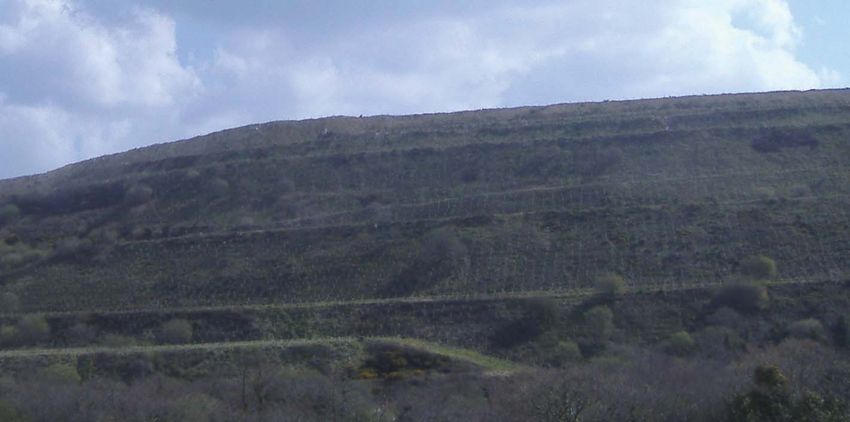
Upland Oak Woodland planting on a China clay tip, part of the China Clay Woodlands Project -Photo
Cheryl Marriott

A report for Natural England prepared by Cornwall Wildlife Trust as part
of the Cornwall Biodiversity Initiative

March 2008
Contents
Summary 4
1 Introduction 6
1.1 The aim of this report 6
1.2 Background to the landscape-scale projects 6
1.3 Biodiversity Action Plans 20
2 Methodology 21
2.1 Desk study of BAP habitats and species 21
2.2 Project activity information collection 21
3 Results 23
3.1 Explanation of results tables 23
3.2 Results- Tomorrow’s Heathland Heritage 25
China Clay Woodlands 29
Mid-Cornwall Moors LIFE project 32
HEATH Project 39
Waves of Heath 45
3.3 Results Overview 49
4 Conclusion/Recommendations 54
4.0 Conclusion 54
4.1 Recommendations 54
References 55
Appendix 1 – BAP habitat maps 56
Appendix 2 – Map of areas grazed through the Mid-Cornwall 68
Moors LIFE Project
List of Tables
Table 1 - Tomorrow’s Heathland Heritage Habitat Information
Table 2 - Tomorrow’s Heathland Heritage Species Information
Table 3 - China Clay Woodlands Habitat Information
Table 4 - China Clay Woodlands Species Information
Table 5 - Mid-Cornwall Moors LIFE Project Habitat Information
Table 6 - Mid-Cornwall Moors LIFE Project Species Information
Table 7 - HEATH Project Habitat Information
Table 8 - HEATH Project Species Information
Table 9 - Waves of Heath Project Habitat Information
Table 10 - Waves of Heath Project Species Information
Table 11 - Delivery against Regional HAPs
Table 12 - Delivery against National HAPsList of Maps Map 1 - Tomorrow’s Heathland Heritage Project Area Map 2 – China Clay Woodlands Project Area Map 3 - Mid-Cornwall Moors LIFE Project Area Map 4 - HEATH Project Area (whole area) Map 5 - HEATH Project Area (Penwith East) Map 6 - HEATH Project Area (Penwith Mid) Map 7 - HEATH Project Area (Penwith West) Map 8 - HEATH Project Area (Lizard) Map 9 - HEATH Project Area (Godolphin) Map 10 - HEATH Project Area (Redruth) Map 11 - HEATH Project Area (St Agnes) Map 12 - Waves of Heath Map 13 - Tomorrow’s Heathland Heritage BAP habitats Map 14 - China Clay Woodlands BAP habitats Map 15 - Mid-Cornwall Moors LIFE BAP habitats Map 16 - HEATH Project (whole area) BAP habitats Map 17 - HEATH Project (Penwith East) BAP habitats Map 18 - HEATH Project (Penwith Mid) BAP habitats Map 19 - HEATH Project (Penwith West) BAP habitats Map 20 - HEATH Project (Lizard) BAP habitats Map 21 - HEATH Project (Godolphin) BAP habitats Map 22 - HEATH Project (Redruth) BAP habitats Map 23 - HEATH Project Area (St Agnes) BAP habitats Map 24 – Goss Moor Grazing Map List of Graphs Graph 1 - Number of Cornwall BAP volume 3 HAPs and SAPs influenced and numbers of targets and actions contributed to by project Graph 2 – Number of HAPs and SAPs influenced and numbers of targets and actions contributed to by project.
Summary
x Natural England approached Cornwall Biodiversity Initiative in 2007 to look at
the impact that 5 landscape-scale projects in Cornwall have had with regard to
delivery of the Cornwall Biodiversity Action Plan (Vol 3). The projects are:
Tomorrow’s Heathland Heritage- Putting back the wild heart of
Cornwall
China Clay Woodland Project
Mid-Cornwall Moors Life Project
HEATH (Heathland, Environment, Agriculture, Tourism, Heritage)
Project
Waves of Heath
x An analysis of the initial extent of BAP habitat was completed for each project
area. This was done using BAP habitat information held on the Environmental
Records Centre for Cornwall and the Isles of Scilly (ERCCIS) Geographical
Information System (GIS).
x An analysis of BAP species was carried out using GIS and species records
held by ERCCIS. For each project a 500m buffer was drawn around clusters of
the separate project sites.
x Project Officers were asked to provide information on which BAP and non-BAP
habitats have been gained, lost or altered as part of the project activities.
x In total, 7 individual Habitat Action Plans (HAPs) and 29 Species Action Plans
(SAPs) in Cornwall BAP volume 3 were influenced by the projects. Eleven
HAP targets, 8 HAP actions, 36 SAP targets and 16 SAP actions were
contributed to overall.
x The Waves of Heath project activities have been related to the UK BAP since
the Isles of Scilly are not covered by the Cornwall BAP and as yet there is no
BAP for Scilly. Waves of Heath contributed to one national HAP, influencing
one HAP target, and 5 national SAPs, influencing 16 SAP targets.
x Two projects delivered against the lowland heathland management target T2 in
the local BAP, leading to an overall contribution of 2,261.3 hectares. No
percentage achievement can be given as the target is not SMART.
x Two projects delivered against the lowland heathland re-creation target T3 in
the local BAP, leading to an overall contribution of 185.5 hectares, 17.6% of the
target.
x Two projects delivered against the wet woodland restoration target T1 for
SSSIs and SACs in the local BAP, leading to an overall contribution of 254.7
hectares. The target is not SMART but an associated action is to restore 50
hectares so this has been exceeded several times over.
x The same 2 projects also delivered against the (very similar) wet woodland
restoration target T3 in the local BAP, leading to an overall contribution of
254.7 hectares. The target is to restore 50 hectares so again this has been
exceeded.x The contribution to some Regional BAP targets is significant. The Cornwall
projects collectively contribute to 13% of the lowland heathland maintenance
target, 19% of the lowland heathland restoration target, almost 6% of the
woodland restoration target, nearly 30% of the fen maintenance target and 5%
of the purple moor grass and rush pasture maintenance target.
x The contribution to some National BAP targets is significant. The Cornwall
projects collectively contribute to 4% of the lowland heathland maintenance
target, nearly 18% of the lowland heathland expansion target, 3.3% of the fen
maintenance target and 4.6% of the purple moor grass and rush pasture
maintenance target.
x Even taking into account the limitations of the methods used in this report it is
clear that significant contributions have been made towards BAP targets,
particularly when viewed against regional and national HAP targets. This
shows that the landscape scale projects studied have delivered very positive
changes for biodiversity in Cornwall.
x Various recommendations to take forward in future landscape scale projects
and recommendations for improvements that can be made to Cornwall BAP
volume 3 are suggested in section 4.1.1 Introduction 1.1 The aim of this report Natural England approached Cornwall Biodiversity Initiative in 2007 to look at the impact that 5 landscape-scale projects in Cornwall have had with regard to delivery of the Cornwall Biodiversity Action Plan (Vol 3). The projects are: x Tomorrows Heathland Heritage- Putting back the wild heart of Cornwall x China Clay Woodland Project x Mid-Cornwall Moors Life Project x HEATH (Heathland, Environment, Agriculture, Tourism, Heritage) Project x Waves of Heath Only one of these projects was complete at the time of writing but all have been running for several years. All five projects have/had specific targets for habitat creation and/or management. Some reporting against BAP targets has been carried out but this is fairly limited. This report aims to assess all five projects against BAP targets. It is hoped that the results will help to shape future landscape-scale projects in the county and that the simple methodology used here can be replicated elsewhere. 1.2 Background to the landscape-scale projects Tomorrows Heathland Heritage- Putting back the wild heart of Cornwall The Tomorrow's Heathland Heritage putting back the wild heart of Cornwall project is now complete. The project was a landscape scale post-mining regeneration project that successfully re-created lowland heathland on former china clay waste tips in the St Austell mining through a combination of re-seeding, scrub clearance and using traditional grazing methods. This was achieved through a partnership between English Nature (now Natural England), Imerys, Cornwall County Council and Goonvean and was supported by the Heritage Lottery Fund. Map 1 below shows the areas of heathland created through the project. China Clay Woodland Project The China Clay Woodland Project is an Objective One funded initiative to re-create and restore 800 ha of native broadleaf woodland. The project is a partnership between Imerys and Natural England and aims to create more than 339 hectares of new native broadleaf woodland on former china clay waste tips in mid-Cornwall. The project also aims to bring 400 hectares of existing woodland into sustainable management, with species such as conifers and rhododendron removed and replaced with tree species that are native to Cornwall. Map 2 below shows the area of woodland planted as part of the project. Mid-Cornwall Moors LIFE Project The Mid-Cornwall Moors LIFE Project is a partnership project that aims to improve the key habitats for the marsh fritillary in mid-Cornwall. Through the restoration of key habitats such as moor and wet and dry heaths, the Project also aims to benefit other important plant and animal species. The project is connected to the re-routing of the A30 trunk road; this provided an opportunity to reconnect patches of habitat. Map 3 below shows the areas that together make up the mid-Cornwall Moors LIFE Project.
HEATH (Heathland, Environment, Agriculture, Tourism, Heritage) Project
The HEATH project aims to lay the foundations for restoration of heathlands by re-
introducing traditional farming practices such as scrub clearance, grazing, bracken
control and controlled burning, to over 4000Ha of heathland. The project aims to
work on 58 sites across West Penwith, the Lizard and the North Coast of Cornwall.
Map 4 below shows the suite of sites involved in the project. Maps 5-11 show the
same sites on a smaller scale.

Waves of Heath
The Waves of Heath project is restoring 592 hectares (1,463 acres) of lowland
heathland on the Isles of Scilly. This is being achieved by scrub control through
cutting, rolling and burning. Reinstating grazing is also an important aspect of the
project. Map 12 below shows the Waves of Heath project sites.
Map 1

  Tomorrow's Heathland
        Heritage
      Project Area
Putting back the wild heart of Cornwall

    Scale 1:40,000 on A3
     This copy has been reproduced specifically to supply
     an individual with CWT information. No further copies
     may be made. The map is based on Ordnance Survey

                                                                                                ¯
      material with the permission of Ordnance Survey on
       behalf of the Controller of her Majestys Stationary
    Office (c) Crown Copyright. Unauthorised reproduction
    infringes Crown Copyright and may lead to prosecution
                                                             0   1,150   2,300   4,600 Meters
          or civil proceedings. Cornwall County Council
                          LA076538 2005
Map 2
China Clay Woodland
Project Area
Scale 1:38,500 on A3
¯
This copy has been reproduced specifically to supply
an individual with CWT information. No further copies
may be made. The map is based on Ordnance Survey
material with the permission of Ordnance Survey on
behalf of the Controller of her Majestys Stationary
Office (c) Crown Copyright. Unauthorised reproduction
infringes Crown Copyright and may lead to prosecution 0 1,100 2,200 4,400 Meters
or civil proceedings. Cornwall County Council
LA076538 2005Map 3
Mid-Cornwall Moors
LIFE Project Area
Scale 1:50,500 on A3
This copy has been reproduced specifically to supply
an individual with CWT information. No further copies
¯
may be made. The map is based on Ordnance Survey
material with the permission of Ordnance Survey on
behalf of the Controller of her Majestys Stationary
Office (c) Crown Copyright. Unauthorised reproduction
infringes Crown Copyright and may lead to prosecution
0 1,450 2,900 5,800 Meters
or civil proceedings. Cornwall County Council
LA076538 2005Map 4
HEATH Project Area
Scale 1:170,000 on A3
This copy has been reproduced specifically to supply
an individual with CWT information. No further copies
¯
may be made. The map is based on Ordnance Survey
material with the permission of Ordnance Survey on
behalf of the Controller of her Majestys Stationary
Office (c) Crown Copyright. Unauthorised reproduction
infringes Crown Copyright and may lead to prosecution
0 4,950 9,900 19,800 Meters
or civil proceedings. Cornwall County Council
LA076538 2005Map 5
HEATH Project
Penwith - East
Scale 1:33,500 on A3
This copy has been reproduced specifically to supply
an individual with CWT information. No further copies
¯
may be made. The map is based on Ordnance Survey
material with the permission of Ordnance Survey on
behalf of the Controller of her Majestys Stationary
Office (c) Crown Copyright. Unauthorised reproduction 0 1,000 2,000 4,000 Meters
infringes Crown Copyright and may lead to prosecution
or civil proceedings. Cornwall County Council
LA076538 2005Map 6
HEATH Project
Penwith - Mid
Scale 1:28,000 on A3
This copy has been reproduced specifically to supply
an individual with CWT information. No further copies
¯
may be made. The map is based on Ordnance Survey
material with the permission of Ordnance Survey on
behalf of the Controller of her Majestys Stationary
Office (c) Crown Copyright. Unauthorised reproduction 0 800 1,600 3,200 Meters
infringes Crown Copyright and may lead to prosecution
or civil proceedings. Cornwall County Council
LA076538 2005Map 7
HEATH Project
Penwith - West
Scale 1:21,500 on A3
This copy has been reproduced specifically to supply
an individual with CWT information. No further copies
¯
may be made. The map is based on Ordnance Survey
material with the permission of Ordnance Survey on
behalf of the Controller of her Majestys Stationary
Office (c) Crown Copyright. Unauthorised reproduction
0 625 1,250 2,500 Meters
infringes Crown Copyright and may lead to prosecution
or civil proceedings. Cornwall County Council
LA076538 2005Map 8
HEATH Project
The Lizard
Scale 1:37,000 on A3
This copy has been reproduced specifically to supply
an individual with CWT information. No further copies
¯
may be made. The map is based on Ordnance Survey
material with the permission of Ordnance Survey on
behalf of the Controller of her Majestys Stationary
Office (c) Crown Copyright. Unauthorised reproduction 0 1,100 2,200 4,400 Meters
infringes Crown Copyright and may lead to prosecution
or civil proceedings. Cornwall County Council
LA076538 2005Map 9
HEATH Project
Godolphin, Rosudgeon
and Praa Sands
Scale 1:20,500 on A3
This copy has been reproduced specifically to supply
an individual with CWT information. No further copies
¯
may be made. The map is based on Ordnance Survey
material with the permission of Ordnance Survey on
behalf of the Controller of her Majestys Stationary
Office (c) Crown Copyright. Unauthorised reproduction 0 600 1,200 2,400 Meters
infringes Crown Copyright and may lead to prosecution
or civil proceedings. Cornwall County Council
LA076538 2005Map 10
HEATH Project
Redruth Area
Scale 1:26,500 on A3
This copy has been reproduced specifically to supply
an individual with CWT information. No further copies
may be made. The map is based on Ordnance Survey
¯
material with the permission of Ordnance Survey on
behalf of the Controller of her Majestys Stationary
Office (c) Crown Copyright. Unauthorised reproduction
infringes Crown Copyright and may lead to prosecution
or civil proceedings. Cornwall County Council
0 750 1,500 3,000 Meters
LA076538 2005Map 11
HEATH Project
St Agnes Area
Scale 1:26,500 on A3
This copy has been reproduced specifically to supply
an individual with CWT information. No further copies
¯
may be made. The map is based on Ordnance Survey
material with the permission of Ordnance Survey on
behalf of the Controller of her Majestys Stationary
Office (c) Crown Copyright. Unauthorised reproduction
infringes Crown Copyright and may lead to prosecution
0 750 1,500 3,000 Meters
or civil proceedings. Cornwall County Council
LA076538 2005Map 12
Waves of Heath
Project Area
Key
Waves of Heath boundaries
This copy has been reproduced specifically to supply
an individual with CWT information. No furthur copies
may be made. This map is based upon Ordnance
Survey material with the permission of Ordnance Survey
on behalf of The Controller of Her majesty’s Stationery
Office © Crown copyright. Unauthorised reproduction
infringes Crown copyright and may lead to prosecution
or civil proceedings Cornwall County Council
LA 076538, 2006
0 750 1,500 3,000 Meters
Scale 1:47,0001.3 Biodiversity Action Plans The Cornwall Biodiversity Action Plan The Cornwall Biodiversity Action Plan has three parts: x Cornwall’s Biodiversity volume 1- Audit and Priorities (1997)1 x Cornwall’s Biodiversity volume 2- Action plans (1998) 2 x Cornwall’s Biodiversity volume 3- Action plans (2004) 3 Volume 1 set out to assess the status and trends in biodiversity in Cornwall and the main factors influencing those trends. Volume 1 also established priority species and habitats and made recommendations for immediate action. The species and habitat list in volume 1 was derived in part from the UK Biodiversity Steering Group long list of globally threatened and declining species. Local experts added additional species which they felt were of conservation concern in the county. Volume 2 sets out the action plans that resulted from focus groups formed to address the priorities highlighted in volume 1. Each action plan follows a set format and includes a table of actions showing lead and other partners. Volume 3 identifies all the UK Biodiversity Action Plan (UK BAP) Priority Habitats and Species that occur in Cornwall in order to guide local conservation work to contribute to UK BAP targets. Volume 3 compliments rather than replaces volumes 1 and 2. It was hoped that by ‘UK Proofing’ the Cornwall BAP, volume 3 would form a clearer link with national habitat and species actions. This would then enable the Cornwall Biodiversity Initiative (CBI) to identify any gaps in delivery of UK BAP actions and obtain funding for UK priority habitats and species. Isles of Scilly BAP The Cornwall BAP volume 3 does not include the Isles of Scilly. A BAP audit of the Isles of Scilly has recently been completed by the Environmental Records Centre for Cornwall and the Isles of Scilly (ERCCIS), but no plan has yet been produced. For this reason, the outcomes of the Waves of Heath Project will be measured against the regional and UK BAP rather than a local BAP. UK Biodiversity Action Plan Review At the time of writing the UK BAP list had been updated and approved but the England list was not yet published. Work is planned to incorporate the new England BAP list into Cornwall’s Biodiversity volume 3 but has not yet started. For this reason, this report relates to the UK BAP list prior to it being updated in 2007.
2 Methodology 2.1 Desk study of BAP habitats and species Habitats An analysis of BAP habitat was completed for each project. This was done using BAP habitat information held on the ERCCIS Geographical Information System (GIS). Digital project boundaries were used to calculate the area of mapped BAP habitat on each of the separate sites which make up each of the five projects. The BAP habitats information used is that which was mapped as part of the NBN pilot BAP habitat mapping work completed in 2005/06. This does introduce a possible source of error but it is the best information currently available to us. The methodology used in the BAP habitat mapping means that some areas are classed as ‘definitely present within the polygon but not mappable’ or ‘probably the priority habitat but some uncertainty of interpretation’. It is possible for one area to be classed as 2 different priority habitat types under these categories. Where this was the case, for example for large areas of Goss Moor in the mid-Cornwall Moors LIFE project, advice was taken from the Project Officers as to which habitat to class the area as. At the time of writing digital BAP habitat information was not available for the Isles of Scilly. Instead, information from project officers was used to determine the habitat types on project sites. Maps showing the extent of BAP habitat are shown on maps 13-23 in appendix 1. Species An analysis of BAP species was carried out using GIS and species records held by ERCCIS. For each project a 500m buffer was drawn around clusters of the separate project sites. Records of BAP species within those areas were then compiled. The resultant BAP species lists were reviewed by ERCCIS staff, CWT staff and in some cases, the Project Officers. BAP species that were thought likely to be on the sites but which are generally under-recorded, such as relatively common species, were added to the lists. Likewise, BAP species which were on the lists but which were thought unlikely to be found on the habitat types on the project sites were removed. 2.2 Project activity information collection Project Officers were asked to provide information on which BAP and non-BAP habitats have been gained, lost or altered as part of the project activities. The format and level of detail of this information vary greatly between the 5 projects: Tomorrows Heathland Heritage- Putting back the wild heart of Cornwall A GIS layer of the area of lowland heath created was supplied. Project Officers from the mid-Cornwall Moors LIFE project and the China Clay Woodland project were able to give information on the likely BAP species impacts of the project. China Clay Woodland Project A GIS layer of the area of woodland planted up to the end of 2007 was supplied, but it is recognised that further planting has taken place since. However, figures were supplied for the area of planting and woodland restoration by the Project Officer and these include the area that the Project Officer was confident would be complete before the end of the project.
The Project Officer and the mid-Cornwall Moors LIFE Project Officer gave information on the likely BAP species impacts of the project activities. Mid-Cornwall Moors Life Project A GIS layer of the project area was supplied. A GIS layer of the areas of the project that have been brought back into grazing was supplied (see appendix 2). Verbal information on other project activities was given, but collated figures for the area of track cutting, heathland burning and scrub clearance were not available at the time of writing. The Project Officer gave information on the likely BAP species impacts of the project activities. HEATH (Heathland, Environment, Agriculture, Tourism, Heritage) Project A GIS layer of the project area was supplied. Information on the area of new or improved grazing, heathland re-creation, scrub clearance and bracken clearance for each project site was supplied. For sites where the work is not yet complete, figures were included where the Project Officers were confident that the work would go ahead before the end of the project. Waves of Heath A GIS layer of the project area was supplied. A detailed breakdown of the grazing, burning, scrub and bracken clearance on project sites over 4 years was supplied. Unfortunately, whilst the information was very detailed, it was not possible to determine how much of the management over the 4 years was repeated on the individual sites, and how much was new. We have assumed that most of the management has been repeated year on year, so took the areas managed in year 4 to represent the total area under that form of management.
3 Results
3.1 Explanation of results tables
Tables on the pages that follow include information on the project activities for each
of the 5 projects and how this relates to BAP targets and actions. An explanation of
each of the column headings is provided below.

Habitats
Initial extent -The initial extent of the habitat in the project area is listed in hectares.

Re-creation gain - Where new priority habitat has been created as part of a project
the extent is given in hectares.

Loss due to project activities - Where an area of habitat has been lost due to project
activities the area in hectares is given, if known.

Positive habitat modification - Where an area of habitat has been modified in a
positive way due to project activities the area in hectares is given, if known.

Negative habitat modification - Where an area of habitat has been modified in a
negative way due to project activities the area in hectares is given, if known.

Relevant HAP targets - This lists the Cornwall BAP volume 3 Habitat Action Plan
Targets that have been delivered as part of the project (or UK BAP targets in the
case of the Isles of Scilly Waves of Heath project). Reference numbers already used
in the Cornwall entries on the Biodiversity Action Reporting System (BARS see
www.ukbap-reporting.org.uk ) are used. The habitat coding uses an abbreviation of
the habitat name, for example, target 1 for lowland heathland is ‘Habitat_LH_T1’.

Target achieved? - Where the HAP targets are SMART (Specific, Measurable,
Achievable, Relevant, Trackable) and there is enough information, a percentage
achievement of the individual target has been calculated. Where a percentage
cannot be given due to a lack of information or a SMART target a comment is
included if it is thought the target is achieved in part.

Relevant HAP actions - This lists the Cornwall BAP volume 3 Habitat Action Plan
actions that have been delivered as part of the project (or UK BAP actions in the
case of the Isles of Scilly Waves of Heath project). As above, reference numbers
already used in the Cornwall entries on the Biodiversity Action Reporting System are
used. This analysis concentrates on actions relating directly to habitats, particularly
the ‘site safeguard and management’ actions.

Action achieved? - Where the HAP actions are SMART and there is enough
information, a percentage achievement of the individual action has been calculated.
Where a percentage cannot be given due to a lack of information a comment is
included if it is thought the action is achieved in part.

Species
ERCCIS records -This lists the date of the most recent record held at ERCCIS for
BAP species for the project sites and surrounding area. This list has been trimmed
down by ERCCIS, CWT and Project staff by removing species thought unlikely to be
present in the habitats found on project sites. For example a rare lichen found on
bare china clay deposits came up in the mid-Cornwall Moors desk study but clearly is
not relevant to the wet heath habitats of the project area.
Information from Project Officer/ERCCIS Staff/CWT Staff -Brief details of the habitat
requirements of the species and/or the relevance of the project activities to that
species help to illustrate how the BAP actions and targets were assigned.

Relevant SAP targets -This lists the Cornwall BAP volume 3 Species Action Plan
targets that have been delivered as part of the project (or UK BAP targets in the case
of the Isles of Scilly Waves of Heath project). Reference numbers already used in the
Biodiversity Action Reporting System (BARS) are used; the species coding uses the
species group and an abbreviation of the Latin name of the species. For example
target 1 for linnet is ‘Bird_CC_T1’. This analysis concentrates on actions relating
directly to species, particularly the ‘species management and protection’ actions.

Target achieved? -Where the SAP targets are SMART and there is enough
information, a percentage achievement of the individual targets has been calculated.
Where a percentage cannot be given due to a lack of information or a SMART target
a comment is included if it is thought the target is achieved in part.

Relevant SAP actions -This lists the Cornwall BAP volume 3 Species Action Plan
actions that have been delivered as part of the project (or UK BAP actions in the
case of the Isles of Scilly Waves of Heath project). As above, reference numbers
already used in the Biodiversity Action Reporting System (BARS) are used. This
analysis concentrates on actions relating directly to species, particularly the ‘species
management and protection’ actions.

Action achieved? Where the SAP targets are SMART and there is enough
information, a percentage achievement of the individual action has been calculated.
Where a percentage cannot be given due to a lack of information a comment is
included if it is thought the action is achieved in part.
3.2 Results

Tomorrows Heathland Heritage- Putting back the wild heart of
Cornwall
Table 1 - China Clay THH - Habitat Information
                         Initial extent       Re-creation         Loss due to       Positive habitat negative habitat Relevant HAP targets                                                  Target      Relevant HAP actions                                               Actions
                         (ha)                 gain (ha)           project actions   modification     modification                                                                           achieved?                                                                      achieved?
                                                                  (ha)              (ha)             (ha)

BAP habitat
                                                                                                                                     Changes in this habitat due to the activities of the
Fen                                   0.17                                                                                           THH project are thought unlikely.
                                                                                                                                                                                        17% of target   Habitat_LH_5.2. Achieve 750ha of heathland re-creation in the St   24% of the
                                                                                                                                   Re-establish 1050ha of lowland heathland in achieved                 5               Austell heathland sub-zone of the mid-Cornwall     action achieved
Lowland heathland                         0                 181                                                      Habitat_LH_T3 Cornwall, consolidating the existing blocks.                                         moors heathland zone.
                                                                                                                                   Changes in this habitat due to the activities of the
Wet woodland                          0.14                                                                                         THH project are thought unlikely.
Table 2 - THH China Clay Heaths - Species Information
BAP Species ERCCIS Information from Relevant SAP target Target Relevant SAP action Action
Records Project staff/ERCCIS achieved? achieved?
staff/CWT staff
Vascular plants: Euphrasia Vigur's Fencing and Vplant_EV_ Enhance population numbers through Target not very
vigursii eyebright reintroduction of grazing T2 experimental management at a range of extant SMART but
likely to have a positive sites. Light grazing and the associated trampling some positive
impact if the species can of paths may well prove effective. Increasing the effect possibly
spread to project sites. number of footpaths criss-crossing the coastal achieved as part
heaths may well be beneficial too. of this project,
monitoring
required.
Eurodryas marsh fritillary 1990 Some fencing was Butterfly_EA Ensure 80% of marsh fritillary sites are in Target achieved Butterfly_EA Encourage favourable management of all known Action achieved
aurinia completed on Retire _T1 appropriate management regimes. in part _5.2.3 sites and associated potential sites. in part
common and cattle grids
were put on Goss Moor,
this allowed grazing so
should have had a
positive impact.
Butterfly_EA Maintain at least the same number of sites and Target achieved Butterfly_EA Encourage the formation of large site networks Action achieved
_T2 colonies as known in 2000 in part _5.2.4 and viable meta-populations centred around large in part
or medium sized colonies.
Butterfly_EA Ensure that at least 5 sites in each key area (mid- Target achieved
_T3 Cornwall moors, the Culm measures, Bodmin in part due to
Moor) are managed for marsh fritillary as a this project
primary management objective.
Plebejus argus silver-studded Habitat creation and Butterfly_PA Maintain populations at all known sites. Achieved in part Butterfly_PA Where possible, increase the available habitat at Action achieved
blue management should _T1 _5.2.2 known sites and adjacent areas, and attempt to in part
have had a positive link up existing fragments of habitat within 0.6 –
impact. 1.0km of each other.
Butterfly_PA Restore suitable heathland habitat, initially Action achieved
_5.2.3 concentrating on abandoned metalliferous mining in part
areas.
Birds: Alauda arvensis s kylark 1994 New breeding Bird_AA_T1 Maintain the 2004 breeding population and range. Project work is
opportunities created. likely to have
contributed to
this target.
Bird_AA_T2 The priority for skylark is to promote widespread Target is not
sympathetic land management, particularly in key SMART, but the
areas. project has
achieved it in
part.
Caprimulgus nightjar 1992 New breeding Bird_AA_T1 Maintain the 2004 population: c30 males at c15 Project work is Bird_AA_5.2 Ensure specific management of all key sites for Action achieved
europaeus opportunities created. sites. likely to have .3 nightjar. in part
contributed to
this target.
Bird_AA_T2 Increase the numbers and range of nightjar to 50 Project work is
males at c20 sites by 2010. likely to have
contributed to
this target.
BAP Species ERCCIS Information from Relevant SAP target Target Relevant SAP action Action
Records Project staff/ERCCIS achieved? achieved?
staff/CWT staffBirds: Carduelis linnet recent New suitable habitat Bird_CC_T1 In the short term, maintain current population and Target achieved
cannabina created. range within Cornwall. in part
Bird_CC_T2 In the long term, see a sustained recovery in Target may be
numbers and evidence of significant increases in achieved in part
population within key areas – coastal strip, Lizard, but monitoring is
West Penwith, Bodmin Moor and the mid-Cornwall required.
moors.
Emberiza reed bunting 1968 Management work on Bird_ES_T1 In the short term, maintain the 2004 population Target achieved
schoeniclus Hensbarrow expected to and range. in part
have a positive impact.
Bird_ES_T2 In the long term, see a sustained recovery in Target may be
numbers, with measurable increases within key achieved in part
areas. but monitoring is
required.
Mammals: Pipistrellus pipistrelle bat 2005 Habitat creation likely to Mammal_M Maintain the existing populations and range of Target achieved
pipistrellus & P. have provided foraging A_T1 pipistrelles (based on 2004) in Cornwall. in part
pygmaeus habitat.
Mammal_M Wherever possible achieve an increase in Target may be
A_T3 population within the county by improving habitats achieved in part
and safeguarding linear landscape features. but monitoring is
required.
Rhinolophus greater 2004 Habitat creation likely to Mammal_R Facilitate an increase in the population within the Target achieved
ferrumequinum horseshoe bat have provided foraging F_T2 county by protecting and where necessary in part
habitat. improving roost sites and the surrounding foraging
habitat and commuting routes.
Rhinolophus lesser 2005 Habitat creation likely to Mammal_R Facilitate an increase in the population within the Target achieved
hipposideros horseshoe bat have provided foraging H_T2 county by improving habitats and connectivity in part
habitat. between existing roosts.China Clay Woodland Project
Table 3 - China Clay Woodland- Habitat information
                                       Initial       Re-creation       Loss due to           Positive habitat negative habitat Relevant HAP Targets                                               Target      Relevant HAP actions                                          Action
                                       extent        gain (ha)         project actions       modification     modification                                                                        achieved?                                                                 achieved?
                                       (ha)                            (ha)                  (ha)             (ha)

BAP habitat
Fen                                    0.81          0                 Woodland only         0                 0
Lowland heathland                      1.63          0                 planted where         0                 0
Purple Moor Grass and Rush Pasture     0             0                 there has been        0                 0
Wet woodland                           0             0                 tipping so no         0                 0
New upland oak ash woodland (alder     0             358               loss.                 0                 0               Habitata_UO_T Expand the area in Cornwall of well-managed oak Target not       5.2.12         Expand the area in Cornwall of well-managed oak Action 100%
as pioneer to be removed in future)                                                                                            3             woodland with a diverse and characteristic      SMART                           woodland with a diverse and characteristic        achieved
                                                                                                                                             community of animals and plants, without                                        community of animals and plants, without
                                                                                                                                             consequent loss of other semi-natural habitats.                                 consequential loss of other semi-natural habitats
                                                                                                                                                                                                                             by about 10% (140ha), particularly through
                                                                                                                                                                                                                             expansion into currently open ground by planting
                                                                                                                                                                                                                             and natural regeneration, and restocking conifer
                                                                                                                                                                                                                             sites adjacent to oak woodland with native
                                                                                                                                                                                                                             broadleaf species. Specific target 150ha by 2005.

Non-BAP habitats
Scrub                                                                                                                                         See species section
                                                                                                                                              Rhododendron and other exotic species removed
                                                                                                                                              from shelter belts, presume no negative impact on
Other woodland not classified as BAP          280                  0                     0              280                0                  BAP species.
Fencing (>8km) has allowed some                                                                                                               Will have contributed to the THH project
THH sites to be grazed                        39.4                 0                     0              39.4               0                  outcomes, so picked up in that section.
Table 4- China Clay Woods - Species Information
Species Group BAP Species ERCCIS Information from Relevant SAP target Target Action ref Action Text Action
Records Project staff/ERCCIS Achieved? achieved?
staff/CWT staff
Birds: Caprimulgus nightjar 1992 Early stages of woodland Bird_CE_T2 Increase the numbers and range of nightjar to 50 Target may be
europaeus growth may benefit the males at c20 sites by 2010. achieved in part
species and in the longer but monitoring is
term woodland edge will required.
be created.
Carduelis linnet There are recent records Bird_CC_T2 In the long term, see a sustained recovery in Target may be
cannabina on site. There has been numbers and evidence of significant increases in achieved in part
some gorse clearance population within key areas – coastal strip, Lizard, but monitoring is
prior to planting which West Penwith, Bodmin Moor and the mid-Cornwall required.
may have had a slight moors.
temporary negative
impact, early stages of
woodland growth and
creation of woodland
edge may negate this so
overall no impact.
Emberiza reed bunting 1968 Short term positive whilst Bird_ES_T1 In the short term, maintain the 2004 population Target achieved
schoeniclus new woodlands are in and range. in part
early stages of growth.
Muscicapa spotted 1986 Long term positive due to Bird_MS_T1 In the short term, maintain the 2004 population Target achieved
striata flycatcher creation of new and range in Cornwall. in part
woodland.
Pyrrhula bullfinch 1991 Short term positive whilst Bird_PPv_T In the short term, maintain the 2004 population Target achieved
pyrrhula new woodlands are in 1 and range in Cornwall. in part
early stages of growth,
long term positive due to
creation of woodland
edge habitat
Turdus song thrush 1991 Creation of woodland Bird_TP_T1 Maintain the 2004 population and range in Target achieved
philomelos and woodland edge likely Cornwall. in part
to be slight positive.
Mammals: Lutra lutra European otter 1993 Planting of woodlands in Mammal_LL Expand the 2004 otter populations. Target may be Mammal_LL Secure appropriate management of riparian Action achieved
river valleys will provide _T2 achieved in part _5.2.2 habitats and catchments in woodlands to enhance in part
cover and potential holt but monitoring is otter populations.
sites in the longer term. required.
Muscardinus Dormouse Woodland and woodland Mamal_MA_ Ensure no loss of the 2004 range in Cornwall. Target may be Mammal_M Encourage the management of woodlands and Action achieved
avellanarius edge creation likely to be T1 achieved in part A_5.2.3. hedgerows so as to maintain 2004 populations in part
positive long term. but monitoring is and prevent habitat fragmentation.
required.
Pipistrellus pipistrelle bat 1991 Early stages of the MammalPPi Maintain the existing populations and range of Target achieved
pipistrellus & P. woodland growth and _T1 pipistrelles (based on 2004) in Cornwall. in part
pygmaeus woodland edge habitat
will provide foraging
opportunities .
Mammal_P Wherever possible achieve an increase in
Pi_T3 population within the county by improving habitats
and safeguarding linear landscape features.
Rhinolophus greater Not recorded on the Mammal_R Facilitate an increase in the population within the Target may be
ferrumequinum horseshoe bat project sites but are in F_T2 county by protecting and where necessary achieved in part
the area so early stages improving roost sites and the surrounding foraging but monitoring is
of the woodland growth habitat and commuting routes. required.
and woodland edge
habitat will provide
foraging opportunities.
Rhinolophus lesser 1992 Early stages of the Mammal_R Facilitate an increase in the population within the Target may be
hipposideros horseshoe bat woodland growth and H_T2 county by improving habitats and connectivity achieved in part
woodland edge habitat between existing roosts. but monitoring is
will provide foraging required.
opportunities.Mid-Cornwall Moors Life Project
Table 5 - Mid-Cornwall Moors LIFE - Habitat Information
Initial extent Re-creation gain Loss due to Positive habitat negative habitat Relevant HAP targets Target Relevant HAP actions Action
(ha) (ha) project actions modification modification achieved? achieved?
(ha) (ha) (ha)
BAP habitat
Fen 211.93 0 0 186 0 Habitat_F_T2 Maintain and where necessary restore favourable Target not 5.2.3 Secure favourable management of all significant Part achieved
habitat condition on all key fen sites including the SMART fen sites designated as SSSI.
maintenance and restoration of sustainable
management regimes.
Habitat_F_T6 Within SSSIs instigate appropriate management Target not
so that all significant stands of fen are in SMART
favourable condition by 2010.
Lowland heathland 194.67 0 0 131 0 Habitat_LH_T2 Ensure that all viable heathland blocks are Target not 5.2.4 Source and encourage grazing animals and Part achieved
managed appropriately to restore and enhance SMART markets. Link with economic initiatives relevant to
their biodiversity. heathland management, especially development
of extensive grazing and markets. Link with
initiatives on the THH mid-Cornwall Project,
Bodmin Moor and mid-Cornwall LIFE Project
Purple moor grass and rush pasture 306.08 0 0 272 0 Habitat_PMGR Arrest the depletion of surviving purple moor Target not
P_T1 grass and rush-pasture throughout Cornwall (eg - SMART
area of Culm grassland in North Cornwall last
recorded in 1999 at 349ha).
Habitat_PMGR Within SSSIs in Cornwall, initiate rehabilitation Target not
P_T2 management for all significant stands of purple SMART
moor grass and rush pasture in unfavourable
condition by 2005 (eg - unfavourable area of Culm
grassland in North Cornwall SSSIs recorded in
2002-03 at 64ha).
Wet woodland 308.68 0 216 0 Habitat_WW_T1 Initiate re-habilitation management for wet Target not 5.2.7 Encourage the restoration of at least 50ha of wet Action achieved
woodlands within SSSIs and cSACs by 2004. SMART woodland
Achieve favourable condition, or unfavourable
recovering condition, in all significant stands of
wet woodland within SSSIs and cSACs by 2010.
Habitat_WW_T3 Identify and encourage the restoration of at least Target Achieved
50ha of woodland wherever possible extending or
linking existing woodland
Non-BAP habitat
Scrub- Gorse See species table
Scrub- Willow See species table
Bracken See species tableTable 6 - Mid-Cornwall Moors - Species Information
Species Group BAP Species ERCCIS Information from Relevant SAP target Target Relevant SAP action Action
Records Project staff/ERCCIS achieved? achieved?
staff/CWT staff
Vascular plants: Euphrasia Vigur's 2000 Scrub clearance and Vplant_EV_ Enhance population numbers through Target not very Vplant_EV_ Promote beneficial management at all extant sites
vigursii eyebright bringing sites back into T2 experimental management at a range of extant SMART but 5.2.1 plus heathland sites where it formerly occurred.
grazing should have a sites. Light grazing and the associated trampling some positive
positive impact. of paths may well prove effective. Increasing the effect possibly
number of footpaths criss-crossing the coastal achieved as part
heaths may well be beneficial too. of this project,
monitoring
required.
Lycopodiella marsh clubmoss 2002 Bringing sites back into Moss_LI_T1 Maintain and increase the population of the Target not very
inundata management by grazing, species at Retire Common. SMART but
burning and scrub possibly
clearance should help. achieved as part
of this project,
monitoring
required.
Mentha pennyroyal 1909 Not recorded for a long Vplant_MP_ Ensure appropriate habitat management to Action may
pulegium time but current 5.2.3 encourage existing populations to spread, have been
management would incorporating it into agri-environment schemes. achieved in part
favour the species if it but monitoring is
were to spread back. required to
check current
status of the
species on
project sites.
Pilularia pillwort 2002 Reintroduction of grazing Vplant_PG_ Maintain the 2004 range of pillwort in Cornwall. Target may Vplant_PG_ Re-introduce suitable management to old sites Action achieved
globulifera on sites and resultant T1 have been 5.2.2 where possible. in part
poaching should be avhieved in part
beneficial. but monitoring
required
Ranunculus three-lobed 2002 Reintroduction of grazing Vplant_RT_ Maintain viable populations at all extant sites. Target achieved
tripartitus water-crowfoot on sites and resultant T1 in part
poaching, and scrub
management has been
beneficial and this
species has increased
on the project sites.
Flies: Asilus hornet robberfly Not recorded here but Fly_AC_5.2. Promote favourable management in all SSSIs and Action achieved
crabroniformis management should 1 nature reserves where the species occurs, or in part
favour it if it can spread formerly occurred.
into the area.Species Group BAP Species ERCCIS Information from Relevant SAP target Target Action ref Relevant SAP action Action
Records Project staff/ERCCIS achieved? achieved?
staff/CWT staff
Bees: Bombus humilis brown carder 1997 Reintroduction of grazing Bee_BH_T1 Maintain populations at all known sites. Target may Bee_BH_5.2 Where possible, ensure that all occupied and Action achieved
bumblebee and scrub clearance have been .1 nearby potential habitat is appropriately managed in part assuming
should help. achieved in part by 2008, for example through SSSI or agri- that the species
but monitoring is environment scheme management agreements. is still found in
required to the area
check current
status of the
species on
project sites.
Butterflies: Eurodryas marsh fritillary 2002 Project sites managed Butterfly_EA Ensure 80% of marsh fritillary sites are in Target achieved Butterfly_EA Encourage favourable management of all known Action achieved
aurinia specifically for this _T1 appropriate management regimes. in part _5.2.3 sites and associated potential sites. in part
species; scrub
clearance, reintroduction
of grazing and controlled
burning.
Butterfly_EA Maintain at least the same number of sites and Target achieved Butterfly_EA Encourage the formation of large site networks Action achieved
_T2 colonies as known in 2000. in part _5.2.4 and viable meta-populations centred around large in part
or medium sized colonies.
Butterfly_EA Ensure that at least 5 sites in each key area (mid- Yes - achieved
_T3 Cornwall moors, the Culm measures, Bodmin for the mid-
Moor) are managed for marsh fritillary as a Cornwall moors
primary management objective. key area
Plebejus argus silver-studded Known on project sites. Butterfly_PA Maintain populations at all known sites. Achieved in part Butterfly_PA Where possible, increase the available habitat at Action achieved
blue Reinstatement of _T1 _5.2.2 known sites and adjacent areas, and attempt to in part
heathland management link up existing fragments of habitat within 0.6 –
should help. 1.0km of each other.
Butterfly_PA Restore suitable heathland habitat, initially Action achieved
_5.2.3 concentrating on abandoned metalliferous mining in part
areas.
Moths: Hemaris tityus narrow- No recent records but Moth_HT_5. Encourage an increase in the available habitat Action achieved
bordered bee may be under-recorded. 2.1 and attempt to link up existing fragments of in part
hawk Uses same food plant as habitat.
marsh fritillary so
reinstatement of
heathland management
is beneficial if this
species is still on site.
Hydrelia sylvata waved carpet 1989 Status on project sites Moth_HS_T Maintain populations at all known sites. Target may Moth_HS_5. Where possible, ensure that five main occupied Action may
not known but scrub 1 have been 2.1 sites are appropriately managed, for example have been
clearance and track achieved in part through SSSI or WGS management agreements. achieved in part
creation/clearance but monitoring is but monitoring is
positive if they are on required to required to
project sites. check current check current
status of the status of the
species on species on
project sites. project sites.Species Group BAP Species ERCCIS Information from Relevant SAP target Target Action ref Relevant SAP action Action
Records Project staff/ERCCIS achieved? achieved?
staff/CWT staff
Moths: Mythimnia turca double line 1985 There are more recent Moth_MT_T Maintain populations at all known sites. Target may Moth_MT_5. Where possible, ensure that all occupied habitat is Action may
records and Adrian 1 have been 2.1 appropriately managed by 2008, for example have been
Spalding has done some achieved in part through SSSI or agri-environment scheme achieved in part
survey work. Work on but monitoring is management agreements. but monitoring is
sites to maintain a required to required to
mosaic of habitats check current check current
should have a positive status of the status of the
effect species on species on
project sites. project sites.
Birds: Alauda arvensis s kylark 2001 Reinstated heathland Bird_AA_T1 Maintain the 2004 breeding population and range. Project work is
management and likely to have
maintenance of habitat contributed to
mosaic should be this target.
positive.
Bird_AA_T2 The priority for skylark is to promote widespread Target is not
sympathetic land management, particularly in key SMART, but the
areas. project has
achieved it in
part.
Caprimulgus nightjar 1967 There are recent records Bird_CE_T1 Maintain the 2004 population: c30 males at c15 Project work is Bird_CE_5.2 Ensure specific management of all key sites for Action achieved
europaeus on Criggan Moor and sites. likely to have .3 nightjar. in part
Hensbarrow, reinstated contributed to
heathland management this target.
and scrub clearance may
be beneficial.
Bird_CE_T2 Increase the numbers and range of nightjar to 50 Project work is
males at c20 sites by 2010. likely to have
contributed to
this target.
Carduelis linnet 1981 These are still present on Bird_CC_T1 In the short term, maintain current population and Target achieved
cannabina project sites. Scrub range within Cornwall. in part
control and low intensity
grazing should have
benefitted this species.
Bird_CC_T2 In the long term, see a sustained recovery in Target may be
numbers and evidence of significant increases in achieved in part
population within key areas – coastal strip, Lizard, but monitoring is
West Penwith, Bodmin Moor and the mid-Cornwall required.
moors.
Emberiza reed bunting 1993 Still on project sites. Bird_ES_T1 In the short term, maintain the 2004 population Target achieved
schoeniclus Management to retain and range. in part
habitat mosaics with
plenty of wet, open areas
should be beneficial.
Bird_ES_T2 In the long term, see a sustained recovery in Target may be
numbers, with measurable increases within key achieved in part
areas. but monitoring is
required.
Muscicapa spotted 1993 Still here, expansion of Bird_MS_T1 In the short term, maintain the 2004 population Target achieved
striata flycatcher grazing and positive and range in Cornwall. in part
woodland edge
management should
have helped.Species Group BAP Species ERCCIS Information from Relevant SAP target Target Action ref Relevant SAP action Action
Records Project staff/ERCCIS achieved? achieved?
staff/CWT staff
Birds: Muscicapa spotted Bird_MS_T2 In the long term, recover population to former Target may be
striata flycatcher levels. achieved in part
but monitoring is
required.
Pyrrhula bullfinch 1968 Still on project sites. Bird_PPv_T In the short term, maintain the 2004 population Target achieved
pyrrhula Opening up tracks and 1 and range in Cornwall. in part
blackthorn management
may lead to a slight
positive impact.
Bird_PPv_T In the long term, recover population and range to Target may be
2 former levels. achieved in part
but monitoring is
required.
Turdus song thrush 1981 Maintenance of mosaic Bird_TP_T1 Maintain the 2004 population and range in Target achieved
philomelos of habitats likely to be Cornwall. in part
slight positive.
Mammals: Lutra lutra European otter 2006 The river restoration part Mammal_LL Maintain the 2004 otter populations. Target achieved Mammal_LL Secure appropriate management of riparian Action achieved
of the project and _T1 in part _5.2.2 habitats and catchments in woodlands to enhance in part
hydrological otter populations.
management on
Redmoor should be
beneficial.
Mammal_LL Expand the 2004 otter populations. Target may be
_T2 achieved in part
but monitoring is
required.
Muscardinus dormouse 2006 Maintenance of habitat Mammal_M Ensure no loss of the 2004 range in Cornwall. Target achieved Mammal_M Encourage the management of woodlands and Action achieved
avellanarius mosaics should have a A_T1 in part A_5.2.3 hedgerows so as to maintain 2004 populations in part
long-term positive impact and prevent habitat fragmentation.
on availability of food
supply despite impacts of
scrub clearance and
uncontrolled burning.
Pipistrellus pipistrelle bat 2006 Maintenance of habitat Mammal_Pp Maintain the existing populations and range of Target achieved
pipistrellus & P. mosaics should have a i_T1 pipistrelles (based on 2004) in Cornwall. in part
pygmaeus long-term positive impact
on availability of food
supply.
Mammal_P Wherever possible achieve an increase in Target may be
Pi_T3 population within the county by improving habitats achieved in part
and safeguarding linear landscape features. but monitoring is
required.
Rhinolophus greater Maintenance of habitat Mammal_R Facilitate an increase in the population within the Target achieved
ferrumequinum horseshoe bat mosaics should have a F_T2 county by protecting and where necessary in part
long-term positive impact improving roost sites and the surrounding foraging
on availability of food habitat and commuting routes.
supply.Rhinolophus lesser 2004 Maintenance of habitat Mammal_R Facilitate an increase in the population within the Target achieved
hipposideros horseshoe bat mosaics should have a H_ county by improving habitats and connectivity in part
long-term positive impact between existing roosts.
on availability of food
supply.HEATH (Heathland, Environment, Agriculture, Tourism, Heritage) Project
Table 7 - HEATH Project - Habitat Information
Initial extent Re-creation Loss due to Positive habitat negative habitat Relevant HAP targets Target achieved? Relevant HAP actions Actions
(ha) gain (ha) (or m project actions modification (ha modification achieved?
for hedges) (ha) or m of hedge) (ha)
BAP habitat
Lowland heathland: 3171.07
Brought back into grazing 2021.14 Habitat_LH_T2 Ensure that all viable heathland blocks are Target not SMART Habitat_LH_5.2. Source and encourage grazing animals and Action achieved
managed appropriately to restore and enhance 4 markets. Link with economic initiatives relevant to in part
their biodiversity heathland management, especially development
of extensive grazing and markets. Link with
initiatives on the THH mid-Cornwall Project,
Bodmin Moor and mid-Cornwall LIFE Project.
Brought into more appropriate grazing 109.2 Habitat_LH_T2 Ensure that all viable heathland blocks are Target not SMART Habitat_LH_5.2. Source and encourage grazing animals and Action achieved
managed appropriately to restore and enhance 4 markets. Link with economic initiatives relevant to in part
their biodiversity heathland management, especially development
of extensive grazing and markets. Link with
initiatives on the THH mid-Cornwall Project,
Bodmin Moor and mid-Cornwall LIFE Project.
Heathland re-creation 4.5 Habitat_LH_T3 Re-establish 1050ha of lowland heathland in 0.43% of target achieved Habitat_LH_5.2. Achieve 50ha of heathland recreation in the Lizard 1% achieved
Cornwall, consolidating the existing blocks 8 heathland zone.
Habitat_LH_5.2. Achieve 100ha of heathland recreation in the 1% achieved
9 Penwith heathland zone
Habitat_LH_2.2. Achieve 100ha of heathland recreation in the 3% achieved
10 north Coast heathland recreation zone.
Ancient and/or species rich hedges 1715 Habitat_ASRH_ Encourage an increase in valuable hedge habitat Target not SMART Habitat_ASRH_ Promote the creation of new hedges using local Achieved in part
T7 over time. 5.2.2 techniques, traditions, materials and locally native
species.
Fen 77.99 Unknown Habitat_F_T2 Maintain and where necessary restore favourable Target probably achieved in part were fen sites Habitat_F_5.2.3 Secure favourable management of all significant Achieved in part
habitat condition on all key fen sites including the have been brought back into grazing, but no fen sites designated as SSSI.
maintenance and restoration of sustainable information is yet available on the area of fen
management regimes. being grazed
Wet woodland 38.69 Unknown Habitat_WW_T Initiate re-habilitation management for wet Target probably achieved in part where wet Habitat_WW_5. Encourage the restoration of at least 50ha of wet Action probably
1 woodlands within SSSIs and cSACs by 2004. woodland areas have been brought back into 2.7 woodland achieved in part
Achieve favourable condition, or unfavourable grazing, but no information is yet available on the where wet
recovering condition, in all significant stands of area of wet woodland being grazed woodland areas
wet woodland within SSSIs and cSACs by 2010. have been
brought back
into grazing, but
no information is
yet available on
the area of wet
woodland being
grazed
Habitat_WW_T Identify and encourage the restoration of at least Target probably achieved in part where wet
3 50ha of woodland wherever possible extending or woodland areas have been brought back into
linking existing woodland. grazing, but no information is yet available on the
area of wet woodland being grazed
Upland mixed ash woodland 0.01 Unknown No HAP in BAP Volume 3
Reedbeds 4.38 Unknown Habitat_R_T2 Maintain all priority areas of existing reedbed by Target possibly achieved in part where the larger Habitat_R_5.2.3 Ensure favourable management of key reedbeds, Action possibly
active management reedbed areas have been brought back into offering where appropriate long-term, targeted achieved in part
grazing, but no information is yet available on the management agreements or agri-environment where the larger
area of reedbed being grazed. schemes. reedbed areas
have been
brought back
into grazing, but
no information is
yet available on
the area of
reedbed being
grazed.You can also read


