Meridian Energy Limited 02 11 30
←
→
Page content transcription
If your browser does not render page correctly, please read the page content below
02
About
Meridian
Energy

11
Summary
of Group
Performance

30
Financial
Statements

                Meridian
              Energy Limited
                ANNUAL REPORT for the year ended 30 June 2013
An overview of our

                                                      Performance

financial                                           development

$220.5M                                             420mw
Increase in net profit after tax                    Macarthur wind farm in
(NPAT) from the same period                         Australia fully commissioned
last year                                           in January 2013

$108.2M                                             60mw
Increase in EBITDAF* from                           Mill Creek wind farm began
the same period last year                           construction in July 2012

$101.4M                                             131mw
Pre–tax gain from the sale                          Mt. Mercer wind farm began
of the Macarthur wind farm                          construction in December 2012
in June 2013

                                                    safety and health

$56.6M
Increase in underlying NPAT**
from the same period last year
                                                    0
                                                    Lost–time injuries during the
                                                    12 months ended 30 June 2013

$94.5M                                              INFLOWS
Improvement in net cash flow

                                                    34%
from operating activities from
the same period last year

                                                    Increase in hydro inflows from
CUSTOMERS                                           last year

$1.20/MWh                                 ***

                                                *      Earnings before interest, tax,
Improvement in the retail segment                      depreciation, amortisation, change
EBITDAF per contracted MWh                             in fair value of financial instruments,
from the same period last year                         impairments, gain/(loss) on sale
                                                       of assets and joint venture equity
                                                       accounted earnings.

272,077
                                   ****         **     NPAT minus the effects of one–off
                                                       and/or infrequently occurring events,
                                                       impairments and changes in fair
                                                       value of financial instruments.
Active customer installation
control points (ICPs), a reduction              ***    Megawatt hour.
of 15,227 since 30 June 2012                    **** Excluding vacant ICPs.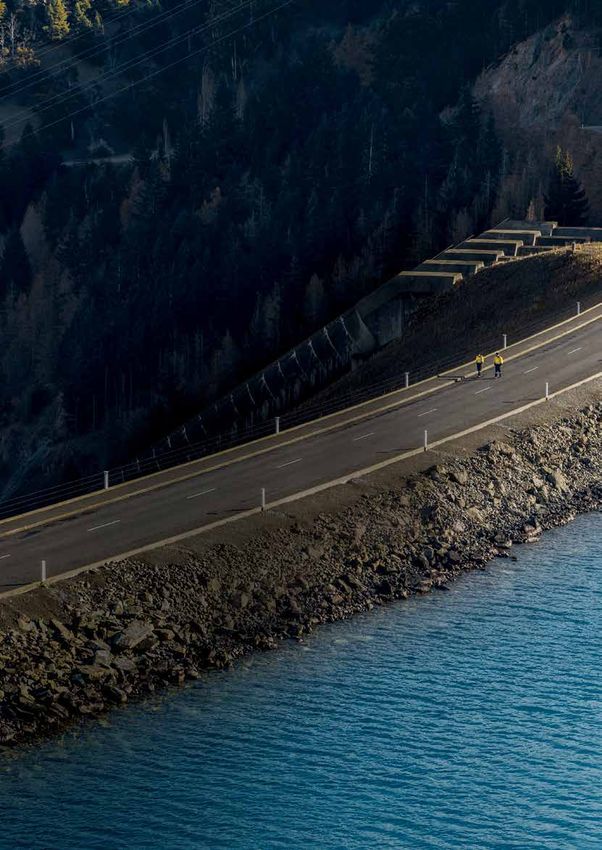
MERIDIAN ENERGY LIMITED ANNUAL REPORT for the year ended 30 June 2013

Contents

02                       08                                      27                                  89
About Meridian Energy    The Management Team                     Governance                          Directory

04                       11                                      30
Company Overview         Summary of Group Performance            Financial Statements

06                       23                                      87
The Board of Directors   Meridian’s People                       Statutory Information

                         $    295.1M
                         Net profit after tax
                         (NPAT)

                         $    162.7M
                         Underlying NPAT
                         (NPAT minus the effect of one–off
                         and/or infrequently occurring
                         events, impairments and changes in
                         fair value of financial instruments)

                         $    416.7M
                         Net cash flow
                         FROM OPERATING ACTIVITIES

                         $   584.8M
                         EBITDAF
                         (EARNINGS BEFORE INTEREST,
                         TAX, DEPRECIATION, AMORTISATION,
                         CHANGE IN FAIR VALUE OF FINANCIAL
                         INSTRUMENTS, IMPAIRMENTS, GAIN/(LOSS)
                         ON SALE OF ASSETS AND JOINT VENTURE
                         EQUITY ACCOUNTED EARNINGS)

                         $    46.78
                         EBITDAF
                         PER MEGAWATT HOUR (MWh) GENERATED

                                                                                                                                 PG 1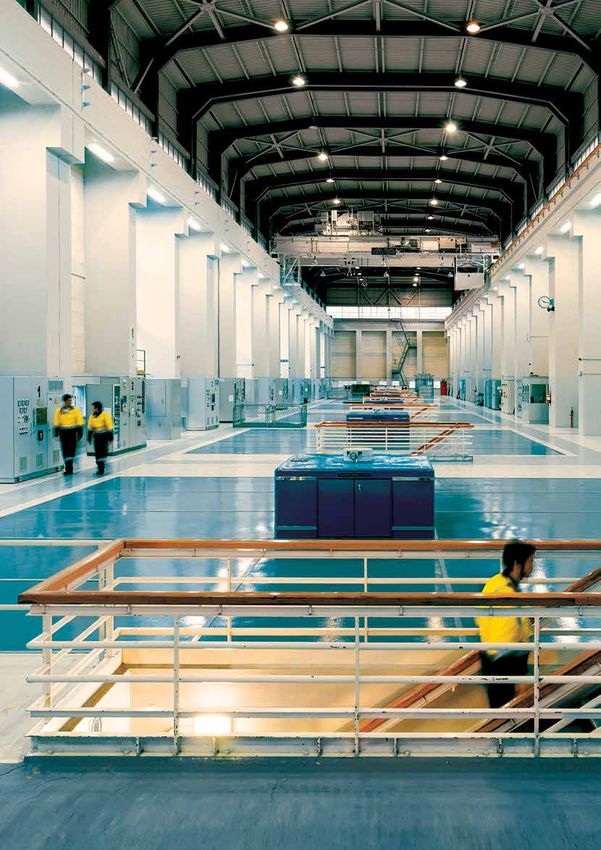
SUMMARY OF GROUP PERFORMANCE

                                                                               About

                                        Meridian Energy
                                               Meridian is creating a better energy future by its approach
                                                   to generating electricity from renewable sources,
                                                supporting communities where it operates and focusing
                                                           on energy solutions for customers

                                              As the country’s biggest electricity    In New Zealand, Meridian is also
                                              generator and a significant             constructing the Mill Creek wind
                                              retailer, Meridian Energy Limited       farm near Wellington.
                                              (Meridian) is New Zealand’s largest
                                                                                      Meridian also built the first
                                              electricity company.
                                                                                      grid–connected solar farm in
                                              Meridian is committed to generating     California and further developed
                                              electricity from 100% renewable         its solar expertise by building
                                              sources – water, wind and solar.        the first solar farm in Tonga.
                                              Meridian generates approximately
                                                                                      Meridian’s commitment to
                                              30% of New Zealand’s electricity
                                                                                      renewable energy and supporting
                                              from its integrated chain of dams
                                                                                      the environments and communities
                                              on the Waitaki River and ManapŌuri,
                                                                                      where it operates underpins a
                                              which is the largest hydro power
                                                                                      sustainable business model.
                                              station in New Zealand, along with
                                                                                      Meridian continues to focus on
                                              four wind farms around the country.
                                                                                      providing energy solutions that help
                                              Through the Meridian and Powershop      customers manage their energy use.
                                              brands, Meridian retails electricity
                                                                                      The Meridian Group employs
                                              to more than 270,000 customer
                                                                                      approximately 820 full–time
                                              connections, including homes,
                                                                                      equivalent employees and has
                                              businesses and farms around
                                                                                      offices in New Zealand, Australia
                                              the country.
                                                                                      and the United States.
                                              Meridian owns and operates the
                                              Mt. Millar wind farm in South
                                              Australia and is constructing the
                                              Mt. Mercer wind farm in Victoria.

                                             This Annual Report is signed on behalf of the Board by;

                                             Chris Moller	Peter Wilson
                                             Chair         Deputy Chair

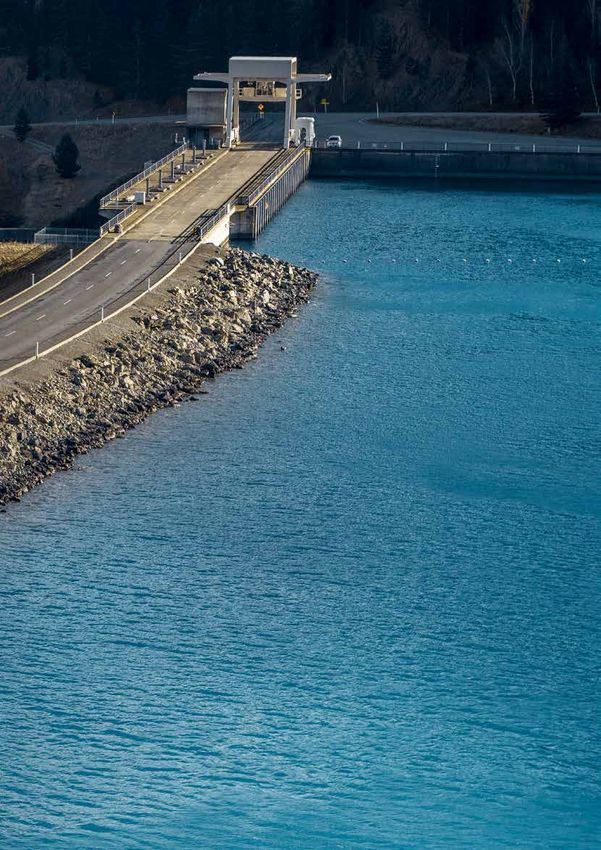
Lake Benmore
Lake Benmore is New Zealand’s largest manmade lake.
It holds 1.5 times as much water as Wellington Harbour.

PG 2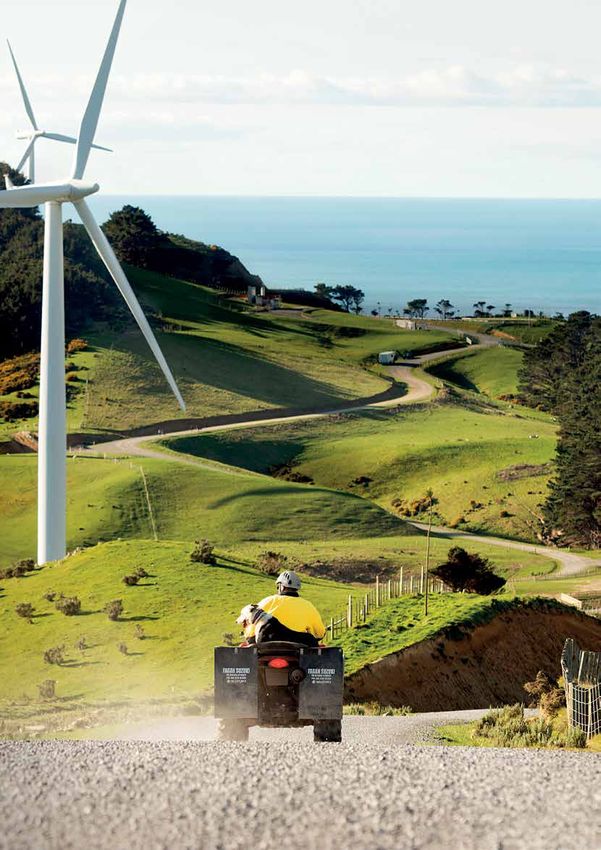
MERIDIAN ENERGY LIMITED ANNUAL REPORT for the year ended 30 June 2013

                  The Meridian Group Company Structure

   RETAIL          WHOLESALE      INTERNATIONAL        OTHER SUBSIDIARIES                  CORPORATE
  SEGMENT           SEGMENT          SEGMENT               SEGMENT*                         SERVICES

Meridian Retail    Markets &         Australia            Captive Insurance              External Relations
                   Production                                Company

                    Renewable                              Other Subsidiary                Information &
  Powershop                            USA                                                Communications
                   Development                               Activities**
                                                                                            Technology

Arc Innovations     Damwatch                                                                 Strategy,
                                                                                          Finance & Legal

                                                                                              Human
                                                                                             Resources

                                                                                             Insurance
                                                                                             & Property

                                                         * This segment included Energy for Industry Limited (EFI),
                                                           which was sold in December 2012.
                                                         ** Other subsidiaries are no longer active.

                                                                                                              PG 3
Company Overview

         Retail                                                                  Hydro

                                                                                                                    TOTAL GWh** PRODUCED
                                                                                                            PLANT      YEAR TO 30 JUNE
                                                                                                         CAPACITY
  NORTH ISLAND                             SOUTH ISLAND                  NEW ZEALAND                        MW***        2013         2012

                                                                         Ōhau A                             264       1,029           979
  144,393                                  127,684                       Ōhau B                             212         875           820
  ICPs*                                    ICPs*
  106,085 MERIDIAN retail                  114,721 MERIDIAN retail
                                                                         Ōhau C                             212         865           817
  38,308 POWERSHOP                         12,963 POWERSHOP              Benmore                            540       2,154        1,954
                                                                         Aviemore                           220         950           827
  9.8%                                     24.9 %                        Waitaki                             90         499           431
  Market Share 1                           Market Share 1                ManapŌuri                          800       4,546        3,962
  7.2% MERIDIAN retail                     22.4% MERIDIAN retail
  2.6% POWERSHOP                           2.5% POWERSHOP                Total Hydro Generation           2,338     10,918         9,790

                           Total New Zealand                                  Total Installed Capacity    Total Generation

  272,077 13.8%                                                                  2,338                   10,918
                  ICPs     *
                                               Market Share          1
                                                                                          MW   ***
                                                                                                                GWh**
1. Electricity Authority, 30 June 2013.                                  ** Gigawatt hours.
* Active installation control points excluding vacant ICPs.              *** Megawatts.

PG 4
MERIDIAN ENERGY LIMITED ANNUAL REPORT for the year ended 30 June 2013

      Wind                                                                                             Solar

                                                                 TOTAL GWh** PRODUCED
                                                                    YEAR TO 30 JUNE
                                                        PLANT
                                                     CAPACITY
NEW ZEALAND                                             MW***            2013        2012

Te Āpiti                                                  91          291            295
White Hill                                                58          188            189
West Wind                                                143          475            496
Te Uku                                                    64          198            226
Total New Zealand Wind Generation                        356        1,152        1,206

AUSTRALIA
Mt. Millar                                                70          166            177
Macarthur
                                                         420          255               –
(Interest in joint venture sold June 2013)
Total Australia Wind Generation                          490          421            177

UNDER CONSTRUCTION
Mill Creek (New Zealand)                                  60
Mt. Mercer (Australia)                                   131

                                                                                                                                        TOTAL GWh** PRODUCED
                                                                                                                                           YEAR TO 30 JUNE
                                                                                                                                PLANT
                                                                                                                             CAPACITY
                                                                                                 UNITED STATES                  MW***        2013        2012

                                                                                                 CalRENEW–1                        5          11          11

      Total Installed Capacity                       Total Generation                             Total Installed Capacity         Total Generation

             426                                    1,573                                                   5                             11
                MW       ***
                                                           GWh      **
                                                                                                           MW     ***
                                                                                                                                         GWh**
       (Excluding the Macarthur wind         (Including Macarthur 2013 generation)
     farm which was sold in June 2013)

                                                                                                                                                         PG 5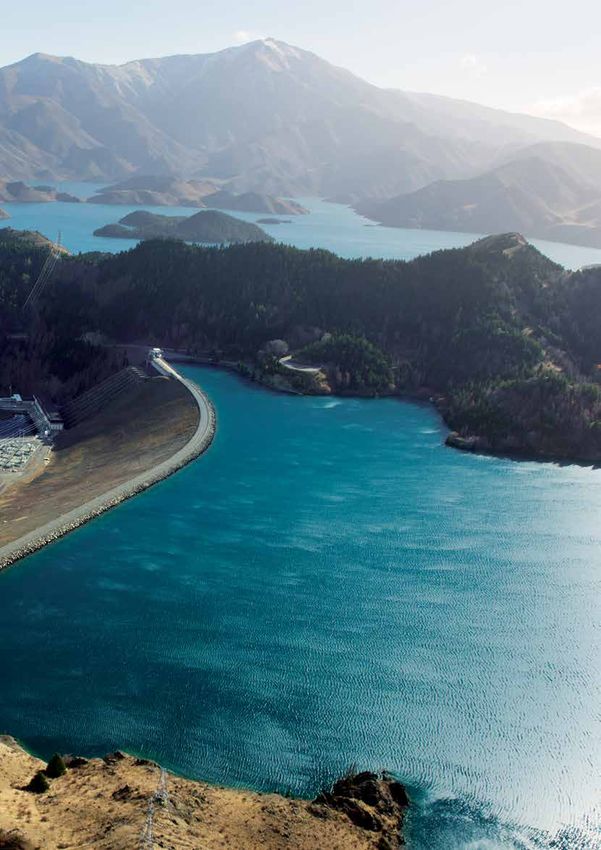
The

       Board of Directors

01         02         03

04         05         06

07         08         09

PG 6
MERIDIAN ENERGY LIMITED ANNUAL REPORT for the year ended 30 June 2013
Jan is Chair of the Audit and Risk
01 03 Committee. Jan is currently a Director 08
of Air New Zealand Limited, Westpac
Chris Moller John Bongard New Zealand Limited, AIG Insurance Anake Goodall
Chair Director New Zealand Limited, Counties Director
BCA, Diploma of Accounting, BCom, ONZM Manukau District Health Board and BA, MBA, MPA
ACA (NZICA) Goodman Fielder Limited. She was
John Bongard has been a Director of Anake Goodall joined the Meridian
also previously a Director of Regional
Chris Moller has been on the Meridian Meridian since May 2011 and currently Board in May 2011 and serves on the
Treasury Management Limited and
Board since May 2009 and was appointed serves on the Remuneration and Remuneration and Human Resources
numerous companies associated with
Chair in January 2011. Chris also serves Human Resources Committee. John Committee. Anake has diverse
KPMG subsidiaries. She is currently
on the Audit and Risk Committee. has more than 30 years’ experience management and governance
President of Yachting New Zealand.
in marketing appliances around the experience including being a union
Chris has extensive experience
world and has established new sales delegate in the meat industry,
in New Zealand and international
companies in Australia and in the a founding Board member of the
business at both Director and 06
United States. He has held a number Makarewa Credit Union, holding various
executive level. He is the former
of executive–level positions during executive roles in community–based
Chief Executive Officer of the
his 36–year career within the Fisher
Mary Devine
organisations, and as adviser to the
New Zealand Rugby Union, co–leading Director
& Paykel Group, including, until 2009, Government and iwi.
New Zealand’s successful bid to host BCom, MBA, ONZM
serving as Chief Executive Officer and
the Rugby World Cup 2011. His 15–year Most recently, he served as Chief
as Managing Director of Fisher & Paykel Mary Devine became a Director of
career in the dairy industry included Executive Officer of Te Rūnanga o Ngāi
Appliances Holdings Limited. Meridian in May 2010. Mary is Chair
roles as Deputy Chief Executive of Tahu, and was before that responsible
Fonterra and Chief Financial Officer He is currently Chair of PSCTH Thailand of the Remuneration and Human for managing all aspects of Ngāi Tahu’s
of the New Zealand Dairy Board. and The Rising Foundation and Local Resources Committee. She has had Treaty settlement process. Anake is
Chair of BNZ Partners Highbrook. a 20–year career in executive roles currently a Director of NXT Fuels
Chris is currently Chair of New Zealand in private New Zealand companies.
John is a Director of HJ Asmuss & Co Limited (formerly Aquaflow Bionomic
Transport Agency, New Zealand Cricket
Limited, Narta Australia Pty Limited A former Chief Executive of Corporation Limited) and Enspiral
(Inc.) and SKYCITY Entertainment
and Netball New Zealand, and was Australasia’s largest fashion and Foundation Limited. He is a member
Group Limited. He is also a Director
previously a Director of Tourism homewares multi–channel retailer, of the Environmental Protection
of the International Cricket Council,
Holdings Limited. He is also a trustee of EziBuy, she is currently Managing Authority and the Canterbury
Westpac New Zealand Limited and
Counties Manukau Pacific Trust Board. Director of department store, Earthquake Recovery Review Panel,
Cricket World Cup 2015 Ltd. Previously
J. Ballantyne & Co. Mary has extensive and is an Adjunct Professor at the
he was a Director of NZX Limited,
experience in corporate strategy, University of Canterbury. He has
Synlait Limited, Rugby New Zealand
04 brand marketing and multi–channel previously been a Director of various
2011 Limited (which entered into
retailing and was this year awarded Te Rūnanga o Ngāi Tahu entities. Anake
voluntary liquidation following the
conclusion of the Rugby World Cup Mark Cairns an ONZM for services to business. is Chair of the ManawapŌpore Trust,
Director She is currently a Director of IAG Trustee of the Hillary Institute of
2011) and National Foods (Pty) Limited.
BE (Hons), BBS, Post Grad Dip Bus New Zealand Limited and Briscoe International Leadership, and is a
Admin, MMgt, FIPENZ Group Limited. Mary is also a trustee New Zealand Harkness Fellow. Anake
of the New Zealand Hockey Foundation. was a Director of Quik Bake Products
02 Mark Cairns joined the Meridian Board Limited at the time it was placed in
in July 2012. He currently serves on the receivership in 1989.
Peter Wilson Audit and Risk Committee. Mark has
Deputy Chair extensive experience in port operations 07
CA (NZICA) and transportation. He has been
Chief Executive of NZX–listed Port of Sally Farrier 09
Peter Wilson joined the Meridian Tauranga Limited since 2005. Prior to Director
Board in May 2011. Peter is a Chartered BE (Hons), MBA, gDipAppFin
Stephen Reindler
joining Port of Tauranga Limited, he
Accountant and business consultant, was Chief Executive of C 3 Limited Director
and was formerly a partner of Ernst Sally Farrier was appointed a Director BE (Hons), AMP, FIPENZ
(formerly Toll Owens Limited) for five
& Young. He has extensive experience of Meridian in July 2012 and serves
years, following his role as General Steve Reindler joined the Meridian
in banking, business establishment, on the Safety and Sustainability
Manager (Central) at Fulton Hogan Board in September 2008 and is Chair
problem resolution, asset sales and Committee. She is a professional
Limited. Mark is Chair of Quality of the Safety and Sustainability
management of change functions. non–executive Director and corporate
Marshalling (Mount Maunganui) Committee. Steve is an engineer
adviser, with extensive experience in
Limited and is a Director of Northport who has a background in large–scale
Peter has been involved in companies industry restructuring and economic
Limited, North Tugz Limited and Port infrastructure and heavy industry
undertaking capital raising activities reform, privatisation, business
of Tauranga Trustee Company Limited. manufacturing. He has gained
and has wide ranging governance strategy and risk management.
Mark has also previously held Director extensive experience through his
experience in the public market,
roles in C 3 Limited, Metropack Limited Sally’s professional career has focused previous engineering roles at
the private sector and with Crown–
and Tapper Transport Limited. on the utility sector (water, electricity New Zealand Steel Limited and
owned entities. Peter serves on the
Audit and Risk Committee, and is and gas) spanning a number of Auckland International Airport Limited,
currently Chairman of Westpac consulting and Director roles and through his industry position as
New Zealand Limited and Augusta 05 in New Zealand and Australia. Sally inaugural Chairman of the Chartered
Capital Limited. Peter is also a Director was previously an Australian National Professional Engineers Council.
of PF Olsen Limited and Farmlands Jan Dawson Water Commissioner of Australian
National Water, a member of the He is currently a Director of Port of
Co–operative Society Limited. Past Director
Napier Limited, and a member of the
Directorships include The Colonial BCom, FCA (NZICA), MInstD Department of Primary Industries
Portfolio Strategy Board and a member Advisory Committee for Transfield
Motor Company Limited, Westpac Services Limited. Steve was previously
Jan Dawson joined the Meridian of the Victorian Water Trust Advisory
Banking Corporation and NZ Farming a Director of Stevenson Group Limited
Board in November 2012. Jan is a Council and the Independent Panel
Systems Uruguay Limited. and an advisory Director of Glidepath
professional independent Director for the Victorian Regional Sustainable
with appointments to a number Water Strategies. Sally was formerly Limited. He served as a Senior Office
of New Zealand and Australian a Director of Hydro Tasmania, Manidis Holder on the Board of the NZ Institution
companies. She was previously the Roberts Pty Limited and Western of Professional Engineers and was
Chair and Chief Executive for KPMG Power. She is currently a Director of President of the Institution in 2011.
New Zealand, following a career Farrier Swier Consulting Pty Limited.
spanning 30 years specialising in audit
and accounting services in the United
Kingdom, Canada and New Zealand.
PG 7
The

       Management Team

01        02         03

04        05         06

07        08         09

PG 8
MERIDIAN ENERGY LIMITED ANNUAL REPORT for the year ended 30 June 2013
01 03 06 08
Mark Binns Neal Barclay Alan McCauley Jason Stein
Chief Executive General Manager, Markets General Manager, Retail General Counsel and
LLB and Production BCA, MBA, PGDFA, CA (NZICA) company secretary
BCA, CA (NZICA) LLB, BCA
Mark Binns joined Meridian as Chief Alan McCauley joined Meridian in
Executive in January 2012. Prior to this Neal Barclay has been General July 2013 as General Manager of Retail. Jason Stein joined Meridian in 2008
appointment Mark was Chief Executive Manager of Markets and Production His career in the energy industry has as Assistant General Counsel and
of the Infrastructure Division of since October 2009. He joined Meridian spanned 18 years in roles in both was appointed General Counsel and
Fletcher Building Limited, the in July 2008 as Chief Financial Officer. Australia and New Zealand. Alan was Company Secretary in 2010. Jason
company’s largest division. Mark Prior to joining Meridian, Neal, a member of the project team which was also appointed General Manager
worked at Fletcher Building and its a Chartered Accountant, held a number established Red Energy in Australia in of the Office of the Chief Executive in
predecessor, Fletcher Challenge of general manager roles in a 13-year 2003. As General Manager of Customer 2011. Jason is a lawyer and has held
Limited, for 22 years. During that period career with Telecom New Zealand Management at Red Energy until in–house roles at financial institutions
he was responsible for operations in Limited. Neal is responsible for the June 2013, Alan was a key member of the and the energy sector, including at
Australia, South East Asia, India, South Company’s New Zealand generation executive team that grew that company vice president and senior counsel
America, the United States and the asset portfolio, including seven hydro into a profitable and award–winning levels. Jason has been working in the
South Pacific, as well as in New Zealand. power stations and four wind farms energy retailer. He has previously New Zealand energy sector since 2004.
Mark also held Director roles in that deliver about 30% of New Zealand’s worked in managerial and consulting He was formerly the Group Legal
numerous subsidiary companies of the electricity generation, and for the roles for Contact Energy Limited, Manager of Vector Limited. Jason’s
Fletcher Building group. Company’s wholesale trading and Electricity Corporation of New Zealand team is responsible for providing
risk position. Limited and Electro Power Limited. and managing the Company’s legal
His career has seen him closely services and providing the corporate
Alan was a Director of Athletics
involved in some of New Zealand’s governance and company secretarial
New Zealand from July 2006 until
largest infrastructure projects, 04 functions to the Company, the Board
August 2013 and is a current Director
including the Wiri Prison public–private and the management team. He also
of Athletics Victoria.
partnership, Waterview Connection, Ben Burge holds Directorships associated with
Eden Park, SKYCITY, Museum of Chief Executive Officer, Meridian’s subsidiaries.
New Zealand Te Papa Tongarewa and Meridian Energy Australia
07
the ManapŌuri tunnel. By training, Mark PTY Limited
is a qualified lawyer and, prior to joining BCom, LLB (First Class Hons)
Glen McLatchie 09
Fletcher Challenge, was a partner at
Ben Burge joined the Meridian Group in General Manager, Information AND
Simpson Grierson in Auckland. Guy Waipara
2011 as the Chief Executive of Meridian Communications Technology (ICT)
Energy Australia Pty Limited and is BBS, MIS General Manager,
responsible for Meridian’s Australian External Relations
02 Glen McLatchie joined Meridian in May BE (Hons), MBA
business. Ben has had extensive
2010 and is responsible for ensuring
experience in the Australian market Guy Waipara (Rongowhakaata) was
Paul Chambers dealing in securities and derivatives
the Company has the appropriate
ICT infrastructure, data, processes, appointed as General Manager of
Chief Financial Officer in equities, debt and energy. Ben was
BSc (Hons), FCA (ICAEW), CA (NZICA) security and applications in place to External Relations at Meridian in
the founder and Chief Executive of August 2010. Guy is responsible for
meet the Company’s requirements.
Before taking up his role at Meridian ASX–listed media business Emitch the Company’s corporate reputation
Glen has over 20 years’ experience
in 2009, Paul Chambers was Chief Limited and has held the roles of Chief which includes Company brand,
in delivering business and information
Financial Officer of Transfield Services Executive and partner of investment relationship management, regulatory
technology change and has held a
New Zealand. Paul has extensive senior bank JT Campbell & Co, and partner and external communications. Guy
number of general management
finance experience in a variety of of IBM in the Business Analytics and has previously held roles at Meridian
positions in both commercial and
industries, including ports, Optimisation business unit. in offshore business development and
information technology business
manufacturing and retail, both functions. He has held several senior setting Company strategy. He has
in the United Kingdom and in France. management roles with a global focus over 20 years’ experience in the
Paul is a Chartered Accountant and 05 electricity sector and previously
based in Australia, the United Kingdom
is currently a Director of the Meridian and France over a 13 year period with worked at Transpower New Zealand
subsidiaries Powershop New Zealand
Jacqui Cleland Limited in roles responsible for
BP Oil International Limited. Prior to
Limited, Arc Innovations Limited and General Manager, joining Meridian, Glen was the Director transmission planning and network
Human Resources
Meridian Energy Australia Pty Limited. of ICT Transformation and Strategic development. Guy is currently a
BBS, M.Phil (Psych)
His team has responsibility for Planning for Contact Energy Limited Director of Meridian Energy USA,
strategy coordination, performance Jacqui Cleland joined Meridian as and prior to this was the General Inc and was previously a Director
measurement, external reporting, General Manager of Human Resources Manager of Retail Automation Limited of Energy for Industry Limited (EFI).
funding, risk management in September 2012. She has an (a division of the former Provenco
coordination, procurement and extensive background in human Group Limited).
financial transaction services. resources and has held senior human
resources management roles in
New Zealand Post, New Zealand
Inland Revenue and Fonterra.
Jacqui was previously a trustee of
the New Zealand Post Superannuation
Plan. Jacqui also spent a number of
years as a university lecturer, teaching
and researching in a wide range of
business and human resources topics.
Jacqui’s team focuses on developing
leaders and executing strategies to
help Meridian’s people utilise and grow
their capabilities, competencies and
skills. This ensures the Company is well
supported to deliver on its business
objectives and aspirations.
PG 9SUMMARY OF GROUP PERFORMANCE Benmore Power Station Benmore was built as part of the Waitaki hydro scheme. The Waitaki hydro scheme is made up of eight hydro stations on the Waitaki River in the South Island. Meridian owns and operates six of the hydro stations. PG 10
MERIDIAN ENERGY LIMITED ANNUAL REPORT for the year ended 30 June 2013

                            Summary of

        Group
     Performance
  Meridian generated strong results in a year characterised
      by improved inflows, but with periods of market
          disruption and intense retail competition

 Meridian saw a significant improvement in financial performance from the record
dry 2012 financial year. This was achieved while managing an extremely dry period
  during the summer months, 42 days of HVDC outages, three months of Tekapo
canal outages, intense competition in the retail market, ongoing negotiations with
 the owners of the Tiwai Point aluminium smelter and continued preparations for
                Meridian’s partial listing, planned for later in 2013.

     Despite these challenges, Meridian delivered a strong end of year result
  to 30 June 2013 with EBITDAF of $584.8 million, up 23% on last year. The result
  was influenced by improved New Zealand Energy Margin, reflecting improved
   hydrology, and revenue received from the Macarthur wind farm in Australia.
      The financial performance of the retail segment continued to improve,
         with net contracted revenue increasing by 3% on last year whilst
                           sales volumes remained flat.

                                                                                                          PG 11
SUMMARY OF GROUP PERFORMANCE
Group
Performance
FINANCIAL YEAR ENDED 30 JUNE
MERIDIAN GROUP SUMMARY INCOME STATEMENT
($ MILLIONS) 2013 2012 2011 2010 2009
Energy Margin (New Zealand) 865.1 740.4 929.0 940.1 785.3
Energy Margin (International) 50.7 22.8 21.3 1.6 –
Total Energy Margin 915.8 763.2 950.3 941.7 785.3
Dividend and Other Revenue 29.7 27.3 42.5 38.7 27.1
Energy Related Expenses (Non–core) – – (10.6) (9.2) (3.3)
Energy Transmission Expenses (115.3) (86.7) (84.2) (78.9) (78.2)
Gross Margin 830.2 703.8 898.0 892.3 730.9
Employee and Other Operating Expenses (245.4) (227.2) (238.1) (250.6) (218.5)
EBITDAF 584.8 476.6 659.9 641.7 512.4
Gain/(Loss) Net Change in Fair Value of Financial Instruments – Operational 51.1 121.3 (89.3) (48.0) (114.1)
Depreciation, Amortisation and Impairments (244.5) (285.2) (235.2) (206.4) (172.3)
Gain/(Loss) on Sale of Property, Plant and Equipment, Subsidiary, Investments and 106.6 (1.5) 174.1 0.3 4.8
Finance Lease Receivable
Equity Accounting Earnings of Joint Ventures 0.1 (2.7) (3.4) (2.0) (1.9)
Operating Profit 498.1 308.5 506.1 385.6 228.9
Net Finance Expenses (113.5) (82.5) (107.6) (85.1) (68.4)
Gain/(Loss) Net Change in Fair Value of Financial Instruments – Financing 42.7 (68.0) (14.2) (23.3) (32.5)
Profit Before Tax 427.3 158.0 384.3 277.2 128.0
Income Tax (132.2) (83.4) (81.2) (93.2) (38.7)
Net Profit After Tax (NPAT) 295.1 74.6 303.1 184.0 89.3
FINANCIAL YEAR ENDED 30 JUNE
MERIDIAN GROUP UNDERLYING PROFIT AFTER TAX
($ MILLIONS) 2013 2012 2011 2010 2009
Net Profit After Tax 295.1 74.6 303.1 184.0 89.3
Net Change in Fair Value of Financial Instruments – Financing (42.7) 68.0 14.2 23.3 32.5
Net Change in Fair Value of Financial Instruments – Operational (51.1) (121.3) 89.3 48.0 114.1
Premiums Paid on Electricity Options (Less interest) (18.5) (15.2) (13.9) – –
Impairment of Property, Plant and Equipment, Investments and Intangibles 24.8 60.1 11.0 18.3 9.2
Net (Gain)/Loss on Sale of Property, Plant and Equipment and Finance Lease Receivable 0.7 1.1 (174.1) (0.3) (4.8)
Net (Gain)/Loss on Sale of Investments (107.3) – – – –
Adjustments Before Tax (194.1) (7.3) (73.5) 89.3 151.0
Income Tax on Adjustments 61.7 14.6 (30.4) (26.8) (45.3)
Effect of Gain of the Tekapo Power Stations – – 17.4 – –
Effect of Corporate Tax Rate Reduction on Deferred Tax Liability – 0.6 2.4 (9.4) –
Effect of Change in Building Tax Depreciation on Deferred Tax – 23.6 – 14.8 –
Adjustments After Tax (132.4) 31.5 (84.1) 67.9 105.7
Underlying Profit After Tax 162.7 106.1 219.0 251.9 195.0
PG 12MERIDIAN ENERGY LIMITED ANNUAL REPORT for the year ended 30 June 2013
GROUp npat* GROUp UndeRlyinG npat** GROUp eBitdaf***
Financial Year Ended 30 June Financial Year Ended 30 June Financial Year Ended 30 June
2013 295.1 2013 162.7 2013 584.8
2012 74.6 2012 106.1 2012 476.6
2011 303.1 2011 219.0 2011 659.9
2010 184.0 2010 251.9 2010 641.7
2009 89.3 2009 195.0 2009 512.4
$M 0 50 100 150 200 250 300 350 $M 0 50 100 150 200 250 300 $M 0 200 400 600 800
* Net profit after tax includes unrealised gains (losses) ** NPAT minus the effects of one–off and/or infrequently *** Earnings before interest, tax, depreciation, amortisation,
on financial instruments. occurring events, impairments and changes in fair value change in fair value of financial instruments, impairments,
of financial instruments. gain/(loss) on sale of assets and joint venture equity
accounted earnings.
Income Statement EBITDAF
Meridian’s Group Net Profit after Taxation (NPAT) Earnings before interest, taxation, depreciation,
for the year ended 30 June 2013 (FY2013) was amortisation, change in fair value of financial
$295.1 million, an increase of $220.5 million instruments, impairments, gain/(loss) on sale
GROUp
from thenpat*
year ended 30 June 2012 (FY2012). GROUp
of assetsUndeRlyinG npat**
and joint venture equity accounted GROUp eBitdaf***
Financial
This Year Ended
increase was30due
June
to improved Energy Margin earnings (EBITDAF)
Financial Year Ended 30wasJune$584.8 million in FY2013, Financial Year Ended 30 June
in New Zealand and Australia, profit from the sale a $108.2 million increase (a 23% uplift) from
2013 2013 295.1 2013
162.7 584.8
of the Macarthur wind farm, positive non–cash FY2012. This improvement was largely driven by
2012 74.6 2012 106.1 2012 476.6
fair value movements on financing derivatives, a $152.6 million increase in the Energy Margin
2011 2011 303.1 2011 219.0 659.9
and a reduced level of impairments compared from Meridian’s integrated retail and wholesale
2010 184.0
2010 2010 251.9 641.7
with FY2012. businesses, reflecting improved hydrology
2009 89.3 2009
conditions in New Zealand, and revenue received 2009 195.0 512.4
Underlying NPAT, which removes the effects of
from the Macarthur wind farm in Australia. These
$M 0
non–cash fair value 50 movements and 100other one–off 150 $M 0200 250
50 300 100 350 150 $M 0 200 200250 300 400
impacts were partially offset by a $28.6 million
and/or infrequently occurring events (reconciliation
increase in transmission
** NPAT minus
* Net profit after tax includes unrealised gains (losses) on financial instruments. costs
the effects of one–off associated
and/or with
infrequently ***impairments
occurring events, Earnings before interest, in
and changes tax, depreciation,
fair amortisation,
value of financial change in fair val
instruments.
to NPAT is shown on page 12) was $162.7 million in of assets and joint venture equity accounted earnings.
Transpower New Zealand Limited’s (Transpower’s)
FY2013, an increase of $56.6 million (a 53% uplift)
work in upgrading the high voltage direct current
from FY2012. This increase reflected the improved
(HVDC) Pole 3.
Energy Margin contributions to EBITDAF, while
being partially offset by increased finance costs and Employee and other operating costs were
higher levels of tax on improved operating profit. $245.4 million in FY2103, an increase of $18.2 million
from FY2012. This increase was partly influenced
by the cost of at–risk performance incentives to
staff this year, following the achievement of
Group financial performance targets, which
were not earned in FY2012. One–off costs were
also incurred this year as Meridian continued
to rationalise its development pipeline and
commenced the Initial Public Offering process.
Increased cost pressures in other areas were
largely absorbed through a continuing focus on
cost management and organisational changes
implemented during the year.
PG 13SUMMARY OF GROUP PERFORMANCE
New Zealand Energy Margin • revenue from the volume of electricity that The New Zealand Energy Margin was $865.1 million
Meridian generates and generation acquired in FY2013, an increase of $124.7 million (a 17% uplift)
The New Zealand Energy Margin consists of:
through derivative instruments that is in from FY2012.
• revenue received from sales to retail customers excess of volumes required to cover contracted
(net of distribution costs), sales to large customer sales (spot exposed revenue); plus
industrial customers and fixed price revenue from or minus
derivatives sold (contracted sales revenue); less
• other associated market revenue and cost
• the fixed cost of derivatives acquired to manage including Electricity Authority levies and
both generation volumes and exposure to ancillary generation revenue and cost
wholesale electricity prices (cost of buy–side e.g. frequency keeping (other market
electricity derivatives); plus revenue/expenses).
The graph below outlines the breakdown of the New Zealand Energy Margin components.
neW Zealand eneRGy MaRGin
Financial Year Ended 30 June 2013
contracted sales Revenue cost of Buy-side spot exposed Revenue Market-
+$1,055.1m electricity +$90.7m Related
derivatives Revenue/
2,000 ($282.9)m (expenses)
224.8 (917.5)
+$2.2m
783.4
1,500
457.3 3.5 (282.9)
1,000 2.2 865.1
594.3
500
0
$M Retail Wholesale Spot Margin Cost of Buy-side Meridian Buy-side Electricity Market–Related Energy Margin
Contracted Contracted Electricity generation Electricity Purchases and Revenue/ 30 June 2013
Sales (net of Sales Derivatives Sales Revenue Derivative Spot Derivative Spot (Expenses)
distribution and Revenue Costs
other costs)
The graph below highlights the movements in the New Zealand Energy Margin between the financial years ended 30 June 2012 and 30 June 2013.
MOveMent in neW Zealand eneRGy MaRGin
From Last Year
contracted sales Revenue cost of Buy-side spot exposed Revenue Market–
+$74.1m electricity +$12.9m Related
2,000 derivatives Revenue/
+$49.4m (expenses)
($11.7)m
1,500
1,000 49.4 (324.3) 416.8 (11.7) 865.1
61.9 (2.8)
740.4 15.0
(79.6)
500
0
$M Energy Margin Retail Wholesale Spot Margin Cost of Buy-side Meridian Buy-side Electricity Market-Related Energy Margin
30 June 2012 Contracted Contracted Electricity generation Electricity Purchases and Revenue/ 30 June 2013
Sales (net of Sales Derivatives Sales Revenue Derivative Spot Derivative Spot (Expenses)
distribution and Revenue Costs
other costs)
PG 14MERIDIAN ENERGY LIMITED ANNUAL REPORT for the year ended 30 June 2013
Retail Performance Contracted sales volumes declined by 40GWh which provides customers with an online portal to
from FY2012 to 5,661GWh in FY2013, affected by monitor and forecast electricity consumption, and
The retail segment includes Meridian’s two retail
the transfer of approximately 6,800 of Meridian’s the redesign and development of new websites and
electricity brands, Meridian and Powershop
pre–pay customers to Mighty River Power Limited’s other digital platforms.
New Zealand Limited (Powershop), and electricity
GLO–BUG pre–pay system and the transfer of the
meter service business Arc Innovations Limited. Meridian Retail General Manager Bill Highet
management of over 14,000 installation control
announced in May 2013 that he would resign to take
Retail segment EBITDAF per megawatt hour (MWh) points (ICPs) to Energy Direct NZ (EDNZ), combined
on a new opportunity. Alan McCauley, formerly of
of contracted sales (at a fixed input purchase with continued subdued demand.
Red Energy in Australia, began as the new General
price averaging $85/MWh) improved by $1.2/MWh
Total ICPs declined by 15,227 in the 12 months to Manager of Retail in July 2013.
compared with FY2012, despite the introduction
30 June 2013, which was primarily driven by the
of an allocation of directly attributable overhead
transfer of customers to GLO–BUG and EDNZ.
which totalled $9.6 million during FY2013. Retail
contracted sales and margin received from spot While Powershop growth slowed, due to more
sales grew by $12.2 million compared with last year, conservative acquisition strategies during the
despite a reduction in contracted sales volumes. period of record low inflows last year, total ICPs
Improved profitability resulted from the use of reached 51,271, an increase of 7% in the 12 months
customer analytics enabling the execution of to 30 June 2013.
targeted acquisition and retention strategies,
with a growing emphasis on the rural sector. Both Powershop and Meridian implemented a
The average contracted sales price received number of customer–focused initiatives that
(net of lines and ancillary costs) improved by will enhance interactions with customers. These
$3.4/MWh from last year. include the ongoing development of MyMeridian,
FINANCIAL YEAR ENDED 30 JUNE
RETAIL ELECTRICITY SALES VOLUMES 2013 2012 2011 2010 2009
Powershop Contracted Electricity Sales (GWh) 506 444 267 83 –
Meridian Retail Non–half–hourly Sales (GWh) 2,923 2,897 2,925 2,899 2,941
Meridian Retail Half–hourly Sales (GWh) 2,232 2,360 2,448 2,577 2,757
Total Meridian Contracted Volume (GWh) 5,661 5,701 5,640 5,559 5,698
Meridian Retail Spot Electricity Sales (GWh) 1,760 1,744 1,796 1,741 1,729
Total Retail Electricity Sales (GWh) 7,421 7,445 7,436 7,300 7,427
FINANCIAL YEAR ENDED 30 JUNE
AVERAGE RETAIL ELECTRICITY PURCHASE PRICE*
$/MWh 2013 2012 2011 2010 2009
Quarter 1 – Sept 65.3 87.0 49.8 35.3 122.8
Quarter 2 – Dec 51.6 74.7 61.2 52.3 41.8
Half–Year 58.5 80.9 55.5 43.2 82.6
Quarter 3 – Mar 93.5 104.4 50.5 84.1 34.2
Quarter 4 – June 85.8 126.6 44.8 57.9 44.2
Annual 74.4 97.4 51.7 58.1 62.1
* Excludes the transfer price between wholesale and retail at a fixed rate of $85/MWh.
MeRidian and pOWeRshOp cUstOMeR cOnnectiOns
Period Ended 30 June
Jun 2013 106,085 38,308 114,721 12,963
Jun 2012 116,580 35,369 122,834 12,521
Jun 2011 109,565 21,169 129,651 12,391
Jun 2010 89,596 7,119 149,226 9,301
Jun 2009 65,248 1,429 157,925 777
ICP No. 0 50,000 100,000 150,000 200,000 250,000 300,000
Meridian North Island Powershop North Island Meridian South Island Powershop South Island
PG 15SUMMARY OF GROUP PERFORMANCE
Waitaki catchMent
(Meridian Storage Only)
3,000
2,500
2,000
SToRAgE (gWh)
1,500
1,000
500
0
JuL Aug SEP oCT NoV DEC JAN FEB MAR APR MAY JuN
Mean 2009 2010 2011 2012 2013
Industrial Customers Wholesale Trading Performance Net Spot Exposed Revenues
and Electricity Derivatives Sold Net spot exposed revenue is a derived result
Inflows, Storage and Risk Management
Wholesale contracted sales, which include sales to of the volume of electricity Meridian physically
The financial year began with storage levels at
New Zealand Aluminium Smelters Limited (NZAS) generates and generation acquired through
Meridian’s hydro catchments at 75% of mean,
and electricity derivatives sold to other industrial derivative instruments that is in excess of the
following the record low inflows during FY2012, but
customers and generators/retailers, increased electricity required to cover contracted
recovered to 113% of mean by 31 December 2012
by $61.9 million to $457.3 million when compared customer sales. Net spot exposed revenue grew
with improved inflows in this period. The second
with FY2012. On 1 January 2013 the electricity by $12.9 million to $90.7 million from FY2012 as
half of the financial year was characterised by
supply contract with NZAS was replaced with a spot exposed volumes increased by 565GWh.
very high inflows in early January followed by
pricing arrangement in the form of an electricity Core to this increase was a 12% uplift in hydro
an extended period of low inflows that ended in
derivative. This agreement contributed to generation production, while being partially offset
early June 2013, requiring Meridian to manage
increased revenue, along with increased volumes by a softening in the average price received for
generation responsibly and preserve storage.
of electricity derivatives sold, including increased generation, which declined by $35.8/MWh (36%)
The conservative use of water, combined with an
volumes of the virtual asset swap contracts. from FY2012 to $64.9/MWh.
unseasonal inflow event in early June, enabled
On 7 August 2013, after more than a year of Meridian to finish the year with storage levels While maintaining world–class standards, plant
negotiation, Meridian and NZAS reached consensus at 90% of mean. Total inflows for the year were performance reduced slightly from last year.
on an amended form of agreement. The amended 12,172GWh, compared with 9,096GWh in FY2012. The hydro forced outage factor increased due
agreement took effect on 1 July 2013 and continues to the replacement of a faulty high–voltage
Derivative market liquidity, combined with
to 2030. The new agreement sees a reduction bushing within the ManapŌuri Unit 4 transformer.
the sophistication of instruments now traded,
of the fixed price of the contract for difference Hydro availability was also affected by scheduled
helped Meridian to effectively manage hydrology
(CfD) and that price adjusts with changes in the outages at the Benmore hydro station, where
and transmission outage risks during the year.
consumers price index. The amended agreement work was completed on the commissioning of new
The cost of derivatives acquired to supplement
also allows for future fixed price increases if the transformers that will ensure the site continues to
generation and help manage wholesale and market
New Zealand dollar price of aluminium exceeds operate reliably and more efficiently in future years.
price risks was $49.4 million lower than last
agreed levels. year which was impacted by record low inflows. Meridian announced during the year that it will
The volume of electricity derivatives sold included While derivative costs reduced, they remained invest more than $40 million in a four–year project
increased trading on the New Zealand Electricity significant as a result of the carry–over from last to refurbish the Waitaki power station. This is the
Futures and Options market operated by the year’s challenging hydrology conditions, extended last major hydro refurbishment project Meridian
Australian Stock Exchange, and the effects of dry periods during the second half of the year, 42 expects to undertake in the medium–term and will
the ramp-up of virtual asset swap contracts. days of HVDC outages and the ramp–up of virtual involve reinstating the station’s seventh generation
asset swap contracts with Genesis Power Limited unit and carrying out erosion, seismic and flood
(Genesis) and Mighty River Power (a 323GWh uplift protection work around the station.
from last year).
During the year Meridian gained consents to raise
the upper limit of Lake Pūkaki, removing a seasonal
variation previously in place between September
and April, and also gained access to emergency
storage in the lower levels of Lake Pūkaki, which
will further strengthen Meridian’s ability to manage
extreme hydrology risks in the future.
PG 16MERIDIAN ENERGY LIMITED ANNUAL REPORT for the year ended 30 June 2013
MeRidian’s neW Zealand physical GeneRatiOn vOlUMes BUy-side electRicity deRivatives*
Financial Year Ended 30 June Financial Year Ended 30 June
2013 10,918 1,152 2013 1,965 998
2012 9,790 1,206 2012 2,605 675
2011* 12,629 1,023 2011 687 223
2010 12,857 1,005 2010 981
2009 11,721 516 2009 1,187
gWh 0 5,000 10,000 15,000 gWh 0 1,000 2,000 3,000 4,000
Hydro generation Wind generation Acquired generation Virtual Asset Swaps
* The Tekapo hydro power stations were sold to Genesis on 1 June 2011; the Tekapo power stations annual average generation * Derivatives acquired to supplement generation.
was approximately 1,000GWh.
WhOlesale cOntRacted sales
AVERAGE WHOLESALE ELECTRICITY PRICE FINANCIAL YEAR ENDED 30 JUNE
RECEIVED FROM GENERATION PRODUCTION Financial Year Ended 30 June
$/MWh 2013 2012 2011 2010 2009
2013 7,013
Quarter 1 – Sept 62.4 83.6 47.5 26.8 132.0
2012 6,903
Quarter 2 – Dec 34.8 71.2 54.8 41.7 34.0 2011 6,873
Half–Year 47.7 77.6 51.1 34.0 79.00 2010 6,091
Quarter 3 – Mar 83.4 109.9 31.7 74.5 22.4 2009 5,441
Quarter 4 – June 80.8 153.3 39.4 50.3 23.0 gWh 0 2,000 4,000 6,000 8,000
Annual 64.9 100.7 43.3 48.3 48.5
FINANCIAL YEAR ENDED 30 JUNE
PLANT PERFORMANCE METRICS (New Zealand only) 2013 2012 2011 2010 2009
Plant Availability* – Hydro 89.1% 94.5% 93.1% 91.3% 92.6%
Plant Availability* – Wind 97.3% 97.1% 96.6% 96.0% 95.6%
Hydro Forced Outage Factor** 0.86% 0.14% 0.18% 1.47% 0.43%
* 100% less planned outage duration and unplanned outage duration. WhOlesale cOntRacted sales
** Percentage of time that hydro assets are unavailable in a period owing to forced, unplanned outages. Financial Year Ended 30 June
2013
2012
2011
2010
2009
PG 17
gWh 0 2,000 4,000SUMMARY OF GROUP PERFORMANCE
International Energy Margin Transmission The EA has indicated that it will produce a series
of working papers covering specific TPM–related
The Energy Margin from Meridian’s international Transmission costs increased by $28.6 million
issues. This process will take a number of months
businesses grew by $27.9 million from FY2012 to from FY2012 to $115.3 million in FY2013. This
and, while no date for a final decision has been
$50.7 million, predominantly from the contribution largely resulted from Meridian’s share of charges
advised, the TPM remains in the EA’s top 10 list of
from the Macarthur wind farm, in Victoria, associated with Transpower’s costs of upgrading the
priority market development projects. The EA does
Australia, which began generating revenue national grid, including the commissioning of Pole 3.
not expect its second issues paper on this subject
from February 2013.
An effective nationwide transmission network is to be released prior to the second half of 2014 and
The Macarthur wind farm, a joint venture with critical to Meridian in managing portfolio risks does not expect any changes to the TPM would be
AGL Energy Limited, was fully commissioned and ensuring optimal generation production. effective by 1 April 2015.
in January 2013, making it the largest wind farm Transpower is currently completing a project to
in the Southern Hemisphere. On 28 June 2013, upgrade the capacity of the HVDC link between the
Meridian sold its interest in Macarthur to North and South Islands. A major milestone in the GROUp tRansMissiOn cOsts
Malakoff Corporation Berhad, a Malaysian power project was the successful commissioning of Pole 3 Financial Year Ended 30 June
generator and retailer, for an enterprise value on the 30th May 2013 and the project is currently
of A$659 million that resulted in a gain of working to upgrade the existing Pole 2. Transpower 2013 115.3
$101.4 million before tax. While the Macarthur have indicated they expect the project to be 2012 86.7
investment was intended to be held for the full completed by December 2013 at which point the 2011 84.2
contract term, the low interest rate environment, links capacity will be significantly increased, 2010 78.9
unexpectedly strong investor demand and alleviating transmission constraints and improving 2009 78.2
potential to invest in further wind farms both Meridian’s risk position and portfolio flexibility.
in Australia provided a good opportunity for $M 0 20 40 60 80 100 120
Meridian continues to support the Electricity
Meridian to sell its interests in Macarthur.
Authority’s (EA) ongoing transmission pricing
In December 2012, Meridian commenced the methodology (TPM) review, which is reassessing
construction of the 131MW Mt. Mercer wind farm in the system of charging for transporting electricity
Australia, located 30 kilometres south of Ballarat in across the transmission network. One of the
Victoria. Construction of the wind farm is expected most contentious parts of the current system is
to take two years, with full production scheduled that HVDC charges are paid only by South Island
to occur in late FY2014. This will add to Meridian’s generators, which Meridian, as a major South
Australian wind generation asset base. Island generator, considers to be discriminatory
and a disincentive for generation investment and
The trial of the Powershop retail model in
operations in the South Island. The EA’s analysis
Australia concluded positively and approval has
has shown that there are material inefficiencies
been given to commence a full product roll–out GROUp tRansMissiOn cOsts
that result from the current charging regime and
in the state of Victoria. Financial Year Ended 30 June
that efficiency gains will be available if changes
are implemented. 2013 115.3
2012 86.7
2011 84.2
2010 78.9
2009 78.2
$M 0 20 40 60
PG 18MERIDIAN ENERGY LIMITED ANNUAL REPORT for the year ended 30 June 2013
Impacts below EBITDAF Impairments Development Pipeline
Impairments of $24.8 million were recognised this
year, reflecting the continuing rationalisation of
Gain on Sale of Assets Meridian’s development portfolio and divestment Meridian continued to rationalise its generation
from non–core investments. Impairments primarily development pipeline in response to market
In December 2012, Meridian sold its subsidiary
related to the suspended North Bank Tunnel conditions, with a view to focusing on smaller,
business Energy for Industry Limited to Pioneer
development project and further impairment of flexible options. While this has resulted in a
Generation Limited, resulting in a gain on sale
the Meridian Energy USA business, which is being number of organisational changes to Meridian’s
before tax (net of sale costs) of $5.9 million.
prepared for sale. development team, the key development capability
On 28 June 2013, Meridian also sold its interest in has been retained.
the Macarthur wind farm in Victoria, Australia to Finance Costs During the year Meridian put the North Bank
Malakoff Corporation Berhad, a Malaysian power
Net finance costs have increased by $31.0 million Hydro project on hold. Given the company’s
generator and retailer, resulting in a gain on sale
from FY2012, driven by interest costs relating to view of the market for the short to medium term,
of $101.4 million before tax (net of sale costs).
the Macarthur wind farm development, which was Meridian will not continue to advance a project
fully commissioned in January 2013. During the of this size and significance at this time.
Fair Value Movements
construction phase of this project, finance costs
On–site works began in July 2012 on the 60MW
Meridian uses financial derivatives to manage were capitalised in line with accounting standards.
Mill Creek wind farm development near Wellington.
hydrology, electricity price, currency and interest
Once completed in FY2014, Mill Creek will further
rate risks. These derivatives are valued at each
diversify Meridian’s generation.
reporting period, with the majority of the non–cash
fair value movements recorded within Meridian’s While it is unlikely that Meridian will commence
NPAT. Fair value movements in FY2013 resulted additional development projects in the short to
in a net positive unrealised fair value movement medium term, Meridian’s priority development
of $93.8 million. This was predominantly due to options include a number of wind farm
upward movement in interest rate swap curves opportunities. These include a 31–turbine wind
combined with a softening of the forward electricity farm in North Canterbury, for which Meridian
price curve, and represented an increase of was granted consent by the Environment Court
$40.5 million on last year, which was impacted by in April 2013. This development would provide
downward movements in interest rate swap curves. approximately 255GWh of generation north
of Christchurch, a region that is subject to
transmission constraints.
Renewable Development General Manager
Ken Smales announced his retirement on
28 August 2013.
PG 19SUMMARY OF GROUP PERFORMANCE
Cash Flows and Funding FINANCIAL YEAR ENDED 30 JUNE
MERIDIAN GROUP SUMMARY CASH FLOW
($ Millions) 2013 2012 2011 2010 2009
Net Cash Flow from Operating Activities 416.7 322.2 368.7 451.8 313.5
The net cash flow from operating activities was
$416.7 million, an improvement of $94.5 million Net Cash Flow from Investing Activities (124.1) (524.8) 557.7 (458.4) (476.8)
(29%) from FY2012, which was driven by an Net Cash Flow from Financing Activities (101.3) 48.8 (612.0) 13.1 139.4
improved operating profit during the financial
Net (Decrease)/Increase in Cash and Cash Equivalents 191.3 (153.8) 314.4 6.5 (23.9)
year. Meridian also reported a reduction in net
cash outflow from investing activities, which was
due to a reduced capital investment programme,
and proceeds received from the sale of both the
FINANCIAL YEAR ENDED 30 JUNE
Macarthur wind farm and Meridian’s subsidiary, MERIDIAN GROUP SUMMARY FINANCIAL POSITION
Energy for Industry, which enabled debt to ($ MILLIONS) 2013 2012 2011 2010 2009
be repaid.
Current Assets 766.1 570.8 627.2 271.6 266.9
Meridian spent $276.7 million on capital Non–Current Assets 6,971.3 8,122.0 7,832.8 8,444.0 6,910.4
investment during FY2013, including funds to
Total Assets 7,737.4 8,692.8 8,460.0 8,715.6 7,177.3
complete the large–scale Macarthur wind farm in
Australia. Ongoing construction of the Mt. Mercer Current Liabilities 520.5 593.4 569.7 557.0 356.8
and Mill Creek wind farms is expected to represent Non–Current Liabilities 2,528.9 3,273.7 2,959.0 3,087.9 2,536.4
the majority of capital expenditure in the next
Equity 4,688.0 4,825.7 4,931.3 5,070.7 4,284.1
two years.
Total Equity and Liabilities 7,737.4 8,692.8 8,460.0 8,715.6 7,177.3
Total borrowings at 30 June 2013 were $1,180.2
million, $645.4 million lower than the position
at 30 June 2012, with funds repaid in line with
the improved cash flow position during the year, FINANCIAL YEAR ENDED 30 JUNE
including sale proceeds. Net debt at 30 June 2013
MERIDIAN GROUP FINANCIAL MEASURES 2013 2012 2011 2010 2009
was $794.7 million, a reduction of $813.0 million
from 30 June 2012 reflecting the impacts from the Equity to Total Assets – SCI* Measure 60.6% 55.5% 58.3% 58.2% 59.7%
sale of the Macarthur wind farm. Return on Average Equity 6.2% 1.5% 6.1% 3.9% 2.1%
At 30 June 2013 a revaluation of generation assets Underlying Return on Average Equity 10.8% 7.2% 15.0% 17.2% 12.6%
was undertaken by an independent expert. The (excl. Revaluation Reserves)
valuation assessed future maintainable earnings, EBITDAF per MWh Generated ($ per MWh) – SCI Measure $46.78 $42.62 $47.74 $46.25 $41.87
asset performance and comparable company Net Debt/(Net Debt plus Equity) Gearing – SCI Measure** 14.5% 25.0% 19.3% 22.4% 20.9%
performance. The revaluation resulted in a
Funds from Operations Interest Cover (# of Times)
decrease of $476.2 million (gross of deferred tax), – SCI Measure
4.7 5.0 4.9 5.7 5.4
primarily driven by the renegotiated agreement
EBITDAF Interest Cover (# of Times)** 5.4 5.8 5.9 6.7 5.9
with NZAS impacting future maintainable earnings.
This decrease reversed previous upward valuations
* Statement of Corporate Intent.
held in the revaluation reserve.
** These ratios may differ from those presented in note 26 of the notes to the financial statements as those ratios meet the specific
definitions in the trust deed covering the Guaranteeing Group’s externally imposed capital requirements.
Meridian continued to maintain a strong balance
sheet with net assets of $4,688.0 million and also
maintained its BBB+ credit rating from Standard
and Poor’s (outlook stable).
PG 20MERIDIAN ENERGY LIMITED ANNUAL REPORT for the year ended 30 June 2013
Dividends
Dividends paid during the year were $99.8 million.
These related to this financial year’s interim
dividend, with no final dividend paid in relation
to FY2012. A final dividend of $152.6 million
was declared for payment in respect of FY2013,
taking total dividends declared in the year to
$252.4 million. The final dividend will be paid
by 30 September 2013.
GROUp investMent eXpenditURe
Financial Year Ended 30 June
2013 276.7
2012 528.6
2011 272.6
2010 470.4
2009 500.3
$M 0 100 200 300 400 500 600
PG 21MERIDIAN’S PEOPLE West Wind Farm The 62 wind turbines at the West Wind Farm generate enough electricity each year for about 71,000 average New Zealand homes. PG 22
MERIDIAN ENERGY LIMITED ANNUAL REPORT for the year ended 30 June 2013

         Meridian’s
          People
  The continued development, engagement and safety
 and health of its people is integral to Meridian’s success

In the year to 30 June 2013, Meridian’s engagement and capability–building
     initiatives contributed to a 2.9% improvement in overall employee
    engagement results. The Company also began developing a Diversity
 and Inclusion Policy in order to enhance Meridian’s business performance
            and create opportunities to access a larger talent pool.

It’s now two years since a lost–time injury has been recorded at Meridian,
 which is a testament to the company’s continued focus on ensuring that
      safety and health is a key part of all its decisions and operations.

                                                                             PG 23
MERIDIAN’S PEOPLE
Safety and Health
Meridian’s top priority is the safety and health in its
workplaces and of its employees and contractors.
In the year to 30 June 2013, Meridian recorded
no lost–time injuries across its permanent and
contractor workforce, which is well below the
industry average.
A number of programmes are in place to ensure
that Meridian’s high standard of safety and
health is maintained. The company continues to
support an industry sector safety forum called
StayLive, which strives to improve safety and
health standards and performance across the
industry. Meridian is also committed to ongoing
training and monitoring initiatives that help to
improve awareness and processes for all in–house
and contracted staff. An example of this is the
employee–driven safety culture initiative, called
the Safety Climate Project, which identifies safety
improvement opportunities for staff working in
hydro and wind maintenance. Based on workshops
and surveys conducted in the last six months of
this programme, Meridian has noted a modest but
consistent improvement in compliance and safety, Diversity Policy Remuneration
and behavioural changes.
In July 2012 the Meridian Board established a new Meridian believes that developing diversity Meridian offers its employees competitive
sub–committee to provide governance and oversight and inclusivity in the workforce is a strategic remuneration packages that reflect individual
on all matters related to safety and health. necessity for the company. A balance of gender, achievements, responsibilities and performance.
age and ethnicity enhances Meridian’s business All permanent employees receive formal
performance and creates opportunities to access performance reviews annually.
Employee Engagement a larger talent pool.
Remuneration is made up of a base salary as well as
and Development The development of a Diversity and Inclusion KiwiSaver contributions and an at–risk performance
Policy, which began during this reporting period, incentive. Both types of remuneration are dependent
aims to operate under the following principles: on the business delivering on its objectives according
Meridian considers the engagement and to the Business Plan. The awarding of at–risk
development of its people to be integral to • a diverse workforce that is more representative
incentives requires a minimum level of company
the company’s success. In order to grow of the countries, communities and customer
financial performance to be achieved.
capability, permanent employees have individual and stakeholder groups in which Meridian
development plans and objectives that are operates; and
Chief Executive Remuneration
reviewed annually. These development plans and
• an inclusive culture and work environment During the financial year, Meridian’s Chief Executive
objectives are closely aligned with the company’s
that identifies and addresses specific needs Mark Binns received total cash remuneration of
strategy to ensure a strong connection between
of different groups. $1,092,000. This comprised fixed remuneration and
the goals of individuals and those of the company.
To achieve these outcomes, Meridian’s Board KiwiSaver contributions. There was no short-term
Meridian’s engagement and capability–building incentive paid in the year.
and management have established measurable
initiatives contributed to a 2.9% improvement in
objectives for increasing the representation of
overall employee engagement results for the Parent
women in its senior leadership pool, and aim to
company – now 78.9%. The results came from the
increase the ethnic diversity of the company’s front
company’s annual engagement survey, facilitated
line customer service roles. Progress against these
by Kenexa, which is designed to capture and
objectives will be assessed on an annual basis by
measure the level of employee engagement. This
the Board.
year 89.6% of employees participated, a slightly
higher response rate than in the previous year. As part of the development of this policy, Meridian
Both the response rate and the engagement level has identified diversity champions who act as
achieved compared favourably with the Kenexa leaders and influencers throughout the business
Best Places to Work benchmarks. and help implement diversity initiatives. One area
of particular focus for Meridian is gender balance.
As at 30 June 2013, 43% of all Group employees
were females, with 32% of the people managers,
and 33% of the Board, also female.
PG 24You can also read


