GLOBAL TRENDS FORCED DISPLACEMENT IN 2019 - UNHCR
←
→
Page content transcription
If your browser does not render page correctly, please read the page content below
GLOBAL   FORCED
         DISPLACEMENT
TRENDS   IN 2019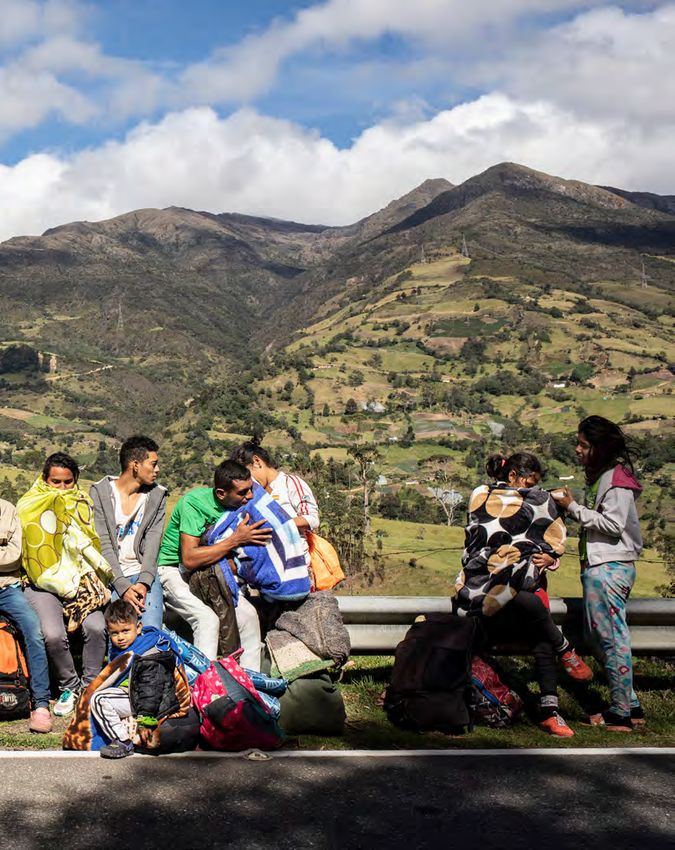
2019 IN REVIEW

     Trends at a Glance
          79.5 MILLION
          FORCIBLY DISPLACED WORLDWIDE
          at the end of 2019 as a result of persecution, conflict,             26.0 million refugees
          violence, human rights violations or events seriously
          disturbing public order.                                                       20.4 million refugees
                                                                                         		under UNHCR’s mandate
    80M
                                                                                          5.6 million Palestine refugees
                                                                                         		under UNRWA’s mandate
    60M

                                                                               45.7 million internally displaced people      1

    40M
                                                                                4.2 million asylum-seekers
    20M
                                                                                3.6 million Venezuelans displaced abroad

      1990                2000               2010             2019

 40% CHILDREN                                         2.0      MILLION
                                                          NEW CLAIMS
                                                                                               5.6   MILLION
                                                                                             DISPLACED PEOPLE
An estimated 30 – 34 million of                                                                     RETURNED
the 79.5 million forcibly displaced              Asylum-seekers submitted 2.0 million
persons were children below                      new claims. The United States of
18 years of age.                                                                           5.6 million displaced people
                                                 America was the world’s largest           returned to their areas or countries
                                                 recipient of new individual               of origin, including 5.3 million

             85%
                                                 applications (301,000), followed by       internally displaced persons and
                                                 Peru (259,800), Germany (142,500),        317,200 refugees.
                                                 France (123,900) and Spain (118,300).
            HOSTED IN
           DEVELOPING                                                                        107,800
           COUNTRIES
                                                             73%
                                                          HOSTED IN
                                                                                               REFUGEES
                                                                                                    RESETTLED
Developing countries hosted 85
per cent of the world’s refugees
                                                        NEIGHBOURING
and Venezuelans displaced abroad.                        COUNTRIES                        UNHCR submitted 81,600 refugees
The Least Developed Countries                                                             to States for resettlement.
provided asylum to 27 per cent                                                            According to government statistics,
of the total.                                    73 per cent of refugees and              26 countries admitted 107,800
                                                 Venezuelans displaced abroad lived       refugees for resettlement during
                                                 in countries neighbouring their          the year, with or without UNHCR’s
                                                 countries of origin.                     assistance.

2                                                                                                    UNHCR > GLOBAL TRENDS 2019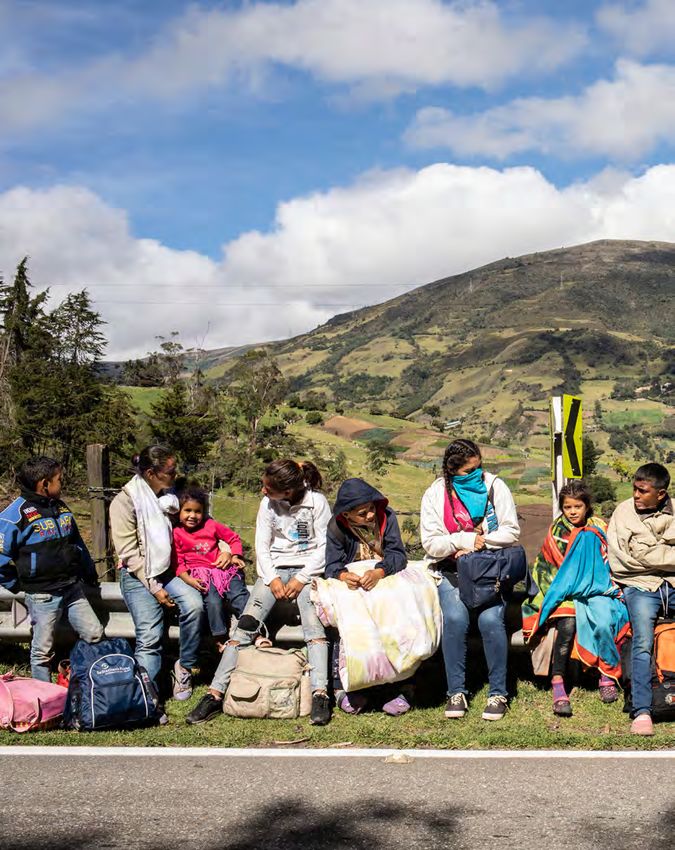
68%                           3.6
                                                                                                        1 6
                                                        MILLION
        ORIGINATED FROM                        REFUGEES HOSTED                                        IN
       JUST FIVE COUNTRIES                         IN TURKEY                                    ARE DISPLACED

      More than two thirds (68 per cent)     Turkey hosted the largest number           Relative to their national populations,
      of all refugees and Venezuelans        of refugees worldwide, with 3.6            the island of Aruba hosted the largest
      displaced abroad came from just five   million people. Colombia was               number of Venezuelans displaced
      countries.                             second with 1.8 million, including         abroad (1 in 6) while Lebanon2 hosted
                                             Venezuelans displaced abroad.              the largest number of refugees (1 in 7).

           Syrian Arab Republic               Turkey                                        Aruba
           6.6 million                        3.6 million                                   1 in 6

           Venezuela                          Colombia                                      Lebanon
           3.7 million                        1.8 million                                   1 in 7

           Afghanistan                        Pakistan                                      Curaçao
           2.7 million                        1.4 million                                   1 in 10

           South Sudan                        Uganda                                        Jordan
           2.2 million                        1.4 million                                   1 in 15

           Myanmar                            Germany                                       Turkey
           1.1 million                        1.1 million                                   1 in 23

               4.5   MILLION
                DISPLACED
                VENEZUELANS
                                                            Germany

                                                                           Turkey

      93,300 refugees, 794,500 asylum-
      seekers and 3.6 million Venezuelans                                                       Afghanistan
                                                                                       Syrian Arab
                                                                                       Republic
      displaced abroad.
                                                                                                                   Pakistan
                                                                                                                                              Myanmar

                   Bolivarian Republic
                   of Venezuela
                                                                                    South
                                                                                    Sudan
Colombia
                                                                        Uganda

                                                                                        1   Source: Internal Displacement Monitoring
                                                                                            Centre.
                                                                                        2   In addition, Lebanon hosted 476,000 and
                                                                                            Jordan 2.3 million Palestine refugees under
                                                                                            UNRWA’s mandate.

            UNHCR > GLOBAL TRENDS 2019                                                                                                    3
2010 - 2019

                          A Decade of
                          Displacement
                            AT LEAST

                          100
                          MILLION
                                                                                     ONLY A FRACTION
                                                                                      OF THE MILLIONS
                                                                                     DISPLACED FOUND
                      PEOPLE FORCIBLY                                                   A SOLUTION
                         DISPLACED

                16.2                MILLION
          ASYLUM APPLICATIONS REGISTERED
                                                                                   3.9        MILLION
                                                                                    REFUGEES RETURNING
                        [11% BY UNHCR]                                          TO THEIR COUNTRY OF ORIGIN

               400,000
      ASYLUM APPLICATIONS REGISTERED BY
                                                                                     1.1     MILLION
                                                                               REFUGEES RESETTLED BY STATES
    UNACCOMPANIED AND SEPARATED CHILDREN                                        [70% WITH UNHCR’S ASSISTANCE]

                   5.0            MILLION
               ASYLUM-SEEKERS GRANTED
                                                                                 322,400
                                                                                 REFUGEES NATURALIZED IN
              INTERNATIONAL PROTECTION                                           THEIR COUNTRY OF ASYLUM
            [67% RECOGNIZED UNDER THE 1951
                 REFUGEE CONVENTION]

                 15.0               MILLION
       PEOPLE NEWLY RECOGNIZED AS REFUGEES
                                                                                 128,600
                                                                              REFUGEES WHOSE STATUS ENDED
            OUTSIDE THE ASYLUM PROCESS                                           AS A RESULT OF CESSATION
        (PRIMA FACIE, TEMPORARY PROTECTION)

                79.0                 MILLION
             NEW INTERNAL DISPLACEMENTS
                                                                                  31.0          MILLION
                                                                          INTERNALLY DISPLACED PERSONS RETURNING
                        [SOURCE: IDMC]                                   TO THEIR PLACE OF RESIDENCE [SOURCE: UNHCR]

Changes in population statistics can have multiple reasons in addition

                                                                                 754,500
to the ones listed. These can include but are not limited to
administrative corrections, adjustments as a result of registration,
verification exercises conducted as well deaths and births. Additional
reasons may include new estimates as a result of revised or improved
methodologies, physical access to populations previously non-                  STATELESS PERSONS OBTAINING
accessible and thus unaccounted for or changes in statistical
classification of populations.
                                                                                OR CONFIRMING NATIONALITY

   4                                                                                            UNHCR > GLOBAL TRENDS 2019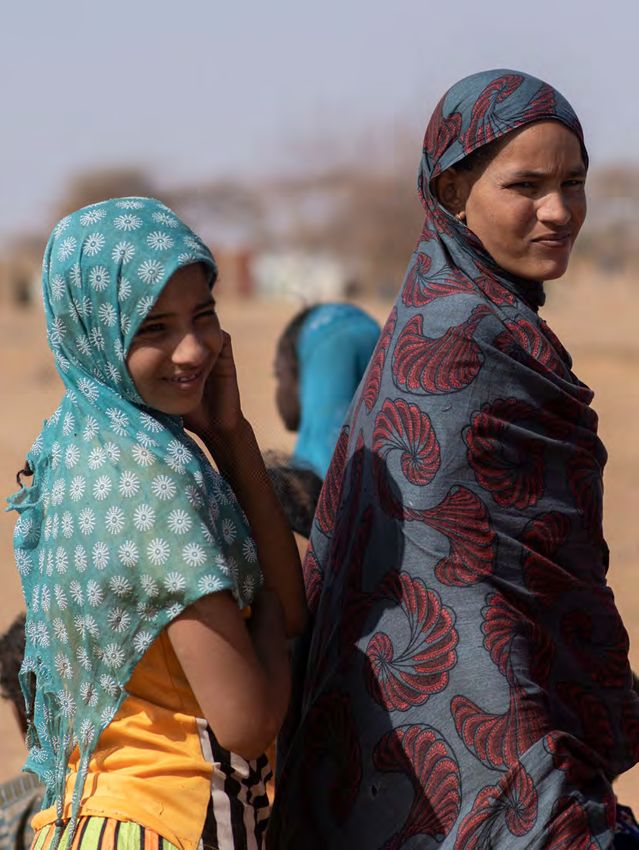
CHAPTER 1

BURKINA FASO. Malian refugees in
Goudoubo camp on their way to receive
new dignity kits at a distribution point
in the camp. With no prospects for return
as the conflict continues at home, these
refugees are now exposed to rising
insecurity in their new host country.
Following attacks and ultimatums by
armed groups, the Goudoubo refugee
camp, recently home to 9,000 refugees,
is now effectively empty as they have
fled to seek safety elsewhere.
© U N H C R / S Y LVA I N C H E R K A O U I

                                              For detailed information
                                               on UNHCR's protection
                                                             reporting.unhcr.org
                                                             www.unhcr.org                                                GLOBAL REPORT
                                                                                                                                                         2019

                                                         and assistance
                                                activities in support of
                                                                                                     GLOBAL REPORT 2019

                                                     forcibly displaced
                                                  populations, see the
                                                             Published by UNHCR
                                                             PO Box 2500
                                                             1211 Geneva 2
                                                             Switzerland

                                                   2019 Global Report
                                                             For information and inquiries
                                                             please contact:
                                                                                                     UNHCR

                                                             DRRM
                                                             hqfr00@unhcr.org
                                                             HQGARS@unhcr.org

                                                             Twitter@UNHCRgov | Twitter@refugees
                                                             Facebook | Instagram

                                                                                                                          F I N A N C I A L   |   O P E R A T I O N A L   |   S T A T I S T I C A L

UNHCR > GLOBAL TRENDS 2019                                                                                                                                           5
Chapter 1
CHAPTER 1
Global forced
displacement
Almost 80 million people are forcibly displaced
We are witnessing a changed reality in that forced
displacement nowadays is not only vastly more widespread but
is simply no longer a short-term and temporary phenomenon.
Filippo Grandi
UN High Commissioner for Refugees
t least 100 million people were forced to flee
A • the outbreak of the Syrian conflict early
their homes during the last 10 years, seeking in the decade, which continues today
refuge either within or outside the borders of their • South Sudan’s displacement crisis,
country. Forced displacement and statelessness which followed its independence
remained high on the international agenda in
• the conflict in Ukraine
recent years and continued to generate dramatic
• the arrival of refugees and migrants
headlines in every part of the world. As we
in Europe by sea
approach two important anniversary years in
2021, the 70th anniversary of the 1951 Convention • the massive flow of stateless refugees
Relating to the Status of Refugees and the from Myanmar to Bangladesh
60th anniversary of the 1961 Convention on the • the outflow of Venezuelans across Latin
Reduction of Statelessness, it is clear these legal America and the Caribbean
instruments have never been more relevant. • the crisis in Africa’s Sahel region, where
conflict and climate change are endangering
Several major crises contributed to the massive
many communities
displacement over the past decade, and the
numbers include people who were displaced • renewed conflict and security concerns
multiple times. These crises included but are not in Afghanistan, Iraq, Libya and Somalia
limited to the ones listed here: • conflict in the Central African Republic
• internal displacement in Ethiopia
• renewed outbreaks of fighting and violence
in the Democratic Republic of the Congo
• the large humanitarian and displacement
crisis in Yemen.
6 UNHCR > GLOBAL TRENDS 2019
Chapter 1

      Figure 1 | Global forced displacement | end-year

                                  POPULATION (millions)
                       0     10    20       30      40    50   60   70   80

             2019                                                             79.5m

             2018                                                             70.8m

             2017                                                             68.5m

             2016                                                             65.5m

             2015                                                             65.1m

             2014                                                             59.2m

             2013                                                             51.2m

                                                                                      Internally
                                                                                      displaced
                                                                                      persons
              2012                                                            42.7m
                                                                                      UNRWA
                                                                                      refugees

                                                                                      UNHCR
             2011                                                             38.5m   refugees

                                                                                      Asylum-
                                                                                      seekers

                                                                                      Venezuelans
             2010                                                             41.1m   displaced
                                                                                      abroad

                       0     10    20       30      40    50   60   70   80
                                  POPULATION (millions)

UNHCR > GLOBAL TRENDS 2019                                                                                 7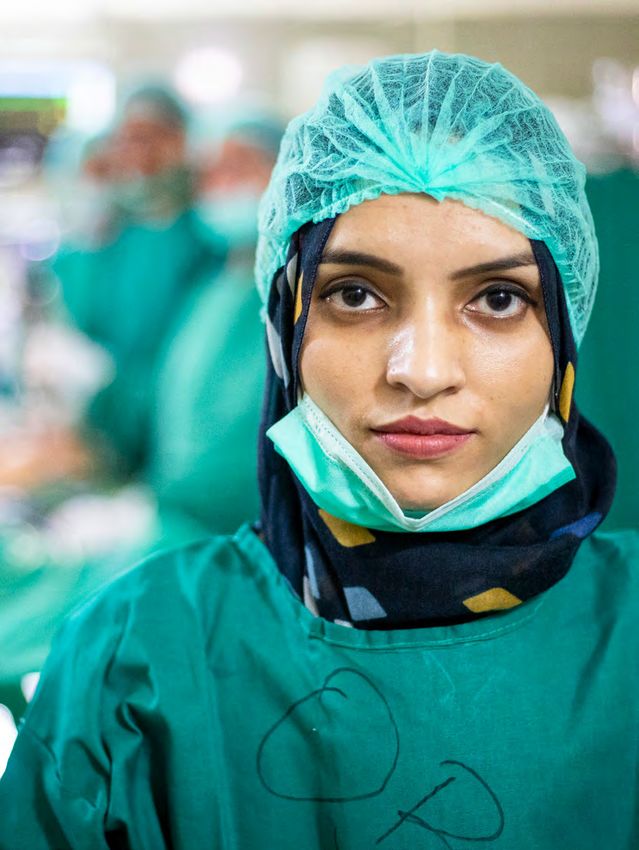
CHAPTER 1

    Tens of millions of people were able to return to                             Bolivarian Republic of Venezuela (Venezuela) and
    their places of residence or find other solutions,                            Yemen represent just a few of the many hotspots
    such as voluntary repatriation or resettlement                                in 2019 driving people to seek refuge and safety
    to third countries, but many more were not and                                within their country or flee abroad to seek
    joined the numbers of displaced from previous                                 protection.
    decades. By the end of 2019, the number of
                                                                                  The proportion of the world’s population who
    people forcibly displaced due to war, conflict,
                                                                                  were displaced continued to rise. One per cent
    persecution, human rights violations and events
                                                                                  of the world’s population – or 1 in 97 people – is
    seriously disturbing public order had grown
                                                                                  now forcibly displaced. This compares with 1:159
    to 79.5 million, the highest number on record
                                                                                  in 2010 and 1:174 in 2005 as the increase in the
    according to available data. 3 The number of                                  world’s forcibly displaced population continued to
    displaced people was nearly double the 2010                                   outpace global population growth.5
    number of 41 million (see Figure 1) and an
    increase from the 2018 number of 70.8 million.                                During 2019, an estimated 11.0 million people
    The most recent annual increase is due to both                                were newly displaced. While 2.4 million sought
    new displacement and the inclusion in this year’s                             protection outside their country,6 8.6 million
    report of 3.6 million Venezuelans displaced                                   were newly displaced within the borders of their
    abroad who face protection risks, irrespective of                             countries.7 Many displaced populations failed
    their status – a category that was not included in                            to find long-lasting solutions for rebuilding their
    the broader global forced displacement total in                               lives. Only 317,200 refugees were able to return
    previous versions of the Global Trends report. 4                              to their country of origin, and only 107,800 were
                                                                                  resettled to third countries. Some 5.3 million
    The Democratic Republic of the Congo (DRC),                                   internally displaced people returned to their place
    Burkina Faso, the Syrian Arab Republic (Syria), the                           of residence during the year, including 2.1 million

    Figure 2 | Top international displacement situations by country of origin | end-2019*

                   Syria                                             6.6

             Venezuela           0.8                       3.6

            Afghanistan                          2.7         0.3

           South Sudan                     2.2

               Myanmar               1.1

                Somalia          0.9

                   DRC          0.8

                                                                                                                                    Refugees
                 Sudan         0.7
                                                                                                                                   Asylum-seekers
                    Iraq 0.3 0.3                                                                                                   Venezuelans
                                                                                                                                   displaced abroad
    Central African Rep.       0.6                                                                                             *Excludes Palestine refugees
                                                                                                                                under UNRWA's mandate.

                           0               1           2         3                4            5            6             7
                                                                     (millions)

    3   These included 26.0 million refugees: 20.4 million under UNHCR’s          5   National population data are from United Nations, Department
        mandate and 5.6 million Palestine refugees registered with the                of Economic and Social Affairs, Population Division, “World
        United Nations Relief and Works Agency for Palestine Refugees                 population prospects: The 2019 revision”, New York, 2019. See:
        in the Near East (UNRWA). The global figure also included                     https://population.un.org/wpp/
        45.7 million internally displaced persons (source: IDMC), 4.2             6   Consisting of more than 2.0 million new individual asylum claims
        million individuals whose asylum applications had not yet been                and 382,200 refugees recognized on a prima facie or group basis.
        adjudicated by the end of the reporting period, and 3.6 million               Some of these people may have arrived prior to 2019.
        Venezuelans displaced abroad.                                             7   Based on a global estimate from IDMC.
    4   For details on the Venezuela situation, see page 10.

8                                                                                                                              UNHCR > GLOBAL TRENDS 2019
CHAPTER 1

      in the Democratic Republic of the Congo 8 and                                        NOTE:
      1.3 million in Ethiopia. In many cases, however,                                     The main focus of this report is the analysis of statistical
      refugees and IDPs returned under adverse                                             trends and changes in global displacement from January to
                                                                                           December 2019 among populations for whom UNHCR has
      circumstances in which the sustainability of                                         been entrusted with a responsibility by the international
      returns could not be assured.                                                        community.10 The data presented are based on information
                                                                                           received as of 15 May 2020 unless otherwise indicated.
      At the end of 2019, Syrians continued to be by
                                                                                           The figures in this report are based on data reported by
      far the largest forcibly displaced population                                        governments, non-governmental organizations and
      worldwide (13.2 million, including 6.6 million                                       UNHCR. Numbers are rounded to the closest hundred or
                                                                                           thousand. As some adjustments may appear later in the
      refugees and more than six million internally
                                                                                           year in the Refugee Population Statistics online database,11
      displaced people). When considering only                                             figures contained in this report should be considered as
      international displacement situations, Syrians also                                  provisional and subject to change. Unless otherwise
                                                                                           specified, the report does not refer to events occurring
      topped the list with 6.7 million persons, followed
                                                                                           after 31 December 2019.
      by Venezuelans with 4.5 million. Afghanistan and
      South Sudan had 3.0 and 2.2 million, respectively
      (see Figure 2).9                                                                 During crises and displacement, children,
                                                                                       adolescents and youth are at risk of
      Turkey hosted the highest number of people                                       exploitation and abuse, especially when they
      displaced across borders, 3.9 million, most of                                   are unaccompanied or separated from their
      whom were Syrian refugees (92%). Colombia                                        families (these children are referred to as
      followed, hosting nearly 1.8 million displaced                                   UASC). In 2019, UASC lodged around 25,000
      Venezuelans. Germany hosted the third largest                                    new asylum applications. In addition, 153,300
      number, almost 1.5 million, with Syrian refugees                                 unaccompanied and separated children were
      and asylum-seekers constituting the largest                                      reported among the refugee population at
      groups (42%). Pakistan and Uganda hosted the 4th                                 the end of 2019. Both figures, however, are
      and 5th largest number, with about 1.4 million each                              significant underestimates due to the limited
      (see Figure 3).                                                                  number of countries reporting data.

      Figure 3 | Top international displacement situations by host country | end-2019*

                  Turkey                                                    3.6                                              0.3

                Colombia                                    1.8

                Germany                       1.1                     0.3

                 Pakistan                            1.4

                 Uganda                             1.4

            United States        0.3                  0.8

                   Sudan                  1.1
                                                                                                                                             Refugees
      Islamic Rep. of Iran               1.0
                                                                                                                                            Asylum-seekers
                Lebanon                 0.9                                                                                                 Venezuelans
                                                                                                                                            displaced abroad
                     Peru         0.5               0.4                                                                                 *Excludes Palestine refugees
                                                                                                                                         under UNRWA's mandate.

                             0                                    1               2                         3                       4
                                                                              (millions)

      8   This figure was released by the “Commissions de mouvements de
          population”, an inter-organizational mechanism which is held by
          provincial authorities and humanitarian actors. It covers the period
          from April 2018 to September 2019.                                           10 See Chapter 7 for a definition of each population group.
      9   Excluding Palestine refugees under UNRWA’s mandate.                          11 http://www.unhcr.org/refugee-statistics

UNHCR > GLOBAL TRENDS 2019                                                                                                                                             9
CHAPTER 1

PERU. “I arrived today at the
border with my husband and
two children," says Daniela,
29, with her 10-month-old
baby at the Ecuador-Peru
border. "We left Venezuela
five days ago by bus. We
want to go to Lima where we
can stay with friends. It is
impossible to remain in
Venezuela, there is no
medicine, [and] little food."
© UNHCR /HÉLÈNE C AUX

VENEZUELA SITUATION

By the end of 2019, some 4.5 million Venezuelans had        to basic services, and are thus promoted for all
left their country, travelling mainly to other parts of     Venezuelans displaced abroad – irrespective of their
Latin America and the Caribbean. It is the largest          status – to reinforce the protection dimension and
exodus in the region’s recent history and one of the        consistent responses across the region.12
biggest displacement crises in the world. More than
900,000 Venezuelans have sought asylum in the last          With the objective of ensuring an accountable,
three years, including 430,000 in 2019 alone. Some          coherent, coordinated and protection-sensitive
countries in the region, such as Brazil, have taken steps   operational response for refugees and migrants from
to apply the extended refugee definition under the          Venezuela across the region, UNHCR and the
                                                            International Organization for Migration (IOM) lead the
1984 Cartagena Declaration on Refugees and national
                                                            Regional Inter-Agency Coordination Platform (R4V).13
legislation, while other countries have gradually scaled
                                                            In 2019, through its Regional Refugee and Migrant
up their capacity to process asylum claims and are
                                                            Response Plan (RMRP), partners’ activities benefited
developing simplified or accelerated refugee status
                                                            over 1.6 million people in 16 countries. For the 2020
determination case processing modalities. In addition,
                                                            Response Plan,14 151 partners throughout the region
Latin American countries granted over 2.4 million
                                                            aim to support 4.1 million people, including vulnerable
residence permits and other forms of legal stay to
                                                            host community members, including through targeted
Venezuelans by the end of 2019, which allow them to
                                                            COVID-19 response activities. The Regional Inter-
access some basic services. New visa requirements in
                                                            Agency Coordination Platform is complemented by
many States along the Andean Corridor have left those
                                                            eight UNHCR and IOM co-led national and sub-
on the move facing increased protection risks.
                                                            regional platforms in Brazil, Chile, Colombia, Ecuador
Furthermore, the number of Venezuelans in an irregular
                                                            and Peru (at national levels) and in the Caribbean,
situation continues to increase. At the end of 2019, over   Central America, Mexico and Southern Cone (at
50 per cent of Venezuelan refugees and migrants in          sub-regional levels).
Colombia were in an irregular situation. Based on
reports received by UNHCR and its partners, as well as
reliable information in the public domain from a wide       12 UNHCR, Guidance Note on International Protection
range of sources about the situation in Venezuela,             Considerations for Venezuelans – Update I, May 2019,
protection-sensitive arrangements are required, in             https://www.refworld.org/docid/5cd1950f4.html
                                                            13 https://data2.unhcr.org/en/situations/platform
particular protection against forced returns and access     14 https://data2.unhcr.org/en/documents/details/72254

10                                                                                                 UNHCR > GLOBAL TRENDS 2019
CHAPTER
Chapter 1
Can we predict forced A SIGN OF SOLIDARITY
displacement for the next On 10 September 2019, the Government of
10 years? Rwanda signed an agreement with the African
Union (AU) and UNHCR to provide urgent
It is very difficult to predict global forced and lifesaving assistance to African refugees
displacement, or its impact on the 2030 Agenda and asylum-seekers currently being held in
for Sustainable Development. Such predictions detention centers in Libya. This agreement
followed a generous offer from Rwanda to
typically rely on historical population trends and
host up to 30,000 vulnerable people at risk
anticipate future events, which is sometimes
and stranded in Libya. Under the memorandum
impossible. Based on the displacement trajectory
of understanding, UNHCR in partnership with
in the 1990s and 2000s, few people could have
the Government of Rwanda and the AU has
foreseen the rapidly growing number of displaced
established an Emergency Transit Mechanism
people we have seen over the last decade.
(ETM), to facilitate the relocation of up to 500
From the mid-1990s until around 2010, the people of concern at any given time from the
number of displaced people remained relatively conflict zones in Libya to safety in Rwanda,
stable because even though new displacement while continuing to seek durable solutions
continued, at the same time many displaced options in and outside the country. The ETM
people eventually repatriated, built permanent in Rwanda complements the Emergency
homes in their host communities or resettled Evacuation Transit Mechanism established in
in third countries. In the aftermath of the early Niger in 2017.
Balkan wars and the Rwandan genocide, for
example, global displacement figures remained been displaced had fewer options for rebuilding
well below 40 million, and as low as 34 million in their lives. As wars and conflicts dragged on,
1997, according to estimates. Between 2000 and fewer refugees and internally displaced people
2009, the numbers of displaced generally ranged
were able to return home, countries accepted a
between 37 and 42 million.
limited number of refugees for resettlement and
The last decade, however, brought a major shift. host countries struggled to integrate displaced
More people sought refuge, but those who had populations. For instance, only 3.9 million
Figure 4 | Refugee returns by decade
3.3 million 15.3 million 9.6 million 3.9 million
4.0
3.5
3.0
2.5
Millions
2.0
1.0
0.5
0
1980 1985 1990 1995 2000 2005 2010 2015 2019
UNHCR > GLOBAL TRENDS 2019 11CHAPTER 1
refugees were able to return to their country of coronavirus had just emerged in late 2019,
origin between 2010 and 2019. This compares to the subsequent pandemic has had, and at
almost 10 million refugees who returned home the time of this writing continues to have, an
during the previous decade and more than 15 unprecedented global social and economic
million two decades prior (see Figure 4). With impact, also affecting asylum systems. For
more people becoming displaced and fewer instance, the number of asylum applications
being able to return, an increasing number registered in the European Union in March 2020
find themselves in protracted and long-lasting dropped by 43 per cent compared to February
displacement situations. The world has clearly as asylum systems slowed or came to a halt with
shifted from a decade of solutions to a decade of countries closing borders or implementing strict
new and protracted displacement. border restrictions in response to COVID-19.16
In other parts of the world, refugee registration,
Climate change and natural disasters can an essential protection activity at the core of
exacerbate threats that force people to flee within refugee statistics,17 also dropped significantly
their country or across international borders. despite efforts by some countries to resort to
The interplay between climate, conflict, hunger, remote registration and documentation. As
poverty and persecution creates increasingly a result, global refugee and asylum statistics
complex emergencies. For example, food may under-represent the true magnitude of
insecurity may become a major driver of conflicts the number of people seeking international
and displacement. An international alliance of protection during the pandemic. This could
the United Nations, governmental and non- increase the uncertainty for predicting global
governmental agencies working to address forced displacement in the future.
the root causes of extreme hunger reported
that conflict, weather extremes and economic Whatever the predictions are for future global
turbulence contributed to several disturbing displacement, we must reverse the current
trends. The group reported that at the end of trend and massively expand pathways for the
2019, 135 million people across 55 countries and forcibly displaced to rebuild their lives – whether
territories experienced acute food insecurity.15 In in their home countries, in third countries or in
addition, 75 million children had stunted growth their host communities. In 2019, UNHCR and its
and 17 million suffered from wasting. These partners launched the Three-Year Strategy on
findings represented the highest level of acute Resettlement and Complementary Pathways.18
food insecurity and malnutrition documented since The strategy foresees resettlement of one million
the group’s first report in 2017. Eighty per cent of refugees and admission of two million refugees
the world’s displaced populations were residing in through complementary pathways such as family
these 55 countries or territories. reunification or labour mobility schemes by 2028.
For it to succeed, States need to offer more
The COVID-19 pandemic demonstrates avenues to solutions for refugees in line with the
how unexpected events can affect forced objective of greater shared responsibility set out
displacement predictions. Although the novel in the Global Compact on Refugees.
16 See https://easo.europa.eu/news-events/covid-19-asylum-
applications-down-march
17 See Chapter 7 for more details on sources and basis of refugee
statistics.
18 To work towards increasing the number of resettlement places and
admissions, as well as expanding the number of countries offering
these programmes, the Three-Year Strategy on Resettlement and
Complementary Pathways was launched in 2019 by governments,
non-governmental organizations, civil society and UNHCR. The
strategy’s target of 60,000 resettlement departures to 29 States
in 2019 has been achieved. In 2020, the goal is for 31 countries to
15 Global Report on Food Crises 2020, Global Network against Food resettle up to 70,000 refugees referred by UNHCR. See https://
Crises, April 2020, at https://www.wfp.org/publications/2020- www.unhcr.org/protection/resettlement/5d15db254/three-year-
global-report-food-crises strategy-resettlement-complementary-pathways.html
12 UNHCR > GLOBAL TRENDS 2019CHAPTER 1 SUDAN. A 59 year old South Sudanese refugee, waiting for the distribution of food and goods such as plastic sheeting. Nivasha is one of several refugee settlements in the outskirts of the Sudanese capital Khartoum. It is temporary home to some 25,000 refugees, mainly from South Sudan. © UNHCR /ROL AND SCHÖNBAUER UNHCR > GLOBAL TRENDS 2019 13
Chapter 1
DEMOGRAPHY OF GLOBAL FORCED DISPLACEMENT
Demographic data is crucial to understand the impact of displacement on different population groups. It
is also essential to guide effective and efficient policy responses and programmatic interventions that
address the needs of vulnerable groups. Sex- and age-disaggregated information is unfortunately not
always available for all forcibly displaced populations. Statistical models or estimations can be used to fill
these data gaps.
Based on a combination of different data sources (e.g. registration, surveys) and statistical models, UNHCR
estimates that between 30 – 34 million of the 79.5 million forcibly displaced people are children (between
38 – 43 per cent). The three age pyramids present the demographic profile of the different populations.19
19 Demographic data is available for 80 per cent of refugees, 33 per cent of asylum-seekers and 1 per cent of Venezuelans displaced abroad.
Within a 90 per cent posterior prediction interval, between 9.3 and 13.2 million (33 – 47%) of all refugees, asylum-seekers and Venezuelans
displaced abroad combined are children under the age of 18. IDMC is the source of IDP data on children (www.internal-displacement.org).
UNRWA is the source of data on Palestine refugee children (www.unrwa.org).
14 UNHCR > GLOBAL TRENDS 2019Chapter 1
Figure 5 | Sex and age structure of forcibly displaced populations
INTERNATIONALLY DISPLACED INTERNALLY DISPLACED PERSONS PALESTINE REFUGEES UNDER UNRWA'S MANDATE
60+ 2% 2% 60+ 2% 4% 60+ 6% 6%
18-59 32% 26% 18-59 32% 25% 18-59 29% 28%
12-17 6% 5% 12-17 6% 6% 12-17 6% 6%
5-11 8% 8% 5-11 8% 8% 5-11 6% 6%
0-4 6% 5% 0-4 6% 6% 0-4 4% 3%
DISCLAIMER: figures do not add up to 100 per cent due to rounding. Male Female
COLOMBIA . Venezuelans continue to make perilous
journeys in search of refuge. “We did not have anything to
eat back home. It was becoming too problematic,
especially with the kids.” This family of 17 people has been
walking for five days. They are trying to warm up in the
sun after leaving their shelter early in the morning.
© UNHCR /HÉLÈNE C AUX
UNHCR > GLOBAL TRENDS 2019 15Chapter 2
CHAPTER 2
Refugees
20 million people granted international protection in the last decade
Refugee protection is at the heart of UNHCR’s Between 2010 and 2019, 20 million people were
mandate. It includes providing safety for refugees granted international protection either on an
so that they are not forced to return to dangerous individual or group basis. This includes close to one
situations, providing them access to fair and efficient million people in 2019: 321,500 recognized on a
asylum procedures and ensuring their human rights group or prima facie basis, 60,700 granted a form
are protected while they secure a long-term solution of temporary protection23 and 570,600 recognized
for a safe future. as a result of their asylum application. In addition,
millions of Venezuelans left their country in recent
Over the last decade, refugee protection work
years and lodged asylum claims or were granted
has faced increasingly complex challenges, as
residence permits and other forms of legal stay in
the number of refugee situations worldwide has
Latin America and the Caribbean.
increased. The number of refugees20 has doubled
from about 10 million in 2010 to 20.4 million at the
end of 2019. 21 In addition, there were 3.6 million
Venezuelans displaced abroad at year-end. 22 Unless
otherwise stated, all references in this chapter to
”people displaced across borders” refer to these two
populations.
20 Includes people in refugee-like situations.
21 Excludes 5.6 million registered Palestine refugees under UNRWA’s 23 The number of Syrians newly registered in Turkey in 2019 and thus
mandate. granted temporary protection by the Government is not publicly
22 For more details on the Venezuela situation, see page 10. available.
16 UNHCR > GLOBAL TRENDS 2019Chapter 2
TURKEY. Sidra looks out across
the water from the Galata Bridge in Istanbul.
“It is my favourite city in the whole of Turkey.
It is big and busy, and despite being crowded
and the travelling I have to do get to
university, I still love it.’’ The Syrian refugee
from Aleppo has been living here since
2014 and is studying dentistry thanks to
a Turkiye Burslari scholarship.
© UNHCR/DIEGO IBARRA SÁNCHEZ
For detailed
information
reporting.unhcr.org
www.unhcr.org GLOBAL REPORT
2019
on UNHCR's
work to support
GLOBAL REPORT 2019
hosting countries,
see the 2019
Published by UNHCR
PO Box 2500
1211 Geneva 2
Switzerland
Global Report
For information and inquiries
please contact:
UNHCR
DRRM
hqfr00@unhcr.org
HQGARS@unhcr.org
Twitter@UNHCRgov | Twitter@refugees
Facebook | Instagram
F I N A N C I A L | O P E R A T I O N A L | S T A T I S T I C A L
UNHCR > GLOBAL TRENDS 2019 17Chapter 2
By regions of asylum
Figure 6 | Refugees and Venezuelans displaced abroad by UNHCR region | end-year
25
20
(in millions)
15
10
5
2010 2011 2012 2013 2014 2015 2016 2017 2018 2019
East and Horn of Africa Southern Africa West and Central Africa Americas
Asia and Pacific Europe (incl. Turkey) Middle East/North Africa
The number of refugees increased in every region Burundi forced millions of people to flee, but other
over the last decade. The Middle East, North Africa crises contributed to the rise in refugees as well.
and Europe all felt the impact of the war in Syria,
In the Americas, there was a fourfold increase in
which left 6.6 million people living in displacement
the number of people displaced across borders
at the end of 2019. The majority were hosted in
during the decade, primarily due to the exodus
Turkey (3.6 million), Lebanon (910,600) and Jordan
from Venezuela, and the inclusion of 3.6 million
(654,700). The rising number of refugees in the
Venezuelans displaced abroad in the 2019 global
Middle East and North Africa was partly offset by
displacement statistics. In addition, hundreds of
a drop in the number of Iraqi refugees (from 1.6
thousands of Central Americans fled deteriorating
million to 63,000), many of whom were forced to
security conditions and violence and sought
flee the conflict in Syria and return to Iraq or seek
shelter across the region.
protection in other countries further afield.
The Asia and Pacific region experienced a
In Europe, the outbreak of large-scale armed
three per cent overall increase in the number
conflict in eastern Ukraine in 2014 led to a large
of refugees over the decade, mostly due to the
outflow of refugees in the region. At the end of
outflow of 700,000 stateless refugees from
2019, there were 60,000 Ukrainian refugees
Myanmar to Bangladesh beginning in August 2017.
worldwide.
While the increase has been limited, the overall
In sub-Saharan Africa, the number of refugees figures reflect the protracted plight of Afghan
residing across the region nearly tripled in the refugees in Pakistan and the Islamic Republic of
course of the decade, increasing from 2.2 to 6.3 Iran, which has lasted for more than 40 years.
million. Conflict and violence in South Sudan, Voluntary repatriation to Afghanistan continued
the DRC, Central African Republic, Somalia and through the decade, but at low levels.
18 UNHCR > GLOBAL TRENDS 2019Chapter 2
Table 1 | Refugees, people in refugee-like situations and Venezuelans displaced abroad by
UNHCR regions | 2019
Start-2019 End-2019 Change (total)
People in People in
UNHCR regions Venezuelans Venezuelans
refugee- refugee-
Refugees displaced Total Refugees displaced Total Absolute %
like like
abroad abroad
situations situations
- East and Horn
of Africa and 4,388,900 3,700 - 4,392,600 4,388,700 - - 4,388,700 -3,900 -0.1%
Great Lakes
- Southern Africa 777,500 - - 777,500 755,300 - - 755,300 -22,200 -2.9%
- West and
1,164,100 - - 1,164,100 1,204,700 - - 1,204,700 40,600 3.5%
Central Africa
Total Africa* 6,330,500 3,700 - 6,334,200 6,348,700 - - 6,348,700 14,500 0.2%
Americas 534,800 108,800 2,606,500 3,250,100 592,800 108,800 3,582,200 4,283,800 1,033,700 31.8%
Asia and Pacific 4,141,600 54,600 - 4,196,200 4,133,700 48,700 - 4,182,400 -13,800 -0.3%
Europe 6,402,500 28,100 - 6,430,600 6,543,500 27,000 - 6,570,500 139,900 2.2%
Middle East and
2,649,800 42,900 - 2,692,700 2,602,400 40,300 - 2,642,700 -50,000 -1.9%
North Africa
Total 20,059,200 238,100 2,606,500 22,903,800 20,221,100 224,800 3,582,200 24,028,100 1,124,300 4.9%
*Excluding North Africa.
Demographics of people such as access to education. An estimated 3.7
million refugee children were out of school in
displaced across borders 2018. Enrolment rates of refugee children at
primary and secondary level have improved in
The demographic structure of the people recent years, but only three per cent were able
displaced across borders differs from the to access higher education in 2018. 28
population of the 272 million international
migrants 24 and the 7.7 billion world population. 25 Young adults between the ages of 18 and 24
Children represent a larger proportion of also represent a greater proportion of refugees
the displaced population than they do in the (13%) when compared to 11 per cent of the
international migrant population, for example. world population and 9 per cent of international
At the end of 2019, around half of refugees migrants. In contrast, older persons make up
were children, 26 compared to an estimated 31 a smaller proportion of the refugee population
per cent of the world population and just 10 per (4%) compared to the world population (12%) and
cent of the international migrant population. 27 international migrants (17%).
Refugee children face particular challenges,
Figure 7 | Demographic breakdown of refugees, international migrants and world
population | end-2019
REFUGEES INTERNATIONAL MIGRANTS WORLD POPULATION
60+ 2% 2% 8% 9% 6% 6%
50-59 2% 2% 7% 6% 5% 5%
25-49 14% 12% 27% 23% 18% 17%
18-24 7% 6% 5% 4% 6% 5%
12-17 7% 7% 2% 2% 5% 5%
5-11 11% 11% 2% 2% 6% 6%
Male
0-4 8% 8% 1% 1% 5% 4% Female
DISCLAIMER: figures do not add up to 100 per cent due to rounding.
24 The international migrant dataset includes refugees and asylum-seekers in specific countries. Source: https://www.un.org/en/development/
desa/population/migration/data/estimates2/data/UN_MigrantStockByAgeAndSex_2019.xlsx
25 Source: https://population.un.org/wpp2019/Download/Standard/Population/
26 Demographic data is available for 80 per cent of refugees globally. For the remainder, UNHCR has estimated the demographics based on the
refugee data available in host countries and other countries in the same region. This figure excludes Venezuelans displaced abroad.
27 To enable the comparison, data for the 5-19 and 20-24 age ranges in the world population and international migrant data was apportioned to
UNHCR’s 5-11, 12-17 and 18-24 ranges.
28 https://www.unhcr.org/steppingup/
UNHCR > GLOBAL TRENDS 2019 19Chapter 2
Figure 8 | People displaced across borders by country of origin | end-year
2010 2019
Afghanistan 3,054,700 Syria 6,617,000
Iraq 1,683,600 Venezuela 3,675,500
Somalia 770,200 Afghanistan 2,728,900
DRC 476,700 South Sudan 2,234,800
Myanmar 415,700 Myanmar 1,078,300
Colombia 395,600 Somalia 905,100
Sudan 387,300 DRC 807,400
Viet Nam 338,700 Sudan 734,900
Eritrea 222,500 Central African Rep. 610,200
China 184,600 Eritrea 505,100
Central African Rep. 164,900 Iraq 344,500
Syria 18,500 Viet Nam 316,400
Venezuela 6,700 China 212,900
South Sudan* Colombia 104,900
* South Sudan gained independence from the Republic of the Sudan in 2011.
By country of origin number of Venezuelans displaced abroad has
surged. At the end of the decade, Venezuelans
At the end of the decade, 8 out of 10 people made up the second largest group, with 93,300
displaced across borders originated from just recognized refugees and a further 3.6 million
10 countries (83%). This means international Venezuelans displaced abroad. In addition, there
displacement is heavily concentrated around these were 794,500 Venezuelan asylum-seekers at the
10 countries. Five of them – Afghanistan, Somalia, end of 2019.
the Democratic Republic of the Congo, Sudan
and Eritrea – remained in the top 10 list of source Since the early 1980s, the number of Afghan
countries for cross-border displacement throughout refugees has remained sizeable. At times, the
the decade, highlighting the unresolved refugee number exceeded six million. During the last
crises in those places.
decade, it dropped by 11 per cent from some
3.1 million to 2.7 million, primarily due to an
Syria has been the main country of origin for increase in returns to Afghanistan from Pakistan
refugees since 2014. At the end of 2019, there and the Islamic Republic of Iran and verification
were 6.6 million Syrian refugees hosted by 126 exercises29 conducted in Pakistan. The Islamic
countries worldwide. The vast majority (83%) Republics of Iran and Pakistan continue to host
remained in neighbouring countries or in the region. 87 per cent of Afghan refugees. This represents
Turkey continued to host the largest number of a decrease from 96 per cent at the start of the
Syrian refugees (3.6 million), followed by Lebanon decade, as a number of countries, especially in
(910,600), Jordan (654,700), Iraq (245,800) and Europe, now host Afghan refugees (Germany
Egypt (129,200). Outside the immediate region, hosts 140,000, for example).
Germany (572,800) and Sweden (113,400) continued
to host the largest Syrian refugee populations.
At the start of the decade, there were just 6,700
29 Verifications are a time-bound registration activity conducted
Venezuelan refugees. But in recent years, in a specific area and/or for a specific population and consist
following deteriorating political, socioeconomic of verifying and updating individual registration records and
collecting additional information, as necessary. Verifications
and human rights conditions in the country, the typically lead to more accurate population figures.
20 UNHCR > GLOBAL TRENDS 2019Chapter 2 UNITED REP. OF TANZANIA . Burundian refugee Nyamoza Rachel, 24, sits with her husband and children outside her kitchen that was built to house a new stove design for refugees in Nyarugusu camp. The stoves are made by refugees themselves and use 50 per cent less firewood with less indoor smoke pollution. The project has reduced sexual and gender-based violence risks for the women who have to leave the camp to collect firewood. The United Rep. of Tanzania hosts some 192,000 Burundian refugees of which at least 58,000 live in Nyarugusu camp. © UNHCR /GEORGINA GOODWIN UNHCR > GLOBAL TRENDS 2019 21
Chapter 2

     Figure 9 | People displaced across borders by host country | end-year
                        2010                                                                   2019

                Pakistan                                              1,900,600         Turkey                                                              3,579,500

     Islamic Rep. of Iran                                 1,073,400                  Colombia                                     1,771,900

                   Syria                                 1,005,500                     Pakistan                              1,419,600

               Germany                         594,300                                 Uganda                             1,359,500

                 Jordan                   450,900                                     Germany                         1,146,700

                  Kenya                  402,900                                         Sudan                       1,055,500

                   Chad                347,900                              Islamic Rep. of Iran                    979,400

                  China              301,000                                          Lebanon                      916,200

          United States              264,600                                       Bangladesh                      854,800

       United Kingdom               238,200                                            Ethiopia                 733,100

            Bangladesh              229,300                                             Jordan                  693,700

                  Sudan        178,300                                                    Chad            442,700

                Ethiopia       154,300                                                   Kenya           438,900

                Uganda         135,800                                            United States          341,700

                 Turkey     10,000                                                       China          303,400

               Lebanon      8,100                                             United Kingdom          133,100

               Colombia     200                                                           Syria    16,200

     By country of asylum                                                         Congo, Ethiopia, Rwanda, South Sudan, Sudan,
                                                                                  the United Republic of Tanzania, Uganda and
                                                                                  Yemen – were home to 13 per cent of the world’s
     At the end of the decade, as at the start, just ten                          population. Accounting for just 1.2 per cent of the
     countries hosted nearly 3 in 5 of those displaced                            global Gross Domestic Product, 32 they had the
     across borders. However, only Pakistan, Germany                              least amount of resources available to meet the
     and the Islamic Republic of Iran held a position in                          needs of people seeking refuge. Yet together they
     the top 10 at both the beginning and the end of the                          hosted 6.6 million, 27 per cent of the global total
     decade. In the case of the Islamic Republic of Iran                          of refugees and Venezuelans displaced abroad.
     and Pakistan, it is due to the protracted situation
     of Afghan refugees in their country. The refugee                             The three most common countries of asylum
     population in Germany has been influenced by the                             hosted people almost exclusively from one single
     refugee crises in Europe in 2015 and 2016, when                              country: Turkey, with 3.6 million Syrians; Colombia,
     more than one million people applied for asylum,                             with 1.8 million Venezuelans; and Pakistan, with 1.4
     many of who were recognized as refugees or                                   million Afghans.
     granted complementary forms of protection.
                                                                                  Geographic proximity is an important factor for
     Developing regions30 continued to shoulder a                                 people fleeing conflict and persecution. Over
     disproportionately large responsibility for hosting                          the last decade, the vast majority of refugees
     displaced populations. Nine of the ten countries                             remained close to their country of origin. In
     hosting the largest populations of refugees and                              any given year, three-quarters of refugees or
     Venezuelans displaced abroad were in developing                              more were hosted by countries neighbouring
     regions. Some 85 per cent of these populations                               their countries of origin (see Figure 10). For
     lived in these countries.                                                    Venezuelans displaced abroad, just over half
                                                                                  (53%) remained in neighbouring countries, with
     The Least Developed Countries31 – including                                  others moving onwards to other countries in the
     Bangladesh, Chad, the Democratic Republic of the                             region, including Chile, Ecuador, Peru, Argentina
                                                                                  and Panama.
     30 See: unstats.un.org/unsd/methodology/m49/ for a list of countries
        included under each region.
     31 See: unstats.un.org/unsd/methodology/m49/ for a list of Least
        Developed Countries.                                                      32 Source: https://databank.worldbank.org/data/download/GDP.pdf

22                                                                                                                                            UNHCR > GLOBAL TRENDS 2019
Chapter 2
Figure 10 | People displaced across borders fleeing to neighbouring countries | end-year
21% 18% 18% 20% 20% 21%
26% 26% 26% 27%
79% 82% 82% 80% 80% 79%
74% 74% 74% 73%
2010 2011 2012 2013 2014 2015 2016 2017 2018 2019
To neighouring countries To non-neighbouring countries
Map 2 | Refugees, people in refugee-like situations and Venezuelans displaced abroad | end-2019
Germany
Turkey
Pakistan
Sudan
Uganda
Colombia
Ecuador
Peru
Chile
Argentina Refugees, including people
in refugee-like situation
Venezuelans
displaced abroad
Number of people
5,000,000
2,500,000
1,000,000
100,000
A country is named if it features among the five largest per population group.
The boundaries and names shown and the designations used on this map do not imply official endorsement or acceptance by the United Nations.
UNHCR > GLOBAL TRENDS 2019 23Chapter 2
PROTRACTED REFUGEE SITUATIONS These limitations notwithstanding, estimating the
number of refugees remaining in long-term exile
UNHCR defines a protracted refugee situation is crucial from a protection and solutions
as one in which 25,000 or more refugees from perspective. Based on this definition, it is
the same nationality have been in exile for at estimated that some 15.7 million refugees (77%)
least five consecutive years in a given host were in a protracted situation by the end of 2019,
country. 33 This method, while useful for slightly fewer than a year earlier (15.9 million).
advocacy and monitoring purposes, carries These 15.7 million refugees were living in 32 host
some important statistical limitations. As long as countries, constituting an overall total of 51
a group of refugees from the same nationality protracted situations. Figures include the long-
does not reach or exceed the threshold of lasting refugee situation of Afghans in Pakistan
25,000 for five consecutive years, it will not and the Islamic Republic of Iran as well more
feature as protracted irrespective of the group’s recent situations like that of South Sudanese
duration in exile. In addition, returns or new refugees in Kenya, Sudan and Uganda.
arrivals of individuals from the same nationality
within the same period may remain unaccounted In 2019, the situation of Burundian refugees in
for in this method as they may offset each other. Rwanda and Uganda also became protracted.
Therefore, the circumstances of individual Unfortunately, no protracted situations were
refugees are not captured in this definition. resolved during 2019.
33 Excludes Palestine refugees under UNRWA’s mandate.
Figure 11 | Hosting people displaced across borders by income level | end-year
19% 22% 22% 20% 22% 22% 20% 19%
23% 23%
22% 21%
24% 25% 22%
25% 29%
34% 32%
46%
42% 44%
41% 40% 42%
26% 26% 38% 35%
16%
19% 18% 18% 16% 17%
14% 13% 15% 14% 15%
2010 2011 2012 2013 2014 2015 2016 2017 2018 2019
High Upper-middle Lower-middle Low
24 UNHCR > GLOBAL TRENDS 2019Chapter 2
Comparing host country of Iran, Lebanon and Jordan – hosted 16 per cent
of refugees. By the end of 2019, they hosted 44
situations per cent of refugees and Venezuelans displaced
abroad. The share hosted by lower middle-income
Responsibility-sharing among States in the countries fell during the same period.
provision of protection and solutions for refugees
Comparing the size of a refugee population with
can take many forms, including providing funds for
that of a host country can help measure the impact
relevant programmes in other, less prosperous,
of hosting that population. Figure 12 helps to shed
host countries.
light on some of the major displacement situations
When it comes to hosting refugees, however, of our time. Five of the 10 countries in the figure
the burden is not equally shared. Comparing the are directly affected by the Venezuela crisis and
number of people displaced across borders to three by the Syria crisis. Taking into account
national income levels according to World Bank Venezuelans displaced abroad, the Caribbean
classification, 34 it is clear that in the last decade, islands of Aruba and Curaçao rank 1st and 3rd on
high-income countries never hosted more than the list, with 156 and 99 displaced persons per
19 per cent of this population. In 2019, they 1,000 inhabitants, respectively. 35 Lebanon, Jordan
hosted 17 per cent. Low-income countries, on the and Turkey rank 2nd, 4th and 5th when comparing
other hand, consistently hosted around 20 per the number of refugees they host in relation to
their national population size. 36 The only countries
cent per year.
appearing in the top-10 list per 1,000 inhabitants
In 2010, upper-middle income countries – yet not affected by the Syria or Venezuela crisis are
including Turkey, Colombia, the Islamic Republic Uganda and Chad.
Figure 12 | People displaced across borders per 1,000 host country inhabitants | end-2019
Aruba 156
Lebanon 134
Curaçao 99
Jordan 69
Turkey 43
Colombia 35
Uganda 31
Guyana 28
Panama 28
Chad 28
*Limited to countries hosting at least 1,000 people. Excludes Palestine refugees under UNRWA's mandate.
35 National population data are from United Nations, Department
of Economic and Social Affairs, Population Division, “World
population prospects: The 2019 revision”, New York, 2019. See:
https://population.un.org/wpp/
36 Figures for Lebanon and Jordan exclude Palestine refugees under
34 Income groupings are from the World Bank: http://databank. UNRWA’s mandate. Lebanon hosted 476,000 and Jordan almost
worldbank.org/data/download/site-content/OGHIST.xls 2.3 million registered Palestine refugees at the end of 2019.
UNHCR > GLOBAL TRENDS 2019 25Chapter 2
THE NEW REFUGEE INDICATOR IN THE 2030 SDG AGENDA
The 2030 Agenda for Sustainable Development UNHCR worked within the IAEG-SDGs to ensure
makes an ambitious commitment of “leaving no that the “leave no one behind” commitment
one behind” in its implementation. The United included forcibly displaced persons. This
Nations General Assembly Resolution37 that advocacy, together with the high levels of
adopted the Agenda recognized the importance displacement during the following years, created
of addressing the needs of refugees, internally momentum for the recognition of an additional
displaced persons and migrants. indicator on refugees. The indicator was approved
by the UN Statistical Commission at its 51st session
However, out of the 231 indicators in the global
in March 2020. 39 The new indicator is: 10.7.4
indicator framework designed to measure
“Proportion of population who are refugees, by
progress towards meeting the 169 SDG targets,
country of origin” and is computed as follows:
which was developed by the Inter-Agency
and Expert Group on SDG Indicators (IAEG- [Number of refugees by country of origin at end-
SDGs) and adopted by the General Assembly year/(End-year population in country of origin+
in 2017, 38 none specifically mentioned refugees number of refugees by country of origin at end-
or displacement. This had an unintended year)]*100,000
consequence of lowering the visibility of some
UNHCR is the custodian agency of this indicator
of the most vulnerable populations in the 2030
and has commenced regular monitoring and
Agenda, and therefore also making it more
biannual reporting. As shown in Figure 13,
difficult for UNHCR to advocate for improved
Syria, South Sudan and Eritrea have the greatest
disaggregation of data in national statistical
proportion of the national population who are
systems.
refugees, with 27,900, 16,800 and 12,500 per
100,000 inhabitants, respectively.
Figure 13 | SDG Indicator 10.7.4
Syria 27,900
South Sudan 16,800
Eritrea 12,500
Venezuela* 11,400
Central African Rep. 11,400
*Includes Venezuelans displaced abroad
37 https://undocs.org/en/A/RES/70/1
38 https://undocs.org/A/RES/71/313 39 https://unstats.un.org/unsd/statcom/51st-session/documents/
26 UNHCR > GLOBAL TRENDS 2019Chapter 2 PAKISTAN . “I feel so lucky. In my community many girls do not get this opportunity." Saleema is in her final year of training at the Holy Family Hospital in Rawalpindi, Pakistan. As an Afghan refugee growing up in a Turkmen community in Pakistan, 28-year-old Saleema has faced a lifetime of barriers in her quest to get an education. Now, after nearly three decades of study, she is beating the odds and is set to become a doctor. © UNHCR/ROGER ARNOLD UNHCR > GLOBAL TRENDS 2019 27
Chapter 3

      CHAPTER 3

     Internal
     Displacement
     79 million new internal displacements in the last decade

     In the past decade, internal displacement surged                      By 2010 the number of countries had increased
     to levels never before seen, requiring more                           to 26, and it now stands at 33. In 2005, UNHCR
     engagement from UNHCR around the world                                worked with 6.6 million IDPs, a number that grew
     as it used its expertise to help more internally                      to about 15 million by 2010 and stood at more than
     displaced persons (IDPs) in more countries. In                        43.5 million at the end of 2019 – representing an
     2005, when the cluster approach and other                             almost 7-fold increase in only 15 years.
     aspects of the humanitarian reform process were
     introduced, 40 UNHCR was working in 15 countries
     with internally displaced populations.

     40 In December 2005, the Inter-Agency Standing Committee
        endorsed the cluster approach for humanitarian emergencies,
        including for situations of internal displacement. Under this
        arrangement, UNHCR assumes leadership responsibility and
        accountability for three clusters: protection, shelter, and camp
        coordination and camp management.

28                                                                                                          UNHCR > GLOBAL TRENDS 2019
Chapter 3
NIGERIA. A young mother arrives in
a camp for internally displaced persons
in Maiduguri, after fleeing the violence in
Borno. She had to hide in the bush during
an attack from insurgents for days
without food or water. She gave birth
to her son in the camp and is still looking
for her husband.
© U N H C R / R O M A I N D E S C LO U S
For detailed information on
UNHCR's protection and
reporting.unhcr.org
www.unhcr.org GLOBAL REPORT
2019
assistance activities, see
the Overview on UNHCR's
GLOBAL REPORT 2019
engagement in situations of
internal displacement in the
Published by UNHCR
PO Box 2500
1211 Geneva 2
Switzerland
2019 Global Report
For information and inquiries
please contact:
UNHCR
DRRM
hqfr00@unhcr.org
HQGARS@unhcr.org
Twitter@UNHCRgov | Twitter@refugees
Facebook | Instagram
F I N A N C I A L | O P E R A T I O N A L | S T A T I S T I C A L
UNHCR > GLOBAL TRENDS 2019 29Chapter 3
Figure 14 | IDPs of concern to UNHCR by region | end-year
45
35
(in millions)
25
15
5
2010 2011 2012 2013 2014 2015 2016 2017 2018 2019
East and Horn of Africa Southern Africa West and Central Africa Americas
Asia and Pacific Europe (incl. Turkey) Middle East/North Africa
As shown in Figure 14, UNHCR has engaged with times as a result of renewed conflict, violence
internally displaced populations all over the world. or human rights violations. Yet, this figure does
It has worked continually in all seven regions, not constitute the global number. The Internal
with varying degrees of involvement. Over time, Displacement Monitoring Centre estimates that
with changing operational realities and emerging 79 million new internal displacements took place
solutions, investments in local government and between 2010 and 2019 due to conflict and
community capacities have allowed UNHCR to violence. 41
move its focus to more immediate IDP needs in
At the end of 2019, Colombia continued
other locations.
to report the highest number of internally
In countries were UNHCR was called upon to displaced people, with close to eight million
protect or assist people within national borders according to Government statistics. The large
during the past decade, an estimated 59 million number of registered IDPs comes from the total
people were newly displaced due to conflict. In cumulative figure from the Victim’s Registry which
some countries, people were displaced multiple commenced in 1985. 42
Figure 15 | IDPs of concern to UNHCR | end-2019
Colombia
Syria
DRC
Yemen
Somalia
Afghanistan
Nigeria
Sudan
Ethiopia
South Sudan
0 2 4 6 8
(millions)
41 Source: Internal-displacement.org. In the case of conflict- and
violence-induced displacement, IDMC conducts situational
monitoring in certain countries after learning of the occurrence
of displacement, and reports the country-wide estimates of new
displacement during the year and the total number of people
displaced at year’s end.
42 See: https://www.unidadvictimas.gov.co/en
30 UNHCR > GLOBAL TRENDS 2019Chapter 3
Map 3 | IDPs protected/assisted by UNHCR | end-2019
Syrian Arab
Republic
Yemen
Colombia Somalia
Democratic Republic
of the Congo
Number of people
10,000,000
7,500,000
5,000,000
2,500,000
1,000,000
100,000
A country is named if it features among the five largest per population group.
The boundaries and names shown and the designations used on this map do not imply official endorsement or acceptance by the United Nations.
Escalation of the conflict in Syria meant that the Protection and solutions for
number of IDPs remained high, estimated at more
than six million at the end of 2019. The intensifying
IDPs
conflict led to almost half a million people being
newly displaced during the year. Protection remained the most fundamental
challenge. The outbreak of war in Syria in 2011
Widespread conflict and violence in the generated one of the largest displacement
Democratic Republic of the Congo led to five crises in recent history. Conflicts which occurred
million people being internally displaced by year- after the ‘Arab Spring’ in Libya, Yemen and
end, the highest number reported by UNHCR to elsewhere created massive protection needs
date. Other countries with major IDP populations and displacement that have lasted throughout
at the end of 2019 were Yemen (3.6 million), the decade. The dynamics of conflict, ongoing
Somalia (2.6 million), Afghanistan (2.6 million) and hostilities and protection risks, with large parts of
Nigeria (2.2 million). the displaced and conflict-affected populations in
UNHCR > GLOBAL TRENDS 2019 31You can also read


