Mezzanine's Stock Visibility Solution - A mobile solution driving increased access to medicines - GSMA
←
→
Page content transcription
If your browser does not render page correctly, please read the page content below

Mezzanine’s Stock
Visibility Solution
A mobile solution driving
increased access to medicines

CASE STUDY COPYRIGHT © 2018 GSM ASSOCIATION

mHealth

The GSMA represents the interests of mobile             By forging stronger connections between the
operators worldwide, uniting nearly 800 operators       mobile and healthcare industries, the GSMA mHealth
with almost 300 companies in the broader mobile         Programme is supporting commercially sustainable
ecosystem, including handset and device makers,         health services that transform the lives of people
software companies, equipment providers and             in need and promote the wellbeing of mothers and
internet companies, as well as organisations in         families in developing countries.
adjacent industry sectors. The GSMA also produces
industry-leading events such as Mobile World            Mobile can increase the quality, reduce the cost
Congress, Mobile World Congress Shanghai, Mobile        and extend the reach of healthcare to benefit
World Congress Americas and the Mobile 360              millions. mHealth services have the potential to
Series of conferences.                                  generate significant impact by reaching women and
                                                        children who lack access to essential healthcare and
For more information, please visit the GSMA             nutritional information.
corporate website at www.gsma.com
                                                        Authors: Kim Viljoen and Willie Ngumi
Follow the GSMA on Twitter: @GSMA                       Contributors: Natalia Pshenichnaya,
                                                        Daniele Tricarico

                                                        Further acknowledgements: With special
                                                        thanks to Jacques de Vos, Casper Strydom,
                                                        John Vorster, Kulani Vukeya, Louisa Botha,
                                                        Jimmy Muchimba, and the rest of the Mezzanine
                                                        team for their support on this case study.

This publication is the output of a project funded by
UK aid, Department for International Development
(DFID), for the benefit of developing countries. The
views expressed are not necessarily those of DFID.
MEZZANINE – INCREASING ACCESS TO ESSENTIAL MEDICINES THROUGH IMPROVED STOCK VISIBILITY

GSMA

  ABBREVIATIONS

  2G       Second generation (mobile networks)

  3G       Third generation (mobile networks)

  4G       Fourth generation (mobile networks)

  ARV      Antiretroviral

  B2B      Business-to-business

  B2G      Business-to-government

  CHW      Community health worker

  CSV      Comma-separated values

  HIS      Health information system

  HIV      Human immunodeficiency virus

  ICT      Information communication and technology

  IVR      Interactive voice response

  KPI      Key performance indicator

  LPV/r    Lopinavir/Ritonavir

  MNO      Mobile network operator

  MoH      Ministry of Health

  NDoH     National Department of Health

  NHI      National health insurance

  NHLS     National Health Laboratory Service

  PoC      Proof of concept

  PPP      Public private partnership

  SMS      Short message service

  SOP      Standard operating procedures

  SSA      Sub-Saharan Africa

  SVS      Stock Visibility Solution

  TB       Tuberculosis

  USSD     Unstructured supplementary service data

MEZZANINE’S STOCK VISIBILITY SOLUTION – A MOBILE SOLUTION DRIVING INCREASED ACCESS TO MEDICINES

CONTENTS
Executive summary                                                                                           5
Key insights                                                                                                5

1.     Introduction to Mezzanine                                                                            8
1.1.   Mezzanine’s digital health portfolio                                                                 8

2.
   The role of digital health in addressing healthcare challenges                                          10
2.1.	The health burden in SSA                                                                             10
2.2.	The digital health opportunity                                                                        11

3.     Mezzanine’s business model                                                                          12
3.1.   Public-private partnerships                                                                         13
3.2.   Vodacom’s role                                                                                      14
3.3.   Donor funding                                                                                       14
3.4.   Government engagement                                                                               15

4.     Stock Visibility Solution                                                                           16
4.1. Overview                                                                                               16
4.2. Service design                                                                                         17
4.3. Results and impact                                                                                    20
4.4. SVS business model                                                                                     21
4.5. Service evolution                                                                                     22
Spotlight: Driving adoption among users                                                                    24

5.	Mezzanine’s digital health roadmap and considerations for the industry                                26

                                                                                                              3
GSMA

4   | Executive Summary
MEZZANINE’S STOCK VISIBILITY SOLUTION – A MOBILE SOLUTION DRIVING INCREASED ACCESS TO MEDICINES

Executive summary
In Sub-Saharan Africa (SSA), inefficient supply chain                                              Africa, Zambia, and Nigeria. As of June 2018, over 12
management can lead to stockouts1 of medicine at                                                   million stock level reports have been submitted through
public health facilities, complicating the treatment                                               SVS. This case study presents some of Mezzanine’s
and management of a range of diseases.2 Poor                                                       key challenges and successes along the SVS journey.
and rural communities that depend on these
facilities for health services and medicines are most                                              Key insights:
affected. Patients must often make repeated costly
trips to health facilities to fill their prescriptions,                                             • SVS is reducing the number of stockouts
and when there are stockouts patients default                                                         and improving overall stock management at
on treatment. Given the high health burden of                                                         public health facilities. The total number of
communicable diseases in SSA, such as HIV (human                                                      stockouts reported in South African provinces
immunodeficiency virus), malaria and tuberculosis                                                     that have adopted the SVS solution has decreased
(TB), stockouts are a serious challenge in the region.3                                               significantly. In 2014, in the province of KwaZulu-
                                                                                                      Natal, stockouts decreased by 46 per cent for
Mobile technology presents an opportunity to address                                                  ARVs, 49 per cent for TB medicines, and 14 per
this challenge by enabling access to higher quality                                                   cent for vaccines. Facilities are also reporting less
healthcare services and reducing the cost of healthcare                                               overstock and less deviation between minimum
delivery for governments and private providers. A                                                     and maximum available stock levels, both of
recent GSMA study showed that mobile operators                                                        which can reduce stock losses from expiration.
have an important role to play in digital health.4 In
this case study, we present the experience of the                                                   • Mezzanine’s end-to-end platform model offers
Vodacom subsidiary, Mezzanine, to demonstrate how                                                     commercial and operational benefits for its B2B
the mobile operators can address inefficiencies in                                                    and B2G clients. Mezzanine’s suite of solutions
the medicine supply chain. This case study describes                                                  is hosted on its Helium platform,5 allowing it to
Mezzanine’s broader strategy and portfolio of digital                                                 leverage integrated technology functions and
health tools, and demonstrates how the company has                                                    share managed services. In addition to its core
leveraged public-private partnerships (PPPs) to provide                                               offering, Mezzanine can also offer additional
holistic digital health solutions at national scale.                                                  software applications (security, cloud hosting,
                                                                                                      analytics, monitoring and reporting) which adds
Mezzanine’s Stock Visibility Solution (SVS) enables                                                   value for clients at no additional cost to Mezzanine.
health facilities to transition from inefficient paper-based
stock reporting processes to digital data collection                                                • Synergies with the MNO allow Mezzanine to
and real-time reporting. SVS reduces stockouts and                                                    strengthen its offering and expand into new
expands public access to essential medicines, such as                                                 markets. As a Vodacom-owned company,
antiretroviral (ARV) drugs, TB medications, and vaccines.                                             Mezzanine can leverage the brand, infrastructure6
Since its launch in South Africa in 2014, SVS has been                                                and workforce7 in Vodacom markets, giving
implemented in over 3,500 health facilities in South                                                  it a competitive advantage over other tech

1.  The complete absence of a required drug at a storage point or delivery point for at least one day (WHO, 2006).
2.	The World Health Organization (WHO) defines access to medicine as “having medicines continuously available and affordable at health facilities that are within one hour’s walk of the
    population”.
3.  Health Systems Trust (2014), “South African Health Review 2013/14”.
4.  GSMA (2017) “Scaling digital health in developing markets”.
5.	The Helium platform is the technology platform with which all of Mezzanine’s products are integrated. It houses the operating system and several loosely coupled technology functions such
    as the messaging system, payments system, identity management system and data storage, as well as other bushiness and web services.
6.	Mezzanine-enabled application server and databases are hosted in Vodacom business data centres that are fully managed and secure, including server monitoring, back-up, failover, and
    round-the-clock support services.
7.	Vodacom sales resources push Mezzanine solutions within its markets. Even in Zambia, a non-Vodacom market, sales agents within AfriConnect (a subsidiary of Vodacom Business Africa)
    drive uptake of Mezzanine products.

                                                                                                                                                              Executive Summary |                5
GSMA

      vendors. However, Mezzanine’s solutions are                                                           paper-based reporting methods poses a risk for
      network-agnostic and it ultimately aims to                                                            governments,8 despite the potential benefits.
      build its business beyond Vodacom markets.                                                            Providing evidence of both the technical viability
                                                                                                            and feasibility of a digital solution at scale9 and the
 • Securing high-level government buy-in is vital                                                           impact on health outcomes reassures Ministries
   to scaling digital health solutions nationally.                                                          of Health that the solution works and helps
   In South Africa, Mezzanine secured support                                                               them build the business case for the Treasury
   for SVS directly from the Minister of Health,                                                            to implement the solution at a national level.
   spurring adoption at national and provincial
   level. Building champions for the solution at                                                       • Aligning key performance indicators (KPIs)
   all levels of management within the Ministry                                                          of the product with the KPIs of management
   of Health (MoH) improves chances of success.                                                          staff at all levels within the MoH helps to drive
   Having trusted implementation partners with                                                           adoption. The introduction of digital solutions
   government ties helps to broker relationships,                                                        significantly changes work protocols and even staff
   build trust in a solution, and clarify market                                                         responsibilities. In South Africa, tailoring SVS web
   objectives. These implementation partners                                                             dashboards to meet the monitoring and reporting
   also oversee the change management                                                                    requirements of managers at health facility, district,
   process, which is crucial to integrating digital                                                      provincial and national level ensured relevance of
   health solutions across a health system.                                                              the solution to them driving increased usage.

 • Providing evidence of the technical, commercial,
   and clinical viability of digital health solutions
   builds the business case for governments.
   Implementing digital solutions in place of

8.   The greatest perceived risks are related to potential loss of data and insufficient back-up protocols and tools in the event of system failure or downtime.
9.   In Mezzanine’s experience and with specific reference to SVS, government considers implementation in at least 200 health facilities to be sufficient demonstration of the solution at scale.

6    | Executive Summary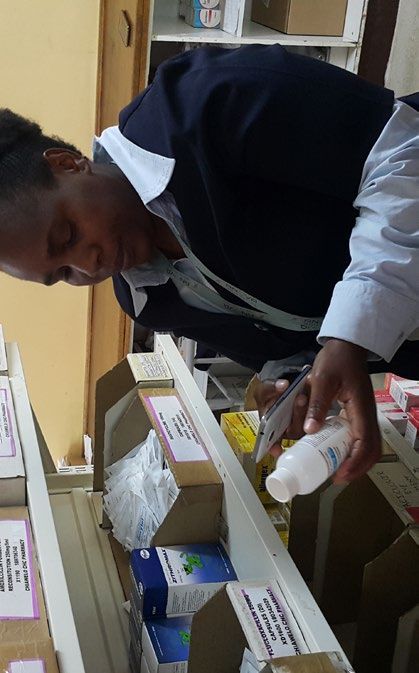
MEZZANINE’S STOCK VISIBILITY SOLUTION – A MOBILE SOLUTION DRIVING INCREASED ACCESS TO MEDICINES

                                                                           Executive Summary |   7
GSMA

1.	Introduction to
    Mezzanine
Mezzanine, a subsidiary of Vodacom, was founded                and Nigeria. Mezzanine solutions are offered to
in 2009 to provide mobile-enabled solutions for the            businesses and governments as managed services to
health, education, and agriculture sectors of Sub-             cut costs, increase efficiency, and enable companies
Saharan Africa. The company is currently operating in          to do business in Africa without the complexities of
South Africa, Kenya, Tanzania, Zambia, Mozambique,             setting up and managing technology infrastructure.

1.1. Mezzanine’s digital health portfolio
In the digital health ecosystem, Mezzanine has a               • AitaHealth is a smartphone-based application
suite of five tools for community health services,               that empowers around 2,000 community health
health worker education, vaccination tracking,                   workers (CHW) in South Africa to collect key data
and stock management. These tools are currently                  on health indicators for the National Department of
deployed across five countries in SSA (see Figure 1).            Health (NDoH), while also providing administrative
                                                                 and clinical decision-making support in real time.
 • SVS is being used in over 3,000 healthcare
   facilities in South Africa, Zambia, and Nigeria.10          • LEAP is a mobile learning solution that health
   With SVS, dispensing facilities can record weekly             departments use to train CHWs and empower and
   stock levels using a smartphone and application               support them to provide health-related services
   bundle. SVS is synchronised in real time to a                 in their communities. LEAP has been deployed
   cloud-hosted server that automates alerts and                 in Kenya, where over 30,000 CHWs have been
   reports for managers at various levels of the                 trained through the application as of June 2018.
   supply chain. To date, over 12 million stock update
   transactions have been made on the SVS platform.            • eLABS is a mobile application that tracks and
                                                                 sends results of blood specimens electronically.
 • mVacciNation is a mobile-enabled solution                     To date, it has been deployed in 71 health facilities
   available in Tanzania and Nigeria to support                  in Zambia. By enabling effective sample location
   primary health service providers with their                   tracking as well as temperature monitoring, eLABS
   immunisation programme. The solution tracks                   has reduced the number of samples lost and
   vaccination schedules for every child who has                 lowered sample rejection rates at laboratories.
   been immunised, sending reminders of their                    Patients also benefit from shorter waiting times
   next vaccination, and forecasts the availability              for test results compared to paper-based methods.
   and potential of stockouts of vaccines. The
   solution also enables cold chain monitoring.

10.	SVS is branded as ‘SMS for Life’ in Zambia and Nigeria.

8    | Introduction to Mezzanine
MEZZANINE’S STOCK VISIBILITY SOLUTION – A MOBILE SOLUTION DRIVING INCREASED ACCESS TO MEDICINES
FIGURE 1
Mezzanine’s digital health solutions deployed across SSA
NIGERIA
• SVS (SMS for Life)
• mVacciNation KENYA
• LEAP
TANZANIA
• mVacciNation
ZAMBIA
• SVS (SMS for Life)
• eLABS
SOUTH AFRICA
• SVS
• AitaHealth
This case study focuses on the Stock Visibility Solution interest and, in some cases, government ownership
(SVS), one of several mobile health products developed and financing. Integration of SVS in national health
by Mezzanine. While the path to implementation has systems has helped local governments improve the
not been trouble-free, SVS has achieved considerable supply of essential medicines at health facilities.
scale in several markets thanks to strong government
Introduction to Mezzanine | 9GSMA
2. The role of digital
health in addressing
healthcare challenges
2.1. The health burden in SSA
SSA continues to bear a significant health burden, medication and ARVs at health facilities rose from 25
with communicable diseases accounting for seven per cent in 2014 to 36 per cent in 2015, and 70 per
of the top 10 causes of death.11 HIV, malaria, and TB cent of reported stockouts lasted for over a month.17
account for much of the burden. An estimated 25.5
million people are living with HIV in SSA,12 12.2 million Poor and rural communities that depend on these
of whom are receiving ARV care. Over 50 per cent facilities for health services and medicines are most
of HIV patients are co-infected with TB, and SSA affected. Patients must often make repeated costly
accounts for 29 per cent of the global TB burden.13 trips to health facilities to fill their prescriptions, and
when their medicine is not available they default
When inefficient supply chain management results in on treatment, creating a higher risk of infection
stockouts14 of essential medicines at health facilities, and, ultimately, an increase in morbidity and
it becomes complicated to treat and manage mortality.18 Stockouts also mean that an already
communicable diseases.15 Despite sufficient inventory strained health workforce spends time rationing or
at national warehouses, up to 30 per cent of health tracking drugs instead of caring for patients.19
facilities in some SSA markets reported stockouts of
certain medicines.16 In South Africa, stockouts of TB
11. WHO, Global Health Observatory (GHO) data, Africa Region, Top 10 causes of death, 2016.
12. UNAIDS (2016) “Global AIDS Update 2016”.
13. International Journal of Infectious Diseases (2015), “Tackling the Tuberculosis Epidemic in sub-Saharan Africa”.
14. The complete absence of a required drug at a storage point or delivery point for at least one day (WHO, 2006).
15. The WHO defines access to medicine as “having medicines continuously available and affordable at health facilities that are within one hour’s walk of the population”.
16. ResearchGate (2016), “The Impact of Inventory Management on Stock-Outs of Essential Drugs in Sub-Saharan Africa”.
17. Stop Stock Outs Project, “2015 Stock Outs National Survey: Third Annual Report, South Africa”.
18. Health Systems Trust (2014), “South African Health Review 2013/14”.
19. Stop Stock Outs Project, “2015 Stock Outs National Survey: Third Annual Report, South Africa”.
10 | The role of digital health in addressing healthcare challengesMEZZANINE’S STOCK VISIBILITY SOLUTION – A MOBILE SOLUTION DRIVING INCREASED ACCESS TO MEDICINES
2.2. The digital health opportunity
The number of mobile broadband connections to rollout mobile technology to strengthen
in SSA will reach 500 million by 2020, more than healthcare systems.21 All five of the countries where
double the number at the end of 2016.20 This will Mezzanine has rolled out its digital health solutions
account for two-thirds of all mobile connections in have eHealth policies in place, creating an enabling
the region, with 3G remaining the dominant mobile environment for services like SVS to be adopted.
broadband technology. Network expansion, increased
availability and affordability of smartphones, and With proper training of users to overcome low technical
more affordable data tariffs will all help to drive this literacy and simple, well-designed user interfaces,
growth in consumption of broadband services. mobile apps can be used by frontline health workers to
provide healthcare services that have been challenging
With more widespread adoption of mobile broadband to deliver in the past.22 However, these services will
and more capable devices, mobile is well positioned need to be able to function offline to support adoption
to solve complex health system challenges. There even in areas with poor connectivity. At the same time,
are 26 countries in SSA with some form of electronic mHealth information services for patients will need to
health (eHealth) or health information system (HIS) continue to support basic 2G technology channels.23
policy or strategy in place, providing an opportunity
20. GSMA (2017), “The Mobile Economy, Sub-Saharan Africa 2017”.
21. WHO, Global Observatory for eHealth.
22. GSMA (2018), “Living Goods Uganda: A community health service leveraging mobile technology”.
23. All the mHealth services under the mNutrition initiative supported by the GSMA delivered information to users via basic 2G channels, such as short message service (SMS), unstructured
supplementary service data (USSD) and interactive voice response (IVR).
The role of digital health in addressing healthcare challenges | 11GSMA
3. Mezzanine’s business
model
Mezzanine licenses digital health solutions to businesses (B2B) or governments (B2G). In South Africa, SVS is an
example of a fully scaled B2G service financed directly by the NDoH. Mezzanine’s eLABS deployment in South
Africa is an example of a quasi-public model whereby the government pays indirectly for the service through
Mezzanine’s client, the National Health Laboratory Service (NHLS).24
By estimating the cost of full-scale implementation functionality is continuously expanded by adding new
(for example, deployment of SVS in all health facilities product modules or enabling integration with more
nationally), Mezzanine claims it can offer clients upstream and downstream systems and services.
(businesses or governments) competitive rates for
small-scale implementation during the proof of Adopting a platform model approach has allowed
concept (PoC) phase, and break even in five to ten Mezzanine to develop integrated holistic solutions
years provided the solutions have scaled. To mitigate hosted on its Helium platform. By using an existing
this risk and increase the business potential of each technology platform25 and shared managed
product, Mezzanine prioritises digital health tools that services,26 Mezzanine’s clients have seen both
are relevant and easy to replicate in all SSA markets. commercial and operational benefits. It can also
offer additional software applications (security,
Mezzanine’s preferred strategy is to develop modular cloud hosting, analytics, monitoring and reporting)
digital health solutions, prioritising high-value as a complement to its core offering, adding value
services for the client that are incremental innovations for clients at virtually no additional cost to Mezzanine.
rather than disruptive.At the same time, technical
24. The NHLS is a state owned health laboratory service consisting of a network of 265 laboratories in all nine provinces that service all public hospitals and clinics in the country.
25. Managing communication, data, information, identity, security and transactions.
26. Training, change management, maintenance, and user and technical support.
12 | Mezzanine’s business modelMEZZANINE’S STOCK VISIBILITY SOLUTION – A MOBILE SOLUTION DRIVING INCREASED ACCESS TO MEDICINES
3.1. Public-private partnerships
Mezzanine’s digital health strategy relies on multi- for successful integration of digital health tools in
stakeholder, cross-sector partnerships. Public-private the health system. In exchange, Mezzanine’s model
partnerships (PPPs) are key to delivering impactful of providing a turnkey managed service makes
and sustainable digital health solutions at scale, as it easier for implementing partners to focus on
individual stakeholders do not have sufficient capacity their core business or function, while Mezzanine
or resources to do so on their own.27 Mezzanine also deploys and maintains the technical component
highlights the need for a trusted third party to help and manages the relationship with the network
broker relationships with governments, establish provider. The role of various organisations within
trust, and clarify market objectives. These partners the SVS PPP network are detailed in Table 1.
oversee the change management process necessary
TABLE 1
The roles of various organisations within the SVS PPP network
Technology partner MNO Ministry of Health Funding partner Implementation
partner
Mezzanine provides Vodacom provides NDoH has assumed Vodacom The Supply
the digital tools connectivity, first full ownership and Foundation Chain Technical
and end-to-end line technical financing of SVS funded the PoC Assistance unit
SOUTH managed service support (helpdesk) phase of SVS within the NDoH
AFRICA that includes training, and mobile devices are responsible
technical support and for operational
connectivity bundle management
management of SVS
AfriConnect Ministries of Health Novartis Right to Care
(subsidiary of of the Northern Foundation is are responsible
Vodacom Business Province, Muchinga funding the first for operational
Africa) provides Province and phase of SVS management
ZAMBIA
connectivity Luapula Province of SVS
are engaged in the
PoC of SVS
Network agnostic: Kaduna state MoH GlaxoSmithKline
9Mobile, MTN are engaged in the and Adam Smith
and Airtel provide SVS PoC International
NIGERIA connectivity are responsible
for operational
management
of SVS
27. GSMA (2018) “Creating mobile health solutions for behaviour change: A study of eight services in the mNutrition Initiative portfolio”.
Mezzanine’s business model | 13GSMA
3.2. Vodacom’s role
As a subsidiary of Vodacom, Mezzanine operates As a major shareholder, Vodacom benefits from
independently. As a smaller, specialised enterprise expanding into non-traditional markets and sectors.
solution provider, Mezzanine can take on greater As Mezzanine develops successful products across
risk and adopt a more agile approach to product several markets, there is the potential for Vodacom
development. In Vodacom markets, Mezzanine to integrate these more formally into its portfolio
can use the Vodacom brand, infrastructure,28 of enterprise products and services and to leverage
and workforce29 to gain competitive advantage its enterprise channels to reach greater scale.
over other mHealth tech vendors.
3.3. Donor funding
Some of Mezzanine’s digital health tools are supported is to fully integrate SMS for Life into national health
by seed funding from donors in the PoC phase to systems and enable full ownership by Ministries of
demonstrate the viability of its health solutions Health. In Nigeria, the government has expressed
and attract financing from other clients, such as interest in the SVS solution, but requires proof of
governments. For example, Novartis Foundation is viability for large-scale implementation (in at least 200
funding the first phase of SVS implementation, branded health facilities). Mezzanine’s other funding partners
as SMS for Life in Zambia and Nigeria as part of an have included the Vodacom Foundation (SVS, South
effort to encourage more government stewardship Africa), the Foundation for Professional Development
and leadership in digital health solutions. Its objective (AitaHealth, South Africa), and AMREF (LEAP, Kenya).
28. Mezzanine-enabled application server and databases are hosted in Vodacom business data centres that are fully managed and secure, including server monitoring, back-up, failover and
round-the-clock support services.
29. Vodacom sales resources push Mezzanine solutions within their markets. Even in Zambia, a non-Vodacom market, sales agents within AfriConnect (a subsidiary of Vodacom Business Africa)
drive uptake of Mezzanine products.
14 | Mezzanine’s business modelMEZZANINE’S STOCK VISIBILITY SOLUTION – A MOBILE SOLUTION DRIVING INCREASED ACCESS TO MEDICINES
3.4. Government engagement
Mezzanine has been operating in the digital health space since 2009 and has had some success engaging
with governments. Today, the main challenge for Mezzanine is promoting government ownership of digital
health solutions, due to a lack of resources and low propensity to innovate through technology in the public
sector. To stimulate and facilitate government engagement, Mezzanine has introduced several initiatives:
• Securing high-level government buy-in to • Providing evidence of the technical, commercial,
scale digital health solutions nationally. and clinical viability of solutions at scale
In South Africa, Mezzanine secured support builds the business case for digital health
for SVS directly from the Minister of Health, solutions. Governments in SSA consider it a
spurring adoption at national and provincial risk to implement digital tools in place of paper-
level. Identifying and building relationships with based methods, despite the potential benefits
champions at all levels of management improves of the solutions. Providing evidence that the
the chances of success. With high staff turnover tool is technically viable and feasible at scale
in government health departments, it is vital that (at least 200 facilities in the case of SVS), and
managers at all levels understand the benefits that it is having an impact on health outcomes,
of the digital solution and are invested in it. helps Ministries of Health build the business case
This has been critical to drumming up much- for national implementation to the Treasury.
needed support during implementation.
• Actively engaging with government throughout
• Aligning product KPIs with the KPIs of the PoC phase supports full integration in
management staff at all levels within the MoH the health system. Engaging with MoH staff
helps to drive adoption. The introduction of at quarterly workshops and encouraging them
digital solutions significantly changes work to take the lead in decision making bolsters
protocols and even staff responsibilities. In South their interest in the digital solution and paves
Africa, tailoring SVS web dashboards to meet the way to full integration in the health system
the monitoring and reporting requirements of and government ownership and financing.
managers at health facility, district, provincial
and national level ensured relevance of the
solution to them driving increased usage.
• Aligning cost modelling with MoH remuneration
strategies and budget allocation for existing
systems and processes makes it easier for
them to assess value for money. Understanding
how new budget is allocated for digital
solutions also helps to position the product
appropriately. This can be a challenging and
lengthy process for solution providers. In most
cases, Ministries of Health cover more of the
costs of a digital health solution incrementally.
Mezzanine’s business model | 15GSMA
4. Stock Visibility Solution
4.1. Overview
SVS is a mobile-based tool designed to improve stock and Eastern Cape (750 health facilities). Following a
management at health facilities, thereby increasing successful pilot, in 2016 the NDoH assumed ownership
availability or access to essential medicines30 and (operational management and financing) of the
improving treatment outcomes for patients in solution and rolled it out nationally in five more
populations in need. A free disease surveillance provinces,32 bringing the SVS health facility count to
module allows dispensing facilities to track cases of over 3,100. In Nigeria in December 2016, phase one
malaria, HIV, TB, and other notifiable diseases.31 of SVS implementation was launched in 251 health
facilities in Kaduna State. It was rolled out in Zambia
SVS was first piloted in 2014 in 605 public health in December 2017, and by May 2018, the solution
centres (PHCs) across the South African province had been deployed in 144 facilities across Northern
of KwaZulu-Natal. In 2015, the pilot was extended Province, Muchinga Province, and Luapula Province.
to the provinces of Limpopo (478 health facilities)
30. For example, antiretroviral drugs for the treatment of HIV, TB drugs, and vaccines. The disease surveillance module is currently in use in Zambia and was developed in response to the
Zambian MoH’s need to track and monitor disease prevalence more effectively.
31. Such as cholera, measles, viral haemorrhagic fever, yellow fever, acute flaccid paralysis (suspected poliomyelitis), as well as inpatient infant and maternal deaths.
32. Eastern Cape, Free State, Mpumalanga, Gauteng, North West, and the Northern Cape. The Western Cape is the only province that already had a stock management solution in place and
therefore did not adopt SVS.
16 | Stock Visibility SolutionMEZZANINE’S STOCK VISIBILITY SOLUTION – A MOBILE SOLUTION DRIVING INCREASED ACCESS TO MEDICINES
4.2. Service design
FIGURE 2
The SVS workflow
REMINDER
NOTIFICATIONS
Facility staff receive weekly
reminder notifications to
submit stock level and
disease surveillance reports
STOCK LEVEL
AND DISEASE
STOCK LEVEL SURVEILLANCE
REPLENISHMENT REPORTING
Hospital and district Facility staff use
pharmacy managers HEALTH the mobile app
order required stock FACILITY to capture stock
STAFF level and disease
surveillance reports
MANAGEMENT
STAFF
STOCK LEVEL AND
STOCK LEVEL
DISEASE MONITORING
ALERTS
AND REPORTING
Managers receive
Managers can access
automated SMS
customised web or app-
notifications for low-
based monitoring and
and no-stock levels
reporting dashboards
The SVS mobile app enables health facility staff all available stock items on the app. For each stock
(nurses or dispensary stock managers) to record item, users report the current stock level (number
stock levels and disease instances on a weekly basis of units), the expiry date, stock received (number of
(see the SVS workflow in Figure 2). When completing units), and number of units lost (due to expiration)
a stock level report, these users can either scan the since the last stock update. For disease surveillance
barcodes of each stock item33 in the stock room reporting, users select diseases from a list and record
(as shown in Figure 3), select stock items from the the number of reported cases by per patient age
facility formulary list34 on the app, or scroll through group since the last disease surveillance report.
33. A stock item refers to a particular medication of specific strength (mg/ml) and quantity (number of tablets).
34. The formulary is a list of essential medicines that are supposed to be stocked at each health facility.
Stock Visibility Solution | 17GSMA
FIGURE 3
An SVS health facility staff user scans the barcode of a stock item as
part of her weekly stock level reporting
Once stock levels and disease surveillance reports order the required stock. Managers can also access
are submitted, this information synchronises securely web- or app-based monitoring dashboards that
and in real time with a cloud-hosted server that are tailored to their needs and monitor KPIs35 at the
automates alerts and web-based reporting for appropriate degree of granularity (health facility,
management staff (the second SVS user group). district, provincial, and national level). Data is visualised
Alerts are sent to health facility and district-level using graphs and heat maps (see Figure 4) and
managers to notify them of low and no-stock levels managers can toggle between different views (by KPI
for immediate attention. Data from SVS is integrated or disease category). In addition to automatically
into upstream electronic stock management systems, generated monthly e-mail reporting, managers can
allowing hospital and district pharmacy managers to export configured reports in various formats.
35. An example of a stock level KPI is medicine availability, which is a percentage calculated as the number of stock items with confirmed stock availability over the total number of stock items on
the facility formulary. This can also be segmented by disease category. Other examples of stock-related KPIs would be top out-of-stock items, facilities failing to report, or facilities reporting
repeat out-of-stocks.
18 | Stock Visibility SolutionMEZZANINE’S STOCK VISIBILITY SOLUTION – A MOBILE SOLUTION DRIVING INCREASED ACCESS TO MEDICINES
FIGURE 4
Demo dashboard showing stockout levels (generated with
random data)
Digitising paper-based reporting of stock levels and Better visibility of stock levels at health facilities has
disease instances benefits both user groups, health enabled governments to move from a pull model
facility staff and management level staff. Built-in to a more informed push model, as Ministries of
intelligent workflow and decision support functions on Health can proactively replenish stock levels while
the SVS mobile app guides health facility staff users repeat out-of-stock facilities can be identified and
through the reporting process, speeding data entry prioritised for attention. Similarly, real-time data
and saving them time. The app also allows these users on disease prevalence allows district, provincial,
to validate data fields and monitor whether all the and national level management staff SVS users
compulsory data fields have been populated. Users to make informed and timely decisions, target
are also queried for any out-of-bound (unrealistic) interventions, and allocate resources appropriately
entries to ensure the quality and integrity of the data for effective disease management and prevention.
— often a challenge with paper-based reporting.
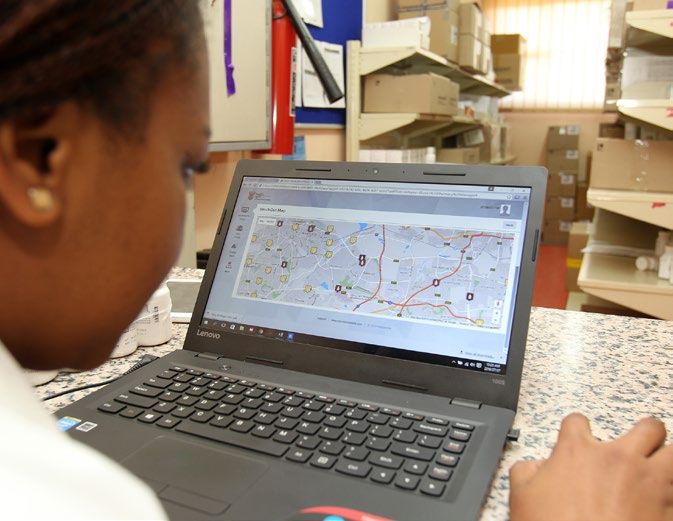
Stock Visibility Solution | 19GSMA 4.3. Results and impact Mezzanine tracks several KPIs related to SVS use, submitted. SMS for Life has been used in Zambia since for example, frequency of use at facilities. In South December 2017, where 6,300 stock updates and 8,400 Africa, 95 per cent of facilities use the SVS application updates on disease instances have been recorded. to report data on a weekly basis. Since launch in 2014, over 11 million stock level updates have been Mezzanine also tracks managers’ web platform use submitted on SVS. In Nigeria, 90 facilities identified over time, monitoring the frequency of use and the as priority targets are all using SVS (branded as SMS number of hits on various reports to determine their for Life in Zambia and Nigeria) to report weekly stock preferences. In South Africa, the data produced levels and disease instances and since its launch in by SVS is reviewed weekly by 358 managers at all December 2016, over 65,000 disease surveillance levels of the NDoH. In Nigeria, 370 managers are reports and 410,000 stock level reports have been using the web-based dashboards every week. FIGURE 5 A health facility supervisor views the SVS web dashboard 20 | Stock Visibility Solution
MEZZANINE’S STOCK VISIBILITY SOLUTION – A MOBILE SOLUTION DRIVING INCREASED ACCESS TO MEDICINES

There is growing evidence of the positive impact                                                     SVS is also helping health facilities to maintain more
of SVS on the management of the medicine supply                                                      consistent stock levels. In Nigeria, facilities making
chain. During the SVS pilot in South Africa, the                                                     frequent (weekly) stock updates are reporting
overall number of stockouts reported in KwaZulu-                                                     less overstock and less deviation between the
Natal in 2014 decreased by 46 per cent for ARVs,                                                     minimum and maximum levels of stock on hand.
49 per cent for TB medicines, and 14 per cent for                                                    This improvement can enable more accurate demand
vaccines. Similarly, in Limpopo, the overall decrease                                                forecasting and, therefore, more appropriate supply
in reported stockouts in 2015 was 66 per cent for                                                    of medications. Reducing overstock in some facilities
ARVs, 49 per cent for TB medicines, and 42 per                                                       invariably reduces understock in others, while
cent for vaccines.36 In Nigeria, an analysis of stock                                                reducing stock loss due to expiration leads to potential
updates that included a reported stockout showed                                                     cost savings for government in the long term.
early signs that the number of reported stockouts
between April 2017 and April 2018 had declined.

4.4. SVS business model

Following a successful pilot in South Africa (for which                                               • A user registration and enrolment service;
Vodacom Foundation provided the seed funding),                                                        • Hosted application environment as a managed
SVS has become a nationwide B2G tool paid for by                                                        service;38
the NDoH. The mobile solution is licensed to the                                                      • Software as a service (mobile phone and
government and the fee is a fixed monthly rate based                                                    web application); and
on the number of facilities using the solution. Clients                                               • Support to all users based on a service-level
also pay a one-time fee for hardware (one smartphone                                                    agreement.
and SIM card per health facility and 10 per cent buffer
stock) and a training fee (train-the-trainers approach                                               SVS is relatively easy to replicate across borders
with two sessions per facility). When requested by the                                               because the protocols for managing medicine supply
client, Mezzanine also provides additional training and                                              chains, and the associated challenges, are relatively
change management support at an additional cost.                                                     similar in different provinces and even across different
                                                                                                     markets. The majority of setup costs in a new market
As part of its end-to-end managed service,                                                           are for business development, understanding new
Mezzanine offers:                                                                                    work flows, and change management. These costs are
                                                                                                     typically covered by seed funding.
 • Reverse billed zero-rated data channels;37
 • Weekly and monthly reminder and escalation
   messages (maximum of 10 per user);

36.	Dr. Aaron Motsoaledi, Minister of Health (2016) SVS press release.
37.	Mobile application services are hosted behind a reverse-billed zero-rated IP address and are accessible even if the user has a zero balance on their mobile phone. When using the application,
     the end user incurs no data charges.
38.	The mobile and web management application and data are hosted in the Vodacom data centre. Only authorised staff members given access by the system administrator have access to the
     database.

                                                                                                                                                            Stock Visibility Solution |          21
GSMA
4.5. Service evolution
When South Africa’s NDoH decided to assume configured to each health facility as SVS users were
ownership of the SVS solution, tight timelines doing stock reports for all items on the formulary
were set for national rollout. Within four months, list in the app, even those that were not dispensed
the number of SVS implementation facilities grew at their facility. This resulted in a high number of
from around 1,800 to 3,100. This rapid expansion incorrectly reported stockouts. Formulary lists on the
brought several challenges, mainly related to user app are now specific to each facility and they can
onboarding. Poor change management and hurried be updated centrally by management in real time.
training resulted in low levels of adoption, requiring
the costly exercise of retraining many managers. In light of these challenges, Mezzanine is working
on improvements to SVS. Future iterations of the
For SVS users in South Africa, the absence of clear solution will see the addition of several new features:
governance structures created confusion and did
not promote the sense of ownership so critical to the • Automated reordering: In its current design,
success of digital health tools. One of the main reasons SVS is fully integrated with existing upstream
for this was that nurses using the SVS app reported stock-ordering software used by Ministries of
to the primary healthcare (PHC) unit while SVS was Health. Stock level data is synchronised with these
managed by a separate pharmaceutical services unit software solutions, which allows management to
as part of the Affordable Medicines Directive. Initially order new stock. The vision for SVS is to enable
there was a lack of communication between the two automatic reordering when stock levels at facilities
units and priorities were not aligned. Engaging with reach certain thresholds.39
PHC managers on the benefits of SVS and creating a
better understanding of the processes and challenges • Confirmation of stock received: Since there can be
involved in managing the medicine supply chain helped discrepancies at facilities between stock ordered
to overcome this challenge. It was also discovered that and actual stock levels, the NDoH is identifying
standardised reporting was not meeting the monitoring whether stock loss is happening before or after it is
and reporting requirements of the PHC managers and delivered to the health facility. To address this issue,
that customised dashboards were needed instead. Mezzanine is introducing a module that facilitates a
count of stock received.
Mezzanine found that a lack of standard operating
procedures (SOP) meant that some managers who • Automatic synchronisation with the national
received low- or no-stock notifications for facilities Essential Medicine List: Currently, the national
did not know how to respond initially. There was also list of essential medicines to be stocked at
a lack of policies on device management to guide health facilities is managed on a CSV text file
staff who were completing the formulary lists for that is manually uploaded by Mezzanine to the
their health facility, which led to high rates of device SVS system every quarter. However, Mezzanine
loss. Staff took better care of the devices when plans to integrate and synchronise the master
they understood they were assets of the NDoH and list of medicines in SVS with the national list (a
that there were consequences for losing a device. It separate app).
also became clear that formulary lists needed to be
39. These can be determined by predicting demand based on historic dispensary data.
22 | Stock Visibility SolutionMEZZANINE’S STOCK VISIBILITY SOLUTION – A MOBILE SOLUTION DRIVING INCREASED ACCESS TO MEDICINES
A recent evaluation in South Africa revealed additional areas of improvement for the solution:
• Clear communication with users. The introduction of digital health tools can significantly change work
protocols and even job responsibilities. Clear communication is vital to the success of digital health initiatives,
and implementing organisations such as Ministries of Health should help to clarify misunderstandings and
manage expectations to help stakeholders adapt to the new solution and support processes that will help
them be successful.
“I have never seen the organogram and roles and responsibilities or SOP… they never
communicated that I should be part of it. But somebody should hold me accountable to say that
according to this role, this is what you are expected to do.”
– Management-level SVS user
• Sufficient staff capacity planning and training: Once the benefits of SVS have been clearly communicated,
implementing organisations need a stronger and more systematic on-boarding and change management
process to address staff’s natural resistance to change and get buy-in from users. Long-term planning for staff
capacity is critical to ensure support is available and responsibilities are clearly assigned.
“We need more standardised training, like for instance people will be hired, maybe other people
will be leaving, so someone will just come in and do whatever they think is right instead of what
needs to be done… so that we can transfer the skill [to other staff]… I think there should be a
refresher training.”
– Health facility-based SVS user
• Adoption and trust of SVS beyond health facilities: To further entrench the benefits of SVS and even improve
work flows and processes, Ministries of Health and other implementing partners need to ensure the service is
fully adopted by stakeholders at all levels and up and down the supply chain.
Stock Visibility Solution | 23S po t l i g ht
Dr i v i ng a d o p t i o n a mong users
Successful implementation of digital health tools for governments depends on users adopting
them all along the work flow — from those providing the inputs (health facility staff who capture
stock data) to those using the outputs (managers who use the data for reporting). The challenge
for SVS, and most new digital health tools, is that users are required to use them in parallel with
existing work protocols. In the case of SVS, some users saw it as added workload, even though it
was substituting cumbersome paper-based processes with more agile digital ones. This perceived
added burden on users can often result in low rates of usage.
“So here was a new device and a new system that added on to the current workload of our
extremely short-staffed personnel at the facilities and I was saying to them, ‘Listen, whilst
you’re doing all of this, I want you to take out three or four hours of your time during the
week to capture information’. We did experience a lot of resistance with regard to the Stock
Visibility Solution.”
– Health facility supervisor
FIGURE 6
To increase the likelihood that users will
use SVS as required, Mezzanine adopted
The SVS app user interface user-centred design approaches that
provided pleasant and smooth user
experiences. One of the findings from
a recent evaluation of SVS in South
Africa was that users feel the mobile
application is simple, straightforward, and
easy to use. Most participants in focus
group discussions reported that using
SVS was faster than the manual process
and it made them feel motivated.40
40. Data Innovator (2017) “Evaluation of Stock Visibility Solution Implementation in Umzinyathi and Amajuba Districts in Kwa-Zulu Natal”.
24 | Stock Visibility SolutionAt the management level, adoption depends heavily on the usability and customisability of
dashboard reports and, more importantly, the outcomes of decisions made based on the reports.
The outcomes of a digital solution, such as the impact on stock levels, are typically the single most
important influence on whether management will adopt it.
“The NDoH contract managers were able to utilise LPV/r medicine availability data for
Limpopo and KwaZulu-Natal provinces collected through SVS to manage the LPV/r
supply interruptions and minimise the impact thereof on patients.”
– Ivan Pillay, Director General, South Africa NDoH
“The system essentially provides scientifically sound information based upon which
appropriate action can be taken. Similarly, the system notifies managers of over-
stocking situations which are known to lead to stock loss due to expiry. Managers are
thus able to take action in order to prevent stock-outs and excessive loss of stock from
occurring in the first place...This has now enabled us to ensure national-level oversight
of medicine availability in all nine provinces as SVS and Western Cape medicine
availability data can be pulled into a central PHC dashboard which forms part of the
National Surveillance Centre.”
– Dr Aaron Motsoaledi, South African Minister of Health
Stock Visibility Solution | 25GSMA 26 26 | Mezzanine’s digital health roadmap and considerations for the industry
MEZZANINE’S STOCK VISIBILITY SOLUTION – A MOBILE SOLUTION DRIVING INCREASED ACCESS TO MEDICINES

5.	Mezzanine’s digital
    health roadmap
    and considerations
    for the industry
Mezzanines PPP model, government engagement strategy and client- and user-centered product development
approach have been foundational to the success of SVS and its other mobile health products. Mezzanine has
demonstrated how MNOs like Vodacom can remain relevant in the digital health space and strengthen their role
as ICT and digital service partners for governments and health providers. The continued expansion of SVS and
Mezzanine’s other digital health products demonstrates the growing B2G and B2B opportunity that digital health
presents for MNOs and other digital health companies.

Mezzanine is prioritizing the expansion of its digital health portfolio on several fronts:

1)	Achieve national scale in current markets and             2)	Grow value proposition of digital health products
    implement solutions in new markets                            through flexible, modular solutions

Mezzanine is actively assessing the opportunity               Mezzanine plans to develop more holistic solutions
to launch its digital health tools in new markets             that address increasingly more health systems
while also expanding reach in existing markets.               challenges, by expanding product functionality. SVS’s
Mezzanine aims to scale SVS nationally in Zambia              modular design allows for new synergistic functions
and Nigeria following the PoC phase and to                    to be added to the core product as demonstrated
take the solution to other markets in SSA. The                by the addition of the disease surveillance module.
first phase of Mezzanine’s laboratory results                 Alternatively, SVS can be integrated with solutions
dissemination system, eLABS, will be launched in              like Mezzanine’s mVacciNation, expanding its value
South Africa’s Gauteng Province in Q3 2018.                   offering to provide accurate supply of vaccinations
                                                              and increased support to nurses and caretakers
                                                              of children receiving vaccinations as well as
                                                              improved cold chain monitoring. The first market
                                                              prioritised for the integrated SVS-mVacciNation
                                                              solution is Nigeria, with other markets to follow.

                                                          Mezzanine’s digital health roadmap and considerations for the industry |   27
GSMA
3) Ensure interoperability and data integration with • The public: time and cost savings, and health
other digital solutions within national healthcare outcomes achieved from better access to medicine
systems at health facilities;
The experience of Mezzanine shows that full • Health facilities and management-level staff:
integration with national healthcare systems is time savings and higher productivity due to new
fundamental to the success of digital health initiatives. efficiencies; and
In South Africa, SVS is integrated with the national
healthcare system, allowing data from SVS to feed • The broader public health system: cost savings
into upstream software systems (for example, stock- from reduced stock loss to expiration and perhaps
ordering software used by Ministries of Health).This even from a reduced disease burden.
integration presents opportunities to implement new
digital health solutions alongside SVS. For example, SVS and other Mezzanine digital health products are
in South Africa the introduction of the national health scalable globally, beyond the Vodacom footprint. A
insurance (NHI), implemented through a patient growing demand from governments for health systems
outcome-based remuneration system, has spurred strengthening solutions like SVS that cut across several
the need for greater visibility into services and health verticals41 is essential for a long-term adoption of
medications delivered to the patient. The NDoH intends digital health tools and services. This would stimulate a
to implement a digital solution to track medicines into competitive supply of commercial products that come
patient hands, enabling better visibility into what stock with a roadmap for ongoing evolution. Donors will play
is being dispensed from the facility and when, as well a crucial role by providing seed funding for solutions
as prescription tracking. There is potential to use SVS that span across multiple health use-cases, with the
for this function. aim of demonstrating PoC for future ownership by
governments.
By building the evidence base on the benefits of
its digital health products Mezzanine hopes to
strengthen the business case for its products and
services, for not only government, but also private
healthcare providers. The South African NDoH has
been financing the national implementation of SVS
under the National Health Insurance budget. However,
a full economic assessment to quantify the value of
the solution to local governments must be undertaken
in order to have the provincial health departments
include SVS in their budget. There is still a need to
define the necessary proof points but they will include
the benefits for:
41. SVS improves access to essential medicines for several communicable diseases including, but not limited to, HIV, TB and Malaria.
28 | Mezzanine’s digital health roadmap and considerations for the industry29
For other mHealth publications and tools, please visit
        www.gsma.com/mobilefordevelopment/mhealth/creating-
        mobile-health-solutions-behaviour-change/

GSMA HEAD OFFICE
Floor 2
The Walbrook Building
25 Walbrook
London EC4N 8AF
United Kingdom
Tel: +44 (0)20 7356 0600
Fax: +44 (0)20 7356 0601
You can also read


