21 23 August, 2019 Somerset West, South Africa - International Education Association of ...
←
→
Page content transcription
If your browser does not render page correctly, please read the page content below

22nd Annual IEASA Conference:
21 – 23 August, 2019
Somerset West, South Africa

                                2019 conference programme   1
South Africa commemorates Women's Month in August as
a tribute to the more than 20 000 women who marched to the
  Union Buildings on 9 August 1956 in protest against the
 extension of Pass Laws to women. The Government of South
  Africa declared August women's month and 9 August is
             celebrated annually as Women's Day.

     Wathint’ Abafazi Wathint’ Imbokodo –
     You Strike a Woman You Strike a R ock

      We would like to acknowledge all the women of IEASA
                  during this women’s month.
Welcoming Message from Orla Quinlan, President of
     the International Education Association of South
                       Africa (IEASA)

                                            A warm welcome to IEASA’s 22nd Anniversary Conference! This year’s theme focuses
                                            on the Internationalisation of Higher Education in the 4th Industrial revolution: Innovation,
                                            Diversity, Inequality and Inclusion. For all of us working in South African universities,
                                            this is the annual opportunity to come together, share what we are all working on,
                                            discuss opportunities, share challenges, make connections and make plans. For this
                                            year’s conference, we are fortunate to also welcome a strong contingent of International
                                            Educators.

                                            Both the 2014 Global Dialogue, held in Port Elizabeth, which led to the Nelson Mandela
                                            Bay Declaration, and the 2016 Global Conference, held in Kruger National Park in South
                                            Africa, brought together International Education Associations leaders from all over the
                                            world on South African soil. We are delighted to welcome the Network of International
Orla Quinlan,
                                            Education Associations leaders to again come together in South Africa to have their
President: IEASA,
                                            second official meeting of 2019.
Director of the Rhodes University
International Office.
                                            We are living in the exciting times of the fourth industrial revolution. IEASA is the smallest
                                            International Education Association, but, in spite of our size, impactful. IEASA needs to
                                            refresh, renew and reinvent itself and what better way to open up our thinking than have
                                            leaders from other associations share their perspectives and engage with us. We know
                                            that we, like any other organisation, need to continuously adapt to stay relevant and grow
                                            in this world of change.

                                    We are living in the exciting times of the fourth industrial revolution.
                                    IEASA is the smallest International Education Association, but, in spite
                                    of our size, impactful. IEASA needs to refresh, renew and reinvent
                                    itself and what better way to open up our thinking than have leaders
                                    from other associations share their perspectives and engage with us.

                                            With commitment and purpose, we intend to continue to thrive as we build on a strong
                                            track record and bring IEASA from strength to strength “Never doubt that a small group
                                            of thoughtful, committed, citizens can change the world. Indeed, it is the only thing that
                                            ever has.” (Margaret Mead).

                                                                                                                 2019 conference programme   3
Message from Mr. Wiseman Jack, Deputy
                        President of the International Education
                          Association of South Africa (IEASA)

                                                On behalf of the IEASA and people of South Africa especially the Capetonians, I am
                                                pleased to welcome all the participants at this very important 2019 gathering which
                                                marks the first theme of IEASA Conference addressing the new dilemma of the Fourth
                                                Industrial Revolution. It is, indeed, a “kick-off” time to shape the Internationalisation
                                                narrative for the African Higher Education system. Our get together here in Somerset
                                                West marks yet another important step as we travel the road together with you from
                                                all corners of the globe towards the new phase in the history of Internationalisation in
                                                South Africa when the government is about to promulgate the Draft Policy Framework
                                                for the Internationalisation of Higher Education in South Africa. I am privileged to have
                                                the opportunity today to say these few words and I wish you, the participants, success
                                                in your deliberations. Welcome to the fairest Cape, the southern tip of Africa and to our
                                                magnificent shores.
    Wiseman Jack,
    Deputy President: IEASA,
    Vaal University of Technology (VUT)

                        Message from Ms. Lara Dunwell, Chair of
                     the Conference Committee, IEASA. CIEE,
                       Director: Global Institute, Cape Town

                                                It has been a pleasure to work with a team of dedicated committed international
                                                educators in preparing the IEASA conference for 2019. This would be impossible without
                                                the tireless efforts of many volunteers, as well as the significant sponsorship and support
                                                IEASA has received. In particular, I would like to acknowledge:

                                                The universities of South Africa. IEASA exists to advocate, promote and support
                                                the internationalisation of Higher Education by providing a professional forum for
                                                institutions and individuals to address challenges and develop strategic opportunities
                                                in international education in Africa and the rest of the developing world. The annual
                                                conference is one such initiative, and the universities have graciously released their
                                                IE staff and practitioners for the purpose of attendance, and indeed supported that
     Lara Dunwell,                              attendance financially.
     Chair of the Conference Committee,
     IEASA. CIEE, Director: Global Institute,
                                                The conference sponsors: Flywire Payment Solutions are sincerely appreciated for their
     Cape Town.
                                                sponsorship. Sanlam, Momentum Health and Compcare – all providing outstanding
                                                service to the sector via provision of advice and medical aid services, which are fully
                                                compliant with South African government legislation.

4   2019 conference programme
We would like to thank the local Western Cape Universities who have also provided
sponsorship for items and events: Cape Peninsula University of Technology (CPUT);
Stellenbosch University (SU); University of Cape Town (UCT); University of Western Cape
(UWC).

The conference committee: A special thank you to all the members of the hardworking
conference committee and to their organisations and institutions who released them
for this service: Carol Wilson (CPUT), Huba Boshoff (NUFFIC/NESO), Debra Lamson
(UWC), Carol Ojwang (UCT), Nicola Latchiah (UCT), Charlton Esterhuizen (UCT), Alecia
Erasmus Viljoen (SUN), Norma Derby (SUN), Normah Zondo, University of Kwa Zulu
Natal, (UKZN), Wiseman Jack (Deputy President: IEASA) ( VUT), Dr Lavern Samuels,
(Treasurer: IEASA), (Durban University of Technology). We’d also like to thank Prof
Nonceba Mbambo-Kekana, University of Limpopo (UL), Tasmeera Singh (UKZN).

The IEASA team: The ‘invisible’ engine room of the conference was indeed the IEASA
secretariat! A special thank you in absentia to Vinay Rajah. I’d like to recognise our
IEASA President, Orla Quinlan, (Rhodes University) who kept the midnight flames
burning on many occasions in preparing the conference. Thank you too to Thilor
Manikam for her invaluable work behind the scenes. Also special thanks to Ines Cigola,
Vaal University of Technology (VUT), who worked in the IEASA office for a few days,
assisting Vinay and Dingaan Booi (Rhodes University) who ably stepped in as Vinay was
transitioning away. A final thanks to Divinia Jithoo (Nelson Mandela University) for her
contribution in preparing the Conference programme.

Keynote speakers, workshop presenters, panellists and presenters, chairs of sessions,
welcomers, greeters … It takes more than a village to run an IEASA conference – it takes
a world of committed international educators. Thank you one and all, and enjoy the
conference!

                                                                 2019 conference programme   5
22nd Annual
IEASA Conference Keynote & Panel Speakers

                                          Dr Matherly is Vice President and Vice Provost for International Affairs at Lehigh
                                          University and Professor of Practice in Comparative and International Education. She
                                          previously served as SIO for the University of Tulsa. She is an AIEA board member,
                                          co-author of the AIEA Standards of Professional Practice, a two-time mentor for the
                                          AIEA Presidential Fellows Program, and frequent conference presenter. She writes
                                          on international education and employability. Her doctorate is from the University of
                                          Houston.

        Dr. Cheryl Matherly,
        President of the International
        Education Administrators (AIEA)

                                          Esther Brimmer, DPhil, serves as the executive director and chief executive officer of
                                          NAFSA: Association of International Educators. Dr. Brimmer’s distinguished career
                                          includes three appointments within the U.S. Department of State, serving most recently
                                          as the assistant secretary for international organization affairs from April 2009 to 2013.
                                          Prior to joining NAFSA, Dr. Brimmer was professor of practice of international affairs at
                                          George Washington University’s Elliott School of International Affairs where she served
                                          a two-year term as the J.B. and Maurice C. Shapiro Professor. She was also an adjunct
                                          senior fellow for international institutions at the Council on Foreign Relations, and a
                                          senior adviser at McLarty Associates. She was previously deputy director and director
                                          of research at the Center for Transatlantic Relations at the Johns Hopkins University’s
                                          Paul H. Nitze School of Advanced International Studies (SAIS) from 2001 to 2009, and
        Esther Brimmer,                   was a member of the SAIS faculty. She also taught at the College of Europe in Belgium,
        Executive Director and            and from 1995 to 1999, she was a senior associate at the Carnegie Commission on
        CEO: NAFSA: Association of        Preventing Deadly Conflict. Earlier, she served on Capitol Hill as a legislative analyst for
        International Educators           the Democratic Study Group in the U.S. House of Representatives. Immediately after
                                          earning her doctorate from Oxford University, she spent two years as a management
                                          consultant with McKinsey & Company.

 6   2019 conference programme
Lidia Borrell-Damian has worked for EUA since 2006 and has served as Director for
                                       Research and Innovation (R&I) since January 2014. She is responsible for supporting
                                       the work and enhancing the role of universities as major research and innovation
                                       organisations at the European level.

                                       Her responsibilities include the coordination of policy input based on the evidence and
                                       practice provided by EUA individual members and the National Rectors’ Conferences.
                                       She is also in charge of policy input in collaboration with other major pan-European
                                       university networks and relevant stakeholders in the R&I sector. Her areas of work
                                       and activities cover a wide range of current EU priorities, namely the Horizon 2020
                                       programme and its successor Framework Programme 9 (FP9); the European Research
Professor Lidia Borrell Damain,        Area; research infrastructures; research integrity; university-business cooperation and
Director of Research and Innovation,   other research partnerships; Regional Innovation Strategies for Smart Specialisation
European University Association        (RIS3); the Digital Agenda and Open Science. She also addresses the broad fields of
                                       doctoral education and academic careers in collaboration with the EUA-Council for
                                       Doctoral Education (EUA-CDE). As part of the EUA strategy in the field of energy as
                                       a fundamental societal challenge, she coordinates scientific and policy input to the
                                       European Strategic Energy Technology Plan (SET-Plan) through the European Platform
                                       of Universities in Energy (EUA-EPUE).

                                       Lidia Borrell-Damian holds a Doctorate in Chemistry (Chemical Engineering Specialty;
                                       Solar Energy) from the University of Barcelona. Prior to joining EUA, she was Director
                                       of Research at Universitat Pompeu Fabra in Barcelona from 2003-2005. She has
                                       also worked in the private sector in a chemical company in Spain as the R&D Deputy
                                       Director from 2001-2003. Previously she was a researcher and an Assistant Professor
                                       at the University of Barcelona from 1990-1998; a Visiting Scholar at North Carolina
                                       State University (USA), 1997-1998; and a Post-Doctoral Researcher at The University of
                                       Western Ontario (Canada), 1999-2000.

                                       Marlon Parker has a passion for technology and innovation that has influenced his work
                                       and led to being the founder of the Reconstructed Living Lab (RLabs). RLabs is a global
                                       movement that have inspired replication of the model in 23 countries and impacted more
                                       than 10 Million people since its inception. He has been listed as one of the 100 World
                                       Class South Africans, an alumni of President Obama’s Young African Leaders initiative
                                       and a honorary faculty member of the International School of Digital Transformation. He
                                       was also selected as a World Economic Forum Young Global Leader, Dangote Fellow
                                       and an Ashoka Fellow for his work in Social Entrepreneurship. He was the co-founder of
                                       JamiiX that was the backbone to one of the largest mobile chat counseling networks in
                                       the world with more than 4.5 million people being reached since its inception. He was the
                                       Lead SA Hero of 2015 and was listed by Quartz as one of the African Innovators of 2017.
Marlon Parker,                         Marlon has done extensive work with organisations such as Mozilla, BBC, Facebook,
Graduate School of Business:           Finnish Foreign Ministry, UNWomen, Naspers, WeChat, World Bank and Accenture.
University of Cape Town

                                                                                                        2019 conference programme   7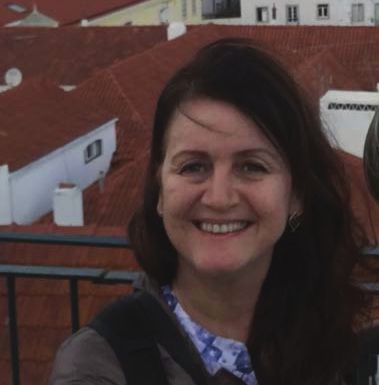
Maxim Khomyakov is a vice-director of St. Peterburg Campus of Higher School of
                                        Economics (St. Petersburg, Russia) and a director of the BRICS Studies Centre at Ural
                                        Federal University (Ekaterinburg, Russia). He was a vice-president (international affairs)
                                        at Ural Federal University, Ekaterinburg, Russia from 2009 up to 2017. Prof. Khomyakov
                                        was a visiting scholar in a number of universities, including Texas A&M University (2002;
                                        USA) and European University Institute (2007-2008; Florence, Italy). Between 2002 and
                                        2013, he organized a number of transnational research and teaching projects in political
                                        philosophy and religious studies. Since 2015, Prof. Khomyakov has been actively
                                        involved in establishing university collaboration in BRICS countries, and especially
                                        in establishing the BRICS Network University. Prof. Khomyakov is a head of Russian
                                        National Coordinating Committee and a member of International Governing Board of the
       Maxim Khomyakov,                 BRICS Network University. His research interests include theory of modernity, theory of
       Deputy Director National         toleration, Russian philosophy of nineteenth century and higher education theory.
       Research University Higher
       School of Economics, Russia      His works include several books and more than 60 scholarly articles.

                                        Michelle Stewart is Director Internationalisation (Humanities & Social Sciences) at the
                                        University of Strathclyde and EAIE’s Vice-President. She has worked in higher education
                                        for over twenty years. After graduating in Public Administration she worked for four years
                                        in Spain where she developed executive education courses. When she returned to
                                        Scotland she was an adviser to the Lord Provost, Glasgow City Council. Having worked
                                        in internationalisation for several years, Michelle has a strong commitment to partnership
                                        development and student mobility. At the University of Strathclyde she established many
                                        overseas links including the Mexico UK Study Abroad Consortium in partnership with a
                                        number of UK universities. Michelle has served on external boards including: Operating
                                        Board Education UK Partnership; Chair, Scottish Universities International Group (SUIG);
                                        Chair, BUTEX (British Universities Transatlantic Exchange Association). She has an
                                        extensive network of colleagues across the UK and overseas.
       Michelle Stewart,
       Vice President of the European
       Association for International
       Education (EAIE)

                                        Patrício Langa is a sociologist and associate professor of higher education studies at
                                        Eduardo Mondlane University (UEM), Mozambique, and at the Institute for Post School
                                        Studies of the University of the Western Cape, South Africa. He advises the rector
                                        of UEM on strategic planning and is a visiting professor of higher education studies
                                        at the Danube University Krems in Austria and KTH Royal Institute of Technology in
                                        Sweden, Stockholm. Langa served as the first executive director for external evaluation
                                        in the National Council on Higher Education Quality Assurance and Accreditation in
                                        Mozambique (CNAQ) and currently serves on the board of non-executive directors.
                                        He founded and served as director of the Centre for Higher Education Studies and
                                        Development (CESD) in Mozambique. Langa is also the founding member and president
                                        of the Mozambican Sociological Association (A.M.S). He established the African
                                        Consortium of Higher Education Researchers (ACHER). Langa’s research interest is in
       Prof Patricio Langa,
                                        the intersection of sociology and higher education studies in Africa. He holds a BA in
       University of the Western Cape
                                        sociology from UEM, an MA in higher education studies and a PhD in sociology and
                                        education with a major in higher education studies from the University of Cape Town.
                                        Langa has been a NAFSA Global Dialogue Fellow since 2018.

8   2019 conference programme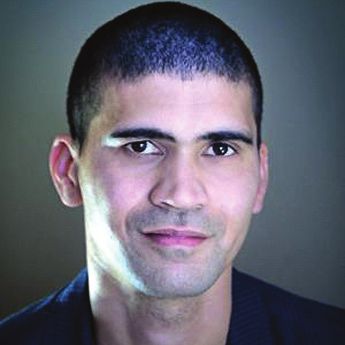
Phil has been IEAA’s Chief Executive Officer since November 2011. Previously, he was
                                  a Member of the Victorian State Parliament (1988–2006), Minister for Tertiary Education,
                                  Training and Multicultural Affairs (1996–1999) and Deputy Leader of the Opposition
                                  (2002–2006). Since retiring from politics, Phil worked at Stott’s Business College and
                                  Cambridge International College.

Phil Honeywood,
CEO: International Education
Association of Australia

                                  Prof Delva is trained as a medical doctor with a PhD in medical sciences (focused
                                  on HIV epidemiology). His work has involved the development of individual-based
                                  simulation models and the application of statistical and mathematical modelling
                                  techniques to describe and analyse the behavioural and biological processes underlying
                                  HIV epidemics. Prof Delva is the Acting Director for the new School for Data Science
                                  and Computational Thinking at Stellenbsoch University. The School is a highly
                                  interdisciplinary institute designed to enhance South Africa’s competitiveness in the 4th
                                  Industrial Revolution.

                                  What he loves: applying cutting-edge methods to solve complex problems, working as a
                                  team, inspiring others and being inspired by others.
Professor Wim Delva,
Acting Director: School of Data
Science and Computational
Thinking: Stellenbosch
Univiersity

                                  René Pellissier is a strategist, researcher and systems engineer. She is the recipient
                                  of several merit awards as researcher and the writer of and contributor to various
                                  books and countless scientific publications on technology and innovation-research
                                  convergence, and on complexity in the management sciences. René has held
                                  several executive positions in Europe and Africa and understands the complexities of
                                  management. Nonetheless, she has a predilection for teaching and research. She is an
                                  international scholar and has worked in the United States, Europe, the United Kingdom
                                  and Africa. Her fundamental flaw is her inquisitive mind and questioning of the status
                                  quo when doing research. She is currently the Director of RTI Strategic Initiatives and
                                  Partnerships.

Prof Rene Pellissier,
Cape Peninsula University of
Technology

                                                                                                   2019 conference programme   9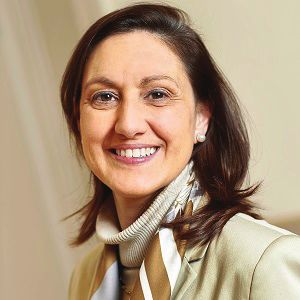
Dr. Mirian Alicia Carballo is Professor of Anglophone Literature at the National University
of Córdoba, Argentina. As a researcher, she specializes in the field of ecocriticism, the
environmental humanities, postcolonialism and minorities.
At present, she is also the Head of the International Affairs Office of the National
University of Córdoba and the Representative of RedCIUN, CIN (Argentinian National
Universities Council) for NIEA. She has taken part of the organizing and executive
Committee for CRES 2018 (Conference of Higher Education for the Latin American and
Caribbean Region) together with IESALC (UNESCO Institute of Higher Education for
Latin America and the Caribbean). The Conference is the most important international
event on Higher Education in the region and it takes place every 10 years. It included
5000 thousand participants (University Presidents, teachers, students, University
Mirian Carballo,
workers and nets). It took place at the National University of Córdoba last year when
Head of the International
the centenary of the Students’ Reform Movement was celebrated as well. This historical
Affairs Office of the National
revolt broke out at the said University in 1918 and its ideals spread all over Latin America
University of Córdoba and the
and became an inspiring antecedent for the 1968 students’ Movement in France and for
Representative of RedCIUN, CIN
the democratization of Universities in Spain.
(Argentinian National Universities
Council) for NIEA
Maria Leonor Maia, PhD is Full Professor of the Department of Civil Engineering at the
Federal University of Pernambuco, Brazil. She has a background in architecture
and urban planning, with MSc and PhD on urban development planning from the
Development Planning Unit-DPU, University College London, UK.
Since 2012, Maia serves as Dean for International Affairs. She is the chief university
officer responsible for all international programs and activities at UFPE, which includes
study abroad and exchange programs; international students and scholar services,
institutional affiliations and agreements with universities in other countries, international
activities and short courses for undergraduate and graduate courses.
Together with de Vice-Provost for Undergraduate Studies, she coordinates de
Dr Maria Leonor Maia, Collaborative Online International Learning initiative at UFPE -BRAVE.
FULL PROFESSOR
FEDERAL UNIVERSITY OF Since 2018 she took over the presidency of FAUBAI the Brazilian Association for
PERNAMBUCO, BRAZIL International Education.
Ph.D. University College London, UK
Ms.C. University College London, UK Besides her activities at the International Office, Maia is a researcher of the Brazilian
B.A. Universidade Federal de Scientific Agency CNPq and member of the RESET -Engineer and Socioeconomic
Pernambuco Transport Studies Network, member of the RedPGV -Iberian American Network for
Travel Generator Studies.
10 2019 conference programmeMahlubi Mabizela is a Chief Director: University Policy and Development Support in
the Department of Higher Education and Training (DHET). The Chief Directorate is
responsible for the development and implementation of various policies in higher
education; management and reporting on higher education research outputs; and
the administration of the registration of private higher education institutions. The Chief
Directorate is also responsible for supporting the work on transformation in higher
education and the Higher Education and Training HIV and AIDS (HEAIDS) Programme,
which renders health and wellness services to the higher education sector. Within the
Department, he has for eight years led the work on institutional support and sector
liaison which included governance support to universities councils and students’
representative councils. He has served in several advisory panels and boards,
Mahlubi Mabizela, representing the DHET. He is the author of several peer-reviewed publications on Higher
South African Department of Education in South Africa and was the principal co-editor of a special issue of the
Higher Education and Training Journal of Higher Education in Africa.
Namhla Mniki-Mangoliso is a global development strategist leading African Monitor, an
entity working to eradicate poverty, to create economic opportunities, and to empower
African citizens to drive the achievement of sustainable development in Africa.
Ms. Mniki-Mangaliso specialises in citizen-centric approaches to development that
promote accountable leadership and good governance. Her latest work focusses
on increasing knowledge of, and building capacity for co-creation and collaboration
across sectors to implement the SDGs. She has a strong belief that a new paradigm of
development delivery can benefit the world, focusing on innovation, collaboration, multi-
sectoralism, co-creation, and broad participation. She is a Patron for the Africa Youth
SDGs Summit, a Global Peer Review Expert for the German Sustainability Strategy, and
Namhla Mniki-Mangoliso, a member of the expert group for the Africa Progress Group, Namhla is also a leadership
Executive Director, African Monitor strategist, supporting emerging leaders in Africa to leverage their personal power, values
and skills to transform their work environments, their communities and Africa. Through
her social enterprise KB Media & Communications, she runs value-based leadership
coaching programmes, as well as high-impact development campaigns across Africa,
including the BigSisAfrica programme.
2019 conference programme 11Giorgio Marinoni holds the position of Manager for HE and Internationalization policy
and projects at the IAU since February 2015. He coordinates the 5th Global Survey on
Internationalisation of Higher Education, a unique analysis of global and regional trends
in the field of international higher education and related policy making.L He is in charge
od the tailored advisory servives, ISAS (2.0) for internationalization strategies designed
for Higher Education Institutions (HEIs), groups of HEIs within a country, individual at
HEIs, and policymakers. Before joining IAU, Giorgio Marinoni gained expertise, among
others, in the field of internationalization and in Higher Education policy and reforms at
the European level. He has coordinated multilateral projects at the international level,
involving different higher education stakeholders as well as public and private higher
education institutions (HEIs), networks of HEIs, student associations, national and
Giorgio Marinoni, regional governments.
International Association of
Universities
12 2019 conference programme2019 Conference Programme
22nd ANNUAL CONFERENCE & 20th ANNIVERSARY CELEBRATIONS
Internationalisation of Higher Education in the context of the Fourth Industrial Revolution (4IR)
21 – 23 August 2019, Lord Charles Hotel and Conference Venue, Somerset West, Western Cape, South Africa
Wednesday 21 August 2019
07:30 - 17:00 Registration (Lord Charles Hotel Foyer)
08:20 - 08:30 Welcome Orla Quinlan, President: IEASA, Rhodes University
Chairperson: Lavern Samuels, Past President & Treasurer: IEASA, Durban University of Technology
Observations on the impact of the fourth industrial revolution in higher education in different regions.
Esther Brimmer, Executive Director and CEO of the Association of International Educators (NAFSA)
Mirian Carballo, Representative of the Network of International Cooperation of National Universities, Argentina
(RedCIUN)
08:30 - 09:30
Phil Honeywood, CEO of the Association of International Education Association of Australia (IEAA)
Maxim Khomyakov, Deputy Director, HSE University, St. Petersburg, Russia
Maria Leonor Alves Maia, President of Brazilian Association for International Education (FAUBAI)
Michelle Stewart, Vice President of the European Association for International Education (EAIE)
Giorgio Marinoni, Senior Representative of the International Association of Universities (IAU)
Chairperson: Wiseman Jack, Vice President: IEASA, Vaal University of Technology
European Association of International Education (EAIE) and International Association of Universities (IAU) : Global
Trends Plenary:
09:30 - 10:25
Michelle Stewart, Vice President of the European Association for International Education (EAIE)
Giorgio Marinoni, Senior Representative of the International Association of Universities (IAU)
Chairperson: Orla Quinlan, President: IEASA, Rhodes University
Global Café : International Association leaders share what is currently happening in their associations and regions in
an interactive carousel style:
Esther Brimmer, Executive Director and CEO of the Association of International Educators (NAFSA)
Mirian Carballo, Representative of the Network of International Cooperation of National Universities, Argentina
10:30 - 11:30
(RedCIUN)
Phil Honeywood, CEO of the Association of International Education Association of Australia (IEAA)
Maxim Khomyakov, Deputy Director, HSE University, St.Petersburg, Russia
Maria Leonor Alves Maia, President of Brazilian Association for International Education (FAUBAI)
Michelle Stewart, Vice President of the European Association for International Education (EAIE)
11:30 - 11:45 Refreshments and Networking
Chairperson: Leolyn Jackson, Immediate Past President: IEASA, Central University of Technology
11:50 - 12:00 Introduction of the Keynote Speaker
Keynote Address: Professor Lidia Borrell-Damain- Director of Research and Innovation, European University
12:00 - 13:00
Association (EUA)
2019
2017 conference programme 13WEDNESDAY 21 AUGUST 2019 (continued)
13:00 - 14:15 Lunch
Chairperson: Nico Jooste, Past President: IEASA, African Centre for Higher Education Internationalisation
14:20 - 14:30 Introduction of the Keynote Speaker
Keynote Address: Marlon Parker, Social Entrepreneur, Founder of Reconstructed Living Labs (Rlabs), University of
14:30 - 15:30
Cape Town.
15:30 - 17:30 Network of International Education Associations (NIEA) (Closed business meeting, Amsterdam)
Parallel Sessions
Venue: Somerset Suite 1 Somerset Suite 2 Somerset Suite 3 Grand Ballroom
Chairperson: Chevon Slambee Olusegun Obadire Lebethe Malefo Huba Boshoff
Teacher wellbeing – A Agility and Dexterity: Internationalization of Can digital footprints save
successful approach international education Higher Education: does the physical lecture?
promoting inclusive in the age of the fourth BRICS Collaboration Really
education. industrial revolution. Make any Sense?
Ole Bergfjord
Sissel Tove Olsen Lara Dunwell Maxim Khomyakov Western University of
Oslo Metropolitan Council on International HSE University, Applied Sciences,
University Oslo, Norway Education Exchange St.Petersburg, Russia Norway
(CIEE)
Hege Knudsmoen
Oslo Metropolitan Alan Jansen
15:30 - 15:55
University Oslo, Norway Arcadia University, USA
Ouma Mpela
International Studies
Abroad in Southern
Africa
Natanya van der Lingen
IES Abroad Cape Town
16:00 - 16:25 Light Refreshments
Chairperson: Robert Kotze Tohiera Moodien Moses Pieterse Nicola Latchiah
Promoting teaching and The fourth industrial Everything you need to Holistic integration
learning of human essential revolution (4IR): know about recruiting of global education
skills in universities: Trends and futures of students from Brazil. – reflections from
towards lifelong learning international higher Stellenbosch University
for 21st Century graduate education partnership and Samir Zaveri
in the 4IR era. collaboration. President & CEO: BMI Joe Warren
Stellenbosch University
Bellita Banda Nyambura Mwagiru
16:30 - 16:55
Chitsamatanga Stellenbosch University Sarah Van der
University of Fort Hare Westhuizen
Stellenbosch University
Willie Chinyamuridi
University of Fort Hare
14 2019 conference programmeWEDNESDAY 21 AUGUST 2019 (continued)
Chairperson: Umesh Bawa Tohiera Moodien Moses Pieterse Tasmeera Singh
Development of “Health Capacity building through Everything you need to How to catch a flying
and Lifestyle through international collaboration- know about recruiting pig: Building a virtual
Physical Activity” lessons learned from students from Brazil. community of Practise with
programme: Designing the CASO project (Continued) the PhD cohort of Drama
International curriculum perspectives. for Life at the Wits school
for the Fourth Industrial of Arts.
Revolution. Rene A. G. Teunissen
Avans University of Petro Janse van Vuuren
17:00 - 17:25 Marie Young Applied Sciences, University of the
University of the Western Netherlands Witwatersrand
Cape
Tenielle Voke
Cape Peninsula
University of Technology
19:30 - 23:00 Opening Reception in the Lord Charles Hotel
THURSDAY, 22 AUGUST 2019
07:30 - 13:00 Registration (Lord Charles Hotel Foyer)
08:20 - 08:30 Welcome
Chairperson: Lara Dunwell, Chair 2019 IEASA Conference
08:30 - 08:40 Introduction of the Keynote Speaker
08:40 - 09:25 Keynote Address: Namhla Mniki, Executive Director, African Monitor.
Parallel Sessions
Venue: Somerset Suite 1 Somerset Suite 2 Somerset Suite 3 Grand Ballroom
Chairperson: Divinia Jithoo Tasmeera Singh Hlulani Mabasa Lavern Samuels
The fourth industrial Postcolonial praxis in rural South African Leading
revolution, the schools towards universal Higher Education Internationalisation.
changing world of work accessibility to technology. Internationalisation and
and imperatives of the 4IR. Darla Deardorff
internationalisation in Kwanele Thusi Association of
higher education. University of the Nico Jooste International Education
09:30 - 09:55 Witwatersrand African Centre for Administrators (AIEA),
Ylva Rodny-Gumede Higher Education USA
University of Internationalisation
Johannesburg Cheryl Matherly
Lehigh University, USA
Orla Quinlan,
Rhodes University
2019 conference programme 15THURSDAY 22 AUGUST 2019 (continued)
Chairperson: Olusegun Obadire Huba Boshoff Divinia Jithoo Lara Dunwell
Investigating the role of The impact of social A COIL bridge between Hotspots: How to increase
Educational Data Mining media language used on Brazil and South Africa. global citizenship &
in predicting at risk academic writing skills: employability of students
international students Fourth industrial revolution Maria Leonor Alves Maia and teachers in a
at the Vaal University of a curse or blessing? (FAUBAI, Brazil) sustainable way.
Technology. Lavern Samuels (IEASA,
Suzen Sathekge Durban University of Eva Knechtl
10:00 - 10:25 Terence Ayuk Ojang Vaal University of Venda Technology) Fontys University
University of Technology of Applied Science,
Wiseman Ndlovu Netherlands
University of Venda
Christianne Heselmans
Fontys University
of Applied Science,
Netherlands
10:30 - 10:55 Refreshments and Networking
11:00 - 13:00 South Africa – Sweden University Forum (SASUF) Planning Meeting – Closed Meeting (Plenary Room)
Parallel Sessions
Venue: Somerset Suite 1 Somerset Suite 2 Somerset Suite 3 Grand Ballroom
Chairperson : Tasmeera Singh Chevon Slambee Normah Zondo
The ideal 4th industrial Why geo-literacy is The Impact of the fourth South Africa – Sweden
revolution lecturer in South fundamentally important in industrial revolution (4th IR) University Forum (SASUF)
African Universities (Higher) Education. on teaching and learning Planning Meeting
in South African rural
Takalani Mashau Erlend Eidsvik based institutions of higher
University of Venda HVL, Norway learning.
11:00 - 11:25
Nontlanhla Ntakana
University of Venda
Nsizwazonke Yende
University of Venda
Chairperson : Umesh Bawa Olusegun Obadire Nonceba Mbambo-Kekana
Preparing students to BC iTversity, an inclusive Exploring the potential South Africa – Sweden
function in a world that educational model impact of technological University Forum (SASUF)
demands continuous for effective regional advancement on Planning Meeting
learning and adaption to development. international higher
new and different. education in developing
Enrico Jacobs countries.
Francis Moletsane Belgium Campus
Vaal University of iTversity Marizikuru Mwale
Technology University of Venda
11:30 - 11:55 Michael Joris
Belgium Campus Simbarashe Kativhu
iTversity University of Venda
Kris Willems
Belgium Campus
iTversity
16 2019 conference programmeTHURSDAY 22 AUGUST 2019 (continued)
Chairperson : Robert Kotze Carol Wilson Alecia Erasmus
Teacher education in the A conceptual framework for Narratives of a sense of South Africa – Sweden
face of 4th revolution in curriculum transformation belonging & technology University Forum (SASUF)
Zimbabwe: Challenges that parallels the fourth use: Perspectives from Planning Meeting
and opportunities. industrial revolution in a sample of international
12:00 - 12:25 Higher Education. students in South Africa.
Dube Bekithemba
University of the Free A Makina Willie Chinyamurindi
State University of South Africa University of Fort Hare
Chairperson : Loren Josephs Janet van Rhyn Joe Warren
The 4th Industrial A systematic literature Internationalisation of South Africa – Sweden
Revolution and Higher review of factors higher education in the era University Forum (SASUF)
Education Looking at influencing the adoption of 4IR Planning Meeting
Access and Success. of smart libraries at
universities Olusegun Obadire
Buntu Mnyaka University of Venda
Nelson Mandela Osden Jokonya
University University of Western
12:30 - 12:55 Cape
Asanda Cana
Rhodes University
13:00 - 14:25 Lunch (Launch of AfriCentre)
14:30 - 16:00 The University of Antwerp, Utrecht Network (Separate meeting room)
14:30 - 14:40 Introduction of the Keynote Speaker
14:40 - 15:25 Wim Delva, Stellenbosch University
2019 conference programme 17THURSDAY 22 AUGUST 2019 (continued)
Parallel Sessions
Venue: Somerset Suite 1 Somerset Suite 2 Somerset Suite 3 Grand Ballroom
Chairperson : Huba Boshoff Divinia Jithoo Orla Quinlan Takalani Mashay
Posters session Ethics and spirit of Department of Higher How can rural-based
the Fourth industrial Education and Training universities harness the
International Partnerships/ Revolution: Responsibility international exchanges/ fourth industrial revolution
cooperation to enhance of Higher Education partnerships in responding to strengthen community
the internationalisation of to the fourth industrial engagement beyond
PhD Studies. Godwin Odok revolution national borders?
University of South Africa
Leolyn Jackson Central Ghaleeb Jeppie Joseph Francis
University of Technology Department of Higher University of Venda
Education and Training
15:30 - 15:55 Camylle Pernelle (DHET) Pertina Nyamukondiwa
University of Montpellier, University of Venda
France Ruth Roberts
Department of Higher
Developing proactive Education and Training
skills for African youth (DHET)
skill voucher.
Daniel Obaleye
University of
Johannesburg
Medical Aid Briefing: Compliance and current issues, Jacques van der Merwe (ACA), Sanlam and Rikkie Wooding,
16:00 - 16:15
Momentum Health
Chairperson: Wiseman Jack, Vice President: IEASA, Vaal University of Technology
Reflection and Direction on the possibilities of the 4IR for Higher Education Institutions
Prof Rene Pellissier, Cape Peninsula University of Technology
16:15 - 17:15 Prof Patricio Langa, University of the Western Cape
Chief Mabizela, Chief Director: University Policy and Development Support, Department of Higher Education and
Training (DHET)
17:15 - 17:20 Remarks from Phil Honeywood, Chair of the Network of International Education Associations ( NIEA)
17:20 - 17:30 Closing remarks: Orla Quinlan, President, IEASA.
19:00 - 23:00 Gala Dinner in NH The Lord Charles Hotel
18 2019 conference programmeVENUE CONFERENCE WORKSHOPS
STELLENBOSCH INSTITUTE FOR ADVANCED STUDY (STIAS) Stellenbosch University
FRIDAY 23 AUGUST 2019
08:30 - 09:00 Registration and light refreshments
Welcome Address, Professor Hester Klopper- Deputy Vice Chancellor: Strategy and Internationalisation,
08:45 - 09:00
Stellenbosch University
09:00 - 12:00 WORKSHOP 01 WORKSHOP 02 WORKSHOP 03
PLACING ALL THE TOOLS TO CHALLENGE ACCEPTED! THE DEVELOPING INTERCULTURAL
INTERNATIONALISE IN ONE BOX INTERNATIONALISATION OF COMPETENCY
DOCTORAL STUDIES AS A (TRAIN-THE- TRAINERS)
RESPONSE TO THE FOURTH
INDUSTRIAL REVOLUTION
Strategies for a comprehensive The 4th Industrial Revolution This highly interactive workshop will
approach to internationalisation is characterised by a fusion of equip and train participants in using an
- across and in-depth, leading technologies that is blurring intercultural methodology piloted by
towards incorporating the trends of the lines between the physical, UNESCO. Participants will develop and
the 4th industrial revolution. digital and biological spheres. practise key elements of intercultural
The workshop will explore the competence including greater self-
Varkey George relationship between 4IR and awareness, listening for understanding,
Gateway Education / EU External internationalisation of doctoral openness, respect, reflexivity, empathy,
Evaluator studies. increased awareness of others, and in
the end, greater cultural humility.
Vanessa Van Staden Gunda Huskobla,
Cape Peninsula University of Managing Director of the Darla Deardorff
Technology Graduate Academy of Friedrich Association of International
Schiller University Jena, Education Administrators (AIEA),
Quinter Onyango Germany USA
Fort Hare University
Leif Kirsebom
Makhubela, Jabu Uppsala University, Sweden
University of Limpopo
Willem Bruyndonx
University of Antwerp, Belgium
12:00 - 12:55 Lunch
2019 conference programme 19FRIDAY 23 AUGUST 2019 (continued)
13:00 - 16:00 WORKSHOP 04 WORKSHOP 05 WORKSHOP 06
SOCIAL MEDIA WHEN YOUR CAPACITY ENHANCEMENT AND IMMIGRATION IN THE HIGHER
AUDIENCE IS MORE SOCIAL THE INTERNATIONALISATION EDUCATION SECTOR
MEDIA “SAVVY” THAN YOU OF DOCTORAL STUDIES
ARE…A GENTLE GUIDE TO CONCRETE APPROACHES TO
WRITING CONTENT FOR SOCIAL INTERNATIONALISATION OF
MEDIA HIGHER EDUCATION – THE YEBO
CASE STUDY
This workshop will provide the Explore how the 4th Industrial This workshop will explore what works
necessary and practical tools Revolution is swiftly reshaping and what can go wrong from when an
required to write content for social peoples’ everyday lives through international student receives a letter
media platforms, guide planning advancements in fields such as of offer to being registered. Discover
and social media strategy, artificial intelligence, 3D printing the different roles and responsibilities
engagement, make posts, and and biotechnology. The workshop of students, international offices,
provide exposure to ‘new’ tools to examines the Erasmus+ Project IEASA and the DHA, in preventing and
design visual posts. YEBO as a case study to highlight resolving issues.
how internationalisation may help
Rossouw Nel - Head of Digital address challenges presented Phindiwe Mbhele
SSA, British Council by the impact of the 4th industrial Director: Corporate Accounts,
revolution on Higher Education in Department of Home Affairs
Rene Van Der Berg, Social Media particular.
Manager, Stellenbosch University Ndileka Cola
Gunda Huskobla Director: Stakeholder Management,
Sarah Van der Westhuizen, Study Managing Director of the Department of Home Affairs
Abroad and Student Exchange Graduate Academy of Friedrich
Coordinator, Stellenbosch Schiller University Jena, Divinia Jithoo
University Germany Nelson Mandela University
Anisa Khan, Stellenbosch Leif Kirsebom Lebethe Malefo
University (facilitator) Uppsala University, Sweden University of Johannesburg
Meekness Lunga (facilitator)
* Any further changes will be notified at the start of the Conference.
20 2019 conference programmeNOTES
NOTES
23rd Annual Conference:
               August, 2020
                Gauteng, South Africa

      http://www.ieasa.studysa.org

               For more information:
E-mail: info@ieasa.studysa.org or Tel: +27(0)12 430 2401
Our Sponsors: creating futures
You can also read


