Supporting vocational education and training in Europe: the Bruges Communiqué
←
→
Page content transcription
If your browser does not render page correctly, please read the page content below

EUROPEAN   UNION

                   Supporting vocational education and training in Europe:
                   the Bruges Communiqué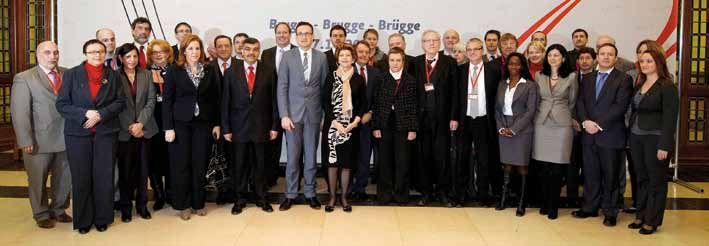
Europe Direct is a service to help you find answers
                        to your questions about the European Union

                                   Freephone number (*):

                          00 800 6 7 8 9 10 11
             (*) Certain mobile telephone operators do not allow access to
                       00 800 numbers or these calls may be billed.

More information on the European Union is available on the Internet (http://europa.eu).
Luxembourg: Publications Office of the European Union, 2011
ISBN 978-92-79-19899-1
doi: 10.2766/13842
Cover pictures: © Shutterstock
© European Union, 2011
Reproduction is authorised provided the source is acknowledged.
Printed in Belgium
Printed on white chlorine-free paper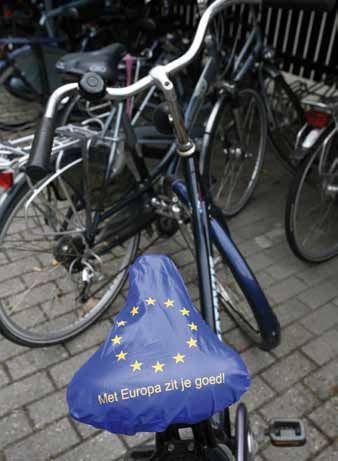
Contents
Introduction                                                                                          2
Vocational training as a motor for smart, sustainable and inclusive growth                            2
The vision for 2020                                                                                   3
A strong starting point                                                                               5

The Bruges Communiqué                                                                                 7

     Foreword                                                                                         8
I. 	New impetus for vocational education and training in europe                                      9
    Current and future challenges                                                                     9
    Important achievements of the Copenhagen process                                                 12
    The Copenhagen process in the wider eu policy context                                            13
Ii. A global vision for vocational education and training in 2020                                    15
Iii. 	Strategic objectives for the period 2011-2020, followed by short-term deliverables 2011-2014   16
    Improving the quality and efficiency of vet and enhancing its attractiveness and relevance       16
    Making lifelong learning and mobility a reality                                                  20
    Enhancing creativity, innovation and entrepreneurship                                            23
    Promoting equity, social cohesion and active citizenship                                         25
    Transversal objectives                                                                           27
Iv. Principles underlying the governance and ownership of the copenhagen process                     29

Where can i find out more?                                                                           31

                                                                                                           1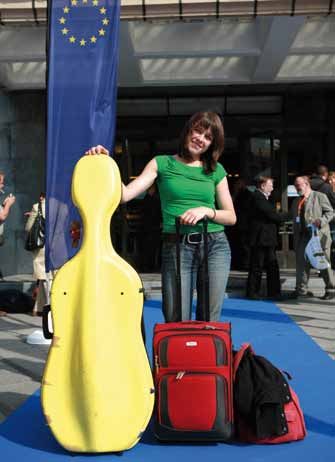
Introduction                                                              financial crisis, emphasises the need to reform European econo-
                                                                              mies and societies. To support this reform, vocational training
                                                                              needs to be designed in ways that encourage adults to update
                                                                              their skills throughout their working lives.
    On 7 December 2010, European Ministers for vocational education
    and training (VET), the European Social Partners and the European         Some 50 % of Europe’s young people complete their education and
    Commission adopted the Bruges Communiqué on enhanced European             enter the labour market via a vocational education and training path,
    cooperation in VET for 2011-2020. The Communiqué defines com-             going on to a wide range of jobs in both industry and services. To main-
    mon objectives for 2020 and an action plan for the coming years,          tain Europe’s competitive position, reforms to vocational education and
    combining national measures with European support. This brochure          training are therefore essential. Future jobs require people with high-
    introduces the context for this cooperation, the challenges to be met     level qualifications. In the current economic environment Europe needs
    and the goals for the coming years.                                       to make sure that all its young people acquire the skills that help them
                                                                              enter the job market.

    Vocational training as a motor for                                        Europe also needs a flexible workforce that can respond to devel-
    smart, sustainable and inclusive growth                                   opments in the ‘green economy’, increased competition and rapid
                                                                              technological change.
    Europe is recovering from a severe financial crisis and unemploy-
    ment rates, particularly for young people, are high. There are 76         To compete in the global market Europe has to be smarter and pro-
    million people in Europe with low or no qualifications. As global         mote growth in industries which are sustainable and can adapt to
    competition spreads, those with low or no formal qualifications are       change. To achieve this, Europe needs education and training systems
    finding it harder to gain employment. While wages are typically           to respond to the demands of the labour market and learners. Effec-
    rising for highly skilled workers, they are falling for low skilled and   tive and relevant training offers employers the best chance to recruit
    unskilled workers.                                                        skilled individuals who are able to make their business a success. It
                                                                              also gives individuals more opportunities for a rewarding career. In
    As well as facing competition in the global economy, Europe has           a rapidly changing world, lifelong learning has to be a priority – it is
    an ageing society. As a result older workers need to update and           the key to employment, economic success and allowing people to par-
    broaden their skills through further training. This, alongside the        ticipate fully in society.

2
For young people, vocational education and training should offer
options for both employment and further study. It should help
them to acquire the practical skills that are essential for many jobs
and also open doors to higher-level qualifications. By providing
both of these options, Europe can meet its aim of fewer than 10
% of young people leaving school early. Developing new approaches
to vocational training can also help to ensure that the European
goal of at least 15 % of adults participating in lifelong learning is
achieved.

In order to respond to these challenges, the Ministers responsible
for education and training have agreed a ten year strategy for
European cooperation. This strategy, the Bruges Communiqué,
aims at improving the quality and the attractiveness of vocational
education and training.                                                 Vocational training includes basic skills, courses which develop
                                                                        expertise in specialist areas and higher level qualifications which
                                                                        are characterised by innovation and excellence. This wide range of
The vision for 2020                                                     provision allows learners to continue their studies at a higher level
                                                                        and university graduates to complete vocational courses which
The Bruges Communiqué sets out a vision for vocational education        complement their knowledge with more technical and practical
and training in the year 2020, together with a set of measures on       training. In the future, most workers should participate in continu-
how to get there.                                                       ing training in order to keep their skills up-to-date or acquire
                                                                        new ones.
Central to this vision is a vocational training system that is
modern and attractive to learners and their parents. Everyone           By 2020, vocational studies should be easily accessible and
needs to have confidence in its quality and know that learners will     practical. All vocational courses should include work-based
acquire skills and knowledge which can be used immediately in an        training in business or industry. By collaborating with employers,
employed or self-employed role.                                         training organisations should support learners with less interest

                                                                                                                                                3
in academic study. This should reduce the number of people leav-
    ing school early.                                                        … learners will benefit from higher quality training. They will
                                                                             receive guidance when choosing what training to take and the
    Internationalisation should become an everyday feature in voca-          career that best suits their talents. They will complete some of
    tional training. Qualifications should include foreign languages,        their studies abroad or there will be foreign learners in their
    and international cooperation between institutions should encour-        classes. After obtaining their qualification, they will have a bet-
    age new approaches to teaching and learning. Students who learn          ter chance of finding a job and being successful at work
    in an international setting should be more ready to go on to work        because their training was more relevant and practical. Once
    in that environment.                                                     they enter the labour market, they will also benefit from flex-
                                                                             ible training options which support their ongoing learning.
    To make this vision a reality, the commitment and contribution of all
    stakeholders is needed. The support of training organisations and
    their staff, school leaders and teachers, as well as in-company train-
    ers is crucial to implementing the changes. National, regional and
    local authorities have a role in reforming vocational training           … vocational teachers will have more opportunities to coop-
    systems. The EU Institutions will support these reforms by develop-      erate with colleagues abroad. Their working environment as
    ing European-wide approaches to maximise the benefits of living          well as their teaching and learning methods will be different,
    and working in a community with free movement of employees               and they will use up-to-date learning materials which reflect
    and businesses.                                                          the latest developments in industry and business.

    Once these changes are in place…

4
European funding from the Lifelong Learning Programme (espe-
… training institutions will find it easier to cooperate interna-   cially through the Leonardo da Vinci Programme) supports these
tionally, thanks to European-wide approaches, such as the           reforms in vocational education and training. Cooperation in all
European Qualifications Framework (EQF) and the European            these areas will bring European approaches closer together and cre-
Credit system for Vocational Education and Training (ECVET),        ate vocational education and training systems which are firmly built
which make it easier for students to transfer their learning        on quality, relevance and attractiveness.
between organisations. They will also gain from having closer
contact with business by having access to modern equipment
as well as employing teachers and trainers who are familiar         A strong starting point
with today’s working life. Finally, by providing more flexible
ways to train, institutions will benefit from more learners wish-   Since 2002 there has been significant progress in developing Euro-
ing to complete their courses.                                      pean-wide approaches to support vocational education and train-
                                                                    ing. National authorities and social partners from 33 countries are
                                                                    working together to modernise vocational education and training.
                                                                    Together they are committed to achieving the objectives of the
… businesses will be able to recruit qualified workers more         Bruges Communiqué as part of their support for the Strategic
easily, as training will have changed to better meet their needs.   Framework for European Cooperation in Education and Training
This change will encourage them to provide more opportuni-          (ET 2020).
ties for their staff and increase their commitment to workforce
development. The quality of those entering the workforce            Earlier work by EU Institutions, national authorities and social part-
will have risen because companies have contributed to and           ners, as part of this framework, has helped to improve quality and
shaped the contents of training. Businesses will also be            build trust. Following their joint development, national authorities
involved in delivering training through providing practical         are implementing European-wide initiatives which support voca-
placements for learners.                                            tional training:

                                                                                                                                             5
ͺͺ European Qualifications Framework (EQF). Connecting national            ͺͺProgress will depend on the continued strong commitment of all
       qualifications frameworks, it facilitates the understanding of             stakeholders, led by the EU Member States and the European
       qualifications across countries and sectors.                               Social Partners. The Directors-General for Vocational Training,
    ͺͺ Europass framework. A common set of documents helping peo-                 the European Social Partners and the Advisory Committee for
       ple clearly present all their competences, skills and qualifications,      Vocational Training should continue to play an active role in the
       including a popular online CV service.                                     governance of the process, supported by the European
    ͺͺ European Credit system for Vocational Education and Training               Commission and with expert input from Cedefop, the European
       (ECVET). This allows students to progress towards a qualifica-             Centre for the Development of VET, and the European Training
       tion in one country and have this achievement recognised in                Foundation (ETF).
       another.
    ͺͺ European quality assurance in vocational education and train-
       ing (EQAVET). This provides a consistent approach to monitoring
       and improving the quality of vocational training.

6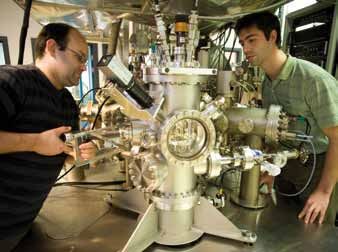
The Bruges Communiqué
on enhanced European Cooperation
in Vocational Education and Training
for the period 2011-2020
Communiqué of the European Ministers for Vocational Education and Training,
the European Social Partners and the European Commission,
meeting in Bruges on 7 December 2010 to review the strategic approach
and priorities of the Copenhagen process for 2011-2020

                                                                              7
FOREWORD

    The Copenhagen Declaration of 29-30 November 2002 launched the           and ideas of the Copenhagen process. An overall review of the proc-
    European strategy for enhanced cooperation in Vocational Education       ess by the European Centre for the Development of Vocational Train-
    and Training (VET), commonly referred to as the ‘Copenhagen proc-        ing (Cedefop), based on a survey in the 27 Member States and
    ess’. Today in 2010 on the basis of our 8 years of European cooper-      Iceland, Norway and Liechtenstein, facilitated our work, as did a sim-
    ation, we have defined the long-term strategic objectives for the next   ilar report on Croatia, Turkey and the Former Yugoslav Republic of
    decade (2011-2020). We have taken into account our past achieve-         Macedonia by the European Training Foundation.
    ments, current and future challenges, and the underlying principles

8
I. NEW IMPETUS FOR VOCATIONAL EDUCATION
t h e
AND TRAINING IN EUROPE
B ruges
CURRENT AND FUTURE CHALLENGES next decade show that technological change will increase the
C ommuniqu é
demand for those with high and medium qualifications at the
Education and training for tomorrow’s Europe expense of low-qualified people. Even those occupations that used
to require mostly low-level skills are increasingly requiring medium
Europe is trying to recover from a severe economic and financial or even high-level qualifications. This means that people with low
crisis. Unemployment rates are high – in particular amongst young (or no) formal qualifications will find it more difficult to find a job
people (1). The crisis has emphasised the need to reform our econ- in the future. There is also increasing evidence suggesting the
omies and societies. Europe wants to become smarter, more sus- polarization of employment with rising wages for highly skilled
tainable and more inclusive. To achieve this we need flexible, high workers and falling wages for low- and unskilled workers.
quality education and training systems which respond to the needs
of today and tomorrow (2). The right skills
Labour market evolution Today’s pupils and students will still be in the beginning of their
career in 2020 with at least 30 years to go in their professional
Today, in Europe some 76 million 25-64 year olds – roughly equiv- lives, and some of them in occupations that do not exist today and
alent to the combined total populations of Italy, Hungary and Aus- others perhaps in occupations that are disappearing.
tria – have either low qualifications or no qualifications at all. Too We need to improve the capacity of VET to respond to the chang-
many 18-24 year olds continue to leave education and training ing requirements of the labour market. Integrating changing labour
unqualified. Measures to prevent or remedy early school leaving market needs into VET provision in the long term requires a better
are urgently required. Cedefop’s projections of skills needs for the understanding of emerging sectors and skills, and of changes to
1 The figures of September 2010 for the EU 27 Member States indicated a general unemployment rate of 9.6 % and a youth unemployment rate of 20.3 % (source: Eurostat).
2 The European Commission adopted on 9 June 2010 a communication ‘A New Impetus for European cooperation in Vocational Education and Training to support
the Europe 2020 strategy’, which proposed in broad terms a future agenda for the European VET policy.
9existing occupations. In cooperation with the relevant stakehold- validation of non-formal and informal learning. The potential of
ers we must regularly review occupational and education/training information and communications technology (ICT) can be used to
standards which define what is to be expected from the holder of boost adult education and training through distance learning.
a certificate or diploma. This means closer collaboration between
stakeholders active in skills anticipation including representatives The dual objective of VET
of professional sectors, social partners, relevant civil society
organisations, and education and training providers. We need to Initial and continuing VET share the dual objective of contributing
adapt VET content, infrastructure and methods regularly in order to employability and economic growth, and responding to broader
to keep pace with shifts to new production technologies and work societal challenges, in particular promoting social cohesion. Both
organisation. should offer young people, as well as adults, attractive and
The transition to a green economy is a mega trend which affects challenging career opportunities, and should appeal equally to
skill needs across many different jobs and sectors. Many of the women and men, to people with high potential and to those
skills needed can be found in existing occupations. Concretely, the who, for whatever reason, face the risk of exclusion from the
labour market requires a balance between developing generic labour market.
green skills (e.g. reducing waste, improving energy efficiency) and
specific skills. Just as information and communications technology Quality and excellence
skills are essential for everybody today green skills will be impor-
tant to almost every job in the future. Given the role of VET in European societies and economies, it is
crucial to ensure the sustainability and excellence of vocational
Ageing society education and training. If Europe is to maintain its position as the
strongest exporter of industrial products in the world, it must have
The future European labour market will be simultaneously con- world class VET. In the knowledge society vocational skills and
fronted with an ageing population and shrinking cohorts of young competences are just as important as academic skills and
people. As a result, adults – and in particular, older workers – will competences.
increasingly be called upon to update and broaden their skills and The diversity of European VET systems is an asset for mutual
competences through continuing VET. This increased need for life- learning. But transparency and a common approach to quality
long learning means we should have more flexible modes of deliv- assurance are necessary to build up mutual trust which will facili-
ery, tailored training offers and well-established systems of tate mobility and recognition of skills and competences between
10t h e
on key competences without neglecting occupational skills. ICT
skills and competences and foreign language skills, in particular,
B ruges
will become more and more critical in terms of getting and keep-
ing a job and in managing everyday life.
C ommuniqu é
Work-based learning is a way for people to develop their potential.
The work-based component contributes substantially to develop-
ing a professional identity and can boost the self-esteem of those
who might otherwise see themselves as failures. Learning on the
job enables those in employment to develop their potential while
maintaining their earnings. A well performing VET, which enables
learning on and off-the-job on a part-time or full-time basis, can
thereby also strongly contribute to social cohesion in our societies.
Internationalising VET
those systems. In the decade ahead we must give high priority to
quality assurance in our European cooperation in VET. As players on the global education market, national VET systems
need to be connected to the wider world in order to remain up-to-
Empowering people date and competitive. They have to be more capable of attracting
learners from other European and third countries, providing them
Not only labour markets but also societies as a whole are chang- with education and training as well as making it easier to recog-
ing rapidly. We must empower people to adapt to new develop- nise their skills. Demographic change and international migration
ments and manage change. This means enabling people to acquire make these issues even more relevant. Although a European area
knowledge, skills and competences that are not purely occupa- of education and training is emerging, we have still not achieved
tional. These broader competences – key competences – are our original objective of removing obstacles to mobility and we see
important to succeed in life, and it should be possible to acquire that the mobility of learners in VET remains low. Better and tar-
them as well in VET as in any other form of education. Also VET geted information provision and guidance are needed to attract
has to give learners a chance to catch up, complement and build more foreign learners to our VET systems.
11An increased emphasis on adult learning in recent years also
requires additional resources. The economic downturn should not
lead to reduced investment in VET. Budgetary constraints will force
us to come up with innovative solutions to secure sustainable
funding for VET and to ensure that resources are efficiently allo-
cated and equitably distributed.
IMPORTANT ACHIEVEMENTS
OF THE COPENHAGEN PROCESS
The Copenhagen process has played a crucial role in raising aware-
ness of the importance of VET at both national and European level.
Progress is most evident in the common European tools (3), princi-
ples and guidelines which have been developed to make qualifica-
tions more transparent, comparable and transferable, as well as to
Substantially increasing transnational mobility of VET learners improve flexibility and quality of learning. They establish a basis to
and teachers, and recognising the knowledge, skills and compe- move towards a real European education and training area.
tences they have acquired abroad, will be an important challenge The impact of the Copenhagen process on countries’ VET policies
for the future. has been both quick and strong: it has triggered profound reforms,
amongst others the development of national qualifications frame-
Investing in VET – a shared responsibility works with a view to implementing the European Qualifications
Framework (EQF) and the shift to a learning outcomes approach.
Shaping VET is the shared responsibility of national governments, By changing the perspective from an input-oriented learning
social partners, VET providers, teachers, trainers, and learners: all process to learning outcomes, comprehensive frameworks
have a mutual interest in closer cooperation. which include general education, VET and higher education, can
3 The following tools have been developed since 2002: Europass, the European Qualifications Framework (EQF), the European Credit System for VET (ECVET)
and the European Quality Assurance Reference Framework for VET (EQAVET).
12t h e
help create transparent, permeable and flexible national qualifica-
tions systems.
B ruges
Peer learning activities and the exchange of good practices have
helped to create a sense of ownership of the process and stimu-
lated further activities. But more and better communication is
C ommuniqu é
needed to involve the stakeholders: social partners, VET providers,
civil society and learners.
VET policies alone do not suffice to address socio-economic chal-
lenges and make mobility and lifelong learning a reality. Compre-
hensive approaches are required which link VET to other policies,
in particular employment and social policies.
THE COPENHAGEN PROCESS
IN THE WIDER EU POLICY CONTEXT
Given the evolving political context over the coming decade 2011-
2020, particularly in the light of the Europe 2020 Strategy, the
Copenhagen Declaration of 2002 should be given fresh impetus.
As the Copenhagen process is an integral part of the ‘Education
and Training 2020’ strategic framework, the objectives in the VET
field should remain consistent with the overall objectives laid
down in the framework.
VET should play its part in achieving the two Europe 2020 head-
line targets set in the education field, namely – by 2020 – to
reduce the rate of early leavers from education to less than 10 %
13and to increase the share of 30-34 years old having completed
tertiary or equivalent education to at least 40 %.
A list of short-term deliverables has been drawn up to indicate the
concrete actions which are required in order to advance towards
the strategic objectives. The list of short tem deliverables will also
facilitate the future periodic reviews.
Taking into account the priorities and overall objectives of the above-
mentioned European Strategy and framework, and respecting the
principle of subsidiarity, the following is adopted:
ͺͺ a global vision for VET in 2020;
ͺͺ 11 strategic objectives for the period 2011-2020 based on
that vision;
ͺͺ 22 short-term deliverables at national level for the first 4 years
(2011-2014), with indication of the support at EU level;
ͺͺ general principles underlying the governance and ownership of
the Copenhagen Process.
14II. A GLOBAL VISION FOR VOCATIONAL EDUCATION
t h e
AND TRAINING IN 2020
B ruges
By 2020, European VET systems should be more attractive, rele- ͺͺ A European education and training area, with transparent
C ommuniqu é
vant, career-oriented, innovative, accessible and flexible than in qualifications systems which enable the transfer and accumu-
2010, and should contribute to excellence and equity in lifelong lation of learning outcomes, as well as the recognition of
learning by providing: qualifications and competences, and which facilitate transna-
ͺͺ Attractive and inclusive VET with highly qualified teachers and tional mobility.
trainers, innovative learning methods, high-quality infrastruc- ͺͺ Substantially increased opportunities for transnational
ture and facilities, a high labour market relevance, and pathways mobility of VET students and VET professionals.
to further education and training. ͺͺ Easily accessible and high-quality lifelong information,
ͺͺ High quality initial VET (I-VET) which learners, parents and guidance and counselling services, which form a coherent
society at large may regard as an appealing option, of the same network and which enable European citizens to take sound
value as general education. I-VET should equip learners with decisions and to manage their learning and professional
both key competences and specific vocational skills. careers beyond traditional gender profiles.
ͺͺ Easily accessible and career-oriented continuing VET (C-VET)
for employees, employers, independent entrepreneurs and
unemployed people, which facilitates both competence devel-
opment and career changes.
ͺͺ Flexible systems of VET, based on a learning outcomes
approach, which support flexible learning pathways, which
allow permeability between the different education and train-
ing subsystems (school education, VET, higher education, adult
education) and which cater for the validation of non-formal
and informal learning, including competences acquired in the
work place.
15III. STRATEGIC OBJECTIVES FOR THE PERIOD 2011-2020,
FOLLOWED BY SHORT-TERM DELIVERABLES 2011-2014
• ITS
IMPROVING THE QUALITY AND
EFFICIENCY OF VET AND ENHANCING
ATTRACTIVENESS AND RELEVANCE
(e) Give learners in I-VET access to appropriate up-to-date tech-
nical equipment, teaching materials and infrastructures. VET
providers should consider sharing costs and equipment
amongst themselves and in cooperation with businesses.
VET should have high relevance for the labour market and people’s Work-based learning in enterprises which have the relevant
careers. In order to increase the attractiveness of VET, participating infrastructure should also be promoted.
countries should pursue the following objectives and actions: (f) Monitor the transition of VET graduates to the labour market
or to further education and training, using national monitoring
1. Making I-VET an attractive learning option systems.
(a) Raise the quality of I-VET (see also point 2 below), by improving 2. Fostering the excellence, quality and relevance
the quality and competences of teachers, trainers and school of both I-VET and C-VET
leaders, introducing flexible pathways between all education
levels and increasing public awareness of the possibilities which Quality assurance
VET offers. This is of particular importance in participating coun-
tries where VET tends to be undervalued. (a) High quality of VET provision is a prerequisite for its attractive-
(b) Encourage practical activities and the provision of high-quality ness. In order to guarantee improved quality, increased trans-
information and guidance which enable young pupils in compul- parency, mutual trust, the mobility of workers and learners,
sory education, and their parents, to become acquainted with dif- and lifelong learning, participating countries should establish
ferent vocational trades and career possibilities. quality assurance frameworks in accordance with the EQAVET
(c) Ensure that key competences are integrated into I-VET curric- Recommendation.
ula and develop appropriate means of assessment. (b) Participating countries should – by the end of 2015 – estab-
(d) Organise teaching and learning activities which foster the lish at national level a common quality assurance frame-
development of career management skills in I-VET. work for VET providers, which also applies to associated
16t h e
workplace learning and which is compatible with the EQAVET
framework.
B ruges
Quality of teachers, trainers and other VET professionals
C ommuniqu é
(a) Participating countries should improve initial and continuing
training for teachers, trainers, mentors and counsellors by
offering flexible training provision and investment. The ageing
European teacher and trainer population, changing labour
markets and working environments, together with the need to
attract those best suited to teaching, make this objective even
more critical. Traineeships for teachers and trainers in enter-
prises should be encouraged.
(b) Participating countries should work together in identifying best
practices and guiding principles with respect to changing com-
petences and the profiles of VET teachers and trainers. This
could be done with the support of the European Commission
and Cedefop, in collaboration with its network of VET teachers
and trainers. teachers’ knowledge of work practices on the one hand and
trainers’ general pedagogical skills and competences on the
Labour market relevance other.
(b) Participating countries should promote partnerships between
The labour market relevance of VET (both I-VET and C-VET), and social partners, enterprises, education and training providers,
the employability of VET graduates, should be enhanced through employment services, public authorities, research organisations
various measures: and other relevant stakeholders, in order to ensure a better trans-
(a) Authorities in the participating countries – at national, regional, fer of information on labour market needs and to provide a bet-
or local level – should create opportunities for enhanced coop- ter match between those needs and the development of
eration between schools and enterprises in order to improve knowledge, skills and competences. Employers and social partners
17should endeavour to clearly define which competences and qual-
ifications they need in both the short and the long term, and
within as well as across sectors. The development of a common
language (4) aimed at bridging the world of education and train-
ing on the one hand, and the world of work on the other hand,
should be continued and should be consistent with other EU
instruments, such as the EQF.
(c) VET curricula should be outcome-oriented and more responsive
to labour market needs. Cooperation models with companies or
professional branch organisations should address this issue and
provide VET institutions with feedback on both the employabil-
ity and employment rates of VET graduates.
(d) To improve the quality and relevance of VET, participating
countries, and particularly VET-providers, should make use of
feedback from guidance services on the transition of VET grad-
uates to work or to further learning.
(e) Work-based learning carried out in partnership with businesses
and non-profit organisations should become a feature of all
initial VET courses.
(f) Participating countries should support the development of
apprenticeship-type training and raise awareness of this.
4 In 2010 this bridging language is the objective of the project ‘Taxonomy of European Skills, Competencies and Occupations (ESCO)’.
18t h e
SHORT-TERM DELIVERABLES FOR 2011-2014 6. Pursue work on setting-up monitoring systems on transitions
CONCERNING STRATEGIC OBJECTIVES 1 AND 2 from learning to work.
B ruges
Actions at national level: Support at EU level:
C ommuniqu é
1. Organise activities aimed at promoting VET attractiveness and 1. Policy document on the role of vocational excellence for smart
excellence, which may include campaigns and skills and sustainable growth.
competitions. 2. Consider European support for VET promotion campaigns,
2. Support activities, which enable young pupils in compulsory including Eurobarometer on VET attractiveness.
education to become acquainted with vocational trades and 3. Encourage skills competitions at European and/or global
career possibilities. levels.
3. Take adequate measures to implement the EQAVET Recom- 4. Guidance and technical support for EQAVET implementation.
mendation and make progress towards national quality assur- 5. Review the implementation of EQAVET at national level in 2013.
ance frameworks for VET. 6. Thematic networking of Quality Assurance projects within the
4. As appropriate, ensure that key competences and career man- Leonardo da Vinci Prog ramme.
agement skills are adequately integrated in I-VET curricula and 7. Vademecum/study on successful work-based learning models
that they can be acquired through training opportunities in (with input from Cedefop).
C-VET. 8. Strengthen the anticipation of skills and competences devel-
5. Governments, social partners and VET providers should make opment, notably through skills forecasts (Cedefop) and by set-
the necessary arrangements to: ting up European Skills Councils.
maximise work-based learning, including apprenticeships, in 9. Develop a common language aimed at bridging the world of
order to contribute to increasing the number of apprentices in education & training and the world of work (ESCO), consistent
Europe by 2012; with other EU instruments, such as the EQF.
create opportunities for enhanced cooperation between VET 10. Consider the adoption of an EU benchmark for employability on
institutions and enterprises (profit and non-profit), for example the basis of a Commission proposal.
through traineeships for teachers in enterprises; 11. Work on best practices and guiding principles with respect to
provide VET institutions with feedback on the employability of the changing profiles of VET teachers and trainers (together
VET graduates; with Cedefop).
19• AND
MAKING LIFELONG LEARNING
MOBILITY A REALITY
3. Enabling flexible access to training
and qualifications
With regard to Continuing VET (C-VET)
To enhance the contribution of VET towards reaching the bench-
mark of 15 % of adults participating in education and training by
2020, participating countries should:
(a) Actively encourage individuals to participate, and VET-providers
to increase their involvement in C-VET, with a particular focus on
people facing transitions within the labour market (such as work-
ers at risk and the unemployed) and on disadvantaged groups.
(b) Establish an appropriate framework aimed at encouraging
companies to continue to invest in human resources develop- workers who have at most lower-secondary education and who
ment and in C-VET. The decision on the right mix of incentives, will benefit from approaches where basic skills are embedded
rights and obligations, lies with the participating countries. in VET.
(c) Encourage flexible training arrangements (e-learning, evening (e) Start to develop, no later than 2015, national procedures for the
courses, training during working hours, etc.) in order to promote recognition and validation of non-formal and informal learning,
access to training in different life situations and to adapt to dif- supported as appropriate by national qualifications frameworks.
ferent needs. Continuing training should embrace all types of These procedures should focus on knowledge, skills and compe-
learning, also including in-company training and work-based tences, irrespective of the context in which they have been
learning, and should be equally accessible to both women and acquired, for example broad adult learning, VET, work-experi-
men. ence and voluntary activities. Greater account should also be
(d) Encourage training institutions and employers to collaborate, taken of knowledge, skills and competences that do not neces-
particularly in the training of the high numbers of low-skilled sarily lead to full formal qualifications. Close cooperation with
20t h e
other policy areas, such as youth, sport, culture, social affairs, hensive national qualifications frameworks based on learning
employment, is important in this respect. outcomes.
B ruges
(f) Take specific measures to enhance the participation rate in (d) The Commission and the participating countries should work
C-VET of people facing transitions within the labour market towards increasing coherence between the two European credit
and of groups with low participation in training, such as systems – ECVET and ECTS.
C ommuniqu é
women, the low-skilled and older workers. In particular, partic-
ipating countries should seek through investment to bring the 4. Developing a strategic approach to the
number of low-skilled people aged 25-64 years who partici- internationalisation of I-VET and C-VET
pate in lifelong learning more into line with average participa- and promoting international mobility
tion rates for that age group.
(a) Economic globalisation encourages employers, employees and
With regard to both I-VET and C-VET independent entrepreneurs to extend their scope beyond the
borders of their own countries.
(a) Facilitate transitions from education and training to work, and VET providers should support them in this process by giving an
between jobs, by providing integrated guidance services international dimension to the learning content and establishing
(employment services and counselling services), as well as international networks with partner institutions.
career management skills, for both young people and adults. (b) Participating countries should encourage local and regional
It is crucial that the service providers involved are able easily authorities and VET providers – through incentives, funding
and objectively to exchange information and to develop the schemes (including use of the European Structural Funds) and the
quality of guidance services. dissemination of best practices – to develop strategies for cross
(b) Develop or maintain post-secondary or higher VET at EQF level 5 border cooperation in VET, with the aim of fostering greater
or higher, as appropriate, and contribute to achieving the EU head- mobility of learners, teachers and trainers and other VET profes-
line target of 40 % with tertiary or equivalent education. sionals. Participating countries should promote VET that allows,
(c) Promote flexible pathways between VET, general education and encourages and – preferably – integrates mobility periods, includ-
higher education, and enhance permeability by strengthening ing work placements, abroad.
the links between them. To achieve this aim, as well as greater (c) Participating countries should systematically use and promote
participation in lifelong learning, participating countries should European transparency tools such as EQF, ECVET and Europass
accelerate the establishment and implementation of compre- to promote transnational mobility.
21(d) Participating countries should promote opportunities for lan- SHORT-TERM DELIVERABLES FOR 2011-2014
guage learning for both learners and teachers in VET, and the CONCERNING STRATEGIC OBJECTIVES 3 AND 4
provision of language training adapted to the specific needs
of VET, with a special emphasis on the importance of foreign Actions at national level:
languages for cross-border cooperation in VET and interna-
tional mobility. 7. In order to maximise the contribution of VET to the ‘ET2020’
15 % benchmark on the participation of adults in lifelong learn-
ing, review the use of incentives, rights and obligations for all
stakeholders involved, and take appropriate action to encour-
age participation in C-VET.
8. Implement the EQF Recommendation:
development of comprehensive NQFs based on the learning
outcomes approach. Use the NQF as a catalyst for creating
more permeability between VET and higher education, for
developing or maintaining VET at post-secondary or higher
EQF levels, and for realising flexible learning pathways;
referencing NQF levels to EQF levels by 2012.
9. Develop and promote the use of procedures for the validation
of non-formal and informal learning supported by EQF/NQFs
and guidance.
10. Provide integrated (education, training, employment) guidance
services closely related with labour market needs.
11. Progress towards ECVET implementation in line with the Recom-
mendation, and participate in testing ECVET for mobility.
12. Take appropriate measures to boost mobility in VET,
including:
encourage a greater number of I-VET students and VET pro-
fessionals to participate in transnational mobility;
22t h e
encourage local and regional authorities, as well as VET provid- 19. Thematic networking of ECVET projects within the Leonardo da
ers, to develop an internationalisation culture and internation- Vinci programme.
B ruges
alisation strategies, including cross-border mobility; 20. Recommendation on learning mobility (2011).
address legal and administrative obstacles related to the tran- 21. Consider the adoption of an EU benchmark for VET mobility on
snational mobility of apprentices and trainees; the basis of a Commission proposal (2011).
C ommuniqu é
encourage professional chambers, business organisations and 22. Proposal for a quality framework for traineeships.
other relevant organisations to support the host and sending 23. Promote mobility for apprentices, including by means of a sup-
enterprises in providing appropriate conditions for apprentices port portal, within the framework of the Lifelong Learning Pro-
and trainees in transnational mobility; gramme/Leonardo da Vinci Programme.
ensure the provision of language learning and intercultural 24. Develop a European skills passport as part of Europass
competences in VET curricula; by 2012.
make optimal use of other EU tools (e.g. EQF, EQAVET, Euro-
pass) for enhancing the mutual recognition of qualifications
and competences.
Support at EU level:
• AND ENTREPRENEURSHIP
ENHANCING CREATIVITY, INNOVATION
5. Fostering innovation, creativity and
12. Policy handbook on access to and participation in C-VET. entrepreneurship, as well as the use
13. Guidance and technical support for EQF implementation, nota- of ICT (in both I-VET and C-VET)
bly with view to applying a learning outcomes approach.
14. Mapping of developments of NQF by CEDEFOP and ETF. Creativity and innovation in VET, as well as the use of innovative
15. Council Recommendation on the validation of non-formal and learning methods, can encourage learners to stay in VET until they
informal learning (2011). are qualified.
16. Progress report on the development of lifelong guidance policies, (a) Participating countries should actively encourage VET provid-
systems and practices – 2011 (CEDEFOP, ETF and ELGPN). ers to collaborate with innovative enterprises, design centres,
17. Guidance and technical support for ECVET implementation. the cultural sector and higher education institutions in forming
18. Periodic review of ECVET implementation (together with ‘knowledge partnerships’. This should help them gain valuable
Cedefop). insight into new developments and competence needs and to
23develop professional excellence and innovation. Such partner- SHORT-TERM DELIVERABLES FOR 2011-2014
ships could also be helpful in introducing experience-based CONCERNING STRATEGIC OBJECTIVE 5
learning methods, encouraging experimentation and adapting
curricula. Actions at national level:
(b) ICT should be used to maximise access to training and to pro-
mote active learning, as well as to develop new methods in 13. Encourage partnerships for creativity and innovation (VET pro-
both work- and school-based VET. viders, higher education institutions, and design, art, research
(c) Participating countries should support initiatives aimed at pro- and innovation centres).
moting entrepreneurship in both I-VET and C-VET in close coop- 14. Encourage effective and innovative, quality-assured use of
eration with employers, VET providers and national business technology by all VET providers (including public-private net-
support services. To achieve this, they should encourage the pro- working and partnerships) supported by the necessary equip-
vision of appropriate funding – e.g. for teaching materials, sup- ment, infrastructure and networks, with continuing
port tools and the establishment of mini-companies by learners improvements that reflect developments in technology and
– and should seek to enhance cooperation at regional level. pedagogical understanding.
(d) Participating countries should support newly established and 15. Take measures to promote entrepreneurship, e.g. by promot-
future entrepreneurs by encouraging start-ups for VET gradu- ing the acquisition of relevant key competences, enabling
ates and by promoting learning mobility for young practical experiences in enterprises, and involving experts
entrepreneurs. from businesses.
Support at EU level:
Set up an EU-level VET/Business Forum with a focus on the follow-
ing themes:
25. role of VET in the knowledge triangle;
26. transitions from VET to business: how to support VET gradu-
ates in starting up enterprises.
24• AND
t h e
PROMOTING EQUITY, SOCIAL COHESION learning pathways, effective guidance and counselling, and by
ACTIVE CITIZENSHIP learning content and methods that acknowledge young peo-
B ruges
ple’s lifestyles and interests, while maintaining high-level qual-
6. Realising inclusive I-VET and C-VET ity standards for VET.
(d) Take appropriate measures to ensure access on an equal basis,
C ommuniqu é
Participating countries should offer VET which increases people’s especially for individuals and groups at risk of being excluded,
employability (in both the short and long term), which allows them in particular the low-skilled and unskilled, people with special
to develop quality careers, satisfactory work experience, self-con- needs or from disadvantaged backgrounds, and older workers.
fidence, professional pride and integrity and which opens up The participation of such groups in VET should be facilitated and
opportunities for growth in their professional and personal lives. encouraged through financial or other means and through the
To achieve this objective, participating countries should:
(a) Guarantee that initial VET provides learners with both specific
vocational competences and broader key competences, includ-
ing transversal competences, that enable them to follow fur-
ther education and training (within VET or in higher education)
and to support career choices, participation in and transitions
within the labour market. The knowledge, skills and compe-
tences which people acquire in VET should enable them to
manage their careers and to play an active role in society.
(b) Make sure that adult learning systems foster the acquisition
and further development of key competences. This can be car-
ried out in cooperation with VET providers, local communities,
civil society organisations, etc.
(c) Maximise the contribution of VET to reducing the percentage
of early leavers from education to below 10 % through a com-
bination of both preventive and remedial measures. This can
be achieved, for example, through labour market relevant VET,
increased work-based learning and apprenticeships, flexible
25validation of non-formal and informal learning, as well as the SHORT-TERM DELIVERABLES FOR 2011-2014
provision of flexible pathways. CONCERNING STRATEGIC OBJECTIVE 6
(e) Promote active citizenship in VET, for example by encouraging
partnerships between VET providers and civil society organisa- Actions at national level:
tions or, in accordance with national legislation and practice,
by promoting learner representation in VET institutions. Pro- 16. Take preventive and remedial measures to maximise the contri-
motion of this kind can contribute to the validation of skills and bution of VET in combating early leaving from education.
competences acquired through voluntary activities. 17. Consider specific measures aimed at raising the participation of
low-skilled and other ‘at risk’ groups in education and training,
including by developing flexible pathways in C-VET and using
appropriate guidance and support services.
18. Use ICT to maximise access to training and to promote active
learning, as well as to develop new methods in both work- and
school-based VET, in order to facilitate the participation of ‘at
risk’ groups.
19. Use existing monitoring systems to support the participation
of ‘at risk’ groups in VET: see short-term deliverable 6.
Support at EU level:
27. Vademecum of best practices on inclusion of ‘at risk’ groups
through a combination of work-based learning and key
competences.
28. Council Recommendation on reducing early school leaving
(2011).
26• TRANSVERSAL OBJECTIVES
t h e
9. Intensifying cooperation between VET policy
and other relevant policy areas
B ruges
7. Greater involvement of VET stakeholders and
greater visibility for the achievements of European Participating countries and the European Commission should
cooperation in VET intensify cooperation between VET policy and other relevant policy
C ommuniqu é
areas, such as employment, economic affairs, research and inno-
Greater involvement of VET stakeholders implies greater visibility vation, social affairs, youth, sport and culture in order to adhere to
for the achievements of European cooperation in VET. The Euro- the Integrated Guidelines of Europe 2020 and to enhance the rec-
pean Commission and the participating countries should therefore ognition of competences and qualifications.
consider investing in clear and targeted communication to differ-
ent groups of stakeholders at national and European level. In order 10. Improving the quality and comparability
to facilitate the use of the available EU instruments, learners and of data for EU policymaking in VET
all parties involved should receive extensive and tailored
information. EU level policy-making in VET should be based on existing compa-
rable data. To this end, and using the Lifelong Learning pro-
8. C
oordinated governance of European and national gramme, Member States should collect relevant and reliable data
instruments in the areas of transparency, on VET – including VET mobility – and make these available for
recognition, quality assurance and mobility Eurostat. Member States and the Commission should jointly agree
on which data should be made available first.
In line with the above mentioned strategic objectives, coherent and
complementary use of the various European and national instru- 11. Making good use of EU support
ments in the areas of transparency, recognition, quality assurance
and mobility should be a high priority for the participating coun- The European Structural Funds and the Lifelong Learning Pro-
tries in the coming years. Coordinated governance of these instru- gramme should be used to support the agreed priorities for VET,
ments under the Copenhagen process and stronger synergy with including international mobility and reforms implemented by the
the instruments and principles of the Bologna process are required. participating countries.
27SHORT-TERM DELIVERABLES FOR 2011-2014
CONCERNING THE TRANSVERSAL OBJECTIVES 7 TO 11
Actions at national level:
20. Establish communication strategies for different stakeholder
groups, focused on implementation and the added value of
tools (ECVET, ECTS, referencing of NQFs to EQF, quality assur-
ance systems in line with EQAVET).
21. Set up structured cooperation mechanisms between VET sec-
tor and employment services at all levels (policy and imple-
mentation), including the social partners.
22. Contribute to improving EU level data on I-VET students,
including mobility and employability.
33. Develop structured cooperation with VET provider associations
Support at EU level: at EU level.
34. Strengthen structured cooperation between the education and
29. Support the achievement of the above objectives through the training and the employment policy fields.
Lifelong Learning Programme and, where appropriate, the 35. Improve EU level data on I-VET students, including mobility and
European Structural Funds. employability.
30. Support peer-learning between participating countries and 36. Social partners at all levels should continue to play an active
innovative projects. role in the Copenhagen process (governance and ownership)
31. Setting up an enhanced coordination procedure for the imple- and contribute to the realisation of the above mentioned short-
mentation of common European tools in the field of education term deliverables.
and training. 37. Report on VET developments in Member States and partner
32. European communication strategy on European transparency countries.
tools. 38. Reinforce exchanges with enlargement and neighbourhood
countries.
28IV. PRINCIPLES UNDERLYING THE GOVERNANCE
t h e
AND OWNERSHIP OF THE COPENHAGEN PROCESS
B ruges
ͺͺ Member States should make a strong commitment to imple- ͺͺ Cedefop and the ETF should continue, according to their spe-
C ommuniqu é
menting the priorities of the Copenhagen process within the cific mandates, to support policy development and
Europe 2020 national reform programmes. implementation, to report on progress towards the strategic
ͺͺ Reporting under the Copenhagen process should be incorpo- objectives and the short-term deliverables, and to provide evi-
rated into that of the ‘ET 2020’ strategic framework. This dence for policy-making in VET.
would provide the most efficient way of contributing to report- ͺͺ VET provider organisations should be encouraged to cooperate
ing on the Europe 2020 Strategy, and would increase the at European level with a view to promoting the above
visibility of VET in lifelong learning. objectives.
ͺͺ Cooperation in the area of VET should be intensified. The open ͺͺ Policy dialogues and exchanges of experience with our global
method of coordination should continue to serve as the main partners can contribute to meeting present and future chal-
mechanism for such cooperation. Peer learning and innovative lenges. Exchanges and cooperation with potential candidate
projects should provide means of supporting national policy countries, with neighbourhood countries assisted by the ETF
developments. and with international organisations, particularly the OECD, the
ͺͺ The Directors-General for Vocational Training (DGVT), the Council of Europe, the International Labour Organisation and
European Social Partners and the Advisory Committee for UNESCO, should be strengthened. The right of participation in
Vocational Training (ACVT) should continue to play an active these activities should be ensured for all participating
role in the governance of the Copenhagen process. countries.
ͺͺ A new list of short-term deliverables should be drawn up by
2014 based on the above mentioned strategic objectives.
29This text has been agreed by the Ministers responsible for Vocational
Education and Training of the EU Member States (Austria, Belgium,
Bulgaria, Cyprus, Czech Republic, Denmark, Estonia, Finland, France,
Germany, Greece, Hungary, Ireland, Italy, Latvia, Lithuania, Luxem-
bourg, Malta, the Netherlands, Poland, Portugal, Romania, Slovenia,
Slovakia, Spain, Sweden, the United Kingdom), of the EU candidate
countries (Croatia, the Former Yugoslav Republic of Macedonia,
Iceland, Turkey), and of the EFTA/EEA countries (Liechtenstein,
Norway). These countries are called ‘participating countries’ in the
text. It was also agreed by the European Commission and by the
following European Social Partners: ETUC, BUSINESSEUROPE,
UEAPME, CEEP.
30You can also read


