Indoor Sports Group INDUSTRY COVID SAFE PLAN
←
→
Page content transcription
If your browser does not render page correctly, please read the page content below
Indoor Sports Group
INDUSTRY COVID SAFE PLAN
 Sporting covered by this plan                      This plan is to guide the following sports on a return to play:
                                                    Karate
                                                    Taekwondo
                                                    Basketball
                                                    Boxing
                                                    Darts
                                                    Gymnastics
                                                    Handball
                                                    Ice Skating
                                                    Judo
                                                    Badminton Association
                                                    Billiards & Snooker
                                                    Fencing
                                                    Ice Racing
                                                    Indoor Bowls
                                                    Squash
                                                    Weightlifting
                                                    Queensland
                                                    Sport Climbing
                                                    Table Tennis
                                                    Tenpin Bowling
                                                    Volleyball

 Date                                               4th June 2020

Purpose: As per the information released by the Queensland Government on 25 May 2020 Industry COVID Safe
Plans will be developed by industry for industry. This template is to guide the sport, recreation and fitness industries to
develop an Industry COVID Safe Plan.
The purpose of the plans are to help businesses in your industry show the health authorities and the community that
they operate safely and can service more customers than outlined in the roadmap.
Once approved, these plans will then be published on the Queensland COVID-19 website for any businesses in that
industry to access (regardless of membership to an Industry Body).

Overview

Contact Sports and Non- Contact Sports make up our Group:
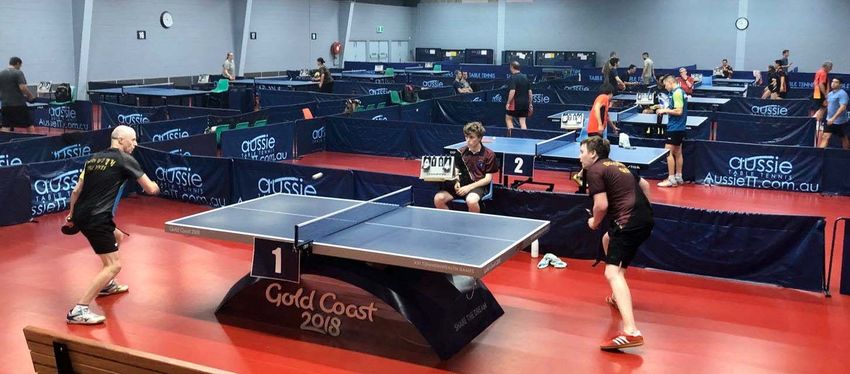
Primarily our non- contact sports participants often do not face each other and operate easily with social distancing
compliance in large open areas. These sports are planning on returning in stage 2 and by nature of the sport and
venue areas of play could satisfy 4m2 with multiple groups of 20. 16 of the 21 Sports are non-contact.
Contact Sports – participants do face each other and incidental and full contact does occur with participants.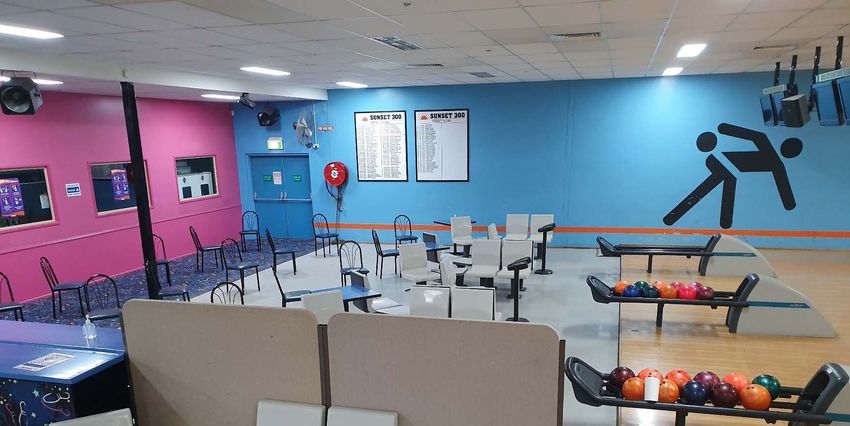
Stage 2 - Contact sports modify their training focus to fitness and modified games where applicable keeping the
distance rule in place in Stage 2 to meet compliance standards of 1.5 metres and within the facility 4m2.
Contact sports operating in commercial venues or who are not able to comply with the distance requirements
returning in stage 3, competition phase complying with numbers of participants to meet regulations. 7 Sports in the
Indoor Group are regarded either Full contact or Fair contact sports.
Indoor Sports operating in school environments (community sport) will return when school restrictions
allow.
Indoor Sport request relaxation of participation numbers (multiple separated groups) to accommodate
the large spaces available to many indoor sports. Each sport has identified the number of participants
that it can accommodate for non‐contact sports and those modified activities for contact sports in
defined spaces during Stage 2 while meeting all regulations imposed.
All indoor Sport request multiple groups of 100 in Stage 3 still complying with distancing and
compliance with all other factors current at the time of Stage 3 at a time publicised by Health
Authorities.
Each individual sport will complete a sport specific COVID safe operational plan to meet Chief Health Officers
requirements and noting points approved and outlined in this Indoor Sport submission.
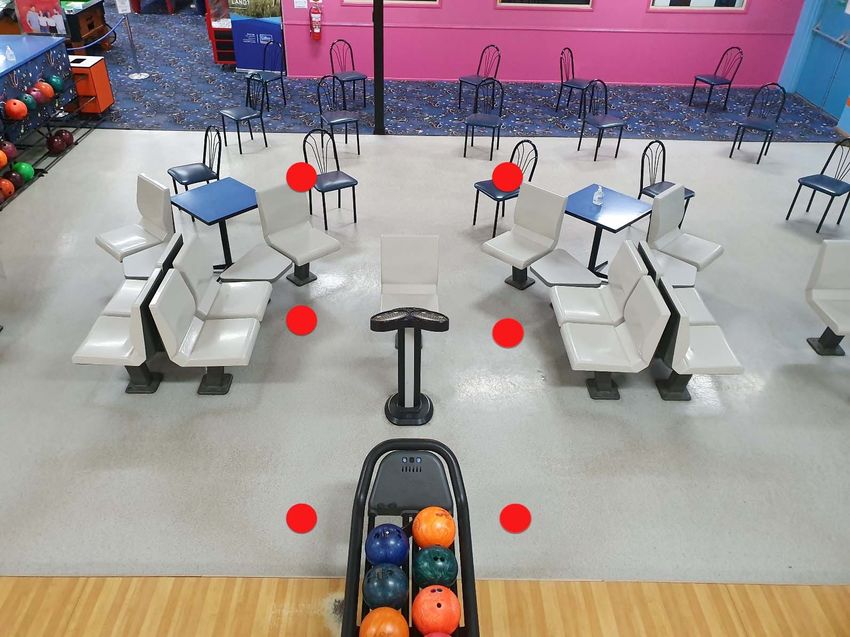
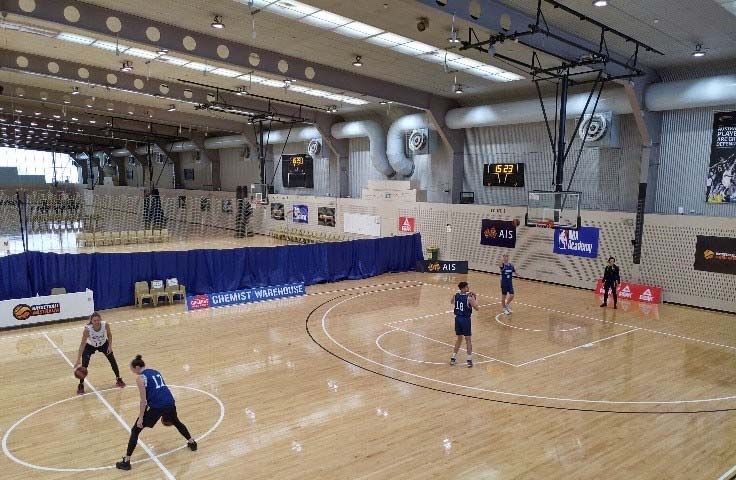
Range of Images of Indoor Sports layouts provided in Appendix 2, in addition to the Indoor Sports matrix
provided in an Attachment to this plan.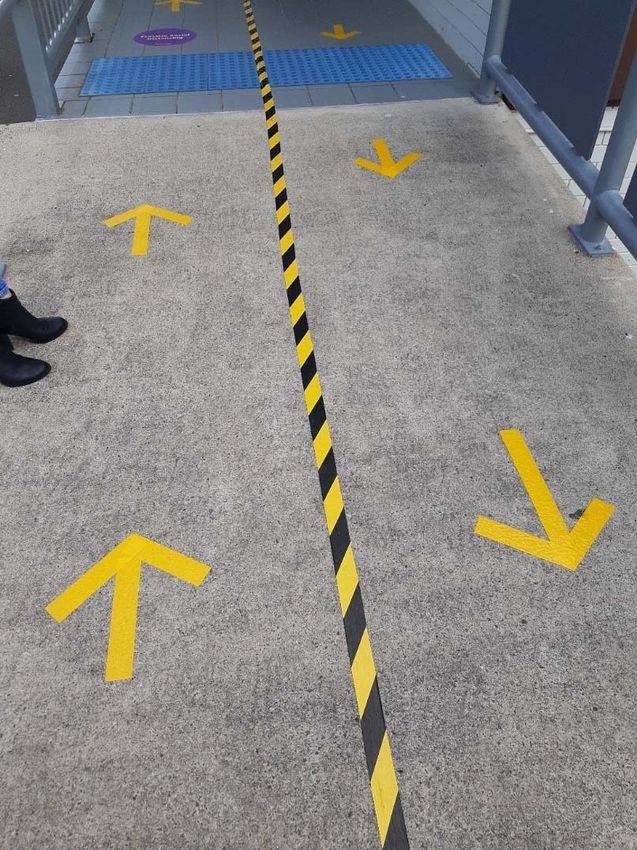
Table of Contents

Purpose:                                                                                                                                                         1

Overview ............................................................................................................................................... 1

1. Introduction ................................................................................................................................... 4

2. Key Principles ............................................................................................................................... 4

3. Responsibilities under this Plan .................................................................................................. 5

INTERACTION BETWEEN APPROVED INDUSTRY COVID SAFE PLANS ...................................... 5

4. Return to Sport Arrangements..................................................................................................... 6

4.1 Queensland Government Framework Arrangements                                                                                                                 6

4.2 Roadmap to easing Queensland’s restrictions 1st June 2020                                                                                                    7

5. Recovery ........................................................................................................................................ 8

Appendix 1: Outline of Return to Sport Arrangements.................................................................... 9

Part 1 – Sport Operations                                                                                                                                        9

Part 2 – Facility Operations                                                                                                                                   14

Part 3 – CHECKLIST                                                                                                                                             22

Appendix 2: Examples of Playing Spaces/Zones for Indoor Playing areas ................................. 27

Appendix 3: Contract Tracing Requirements and Examples. ....................................................... 50

EXAMPLE: Attendance Register – Sport Australia Template                                                                                                        51

[Club Name] Register of attendees ............................................................................................................................... 51
4 of 51
1. Introduction
The purpose of this Industry Covid Safe Plan (Plan) is to provide an overarching plan for the implementation and
management of procedures by the QSport Indoor Sports Group to support sports that play within an Indoor Sport venue
in Queensland and its members and participants in the staged resumption of community sport and organisation
activities.
The arrangements set out in this Plan are intended to prevent the transmission of COVID-19 among members,
participants, coaches, officials, administrators/volunteers, visitors, families and the broader community. The Plan
provides the framework to govern the general operation of Indoor sports, in particular those conducted any
venues/facilities utilised, managed or controlled by the organisations listed, the training and competition behaviour of
all members and participants and the monitoring and reporting of the health of attendees involved in Indoor sporting
activities or utilising indoor venues/facilities.
This Plan includes, but is not limited to, the conduct of:
a. staged training and competition activities (sport operations); and
b. facility management and supporting operations (facility operations).
At all times the Plan is subject to all regulations, guidelines and directions of government and public health authorities.
This plan will be updated in accordance with any changes to public health directions.
2. Key Principles
This Plan is based on, and accepts, the AIS Framework for Rebooting Sport in a COVID-19 Environment (AIS
Framework) and the National Principles for the Resumption of Sport and Recreation Activities (National Principles).
This staged approach is in line with directions from the Queensland Government’s Chief Health Officer, specifically
Queensland’s Roadmap to easing restrictions and also the Return to Play Guide for the Queensland Sport,
Recreation and Fitness industries.
The Plan also accepts as key principles that:
The health and safety of members, participants, coaches, officials, administrators/volunteers, visitors, families and
the broader community is the number one priority;
Members, participants, coaches, officials, administrators/volunteers, families and the broader community need to be
engaged and briefed on the Indoor Sport Industry’s return to sport plans which are specific to each sport;
Facilities are assessed and appropriate plans are developed to accommodate upgraded hygiene protocols, physical
distancing and other measures to mitigate the risk of transmission of COVID-19;
Training and/or competition cannot resume until the arrangements for sport operations and facility operations are
finalised and approved, if necessary; and
At every stage of the return to sport process the Indoor Sporting Industry must consider and apply all applicable
State Government and local restrictions and regulations. The Sports Industry needs to be prepared for any localised
outbreak at our facilities, within our competitions or in the local community.
Indoor Sport is recorded as a high risk activity – the following key points need to be addressed within all other
directives as part of the overarching principles outlined in this plan.
o Record-keeping of all persons that enter venues and playing spaces.
o Where multiple groups of 20 participants is proposed within a playing space/zone there will be no co-
mingling of groups.
o Management and segmentation of multiple groups of 20 participants though:
separation whilst in play
scheduling to eliminate group overlap
booking systems in place to manage participant numbers.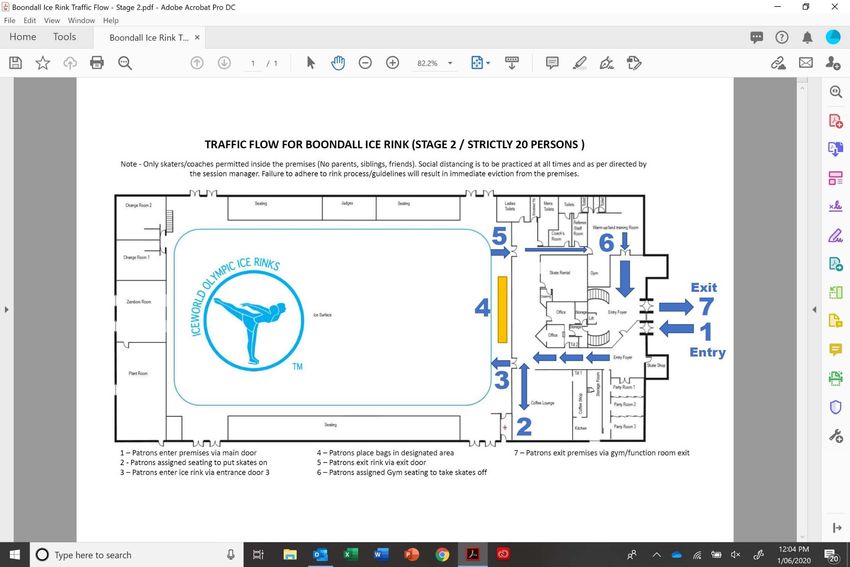
5 of 51
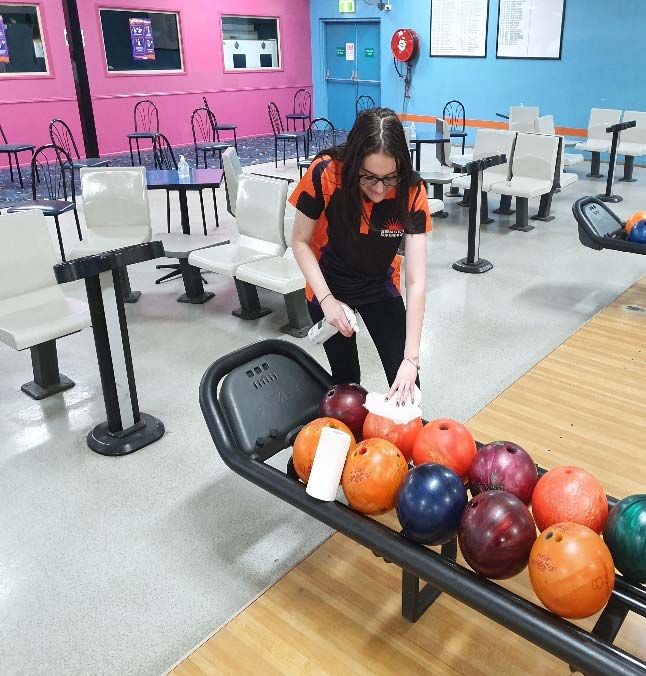
o Implementation of strict hygiene and sanitisation measures in particular:
at all entry and exit points
communal areas and shared facilities
shared participant equipment.
3. Responsibilities under this Plan
The Indoor Sport Industry retains the overall responsibility for the effective management and implementation of the
return to sport activities and operations outlined in this Plan.
The Board of QSport and specifically the Indoor Sport group is responsible for:
Overseeing the implementation of the arrangements in the Plan; and
Revising the Plan as required, ensuring it reflects up to date information from government and public health
officials and seeking approval from Queensland Health regarding amendments.
The Indoor Sport Group has appointed the following person as the [Association/Organisation] COVID-19 Safety
Coordinator to execute the delivery of the Plan and to act as a point of contact for information relating to this Plan:
Name Gail Torrens
Contact Email gail@tbaq.org.au
The QSport Indoor Sports group (The Group) expects all members, participants, coaches, officials, administrative staff
and volunteers to:
Comply with the health directions of government and public health authorities as issued from time to time;
Understand and act in accordance with this Plan as amended from time to time;
Comply with any testing and precautionary measures implemented by The Group;
Act with honesty and integrity in regard to the state of their personal health and any potential symptoms; and
Monitor their health and take a cautious approach to self-isolation and reporting of potential symptoms.
INTERACTION BETWEEN APPROVED INDUSTRY COVID
SAFE PLANS
If there are multiple activities being undertaken at a venue/facility (for example - dining, sports, approved training
courses, fitness or recreational), several approved industry plans may apply. If this is the case, the following will
apply:
Where there is clear separation between the activities (e.g. dining and sport) the relevant plan applies to the
relevant area. A COVID Safe Statement of Compliance for the appropriate plan will be displayed in each
area.
Where the activities cross over (for example amenities, entry/exits, carparks):
o Where possible these areas of cross over will be minimised. Such as designating a particular entry,
exit, amenities and carpark for each activity.
o Where the cross over cannot be minimised, a decision will be made as to which plan takes priority in
which common area and will be followed.
For example, the entry, exit, carpark and amenities may be common to both activities and
will be managed under the dinning plan.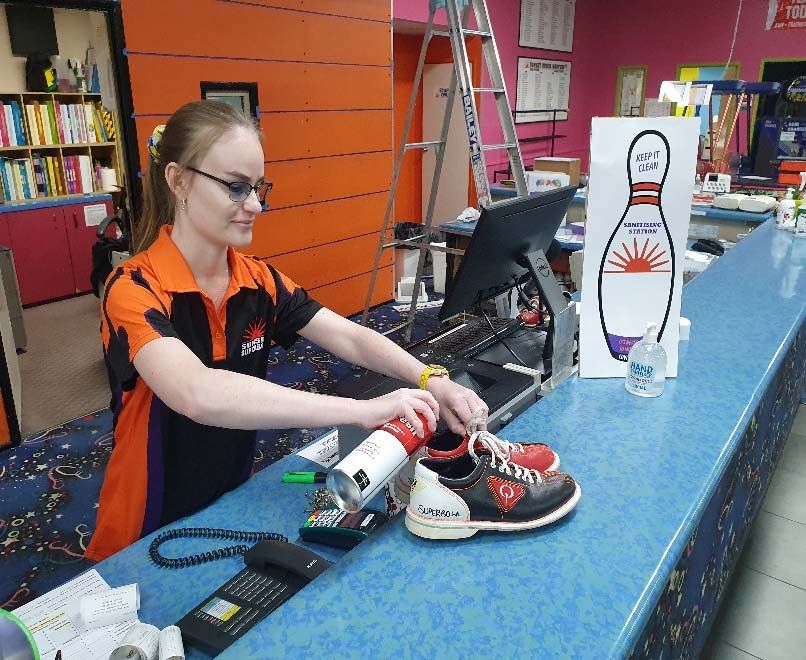
6 of 51
In this case the entity responsible for the dining plan will ensure these areas are
appropriately managed and the separate groups from the dining and sport activity will not
intermingle.
Where a business is operating alongside of a not-for-profit community group, the business would normally take
responsibility for managing the shared or common areas.
The approved Industry plans are located at www.COVID19.qld.gov.au.
4. Return to Sport Arrangements
As at the date of this Plan, participants and organisations are planning to return to organised training/activity during
Stage 2. The Plan outlines specific sport requirements that Indoor Sporting Organisations will implement for Stage 2
and 3 of the Queensland Roadmap to easing restrictions.
The Indoor Sport Industry will transition to the training activity and facility use as outlined in Stage 2 of the Queensland
Roadmap and the training/competition activities and facility use outlined in Stage 3 of the Queensland Roadmap when
permitted under State restrictions and regulations.
4.1 Queensland Government Framework Arrangements
The protocols for conducting sport operations and facility operations under Stage 2 and Stage 3 of the Queensland
Roadmap to easing restrictions are set out in the Appendix.
7 of 51   7 of 51

4.2   Roadmap to easing Queensland’s restrictions 1st June 2020
8 of 51

5. Recovery

When public health officials determine that the outbreak has ended in the local community, the Indoor Sport Industry will consult with relevant authorities to identify criteria for
scaling back its COVID-19 prevention actions. The Indoor Sport Industry will also consider which protocols can remain to optimise good public and participant health.
At this time the QSport Indoor Sport group will consult with key stakeholders to review the delivery of its return to sport arrangements and use feedback to improve organisational
plans and systems.
9 of 51
Appendix 1: Outline of Return to Sport Arrangements
Part 1 – Sport Operations
Area STAGE TWO (1st June) STAGE THREE (10 July)
Approvals The organisation must obtain the following The organisation must obtain the following
approvals to allow a return to training in Stage 2: approvals to allow a return to training/competition
This Covid Safety Plan is industry specific and in Stage 3:
has been approved by State Government This Covid Safety Plan is industry specific
Local government/venue owner approval to and has been approved by State Government
training at venue, if required. Local government/venue owner approval to
National/state sporting body/local association training/competition at venue, if required.
approval of return to training for community National/state sporting body/local association
sport. approval to return to training/competition for
Organisation committee has approved return community sport.
to training for organisation. Organisation committee has approved return
Insurance arrangements confirmed to cover to competition for organisation.
training. Insurance arrangements confirmed to cover
competition.
Education and Organisations will provide training and education Organisations will provide training and education
Training to all participants, volunteers, families and staff: to all participants, volunteers, families and staff:
Provide training on COVID-19 infection Requirements continue from Stage 2.
control to staff and volunteers responsible Organisations must outline the requirements for
for the conduct of training, event training of the workforce including all staff and
operations or any other relevant activity volunteers and communicate these requirements
(sanitising surfaces and SWA
to workforce and their representatives.
requirements).
Make all participants aware of
appropriate hygiene measures and that Training may consist of the following
they should not attend if unwell. requirements:
Mandatory training as outlined by the
Government resources should be
prominently displayed around grounds
Queensland Government such as staff
and facilities and at entry points, including in industries requiring a COVID Safe
handwashing and personal infection checklist provided by TAFE
control advice. Queensland for café and restaurants.
Any training that has been approved
Provide briefings and/or educational or outlined by Queensland Health.
materials to outline protocols under Stage
Any training as outlined by a Peak
2 in advance of return to sport for
participants, including the obligations on Body or State Level Organisation
and expectations of such participants. specifically relevant to the activity.
For State associations training at the
venue comprising of checklists
Organisations must outline the requirements for downloaded that would fit each specific
training of the workforce including all staff and venue with volunteers and staff aware of
volunteers and communicate these requirements the checklists each shift or schedule.
to workforce and their representatives. Further information and advice is available for
organisations, in the Return to Play guide
Training may consist of the following provided on the Return to Play website. The
requirements: guide will continue to be updated by the
Department of Housing and Public Works (Sport
Mandatory training provided by TAFE
and Recreation).
Queensland for all staff in industries
requiring a COVID Safe checklist. See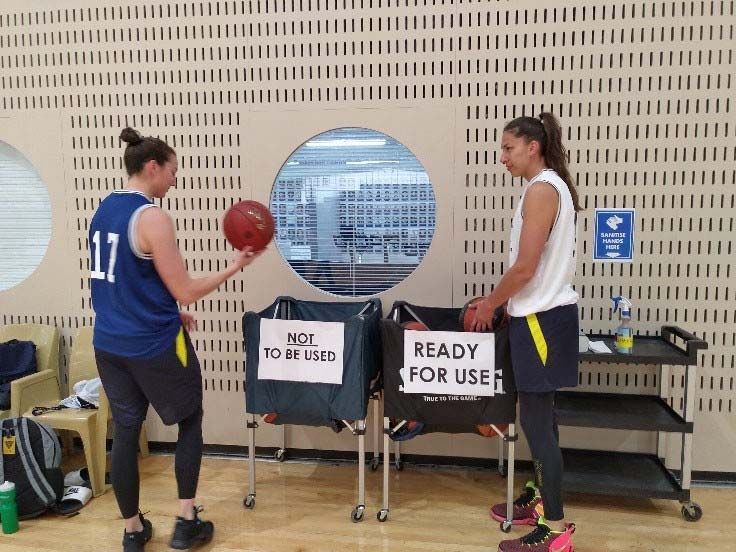
10 of 51
the COVID Safe Businesses website for It is understood that further industry specific
more information. training will be developed and provided by the
Any training that has been approved or Active Queenslanders Industry Alliance.
outlined by Queensland Health.
Any training as outlined by a Peak
Body or State Level Organisation
specifically relevant to the activity.
Further information and advice is available for
organisations, in the Return to Play guide
provided on the Return to Play website. The guide
will continue to be updated by the Department of
Housing and Public Works (Sport and
Recreation).
Corona Virus anxiety link: (Adults) – Ref
Australian Psychological Society
https://www.tenpin.org.au/wp-
content/uploads/2020/05/20APS-IS-COVID-19-
Public-Older_adults-1.pdf
Further industry specific training will be developed
and provided by the Active Queenslanders
Industry Alliance.
Covid Safe 'checklist' for each type of business.
Alternatively, Business owners that would like to
better understand their WHS duties regarding
COVID-19 can call 1300 005 018 or their union or
industry association.
Training & Organisation to detail specifics of training Organisation to detail specifics of
Competition processes. training/competition processes.
Processes Player/Volunteer/staff briefing to occur at each Standard activity permitted to occur for up
changeover. to 100 people.
Non-contact activity permitted for up to 20 Contact and non-contact activity permitted in
people in a group. playing area
Organisation to emphasise AIS Framework Organisation to emphasise AIS Framework
principle of “Get in, train, get out” – arrive principle of “Get in, train, get out” – arrive
ready to train. ready to train.
Adjust length and scheduling of training For larger team sports, consider maintaining
sessions to eliminate overlap. some small group separation at training.
Clearly outline nature of training permitted e.g; Clearly outline nature of training/activity
Non-contact training the groups of 20 can take permitted.
place including Limited access to treatment from support
– Conducting sport drills staff.
– Controlled activities, marking and handball Sanitising requirements continue from Stage
drills 2.
– Non contact solo activities — unrestricted. Treatment of shared equipment continues
from Stage 2.
– Receiving and distribution skills in line with
the 1.5m social distancing. Personal hygiene encouraged (e.g. wash
hands prior to training, no coughing).
– Goal shooting and goalkeeping skills
Training/playing attendance register kept
– Defending with 1.5m distance
(records kept for 56 days)
– No contested drills, tackling, grappling,
Consider modifications to playing conditions
wrestling, body on body drills.
or activity rules to support physical distancing
– Training drills must be designed with social where possible.
distancing measures in place11 of 51
– There must be a minimum distance of 1.5m
between participants at all time
– No standing around close to other
participants during or in between drills or
any activity in play area (e.g. when waiting
in line)
Sanitising requirements, including use of
sanitising stations.
Sharing of some equipment is permitted (e.g.
sanitise equipment before, during, after
sessions) and use of such equipment to be
limited.
No sharing of personal equipment.
No sharing of bibs or any clothing.
Personal hygiene encouraged (e.g. wash
hands prior to training).
Guidance for travel arrangements to training is
provided (e.g. physical distancing on public
transport, limit car pool/taxi/Uber use).
Training/activity attendance register (records
kept for 56 days).
Physical Organisations to develop and implement physical Organisations to develop and implement physical
distancing distancing requirements during training activities distancing requirements during training and
including: competition activities including:
Maintaining base density requirement of 4 Requirements continue from Stage 2.
square metres per person and physical Maintaining base density requirement of 4
distancing (>1.5 metres) square metres per person and physical
Venue safety protocols and training distancing (>1.5 metres) where practical
drills/activities to maintain a distance of at least Training/activities and competition protocols to
1.5 metres maintain a distance of at least 1.5 metres
No co-mingling for each playing space and where practical
zone Avoid participant interactions including team
Management and segmentation of group of huddles, handshakes and high fives
participants through specific buffer zones and Specific restrictions on contact training drills
spacing and competition as applicable may be
Avoid participant interactions including required
handshakes and high fives within each playing Defined areas for each group during
space and zone. training/competition,
Specific restrictions on contact coaching and Maintain a base density requirement of 4
training drills during Stage 2, as mentioned square metres per person and physical
above. distancing (>1.5 metres) where practical
Defined training/activity areas for each training Limit unnecessary social gatherings
group, maintaining base density requirement of (particularly adults)
4 square metres per person and physical Guidance for travel arrangements (e.g.
distancing (>1.5 metres). physical distancing on public transport, limit
Limit unnecessary social gatherings car pool/taxi/Uber use).
(particularly adults)
Guidance for travel arrangements (e.g.
physical distancing on public transport, limit
car pool/taxi/Uber use).
Personal health Organisation to detail specifics of personal health Organisation to detail specifics of personal health
protocols. protocols.
Graded return to sport to avoid injury. Requirements continue from Stage 212 of 51
Advice to players, coaches, volunteers to not
attend if unwell (including any signs/symptoms
of cold, flu, COVID-19 or other illness).
Washing of hands prior to, during and after
training and use of hand sanitiser where
available.
Shower at home before and after training
No clearing nose
No spitting
Cough into the elbow
Launder own training uniform and wash
personal equipment].
No sharing of personal equipment, Shared
community equipment sanitised before and
after use,.
Mouthguards are not to be removed during
training or play and must be sealed away
when not in use.
Disinfect mouthguards after each session.
No physical greetings (i.e. hand shaking, high
fives etc.).
Avoid touching of eyes, nose or mouth
Do not permit personal equipment on surfaces.
Personal equipment bags should be arranged
to permit physical distancing of participants
(>1.5 metres).
Only coaches/sport staff should contact/move
group equipment such as balls, training aids
(cones, markers, agility ladders etc)
Shared participant equipment (particularly
balls, weights balls, gloves shoes, darts,
weights, platform surfaces) should be rotated,
washed or wiped with antibacterial wipes or
alcohol-based sanitiser prior to and after each
use and at each activity break.
Hygiene Organisation to detail specifics of hygiene Organisation to detail specifics of hygiene
protocols to support training. protocols to support training/competition.
Any safe hygiene protocols distributed by Hygiene and cleaning measures to continue
national/state sporting body or local from Stage 2
association/club that will be adopted by
organisation.
Guidelines for sanitisation and cleaning,
including requirements for sanitisation stations.
Provide hand sanitiser dispensers in prominent
places around facilities (particularly entry and
exit points, communal areas or high use areas
such as a registration desk, toilets or canteen)
and ensure dispensers are regularly refilled.
Clean and sanitise any shared equipment that
is used prior to use
Promote good hygiene practices in line with
Government advice including:
Cleaning standards:13 of 51
– Ensure spaces at each facility are regularly
cleaned with disinfectant in accordance
with the manufacturer’s instructions;
– Surfaces should be frequently wiped down
with appropriate disinfectant wipes or soap,
particularly those frequently touched. This
includes door handles, light switches,
kitchen surfaces, bathroom surface,
phones, remote controls, gates,
scoreboard, menus control panels and any
other high touch areas; and
– Adequately clean and disinfect participant
facilities before use (prior to participant
arrival).Allow minimum 30minutes for
cleaning between each session.
Strongly encourage payments online or via
pay wave technology. If cash is taken ensure
employees/volunteers observe good personal
hygiene practices and wash their hands
regularly.
For more information on cleaning guidelines visit
the Safe Work Australia website
https://www.safeworkaustralia.gov.au/covid-19-
information-workplaces/industry-
information/general-industry-information/cleaning
Communications Provide a detailed communications plan to Provide a detailed communications plan to
communicate with players, coaches, members, communicate with players, coaches, members,
volunteers, families and staff. volunteers, families and staff.
Provide clear and coordinated guidance to Requirements continue from Stage 2
participants and stakeholders across a range Brief players, coaches, staff, members,
of communication channels on how a return to volunteers and families on Stage 3 protocols
sport will be managed at each level of including hygiene protocols (e.g. letter, email,
restriction; text/WhatsApp message, Facebook post) and
Brief players, coaches, staff and volunteers on reinforcement of hand washing and general
return to training/activity protocols including hygiene etiquette.
hygiene protocols (e.g. letter, email, Promote good personal hygiene practices in
text/WhatsApp message, Facebook post) and and around training/competition sessions and
reinforcement of hand washing and general in organisation facilities (e.g. posters in
hygiene etiquette. bathrooms).
Endorsement of government COVIDSafe app
and encouragement to players, coaches, staff,
members, volunteers and families to download
and use app.
Promote good personal hygiene practices in
and around training sessions and in
Organisation facilities (e.g. posters in
bathrooms).
Establish relationships with key community
partners and stakeholders including State
public health authorities and government
funding partners through your organisation’s
COVID-19 Safety Coordinator.
Share timely and accurate information
including how your organisation is responding
to any localised outbreak.14 of 51
Confirm an emergency management plan for
each of your sport activities and they are
suitable for managing a COVID-19 outbreak.
Identify trigger points for cancelling,
postponing or modifying an activity and identify
who has responsibility for making that
decision.
Identify in advance actions to be taken if your
organisation needs to postpone or cancel
activities. Plan alternative ways for participants
to enjoy the activities by television, radio, or
online.
Establish a process of how individuals can
access mental health and wellbeing
counselling services.
Part 2 – Facility Operations
Required by OIR
Continue to monitor COVID-19 situation Plan includes meeting with stakeholders to review delivery of return to
and review and adjust risk management sport arrangements and review of critical incident management
response accordingly arrangements and test organisational readiness.
Required by OIR
Checks and preparation for reopening to
At each stage of risk management, Plan should include communication,
manage COVID related risks (i.e.
consultation, instruction, training and supervision of workers and their
equipment/facilities), and risk
representatives (e.g. HSRs, union representatives), see page 2 and page 3 of
management measures put in place to
OIR COVID Guide:
address COVID risks, including:
(https://www.worksafe.qld.gov.au/__data/assets/pdf_file/0005/191678/covid‐
Social distancing 19‐overview‐and‐guide.pdf)
Personal and hand hygiene
Plan should include clear coverage of COVID-safe management of
Workplace cleaning – frequently deliveries, and presence of contractors and visitors to premises
touched areas and routine (club houses etc) – see SWA Guidance:
cleaning (https://www.safeworkaustralia.gov.au/covid-19-information-workplaces/industry-
information/general-industry-information/physical?tab=tab-toc-employer)
Appropriate use of personal
protective equipment (PPE)
Managing psychosocial risks, Non-essential visits to the workplace should be cancelled or
including customer/patron postponed.
aggression Minimise the number of workers attending to deliveries and
contractors as much as possible.
Communication, consultation,
instruction, training and Delivery drivers and other contractors who need to attend the
supervision of workers and their workplace, to provide maintenance or repair services or perform
representatives (HSRs, union other essential activities, should be given clear instructions of your
representatives) – this should requirements while they are on site.
occur throughout whole of
COVID-19 risk management Ensure handwashing facilities, or if not possible, alcohol-based
process by industry hand sanitiser, is readily available for workers after physically
handling deliveries.
Consideration of deliveries,
contractors and visitors attending Direct visiting delivery drivers and contractors to remain in vehicles
the premises and use contactless methods such as mobile phones
Signage to communicate with your workers wherever possible.
Record keeping15 of 51
Direct visiting delivery drivers and contractors to use alcohol-based
hand sanitiser before handling products being delivered.
Use, and ask delivery drivers and contractors to use, electronic
paper work where possible, to minimise physical interaction.
Where possible, set up alternatives to requiring signatures. For
instance, see whether a confirmation email or a photo of the
loaded or unloaded goods can be accepted as proof of delivery or
collection (as applicable). If a pen or other utensil is required
for signature you can ask that the pen or utensil is cleaned or
sanitised before use. For pens, you may wish to use your own.
Plan should clearly show Industry is keeping records of the risk management
process (e.g. as outlined in the Industry Plan). The detail and extent of
recording will depend on the size of workplace. It is useful to keep information
on:
‐ the identified hazards, assessed risks and chosen control measures (including
any hazard checklists, worksheets and assessment tools used in working
through the risk management process)
‐ how and when the control measures were implemented, monitored and
reviewed
‐ who you consulted with
‐ relevant training records
‐ any plans for changes.
PPE sections could include more detail – see page 6 of OIR COVID Guide:
(https://www.worksafe.qld.gov.au/__data/assets/pdf_file/0005/191678/covid‐
19‐overview‐and‐guide.pdf)
Further detail should be included on managing psychosocial risks (including
patron aggression) – see page 8 of OIR COVID Guide:
(https://www.worksafe.qld.gov.au/__data/assets/pdf_file/0005/191678/covid‐
19‐overview‐and‐guide.pdf)
Industry should revisit existing WHS risk Statement should be included in the Plan to the effect that WHS risk
management processes to identify and management processes will be revisited to identify and manage any new
manage any new or changed hazards or changed hazards that may have arisen as a result of the Industry
that may have arisen as a result of the COVID Safe Plan.
Industry COVID Safe Plan
Reporting and notification of COVID-19 Plan should state clearly that if there is a confirmed or probable case of
COVID-19 infection at a workplace, Queensland Health will be notified
by the medical professional who confirms the diagnosis and the relevant
testing laboratory.
Upon being informed, a person in control of the business or undertaking
must notify Workplace Health and Safety Queensland that the case has
been confirmed.
Plan should include businesses keeping a record of each notifiable
incident for at least 5 years from the day that notice of the incident is
given to the regulator.16 of 51
Area STAGE TWO (1st June) STAGE THREE (10 July)
Approvals The organisation must obtain the following The organisation must obtain the following
approvals to allow use of organisation facilities: approvals to allow use of organisation facilities:
This Covid Safety Plan is industry specific This Covid Safety Plan is industry specific and
and has been approved by State has been approved by State Government
Government Local government has given approval to use
Local government/venue owner approval to facility, if required.
use facility, if required.
Organisation committee has approved plan
Organisation committee has approved plan for use of organisation facilities.
for use of organisation facilities.
Insurance arrangements confirmed to cover
Insurance arrangements confirmed to facility usage.
cover facility usage.
Facilities Organisations shall have a facility management Organisations shall have a facility management
plan and sport-specific structured risk plan and sport-specific structured risk assessment
assessment in place. SWA guidelines in place. in place. SWA guidelines in place
Parts of facilities that are available during Use of Organisation facilities will align with
Stage 2 restrictions; limit to toilets and social distancing and hygiene requirements and
medical facilities and minimise use of State Government directives
communal facilities.
Hygiene and cleaning protocols measures as
Hygiene and cleaning protocols. per Stage 2
Provision of appropriate health and safety Provision of appropriate health and safety
equipment, Personal Protective Equipment equipment, Personal Protective Equipment
(PPE) and personal hygiene cleaning (PPE) and personal hygiene cleaning solutions
solutions. as per Stage 2.
For more information on cleaning guidelines visit
the Safe Work Australia website
https://www.safeworkaustralia.gov.au/covid-19-
information-workplaces/industry-
information/general-industry-information/cleaning
Playing Spaces Some Indoor venues can accommodate multiple Playing spaces may remain for competition as in
playing spaces or zones by meeting the following training phase to minimise risk.
requirements: Playing spaces may also remain for junior or
Defined training areas for each training modified games that do not require any standard
group of 20 must maintain a base density playing area or court.
requirement of 4 square metres per person
and physical distancing (>1.5 metres).
Each playing space for participants must
be clearly separated with signs and
markers and if applicable barriers to
minimise the risk of participants and balls,
moving into another zone.
Separation of spaces by distance between
courts with entry and exit areas for each
court defined or with significant barriers,
nets, and walls separating each zone.
Must not create an unnecessary risk of
people congregating
Each playing space has a different entry
and exit to other playing spaces
There is clear separation between playing
spaces17 of 51
Start and finish times at each playing
space is staggered
No group from one playing space can
come into contact with a group of another
playing space.
Groups must remain constant, no
swapping between groups.
Equipment cannot be shared between
zones.
Hand sanitizers are available at the entry
and exit of each zone.
High contact points with in a playing space
must be cleaned before another group can
access.
Please refer to Appendix 2. for examples
playing spaces/zones on Indoor playing areas
and courts
Facility access Organisation to detail specifics of facility access Organisation to detail specifics of facility access
protocols. protocols.
Confirm health screening measures (e.g. Details of any health screening measures (e.g.
sign off of health by participants, temperature checks etc.) prior to entry to any
temperature checks etc.) prior to entry to facilities and any privacy measures
any facilities and any privacy measures organisation will take to protect sensitive health
organisation will take to protect sensitive information.
health information.
Record keeping of all persons that enter
Plan to manage emergency situations venues and playing spaces.
example postpone or cancel groups Restrictions on facility access to limit anyone
following a suspected outbreak or who has:
upcoming events should a person be
– COVID-19 or has been in direct contact with
contaminated – Remove or refuse entry to
persons who do not follow regulations. a known case of COVID-19 in the previous
14 days.
Record keeping of all persons that enter – Flu-like symptoms or who is a high health
venues and playing spaces. risk (e.g. due to age or pre-existing health
Restrictions on facility access to limit conditions).
anyone who has: – Travelled internationally in the previous 14
- COVID-19 or has been in direct contact days.
with a known case of COVID-19 in the Restrictions to essential participants to attend
previous 14 days. facilities/venues to minimise numbers;
- Identify persons of high health risk (e.g. – not more than one parent/carer to attend
due to age or pre-existing health with child/family;
conditions). – encourage parent/carer to drop off/pick up
- Travelled internationally in the previous outside facility/venue or remain in the car
14 days. during the activity;
Restrictions to essential participants to – Numbers should not exceed government
attend facilities/venues to minimise allowances and apply the 1 person per 4m2
numbers; restriction.
- not more than one parent/carer to attend – no other spectators permitted
with child/family; Detailed attendance register to be kept (records
- encourage parent/carer to drop off/pick up kept for 56 days).
outside facility/venue or remain in the car Amend training/competition days and times to
during the activity; reduce in-person contact for participants, and
- gathering numbers should not exceed 20 staff by:
per group or allocated allowance18 of 51
approved by Government and apply the1 Scheduling time between events/training
person per 4m2 restriction. sessions for all attendees to safely arrive and
- no other spectators permitted exit the venue; and
Develop new terms and conditions of entry Considering staggered arrival and/or departure
and have users agree to new protocols. times for different groups/teams.
Manage venue entries and exits (and separate
Detailed attendance register to be kept
where possible) to ensure a seamless flow of
(records kept for 56 days).
participants and attendees through the venue
Amend training schedules and times to and limit the risk of overlap and congestion,
reduce in-person contact for participants, subject to maximum attendee number
family members and staff by: restrictions.
- Scheduling time between events/training Restrict the use of communal facilities to toilets
sessions for all attendees to safely arrive only where possible, with no use of showers &
and exit the venue; and change rooms during Stage 3.
- Considering staggered arrival and/or Physical distancing protocols including line
departure times for different markings, signs, bollards, use of zones use and
groups/teams. physical distancing indicators shall be used in:
Manage venue entries and exits (and Club rooms, offices, meeting, official/medical
separate where possible) to ensure a rooms, halls, sheds
seamless flow of participants and bar/canteen to follow regulations that are
attendees through the venue and limit the current.
risk of overlap and congestion.
Organisations that previously provided food
Restrict the use of communal facilities to and beverage services must complete a
toilets only during Stage 2. COVID-19 Checklist for dining at restaurant,
cafes, pubs, clubs, RSL clubs and hotels.
Close other communal areas such as
spectator seating where people can General advice on physical distancing in
congregate. organisation facilities including discouraging
face to face meetings where possible,
Physical distancing protocols including line restricting site visitors, deferring or splitting up
markings, signs,bollards, use of zones use large meetings.
and physical distancing indicators shall be
used.
General advice on physical distancing in
organisation facilities including
discouraging face to face meetings where
possible, restricting site visitors, deferring
or splitting up large meetings.
Hygiene Organisation to detail specifics of hygiene Organisation to detail specifics of hygiene
protocols to ensure regular sanitisation and protocols to support use of organisation facilities.
cleaning of organisation facilities. Continue hygiene and cleaning measures as
Any safe hygiene protocols distributed by per Stage 2.
national/state sporting body or local
association that will be adopted by
organisation including:
- Availability of hand sanitiser at entry/exit
points to venue and elsewhere (may be
provided by facility/venue manager)
- Protocols for sanitising stations, sanitising
shared equipment
Cleaning standards – increase regular cleans
and frequent wiping of high touch surfaces.
– Displaying posters outlining relevant
personal hygiene guidance.
– Avoiding shared use of equipment.19 of 51
– Provide suitable rubbish bins with regular
waste disposal.
– Guidelines for sanitisation and cleaning of
Organisation facilities.
Recommend that a COVID Safe Coordinator
is allocated to each session to take
responsibility of completing the cleaning
requirements before the next group arrives.
Commercial venues to supply sanitisers and
cleaning services to be organised between the
sport and the venue during play.
SWA guidelines in place to protect staff.
For more information on cleaning guidelines visit
the Safe Work Australia website
https://www.safeworkaustralia.gov.au/covid-19-
information-workplaces/industry-
information/general-industry-information/cleaning
Management of Organisation to detail specifics of protocols to Organisation to detail specifics of protocols to
unwell manage unwell participants at an organisation manage unwell participants at an organisation
participants activity. activity.
Self-isolate at home if presenting symptoms. Measures as per Stage 2.
Anyone who is unwell or develops a fever, a
cough, sore throat or shortness of breath,
must contact a doctor or call 13HEALTH (13
43 25 84).
Liaise with public health authorities and
facilitate the sharing of information about all
symptomatic participants at an activity run by
your organisation, subject to privacy law.
Notify your Peak Body and the Department
Housing and Public Works (Sport and
Recreation)
Contact participants (refer to attendance
register) if an activity attendee subsequently
becomes unwell and provide advice on what
actions should be taken. If an outbreak does
occur at your facility, the register will need to
be provided to relevant authorities (i.e.
Department of Health) in a timely fashion.
Minimum details to be collected include:
– Date of entry
– First name and surname
– Phone number
– Time in
– Time out
– Club & team/group
Communicate isolation and medical
procedures for all players, members,
volunteers and their families at the onset of
any symptoms including organisation facilities
that can be used to manage symptomatic
participants.
Identify with clear and unambiguous signage,
a space that can be used to isolate staff or
participants who become unwell at an activity20 of 51
and cannot leave immediately. The isolation
area should be equipped with necessary PPE
supplies to facilitate hand hygiene and
respiratory etiquette.
Ensure staff/volunteers understand that
participants who become unwell should be
immediately isolated and given a clean
disposable facemask to wear. Establish
procedures to help unwell staff or participants
leave the event as soon as possible and
added protections for activity staff in such
circumstances.
Train volunteers/organisation management on
treatment of symptomatic participants and
disinfecting of facilities used by such
participants.
Confirm notification protocols for notifying
public health authorities and other attendees
of symptomatic participants.
Follow-up after Organisations will manage the follow up after a Organisations will manage the follow up after a
COVID-19 Covid-19 outbreak has ended: Covid-19 outbreak has ended:
outbreak has
Public health officials will determine when an As per Stage 2.
ended outbreak has ended in a community, consult
with them to identify criteria for scaling back
COVID-19 prevention actions with activities.
Consider which protocols can remain to
optimise good public and participant health.
Plan the rescheduling of cancelled activities.
Evaluate the effectiveness of the COVID-19
Safety Plan and communications plan, adjust
and recirculate to stakeholders as required.
Meet with key stakeholders to review delivery
of any return to sport arrangements. Gather
feedback to note lessons learned and to
improve organisational plans and systems.
Review critical incident management
arrangements and test organisational
readiness to respond to a localised outbreak
of COVID-19.
Update your organisation’s business
continuity plan based on learnings from the
COVID-19 pandemic.
Organisation The organisation will oversee: The organisation will oversee:
responsibilities Provision and conduct of hygiene protocols as As per Stage 2
per this Industry Plan. Provision and conduct of hygiene protocols as
Capture of a record of attendance at all per this Industry Plan.
training and organisation activities and The capture of a record of attendance at all
maintaining an up-to-date log of attendance. training/competition and organisation activities
Coordination of Stage 2 play area/training and maintaining an up-to-date log of
operations. attendance.
Operation of the organisation’s facilities in Coordination of Stage 3 play
support of all Stage 2 training activities in area/training/competition operations.
accordance with this Industry Plan.21 of 51
Compliance issues and the sanction of Operation of the organisation’s facilities in
individuals for non-compliance with any law, support of all Stage 3 training/competition
direction or protocol. activities in accordance with this Industry Plan.
Determine the basis of enforcing any
sanctions and seek advice as required.
Determine circumstances where issues may
be elevated to local or State law enforcement
agencies.22 of 51 Part 3 – CHECKLIST COVID-SAFE PLAN Checklist (SPORT) Checklist for organisations to follow in operating under the Industry Plan ☐ Keep up to date with any Queensland Government information regarding sport, fitness and recreation via the Return to Play website. ☐ Read/complete the Safe Work Australia COVID resource kit to the industry ☐ Check the Queensland Government’s COVID-19 website to confirm your industry has a COVID Safe Plan in place. Otherwise abide by the specific restrictions outlined in the roadmap regarding the number of people, the type of activity and travel allowed. ☐ Check with your State Level Organisation or Peak Body if there is further information or guidance material applicable to your activity. ☐ Check with your venue or facility on any procedures and requirements applicable for the return of activity. ☐ Check with your insurer(s) or insurance broker and confirm coverage inclusions and exclusions. Clarify if there are any specific exclusions caused by COVID-19, if any conditions apply to your policies, if any specific approvals/consents are required and whether return to sport plans can be noted against relevant policies. ☐ Update Risk Management processes in line with the approved Industry Plan and ensure records are kept up to date. Workforce and training ☐ Review the Roadmap for easing Restrictions Framework for COVID Safe Businesses to ensure that Workplace Health and Safety requirements are been met. Supporting information for the framework. ☐ Consult with workers/volunteers and their representatives on COVID-19 measures and provide adequate information and education, including changes to tasks and practices and appropriate cleaning and disinfection practices. ☐ Provide personal protective equipment (PPE) where necessary and in accordance with the relevant State and National guidelines. For more information view the Workplace Health and Safety Queensland guide. ☐ Ensure completion of any required training – including any that is mandated by the Queensland Government such as staff in industries requiring a COVID Safe Checklist. ☐ Postpone or cancel non-essential face-to-face gatherings, meetings and training. Consider teleconferencing/online meeting capabilities. ☐ Implement measures to maximise the distancing between volunteers/workers and participants to the extent it is safe and practical. Review tasks and processes that usually require close interaction and identify ways to modify these to increase physical distancing. ☐ Modify processes to limit volunteers/workers having to be in close contact, as much as possible. For example: assign volunteers/workers to specific areas to minimise the need to go into other spaces. ☐ Established sports medicine/first aid protocols that limit exposure (refer to Sports Medicine Australia SMA Support during COVID-19). ☐ Ensure any psychosocial risks are managed with processes implemented to manage stress from COVID-19 as outlined in the Workplace Health and Safety Queensland guide.
23 of 51

Communication

☐ Update or develop communications plan with existing channels such as email, text message, and
social media to share timely and accurate information with internal and external stakeholder groups.

☐ Ensure staff and volunteers (coaches, officials, sports medicine, equipment/ ground and
administrative personal) have been informed and trained about the conditions/restrictions of re-starting
the activity.

☐ Ensure participants, parents and carers have been informed about the conditions/restrictions of re-
starting the sport and recreation activities, for example:
• one parent/carer drop off – pick up
• change of activities (non-contact, group sizes, etc)
• changes of venue/facility practices (handwashing, equipment access, allocated areas).

☐ Ensure decision making and implementation of decisions is clear within your organisation in the lead
up to and during the return to activity.

☐ Ensure everyone within your organisation (including paid staff and volunteers) understands their role.

☐ A nominated COVID Safety Coordinator or Bio-hazard Officer is in place to oversee delivery of your
return to activity plan.

Financial
☐ The financial costs of COVID measures and the return to activity have been researched and
communicated to your organisation.

☐ Adjust budgets as necessary for COVID-19 measures and costs.

☐ Check any applicable Federal or Queensland Government supports such as grants and subsidies
have been implemented or applied for.

☐ Ensure communication of any financial changes (registration/usage/membership fees etc.) to your
participants.

Legal and compliance
☐ Ensure your organisation is across all relevant legislation and requirements applicable to return to
activity.

☐ Ensure any necessary consents and approvals to resume sport have been received.

☐ Ensure completion of a COVID-19 Safety Plan.

Physical distancing
☐ Place signs at entry points to instruct participants and visitors not to enter the venue/facility if they are
unwell or have COVID-19 symptoms. The sign should state that your organisation has the right to refuse
service and must insist that anyone with these symptoms leaves the premises.

☐ Use signage and communicate separate entry and exit points (drop off/point up points) and separate
participation space areas to minimise contact and maintain the required physical distancing.

☐ Implement measures to restrict numbers on the premises, ensuring these comply with the Industry
COVID Safe Plan or the current stage of roadmap.

☐ Ensure physical distancing by placing floor or wall markings or signs to identify 1.5 metres distance
between persons for queues and waiting areas.

☐ Consider using physical barriers (where practical) in high volume interaction areas to promote
physical distancing.

☐ Remove seating or space seating at least 1.5 metres apart. Mark railings or ground to encourage
appropriate distancing and BYO seat measure).
24 of 51

☐ Provide contactless payments or ordering and payment online.

Keeping people healthy
☐ Promote and encourage all participants, volunteers, workers and visitors to sign up to the COVID Safe
App.

☐ Maintain a record of people in attendance for the activity, for a period of at least 56 days so you have
accurate records in the event of an outbreak.

☐ A system is in place to record, store and if required share data (subject to privacy law).

☐ Avoid changing participants between groups to ensure no intermingling.

☐ Promote BYO water bottle to limit communal water bubbler/tap use.

☐ Set up hand washing/sanitising stations and practices for participants to easily wash hands before
and after (and during if required) their activity.

☐ Direct participants, volunteers, workers and visitors to stay at home if they are sick, and to go home if
they become unwell.

☐ Put signs and posters up to remind people of the risk of COVID-19.

☐ Consider the requirements of vulnerable groups (i.e. people with disabilities, Indigenous people,
elderly).

☐ Know the protocols for notifying health authorities of issues or suspected COVID-19 cases.

Hygiene and cleaning
☐ Assess supply needs (including sanitisation, cleaning and PPE) and explore options for sourcing
additional supplies required.

☐ Instruct everyone to practise good hygiene by frequently cleaning their hands. Hand washing should
take at least 20 to 30 seconds. Wash the whole of each hand, covering all areas with soap before
washing with water.

☐ Instruct participants to practise good hygiene including no touching of eyes, nose or mouth and no
spitting or clearing nasal/respiratory secretions on field of play or in other activity settings.

☐ Implement measures to limit contact with between participants including eliminating handshakes, high
fives, huddles and celebrations.

☐ Provide hand washing facilities including clean running water, liquid soap, paper towels. If hand
washing facilities are not readily available, provide an appropriate alcohol-based hand sanitiser.

☐ Reduce the sharing of equipment and tools and establish cleaning protocols or restrict use of shared
equipment (e.g. balls).

☐ Establish a protocol for laundering bibs, jerseys or other shared uniform items.

☐ Close or limit use of communal facilities such as change-rooms, showers, gyms, locker rooms and
ensure there is the appropriate number of people according to the restriction stages.

☐ Implement cleaning protocols for communal facilities.

☐ Clean frequently touched areas and surfaces at least hourly with detergent or disinfectant (including
shared equipment and tools, Eftpos equipment, tables, counter tops and sinks). Surfaces used by
clients, such as tables, computer scoring surfaces, must also be cleaned between clients.

☐ Consider any necessary changes to the administration of first aid and communicate to necessary
personnel.

Deliveries, contractors and visitors attending the premises
☐ Implement a process for COVID Safe deliveries as outlined by Safe Work Australia.
25 of 51

☐ Use, and ask delivery drivers and contractors to use, electronic paperwork where possible, to
minimise physical interaction. Where possible, set up alternatives to requiring signatures, such as taking
a photo of the goods onsite as proof of delivery.

☐ Direct visiting delivery drivers and contractors to remain in vehicles and use contactless methods such
as mobile phones to communicate with your workers wherever possible.

☐ Ensure handwashing facilities, or if not possible, alcohol-based hand sanitiser, is readily available for
workers after physically handling deliveries.

Review and monitor
☐ Regularly review your systems of operation to ensure they are consistent with current directions and
advice provided by health authorities.

Additional checklist for Facility Managers / Venue Operators

☐ Ensure completion of a COVID-19 Safety Plan for the venue.

Communication and training
☐ Ensure communication of the completed COVID-19 Safety Plan for the venue.

☐ Ensure communication of any procedures and requirements applicable to user groups for the return
of activity.

☐ Ensure user groups have undergone any required training or venue induction.

Manage access
☐ Develop a playing space usage plan (where applicable) including zones, entry and exists to ensure
different groups of 20 participants do not co-mingle.

☐ Ensure and clearly mark separate entry and exit points (where possible).

☐ Develop a plan to manage the bookings and schedule of users.

☐ Determine the process to record all visitor to the venue, and liaise with organisations that utilising the
venue to ensure record keeping processes are complementary.

☐ Update the terms and conditions of venue use and entry as applicable.

☐ Implement a process for other restrictions such as cancelling if wet weather to reduce the risk of
people congregating such as under shelter.

Hygiene and cleaning
☐ Undertake all hygiene and cleaning measures as outlined above.

☐ Undertake a thorough clean of the venue including field of play entry, pitch and coaching equipment,
clubrooms, toilets prior to any use by user groups.

☐ Consider where doors and gates can remain open to minimise contact.

Preparing Field of Play for use
☐ Implement a process for auditing facilities to ensure they are in a safe and playable condition.

☐ Ensure field of play lines and any other line markings are clearly visible.

☐ Ensure field, ancillary and safety lighting is working and provides a sufficient level of illumination.
You can also read


