Mid-Year 2018: Chicago Market Snapshot - Condominium Deconversions: A Creative Structure for Unlocking Value
←
→
Page content transcription
If your browser does not render page correctly, please read the page content below
Mid-Year 2018: Chicago Market Snapshot
Condominium Deconversions: A Creative Structure for Unlocking Value

James M. Hanson
Principal
Capital Markets
james.hanson@avisonyoung.com | 312.273.4506

Avison Young Residential Capital Markets
                    Section 15 Condominium Deconversion Overview
                    Demographics, Economics and Rental Trends Fueling Condo
                    Deconversions in Chicago Market

                             Introduction
                             The multi-family rental market has soared in Chicago and nationally since the
                             Great Recession, as home ownership rates dropped and the coveted Millennial
                             population demonstrated a strong preference for renting. This shift has led to
                             a development cycle that added approximately 72,000 apartment units in the
                             Chicago area since 2006.

                             At Mid-Year 2018, a new trend has emerged amidst this development
                             backdrop. Chicago is seeing a wave of condo deconversions as investors look
                             to add supply in a tight rental market. Investors are finding that buying an
                             older condominium building and converting it to rental units is a viable avenue
                             for gaining entry into some of Chicago’s most coveted neighborhoods. New
                             development is prohibitive in many instances, due to the high cost of land and
                             construction; the shortage of suitable land sites in desirable neighborhoods;
                             and, in some cases, community resistance to large new developments.

                             Over the past 24 months, ending July 15, 2018, there have been more than
                             20 deconversions—also known as Section 15 deconversions—announced
                             in Chicago. These include buildings ranging from fewer than 10 units to over
                             300 units, mostly in popular city neighborhoods such as Old Town, Lincoln
                             Park, and the Gold Coast. These city properties targeted for deconversion are
                             generally older buildings constructed from the 1960s through the 1980s.

AVISON YOUNG | RESIDENTIAL CAPITAL MARKETS                                                                     1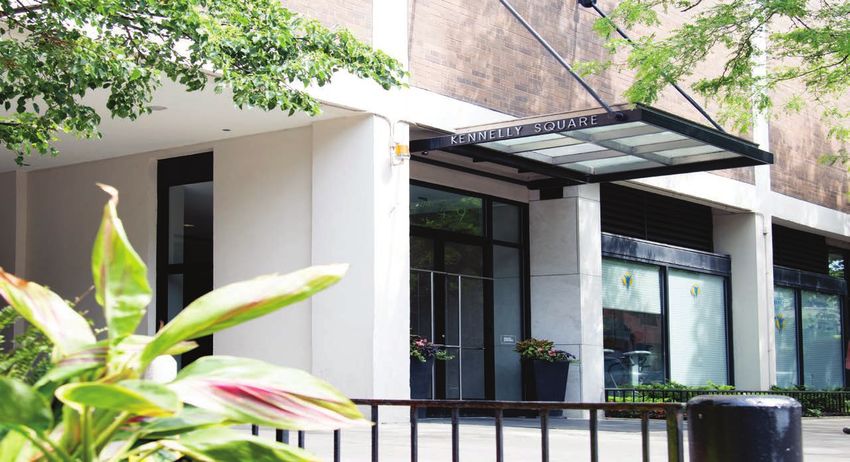
Understanding the Economics When examining condominium
deconversions, it is important to
With home ownership rates hovering around 64%, the remaining consider these factors:
36% of the population translates to approximately 115 million
renters in the United States. That reinforces the fact that there
remains considerable demand for rental housing nationally and
Location, Location, Location
in Chicago. Condo deconversions are ideally suited
for markets and neighborhoods where
In addition, apartment units in Chicago can be much more demand is high and available land for
development is scarce. In the Chicago
valuable than individual condominium units of a comparable
market, many established neighborhoods
age and quality. This allows a professional apartment investor to
from Old Town to Lakeview are ideal for
create value under certain circumstances.
deconversions.
The economics that make the deconversion attractive to
investors also make the transaction attractive to condominium Benefits for Investors
unit owners. In order to encourage condominium owners to sell Investors are drawn to condo deconversions
through a deconversion process, the investor shares some of the due to several factors:
deconversion value premium with the sellers. Investors often pay
more for an individual condominium unit in a deconversion than • Strong demand for rental housing
it is worth on the market as a single unit. That benefit typically
• A
vailability of older condominium
translates to a 25 to 40 percent premium in per unit pricing. And,
developments in coveted in-fill locations
as many of these older buildings are facing significant capital
investments for repairs and upgrades, the owner also may avoid • N
ew construction hurdles -- land prices
the financial burden of a special assessment. are high and there is a limited supply of
land sites that can support developments
large enough to generate desired return.
Select Section 15 Sales in the Greater Chicago Area
1 227 E. Walton Pl. 8 Century Tower
2 3244 N. Clifton Ave. 9 Darlington Court Apts.
3 445 W. Wellington Ave. 10 Kennelly Square
4 4954 N. Ridgeway Ave. 11 Spring Hill Apts.
The economics
5 625 Wrightwood Ave. 12 Sunnyside Lane Apts.
6 732 Bittersweet Pl. 13 The Flats at Gladstone
that make the
7 Burton Grove Apts 14 The Kent
9 Lake Forest
Lake Zurich
41 Highland Park
LAKE
MICHIGAN deconversion
Algonquin
53
attractive to investors
Arlington
also make the
Heights
90 90
294 94
90 Evanston
Elgin
7
11
transaction attractive
Elk Grove
Village
Hanover
Park
90
290
O’Hare
90 4 12 6
13
International
Airport
2 3
to condominium unit
90
294 14
10
St. Charles Glendale
Heights 90
355 1
8
90
owners.
290 CHICAGO
88
90 Cicero
Source: CoStar and Avison Young
AVISON YOUNG | RESIDENTIAL CAPITAL MARKETS 2
Condo Owners/Associations --
Is it the Right Move?
As older properties face expensive renovations—from new windows
to resurfaced façades to significant mechanical overhauls—some unit
owners are rethinking their commitment to ownership. Can they afford
the special assessment, which can sometimes reach beyond $50,000 per
unit? If they try to sell, will the looming assessment scare away buyers,
deflating the value of their unit?

                                                                                           Over the past 24
Other Economic Details
Apartment rents have escalated rapidly in most areas of the country,
                                                                                           months, ending
resulting in a sharp increase in values as well. Conversely, condominium
values in Chicago have struggled to recover from the recession,                            July 15, 2018,
according to data prepared by the National Association of REALTORS.
The trade association notes that Chicago’s recovery has been the 35th
weakest among the 66 major metropolitan areas in terms of year-over-
                                                                                           there have been
year growth in median sales tracked in the index.
                                                                                           more than 20
The weakness in values is particularly pronounced for smaller studio and
one bedroom units, which have traditionally been considered as housing
for more transient owners. Whether first time homeowners seeking to
                                                                                           Section 15 sales
grow their equity in anticipation of a future upgrade to a larger home or
a transitory worker with a short-term ownership horizon, these smaller                     in Chicago.
units tended to trade more frequently. In the current housing market,
these temporary residents have a strong desire for rental housing, which
                                                                                           Real Capital Analytics
depresses values in the condominium sector.

Strategic Approach for Investors
Avoiding the pitfalls of a Section 15 transaction

As the condo deconversion trend continues, it is important to note that not all properties are well
suited for conversion. The process is lengthy, complex, and filled with potential breakdowns. Investors
should take a strategic approach that involves collaborating with trusted real estate capital markets
and construction specialists who understand the market dynamics and the nuances of the process.

Among the potential pitfalls to avoid are properties with extensive structural issues or buildings
which lack a clear commitment from unit owners to pursue a Section 15 transaction. Because 75%
of the members of the condominium association need to approve a deconversion in order for the
transaction to proceed, strong owner support is critical.

AVISON YOUNG | RESIDENTIAL CAPITAL MARKETS                                                                          3
What’s Ahead
       As demand for rental units continues, the Avison Young team expects deconversion activity to:

       •   Proceed at a steady pace as new investors enter the market and drive favorable
           transaction pricing;
       •   Expand the stock of class B apartment units available in Chicago;
       •   Add significant rental units in desirable submarkets where new development is not feasible;
       •   Come full circle as some of the original deconversions, which have successfully leased as
           apartments, are sold as core multi-family assets.

Summary
                                                                                      Recent Case Study
The Illinois Condominium Property Act, passed in 1963, allows for this unique
                                                                                       In Q2 2018, The Avison Young
investment opportunity, in certain circumstances, but also leaves some issues
                                                                                         team completed the sale of
open for debate. The Act requires that more than 75 percent of unit owners,              Kennelly Square, a 268-unit
in buildings with four or more units, vote to approve a sale.                         condominium building located
                                                                                      in the Old Town neighborhood
Questions for investors, homeowners and their attorneys:                             of Chicago. The team completed
                                                                                      a national marketing effort that
                                                                                      generated 125 potential buyers
Market Centric – Which neighborhoods are more suited to the demand for               that reviewed offering materials;
these deconversions? What type (general characteristics) of condominium              50 property tours with investors;
associations are most likely to benefit from deconversion? Which ones should        and 17 offers. There were multiple
an investor avoid?                                                                      rounds of bidding in order to
                                                                                    secure optimal price and terms for
                                                                                              the unit owners.
Economics – How do the economics work and when are deconversions
feasible for the investor and the home owner?

Timing – Deconversions are not for the faint of heart, and can take anywhere
from 12 to 18 months simply to complete a transaction. Do investors have
the patience and wherewithal to wait things out before the conversion
actually begins?

Due Diligence – What are the potential pitfalls that residents and investors
need to consider and how can they be avoided?
                                                                                           Kennelly Square
                                                                                     1749 N. Wells Street, Chicago, IL
Legal – How does a Section 15 deconversion work and what are the
restrictions?                                                                                   268 UNITS

AVISON YOUNG | RESIDENTIAL CAPITAL MARKETS                                                                               4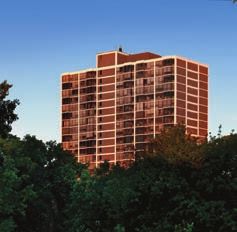
Kennelly Square
1749 N. Wells Street, Chicago, IL

About the Author

                                                                       James Hanson joined Avison Young’s Chicago office in 2014 as a Senior Capital Markets and Structured
                                                                       Finance Executive. He brings 28 years of Capital Markets experience to Avison Young, including over $5
                                                                       billion of closed investment sale, financing, sale-leaseback, development capitalization and strategic
                                                                       advisory assignments.

                                                                       Jim began his career at Jones Lang LaSalle, where he completed his tenure as a Managing Director in
                                                                       the Capital Markets Group. Based in the firm’s Chicago headquarters, he oversaw all Capital Markets
                                                                       Group activities in the Central Region of the US. These activities included asset dispositions and
                                                                       financings, structured corporate finance transactions and other financial advisory assignments on
James M. Hanson                                                        behalf of clients that included domestic and foreign corporations, developers, REITs, real estate fund
Principal                                                              operators and institutions.
Capital Markets
                                                                       After leaving JLL, Jim was a principal at Chicago-based real estate developer Mesa Development. At
james.hanson@avisonyoung.com                                           Mesa, Jim was responsible for all capital structuring activities related to almost $1 billion of urban,
312.273.4506                                                           mixed-use, residential development completed during his tenure. Jim identified and structured
                                                                       approximately $700 million of senior construction financing, $125 million of mezzanine financing and
One South Wacker, Suite 3000                                           $80 million of institutional co-investment equity capital.
Chicago, Illinois
                                                                       Jim’s extensive real estate experience, including deep relationships with capital sources representing
                                                                       the full spectrum of the capital stack, allows him to provide valuable insights into the execution of
                                                                       transactions for clients of Avison Young.

     Certain legal information in this document was provided by Jeff Richman of Bancroft, Richman & Goldberg, LLC | 312.252.4380

©2018 Avison Young - Chicago, LLC. All rights reserved.
E. & O.E.: The information contained herein was obtained from sources which we deem reliable and, while thought to be correct, is not guaranteed by Avison Young - Chicago, LLC.
You can also read


