Midlothian Council Strategic Housing Investment Plan 2018/19 2022/23
←
→
Page content transcription
If your browser does not render page correctly, please read the page content below
Midlothian Council
Strategic Housing Investment Plan
         2018/19 - 2022/23
Front page photographs
Top: Midlothian Council development at Robert Franks Gardens, Gorebridge.
Bottom: Places for People Development at Wester Cowden, Dalkeith

                                                                            2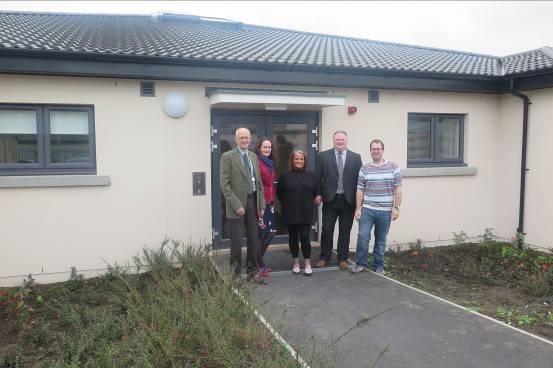
Table of Contents

1. Introduction and Background             4

2. Strategic Links                          6

3. Area Profile of Midlothian              11

4. Partnership Working                     16

5. Investment Priorities                   22

6. Resources                               27

7. Housing Infrastructure Fund             33

8. Conclusion                              32

Appendix 1                                 34

                                                3
1. Introduction and Background
In 2016 the Scottish Government announced its intention to support the development
of 50,000 new affordable homes in Scotland by March 2021. Meeting this target is
ambitious and will require increased funding by the Scottish Government, Local
Authorities and Registered Social Landlords and a step change in the pace of
housebuilding in order that it is achieved. The delivery of more affordable housing
remains a high priority for Midlothian Council which is planning a development
programme of up to 1,000 new council houses in Midlothian.
The purpose of Midlothian’s Strategic Housing Investment Plan (SHIP) is to set out
strategic investment priorities for affordable housing over a 5 year period to achieve
the outcomes set out in the Local Housing Strategy (LHS). The SHIP is also the key
document for identifying strategic housing projects towards meeting the
Government’s 50,000 affordable housing target.
The previous SHIP for Midlothian was submitted to the Scottish Government in 2016
and covered the period 2017/18 – 2021/22. This 2017 submission is provides
updated investment plans set out by Midlothian Council and affordable housing
development partners for the period 2018/19 – 2022/23. The previous year’s SHIP is
available to view online at www.midlothian.gov.uk
The SHIP provides an opportunity for the Council to:
Sets out investment priorities for affordable housing and identifies how these
will be delivered
Identify the resources required to deliver these priorities
Involve key partners in the delivery of new affordable housing.
The aims of Midlothian’s SHIP are to:
Improve longer-term strategic planning
Provide a practical plan detailing how the Local Housing Strategy investment
priorities can be delivered
Form the basis for more detailed programme planning
4
Provide a focus for partnership working
Inform, and be informed by Registered Social Landlords (RSL) development
plans
Develop actions identified in the Local Housing Strategy (LHS)
Inform the allocation of resources from a national to a local authority level
The SHIP will continue to inform the allocation of resources from the Scottish
Government’s Affordable Housing Investment Programme, which primarily supports
the delivery of affordable housing via the Council and Registered Social Landlords.
In addition, other funding streams that seek to support LHS priorities for affordable
housing or complement existing resources have also been evaluated.
Affordable Housing Achievements
The main achievements in relation to investment in affordable housing in Midlothian
in recent years include:
Midlothian Council completing it’s 1,000th new council home since 2006.
Completion of new 5 affordable housing developments in Gorebridge,
Dalkeith, Penicuik and Bonnyrigg during 2017.
Completion of 12 homes for people with complex care needs at Teviot Court,
Penicuik.
Assisting 175 households in Midlothian to purchase their own home using the
Scottish Government’s Open Market Shared Equity Scheme.
Two affordable housing projects completed which did not require grant
funding.
52. Strategic Links
Midlothian Local Housing Strategy 2013 - 2017
The Housing (Scotland) Act 2001 requires that all local authorities in Scotland
develop a Local Housing Strategy (LHS). The purpose of the LHS is to:
Describe the extent and type of housing need and demand;
Set out the local authority’s strategic vision for the future of housing across all
tenures, taking account of national priorities;
Set out how the standard of housing will be improved;
Provide clear strategic direction for housing investment;
Focus on the outcomes required to achieve this vision; and
Identify specific commitments made by the local authority and key partners to
enable the delivery of outcomes as shared priorities.
As a consequence, the SHIP is a key part of the Local Housing Strategy process and
together the key statements on affordable housing investment priorities guide the
application of Scottish Government subsidy and other funding in Midlothian.
The strategic vision of Midlothian’s Local Housing Strategy 2013 – 2017 is that:
“All households in Midlothian will be able to access housing that is affordable
and of good quality in sustainable communities.”
Affordable housing investment decisions will be made in order that the identified
outcomes of the LHS due to be achieved by 2017 are realised. These outcomes
have also shaped key housing priorities within the Single Midlothian Plan – which is
a combined Midlothian Community Plan and the Single Outcome Agreement with the
Scottish Government.
The outcomes are:
Households have improved housing options across all tenures.
Homeless households and those threatened with homelessness are able to
access support and advice services and all unintentionally homeless
households will be able to access settled accommodation.
The condition of housing across all tenures is improved.
6 The needs of households requiring Specialist Provision housing will be
addressed and all households will have equal access to housing and housing
services.
Housing in all tenures will be more energy efficient and fewer households will
live in or be at risk of fuel poverty.
Development of the Midlothian’s next Local Housing Strategy 2018 – 2023
Midlothian Council is in the process of developing the next Local Housing Strategy
for 2018-2023. This will meet the requirements set out by Scottish Government
whilst also taking account of local priorities which are determined by key
stakeholders including the Council, Registered Social Landlords, housing developers
and local residents. It is anticipated that increasing the supply of affordable housing
in Midlothian will remain a key priority for the new LHS and the investment plans set
out in this SHIP indicates how the Council and partners will deliver on this priority.
Strategic Development Plan for South East Scotland and the Midlothian Local
Development Plan
SESplan is the Strategic Development Planning Authority for the Edinburgh and
South East Scotland region. The region covers six council areas including City of
Edinburgh, East Lothian, Midlothian, West Lothian, the Scottish Borders and the
southern half of Fife. SESplan works in partnership with these six councils to prepare
a Strategic Development Plan for the area. A Strategic Development Plan is a
statutory planning document which is prepared or updated every five years and
covers a twenty year time period. It communicates strategic and cross-boundary
planning policy to the development of Local Development Plans prepared by each
Council in the region.
The proposed Strategic Development Plan was published for consultation in October
2016 and once adopted, will be replacing the Strategic Development Plan of 2013.
The Strategic Development Plan will help achieve the SESplan vision by:
Providing direction to Local Development Plans in the city region.
Providing a context for development management
7 Influencing and supporting investment plans, strategic plans and other
strategies affecting the region
Identifying key strategic actions in the plan and in the SESplan Action
Programme.
The Strategic Development Plan identifies the strategic housing land requirement for
the SESplan area and for the strategic development areas and expects this
requirement to be met through local development plans from various sources,
including committed housing sites (from previous and current local plans), windfall
sites and new allocations through the Proposed Midlothian Local Development Plan
(MLDP). The Plan will allocate land for housing, employment and other uses, and
provide a policy framework to assess planning applications. It is important that there
is a sufficient supply of land for development in order that there are opportunities to
develop affordable housing throughout Midlothian. The Proposed MLDP allocates a
total land supply of 12,997 units
Midlothian Council’s Affordable Housing Policy
Midlothian Council is committed to working with private sector developers in order
that the need for market housing and affordable housing can be addressed in
Midlothian. A significant proportion of affordable units proposed for development
during the next five years are to be provided on sites provided as a result of the
Affordable Housing Policy
The current Affordable Housing Policy which sets out that within residential sites
allocated in the Local Plan, and on windfall sites, provision shall be required for
affordable housing units equal to or exceeding 25% of the total site capacity
(depending on the total number of units being developed).
Additionally, the 2012 Supplementary Planning Guidance (SPG) on Affordable
Housing identifies that there is the potential for a range of types of affordable
housing to be provided to meet the Local Plan’s affordable housing requirement,
including:
8 Social rented housing;
Subsidised low cost housing for sale
Shared ownership;
Shared equity;
Unsubsidised entry level housing for sale;
Housing let at a mid market or intermediate rent.
South East of Scotland Housing Need and Demand Assessment 21
Undertaking an assessment of housing need and demand is a critical part of the
evidence base for the Council’s Local Housing Strategy (LHS) and the SHIP. The
purpose of a Housing Need and Demand Assessment (HNDA) is to analyse key
housing market drivers, past and present, in order to estimate future housing need
and demand. This Assessment was prepared in consultation with the wider Housing
Market Partnership to provide accurate and reliable data on housing need and
demand to inform other strategic reports including the Strategic Development Plan,
the Main Issues Report and subsequent Local Development Plans and the Local
Housing Strategy. HNDA2 covers the six administrative areas of South East
Scotland (including East Lothian, Edinburgh City, Fife, Midlothian, Scottish Borders
and West Lothian Councils).
Housing Supply Target (HST)
Although the starting point for setting housing targets is the Housing Need and
Demand Assessment , the Housing Supply Target sets out the realistic number of
homes to be built in each SESplan Housing Market Area taking into account a range
of material considerations including wider economic, social and environmental
factors, issues of capacity, resource and deliverability, and other important
requirements. The Housing Supply Targets agreed by SESplan Member Authorities
for Midlothian between 2018 and 2030 include 165 for affordable housing and 369
for market housing per annum (see Table 2.1 below). The HSTs are robust,
supported by evidence and have been set via a methodology designed to be
compliant with Scottish Planning Policy and related guidance.
1
The SESplan Housing Need and Demand Assessment is available to view at: www.sesplan.gov.uk
9Table 2.1: SESplan Housing Supply Targets 2018-2030
Affordable Market Combined
Annual Period Annual Period Annual Period
Average Total Average Total Average Total
City of Edinburgh 1,200 14,400 1,220 14,640 2,420 29,040
East Lothian 189 2,268 330 3,960 519 6,228
Fife 262 3,144 605 7,260 867 10,404
Midlothian 165 1,980 369 4,428 534 6,408
Scottish Borders 128 1,536 220 2,640 348 4,176
West Lothian 300 3,600 333 3,996 633 7,596
SESPLAN 2,244 26,928 3,077 36,924 5,321 63,852
103. Area Profile of Midlothian
Housing Market Areas (HMAs)
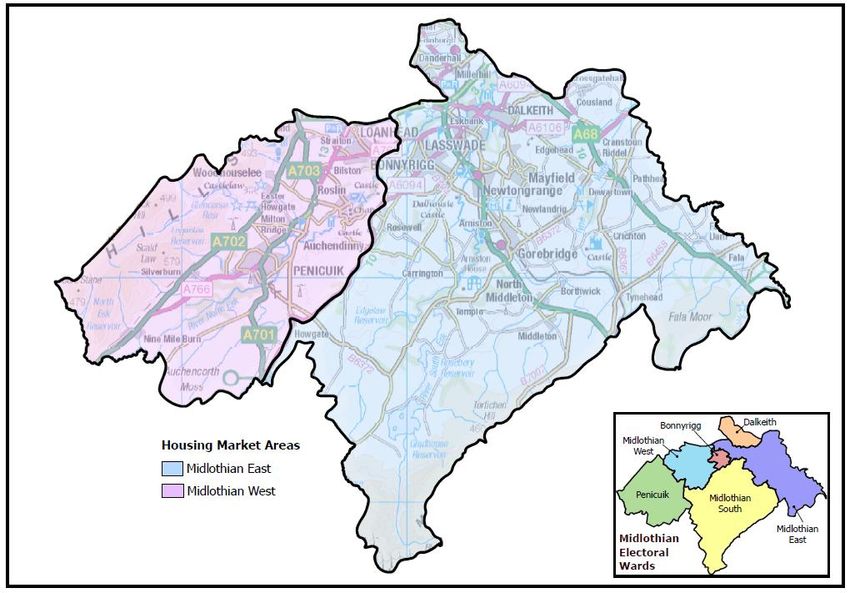
Midlothian is situated within the SESplan Housing Market Area and is therefore
influenced by the wider region in terms of where households choose to live and
work. The Table below shows the two HMAs along with their corresponding towns
and villages, while the map shows the geographical spread of the HMAs. The
Midlothian West (A) HMA is denoted in purple while the Midlothian East (B) HMA is
denoted in blue colour.
Table 3.1: Main Settlements in Housing Sub Market Areas
Midlothian West (A) Penicuik, Loanhead, Bilston, Roslin, Straiton,
Auchendinny
Midlothian East (B) Dalkeith, Bonnyrigg, Gorebridge, Rosewell, Mayfield,
Easthouses, Pathhead, Newtongrange,
Danderhall/Shawfair
Figure 3.1: Map showing Midlothian Housing Sub Market Areas
11The Housing Market Areas are the core development areas in Midlothian, based
predominantly on the provisions of the Edinburgh and the Lothian’s Structure Plan
2015, which concentrates new development in Midlothian on:
The A701 Corridor;
The A7/A68/ Borders Rail Corridor; and
Shawfair
Deliverability per Sub Area
Affordable housing development responds to local housing need, with the highest
need located in sub area B. Consequently, most of the affordable housing units to be
delivered are in this HMA sub area.
Danderhall/Shawfair
It is proposed that this area of Midlothian will see a significant level of new
development with an allocation of land for around 4,000 houses, employment land, a
town centre including a supermarket and school provision. The initial new sites for
development are under construction and it is anticipated that a significant number of
new affordable units will be developed in this area during the next five years.
Housing Tenure in Midlothian
The most common housing tenure in Midlothian is owner occupied housing (64%)
followed by Council housing (18%). Housing Association and Private Rented housing
each represent 8% of the housing stock.
Social Housing Demand
An analysis of social housing in Midlothian shows:
There are 6,633 Council houses in Midlothian. The majority of stock is 2 bed
(3,639 units), followed by 3 bed (1,840 units). There are fewer 1 bed homes (830
units) and 4 bed and larger homes (324 units).
There are currently 3,236 RSL properties in Midlothian; Melville Housing
Association has the highest number of properties in Midlothian with 58% of total
housing association stock followed by Castle Rock Edinvar Housing Association
with 32%. Other RSLs have about 10% of the total RSL stock in Midlothian
12 There is no dominant age group on the housing list: 30% of applicants are aged
40-59 years, followed by those aged 26-39 years (26%), 16-25 years (26%) and
60+ years old with 18%.
One and two bedroom properties are most in demand from the Housing List. 34%
of applicants are waiting for one bed homes and 52% of applicants are waiting for
two bed homes. Only 14% of Housing List applicants require 3 and 4 bed homes.
Chart 3.1 below, shows the number of new council lets in recent years. In the last
three years, turnover rate in Midlothian has been very low at less than 5%. The high
level of lets in 2011/12 and 2012/13 were due to the high number of new build
completions in these years, it is anticipated that the number of lets will increase as
more council housing sites are being constructed.
Chart 3.1: Midlothian Council Lettings
700
625
600 564
500
399
400
278 299
300 273
200
100
0
2011/12 2012/13 2013/14 2014/15 2015/16 2016/17
Despite significant investment in new council housing in the previous decade, waiting
list applications have doubled from 2,465 in 2007 to 4,925 in 2017 indicating an
increase in household formation and the need for social housing as more people are
unable to afford open market home rentals or purchases. Chart 3.3 shows the
number of households assessed as homeless by Midlothian Council in recent years.
There has been a slight reduction in the number of households assessed as
homeless since 2011/12 due to homeless prevention activity and providing housing
options advice but the number of homeless households remains greater than the
13number of social housing lets in Midlothian. This adds to the pressure for more
affordable housing.
Chart 3.2: Number of Households on Midlothian Council Housing List 2007 -
2017
Chart 3.3: Number of Households Assessed as Homeless in Midlothian 2007/08
– 2016/17
Affordable Housing Development in Midlothian
Table 3.1 shows the level of investment in new affordable homes in Midlothian since
2006. It shows that 1,064 council homes have been built, and a total of 1,600 council
and RSL affordable units have been built overall. In addition home ownership
schemes such as shared equity schemes and Help to Buy Scotland have supported
832 households to purchase their own home.
14Table 3.1: New Affordable Housing in Midlothian, by Type and Area since 2006
Open
Council RSL RSL Market Help
Completed Completed Completed Shared Settlement Shared to
Settlement Units Social Units MMR Units Equity sub-total Equity Buy Total
Bilston 0 28 0 0 28
Bonnyrigg/Lasswade 227 22 6 4 259
Dalkeith 146 129 34 17 326
Gorebridge 241 28 24 4 297
Loanhead 88 0 0 0 88
Mayfield/Easthouses 130 137 12 0 279
Newtongrange/Butlerfield 55 26 15 0 96
Penicuik 177 42 0 0 219
Rosewell 0 8 0 0 8
TOTAL 1,064 420 91 25 1,600 563 570 2,432
154. Partnership Working
Partnership working is crucial to the delivery of high quality housing and housing
related services across all tenures in Midlothian. As part of delivering a robust SHIP,
Council Officers engaged and consulted with all delivery partners on their proposals
and priority projects.
In order to identify suitable investment priorities Council Officers have worked with
the Scottish Government, Housing Associations, tenants groups, private developers
and colleagues in the Finance, Estates and Construction teams to discuss the level
of housing need in the region, the level of demand for different tenures of affordable
housing and the mix of suitable house sizes and types in order to agree a five year
programme of development.
The development priorities in the SHIP will be monitored through a number of ways
including by:
Monitoring and reviewing of the actions in the Local Housing Strategy
Annual assessment of the Council’s Housing Supply Targets
Annual assessment of RSLs’ housing delivery
Monitoring of housing need and demand.
Reports and returns submitted to the Scottish Government
Edinburgh and South East Scotland City Region Deal
The Edinburgh and South East Scotland City Region comprises the six local
authorities of City of Edinburgh, Fife, East Lothian, Midlothian, Scottish Borders and
West Lothian. Officers from these Council’s have been collaborating with the UK and
Scottish Government to develop a transformational and inclusive city deal for the
region which will attract investment of up to £1.1 Billion over the next 15 years. This
includes investment and collaboration on housing. Housing is included within the City
Region Deal as it is recognised as being an area of pressure but also an opportunity
for accelerated economic growth while reducing social exclusion.
16All Councils in the South East of Scotland face the same pressures in addressing
housing need with the recent housing need and demand assessment for the region
estimating at least 67,000 new homes are required by 2030, with the majority of
need being for households who cannot buy or rent at market prices.
The Heads of Terms provide for greater region-wide collaboration on the key themes
of infrastructure, affordable housing, housing delivery vehicles, strategic use of
public sector land and property, and skills and innovation. There is expected to be
City Deal support in the development of major new housing sites across the region,
including Shawfair.
Key housing investment areas in Midlothian that are being supported through the
City Region Deal include:
Supporting a 10 year affordable housing programme across the region with
Scottish Government grant funding.
Supporting local authority borrowing and share financing risk of infrastructure
delivery for key development sites.
Provision of a £50 Million housing infrastructure fund of predominantly private
sector loans to be spent on projects that will unlock housing in strategic
development sites across the region.
Support for increased use of offsite construction methods.
Prospects to establish a council-owned regional housing company to deliver
mid market and private rented sector housing.
Health and Social Care
Housing providers in Midlothian work collaboratively with health and social care
colleagues to ensure that housing provision in Midlothian can better meet the needs
of households who may require specialist housing provision to be able to live
independently.
A new Health and Social Care Partnership, the Midlothian Integration Joint Board
(IJB), is now responsible for planning health and care services for the Midlothian
population. This changes the way Local Authorities and the NHS work together and
17facilitates closer partnership working with housing providers, including the council,
RSLs and the private sector to provide housing and housing-related services which
best address the health and social care needs of residents in Midlothian. The types
of outcomes that this will facilitate include:
Increased specialist housing provision as a result of improved understanding
of the future needs of the population, such as developing extra care housing
which provides an alternative to living in a care home for some people.
Identification of the level of need for, and funding of, adaptations to ensure
that people living in private sector housing and council housing are able to
continue to live independently.
Improving the health outcomes for homeless households, many of whom
currently have poorer levels of physical health and mental health than the
general population.
Taking action to improve the energy efficiency of housing and reducing fuel
poverty which would lessen the risk to household health and wellbeing.
More information is contained in the Midlothian Health and Social Care Joint
Integration Plan 2016 – 2019, available at www.midlothian.gov.uk
There has been a long-standing policy initiative to reduce reliance upon institutional
settings including long stay learning disability hospitals, psychiatric hospitals, and
long stay hospitals and care homes for frail older people. The success of this shift to
community based care has been heavily dependent upon the contribution of Housing
providers.
The vital role of housing was reflected in the requirement upon IJBs to include a
Housing Contribution Statement (HCS) in their Strategic Plans. The HCS is to be
seen as the 'bridge' between the Local Housing Strategy and the Strategic
Commissioning Plan.
The Midlothian Housing Contribution Statement provides an analysis of local
demographic features including the changing numbers of older people and those
18with disabilities and long term illness. It also explains what this analysis means for
the provision of special needs housing, adaptations and supporting the objective of
reducing inequalities.
Over the past 12 months the implication of the severe reductions in the Council
budget has led to a further review of local models of care. This has identified the
scope for delivering more cost effective services through the increased provision of
specialist housing.
Analysis of Midlothian Council’s Housing List indicates that a significant number of
households are seeking housing to assist with medical needs.
Medical Category A is awarded in the Housing Allocation Policy when it is
determined that an applicant can no longer continue to live in their current
accommodation with 180 applicants assessed in this category and awaiting
suitable accommodation.
Medical Category B is awarded in the Housing Allocation Policy where it is
determined that re-housing would be of significant benefit to the applicant’s
health/level of independence, with 461 applicants assessed in this category
and awaiting suitable accommodation.
Currently, there are 224 households on the Housing List awaiting housing for
older people (such as sheltered or retirement housing) and 45 applications for
wheelchair accessible housing.
Recently built examples of Specialist Provision include:
- Cowan Court, a 32 unit extra care development in Penicuik
- Teviot Court, a 12 unit development built for households with complex care
needs.
- 2 Wheelchair Adapted Homes in Gorebridge completed in 2017
Teviot Court opened in 2017. The development represents a redesign of services for
people in Midlothian with a learning disability that allows them to live independently
in their own communities. Consisting of twelve single storey properties, the new
scheme at Teviot Court in Penicuik is close to the town centre and local amenities.
Within each house is a bedroom, lounge, kitchen, bathroom and a patio area. The
19properties are all wheelchair accessible and were designed using the most up to
date research and best practice in building design.
The tenants are a diverse group of people who will benefit from individually tailored
support to set up home and become involved in what’s going on locally. The
Richmond Fellowship Scotland, a charity which supports people with a broad range
of needs to live as independently as possible in their own homes, has been
appointed to provide support to all tenants living in the development. They will
provide support in a number of areas including personal finance, education and skills
development. A tenant participation group has also been established. Figure 4.1
below shows a picture of the new development being visited by Midlothian Councillor
Stephen Curran, Cabinet Member for Customer & Housing Services, together with
Officers from Midlothian Council Officers and the Richmond Fellowship.
Figure 4.1: Picture of Teviot Court
Future Plans for Specialist Provision
A greater awareness of the health needs of the community has led to over 10% of all
new affordable housing in the SHIP being planned for specific needs groups. These
needs include:
Housing for the Elderly
A range of housing provision specifically designed for older people is being designed
in various settlements. This includes amenity housing and extra care housing
development by both Midlothian Council and partner Housing Associations.
20Housing for those with disabilities and other specific needs
Many households with mobility needs are benefiting from new build developments
which are built to housing for varying needs standards. In addition on most sites
some units are built with wet floor bathrooms and sometimes wheelchair houses
also. Plans are being developed for the first council house in Midlothian to support
bariatric care. Midlothian Council is also investigating the development of housing for
specific client groups such as women at risk of domestic abuse and ex-armed forces
personnel.
215. Investment Priorities
In order for the SHIP to deliver strategic investment priorities for affordable housing
in Midlothian, the Council has engaged with RSLs and relevant delivery partners in
setting out Midlothian’s investment priorities for affordable housing. To ensure that
available resources are prioritised in delivering affordable housing, each project
against a set of criteria: Housing Need; Land Availability; Ability to Start on Site;
Constraints; Equalities Needs and Environmental Impact, as shown in the tables
below. In total, a project can be awarded a maximum score of 30 points and a score
less than 18 indicates a ‘low priority project’, 18-22, ‘a medium priority project’ and
over 22, a ‘high priority project’.
Table 5.1: Project Prioritisation Scoring
Criteria Explanation Score
Area Housing Need Housing need rankings are based on a waiting list 1-5
demand study. 1 would indicate no housing need in an
area, whilst 5 indicates the highest level of need.
Land Availability Sites ranked most highly are those owned by the Council 1-5
or RSL. Also ranked highly are sites with Planning
Permission in place
Ability to Start on Site A site with a high score indicates that the work could start 1-5
on site underway once funding was approved.
Constraints Issues such as Section 75 requirements that have yet to 1-5
be resolved would be given a lower score.
Equalities Needs All sites will score at least a good rating (3) due to 1-5
Housing for Varying Needs. Additional points would be
awarded for particular needs housing, mixed tenure
development e.g. shared equity.
Environmental Impact All sites which have been allocated through the 1-5
Midlothian Local Plan would not be considered as having
a negative environmental impact. Use of renewable
technology and building on Brownfield sites would score
more points.
Table 5.2: Area Project Prioritisation Score
Rank Area Points
1 Bonnyrigg/Lasswade/Poltonhall 5
Loanhead, Newtongrange, Danderhall/Shawfair
Small Settlements including Pathhead, Roslin, Rosewell, Bilston
2 Dalkeith, Penicuik 4
3 Gorebridge, Mayfield/Easthouses 3
22It should be noted that some projects may have scored less not because they are of
less strategic importance to the Council or RSLs but due to circumstances which
prevent construction works from commencing on site (e.g. need for infrastructure
works or demolition). In terms of the area ranking for housing need, there are no
areas in Midlothian with a low level of housing need so areas judged to have lower
levels of housing need are those where there has been significant investment in new
affordable housing in recent years.
The sections below show both Council and RSL housing development priorities over
the next 5 years. It should be noted that some of these sites may be subject to
change as some sites have not yet been approved by the developing organisation or
received planning permission. More detail on each site is shown in Appendix 1.
Council Development Priorities
The table below sets out the priorities for proposed Council projects over the next 5
years. Key notes:
23 development projects are proposed by the Council over the next 5 years
12 of the 23 projects are considered high priority while 11 are medium priorities.
There are no projects judged to have a low priority.
Most projects with the highest priority scores are highlighted for commencement
in the immediate years while most with medium priorities are for the later years
and it is expected that scores for the later sites will become higher due to
constraints being resolved.
23Table 5.3: Council Housing Development Priorities
2018/19 2019/20 2020/21 2021/22 2022/23
Open Market Purchases, Midlothian - MLC
Mactaggart and Mickel, Shawfair - MLC
Newbyres Crescent, Gorebridge - MLC
Eastfield Farm Road, Penicuik - MLC
Morris Road, Newtongrrange - MLC
Cockpen Terrace, Bonnyrigg - MLC
Woodburn Terrace, Dalkeith - MLC
Castlelaw Terrace, Bilstom - MLC
Moorfoot Place, Bonnyirgg - MLC
Bellway Homes, Shawfair - MLC
Crichton Drive, Pathhead - MLC
Stobhill Road, Bonnyrigg - MLC
Newmills Road, Dalkeith - MLC
Miller Homes, Shawfair - MLC
Clerk Street, Loanhead - MLC
Confier Road, Mayfield - MLC
Project Name, Area &
High Street, Bonnyrigg - MLC
Kirkhill Road, Penicuik - MLC
Stobhill Rd (Phase 3) - MLC
Hopefield, Bonnyirgg - MLC
Danderhall/Shawfair - MLC
RSL (e.g. Dewar Park,
Deanburn, Penicuik - MLC
Gorebridge Phase 2-
TBC, Dalkeith - MLC
DCHA)
Housing Need 3 3 5 5 4 4 5 5 5 5 5 5 5 5 4 4 4 5 5 5 5 4 3
Land Availability 5 5 5 5 5 5 5 5 5 3 3 5 3 5 5 5 3 3 3 3 3 4 4
Ability to Start on Site 5 5 5 4 5 5 3 3 5 2 5 3 2 3 2 2 3 3 2 2 2 2 5
Constraints 4 4 4 4 3 3 3 3 3 2 3 4 2 4 3 2 2 3 2 2 2 2 4
Equalities Needs 5 3 5 4 5 4 4 4 5 4 4 3 5 3 3 5 3 3 4 4 3 4 3
Environmental Impact 3 3 3 3 3 3 3 3 3 3 4 3 3 3 3 3 3 3 3 4 3 3 3
TOTAL 25 23 27 25 25 24 23 23 26 19 24 23 20 23 20 21 18 20 19 20 18 19 22
RSL Development Priorities
The table below sets out the priorities for proposed RSL projects over the next 5
years. Key notes:
25 development projects are proposed by RSLs over the next 4 years- no project
has been identified for 2022/23
15 of the 25 projects are high priority while 10 scored as medium priority. There
are no projects with a low priority.
5 RSLs have indicated their plans to develop during this period including:
- Melville Housing Association (9 projects)
- Places for People (9 Projects)
- Viewpoint (1 project)
- Dunedin Canmore (2 Projects)
- Ark Housing Association – 1 project.
- There are also 3 projects where the developer is yet to be confirmed.
Most projects with the highest priority scores are highlighted for commencement
in the immediate years while most with medium priorities are for later years
24Table 5.4: RSL Housing Development Priorities
2018/19 2019/20 2020/21 2021/22
Mauricewood, Deanburn, Penicuik, Phase 2 - DCHA
Glenesk, Avenue Road, Dalkieth - Viewpoint
Paradykes Primary School Loanhead - TBC
Limekilns Inn , Mayfield (2017/18) - MHA
Mauricewood Phase 1, Penicuik - MHA
Project Name, Area &
Lothian Drive, Easthouses - MHA
Windsor Square, Penicuik - ARK
Newtongrange Church Site - PfP
Whitehill Road, Rosewell - MHA
Auchendinny, Phase 2 - DCHA
RSL (e.g. Dewar Park,
High Street, Bonnyrigg - MHA
Hopefield, Bonnyrigg - MHA
Gorebridge Phase 2-
Bonnyrigg Dalhousie - TBC
Cauldcoats phase 1 - PfP
Cauldcoats phase 2 - PfP
DCHA)
Newbattle Lodge - PfP
Millerhill phase 2 - PfP
Auchendinny 1 - MHA
Auchendinny 3 - MHA
Bilston phase 2 - TBC
Bonnyrigg Coop - PfP
Bilston Phase 1 - PfP
Conifer Road - PfP
Shawfair - PfP
Fordell - MHA
Housing Need 3 5 5 4 5 4 5 5 5 4 5 4 5 5 5 3 5 5 5 4 4 3 5 4 3
Land Availability 5 5 4 4 3 5 5 4 5 5 3 3 2 2 3 5 4 1 4 4 3 5 2 4 5
Ability to Start on Site 5 5 5 5 4 5 5 4 4 2 3 2 2 2 3 2 4 2 4 4 2 2 2 4 5
Constraints 4 4 3 4 4 3 5 4 4 3 3 3 2 2 3 3 4 3 4 5 3 2 2 5 4
Equalities Needs 4 4 4 4 4 5 4 4 4 3 4 4 4 4 5 4 4 4 4 4 4 4 4 4 4
Environmental Impact 5 5 4 4 4 4 5 4 4 3 4 3 3 4 4 4 5 4 4 4 3 4 3 4 4
TOTAL 26 28 25 25 24 26 29 25 26 20 22 19 18 19 23 21 26 19 25 25 19 20 18 25 25
Addressing Potential Development Constraints
Midlothian Council is confident that its proposed SHIP can be delivered given the
actions and initiatives undertaken to date by the Council and its strategic partners to
source suitable sites for development. However, a number of challenges need to be
addressed by the Council and its partners in order that an accelerated pace of
development can be achieved.
Risks and constraints to development vary depending on the circumstances of each
site and the developing landlord. These potential risks and constraints are:
Obtaining required Planning Approval.
Building and Procurement Constraints.
Environmental and design issues.
The commencement of affordable housing policy sites are dependent on
developers’ timescales and the economic conditions of the housing market.
Sites not in the ownership of the developer.
Unknown site ground conditions.
25 The rural nature of some areas in Midlothian can mean that development is
constrained in these areas, particularly in relation to available land for housing.
development and the requirements for additional infrastructure prior to
development commencement
Developer contributions required as part of the Council’s Planning Policy are
required to pay for things like contributions to school extensions and local play
facilities – sometimes these contributions threaten the viability of affordable
housing projects.
The impact of welfare reform and particularly the introduction of the impacts of
the Universal Credit in Midlothian once it is fully rolled out. This is projected to
have significant impact on rental income by the RSLs and Council, thereby
affecting funding for future development projects.
Energy Efficiency and Environmental Standards
All housing projects in Midlothian have maximised and will continue to maximise the
opportunities for energy efficiency and reduction in fuel poverty. For instance, both
the Council and RSLs are working towards ensuring that properties in Midlothian
meet the Energy Efficiency Standard for Social Housing (EESSH). The EESSH aims
to encourage landlords to improve the energy efficiency of social housing in Scotland
by:
Reducing energy consumption, fuel poverty and greenhouse gas emissions.
Making a significant contribution to reduce carbon emissions by 42% by 2020
and 80% by 2050 in line with the requirements set out in the Climate Change
(Scotland) Act 2009.
The Council and partner landlords now consider the EESH requirements when
planning for new developments and for any regeneration projects involving existing
housing stock.
266. Resources
Funding from the Scottish Government
Although the majority of funding for the development of new affordable housing is
financed via loans accessed by Midlothian Council or Housing Associations the
availability of Scottish Government grant subsidy is crucial to achieving increased
numbers of affordable homes. Each local authority area is allocated a sum of money
for funding affordable housing development.
Table 5.1 below shows the level of subsidy available to both the Council and the
RSLs, which has been significantly increased in 2016. At present, RSLs can receive
up to £70,000 per unit, with Councils receiving up to £57,000. There is increased
subsidy available if units are built to meet higher standards of energy efficiency.
Table 5.1: Scottish Government Grant Subsidy
Tenure/Provider Grant Per Unit
RSL social rent – greener £72,000
RSL social rent – other £70,000
RSL mid-market rent – greener £46,000
RSL mid-market rent £44,000
Council social rent - greener £59,000
Council social rent – other £57,000
Table 5.2 Affordable Housing Supply Programme 2018 – 2021
Year Grant Funding
2017/18 £5.831M
2018/19 £7.611M
2019/20 £8.601M
2020/21 £9.186M
Total £31.229M
In June 2017 the Scottish Government announced details of the minimum amount of
grant funding being allocated to each Council area until 2020/21. Table 5.2 shows
that the minimum level of funding being allocated to developments will be £31.229
Million.
27The Strategic Housing Investment Plan details sites for 1,860 new affordable homes
to be built between 2018/19 and 2022/23, of which
Unit types: 1,649 are general needs homes and 211 are specialist provision
homes.
Units built form: 1,753 will be new build housing; 80 will be ‘off the shelf
purchases’ and 27 will involve construction works to existing buildings.
Tenure type: 1,574 will be social rent, 220 for Mid Market Rent (MMR) and 43 for
Low Cost Home Ownership (LCHO). A further 23 are planned for unsubsidised
MMR. This reflects the fact that the affordable housing tenure with the highest
demand is social rented housing.
371 units are expected to receive additional funding due to them meeting the
‘greener homes’ standard – this number is likely to increase as renewable
technology becomes more commonplace in new housing.
385 units will be developed in sub-area A (Midlothian West) - this excludes ‘off
the shelf purchases’.
1,395 units are to be developed in sub-area B (Midlothian East) - this excludes
‘off the shelf purchases’.
Scottish Government Affordable Housing Supply Funding Required
A total of £94.812 million of Scottish Government grant funding is required by the
Council and RSLs to deliver the identified units over the next 5 years:
The year which requires the most grant funding is 2020/21, with a requirement of
£29.518 Million.
£19.994 million is required in 2018/19 and £21.928 Million is required in 2019/20.
In 2021/22 the total requirement is £20.932 million.
Only a small proportion of the total is required in 2022/23: £2.440 million.
However it is expected that this number will significantly increase once there is
more certainty of sites for development in 2022/23.
894 of the units will be new Council housing requiring £44.480 million
Government funding. It is the intention that Midlothian Council will identify further
sites for new council housing during the current five year period and these will be
included in the next submission of the SHIP in 2018.
28 812 of the units will be RSL housing requiring £42.312 million Government
funding.
The required level of grant funding to deliver this number of units greatly exceeds
the stated level of funding available. Council Officers will continue to discuss
resource requirements with the Scottish Government to ensure that projects
receive appropriate levels of grant funding.
There are 131 units identified on sites which do not yet have an agreed provider
for affordable housing. This will require an additional £8.020 Million of grant
funding if all these units are taken forward by an RSL. A total of £7.467 Million
would be required if all these units are delivered by Midlothian Council.
It is expected that most units to be built will be smaller sized properties, which
reflects the Local Housing Strategy target that at least 70% of all new affordable
housing units will be 1 and 2 bedroom properties in order to address the need for
smaller properties from Housing List applicants.
Midlothian Council Rent Strategy
Since 2016 three phases of new council housing have been undertaken by
Midlothian Council and it is projected that upon completion a total of 1,524 units will
have been built. In 2015, all Council tenants and applicants on Midlothian’s Housing
List were given options regarding the future rent strategy for council housing in
Midlothian. As there was support for higher rent increases to fund additional new
council housing a 5% per annum rent increase was agreed between 2016/17 and
2018/19. In order that Midlothian Council reaches 2,000 new build units in total a
further period of consultation with tenants and housing list applicants will take place
before the Council can be fully committed to the development of 2,000 units. This
consultation will determine the willingness of tenants and housing list applicants to
support further new development and will take place in 2018 in order that a rent
strategy for 2019/20 and beyond is agreed.
Midlothian Council house rents remain significantly below the Scottish average for
social rented housing (£74.44). However, the average rent is now higher than the
Scottish average: Midlothian Council’s average weekly rent is £69.40 compared to
the Scottish average for council housing of £67.76. This average figure is inflated by
29the 1,000 new build homes which have a time-limited 25% rent premium charge.
This 25% premium supports the development of new housing and ensures that new
build tenants who benefit from the advantages of living in a recently built house pay
more towards this than those living in older properties. It also avoids having to make
larger rent increases for tenants in older properties. Over time it is intended that new
build rents should converge with that of existing older council homes. Consultation
over how this will take place is also planned with affected tenants in 2018.
Disposal of Council Assets and Land
The Council is required by law to ensure it achieves best value in disposing of any
asset, including land. The Council acknowledges that Best Value does not always
mean highest price but can be linked to a range of wider benefits. Provision of
affordable housing is a good example of where the Council has sold land and assets
to RSLs at a price lower than market value while still achieving the required Best
Value. There are also opportunities to undertake developments in partnership with
other RSLs.
Second Homes and Empty Homes Council Tax Funding
Under the Council Tax (Discount for Unoccupied Dwellings) (Scotland) Regulations
2005, Midlothian Council reduced the amount of discount for long term empty
dwellings and second homes from 50% to 10%, with the extra revenue used to
support affordable housing. A total of £306,000 was raised during 2015/16 and
2016/17 which is being used to support Midlothian’s New Build Council Housing
Programme.
Commuted Sums
In some circumstances the Council may consider accepting commuted sums as
opposed to the delivery of affordable housing units on some sites. In 2015/16 and
2016/17, a total of £1.357 Million was received in developer contributions for
affordable housing. This was used to support Midlothian’s New Build Council
Housing Programme.
30Non-Traditional Financial Models of Development
Places for People completed a development of 20 Mid Market Rent units in Dalkeith
which received no Scottish Government grant funding and was partly financed via a
pension fund provider.
In addition, LAR Housing Trust is a recently established affordable housing provider
set-up to create permanent below market rent options for households that would
otherwise be at risk of financial hardship.
Unlike traditional mid market rent models, LAR does not require any direct subsidy
and so will not be seeking any grant allocations from local authorities – rather it will
be providing additional affordable rent housing in specific, high demand areas.
Midlothian Council is working with the LAR Housing Trust to procure housing through
this innovative model for developing affordable housing. Currently 6 units have been
completed in Bonnyrigg with the remaining 18 will be completed in 2018. LAR are in
the process of identifying further sites.
317. Housing Infrastructure Fund
The Scottish Government’s Housing Infrastructure Fund (HIF) is aimed at supporting
housing development through loans and grants with priority being given to those
projects, which will deliver affordable housing. The fund is a five year programme
which will run to at least 31 March 2021. The fund comprises two main elements:
Infrastructure loans available to non-public sector organisations
Infrastructure grant available to local authorities and Registered Social
Landlords (RSLs) to support affordable housing delivery.
Eligible works for HIF could include on site and off site elements. Works will include
physical infrastructure generally required to start a project, such as roads, sewers,
SUDS ponds, decontamination, flood remediation and demolition work. Where a
Section 75 obligation requires it, certain off-site infrastructure will also be eligible.
The fund does not support the provision of community infrastructure required as a
consequence of new housing development, for example, funding for schools.
As part of developing the SHIP, Midlothian Council will work with partners to identify
and prioritise those sites which are of strategic importance and cannot proceed or
have stalled due to the extent and costs/financing of infrastructure works involved,
and with HIF’s support, unlock these sites for the delivery of housing2. The Council
will work with partners in examining the identified projects to ensure that such
projects are eligible for the fund3.
Four sites have been identified as having the potential for support from HIF, more
detail on each site is shown in Appendix 1:
Glenesk, Avenue Road
Stobhill Depot, Newtongrange
Mauricewood, Penicuik
Redheugh, Gorebridge
2
https://beta.gov.scot/policies/more-homes/housing-infrastructure-fund/
3
https://beta.gov.scot/publications/housing-infrastructure-fund-eligibility-criteria/
328. Conclusion
The Midlothian Strategic Housing Investment Plan 2018/19 - 2022/23 identifies the
priorities for the development of affordable housing and where development will be
undertaken over the next 5 years. It identifies sites for the delivery of 1,860 units
during the next 5 years to meet the increasing level of housing need in Midlothian.
This will not only ensure best value in the use of resources but also ensure the
delivery of the right mix of houses in the most pressured areas.
If you have any comments or queries on the content of this document, please
contact Housing Planning & Performance at Midlothian Council for more information.
Housing Planning & Performance
Buccleuch House
Midlothian Council
1 White Hart Street
Dalkeith
EH22 1AE
housing.enquiries@midlothian.gov.uk
Telephone: 0131 271 6698
Equality Impact Assessment (EIA) and Strategic Environmental Assessment
Midlothian Council is committed to ensuring equality of opportunity and combating
discrimination through a series of equal opportunities and anti-discriminatory
policies. The Council has embedded equalities principles into strategic planning as
well as service delivery. Housing policies and services are regularly monitored,
reviewed and reported on to ensure that they comply with equalities requirements.
Midlothian Council carried out an Equality Impact Assessment to ensure that the
Strategic Housing Investment Plan takes the needs of all equality strands into
account. The assessment found no evidence that any direct discrimination will arise
from any part of the strategy. The SHIP is also subject to pre-screening as part of
Strategic Environmental Assessment requirements.
33Appendix 1: SHIP Project Tables
34MIDLOTHIAN COUNCIL STRATEGIC HOUSING INVESTMENT PLAN 2018/19-2022/23 -Table 1 - AFFORDABLE HOUSING SUPPLY PROGRAMME- Years
1-5: 2018/19-2022/23
PROJECT SUB- PRIORITY DEVELOPER UNITS - TENURE UNITS - BUILT FORM UNITS - TYPE UNITS - COMPLETIONS SG AHSP FUNDING
AREA REQUIREMENT
(£0.000M)
2018/ 2019/ 2020/ 2021/ 2022/ TOTAL TOTAL AHSP
Speciali Total 19 20 21 22 23 COMPLETI FUNDING REQUIRED
Low / Medium
Mid LCHO - st Type of Specialist Units ONS OVER OVER SHIP PERIOD
/ High
Social Market Shared Total Off the Total Provisi Particular Need (If by PERIOD OF
Rent Rent Equity Units Rehab Shelf NB Units GN on Known) Type SHIP
Extra Care, Bariatric
Newbyres Crescent, Midlothian
B High 75 75 75 75 62 13 and Wheelchair 75 75 75 3.700
Gorebridge Council
Bungalow
Midlothian Wet Floor
Conifer Road, Mayfield B High 50 50 50 50 48 2 50 50 50 2.150
Council Showeroom (WFS)
Midlothian Amenity, Wheelchair
Morris Road, Newtongrange B High 70 70 70 70 46 24 70 70 70 3.015
Council house and WFS
Midlothian
Crichton Drive, Pathhead B High 12 12 12 12 11 1 WFS 12 12 12 0.684
Council
Midlothian
Kirkhill Road, Penicuik B High 26 26 3 23 26 22 4 4 Wheelchair 26 26 26 0.864
Council
Midlothian
Woodburn Terrace, Dalkeith B High 10 10 10 10 9 1 WFS 10 10 10 0.570
Council
Midlothian
Castlelaw Terrace, Bilston B High 6 6 6 6 4 2 WFS 6 6 6 0.342
Council
Midlothian
Cockpen Terrace, Bonnyrigg B High 22 22 22 22 20 2 WFS 22 22 22 1.054
Council
Midlothian
Clerk Street, Loanhead A High 34 34 34 34 18 16 Amenity 34 34 34 1.688
Council
Midlothian
Newmills Road, Dalkeith B Medium 35 35 35 35 0 35 Extra Care 35 35 35 0.195
Council
Midlothian
High Street, Bonnyrigg B Medium 56 56 56 56 52 4 Wheelchair and WFS 56 56 56 3.192
Council
Midlothian
TBC, Dalkeith B Medium 12 12 12 12 12 0 12 12 12 0.684
Council
Open Market Purchases, Midlothian
A and B High 80 80 80 80 78 2 WFS 80 16 16 16 16 16 80 3.200
Midlothian Council
Midlothian
Danderhall/Shawfair B Medium 35 35 35 35 25 10 Amenity 35 35 35 1.995
Council
Midlothian
Miller Homes, Shawfair B High 24 24 24 24 22 2 WFS 24 24 24 1.368
Council
Midlothian
Bellway Homes, Shawfair B High 47 47 47 47 45 2 WFS 47 47 47 2.679
Council
Midlothian
Mauricewood, Penicuik A Medium 55 55 55 55 55 0 55 55 55 3.135
Council
Mactaggart and Mickel, Midlothian
B Medium 50 50 50 50 50 0 50 50 50 2.850
Shawfair Council
Midlothian
Moorfoot Place, Bonnyrigg B Medium 24 24 24 24 20 4 Amenity 24 24 24 1.368
Council
Stobhill Road (Depot), Midlothian
B Medium 50 50 50 50 46 4 WFS 50 50 50 2.850
Newtongrange Council
Midlothian
Hopefield, Bonnyrigg B Medium 78 78 78 78 76 2 WFS 78 78 78 4.446
Council
Midlothian
Eastfield Farm Road, Penicuik A Medium 18 18 18 18 12 6 WFS 18 18 18 1.026
Council
Midlothian
Stobhill Road (Phase 3) B Medium 25 25 25 25 25 WFS 25 25 25 1.425
Council
35PROJECT SUB- PRIORITY DEVELOPER UNITS - TENURE UNITS - BUILT FORM UNITS - TYPE UNITS - COMPLETIONS SG AHSP FUNDING
2018/ 2019/ 2020/ 2021/ 2022/ TOTAL TOTAL AHSP
Speciali Total 19 20 21 22 23 COMPLETI FUNDING REQUIRED
Low / Medium
Mid LCHO - st Type of Specialist Units ONS OVER OVER SHIP PERIOD
/ High
Social Market Shared Total Off the Total Provisi Particular Need (If by PERIOD OF
Rent Rent Equity Units Rehab Shelf NB Units GN on Known) Type SHIP
Harvieston Farm, Gorebridge B Medium Melville 21 21 21 21 21 21 21 21 0.000
Broomieknowe, Bonnyrigg B Medium Melville 14 14 14 14 14 14 14 14 0.000
Greenlaw Mill, Penicuik A Medium Melville 24 24 24 24 24 24 24 24 0.000
Limekilns Inn, Mayfield B Medium Melville 20 20 20 20 18 2 Amenity 20 20 20 0.000
Whitehill Road, Rosewell B Medium Melville 14 14 14 14 12 2 Amenity 14 14 14 1.006
Hopefield, Bonnyrigg B High Melville 22 22 22 22 22 22 22 22 1.309
Mauricewood 1, Penicuik A High Melville 42 42 42 42 38 4 Amenity 42 34 8 42 2.119
Fordell B Medium Melville & 35 35 35 35 31 4 Amenity 35 20 15 35 2.538
Auchendinny 1 A High Melville 25 25 25 25 21 4 Amenity 25 25 25 1.300
Auchendinny 3 A High Melville 25 25 25 25 25 25 25 25 1.300
Lothian Drive Easthouses B Medium Melville 26 26 26 26 22 4 Amenity 26 26 26 2.000
Millerhill Phase 1 B High PFP 15 15 15 15 15 15 15 15 0.000
The Woodlands Dalkeith B High PFP 22 22 22 22 22 22 22 22 0.000
Millerhill Phase 2 B High PFP 17 17 17 17 17 17 17 17 0.750
Paradykes Primary School A High TBC 21 21 21 21 21 21 21 21 1.600
Bilston phase 1 social rent A High PFP 30 30 30 30 30 30 30 30 2.200
Bilston phase 1 MMR A High PFP 10 10 10 10 10 10 10 10 0.500
Conifer Road B Low PFP 20 20 20 20 20 20 20 20 0.900
Bonnyrigg Coop B low PFP 30 30 30 30 30 30 30 30 2.100
Cauldcoats Phase 1 - Aff Rent B Medium PFP 40 40 40 40 40 40 40 40 3.000
Cauldcoats Phase 1 - MMR B Medium PFP 40 40 40 40 40 40 40 40 1.760
Bonnyrigg Dalhousie, Walker B Medium TBC 30 30 10 70 70 70 70 70 30 40 70 3.720
Newtongrange Church Site B High PFP 25 25 25 25 25 older 25 25 25 1.750
Shawfair social rent B High PFP 42 42 42 42 42 42 42 42 3.000
Shawfair mmr B High PFP 33 33 33 33 33 33 33 33 1.500
Bilston phase 2 social rent A High TBC 30 30 30 30 30 30 30 30 2.200
Bilston phase 2 MMR A High TBC 10 10 10 10 10 10 10 10 0.500
Newbattle Lodge B Medium PFP 35 15 50 50 50 50 50 50 50 3.000
Cauldcoats Phase 2 - Aff Rent B Medium PFP 37 37 37 37 37 37 37 37 2.800
Cauldcoats Phase 2 - MMR B Medium PFP 24 24 24 24 24 24 24 24 1.100
Cauldcoats Phase 2 - Shared
B Medium PFP 18 18 18 18 18 18 18 18 0.600
Equity
Glenesk Extra Care Housing,
B Medium Viewpoint 30 30 30 30 30 Extra Care Housing 30 30 30 2.160
Avenue Road
Mauricewood, Penicuik, Phase A DCHA 36 36 36 36 36 36 36 36 2.520
Auchendinny, Phase 2 A DCHA 25 25 25 25 25 25 25 25 1.100
Total 1574 220 43 1837 27 80 1730 1837 1626 211 0 1837 132 481 440 634 150 1837 94.812
36Table 2 - HOUSING INFRASTRUCTURE FUND (HIF) PROJECTS TABLE 2.1 - GRANT PROJECTS
AFFORDABLE HOUSING UNITS DIRECTLY PROVIDED BY INFRASTRUCTURE FUNDING ADDITIONAL
FUNDING - BY ESTIMATED COMPLETION DATE REQUIRED CAPACITY -
PROJECT PRIORITY APPLICANT PLANNING DOES CURRENT BRIEF DESCRIPTION OF WORKS IS PROJECT AFFORDABLE MARKET
STATUS APPLICAN SITE FOR WHICH INFRASTRUCTURE LINKED TO
(OUTLINE/ T OWN OR OWNER FUNDING IS SOUGHT (PROVIDE DIRECT 2018/ 2019/ 2020/ POST AFFORDABL 2018/ 2019/ 2020/ POST MARKET TOTAL HIF UNITS - TENURE -
MASTERPL HAVE WORK HEADINGS - DO NOT PROVISION OF 19 20 21 2020/21 E TOTAL 19 20 21 2020/21 TOTAL GRANT POTENTIAL AFFORDABLE /
AN/ FULL POTENTIA INSERT "INFRASTRUCTURE AFFORDABLE OVER PLAN OVER PLAN FUNDING ADDITIONAL MARKET
Low / Medium CONSENT L TO OWN WORKS") HOUSING? OVER SHIP OVER SHIP REQUIRED /PRIVATE
CAPACITY IN
/ High IN PLACE) THE SITE? (Y/N) PERIOD PERIOD RENTED
EITHER LATER
(Y/N) (Y/N) PHASES OR
OTHER SITES
Glenesk Extra Care Medium Viewpoint Y Y Yes Demolition/Suds/sewers/roads/ Y 30 30 0 0.600
Housing, Avenue decontamination/ flood
Road, Dalkeith remediation/utilities/diversions/
substation/ street lighting/tree
felling
Stobhill Depot, Midlothian Decontamination, new separate
High N N Yes Y 35 35 70 70 70 70 210 1.250
Newtongrange Council entrance for recyling plant
Mauricewood, High CALA/Avant Y Y Yes Road access and services Y 42 36 55 133 N/A N/A
Penicuik
Redheugh, N/A Arniston N Y Yes Transport infrastructure N/A N/A N/A N/A
Gorebridge Estates
0 0 0.000
0 0 0.000
0 0 0.000
0 0 0.000
0 0 0.000
0 0 0.000
Total 0 107 71 55 233 0 70 70 70 210 1.600
37Table 3 - POTENTIAL HIF AFFORDABLE HOUSING PROJECTS WHICH MAY BE DEVELOPED FOLLOWING HIF INVESTMENT
PROJECT SUB-AREA PRIORITY DEVELOPER UNITS - TENURE UNITS - BUILT FORM UNITS - TYPE UNITS - COMPLETIONS SG AHSP
FUNDING
Type of 2018/ 2019/ 2020/ POST TOTAL TOTAL AHSP
Low / LCHO - LCHO - Speci Specialist Total 19 20 21 2020/21 COMPLETIO FUNDING
Medium / Mid LCHO - Shared Improve Off alist Particular Units NS OVER REQUIRED
High Social Market Shared Owner ment for Total the Total Provi Need (If by PERIOD OF OVER SHIP
Rent Rent Equity ship Sale PSR Units Rehab Shelf NB Units GN sion Known) Type SHIP PERIOD
Glenesk Extra Care B Medium Viewpoint 30 30 0 0 30 30 2.160
Housing, Avenue Road,
Dalkeith
Stobhill Depot, B Medium Midlothian 50 50 0 0 50 50 2.850
Newtongrange Council
Stobhill Depot, B Medium TBC 20 20 0 0 20 20 0.880
Newtongrange
Mauricewood, Penicuik A High CALA/Avant 133 133 0 0 42 36 55 133 5.460
Redheugh, Gorebridge B Medium Arniston Estates N/A 0 0 N/A N/A
0 0 0 0 0.000
0 0 0 0 0.000
0 0 0 0 0.000
0 0 0 0 0.000
Total 213 20 0 0 0 0 213 0 0 0 0 0 0 0 0 0 72 106 55 233 11.350
38You can also read


