MINISTERIAL BRIEFING SESSION - Progress on the expansion and acceleration of the vaccination programme - LIMPOPO DEPARTMENT OF HEALTH - 31 AUGUST 2021
←
→
Page content transcription
If your browser does not render page correctly, please read the page content below
LIMPOPO DEPARTMENT OF HEALTH

  MINISTERIAL BRIEFING SESSION
   Progress on the expansion and
   acceleration of the vaccination
             programme
                        31 AUGUST 2021

PRESENTER: DR PHOPHI RAMATHUBA

                                         1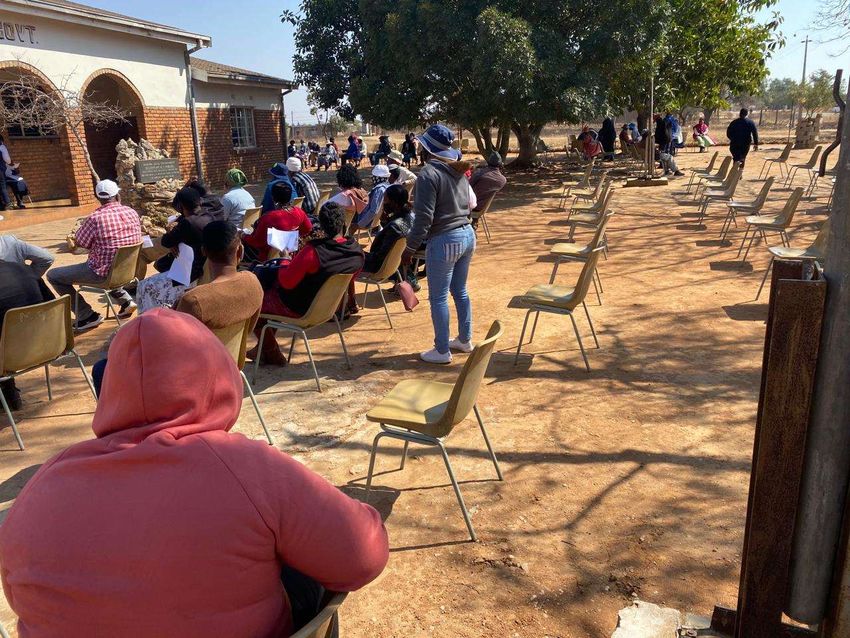
Overview

•   Planning and co-ordination
•   Phase 1 implementation and lessons
•   Phase 2 & 3 implementation
•   Social mobilization & demand creation
•   Registration and vaccine coverage
•   Expansion plan
•   Challenges and success factors

                                            2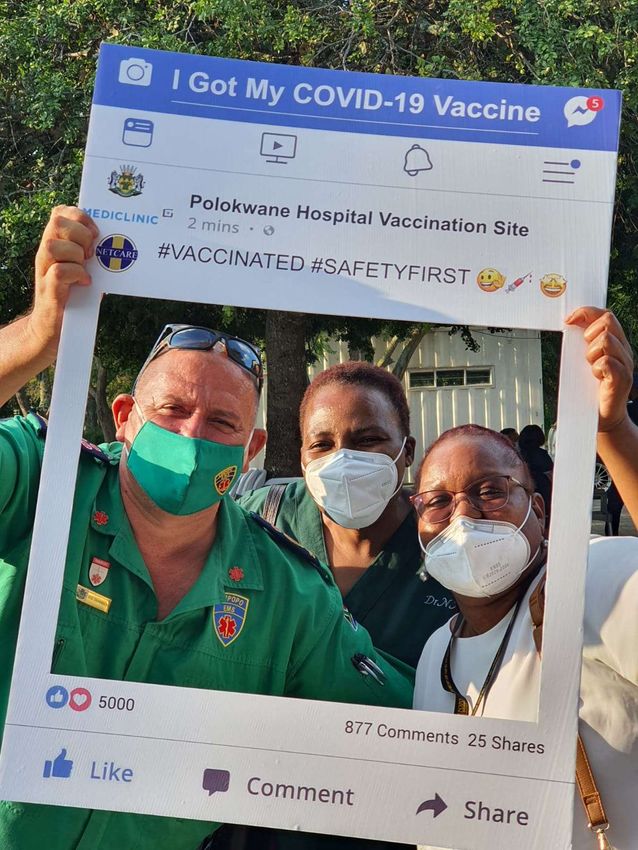
RULE OF ONE, KISS, BE IN LIMPOPO
• We do not have unlimited resources do more with less
• Budget cuts, COVID-19 budget essentially from ES
• Instruction to TWG
RULE OF ONE
KISS (Keep it simple stupid)
Know your context
DISCLAIMER
THIS SITUATION IS RAPIDLY EVOLVING
The response will evolve according to situation
3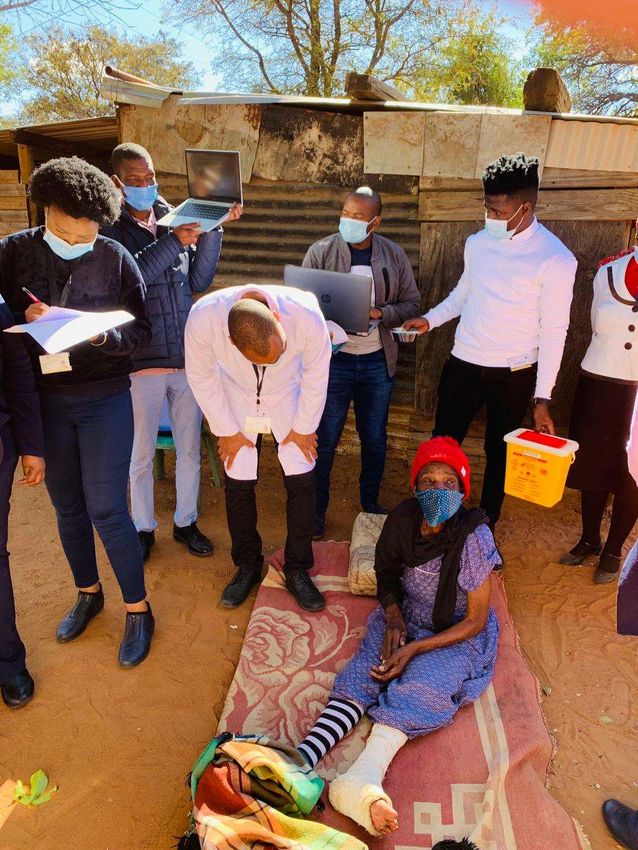
Vaccine Delivery Platform

                            4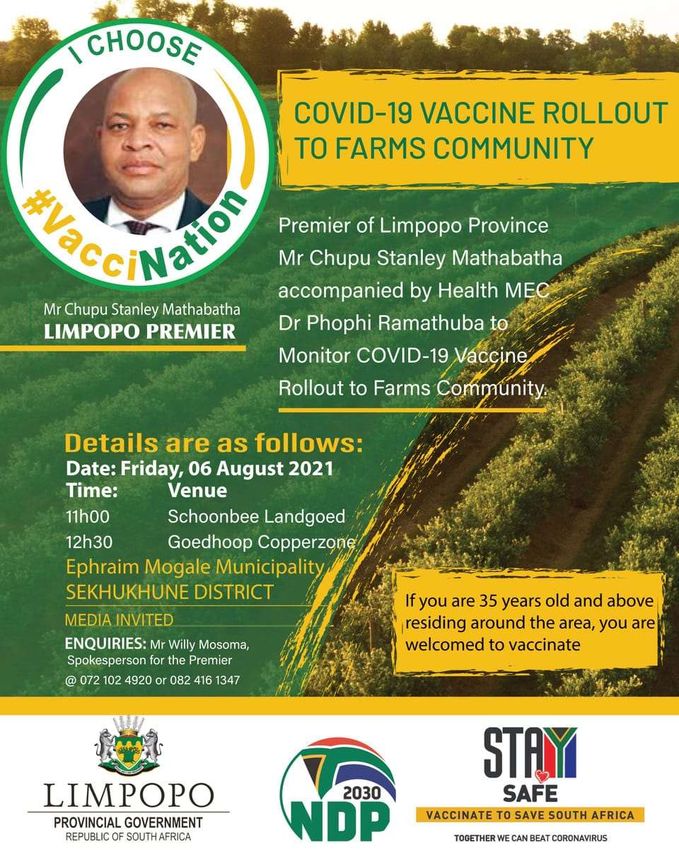
Vaccine Delivery Platform: starting point
• Hub and spoke method
  – Hospital 37
  (specialised hospitals excluded)
     • Hospital Staff
                                                                               Mobile clinic

  – PHC Facilities: fixed x 481
     • 109 PHC mobile clinic teams           Mobile clinic                     PHC

       (2720 visiting points)
                                                              PHC
     • PHC/ district programme staff                                     HOSPITAL
  – Total of 581 fixed existing                                                      PHC
    facilities as delivery platform
  – Total of 2720 existing mobile                                    PHC
                                                                                               Mobile clinic

    clinic visiting points
                                                             Mobile clinic

                Possibilities: 3301 known,
                existing points of contact

                                                                                                               5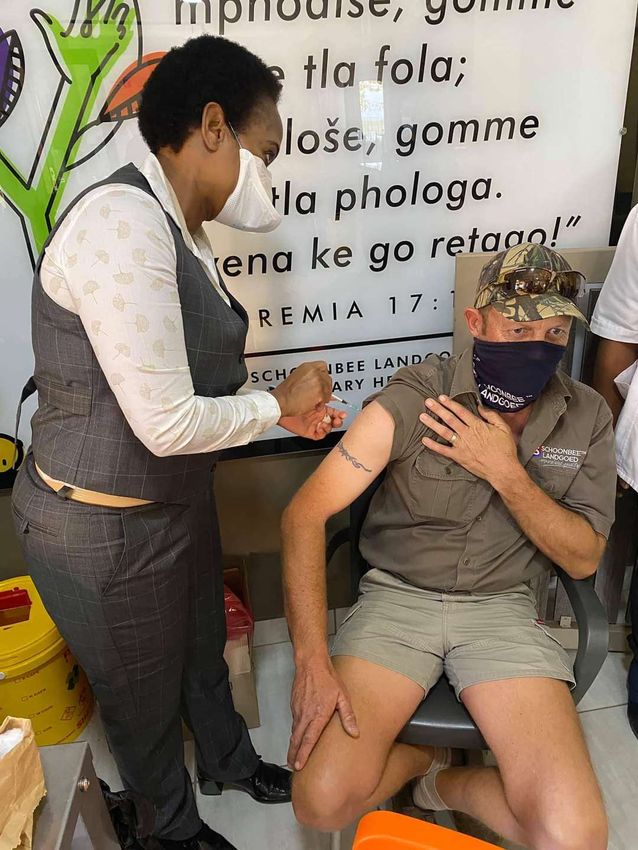
Human Resources Assumptions
                       Key assumptions Assumptions
Number of              • 169 vaccinators identified as available from ISHP and mobile clinics ( no hospital
vaccinators              disturbance)
available

Vaccination capacity   Assuming one person can vaccinate min 50 people                = 8450 per day
                       50 persons per vaccinator X total number of vaccinators
                       (169)                                                          = 8450 x 5 days = 42250 per
                                                                                      week

Implementation risk    • We need to factor-in various leaves of absence (including quarantine and Isolation ),
                       • a buffer HR must be available
                       • i.e. need a pool of 300 vaccinators , training implications

                                                                                                                    6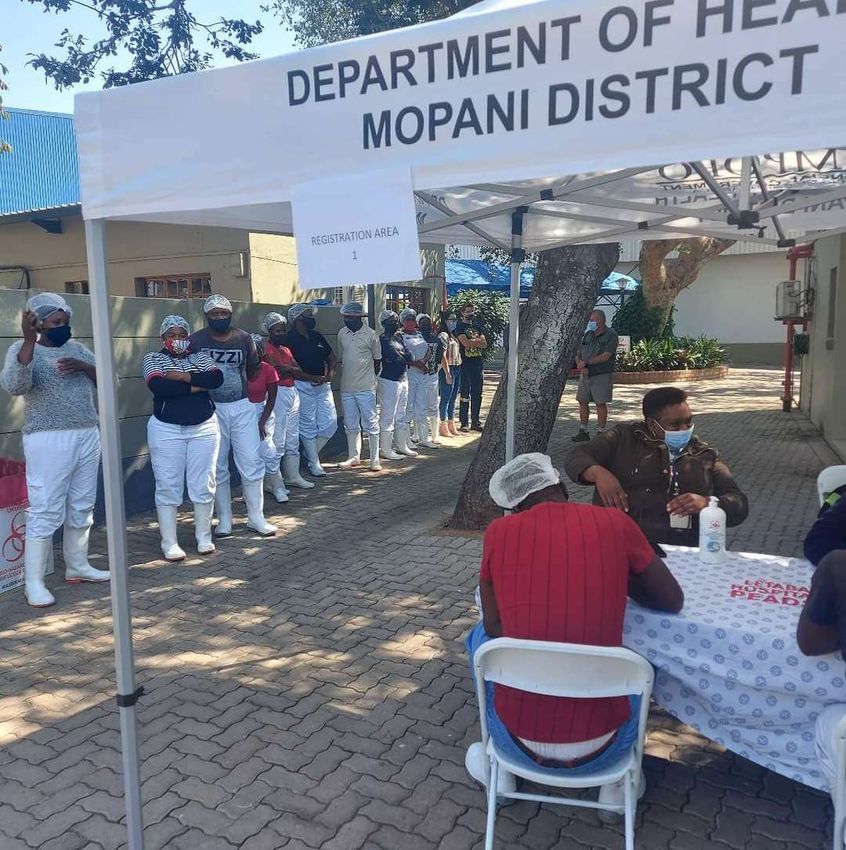
PHASE 1: COVID 19 Vaccination strategy

                                         7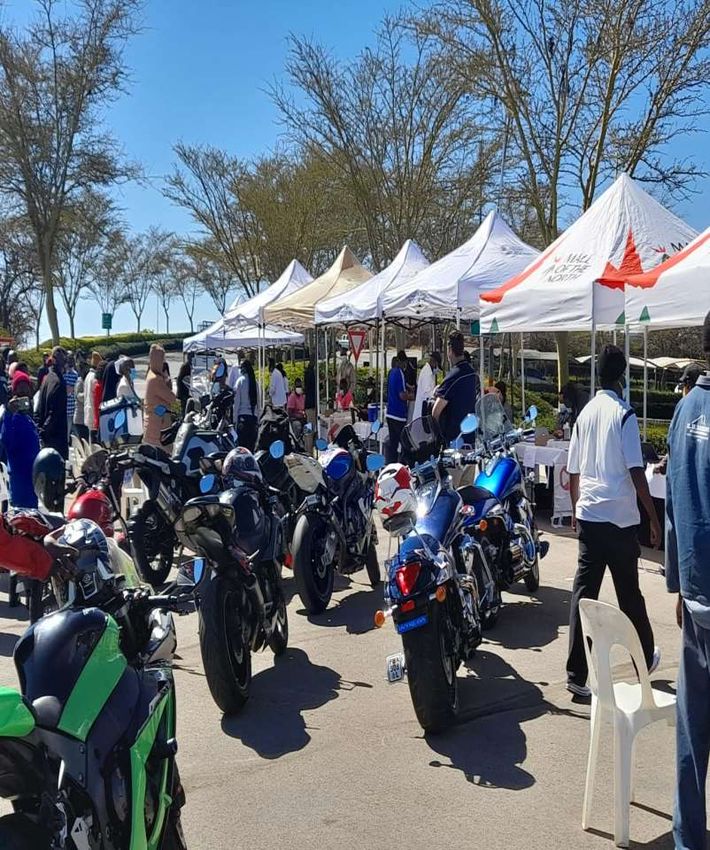
Phase 1: Scenarios
                       Scenario Scenario Scenario Scenario
                          1        2        3        4
Total                   50 000
                                 50 000   50 000   50 000
population
Target per
             2500                             5000               7500              10 000
day
Number of
              50                               100                150                 200
vaccinators
Vaccination
            20 days                         10 days             7 days             5 days
period
• This shows that the province has capacity to vaccinate phase 1 population within a period
  of 2-3 week with current vaccinators
                                                                                              8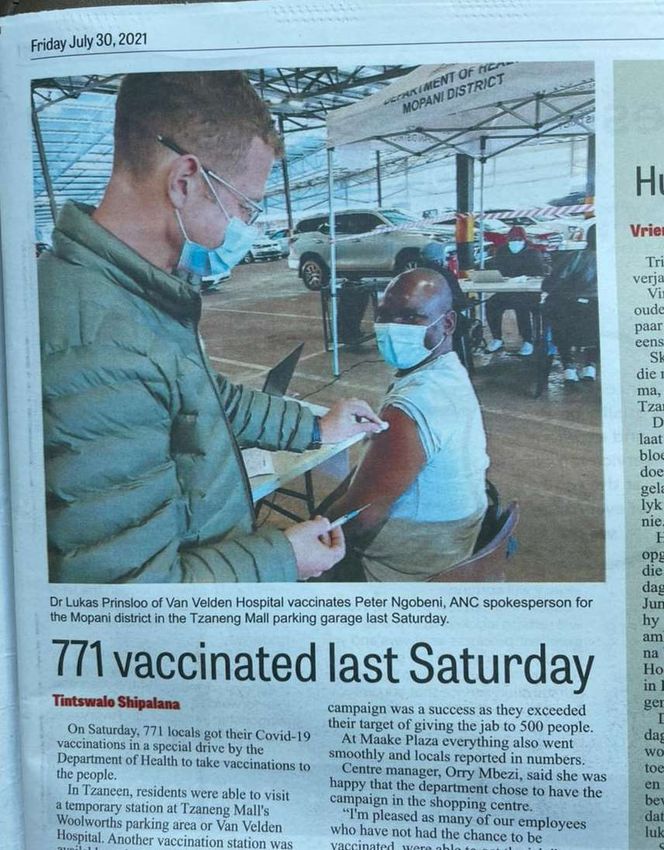
Phase 1 Vaccination Platform
     Hospital Based Vaccination sites                                              Approach
                                                                                   – The vaccination of hospital-based health care workers will
      • Hospital staff                                                               be provided through the Occupational Health Care
      • EMS                                                                          Services/Units.
      • Forensic pathology staff                                                   – Vaccine delivered to the hospital –stored in hospital
                                                                                     pharmacy in accordance with manufacturer’s cold chain
     Mobile Vaccination Outreach teams                                               instructions
                                                                                   – Vaccinators may be occupational health, IPC or other staff
      • PHC Staff                                                                    members with experience in vaccination.
      • Mobile clinic
      • Nursing colleges
      • Malaria institute
      • District and provincial office
      • Depot

Approach
– Each hospital will partner with PHC to establish vaccination outreach teams which will
  cover each geographical service area.
– These teams will develop a schedule and move from facility to facility vaccinating all
  eligible health care workers.
– All hospital will also be vaccination training centres (in-service) for all the PHCs in
  the catchment areas
                                                                                                                                             9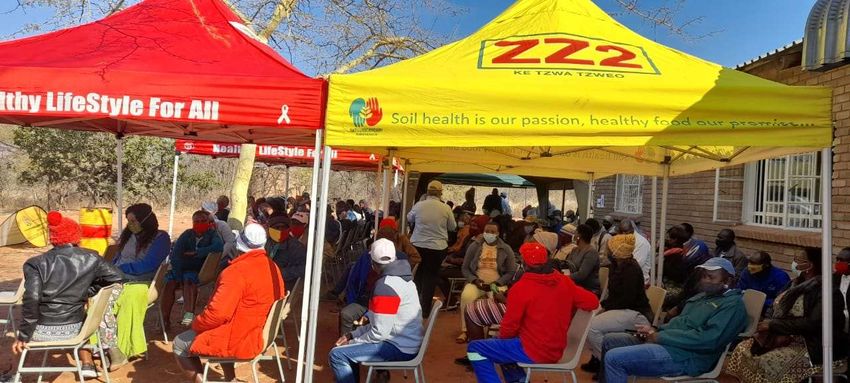
Well that was our plan anyway

                                10
ASTRA-Z DIES, SISONKE IS BORN
• Vaccination planned to be implemented in phases as the vaccines becomes available
A total 300 000 to 500 000 doses for phase 1 expected in 2 months according to NDOH
Initial 80 000 doses with 18 vaccination sites selected across the country focussing on large
hospitals
For LDOH implementation is planned for two vaccination sites Pietersburg and Mankweng
hospital with 7160 doses expected for the week (17 February 2021).
• Needless to say we were not happy with this arrangement:
– 6 weeks to vaccinate HCW population vs. 10 days per LDOH plans
– 2 sites (both in Polokwane area) vs 37 sites logistics and access for distant
employees (discrimination by geography)
• no access to EVDS and Sisonke database
– Not able to register employees who met criteria (patient facing, specimen facing)
– Vouchers not issued
– Insisted on access to our HIS team
– NHC and SAMRC engaged LDOH expansion
11SISONKE expansion Approach
• Expand the implementation from one district at a time every 7 to 10 days
• Each district: one main vaccination site in a centrally located hospital and vaccination
outreach teams ( 1 -3 teams per district) modified hub & spoke
– Teams will outreach to a district hospital per pre-determined schedule (see vaccination
slides)
– the cycle repeats itself after all districts are completed
• Outreach teams will move to district hospitals for max 2 days at a time
• Each site (main /outreach) will vaccinate its drainage area
– PHC, EMS, Malaria, Nursing College, NHLS, district/ provincial offices
– Private HCW will be vaccinated at the nearest public hospitals if they choose to do so
• All district will be prepared one week prior vaccination commencement in terms of:
– EVDS registration and issuing of Sisonke vouchers
– Vaccination site preparedness by benchmarking with current vaccination sites
– HR requirements
– IT and EVDS requirements
• Advance teams (IT, HIO, EPI, PHC, pharma)
• Model operated from March till April 2021
12Lessons from SISONKE
• Hub and spoke practice does
work
• Fast moving, adaptation
necessary for success
• We made it fun for staff:
increased uptake 33 227
vaccinated (15 May 2021)
• Fight for what will work for you
• But took 12 weeks !!!!!
– not allowed to use our
pharmacists
– Resistant to the decentralization
– Vs DBE: 2 days = 30k vaccinated
13Application to DBE
• Total population provided: 48K
• Available days (national
programme):
16 consecutive calendar days
• Provincial Decision: sector
days Fridays (? Saturdays)
• Thus 2-4 vaccination days
• i.e. scenario 4 therefore
Augment vaccinators
Increase target/ day
= 37 sites, min 10 stations each
Result: 30K vaccinated in 2 days
14Phase 2 & 3: vaccination strategy
Fixed Fixed
Outreach
facilities mobile
Occupational
based
Mobile Community
Hospitals
clinics based
Fixed
outreach
High transit
zones
PHC School Sector based
( clinics, CHC) health
Mass
campaign
Qualifying age criteria expansion
15Social Mobilisation and Demand Creation approach
Vaccinators Support
Political Leadership
Optimal support for the
High level political support
implementers with training
through the OTP and MEC Heath
and resources with clear
to provide information and
messages, including ability
improve acceptance and uptake
to sell vaccination to clients
Vaccine Dashboard Social Mobilisation Make the vaccine
Communication accessible
Use of leaders, influencers as much as possible, take
Use of up-to-date data to and mobilisers in different the vaccine to the people
monitor implementation, to communities and settings to while ensuring sustainability
encourage the implementers create demand and improve through broad platform of
and update the public acceptance and uptake fixed sites
16Vaccine enrollment, EVDS registration
• 3 pronged
– Self registration
– Family assisted registration
– CHW/ CCG assisted registration
17Rule of one
04 May 2021
What one CHW can do:
• 9000 CHWs
• 9000 cell phones
• Register one person/ day= 9000
registrations/ day
• 45 000 people per 5 days
• 42 282 increase in 3 days
07 May 2021
18Leaders, Influencers
Both ZCC church leaders in one
place at same time…. Message:
“together we can conquer this Covid”
19Communicating schedules and sites
20Occupation based
21Sports &Recreation groups
22Community outreach: home visits
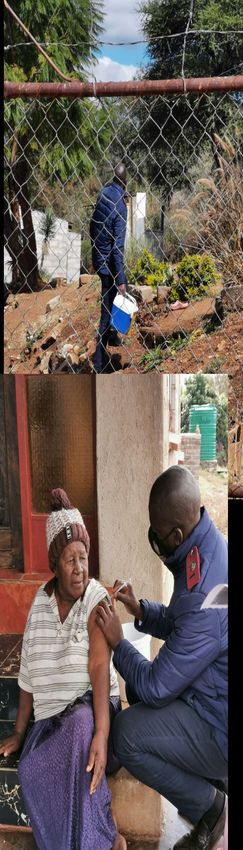
23Community outreach: other
e.g. tribal office, drive throughs, community halls, stadium etc
24High transit zones
e.g. malls, taxi ranks, sassa paypoints
25Expansion plans
• Fixed outreach: Universities, TVETs,
• All 481 PHC facilities as primary sites (388/481 licenses received)
• All mobile clinics as fixed outreach sites
• Find the missing
2627
Registration coverage
                                          as at 23 August 2021

                        60+ years                     50-59 years                    35-49 years
District
             Population Registered    %     Population Registered   %     Population Registered    %

Capricorn     141 191      112193    79%     100 376       55089    55%    228 213       82704     36%

Mopani        106 890      92293     86%     91 809        53795    59%    216 770       83594     39%

Sekhukhune    90 864       91394     101%    66 660        39 388   59%    200 615       55231     28%

Vhembe        128 459      108381    84%     107 322       52197    49%     264 962      78046     29%

Waterberg     78 472       55416     71%     65 165        30239    46%    156 119       47881     31%

                                                                                                         28
Vaccine coverage 1 st dose Pfizer* and J&J
as at 23 August 2021
60+ years 50-59 years 35-49 years
District
Pop Vaccinated % Pop Vaccinated % Pop Vaccinated %
Capricorn 141 191 94 582 67% 100 376 34 468 35% 228 213 19 480 9%
Mopani 106 890 75 421 71% 91 809 36 382 40% 216 770 22621 10%
Sekhukhune 90 864 63 829 70% 66 660 16 870 25% 200 615 6931 3%
Vhembe 128 459 84 183 66% 107 322 35 558 33% 264 962 20 330 8%
Waterberg 78 472 39 590 50% 65 165 28 281 43% 156 119 10 516 7%
Limpopo 545 876 357 605 66% 431 332 151 559 35% 1 066 679 79 878 7%
29Health Care Workers
as at 25 August 2021
Phase 1B
District Sisonke Total
1st Dose 2nd Dose J&J Fully vaccinated
HCWs
Vhembe 5551 4751 3591 119 3710
Sekhukhune 5530 2262 2636 40 2676
Capricorn 9141 2872 2049 501 2550
Waterberg 5116 1679 1347 45 1392
Mopani 6014 1881 1840 77 1917
Total 33 326 13 445 11 463 782 12 245
30Challenges
• Vaccine supply vs demand vs capacity
• Internet connectivity
• Availability of tools e.g. laptops, cell phones, tablets , WHO approved
cooler boxes , vaccine fridges
• EVDS vaccination capturing portal not available on cell phone
platform
• HR recruitment vs contract periods
• Vaccine hesitancy
• Appointment vs walk-in service
31Success factors
• Team work and dedication ( working from the heart)
• Clear communication strategy and social mobilisation approach
• Effective communication to stakeholders including beneficiaries ( sites opened
and procedure to access vaccines)
• Strategic enrolment and recruitment
• Coordinated and efficient hands-on management & site management
• Management of Cold chain and vaccine stock by in-house Pharmacists
• Good coordination between PHC ,Hospital and districts teams
• Ability to respond quickly on the ground/ remaining flexible
• Supportive Strategic leadership at provincial and district level
• Donations from various stakeholders
• Adapt, innovate
• Bite size targets one person: small target , one place: small target add them
all together big results
• Have a willing and energetic champion / face of campaign
32Thank you Dr Muthei Dombo DDG: Health Care Services Muthei.dombo@dhsd.limpopo.gov.za www.doh.limpopo.gov.za
You can also read


