Minnesota Farm Bureau Federation Young Farmers & Ranchers 2019 Collegiate Discussion Meet Manual - Rackcdn.com
←
→
Page content transcription
If your browser does not render page correctly, please read the page content below
Minnesota Farm Bureau Federation
      Young Farmers & Ranchers
2019 Collegiate Discussion Meet Manual

                          Revised 7/2019
American Farm Bureau Federation
              Young Farmers & Ranchers Collegiate Discussion Meet Manual

                                   Table of Contents

Competition Objectives                                                2
Background Information                                                3
Eligibility                                                           4
Helpful Hints for Competitors                                         5
Competition Format                                                    6
Competition Structure                                                 7
       Orientations                                                   7
       Competition                                                    7
       Room Layout                                                    8
       Competition Flow                                               8
Roles and Responsibilities of Competition Facilitators                9
       Collegiate Discussion Meet Chair Duties                        9
       Room Chair Duties                                              9
       Moderator Duties                                               9
       Timekeeper Duties                                              10
       Judge Duties                                                   10
Scoring                                                               11
       Round Robins                                                   11
       Sweet Sixteen                                                  11
Discussion Meet Rating Sheet                                          12
Appendix A                                                            13
Appendix B                                                            14

                                            1
Competition Objectives

As a leadership training and self-improvement activity, the Collegiate Discussion Meet experience will:

       •   Stimulate logical thinking and a desire for accurate information;
       •   Promote a concise and direct manner of speaking;
       •   Improve the ability to listen;
       •   Aid the participant in overcoming timidity or stage fright;
       •   Assist the individual in the practice of giving and receiving criticism in a helpful manner;
       •   Teach the value of compromise; and
       •   Develop leaders for effective problem solving through group discussion.

                                                      2
Background Information
The Collegiate Discussion Meet is a competition promoted by the Minnesota Farm Bureau Federation
(MFBF) Young Farmers & Ranchers (YF&R) Committee.
Farm Bureau’s strength depends on its members’ ability to analyze agricultural issues and decide on
solutions that best meet their needs. The competition is designed to simulate a committee meeting where
discussion and active participation are expected from each committee member.
Participants build basic discussion skills, develop a keen understanding of important agricultural issues
and explore how groups can pool knowledge to reach consensus and solve problems.
A successful participant is a productive thinker rather than an emotional persuader. He/she will assist
the group in creating ways to implement the solutions discussed and highlight Farm Bureau’s
involvement in those actions/steps.
The participants will discuss pre-selected topics with four bases for the general discussion:
• Cooperation
• Constructive Criticism
• Problem Solving
• Communication
The Minnesota Farm Bureaus provides, as part of the state recognition award, $500 and an expenses-paid
trip to the MFBF Collegiate Discussion Meet competition to be held in 2019 in Milwaukee, WI to the state
winner. The runner-up will receive $250.00. At the college level, winners will receive $200 and the
runner-up $100.
The AFBF YF&R Committee and the AFBF Organization Department will coordinate the program at the
national level.
Special Thank You to our sponsor:
3Eligibility
• Applicant shall be a member of a recognized collegiate Farm Bureau chapter or club as set up by a
state Farm Bureau and be between the ages of 18 and 35. The individual shall have reached
his/her 18th birthday at the time he/she qualifies for the national competition and shall not have
reached his/her 36th birthday by the last day of March 31, 2020.
• Applicant must be an undergraduate college student in a state with a recognized YF&R program.
Undergraduate status is determined at the time the applicant qualifies for the national
competition.
• Applicant shall not be enrolled in a graduate-level program at the time of his or her state
Collegiate Discussion Meet competition.
• Applicant must display a sincere interest in the agricultural industry.
• Applicant may only compete in one national YF&R Competition per year.
• Past and present members of the MFBF Young Farmers & Ranchers Committee and/or their
spouse/spousal-equivalent are not eligible to compete.
• Past state YF&R Collegiate Discussion Meet winners and/or previous MFBF Collegiate Discussion
Meet competitors are not eligible to compete.
• Past state YF&R Discussion Meet winners and/or previous MFBF Discussion Meet competitors are
not eligible to compete.
• Current employees of county, state and/or American Farm Bureaus and their affiliates are not
eligible to compete. An affiliate is defined as an entity owned or controlled in whole or in part by
another entity through, for example, ownership (including partial ownership) or positions on the
board of directors.
• Professional speakers are not eligible to compete. Professional speakers are those who have
received a fee, royalty or honorarium for speaking (i.e., paid speaking appearances or speaking
engagements) within 24 months prior to this annual competition. This excludes reimbursement
for travel or expenses attendant to the appearance.
4Helpful Hints for Competitors
• Study as much material as possible relating to the overall topic. Sources: Internet; library;
newspapers; magazines; Farm Bureau policies; county, state and American Farm Bureau
publications; and conversations with experts or knowledgeable people.
• Remember this is a discussion, not a debate.
• Be prepared to ask questions, state facts and opinions, and urge others to be specific.
• Be aware of the audience, but generally address the panel. Speak loudly enough to be heard by the
whole audience.
• Participate whenever your contribution will further the discussion. Do not monopolize the
discussion.
• The discussion should not be “conversation” or aimless talk, nor should you take the role of a
persuasive speaker. Try to cooperatively shed light on the problem and tentatively retain a flexible
position.
• This is not a panel symposium wherein each participant, in turn, makes a presentation, with the
moderator ending the session with a summary. Rather, it is an exercise in cooperative problem
solving, with the questions, answers and statements coming from any person at any time. The
moderator plays an inactive role during the discussion.
• Make notes of key points as the discussion proceeds for use in your summary statement.
• Use the one minute of quiet time to organize your closing statement.
• Stand and make your closing statement to the audience. Use accepted speech techniques and stay
within the time limit.
5Competition Format
1. All competition facilitators and competitors will meet in the pre-assigned competition room 15
minutes prior to the start of the competition to receive last minute comments by the room chair.
The competition facilitators are MFBF-designated room chairs and moderators.
2. Competitors may not take prepared notes in any form with them to the competition table. After all
competitors have been introduced, notes may be written on the paper provided. If a note is brought
to the table and is noticed by the competition facilitator, there will be a disqualification called at the
end of the round by the Collegiate Discussion Meet chair, the MFBF YF&R Committee chair and/or
the MFBF coordinator.
3. Collegiate Discussion Meet questions will not be provided at the competition table during national
level rounds of competition.
4. The room chair will call the meeting to order, announce the topic to be discussed and introduce the
timekeeper and moderator. Any competitor not present at this time will be disqualified.
5. The moderator will introduce the competitors and re-announce the topic to be discussed. He/she
will give each of the competitors, in voluntary order, the opportunity to make a 30-second opening
statement directed to the audience.
6. The timekeeper will flash a red time card indicating when 30 seconds have elapsed. Judges may
subtract points at their discretion for competitors who abuse the time limit.
7. The moderator will then indicate the opportunity for open discussion, which will continue for a
total of 20 minutes. The discussion should be directed to the fellow competitors.
8. The timekeeper will indicate to the moderator when five minutes of open discussion time remains.
If the discussion is lagging, the moderator may close the discussion at this time.
9. The timekeeper will indicate to the moderator when 20 minutes have elapsed with a red time card.
The moderator will call for open discussion to stop and for one minute of quiet time, allowing the
competitors to compose a closing statement.
10. The moderator will give each of the competitors, in voluntary order, the opportunity to make a
one-minute closing statement directed to the audience.
11. The moderator will recognize the judges and request them to leave the room with the room chair to
finalize the tabulation of their score sheets. Judges are not to confer with each other until the room
chair has collected their tabulated score sheets.
12. The next round topic to be discussed will be announced (with the exception of the Final Four
question). The Final Four question will be announced at the official Final Four Announcement.
13. The moderator will thank the panel and ask the audience to recognize their efforts. He/she may
then ask the competitors to share their education and background, any personal agricultural
background and future aspirations with the audience.
6Competition Structure
Orientations
• Collegiate Discussion Meet Competitor Orientation
a) Orientation will be held prior to the first Round Robin.
b) All participants are required to attend; roll call will be taken.
c) The opening round topic will be announced.
• The first Round Robin topic will be announced now, and again in the competition room by
the room chair 10 minutes prior to start of the round.
• Each subsequent round topic will be announced at the close of the prior round, with the
exception of the final question. The Final Four question will be announced at the official
Final Four Announcement.
d) Room assignments and locations will be distributed.
• Judge Orientation
a) Orientation will be held prior to the first Round Robin.
b) All judges are required to attend; roll call will be taken.
c) Judges’ duties will be reviewed (see Judge Duties) and any announcements will be made.
d) Competition timing sequences will be reviewed.
e) There will be time for judges to ask questions.
f) Room assignments and locations will be distributed.
• Timekeeper Orientation
a) Orientation will be held prior to the first Round Robin.
b) All timekeepers are required to attend; roll call will be taken.
c) Room assignments and locations will be distributed.
d) Timekeeper duties will be reviewed (see Timekeeper Duties) and any announcements will be
made.
Competition
• All participants will compete in the first two rounds of the competition, known as “Round Robins.”
Each Round Robin room will have four to six competitors. The top 16 competitors based on
judges’ scores from the Round Robins will be put into a Sweet Sixteen round. The Sweet Sixteen
round will have four rooms with four competitors each, with the top competitor in each room
moving on to the final round. The four finalists will compete in the Final Four round to determine
the winner.
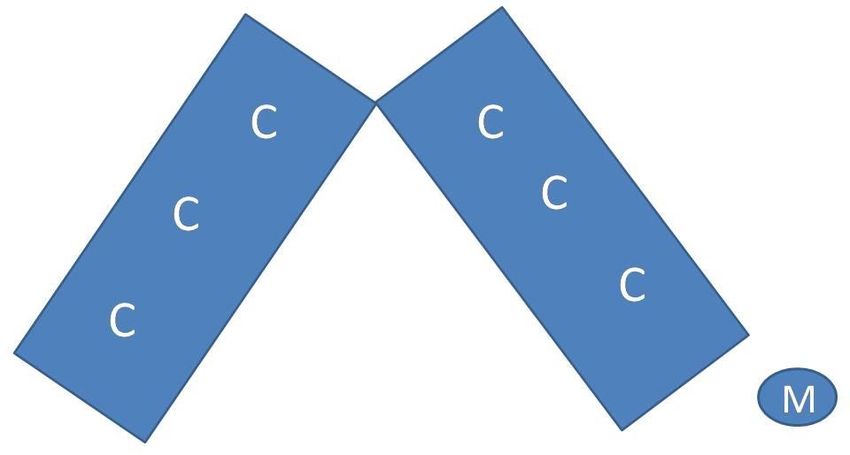
• The physical arrangements of the Collegiate Discussion Meet rooms should provide for two tables
at the front of the room facing each other and the audience. Half the participants should be seated
at each table with the moderator on the side. Name cards identifying competitors should be easily
visible. Cards should show only the competitor’s name, not his or her state.
7Room Layout
xJxxxxxxxxT xxxxxxxxxx
xxxxxxxxxxx x xx x x x x J x x x
xxxxxxxJxx xxxxxxxxxx
M = Moderator C = Competitor J = Judge T = Timer X = Audience
Flow of Competition
Generally speaking, the discussion should follow these steps:
1. State the problem or need.
2. Explore, define and understand the problem or need.
3. Identify causes of the problem or need.
4. Elaborate all possible alternative solutions.
5. Evaluate and compare alternatives.
6. Test and project what appears to be the best solution(s).
7. Create ways to implement the solution(s) discussed and highlight Farm Bureau’s involvement in
those actions/steps.
8Facilitator’s Roles and Responsibilities
1. Collegiate Discussion Meet Chair Duties
a) Familiarize yourself with the MFBF YF&R Collegiate Discussion Meet Manual.
b) Prior to orientations, determine the sequence of topics to be used for the competition.
c) Conduct the Collegiate Discussion Meet Competitor Orientation session.
1. Make introductions.
2. Give a brief explanation of Collegiate Discussion Meet competition procedures.
3. Distribute room assignments and locations.
4. Allow time for questions.
5. Announce the first round topic during orientation.
d) Settle any and all disputes during the competition.
2. Room Chair Duties (may at times also serve jointly with Moderator Duties)
a) Familiarize yourself with the MFBF YF&R Collegiate Discussion Meet Manual.
b) Review the Tally Sheet. (see Appendix A & B)
c) Ensure all judges are present and report any changes to the moderator.
d) Meet in the assigned room with competitors, judges, moderator and timekeeper to answer any
questions they may have.
e) Call the competition to order at the appointed time. Introduce the moderator and announce
the topic to be discussed.
f) Following the discussion, introduce and thank the judges.
g) Escort the judges to the judges’ tabulating room at the end of the competition and allow them
to finish tabulating and ranking the participants. Assist with the final ranking if necessary.
h) Ensure each competitor has been ranked in all sections of the rating sheet.
i) Supervise tiebreakers. (see Scoring)
3. Moderator Duties (may at times also serve jointly with Room Chair Duties)
a) Familiarize yourself with the MFBF YF&R Collegiate Discussion Meet Manual.
b) Become acquainted with the competitors.
c) Open the competition with the following to ensure that all understand the format:
1. Welcome the audience.
2. Introduce the participants from left-to-right by name.
3. Announce the topic to be discussed.
4. Ask for the competitors to make a 30-second opening statement, in voluntary order.
5. After the last opening statement, say “You have heard the opening statements. You may
proceed with the discussion.”
6. End the discussion at timekeeper’s signal.
7. Call for one minute of quiet time for the competitors to prepare their closing statements.
8. Ask for the competitors to make a one-minute closing statement, in a voluntary order.
9. Thank the competitors.
10. Dismiss the room chair and judges for tabulation.
11. Announce the topic for the next round (with the exception of the Final Four question).
12. Give the competitors the opportunity to introduce themselves and share their education
and background, any personal agricultural background and future aspirations.
13. Announce the time and location(s) for the next round.
Note: The moderator should not comment on the topic or encourage discussion. This is the
responsibility of the competitors. However, if the discussion seems to stall, the moderator
should use his/her best judgment to end the discussion when the timekeeper indicates five
minutes remain in open discussion.
94. Timekeeper Duties
a) Familiarize yourself with the MFBF YF&R Collegiate Discussion Meet Manual.
b) Go to your assigned competition room 15 minutes prior to the scheduled starting time.
c) Meet with the room chair, moderator and competitors for last-minute questions.
d) Make sure to be seated in the front row near the center.
e) Indicate the following timing points to the moderator and competitors:
• The end of each 30-second opening statement (Time Elapsed – Red Card)
• Warning at 10 or 15 minutes (depends on size of competitors in room) of open discussion,
holding the card up until all competitors have noted the warning. (Five Minutes Remaining
– Yellow Card)
• The end of 15 or 20 minutes of open discussion (Time Elapsed – Red Card)
• The end of one minute of quiet time (Time Elapsed – Red Card)
• The end of each competitor’s one-minute closing statement (Time Elapsed – Red Card)
5. Judge Duties
a) Familiarize yourself with the MFBF YF&R Collegiate Discussion Meet Manual.
b) Review the discussion topics.
c) Review the Rating Sheet. (see page 12)
d) Attend the Judge Orientation session.
e) Go to your assigned room 15 minutes prior to the scheduled starting time.
• Final Four judges are not permitted to attend any preceding rounds.
f) Meet with the room chair and moderator to receive a list of competitors in your room.
g) Remain seated until your room chair calls for you to leave the room to do the final tabulating of
your score sheet.
h) Select winners. (see Scoring)
i) Judges should:
• List competitors on your Rating Sheet from left-to-right for ease in identification.
• Score competitors using the Rating Sheet.
• Total the scores.
o There is a total of 750 possible points.
• Determine and record competitor ranking and ensure there are no ties in raw score or
rank.
• Sign your Rating Sheet.
j) Judges should not:
• Sit near a fellow judge.
• Judge by applause.
• Confer with each other until all scores are tabulated.
10Scoring
The room chair will supervise the final tabulation by the judges. Judges will use the point system
indicated on the Rating Sheet to assist in selecting the winners. Each judge will be instructed to total
his/her Rating Sheet and rank the competitors. Each judge is to break ties that occur on his/her own
score sheet. The room chair will assist the judges in determining the final ranking of each round and the
final competition.
• The winner will be determined by judges’ ranking, and ties will be resolved before the judges are
dismissed.
o Ties will be broken at the end of each round by an automatic procedure using Problem
Solving and Implementation as the first tiebreaker, followed by Analysis of Topic and
Cooperative Attitude.
o In the event of an unresolvable tie between all three categories, total points from the
judges’ Rating Sheets will be used to resolve the tie. The room chair will assist with this
process.
• When possible, the above procedure should be conducted in a private room, with only the judges,
room chair and collegiate discussion meet chair present.
Round Robins
All contestants will compete in round robins. Prior to the competition, competitors will be placed in
rooms. After round one, competitors’ scores will be tallied, and they will be given new room assignments
according to their rank. For round two, each room will have a 1st, 2nd, 3rd, 4th, 5th and 6th ranked
competitor (this number will vary based on available rooms and participation numbers). Contestants will
compete in the second round, and their scores will be tallied again. Cumulative scores will be figured for
advancement in all contests.
1112
Tie Breaker                                                                                      Appendix A
                                         MFBF Collegiate Discussion Meet
                                               Official Tally Sheet
                                          Round 1 ( )         Round 2 ( )

Competitors Final Ranking

(In Seating Order)                     Judge 1        Judge 2      Judge 3          Total         Final Rank

Brutus Buckeye                             1              2            1             4                  1
Herbie Husker                              2              3            2             7
Goldy Gopher                               3              1            3             7
Nittany Nellie                             4              4            4             12                 4
*You have a 1st and 4th place, but a tie for 2nd so move to the first tie breaker

Competitors                                Tie Breaker #1 – Problem Solving and Implementation

(In Seating Order)                     Judge 1        Judge 2      Judge 3          Total         Final Rank

Brutus Buckeye                             1              2            1             4                  1
Herbie Husker                              2              3            2             7
Goldy Gopher                               3              1            3             7
Nittany Nellie                             4              4            4             12                 4
*You still have a tie. Move to   2nd   tie breaker

Competitors                                Tie Breaker #2 – Analysis of Topic

(In Seating Order)                     Judge 1        Judge 2      Judge 3          Total         Final Rank

Brutus Buckeye                             1              2            1             4                  1
Herbie Husker                              3              1            3             7
Goldy Gopher                               2              3            2             7
Nittany Nellie                             4              4            4             12                 4
*You still have a tie. Move to 3rd tie breaker

Competitors                                Tie Breaker #3 – Cooperative Attitude

(In Seating Order)                     Judge 1        Judge 2      Judge 3          Total         Final Rank

Brutus Buckeye                             2              1            1             4                  1
Herbie Husker                              1              2            3             6                  2
Goldy Gopher                               3              3            2             8                  3
Nittany Nellie                             4              4            4             12                 4
*There is finally a final rank. You now have a 2nd and 3rd place. Remember the rankings that are clear in
the first box do not ever change, even if they were to fall from that rank in one of the tie breaker boxes.

                                                         13
Tie Breaker Appendix B
MFBF Discussion Meet
Official Tally Sheet
Round 1 ( ) Round 2 ( )
Competitors Final Ranking
(In Seating Order) Judge 1 Judge 2 Judge 3 Total Final Rank
Clark Kent 2 3 2 7 2
Peter Parker 3 2 4 9 3
Bruce Wayne 1 1 1 3 1
Tony Stark 4 4 3 11 4
*Technically, you do not need to go any further since you have a rank, but please fill out the entire form.
Competitors Tie Breaker #1 – Problem Solving and Implementation
(In Seating Order) Judge 1 Judge 2 Judge 3 Total Final Rank
Clark Kent 2 1 2 5 2
Peter Parker 4 3 3 10 3
Bruce Wayne 1 2 1 4 1
Tony Stark 3 4 4 11 4
Competitors Tie Breaker #2 – Analysis of Topic
(In Seating Order) Judge 1 Judge 2 Judge 3 Total Final Rank
Clark Kent 1 4 3 8 3
Peter Parker 4 3 4 11 4
Bruce Wayne 3 1 1 5 1
Tony Stark 2 2 2 6 2
*Even though the rank is different from the official rank, it does not change the official rank.
Competitors Tie Breaker #3 – Cooperative Attitude
(In Seating Order) Judge 1 Judge 2 Judge 3 Total Final Rank
Clark Kent 1 2 2 5 2
Peter Parker 3 4 3 10 3
Bruce Wayne 2 1 1 4 1
Tony Stark 4 3 4 11 4
1415
You can also read


