MODULE-LEVEL CONVERTERS FOR BIPV APPLICATIONS - S. RAVYTS, M. DALLA VECCHIA, G. VAN DEN BROECK AND J. DRIESEN - PV OPMAAT
←
→
Page content transcription
If your browser does not render page correctly, please read the page content below
Module-level Converters for BIPV Applications
  S. Ravyts, M. Dalla Vecchia, G. Van den Broeck and J. Driesen
                   KU Leuven – ESAT – ELECTA
                   Simon.ravyts@kuleuven.be
                (paper under revision @ Elsevier)
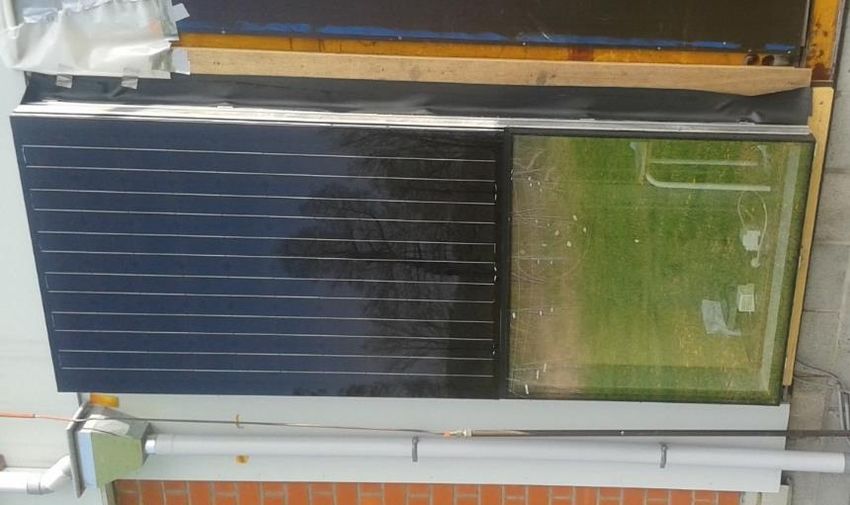
Example of a BIPV
Context - What is BIPV?                              module, developed by
                                                     KUL and imec

•     Building Integrated PhotoVoltaics
•     PV panels used as a building element
    • Combine multiple functions
•     Here, focus on façade BIPV, using ‘standard’
      modules

2018-09-21                                                                  2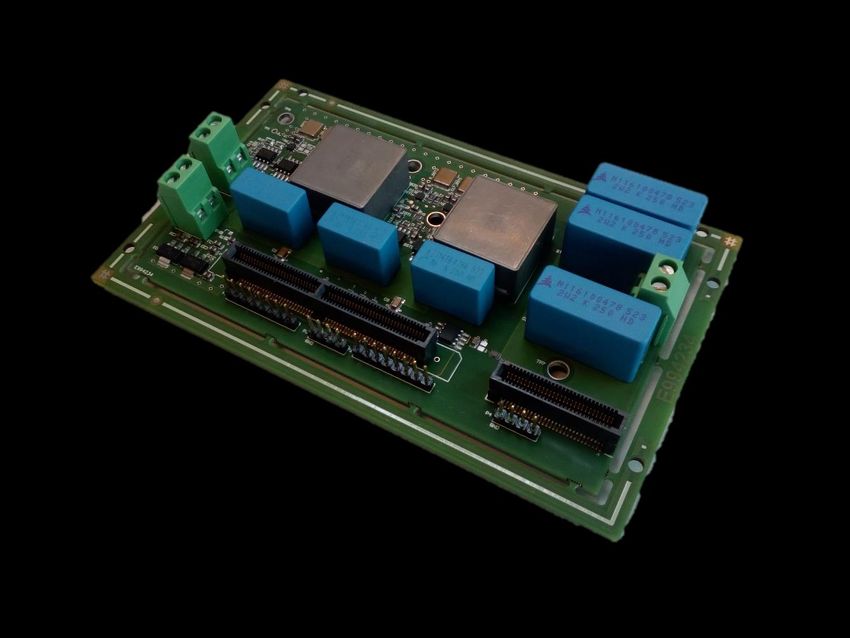
Research questions
•     What are the requirements of a BIPV installation from the electrical system point of
      view?
      • Translation of general ideas to concrete evaluation points

•     Is it beneficial to use LVDC grids for BIPV installations?
      • More than the advantages of LVDC in general, how does it combine with the
         requirements of a BIPV installation

•     Can we translate these requirements to practical converter design recommendations?
      Is there an impact from the grid configuration on the requirements?
      • Do we really need a transformer?

    2018-09-21                                                                               3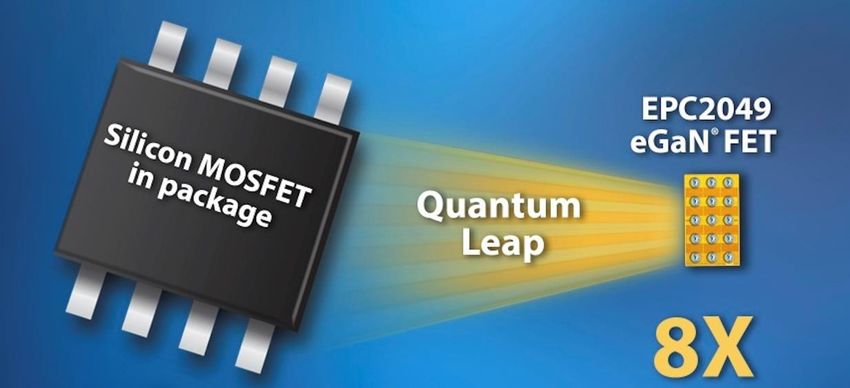
Outline

• Introduction
• System-level criteria for the electrical installation of BIPV
   • What is required?
• Electrical installation
   • Overview of possibilities
   • Why would we use LVDC?
• Converter requirements and challenges
• Conclusions

2018-09-21                                                        4
System-level criteria for the electrical installation of BIPV
• Important parameters from a system perspective
   • KPI’s

• Energy yield
   • Relates to the payback time ($$$)
   • Partial shading -> Mismatch losses
       • Installation dependent
       • Ranges from 5-25%
   • Limit this impact by doing a distributed MPPT
       • Per module and not per string

2018-09-21                                                      5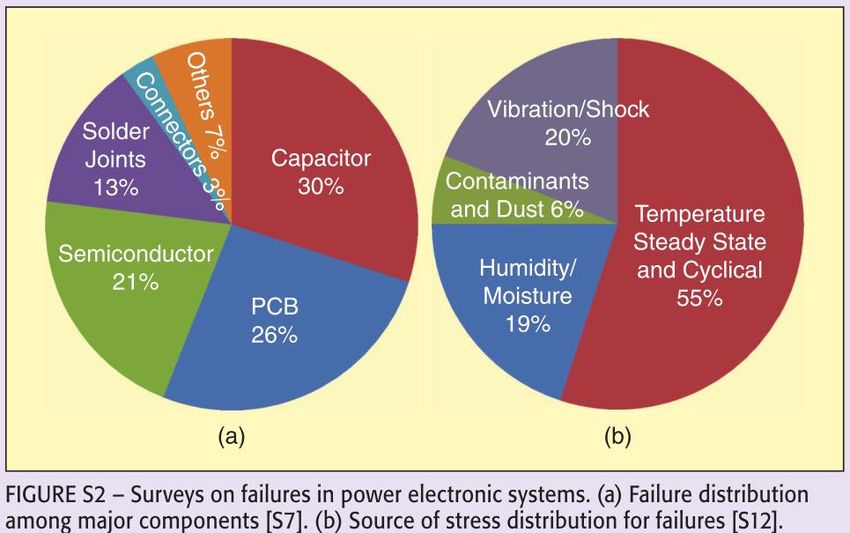
• Compatibility
   • Architectural freedom
       • Multiple types and sizes of PV
       • Electrical parameters can (strongly) differ
   • Electrical system needs to cope with these differences on the input of the
     converter
   • The ability to cope with different input voltages and currents

2018-09-21                                                                        6
• Engineering effort
  • A lot of engineering for designing the system
    requires man hours
  • High cost, should thus be minimal
  • Limit hours on the drawing table!

• Modularity
  • An easy practial installation method (plug & play)
  • Mechanical and electrical installation
    simultaneously
 2018-09-21                                              7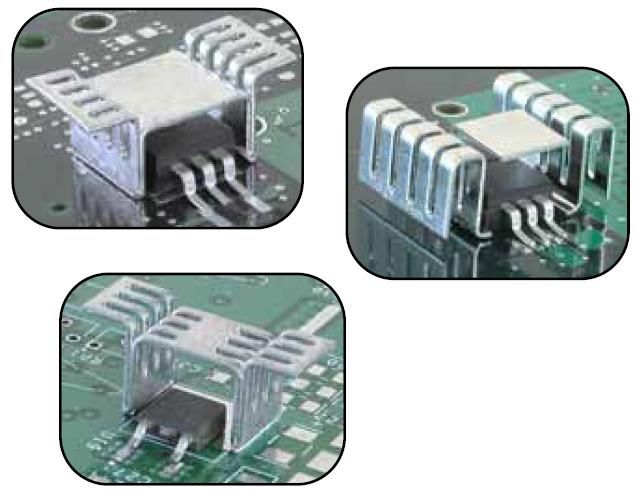
Source: bkprecision.desk.com

• Reliability/ lifetime
   • Lifetime of min. 30 years

   • AC grid disturbances
   • Surge voltage : One of the main causes of PV inverter failure

   • If converter in frame -> not reachable after installation!
   • High reliability and fault-tolerance required to avoid system shutdown

   • Automotive: 300000km @ average speed of 50km/h -> 6000h
   • PV: 25 years @ 8h/day -> 73000h
   • BIPV: (at least) 30 years @ 8h/day -> 87600h AND not-repairable
2018-09-21                                                                               8
• Monitoring
  • For analysis and performance assessment
  • For online reliability monitoring
      • Both PV and converter can be modeled

• Technical room space
  • Should be minimized in densely populated areas (high €/m²)
  • Depending on the chosen electrical system, also a strong increase in
    cables and technical shafts

 2018-09-21                                                                9
Electrical installation possibilities
• What systems are available?
  •   String inverter (a)
  •   Micro inverter (b)
  •   Series PO (c)
  •   Parallel PO (d)

  2018-09-21                            10
So is it beneficial to use LVDC in BIPV systems?

• LVDC general advantages
   • Fewer conversion steps lead to higher overall efficiency
   • More power can be transmitted over the same conductor cross-section
   • Power flows are actively controllable

• Specific advantage of LVDC in BIPV systems?
   • Fewer conversion steps (only DC/DC) also require fewer components
       • Inherently higher reliability
       • Increased compactness

2018-09-21                                                                 11
• Specific advantage of LVDC in BIPV systems?
• No energy buffering required!
• Both in- and output are DC powers
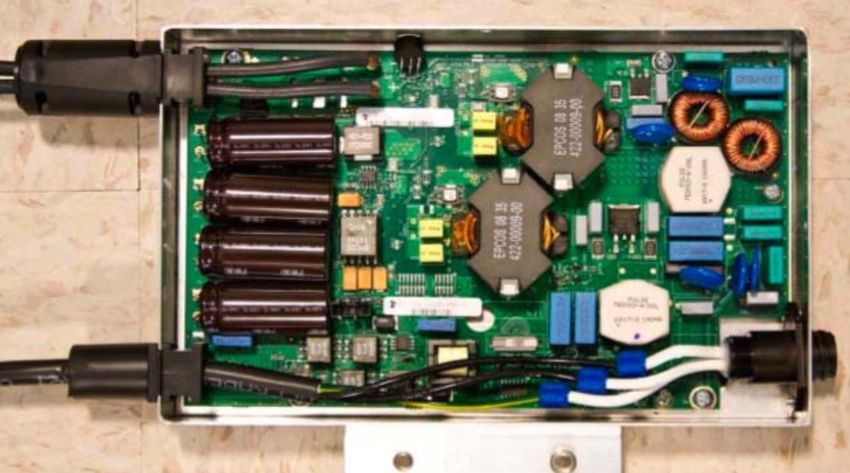
Inside of an Enphase µinverter
The big electrolytic
capacitors can be left out!
2018-09-21 Source picture: Evaluation of Electrolytic Capacitor Application in Enphase Microinverters, 2009 12• Specific advantage of LVDC in BIPV
systems?
• No damage due to 50 Hz thermal cycles
at junction
• Less thermal fatigue
• Again increased lifetime
2018-09-21 13Converter and grid requirements • Parallel power optimizer can tackle most requirements from a system point of view • Where are now the challenges in the design of this Module-Level Converter (MLC)? • Important assumption: Converter is not reachable after installation • Non-repairable system 2018-09-21 14
• Compactness
    • Flat, long design is preferred to fit in the frame
    • High switching frequencies help to make the passives smaller
        • Wide-bandgap (GaN/SiC)
    • Transformers/inductors vs capacitors
        • Reliability?

EPC commercial
2018-09-21                                                           15
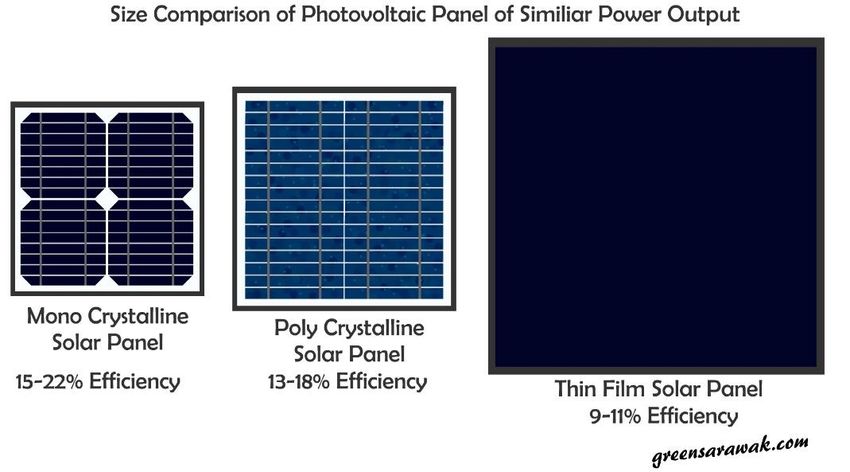
• Wide power and input voltage range
• Compatibility with mono-, poly-, film PV
• For a ‘standard’ surface or for all surfaces?
• Impacts I-V curve!
• ‘One-converter-fits-it-all’
• Impacts efficiency and compactness
Source: greensarawak.com
• Overdimensioning
• Even higher gains required for very low voltages
• Interleaved converters
• Maintain topology
• Change the amount of phases, based on power level (scalability)
• Modularity on converter level
2018-09-21 16• Temperature range and cooling
• High thermal stresses
• Peaks around 80°C (ambient!)
• Reduces efficiency and reliability
• Heat sink
• Bulky, coincides with compactness criterion
• Attach components to module itself?
• Difficult to implement in practice
• Commercial converters auto-shutdown
2018-09-21 17• Fault-tolerance
• System-level
• One converter failure does not lead to system failure
• Requires adequate design on the input/output to fail safe
• Converter-level
• Component failure does not lead to converter failure
• Requires redundancy and thus increases costs
• Communication can help in achieving both targets
• But again increases costs
2018-09-21 18Fault types • Two main types: short-circuit and earth faults • Focus on earth faults as they are related to the LVDC grid confguration 2018-09-21 19
Galvanic isolation?

• LF transformer
   • Change voltage level
   • Change grid type
• HF transformer
   • Increases cost, lowers compactness, reduces overall efficiency, leads to
     parasitic oscillations
   • Easier to get a high step-up
• But is it necessary or advisable for some reason?

2018-09-21                                                                      20
• From a fault perspective, the only impact is when we have an earth fault on the PV side 2018-09-21 21
• Transformer thus improves reliability of the
  converter by adding fault-tolerance

2018-09-21                                       22
Conclusions

• Electrical system
   • Overview of specific requirements
   • Overview of current systems
   • Parallel Power Optimizers give the best match

• Specific advantages of LVDC for BIPV?
   • Higher compactness
   • Higher reliability

2018-09-21                                           23
Conclusions

• Converter
   • A passive cooling method is strongly recommended
   • Transformer further increases reliability
   • Interleaved converters allow to span a wider BIPV application field in terms
     of power and current

2018-09-21                                                                     24
Thank you for your attention! • Questions? • Comments? • Remarks? 2018-09-21 25
You can also read


