MONIFIETH HIGH SCHOOL - Handbook 2019 - Angus Council
←
→
Page content transcription
If your browser does not render page correctly, please read the page content below
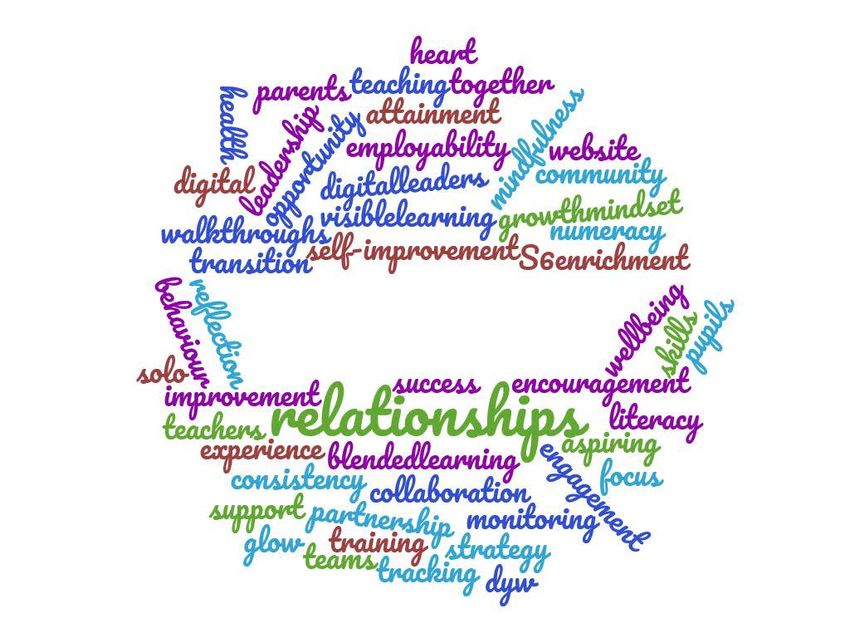
Handbook
                                                                       2019

           MONIFIETH HIGH
                  SCHOOL
                                    School logo/photo

                                                                          This document is
This document is available in alternative formats, on request          available in alternative
(Please               contact                 the               Head    formats, Teache
                                                                                  on request
                                                                        (Please contact the
                                                                           Head Teacher)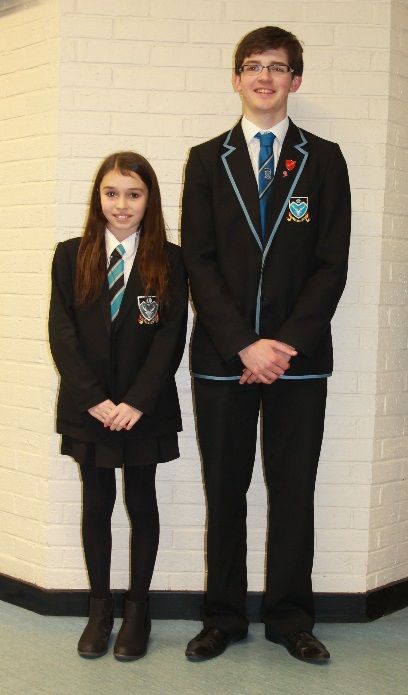
CONTENTS

     Contact Details

     Welcome

     Our Vision

     Visits of prospective parents

     School Uniform
        o PE Kit

     Parental Concerns
        o The Complaints Procedure
        o Parental Involvement

     School Ethos
        o Class Organisation
        o Homework
        o Diary Planner

     School and Community Links

     Relationship Policy
        o Role of the Pupils
        o Role of Teachers and Support Staff
        o Role of Promoted Staff
        o Role Of Parents/Carers
        o Role of Parent Council

     Celebrating Achievement

     Extra-Curricular Activities
         o Extra-Curricular Programme

     Learner Councils

     Learning Opportunities
        o Junior Phase (Broad General Education - BGE)
        o Senior Phase

     The Pupils’ and Parents’ Voice

     The Curriculum at School, Local and National Level

     Assessment & Reporting

     Liaison with Secondary School

     School Improvement

     Health Care

     Useful Links
                                               2
CONTACT DETAILS

                                      Monifieth High School
                                  Head Teacher: Mrs M-C McInally
                                        Panmurefield Road
                                            Monifieth
                                              Angus
                                             DD5 4PT

                                         Tel: 01382 768100

                       School Website: www.monifiethhighschool.com

                  School Email Address: MonifiethHigh@angusschools.org.uk

                                 Associated Primary Schools:
                        Grange PS, Seaview PS, Birkhill PS, Murroes PS,
                           Liff PS, Mattocks PS, Auchterhouse PS

                                   The School Roll 2018-2019
                              S1- 188      S2 – 186      S3 – 200
                              S4 – 233     S5 – 154      S6 - 124

Parent Council Email: MONParentcouncil@monifiethhigh.angus.sch.uk

                                          SCHOOL DAY

MONDAY – THURSDAY                                     FRIDAY
Period 1        08.55 - 09.45                         Period 1      08.55 – 9.45

Period 2          09.45 - 10.35                       Period 2      09.45 – 10.35

Period 3          10.35 - 11.25                       Period 3      10.35 – 11.25

Interval          11.25 - 11.40                       Interval      11.25 – 11.40

Period 4          11.40 - 12.30                       Period 4      11.40 – 12.30

Period 5          12.30 - 13.20                       Period 5      12.30 – 13.20

Lunch             13.20 - 14.10

Period 6          14.10 - 15.00

Period 7          15.00 - 15.50

                                                3
WELCOME

This handbook was designed with you in mind to help you understand what Monifieth High School
is all about. We ask that you use this guide as a resource throughout the course of the school year
so that you will have a basic knowledge of some of the policies, procedures, and courses that will
affect your child.

Information regarding our expectations for staff, pupil and parents, progress reporting, courses,
extra-curricular activities, external partnerships are just some of the many entries you’ll find within
this handbook. Parents are asked to review its contents and to discuss items with their child. Since
this handbook offers a snapshot of what Monifieth High School is all about, pupils and parents are
encouraged to ask questions to school personnel at any time so that individual needs can be
addressed and met. You are also directed to our school website (www.monifiethhighschool.com),
Twitter (@MonifiethHigh) and Facebook (@ParentCouncilMHS) accounts for further updates on
activities and events. In addition, our Monifieth High School app is now live in the Apple and
Google Play stores.

On behalf of Monifieth High School, we look forward to another fulfilling school year. In
collaboration between the school and home, we invite you to work alongside us at the school so
the school will be enhanced, fulfilling, and rewarding for all involved.

Our staff are dedicated to providing the best opportunities for learning and achievement for all of
our pupils and we are confident that school year 2019/20 will be a satisfying and productive one.

M-C McInally
Head Teacher

                                                  4
Our Vision

Positive relationships are key to the success and wellbeing of our school community, we are
committed to working with you to create a climate of trust, respect and aspiration.

Our School Motto is: Fais ce que dois in French, which means ‘Do what you must’ in English.

We encourage our pupils to model the 4 values found on the Scottish Mace by:-

Do what you must in Wisdom:                         Do you what you must in Justice:

 1    Work hard to achieve your best                 1     Be fair to others and yourself

 2    Create the right Mindset – have a              2     Act appropriately when in school
      ‘can do’ attitude                                    and in the community and
                                                           demonstrate high moral standards

 3    Achieve success through hours of               3     Wear your uniform with pride
      practise

 4    Be purposeful in your actions

Do what you must in Compassion:                     Do what you must in Integrity:

 1    Care about other people                        1     Be honest with yourself and others

 2    Care about your education                      2     Be valued for being someone
                                                           people can trust

 3    Care about our school community                3     Be a good role model for others

 4    Care about our environment                     4     Just do the right thing!

The ‘Heart of Monifieth’ aims to ensure that all pupils are Healthy, Engaging, Achieving, Relating
and Thriving. To meet the needs of our young people we work closely with pupils, parents and
partner agencies. This is carried out through 1:1 sessions, group work and community events.
Pupils and parents can self-refer during discussions with their Pupils, Care and Support Teacher.

                                                5
VISITS OF PROSPECTIVE PARENTS – see link below:

http://www.gov.scot/Publications/2010/11/10093528/0

If your son or daughter is transferring from a school outside our delineated area, or into a year
group other than S1, please refer to the above document.

Once your child has been allocated a place you will be invited to meet a senior staff member to
find out more about the curriculum and to share information about your child.

  1. We will be keen to meet you and your child/children before the transfer takes place. Please
      contact our School Office as soon as possible so we can make an appointment.

  2. At the meeting, we would like to discuss your needs, and what the school has to offer. We
      will endeavour to provide you with any information you may need, and would be grateful if
      you could bring with you any information e.g. course choices, report cards, which might be
      of use in deciding on a suitable course.

  3. On the day your son or daughter begins school, he/she should arrive in time to be registered
      at 8.55am when a timetable will be provided. A meeting will be arranged with the
      appropriate Pupil Care and Support Teacher, a teacher who will have a particular
      responsibility for looking after your son or daughter while in school.

Placing Request forms are available from the Head Teacher or the Children and Learning
Directorate, Angus House, Orchardbank Business Park, Forfar DD8 1AE, Tel: 03452 777 778.

                                                  6
SCHOOL UNIFORM

School uniform is very important for four reasons:

  • It helps pupils identify with the whole school community, rather than divide into sub-groups
    marked by different clothing styles

  • It prevents competition based on expensive fashion statements, and so removes pressure from
    pupils and parents alike

  • It is smart and business-like, and means that a pupil is coming to school dressed for work, and
    so is mentally prepared for work

  • It greatly improves school security, by making any intruder stand out clearly

The current uniform is the result of consultation with all parents, pupils and staff, which resulted in a
very high level of agreement and support by all. Our uniform is worn by all pupils. It is currently:

  • Blazer for all year groups (Senior phase S4-6 blazer includes braid)
  • White blouse/shirt, smartly worn and buttoned to neck
  • School tie, knotted to neck
  • Plain black v-neck sweater or cardigan with school logo or plain black v-neck or cardigan
  • Black trousers or skirt (approx. 20 inches in length). Lycra skirts should not be worn. Likewise
    leggings/jeggings and all forms of jeans should not be worn
  • Black shoes
  • It is preferable that outer jackets are of a dark colour with no obvious slogans/logos. Outside
    jackets should not be worn inside the school building.

School Uniform can be obtained at the following stockists: BE Schoolwear, Reform Street, Dundee
                     https://www.border-embroideries.co.uk/store-dundee

                                                     7
PE KIT

Pupils are encouraged to purchase the school PE uniform which will be worn for all PE classes and
when representing the school at sporting events. This kit is available from the BE Schoolwear shop
in Dundee both in the store and online.

The BE Schoolwear shop stocks a range of t-shirts styles, sweatshirts, hoodies, tracksuit bottoms and
swimwear. Pupils do not need to purchase every garment, shorts, t-shirt and swimwear are
desirable for pupils, however all items are available if you so wish and will be utilised throughout
the year.

If the school PE uniform is not to be purchased, plain navy kit is preferred.

Girls/boys

Indoors               Outdoors                                Swimming
Indoor trainers       Outdoor trainers                        Boys-swim trunks/jammers
Navy t-shirt          Navy t-shirt                            (They must be tight fitting, not
Navy shorts           Navy shorts/tracksuit bottoms           baggy or knee length)
                      Navy hoodie/fleece                      Girls-one piece swimming costume
                                                              Swim Cap

All clothing brought to school should be named or marked in some way, as it is difficult for
children to distinguish their own clothing from others.

                                                   8
ORGANISATIONAL CHART

SENIOR LEADERSHIP TEAM

Mrs McInally                Mr Lusby, DHT             Mrs Ritchie, DHT
Head Teacher                Head of Panmure           Head of Dalhousie

Dr Matthew                  Denise Smith
Head of Balmossie           School Business Manager

PUPIL CARE & SUPPORT TEAM

Mrs Welsh                    Mr Tragham                  Mrs Perry
Balmossie                    Panmure                     Dalhousie

Mrs Whitfield                Mrs Buist                   Miss Herbert
Balmossie                    Panmure                     Dalhousie

                                          9
PARENTAL CONCERNS

Parents should contact the school immediately if they have a cause for concern. It is our wish to
deal with all matters as early as possible preventing them from growing into significant concerns.
Please contact your child’s Principal Teacher (Pupil Care & Support) in the first instance. The staff
will listen to your concern and agree a way forward with you.

If it is helpful, you will be welcome to arrange a meeting with the appropriate Principal Teacher, or
the Depute in charge of House or Mrs McInally, Head Teacher.

THE COMPLAINTS PROCEDURE – also see link below:

https://www.angus.gov.uk/council_and_democracy/complaints_and_comments/making_a_complaint_or_
comment_about_our_services

In the vast majority of cases, you will find that your concerns, once shared, are warmly supported
by staff so that a suitable support can quickly be agreed. If however you wish to speak to
someone at the centre, follow the above link.

PARENTAL INVOLVEMENT (ENGAGEMENT)
BECOMING INVOLVED IN SCHOOL

Your day-to-day involvement in your son/daughter’s learning will be the largest single factor in
his/her success. Practical ways in which you can give him/her support are described in detail
at the “How to Help your Son/Daughter Evening” for all S1 parents each September. This is an
evening attended by virtually all parents of S1 pupils and we will give you early notice of its
date when your child joins the school.

Also, attendance at your child’s Parents’ Night where you have an opportunity to discuss with
the class teacher your child’s progress.

Our Parent Council also annually seeks support from parents for on-going activities within the
school day. This may include joining a focus group, providing technical advice on website
development, helping with a paired reading scheme or visiting a class to give an insight into a
specific career.

We also have an active ‘Friends of Monifieth’ who organise fundraising events to support the
school. Easyfundraising is a Parent Council fundraising scheme to raise additional funds for
Monifieth High School. If you join easyfundraising you can collect free donations for the school
every    time   you    buy    something     online.      It won’t      cost  you     a    penny
https://www.easyfundraising.org.uk/-

If you wish to be a regular parent helper, PVG (Protecting Vulnerable Groups) checks have to
be completed. Please discuss this with staff.

As your son/daughter progresses through the school, you will be involved and consulted at
each stage of his/her choice of subjects. Many parents are also able to organise Work
Experience for their children and this is of immense benefit.

                                                 10
SCHOOL ETHOS
Our vision for the school, which has evolved over the last three years, is to provide the highest
quality education for all the young people and a belief that every child matters. We are a
learning community that encourages lifelong learners, and equips young people with the skills for
their future. The three overarching themes that permeate everything that we do are:
• Attainment – our aim is to have every young person develop their potential, academically
and in other fields of endeavor. Good examination results are an absolute priority, but
where there is talent, we must nurture it.
• Community – we believe the school is more than teachers and pupils: we work closely with
parents and the wider community; we are excited about the community using the school,
and very much looking forward to meeting as many new partners as possible.
• Health – We passionately promote the “healthy mind, healthy body” philosophy; Scotland
does not have a good health record; we want to do everything we can to assist Monifieth
pupils lead healthy lives, physically and mentally, in the school and after they leave.
The school offers a wide range of opportunities for wider achievement, from within the curriculum
and out of class activities including, school trips and extra-curricular activities. Even though we
have approximately a third of the school population transported by bus to the school, we offer
many activities at break and lunchtime to allow for greater participation.
The examples of activities for wider participation and achievement for pupils are: Charities, Fair
Trade, First Aid, Duke of Edinburgh, Boys’ Choir, Formula 1, Young Engineer’s, Sports Leaders,
Dance and many sporting activities. Many of our pupils receive the recognition of International
status in their field and are proud to wear an International tie to celebrate their success. There are
two Learner Council groups; one for Transition to secondary and one for secondary school, each
supported by a team of staff. Senior pupils are given the opportunity to be ‘Buddies’ and assist
with peer learning. Many of our senior pupils become Befrienders and provide a valuable
resource in our local community. We work closely with the Rotary Club and other community
groups enjoying an excellent partnership programme. The school fosters an Ethos of Achievement
and actively supports pupils with Supported Study sessions and the development of a Growth
Mindset and Resilience. In the BGE pupils experience a range of learning and teaching
approaches and there is an emphasis on skills development. The school has adopted Restorative
Approaches and pupils and staff are developing the skills required to be fully restorative.
The introduction of the new prefect system has allowed for greater inclusion and provided more
opportunities for seniors to take up a leadership role within the school. Leadership opportunities
are also extended to younger pupils.
Class Organisation
Clear care is taken in placing youngsters in their S1 class, making use of information from parents
and primary schools. Nearly every S1 and S2 class is ‘mixed-ability’, while there are limited
opportunities to set pupils in S3 classes.
11Homework
Homework is even more important than it used to be, and it is very important that both pupils and
parents should realise how approaches to it have developed in recent years. All pupils (supported
by their parents) are expected to take responsibility each evening for revising and extending the
work done during the school day, in addition to revising periodically for tests. Teachers continue to
set particular assignments to be completed at home, but this traditional concept of homework is
only a part of what a pupil should study each evening. Pupils should always have a novel “on the
go” (advice is given by the English Department); notes in all subjects should be revised and learnt
as appropriate; additional research should be carried out using the internet and the school’s
“Glow” website.
As in primary school, parents should discuss homework with their children each evening. S1 Pupils
should plan to study for approximately 30 minutes each evening, S2 for 45 minutes, S3 for 1hour, S4
for 1½ hours and S5/6 for 2½ hours. Supported Study is also available for different year groups at
lunchtime and after school.
Diary Planner
Junior pupils is issued annually with a Diary Planner. Pupils should keep in it a detailed record of
each evening’s homework whether self-organised by the pupil and parent or set by the teacher.
The planner’s purpose is to assist pupils to manage workload, to make forward plans, to set
individual targets, to identify strengths and weaknesses, to note key dates and homework, to
record the results of assessments, and to remind pupils of important aspects of the school’s
organisation: in short, to enable pupils to take responsibility for their own learning. Equally it is a
means of strengthening the partnership between school and home, and all teachers and parents
are urged to enter comments if appropriate.
SCHOOL AND COMMUNITY LINKS
Strong links with our community have been established, including the Community Council, Rotary,
Befrienders Scheme, Volunteer Angus, local Care Homes and local community groups.
We are also keen to raise money and support those in need, with fundraising activities
coordinated by our enthusiastic pupil-led Charities Committee. Senior pupils at Monifieth High
School are also involved in community service in Nursing and Residential Homes, as well as helping
in several of our associated primary schools.
Pupils of all age groups benefit from a wide range of field trips, whether to sites of geographical or
historical importance, to science lectures at local universities, to theatres and concerts etc. There
are overseas visits to Switzerland and France, to New York and Berlin, to Iceland and WWI
Battlefields. Senior pupils visit South India, to work with the community and in particular our partner
school in Uganda. Our sports teams compete throughout Scotland while our senior orchestra
performs locally and our musicians perform at our local care homes and community centres.
12RELATIONSHIP POLICY
https://www.angus.gov.uk/schools_and_young_people/parent_and_pupil_guidance/anti_bullying_policy
It is commonly recognised that high standards of behaviour in the classroom have a major impact
on effective learning and teaching. In Monifieth High School, we seek to establish and maintain a
positive learning environment which promotes mutual respect between staff (teaching and
support) and pupils at all times. Through a uniform and structured approach, we can nurture an
ethos of achievement. Working co-operatively, we can help young people to evaluate their
strengths and encourage them to develop their levels of responsibility. This should, ultimately, allow
all pupils to achieve their academic and personal potential and feel safe within the school and
wider community.
Within the school we have adopted a Restorative Approach and there are many examples of
good practice which have a positive influence on the behaviour of young people. There is
recognition that praise and commendation in supporting this, can be used to good effect. This
policy builds on the good practice currently undertaken in the classroom and encourages a
consistent approach and application through following the procedures set out in the following
pages. All pupils, staff, parents and other agencies have a role to play in ensuring that young
people know what standards of behaviour are expected and in supporting them to make the
right choices.
The Role of Pupils
• To make good choices regarding their behaviour.
• To know that making the right choice produces a better working environment for all,
resulting in positive educational experiences and achievement in school.
• To understand that positive educational experiences result in rewards both academically
and personally.
• To follow the expectations and responsibilities throughout the school itself and within all
school activities.
The Role of Teachers and Support Staff
• To encourage pupils to achieve their goals/ best and give praise and recognition using
Restorative practice.
• To promote good standards of behaviour set out in the Monifieth Classroom Way.
• To foster a good working relationship with pupils and an understanding of their individuality,
self-worth, strengths and development needs.
• To follow and apply guidelines consistently.
• To recognise the different systems for recording and responding to positive behaviour and
use these accordingly.
• To support and work with colleagues in applying the range of systems available.
13Role of Promoted Staff
• To support teachers in their delivery of the policy.
• To respond quickly and consistently in line with policy when dealing with referrals made to
them.
• To offer clear guidance to all teachers and departments as to expectations of good
standards and good practice.
• To set an example in dealing with pupils, staff and parents.
• To liaise with other members of staff as appropriate – Pupil Care and Support Staff, Senior
Leadership Team, Support for Learning, Aspire and other support agencies.
• To follow Angus Council Policy regarding serious disciplinary incidents.
Role of Parents / Carers
• To take an active interest in their child’s school experience and encourage them to achieve
their personal best.
• To support the school in the promotion of a positive behaviour policy.
• To make use of the lines of communication between home and school e.g. via pupil
planners, Pupil Care and Support teachers, newsletters, Parents' evenings, open evenings,
emails, letters and texts.
Role of Parent Council
• To help the school develop and support its young people.
• To provide an open forum for elected members and staff to discuss school issues.
• To support and facilitate communication between the school and parent / carer
community.
When young people, supported by their families and their school communities, have high
expectations of themselves in regard to participation, achievement, commitment and personal
conduct they are more likely to have better long-term opportunities in society as they grow older.
Pupils are therefore helped to:
• make choices regarding their behaviour and, depending on the choices made, accept that
consequences will follow
• know that making the right choice produces a better working environment for all, resulting in
positive educational experiences and achievement in school
• understand that positive educational experiences result in rewards both academically and
personally
14CELEBRATING ACHIEVEMENT
We all work best when we know that our efforts are encouraged, appreciated and praised. In
subject classes, pupils are given positive feedback on their current strengths and then helped to
aim yet higher through planning their next steps. In Personal Support, they are encouraged to
reflect on and share their achievements both inside and outside school. This process is supported
by the Portfolio and Profile that each pupil builds up in S1 and S3, as well as by the Merit Awards
system. Our annual Prizegiving and Awards Ceremonies in the Caird Hall, Dundee, celebrate the
academic, sporting, cultural and personal achievements of hundreds of pupils.
EXTRA-CURRICULAR ACTIVITIES - Sports, Music and Extra-Curricular Activities
Our school has a long tradition of developing pupils’ talents over a wide spectrum: pupils
compete regularly at national and international levels; they speak at national conferences, and
take part in expeditions as far away as Iceland, India and Belgium.
Our excellent sports facilities support numerous lunch-time and after-school activities, ranging from
swimming and athletics to our own transition table tennis. These are co-ordinated by our Sports
Coordinators and organised by a wide range of staff and senior pupils. There is a strong inter-
house competition, climaxing in our annual Sports Day with us awarding the Junior and Whole-
School Inter-House Trophy. Equally, we are most fortunate to have a full symphony orchestra, plus
instrumental groups and choirs. In both sports and music, our teachers and instructors tutor pupils
whose achievements have become nationally recognised.
Traditionally, our school has shown great strength in musical and sports activities, and there is also
a considerable range of other clubs and societies. Your child’s education will be greatly
enhanced through regular involvement in one or more of these.
Approximately, 200 of our pupils are currently involved in the Duke of Edinburgh Award Scheme,
while others support the following clubs and societies: Cheerleaders, Drama, Library Club, Maths,
Computing Club, Chess, Public Speaking and Debating, Enterprise, Scripture Union and Amnesty
International.
15Monifieth High School - Extra- Curricular Programme
Monday Tuesday Wednesday Thursday
Lunch Basketball Mr Paterson Dance Mrs Adamson Badminton Mr McFarlane Volleyball Sports Leaders
(Games Hall) (Dance Studio) (Games Hall) (Games Hall)
13.30-14.00
Table Tennis Sports Leaders Athletics Mr MacFarlane Fitness S4-S6 Seniors
(Gym) (Games Hall)
Fitness S4-S6 Seniors Fitness S4-S6 Seniors Staff Swim Mrs Placentino Fitness S4-S6 Seniors
(Fitness Suite) (Fitness Suite) (Pool) (Fitness Suite)
Staff Swim Mrs Placentino S4-S6, Staff Mr Phillipson Pupil Swim Mrs Placentino
Masters
(Pool) Kettlercise (Pool)
(Gym)
Afterschool 5 a side Seniors Rugby Training Mr Lockhart Netball Seniors Junior Netball Seniors
Football
(Grass Pitches) Mr Hopkins (Games Hall) Madison Milne (Games Hall) Madison
(Games Hall)
16.00-17.00 Mr Shering Milne
P7-S1 Table Paul McCabe Cricket Mr Rajcoomer
Tennis Training
(Gym) (Gym)
Friday Active Schools Programme
Afterschool
16LEARNER COUNCILS
We place great emphasis as a school on helping pupils to understand the numerous ways in
which they can help others. Within the school pupils are actively engaged in the Learner
Councils, Primary Transition, and Secondary Learner Councils. The Learner Council is made up of
young people who put themselves forward for selection at the beginning of session and hold
office for the duration of one year. Throughout the year they will meet regularly with key staff
members and senior Pupil Leaders to discuss learning in the school. They make detailed and highly
informed input into school improvement priorities and regularly address emerging issues. The
pupils have also been involved in staff training.
LEARNING OPPORTUNITIES
Students are encouraged to adopt an active and healthy lifestyle and to be equipped with the
skills needed for planning their future lives and careers.
Junior Phase (Broad General Education - BGE)
In the Junior Phase pupils will follow a broad and general education. In S1 and S2 they will study
the following courses which are based on the curriculum for excellence experiences and
outcomes:
Subject Curricular Area Periods per week
S1 S2
English Languages & Literacy 4 4
Maths Mathematics & Numeracy 4 5
Modern Languages Languages & Literacy 3 3
Science Sciences 4 3
Art & Design Rota Expressive Arts 3 2
Music Expressive Arts - -
Drama Expressive Arts 1 1
Social Subjects Social Subjects 3 -
Geography Social Subjects - 2
History Social Subjects - 2
Modern Studies - 1
IT 1 1
Design & Technology Technologies 3 2
Home Economics Health & Wellbeing 2 2
Physical Education Health & Wellbeing 2 2
Religious Education Religious & Moral Education 1 1
Personal & Social Education 1 1
Personal Support Health & Wellbeing 1 1
17S3
In S3, pupils additionally choose one from a modal schematic, where they will study up to 11
subjects and select 6 of these to study in greater depth in S4. The related subjects are grouped
together to enable pupils to grasp the various types of understanding and thinking.
As it is the final year of Broad General Education, S3 is particularly important. During it;
• Pupils develop key skills to a much higher level than previously. Many of these skills are
developed across all subjects. They include the ability to:-
analyse, evaluate and create, communicate, prioritise and work effectively in teams
• Pupils also develop skills and understanding which relate to specific subjects or groups
of subjects (e.g. sciences, technology or the arts).
Pupils all study the core areas of English, Mathematics, Modern Languages, Philosophy and
Citizenship, PE and Social Education. They also learn in 6/7 other broad areas: Social Subjects,
Expressive Arts, Technology and Science.
In Science, however, pupils can select a focus to develop their skills based on Biology OR
Chemistry OR Physics. And in Modern Languages they decide between specialising in French
and Spanish. In addition, young people can choose to study a second science or one of the
following technological subjects: Design and Technology, Computing Science or Home
Economics.
All pupils will study Periods
English 4
Maths 5
PE 2
RE 1
SE 1
Personal Support 1
Pupils will choose one from each of the following curricular areas Periods
Languages 2 periods French /1 period Spanish 3
or
2 periods Spanish /1 period French
Expressive Arts Art & Design 2
Music
Design and Graphics
Drama
Science Biology 2
Chemistry
Physics
Social Subjects Geography 2
History
Technologies Business Management 2
Computing Science
Engineering Science/ Practical Craft Skills
Home Economics
18Pupils will choose an additional FOUR
Pupils will choose an additional FOUR choices and one reserve choice
choices and one reserve choice
Subject Choice Reserve
Subject Choice Reserve
Administration / IT
Art & Design
Bridge
Biology
Classics
Business
Creative Cupcakes
Management
Dance
Chemistry
Duke of Edinburgh
Computing
Fashion
Design and
German
Graphics
Health and Fitness
Drama
Loving Language
Engineering
Science / Media
Practical Craft skills Photography
French Scottish Studies
Geography
History Travel and Tourism
Home Economics Young Engineers
Music Technology
PE
Physics
Spanish
The Senior Phase
Fourth to the sixth year is the Senior Phase where there is continued specialisation. We hope to
provide a curriculum for the senior phase which allows all learners to achieve the qualifications
and experiences, skills and capacities necessary to move to a positive destination at the end of
the fourth, fifth or sixth year of the learner’s secondary schooling. There will be different pathways
through Senior Phase these are designed to meet the needs of the learners. There will be
opportunity for exit points where pupils may choose to move from school to college;
apprenticeship, work and their needs must also be catered for in this phase. All within the senior
phase are entitled to:
1. A curriculum which is coherent and is sufficiently flexible to provide a variety of learner
pathways reflecting the interest and aptitude of the individual learner
2. A ‘blended’ curriculum that provides opportunities to achieve vocational qualifications
alongside traditional academic subjects also capturing Wider Achievement.
3. Opportunity to obtain qualifications as well as to continue to develop the attitudes and
capabilities of the four capacities
4. Opportunity to develop skills for learning, skills for life and skills for work with a continuous focus
on literacy, numeracy and health and well-being
5. Personal support to enable them to gain as much as possible from the opportunities that
Curriculum for Excellence can provide
6. Engagement with partners and other agencies to embed the recommendations of the ‘Wood
Commission Report’, Developing the Young Workforce and STEM (Science, Technology,
Engineering, Maths – STEM).
197. Support in moving to a positive and sustained destination beyond school should be a major
priority of senior phase
ASSESSMENT & REPORTING
By the end of P7 most pupils will have completed the Curriculum for Excellence Level 2
Experiences and Outcomes. During S1-S3 most will be working on the Level 3 Experiences and
Outcomes with many moving on to Level 4 in S3.
Pupil move through the Experiences and Outcomes at their own pace. There are four main ways
in which pupils will be assessed during the Junior Phase:
WRITE – where a pupil may have some written evidence e.g. end of unit assessment
MAKE – where a pupil may have created a model or a poster
SAY – where a pupil may have presented to the class or classmates
DO – where pupils may act out a scenario or conduct a class vote
Assessment is crucial to tracking progress, planning next steps, reporting and involving parents and
learners in learning. Evidence of progress can be gathered by learners themselves, and by fellow
pupils, parents, teachers and other professionals.
A number of approaches are employed including the following:
• Self-assessment – learners are encouraged and supported to look at and revisit their own
work, to develop a better understanding of what they have learned, and what they
need to work on
• Peer assessment – learners are encouraged and supported to work together to help
others assess what is good about their work and what needs to be worked on
• Personal learning planning – children, teachers and parents work together to develop
planning for next steps in learning
• Portfolio of achievements and Personal Profile – if your child is currently in P7, (s)he will be
developing a Profile of achievements both within and outwith school. This will be
continued into secondary school, where all S3 pupils are creating a Portfolio and a
Profile. This is an excellent way of reflecting on the skills and experiences (s)he has so far
acquired, and of making ambitious future plans.
Your child’s progress is not only based on ‘tests’ but on the learning that takes place within the
classroom and in different settings out with the classroom.
20Evidence of children and young people’s progress and achievements will come from day to day
learning and through the things they may write, say, make or do. For example, evidence may
emerge as a result of children and young people taking part in a presentation, discussion,
performance, or practical investigation.
In order to prepare pupils for the external examinations which lie ahead we organise formal prelim
examinations once a year for S4 (currently in November, but this is likely to occur later in future
years) and S5/6 (in February).
In the Senior Phase students embark on the National Qualifications which can be summarised in
the diagram below:
S5: 5 subjects at S6: up to 5 subjects at
S4: 6 subjects at National 3 National 3
National 3 National 4 National 4
National 4 National 6 National 6
National 6 Higher Higher
College College Advanced Higher
Achievement Options College
Achievement Options
REPORTING
The school communicates formally with parents through two reports per session. The earlier report,
issued between October and January, according to year group, shows how the pupil is settling in
to the course (S1) and also (S2-6) gives ideas for targets for future progress. The later report, issued
between February and June according to year group, shows how far the pupil has progressed
towards his/her targets for the session. Parents are also encouraged to pass comment and are
invited to contact the school if necessary following receipt of the report.
Descriptions of attainment in reports for pupils in S4-6 (the Senior Phase) relate to standards in
National Qualifications.
For S1-3 pupils, the end of year written report will describe your child’s strengths and areas for
development, their progress in achievement across the eight curriculum areas, their progress in
achievement within the curriculum levels (early, first, second, third), their achievement in different
contexts and settings, their next steps in learning and how parents can help.
21THE PUPILS’ AND PARENTS’ VOICE
Personalisation and choice is a key principle of Curriculum for Excellence. As (s)he progresses
through the school, your son/daughter will have steadily increasing choices about the subjects
(s)he will study. Within each subject, pupils are also given various choices about the contexts in
which they will develop their skills. Personal responsibility in decision-making and planning next
steps in learning is crucial to everyone’s development.
There are numerous opportunities also to join Pupil Leadership teams, to get involved with extra-
curricular activities and to influence and serve our school community. We warmly encourage
parents to discuss these with their children and to support their development through enthusiastic
participation in all the opportunities that school life affords.
Our school website gives parents an increasingly detailed insight into the many learning
opportunities inside and out with the classroom. On a weekly basis, your child should record
various activities in the Diary Planner. The Planner is also an excellent way for parents to
communicate with class teachers via a note or question, to which the teacher can respond. The
wide range of parents’ events (see below: “The Curriculum at School, Local and National Level)
also give parents many opportunities to communicate and work with teachers in support of their
child’s learning.
We place great emphasis as a school on helping pupils to understand the numerous ways in
which they can learn better and help others. Within the school pupils are actively engaged in the
3 Learner councils. Throughout the year they will meet regularly with key staff members and senior
Pupil Leaders. As a group they have influenced aspects of school life eg approaches to active
learning etc. They make detailed and highly informed input into school improvement priorities
and regularly address emerging issues.
THE CURRICULUM AT SCHOOL, LOCAL AND NATIONAL LEVEL
Our school website is a source of an ever growing amount of information on the curriculum and
on the life of the school.
There are also many opportunities for parents to visit us in the course of the year. These include
the normal parents’ evenings (one for every year group); special-focus parents’ evenings such as
“S1 Settling In” and parents’ evenings for pupils with additional needs; a “How to Support your
Child in S1” evening; Parent Information Evenings on Curriculum for Excellence; a Christmas
Concert and Summer Concert; and parents’ evenings linked to overseas expeditions and field
trips.
At the back of this handbook, various websites are listed which give information about the
curriculum across Angus and in Scotland as a whole.
LIAISON WITH SECONDARY SCHOOL
Over the last year, the staff of Monifieth High School and of all the primary schools with which we
are associated have enjoyed developing closer links working together in our Visible Learning
initiative, which is based on the work of Professor John Hattie. We are developing our own
‘Language of Learning’ to assist young people become assessment capable learners. There are
other regular discussions and visits to ensure curricular continuity, Principal Teachers (Pupil Care &
Support) meet future Monifieth pupils in their own primary schools, and detailed profiles and
information on all pupils are shared.
22SCHOOL IMPROVEMENT
School Improvement Plan
All schools have a School Improvement Plan (in many ways like a company’s Business Plan). A
summary of our School Improvement Plan is on our website.
The school’s Rationale and Departmental rationales are on the website.
SQA Results August 2018
Scottish Qualification Authority Examination Performance - By the end of S4
5+@Level 5 or better
2013 2014 2015 2016 2017 2018
Angus 35% 33% 37% 38% 37% 33%
MHS 40% 42% 53% 51% 53% 54%
Scottish Qualification Authority Examination Performance - By the end of S5
3+@Level 6 or better
2013 2014 2015 2016 2017 2018
Angus 26% 33% 33% 33% 32% 30%
MHS 35% 46% 53% 53% 53% 53%
Scottish Qualification Authority Examination Performance - By the end of S5
5+@Level 6 or better
2013 2014 2015 2016 2017 2018
Angus 26% 33% 33% 33% 32% 30%
MHS 35% 46% 53% 53% 53% 53%
HEALTH CARE
You can contact your school health staff at: -
School Nurse: Leanne Oliphant
Whitfield Clinic
123 Whitfield Drive
Dundee
Tel: 01382 504698
23USEFUL LINKS & CONTACT DETAILS
Education Scotland’s Communication Toolkit for engaging with parents –
https://education.gov.scot/improvement/Documents/Parental%20involvement/PAR2_EngagingP
arentsandFamiliesToolkit/par2-engaging-parents-toolkit-section3-060416.pdf
The Scottish Government guide Principles of Inclusive Communications provides information on
communications and a self-assessment tool for public authorities –
http://www.scotland.gov.uk/Publications/2011/09/14082209/0
Choosing a School: A Guide for Parents - information on choosing a school and the placing
request system –
http://www.gov.scot/Publications/2010/11/10093528/0
A guide for parents about school attendance explains parental responsibilities with regard to
children’s attendance at school – http://www.scotland.gov.uk/Publications/2009/12/04134640/0
Parental Involvement
Guidance on the Scottish Schools (Parental Involvement) Act 2006 provides guidance on the act
for education authorities, Parent Councils and others –
http://www.scotland.gov.uk/Publications/2006/09/08094112/0
Parentzone provide information and resource for parents and Parent Councils –
https://education.gov.scot/parentzone/
School Ethos
Supporting Learners - guidance on the identification, planning and provision of support –
https://education.gov.scot/scottish-education-system/Support%20for%20all
Health and wellbeing guidance on healthy living for local authorities and schools -
http://www.scotland.gov.uk/Topics/Education/Schools/HLivi
Building Curriculum for Excellence Through Positive Behaviour and Relationships outlines the
Scottish Government’s priority actions around positive behaviour in schools and is also a source of
support –
http://www.scotland.gov.uk/Publications/2010/06/25112828/0
Scottish Catholic Education Service’s resource ‘This is Our Faith’ which supports the teaching and
learning of Catholic religious education –
http://www.sces.uk.com/this-is-our-faith.html
24Curriculum
Information about how the curriculum is structured and curriculum planning –
https://education.gov.scot/parentzone/learning-in-scotland
Information about the outcomes a learner can expect to experience and achieve across literacy,
numeracy and health and wellbeing, as well as the 8 curricular areas –
https://education.gov.scot/parentzone/learning-in-scotland/About%20the%203-18%20curriculum
Advice, practice and resources to support the experiences and outcomes on literary, numeracy
and health and wellbeing – https://www.education.gov.scot/Documents/btc3.pdf
Broad General Education in the Secondary School – A Guide for Parents and Carers –
https://education.gov.scot/scottish-education-system/Broad%20general%20education
Information on the Senior Phase –
https://education.gov.scot/scottish-education-system/senior-phase-and-beyond/Senior%20phase
Information around the Scottish Government’s ‘Opportunities for All’ programme –
https://www.skillsdevelopmentscotland.co.uk/what-we-do/partnerships/16plus-data-hub/
Information for organisations responsible for the planning, management and delivery of career
information, advice and guidance services –
https://www.skillsdevelopmentscotland.co.uk/what-we-do/our-products/career-management-
skills/
The Skills Development Scotland website ‘My World of Work’ offers a number of tools to support
career planning –
http://www.skillsdevelopmentscotland.co.uk/
Assessment and Reporting
Building the Curriculum 5: a framework for assessment provides guidance around the assessment
framework –
https://education.gov.scot/scottish-education-system/policy-for-scottish-education/policy-
drivers/cfe-(building-from-the-statement-appendix-incl-btc1-5)/Building%20the%20Curriculum
Information about Curriculum for Excellence levels and how progress is assessed –
https://education.gov.scot/parentzone/learning-in-scotland/assessment-and-
achievement/What%20is%20assessment,%20and%20when%20and%20how%20does%20it%20take%
20place?
Curriculum for Excellence –
https://education.gov.scot/scottish-education-system/policy-for-scottish-education/policy-
drivers/cfe-(building-from-the-statement-appendix-incl-btc1-5)
25Transitions
Curriculum for Excellence factfile - 3-18 Transitions - provides information on the transitions children
and young people will face throughout their education and beyond –
https://education.gov.scot/parentzone/additional-
support/how%20schools%20plan%20support/Planning%20for%20transitions
Developing creativity, employability and skills -
https://education.gov.scot/what-we-do/Developing%20employability%20and%20skills
Choices and changes provides information about choices made at various stages of learning –
https://education.gov.scot/scottish-education-system/policy-for-scottish-education/policy-
drivers/cfe-%28building-from-the-statement-appendix-incl-btc1-
5%29/Experiences%20and%20outcomes
The Additional support for learning page provides links to relevant legislation and guidance,
including the arrangements that should be in place to support pupils with additional support
needs – http://www.scotland.gov.uk/Topics/Education/Schools/welfare/ASL
Supporting Children's Learning Code of Practice includes specific requirements on education
authorities and others under the new legislation in relation to transition –
http://www.scotland.gov.uk/Publications/2011/04/04090720/21
Enquire is the Scottish advice service for additional support for learning – http://enquire.org.uk/
Parenting across Scotland offers support to children and families in Scotland –
http://www.parentingacrossscotland.org/
Support for Pupils
The Additional support for learning page provides links to relevant legislation and guidance,
including the arrangements that should be in place to support pupils with additional support
needs – http://www.scotland.gov.uk/Topics/Education/Schools/welfare/ASL
Information about the universal entitlement to support that underpins Curriculum for Excellence –
https://education.gov.scot/scottish-education-system/Support%20for%20all
Supporting Children's Learning Code of Practice (Revised edition) - provides Statutory guidance
relating to the Education (Additional Support for Learning) (Scotland) Act 2004 as amended –
http://www.scotland.gov.uk/Publications/2011/04/04090720/21
Getting It Right For Every Child and Young Person, is essential reading for anyone involved or
working with children and young people, including practitioners working in adult services with
parents and carers –
http://www.scotland.gov.uk/Topics/People/Young-People/gettingitright
26School Improvement
Scottish Schools Online - provides a range of school information, including contact details, school
roll, facilities, website, and inspection reports –
https://education.gov.scot/parentzone/find-a-school
The Scottish Survey of Literacy and Numeracy (SSLN) is an annual sample survey which will monitor
national performance in literacy and numeracy –
http://www.scotland.gov.uk/Topics/Statistics/Browse/School-Education/SSLN
Scottish Credit and Qualifications Framework (SCQF) –
http://www.scqf.org.uk/
Scottish Qualifications Authority provides information for teachers, parents, employers and young
people on qualifications –
http://www.sqa.org.uk/
Amazing Things - information about youth awards in Scotland –
http://www.awardsnetwork.org/index.php
Information on how to access statistics relating to School Education –
http://www.scotland.gov.uk/Topics/Statistics/Browse/School-Education
School Policies and Practical Information
Schools and local authorities should consider the most relevant school, local and national policies
and include details or links for parents to sources of further information.
National policies, information and guidance can be accessed through the following sites -
http://www.scotland.gov.uk/Topics/Education
http://www.scotland.gov.uk/Topics/Health
http://www.scotland.gov.uk/Topics/People/Young-People
Children (Scotland) Act 1995 –
http://www.legislation.gov.uk/ukpga/1995/36/contents
Standards in Scotland's Schools (Scotland) Act 2000 –
http://www.legislation.gov.uk/asp/2000/6/contents
27You can also read


