Mural Paintings of the City of That Phanom: History and Literature
←
→
Page content transcription
If your browser does not render page correctly, please read the page content below
Journal of Engineering and Applied Sciences 15 (6): 1431-1444, 2020
ISSN: 1816-949X
© Medwell Journals, 2020

               Mural Paintings of the City of That Phanom: History and Literature
                        1
                        Kittanut Yanpisit, 2Niyom Wongpongkham and 3Somsak Srisantisuk
                    1
                        Art and Cultural Research Program, Faculty of Fine and Applied Arts,
                                          2
                                            Faculty of Fine and Applied Arts,
                                 3
                                   Graduate School, Khon Kaen University, Thailand

    Abstract: A research study titled mural paintings of the city of That Phanom: history and literature, aims to
    study the history of the making of mural painting in the city of That Phanom, as well as to study the literature
    of mural painting in the city of That Phanom. The study is based on historical documents and field studies in
    That Phanom district, Nakhon Phanom province of Thailand. Research tools consists of survey and structured
    interview, targeting group of informants consisting of scholars in art history, abbots and monks, local
    philosophers and local people. Study results showed that the history of the making of mural painting, currently
    existing in the city of That Phanom, Nakhon Phanom province, began in the year 1919-1934, coincided with
    the end of King Rama VI’s reign and the beginning of King Rama VII’s or during the transition from absolute
    monarchy to democracy. According the field study at three temples, the research witnessed important events
    related to the history of the creation of mural painting (Hoop taem) as follows. For Wat Hua Wiang Rangsi
    temple and Wat Buddhasima temple, construction of the uposathas (Sims) began in 1917; the two temples have
    royally been given the Visungkhamsima in 1919. For the making of the mural art, Wat Hua Wiang Rangsi’s
    mural paintings were made in 1919 while that of Wat Buddhasima’s, 1920; Wat Pho Kham’s construction of
    Uposatha was in 1933 and the making of Hoop taem was first created in the year 1933-1934. Creation of Hoop
    Taem in the city of That Phanom all shared a starting point from the restoration of Phra That Phanom. In the
    period of Phra Khru Viroj Rattanobon who came from the city of Ubon Ratchathani, there was Luang Chan
    Akson who played the role as the painter, applying the concept of mural art of Bangkok style that had an
    influence on the Hoop taem of the city of That Phanom. Even they were built in the same period, each temple
    has a different identity. For the literature aspect, it can be divided into 2 groups: primary literary and secondary
    literary groups. The primary literary group used in the painting of Hoop taem consists of the Buddha’s history,
    the Ten Jataka Tales, Sin Sai, Phra Malai and Suriyawong, of which the main literature shared in common is
    the Buddha’s history. Each temple gives a lot of space for mural painting featured in a prominent position. The
    secondary literary group is the one that does not appear much, consisting of images of Ramayana,
    Laksanawong, Chantakorop and Phra Suthon-Manohra. The secondary literature that shares a common
    characteristic is the image of the Ramayana. According to each temple, it also shares different other literatures
    which are non-Buddhist, e.g., Ramayana, Sin Sai and Suriyawong, that became the outstanding literature of
    each temple.

    Key words: Mural painting, Thailand, history, literature, prominent, applying

                   INTRODUCTION                                 tradition-which began near the end of a pre-historic
                                                                era or around 5,000 years ago before Dvaravati culture
     North Eastern part of Thailand composes of two             slowly took over the society. Such is cultural
major civilization basins: Korat basin and Sakon Nakorn         evolvement during the beginning of Thai history between
basin. There, various ancient communities scattered             14-16th BE Evidences found after the era shows that
around the area, especially in Sakon Nakorn basin-a large       ancient Khmer or Khom culture had sprung up
civilization basin in the North or NE part covering             during 15-18th BE not long after the birth of Dvaravati
provinces which are Loei, Nong Bua Lumpoo, Udon                 culture. Evidence discovered within Sakon Nakorn basin
Thani, Beung Karn, Sakon Nakorn, Nakhon Phanom                  indicates that ancient Khmer culture came into the area
and Mukdaharn. Along the southern and west border is            around the same time as Dvaravati culture did
Phuphan mountain, separating Sakon Nakorn basin                 (Boonlop, 2005).
from Korat basin (Walliphodom, 1995). Based on                       Once Khmer culture deteriorated, Sakon Nakorn
archeological research, the study reveals that cultural         basin became influenced by Lancang culture as can be
development of Sakon Nakorn basin-Ban Chiang cultural           seen in evidence found in Nong Khai, Udon Thani, Sakon

Corresponding Author: Kittanut Yanpisit, Art and Cultural Research Program, Faculty of Fine and Applied Arts,
                      Khon Kaen University, Thailand
                                                           1431
J. Eng. Applied Sci., 15 (6): 1431-1444, 2020

Nakorn and Nakhon Phanom-stone inscriptions of                region such as Northern, Northwest and Isaan regions.
Lancang King such as Phra Photi Sararaj, Phra Chai            Viceroys were anointed as the administrative commanders
Shettiraj, Phrasumangkla Poitsat and Phrasuriya-Wongsa        who were to directly report to the king himself. Changing
Thammikaraj. Such evidence indicated that Sakon               city to the province was another adjustment that happened
Nakorn basin once belonged to Lancang Empire                  in Nakhon Phanom. Besides being a large province,
(Punnothok, 1988). Before the basin was permanently           Nakhon Phanom also has a pillar of faith which
reigned by Siam in Thonburi era. Later, as a result of the    highly revered by Thai people in the NE of Thailand
colonial period, Lancang Empire was divided into two          and Lao PDR that is ‘Phra That Phanom.
states. To the left of Kong river was that of Lancang,              ‘Phra That Phanom’ is situated in Muang That
while the land to the right belonged to Siam.                 Phaom, That Phanom district, Nakhon Phanom province.
     Nakhon Phanom is a border province located in the        Based on Urang-Ka-That legend, before the Buddha
upper North Eastern part of Sakon Nakhon basin and Lao        passed away, he came to ‘Nong Khan Tae Sua Nam’ with
PDR or the old Lancang Empire which are separated by          Ananda, the son of a god. The Buddha prophesized what
Kong river. The province is around 740 km away from the       will happen in the city (of Nakhon Phanom). The Buddha
capital-Bangkok. Most of the areas are low or plain land      then traveled southward through various places along the
rests beside Kong river. The province’s border runs along     Kong river. He finally, arrived at Sri-Kod city and rested
Kong river for 153 km. Most of its land features are low      at ‘Poo Kampra’. Later on, the Buddha went to Nirvana
land and river basins. Major rivers that flow through the     for 8 years. During this time, Phra Maha Kassapa and
province are Kong, Songkram, Kum, Ooun and Yaam               500 Buddhist saints or Arhats brought the Buddha’s
rivers (GISTDA., 2010). Geographically, Nakhon                sternum or breastbone to and placed it at ‘Poo Kampra’.
Phanom has always been part or related to how history         For this reason, ‘Phra That Phanom’ had become the pillar
unfolds itself in other archaeological sites in Sakon         of faith to the people in the area. It is a place of cultural
Nakhon basin. The province is also connected to the           recollection, since, pre-history period until present,
outside through both land and sea. It also links to other     containing local people’s creativity expressed through
historical sites in Lao PDR and Vietnam. Therefore, three     their mural paintings-cultural local wisdom masterpiece
ancient communities can be discovered in Nakhon               that can be found in religious buildings. Based on a
Phanom-Songkram, Ooun-Yaam and Kum basin                      related study, it was found that mural wall paintings in NE
archaeological basins. Kum basin per se is considered a       of Thailand can be separated into 3 groups: one which
prominent archaeological site located in Nakhon Phanom.       was created by local craftsmen or artists, one which was
From the time after communities started forming in            influenced by Siam Royal Court and one which was
Dvaravati culture (around 13-16 BE.), historical              influenced by Lancang. From a study exploring Isaan
communities, namely Sri-Kod-Boon city, began to               mural paints shooting project by Khon Kaen
flourish at the beginning of historical era near major        University (Samosorn, 1989), it was found that the mural
estuaries. Important traces led to such fact is ‘Phra That    wall painting was created before 2500 AD. in Nakhon
Phanom Statue’, especially, the carved base of the Phra       Phanom mostly in 3 places: Wieng Rangsi temple in That
That statue. Thereafter, the community evolved into that      Phanom sub-district, Puttasima temple in Fang Daeng
of Lancang culture in 20-24 BE. Lancang culture               sub-district and Poe Kum temple in Nam Kum
extended its influence on Sri-Kod-Boon city until the         sub-district. All three temples are considered prominent
reign of King Wisunarat (1999-2021 AD) (CDA and               tourist attractions of That Phanom sub-district. Both state
Archive, 1999). In 1778, during Thonburi period, the king     and private units have promoted them to be a local
decreed that Somdet Chao Phraya, king of war and Chao         cultural learning center. Nevertheless, a lack of systematic
Phraya Surasi march an army to conquer the military of        study on all three temples has resulted in insufficient
Vientiane due to Pra-war-pra-ta conflict. As a result,        information to be provided to tourists and those who are
Vientiane became part of Siam. Land on both sides of the      studying art history and aesthetic study.
river was therefore, under the rule of Siam as well. In             This study is therefore, conducted to delve into the
2440 AD, colonialism of the world’s then superpowers-         history of That Phanom mural wall painting as well as
England and France-had spread to Thailand, causing            looking into the literary works found in mural wall
Thailand to lose the land to the left side of Kong river to   paintings in That Phanom by using the historical
France. Lancang Empire then was split into two. During        document. Unstructured interviews with historical
the reign of King Chulalongkorn the Great (Rama V),           experts, art historical experts, artists, painters, monks and
administrative regulations were westernized. Government       local wisdom guru/philosophers were employed during
administration system practiced in the border cities or       the survey of mural painting in all three temples in That
burgs was divided into the precinct, province, district,      Phanom. The data collected from field surveys were
sub-district and village. Nakhon Phanom is a minor            then categorized chronologically and descriptive
border city within Lao-Puan Precinct. During the reign of     analysis was made in accord to the research
King Rama VI, the king united different precincts into the    objectives.

                                                          1432
J. Eng. Applied Sci., 15 (6): 1431-1444, 2020

              (a)                            (b)

Fig. 1(a-b): Layout of mural painting on Hua Wieng Rangsi’s interior wall

                                                              Ramayana, Laksanawong, Chantakrob and King Saud
                                                              Thon-Manohra. Peripheral literature which can be
                                                              commonly found in all temples are the Buddhism
                                                              literature and the capture of Ramayana. Other differences
                                                              found in each temple are literature which are neither the
                                                              story of the Buddha nor the Ramayana. Such literature are
                                                              Sinsai and Suriwong which became such outstanding
                                                              literature for each of the temples.

                                                              Hua Wieng Rangsi, That Phanom sub-district, That
                                                              Phanom district, Nakhon Phanom province: By
                                                              surveying the mural painting on walls at Hua Wieng
                                                              Rangsi temple in That Phanom sub-district, That Phanom
                                                              district, Nakhon Phanom province, mural paintings were
Fig. 2: Layout of Hua Wieng Rangsi’s interior wall            found both exteriorly and interiorly. Following are the
                                                              details of the literature expressed through the mural
Literature review: A field study was employed to              paintings.
examine literature stories found in the mural painting of
That Phanom district in Nakhon Phanom province. The           Exterior wall: It was found that literature told by artists
data were collected through exploration and interviews.       who painted on the exterior wall of Hua Wieng Rangsi
Below are the study results which are presented based on      temple includes stories of the Buddha and other
the location it was found in each temple.                     illustration. Since, the wall has only limited space, the
      From aesthetical point of view towards the mural        artist did not intend to use such painting as the key story
paintings of That Phanom in Nakhon Phanom province,           to be told. Appeared in the drawing are Indra, Buddha and
it was found that though mural paintings may had been         Himmapan creatures. The purpose of this piece of art was
painted around the same time, their identities are quite      done aesthetically than to express symbolistic meaning
distinctive. Following are the summary of an aesthetic        through the drawing.
point of view towards its content and expression.
      Aesthetic in the mural painting’s content can be        Interior wall: The wall to the north of the temple tells 5
categorized into cannon literature and peripheral             Jataka stories: Vedhura Pandita Jataka, Narada Brahma
literature. The canon literary works found in mural           Jataka, Bhuridatta Jataka, Mahosadha Jantaka and
paintings are the story of the Buddha, the 10 last Jatakas,   Nemiraja Jataka. Painted on the wall to the East are
Sinsai, Pra Malai and Suriwong. The common cannon             Vessantara Jataka, the story of the Buddha and
literature they all share is the story of the Buddha. Each    Ramayana. To the West, the artists also told of several
temple provides large spaces for mural paintings and          literature stories: Ramayana, Temiya Jataka, Maha Jataka
cannon literature would be typically placed in positions      Jataka and Suvanna Sama Jataka.
that can be easily noticed. Peripheral literature, however          From the examination of mural paintings on Hua
is the ones of which stories were not included extensively    Wieng Rangsi’s interior wall, it can be summarized as can
in the mural paintings. These include the capture of          be seen in the layout below (Fig. 1 and 2):

                                                          1433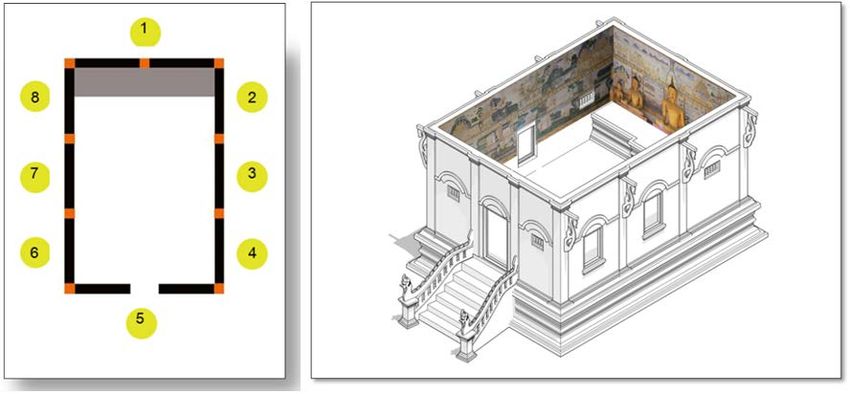
J. Eng. Applied Sci., 15 (6): 1431-1444, 2020

          (a)                                  (b)

Fig. 3(a-b): Layout of mural painting on the interior wall of Phuttasima temple

Room 1 : Ramayana-the war of Ravana
Room 2 : Ramayana-the war of Ravana and Temiya
          Jataka
Room 3 : Maha Jataka and Suvanna Sama Jatakas
Room 4 : Nemiraja Jataka
Room 5 : Mahosadha Jataka
Room 6 : Bhuridatta and Chandakumara Jataka
Room 7 : Narada Brahma Jataka
Room 8 : Vedhura Pandita Jataka
Room 9 : Vessantara Jataka
Room 10 : Story of the Buddha
Room 11 : Ramayana Captures Sammanakka
Room 12 : Ramayana-Rama hunt down a dear
Room 13 : Ramayana-Noksadayupaksi obstruct Ravana
Room 14 : Ramayana-the war
Room 15 : Ramayana-meeting of the war
Room 16 : Ramayana-reservation of the road
                                                               Fig. 4: Layout of mural painting found on the wall inside
Phuttasima temple, Fang Daeng sub-district, That                       Phuttasima temple
Phanom district, Nakhon Phanom province: From the
conducted survey on mural paintings of Phuttasima              Interior wall: As for the walls inside the temple, to the
temple located in Fang Daeg sub-district, That Phanom          North are mural paintings which contain literary works
district, Nakhon Phanom province, it is revealed that          about Vessantara Tanaka, Vedhura Pandita Tanaka,
mural paintings are on both the exterior and interior walls.   Narada Brahma Tanaka. On the lower part of the wall to
Mural paintings were found on the East and North side of       the North are literary stories about Sinsai and King Saud
the exterior wall but not on the South and West.               Thon-Manohra. On the east side are stories about
Nevertheless, inside the temple, mural paintings could be      Bhuridatta Tanaka and Mahosadha Tanaka. The lower
found on all 4 walls. Literary works expressed through         part of the wall are stories of Chantakorob and Sinsai.
the mural paintings are presented in the following             Written on the wall to the east in the upper part of the wall
details:                                                       are Nemiraja Tanaka, Suvanna Sama Tanaka, Maha
                                                               Jataka Tanaka and Temiya Tanaka. On the lower part of
Exterior wall: Literary works found in mural paintings         the wall, the artist illustrated tales of Sinsai. Painted on
on the wall to the north are a story about hell and            the west side of the wall is literature about the story of the
Vessantara Tanaka. In the east, the story about the            Buddha and Sinsai literary work on the lower part of the
Buddha and Vessantara Tanaka is told in the mural              wall. From the survey on the interior walls of Phuttasima
paintings while in the west, the artists had drawn tales of    temple, the layout can be summarized as in the
Temiya Tanaka, MahaJataka Tanaka and Sinsai.                   Fig. 3 and 4.

                                                           1434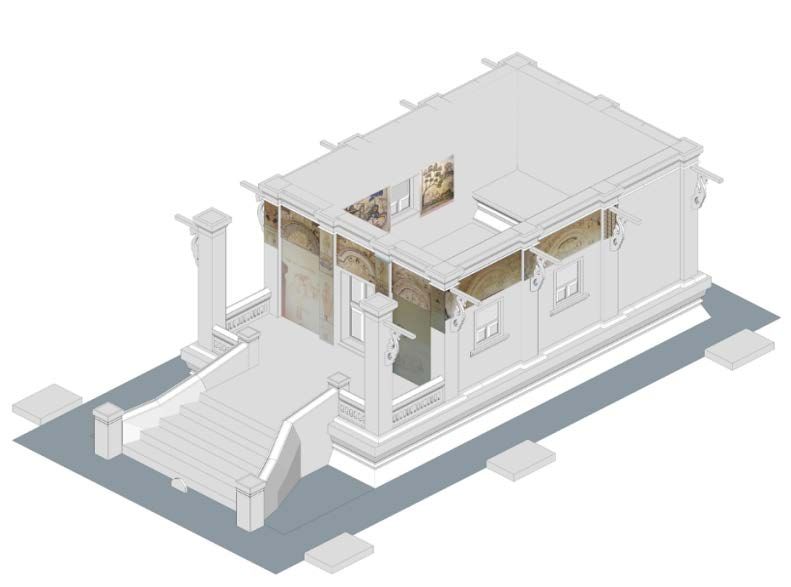
J. Eng. Applied Sci., 15 (6): 1431-1444, 2020

           (a)                              (b)

Fig. 5(a-b): Layout of mural paintings found on the inside wall of Phuttasima temple

                                                            inside the temple. Illustrations are found on all four
                                                            walls of which literary works are expressed as in the
                                                            details below:

                                                            Wall to the North: The upper part of the wall told the
                                                            story about the Buddha with chronological order-the story
                                                            started in the upper part of the wall and continue to the
                                                            lower part of the wall.

                                                            Wall to the East: Found on the upper part of the wall are
                                                            the story of the Buddha, Suriwong and the capture of
                                                            Ramayana.

                                                            Wall to the South: Drawn on the entire wall is the
                                                            literary work called Suriwong from the top to the bottom
Fig. 6: Mural paintings inside Puttasima temple room 1      of the wall.
         story of the buddha and sinsai
                                                            Wall to the West: Painted on the top of the wall are
Room 2 : Vessantara Tanaka                                  literary work called ‘Pra Malai-Dhamma talk with Indra’
Room 3 : Vedhura Pandita Tanaka, Narada Brahma              and ‘paying respect to Ket Kaew Chula Manee Stupa and
         Tanaka and story of Sinsai                         Dhamma talk with Prasri Maitreya. Some portion of the
Room 4 : Narada Brahma Tanaka and story about               wall tells a story of the Buddha. On the bottom of the wall
         Sinsai                                             is the story of ‘Pra Malai-Poor boy offering lotus flower’
Room 5 : Chandakumara Tanaka, Bhuridatta Tanaka,            and ‘Pra Malai-A Visit to Hell’. From the survey, the
         Mahosadha Tanaka, Sinsai and Chatakorob            studied mural paintings are laid out as can be seen in the
Room 6 : Nemiraja Tanaka and illustrations of soldiers      plan below Fig. 5 and 6.
Room 7 : Suvanna Sama Tanaka, MahaJataka Tanaka
                                                            Room 1   :
                                                                     Story of ‘Pra Malai’ and the ‘Buddha’
         and story of Sinsai
                                                            Room 2   :
                                                                     Story of the Buddha
Room 8 : Temiya Tanaka and story of Sinsai                  Room 3   :
                                                                     Story of the Buddha
                                                            Room 4   :
                                                                     Story of the Buddha
Poe Kum temple, Nam Kum sub-district, That                  Room 5   :
                                                                     Story of the Buddha, capture of Ramayana and
Phanom district, Nakhon Phanom province: From the                    Thao Suriyawong
conducted survey at Poe Kum temple, Nam Kum                 Room 6 : Story of Thao Suriyawong
sub-district, That Phanom district, Nakhon Phanom           Room 7 : Story of Thao Suriyawong
province, mural paintings were found only on the wall       Room 8 : Story of Thao Suriyawong

                                                       1435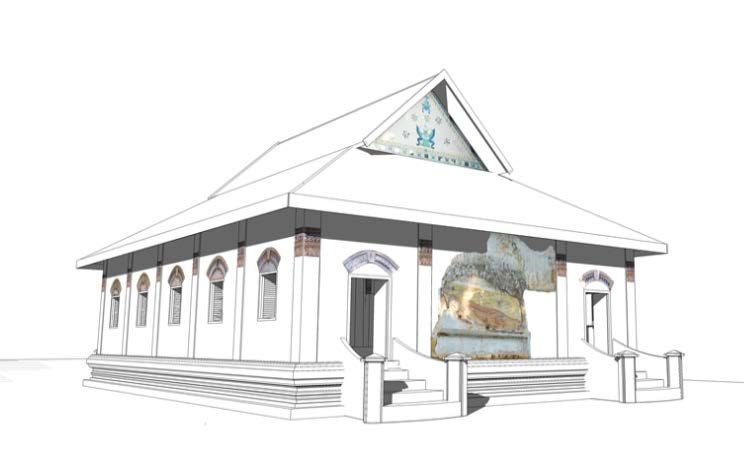
J. Eng. Applied Sci., 15 (6): 1431-1444, 2020

           MATERIALS AND METHODS                              They settled on the bank of Nam Kam (river) and named
                                                              the village ‘Ban Fang Daeng’, since, there were a lot of
 History: Documentary research and field study was            ‘Mark Daeng’ trees (Sealing wax palm) and also because
employed in this research on the history of That Phanom       of the fact that both sides of the river were covered in red
mural wall painting in Nakhon Phanom province. Data           soil. The community is an old community which holds a
were collected using interviews and survey. Data being        position called ‘Monastery Monk’. Monastery monks are
presented involve background information of the               entitled to look after Phra That Phanom and are exempted
community, temples and mural painting on walls found at       from paying taxes to the royal court. Wat Hua Wieng
Hua Wieng Rangsi temple, Puttasima temple, Poe-kam            community is established in the upper part of Rim Nam
temple. The study results reveal that:                        Kam community which is 6 km away from Kong river.
                                                              For this reason, this community is important strategically,
Hua Wieng Rangsi temple, that Phanom sub-district,            since, it connects with Sakon Nakhon-the headspring of
that Phanom district, Nakhon Phanom province: Hua             the river and That Phanom city which is at the mouth of
Wieng Rangsi temple is situated in the old community.         Kong river.
The community used to hold the title as ‘Monastery Serf’s           Puttasima temple was established on 1st January,
who entitled to look after Phra That Phonom and being         2308 AD it was given consecrated boundaries on
exempt from paying taxes to the royal court. Wat Hua          15th January 2462 AD (DRA, 1996) The temple with
Wieng is located in the upper area of the community           discovered mural painting was constructed in a stifling
beside Kong river. The place serves as an important port      style. The size with a size of about 3 rooms with 1 porch
in trading and exchanging goods of That Phanom city.          on the front. The base is decorated with 1 row of pointed
      Hua Wieng Rangsi is situated in Wat Hua Wieng. It       torus moulding base. Two windows are placed on each
is a Thammayuti Nikai temple. Rests around 2 km away          side-one window per room, except in the west where the
from Phra That Phanom are ports which are used to             last room is situated. Principle Buddha image is enshrined
exchange goods. The new Isaan temple where the mural          in this room with no window. The front of the temple
painting is found was built in replacement of the deserted    faces eastward. At the entrance is the staircase which
one. The temple faces eastwards to the Kong river which       resembles a bell like that of Europe-a style popular among
was then the main route people used to commute. The           Vietnamese craftsmen. It is ascribed that the temple was
temple was constructed in the style called ‘Song Rong’        built before it was given consecrated boundaries around
using bricks before being plastered with stucco. It was       241-2462 AD., around the same time when Hua Wieng
presumed that the temple was built by Vietnamese              Rangsi was established in That Phanom sub-district, That
construction workers in around 2460-2462 AD.                  Phanom district, Nakhon Phanom province.
‘Visungkamsima’ was given on 19 January, 2462 AD.                   The mural painting was created around 2463 AD by
From the temple which was built with ‘Song Rong’ style,       a craftsman named Mr. Kumsing Chaiyo (DRA., 1996).
it later adopted features seen in temples situated in the     Nevertheless, Samosorn, (1989) stated that the painters
lower NE and adjusted to a more contemporary style            include Jankoon and Janpui, Luang Chan Aksorn, Jan
when That Phanom was restored for the fifth time in           Meng and Mr. Kumsing-a Laotian who was hired to paint
2444 AD by a monk named Wirote Ratnobol from Tung             a mural painting at Puttasima temple and Phra That
Sri Muang temple in Ubon Ratchathani.                         Phanom Chapel entrance when the monk named
      The discovered mural painting was created around        ‘Pra Kaew’ was the abbot. From the survey, carved on the
2462-2463 AD. by an official named Luang Chan Aksorn          stone inscription found inside the temple was the name
with local artist, Ajarn Koon and Janlee. Luang Chan          Jan Sing as the painter of the mural painting. Therefore,
Aksorn was the painter who used to paint mural painting       it can be said that there are several painters contributing
on the wall of Tung Sri Muang temple in Muang Ubon            to this temple.
Ratchathani province. He was persuaded by Monk Wirote
Ratanobol to assist with the 5th restoration of Phra That     Poe Kum temple, Nam Kum sub-district, That
Phanom since, 2444 AD. Jankoon and Janlee, however            Phanom district, Nakhon Phanom province: Ban Nam
were the local artists from That Phanom city. It is           Kum community is located at the mouth of Nam Kum
therefore, believed that the mural paintings in this temple   river. The river source is in Nong Han, Muang district,
were created by various artists.                              Sakon Nakhon province. The river flows 123 km
                                                              Southeastward to Kong river in Nam Kum sub-district,
Puttasima temple, Fang Daeng sub-district, That               That Phanom district, Nakhon Phanom province. Nam
Phanom district, Nakhon Phanom province: Ban Fang             Kum river composes of river branches: Bang river, Huai
Daeng which is located in Fang Daeng sub-district is          Khaen river and Phung river. In light of the settlement of
around 6 km away from That Phanom municipality.               the community, based on the community history, it is
People first migrated from Laos (situated on the left to      believed that people from Wang Ang Kam town, Sa Pang
Kong river) around 2384 AD to flee from ‘Haw War’.            town migrate to various places to flee from ‘Haw War’

                                                          1436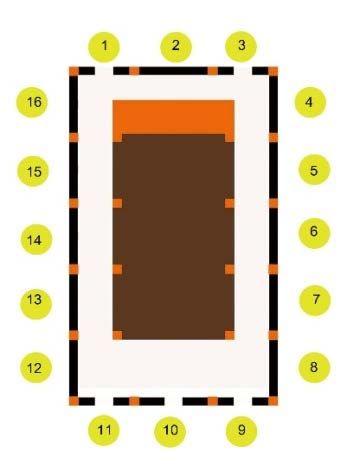
J. Eng. Applied Sci., 15 (6): 1431-1444, 2020

during the reign of Rama V. Many had crossed to the            was ordained as a monk at Poe Kum temple. There he
right side of the Kong river (currently Thailand). Some        studied with Prajumkhao on how to draw tracery. He later
land at the mouth of Nam Kum river which is an                 entered monkhood and studied at That Phanom temple
autonomous region of Mukdaharn city ruler. Nam Kum             and became the pupil of Luang Chan Aksorn. There, he
river used to serve as border separating Mukdaharn city        had various opportunities to work alongside with his
from Nakhon Phanom city. Many of the families settled          master, Luang Chan Aksorn, on several occasions: Hua
there until it became ‘Ban Na Kam Kong’ village which          Wieng Rangsi temple, Hor Phakeo, That Phanom temple.
is an important community rests beside Kong river. Ban         He later crossed the river to Laos to draw at different
Nam Kum community was very developed due to the fact           temples and also painted on ‘Pra Wet’ cloths. At the time,
that it is located near the bank of Kong river, making it      Master Wimonbundit (Luang Pu Tan) was the abbot and
strategically important in terms of transportation. With        oversaw the drawing technique called ‘tam-hoop’
strategically favourable position by being situated at the     (Mural paining technique in the Northeastern part of
mouth of the river that faces outwards to Kong river, it       Thailand). The process was also advised by Master
became the major port in the area. A telegraph from Royal      Wirote Rattanobol. It is therefore, believed that several
Prince Wattana in 2446 on 13 February indicated that           painters had contributed to the paintings.
Thailand had made a contract with France, permitting
them to build warehouses to house their guns and coals                    RESULTS AND DISCUSSION
and used Chiang Kong, Nong Khai, Chaiyaburi, Pak Num
Kam (Nam Kum river mouth), Mukdaharn, Khemmrat                 Widespread of capital culture to local through Master
and Pak Mun as their port for the steamers. The Telegraph      Wirote Rattanobol: The history of the creation of Muang
shows that Pak Nam Kum or Ban Num Kam was indeed               That Phanom mural paintings: mural Paintings which can
an important port used for transportation through              still be seen nowadays were first drawn in 2462-2477 AD
Kong river.                                                    or near the end of Rama VI reign and the beginning of
     Poe Kum temple is an old Mahanikaya sect temple           Rama VII reign-the time when the country was
built by people. It used to be Phra Pariyattidhamma            transitioning from ‘Absolute Monarch’ to a democratic
School in the past. However, since, education in the           country. Such is a phenomenon which concurrent with the
country has been developed, none came to attend at this        concept of ‘cultural diffusion’. Likewise, the widespread
school like they used to. Its role as Pariyattidhamma          or the diffusion of Bangkokian mural paintings to Muang
School was therefore, dissolved. The temple was                That Phanom through a group of artists in Ubon
established in 2418 AD during the reign of Rama V. The         Ratchathani province. The said group played an important
mural painting was drawn before 2476 AD and the temple         role when Master Wirote Rattanobol and Luang Chan
was consecrated in the same year (2476 AD). The temple         Aksorn came to restore That Phanom. This is in line with
was named after bodhi tree grew at the foot of Pak Mae         Patarasuk (2011) who described the influence Master
Nam Kam bridge. The temple was constructed when                Wirote Rattanobol had on the restoration of Phra That
Provost Wimondit (Luang Pu Tan) was the abbot who              Phanom, since, 2444 AD. During that time, grantors
oversaw the construction project with together with            traveled to invite Master Wirote Rattnobol whose title
following construction counsels to the project: provost        was Master Udon Pitak Kanadej of Tung Sri Muang
Sila Pirat or Ya Tan Mi, the former abbot of Phra That         temple, since, he was specialized in restoring stupa.
Phanom and the first Ecclesiastical district officer of That         Master Wirote Rattnobol possessed notable ability in
Phanom (2458-2479) and Provost Wirote Ratanobol from           producing mural paintings of which style had the mixture
Tung Sri Muang temple in Ubon Ratchathani. After               of the pattern used in the royal court and local artistic
Luang Pu Tan passed away in 2512 AD, people built              sense. This is consistent who described of the mural
him a stupa which houses his bone inside. The stupa was        painting in Tung Srimuang temple in Ubon Ratchathani
then placed behind the temple. It was built in                 province that it contains the resemblance of the pattern
remembrance of his contributions, especially, for his          commonly used in Bangkok during the end of the Rama
leadership during the temple was built and the mural           iv reign until the beginning of Rama V reign and artistic
painting was completed.                                        pattern found when the Phra That Phonom was restored
     Mural Painting found in Poe Kum temple was built          during the time Master Wirote Rattanobol was an abbot
around 2476 AD by Paw Lee Chapran and Mr. Bunpan.              (2424-2485 AD). During such restoration by Master
Chapran, the brother. The mural painting was completed         Wirote Rattanobol, mural paintings had been improved,
within over a year. Lee Chapran, the craftsman used to         adjusted and mixed with local artists’ taste. Such change
draw mural painting with Luang Cha Aksorn at Hua               and adjustment were the results of an attempt for the
Wirng Rangsi temple in That Phaom sub-district, That           survival of the artwork. This is consistent with Chawalit
Phanom district, Nakhon Phanom province. Master Lee            Atipatayakul (2017a, b) who mentioned the role played by
Chapran was from Ban Nam Kum but was locally from              Master Wirote Rattanobol that he was once educated in
Mukdahan. He had learned the skill of painting once he         Bangkok and stayed at an equipment office. There,

                                                           1437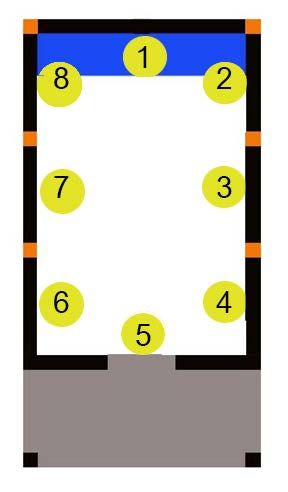
J. Eng. Applied Sci., 15 (6): 1431-1444, 2020

Master Wirote had absorbed the artistry sense of                walls of the temple’s Sims (main halls), chapel, temple
Bangkok. Once he returned to Tung Sri Muang temple in           repository for the Buddhist scriptures and the hall for the
Ubon Ratchathani province, he had an opportunity to             people to pay respect to the Buddha image. He explained
work with Luang Chan Aksorn, who had taught his                 that the mural paintings on those walls are like those
pupil the art of mural painting which was later used with       which can be found in Thai mural painting. It was found
all the ‘Sims’ of the three temples in Muang That               that the fine art evidence of Laos which are antique mural
Phanom.                                                         paintings were drawn in Thai Rattanakosin era (Rama III
                                                                and Rama IV). Examples are mural paintings on walls
Cultural mixture between capital and local artistry             discovered in the main hall of Sisaket temple in
senses: Regarding the relationship of the artists who           Vientiane, Siputtabad temple, Pa Huak temple, Long
created mural painting in all three temples, their,             Koon temple in Vientiane, etc. These mural paintings can
expressions are interrelated in that all mural paintings’       be divided into 3 groups based on the received influence
styles are the mixture of the capital and that of a local.      in different eras: Ratanakosin influence (during the end of
The chief artists who drew mural painting at Hua Wieng          24th BE to the mid-25th BE), local style (the end of
Rangsi are Luang Chan Aksorn who was the standout               24-25th BE) and the current style (since the 26th BE)
pupil of Master Wirote Rattanobol. Therefore, it was            (Saisingha, 2012). From the discussion above, it can be
inevitable for him to possessed cultural diffusion concept      seen that the diffusion of mural painting styles of
in light of mural painting-passing on painting style used       Bangkok influences directly and indirectly to border cities
in this temple to his other artistry pieces. In the same        and colonial cities. Depending on the local border cities,
regard, though Puttasima temple’s mural paintings were          they could choose to adopt the style or adapt by adjusting
created at around the same time, though the style               it to be in harmony with the community’s tradition and
expressed through the work was that of a local artist like      cultures. In the case of mural painting of That Phanom,
Mr. Kamsing, there is still a mixture of capital artistry       the community both adopt and adapt the influence they
style which Luang Chan Aksorn and his pupils from Hua           received to make it consistent with their local
Wieng temple used. As for Poe Kum temple, the abbot             community.
who was Master Wimon Bundit (Luang Paw Kum Tun)
was also then the key pupil of Master Wirote Rattanobol         Cultural mixture through artistry and literary
back when Pra That Phanom was being restored. Though            expression: Though the administration regime of
Master Wirote Rattanobol had gone back to Ubon                  Isaan had long been changed from ‘A-ya Si’
Ratchathani, Master Wimon Bundit still constantly               (Four Administration Unit Regime) to Thesapibal Regime
received affection from Master Wirote Rattanobol. Such          and to Absolute Monarchy, artistry influences they
was evident when the coin relic was made with Luang             received from Siam were usually partial. Most would be
Poo Tun’s (Master Wimon Bundit) name on it. The relic           adjusted and mixed either in its pattern or the content to
coin was made in approximately 2483 AD and is now               make it harmonize with their own local art. In the case of
very rare. Luang Poo Rod or Master Wirote Rattnobol had         Hua Wieng Rangsi temple, though Ramayana is included
ordered the coin to be made to celebrate the monk’s rank        in their mural paintings like that of the ones in Bangkok,
of Luang Poo Tun or Master Wimon Bundit. In the front           a lot of the paintings are still about the 10 last Jatakas
of the coin is the portrait of Luang Poo Tun and in the         which is more popular in Isaan region. As for Poe Kum
back is the picture of Master Wirote Rattanobol. Such is        temple, included in their art work is local literary work
the evidence that mural painting in Siam was strongly           such as ‘Suriwong’ which took up as much space as the
influenced by Master Wirote Rattanobol.                         story of the Buddha did. In the case of Phuttasima temple,
      The influence of Bangkok mural pattern diffusion          local literature being told through their paintings called
which was passed on to other places through the border          ‘Sinsai’ of which portion is about the same as that of
city like Ubon Ratchathani had influenced local art. This       the ’10 Last Jatakas’. Intertwined in these artistry pieces
is consistent with a study conducted by Green (2011). Her       are also the villagers’ livelihood that was illustrated on the
title of the study is ‘from Gold leaf to Buddhist scripture’.   wall. These adaptation and adjustment are consistent with
The study summarizes that the relation to the eastern           Saisingha (2017), who presents the influence of Siamese
region which was found in the Burmese mural painting in         fine arts on Luang Prabang artistry work during the time
the later era was influenced by Thai mural painting. In         when Siam ruled over Luang Prabang. The study was
1767 AD, Burmese army invaded Krung Sri Ayudhaya                conducted on the mural painting of which story is about
and had brought with them Thai prisoners to the central of       ‘Chompoobodi Sutre’ in Pbaa Louak temple (Pbaa
Burma. Among the prisoners were artists and actors. It is       Huak), it was found that the pattern, principle and
believed that this was the beginning that Thai art started      reflection of Luang Prabang people in Laos that though
to influence Burmese art, including their mural paintings.      the ‘Chompoobodi Sutre’ mural painting in Luang
Saisingha (2012) also describes the mural paintings in          Prabang was created by mimicking Na Nong temple’s
Laos that mural paintings can be commonly found on the          mural painting about the great emperor that Rama III

                                                            1438
J. Eng. Applied Sci., 15 (6): 1431-1444, 2020
created inside the main hall, Laos’ drawing in Pbaa Louak influenced by moral precepts, beliefs, techniques and
temple also included in the artwork Laos’ social way of forms they received form the central of Thailand.
life and culture. Nevertheless, partial adjustments was applied to make the
In other cases of Phuttasima temple which were built drawing correspond with the artist’s taste, that is by
after the regime was changed, the temple did not adopt the adding illustrations which show the livelihood of Tak
whole distinctive character of mural painting in their people. This has made the main story became distinct.
artwork. They instead used local literature called Some adjustments were applied to reflects the local’s
‘Suriwong’ as their main story in the mural painting. This artistry tastes. The mural paintings are therefore,
is in line with Singsuwan’s (2014) study. The role of independent in terms of the chosen story, spaces used for
politics on social’s national state from 2475-2500 BE the illustrations, the position of the painting and forms of
places much importance on the people who are an their expression.
essential element to the state. This has drawn Isaan people Saiphan (2016) stated that if analyzed through
to mobilize political and cultural movements based on cultural-social context during the reign of Rama VI, it is
their ‘Localism Consciousness’ principle. Culturally, found that the Siam’s center of power was Bangkok. They
nationalism in the region has become more widespread. It positioned themselves as ‘the owner of the country’ by
has encouraged Isaan people to learn more about their hosting the restoration of Phra That Phanom to let Laotian
own background and present their local historical identity. in both Laos and Siam including people of mixed blood
This is an attempt of Isaan people in bargaining for and between Thai-Laos who are citizens of Siam residing near
adapting to be more recognizable as ‘part of the nation’ in Kong river acknowledge the position of the central.
the new political system. Therefore, in each restoration, a group of artists would be
Isaan people’s adaptation to be more recognizable as assigned by the king-the center of power in the Absolute
‘part of the nation’ in the new political system is evident Monarchy regime-to take up their duty as the ‘artists’ who
in mural painting which tells the story about the Buddha were directly appointed by the king. Sometimes they
or Pathamasambodhis or Pathomsompoj as written in would be called ‘Chang Luang’ (chief artists) of the local
Laotian on the ancient palm leaf manuscripts. The said people. The word conveys a different sense in meaning
mural painting was on the wall behind the main Buddha from the word ‘Chang Luang Haeng Ratchasumnak’
image in Phuttasima temple. However, in Hua Wieng (chief artist of the royal court) who is considered one with
Rangsi, it was found on the opposite side of the main the highest knowledge as an artist of the state-royal court
Buddha image. In Poe Kum temple, most of the mural artist.
paintings were drawn most wall to the right of the main In light of mural paintings found on the wall of Hua
Buddha image. Though the three mural paintings are in Wieng Rangsi and Poe Kam temples in Ban Na Kum,
the same area, how ‘Pathomsompoj’ was drawn is highly though Luang Chang Aksorn-referred to as
independent. This contradicts with the research study of ‘Chang Luang’ by the local people-took part in the
nongnuch Phoomalee (2016). In the study, the researcher drawing, the painting in Hua Wieng Rangsi still reflects
mentioned about illustrations of story of the Buddha the primitive mural tradition in the deepest part of Isaan
found in Ban Nua Khon Kaen temple in Roi Et province, region which located along the border between Siam and
in that though skills and knowledge have been locally Laos which was at the time the colonial country of
passed on to the local artists through kinship, it doesn’t France. A similar case can be seen in Taku temple in
mean that the paintings used in religious art are Nakhon Ratchasima Province locating along the margin
completely independent of each other or disorderly done. of the Siam Empire and Lancang Empire in the context of
The study on mural paintings in That Phanom, the results the traditional state. This region had later become Isaan.
of the study says otherwise-each work is independent of
each other. Such is consistent with Atipatayakul (2012a,
Politics and religion in Isaan through
b) who said that if look at the work superficially, one
Thammayutanigai: In the case of Sim of Hua Wieng
might find that the artists did not follow any rules or
regulations in regard to placement of mural paintings. Rangsi temple which is a Thammayutanigai temple, it was
However, if the works are perceived from the different influenced by Sim in the Southern Isaan. The researcher
point of view, one might find that it is rather the reflection presumed that the influence stemmed from the desire to
of the artists’ tastes. The artists create their pieces with the diffuse the sense of Siam sate to the region gradually with
craftsmanship they have more abundantly than other the help of Thammayutanigai. Tongklom (2013) conducts
laymen. As a result, each artistry piece with different a study on Thammayutanugai temples in Ubon
locality would express their differences in tastes and Ratchathani and found that the main hall is considered the
layouts. This is consistent with Songmek (1995) who most important architecture in Thammayutamigai temple
study cultural integration between Bangkok and Lanna in in Ubon Ratchathani. The main hall will usually be in the
mural painting during the reign of Rama V.Mural center of the temple. The building is decorated with
Paintings inside Bod Manee Sriboon-Roeng temple was Tympanum which looks like stupa or bell. The tympanum
1439J. Eng. Applied Sci., 15 (6): 1431-1444, 2020
is not decorated with gables but will be adorned with King Rama V, the King had ordered that local
decorating features called ‘Lamyong’ which are carved administration system in the country be revolutionized by
into different forms such as Naka body, the curved, dividing administration areas into Monthon Thesapibal
hangsang and Naka head. Thammayutanigai temple in one Thesapibal was divided into several Monthons in the
Ubon Ratchathani can be divided into 3 ears. The 1st era border city of Laos. One of the Monthons was ‘Monthon
refers to the time when the temple was established in Udon’ which was changed from ‘Monthon Lao Puan’. In
2394-2452 BE during the reign of Rama IV and V-the 2436 BE, 6 cities which were under the administration
time when Thammayutanigai was widespread in Isaan to were: Udon Thani, Khon Kaen, Sakon Nakhon, Loei and
create unity in the empire. Thammayatanigai originated in Nong Khai. Therefore, the widespread of
Ubon Ratchathani province in Isaan. The architecture of Thammayutinigai had brought with them the architectural
Thammayutanigai temple in Ubon Ratchathani was style of Sim from Southern Isaan or Sim from Monthon
popular locally and people were united. For this reason, Isaan to That Phanom with them. Saiphan (2016)
this new cult was easily embraced by the local people. replicated that the adjustment made with an attempt to
The 2nd era was in 2453-2480 BE during the reign of centralize the Buddhism belief had critically affected
Rama VI until the reign of Rama VIII. In this era, Buddhism belief in the local. One regulation was
Thammyutanigai temple’s identity became more apparent promulgated; it stated that before monks can be accepted
in terms of architectural feature in Ubon Ratchathani or certified, the person to be ordained as monk shall not
province. This reflects that Thatyutinigai became more have tattoos on his face and shall not be ordained before
solidified. It also acted as religious and political leaders more than 3 times, etc. The dissolution of traditional
that follow the policy of the state. The 3rd era started in belief which intertwined with the precepts of spirits and
2481 BE since, the day of General Por Pibul Songkram Brahmin integrated with the Buddhism belief, especially,
until the present. In this era, the main hall of the temples the reorganization of monastic order had made the role
looks like the hall which can be commonly seen in the and the concept of Thammayutinigai-the representative
central of Thailand. The difference can be seen in some from the central-became more meaningful. Such change
details of the main hall of ‘Wat Supattanaram had driven local Buddhism practice to be adjusted.
Worawihan’-the symbol of Thamayutabigai temple in Promotion of monkhood rank to ‘Sa’ and ‘Koo’ based on
Isaan. This implies that the unity of the central empire a local tradition called ‘Hod Song’ and ‘Sangha Act of
became more solidify, the monastic order of 1941 (Ror Sor 121)’ was dissolute. Such were the results
Thammyutinigai became less significant. of the religious revolution when ‘Somdej Mahawirawong
Therefore, forms of Sim (main hall) in Hua Wieng was the ecclesiastical provincial Governor Monthon
Rangsi temple resembles Sim in the southern part of Isaan. Such was the time where concepts and religious
Isaan, especially, the monk’s seat which raised up a little practices had been dramatically changed and centralized.
bit higher from the floor. The plaster base for Buddha Here was the beginning of the relationship between
image was separated from the wall of the main hall. These religion and politics. Buddhism was used by the state to
are the difference which can not be found in Puttasima draw in local to the central as well as enforcing new
and Poe Kum temples. Both temples do not have raised administration mechanism and ideology of nationality.
seat for monks and plaster base for Buddha image was This is consistent with the study conducted by
built attached to the wall on the opposite side of Sankom Puchidchawakorn (2014). The study reveals development
(2015) or the main hall’s entrance. Such is consistent with and change of Lancang ordination and wihara halls
who described how Thammayutinigai under Monk (temples) in Isaan region can be divided into 5 periods.
Wachirayan-pikku became widespread. After Monk During the first period, Lancnag Empire still ruled over
Wachirayan-pikku established Thammayutinigai, several Isaan region. Therefore, the construction of Lancang
men came to enter the sect as followers. Thammayutinigai ordination and wihara halls was influenced by
belief then became prosperous in various border cities. Vientiane-Lancang Empire. It can be said that it was built
From the border city of Laos (currently the Northeastern in the style called ‘Sakun Chang Lancang’. The second
Thailand), Phra Ajarn Panatulo (Dee) and Phra Ajarn period was when the power of Lancang Empire started to
Te-Watammee (Mow) who were the followers of Monk deteriorate. The construction of temples in Isaan region
Wachirayan-pikku came to spread the religion in Ubon had been adjusted to the ‘local context’. There seems to
Ratchathani, their hometown. They also built Wat be more independence in this period, since, artists were
Supattanaram Worawihan which they later anointed it as allowed to use existing materials. This is the period where
the first temple under Thammayutinigai sect in the border the society was stepping into the style called ‘Sakun
town-Laos. Once the number of Thammayutinigai Chang Thai-Isaan’ which was based on the architecture
followers grew larger, the religion became more concept called ‘Local Issan Sim’. The third period
widespread to the cities nearby. Later, during the reign of happened during the reign of King Rama IV. Since, the
1440J. Eng. Applied Sci., 15 (6): 1431-1444, 2020
reign of Rama IV, many changes had taken place due to the call of Siam Royal Court that ‘the nation’ be built and
numbers of factor which include the invasion of France solidified. Nevertheless, the way to make local artwork
and migration of Vietnamese people (Yuan). This had survive is to adjust and be dynamic to the
resulted in applied architecture called ‘Local applied Sim’ changes-because in any circumstances, printed on those
which can be divided into sub-categories: ‘Isaan Applied mural paintings, one will always see the ways of life of
Sim’ and ‘Yuan/Vietnamese Applied Sim’. The fourth Isaan people there.
period was when General Por Pibulsongkram and Fine During the breakthrough, though mural paintings of
Arts Department created a prototype Sim. With better That Phanom had integrated into its drawing the local
infrastructure-improved railway, influence from the artistry and that of the Siamese state, the influence (of
central in fluxed into Isaan region. Sim was built with the Siamese State) became gradually less intense. This is
‘mixture of central and local style’. The last period is in consistent with Atipatayakul (2012a, b), who stated that
the current reign. Old Sims start to deteriorate. Isaan mural paintings are usually drawn inside and
Conserving the Sims was not easy since values hold by outside of the temple’s main hall or Sim. This special
Isaan people had changed and the fact that communities technique they used was passed on to them from Lao
are growing larger. In this period, old Sims have been torn PDR. However such technique has limitation in terms of
down and replaced with the ‘new temple with common the colors use. Because of this limitation, the color of the
style found in the central of Thailand’. skins is usually left out, untarnished as can be seen in the
Nevertheless, the researcher believes that the pictures. The first phase was the integration between
construction of Sims can also be affected by political central style-form of prototypes for the local artists to
factors as well. When Muang That Phanom acknowledged follow-and Isaan artistry style. The second phase is the
of such relationship (between politics and Sim’s phase the local artists beautifully expressed themselves
architectural forms), it attempts to maintain its social through their distinct techniques. And the last phase is the
status by bringing in its local culture and make any combination of various stories and placements of the
necessary adjustments that are in agreement with religious paintings. In this phase, central painting style has again
and country’s administrative ideologies-it started by become somewhat influential to the paintings in terms of
adjusting the said relationship by giving Sim the design the dimension used in paintings to indicate the distance of
which is both localized and centralized that possesses the objects. This technique the central learned was
Siamese state design. originated from the western world.
Literary works in mural paintings: Aesthetic stories of Pop culture literature; From Siamese State to Muang
literary works are used to convey religious meaning and That Phanom mural paintings: Peripheral literature in
communicate religious and state administrative That Phanom mural painting are Bangkok’s pop culture
ideologies. Literary works which appear on the mural literature which later spread to other regions. Popularity
paintings composes of canon literature and peripheral is probably the key factor that these works of literature
literature. Canon literatures are used to convey religious were included in the mural paintings. Examples of these
meaning through the core idea of each story while literature are Ramayana in Hua Wieng Rangsi, Puttasima
peripheral literature, especially, Ramayana story, the and Poe Kum temples; Chantakorob and King Saud
capture of ramayana, Chantakorab, Lucksanawong and thon-manohra in mural paintings of Puttasima temple and
King Saud thon-manohra are expressed aesthetically to Lucksanawong in Hua Wieng Rangsi temple. These
reflect religious and state administrative ideologies literatures weren’t the main focus in the mural painting.
through the symbolic use in the mural painting. Appear in The researcher assumed that the said literatures weren’t
the paintings of Hua Wieng Rangsi and Puttasima temples popular in local culture but favorable to the people in
are Siamese flag-white elephant in the middle with red Bangkok. This is consistent with Yoo-in (2013), who
background; king Rama IV thought that the red flag delved into the popular literature in Bangkok, especially,
people commonly used was the same as the other national in printed media since BE 2378 during the reign of King
flags. He, therefore, ordered that a white elephant be Rama III. This period was the era where modern printing
placed in the middle of the flag. The flag was then used as from the western world entered the country. The key
Siamese flag until King Rama VI era. In BE 2549, the figure who played an important in the printing media was
government declared in the Flag Act RS 129, stipulating Dr. Dan Beach Bradley, an American Missionary who
that the flag shall have red background with white brought in the first printing machine and Thai types from
elephant wearing armor and looking straight at the Singapore in BE 2378. Many printing houses sprung up
flagpole (TNIO., 2011). Having flags drawn in the mural during this period such as Bradley Printing House,
painting was the declaration that Muang That Phanom Dr. Smith Printing House, Ratcharoen or Wat Kaw
was now part of the Siamese state, so as to correspond to Printing House, Hang Samut Printing House, etc. Printing
1441J. Eng. Applied Sci., 15 (6): 1431-1444, 2020
houses which played such an important to Thai folktale storyline does resemble with ‘Suriwong’ which was
books are Dr. Smith and Ratcharoen Prining Houses. written in the mural painting at Poe Kam temple in Nam
Many of the Thai fairytales or folklore tales were also Kum sub-district. Therefore, it can be said that though
printed by other printing houses which was established Lucksanawong was popular in Siam but That Phanom
around the same time as Ratcharoen Printing House such people chose Suriyawong over Luksanawong which has
as Dr. Smith Printing House, Nai Sin Printing House, Nai the same storyline due to ‘their favor for local culture’.
Tep Printing House and Panichsappaudom Printing
House. It was found that peripheral literature seen in the CONCLUSION
mural painting of That Phanom were popular among the
people and were published by numerous printing houses History: From an examination on the history of the
such as Lucksanawong and Chantakorob. Moreover, the creation of the wall mural painting of Muang That
story which was poplar for the play performed by all Phanom in Nakhon Phanom province, it was found that
females (Lakorn Nai) was ‘Ramayana’. As for the stories That Phanom mural painting in Nakhon Phanom province
used in the play performed by all males (Lakorn Nork) was first drawn between 2462-2477 AD near the end of
include Laucksanawong, Chantakorob and Ramayana. As the reign of Rama VI until the beginning of Rama VII.
for the popular books which were adapted into plays were This is the country’s transition period from absolute
Lucksanawong and Chantakorob. Lucksanawong was also regime to a democratic country. Appear in the
commonly used in rod puppet show as well. ‘Pleang Song mural painting found in the three temples are key
Kruang’, a kind of play originated during the reign of political events.
King Rama V, usually used Lucksanawong and ‘Sims’ or main halls of Hua Wieng Rangsi and
Chantakarob in the play. ‘Talung’ a kind of entertain Phuttasima temples were built in 2460 AD. The temples
popular in the central of Siam during King Rama V reign. were consecrated the same year in 2462 AD. Mural
Stories used in ‘Talung’ was Ramayana including other paintings were first drawn at Hua Wieng Rangsi temple in
stories such as Lucksanawong in the later period. It is 2462 AD. and Puutasima temple in 2463 AD. The period
possible that peripheral literature were popular in when the paintings were created was around the same
Bangkok before their popularity reached Muang That time-from 2453 until 2468 AD. during the reign of Rama
Phanom. People who played important roles in the VI-by the same group of artists.
creation of mural painting in That Phanom, for example, ‘Sim’ in Poe Kam temple was built in 2476 AD. and
Master Wirote Ratanobol and Luang Chan Aksorn were the mural painting was painted during 2476-2477 AD.
all aware of and understand the central pop culture. The time when mural paintings were first painted in Hua
In the case of the literary story of Siam’s Wieng Rangsi temple is around 14-15 years apart when
‘Lucksanawong’ and Suriyawong which were included in Phuttasima temple have their walls decorated with the
That Phanom Mural Paintings, The Princess Maha Chakri mural art.
Sirindhorn Anthropology Centre (Public Organization) Temples in Muang That Phanom with mural paintings
(online) stated that Lucksanawong is a literature in include the temples surrounding That Phanom Stupa and
Ratanakosin era (King Rama III) composed by Sunthorn That Phanom temple itself. These temples are considered
Phu, Thai legendary poet and writer (Anonymous, 2017). vital in light of monastery administration and education of
OLH. (2015) also stated that the tales ‘Lucksanawong’ monks in the area. Nevertheless, Poe Kum temple in
was written by Sunthorn Phu and was composed during Northern Ban Na Kum and Phuttasima temple in Ban
the reign of King Rama III. Lucksanawong is a poem of Fang Daeng are also significant to both large and old
which story and aesthetics are highly valuable. It was communities. The reason is that both Ban Na Kum and
written with a great plot and was able to touch its reader. Ban Fang Daeng are considered important, since, they
It has been one of many pieces of literature which settled around That Phanom Stupa and received influence
embedded in the hearts of many of its audience. The only from artistry work which was used during the restoration
scene of Laucksanawong drawn in the mural painting in of Phra That Phanom. They have especially, adsorbed
Hua Wieng Rangsi temple is the scene when Pra creativity expressed through mural paintings created by
Lucksanawong is devouring Kinnara. Lucksanawong also Luang Chan Aksorn and his pupils in Hua Wieng Rangsi
reflects people’s belief in destined wife or husband, temple. It can be said that this group of artists had brought
worshipping or praying to the holy creatures or spirits to with them a sense of art from Bangkok and passed it on to
help and protect them or to be a witness to them. It also border cities in Isaan region. Such was evident, especially
tells about people’s belief in dreams, dream prophecy and in artistry concept of Phra Kru Wirote Rattanobol, the
fortune telling. The story is intertwined with Thai master from Tung Sri Muang temple in Ubon Ratchathani
people’s traditions in the past. Looking at the content of province. It is apparent that the mural painting style in
the literature ‘Lucksanawong’ by Sunthorn Phu, the Bangkok was very influential to the mural paintings found
1442You can also read


