Local Climate Solutions for Africa 2017: Water & Climate Congress
←
→
Page content transcription
If your browser does not render page correctly, please read the page content below
Local Climate Solutions for Africa 2017:
           Water & Climate Congress

                            HIGHLIGHTS REPORT

                                         22-24 March 2017

           Co-hosted by ICLEI – Local Governments for Sustainability and the City of Ekurhuleni,
South Africa, in partnership with a wide range of cities, national, regional and international organisations.

                                #LoCS4Africa            #Water4Cities
The LoCS4Africa journey
The biennial Local Climate Solutions
for Africa Congress, also referred to as      The debut congress, LoCS4Africa 2011, was convened in Cape Town,
LoCS4Africa, provides a unique and            South Africa, and co-hosted by ICLEI Africa and the City of Cape Town.
accessible platform for African local         The event attracted participants from around the globe, drawing an
leaders and their associations, as well       audience from over 25 West, East, Central and Southern African countries.
as national governments, scientists,
technical experts, development
partners, business, industry and
civil society to engage in strategic
                                              LoCS4Africa 2013 was held in Dar es Salaam, Tanzania, and had a special
discussions around Africa’s re-imagining
                                              focus on the food-water-energy nexus as pivotal pillars in addressing the
sustainable urban transitions. This is
                                              climate change challenge in Africa. It was attended by over 450 participants
particularly relevant in the context of the
                                              from more than 25 countries.
many challenges facing the continent,
including rapid urbanisation and an
uncertain future due to climate change.
                                              LoCS4Africa 2015, held in Durban, South Africa was attended by over
LoCS4Africa also presents a space for         200 participants from more than 20 countries. The event was focused on
local and subnational governments to          identifying pathways to implement the Durban Adaptation Charter within
engage with researchers, academia and         the African context.
financiers around possible solutions for
supporting sustainable, resilient and
inclusive development in Africa.
                                              LoCS4Africa 2017 took place in Ekurhuleni, South Africa. It provided
Each congress has a tailored theme that       the first platform for African local, subnational and national government
is strategically cross-cutting, with strong   representatives to deliberate and discuss water and climate change issues
emphasis on local leadership and the          and challenges with researchers, financiers and civil society. This congress
importance of a systemic and integrated       welcomed over 400 delegates from 40 different countries around the
approach in decision-making at local and      globe.
subnational government levels.

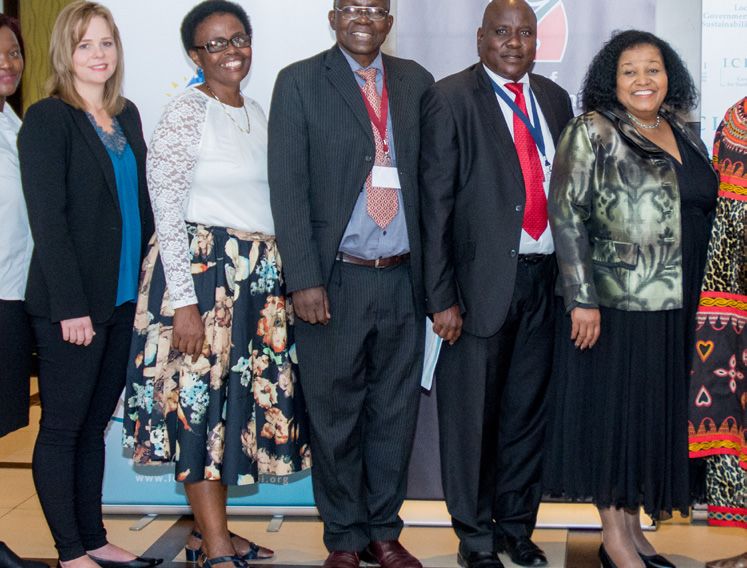
(From left) Mr. Hastings Chikoko, Ms. Faith Chikeya, Dr. Meggan Spires, Cllr. Ndosi Shongwe, Mayor Martin Moyo,
Rev. Mmachakga Mpho Moruakgomo, Minister Edna Molewa, Mayor Abel Langsi Ngwasoh, Cllr. Tiisetso Nketle,
Ms. Kobie Brand, Dr. Cecilia Kinuthia-Njenga and Dr. Uta Wehn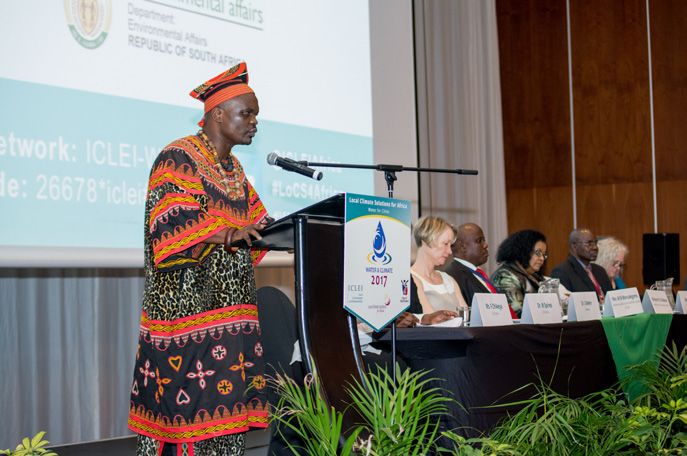
Collaborative action as a catalyst for addressing
     water and climate challenges in Africa
     The pan-African Local Climate Solutions for Africa 2017 Congress, co-hosted by ICLEI Africa and
     the City of Ekurhuleni, provided, for the first time in Africa, a platform for African cities and their
     partners to deliberate and explore collective solutions for addressing the critical water and
     climate related challenges that threaten to derail sustainable development in Africa.
     Throughout the congress, there was recognition that the challenges faced in Africa are complex,
     that they are global in nature, and require locally relevant, real time and context-specific
     solutions. These solutions should be based on knowledge produced by diverse stakeholders
     who act in a transdisciplinary manner. Addressing these challenges also requires innovative
     partnerships, networks and alliances, as well as openness to other perspectives. The need for
     collaboration beyond geographical and regional boundaries was recognised.
     The congress also acknowledged the landmark global agreements and frameworks that have
     been promulgated in recent years, flagging the need to link these global decisions to city
     actions. Key ingredients for successfully fostering sustainable development on the continent
     were identified to include driven city champions, empowered politicians, and clear principles of
     engagement where values and power relations are acknowledged.

                                        “There are no perfect solutions, and we need to recognise that the
                                         realities we face are messy, and thus we need to be open to learning
                                          by doing in driving sustainability in our cities and towns. A business
                                          as usual approach will no longer suffice.”

                                         Dr. Meggan Spires, Senior Manager: Climate Change,
                                        Resilience and Energy, ICLEI Africa, speaking in the closing
                                        plenary session

   “Cities are central to society and water is central to cities.”

             Prof. Bruce Hewitson, Professor and Head:
Climate Systems Analysis Group, University of Cape Town

                                                                                                                    1
                                                                                                   www.locs4africa.org
Strategic outcomes and key initiatives:
     ● Adoption of the Ekurhuleni Declaration on Water and Sanitation for Cities
     ● SURe Water for Africa: Developing Local Climate Solutions final project conference
     ● The Africa-EU Innovation Alliance for Water and Climate Initiative; AfriAlliance Launch Conference
     ● Launch of the climate change awareness-raising video by the host city, City of Ekurhuleni
     ● Launch of the African Water Adaptation through Knowledge Empowerment (AWAKE) project
     ● Launch of the Local Action for Biodiversity (LAB): Wetlands South Africa awareness-raising video
     ● Profiling of the Framework for a Green Infrastructure Planning Approach in the Gauteng City-Region (GCRO)

2
www.locs4africa.org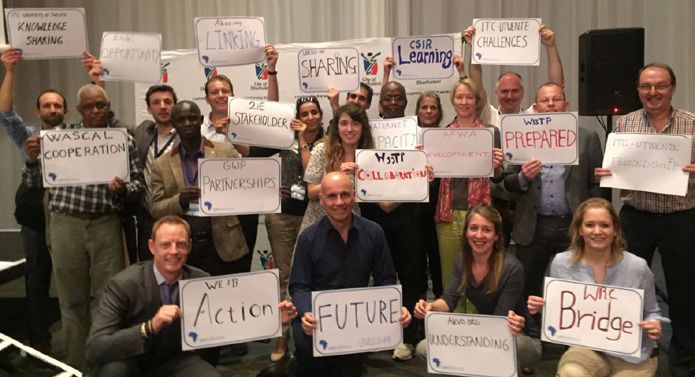
LoCS4Africa 2017 theme:
Water for Cities
Congress subthemes
Localising Integrated Urban Water Management
Provision of water and sanitation services at the local level is pivotal
to Africa’s urban future. Existing water management systems cannot
keep up with the demands that are expected to quadruple over the
next 25 years. Concerted efforts are needed for decision-makers to find
innovative design solutions.

Sustainable Sanitation Solutions for Africa’s Future
Cities need to take the lead in reimagining the sanitation sector and
transforming service provision in line with water security challenges and
the projected impacts of climate change.

Driving Local Climate Action
African cities need to understand and plan for the impacts of climate
change, which affect urban populations in significant ways. Addressing
the causes and impacts of climate change is essential in combating
poverty and promoting water security in Africa.

Urban Planning for Water Smart Cities
The rate of urbanisation on the African continent has led to a critical
need to alter existing and unsustainable development trajectories in
urban areas. It is essential that sustainable utilisation of water resources
and sanitation systems is mainstreamed into urban planning and
development processes at the local level.

Accessing Water & Climate Financing for Cities
Africa’s percentage of GDP invested in infrastructure is half that of other
urbanising regions of the world. Building resilience and water security
at local government and city level will require greater commitment to
critical infrastructure investment, as well as investment in social services
such as policing, urban planning and education.

Resource Efficient & Resilient Cities
Cities are vast consumers of resources. This, however, presents an
opportunity to re-engineer the way we view resources and utilise them
to ensure sustained social and economic development.

Water for Healthy Cities
The health and well-being of our urban communities is critical for social
and economic development. What is needed is proactive, inclusive and
integrated planning for the health sector in the context of the water,
sanitation and climate nexus.

The impacts of climate change, such as flooding and drought events,
often place increasing pressure on community health systems. This
manifests through increased cases of illness because of water borne
diseases, malnutrition and other adverse health impacts.

                                                                                       3
                                                                      www.locs4africa.org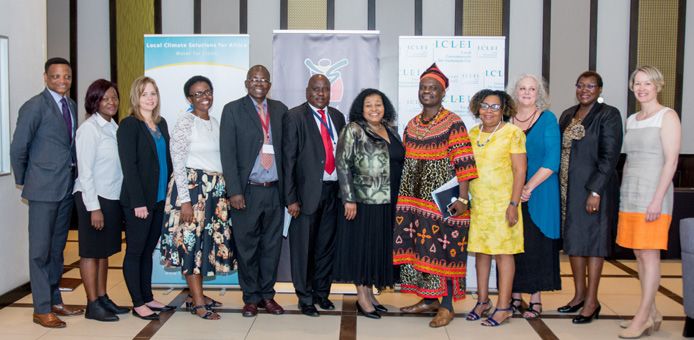
Walking the talk and greening the
                           LoCS4Africa 2017 Congress
      Guided by the ethos of promoting sustainable development in a practical
      manner, ICLEI Africa tried as best to host an event with minimal negative
      impacts on the environment. Practices promoted in preparation for and
      during LoCS4Africa 2017 included:

      ●   Hosting the pan-African congress at the Birchwood Hotel and OR Tambo International Conference Centre,
          which has an ambitious aim to be the Greenest Hotel and Conference Centre in Southern Africa. The facility
          holds gold status in the Heritage Environmental Rating Programme, which is audited annually. The Hotel
          and Conference Centre scored 80% in the 2016 audit.

      ●   Implementing energy efficiency through promoting the use of energy efficient technologies (lights and AV)
          and responsible use of energy.

      ●   Pro-actively monitoring and reducing the amount of waste generated prior to and during the event.

      ●   Encouraging efficient management of transport and the avoidance of non-essential flights so that air
          pollution (greenhouse gases) per capita was reduced.

      ●   Ensuring that the event greening efforts were communicated and marketed prior to and during the
          congress to stakeholders.

      ●   Ensuring that water was used in a responsible manner (for example, the congress opted for tap water
          served in jugs and providing delegates with aluminium water bottles to be refilled rather than purchasing
          bottled water).

                                            “Event greening should not be an option. It is about taking responsibility
                                             for our actions and ensuring environmentally and socially responsible
                                              decisions are made when organising and implementing an event.”

                                            Ms. Grace Stead, Special Projects & Partnerships, ICLEI Africa

4
www.locs4africa.org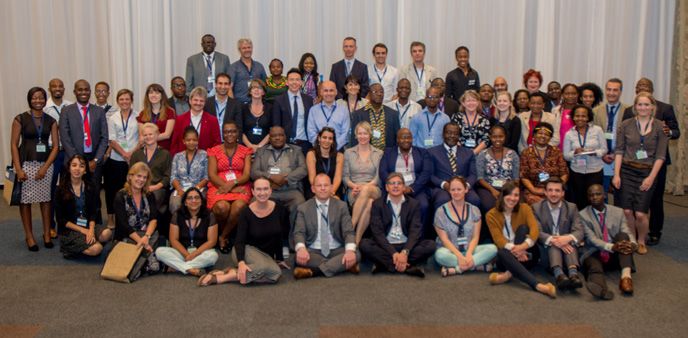
Local governments in Africa accelerating action towards
 an integrated, sustainable, climate smart urban future
 The opening plenary at LoCS4Africa 2017 set the scene for delegates to engage in
 meaningful dialogue and grapple with the difficult questions that the continent
 faces in ensuring water for cities.

 Building on the energy derived from the diversity of delegates, distinguished speakers from across
 Africa highlighted the following key points as critical to realising the objectives of the congress:

 ●     Promoting collaboration within and among African cities and local governments;

 ●     Policy implementation to provide clean water for cities as a basic human right;

 ●     Enhancing the capacity of cities as agents of change in managing the impacts of climate uncertainty; and

 ●     Learning from emerging trends to foster and support local innovation to provide water for cities in a
       sustainable manner.

     Mayor Abel Langsi Ngwasoh of Bafut, Cameroon, Chair of the ICLEI Africa Committee (pictured below),
     captured the ethos of the congress by acknowledging that “solutions for common African problems are
     born, tested and implemented in our cities through brave leaders who know that water is the lifeline
     of our existence.”

                                                                                                                  5
                                                                                              www.locs4africa.org
AfriAlliance Launch Conference

The AfriAlliance Launch Conference served as the inaugural
launch of the AfriAlliance innovation alliance on the African
continent and was hosted by the LoCS4Africa Congress, 22-24
March 2017 in Ekurhuleni, South-Africa. A diverse audience
participated in a total of 11 interactive sessions, covering
different topics concerning water and climate. A digest of the
sessions is presented on the page opposite.

About AfriAlliance                                               constraints and develops strategic advice for improving
AfriAlliance is a five year project funded by the European       collaboration within Africa and between Africa and the EU.
Union’s Horizon 2020 research and innovation programme.          To help improve water and climate monitoring and
AfriAlliance facilitates the collaboration of African and        forecasting in Africa, AfriAlliance takes a triple sensor
European stakeholders in the areas of water and climate          approach, whereby water and climate data from three
innovation, research, policy and capacity development by         independent sources are geospatially collocated: space-
supporting knowledge sharing and technology transfer.            based (satellites), in-situ hydro-meteorological station
Rather than creating new networks, the 16 European and           observation networks and local ground information.
African partners in this project consolidate existing ones.      Knowledge sharing is facilitated through a series of events
The ultimate objective is to increase African preparedness       and through an innovative online platform. Demand-driven
for future climate change challenges. AfriAlliance is led by     AfriAlliance ‘Action Groups’ bring together African and
the IHE Delft Institute for Water Education (Project Director:   European peers with relevant knowledge and expertise to
Dr. Uta Wehn) and runs from 2016 to 2021.                        work jointly towards solutions.

AfriAlliance activities                                                          The AfriAlliance project has received funding
The Africa-EU cooperation is taken to a practical level by                       from the European Union’s Horizon 2020
identifying (non-) technological innovation and solutions                        research and innovation programme under
for local needs and challenges. AfriAlliance also identifies                     grant agreement No. 689162.

                                                        www.afrialliance.org

6
www.locs4africa.org
AfriAlliance plenary opening
Almost 200 people attended the opening session of the AfriAlliance Conference on 22 March 2017 (World Water Day)
that featured three inspiring keynote speakers: Ms. Carmen Mena Abela, Head of the Horizon 2020 Eco-Innovation
sector in the European Commission (EC), Ms. Barbara Schreiner, Executive Director of Pegasys Institute and
Dr. Mandla Msibi, Group Executive Innovation & Impact at WRC. At the end of the keynotes, all AfriAlliance project
partners took to the stage to introduce themselves and revealed what AfriAlliance means to them in one word.

Showcasing initiatives in Africa
In a highly interactive session showcasing different initiatives in Africa, touching upon the themes of water and
climate, eight presenters were asked to “pitch” their initiative in just one minute to attract the attention of the
audience and to invite them to participate in more detailed presentations and discussions. The audience had the
opportunity to join three rounds of presentations in this carrousel style session. The following initiatives were
showcased: Technology Approval Group (TAG), WACDEP, SafeWater Africa, WADER, VicInAqua, WATERSPOUTT,
MAD4WATER and Waterfund.

Shaping the future of AfriAlliance
The AfriAlliance conference was a unique opportunity for the AfriAlliance team to hear how the project can shape its
future activities: supporting African stakeholders even better in their efforts to deal with climate change challenges.
AfriAlliance has another 4 years to go, the conference merely being the start. In a dedicated session, the audience
provided input using their mobile phones to answer multiple choice questions via the app Kahoot!
The results were displayed live on screen. For example, the audience stressed the importance of offline
interactions at meetings and events for engaging and motivating African and EU stakeholders. A panel consisting of
representatives of WRC, ICLEI Africa, Akvo, CSIR and Waternet reflected and commented on the results.

AfriAlliance Action Groups
Two of the five AfriAlliance Action Groups, “IWRM and Ethics” and “Efficient and Innovative Small Scale Irrigation”,
participated in the AfriAlliance conference and highlighted their activities and progress in a dedicated session. The
Action Groups bring together African and European peers and take a bottom-up approach for generating knowledge
and insights. In a follow-up session, the bottom up process for identifying themes for the next Call for AfriAlliance
Action Groups was kick-started. In small groups, the audience had the opportunity to discuss four broad themes and
to define their respective priority topics. The second Call for Action Groups will be issued in spring 2018.

                                                                                                                          7
                                                                                                    www.locs4africa.org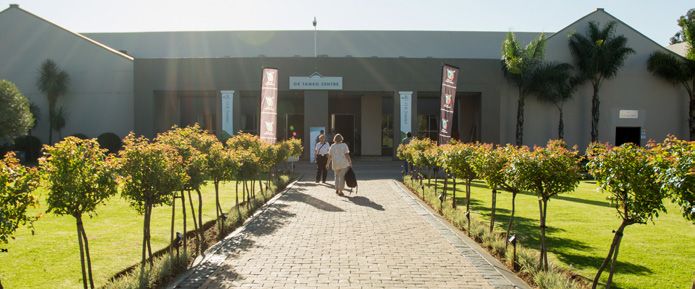
Ekurhuleni Declaration on
 Water and Sanitation for Cities
 The High Level Mayoral session was the pinnacle
 of the congress where mayors from over 40 cities
 in Africa, with support from high level city officials,   ICLEI Africa and the City of Ekurhuleni,
 deliberated on the strategic direction for water and      with support from the South Africa
 sanitation in Africa. Leading city networks in Africa,    Ministry of Environmental Affairs,
 C40 and UCLG Africa, partnered with ICLEI Africa in       together with strategic partners,
 co-facilitating the session.                              committed to present the Declaration
                                                           to the Chairperson of the African Union
 Following intense engagement on the current               Commission, the Africa Ministerial Council
 state of water and sanitation on the continent, and       on Water (AMCOW), and the Secretary
 the aspiration to draw closer to sustainable and          General of the United Nations.
 integrated resilient urban water management in
 Africa, the session culminated with the political
 leadership in attendance unanimously elevating the
 output of their deliberations from a statement to
 the Ekurhuleni Declaration on Water and Sanitation          Local governments together with the
 for Cities.                                                 Local Government Associations and
                                                             local government networks in Africa are
 Informed by global and regional compacts inter              invited to pledge their commitment to
 alia the Common Africa Position (CAP) on the                the Declaration which can be accessed
 2030 Agenda for Sustainable Development, the                online here.
 African Union Agenda 2063 and the Africa Water
 Vision 2025, the Declaration sets out collective            Please contact ICLEI Africa for more
 principles and aspirations to accelerate improved           information on the process to endorse
 urban water and sanitation services in African              this strategic Declaration.
 cities. It further calls for urgent collaborative
 action from the different tiers of government,
 the private sector, civil society and researchers in
 implementing innovative and effective integrated
 strategies to ensure water security on the rapidly
 urbanising continent of Africa.

8
www.locs4africa.org
Below are the ten principles from the Declaration,
framing what the mayors called for urgent
and collective action on:
the delivery of safe and adequate water improving access to local water and sanitation
supply and sanitation locally, for our growing information, knowledge management,
urban communities, especially addressing the tools and mechanisms, such as incentivised
needs of vulnerable communities, women, the rain water harvesting systems and other
elderly and youth, within the context of rapid mechanisms, in order to build local resilience,
and unprecedented global change, including addressing climate change and enhancing
climate change; disaster response mechanisms, in particular
for those most vulnerable to associated risks
addressing rapid urbanisation and the such as flooding and drought;
resultant backlogs in the provision of urban
water and sanitation infrastructure in our addressing capacity and skills shortages;
cities, overcoming operation and maintenance fostering partnerships focused on the
challenges; mainstreamed implementation of local
solutions;
leapfrogging traditional approaches to
our urban infrastructure and planning to enabling horizontal alignment and vertical
enable the transition towards innovative, integration to ensure systemic and sustainable
decentralised and nature-based solutions water management and sanitation action;
which would contribute to sustaining the
ecosystems underpinning the services upon improving access to water and sanitation
which we all depend; financing for cities;
developing, enhancing and implementing building strong leadership, enhancing public
effective integrated local strategies and action awareness and community participation to
plans to urgently address growing water collectively and inclusively design our common
scarcity which adversely affects equitable urban future; and
access to food and energy security, economic fostering transparent and accountable local
development and the health and well-being of governance as a major lever for Africa’s local
our urban communities; governments and the communities they
serve to contribute effectively towards the
attainment of the SDGs.
9
www.locs4africa.orgLoCS4Africa 2017 voices
“There has never been a more relevant and opportune moment for a Pan-African
initiative such as this one to move from dialogue to action, all the while supporting
innovation, providing real-time solutions and unpacking emerging trends.”
Dr. Edna Molewa, Minister of Environmental Affairs, South Africa, speaking
in the closing plenary, congratulating ICLEI Africa on providing the LoCS4Africa
platform as an engagement opportunity for cities and their stakeholders across
Africa
“Climate change and human activity are threatening our sustainability. While these
continental and global challenges may seem rather insurmountable, I am confident
that with such platforms that create the opportunity for social discourse and global
partnerships as demonstrated here today, we will in collaboration with our partners
develop a framework for addressing these challenges.”
Executive Mayor Mzwandile Masina, City of Ekurhuleni
“There is money to combat climate change but we need to show where the
investments need to be made.”
Ms. Maryke van Staden, Manager of ICLEI’s Low Carbon City Agenda and
Director of the carbonn Center, ICLEI World Secretariat
“We need to change the narrative around African cities and towns needing to be
helped out; they should be seen as leaders in disaster risk reduction, biodiversity and
resilience.”
Dr. Meggan Spires, Senior Manager: Climate Change, Resilience and Energy,
ICLEI Africa
“Water is a key driver of economic and social development, while it also has a basic
function in maintaining the integrity of the natural environment. However, water
is only one of a number of vital natural resources, and it is imperative that water
issues are not considered in isolation.”
Dr. Cecilia Kinuthia-Njenga, Head of UN Environment, South Africa
10
www.locs4africa.org“We are encouraged by the unity in action that mayors intend demonstrating through
the Ekurhuleni Declaration at this conference. As leaders of local government you
understand that issues of climate change and sustainability are not abstractions but
matters that impact profoundly on the lives of citizens… We thank the leadership of
ICLEI Africa for inviting us to share ideas and to reaffirm our commitment to unity
in action with local governments for sustainability.”
Mr. Andries Nel, MP, Deputy Minister for Cooperative Governance and
Traditional Affairs (Responsible for Provincial and Local Government), South
Africa congratulating ICLEI Africa on providing the LoCS4Africa platform as
an engagement opportunity for cities and their stakeholders across Africa
“We must continue to raise awareness among decision makers and community
leaders in Africa on the importance of good disaster risk reduction governance.
This is key for sustainable development.”
Hon. Abdou Sané, President, African Association for the Promotion of Disaster
Risk Reduction Advisor, Ziguinchor Region, Senegal
“We in Africa know that our cities and urban population are already directly affected
by climate change. We therefore need to work on disaster response strategies,
and we also need to urgently work on integrated solutions.”
Ms. Kobie Brand, Regional Director for ICLEI Africa
“The principle of subsidiarity is the best vehicle for implementation… Here in Africa,
we as Mayors are very clear that rapid urbanisation places a lot of onus and a sense
of urgency on the type of bold leadership we need to provide in order to steer cities
on the path of sustainable development.”
Rev. Mmachakga Mpho Moruakgomo, President of the Botswana Association
of Local Authorities (BALA), on behalf of UCLGA
“Africa is a continent of two extremes. On the one hand, we have a continent that
has defined its destiny and is on the move towards realising that ideal. Africa has
made commitments to eradicate poverty in the region as well as achieve economic
development. On the other hand, we have a continent that all scientific studies have
shown will be worst affected by the impacts of climate change. Reconciling the
two extremes requires bold and decisive leadership from all levels of government,
starting from the local level so that we strike that balance.”
Mr. Hastings Chikoko, Regional Director for Africa, C40 Cities Climate
Leadership Group
11
www.locs4africa.orgLoCS4Africa 2017
HIGHLIGHTS
Launch of the Local Action for Biodiversity (LAB): Wetlands South Africa video
The imaginative LAB Wetlands SA awareness-raising video was launched during the
People and Wetlands congress sessions, which were developed, coordinated and facilitated by
the LAB: Wetlands SA Project team for the benefit of the participating project municipalities.
The aim of these sessions was to share information and discuss, with technical representatives
and political leaders from the eleven project municipalities, the importance and value of wetlands, as well as wetland-
related planning and management strategies.
Participants were also exposed to a live demonstration of wetland functioning and various tools that are available
to assist planners. A discussion around constructed wetlands and how they can benefit municipal service provision
provided further insight into the benefit of wetlands. Best practice examples from Dar es Salaam, Walvis Bay and
Nelson Mandela Bay Municipalities, were presented.
Read about the project here.
Watch the video here.
Host City session and launch of the City Launch of African Water Adaptation through
of Ekurhuleni Climate Change awareness- Knowledge Empowerment (AWAKE) project
raising video The AWAKE project was launched during an interactive
LoCS4Africa 2017 provided a unique congress session entitled Finding Climate Resilient Solutions
opportunity for the City of Ekurhuleni to for Improved Water Management. During this session,
capitalise on the gathered pan-African representatives from southern African cities shared
intellectual capacity, skills and knowledge. Against the their experiences on how water and climate change
backdrop of the recent drought and water restrictions, related challenges manifest and are being addressed
and uncertain urban water and climate futures, the in their respective jurisdictions. A key highlight was the
host city session sought to re-imagine the key challenge agreement that mutual benefits for service delivery and
municipalities face in these areas. resilience building have the greatest chance of successful
implementation.
Investment in green infrastructure and public-private
partnerships were two of the potential solutions identified The aim of the AWAKE project is to generate and
to be further explored in addressing stormwater disseminate knowledge on the barriers to and enablers of
infrastructure and budgetary constraints, respectively. the uptake of climate change adaptation technology that
The Host City session also saw the launch of the City of enhances sustainable management of water resources in
Ekurhuleni’s Climate Change awareness-raising video. sub-Saharan African city regions.
Read more here.
12
www.locs4africa.orgLoCS4Africa 2017 highlights
Launch of Gauteng City Region Observatory’s Framework for a
Green Infrastructure Planning Approach in the Gauteng City-Region
The role that green infrastructure can play in addressing the challenges
that accompany rapid urban growth in Africa was a key outcome of this
session, facilitated by the Gauteng City Region Observatory (GCRO). It was
made increasingly clear that the growing demand for urban infrastructure
and services that comes with higher urban populations needs to be
balanced by ensuring that urban natural systems continue to function.
Using green infrastructure to provide services to urban communities in
Africa is a solution available to decision-makers to meet these demands
in much the same way as traditional infrastructure. Such an approach
may include planted and naturally occurring trees, wetlands, parks and
green open spaces, as well as possible building and street level design
interventions that incorporate vegetation.
Adopting a green Infrastructure approach can improve water
security and help meet biodiversity conservation targets, as well as
benefit communities. In launching their report on the State of Green
Infrastructure in Gauteng, the GCRO provided a detailed depiction of the
extent, distribution and accessibility of green assets in the province and
city region. Read more here.
Redefining Infrastructure for Africa’s Urban Future urban infrastructure into the future, with a call for closer
This sub-plenary session critically examined the challenges cooperation between cities and utilities; reorganisation of
and opportunities for future urban water and sanitation institutional structure to promote improved coordination;
infrastructure development on the continent. participatory planning with multi-disciplinary stakeholder
platforms becoming the norm at city level; improved
The expert panel participating in the session shared a engagement with the private sector on infrastructure
wealth of knowledge from the sector, noting the challenges projects; a paradigm shift towards decentralised
of aging infrastructure, urbanisation, operation and infrastructure that can be easily applied at scale; and an
maintenance, as well as existing infrastructure backlog. urgent call to change the way we view water; and a shift
The discussions focused on how Africa can redefine its towards the promotion of reuse of water.
13
www.locs4africa.orgLoCS4Africa 2017 highlights
Water, Cities & the Sustainable Development Goals (SDGs)
Water and sanitation are at the very core of sustainable development, with both being critical to the survival of people and
the planet. This has warranted a global SDG dedicated to water. Goal 6 not only addresses the issues relating to drinking
water, sanitation and hygiene, but also the quality, access and sustainability of water resources worldwide. However,
effective water and sanitation management depends on the participation of all stakeholders, including cities and local
governments as they are the vehicles through which water and sanitation are delivered to residents.
This sub-plenary session acknowledged that the water dimension has not been adequately addressed at international fora,
particularly in relation to climate change. Lord Mayor Isaya Mwisa of Dar es Salaam, Tanzania called for more platforms
of engagement similar to LoCS4Africa 2017 as they provided a safe space for shaping and improving dialogue, which is
important to promote multilevel good governance of water and sanitation from the grassroots level upwards.
Urban Natural Assets (UNA): Nature-Based Solutions for Rivers
Mayors from around Africa and practitioners from the private, public and NGO
sector were given the opportunity to give their input into aspects such as the
principles and values that should be taken into account when planning for rivers and
innovative solutions for addressing the current issues being faced around rivers and
riversides.
A number of key issues emerged during the workshop. These included the critical
need for inclusive engagement of all stakeholders, including community members,
from the project inception phase so that they understand what the key issues are;
during the process of prioritising interventions to ensure community buy-in; and
in the management of interventions implemented. For interventions to be successful, political buy-in from the start of
a project was viewed as critical. It was also acknowledged that integrated planning was crucial to any intervention being
implemented – integrating social, economic and ecological needs, integrating different disciplines into the planning and
implementation process, and integrating a range of stakeholders into the process.
As part of the UNA Rivers project, a Sustainable River-Based Urban Planning Guideline is being developed. Once completed,
this document will be made available to cities across sub-Saharan Africa.
Read more here.
The UNA Rivers programme is funded by the Swedish International Development Cooperation Agency (Sida)
through SwedBio at the Stockholm Resilience Centre.
14
www.locs4africa.orgLoCS4Africa 2017 highlights
Cities: Leaders in developing climate change solutions
By 2045, the world’s urban population is expected to surpass six billion people, with much
of this urban growth occurring in African cities. African cities therefore have much to lose
and much to gain from understanding and planning for the impacts of climate change,
which affect these urban populations in significant ways.
During this sub-plenary session, thought leaders from the research, government and
legal communities shared cutting-edge knowledge on the topic of cities and climate change.
The session also reflected on what has been achieved successfully, as well as on challenges
the continent is facing in working towards a more climate resilient future. Mr. Tlou Ramaru,
Chief Director, Climate Change Adaptation in the Department of Environmental Affairs,
South Africa (pictured left), shared the work they are doing in mainstreaming adaptation
objectives across sectors and spheres of government and encouraging vertical integration
by establishing the Cities Resilient Forum.
Combating climate change at the city level
The session kicked off with an overview of the merger between the Compact- and Covenant of Mayors to become the
Global Covenant of Mayors for Climate and Energy. The programme aims to create the largest coalition of cities and
local governments working on combating climate change through adaptation, resilience and mitigation. Mayor Abel Langsi
Ngwasoh noted how the programme has assisted his small town of Bafut in Cameroon to become more climate resilient
and better prepare for future climate change impacts.
Read more here.
City Resilience: Implementing the Sendai Framework at Sendai Framework with examples of DRR initiatives and
the Local Level ways to address risks in different countries in Africa.
The United Nations Office for Disaster Risk Reduction While financing gaps and implementation issues still
(UNISDR) has partnered with local authorities to build and occur, African countries and cities have shown greater
strengthen resilience at local level through disaster risk coordination and innovation to fight disaster risk.
reduction (DRR) policy and advocacy, in support of the
Sendai Framework for Disaster Risk Reduction Read more here.
2015-2030. This session highlighted localisation of the
15
www.locs4africa.orgSURe Water for Africa:
Developing Local Climate Solutions project
The SURe Water for Africa: Developing The aim of these complimentary sessions was to explore
Local Climate Solutions project, what is needed to actively promote and implement
funded by the European Commission, integrated planning at the city level, what lessons have
is currently being implemented in six been learnt and why access to quality and up-to-date data
cities in Africa. The project focuses is critical to effectively inform long term strategic planning
on improving capacity and planning for sustainable, climate smart, water resilience in our cities.
for urban water and sanitation in
the context of climate change, in particular the impacts of The sessions shared lessons from the cities actively
flooding and drought. engaging in the project; Walvis Bay, Namibia; Bulawayo,
Zimbabwe; Francistown, Botswana; Lusaka, Zambia
The LoCS4Africa 2017 Congress was the culmination of and Blantyre, Malawi and, through panel discussions with
the project’s activities, and several key sessions were held technical staff from the cities and invited experts active
during the course of the congress to highlight the outcomes in the field, delegates identified barriers and explored
of the project. In particular, two sessions were held to focus opportunities to improve integrated planning at the local
on 1) Local Action Planning in Cities for Climate Resilience level.
and 2) Cities at Risk: The Value of Data.
This SURe Water session for mayors
provided a platform for the leading
African mayors from five of the project
cities to share their journeys in the
development of Local Action Plans that
aim to integrate local planning for urban
water and sanitation in the context of
climate change, and to highlight the
on-going commitment of their cities to
sustainable development.
(From left) Mayor Wilson Kalumba of Lusaka City Council, Mayor Sylvia Muzila of City of Francistown, Mayor Wild Ndipo of
Blantyre City Council, Mayor Immanuel Wilfried of Walvis Bay Municipality and Mayor Martin Moyo of City of Bulawayo.
Read more here.
“The issues raised by the cities and municipalities in this congress
have been found to be similar, and we believe that we can come
together with solutions to these common issues.”
Mayor Sylvia Muzila, Francistown City Council, Botswana
“Cities are incubators of innovation and they drive service delivery.”
Mayor Martin Moyo, Bulawayo City Council, Zimbabwe and Vice Chair of the
ICLEI Africa Committee
This document was developed with funding from the European Commission as part of the ‘Sustainable
Urban Resilient Water for Africa: Developing Local Climate Solutions’ project. The project and document and
views expressed herein can in no way be taken to reflect the official opinion of the European Commission.
Project Reference DCI-NSAPVD/2012/303-795.
16
www.locs4africa.orgICLEI - Local Governments for Sustainability, or ICLEI At ICLEI Africa, we serve our African members from our
for short, is the leading global network of over 1 500 cities, offices based in Cape Town, where we work with cities and
towns and regions committed to building a sustainable regions across 23 sub-Saharan African countries. We have a
urban future. ICLEI works with a wide range of cities and specific focus on urban planning, infrastructure, water and
other subnational governments in over 85 countries, sanitation, climate change and energy, and nature-based
impacting over 25% of the global urban population. solutions. Underpinning these themes, our projects are
designed to strengthen local leadership and promote good
ICLEI envisions a world of sustainable cities that confront governance, foster innovative partnerships and enable new
the realities of urbanisation, adapt to economic and finance options.
demographic trends and prepare for the impacts of climate
change and other urban challenges. This is why ICLEI unites For more information or to join our dynamic network visit
local and subnational governments in creating positive our website here.
change through collective learning, exchange and capacity
building.
“Let us take the declaration from this aerotropolis to the world!”
Dr. Meggan Spires, Senior Manager: Climate Change, Resilience and Energy, ICLEI
Africa, speaking in the closing plenary session
The Ekurhuleni Metropolitan Police Department choir providing entertainment in the closing plenary
Special acknowledgements
ICLEI Africa extends a special thank you to the City of Ekurhuleni
for the successful partnership and co-hosting of the LoCS4Africa 2017 Congress.
ICLEI Africa and LoCS4Africa 2017 Congress organisers would like to give special recognition to the European Commission,
the Department of Environmental Affairs - South Africa, USAID, National Lotteries Commission
and SWEDBio for the financial contributions made towards organising the congress.
We are proud to continue our partnership with C40 and UCLG Africa
to organise and co-host the LoCS4Africa Congress in 2019.
Watch our websites for more information on LoCS4Africa2019 and the ICLEI World Congress.Partners in action
Co-hosts:
Sponsors:
Supporting partners:
AfriAlliance and partners:
Contact us:
w w w.africa.iclei.org @ICLEIAfrica iclei-africa@iclei.orgYou can also read


