NASDAQ: SLGL March 2021 - Sol-Gel
←
→
Page content transcription
If your browser does not render page correctly, please read the page content below

NASDAQ: SLGL March 2021
FORWARD-LOOKING STATEMENTS
This presentation contains forward-looking statements within the meaning of the Private Securities Litigation Reform Act of 1995. All statements other than statements of historical facts are
forward-looking statements. In some cases, you can identify forward-looking statements by terms such as “may,” “will,” “should,” “expect,” “plan,” “anticipate,” “could,” “future,” “outlook,” “intend,”
“target,” “project,” “contemplate,” “believe,” “estimate,” “predict,” “potential,” “continue,” or the negative of these terms or other similar expressions, although not all forward-looking statements
contain these words. The forward-looking statements in this presentation relate to, among other things, statements regarding the PDUFA goal dates for EPSOLAY and TWYNEO, approval and
commercial launch of EPSOLAY and TWYNEO, anticipated timing of results of the ongoing Phase 1 clinical trial of SGT-210, the expectation to launch a partnered generic drug starting in the
second quarter of 2021, our expectations regarding our liquidity and ability to fund operational and capital expenditure requirements, and estimated sales of our product candidates. These
statements are neither promises nor guarantees, but involve known and unknown risks, uncertainties, and other important factors that may cause our actual results, performance, or
achievements to be materially different from any future results, performance, or achievements expressed or implied by the forward-looking statement, including but not limited to the following:
risks relating to the timing of the PDUFA action dates for EPSOLAY and TWYNEO; the fact that we have and expect to continue to incur significant losses; our need for additional funding, which
may not be available; our ability to complete the development of, and obtain marketing approval for, our product candidates; our ability to obtain and maintain regulatory approvals for our product
candidates in our target markets and the possibility of adverse regulatory or legal actions relating to our product candidates even if regulatory approval is obtained; our ability to commercialize
and launch our product candidates at all or on a timely basis; our ability to obtain and maintain adequate protection of our intellectual property; our ability to manufacture our product candidates
in commercial quantities, at an adequate quality or at an acceptable cost; our ability to establish adequate sales, marketing, and distribution channels; acceptance of our product candidates by
healthcare professionals and patients; the possibility that we may face third-party claims of intellectual property infringement; the timing and results of clinical trials that we may conduct or that
our competitors and others may conduct relating to our or their products; delays in the launch of product candidates and generic drugs; intense competition in our industry; potential product
liability claims; potential adverse federal, state, and local government regulation in the United States, Europe, or Israel; the impact of pandemics, such as COVID-19 (coronavirus); and loss or
retirement of key executives and research scientists. These and other important factors discussed in the Company's Annual Report on Form 20-F filed with the Securities and Exchange
Commission (“SEC”) on March 24, 2020, and in our other reports filed with the SEC, could cause actual results to differ materially from those indicated by the forward-looking statements made in
this presentation. Any such forward-looking statements represent management’s estimates as of the date of this presentation. While we may elect to update such forward-looking statements at
some point in the future, unless required by applicable law, we disclaim any obligation to do so, even if subsequent events cause our views to change. Thus, one should not assume that our
silence over time means that actual events are bearing out as expressed or implied in such forward-looking statements.

These forward-looking statements should not be relied upon as representing our views as of any date subsequent to the date of this presentation. This presentation contains trademarks, trade
names, and service marks of other companies, which are the property of their respective owners. We do not intend our use or display of other parties' trademarks, trade names, or service marks
to imply, and such use or display should not be construed to imply, a relationship with, or endorsement or sponsorship of us by, these other parties.

                                                                                                                                                            Company and Products Overview | March 2021   2
OVERVIEW

OUR DERMATOLOGY COMPANY

                                                              ®                                          ®
                                                EPSOLAY                                     TWYNEO
                                                • PDUFA goal date set for April 26, 2021    • PDUFA goal date set for August 1, 2021
    TECHNOLOGY                                  • Potential to be the first single-active   • Potential to be first FDA-approved acne
    • Proprietary silica-based                    BPO approved by the FDA as a                treatment that contains fixed-dose
      microencapsulation technology               prescription drug product                   combination of BPO and tretinoin

     SGT-210                                    EARLY STAGE                                 GENERICS
    • Ongoing Phase I proof-of-concept          • Pending patent applications for           • Twelve 50/50 gross profit-sharing
      study for erlotinib gel in palmoplantar     tapinarof and roflumilast in various        collaborations with Perrigo
      keratoderma                                 skin conditions                           • $8.7 million in net revenues last year

                                                                                                                    Company and Products Overview | March 2021   3
THE SCIENCE BEHIND OUR
PROPRIETARY TECHNOLOGY
Aiming to provide effective and tolerable topical
therapies to achieve local action
ENCAPSULATION IS DESIGNED TO ALLOW FOR CONTINUOUS FLOW

        ENCAPSULATED BENZOYL PEROXIDE (E-BPO)

          CRYO-SEM PICTURE                                          ENERGY-DISPERSIVE X-RAY SPECTROSCOPY MAPPING

Silica-based shell wraps the BPO crystal and is           After application onto skin, BPO slowly migrates
intended to serve as a barrier between the BPO           through the shell resulting in a continuous flow of
              crystals and the skin                                    BPO for up to 24 hours

                                                                                                   Company and Products Overview | March 2021   5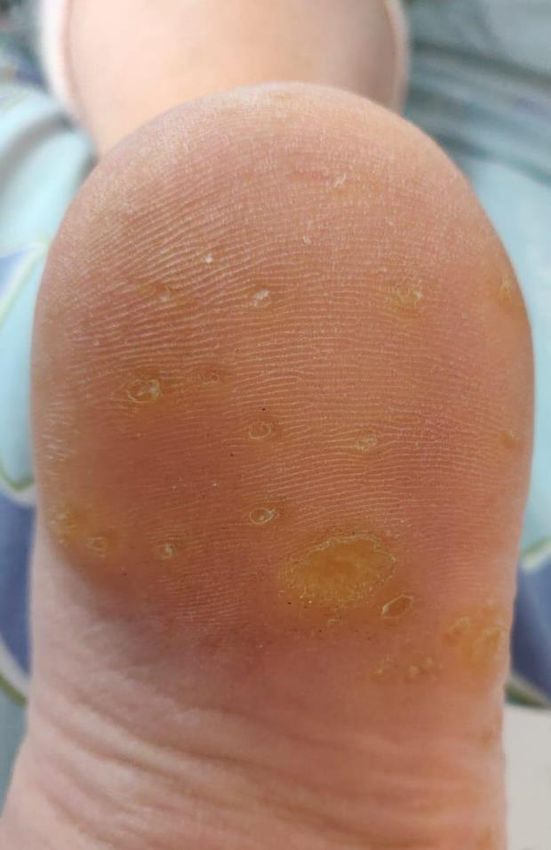
ENCAPSULATION IS DESIGNED TO ENHANCE STABILITY

ENCAPSULATED TRETINOIN (E-TRETINOIN)

 SEM PICTURE                                                  SEM PICTURE
                Complete encapsulation allows stabilization                 Silica-based shell allows for slow delivery of
                   of tretinoin in the presence of BPO                              tretinoin to the skin over time

                                                                                        Company and Products Overview | March 2021   6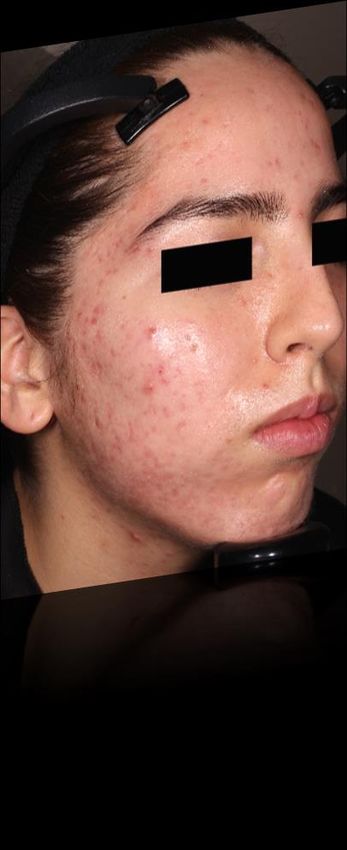
THE CHALLENGE

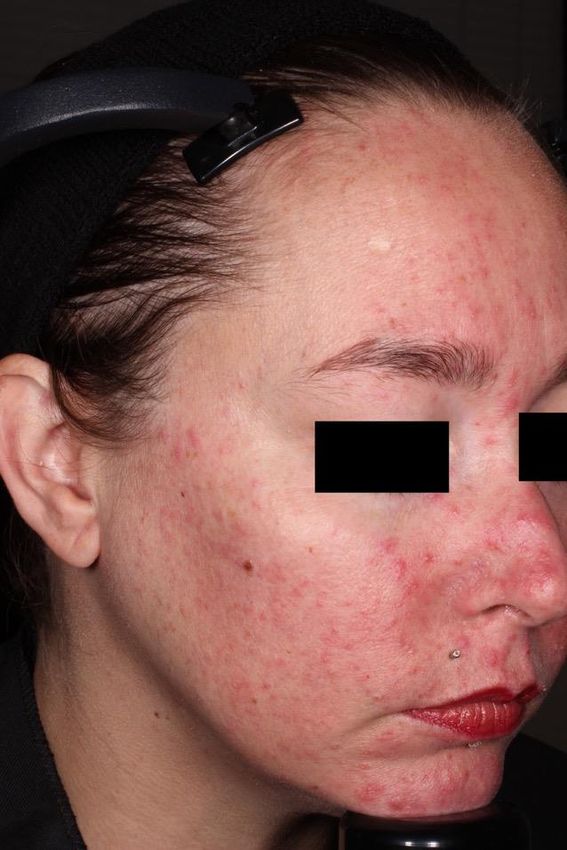
CHRONIC          Papulopustular Rosacea
                 Chronic, inflammatory condition that
                 primarily affects the face and is often
CONDITION WITH   characterized by flushing, redness,
                 inflamed bumps, and pustules

POOR ADHERENCE
TO CURRENT       How is it Treated?
TREATMENTS       • Topical antimicrobials
                   (metronidazole, clindamycin)
                 • Topical anti-mite (ivermectin)
                 • Systemic antibiotics (minocycline,
                   doxycycline)

UNMET NEED IN    Current Treatment Shortfalls
                 • Insufficient efficacy resulting in poor
PAPULOPUSTULAR     adherence
                 • Systemic side effects
                 • Contributing to antibiotic resistance
ROSACEA
                          Company and Products Overview | March 2021   7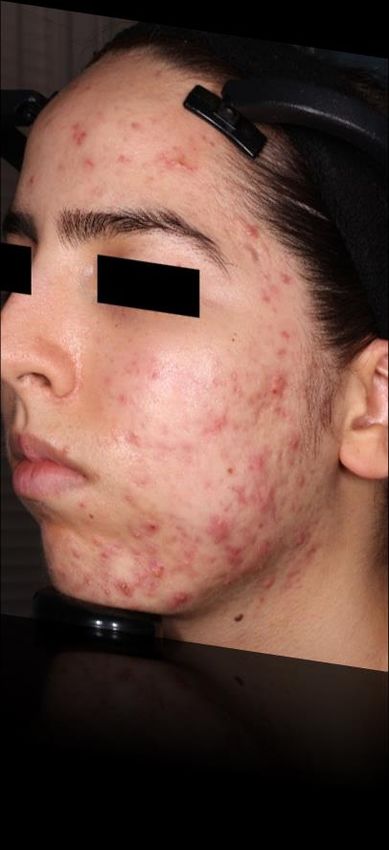
SOL-GEL SOLUTION*
                                                              ®
          EPSOLAY
          Benzoyl Peroxide Cream, 5%

          • Encapsulation was designed to allow the BPO to slowly
            migrate from the microcapsules to help reduce irritation
          • PDUFA goal date was set by the FDA for April 26, 2021
          • Potential to be the first single-active BPO approved by
            the FDA as a prescription drug product

* EPSOLAY is investigational. Safety and efficacy have not been established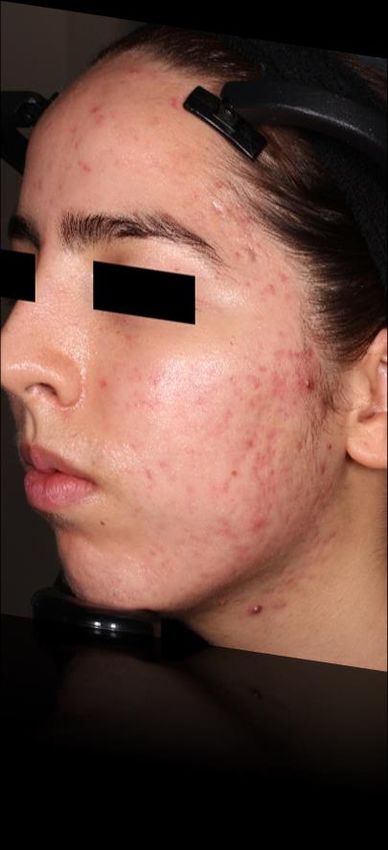
®
EPSOLAY
PHASE III STUDIES
Two Parallel, Multicenter, Double-Blinded,
Randomized, Vehicle-Controlled Studies, 2:1 Ratio, QD
PHASE III DESIGN

    TWO CO-PRIMARY EFFICACY ENDPOINTS AT WEEK 12

Inclusion Criteria            ≥18 years old; “Moderate” or “Severe” rosacea; ≥15 to ≤70 inflammatory lesions; ≤2 nodules

How is it Treated?            Weeks 2, 4, 8, 12 (end of study)

                              • “Clear”: Skin clear of inflammatory papules or pustules
                              • “Almost Clear”: Very few small papules or pustules and very mild dull erythema is present
Investigator Global
                              • “Mild”: Few small papules or pustules and mild dull or light pink erythema is present
Assessment (IGA) Definition
                              • “Moderate”: Several to many small or larger papules or pustules and moderate light to bright red erythema is present
                              • “Severe”: Numerous small and/or larger papules or pustules and severe erythema that is bright red to deep red is present

                              • Proportion of patients with IGA “Clear” or “Almost Clear” relative to baseline at Week 12
Primary Endpoints
                              • Absolute mean change in inflammatory lesion counts from baseline to Week 12

                                                                                                                        Company and Products Overview | March 2021   10
PHASE III CHARACTERISTICS
WELL-BALANCED CLINICAL STUDIES
Study 54-01 Study 54-02
Baseline, Discontinuation & Completion
EPSOLAY Vehicle EPSOLAY Vehicle
IGA "Moderate" Subjects 210 (86.4%) 104 (88.1%) 227 (90.8%) 112 (91.8%)
Baseline
IGA "Severe" Subjects 33 (13.6%) 14 (11.9%) 23 (9.2%) 10 (8.2%)
Mean Inflammatory Lesion Count (SD) 25.7 (11.07) 26.3 (12.45) 29.8 (14.00) 27.5 (13.04)
Median Inflammatory Lesion Count (range) 22.0 (15-69) 21.0 (15-70) 25.0 (15-70) 22.5 (15-70)
Withdrawal by Subject 9 3 9 4
Discontinued
Subjects
Adverse Events 5 1 4 0
Lost to Follow-Up 6 6 1 4
Pregnancy/Protocol Violation/Other 1 1 1 1
Intention-to-Treat (ITT) 243 118 250 122
SD = Standard Deviation
Company and Products Overview | March 2021 11PHASE III RESULTS
SUCCESS IN PRIMARY ENDPOINTS
Week 12
Week 12 Inflammatory Lesion Count
Success in IGA (ITT) Change from Baseline (ITT)
60% EPSOLAY Vehicle EPSOLAY Vehicle
0
50.1%
43.5%
in Inflammatory Lesion Count
45% -5
Change from Baseline
Success in IGA
-10 -9.5
30%
25.9%
-13.3
-15
16.1%
15%
-17.4
-20
-20.3
0%
EPSOLAY Vehicle EPSOLAY Vehicle -25
PSUCCESS IN IGA
IMPROVEMENT AS OF WEEK 2
Week 2 Week 4 Week 8
Exploratory Endpoint (ITT) Secondary Endpoint (ITT) Secondary Endpoint (ITT)
60% 60%
60%
45% 45%
44.0%
39.6%
45%
Success in IGA
30% 30%
30% 25.4% 26.1% 26.0%
15.8%
13.2% 15%
14.1% 15%
15%
9.5%
5.5% 6.5%
3.1%
0%
0% 0%
Vehicle EPSOLAY Vehicle EPSOLAY
Vehicle EPSOLAY Vehicle EPSOLAY Vehicle EPSOLAY Vehicle EPSOLAY
PREDUCTION OF LESIONS
IMPROVEMENT AS OF WEEK 2
Week 2 Week 4 Week 8
Exploratory Endpoint (ITT) Secondary Endpoint (ITT) Secondary Endpoint (ITT)
Vehicle EPSOLAY Vehicle EPSOLAY Vehicle EPSOLAY Vehicle EPSOLAY Vehicle EPSOLAY Vehicle EPSOLAY
0 0 0
Change from Baseline in Inflammatory Lesion Count
-5 -5 -5
-5.5
-10 -8 -10 -8.7 -10
-10.5 -10.5 -10.6
-13 -12.4
-15 -15 -15
-14.6
-16.7 -16.8
-20 -20 -20
-20.0
-25 -25 -25
PSubject 116-009 || 41 years old | Female | White | Not Hispanic or Latino*
ONSET OF ACTION AS OF WEEK 2
“Severe”; 31 inflamed lesions “Clear”; No inflamed lesions “Clear”; No inflamed lesions “Clear”; No inflamed lesions “Almost Clear”; 1 inflamed lesion
* Individual results varyLONG-TERM SAFETY STUDY
IMPROVEMENT IN IGA*
80%
73.2%
Phase III Studies Followed by 40 Weeks
n=153 Long-Term Safety Study Extension
60%
Percentage of Subjects
40%
22.0%
20% n=46
4.8%
n=10 0.0%
0%
"Clear"/"Almost Clear" "Mild" "Moderate" "Severe"
IGA at Week 52
* This study was not designed for efficacy; however, efficacy was evaluated. Interpret results with caution
Company and Products Overview | March 2021 16SIDE-BY-SIDE WITH HISTORICAL RESULTS*
IMPROVEMENT OVER TIME
60% Soolantra® (Study 18170) Soolantra® (Study 18171)
EPSOLAY® (Study 54-01) EPSOLAY® (Study 54-02)
45%
Success in IGA
30%
15%
0%
0 2 4 6 8 10 12
Week
* Sol-Gel did not conduct a head-to-head comparison trial or study. The results described above are for illustrative purposes only and
should not be construed as conclusions to be drawn as if we conducted a head-to-head comparison trial or study
Company and Products Overview | March 2021 17SIDE-BY-SIDE WITH HISTORICAL RESULTS*
PRIMARY ENDPOINTS
®
EPSOLAY
12-week study 12-week study 12-week study 10-week study 16-week study 12-week study
Per os
27.4% 26.8%
24.2%
21.3%
Success in IGA 10.9% 10.91% 11.3%
Difference from Vehicle
8.7% 8.5% 9.1% 10.1%
Study 54-01 Study 54-02 Study 18170 Study 18171 Study 120 Study 846 NDA 21-789 Study 301 Study 302 FX2016-11 FX2016-12
Inflammatory -10.8% -7.6% -11.3%
Lesion Percent -14.7% -18.1%
-23.4% -23.3% -22.3% -26.0%
Change from -29.9% -32.0%
Baseline
Severe 33 23 82 113 26 65 0 52 48 51 71
Baseline IGA Moderate 210 227 369 346 172 418 557 67 77 444 443
Characteristics
of Active Arm Mild 0 0 0 0 0 0 0 8 17 0 0
Inflammatory Lesions 25.7 29.8 31.0 33.3 21.6 21.7 18.3 19.5 20.5 28.5 30.0
* Sol-Gel did not conduct a head-to-head comparison trial or study. The results described above are for illustrative purposes only and should not be
construed as conclusions to be drawn as if we conducted a head-to-head comparison trial or study
Company and Products Overview | March 2021 18PRIMARILY MILD-TO-MODERATE
TREATMENT-EMERGENT ADVERSE EVENTS
Study 54-01 Study 54-02
Subjects with
Treatment-Emergent Adverse Events (TEAEs) EPSOLAY Vehicle EPSOLAY Vehicle
(n=239) (n=113) (n=249) (n=120)
Treatment-Related Mild & Moderate TEAEs 12 (5%)^ 3 (2.7%)^ 8 (3.2%)^ 0
Treatment-Related Severe TEAEs 2 (0.8%)¥ 0 1 (0.4%)* 0
Not-Related TEAEs 35 (14.6%) 14 (12.4%) 41 (16.5%) 22 (18.2%)
Not-Related Serious TEAEs 0 1 (0.9%)† 1 (0.4%)‡ 0
^
Most frequently reported adverse events being application site erythema, pain and pruritus
¥
One subject with application site erythema and another with application site pruritus and pain
*
One subject with application site erythema
†
One subject with femur fracture
‡
One subject with spinal compression fracture
Company and Products Overview | March 2021 19FEWER AT WEEK 12 THAN AT BASELINE
Study 54-01
LOCAL SKIN IRRITATIONS
DRYNESS SCALING ITCHING BURNING/STINGING
100%
75%
% of Subjects
Week 12
50%
25%
0%
100%
75%
% of Subjects
Baseline
50%
25%
0%
Vehicle EPSOLAY Vehicle EPSOLAY Vehicle EPSOLAY Vehicle EPSOLAY
◼ None ◼ Mild ◼ Moderate ◼ Severe
Company and Products Overview | March 2021 20COMPARABLE TO VEHICLE
Study 54-02
LOCAL SKIN IRRITATIONS
DRYNESS SCALING ITCHING BURNING/STINGING
100%
75%
% of Subjects
Week 12
50%
25%
0%
100%
75%
% of Subjects
Baseline
50%
25%
0%
Vehicle EPSOLAY Vehicle EPSOLAY Vehicle EPSOLAY Vehicle EPSOLAY
◼ None ◼ Mild ◼ Moderate ◼ Severe
Company and Products Overview | March 2021 21THE CHALLENGE
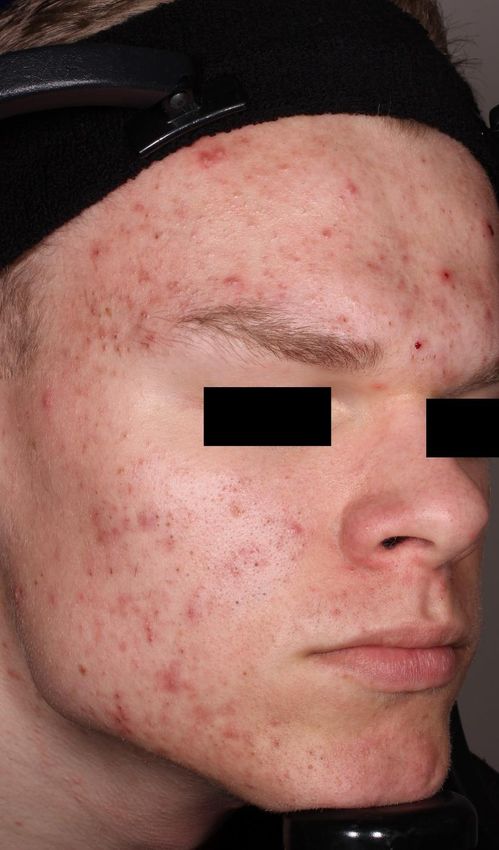
Acne Vulgaris
MULTIFACTORIAL A multifactorial disease of the
pilosebaceous unit, involving
DISEASE abnormalities in sebum production,
follicular epithelial desquamation,
bacterial proliferation, and inflammation
REQUIRING
POWERFUL
How is it Treated?
COMBINATION • Topical BPO, retinoids (such as
tretinoin, adapalene), antibiotics,
TREATMENTS and their combinations
• Oral Isotretinoin and antibiotics
Current Treatment Shortfalls
• Insufficient efficacy negatively
UNMET NEED IN affects self-esteem
• Systemic side effects
ACNE VULGARIS • Contributes to antibiotic resistance
Company and Products Overview | March 2021 22SOL-GEL SOLUTION*
®
TWYNEO
Benzoyl Peroxide 3% & Tretinoin 0.1%, Cream
• Encapsulation was designed to stabilize
tretinoin and to enable both tretinoin and
BPO to slowly migrate from their
microcapsules to help reduce irritation
• PDUFA goal date was set by the FDA for
August 1, 2021
• Potential to be first FDA-approved acne
treatment that contains fixed-dose
combination of BPO and tretinoin
* TWYNEO is investigational. Safety and efficacy have not been established® TWYNEO PHASE III STUDIES Two Parallel, Multicenter, Double-Blinded, Randomized, Vehicle-Controlled Studies, 2:1 Ratio, QD
PHASE III DESIGN

    THREE CO-PRIMARY EFFICACY ENDPOINTS AT WEEK 12

                              ≥9 tears old; “Moderate” or “Severe” acne; ≥20 to ≤100 inflammatory lesions; ≥30 to ≤150 non-inflammatory lesions;
Inclusion Criteria            ≤2 cysts/nodules

Visits                        Weeks 2, 4, 8, 12 (end of study)

                              • “Clear”: Normal, clear skin with no evidence of acne vulgaris
                              • “Almost Clear”: Rare non-inflammatory lesions present, with rare non-inflamed papules (papules must be resolving and
                                may be hyperpigmented, though not pink-red)
                              • “Mild”: Some non-inflammatory lesions are present, with few inflammatory lesions (papules/pustules only; no nodulo-cystic
Investigator Global
                                lesions)
Assessment (IGA) Definition
                              • “Moderate”: Multiple Non-inflammatory lesions and, inflammatory lesions are evident (several to many comedones and
                                papules/pustules, and there may or may not be one small nodulo-cystic lesion)
                              • “Severe”: Inflammatory lesions are more apparent, many comedones and papules/pustules, there may or may not be a few
                                nodulo-cystic lesions

                              • Proportion of subjects with an assessment of "Clear" or "Almost Clear" and with at least a 2-grade improvement in
                                IGA from baseline at Week 12
Primary Endpoints             • Absolute change in inflammatory lesion counts from baseline at Week 12
                              • Absolute change in non-inflammatory lesion counts from baseline at Week 12

                                                                                                                        Company and Products Overview | March 2021   25
PHASE III CHARACTERISTICS
WELL-BALANCED CLINICAL STUDIES
Study 65-04 Study 65-05
Baseline, Discontinuation & Completion
TWYNEO Vehicle TWYNEO Vehicle
IGA "Moderate" Subjects 251 (89.3%) 132 (92.3%) 262 (90.3%) 133 (93.0%)
IGA "Severe" Subjects 30 (10.7%) 11 (7.7%) 28 (9.7%) 10 (7.0%)
Baseline
Mean Inflammatory Lesion Count (SD) 33.5 (14.62) 33.5 (14.69) 28.2 (8.70) 27.5 (8.52)
Median InflammatoryLesion Count (range) 28.0 (20-92) 28.0 (20-90) 25.0 (20-62) 25 (20-75)
Mean Non-InflammatoryLesion Count (SD) 48.6 (20.24) 47.1 (19.97) 44.6 (18.03) 44.9 (18.82)
Median Non-Inflammatory Lesion Count (range) 42.0 (30-148) 41.0 (30-140) 39.0 (23-149) 38.0 (30-123)
Withdrawal by Subject/Parent/Guardien 13 5 18 5
Discontinued
Subjects
Adverse Events 4 0 12 0
Lost to Follow-Up 10 7 15 7
Pregnancy/Protocol Violation/Physician Decision/Other 5 0 3 0
Intention-to-Treat (ITT) 281 143 290 144
SD = Standard Deviation
Company and Products Overview | March 2021 26PHASE III RESULTS
SUCCESS IN IGA
Week 12
Success in IGA (ITT)
40% 38.5%
30%
25.4%
Success in IGA
20%
14.7%
11.5%
10%
0%
TWYNEO Vehicle TWYNEO Vehicle
PPHASE III RESULTS
SUCCESS IN REDUCING LESIONS
Week 12 Week 12
Inflammatory Lesion Count Non-Inflammatory Lesion Count
Change From Baseline Change From Baseline
TWYNEO Vehicle TWYNEO Vehicle TWYNEO Vehicle TWYNEO Vehicle
0 0
Change from Baseline in Inflammatory Lesion Count
-5
-5
-10
-10
-15
-20 -17.4
-15 -14.1 -19.8
-14.8
-16.2 -25
-24.2
-20
-30
-21.6 -29.7
-25 -35
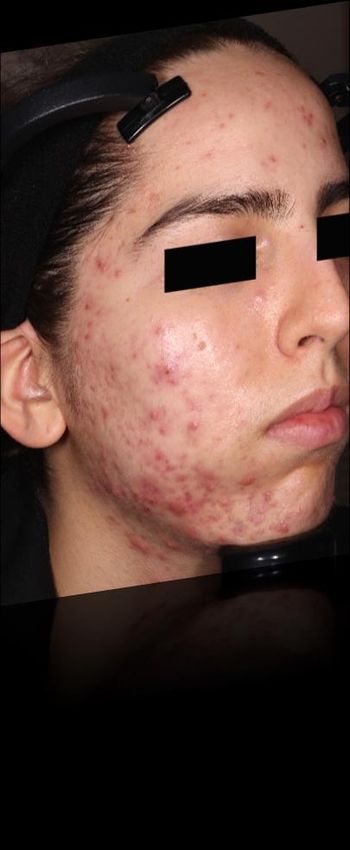
PSubject 507-003 || 18 years old | Female | White | Not Hispanic or Latino*
IMPROVEMENT IN SEVERE PATIENT
BASELINE WEEK 12
“Severe”; 29 inflamed lesions “Moderate”; 9 inflamed lesions
31 non-inflamed lesions; 1 nodule 5 non-inflamed lesions; No nodules
* Individual results varySIDE-BY-SIDE WITH HISTORICAL RESULTS*
SUCCESS IN IGA
TWYNEO® Trials with Highest Difference in IGA Between
30% the Active Arm and the Vehicle Arm
27.0%
Success in IGA Normalized to Vehicle
20%
14.0%
12.5%
11.4% 11.2%
10%
0%
SGT65-04 Study 026 NCT03168321 SC1401 FX2017-22
* Sol-Gel did not conduct a head-to-head comparison trial or study. The results described above are for illustrative purposes only and should not be
construed as conclusions to be drawn as if we conducted a head-to-head comparison trial or study
Company and Products Overview | March 2021 30SIDE-BY-SIDE WITH HISTORICAL RESULTS*
SUCCESS IN IGA
TWYNEO® Trials with Highest Difference in IGA Between
30% the Active Arm and the Vehicle Arm
Success in IGA Normalized to Vehicle
26.4%
25.2%
Moderate Subjects at Baseline Only
20%
16.6%
10%
0%
SGT65-04 Trial 18240 NCT02556788
* Sol-Gel did not conduct a head-to-head comparison trial or study. The results described above are for illustrative purposes only and should not be
construed as conclusions to be drawn as if we conducted a head-to-head comparison trial or study
Company and Products Overview | March 2021 31PRIMARILY MILD-TO-MODERATE
TREATMENT-EMERGENT ADVERSE EVENTS
Study 65-04 Study 65-05
Subjects with
Treatment-Emergent Adverse Events (TEAEs) TWYNEO Vehicle TWYNEO Vehicle
(n=274) (n=139) (n=281) (n=138)
Treatment-Related Mild & Moderate TEAEs 46 (16.8%)^ 2 (1.4%)^ 39 (13.8%)^ 3 (2.2%)
Treatment-Related Severe TEAEs 4 (1.5%)¥ 0 1 (0.4%)* 0
Not-Related TEAEs 19 (6.9%) 13 (9.4%) 27 (9.6%) 15 (10.9%)
Missing Subjects 0 0 1 (0.4%) 0
Not-Related Serious TEAEs 0 0 1 (0.4%)† 1 (0.7%)‡
^
Most frequently reported adverse events being application site pain, dryness, erythema and exfoliation
¥
Two subjects with application site pain, a third subject with application site pain and exfoliation, and fourth subject with application site pruritus
*
One subject with application site pain, dryness and pruritus
†
One subject with depression
‡
One subject with depression, bipolar II disorder and conduct disorder
Company and Products Overview | March 2021 32MILD AND IMPROVED OVER TIME Study 65-04
LOCAL SKIN REACTIONS
ERYTHEMA SCALING PIGMENTATION DRYNESS ITCHING BURNING STINGING
100%
% of Subjects
Week 12
50%
0%
100%
% of Subjects
Week 2
50%
0%
100%
% of Subjects
Baseline
50%
0%
Vehicle TWYNEO Vehicle TWYNEO Vehicle TWYNEO Vehicle TWYNEO Vehicle TWYNEO Vehicle TWYNEO Vehicle TWYNEO
◼ None ◼ Mild ◼ Moderate ◼ Severe
Company and Products Overview | March 2021 33MILD AND IMPROVED OVER TIME Study 65-05
LOCAL SKIN REACTIONS
ERYTHEMA SCALING PIGMENTATION DRYNESS ITCHING BURNING STINGING
100%
% of Subjects
Week 12
50%
0%
100%
% of Subjects
Week 2
50%
0%
100%
% of Subjects
Baseline
50%
0%
Vehicle TWYNEO Vehicle TWYNEO Vehicle TWYNEO Vehicle TWYNEO Vehicle TWYNEO Vehicle TWYNEO Vehicle TWYNEO
◼ None ◼ Mild ◼ Moderate ◼ Severe
Company and Products Overview | March 2021 34BROAD LONG-TERM
INTELLECUAL PROPERTY
ESTATE
• EPSOLAY is protected until 2032 by granted patents, and
until 2040 by allowed patents
• TWYNEO is protected until 2038 by granted patents and
until 2041 by pending patent applications
• 25 patent applications for erlotinib, tapinarof and roflumilast
in various skin conditions
(as of February 26, 2021)
Company and Products Overview | March 2021 35COMMERCIALIZATION & FINANCIALS
2019 (IN $US)

     PAPULOPUSTULAR ROSACEA US MARKET

                                                                        Branded Topicals are Important Segment

                                            $222
                                   Oral                   Topical Generic   $182
                                    vs                           vs
                                  Topical          $216   Topical Branded
                           $398

Source: IQVIA; Year 2019
                                                                                   Company and Products Overview | March 2021   37
2019 (IN $US)
ACNE VULGARIS US MARKET
Branded Topical Combinations are Important Segment
Tretinoin is the Most Prescribed Topical Retinoid
$72
$1,019 $690
$965
Oral Topical Generic Combinations Adapalene
vs vs vs vs
Topical Topical Branded $1,380 Single Active Tretinoin
$2,345 $526
$1,656
Source: IQVIA; Year 2019
Company and Products Overview | March 2021 38EPSOLAY & TWYNEO ARE
COMPELLING ENOUGH TO DRIVE
PAYOR COVERAGE
® ®
EPSOLAY TWYNEO
• “All respondents recognized the product as a • “Unique MOA will qualify it for formulary
unique molecule for rosacea” addition, price will determine its position”
• “Near unanimous recognition as additional • “If you price it like Epiduo, it will be managed
option for rosacea” like Epiduo”
• “If priced and rebated similarly to the covered • “If similarly priced with better tolerability, it
products, coverage seems likely” would become preferred brand”
Sources: NaviSync LLC (Morristown, NJ), Sol-Gel Managed Market Access for Acne and Rosacea, July 2019
NaviSync LLC (Morristown, NJ), Twyneo Payer Market Research Topline Summary, February 2020
Company and Products Overview | March 2021 39PRUDENT 80%
Potential Market Value
COMMERCIALIZATION
APPROACH
6,500 6,000
Dermatologists NPs/PAs
We are in discussions with
potential partners regarding the
commercialization of EPSOLAY 3,300
Dermatology
and TWYNEO in the US* Offices
* EPSOLAY & TWYNEO are investigational. Safety and efficacy have not been established
45-62
Sales Reps
Source: Syneos Health (Morrisville, NC), Sol-Gel Market Analysis, June 2019
Company and Products Overview | March 2021 40LUCRATIVE
GENERIC
PIPELINE
• 12 collaborations with Perrigo with 50/50 gross profit sharing
• In March 2017, Perrigo filed a Paragraph IV Certification for Soolantra®
• In February 2019, Perrigo launched acyclovir cream, 5%, developed in
collaboration with Sol-Gel. This product generated $22.8 million in net
revenues in 2019 and $8.7 million in net revenues in 2020
• In January 2020, Perrigo filed a Paragraph IV Certification for Bryhali®
• In June 2020, Perrigo was first-to-file a Paragraph IV Certification for Duobrii®
• The launch of a partnered generic drug is expected in 2Q/21. In 2019, sales
of the brand name product exceeded $180 million in the US
Company and Products Overview | March 2021 41FINANCIAL
PROFILE
• Gross proceeds of $86.3 million raised in IPO on February 5, 2018
• Gross proceeds of $11.5 and $23 million raised in public follow-on offerings on August
12, 2019 and February 13, 2020, respectively
• Additional $5 million investment by controlling shareholder in April 2020
• 23,000,782 Ordinary Shares as of December 31, 2020
• $8.7 million net revenues from generic products in 2020
• $50.2 million in cash and investments as of December 31, 2020
• Under our operational model which assumes collaborations with third parties with sales
and marketing experience, we expect that our cash resources will enable funding of
operational and capital expenditure requirements into the third quarter of 2022
Company and Products Overview | March 2021 42LOOKING FORWARD
WHAT’S AHEAD
               Palmoplantar keratoderma (PPK)
SGT-210        is a group of skin conditions
               characterized by thickening of the
               skin on the palms of the hands and
               soles of the feet

               Phase I proof-of-concept study
               for erlotinib gel in PPK is ongoing

PALMOPLANTAR
KERATODERMA

                           Company and Products Overview | March 2021   44
RECENT MILESTONES
&
NEXT STEPS
Revenues from
DONE
IN PROGRESS
Phase I study
generics for SGT-210
DONE
DONE
Phase III results NDA for EPSOLAY was Potential FDA approval
for EPSOLAY accepted for filing and launch of EPSOLAY
2019 DONE 2020 2021
DONE
Phase III results NDA for TWYNEO was Potential FDA approval
for TWYNEO accepted for filing and launch of TWYNEO
DONE
Granted patent for
TWYNEO until 2038
Company and Products Overview | March 2021 45NASDAQ: SLGL
You can also read


