National BIM Report 2018 - BIMplement
←
→
Page content transcription
If your browser does not render page correctly, please read the page content below

National BIM Report 2018

National BIM Report 2018
Introduction 03 We would like to thank the following
organisations for supporting this
Introduction
Richard Waterhouse
report by circulating the survey on
CEO, NBS our behalf:
Platforms. Bridging the gap between construction 04
and manufacturing
Jaimie Johnston helping to reduce the cost of building for the wrong reasons. Our industry
Director, Head of Global Systems, Bryden Wood and operating built assets, and that it needs to find better ways of working.
also reduces the duration of projects. The move to digital will be a major
From UK to the world - 10 However, there is less confidence that factor in how we can get this right.
making BIM work internationally BIM is helping to reduce environmental More clarity is required over ownership
Peter Barker impact, or that it is helping reduce the of product selection and specification
Partner, Ryder UK construction industry trade gap. decisions throughout a project’s
However, where there is criticism, timeline. Furthermore, the quality of
it tends to be about the capacity to workmanship must be documented
National BIM Survey: summary of findings 16
Richard Waterhouse embed and enforce BIM in the so that it can be approved on-site. By
Adrian Malleson
industry, and not about the ambition creating a ‘digital twin’ of the built asset
Head of Research, Analysis and Forecasting, NBS CEO, NBS
to move the industry to BIM Level 2. and recording decisions throughout the
Criticism is about the speed, not the timeline, a transparent environment
CIC BIM Protocol – 2nd Edition 38 direction, of travel. with clear ownership will be created.
Andrew Croft – Beale & Co This is our eighth annual NBS BIM
Report. The first was in 2011, around the Articles in this report give real NBS can and will play a part in this
Dale Sinclair
Director of Technical Practice, AECOM time that Chief Construction Advisor examples of success, and also how the journey. BIM is more than the
Paul Morrell told the industry that Government, industry and academia production of 3D models. Collaboration
BIM was to be mandatory for all public are coming together to help ensure is more than reducing coordination
Welcome to a Digital Built Britain 40 that this mandate has a lasting legacy. problems on-site through clash
sector construction projects from 2016
David Philp
onwards. Over this period, our NBS The BIM Level 2 suite of standards detection at design time. The next
Global BIM/IM Consultancy Director, AECOM and tools is being revised to ensure stage of the BIM journey must focus on
survey has shown that BIM awareness
and adoption have steadily grown. consistency. The first of these is the both the information generated from
Product Identification - the missing link of BIM 44 CIC BIM Protocol, which has been the models and the information linked
How awareness and adoption are enhanced in its second edition, based to the models. For this standardised
Simon Powell
Director, Product Management, BSI defined is, of course, a key factor. on industry feedback. The Digital Built information, structures must be
and For some, it may admittedly just be Britain team as a whole is also pushing followed in terms of the objects in
‘generating and sharing information on. The Centre for Digital Built Britain the model and linked data sources
Adrian Malleson
authored using 3D modelling tools’, has now been created, and the UK BIM such as project specifications. NBS will
Head of Research, Analysis and Forecasting, NBS
but claims of adoption have risen Alliance is continuing to ensure that continue to work with partners in the
from just over 10% in 2011 to over Level 2 is embedded in industry and industry to help set these standards.
The Winfield Rock Report - why we wrote it 48 70% now in 2018. that this set of UK standards is being
and what’s in it promoted across the globe. Whilst this report looks at the industry’s
May Winfield If awareness and adoption are more current attitude to BIM, the industry
Senior Legal Counsel, ENGIE Services Ltd tightly defined as ‘UK Government One example of how the UK is helping will not stand still. Digital transformation
and Level 2’ then the level of adoption is to shape the global BIM world is the will continue. Emerging technologies
Sarah Rock less. However, the figures are still development of ISO 19650, Parts One are continuously providing new
Senior Associate, Gowling WLG (UK) LLP very encouraging, with close to half and Two. This development project opportunities. For example, the
of the industry following PAS 1192-2, is an example of the UK approach move from desktop to cloud
and around two thirds of the industry being developed in partnership with computing is opening up new
using a Common Data Environment the global community to ingrain opportunities around collaboration,
on at least some projects. a standard method of working performance and transparency.
internationally. Articles in this report
Reflecting back on the government show examples of how UK companies BIM Level 2 is the foundation of this
mandate and associated strategy, the are now pushing ahead internationally digital transformation, providing
RIBA Enterprises Ltd © 2018 All rights reserved. No part of this report may be industry is split on how successful these and taking advantage of this position data structures, responsibilities
reproduced or shared in any form or by any means, electronic or mechanical,
including photocopying, recording, or by any information storage or retrieval
have been. We asked participants for of leadership. and process. Future transformative
system, without permission in writing from the copyright holder. their views on the top-level objectives technology will build upon this
The content of articles contributed by external authors and published in this
of the government strategy and found Looking wider than BIM, it has sadly foundation, helping us to create
report are the views of those authors and do not represent the position of varied perceptions of success. The been a year where construction has a step-change in productivity and
RIBA Enterprises Ltd, NBS or its affiliated companies. industry has confidence that BIM is been on the front page of newspapers quality within the industry.
2 3
National BIM Report 2018

                           Platforms. Bridging the gap
                           between construction and
                           manufacturing
                           When the Latham Report, ‘Constructing the Team’, was published in 1994,
                           Michael Latham noted that ‘There is scope for improvements through
                                                                                                            The solution is not squeezing the
                                                                                                            supply chain – that’s been tried and
                                                                                                                                                        correct information. And once
                                                                                                                                                        there, they can be assembled by
                                                                                                                                                                                                 The residual value of
                           greater standardisation of components and design details and more off-site       has not worked. Nor can there be            fewer, more easily trained people.       a building is little more
                           prefabrication’. 24 years later, the wait for those improvements may finally
                           be coming to an end.
                                                                                                            compromise on the performance of
                                                                                                            the assets, networks and systems.           This produces a new way of working
                                                                                                                                                                                                 than half the cost
                                                                                                            Much-needed efficiencies can only           (see Figure 2), where integrated         of its construction.
                           The unavoidable truth is that           Some of the sobering statistics
                           without innovation, we don’t have       are well known. The residual value
                                                                                                            be achieved through a fundamental           solutions use standard components
                                                                                                                                                        configured using standard processes
                                                                                                                                                                                                 Around 30% of
                                                                                                            shift in process, where construction
                           the resources to accomplish the huge    of a building is little more than half   becomes much more like                      to give bespoke assets. It contrasts     building materials
                           amount of building that the UK needs.   the cost of its construction. Around
    Jaimie Johnston        There’s £600 billion of government      30% of building materials and
                                                                                                            manufacturing, and the use of               with the traditional model (Figure 1).   are wasted and 40%
                                                                                                            raw materials is minimised, as is           Here, there's fragmentation at every
    Director, Head of      investment in the pipeline, yet our     40% of working hours are wasted.         their processing and handling. The          level, and clients become distanced      of working hours.
    Global Systems,        workforce is ageing and short of        Yet profit margins are slim, and the     components of a construction asset          from multiple suppliers or installers
    Bryden Wood            the skills needed in traditional        unpredictability of the process poses    can be delivered to the site at the right   – the people who are actually
                           construction processes.                 risk for everyone from the customer      time, in the right sequence with the        delivering what they want.
                                                                   onwards. The collapse of Carillion
                                                                   shows how real those risks are.

                           Figure 1                                                                         Figure 2

4                                                                                                                                                                                                                        5
National BIM Report 2018

Graphs - Government spaces shown mapped on three platforms.                                                                         Defining the ‘boundaries’ of platforms            Uniclass provides the classification        The images here show a visualization
                                                                                                                                    requires a rigorous analytical approach.          ‘golden thread’ that allows this analysis   of the activities/complexes/entities/
                                                                                                                                    The more specific a platform is to a              to be undertaken in a consistent way,       spaces tables, and the elements/
                                                                                                                                    particular use, the more highly it can be         from the highest level (complexes and       systems/products tables.
                                                                                                                                    targeted to deliver efficiency benefits.          entities) to the most detailed (systems
                                                                                                                                    However, if a platform is too specific            and products), and also allows spaces
                                                                                                                                    then it may be constrained by the                 to be analysed by use (activities). Given
                                                                                                                                    size of the market that it can serve and          that the design of platforms must
                                                                                                                                    fail due to inadequate volume. Each               consider their means of manufacture
                                                                                                                                    platform therefore requires enough                and installation, the ‘Construction aids’   Uniclass provides
                                                                                                                                    application to build sustainable                  table in Uniclass crucially allows this
                                                                                                                                    volume, while limiting complexity                 classification to be applied to the         the classification
                                                                                                                                    enough to deliver efficiency.                     assembly stage.                             ‘golden thread’.

                                                                                                                                    Dashboard 1 - Analysing Government estate using the Uniclass 2015 tables

Looked at in overview like this, the           The Autumn Statement was preceded        The idea of platforms was first
rationale for change is compelling,            by two books by Bryden Wood and          introduced in Book 1. They are
yet it's a difficult transition to make.       the University of Cambridge Centre       sets of components that interact
Much like the switch to containerisation       for Digital Built Britain. The first,    in well-defined ways to allow a
in transport, widespread benefit               ‘Delivery Platforms for Government       range of products and services
requires widespread participation,             Assets - Creating a marketplace for      to be produced. In construction,
which won’t happen on its own.                 manufactured spaces’, set out a          the physical dimensions of a space
That’s why the Government is                   strategy for implementing the            – particularly its clear height and span,
putting the weight of its construction         Government’s vision on construction.     building height, level of complexity
portfolio and its purchasing power             It drew on work for the Ministry of      and repeatability – will determine the
behind the drive for innovation. Five          Justice and the Education and Skills     platform that it can be built on. Many
key government organisations will              Funding Agency to develop an             different kinds of space can be built
adopt ‘a presumption in favour                 evidence-based design process            on a single platform, and the entire
of offsite construction’ by 2019.              and manufacture-led construction         government estate on potentially
And in the Autumn Budget, there                approach. A second book, ‘Data Driven    just three.
was support for innovation and                 Infrastructure - From digital tools to
skills in the sector.                          manufactured components’, outlined
                                               a standardised approach across a
                                               range of horizontal infrastructure
                                               projects, illustrated with initiatives
                                               by clients such as Highways England
                                               and Crossrail.                                                                       Five key government organisations will adopt “a presumption in favour
                                                                                                                                    of offsite construction” by 2019. And in the Autumn Budget there was
                                                                                                                                    support for innovation and skills in the sector.
6                                                                                                                                                                                                                                                                         7
National BIM Report 2018

Dashboard 2 - Analysing Government estate using the Uniclass 2015 tables                                                       Platforms - Platforms work as part of an integrated, connected process.

This level of reductionism and                    Neutral on asset type and material,    In construction, pretty much all      Within those platforms, connections                 it was when Apple opened the iPhone       The books are all free to download
abstraction is analogous to the                   they subordinate materials and         buildings relate to the human form.   and interfaces can be standardised                  platform to third party developers        from the Bryden Wood website:
emergence of the phonetic alphabet.               components to the needs of the         This means that dimensions such       so that just a few designs meet a                   that use and revenue rocketed.            https://www.brydenwood.co.uk/
Early, first order alphabets, such as             asset and its users.                   as ceiling heights or distance from   huge range of needs, and many                                                                 about-us/downloads/123/
                                                                                                                                                                                   Bryden Wood are making all the
Egyptian hieroglyphs, needed large                                                       a window fall within predictable      components are repeatable. In
                                                  These ideas are developed in a new,                                                                                              IP generated on their public sector
numbers of symbols because each                                                          ranges, which can be used to define   projects for the Ministry of Justice,
                                                  third book: ‘Platforms: Bridging the                                                                                             projects available to the Government
had a ‘one-to-one’ relationship with                                                     a small number of platforms that      it’s possible to construct almost all
                                                  gap between construction and                                                                                                     to ensure that the platforms we are
the object that it conveyed. This                                                        can accommodate a huge range          of the complex estate by using a
                                                  manufacturing’, which sets out the                                                                                               developing can be used as widely
made written language rather                                                             of needs, from a bedroom to a         combination of those three platforms.
                                                  benefits to construction of the kind                                                                                             as possible. The intention is to create
imprecise, and the communication                                                         sports hall.
                                                  of platform-based approach, which                                            It’s easy to see why government                     a network effect, lowering the barrier
of abstract ideas almost impossible.
                                                  is common in manufacturing                                                   supports this approach. It allows                   to entry, contributing to wider
Later, second order alphabets used
                                                  and software.                                                                high-quality, effective assets to be                participation and generating greater
phonetic representation, vastly
                                                                                                                               efficiently produced at lower cost.                 efficiency for everyone. Platforms can
reducing the characters needed,                   For example, a car engine, working
                                                                                                                               Far fewer components are needed,                    give construction its ‘Uber moment’,
yet communicating much more                       on a platform – the chassis – to
                                                                                                                               and those that are can be produced                  the kind of fundamental, positive shift
accurately. In the same way, a                    produce a vehicle. Another example
                                                                                                                               in much higher volumes, creating a                  that we've seen in so many other
limited ‘alphabet’ of manufacturing               is an iPhone, acting as a platform
                                                                                                                               consistent pipeline with economies                  industries over the last 20 years.
processes is beginning to emerge                  for apps, such as Uber, and the
                                                                                                                               of scale, as well as more dependable                                                          All images © Bryden Wood Technology Limited.
for different construction platforms.             services that they deliver.
                                                                                                                               and timely supply. To draw a parallel,                                                        All rights reserved.

8                                                                                                                                                                                                                                                                       9
National BIM Report 2018
From UK to the world – making
BIM work internationally
Forest City Malaysia under construction
Peter Barker
Managing Director,
BIM Academy
(Enterprises) Ltd
and Partner, Ryder
Architecture
In 2012, during the early years of UK construction’s digital journey, we
organised a roundtable discussion to speculate on ‘where BIM will be in
The BIM Academy has been
fortunate to have developed into
productivity gains, and have
invested time and resource in
It’s now generally
five years’ time’. a thriving global consultancy and developing their capabilities to accepted that BIM
The group included NBS, Ryder, BIM to BIM than Level 2, and our
research organisation which has
served clients in Australia, Asia,
de-risk poor quality design and give
themselves a competitive edge. These
Level 2 is part of
Academy, Bond Dickinson and Mark
Bew, and a wide-ranging discussion
experiences working outside the
UK have given us some interesting
Europe and the Americas, and we self-motivated paths to adoption have government and
ensued, fuelled by a healthy mix of perspectives on how other regions
have learnt that the digital built delivered value, but the real gear shift
has come when central government or
often private sector
environment is a multi-layered world
optimism and practical scepticism. are making it work for them.
which does not need to be viewed influential government agencies have procurement, and
The discussion was predominantly
UK-centric at a time when the industry
We established the BIM Academy
in 2010 during the economic
through the prism of UK BIM Level 2. put their foot down and prescribed the
adoption of BIM as a catalyst for
the components of
was struggling out of the mire of the
downturn, as a joint venture between
Every region has its own legislative, positive change. The drivers of that this approach have
global financial crisis, and before cultural and contractual drivers,
Brexit and world political instability
Northumbria University and Ryder
with culture perhaps being the most
change often include construction
efficiency, and whole life performance
entered common
Architecture. As an early adopter
had encroached on our lives. One
of BIM design tools, Ryder had seen
significant. In many regions, the improvement and sustainability. parlance, although
closing conclusion that remained vanguard of BIM adoption is often led
with me was that ‘in 2017 we’ll
the significant benefits in productivity,
by the design community – architects,
The UK wasn’t the first government
to take this approach, with precedents
not necessarily
design quality and service which
probably just about be doing what
came from the intelligent use of
engineers, and occasionally cost in Singapore and Scandinavia, for understood by all.
we think we’re doing now’, and I think consultants – who have recognised the example, and many others have now
digital technologies, and together
this sums up where the UK has got to efficiency gains through adoption of followed suit. However, the UK
with like-minded academics from
with BIM. It’s now generally accepted smart tools to visualise, coordinate and Government’s top-down, bottom-up
Northumbria, we wanted to
that BIM Level 2 is part of government analyse design. Doing so maximises approach initiated in 2010 has proved
spread the word and help drive
and often private sector procurement, their fee margins and offers an effective, and has gradually embedded
a traditionally disjointed and
and the components of this approach enhanced service to clients and itself within UK industry consciousness;
dysfunctional construction industry
have entered common parlance, end-users. The more enlightened it is now perceived as business as
into a new era.
although they are not necessarily construction organisations have usual, with a focus on delivering to
understood by all. But there is more likewise recognised the value of BIM Level 2 maturity.
10 11
National BIM Report 2018

                                                                                      BIM Academy team member at Sydney Opera House                                           Aerial view of M+ Museum Hong Kong under construction           BIM Academy team on M+ Museum site

However, the growing potential of
data analytics, Artificial Intelligence
(AI), machine-learning, Internet of
Things (IoT) and integration with GIS
platforms means that a narrow focus
on BIM Level 2 is no longer good
enough for the increasingly diverse
21st century digital built environment
where infrastructure, buildings, digital
media and systems must all converge
if we are going to create smarter
cities and communities.
Our experience in markets outside the
UK has given us fascinating insights
into the way that BIM and the digital
built environment are developing
around the world.
One of our first commissions outside
of the UK arose from our tender
success to develop the technical
specification for the BIM for FM
solution at Sydney Opera House.
Beginning in 2013, our support for
this client continued throughout             The project also demonstrated              Without this leadership, it is often          and greater transparency on project           This might be dismissed by BIM                    On a practical level, BIM has delivered
our development of the solution              that an informed client, working in        left to individual industry practitioners     phasing, programme and outturn                Level 2 zealots as unsophisticated,               great value to the contractor and
in a consortium with Ecodomus and            partnership with industry experts,         to deploy BIM tactically and often            costs. The Authority recognised               but these users are seeing greater                design team in spatial coordination in
the AECOM BIM team in Melbourne,             can achieve positive improvements          ad hoc, which can dissipate the               the potential for future operational          immediate gains in productivity from              this densely serviced building. Health
and we have subsequently developed           to how their assets are managed. It        potential impact.                             efficiencies through the delivery             this approach, rather than focusing               and safety have been addressed in the
software tools to refine the                 has been encouraging to see other                                                        of more reliable and complete asset           on the output of large volumes of                 construction logistics planning,
                                             large estate owners follow suit and        In 2016, Hong Kong Hospital Authority         data through the BIM process, but                                                               including by the installation of major
management of the Opera House                                                                                                                                                       metadata which, let’s face it, many
                                             recognise BIM as a catalyst for better     was about to embark on a $200 billion         recognised that these would take a                                                              structural elements such as the
asset databases. This project was                                                                                                                                                   clients will not need or make use of.
                                             coordinated and effective asset            capital programme, which included the         little longer to realise. The point here is                                                     40-tonne composite megatrusses
significant in that it represents a public                                              design and construction of 16 new
                                             management systems, and we have                                                          that these aspects of BIM, which might        Also in Hong Kong, the BIM Academy                supporting the central tower and the
sector client who manages a world                                                       hospitals over the next ten years. The
                                             been able to support other heritage                                                      be regarded by some as standard and           was commissioned in 2015 by the                   ability to promptly deliver combined
heritage building, and recognised the                                                   Authority realised that a programme of
                                             building and large estate owners in                                                      now common BIM uses, can make a               contractor constructing the $400                  services drawing outputs, which are
need for a holistic BIM solution to allow                                               this scale and complexity could not be
                                             the UK and Australia in adopting                                                         huge impact when recognised and               million M+ Museum of Fine Art. The                required for statutory and contractual
them to manage their asset data and                                                     delivered using traditional methods,
                                             similar approaches.                                                                      applied by a large influential client with    commissioning client, West Kowloon                approvals. The team is also working
their building in a more effective way.                                                 and commissioned BIM Academy to               a major development programme.                Cultural District Authority, developed            with the client team on how to meet
The approach we adopted started              The greatest value is often realised       assess the business case and regional         The Authority also recognised that            a very detailed BIM specification which           their aspirations for the future
with understanding the organisational        when an informed client has a              industry readiness, and determine how         performance improvement must be               invoked many UK originated Standards              integration of COBie outputs into
structure of the Opera House, before         strategic understanding of the             best to articulate and prescribe their        measured as part of their approach.           and included COBie deliverables.                  the Authority’s FM systems.
analysing technical systems and              capability of BIM tools and processes,     needs to the market. What emerged
resources. This resulted in a bespoke,       understands the specific information       was a realisation of the huge value to        This tactical use of BIM for specific
cost-effective solution, involving a         requirements as relevant to their          be gained from improved quality of            purposes – design coordination, BIM
central 3D geometric representation of
the building linked to multiple existing
                                             organisation, how the technology
                                             can deliver these, and how they
                                                                                        visual communication of design intent
                                                                                        with clinical staff and end-users,
                                                                                                                                      object libraries, construction logistics
                                                                                                                                      planning and cost management (often
                                                                                                                                                                                    It has been encouraging to see other large
asset databases through a web-based          can articulate these needs clearly         leading to a significant reduction in         perceived as the low-hanging fruit            estate owners follow suit and recognise BIM as
viewer. The solution is also extendable
to give future functionality, including
                                             to their supply chain. Many of our
                                             commissions involve guiding
                                                                                        periods for design sign-off, reduced
                                                                                        delays and contractual claims from
                                                                                                                                      of BIM) – continues to deliver huge
                                                                                                                                      benefits, particularly on the large,
                                                                                                                                                                                    a catalyst for better coordinated and effective
visual analytics.                            such clients on this journey.              improved coordination of MEP design,          complex projects we see in Asia.              asset management systems.
12                                                                                                                                                                                                                                                                           13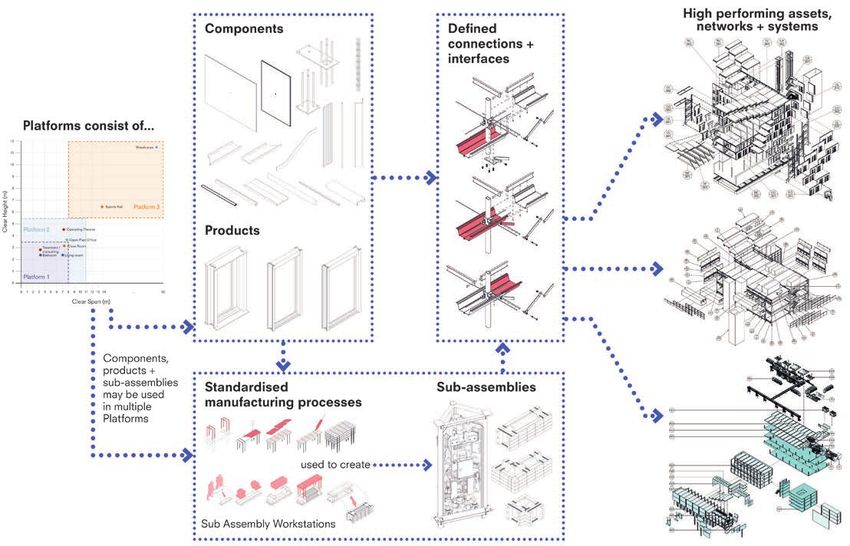
National BIM Report 2018

                                                                    BIM Academy team on site at Forest City Malaysia
                                                                                                                       NBS Construction Contracts & Law
                                                                                                                       Read the results of our fourth major survey into construction contracts and related legal issues.
                                                                                                                       Some of the key takeaways from the report are:

                                                                                                                       • Disputes are not going away, and the reasons for them        • Traditional procurement methods are still the most
                                                                                                                         are varied                                                     popular followed by Design and Build. The gap between
                                                                                                                                                                                        these is narrowing though
                                                                                                                       • More than 20 years after the Latham report, bespoke
                                                                                                                         contracts are still widely used                              • The majority of respondents agree that a BIM
                                                                                                                                                                                        is contractually binding
                                                                                                                       • More than a third of all projects started in the past
                                                                                                                         12 months (from the time of the survey) do not adopt
                                                                                                                         collaboration techniques

                                                                                                                       Download today from
                                                                                                                       www.thenbs.com/knowledge/national-construction-contracts-and-law-report-2018

The advent                 Our most recent international
                           commission is the development of
                                                                    In conclusion, our experience has
                                                                    taught us that whilst the UK is globally
of International           the digital asset management model       respected as a pioneer in the digital
Standards such             for the Forest City development in
                           Malaysia. Led by Chinese developer
                                                                    built environment, and has led the
                                                                    way in developing Standards as part
as ISO 19650 will          Country Garden, this 25-year project     of international groups, each region
help to unify a            will create a smart city on reclaimed
                           land in the Straits of Johor, adjacent
                                                                    and community is finding practical
                                                                    applications of digital tools and
common approach,           to Singapore. The client is seeking to   processes which drive value for
but the economic,          develop multidisciplinary federated
                           models enhanced with structured
                                                                    their specific needs. The advent
                                                                    of International Standards such
commercial and             asset data, which can be used to         as ISO 19650 will help to unify a
cultural dynamics          improve future management and
                           linked with estate-wide systems,
                                                                    common approach, but the economic,
                                                                    commercial and cultural dynamics of
of each region             potentially through GIS platforms.       each region are different. A dogmatic,
are different.             The client has understood the
                           importance of alignment with
                                                                    one-size-fits-all approach based on
                                                                    one country’s preferences is neither
                           internationally recognised Standards,    realistic nor sustainable.
                           and has recognised the value of
                           applying protocols methodologies
                           such as PAS 1192 and the Digital
                           Plan of Work.

                                                                                                                       NBS, The Old Post Office, St. Nicholas Street, Newcastle Upon Tyne NE1 1RH
                                                                                                                       T 0345 456 9594 E info@theNBS.com W theNBS.com                 @theNBS
14                                                                                                                                                                                                                                              15
National BIM Report 2018
National BIM Survey:
summary of findings
Welcome to the eighth NBS National Instead, using BIM is a contractual Secondly, BIM increases the efficiency How successful do you think UK Government’s 2016 BIM Mandate has been?
BIM Report. In this report, we look at condition of working with the UK’s and reduces the cost of construction
the UK Government’s BIM mandate and largest client, central government. for central government, so the 0% 10% 20% 30% 40% 50% 60% 70% 80% 90% 100%
the current levels of BIM adoption, as Government can build more for less.
This approach ideally does 4% 37% 44% 14%
well as people's attitudes towards BIM. three things. Finally, success in government
As ever, we hope that you find the projects can be an exemplar to Very successful Quite successful Not that successful Not at all successful
Firstly, BIM will help the Government the private sector, leading to more
findings helpful, and enjoy reading meet its strategic aims, specifically:
the report. We would like to thank all rapid adoption of BIM throughout
• 33% reduction in the initial cost the industry.
those who took the time to complete
Adrian Malleson the survey: without them there would of construction and the whole life The NBS BIM survey allows us
Perceptions of the Government's mandate (% agreement)
Head of Research, be no report. cost of built assets; to gauge how successful the BIM 0% 10% 20% 30% 40% 50% 60% 70% 80% 90% 100%
Analysis and mandate has been. Four per cent
Thank you also to the professional • 50% reduction in the overall
Forecasting, NBS told us that the mandate had been The Government now 63%
bodies and institutes who publicised the time, from inception to completion,
very successful, with a further 37% requires collaborative
survey to their membership. Having this for new build and refurbished assets; 3D BIM on its projects
viewing it as ‘quite successful’. Many
cross-discipline support for our survey
• 50% reduction in greenhouse noted how the mandate has given The Government is not 62%
helps make sure that the findings are enforcing the Government’s
gas emissions in the built the industry the push towards BIM 2016 BIM mandate
relevant to the wider industry. It is in
environment; and that it needed.
the collaborative spirit of BIM. I think the Government is
on the right track with BIM
47%
• 50% reduction in the trade gap ‘The mandate focused everyone
I’m still not clear on what 41%
The UK Government and BIM between total exports and total on where we should be going.’ I have to do to comply with
imports for construction products the Government’s 2016
In this section, we explore the views ‘It has brought the industry together BIM mandate
and materials.
of the industry on the success of the to a common goal.’ The construction industry 19%
UK Government’s BIM mandate. The findings below support this, is now delivering on the
Government’s 2016
showing that a clear majority think that On the other hand, 58% tell us it BIM mandate
The UK Government’s BIM mandate
BIM will help reduce both construction has either been ‘not that successful’
has been in place since April 2016. (44%) or ‘not at all successful’ (14%).
The mandate requires that all projects costs and the time it takes to go from
funded by central government be inception to completion. Fewer agree When we look at the graph on the
delivered with ‘fully collaborative 3D that BIM will help reduce greenhouse right, we get a sense of why the
BIM’. The mandate is not legislation: gas emissions or reduce our trade gap. government mandate is not
it is not the law that the design But very few disagree with any of universally viewed as successful.
and construction team use BIM. these points. Whilst almost two thirds (63%) agree
that the Government requires BIM
on its projects, a very similar number
(62%) feel that the Government is
Please tell us the role you think BIM will have in our achieving the following...
not enforcing this. For the first time,
0% 10% 20% 30% 40% 50% 60% 70% 80% 90% 100% less than a majority (47%) feel that
the Government is ‘on the right
33% reduction in the initial cost of 72% 24% 4% track’ with BIM. That is still a high
construction and the whole life
cost of built assets percentage, but less than last year
(51%). Just over two fifths are not
50% reduction in the overall time, 65% 28% 7%
from inception to completion, for clear on what they have to do to
newbuild and refurbished assets
comply with the mandate.
Whilst almost two thirds (63%) agree that
50% reduction in greenhouse gas 46% 51% 3%
emissions in the built environment Less than one fifth agree that
‘the construction industry is now
50% reduction in the trade gap
between total exports and total
33% 63% 4%
delivering on the Government’s the Government requires BIM on its projects,
imports for construction products
and materials
2016 BIM mandate’. a very similar number (62%) feel that the
BIM will help BIM won’t make a difference BIM will hinder
Government is not enforcing this.
16 17
National BIM Report 2018
The Government Numbers alone do not always get
to the heart of the issue. We also
3 Local, as well as central, Government
needs to mandate BIM.
BIM Usage and Awareness BIM Usage and Awareness
needs to go deeper asked people to tell us why they
‘The Government should have
'BIM is now a necessity in modern
construction projects.'
and wider in its assessed the success of the
mandate as they did.
required the use of BIM for all public
Almost three quarters of respondents
enforcement of If people felt that the mandate was
projects (at regional, county, and
local authority levels).’ are now using BIM, a 12% increase
the mandate. not successful, this was almost always
‘The BIM mandate should apply
on last year. This is the highest
because the Government wasn’t year-on-year growth since 2014.
to all projects that are funded
seen to be doing enough to promote, Since 2016, the year of the mandate,
with public money including
enforce and embed BIM, and almost a further 20% of the industry
HAs & Local Gov.’
never because the aim of the has adopted BIM.
mandate, to embed BIM in UK ‘There are reports that some Local
Authorities are avoiding BIM and so ‘change takes a long time to happen.’
construction, was seen as a mistake.
it seems Government, in large part, BIM is not yet universal: a quarter
The Government needs to go deeper
does not have a united front on the have yet to adopt BIM, and a
and wider in its enforcement of the
adoption of principles of BIM.’ negligible 1% are unaware of it.
mandate. The following themes come
from a reading of the comments But we’ve come a long way over Aware and Using 74%
that people gave, some of which 4 Changing the UK construction the seven years that we’ve been
Just aware 25%
are given as illustration: industry is difficult. monitoring BIM. Among the design
‘The resistance to change was community, BIM has gone from Unaware 1%
1 The mandate is not being enforced a niche practice to the norm.
immense and in many cases it still is.
‘It is rarely enforced.’ The Government mandate has
'Stakeholders are beginning
‘Government is not enforcing gone some way to improving
to trust in the process.'
the mandate.’ this complacency.’ BIM adoption over time
0% 10% 20% 30% 40% 50% 60% 70% 80% 90% 100%
2 Clients, including the Government, 5 The Government needs to
are not sufficiently educated to keep pushing 2018 74% 25% 1%
understand the benefits of BIM. ‘The mandate was the correct
‘The Government missed the initiative, but the Government have 2017 62% 35% 3%
opportunity to support the client stepped back and lost momentum’.
2016 54% 42% 4%
on this journey.’ ‘The Government has not done
‘Government departments need to much to promote its benefits.’ 2015 48% 48% 5%
commit to actually understanding
their own requirements and acting The BIM mandate, then, has not 2014 54% 41% 5%
as an intelligent client.’ been perfectly implemented, but the
39% 54% 6%
Government’s drive for BIM is right. 2013
As the mandate has come into force,
2012 31% 48% 21%
we have seen rising levels of BIM
adoption; it certainly looks to have
2011 13% 45% 43%
set the direction of travel correctly.
'The mandate had to come; without Aware and currently using Just aware Neither aware nor using
it, we would not be thinking of the
future steps. It was not perfect but
the strategy is improving, it is a
non-stop process.'
18 19National BIM Report 2018
Within your organisation, have you adopted BIM for projects you’ve been Frequency of BIM use Approximately what percentage of projects have you used BIM for in the last
involved in? 12 months?
Last year, for the first time, we
0% 10% 20% 30% 40% 50% 60% 70% 80% 90% 100% asked about the frequency of BIM use. 0% 10% 20% 30% 40% 50%
A practice may adopt BIM, but not use
Small 66% 34% it on every project. This year, we again Up to 25% 19%
14%
asked those who had adopted BIM
Medium 80% 20% ‘Approximately what percentage of Up to 50% 14%
projects have you used BIM for in 13%
Large 78% 22% the last 12 months?’
Up to 75% 21%
The graph (right) shows the response 29%
Yes No
to this. As last year, 18%, nearly one
in five, use BIM on every project Up to 100% 29%
that they work on. A quarter (fewer 25%
than last year) use BIM on between
100% 18%
Adoption and Practice size Work to existing 75% and 99%, but more than 75%, 18%
of their projects. The number of
'BIM is now an important factor for all larger organisations, which is now The NBS National BIM Survey did
those who have adopted BIM but
filtering down to smaller organisations as well.' not make specific reference to the 2017 2018
who use it only on a minority of
challenges of repair or maintenance
The thought that a practice is ‘just Whilst 80% of practices carrying projects has dropped from a third
work, nor to the importance of historic
too small’ for BIM comes up from out health or education work have (33%) to around a quarter (27%).
conservation. However, a number
time to time, and with it the thought adopted BIM, and 83% of those doing Increasingly, once BIM is adopted, How would you describe your organisation’s future use of BIM?
of respondents took the time to
that BIM is really only useful for large, ‘mixed use’ work, practices carrying it is used for most projects.
explore this issue and highlight
complex projects. out less complex work use BIM too. some of the challenges, particularly 0% 10% 20% 30% 40% 50% 60% 70% 80% 90% 100%
Sixty seven percent of those practices within historic conservation: Future Use
Smaller practices are less likely to carrying out ‘one-off new house, We currently use BIM 74%
have adopted BIM than others. Eighty ‘Across the UK, there are As in previous years, we ask about
extension, conversion or alteration’
percent of medium practices (16 to 50 approximately 6 million traditionally people’s projected use of BIM: In one year’s time we 91%
have adopted BIM. will use BIM
staff) and 78% of large practices (51+ constructed buildings that were whether they will adopt or continue
staff) have adopted BIM. Yet two thirds It looks like BIM is not just for large erected prior to 1919. BIM, and its to use BIM in the coming years. In three year’s time we 96%
of smaller practices (with 15 or fewer practices or more complex projects. application to the Heritage, needs
will use BIM
Having asked this question for a
staff) describe themselves as having to be considered.’ number of years, we can see that:
In five year’s time we 97%
will use BIM
adopted BIM. It looks like the benefits
of BIM are there for practices of • Each year, more practices will
all sizes. adopt BIM.
• Nearly all practices intend
to adopt BIM.
• Practices don’t always adopt BIM
as quickly as they intend to.
• Once a practice starts using BIM,
it doesn’t intend to go back.
So, whilst over 90% BIM adoption by
this time next year looks unlikely, it
does look achievable within three to
five years. Indeed, extrapolating the The number of those who have adopted BIM,
Sixty seven percent of those practices carrying growth that we’ve seen in BIM since but who use it only on a minority of projects
2015 suggests that we’ll reach 90%
out ‘one-off new house, extension, conversion within the next three to five years. has dropped from a third (33%) to around
or alteration’ have adopted BIM. a quarter (27%).
20 21National BIM Report 2018
BIM maturity How confident are you in your knowledge and skills in BIM? BIM Levels The government has described there
being different levels of BIM. Are you
As it is a way of working (rather than 0% 10% 20% 30% 40% 50% 60% 70% 80% 90% 100% BIM is not one thing. It is a gradual
aware of these different levels?
a piece of software), BIM requires progression towards greater
skilled, knowledgeable, practitioners. 2018 58% 23% 19% collaboration, and greater sharing
In turn, this requires investment of increasingly standardised project
in training. 2017 55% 22% 23% information. This gradual progression
is described by the four levels of BIM.
'Many practices in the industry 2016 48% 23% 28% Levels 0 to 2 are clearly described,
have started to provide staff with
and you can read an explanation
the appropriate training.' 2015 45% 26% 30% of them on theNBS.com.
'Upskilling is required for all
The UK Government BIM mandate
members of the project team.' Confident In between Not confident
requires projects to be at Level 2 BIM.
The graph below shows, year on Level 2 BIM means that designers
year, the confidence levels of people’s design in 3D, the model itself is
knowledge and skills in BIM. The ‘federated’ (centralised, but with
How likely are you to turn to the following sources of information about BIM clear responsibility and ownership
knowledge and skills of the industry
are steadily growing. Fifty eight of its parts), information within
0% 10% 20% 30% 40% 50% 60% 70% 80% 90% 100%
percent are now confident (compared it is standardised, and it must be
Yes 88%
to 45% in 2015), and fewer than one NBS 72% exportable to common file formats.
in five (19%) are not. This is not a rapid Level 3 BIM is not fully described
No 12%
process, but the skills and knowledge My Colleagues 69%
yet, but it is going to be about having
needed for the UK to make a success more integrated, centrally held project
of BIM are coming into place. The BIM Task Group 62%
models that everyone on the team
The graph (right) shows where can access and modify. It has a focus
Other professional(s) I know 60%
people turn for information about outside my organisation
on the lifetime management of a
BIM. NBS is a well-used resource, building, not just its design.
British Standards 52%
as are other expert organisations. Institution (BSI) The Government is committed to
People value the help of others, Level 3 BIM, and in the 2016 budget
The UK BIM Alliance 52%
whether inside their organisation policy paper, we are told that:
or within their professional network.
As we've seen before, vendors
buildingSMART 46%
‘The government will develop
and re-sellers of software are the next digital standard for the
less often turned to.
A BIM Consultant 42% construction sector – Building
Information Modelling 3 – to save
RIBA 41% owners of built assets billions of
pounds a year in unnecessary costs,
BRE 38%
and maintain the UK’s global
leadership in digital construction.’
A CAD Vendor 35%
Other professional 25%
Institutes
A CAD Reseller 25%
BIM is not one thing. It is a gradual progression
towards greater collaboration, and greater
sharing of increasingly standardised
project information.
22 23National BIM Report 2018
We asked those who were aware What level would you say is the highest level of BIM your organisation has Use of Standards BIM is not sufficiently
of the Levels of BIM which was the reached on a project? standardised yet
highest that they had reached on a ‘BIM, in my opinion, only really There is a range of freely available
project in the last year. Twenty one 0% 10% 20% 30% 40% 50% 60% 70% 80% 90% 100% works when everyone uses the standards and Publically Available
percent had reached Level 1, and same practices.’ Specifications (PAS documents)
70% Level 2. Eight per cent told
8% that provide detailed descriptions
70% BIM is collaborative. For collaboration
us that they had reached Level 3 BIM. of elements of BIM, such as the
21% to be effective, it needs to be
As Level 3 BIM has yet to be defined,
1% collaborative production of
governed by shared and agreed ways
this may reflect the sophistication information, or exchanging
Level 0 Level 1 Level 2 Level 3 of working. This is where standards
of BIM implementation rather employers’ information. Much
come in: they describe the way in
than the fulfilment of a set of work has been done to provide
which collaborative BIM practice
independent criteria. the standardisation that the
should be done. Standards provide a
industry needs.
This brings us to a significant point: Thinking about the projects you were involved in over the last 12 months, shared understanding of what needs
the above are self-descriptions. did you ever to happen, and how. Comparing That said, the industry is not yet
Some doubt whether all those who practice to standards also gives us a convinced that BIM is sufficiently
describe themselves as having
0% 10% 20% 30% 40% 50% 60% 70% 80% 90% 100% way to differentiate between those standardised. Seventy percent of
reached Level 2 BIM really have. who declare that they are ‘doing BIM’ respondents agree with the statement
Work collaboratively 78%
on design but aren’t, and those who truly are. ‘BIM is not sufficiently standardised Agree 70%
‘I still see many projects claiming to yet’. Sixteen percent ‘neither agree
meet BIM level 2 which simply do not.’ Produce 2D digital drawings 76% ‘Having standards to audit against Neither agree or disagree 16%
nor disagree’. Only 14% disagree.
was important, and the first steps
Disagree 14%
‘A lot of companies out there claim Produce 3D digital models 75% were always going to be exploratory. Some suggested that the number,
to be delivering BIM level 2 but It's imperative that we tie the mandate detail and range of interpretation
plainly aren't!!’ Share models with design 64% and its standards solidly in to the of standards were issues.
team members outside
What, then, are people are actually construction industry now.’
your organisation
‘There are too many different
doing? The graph (right) tells us that Share models inside 57% interpretations of the PAS documents
three quarters or more are working your organisation,
and until they become a British
across disciplines
collaboratively in a 3D environment. Standard, the industry will still be
Use a model from the 50%
Fewer, however, are using models very start to the very end heading in different directions.’
of a project
collaboratively: 64% share models Or that the standards were not well
outside their organisation, and 57% Federate a model that 36%
known enough.
didn’t rely on one piece
across disciplines internally. Half use of software
a model for the entirety of a project. ‘The definition and basic requirements
Pass on the model to those 29% of Level 2 are not well known enough.’
who are responsible for the
'The BIM model is not being used continued management of
by all relevant disciplines within the building or other asset
our organisation.'
Only 29% ‘pass on the model to those
who are responsible for the continued
management of the building.’ This
figure underlines the importance of
our moving towards a vision of Level 3
BIM where buildings are intelligently
maintained using BIM, and where
clients are as engaged as designers in
the creation and use of the model.
'No embedded FM data requirements
from the client for the majority of Standards provide a shared understanding
projects we currently operate.' of what needs to be happen, and how.
24 25National BIM Report 2018
The survey covered which standards Which of the following standards/publications does your organisation use? When producing drawings or models, BIM resources Software use
people use. which of the following tools do you
0% 10% 20% 30% 40% 50%
mainly use? BIM is not just about buying a set When producing drawings and models,
An increasing number, now 44%, use of tools, templates or resources. It is Autodesk, with 66%, remains the most
PAS 1192–2:2013 (‘Specification for PAS 1192-2:2013 44%
about working in new, collaborative popular vendor, followed by Graphisoft.
information management for the ways. But people still need tools,
capital/delivery phase of construction BS 1192:2007 +A2:2016 43%
templates and resources to do that. When we break this down a little
projects using building information This section explores some of those. further, we can see the different
modelling’). Thirty three percent use The new unified plan of 36% packages that people use. Revit,
work stages (for example
PAS 1192-3:2014 (‘Specification for the RIBA Plan of Work 2013) with 44% usage, is the most popular
information management for the package among the respondents,
Uniclass 2015 34%
operational phase of assets using followed by ArchiCAD. In line with
building information modelling’). PAS 1192-3:2014 33%
the adoption of BIM, people are, over
time, increasingly using software
Notably, Uniclass is gaining strong packages that can be used to create
PAS 1192-5:2015 29%
traction, with over a third now using it. models, not just drawings.
A similar number use the unified work CIC BIM Protocol 29%
stages, like the RIBA Plan of Work.
Fewer people use the range of BS 1192-4:2014 28%
standards than have adopted BIM.
Autodesk 66% When producing drawings or models, which of the following tools do you
However, the use of standards, PAS The NBS Level of Detail 22% Graphisoft 19%
mainly use?
definitions within the BIM
documents, standardised systems of Toolkit
Other 8% 0% 10% 20% 30% 40% 50%
classification or descriptions of work The NBS Level of 18%
Nemetscheck 4%
stages is embedded and, in many Information definitions Autodesk AutoCAD LT 8%
within the BIM Toolkit
cases, growing. Bentley 2%
The BS 8536 series 15% Autodesk AutoCAD 14%
Adhering to standards is one way (previously ‘Soft landings’) Trimble 1%
of demonstrating good BIM practice. The NBS BIM Object 14% Autodesk Revit (Architecture 44%
Another is to gain certification from Standard /Structure/MEP)
a third party. We asked whether such The BS 8541 series 13% Bentley Microstation 1%
certification adds value. For many,
but not all, it does, with 57% telling Bentley AECOsim 1%
Building Designer
us that it adds to the BIM capacity of
an organisation and 54% that it adds Trimble Sketchup 1%
(formerly Google Sketchup)
to BIM capability on a project. Third party certification adds value by assessing...
Fewer told us that it adds to the Graphisoft ArchiCAD 19%
BIM capability of an individual (45%), 0% 10% 20% 30% 40% 50% 60% 70% 80% 90% 100%
or the quality of BIM objects (39%). Nemetscheck Allplan 1%
BIM capability across an 57%
organisation
Nemetscheck Vectorworks 3%
BIM capability on a project 54%
Other 8%
BIM capability of 45%
an individual
The quality of BIM objects 39%
26 27National BIM Report 2018
Common Data Environments, Within the projects you are involved in, do you share information in common Coordinating the project documents Within the projects you are involved in, do you coordinate project
data environment... and models within the project team is specifications with drawing/models
COBie and IFC
one thing. Another is coordinating the
If people want to collaborate, 0% 10% 20% 30% 40% 50% 60% 70% 80% 90% 100% documents and models themselves, 0% 10% 20% 30% 40% 50% 60% 70% 80% 90% 100%
they need a shared space in which so that the information they contain
21% 23% 29% 28% 29% 32% 23% 15%
to do so. This is the Common Data is consistent. Central to this is making
Environment (CDE): a shared place For all projects For most projects For some projects Never
sure that the specification and the For all projects For the majority of projects For a minority of projects Never
where the project team can put, hold models agree.
and access information about a built
Conflicting information can threaten
asset. This does not need to be
the realisation of design intent, and
onerous, but there do need to be
Please list the Common Data Environments you use leaves a door to dispute open. Do you use IFC on projects you’ve
agreed and enforced rules governing
been involved with?
how project information is created 0% 10% 20% 30% 40% 50%
Only 15% never coordinate the
and managed: rules about creation, specifications and the model, but less
access and editing, for example. Viewpoint 32% than two thirds always do. There are
tools to help here: notably the NBS
The graph (top right) shows that
Aconex/Conject 20% plug-ins for Revit or ArchiCAD. They
nearly three quarters use a CDE for
allow direct linkage between the
at least some of their projects, 21%
Asite 14% model and the specification.
for all projects, 23% for most and 29%
for some. As a core part of PAS 1192-2 ‘The statement ‘it's in the model’
Dropbox 12%
is about sharing data within a CDE, is of little help when you're trying
this helps us to see how many, and Autodesk 360 range 12%
to transfer information.’
how often, organisations practise
We have seen that some software
collaborative BIM. Microsoft Sharepoint 6% packages are more popular than
We asked people to list the CDEs others. We’ve also seen that there
they use. This question had a free Bentley Projectwise 5% are a number of packages in use.
text space, and people gave a range As BIM is collaborative, that
of responses. Some used more than Causeway Livelink 2% collaboration cannot rest on the Yes 72%
one tool. The graph (right) shows the adoption of one proprietary piece No 28%
tools currently being used. Google Drive 2% of modelling software or another.
Instead, collaboration requires an
When creating a CDE, people use
open, non-proprietary data
a range of tools. These can be
environment. This is where IFCs
industry-specific, such as Viewpoint, Agreement with statements
(Industry Foundation Classes) come
Asite or Aconex. For projects of a less
in. Seventy two per cent now use
complex nature, many tell us that they 0% 10% 20% 30% 40% 50% 60% 70% 80% 90% 100%
IFCs on the projects that they’ve
are using general tools like Dropbox
been involved in. The use of IFC will be essential to 62% 25% 13%
or SharePoint. achieving Level 3 BIM
IFCs are being adopted now, so
The prevalence of industry-specific Information models only work in 28% 22% 50%
50% disagree that ‘Information the software they were made on
tools indicates that BIM cannot
models only work on the software
be understood as using one tool
they were made on’. They will also Agree Neither agree nor disagree Disagree
or another (Revit or ArchiCAD);
become increasingly important.
instead, it is the coming together
Sixty two per cent describe their
of a wide range of tools and
processes to support collaborative As a core part of PAS 1192-2 is about sharing use as essential to Level 3 BIM.
information delivery. data within a CDE, this helps us to see how As BIM is collaborative, that collaboration
many, and how often, organisations practise cannot rest on the adoption of one proprietary
collaborative BIM. piece of modelling software or another.
28 29National BIM Report 2018
Another non-propriety data format Do you generate COBie output for BIM Objects Agreement with Statements
is COBie (Construction Operations projects you've been involved with?
Buildings are made of things. BIMs
Building Information Exchange). 0% 10% 20% 30% 40% 50% 60% 70% 80% 90% 100%
are made of BIM objects. A BIM object
COBie is there so that the non-
may contain detailed information We need to have access 85%
geometric data that is held within
about the thing that it represents. This to well-structured
a BIM can be easily published. digital objects, not just
can be information about its geometry manufacturers’ objects
It is most commonly used as a
(it both contains geometric information
spreadsheet that contains standard We need manufacturers to 75%
and lets people see what the thing provide us with BIM objects
information about a building.
looks like) and about its properties
When used as a spreadsheet, it
(like weight, or performance).
can be easily shared among the
design and construction team It is very important that the
and, ultimately, with the client. information contained within a BIM Where do you get the BIM objects your organisation uses?
object is accurate, standardised and
'We haven't been required to well formed. Poor quality BIM objects 0% 10% 20% 30% 40% 50% 60% 70% 80% 90% 100%
produce a COBie output, it looks make for a poor quality (and so
too complicated to achieve and professionally risky) model.
They are created in-house 65%
and then re-used
I'm not sure that it is useful.'
‘manufacturers are slowly catching They are created as needed 59%
COBie is not universally adopted, for a project
Yes 41% up with producing BIM models.’
but a significant proportion, 41%, Manufacturers provide them 58%
do generate COBie output. If BIM No 59%
Designers need manufacturers to for us to use
is to deliver efficiencies throughout provide BIM objects (three quarters We maintain our 51%
the life of a building and not just in agree). They also need generic own in-house library
of BIM objects
the design stages, we need to see objects (85% agree). The NBS
a higher adoption rate. How useful did you find COBie for delivering information about the National BIM Library provides They are included in our
CAD package
50%
'Clients are starting to understand management of the facility? both of these.
We use generic BIM objects 45%
that receiving even a basic level of As more practices and projects use
0% 10% 20% 30% 40% 50% 60% 70% 80% 90% 100%
information can provide improved BIM, the need for BIM objects increases. We use the NBS National 44%
savings in FM.' 23% 39% 26% 12%
The most popular ways of getting BIM BIM Library
objects are to create them in-house We use another BIM Library 28%
Of those who do use COBie, almost
Very useful Quite useful Not very useful Not at all useful then re-use (65%), and to create
two thirds (62%) find it useful. The
them as needed for a project (59%). We buy them from 9%
slow rate of adoption may be more specialists outside our
a reflection of models not being used In-house creation of objects organisation
throughout the life of a building, instead (unless they represent bespoke,
of being restricted to the design stages. project-specific items) is inefficient,
Perhaps COBie outputs would be because many practices will be
required more often if clients requested creating the same object. Re-use is
it; this may come as we further embed risky, as information may become out
BIM Level 2. of date or inaccurate. It is better to
use a free, central store of up-to-date
BIM objects. This can be direct from
manufacturers (58%), or from a BIM
library. The NBS National BIM Library is
the most used central store: 44% use
it. Other libraries are less used, at 28%.
If BIM is to deliver efficiencies throughout the life Wherever they are sourced, a majority Re-use is risky, as information may become
of a building, and not just in the design stages, (51%) maintain their own in-house
library of BIM objects.
out of date or inaccurate. Better is to use
we need to see a higher adoption rate. a free, central store of up to date BIM objects.
30 31You can also read


