NATIONS IN TRANSIT 2020 - Dropping the Democratic Facade - Freedom House
←
→
Page content transcription
If your browser does not render page correctly, please read the page content below
NATIONS IN
TRANSIT 2020
Dropping the Democratic Facade
NATIONS IN
TRANSIT 2020

CONTENTS

Nations in Transit 2020: Dropping the Democratic Facade. . . . . . . . . . . . . . . . . . . . . .                                                                                  1
           Justice in the Service of Politics. . . . . . . . . . . . . . . . . . . . . . . . . . . . . . . . . . . . . . . . . . . . . . . . . . . . . . 6
           Legislatures on the Sidelines. . . . . . . . . . . . . . . . . . . . . . . . . . . . . . . . . . . . . . . . . . . . . . . . . . . . . . . . . . 8
           Fragile Institutions Open the Door for
              Chinese Communist Party Influence. . . . . . . . . . . . . . . . . . . . . . . . . . . . . . . . . . . . . . . . . . . . 10
Nations in Transit 2020 Map. . . . . . . . . . . . . . . . . . . . . . . . . . . . . . . . . . . . . . . . . . . . . . . . . . . . . . . . . . . . . . . .                        12
           Eurasia’s Autocrats Grapple with Succession Plans.. . . . . . . . . . . . . . . . . . . . . . . . . . . .                                                              14
           Within Eco-Protests, Support for Democracy. . . . . . . . . . . . . . . . . . . . . . . . . . . . . . . . . . .                                                        16
Recommendations.. . . . . . . . . . . . . . . . . . . . . . . . . . . . . . . . . . . . . . . . . . . . . . . . . . . . . . . . . . . . . . . . . . . . . . . . . . . . .        18

Nations in Transit 2020 Scores.. . . . . . . . . . . . . . . . . . . . . . . . . . . . . . . . . . . . . . . . . . . . . . . . . . . . . . . . . . . . 20

Nations in Transit 2020: Overview of Score Changes. . . . . . . . . . . . . . . . . . . . . . . . . . . . . . 22

Methodology. . . . . . . . . . . . . . . . . . . . . . . . . . . . . . . . . . . . . . . . . . . . . . . . . . . . . . . . . . . . . . . . . . . . . . . . . . . . . . . . . . . . . 23

Nations in Transit 2020: Category and Democracy Score Summary.. . . . . . . . . 24

Nations in Transit 2020: Democracy Score History by Region. . . . . . . . . . . . . . . . . . 25

RESEARCH AND EDITORIAL TEAM
This booklet was made possible through the generous support of the
U.S. Agency for International Development. The positions of this
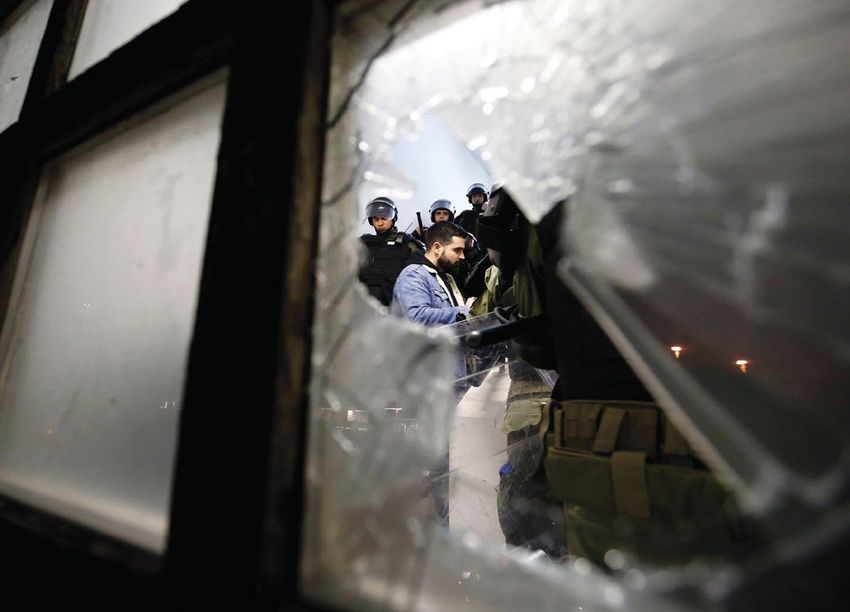
                                                                                                                                                                                          ON THE COVER
publication do not represent the positions of USAID.
                                                                                                                                                                                          Serbian police officers escort
                                                                                                                                                                                          protesters out of the headquarters
The following people were instrumental in the writing of this booklet:                                                                                                                    of Belgrade’s state-run TV station.
Noah Buyon, Shannon O’Toole, Tyler Roylance, and Mike Smeltzer.                                                                                                                           Riot police arrived at the scene in
                                                                                                                                                                                          downtown Belgrade and were trying
                                                                                                                                                                                          to evict dozens who had entered
This booklet is a summary of findings for the 2020 edition of Nations in                                                                                                                  the downtown building protesting
Transit. The complete analysis including detailed reports on all countries                                                                                                                against the administration of Serbian
                                                                                                                                                                                          President Aleksandar Vucic. Credit:
can be found on our website at www.freedomhouse.org.                                                                                                                                      Darko Vojinovic/ AP/ Shutterstock.
NATIONS IN
TRANSIT 2020

Dropping the Democratic Facade
by Zselyke Csaky

A growing number of leaders around the world have dropped even the
pretense of playing by the rules of democracy.
As the democratic consensus of the post–Cold War order              Democratic disintegration
has given way to great-power competition and the pursuit            The breakdown of the democratic consensus has been most
of self-interest, these politicians have stopped hiding behind      visible in Central Europe and the Balkans, which experienced
a facade of nominal compliance. They are openly attacking           the greatest gains after the end of the Cold War.
democratic institutions and attempting to do away with any
remaining checks on their power.                                    In Poland, the governing Law and Justice (PiS) party has
                                                                    been waging a war against the judiciary in an attempt to
In the region stretching from Central Europe to Central Asia,       convert it into a pliant political tool. After devoting its
this shift has accelerated assaults on judicial independence,       initial years in office to an illegal takeover of the country’s
threats against civil society and the media, the manipulation of    constitutional court and the council responsible for judicial
electoral frameworks, and the hollowing out of parliaments,         appointments, the PiS government started persecuting
which no longer fulfill their role as centers of political debate   individual judges in 2019. By early 2020, judges who criticized
and oversight of the executive. Antidemocratic leaders in the       the government’s overhaul or simply applied European
region continue to pay lip service to the skeletal, majoritarian    Union (EU) law correctly were subjected to disciplinary
element of democracy—claiming that they act according to            action. Such an attack on a core tenet of democracy—that
the will of the people—but they do so only to justify their         there are legal limits on a government’s power, enforced
concentration of power and escalating violations of political       by independent courts—would have been unimaginable in
rights and civil liberties.                                         Europe before PiS made it a reality.

These developments have contributed to a stunning demo-             Prime Minister Viktor Orbán’s government in Hungary has
cratic breakdown in the 29 countries covered by Nations in          similarly dropped any pretense of respecting democratic
Transit. There are fewer democracies in the region today            institutions. After centralizing power, tilting the electoral
than at any point since the annual report was launched in           playing field, taking over much of the media, and harassing
1995. The erosion has left citizens especially vulnerable to        critical civil society organizations since 2010, Orbán moved
further rights abuses and power grabs associated with the           during 2019 to consolidate control over new areas of public
coronavirus pandemic.

                                                                                                                   freedomhouse.org   1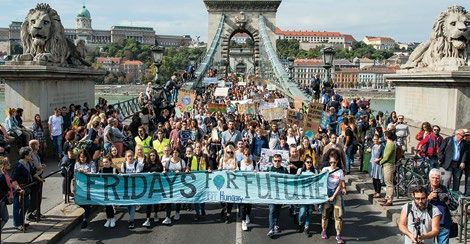
NATIONS IN
    TRANSIT 2020                      Dropping the Democratic Facade

    DEMOCRATIC DISINTEGRATION
    There are 10 democracies in the region today, down from 15 in 2010, while the number of hybrid regimes has more than
    tripled in the past decade, rising from 3 to 10. There has been little movement on the authoritarian end of the spectrum,
    with 11 such regimes in 2010 and 9 in 2020.
                          16
                          14
                          12
    Number of Countries

                          10
                          8
                          6
                          4
                           2
                          0
                               Democracies                 Hybrids              Autocracies
                                                    2010               2020

    life, including education and the arts. The 2020 adoption                 Institutions under attack
    of an emergency law that allows the government to rule by
                                                                              Democracy’s resilience is inherently connected to the health
    decree indefinitely has further exposed the undemocratic
                                                                              of its institutions—the vital components that safeguard the
    character of Orbán’s regime. Hungary’s decline has been the
                                                                              rights of those in the minority and contribute to the resolu-
    most precipitous ever tracked in Nations in Transit; it was
                                                                              tion of political disagreements in a peaceful, orderly manner.
    one of the three democratic frontrunners as of 2005, but in
                                                                              These institutions were never strong to begin with in the
    2020 it became the first country to descend by two regime
                                                                              region stretching from Central Europe to Central Asia; in the
    categories and leave the group of democracies entirely.
                                                                              authoritarian east they lacked even the chance to develop,
                                                                              while in the more democratic west they were based on a
    Meanwhile in the Balkans, years of increasing state
                                                                              fragile elite consensus and often lacked societal support. By
    capture, abuse of power, and strongman tactics employed
                                                                              2019, each of the institutions evaluated in Nations in Transit
    by Aleksandar Vučić in Serbia and Milo Djukanović in
                                                                              were under outright attack.
    Montenegro have tipped those countries over the edge—for
    the first time since 2003, they are no longer categorized as
                                                                              Incumbents of all stripes have been attempting to manipulate
    democracies in Nations in Transit. This change comes at a
                                                                              the electoral framework, fulfilling the more superficial procedural
    time when the EU’s accession process is mired in disagree-
                                                                              requirements of a free election while engineering the process
    ments and no longer serves as a lodestar for democratic
                                                                              below the surface to ensure a certain outcome. Such violations,
    reform, and when great-power politics and transactional
                                                                              while less egregious than some other methods, can quickly
    diplomacy are turning the Balkans into a geostrategic
                                                                              corrode the integrity of the vote and set the stage for domi-
    chessboard. The increased presence of authoritarian powers
                                                                              nation by the incumbent. Hungary provided the most obvious
    like Russia, China, and Turkey in the region has spurred
                                                                              example of these tactics. Despite important opposition victories
    some reengagement by the United States, but it too
                                                                              during 2019, a massive government propaganda network and the
    has increasingly focused on backroom deals, deemphasizing
                                                                              politicized application of administrative resources continued to
    any shared commitment to democracy.
                                                                              overwhelm the ideologically divided opposition parties at the end
                                                                              of the year. In Bulgaria and Slovakia, governments undermined

2   @ FreedomHouse                                                                                                             #NationsInTransit
Freedom House
LEADING THE DEMOCRATIC DECLINE
Leading the Democratic Decline
The breakdown of the democratic consensus has been most visible in Central Europe
Poland dropped out of the Consolidated Democracies category and became a Semi-Consolidated Democracy, while Hungary,
and the Balkans, which experienced the greatest gains after the end of the Cold War.
Serbia, and Montenegro all left the group of democracies and became Transitional/Hybrid Regimes.
POLAND 5.68
5.01 - 7.00
HUNGARY 5.61
Consolidated Democracy
4.93 POLAND
4.01 - 5.00
Semi-Consolidated Democracy
SERBIA 4.29
MONTENEGRO 4.21
3.96 HUNGARY & SERBIA
3.01 - 4.00 3.86 MONTENEGRO
Transitional/Hybrid Regime
2010 2011 2012 2013 2014 2015 2016 2017 2018 2019 2020
the transparency of the vote and tinkered with electoral rules disagreements through debate,Thisdiscussion, and compromise,
infographic is from the Nations in Transit 2020 report by freedomhouse.org
to disadvantage their opponents. Albania’s ruling party pressed carefully vetting proposed changes and checking both honest
ahead with local elections despite an opposition boycott, leaving errors and abuses of power by the executive. They cannot
voters with no meaningful choice. perform this crucial role if they are reduced to rubber stamps
or arenas for impotent protests.
Full or partial parliamentary boycotts by opposition parties in
Albania, Bulgaria, Georgia, Montenegro, and Serbia disrupted The media and civil society continued to bear the brunt of
the work of parliaments and signaled a lack of fairness and government attacks in more autocratic settings during the
legitimacy. In some cases, a pattern of rushed lawmaking and year, but they faced mounting difficulties in democracies as
restrictions on the opposition’s participation has long made well. In a new development, smears and attacks on the judicial
a mockery of the legislative process. Important amendments branch and particular judges have become a widespread
were adopted without consultation, in the dark of night, phenomenon, no longer limited to high-profile cases like
or through emergency ordinances in Poland, Romania, and Poland. In 2019 and in early 2020, politicians have been under-
Hungary during the year. The dizzying speed of lawmaking by mining judicial independence and the rule of law in all of the
the new government in Ukraine also raised concerns, with an subregions covered by Nations in Transit, resulting in score
average of 38 new bills submitted daily between August and declines in the Czech Republic, Georgia, Latvia, Montenegro,
October 2019. Parliaments are supposed to work out political Poland, and Slovakia.
Nations in Transit Methodology
Nations in Transit evaluates elected state institutions (local and national governments), unelected state institutions
(the judiciary and anticorruption authorities), and unelected nonstate institutions (civil society and the media), all of
which are necessary for a healthy, well-functioning democracy.
freedomhouse.org 3NATIONS IN
TRANSIT 2020 Dropping the Democratic Facade
Making plans for indefinite rule in In addition to Russia’s continued malign influence, China has
authoritarian states been advancing an ambitious foreign policy in practically all
of the region’s 29 countries. Beijing’s involvement has ranged
In the authoritarian half of the Nations in Transit region,
from suppressing unfavorable media coverage to throwing
incumbent rulers used their well-established control over
a financial lifeline to venal elites and supplying repressive
state institutions to further fortify their own positions.
governments with surveillance technology. Xi Jinping’s regime
Perhaps nothing demonstrated this instrumentalization
is not so much spreading its own one-party model as it is
better than the constitutional “reforms” announced by
spreading its influence, tailoring solutions to local needs,
Russian president Vladimir Putin in early 2020, which will
taking advantage of institutional weaknesses, and wedging
ultimately allow him to retain his post beyond the two-term
itself into corrupt political and economic structures. This
maximum. The timing of the overhaul, very much by design,
approach undermines the rule of law and transparency,
took everyone by surprise, signaling that Putin is firmly in
further enabling bad governance and repression in the region.
command and remains one step ahead of friend and foe
alike when it comes to succession and the survival of his
A motley crew of far-right, violent extremist groups have
regime. More importantly, the changes demonstrated a
also been making their voices heard in countries as diverse
contempt for the rule of law and the basic principles of
as the Baltic states, Poland, Bulgaria, Ukraine, Georgia, and
constitutional government.
Armenia. While the groups and their xenophobic messages
are not necessarily new, they have demonstrated a new level
In the rest of Eurasia and Central Asia, authoritarians have of cross-border cooperation and enjoyed increasing support
been similarly preoccupied with the future. Perhaps hoping from American and Western European counterparts.
to avoid scenarios like the Velvet Revolution in Armenia
and the arrest of former president Almazbek Atambayev These developments are taking place amid a return to great-
in Kyrgyzstan, Kazakhstan’s Nursultan Nazarbayev oversaw power rivalry and a distinct lack of leadership on democratic
a half-hearted political transition, resigning in March 2019 governance from traditional champions like the United States
only to take back much of his power from the designated and the nations of Western Europe. In fact, some politicians
successor, Kassym-Jomart Tokayev, later in the year. He and parties on both sides of the Atlantic have taken cues from
has also been grooming his daughter Dariga Nazarbayeva the illiberal populists of the Nations in Transit region, enabling
as a potential successor, putting her next in line for the and aggravating the broader democratic deterioration.
presidency.
In the EU, member states’ failure to tackle rule-of-law viola-
The presidents of Azerbaijan, Tajikistan, and Turkmenistan tions inside the bloc has been coupled with a slow erosion of
have been elevating their own relatives to positions of power the rights of migrants and asylum seekers. Neither Poland nor
and responsibility, preparing the ground for a dynastic Hungary has faced repercussions for damaging the rule of law
transition. While any handover of power carries some risk at home, and Hungary’s ruling Fidesz party has even remained
in a system dominated by a single personality, the likelihood a member of the mainstream European People’s Party, the
of a substantial change in governance or the observance of largest grouping in the European Parliament. Meanwhile, US
fundamental freedoms remains slim in the entrenched dicta- president Donald Trump has failed to stand up for democracy
torships of the region—as underlined by the lack of genuine in the region. He has embraced the governments of Hungary
democratic reforms in Uzbekistan three years after Shavkat and Poland—proceeding with visits and exchanging praise
Mirziyoyev succeeded the late president Islam Karimov. with both—and put pressure on Ukraine’s new leadership
to extract personal political favors, threatening adherence
to transparency in that country and casting doubt on its
A fraying global order national security.
A country’s democratic potential is influenced not just by
its own recent history and internal conditions, but also by
its immediate neighborhood and the broader international Restoring democracy from the inside
environment. Over the past few years, important contextual Despite their leaders’ choices, citizens’ yearning for democracy
shifts have affected the prospects for democracy in the remains strong. Major transformations driven by public
region stretching from Central Europe to Central Asia. demands for better governance have been under way in
4 @ FreedomHouse #NationsInTransitFreedom House
A DECADE OF DEMOCRATIC DEFICITS
Net declines in Democracy Scores in Europe and Eurasia have consistently outweighed net gains in
recent editions of Nations in Transit.
Each bubble represents the total number of
countries that improved or declined in a given year.
11
9 9 9
NET 5 6 5 6 5 5
GAINS 4
2010 2011 2012 2013 2014 2015 2016 2017 2018 2019 2020
11 11
12 12 12
NET 14 15
DECLINES
17 16
18 19
This infographic is from the Freedom in the World 2020 report by freedomhouse.org
Armenia and Ukraine, with the former earning the largest It is probably no coincidence that Central Europe and the
two-year improvement ever recorded in Nations in Transit. Balkans, the subregions that made the swiftest progress
Armenian prime minister Nikol Pashinyan and Ukrainian presi- on democracy indicators in past decades, have seen the
dent Volodymyr Zelenskyy will now face the difficult challenge most precipitous declines in recent years. The institutions
of managing expectations, maintaining trust, and restructuring underpinning democracy need more than elite consensus
corrupt systems without contravening democratic norms. and the fulfillment of simple development criteria—or as Ivan
Krastev would say, piecemeal “imitation.” Their effectiveness
The past year also featured a break in Moldova’s pattern of and resilience depend on the participation of an active
oligarchic rule and incremental progress in North Macedonia citizenry. Public engagement in political affairs has been in
and in Kosovo. Separately, new protest movements, often short supply in the Nations in Transit region for much of
focused on environmental issues, have been springing up the report’s history. But there are signs that this may finally
and filling a political void in countries from Central Asia to be changing.
the Balkans. Together with civil society activists devoted to
anticorruption and transparency, environmental campaigners If it is to survive in a hostile world, democracy must be
have scored a number of successes, demonstrating the constantly defended and reinvigorated by its beneficiaries.
unceasing appeal and proven efficacy of democratic methods. This will be the main task for the people of the region—and
Given this context, the response to the COVID-19 pandemic indeed for supporters of democracy everywhere—in the
will likely create new impetus for activism and spur tactical years to come.
innovations to overcome restrictions on assembly.
freedomhouse.org 5NATIONS IN
TRANSIT 2020 Dropping the Democratic Facade
JUSTICE IN THE SERVICE OF POLITICS
The law is a double-edged sword. In autocracies, it is the tycoon claimed that—in addition to funding the ruling party’s
primary political weapon of those in power, used to silence election campaign—he had bribed the chief prosecutor.
dissent, to hamstring competitors, and if all else fails, to send
critics to prison. In democratic countries, however, the law— Corruption and the inability of the justice system to uproot
guided by independent judges—serves precisely the opposite it have been at the center of scandals in a number of other
purpose. It is the final safeguard against executive overreach countries as well, including in Latvia and the Czech Republic.
and the main guarantee that those in the political minority The fallout from an infamous money-laundering scandal
can continue to exercise their rights, speak out about gover- in Latvia demonstrated the authorities’ unwillingness to
nance problems, and ultimately gain power through elections. deal with foreign bribery cases, while the US government’s
imposition of Global Magnitsky Act sanctions on the oligarch
Yet even in the more democratic half of the Nations in Transit Aivars Lembergs underscored the Latvian courts’ inefficiency:
region, this important defense against tyranny is now being a case against Lembergs has been dragging on for more than
weakened. In 2019 and early 2020, scandals in several coun- a decade. Meanwhile, in the Czech Republic, Prime Minister
tries have revealed a growing rot, a mixture of politicization Andrej Babiš’s attempts to escape prosecution for alleged
and corruption, inside the judiciary, while attacks on the fraud enjoyed some success, despite extraordinary public
judicial branch and even on individual judges have become disapproval and protests. There has been no actual progress
increasingly acute. in his case, as the prosecutor general first dropped and then
reopened charges against him in 2019.
Courts bogged down by political corruption
Perhaps no case demonstrates the dangers posed by judicial A frontal assault on the judiciary in Poland
corruption more clearly than the Kuciak trial in Slovakia. The Among the region’s waning democracies, Poland continues to
investigation into the 2018 murder of journalist Ján Kuciak stand out for the systematic, targeted, and aggressive nature
and his fiancée exposed a “network” of high-level politicians, of the government’s attacks on judicial independence. Since
members of the judiciary, and organized crime figures it took power in 2015, the Law and Justice (PiS) party has
who were all connected to Marián Kočner, the underworld overseen an unprecedented offensive against the very idea
businessman accused of ordering the killings. This network that laws and courts can, or should, limit executive action.
not only protected Kočner for a time, but also very likely
allowed other powerful individuals to stay above the law. PiS has not just accused judges of ideological bias and
While a number of judges were arrested in early 2020, the appointed loyal allies to available positions—steps that might
revelations further diminished confidence in the judiciary be problematic but are not unheard of in democracies during
among ordinary Slovaks. In late 2019, a survey showed such periods of political polarization. The party has gone much
trust at its lowest ebb since the country joined the European further than that. It has violated Poland’s constitution, passed
Union: 72 percent of respondents said they did not have faith laws that permanently hamper the impartial functioning of the
in the justice system. courts, rigged the appointment process for judges, created a
mechanism to reopen final court rulings, set up a partisan disci-
In Montenegro, scandals involving judicial authorities last plinary regime for the judiciary, and finally, in 2019, it started
year similarly revealed abuse and lack of professionalism in punishing individual judges who were critical of these steps.
the courts. The 2019 conclusion of the “coup trial,” in which
14 people were convicted of terrorism for attempting to The EU’s commissioner on values has denounced this ongo-
violently overthrow the government in 2016 and derail the ing disciplinary campaign as a wholesale “carpet bombing” of
country’s NATO accession, was a welcome development, but judicial independence. Dozens of judges are facing possible
the conduct of the trial was marred by irregularities. In two penalties on often frivolous grounds, or for simply attempt-
separate cases over the summer, civil society organizations ing to uphold EU law. The punishments could range from
revealed that several judges had received state-sponsored warnings and salary reductions to dismissal from the bench
apartments or loans on very favorable terms, and a local and even prison terms. Leaks from August 2019 exposed the
6 @ FreedomHouse #NationsInTransitFreedom House
POLAND'S TEN-YEAR DECLINE
7
6
5
Democracy Score
4
3
2
1
2010 2011 2012 2013 2014 2015 2016 2017 2018 2019 2020
Electoral Process National Democratic Governance Corruption
Civil Society Judicial Framework and Independence Democracy Score
Independent Media Local Democratic Governance
involvement of the Ministry of Justice in a coordinated online misuse of public funds. In an ominous sign that such incidents
harassment campaign, leaving no doubt about the ruling would not be limited to the lower courts, the ruling majority
party’s willingness to persecute any and all critical judges. in Parliament granted lifelong tenure to 14 new justices on the
country’s Supreme Court following a “highly dysfunctional
and unprofessional” appointment process.
Two possible futures
If Poland continues on this course, it will join hybrid regimes There is, of course, another way forward for Poland and
and autocracies that routinely mete out politicized justice. other fragile democracies where the rule of law and judicial
Recent developments in Georgia provide a harrowing example independence are in danger. But repairing the profound
of what that could look like. While the judiciary has long destruction caused by corruption, politicization, and
been a flashpoint in Georgia’s polarized politics, arbitrary authoritarian intent will be no easy task. It will take years of
arrests and a number of controversial court cases in 2019 dedicated work, and it will require sustained public pressure
and early 2020 further aggravated an already tense situation. on political leaders to respect the proper role of the courts in
A new entrant into the political field, businessman Mamuka a free society.
Khazaradze, was slapped with money-laundering charges as
soon as he announced the founding of a political movement,
and a more established opposition leader was sentenced to
38 months in prison in a reheated case involving the alleged
freedomhouse.org 7NATIONS IN
TRANSIT 2020 Dropping the Democratic Facade
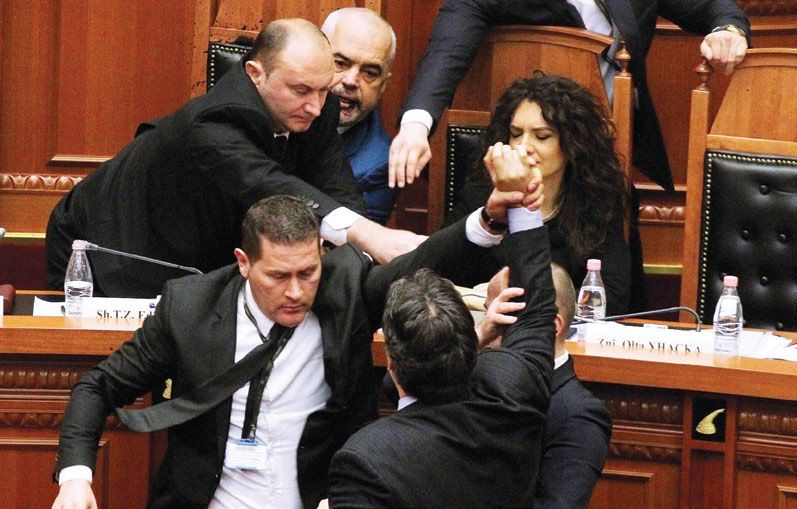
Albanian Prime Minister
Edi Rama reacts as an
opposition member
of parliament splashes
ink on him during
a session of the
parliament in Tirana.
Credit: MALTON DIBRA/
EPA-EFE/Shutterstock.
LEGISLATURES ON THE SIDELINES
When people dislike the direction an institution is moving 2019. The decline of parliament extends farther than the low
in, they have two choices, according to economist Albert incidence of boycotting might let on: in a number of countries,
Hirschman: they can voice their concerns, or they can increasingly frustrated lawmakers still sit in opposition as
leave. When people make the first choice over the second, rulemaking and -breaking by illiberal supermajorities degrades
Hirschman argues, it is because they feel a sense of loyalty to the parliamentary ideal.
the institution. This paradigm helps explain why the institution
of parliament functions, and when it does not. In a functioning
parliament, the opposition may not like what the ruling Serbia: a case study in the limits of loyalty
majority is doing, but because it accepts that parliament is the Outright boycotts lie toward the end of the process of degra-
right place to register its dislike, it continues to participate dation. Recent events in Serbia are instructive in this regard.
in debating and voting. However, this loyalty is not without Since coming to power in 2012, the ruling Serbian Progressive
limits. If the ruling majority refuses to engage with it, the Party (SNS) has systematically curtailed the ability of the
opposition is no longer motivated to voice its concerns inside opposition to play a role in the business of governing. From
the parliament. So, it leaves. 2016 to 2018, it only put bills proposed by friendly lawmakers
on the legislative agenda; in 2019, it entertained just two
Increasingly, the second scenario is coming to pass in coun- proposals from outside its ranks before voting them down. To
tries surveyed by Nations in Transit. In 2019, the opposition limit oversight of its own proposals, the SNS shuts the oppo-
in 4 of the 29 countries (Albania, Bulgaria, Montenegro, and sition out of committees, and floods the docket with frivolous
Serbia) surveyed boycotted parliament altogether, while a amendments that eat into the time allotted for debate. It also
brief parliamentary boycott took place in a fifth country, forces the adoption of laws via urgent procedure, a process
Georgia, in early 2020. The underlying conditions for these that is only supposed to be invoked in extraordinary situations.
walkouts can be observed more widely across the region, More than half of laws adopted in Serbia last year were
as ruling parties took steps to marginalize the opposition in approved under urgent procedure.
8 @ FreedomHouse #NationsInTransitFreedom House
The questionable legitimacy of the ruling party’s majority February 2019 also saw Bulgaria’s largest opposition bloc
further discourages opposition lawmakers. The latest temporarily boycott the parliament in protest of the ruling
parliamentary elections, in 2016, saw the SNS “taking undue party’s attempts to manipulate the electoral framework to
advantage of incumbency,” “blurring the distinction between its advantage. These include legalizing unlimited campaign
state and party activities,” “exerting pressure on voters, contributions from private sources, slashing party subsidies,
particularly those employed in the public sector,” and and doing away with preferential ballots—although the latter
“enticing voters through welfare initiatives,” according to two changes were reversed.
monitors from the Council of Europe and the Organization
for Security and Co-operation in Europe. And in February 2020, lawmakers from all of Georgia’s opposi-
tion blocs walked out of the legislature after the government
In Serbia, then, the opposition does not feel that it can effec- backtracked on its promise to transition the country to a
tively advocate for policy changes because the ruling party fully proportional electoral system. Had it been introduced,
has worked to deny it the opportunity to do so, and it doubts this system would have decreased the ruling Georgian Dream
that it can ever win power through elections. Hence, it has party’s chances of winning parliamentary elections again
chosen to boycott parliament, in addition to the upcoming this year. The crisis was only defused when, with the help of
2020 parliamentary vote. In February 2019, the Alliance for international mediation, the parties met halfway in March.
Serbia, an umbrella group of opposition parties, walked out
what it dubbed the “usurper parliament,” forming a so-called
free parliament in a bid to undercut the former’s legitimacy. On the fast track to breakdown
The “free parliament” has been in session ever since, to little In other countries, the loyalty of the opposition is under
effect. Unfortunately, this exercise in symbolic protest has severe strain. Hungary began 2019 with a one-off opposition
had the effect of damaging the perception of democracy walkout after the ruling Fidesz party forced the so-called
among ordinary citizens. Slave Law through the legislature in late December 2018. The
party accomplished this by exempting itself from parliamen-
tary procedure in order to defeat hundreds of amendments
Other parliaments in peril submitted by the opposition in a single motion. Then, at
Similar dynamics are in evidence elsewhere in the region. In year’s end, Fidesz enacted a “Muzzle Law” that introduced
neighboring Montenegro, elements of the opposition have sanctions for lawmakers whose actions are deemed disrup-
refused to participate in parliament since unfair elections in tive, and which moreover prohibits independent lawmakers
2016 returned the Democratic Party of Socialists (DPS) to from caucusing with party groups.
government for the tenth time running. The DPS-dominated
parliament has slow-walked electoral reforms, although In Romania, the erstwhile Socialist Democracy Party (PSD)
these have also been hampered by the difficulty of mustering government continued its abuse of emergency ordinances,
quorum during a boycott. (However, party whips had little akin to laws passed under Serbia’s urgent procedure rule.
trouble corralling votes for a contentious law on church When threatened by a confidence motion toward the end
property passed at year’s end.) of 2019, it pressured the national airline to delay flights so
opposition members would not be able to attend the vote.
To the south, in Albania, opposition lawmakers followed up The former ruling coalition in Slovakia also channeled the SNS
on parliamentary walk-outs in 2017 and 2018 by resigning when it attempted, unsuccessfully, to shore up its prospects
en masse in February 2019. They demanded fresh elections before February 2020 elections, hiding a major change to
after an investigation revealed that the governing Socialist the electoral code in a rider and passing a hike in pension
Party had enlisted the help of organized crime networks payments via accelerated procedure.
in the 2017 vote that brought it to power. Undeterred, the
Socialists have put off electoral reforms while working Lastly, and perhaps most disconcertingly, in Ukraine,
to stifle the country’s media and proceeding with plans President Volodymyr Zelenskyy’s supermajority appears to
to oust the president. For their part, the ex-lawmakers be ignoring both parliamentary procedure and proposals
have taken up violent street politics since quitting from opposition lawmakers. Observers identified procedural
the parliament. violations in two-thirds of the bills passed by his Servant of
the People party between August and November 2019.
freedomhouse.org 9NATIONS IN
TRANSIT 2020 Dropping the Democratic Facade
An acute symptom demands a Boycotts are an expression of an underlying malaise in the
systemic solution institution of a country’s parliament. Domestic and outside
actors alike should address themselves to this sickness
The response offered by the European Union and other
above all else. Absent a long-term cure, boycotts can only be
external actors to opposition boycotts is unchanging:
expected to recur.
return to the legislature. This admonition blithely ignores
realities on the ground. From Tirana to Tbilisi, those in
The crisis in Georgia was resolved in March 2020 when
power are not interested in making parliament the place
European and US diplomats stepped in to help broker an
for discussion. In fact, they are increasingly disinterested in
agreement to transition the county to a mixed electoral
discussion altogether. Faced with this situation, a boycott is
system—addressing the structural problem behind the
an understandable response. However, it is seldom a useful
immediate parliamentary crisis. There are a number of other
one. Boycotting parliament emboldens those in power by
recent instances in which leaders have crafted structural
removing a bulwark against their worst impulses. It hurts
solutions to seemingly intractable problems, notably the
constituents, whose voices are no longer represented. It
US-led mediation effort that resolved the decades-old “name”
also hurts citizens at large, who suffer from ensuing crises
dispute between Greece and North Macedonia, and allowed
of governance.
the latter to pursue membership in the European Union and
NATO. Structural fixes offer a way forward.
FRAGILE INSTITUTIONS OPEN THE DOOR FOR
CHINESE COMMUNIST PARTY INFLUENCE
Nations in Transit has long documented Russia’s aggressive Agreement” with governments in 10 of NIT’s 29 countries,
foreign policy, aimed at destabilizing the transatlantic alliance each of which has a record of poor governance and serious
and reestablishing what it considers its “sphere of influence.” problems with corruption. In Tajikistan and Uzbekistan, for
But in recent years, China’s Xi Jinping has been no less active example, nearly a thousand cameras have been installed to
in promoting his foreign-policy objectives. While China’s monitor events in public spaces. In Serbia, another country
international engagement is often less directly confronta- that has instituted Huawei’s surveillance system of facial and
tional than Russia’s, it nevertheless has an insidious effect on license-plate recognition, police officers have taken part in
the development and functioning of democratic institutions joint exercises with their Chinese counterparts, learning how
in the region spanning from Central Europe to Central Asia. the Chinese “disable terrorists.” These partnerships raise
concerns that China’s increasing reach could strengthen
The Chinese Communist Party’s influence campaign is focused authoritarian-minded leaders, contributing to repression and
around two major goals—expanding the country’s influence diminishing democratic governance and active civil society.
abroad, and promoting a positive image of China globally. Even in democracies, experts point to vulnerabilities that can
Enacted by China’s sprawling diplomatic corps, the campaign be exploited by the Chinese authorities, as Chinese technolo-
is best characterized by its flexibility. It tailors its approach gies are integrated into the surveillance sector.
to each individual country, taking advantage of institutional
weaknesses, and surreptitiously embedding itself into corrupt Another area of expanding Chinese influence in the region is
political and economic structures. The aggregate impact of the media, in which Chinese authorities intervene in in order
these measures is the further degradation of good governance, to shape content to their advantage. The three main strate-
transparency, and the rule of law, and the creation of additional gies focus on promotion of the Chinese Communist Party’s
avenues for predatory, local political elites to remain in power preferred narratives, the suppression of critical viewpoints,
and further bend the system to their advantage. and the management of content delivery systems. The Czech
Republic provided a perfect example of the implementation
The most glaring example of China’s expanding antidemocratic of this comprehensive strategy in late 2019, when reports that
influence in the region is in the area of technology and Petr Kellner—the country’s wealthiest citizen, who has deep
surveillance. China’s tech giant Huawei has signed a “Safe City business interests in China—was accused of financing a media
10 @ FreedomHouse #NationsInTransitFreedom House
A SNAPSHOT OF CHINESE GOVERNMENT INFLUENCE
The countries below are among those where Beijing has exploited weak or nonexistent democratic institutions.
Uzbekistan Armenia
Ukraine Belarus
Bosnia and
Tajikistan Herzegovina
Slovakia Czech
Republic
Technology/
Surveillance
Serbia Estonia Debt Diplomacy
Influence
Campaigns
Russia Hungary
Poland Kazakhstan
North
Macedonia Kyrgyzstan
Montenegro Latvia
Moldova Lithuania
influence campaign aimed at promoting a positive image of debt, respectively, to China. In April 2020, hit by the
the country and at attacking its local critics. In Central and coronavirus, Kyrgyzstan resorted to asking for debt relief;
Eastern European countries, Chinese diplomats have been the country owes as much as two-fifths of its foreign debt to
given free rein to publish misleading op-eds that push a China’s Eximbank.
pro-China narrative.
All of these strategies weaken avenues for democratic
Lastly, China has aimed to gain influence in the region oversight, and provide authoritarians and authoritarians-to-be
through a strategy of debt diplomacy—that is, providing with tools and incentives to overstay their time in power. Like
cash-strapped, infrastructurally weak countries with funds in Russia, China is an opportunistic actor in the region in the
a way that creates political dependency. China’s advantage sense that it takes advantage of domestic vulnerabilities. Its
in the region is its ability to grant loans with few strings corrosive influence can and should be countered, but finan-
attached—as compared to the EU, which has more stringent cial investment and political deals only go so far. Ultimately,
guidelines for loaning and paying back financial support. As a its sharp power will only have less potential to penetrate if
result, foreign-held debt in the region is increasingly found in democratic stakeholders focus on backstopping the region’s
the hands of the Chinese government: Tajikistan, Montenegro, democratic institutions.
and North Macedonia owe 41, 39, and 20 percent of their
freedomhouse.org 11NATIONS IN
TRANSIT 2020 Dropping the Democratic Facade
NATIONS IN TRANSIT 2020
ESTONIA
LATVIA RUSSIA
RUSSIA LITHUANIA
BELARUS
POLAND
CZECH REP. UKRAINE
SLOVAKIA
HUNGARY MOLDOVA
SLOVENIA ROMANIA
CROATIA
BOSNIA
& HERZ. SERBIA
MONTENEGRO BULGARIA
NORTH GEORGIA
KOSOVO MACEDONIA
ALBANIA ARMENIA AZERBAIJAN
SURVEY FINDINGS
Regime Type Number of countries
Consolidated Democracy (CD) 6
Semi-Consolidated Democracy (SCD) 4
Transitional Government or Hybrid Regime (T/H) 10
Semi-Consolidated Authoritarian Regime (SCA) 1
Consolidated Authoritarian Regime (CA) 8
Total 29
12 @ FreedomHouse #NationsInTransitFreedom House
KAZAKHSTAN
UZBEKISTAN
KYRGYZSTAN
TURKMENISTAN TAJIKISTAN
The map reflects the findings of Freedom House’s Nations in Transit 2020 survey, which assesses the status of democratic development
in 29 countries from Central Europe to Central Asia during 2019. Freedom House introduced a Democracy Score—an average of each
country’s ratings on all of the indicators covered by Nations in Transit—beginning with the 2004 edition. The Democracy Score is
designed to simplify analysis of the countries’ overall progress or deterioration from year to year. Based on the Democracy Score and
its scale of 1 to 7, Freedom House has defined the following regime types: Consolidated Authoritarian Regime (1.00–2.00),
Semi-Consolidated Authoritarian Regime (2.01–3.00), Transitional/Hybrid Regime (3.01–4.00), Semi-Consolidated
Democracy (4.01–5.00), Consolidated Democracy (5.01–7.00).
freedomhouse.org 13NATIONS IN
TRANSIT 2020 Dropping the Democratic Facade
President of the
Republic of Azerbaijan
Ilham Aliyev and his
spouse Mehriban
Aliyeva, posted on
February 5, 2013 to the
official Ilyam Aliyev
Facebook page.
EURASIA’S AUTOCRATS GRAPPLE WITH SUCCESSION PLANS
Months of speculation about Vladimir Putin’s options for As a result, today’s Eurasian leaders have increasingly resorted to
maintaining control after leaving the presidency in 2024 were the rather anachronistic model of dynastic succession. That is,
thrown out the window on March 10, 2020, when Russia’s they are placing family members close to the fire—in positions
parliament adopted a constitutional amendment that will of authority—so that when the time comes, they can transfer
simply restart the term-limits clock and allow Putin to stay power to trusted relatives under a veneer of constitutionality.
in power until 2036. Given the earlier signs that he was
planning to shift to another post, as with his stint as prime
minister in 2008–12, the move was perhaps unexpected. But A growing pattern of dynasty building
it was certainly in keeping with a recent trend of uncertainty The president of Azerbaijan, Ilham Aliyev, succeeded his father
surrounding presidential succession in Eurasia. through a tightly controlled election in 2003, just months after
the elder Aliyev collapsed on live television, and weeks before
Autocrats from Central Asia to the Caucasus have been trying he was pronounced dead. Now there are signs that the regime
to solve the fundamental problem of retirement in a system is laying the groundwork for another, perhaps more predictable
built around a single personality. They want to retain the power transfer within the ruling family. In recent years, Aliyev has
trappings of power without the burden of wielding it, or at reshaped the upper echelons of his power vertical, primarily to
least ensure their own security if age or infirmity force them the benefit of his wife—for whom the post of “first vice pres-
to step back. ident” was created in 2016—and her own family network, the
so-called Pashayev clan. As his public support has waned amid a
By extending his possible tenure by another two terms, Putin slowing economy and increasingly divisive clan politics, Aliyev has
bought some time for himself. Nevertheless, he still needs an also made an intraelite revolt less likely by removing “old guard”
exit strategy, and the history of the region is not encouraging. officials who oppose or at least have no allegiance to his spouse.
Every post-Soviet authoritarian ruler in Eurasia to date has Consequently, any future resignation by Aliyev would leave First
died in office, succumbed to a popular uprising, or been Lady Mehriban Aliyeva, an ally of presumably unwavering loyalty,
betrayed by a hand-picked successor. in charge of a power structure staffed by her supporters.
14 @ FreedomHouse #NationsInTransitFreedom House
In Turkmenistan, President Gurbanguly Berdimuhamedov’s their own authority, but only a few have sought to create
38-year-old son Serdar has been steadily climbing the ladder new perches for themselves outside the presidency, and the
of authority over the last five years, moving through posts experiments have not gone well.
with ever increasing responsibility. In 2019, he was appointed
governor of the important Ahal Province, which surrounds For example, the outgoing presidents of Armenia and
the capital, Ashgabat, and in February he took over the new Kyrgyzstan both sought to circumvent term limits by shifting
Ministry of Industry and Construction, which will manage the the nucleus of power from the presidency to the parliament.
construction of a new provincial capital in Ahal. All of this Three years later, both of these leaders are facing criminal
points toward an incipient transfer of power to the younger prosecutions after failing in their attempts maintain polit-
Berdimuhamedov, a prospect that gained salience last year ical control.
after the president was forced to dispel rumors of his own
ill-health or death. In Kyrgyzstan, Almazbek Atambayev was unable to retain the
unified loyalty of his party amid rivalry with his chosen succes-
Discussions surrounding dynastic succession in Tajikistan sor, current president Sooronbay Jeenbekov. Atambayev
have been going on for years, but they recently ramped up in was even stripped of his legal immunity and later arrested,
anticipation of the presidential election due in 2020. Incumbent following a violent confrontation between the authorities and
Emomali Rahmon’s 32-year-old son, Rustam, held a number his supporters.
of government positions before receiving his current post as
mayor of Dushanbe, which some consider to be a stepping In Armenia, Serzh Sargsyan’s attempt to hop from the presi-
stone to the presidency. The possibility that Rustam could dency to a newly empowered premiership touched off mass
succeed his father received a boost in 2018, when Tajikistan’s protests, with citizens expressing deep frustration over the
parliament lowered the eligibility age from 35 to 30. stagnant economy and transparently undemocratic political
system. Sargsyan was ultimately compelled to resign in 2018,
Kazakhstan, the only consolidated authoritarian regime in ushering in a new government that has pursued significant,
Nations in Transit 2020 that featured a transfer of power democratic reforms since crushing the old ruling party in that
last year, seemed to be going in a different direction. To parliamentary elections.
the surprise of some, the first transition of post-Soviet
Kazakhstan proceeded in an orderly fashion and did not Putin is no doubt aware of these cases, which show that trust
directly involve family. After ruling the country for 29 years, in allies can be misplaced, and public discontent can over-
78-year-old Nursultan Nazarbayev resigned in March 2019, whelm even the best-laid transition plans. Unlike Nazarbayev
passing the presidency to his chosen successor and ally, and the other dynasty builders, however, the Russian leader
Kassym-Jomart Tokayev. Yet recent reports suggest a strained has kept his family members out of public office, and almost
relationship between the new president and the old, and it entirely out of the public eye. If he plans to raise the profile of
appears that Nazarbayev—who remains the leader of the a daughter or some other relative, he will need to get started
ruling party and lifetime chairman of the country’s Security well before 2036.
Council—might be reconsidering his decision, clawing back
much of the control ceded to Tokayev. Fortunately for In the end though, even dynastic succession is far from safe.
Nazarbayev, his daughter Dariga Nazarbayeva, as the Senate These authoritarian leaders must contend with the glaring
speaker, is next in the line of presidential succession. While fact that their concentration of power is fundamentally
Tokayev retains the presidency for the moment, a pivot to undemocratic and violates the spirit if not the letter of their
dynastic succession could be in the offing. constitutions, all of which make some promise of basic
political rights and envision a republican form of government.
Lacking better options, Eurasian rulers may attempt to pass
The failure of alternatives the baton to family members, but there is no guarantee that
Nazarbayev’s apparent case of cold feet could be linked to their citizens or even their henchmen will accept the insult of
the experiences of some of his fellow rulers in the region. a de facto monarchy.
Many authoritarian leaders, both inside and outside Eurasia,
have manipulated their constitutions to preserve and extend
freedomhouse.org 15NATIONS IN
TRANSIT 2020 Dropping the Democratic Facade
WITHIN ECO-PROTESTS, SUPPORT FOR DEMOCRACY
Governments from Central Asia to Central Europe were rocked
by political protests in 2019. Public displays of dissent roiled
Kazakhstan ahead of and after a sham vote installed former
president Nursultan Nazarbayev’s chosen successor in office. In
Moscow, protestors braved police brutality to reject the rigging
of local elections, while in the Serbian capital of Belgrade, a
movement against creeping authoritarianism organized weekly
antigovernment demonstrations. Across Poland, concerned
citizens rallied to denounce the ruling Law and Justice party’s
purge of the judiciary, and in Prague, at least a quarter-million
people protested Czech prime minister Andrej Babiš’s corrupt Demonstrators march across the River Danube staging a protest in
dealings, recalling the crowds of the 1989 Velvet Revolution. Budapest in September 2019. Credit: ZOLTAN BALOGH/ EPA-EFE/
Shutterstock.
While causes and contexts of these protests differed, they
shared a common fate: failure to secure stated aims. The through which citizens can advocate against corruption and
region’s governments, no matter their democratic character, for good governance—and expect results.
have calculated that they can keep a lid on simmering discon-
tent and survive without ceding ground to the street. In more democratic countries, activists often explicitly
link their desire for a better environment to a desire for
There is, however, an exception to this general rule. Even a better government. For example, in Bulgaria, outrage
in some of the most closed countries, the appeals of over a water shortage brought about by corruption-tinged
environmental activists have found a surprisingly receptive mismanagement in the city of Pernik saw residents descend
audience in the authorities. For instance, in authoritarian on the capital to call for the prime minister’s resignation.
Belarus, a series of protest marches compelled officials to The largest opposition party took up their cause, initiating
suspend construction of a planned battery factory in Brest, a no-confidence motion in parliament that drew a direct
though organizers endured repeated detentions before their connection between the situation in Pernik and the deterio-
determination paid off. In semi-authoritarian Kyrgyzstan, ration of democracy in the country. While the motion failed,
the same government that shrugged off a popular anticor- the environment minister was sacked, and a pipeline to bring
ruption campaign in 2019 leapt into action after a spate of relief to the city was rapidly constructed.
demonstrations against uranium mining, issuing a blanket ban
on the practice. Meanwhile, Montenegro experienced the In Armenia, local concern over runoff from the planned
largest protests in its history last year—involving perhaps 10 Amulsar gold mine became a headache for Prime Minister
percent of the population—yet government officials there Nikol Pashinyan, who inherited the project from the corrupt
only granted concessions to a diffuse campaign against dams administration ousted by popular protests in 2018. Activists
whose rallies never drew more than a few dozen people. have blocked the mine’s approach road for months; they say
Pashinyan will prove that he’s no different than the leaders he
replaced if he greenlights the project.
Green shoots
Eco-activists’ demands, such as closing dumps, cleaning up Antigovernment sentiment is also in evidence among activists
waterways, and otherwise reversing environmental degra- in the region’s autocracies. In Uzbekistan, where memories of
dation, tend to be local and indirectly political, which may the Andijan Massacre still confine activism to the digital sphere,
explain why normally unresponsive governments have proven online uproar over plans to bulldoze Samarkand’s tree-lined
willing to tolerate and occasionally accommodate them. Yet, University Boulevard led authorities to scrap the initiative.
many of the ecological issues driving this activism are down- Moreover, it revealed some willingness to confront the
stream of governance failures including clientelism, graft, authorities: beneath a Change.org petition addressed to the city’s
and gross incompetence. Consequently, in free and unfree appointed mayor, one signatory wrote, “You probably forgot
societies alike, environmental protests have become ciphers about the people, but the people will not forget about you.”
16 @ FreedomHouse #NationsInTransitFreedom House
RELATIONSHIP BETWEEN DEMOCRACY AND MORTALITY FROM AIR POLLUTION
90
UZ
80
Deaths per 100,000 people attributed to
70
TM
ambient air pollution (2017)
60 AZ UA
TJ AM
50 BY
RU MD BG
40 KG GE MK RS
KZ BA SK
MEHU RO PL LT LV
30 HR CZ
AL
20 SI
EE
10
0
1.00 2.00 3.00 4.00 5.00 6.00 7.00
2020 Democracy Score
Source: "Global Burden of Disease Study 2017," Institute for Health Metrics and Evaluation, Seattle, WA, USA
Trouble in the water plummeting air quality: according to readings on January 3,
2020, capital cities in the Balkans accounted for five of the 20
While environmental protests offer citizens some means for
most polluted major municipalities in the world. In Belgrade,
holding their governments accountable, ruling classes are
the Alliance for Serbia, an umbrella opposition group, began
also waking up to their potential to touch off wider political
to champion the cause of combatting smog, inserting the
unrest. In Russia, the authorities cracked down hard on a
grassroots campaign against a proposed landfill in the remote air quality crisis into its long-running feud with President
railway depot of Shiyes, especially after activists began to Aleksandar Vucic. Time will tell whether this move will bolster
attract international attention with their calls for the resigna- the opposition’s halting campaign to challenge Vučić and his
tion of regional leaders and eventually of President Vladimir long-ruling Serbian Progressive Party, but to date, it has not.
Putin. Protesters’ persistence in the face of state repression
earned them fractured bones and fines totaling millions of
rubles, but ultimately, the authorities blinked: in January 2020,
Spring awakening
a court ordered construction to halt. Simultaneously, though, Contemporary observers, contrasting small eco-movements
the Kremlin has reportedly mulled a “reboot” of the Russian in Eastern Europe and Eurasia against more consolidated,
Ecological Party—a sock puppet loyal to Putin’s ruling United politically influential green movements in Western Europe,
Russia party—in a bid to co-opt growing environmental sometimes speak of a new “Iron Curtain” behind which green
activism throughout the country. Similarly, the only new party politics cannot penetrate. However, recent events suggest
permitted to compete in Uzbekistan’s 2019 parliamentary otherwise. While the kinds of isolated protests taking place
elections was the progovernment Ecological Movement. in Brest, Belgrade, and beyond are a far cry from forceful
movements centered around ecological issues, if ordinarily
As the struggle in Shiyes came to a close, small-scale irreproachable governments are taking them seriously,
demonstrations erupted across the Balkans in response to democracy’s boosters should take notice, too.
freedomhouse.org 17You can also read


