Naturally Occurring Compounds With Larvicidal Activity Against Malaria Mosquitoes
←
→
Page content transcription
If your browser does not render page correctly, please read the page content below
REVIEW
                                                                                                                                                published: 11 August 2021
                                                                                                                                            doi: 10.3389/fitd.2021.718804

                                            Naturally Occurring Compounds
                                            With Larvicidal Activity Against
                                            Malaria Mosquitoes
                                            Trizah K. Milugo 1,2*, David P. Tchouassi 1, Reginald A. Kavishe 2, Rhoel R. Dinglasan 3
                                            and Baldwyn Torto 1
                                            1 International Centre of Insect Physiology and Ecology (icipe), Nairobi, Kenya, 2 Department of Biochemistry and Molecular

                                            Biology, Kilimanjaro Christian Medical University College (KCMUCo), Moshi, Tanzania, 3 Department of Infectious Diseases &
                                            Immunology, Emerging Pathogens Institute, College of Veterinary Medicine, University of Florida, Gainesville, FL, United States

                                            Female Anopheles mosquitoes transmit Plasmodium parasites that cause human malaria.
                                            Currently, vector control is the most widely deployed approach to reduce mosquito
                                            population and hence disease transmission. This relies on use of insecticide-based
                                            interventions including Long-lasting Insecticide-treated Nets (LLINs) and Indoor
                                            Residual Spraying (IRS) where scale-up has contributed to a dramatic decline in malaria
                                            deaths and morbidity over the past decade. Challenges to their effective use include the
                          Edited by:        emergence and spread of insecticide resistance by malaria vector populations coupled
                        Paul O. Mireji,     with the inability to curb outdoor transmission. Under these situations, use of larvicides
     Kenya Agricultural and Livestock
       Research Organization, Kenya
                                            through larval source management (LSM) can complement these existing measures. The
                        Reviewed by:
                                            need to minimize environmental impact and effect on non-target organisms has spurred
                  Eliningaya J. Kweka,      interest in the development of eco-friendly larvicides of natural origin. Here, we review
Tropical Pesticides Research Institute,
                                            literature published in the last five years to highlight compounds of natural origin found to
                              Tanzania
       Paulo Eduardo Martins Ribolla,       exhibit larvicidal activity against malaria mosquitoes. Specifically, the larvicidal activity of
    São Paulo State University, Brazil      different classes of compounds is discussed including their effect on non-target
                  *Correspondence:          organisms. Additionally, we provide suggestions for future research into mosquito
                     Trizah K. Milugo
                    tmilugo@icipe.org
                                            larvicides including the use of chemical synthesis to improve the bioactivity of known
                                            natural compounds.
                   Specialty section:
                                            Keywords: malaria, larvicides, mosquitoes, natural products, Anopheles
        This article was submitted to
                       Vector Biology,
               a section of the journal
        Frontiers in Tropical Diseases
                                            INTRODUCTION
           Received: 01 June 2021
           Accepted: 21 July 2021           Malaria is an infectious disease caused by Plasmodium parasites which are transmitted between
         Published: 11 August 2021          humans by infected female Anopheles mosquito (1). In 2019, an estimated 229 million cases of
                             Citation:      malaria and 409,000 deaths were reported worldwide; of which >90% occurred in sub-Saharan
           Milugo TK, Tchouassi DP,         African (SSA) (1). Of the four parasite species that cause human malaria (Plasmodium vivax,
       Kavishe RA, Dinglasan RR and
                                            Plasmodium ovale, Plasmodium malariae and Plasmodium falciperum), P. falciparum is responsible
   Torto B (2021) Naturally Occurring
  Compounds With Larvicidal Activity
                                            for the most severe form of the disease and it accounts for ~99% of all cases in SSA (1).
         Against Malaria Mosquitoes.           To prevent and reduce malaria burden and transmission, control programs rely mainly on
          Front. Trop. Dis. 2:718804.       surveillance, prompt and accurate diagnosis, treatment of the disease and vector control (e.g.
      doi: 10.3389/fitd.2021.718804          Insecticide Treated Nets (ITNs) and Indoor Residual Spraying (IRS)) (1, 2). According to the WHO,

Frontiers in Tropical Diseases | www.frontiersin.org                                 1                                          August 2021 | Volume 2 | Article 718804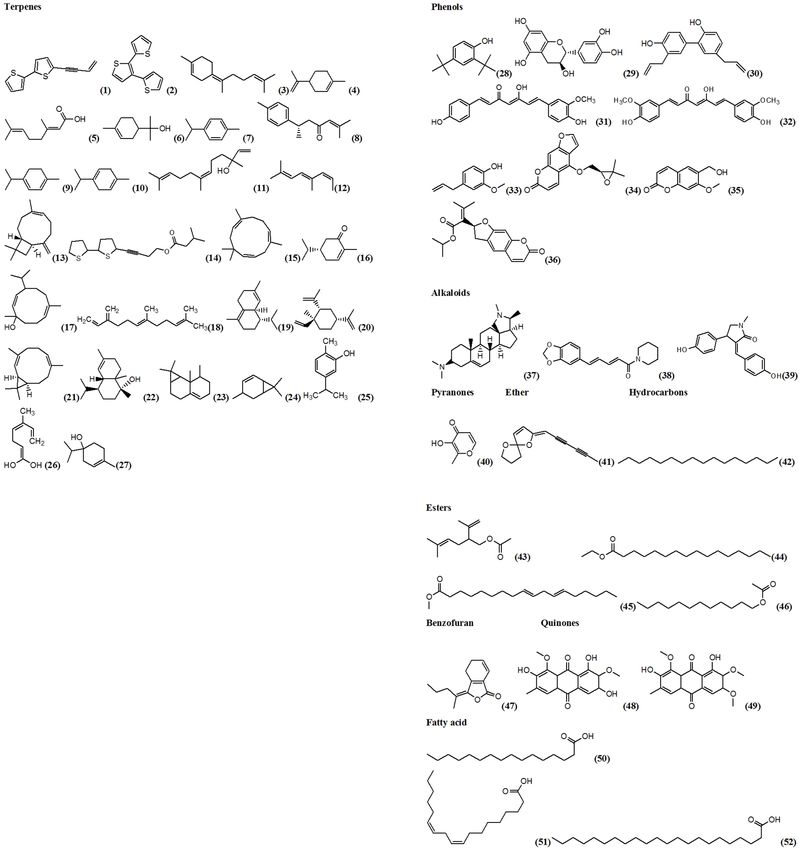
Milugo et al.                                                                                                          Natural Compounds With Larvicidal Activity

scale-up of insecticide-based approaches including LLINs and                         fact that more than 80% of the compounds were isolated from
IRS, the mainstay of malaria vector control, has seen a dramatic                     the leaves (43%) and seeds (39%) (Figure 2D). Only two
decline in malaria deaths and morbidity over the past decade.                        studies (5, 6) investigated plant bark as a potential source of
Challenges to their use include the emergence and spread of                          larvicidal compounds.
insecticide resistance by malaria vector populations coupled to                          Mosquito larvicides are normally applied in an aquatic
the inability to curb outdoor transmission. Under these                              environment where conspecific and heterospecific mosquito larvae
scenarios, larviciding through larval source management (LSM)                        are present and thus, they need to have a broad spectrum of activity.
that target mosquito immature can be a useful method to                              The isolated compounds were screened for activity against larvae of 8
complement existing measures.                                                        Anopheles species (Table 1). Only piperine, an alkaloid from Piper
    Most larvicides currently employed in vector control are based                   nigrum (Piperaceae), was tested for larvicidal activity against larvae of
on synthetic insecticides e.g. growth inhibitors such as difubenzuron                most Anopheles species: Anopheles arabiensis, An. coluzzii, An.
and methoprene (3). But because of widespread resistance by                          gambiae, An. quadriannulatus and An. funestus (25). The rest of
mosquitoes and their negative effect on non-target organisms and                     the compounds were evaluated for activity against larvae of one or
environment, biolarvicides are now a preferred alternative (4).                      two malaria vector species. Plant compounds evaluated for their
Some of the commonly sought sources of biolarvicides include                         larvicidal effect against different mosquito species are displayed in
plant, bacteria, algae, lichen and fungus (Figure 1).                                Table 1. Overall, An. stephensi and An. subpictus were the most
    This review discusses the bioactivity of larvicidal compounds                    common vectors studied (11 and 7 studies, respectively). Very few
isolated from these five natural sources in the last five years.                       studies investigated the larvicidal effect of plant-derived compounds
Their potential effect on non-target organism is also highlighted                    against dominant Afrotropical malaria vectors such as An. gambiae
and use of chemical synthesis to improve the effectiveness of                        (20, 25), An. funestus and An. arabiensis (25).
larvicidal compounds is discussed.                                                       Isolated compounds are normally preferred because they can
                                                                                     be synthesized for commercial and large scale use. Furthermore,
                                                                                     the pure compounds are generally expected to exhibit higher
                                                                                     activity than crude samples. In the current review, some studies
PLANT-DERIVED COMPOUNDS WITH                                                         compared the activity of pure compounds to that of crude
LARVICIDAL ACTIVITY                                                                  extracts and found the compounds to be more effective. For
                                                                                     example, carvacrol, terpinen-4-ol, (Z)-g-bisabolene, lavandulyl
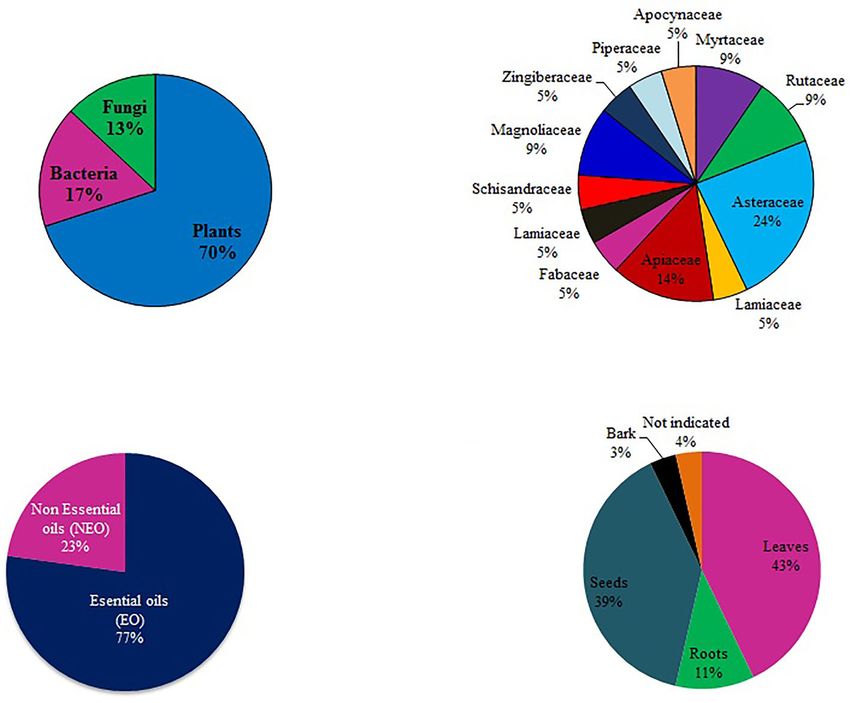
A review of the literature in the last five years showed 52                           acetate, bicyclogermacrene, d-cadinene, calarene and d-4-carene
compounds had been tested for mosquito larvicidal activity                           were each found to be more effective than the crude EO (10, 15,
against malaria mosquitoes. Most of the studies were focused                         17, 21). However, reports of a reduction in larvicidal activity
on plants (70%), followed by bacteria (17%) and then fungi                           following fractionation and isolation of pure compounds are also
(13%). There was no report of mosquito larvicidal compounds                          not uncommon. For instance, eugenol and Z-ligustilide were
isolated from algae and lichen (Figure 2A). Within the plant                         found to be less potent than crude EO when tested for larvicidal
Kingdom, most studies (24%) were conducted on the Asteraceae                         activity against An. stephensi (8, 18). In yet another study, two
family, followed by Apiaceae (14%) (Figure 2B). Essential oil                        compounds aurantio-obtusin and obtusin, isolated from Cassia
(EO) appears to be the primary focus of studies that were                            tora L. (Fabaceae) seed pod were reported to be less potent than
reviewed. Out of the 52 compounds of plant origin identified                          the crude seed extract when evaluated for larvicidal activity
in the literature, 42 (81%) were EO (Figure 2C). Notable was the                     against An. gambiae (20). The observed potency of crude

 FIGURE 1 | Overview of natural sources of compounds with larvicidal activity.

Frontiers in Tropical Diseases | www.frontiersin.org                             2                                     August 2021 | Volume 2 | Article 718804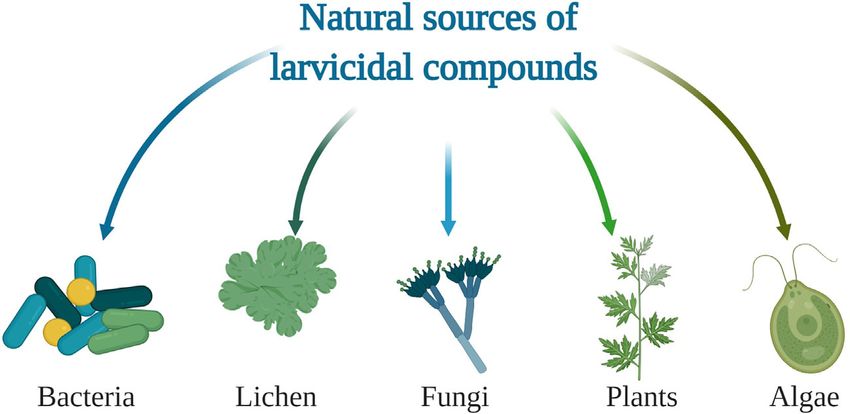
Milugo et al.                                                                                                                 Natural Compounds With Larvicidal Activity

                            A                                                            B

                            C                                                            D

 FIGURE 2 | Proportion of larvicidal compounds (A) isolated from different natural sources, (B) categorized by plant families, (C) proportion of essential and non-
 essential oils, and (D) plant parts targeted in isolation of larvicidal compounds.

extracts/EO could be due to the synergistic/additive effect of                         bacterium Saccharopolyspora spinosa (Actinomycetales) were
other compounds in the extract. The potential interaction                              shown to have larvicidal activity against various mosquito
between components of whole plant extracts is demonstrated                             species including Anopheles dirus, Anopheles minimus (26),
in a study by Wang et al. (22), where out of the 17 compounds                          An. gambiae and An. funestus (27).
from Magnolia denudata seeds (Magnoliaceae) tested for activity                           Besides solid organic compounds, gases produced during
against An. sinensis larvae only 12 were found to be more potent                       fermentation by microbes have also been explored as larvicidal
than the crude EO.                                                                     agents against malaria vectors. For instance, hydrogen cyanide
   Typically, the search for new larvicidal compounds of plant                         (HCN) produced in larval water by Chromobacterium sp,
origin focuses on the use of organic solvent (Figure 3). The use of                    Panama isolated from the midgut of Aedes aegypti mosquitoes,
plant tissue culture is a rarely explored area in the search for new                   was found to be toxic to An. gambiae larvae (28). Notably,
larvicidal agent of plant origin. Interestingly, Kumar et al. (6),                     subsequent treatment of the larval water with a cyanide antidote
isolated the secondary metabolite conessine from the callus                            hydroxocobalamin eliminated the larvicidal effect (28). HCN
culture derived from the bark of Holarrhena antidysenterica                            unlike spinosyns is very volatile and potentially toxic to non-
(Apocynaceae). Subsequent larvicidal bioassays conducted on                            target organisms and these characteristics may make it less ideal
the compound revealed a strong larvicidal activity against An.                         for use as a larvicide.
stephensi with lower doses (12mg/mL) causing a 100% mortality.                            Some studies have also explored the use of polysaccharides of
                                                                                       microbial origin as larvicidal agents. The marine bacterium
                                                                                       Bacillus licheniformis Dahb1 strain isolated from shrimp
BACTERIA DERIVED COMPOUNDS                                                             intestine was found to produce an exopolysaccharide that
WITH LARVICIDAL ACTIVITY                                                               displayed larvicidal activity against An. stephensi (29). The
                                                                                       polysaccharide was extracted using methanol following 72 h
Bacteria provide an unexploited yet promising reservoir of novel                       fermentation at 37°C (29). The use of crystal proteins (Cry and
secondary metabolites which could be used as lead compounds                            Cyt toxins) produced during the sporulation phase of certain
for new larvicidal agents. So far, some compounds of bacterial                         bacteria e.g. Bacillus thuringiensis var. israelensis has also been
origin have been isolated and tested for activity against mosquito                     exploited for biological control of mosquito larvae (30, 31). Even
larvae. For example, spinosyn A and spinosyn D from the                                though bacteria toxins are effective in controlling mosquito

Frontiers in Tropical Diseases | www.frontiersin.org                               3                                          August 2021 | Volume 2 | Article 718804
Milugo et al.                                                                                                                    Natural Compounds With Larvicidal Activity

TABLE 1 | Compounds of plant origin tested for larvicidal activity.

Plant family                    Plant                                       Isolated compounds                                                 Vectors         Reference
                                part

Myrtaceae
Syzygium zeylanicum             leaves a-humulene and b-elemene                                                                          An. subpictus              (7)
Syzygium aromaticum             NA     eugenol                                                                                           An. stephensi              (8)
Rutaceae
Zanthoxylum monophyllum         leaves germacrene D-4-ol a-cadinol                                                                       An. subpictus              (9)
Orixa japonica                  root    (Z)-3-(4-hydroxybenzylidene)-4-(4-hydroxyphenyl)-1-methylpyrrolidin-2-one                        An. sinensis               (5)
                                bark
Asteraceae
Galinsoga parviflora             leaves (Z)-g-bisabolene                                                                                  An. stephensi             (10)
                                                                                                                                         An. subpictus
Echinops grijsii                roots 5-(3-buten-1-yn-1-yl)-2,2’-bithiophene; a-terthienyl                                               An. sinensis              (11)
Blumea eriantha                 leaves (4E,6Z)-alloocimene, carvotanacetone and                                                          An. stephensi             (12)
                                       dodecyl acetate                                                                                   An. subpictus
Artemisia absinthium            leaves (E)-b-farnesene, (Z)-en-yn-dicycloether and (Z)-b-ocimene                                         An. stephensi             (13)
                                                                                                                                         An. subpictus
Senecio laetus                  roots    3-hydroxy-2-methyl-4H-pyran-4-one                                                               An. stephensi             (14)
Lamiaceae
Origanum vulgare                leaves carvacrol and terpinen-4-ol                                                                       An. stephensi             (15)
                                                                                                                                         An. subpictus
Leucas aspera                   NA       (2R,3S)-2-(3,4-dihydroxyphenyl) chroman-3, 5, 7-triol                                           An. stephensi             (16)
Apiaceae
Heracleum sprengelianum         leaves lavandulyl acetate and bicyclogermacrene                                                          An. subpictus             (17)
Kelussia odoratissima           leaves Z-ligustilide                                                                                     An. stephensi             (18)
Ferulago trifida                 roots prantschimgin, oxypeucedanin and 6-hydroxymethylherniarin                                          An. stephensi             (19)
Fabaceae
Cassia tora L.                  seed     aurantio-obtusin and obtusin                                                                    An. gambiae               (20)
                                pods
Schisandraceae
Kadsura heteroclita             leaves d-cadinene, calarene and d-4-carene                                                               An. stephensi             (21)
Magnoliaceae
Magnolia denudata               seeds    n-hexadecane, 2,4-Di-tert-butylphenol, (±)-limonene, geranic acid, palmitic acid, linoleic      An. sinensis              (22)
                                         acid, a-terpinene, p-cymene, a-terpineol, nerolidol, g-terpinene and (±)-terpinen-4-ol;
                                         b-caryophyllene, ethyl palmitate, methyl linolelaidate, behenic acid and a-humulene
Magnolia denudata               seeds    honokiol, palmitic acid and linoleic acid                                                       An. sinensis              (23)
Zingiberaceae
Curcuma longa                   leaves ar-turmerone, bisdesmethoxycurcumin, desmethoxycurcumin and curcumin                              An. quadrimaculatus       (24)
Piperaceae
Piper nigrum                             piperine                                                                                        An. arabiensis            (25)
                                                                                                                                         An. coluzzii
                                                                                                                                         An. gambiae
                                                                                                                                         An. quadriannulatus
                                                                                                                                         An. funestus
Apocynaceae
Holarrhena antidysenterica      bark     conessine                                                                                       An. stephensi              (6)

NA, Not available.

larvae, it is well known that with continued use, the disease                            agents against plant pathogens (32). Thus, they are more likely to
vector will potentially develop resistance. Hence, there is need to                      be perceived as a source of environment-friendly compounds.
identify new compounds, with possibly different modes of action,                             A review of the literature shows that, only a few fungal-
to be used in rotation with the bacteria toxins.                                         derived metabolites have been isolated and tested for activity
                                                                                         against malaria mosquito species. In a study by (33), a novel
                                                                                         isoquinoline, 2-(4-((3E,5E)-14-aminotetradeca-3,5-dienyloxy)
FUNGAL-DERIVED COMPOUNDS WITH                                                            butyl)-1,2,3,4-tetrahydroisoquinolin-4-ol (ATDBTHIQN) was
LARVICIDAL ACTIVITY                                                                      isolated and characterized from the ethyl acetate extract of a
                                                                                         fungal strain Fusarium moniliforme KUMBF1201 sourced from
Fungal toxin is yet another source of secondary metabolite that                          paddy field soil. The compound was isolated after 14 days of
can be explored for new larvicidal agents against malaria vectors.                       fermentation at 28°C and found to exhibit potent larvicidal
Fungi are already used widely in agricultural fields as control                           activity against the larvae of An. stephensi.

Frontiers in Tropical Diseases | www.frontiersin.org                                 4                                           August 2021 | Volume 2 | Article 718804
Milugo et al. Natural Compounds With Larvicidal Activity
FIGURE 3 | Schematic of the process for isolating larvicidal compounds from plant material.
The focus in the last five years appear to have been on crude organisms such as aquatic insects/water bugs (Anisops bouvieri,
secondary metabolites rather than individual compounds. In a Chironomus circumdatus and Diplonychus indicus), aquatic
study by (34), crude secondary metabolites isolated from the crustaceans (Mesocyclops thermocyclopoides) and larvivorous fish
fungus Metarhizium anisopliae showed a strong dose dependent (Gambusia affinis and Poecilia reticulate) (Table 2).
larvicidal activity against larvae of An. stephensi mosquitoes. The
fungus was isolated from infected dead Ae. aegypti mosquito
larvae collected from natural traps and the compounds were
TABLE 2 | Effect of larvicidal compounds on non-target organism.
obtained after 10 days of incubation at 26°C.
In a separate study, crude secondary metabolites from the Compound Non-target organism LC50 (mg/mL) Reference
entomopathogenic fungus Beauveria bassiana (Clavicipitaceae),
a-humulene G. affinis 1024.95 (7)
isolated from an infected grasshopper (Melanoplus sanguinipes), b-elemene G. affinis 2073.18 (7)
were shown to have larvicidal activity against An. stephensi germacrene D-4-ol G. affinis 414.05 (9)
mosquitoes (35). Further analysis by coupled gas chromatography- a-cadinol G. affinis 635.12 (9)
mass spectrometry (GC-MS) led to the identification of 9,12- (4E,6Z)-allo-ocimene G. affinis 1854.25 (12)
P. reticulata 1656.78 (12)
octadecadienoic acid (ZZ)– (63.2%) as one of the major
A. bouvieri 519.97 (12)
compounds in the crude mycelium extract. Although larvicidal D. indicus 845.65 (12)
activity of the individual compound was not performed, it had carvotanacetone G. affinis 2075.07 (12)
previously been found to poses larvicidal activity against An. P. reticulata 1863.86 (12)
stephensi mosquitoes (36). Similarly, in the screen for novel A. bouvieri 631.59 (12)
D. indicus 1051.39 (12)
larvicidal agents of fungal origin, crude secondary metabolites from
dodecyl acetate G. affinis 2369.78 (12)
Aspergillus terreus were found to have larvicidal activity against An. P. reticulata 2065.56 (12)
stephensi (37). Aspergillus terreus was isolated from soil and the A. bouvieri, 823.94 (12)
compounds were obtained after 15 days of incubation at 24 ± 2°C. D. indicus, 1483.11 (12)
lavandulyl acetate G. affinis 534 (17)
A. bouvieri 206 (17)
D. indicus 336.17 (17)
bicyclogermacrene G. affinis 1249.54 (17)
EFFECT OF NATURAL PRODUCT- A. bouvieri 414 (17)
D. indicus 678.72 (17)
DERIVED COMPOUNDS ON (E)-b-farnesene G. affinis 1751.52 (13)
NON-TARGET ORGANISMS C. circumdatus 409.13 (13)
A. bouvieri 1247.33 (13)
Negative effect of insecticides on the environment and non-target (Z)-en-yndicycloether G. affinis 4070.98 (13)
C. circumdatus 1019.45 (13)
organism has been a major concern worldwide for decades. A. bouvieri 3422.86 (13)
Ecotoxicological effect of larvicidal agents is mainly evaluated on (Z)-b-ocimene G. affinis 4525.85 (13)
non-target aquatic organisms. This review revealed the number of C. circumdatus 1235.47 (13)
isolated larvicidal compounds tested for safety against non-target A. bouvieri 3854.72 (13)
organisms to be limited. Out of the 57 plant compounds identified, conessine M. thermocyclopoides N.P (6)
only 13 were evaluated for their toxicity against non-target aquatic NP, Not provided.
Frontiers in Tropical Diseases | www.frontiersin.org 5 August 2021 | Volume 2 | Article 718804Milugo et al. Natural Compounds With Larvicidal Activity
TABLE 3 | Larvicidal activity of compounds isolated from natural sources. TABLE 3 | Continued
Compound (Class & name) LC50 (mg/mL) (mosquito sp.) Reference Compound (Class & name) LC50 (mg/mL) (mosquito sp.) Reference
Terpenes (Z)-en-yn-dicycloether (41) 16.2 (An. stephensi) (13)
5-(3-buten-1-yn-1-yl)-2,2’- 1.4 (An. sinensis) (11) 20.9 (An. subpictus)
bithiophene (1) Hydrocarbons
a-terthienyl (2) 1.8 (An. sinensis) (11) n-Hexadecane (42) 1.8 (An. sinensis) (22)
(Z)-g-bisabolene (3) 2.0 (An. stephensi) (10) Esters
4.1 (An. subpictus) Lavandulyl acetate (43) 4.2 (An. subpictus) (12)
(±)-limonene (4) 2.2 (An. sinensis) (22) Ethyl palmitate (44) 5.1 (An. sinensis) (22)
geranic acid (5) 2.4 (An. sinensis) (22) Methyl linolelaidate (45) 5.2 (An. sinensis) (22)
a-terpineol (6) 2.8 (An. sinensis) (22) Dodecyl acetate (46) 10.2 (An. stephensi) (12)
p-cymene (7) 2.8 (An. sinensis) (22) 12.3 (An. subpictus)
ar-turmerone (8) 2.8 (An. quadrimaculatus) (24) Benzofuran
a-terpinene (9) 2.8 (An. sinensis) (22) Z-ligustilide (47) 8.7 (An. stephensi) (18)
g-terpinene (10) 2.9 (An. sinensis) (22) Quinones
Nerolidol (11) 2.9 (An. sinensis) (22) Aurantio-obtusin (48) 10.0 (An. gambiae) (20)
(4E,6Z)-alloocimene (12) 4.1 (An. stephensi) (12) Obtusin (49) 10.2 (An. gambiae) (20)
6.1(An. subpictus) Fatty acid
b-caryophyllene (13) 4.3 (An. sinensis) (22) Palmitic acid (50) 2.5 (An. sinensis) (22)
5-(4-isovaleroyloxybut-1-ynyl)- 5.4 (An. sinensis) (11) 47.6 (An. sinensis) (23)
2,2′-bithiophene (14) Linoleic acid (51) 2.5 (An. sinensis) (22)
a-humulene (15) 5.8 (An. sinensis) (22) 7.5 (An. sinensis) (23)
6.2 (An. subpictus) (16) Behenic acid (52) 5.5 (An. sinensis) (22)
Carvotanacetone (16) 6.2 (An. stephensi) (12)
8.4 (An. subpictus) NP, Not provided.
Structure of compounds (1)-(52) provided in Figure 4.
Germacrene D-4-ol (17) 6.1 (An. subpictus) (9)
(E)-b-farnesene (18) 8.1 (An. stephensi) (13)
10.2 (An. subpictus)
d-cadinene (19) 8.2 (An. stephensi) (21) Overall, the compounds presented LC50 values that ranged
b-elemene (20) 10.3 (An. subpictus) (7) between ~200 and 5000 ug/mL (Table 2). The most toxic was
Bicyclogermacrene (21) 10.3 (An. subpictus) (12)
lavandulyl acetate from the EO of Heracleum sprengelianum
a-cadinol (22) 10.3 (An. subpictus) (9)
Calarene (23) 12.3 (An. stephensi) (21) (Apiaceae) which reported an LC50 that was two-fold higher than
d-4-carene (24) 16.4 (An. stephensi) (21) the concentration required to demonstrate larvicidal activity
Carvacrol (25) 21.2 (An. stephensi) (15) (100mg/mL) (38). The mechanism of action of this compound
24.1 (An. subpictus) on the non-target organism was however, not investigated. The
(Z)-b-ocimene (26) 25.8 (An. stephensi) (13)
30.9 (An. subpictus)
least toxic was (Z)-b-ocimene the major constituent of A.
Terpinen-4-ol (27) 43.3 (An. stephensi) (15) absinthium EO, which had an LC50 value of ~5000ug/mL and
47.7 (An. subpictus) ~45-fold higher than the concentration required to demonstrate
3.5 (An. sinensis) (22) larvicidal activity (Table 2).
Phenols Among the non-target organisms, fish, G. affinis and P.
2,4-Di-tert-butylphenol (28) 2.2 (An. sinensis) (22)
(2R,3S)-2-(3,4-dihydroxyphenyl) 3.5 (An. stephensi) (16)
reticulate, appeared to be the least sensitive to the compounds
chroman-3, 5, 7-triol (29) reporting, on average, very high LC50 values (1881.52 and
Honokiol (30) 7.4 (An. sinensis) (23) 1862.07mg/mL, respectively). According to Govindarajan
Desmethoxycurcumin (31) 29.7 (An. quadrimaculatus) (24) et al. (7), exposure to some of the compounds such as a-
Curcumin (32) 32.5 (An. quadrimaculatus) (24)
humulene and b-elemene does not affect survival and
Eugenol (33) 86.9 (An. stephensi) (8)
Oxypeucedanin (33) 116.5 (An. stephensi) (19)
swimming activity of G. affinis. Among the water bugs, A.
6-hydroxymethylherniarin (35) 334.7 (An. stephensi) (19) bouvier was the least sensitive (average LC 50 of 1390.05)
Prantschimgin (36) 335.4 (An. stephensi) (19) followed by C. circumdatus (average LC50 = 888.02mg/mL)
Alkaloids and finally D. indicus (average LC 50 = 879.01mg/mL)
Conessine (37) 1.9 (An. stephensi) (6)
(Table 2). Notably, all the compounds were evaluated for
Piperine (38) NP (An.arabiensis,An. coluzzii, (25)
An. gambiae, An. toxicity against G. affinis making it the most popular model
quadriannulatus and An. for ecotoxicological assays. Chironomus circumdatus and P.
funestus) reticulate were the least used models with only three
(Z)-3-(4-hydroxybenzylidene)-4- 49.9(An. sinensis) (5) compounds evaluated against them (Table 2).
(4-hydroxyphenyl)-1-
methylpyrrolidin-2-one (39)
Interestingly, a review of the literature revealed that pure or
Pyranones isolated compounds of microbial origin were not evaluated for
3-hydroxy-2-methyl-4H-pyran- 1.2 (An. stephensi) (14) toxicity against non-target organisms. Also noted in the literature
4-one (40) was that all the ecotoxicological assessments were based on laboratory
Ether tests. It is well known that in the laboratory, fluctuations in climatic
(Continued) conditions such as temperature which may affect efficacy of the
Frontiers in Tropical Diseases | www.frontiersin.org 6 August 2021 | Volume 2 | Article 718804Milugo et al. Natural Compounds With Larvicidal Activity FIGURE 4 | Structures of compounds of natural origin with larvicidal activity against malaria mosquitoes. compounds tend to be minimized (39). Thus, it is possible for Moreover, assessments of side effects of the compounds on laboratory results to underestimate the potential effect of the non-target organisms were based mainly on acute mortality compounds on non-target organism. This perhaps may explain evaluations. However, for appropriate evaluation, there is need to why all the compounds reviewed in this study were found to be assess the sub-lethal effects of the compounds on organisms generally safer to the non-target organism (LC50 >100mg/mL). surviving exposure. Frontiers in Tropical Diseases | www.frontiersin.org 7 August 2021 | Volume 2 | Article 718804
Milugo et al.                                                                                              Natural Compounds With Larvicidal Activity

STRUCTURE ACTIVITY RELATIONSHIP                                            larvicidal metabolites which could be promising alternatives to
                                                                           synthetic insecticides. In the last five years, not much has been
The existing literature reveals an enormous potential for use of           done towards screening secondary metabolites of microbial
natural compounds in the control of mosquitoes. So far, several            origin for their larvicidal activity. This could be due to the lack
secondary metabolites belonging to different classes such as               of established protocols for microbial culture or a narrow scope
alkaloids, terpenes and flavonoids have been isolated and                   of potential sources of microbes. Future efforts can also focus on
tested against larvae of various mosquito species. These                   mosquito-associated microbiota as an alternative source of new
compounds displayed mixed results, with some showing high                  larvicidal compounds. Even though microbiota are needed for
toxicity against mosquito larvae, while others showed moderate             the healthy development of the mosquitoes some microbes may
to low activity (Table 3). Most compounds evaluated for                    produce pathogenic compounds which may be exploited in the
larvicidal activity were terpenes and activity varied across               development of new larvicidal agents (41). Additionally,
different classes of compounds.                                            mosquito breeding habitats can be screened for bacteria species
    The most potent compound was 3-hydroxy-2-methyl-4H-                    that produce secondary metabolites that are toxic to mosquito
pyran-4-one isolated from the methanol root extract of Senecio             larvae (42). Another alternative approach would involve
laetus (Asteraceae) and evaluated for activity against the larvae of       screening existing fungi and bacterial natural product libraries
An. stephensi. The compound showed 100% mortality at 20 ppm                for potential larvicidal compounds. Most compounds of
and the LC50 was 1.22mg/mL after 24 h of exposure period (14).             microbial origin have been isolated and screened for various
The second most potent compound was 5-(3-buten-1-yn-1-yl)-                 activities including antimicrobial, anti-inflammatory and
2,2’-bithiophene isolated from the roots of E. grijsii (LC50 =             antioxidant. This approach could reveal the larvicidal activities
1.4mg/mL) (11). The third was n-hexadecane from M. denudata                of existing compounds. In addition, reverse chemical ecology can
seeds (Magnoliaceae) which was tested for activity against An.             be used to prepare molecules that specifically block larval
sinensis larvae (LC50 = 1.8mg/mL) (22). n-hexadecane however is            receptors that detect food finding sources or inhibit enzyme
a non-polar compound and thus its use will require formulation             function associated with receptor-chemical interactions.
with adjuvants to increase its water solubility and bioavailability            There is still an urgent need to reduce mosquito populations to
to larvae.                                                                 the lowest level and thus prevent malaria transmission. A major
    Conessine isolated from callus culture derived from the bark           shortcoming of larvicides from natural sources is that they are short
of Holarrhena antidysenterica (Apocynaceae) also revealed a                lasting requiring multiple rounds of application to produce desired
strong larvicidal activity against An. stephensi with an LC50              effect. Thus, many a time control programs are forced to rely on
value of 1.93mg/mL (6). This further reveals the potential of              synthetic chemicals. Performing, structural modification on
this method in isolation of compounds with larvicidal activity.            existing natural product compounds can help identify novel
Three coumarins, prantschimgin, oxypeucedanin and 6-                       compounds with different modes of action against mosquitoes.
hydroxymethylherniarin from root extracts of Ferulago trifida               For example, recently, two derivatives of the sesquiterpene lactone
(Apiaceae), reported an activity greater that 100mg/mL and thus            parthenin, isolated from the invasive weed Parthenium
were considered non-potent against mosquito larvae (19).                   hysterophorus (Asteraceae) in East Africa, including an ethylene
    Synergistic or antagonistic interaction is a common                    glycol derivative and 2a‐azidocoronopilin, were found to be more
occurrence between compounds, yet very few studies evaluate                potent as mosquito larvicides than parthenin against the malaria
larvicidal activity of binary or tertiary mixtures of pure                 vector An. gambiae (43). This shows that structural transformation
compounds. For instance, in the reviewed studies, none of the              of natural product compounds may be a promising approach to
compounds tested for larvicidal activity was further investigated          obtain novel compounds that are effective against mosquitoes.
for possible interaction between compounds of the same or
different classes. Combining metabolites of biological origin
has previously been shown to improve efficacy through                       CONCLUSION
synergistic interactions. For example, combination of two
protein toxins Cyt1Aa and BinA isolated from B. thuringiensis              The review reveals most compounds evaluated for larvicidal
and Lysinibacillus sphaericus were shown to increase toxicity              activity so far to belong to classes of terpenes and phenols.
against Ae. aegypti, despite the mosquito lacking receptors for            Nonetheless, new compounds are required to help augment the
bin proteins (40). Besides increasing potency, synergism of                current level of larviciding and to help reduce vector abundance
compounds that display different modes of action can help                  and consequently disease risk. Improving the efficiency of
delay resistance.                                                          secondary metabolites of biological origin through structural
                                                                           modification is one way of expanding the larviciding agent tool
                                                                           box, while avoiding impacting negatively on non-target organisms.

FUTURE PROSPECTS AND
RECOMMENDATION                                                             AUTHOR CONTRIBUTIONS
As highlighted in this review, biological sources such as micro-           TM contributed to manuscript conception and design, literature
organisms and plants contain considerable amounts of mosquito              review, manuscript preparation. DT contributed to manuscript

Frontiers in Tropical Diseases | www.frontiersin.org                   8                                   August 2021 | Volume 2 | Article 718804
Milugo et al. Natural Compounds With Larvicidal Activity
conception and design, manuscript preparation. BT contributed Development Cooperation Agency (Sida); the Swiss Agency
to manuscript conception and design, manuscript preparation. for Development and Cooperation (SDC); the Federal
RD contributed to manuscript preparation. RK contributed to Democratic Republic of Ethiopia; and the Government of the
manuscript preparation. All authors contributed to the article Republic of Kenya.
and approved the submitted version.
FUNDING ACKNOWLEDGMENTS
The authors acknowledge financial support by the following TM, DT, and BT acknowledge support from Behavioural and
organizations and agencies: DELTAS Africa (grant # DEL-15- Chemical Ecology Unit, ICIPE. TM acknowledges support from
011 to THRiVE-2), UK’s Foreign, Commonwealth & Technical University of Kenya. The images in Figures 1, 3 were
Development Office (FCDO); the Swedish International created with (biorender.com).
Toxicity on non-Target Aquatic Organisms. Parasitol Res (2016) 115
REFERENCES (12):4649–61. doi: 10.1007/s00436-016-5257-1
1. World Health Organization. Fact Sheet About Malaria. (2020). Available at: 14. Ali SI, Venugopalan V. Mosquito Larvicidal Potential of Hydroxy-2-Methyl-
https://www.who.int/news-room/fact-sheets/detail/malaria. 4h-Pyran-4-One (MALTOL) Isolated From the Methanol Root Extract of
2. World Health Organization. World Malaria Report 2018. (2018). Available at: Senecio Laetus Edgew and Its In-Silico Study. Nat Prod Res (2019) 7:1–5. doi:
https://www.who.int/malaria/publications/world-malaria-report-2018/en/. 10.1080/14786419.2019.1634712
3. da Silva MR, Kyrylchuk A, Grafova I, Kliukovskyi D, Bezdudnyy A, Rozhenko 15. Govindarajan M, Rajeswary M, Hoti SL, Benelli G. Larvicidal Potential of
A, et al. Synthesis, Molecular Docking Studies, and Larvicidal Activity Carvacrol and Terpinen-4-Ol From the Essential Oil of Origanum Vulgare
Evaluation of New Fluorinated Neonicotinoids Against Anopheles Darlingi (Lamiaceae) Against Anopheles Stephensi, Anopheles Subpictus, Culex
Larvae. PloS One (2020) 15(2):e0227811. doi: 10.1371/journal.pone.0227811 Quinquefasciatus and Culex Tritaeniorhynchus (Diptera: Culicidae). Res Vet
4. Shen D, Nyawira KT, Xia A. New Discoveries and Applications of Mosquito Sci (2016) 104:77–82. doi: 10.1016/j.rvsc.2015.11.011
Fungal Pathogens. Curr Opin Insect Sci (2020) 1(40):111–6. doi: 10.1016/ 16. Elumalai D, Hemavathi M, Hemalatha P, Deepaa CV, Kaleena PK. Larvicidal
j.cois.2020.05.003 Activity of Catechin Isolated From Leucas Aspera Against Aedes Aegypti,
5. Liu XC, Lai D, Liu QZ, Zhou L, Liu Q, Liu ZL. Bioactivities of a New Anopheles Stephensi and Culex Quinquefasciatus (Diptera: Culicidae).
Pyrrolidine Alkaloid From the Root Barks of Orixa Japonica. Molecules (2016) Parasitol Res (2016) 115(3):1203–12. doi: 10.1007/s00436-015-4856-6
21(12):1–8. doi: 10.3390/molecules21121665 17. Govindarajan M, Benelli G. Eco-Friendly Larvicides From Indian Plants:
6. Kumar D, Kumar G, Das R, Kumar R, Agrawal V. In Vitro Elicitation, Effectiveness of Lavandulyl Acetate and Bicyclogermacrene on Malaria,
Isolation, and Characterization of Conessine Biomolecule From Holarrhena Dengue and Japanese Encephalitis Mosquito Vectors. Ecotoxicol Environ Saf
Antidysenterica (L.) Wall. Callus and its Larvicidal Activity Against Malaria (2016) 133:395–402. doi: 10.1016/j.ecoenv.2016.07.035
Vector, Anopheles Stephensi Liston. Environ Sci Pollut Res Int (2018) 25 18. Osanloo M, Amani A, Sereshti H, Shayeghi M, Sedaghat MM. Extraction and
(7):6783–96. doi: 10.1007/s11356-017-1038-3 Chemical Composition Essential Oil of Kelussia Odoratissima and
7. Govindarajan M, Benelli G. a-Humulene and b-Elemene From Syzygium Comparison its Larvicidal Activity With Z-Ligustilide (Major Constituent)
Zeylanicum (Myrtaceae) Essential Oil: Highly Effective and Eco-Friendly Against Anopheles Stephensi. J Entomol Zool Stud (2017) 5(4):611–6.
Larvicides Against Anopheles Subpictus, Aedes Albopictus and Culex 19. Goodarzi S, Tavakoli S, Abai MR, Amini Z, Vatandoost H, Yassa N, et al.
Tritaeniorhynchus (Diptera: Culicidae). Parasitol Res (2016) 115(7):2771–8. Strong Insecticidal Potential of Methanol Extract of Ferulago Trifida Fruits
doi: 10.1007/s00436-016-5025-2 Against Anopheles Stephensi as Malaria Vector. Environ Sci Pollut Res Int
8. Osanloo M, Sedaghat MM, Esmaeili F, Amani A. Larvicidal Activity of (2019) 26(8):7711–7. doi: 10.1007/s11356-019-04149-7
Essential Oil of Syzygium Aromaticum (Clove) in Comparison With Its 20. Mbatchou VC, Tchouassi DP, Dickson RA, Annan K, Mensah AY, Amponsah
Major Constituent, Eugenol, Against Anopheles Stephensi. J Arthropod IK, et al. Mosquito Larvicidal Activity of Cassia Tora Seed Extract and its Key
Borne Dis (2018) 12(4):361–9. doi: 10.18502/jad.v12i4.354 Anthraquinones Aurantio-Obtusin and Obtusin. Parasit Vectors (2017)
9. Pavela R, Govindarajan M. The Essential Oil From Zanthoxylum 10:562. doi: 10.1186/s13071-017-2512-y
Monophyllum a Potential Mosquito Larvicide With Low Toxicity to the 21. Govindarajan M, Rajeswary M, Benelli G. d-Cadinene, Calarene and .d-4-
non-Target Fish Gambusia Affinis. J Pest Sci (2017) 90(1):369–78. doi: Carene From Kadsura Heteroclita Essential Oil as Novel Larvicides Against
10.1007/s10340-016-0763-6 Malaria, Dengue and Filariasis Mosquitoes. Comb Chem High Throughput
10. Govindarajan M, Vaseeharan B, Alharbi NS, Kadaikunnan S, Khaled JM, Al- Screen (2016) 19(7):565–71. doi: 10.2174/1386207319666160506123520
Anbr MN, et al. High Efficacy of (Z)-g-Bisabolene From the Essential Oil of 22. Wang Z, Perumalsamy H, Wang M, Shu S, Ahn Y-J. Larvicidal Activity of
Galinsoga Parviflora (Asteraceae) as Larvicide and Oviposition Deterrent Magnolia Denudata Seed Hydrodistillate Constituents and Related Compounds
Against Six Mosquito Vectors. Environ Sci Pollut Res Int (2018) 25(11):10555– and Liquid Formulations Towards Two Susceptible and Two Wild Mosquito
66. doi: 10.1007/s11356-018-1203-3 Species. Pest Manage Sci (2016) 72(5):897–906. doi: 10.1002/ps.4064
11. Zhao MP, Liu QZ, Liu Q, Liu ZL. Identification of Larvicidal Constituents of 23. Wang Z, Perumalsamy H, Wang X, Ahn Y-J. Toxicity and Possible Mechanisms
the Essential Oil of Echinops Grijsii Roots Against the Three Species of of Action of Honokiol From Magnolia Denudata Seeds Against Four Mosquito
Mosquitoes. Molecules (2017) 22(2):1–11. doi: 10.3390/molecules22020205 Species. Sci Rep (2019) 9(1):411. doi: 10.1038/s41598-018-36558-y
12. Benelli G, Govindarajan M, Rajeswary M, Senthilmurugan S, Vijayan P, 24. Ali A, Wang Y-H, Khan IA. Larvicidal and Biting Deterrent Activity of
Alharbi NS, et al. Larvicidal Activity of Blumea Eriantha Essential Oil and Essential Oils of Curcuma Longa, Ar-Turmerone, and Curcuminoids Against
its Components Against Six Mosquito Species, Including Zika Virus Vectors: Aedes Aegypti and Anopheles Quadrimaculatus (Culicidae: Diptera). J Med
The Promising Potential of (4E,6Z)-Allo-Ocimene, Carvotanacetone and Entomol (2015) 52(5):979–86. doi: 10.1093/jme/tjv072
Dodecyl Acetate. Parasitol Res (2017) 116(4):1175–88. doi: 10.1007/s00436- 25. Samuel M, Oliver SV, Coetzee M, Brooke BD. The Larvicidal Effects of Black
017-5395-0 Pepper (Piper Nigrum L.) and Piperine Against Insecticide Resistant and
13. Govindarajan M, Benelli G. Artemisia Absinthium-Borne Compounds as Susceptible Strains of Anopheles Malaria Vector Mosquitoes. Parasites
Novel Larvicides: Effectiveness Against Six Mosquito Vectors and Acute Vectors (2016) 9(1):238. doi: 10.1186/s13071-016-1521-6
Frontiers in Tropical Diseases | www.frontiersin.org 9 August 2021 | Volume 2 | Article 718804Milugo et al. Natural Compounds With Larvicidal Activity
26. Britch SC, Linthicum KJ, Aldridge RL, Golden FV, Pongsiri A, Khongtak P, Culex Quinquefasciatus and Aedes Aegypti. Environ Sci Pollut Res Int (2015)
et al. Ultra-Low Volume Application of Spinosad (Natular 2ec) Larvicide as a 22(21):17224–37. doi: 10.1007/s11356-015-4961-1
Residual in a Tropical Environment Against Aedes and Anopheles Species. 38. Luz TRSA, de Mesquita LSS, do Amaral FMM, Coutinho DF. Essential Oils and
J Am Mosquito Control Assoc (2018) 34(1):58–62. doi: 10.2987/17-6692.1 Their Chemical Constituents Against Aedes Aegypti L. (Diptera: Culicidae) Larvae
27. Gimnig JE, Ombok M, Bayoh N, Mathias D, Ochomo E, Jany W, et al. Efficacy Acta Trop (2020) 212:105705. doi: 10.1016/j.actatropica.2020.105705
of Extended Release Formulations of NatularTM (Spinosad) Against Larvae 39. Abbes K, Biondi A, Kurtulus A, Ricupero M, Russo A, Siscaro G, et al.
and Adults of Anopheles Mosquitoes in Western Kenya. Malar J (2020) 19 Combined Non-Target Effects of Insecticide and High Temperature on the
(1):436. doi: 10.1186/s12936-020-03507-y Parasitoid Bracon Nigricans. PloS One (2015) 10(9):e0138411. doi: 10.1371/
28. Short SM, van Tol S, MacLeod HJ, Dimopoulos G. Hydrogen Cyanide journal.pone.0138411
Produced by the Soil Bacterium Chromobacterium Sp. Panama Contributes 40. Bideshi DK, Park H-W, Hice RH, Wirth MC, Federici BA. Highly Effective
to Mortality in Anopheles Gambiae Mosquito Larvae. Sci Rep (2018) 8 Broad Spectrum Chimeric Larvicide That Targets Vector Mosquitoes Using
(1):8358. doi: 10.1038/s41598-018-26680-2 a Lipophilic Protein. Sci Rep (2017) 7(1):11282. doi: 10.1038/s41598-017-
29. Abinaya M, Vaseeharan B, Divya M, Vijayakumar S, Govindarajan M, Alharbi 11717-9
NS, et al. Structural Characterization of Bacillus Licheniformis Dahb1 41. Jupatanakul N, Pengon J, Selisana SMG, Choksawangkarn W, Jaito N, Saeung A,
Exopolysaccharide—Antimicrobial Potential and Larvicidal Activity on et al. Serratia Marcescens Secretes Proteases and Chitinases With Larvicidal
Malaria and Zika Virus Mosquito Vectors. Environ Sci Pollut Res (2018) 25 Activity Against Anopheles Dirus. Acta Trop (2020) 212:105686. doi: 10.1016/
(19):18604–19. doi: 10.1007/s11356-018-2002-6 j.actatropica.2020.105686
30. Derua YA, Kahindi SC, Mosha FW, Kweka EJ, Atieli HE, Zhou G, et al. 42. Ranasinghe HAK, Amarasinghe LD. Naturally Occurring Microbiota
Susceptibility of Anopheles Gambiae Complex Mosquitoes to Microbial Associated With Mosquito Breeding Habitats and Their Effects on Mosquito
Larvicides in Diverse Ecological Settings in Western Kenya. Med Vet Larvae. BioMed Res Int (2020) 2020:4065315. doi: 10.1155/2020/4065315
Entomol (2019) 33(2):220–7. doi: 10.1111/mve.12353 43. Milugo TK, Tchouassi DP, Kavishe RA, Dinglasan RR, Torto B. Derivatization
31. Zhang Q, Hua G, Adang MJ. Effects and Mechanisms of Bacillus Increases Mosquito Larvicidal Activity of the Sesquiterpene Lactone
Thuringiensis Crystal Toxins for Mosquito Larvae. Insect Sci (2017) 24 Parthenin Isolated From the Invasive Weed Parthenium Hysterophorus.
(5):714–29. doi: 10.1111/1744-7917.12401 Pest Manage Sci (2021) 77(2):659–65. doi: 10.1002/ps.6131
32. Thambugala KM, Daranagama DA, Phillips AJL, Kannangara SD,
Promputtha I. Fungi vs. Fungi in Biocontrol: An Overview of Fungal Author Disclaimer: The views expressed herein do not necessarily reflect the
Antagonists Applied Against Fungal Plant Pathogens. Front Cell Infect official opinion of the donors.
Microbiol (2020) 10:604923. doi: 10.3389/fcimb.2020.604923
33. Pradeep FS, Palaniswamy M, Ravi S, Thangamani A, Pradeep BV. Larvicidal Conflict of Interest: The authors declare that the research was conducted in the
Activity of a Novel Isoquinoline Type Pigment From Fusarium Moniliforme absence of any commercial or financial relationships that could be construed as a
KUMBF1201 Against Aedes Aegypti and Anopheles Stephensi. Process potential conflict of interest.
Biochem (2015) 50(9):1479–86. doi: 10.1016/j.procbio.2015.05.022
34. Vivekanandhan P, Swathy K, Kalaimurugan D, Ramachandran M, Yuvaraj A, Publisher’s Note: All claims expressed in this article are solely those of the authors
Kumar AN, et al. Larvicidal Toxicity of Metarhizium Anisopliae Metabolites and do not necessarily represent those of their affiliated organizations, or those of
Against Three Mosquito Species and non-Targeting Organisms. PloS One the publisher, the editors and the reviewers. Any product that may be evaluated in
(2020) 15(5):e0232172. doi: 10.1371/journal.pone.0232172 this article, or claim that may be made by its manufacturer, is not guaranteed or
35. Ragavendran C, Kishore Dubey N, Natarajan D. Beauveria Bassiana endorsed by the publisher.
(Clavicipitaceae): A Potent Fungal Agent for Controlling Mosquito Vectors
of Anopheles Stephensi, Culex Quinquefasciatus and Aedes Aegypti (Diptera: Copyright © 2021 Milugo, Tchouassi, Kavishe, Dinglasan and Torto. This is an open-
Culicidae). RSC Adv (2017) 7(7):3838–51. doi: 10.1039/C6RA25859J access article distributed under the terms of the Creative Commons Attribution
36. Rahuman AA, Gopalakrishnan G, Ghouse BS, Arumugam S, Himalayan B. License (CC BY). The use, distribution or reproduction in other forums is permitted,
Effect of Feronia Limonia on Mosquito Larvae. Fitoterapia (2000) 71(5):553– provided the original author(s) and the copyright owner(s) are credited and that the
5. doi: 10.1016/S0367-326X(00)00164-7 original publication in this journal is cited, in accordance with accepted academic
37. Ragavendran C, Natarajan D. Insecticidal Potency of Aspergillus Terreus practice. No use, distribution or reproduction is permitted which does not comply with
Against Larvae and Pupae of Three Mosquito Species Anopheles Stephensi, these terms.
Frontiers in Tropical Diseases | www.frontiersin.org 10 August 2021 | Volume 2 | Article 718804You can also read


