NEVADA EDUCATOR PERFORMANCE FRAMEWORK (NEPF) EVALUATION SYSTEM - SCHOOL ADMINISTRATOR AND TEACHER PROTOCOLS 2021 22
←
→
Page content transcription
If your browser does not render page correctly, please read the page content below
NEVADA EDUCATOR PERFORMANCE
     FRAMEWORK (NEPF)
     EVALUATION SYSTEM

          2021 – 22
   SCHOOL ADMINISTRATOR
            AND
     TEACHER PROTOCOLS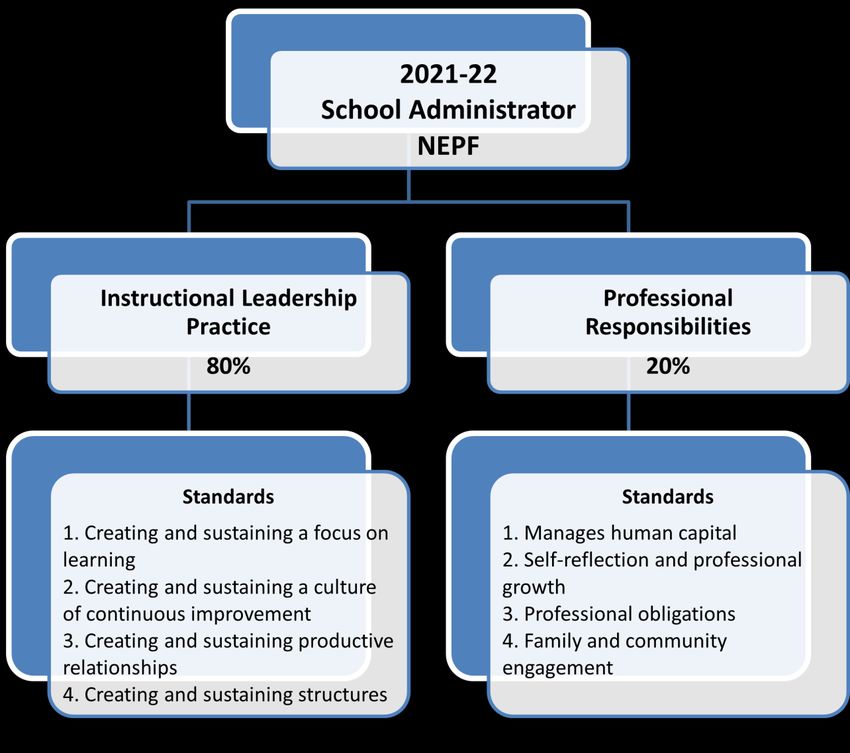
Table of Contents

Introduction to the Nevada Educator Performance Framework .......................................................... 3
  TLC Beliefs ............................................................................................................................................. 3
  Evaluation System Goals ....................................................................................................................... 3
  Main Purposes of the Evaluation Framework........................................................................................ 4
  2021 Legislative Changes....................................................................................................................... 4
The Evaluation Cycle ........................................................................................................................... 5
  Step 1: Educator Self-Assessment ......................................................................................................... 6
  Step 2: Pre-Evaluation Conference ....................................................................................................... 7
  Step 3: Observations, Review of Evidence, and Conferences ................................................................ 8
  Step 4: Mid-Cycle Review .................................................................................................................... 12
  Step 5: End-of-Cycle Summative Evaluation and Post-Evaluation Conference .................................... 13
Glossary ............................................................................................................................................ 16
Appendix A – School Administrator Framework ................................................................................ 20
  Overview of the Framework ................................................................................................................ 20
  Instructional Leadership and Professional Responsibilities Domains .................................................. 21
     School Administrator Instructional Leadership Standards and Indicators ....................................... 21
     School Administrator Professional Responsibilities Standards and Indicators ................................. 22
Appendix B – Teacher Framework ..................................................................................................... 24
  Overview of the Framework ................................................................................................................ 24
  Instructional Practice and Professional Responsibilities Domains ....................................................... 25
     Teacher Instructional Practice Standards and Indicators ................................................................. 25
     Teacher Professional Responsibilities Standards and Indicators...................................................... 26
Appendix C – Key Words in the Performance Descriptors.................................................................. 28
  LEVEL 4 ................................................................................................................................................ 28
  LEVEL 3 ................................................................................................................................................ 28
  LEVEL 2 ................................................................................................................................................ 29
  LEVEL 1 ................................................................................................................................................ 30

                                                                Table of Figures

Figure 1: Evaluation Cycle ......................................................................................................................... 5
Figure 2: Typical Evaluation Cycle ............................................................................................................. 5
Figure 3: Differentiated Evaluation Cycle .................................................................................................. 9
Figure 4: Required Evaluation Components and Timeline per NRS 391.675-391.730 ............................. 10
Figure 5: 2020-21 NEPF Scoring Ranges .................................................................................................. 14
Figure 6: 2021-22 School Administrator Framework .............................................................................. 20
Figure 7: 2021-22 Teacher Framework ................................................................................................... 24

                              Nevada Department of Education – NEPF Protocols for Educator Evaluation – July 2021 – Page 2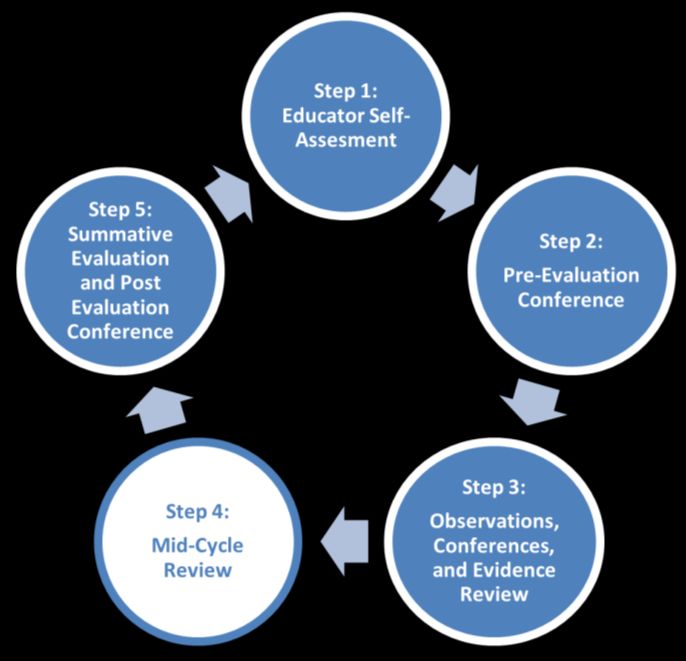
Introduction to the Nevada Educator Performance Framework
The passage of AB 222 during the 2011 Legislative Session created the Teachers and Leaders Council
(TLC) and outlined the expectations of a statewide performance evaluation system for teachers and
school administrators. The first order of business at the October 2011 TLC meeting was to determine
guiding beliefs and goals for this evaluation system, now known as the Nevada Educator Performance
Framework. The identified beliefs and goals are outlined below.

TLC Beliefs
To promote educator effectiveness and ensure all students attain essential skills to graduate high
school ready for college and career success:
• “All educators* (see definition in glossary) can improve through effective, targeted professional
   development, as identified through the evaluation process and connected to district improvement
   plans and goals designed to inform and transform practice;
• An effective evaluation system must include clear expectations for both professional practice and
   student growth as well as fair, meaningful, and timely feedback;
• A consistent and supportive teacher and administrator evaluation system includes opportunities
   for self-reflection and continuous, measurable feedback to improve performance of students,
   teachers, administrators, and the system; and
• The evaluation system must be part of a larger professional growth system that consistently
   evolves and improves to support the teachers and administrators that it serves.

Evaluation System Goals
The Nevada Educator Performance Framework Goals:
• Goal 1:     Foster student learning and growth
• Goal 2:     Improve educators’ effective instructional practices
• Goal 3:     Inform human capital decisions based on a professional growth system
• Goal 4:     Engage stakeholders in the continuous improvement and monitoring of a
              professional growth system

The system based on these guiding beliefs and goals, the foundation on which the NEPF was created,
should ensure that educators:
• Positively impact the achievement of students in Nevada;
• Grow professionally through targeted, sustained professional development and other supports;
• Monitor student growth, identify and develop quality instructional practices, and share effective
   educational methods with colleagues;
• Reflect upon practice and take ownership for their professional growth; and
• Participate in constructive dialogue and obtain specific, supportive feedback from evaluators.

                   Nevada Department of Education – NEPF Protocols for Educator Evaluation – July 2021 – Page 3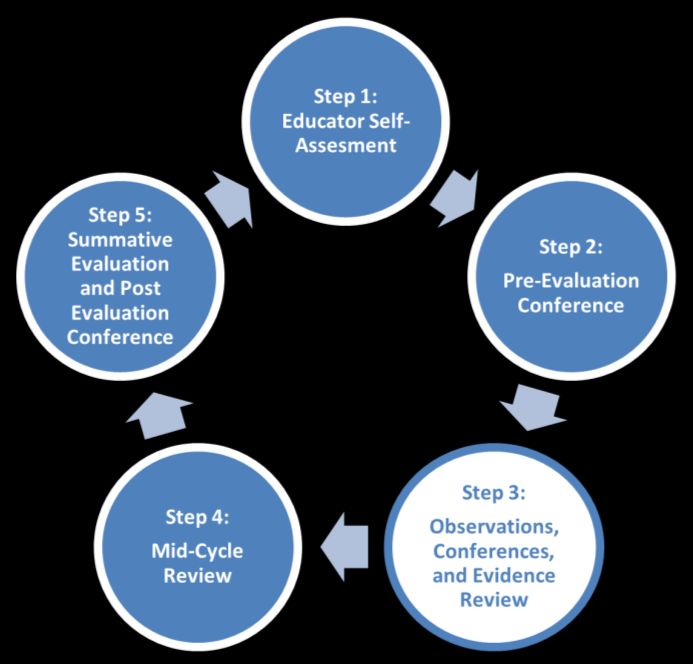
Main Purposes of the Evaluation Framework
The overall purpose of Nevada’s Educator Performance Framework (NEPF) is to identify effective
instruction and leadership, and to establish criteria to determine:
• The professional development needs of educators (goals 1, 2, 3, and 4);
• Information on which to base human capital decisions including rewards and consequences (goal
    3); and
• Whether educators are:
        o Using data to inform decision making (goals 1, 2, and 4),
        o Helping students meet achievement targets and performance expectations (goals 1and 4),
        o Effectively engaging families (goals 1 and 2), and
        o Collaborating effectively (goals 1, 2, and 3).

2021 Legislative Changes
The 2021 Legislative session has resulted in some significant changes to the Nevada Educator
Performance Framework which are reflected in this document.

The passage of Assembly Bill 57 temporarily suspends the use of Student Performance as part of the
evaluation for teachers and school administrators and removes the requirement to establish student
learning goals for the 2021-22 school year. Beginning with the 2022-23 school year, teachers and
school administrators will be required to set student learning goals and the student performance
domain weight will return to 15%. The Department encourages but does not require Districts to
continue the practice of developing SLGs for formative purposes, especially for educators serving in
their initial year of probationary employment. Doing so helps to ensure they are fully prepared for the
2022-23 school year in which the SLG will become 15% of their summative evaluation.

The passage of Section 4 of AB 266 provides for a teacher who is a post-probationary employee and
whose performance on that evaluation is designated as effective or highly effective to be awarded an
additional weight equivalent to the percentage by which the ratio of pupils for which the teacher is
responsible exceeds the recommended ratio of pupils per licensed teacher, not to exceed the
maximum score that would otherwise be possible for a teacher rated as highly effective, for criteria
relating to:

   1.   The manner in which the teacher structures a classroom environment (IPS 3.4),
   2.   The manner in which the teacher provides an opportunity for extended discourse (IPS 3.1),
   3.   The manner in which the teacher employs the cognitive abilities and skills of all pupils (IPS 2.1),
   4.   The manner in which the teacher engages with the families of pupils (PRS 4), and
   5.   The perception of pupils of the performance of the teacher (PRS 5).

The State Board of Education recommendations for the ratio of pupils to licensed teacher for each
classroom and course of instruction, except choir, orchestra and band:
       • Grades K-3: 15 pupils per 1 licensed teacher
       • Grades 4-12: 25 pupils per 1 licensed teacher

Please see the Nevada Department of Education’s Nevada Educator Performance Framework (NEPF)
webpage for current tools, protocols, and resources.

                    Nevada Department of Education – NEPF Protocols for Educator Evaluation – July 2021 – Page 4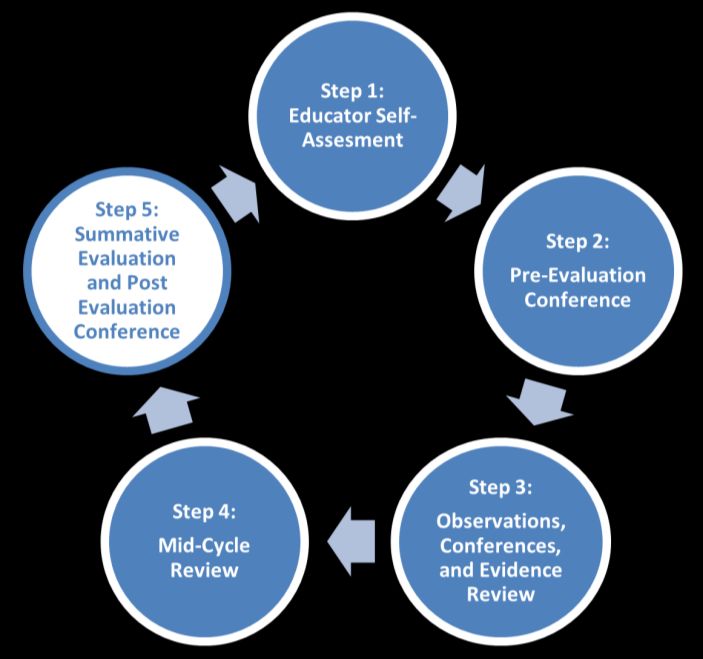
The Evaluation Cycle

The evaluation cycle is a year-long process with multiple components. The following guidelines are
designed to help educators and their evaluators implement the Nevada Educator Performance
Framework.

Figure 1: Evaluation Cycle

At the beginning of the school year, the educator receives a complete set of materials that includes the
Teacher Instructional Practice Standards (Administrator Instructional Leadership Standards) and the
Teacher Professional Responsibilities Standards (Administrator Professional Responsibilities
Standards) rubrics with Standards, Indicators, Performance Levels, and evidence sources, as well as
access to the current year’s NEPF Protocols outlining the evaluation process. The educator and
evaluator meet to establish expectations and consider goals. They discuss the evaluation process
together (including observations/visits, review of evidence, etc.) and review the NEPF Rubrics that
describe the Standards and Indicators. The purpose of this review is to develop and deepen shared
understanding of the Standards and Indicators in practice. The rubric review is also an opportunity to
identify specific areas of focus for the upcoming school year.

Figure 2: Typical Evaluation Cycle

                                     Step                                                                   Timeline
 Step 1: Educator Self-Assessment                                                                 Late Summer/Early Fall
 Step 2: Pre-Evaluation Conference                                                                          Early Fall
 Step 3: Observations, Conferences, and Evidence Review                                          Throughout School Year
 Step 4: Mid-Cycle Review (Educator Assistance Plan if applicable)                                          Mid-year
 Step 5: Summative Evaluation and Post-Evaluation Conference                                        Late Spring/Summer

                   Nevada Department of Education – NEPF Protocols for Educator Evaluation – July 2021 – Page 5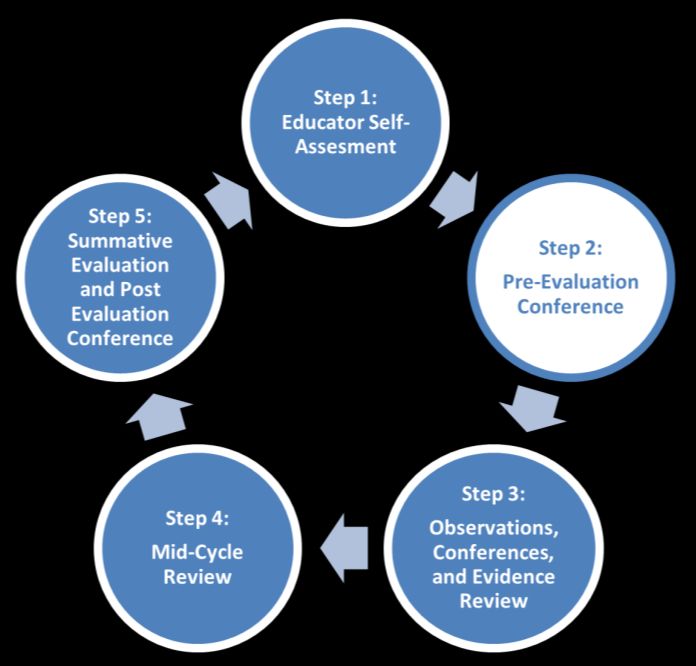
Step 1: Educator Self-Assessment

The first step of the NEPF Evaluation Cycle is self-assessment. During this process, the educator must
analyze data, reflect on performance, and set goals for the year based on previous feedback or
directives. A guiding principle for the NEPF is that evaluation should be done with educators, not to
them. Embracing the self-assessment step of the process empowers the educator being evaluated to
shape the conversation by stating what they identify as strengths, the areas on which they want to
focus, and what support they need. The educator’s self-assessment is more potent when supported by
specific evidence and clearly aligns with individual and team goals as well as school and district
priorities and initiatives.

Using the Self-Assessment Tool (Admin: Self-Assessment Tool) or the revised tool for in-person,
hybrid, or distance learning Self-Monitoring Tool (Admin: Self-Monitoring Tool) and examining a wide
range of evidence (including previous evaluations if applicable), the educator assesses his/her practice
based on the levels of performance and identifies areas of strength as well as areas for growth.

                    Nevada Department of Education – NEPF Protocols for Educator Evaluation – July 2021 – Page 6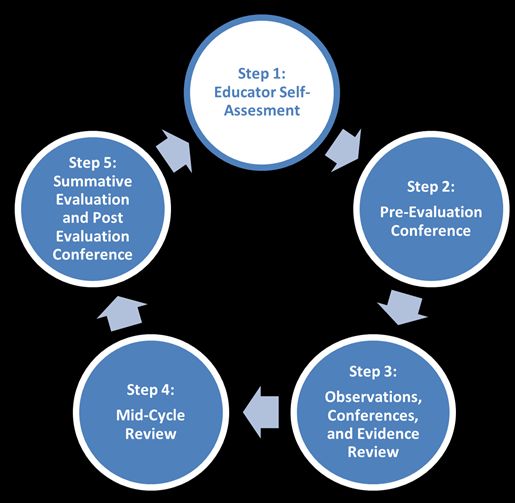
Step 2: Pre-Evaluation Conference

The second step of the evaluation cycle is the pre-evaluation conference between the educator and
evaluator. During the pre-evaluation conference, the educator begins by sharing his/her self-
assessment with the evaluator. During this initial conference, the educator and evaluator must engage
in a conversation that incorporates all of the components identified below, as appropriate to the
context of the educator. As a result of the conference, the educator should have a clear understanding
of the expectations for performance as aligned to the Instructional Practice Standards and Professional
Responsibilities Standards as well as a plan of action to support the educator’s professional growth and
improvement.

Pre-Evaluation Conference Conversation:
The educator and evaluator review the rubrics and engage in conversation. This conversation must:
   • Answer the question, “Are there any assumptions about specific Indicators that need to be
       shared because of the school/classroom context?” For example, if several students in the class
       are limited English speakers or are non-verbal, in what ways will the educator address
       Instructional Standard 3: Students Engage in Meaning Making through Discourse and Other
       Strategies?
   • Answer the questions, “Are there any Indicators for which effective performance will depend
       on factors beyond the control of the educator? If so, how will those dependencies be
       accounted for in the evaluation process?”
   • Answer the question, “Are there any Indicators that previous performance identified as an area
       for growth and will need to be a specific focus for part or all of the year?”
   • Pursuant to NRS 391.465, there must be, “consideration of whether the classes for which the
       employee is responsible exceed the applicable recommended ratios of pupils per licensed
       teacher recommended by the State Board pursuant to NRS 388.890 and, if so, the degree to
       which the ratios affect: (1) The ability of the employee to carry out his or her professional
       responsibilities; and (2) The instructional practices of the employee.”

                   Nevada Department of Education – NEPF Protocols for Educator Evaluation – July 2021 – Page 7
Step 3: Observations, Conferences, and Review of Evidence

The third step of the evaluation cycle is the observation cycle. For the duration of the cycle, the
educator pursues the attainment of high-level performance on all Standards and Indicators. The
evaluator provides feedback for improvement, ensures timely access to planned supports, and reviews
evidence on educator performance. A single evidence source can be used to support evidence of
performance on multiple Indicators and/or Standards. Additionally, the educator may choose to
collect evidence for review throughout the cycle but should not create artifacts specifically for the
evidence review. Educators should use documents that occur as part of the everyday practice.

The observation cycle provides a foundation for dialogue, collaboration, and action. The educator and
evaluator use the Pre/Post-Observation Conference Tool (Admin: Pre/Post-Observation Conference
Tool), the NEPF rubrics, and student data to develop a shared understanding of effective practice,
guide ongoing reflection, monitor student performance, and determine evidence to review.

Evidence Review:
    • The evaluator reviews evidence and other relevant data to demonstrate performance on the
       NEPF Standards and Indicators using the Observation/Evidence Review Tool (Admin:
       Observation/Evidence Review Tool).
    • The evaluator reviews evidence to identify corresponding NEPF Standards and Indicators.

Observation and Conference Process:
   • For scheduled observations only, the educator and evaluator use the Pre/Post-Observation
      Conference Tool (Admin: Pre/Post-Observation Conference Tool) to discuss the upcoming
      observation. NOTE: The questions on the tool are a guide, and all questions are not required for
      every observation.
   • The evaluator conducts the observation. Using the Observation/Evidence Review Tool (Admin:
      Observation/Evidence Review Tool), the evaluator records evidence observed during the

                   Nevada Department of Education – NEPF Protocols for Educator Evaluation – July 2021 – Page 8
scheduled or unscheduled observation and identifies corresponding Standards and Indicators.
Observations are NOT scored.
• The educator and evaluator use the Pre/Post-Observation Conference Tool (Admin: Pre/Post-
Observation Conference Tool) to discuss the observation, provide feedback, and identify
professional learning needs.
Figure 3: Differentiated Evaluation Cycle per NRS 391.675-391.730
Evaluation Scheduled Observation Cycles
Personnel
Frequency Required per Evaluation
• Probationary educators in year one of their • 3 scheduled observation cycles
initial or additional probationary period (minimum)
1 time per
OR • Supervising administrator must
year
• All educators whose previous year rating conduct 2 of the 3 required
was ineffective or developing observations
• Probationary educators whose • 2 scheduled observation cycles
immediately preceding year rating was (minimum)
1 time per
effective or highly effective • Supervising administrator must
year
conduct 1 of the 2 required
observations
• Probationary educators whose rating for • 1 scheduled observation cycle
two consecutive years were effective or (minimum)
highly effective • Supervising administrator must
1 time per
OR conduct the 1 required
year
• Post-probationary educators whose observation
previous year rating was effective or highly
effective
• Post-probationary educators with rating of • 1 scheduled observation cycle
No
highly effective for the two immediately (minimum)
summative
preceding years • Supervising administrator must
evaluation
conduct the 1 required
for 1 year
observation
Nevada Department of Education – NEPF Protocols for Educator Evaluation – July 2021 – Page 9Figure 4: Required Evaluation Components and Timeline per NRS 391.675-391.730
Evaluation Probationary Probationary Probationary Post-probationary
Component educators in year educators whose educators whose educators with a
one of their initial or immediately rating for two rating of highly
additional preceding year rating consecutive years effective for the two
probationary period was effective or were effective or immediately
OR highly effective highly effective preceding years
All educators whose OR
previous year rating Post-probationary
was ineffective or educators whose
developing previous year rating
was effective or
highly effective
Self-Assessment and Prior to first Prior to first Prior to first Prior to first
Pre-Evaluation observation/ observation/ observation/ observation/
Conference evidence review evidence review evidence review and evidence review and
recommended within recommended within
50 days of the start of 50 days of the start of
instruction instruction
Observation Cycle(s) • 1st scheduled • 1st scheduled • One scheduled • One scheduled
• Pre-observation observation cycle observation cycle observation cycle observation cycle
conference must occur within must occur after 40 must occur within must occur within
• Observation(s) 40 days after the days but within 80 120 days after the 120 days after the
• Post-observation first day of days after the first first day of first day of
conference instruction day of instruction instruction of that instruction of that
• 2nd scheduled • 2nd scheduled school year school year
observation cycle observation cycle
must occur after 40 must occur after 80
days but within 80 days but within 120
days after the first days after the first
day of instruction day of instruction of
• 3rd scheduled the school year
observation cycle
must occur after 80
days but within 120
days after the first
day of instruction
Evidence Review and Following each Following each Following each Following each
Conferencing observation cycle observation cycle observation cycle observation cycle
Mid-Cycle Review Approximately Approximately Approximately Approximately
halfway through the halfway through the halfway through the halfway through the
school year school year school year school year
The Summative Performance rating is Performance rating is Performance rating is No Summative
Evaluation (Admin: based on evidence based on evidence based on evidence Evaluation.
Summative reviewed throughout reviewed throughout reviewed throughout Use Summative
Evaluation) and the school year. The the school year. The the school year. The Evaluation
Conference Summative Summative Summative Exemption
Evaluation rating Evaluation rating Evaluation rating Verification Tool.
determines the determines the determines the
baseline for the baseline for the baseline for the
annual cycle in the annual cycle in the annual cycle in the
subsequent school subsequent school subsequent school
year. year. year.
Nevada Department of Education – NEPF Protocols for Educator Evaluation – July 2021 – Page 10Observation Cycle: The observation cycle consists of a pre-observation conference with the educator
and the evaluator, an observation based on the Standards, and a post-observation conference. The
pre- and post-observation conferences include guiding questions and potential evidence review, as
requested by the evaluator.
Pre-Observation Conferences: Each scheduled observation is preceded by a pre-observation
conference. This provides the educator an opportunity to discuss needs and evidence for the strategies
used. It is also recommended that the educator being evaluated leads these discussions and provides
the rationale for the basis of his/her instructional practices. It is essential that both the educator and
evaluator participate in professional learning experiences that ensure they are adequately prepared for
participating in this type of discussion.
Observations: “Scheduled” (announced) observations are those observations for which prior notice is
given AND a pre-observation conference has been held. The minimum number of scheduled
observations that must be conducted by the supervising administrator is differentiated according to
experience and performance as outlined in the Differentiated Evaluation Cycle (Refer to Figures 3 and
4 above). For educators, each scheduled classroom observation, as one component of the educator
evaluation, needs to be conducted for a minimum of twenty minutes. Observations may be conducted
by other authorized personnel.
“Unscheduled” observations follow the same procedure as scheduled observations, with the exception
of the requirements for a Pre-Observation Conference and the minimum twenty-minute duration for
educators. Unscheduled observations may be conducted throughout the year at the discretion of the
evaluator, with no minimum or maximum. Best practices suggest more frequent observations paired
with brief reflective conferences support greater improvement of instruction.
Frequent observations provide invaluable insight into the educator’s performance. These offer critical
opportunities for evaluators to observe, review evidence, and analyze the educator’s practice.
Observations should be both scheduled and unscheduled. The evaluator uses the
Observation/Evidence Review Tool (Admin: Observation/Evidence Review Tool) to document the
reviewing of evidence for both types of observations. Observations should NOT be scored as ratings
should only be assigned after multiple observations are conducted to assess levels of performance.
Post-Observation Conferences: Following all observations, the post-observation conference should be
a joint discussion between the educator and evaluator. This is a time during which the evaluator
provides explicit feedback on performance and identifies and discusses professional learning needs.
Post-observation conferences for scheduled and unscheduled observations within an observation cycle
can be combined into a single meeting, regardless of the length of time between the observations, but
it is recommended that a post-observation conference should be conducted no later than a week after
the observation to provide the educator with timely, constructive feedback.
Based on observations and evidence, if an educator’s performance is likely to be rated ineffective or
developing, the evaluator uses the Educator Assistance Plan Tool to develop and implement an
assistance plan pursuant to NRS 391.695 and/or 391.715. Early support is best; therefore, this tool
should be used to provide assistance to educators at any time during the evaluation cycle.
Nevada Department of Education – NEPF Protocols for Educator Evaluation – July 2021 – Page 11Step 4: Mid-Cycle Review
The fourth step is a Mid-Cycle Review. The Mid-Cycle Review is the time when the educator and
evaluator formally meet to review identified evidence. The conference should be held mid-year to
discuss educator progress and performance on all NEPF Standards and Indicators. This step is used to
prompt reflection, promote dialogue between the educator and evaluator, and plan changes to
practice. In addition, if there are patterns of evidence demonstrating performance that is potentially
leading to a final rating of ineffective or developing, this is a critical time for the evaluator to discuss
this evidence so there are no “surprises” during the summative evaluation. More importantly, if an
educator is having difficulty, this allows the evaluator to provide the educator with the assistance
required to address areas of concern (NRS 391.695 & 391.715). Evaluators use the Educator
Assistance Plan Tool to provide recommendations for improvements in the performance of the
educator and to describe the actions that will be taken to assist the educator [NRS 391.695 1(e)].
Mid-Cycle Conference: Educator and evaluator develop a shared understanding of progress and the
educator’s performance on the Standards and Indicators. The evaluator will identify mid-course
adjustments if needed.
Nevada Department of Education – NEPF Protocols for Educator Evaluation – July 2021 – Page 12Step 5: Summative Evaluation and Post-Evaluation Conference
The final step is the summative evaluation, which completes a full evaluation cycle. In this step, the
evaluator reviews and analyzes the Observation/Evidence Review Tool (Admin: Observation/Evidence
Review Tool)data, gathers additional evidence and insights from the educator (if necessary), and
identifies performance levels on the NEPF Indicators to determine Standard scores and the overall
rating. Thoughtful summative evaluation identifies trends and patterns in performance and offers
feedback for improvement. It also provides the educator with valuable information that strengthens
self-reflection and analysis skills.
Scoring:
• The evaluator reviews the tools and relevant evidence reviewed throughout the cycle for the
purpose of determining performance levels for each of the Indicators.
• The evaluator uses the data from the Observation/Evidence Review Tool (Admin:
Observation/Evidence Review Tool) documented throughout the cycle to identify the
appropriate performance levels for each Indicator following the Teacher Instructional Practice
Standards (Administrator Instructional Leadership Standards) and the Teacher Professional
Responsibilities Standards (Administrator Professional Responsibilities Standards) rubrics and
inputs them into the Summative Evaluation Tool (Admin: Summative Evaluation). Performance
levels selected may range from 1-4 (whole numbers only).
• The Indicator performance levels are then used to calculate the score for each Standard. This is
done by averaging all performance levels for each Standard.
• Overall scores for Instructional Practice (teacher)/Instructional Leadership
(administrator)/Leadership (principal supervisor) and Professional Responsibilities are
calculated by averaging the scores for each Standard.
• The final score is then determined by adding the weighted Instructional Practice
(teacher)/Instructional Leadership (administrator) and Professional Responsibilities scores on
the Summative Evaluation Tool (Admin: Summative Evaluation).
Nevada Department of Education – NEPF Protocols for Educator Evaluation – July 2021 – Page 13• Post-probationary teachers who are designated as effective or highly effective, based on the
educational practice score, will be awarded an additional weight in certain Standards and
Indicators equivalent to the percentage by which the ratio of pupils for which the teacher is
responsible exceeds the recommended ratio of pupils per licensed teacher (see recommended
ratios below). The adjusted score is not to exceed the maximum score that would otherwise be
possible for a teacher rated as highly effective. The Standards and Indicators which are eligible
for the additional weight are:
1. The manner in which the teacher employs the cognitive abilities and skills of all pupils,
Instructional Practice Standard 2 Indicator 1 (IPS 2.1),
2. The manner in which the teacher provides an opportunity for extended discourse (IPS 3.1),
3. The manner in which the teacher structures a classroom environment (IPS 3.4),
4. The manner in which the teacher engages with the families of pupils, Professional
Responsibilities Standard 4 (PRS 4), and
5. The perception of pupils of the performance of the teacher (PRS 5).
Grades State Board of Education Recommendations for the Ratio of Pupils
(except choir, orchestra and band)
K-3 15 pupils per 1 licensed teacher
4-12 25 pupils per 1 licensed teacher
Evaluation Conference:
During the final evaluation conference, the educator and evaluator review the evidence on which the
final rating was determined and discuss the scores and feedback given within the Summative
Evaluation Tool (Admin: Summative Evaluation).
Once final scoring ranges are recommended by the TLC and approved by the State Board, the table
below will be updated to show the scoring ranges used to determine the final rating for teachers and
school level administrators for the 2021-22 school year.
Figure 5: 2020-21 NEPF Scoring Ranges*
Overall Score Range Final Rating
3.6-4.0 Highly Effective
2.8-3.59 Effective
1.91-2.79 Developing
1.0-1.9 Ineffective
*Protocols will be updated with the score ranges for the 2021-22 school year based on a recommendation from the Teachers and Leaders Council and
upon approval by the State Board of Education.
For educators who receive a Highly Effective rating for two consecutive years, the final summative
evaluation requirement is waived the following year; however, educators who meet this criterion are
expected to participate in the evaluation cycle. Evaluators complete the Summative Evaluation
Exemption Verification Tool. During the subsequent school year, educators who met this criterion will
once again participate in the evaluation cycle and receive a summative evaluation (three-year cycle: 2
years of earning a Highly Effective summative rating + one year of a summative evaluation waiver).
Nevada Department of Education – NEPF Protocols for Educator Evaluation – July 2021 – Page 14NOTE: NRS 391.725, as updated by SB 475 passed during the 80th Legislative Session, describes the
statement that must be included on the evaluation of a probationary educator if he or she is to receive
a rating of ‘Ineffective.’ The statement reads as follows:
“Please be advised that, pursuant to Nevada law, your contract may not be renewed for the next
school year. If you receive an ‘ineffective’ evaluation and are reemployed for a second or third year
of your probationary period, you may request that your next evaluation be conducted by another
administrator. You may also request, to the administrator who conducted the evaluation, reasonable
assistance in improving your performance based upon the recommendations reported in the
evaluation for which you request assistance, and upon such request, a reasonable effort will be made
to assist you in improving your performance.”1
1
NRS: CHAPTER 391 - PERSONNEL. (n.d.). Retrieved July, 2018, from https://www.leg.state.nv.us/NRS/NRS-391.html
Nevada Department of Education – NEPF Protocols for Educator Evaluation – July 2021 – Page 15Glossary
Administrator Instructional Leadership Standards - Instructional leadership practices intended to
support the practice of effective teaching in the classroom.
Administrator Professional Responsibilities Standards - Practices intended to promote collaboration
and teamwork, personal growth and leadership, professionalism, and importance of building positive
relationships with all stakeholders.
Administrators – Per NRS 391.650, an administrator is any employee who holds a license as an
administrator and who is employed in that capacity by a school district. NAC 391.569 further clarifies
that an administrator means a person employed by a school district who provides primarily
administrative services at the school level and who does not provide primarily direct instructional
services to pupils, regardless of whether such a person is licensed as a teacher or administrator,
including, without limitation, a principal and vice principal.
All Students – For the purpose of the NEPF, ‘all students’ refers to the diversity found in all classrooms:
various levels of learning, working pace, experience, and backgrounds (e.g., language, culture, SES). A
teacher must demonstrate that all students are being well served by instruction. While not always
directly observable, the teacher must demonstrate through other evidence sources that he or she has
made every possible effort to reach all students. The student learning goal allows for a targeted
student population within an educator’s caseload. Within the SLG, ‘all students’ refers to that targeted
population.
Data – Information, including classroom observations, student achievement scores, and artifacts,
gathered during the evaluation process for determining educator performance.
Defensible – Having grounds to deem a conclusion or judgment valid and reliable based on various
measures and assessments.
Diverse Learners – Those students who, because of gender, ethnic background, socioeconomic status,
learning styles, disabilities, or limited English proficiency, may have academic needs that require varied
instructional strategies to help them learn.
Domain – Primary area of focus for evaluation. For example, in the Teacher Evaluation the three
domains are Instructional Practice, Professional Responsibilities, and Student Performance. NEPF
Domains are made up of standards.
Educator – The individual upon whom an evaluation is performed.
Educator Assistance Plan Tool - Tool used by the educator and evaluator to develop and implement an
assistance plan as necessary pursuant to NRS 391.695 (teachers) & 391.715 (administrators) as part of
the Mid Cycle Review, but it may be completed earlier if appropriate.
Evaluation Cycle – Consists of the goal-setting and self-assessment processes and a number of
supervisory observation cycles with feedback provided to educators with feedback throughout the
Nevada Department of Education – NEPF Protocols for Educator Evaluation – July 2021 – Page 16process. The number of observation cycles within an evaluation cycle is differentiated based on
educator status. See Figure 3.
Evaluator – The individual in an evaluation system that collects educator data, analyzes the data, and
collaborates with educators to provide feedback and support, and to make judgments regarding
performance.
Evidence – Data gathered through the evaluation cycle to support educators’ progress on NEPF
indicators, standards, and domains. Includes supervisor observation and progress towards meeting the
Student Learning Goal.
Feedback – Information and/or recommendations given to an educator about performance which is
based on evaluation results. Feedback is intended to provide insight to the educator so that
professional learning can be targeted and improvements in performance can be achieved.
Framework – The system by which the measures are combined to evaluate the effectiveness of
educators and make overall performance decisions. For example, the NEPF is a framework.
Goal Setting and Planning Tool – Tool used by teachers and school administrators to set a Student
Learning Goal (SLG) and Professional Practice Goal to measure the Student Performance Domain.
Indicator – Specific activity or process demonstrated by the educator being evaluated which provides
evidence of the NEPF standard or professional practice being measured. Indicators are the building
block of NEPF standards.
Level – The position or rank of an educator’s performance for each indicator, as determined using the
rubric, observations, and evidence.
Measure – An instrument or basis for comparison used to assess educator or student performance.
Examples of measures could be published assessments or a specific classroom observation rubric.
NEPF Protocols – Per NAC 391.579 the NDE document specifies the requirements to support the
implementation of the Nevada Educator Performance Framework. It is updated annually.
Observation/Evidence Review Tool (Admin: Observation/Evidence Review Tool) - Tool used by the
evaluator to note evidence throughout the observation and review evidence during the post
observation conference. The evaluator uses this tool to record feedback provided to the educator,
review the evidence presented/observed for alignment with Standards and Indicators, and check
progress toward goals.
Performance Criteria – The specific performance thresholds that need to be met for an established
goal/standard.
Pre/Post-Observation Conference Tool (Admin: Pre/Post-Observation Conference Tool) - Tool used
by the educator and evaluator to discuss an upcoming scheduled observation, or to discuss recent
scheduled and/or unscheduled observations. It is intended to guide thinking and conversation. The
questions on this form serve as a guide to start conversation and are not required.
Nevada Department of Education – NEPF Protocols for Educator Evaluation – July 2021 – Page 17Professional Learning – The process by which educators’ competencies and capacities are increased,
including but not limited to, professional development sessions, job-embedded support, coaching,
observing and/or mentoring, peer reviews, etc.
Reliability – The extent to which an assessment or tool is consistent in its measurement. There are
several types of reliability:
• Intra-rater – the degree to which an assessment yields the same result when administered by
the same evaluator on the same educator at different times
• Inter-rater – the degree to which an assessment yields the same result when administered by
different evaluators on the same educator at the same time
• Internal consistency – the degree to which individual components of an assessment
consistently measure the same attribute
• Test/Retest – the degree to which an assessment of the same educator yields the same result
over time
Self-Assessment Tool (Admin: Self-Assessment Tool) - Tool used by the educator to reflect on practice
and identify strengths and areas for growth/improvement based on supporting evidence.
Self-Monitoring Tool (Admin: Self-Monitoring Tool) - This tool, an alternative for the Self-Assessment
Tool, is intended to assist educators as they engage in self-reflection in preparation for and provision of
face-to-face, digital, or blended instruction. It should be used as a space to honor the quality work of
the educator and to identify priority areas for growth on which the educator would like to focus for the
upcoming year.
Source of Growth or Achievement: the assessment(s) or tool(s) used to measure student progress for
the Student Learning Goal. Acceptable sources of student growth or achievement include, but are not
limited to, course-embedded, teacher-developed, or published assessments that align with the
standard identified as the area of highest student need.
Standard – Clearly defined statements and/or illustrations within NEPF domains that capture what all
teachers are expected to know and do. Standards operationalize the categories by providing
measurable goals. For example, the Professional Practice Standards. NEPF standards are made up of
individual indicators.
Standard Score – The overall point value for each standard. Each score is based on the Indicator levels
of performance determined by quality observation data and evidence collected throughout the
evaluation cycle.
Student Achievement – The performance of a student on any particular measure of academics.
Summative Evaluation Exemption Verification Tool – Tool used for educators who received a Highly
Effective rating for two consecutive years and are eligible to have the final summative evaluation
requirement waived.
Nevada Department of Education – NEPF Protocols for Educator Evaluation – July 2021 – Page 18Summative Evaluation Tool (Admin: Summative Evaluation) – Tool used to provide educators with
their final summative evaluation scores, evidence-based narrative of the teacher’s strengths and areas
for growth according to his/her performance on the Instructional Practice and Professional
Responsibilities Standards and Indicators, and final rating.
Teacher Instructional Practice Standards – Five high-leverage instructional practices intended to
reflect the practice of effective teaching in the classroom.
Teacher Professional Responsibilities Standards – Five practices intended to promote collaboration
and teamwork, personal growth and leadership, professionalism, and importance of building positive
relationships with all stakeholders.
Teachers – Pursuant to NRS 391.650, teacher means a licensed employee the majority of whose
working time is devoted to the rendering of direct educational service to pupils of a school district.
Teachers and Leaders Council (TLC) – Sixteen member council consisting of: The Superintendent of
Public Instruction, or his or her designee; the Chancellor of the Nevada System of Higher Education, or
his or her designee; four public school teachers; two public school administrators; one superintendent
of schools; two school board members; one representative of the regional professional development
programs; one parent or legal guardian; one school counselor, psychologist, speech-language
pathologist, audiologist or social worker who is licensed; and two persons with expertise in the
development of public policy relating to education. The purpose of the TLC is to make
recommendations to the State Board concerning the adoption of regulations for establishing a
statewide performance evaluation system.
Validity – The extent to which an assessment or tool measures what it intends to measure. There are
several types of validity:
• Content Validity – Refers to the match between the items of a measurement tool and the
entire domain in purports to measure
• Construct Validity – Whether a test actually measures the construct it intends to measure,
including the ability to distinguish among types of performance and types of performers.
• Face Validity – According to those familiar with the measure, measures with high face validity
appear to be measuring what they purport to measure.
• Predictive Validity – Refers to whether a measurement tool actually predicts scores on
another measure that it should theoretically predict.
Weight – The relative importance applied to an NEPF domain in determining an educators’ final NEPF
rating.
Nevada Department of Education – NEPF Protocols for Educator Evaluation – July 2021 – Page 19Appendix A – School Administrator Framework
Overview of the Framework
For the 2021-22 school year, the NEPF for School Administrators consists of two domains: Instructional
Leadership and Professional Responsibilities. Each domain is weighted differently as recommended by
the TLC and approved by the State Board of Education. For the 2021-22 school year, the Instructional
Leadership Domain is weighted at 80% while the Professional Responsibilities Domain is weighted at
20%.
Figure 6: 2021-22 School Administrator Framework
Nevada Department of Education – NEPF Protocols for Educator Evaluation – July 2021 – Page 20Instructional Leadership and Professional Responsibilities Domains
The School Administrator Framework and Teacher Framework align in structure as well as in
orientation to stakeholder values. The Instructional Leadership Practice Domain sets the parameters
for measuring administrator behavior to be an instructional leader, while also specifically monitoring
teacher performance. The Professional Responsibilities Domain addresses the standards for
administrator responsibilities that support improvements in teachers’ practice as well as providing the
structural supports to ensure teacher success. This alignment with the Teacher Framework ensures
that administrators are evaluated on their ability to provide the structural support and feedback to
help teachers improve their practice.
The School Administrator Standards and Indicators were determined as a result of a rigorous review of
existing administrator leadership standards, including but not limited to the Interstate School Leaders
Licensure Consortium (ISSLC) and the National Board of Administrator Leadership Standards (NBPLS).
Based on these standards, and in an explicit effort to align the administrator evaluation with the
Standards and Indicators identified in the teacher framework, the Teachers and Leaders Council (TLC)
identified the four high-leverage Instructional Leadership Standards identified below. As with the
Teacher Framework, this approach operationalizes a narrowed focus to ensure that due concentration
is paid to effectiveness and fidelity of implementation.
School Administrator Instructional Leadership Standards and Indicators
Standard 1: Creating and Sustaining a Focus on Learning
• Indicator 1: The school-level administrator engages stakeholders in the development of a
vision for high student achievement and college and career readiness, continually reviewing
and adapting the vision when appropriate.
• Indicator 2: The school-level administrator holds teachers and students accountable for
learning through regular monitoring of a range of performance data.
• Indicator 3: The school-level administrator structures opportunities to engage teachers in
reflecting on their practice and taking improvement actions to benefit student learning and
support professional growth.
• Indicator 4: The school-level administrator systematically supports teachers’ short-term and
long-term planning for student learning through a variety of means.
Standard 2: Creating and Sustaining a Culture of Continuous Improvement
• Indicator 1: The school-level administrator sets clear expectations for teacher performance
and student performance and creates a system for consistent monitoring and follow-up on
growth and development.
• Indicator 2: The school-level administrator supports teacher development through quality
observation, feedback, coaching, and professional learning structures.
• Indicator 3: The school-level administrator gathers and analyzes multiple sources of data to
monitor and evaluate progress of school learning goals to drive continuous improvement.
• Indicator 4: The school-level administrator operates with a deep belief that all children can
achieve regardless of race, perceived ability, and socio-economic status.
Nevada Department of Education – NEPF Protocols for Educator Evaluation – July 2021 – Page 21Standard 3: Creating and Sustaining Productive Relationships
• Indicator 1: The school-level administrator demonstrates a welcoming, respectful, and caring
environment and an interest in adults and students’ well-being to create a positive affective
experience for all members of the school’s community.
• Indicator 2: The school-level administrator provides opportunities for extended, productive
discourse between the administrator and teacher(s) and among teachers to support decision-
making processes.
• Indicator 3: The school-level administrator structures the school environment to enable
collaboration between school-level administrators and teachers and among teachers to further
school goals.
• Indicator 4: The school-level administrator has structures and processes in place to
communicate and partner with teachers, and parents in support of the school’s learning goals.
Standard 4: Creating and Sustaining Structures
• Indicator 1: The school-level administrator implements systems and processes to align
curriculum, instruction, and assessment to state standards and college-readiness standards,
continually reviewing and adapting when appropriate.
• Indicator 2: The school-level administrator develops systems and processes to implement a
coherent and clearly articulated curriculum across the entire school, continually reviewing and
adapting when appropriate.
• Indicator 3: The school-level administrator allocates resources effectively, including organizing
time, to support learning goals.
School Administrator Professional Responsibilities Standards and Indicators
Standard 1: Manages Human Capital
• Indicator 1: The school-level administrator collects high quality observation data and evidence
of teacher practice in a fair and equitable manner and utilizes the results of evaluations to
provide supports to improve performance.
• Indicator 2: The school-level administrator uses available data, including teacher effectiveness
data, to identify, recognize, support, and retain teachers.
• Indicator 3: The school-level administrator supports the development of teacher leaders and
provides leadership opportunities.
• Indicator 4: The school-level administrator complies with the requirements and expectations of
the Nevada Teacher Evaluation Framework.
Standard 2: Self-Reflection and Professional Growth
• Indicator 1: The school-level administrator seeks out feedback from colleagues and staff and
uses a variety of data to self-reflect on his or her practice.
• Indicator 2: The school-level administrator seeks opportunities to increase their professional
knowledge in an effort to remain current on educational research and evidence-based
practices.
• Indicator 3: The school-level administrator pursues aligned professional learning opportunities
to improve his/her instructional leadership across the school community.
Nevada Department of Education – NEPF Protocols for Educator Evaluation – July 2021 – Page 22Standard 3: Professional Obligations
• Indicator 1: The school-level administrator models and advocates for fair equitable and
appropriate treatment of all personnel, students, and families.
• Indicator 2: The school-level administrator models integrity in all interactions with colleagues,
staff, students, family, and the community.
• Indicator 3: The school-level administrator respects the rights of others with regard to
confidentiality & dignity & engages in honest interactions.
• Indicator 4: The school-level administrator follows policies, regulations, and procedures
specific to role and responsibilities.
Standard 4: Family and Community Engagement
• Indicator 1: The school-level administrator Involves families and the community in appropriate
policy implementation, program planning, and assessment.
• Indicator 2: The school-level administrator involves families and community members in the
realization of vision and in related school improvement efforts.
• Indicator 3: The school-level administrator connects students and families to community
health, human and social services as appropriate.
Nevada Department of Education – NEPF Protocols for Educator Evaluation – July 2021 – Page 23Appendix B – Teacher Framework
Overview of the Framework
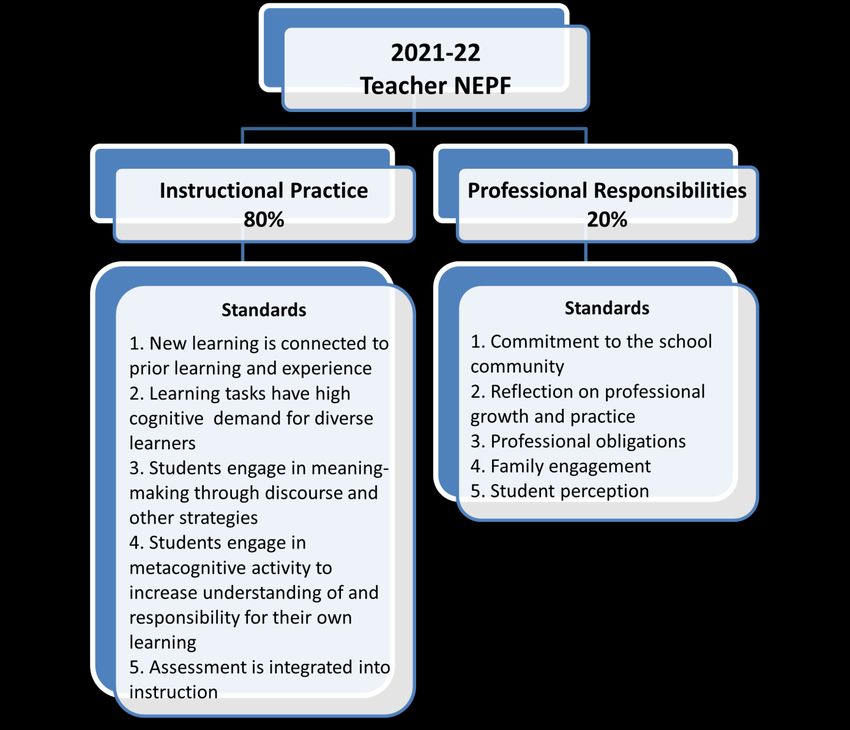
For the 2021-22 school year, the NEPF for Teachers consists of two domains: Instructional Practice and
Professional Responsibilities. Each domain is weighted differently as recommended by the TLC and
approved by the State Board of Education. For the 2021-22 school year, the Instructional Practice
Domain is weighted at 80% while the Professional Responsibilities Domain is weighted at 20%.
Figure 7: 2021-22 Teacher Framework
Nevada Department of Education – NEPF Protocols for Educator Evaluation – July 2021 – Page 24Instructional Practice and Professional Responsibilities Domains
The Teacher Framework assesses teacher performance across two domains: Instructional Practice and
Professional Responsibilities. The Instructional Practice Domain identifies and defines the standards for
measuring teacher behavior as he/she delivers instruction in the classroom, while also specifically
monitoring student behavior. The Professional Responsibilities Domain addresses the standards for
what a teacher does outside of instruction to influence and prepare for student learning at each
student’s highest ability level in the classroom and to promote the effectiveness of the school
community.
The teacher domains were determined as a result of a rigorous national review of existing standards,
including but not limited to the Interstate Teacher Assessment and Support Consortium (InTASC), the
National Board for Professional Teaching Standards (NBPTS), and examples from other states. The
focus on Instructional Practice was based on guidance from national experts and the reinforcement of
research. Narrowing the scope to the assessment of Instructional Practice and Professional
Responsibilities Standards broadens the depth and breadth of the system. The Standards are based on
a vast body of empirical evidence, as detailed in the Literature Review, demonstrating an immediate
and important connection to fostering student success by building students’ 21st century skills so they
graduate college and career ready.
The performance Indicators for each Standard and the corresponding rubrics were developed by Dr.
Margaret Heritage and her team at the University of California, Los Angeles National Center for
Research on Evaluation, Standards, and Student Testing (CRESST). The rubrics and associated
performance levels to assess the Indicators were designed to look at teacher and student behavior,
with a focus on outcomes versus processes.
Teacher Instructional Practice Standards and Indicators
Standard 1: New Learning is Connected to Prior Learning and Experience
• Indicator 1: The teacher activates all students’ initial understandings of new concepts and skills.
• Indicator 2: The teacher makes connections explicit between previous learning and new
concepts and skills for all students.
• Indicator 3: The teacher makes clear the purpose and relevance of new learning for all students.
• Indicator 4: The teacher provides all students opportunities to build on or challenge initial
understandings.
Standard 2: Learning Tasks Have High Cognitive Demand for Diverse Learners
• Indicator 1: The teacher assigns tasks that purposefully employ all students’ cognitive abilities
and skills.
• Indicator 2: The teacher assigns tasks that place appropriate demands on each student.
• Indicator 3: The teacher assigns tasks that progressively develop all students’ cognitive abilities
and skills.
• Indicator 4: The teacher operates with a deep belief that all children can achieve regardless of
race, perceived ability and socio-economic status.
Nevada Department of Education – NEPF Protocols for Educator Evaluation – July 2021 – Page 25You can also read


