WAITAKERE COLLEGE

 ENROLMENT INFORMATION

          FOR

 INTERNATIONAL STUDENTS

          2019
←
→
Page content transcription
If your browser does not render page correctly, please read the page content below
WAITAKERE COLLEGE
ENROLMENT INFORMATION
FOR
INTERNATIONAL STUDENTS
2019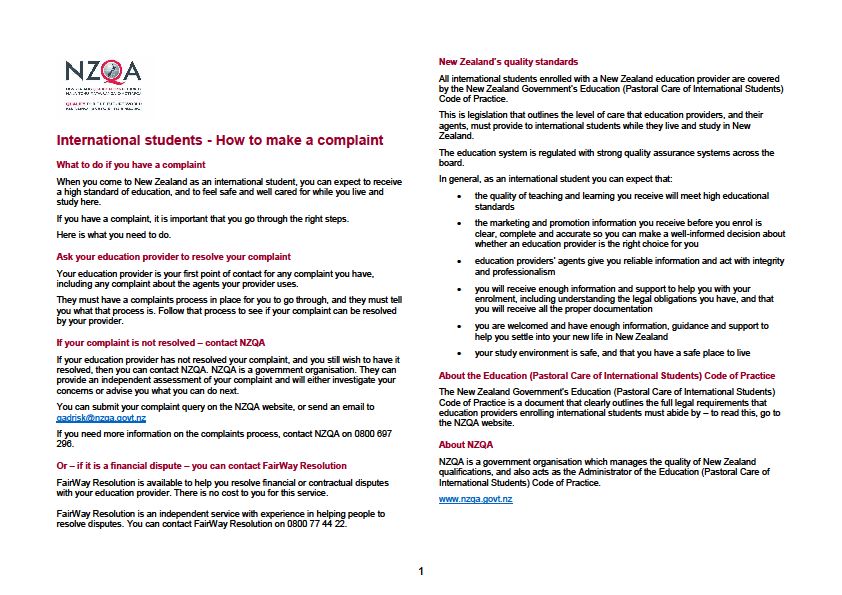
Contents
This document contains the information which international students require before and during the process of
enrolment at Waitakere College.

        Contents                                                Pg. 2
        Introduction: Code of Practice                          Pg. 3
        Pre-enrolment Information                               Pg. 4
        Homestay                                                Pg. 5
        Cultural Groups                                         Pg. 6
        Fee Structure                                           Pg. 7
        Services and Facilities                                 Pg. 8
        Staff                                                   Pg. 9
        Courses                                                 Pg. 10
        Subjects                                                Pg. 11
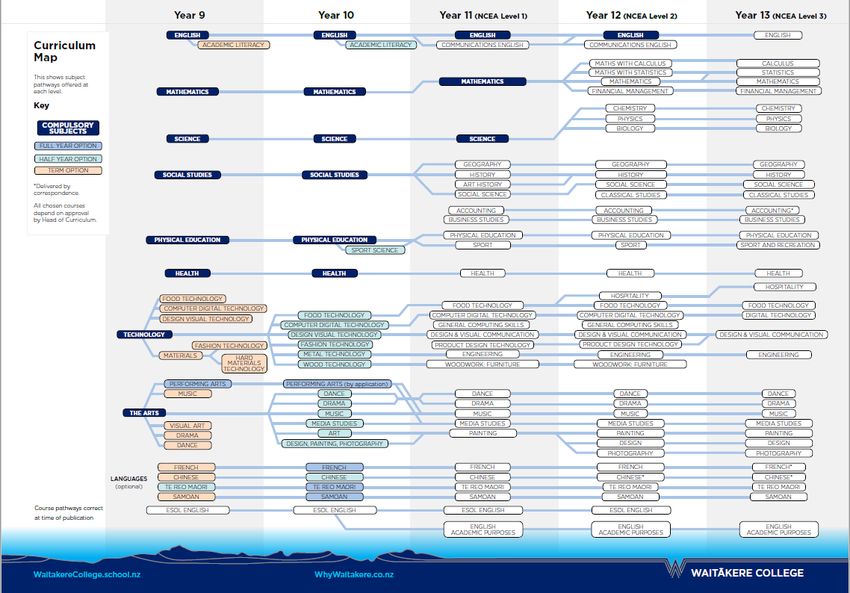
        Curriculum Map                                          Pg. 12
        Calendar                                                Pg. 13
        Orientation                                             Pg. 14
        Accommodation                                           Pg. 15
        Support and Help Procedures                             Pg. 16
        Problems at School                                      Pg. 17
        Problems in Homestay                                    Pg. 18
        Making a Complaint to NZQA                              Pg. 19
        Discipline                                              Pg. 20,21
        Refund Policy                                           Pg. 22,23
        Leave Policy and Precedures                             Pg. 24
        Fees Protection Policy                                  Pg. 25

                                                       2
Waitakere College Welcomes
                            International Students
                                          For International Students
Waitakere College has agreed to observe and be bound by The Education (Pastoral Care of International
Students) Code of Practice 2016 published by the Ministry of Education and administered by NZQA. Please see
link for copies of The Education Code 2016 If there are concerns about a student’s treatment then, under the
terms of the Code, the Director of International Students should be contacted in the first instance so that the
school’s internal grievance procedures can be implemented. If you feel your problem is not being solved by the
school, you can contact the New Zealand Qualifications Authority (NZQA) www.nzqa.govt.nz Phone 0800
697296 or qadrisk@nzqa.govt.nz If it is a financial or contractual dispute, you can contact FairWay Resolution
by phone on 0800 774422. More information is available on the FairWay Resolution website:
www.fairwayresolution.com/istudent-complaints
You must be able to show them that you have tried to get the school to act before you contact them. They will
consult the school to see if anything can be done to help you.

ELIGIBILITY FOR HEALTH SERVICES
Most international students are not entitled to publicly funded health services while in New Zealand. If you
receive medical treatment during your visit, you may be liable for the full costs of that treatment. Full details on
entitlements to publicly-funded health services are available through the Ministry of Health, and can be viewed
on their website at http://www.moh.govt.nz. The Accident Compensation Corporation provides accident
insurance for all New Zealand citizens, residents and temporary visitors to New Zealand, but you may still be
liable for all other medical and related costs. Further information can be viewed on the ACC website at
http://www.acc.co.nz It is a requirement of Immigration New Zealand that International students must have
appropriate and current medical and travel insurance while studying in New Zealand. Evidence of this must be
produced when the full fee is paid. Your insurance policy must be in English and compliant with Immigration
New Zealand’s requirements and be approved by Waitakere College. Waitakere College can arrange insurance
on your behalf with Unicare. Please see link for policy details https://www.uni-care.org
The cost of this will be included in your invoice.

      (a)      IMMIGRATION

Full details of visa and permit requirements, advice on rights to employment in New Zealand while studying, and
reporting requirements are available through the New Zealand Immigration Service, and can be viewed on their
website at http://www.immigration.govt.nz.

VISA RENEWAL

The International Department staff will remind students of the dates when they must make renewal of their
Student Visa and will arrange the appropriate forms and where necessary contact with New Zealand
Immigration Services.

CONTACT INFORMATION

All enquiries about enrolment details for International Students should be made by contacting the International
Director Mrs Frances Thyberg. Further detail is available on the College website;
http://www.waitakerecollege.school.nz

Waitakere College                 Contact details: Frances Thyberg     Ph:64-9-8386097
PO Box 21144                      Director of International Students Fax: 64-9-8386811
Henderson                         Email: frances@waitakerecollege.school.nz
Waitakere City

                                                         3
Pre-Enrolment Information

1. Application Requirements

When enrolling please send the following documents:

1.1   Waitakere College enrolment application with every part completed.
1.2   Two most recent school reports. This must be translated into English and stamped with your school stamp.
1.3   Two copies of a passport type photo.

2. Conditions of Enrolment

2.1 Students should be between the ages of 13 and 18 on the first of January in the first year of study at Waitakere
    College. All other students should contact the Director.

3. Conditions of Offer of Place

3.1   All application requirements have been forwarded and are approved.
3.2   Tuition fees have been paid and receipted.
3.3   An Offer of Place form is forwarded to the student; this is required for visa application.
3.4   Waitakere College retains absolute discretion to offer a place to the student.

4. Conditions of Study

4.1 ALL enrolments are made on the understanding that students will remain at the College for a full year unless
    stated otherwise in the Tuition Contract and Offer of Place. Except in exceptional circumstances students
    who leave the College before the completion of their tuition contract, may not be eligible for a refund.
    (see Withdrawal and Termination Procedure and details of Refund Policy)
4.2 Students will be placed in courses appropriate to their needs. This will depend on the student’s ability and
    available space in the class.
4.3 The College has the right to change a student’s course if it believes it is in the best interest of the student.
4.4 Students must sit all internal tests and examinations and national examinations related to their courses, unless
    excused by a medical certificate.

5. Arrival

5.1 The International Director needs to be informed of a student’s travel arrangements well in advance, at least
    two weeks before the proposed arrival.
5.2 On arrival the student will be met at the airport and taken to the homestay.

6. Starting School

6.1   You will be helped to open a bank account.
6.2   You will be helped to purchase a phone card.
6.3   You will purchase a school uniform.
6.4   You will be given an English test.
6.5   You will be interviewed by the Academic Adviser to arrange a suitable course.
6.6   You will be given orientation information about the College, Homestay and life in New Zealand.
6.7   You will purchase stationery and be given a school diary containing information about the College.
6.8   A tutor class will be allocated and a timetable issued.

                                                         4
7. Homestay
7.1 ALL International Students must stay in a homestay arranged through the Homestay Agency used by
Waitakere College or with a designated caregiver, approved by Waitakere College, unless living with
parents.
7.2 Regular checks are made to ensure students are happy and settled in homestay and are adapting to the
New Zealand way of life.
7.3 The Homestay Coordinator will interview both the homestay and student on a regular basis as part of the
monitoring process to ensure the student’s wellbeing.
7.4 Please read carefully the information provided for you on living in a New Zealand homestay. This will be
given to students on arrival.
7.5 It is important that you obey the homestay rules and those set down by your homestay parents.
7.6 If you have any homestay problems, talk to your homestay parents first. If this is difficult for you, contact
the Homestay Coordinator to ask for support or talk to the Director.
7.7 If a student wishes to change homestay, this must be approved by the Homestay Coordinator in
consultation with the Director of International Students. Except in emergencies two weeks’ notice is required
to be given to the homestay family.
7.8 If a change is warranted the Homestay Coordinator will then give two weeks’ notice in writing to the
homestay parent, otherwise the student is liable to pay two weeks’ homestay rent.
7.9 A holding fee of $75 per week is charged over the Christmas holiday period.
8. School Uniform
8.1 All students must wear the school uniform at school and when travelling to and from college.
8.2 Students are expected to wear only regulation items of uniform. If for some reason you cannot wear an
item of uniform, a permit must be obtained from the Student Centre before school begins.
8.3 No jewellery is allowed except watches and one stud in each earlobe.
8.4 Full uniform details and regulations are in the prospectus and College diary.
8.5 Students may wish to purchase black regulation lace-up shoes before arriving New Zealand
9. What do I do if something goes wrong?
In Homestay
9.1 Discuss the problem with your homestay parents early.
9.2 If you find it hard to talk to them, talk to the Homestay Coordinator who will help you to resolve the
problem and make contact with the homestay, and if necessary will talk to you both together.
9.3 If you have difficulty communicating your concerns in English, please ask for some first language support.
At School
9.4 If you have a disagreement with another student, you should discuss this with your Tutor Class teacher/
Dean/ House Leader/ or see the Director of International Students who can advise you further.
9.5 If you have a disagreement with a teacher or subject go to any of the above people but particularly the
Academic Adviser.
10. Discipline
10.1 The rules are the same for all students at Waitakere College. Discipline consequences apply to all
students who infringe rules or expectations of behaviour. Discipline details are outlined in the College
diary and will be explained to you. Most discipline, is dealt with by classroom teachers, Deans or House
Leaders. Serious matters are dealt with by the Deputy Principal.
11. Extra-Curricular Activities
11.1 The College has students involved in more than twenty sports including: rugby, soccer, hockey,
basketball, volleyball, water polo, tennis, badminton, table tennis, athletics, and
kayaking. Daily news bulletins will let you know when teams are being formed or who to see to
join a sport.
Students pay for their own equipment such as footwear, rackets and clothing.
5Cultural and Performing arts groups
11.2 Students have the opportunity to join cultural groups, dance, singing, drama and instrumental groups and
to take part in the school musical show
11.3 Music tuition is also available.
11.4 Senior school ball – all year 12 and 13 students are entitled and encouraged to attend this special social
occasion. This is a formal evening requiring the following dress:
Girls formal evening wear (long dress)
Boys dress jacket or suit and tie
You may wish to bring clothing with you for this occasion to avoid hire costs and the difficulty in
purchasing suitably sized items.
11.5 Each year, the College arranges a day trip where students have the opportunity to enjoy some aspects of
New Zealand life and culture. International Students are accompanied by their Kiwi Buddies. Students
will also go on curriculum related school trips throughout the year.
6Fees Schedule
All costs are in New Zealand dollars
Enrolment Fees 2019
Tuition $13,000.00 per $3250.00 per term $385.00 per week
year
NCEA Fee $383.30
Years 11-13
Administration $800.00 per year $200 per term or
part of a term
Government $430 per year $11 per week
Levy
Homestay $315 per week Placement fee Christmas Airport return
for 14 years and $350 for 9 weeks Holding fee $85
over or more includes $75 per week
airport pick up
$325 per week $250 short term
for 13 year olds and groups
Designated $300 per year
Caregiver fee
Pocket money $2600 per year $100 paid
(optional) fortnightly to
student’s bank
account
Insurance $583 per year
(Unicare)
School Uniform $400
approximately
Stationary $100
approximately
Laptop Students must
have a laptop
When paying fees please allow for bank charges and currency exchange rate.
Students will also need to buy a pair of black, polished-finish, lace-up shoes for school.
Students may need to pay for some personal materials used in some subjects.
Administration fee is non-refundable.
Payment of Fees
The college bank account details are:
Account name: ........................................................ Waitakere College
Account number: ..................................................... 12 3039 0296340 00
Bank Name: ............................................................ ASB Bank
................................................................................ West City Henderson Branch
Location: ................................................................. 155-156 Westfield, West City
15 Edsel St, Henderson
Auckland, New Zealand
Note: When transferring funds to New Zealand some overseas banks require a Swift Code.
The Swift Code is ASBBNZ2A
All fees are to be paid before final acceptance.
7Services and Facilities
The College has the following services for student use:
1.2 Medical
Nurse and visiting community nurse and doctor
The nurse is available during the school day and the visiting community nurse and doctor are available by
appointment through the school nurse.
1.3 Pastoral/Welfare
Director: (introduction in the International prospectus)
Academic Adviser (see introduction in the International prospectus)
Translators/Interpreters (Chinese, Korean, Japanese)
Students have access to interpreters especially during complaints, grievance or disciplinary procedures.
Students may also approach Student Support staff such as Deans, House Leaders, Careers, and Counsellors
for advice.
In addition to the regular classrooms, laboratories, toilet and washroom facilities the College has the following
facilities for student use:
Student Centre
The Student Centre is open during the school day and students may purchase uniform items there.
Canteen
The canteen is open before school and during interval and lunchtime and provides a range of hot and cold
food including pies, sandwiches, noodles, snack foods and drinks.
Computer rooms
These rooms are available under teacher supervision, usually during class time.
Library with computer suite
The Library opens at 8:20 a.m. and closes at 3.05 p.m except for Tuesday and Thursday when it is open
later for our free homework club. It offers a research service, a wide range of fiction and non-fiction books,
and a suite of computers. Students may use the computers for e-mailing their families and friends. The
Library is also the venue for regular weekly assemblies of international students.
Gymnasium
The gymnasium has volleyball, basketball and badminton facilities as well as a weights and exercise room.
Large fields
Students do some Physical Education and play sports on the fields at interval and lunchtime.
Tennis courts
Some sports equipment may be borrowed at lunchtimes.
Auditorium
The auditorium is used for assemblies, other large meetings, music and drama presentations and prize-
givings.
Appealing seating areas
Waitakere College has won an environmental award for its attractive gardens and there are garden, grass
and sheltered areas available for both hot and rainy weather.
8International Department Staff
ALL members of the International Department have a concern for the welfare and happiness of international
students. Any staff member in the College may be approached to help solve any problem at any time and will be
able to direct students to the best person to assist them.
International Students have special access to the following people, usually by appointment:
Director of International Students
Students may approach Director of International Students about any matter at any time. The Director of
International Students oversees the International Department, its operation, staffing, and marketing. Discipline,
attendance and matters of concern to staff and students are also dealt with through the International Office in
conjunction with school Deans.
The Director can also assist international students with applications for visa/permit extension and for refund of
medical costs through Insurance. The Director also is the first point of contact for all matters relating to
International Students.
The Director has overall responsibility for the welfare of international students, their learning and welfare while
they are in New Zealand.
International Academic Adviser
Through interviews and in written form the International Academic Adviser provides advice to international
students, which enables them to choose the most appropriate course of study at Waitakere College and in the
following year. She oversees the academic progress of and the report system for international students. The
International Academic Adviser also assists international students to plan their academic futures at secondary
and tertiary levels in conjunction with the Careers Counsellor. If a student has a problem with their programme
of study, he or she approaches the International Academic Adviser.
Homestay Coordinator
Waitakere College uses Lake Panorama Student Homestay to organise and manage homestay arrangements.
http://www.lpstudenthomestays.co.nz/
Accounts Personnel
The Accounts Personnel provide financial support to the International Department and issue receipts when
payments of fees are received.
(a) International Teaching Staff
The staff who teach international students are, on the whole, staff with experience in teaching students from
non-English speaking backgrounds (NESB).
9Courses
We strongly recommend that students aged between 16-18 years attend Waitakere College for at least
two years in order to have the best chance of acceptance into a chosen course at university. Most
students will need this time to complete the English requirements. Students also need a good
understanding of the methods of study in New Zealand schools and universities in order to be
successful at university.
Students aged between 13 and 18 are welcome to apply to attend our school. On arrival each student is
interviewed and placed in a course most suited to his/her needs.
English
English is compulsory for all International Students. On arrival each student is tested to verify the level of
English currently understood. This ensures they are placed in the English course that best meets their needs.
This could be:
Year 9/10 ESOL class
Year 9/10 Mainstream English
Year 11-12-13 Reception English
Year 11/12/13 ESOL English
Year 13 Level 3 Mainstream English (usually only in exceptional circumstances)
Year 11/12/13 English for Academic Purposes class
Courses of study
Other subjects chosen depend on the English class a student is placed in. Choice of subjects is outlined under
Subject Choices. It is possible for students to study at different levels at the same time.
Reception Class
These students study introductory English for half of their programme. They also study Mathematics and two
other subjects (with limited choice). Some of these subjects may be at NCEA (National Certificate of Education
Achievement) level.
When students have sufficient English language they are transferred to the next level.
Year 12
In the year 12 programme, students study English at Level 2. They also usually choose 4 other subjects at Level
1 or 2. They sit NCEA examinations in these subjects to gain entry to the next level.
Year 13
In the year 13 English programme most students are preparing for the NCEA Level 2 English qualifications,
which are required for entry into a university. In particular, these examinations test reading, writing, appropriate
to academic study at secondary and tertiary levels.
They also study up to 5 other subjects usually from NCEA Levels 2 or 3.
English for Academic Purposes
Students who are aiming for University have the opportunity to participate in the EAP programme. This
programme is specifically aimed at University preparation. It is a multi level course - students will be placed
according to their English language proficiency, not their age.
Entrance into Tertiary Institutes
All universities in New Zealand are equal. Different universities offer courses not available at other universities.
Unitec allows students to start at a lower level in two year Diploma courses but also offers three year Bachelor
courses equivalent to any other university.
In order to apply to a Diploma course (generally two years), students studying in New Zealand must gain:
10 credits at NCEA in Level 1 Numeracy
48 NCEA Level 2 credits
A one year Foundation course is a good Level 2 pathway to degrees
In order to apply to a Bachelor course in any university, students studying in New Zealand must gain:
10 10 credits in Mathematics; at NCEA Level 1 or higher.
5 credits NCEA Level 2 in Reading
5 credits NCEA Level 2 in Writing
14 credits in 3 different approved Level 3 subjects
University of Auckland requires students to gain a minimum of 17 credits in English at Level 2 or Level 3.
Alternatively, students may gain 10 credits through our EAP Programme. Those who do not meet the standard
will need to include specific English courses in their first year of university study.
Universities and their departments may have further requirements for entrance into their courses and there may
be some variables.
Standards may be higher for International students than for New Zealand Resident Students.
Subjects
Subject Choices
Students need to choose subjects that they will be able to gain passes in as well as leading into desired courses
at tertiary institutions.
The Academic Adviser will discuss choice of subjects with each student at orientation.
All students study English.
Subjects International Students May Study
1.4 Students in Year 11, 12 and 13 who are not in Reception class may also study other subjects offered on
the timetable depending on the student’s ability to use English Language. Please refer to the curriculum
map below for international students.
The Academic Adviser will discuss this with each student.
Quality Assurance:
Please follow the link http://www.ero.govt.nz/review-reports/waitakere-college-15-05-2017/ to view full details of
the College’s Educational Review Report.
Career Path
When choosing subjects, consideration is given to a student’s career intentions to ensure the required subjects
are chosen. Further information and guidance is available through the Careers Department at the College.
1112
2019
Calendar
Term Start Dates Term
End
Orientation for new students to be confirmed Dates
1 First day of class to be confirmed Thursday 12
April
2 Monday 29 April Friday 5 July
3 Monday 22 July Friday 27
September
4 Monday 14 October No later than
Friday
13 December
2019 Public Holidays
The school is closed on Saturdays and Sundays, and on the following public holidays:
New Year’s Day ................................................... 1 January
Day after New Year’s Day .................................... 2 January
Auckland Anniversary Day ................................... 28 January
Waitangi Day ......................................................... 6 February
Good Friday .......................................................... 19 April
Easter Monday .................................................... 22 April
Day after Easter Monday ..................................... 3 April(Tuesday)
Anzac Day ............................................................. 25 April
Queen's Birthday .................................................. 3 June (Monday)
Labour Day ........................................................... 28 October (Monday)
Christmas Day ....................................................... 25 December
Boxing Day ........................................................... 26 December
Daily Schedule
There is a five day week although the school operates a rotational six day timetable.
School begins at 8:40am and concludes at 3.05pm every day with the exception of Wednesday when
school starts at 9.25am. There are five one-hour periods each day.
An International Assembly is held each week.
13Orientation Programme
All new International students entering Waitakere College will be advised to report to school on the appropriate
date for testing, class placement and orientation.
This is an important programme at the start of the school year to help International Students settle into life at
Waitakere College.
1.5 General
You will be helped to:
Open a bank account
Buy a school uniform
Given a ‘sim’ card for your phone or advised on purchasing a NZ phone
1.6 Academic
You will sit an English test.
The Academic Adviser will help you arrange a suitable course of study.
You will learn the system for using the school computers
School:
You will find out about:
School rules.
School personnel you need to know
Use of the school library
Living in New Zealand:
You will find out about:
Homestay issues
Health
Transport
14Accommodation
Waitakere College Homestay
Waitakere College uses Lake Panorama Student Homestay to manage and oversee their homestay
arrangements. Please refer to their website for further information.
http://www.lpstudenthomestays.co.nz/
Irrespective of their age, Waitakere College International Students are not permitted to live in flats or in houses
with other young people. International Students must live in homestay accommodation that is approved and
checked by Lake Panorama Student Homestays, with their parents or with a Designated Caregiver that has
been checked and approved by Waitakere College, prior to the student moving in.
Homestays used by the college are visited and checked carefully, vetted by the Police and assessed as to whether
they have suitable residential facilities and can provide a safe physical and emotional environment for students.
Student Behaviour in a Homestay
Students are expected to observe guidelines of behaviour set by the College and Homestay Provider. Students
are required to obey the rules of their host family, such as use of the internet, helping with minor chores, keeping
their room tidy and following curfew times. Parents with any concerns about their children’s homestay should
contact the Director.
http://www.lpstudenthomestays.co.nz/
Fees and Financial Arrangements
Homestay fees for one year must be paid in advance with the tuition fees before school commences. All fees
are held by the College on behalf of a student in a separate ledger account in the school’s statement of financial
position. Homestay fees are paid to Lake Panorama Student Homestay a term in advance, and paid fortnightly
to homestay families.
15Support and Help Procedures
Support and Help Procedures
These policies are the same as the policies followed by the rest of the school.
Grievance Procedures
The International Department follows the same grievance procedures as the College. In addition to these
Procedures, the following apply to international students:
1. The international students have access to the written grievance procedures.
2. At all stages the international students must have access to the Director,
and International Academic Adviser and an interpreter in their own language.
3. At an appropriate stage, the Director or the International Academic Adviser informs the student's own
parents and homestay parents of the issue and procedure.
4. If the grievance cannot be resolved internally the student has the right to appeal to NZQA .
See following flow charts Support and Help Procedures.
16Grievance and Harassment Procedure at School
1. Talk to the person
Feeling
yourself. You can bring a Problem
calm?
friend to support you. Solved.
Talk to a member of
the International Staff,
Not feeling Dean or House
Problem? calm? Leader.
Problem
not
solved.
Leader.
2. Meet with staff
member and Problem
student together. Solved.
Talk to a member of
the International Staff,
Dean or House Leader Problem
or Counsellor. not
solved.
Mrs Thyberg will
3. Prepare a investigate the
Present your complaint
complaint in complaint and
in writing to Mrs
writing. You can respond to you
Thyberg. You can ask
ask your Dean immediately after
your Dean to support
to help. the investigation is
you.
complete.
If you have completed steps 1-3 with
an unsatisfactory result, you can
contact NZQA who will assess your
complaint.
qadrisk@nzqa.govt.nz
0800 697 296
17GRIEVANCE AND HARASSMENT PROCEDURE AT HOME
Talk to your
homestay family or
Problem at Feeling Problem
if you are unable to,
home? calm? talk to the solved.
Homestay
Coordinator.
Not feeling
calm?
Problem not
Talk to the,
solved.
Homestay Coordinator Homestay
Coordinator
or the
Director.
Meet with homestay
family and the
Homestay
Coordinator.
Problem
solved.
Problem not
solved.
Parents advised
Monitoring of
and student moved
student and
to a new homestay.
new
homestay.
Prepare written
complaint with help Or
of international
department staff.
Complaint
given to If you have completed the steps above with an
Director. unsatisfactory result you can contact NZQA
who will assess your complaint.
qadrisk@nzqa.govt.nz
0800 697 296
1819
Disciplinary Policy

1.      The following is the School’s current disciplinary policy for dealing with breaches of the Enrolment Agreement. This
        is not intended to restrict the School’s general power of discipline and this policy may be changed from time to time
        at the discretion of the School.

Overview

2.      Except in serious situations where immediate termination of the Agreement is necessary, or where the breach does
        not warrant any formal response other than a warning, the School will endeavour, where appropriate, to follow a two-
        stage disciplinary process.

3.      In Stage One, the School will investigate and determine the facts, and will reach a conclusion on what happened and
        whether it amounts to a breach of the Agreement.

4.      In Stage Two, if the School has determined that a breach has occurred, the School will consider the appropriate
        response to that breach, up to and including termination of the Agreement.

5.      The Student will have an opportunity to provide a response to the alleged breach that the School is investigating (the
        Allegation) and any proposed disciplinary action that the School is considering taking (the Proposed Action).

6.      This policy does not limit the School’s power to take appropriate disciplinary action urgently and without following this
        process if this is necessary having regard to the seriousness of the breach.

7.      This policy also does not limit the School’s power to suspend the student for the duration of the disciplinary process
        where suspension is considered necessary for the safety or education of any person.

General Policy

8.      When the School is conducting a disciplinary process involving the Student it will endeavour to provide the Student
        with the following:

        (a)      a written summary of the Allegation or the Proposed Action;

        (b)      an opportunity to respond to the Allegation or the Proposed Action, either in person or in writing or both, at
                 the choice of the Student;

        (c)      an opportunity to consider the Allegation or the Proposed Action for a reasonable period of time (having
                 regard to the seriousness of the Allegation or the Proposed Action) before giving a response;

        (d)      an opportunity to contact his or her Parent before giving a response, unless the delay caused by contacting
                 that person is unreasonable having regard to the seriousness of the Allegation or Proposed Action;

        (d)      an opportunity to have an independent support person of his or her choice present at any meeting relating
                 to the disciplinary process;

        (e)      an opportunity to meet with that support person in private at any stage during the disciplinary process;

        (f)      an opportunity to have a translator present (or otherwise facilitate the student participating in the process
                 in his or her own language) during any meeting or process if the School or the Student considers that a
                 language barrier means that a translator is required; and

        (g)      a copy of this policy setting out the rights which the Student has when engaging in the disciplinary process.

                                                              20
Disciplinary Procedure
Stage One: Incident Investigation
9. When the School learns of any incident or any other thing that may be a breach of the Agreement or might otherwise
warrant a disciplinary response, the School will notify the Student of the Allegation and will provide the Student with
an opportunity to give a response.
10. Where appropriate, having regard to the seriousness of the Allegation, the Student will have the opportunity to
respond either in person or in writing or both, at the choice of the Student. The School will receive this response and
give it genuine consideration before making a decision about the Allegation.
11. When the School makes a decision about the Allegation it will advise the Student and parent, in writing if possible,
about its conclusion as to what happened and whether it amounts to a breach of the Agreement.
Stage Two: Outcome Discussion
12. If the School determines that a breach of the Agreement has occurred, it will advise the Student and parent of the
possible disciplinary actions that it will consider taking in response to the breach and will provide the Student and
parents with an opportunity to give a response.
13. Where appropriate, having regard to the seriousness of the breach, the Student and parent will have the opportunity
to respond either in person or in writing or both, at the choice of the Student. The School will receive this response
and give it genuine consideration before making a decision about the disciplinary action to be taken.
14. When the School makes a decision about the disciplinary action that it will take in response to the breach it will advise
the Student and parents of its decision, in writing if possible. The disciplinary action will not take effect, and no actions
will be taken to put it into place, until the Student and parents have been advised of the decision.
21Refund Policy
Request for a refund of international student fees
1. The School will consider all requests for a refund of international student fees. Requests should be made in writing
to the School as soon as possible after the circumstances leading to a request.
2. A request for a refund should provide the following information to the School:
a) The name of the student
b) The circumstances of the request
c) The amount of refund requested
d) The name of the person requesting the refund
e) The name of the person who paid the fees
f) The bank account details to receive any eligible refund
g) Any relevant supporting documentation such as receipts or invoice.
Non-refundable fees
3. The School is unable to refund some fees. The following fees relate to expenses that the School may have paid or
will incur as a result of receiving an application for enrolment and cannot be refunded:
a) Administration Fee: Administration fees meet the cost of processing an international student application.
Administration fees exists whether an application is accepted or not or whether a student remains enrolled after
an application is accepted.
b) Insurance: Once insurance is purchased, the school is unable to refund insurance premiums paid on behalf of
the Student. Students and families may apply directly to an insurance company for a refund of premiums paid.
c) Homestay Placement Fee: Homestay placement fees meet the cost of processing a request for homestay
accommodation by the Student. Costs incurred for arranging homestay accommodation for the Student prior to
the refund request, cannot be refunded.
d) Used Homestay Fees: Homestay fees paid for time the Student has already spent in a homestay cannot be
refunded. Used homestay fees may also include a notice period of two weeks.
e) Portion of Unused Tuition Fees: The School may retain a portion of unused tuition fees. Amounts retained will
relate to costs that have been incurred or committed by the School and may vary.
Request for a refund for failure to obtain a study visa
4. If the Student fails to obtain an appropriate study visa, a refund of international student tuition fees will be provided
less any Administration Fee that has been paid.
Requests for a refund for voluntary withdrawal from enrolment - Withdrawal prior to enrolment
5. If the Student voluntarily withdraws prior to the start date of their enrolment, a refund of international student fees will
be provided less any relevant non-refundable fees set out in this policy.
Requests for a refund for voluntary withdrawal from enrolment - Withdrawal after enrolment
6. If the Student withdraws on or after the start date of their enrolment, reasonable written notice of withdrawal is required
by the school. Unless otherwise agreed by the School, a refund will be provided less a minimum of ten weeks tuition
fee and any other relevant non-refundable fees as outlined in this policy.
Requests for a refund where the School fails to provide a course, ceases as a signatory or ceases to be a provider
7. If the School fails to provide the agreed course of education or is no longer a signatory to the Code or no longer
operates as an international education provider, the School will negotiate with the Student or their family to either:
a) Refund the unused portion of international student tuition fees or other fees paid for services not delivered or
b) Transfer the amount of any eligible refund to another provider or
c) Make other arrangements agreed to by the student or their family and the school.
22Where the Student’s enrolment is ended by the School
8. In the event the Student’s enrolment is ended by the School for a breach of the Contract of Enrolment, the School
will consider a request for a refund less:
a) Any non-refundable fees set out in this policy
b) Ten weeks tuition fee
c) Any other reasonable costs that the school has incurred in ending the student’s enrolment
Where the Student changes to a domestic student during the period of enrolment
9. If the Student changes to a domestic student after the start date of their enrolment, reasonable written notice of the
change is required by the School. Unless otherwise agreed by the School, a refund will be provided less a minimum
of ten weeks tuition fee and any other relevant non-refundable fees as outlined in this policy.
Where a student voluntarily requests to transfer to another signatory
10. If the Student requests to transfer to another signatory after the start date of their enrolment, reasonable written notice
of the transfer is required by the School. Unless otherwise agreed by the School, a refund will be provided less a
minimum of ten weeks tuition fee and any other relevant non-refundable fees as outlined in this policy.
Request for a refund of homestay fees
11. If for any reason, the Student withdraws after the start date of their enrolment, any unused homestay fees will be
refunded, less any relevant non-refundable fees set out in this policy.
12. Where a student moves from a school homestay and requests a refund of any unused homestay fees, these will be
refunded less any non-refundable fees set out in this policy.
Requests for a refund of fees unused at the end of enrolment
13. Except by written request from parents, prepaid fees unused at the end of enrolment amounting to less than
NZD$500.00 will be refunded to the Student in cash. Sums of NZD$500.00 or greater will be refunded into a
nominated bank account.
Outstanding activity fees or other fees
14. Any activity or other fees incurred by the Student during enrolment and owed to the School at the time of withdrawal,
will be deducted from any eligible refund.
Refunds to be made to the country of receipt
15. Unless otherwise agreed in writing, all eligible refunds of fees of NZD$1,000.00 or more received from outside of
New Zealand will be refunded to a nominated bank account in the source country.
Rights of families after a decision regarding a refund has been made by the School
16. A decision by the School relating to a request for a refund of international student fees will be provided to the Student
or family in writing and will set out the following information:
a) Factors considered when making the refund decision
b) The total amount to be refunded
c) Details of non-refundable fees
17. The Student and their family has the right to take a grievance to the Code Administrator or Disputes Resolution
Scheme in the event they are dissatisfied with a refund decision made by the School.
23Leave Policy and Procedures
International students are to make appointments for banking and medical matters outside school hours unless there is a clear
reason for not doing so.
Application for Leave Procedures
1. One day leave: Students should write a letter which must be handed in to the international office at least three
days in advance. (unless there is an emergency). Normally, students should not need to take leave during the
school term. Leave for visa renewal and medical matters should be discussed with the l Director.
Long term leave: (including leave attached to school holidays)
Students write a letter which must be handed in to the international office, at least four weeks before the leave is
required (unless there is an emergency). Students must also have parent’s permission and parents must send an
email request at the same time. It is not acceptable to take extended holidays during the school year. Students are
not to travel around New Zealand unless they are with their homestay or their parents.
If the leave is approved, the student must discuss the leave with his/her teachers and make sure they catch up on
any work they may miss.
The Director informs the Homestay Coordinator of the dates the student will be away. Payment to the homestay
remains the same if a student is away during term breaks.
24Fees Protection Policy
Homestay Fees
The parents of international students pay a full year’s homestay rent in advance. The College holds these funds
on behalf of international students and pays it to the Homestay Company at the beginning of each term. The
Homestay Company pays the homestay families every two weeks.
All money retained by the College on behalf of a student will be deposited and held in a separate ledger account
in the school’s statement of financial position. This is reconciled monthly.
Procedure
1. Annual fees are paid before enrolment directly into the College’s bank account.
2. Homestay rent money is deposited and held in separate ledger accounts.
3. Homestay rent is transferred from the account at the beginning of each term into the account of the
homestay provider who in turns pays it to the homestay family.
4. The student has the right to a statement of the transactions and the balance of funds held on their
behalf. This can be obtained through the Director.
Tuition Fees
All tuition fees paid by the students are held in a College bank account. However for practical and protection
purpose these funds are only “drawn down” monthly as earned. This is reported to the Board of Trustees (BOT)
monthly.
25You can also read


