Building Careers in the Cloud: An Industry-engaged Pathway - February 2021 By Career Ladders Project
←
→
Page content transcription
If your browser does not render page correctly, please read the page content below

February 2021

Building Careers in the Cloud:
An Industry-engaged Pathway
By Career Ladders Project

            Career
            Ladders
            Project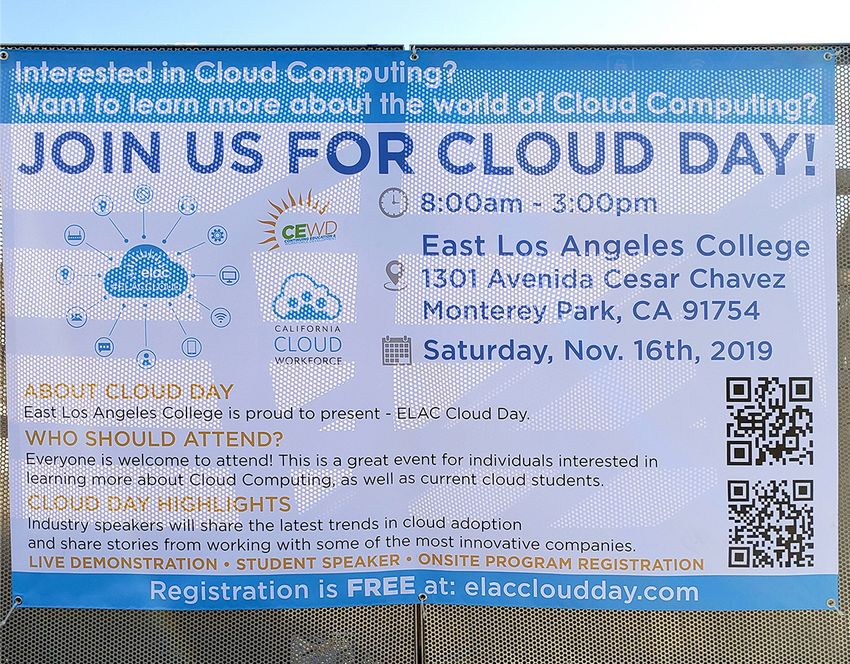
Acknowledgments
    This publication is based on the work of the 19 colleges in the California Cloud Computing Workforce
    Project led by Santa Monica College in partnership with colleagues from Cerritos College, Citrus
    College, Compton College, El Camino College, East Los Angeles College, Glendale Community College,
    Long Beach City College, Los Angeles City College, Los Angeles Harbor College, Los Angeles Mission
    College, Los Angeles Pierce College, Los Angeles Southwest College, Los Angeles Trade-Technical
    College, Los Angeles Valley College, Mt. San Antonio College, Pasadena City College, Rio Hondo
    College, and West Los Angeles College.
    We would like to thank the California Cloud Computing Workforce Project team of Charlotte
    Augenstein, Nancy Cardenas, Salomón Dávila, Koda Kol, Dorothy Phillips, Dr. Patricia Ramos, Munir
    Samplewala, Howard Stahl, and Vicky Seno. We also extend our thanks to the many employers and
    industry partners that supported this project and provided learning opportunities for the cloud
    computing faculty and students. On the Career Ladders Project team, we would like to acknowledge
    the work of Naomi Castro, Luis Chavez, Eder Flores, and Sherry Shojaei. Special thanks to CLP
    consultant Kathleen Schaefer for her support in writing and developing this brief.
    This publication was supported by a grant to Santa Monica College from the Los Angeles Orange
    County Regional Consortium, using California Community Colleges Chancellor’s Office Strong
    Workforce Program funds.

2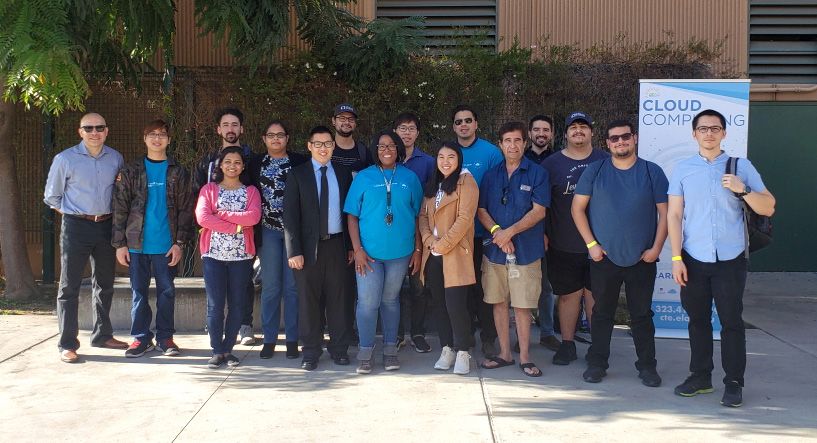
CLP
Introduction
The California Cloud Workforce Project (Cloud Project), a           alignment that is helping businesses to develop local talent
regionally-grown consortium of 19 Los Angeles community             and students to access in-demand jobs. Regional labor
colleges and their partner high schools, launched a new             market data indicates a need to fill over 4,000 jobs requiring
cloud computing program that extends into high school               knowledge of AWS annually, which led the Cloud Project
dual enrollment and culminates in industry certifications           to formulate initial goals of 3,000 annual enrollments with
and employment preparation. The program offers an 18-               600 students reaching employability status upon program
unit Cloud Computing Certificate that is approved as a state        completion.1
program certificate template with credit portable across the        This brief explores how the Cloud Project has engaged with
19 colleges. As part of the initiative, each community college      industry at scale to prepare students for careers in cloud
is partnering with at least one high school in the greater Los      computing. The brief addresses challenges and insights
Angeles area to provide dual enrollment in the cloud courses.       gleaned along the way in the hope that it will inform other
Additionally, the project prepares students to attain Amazon        regional partnerships as they design industry-engaged
Web Services (AWS) certifications. This regional endeavor is        pathways. This brief is a companion piece to Building Careers
funded by California Community College Strong Workforce             in the Cloud: An Effective and Connected Community of
Program, a $248 million annual investment statewide to              Practice, which features insights from the Cloud Project’s
develop a modern workforce.                                         faculty community of practice. Together, these two
The cloud curriculum was initially designed by faculty at Santa     publications highlight lessons learned from this locally-grown,
Monica College in partnership with AWS Educate, a global            sector-based partnership.
Amazon initiative to help students learn the cloud. The project
has broad industry support, leveraging connections with the
Los Angeles Economic Development Corporation, the Center                CAREER LADDERS PROJECT (CLP) collaborates with
for a Competitive Workforce, Amazon Web Services and AWS                community colleges and their partners to build capacity
Educate, as well as Apple, Mission Cloud Services, Onica,               for equity-minded redesign. CLP supports reflection,
Kokomo Solutions, and other tech employers to develop                   documentation, and publication of practitioner tools and
“feedback loops” with industry that inform cloud courses and            policy briefs to support the field and lift up effective and
work-based learning opportunities.                                      systemic reforms. In support of the Cloud Project, CLP
                                                                        designed professional development in response to the needs
The Cloud Project was developed with the goal of building               of the consortium and helped to build partnerships among
a high-quality regional pathway in cloud computing that is              community colleges, high schools, industry, and others—
responsive to industry needs, while providing high school               all with the vision of establishing a high-quality, student-
and college students real-world experiences through work-               centered, and industry-engaged pathway.
based learning. It is a prime example of industry-education

         “Given the wide adoption of cloud technology and high demand for talent in this
         area, employers have been so willing to work with us. They see the value in our
         producing a pipeline of diverse and vibrant talent that is learning the tools and skills
         they use in industry today. Employer engagement has helped keep our program
         current and advised us in the new and emerging things that are developing.”
         — Howard Stahl, department chair, Computer Science and Information Systems, Santa Monica College

                                                                 Building Careers in the Cloud: An Industry-engaged Pathway            1
CLP
    Section One: Meaningful Connections with Industry
    A. INDUSTRY AND WORKFORCE PARTNERS
    The partnership with Amazon and AWS Educate has been                   the LAEDC to convene a regional advisory board for the 19
    instrumental to this endeavor. From the beginning, AWS                 colleges. The LAEDC, through its work in the Center for a
    shared cloud expertise to help shape project curriculum                Competitive Workforce, recruited industry participants to
    and convey technical skills requirements leading to the AWS            serve on the board and facilitated advisory meetings on behalf
    certifications. They provided specialized training around              of this locally-grown, regional initiative.
    the AWS platform through faculty workshops, especially in              The project leadership team built a robust partnership with
    the early days of the project launch. AWS subject matter               Charlotte Augenstein, the Los Angeles Regional Director for
    experts continue to serve as a resource to faculty as questions        Employer Engagement in ICT and Digital Media (California
    emerge. AWS provides access to the AWS Educate platform,2              Community College Strong Workforce Program). As a
    offering Amazon credits for faculty and students at the 19             former Microsoft employee, she connected the work with
    colleges to use AWS services                                                                        the Microsoft Azure platform,
    and tools and build in the cloud                                                                    enriching curriculum content
    (a value of $200 per faculty                                                                        and project activities with
    member and $100 for students                                                                        exposure to Azure cloud
    per year). Faculty at the colleges                                                                  solutions. She brought industry
    have incorporated AWS content                                                                       representatives to regional
    and hands-on learning into their                                                                    Cloud Days (industry guest
    cloud classes according to their                                                                    speakers) and allocated funding
    own needs and preferences.                                                                          to help offset the costs of
    Both AWS and the Center for a                                                                       these events. Innovatively,
    Competitive Workforce support                                                                       the Regional Director shared
    the consortium by hosting                                                                           the AWS DeepRacer app with
    resume and interview workshops                                                                      the project. The app enables
    and mock interviews for                                                                             students to code a racing car
    students tailored to technology                                                                     using their phones in the cloud.
    occupations. Amazon and other                                                                       The consortium was able to use
    industry professionals prepare                                                                      the app as an outreach tool with
    cloud students for the kinds of questions they will face in            regional high school students, engaging their interest in cloud
    interviews for internships or jobs and help students to update         computing through a tangible, hands-on activity. Several
    their resumes. Additionally, AWS Educate hosts an online               colleges have also integrated the app into their courses.
    learning library that the cloud students can access for free           Utilizing these connections, the project has engaged with
    to develop short-term and long-term career plans and learn             industry at a regional scale. Individual college faculty also
    interviewing tips for cloud jobs. Students also have access to         bring industry relationships—cultivated throughout their
    virtual AWS job fairs and the AWS Educate Job Board to find            careers—to the regional effort. For example, cloud faculty
    internships and employment in technology.                              invited representatives from Apple, Mission Cloud Services,
    To support industry-education alignment across the colleges,           Onica, and Kokomo Solutions to speak with students on
    the project forged connections with the Los Angeles                    industry panels during Cloud Days and have leveraged
    Economic Development Corporation (LAEDC), the Center                   connections with these employers and others to offer
    for a Competitive Workforce, and the Los Angeles Regional              internships to students. In this way, the regional cloud
    Directors of Employer Engagement under the Strong                      community of practice is characterized by an organic process
    Workforce Program. The Cloud Project subcontracted with                of give and take—with the project leadership team aligning
                                                                           with industry at a regional scale to bring resources to the
                                                                           colleges and the colleges sharing their connections also with
                                                                           their peers across the consortium.

2                 Building Careers in the Cloud: An Industry-engaged Pathway
CLP
B. EQUITABLE ACCESS TO AWS INDUSTRY CERTIFICATIONS
Innovating the AWS Certification Process                               Addressing Challenges Together
In addition to offering students a college certificate in              AWS certifications are costly which can become a barrier
cloud computing, the Cloud Project prepares students                   for students.3 The California Education code prohibits use of
for industry-recognized certifications. AWS certifications             public funds for stipends to students, which did not allow the
validate cloud expertise, giving employers a more precise              project to directly help students to pay for these certifications.
screening tool to identify qualified talent. Helping students          While the Cloud Project could not distribute stipends directly
to earn the AWS Cloud Practitioner certification and the AWS           to students, taking and passing AWS certifications was a
Solutions Architect-Associate certification is a key goal of the       deliverable of the California Strong Workforce Program grant
Cloud Project.                                                         funding, creating a hurdle for project leadership. The team
Organizing and systematizing the certification process                 came up with a workaround; the Cloud Project established
across the Los Angeles region was a complex undertaking.               a service agreement with Xvoucher, a third-party platform
The project manager for the Cloud Project collaborated with            that helps customers to purchase industry certifications in
regional cloud faculty to design a free and accessible short-          bulk for employees or students and manage the distribution
term, intensive training program or “bootcamp” to prepare              process. The Cloud Project contracted with Xvoucher to issue
students for the Cloud Practitioner (designed for generalists)         discount test vouchers (50% off) to students and capture
or the Solutions Architect-Associate (designed for technical           data for the project on how many students take and pass the
professionals) AWS certification exams. They then designed             AWS certifications. Project leadership recently finalized this
an outreach process that identified students who were ready            contract which will ease the financial burden on students. So
to pursue AWS certifications. Faculty reached out to students          far, the project has issued 100 vouchers through Xvoucher
who were in the final course of the 18-unit cloud certificate          with a 90% pass rate on the certification examinations. The
and shared with them the benefits of the project’s specialized         regional partnership will scale the strategy to serve more
AWS certification bootcamp training. The first Cloud                   students over the coming year. The recent implementation
Practitioner bootcamp was delivered virtually to regional              of 2020 CTEA Perkins federal funding, which includes
students in June 2020, hosted over a three-day period. The             costs associated with industry-recognized certification
first AWS Solutions Architect bootcamp was delivered virtually         examinations as an acceptable use of funds, provides another
in June 2020 and a second Cloud Practitioner bootcamp                  resource to defray these costs for students.
was offered in December 2020. To date, 116
community college students have attended the
certification training and an additional 30 regional        “The cost of industry certifications is a barrier for
cloud students have participated in certification           students. This is an equity issue.”
preparation at the colleges. Student feedback on
the bootcamp experience has been very positive.          — Koda Kol, faculty, Computer Information Systems, El Camino College

The certification training was developed by the
Cloud Project faculty and is taught by the project manager             This workaround was months in the making and required a
who holds multiple advanced AWS certifications. To develop             tremendous amount of effort to complete. Other workforce
and design content for the bootcamps, the project manager              initiatives may bump up against these restrictions as they
collaborated with cloud faculty who have taken and passed              encourage students to pass certifications validated by
the AWS certifications themselves. Together, they pinpointed           industry. One lesson of the Cloud Project is that there needs to
the most critical technical topics to cover in each training and       be a more systemic approach to addressing issues of equitable
also identified test-taking strategies that would help students        access to industry certification where costs are prohibitive for
to successfully complete test questions in the allotted exam           the student and the college alike. A state-level solution would
time. Faculty are encouraged to offer extra credit to students         free colleges and training providers from having to develop
who participate in the training and some faculty allow students        local workarounds and allow colleges to more routinely build
to attend one of the bootcamps and sit for the certification           certifications into their programs. This could be accomplished
exam in lieu of a final class project. This innovation represents      in a number of ways—by reconsidering funding restrictions,
a significant benefit and cost-savings for students. In the open       creating a new funding source for this purpose, or providing
market, AWS certification prep courses can cost upwards of             incentives to industry and third-party certification groups to
$600 which is prohibitive for many students.                           offer the certifications for free or at reduced cost to low-
                                                                       income community college students.

                                                                    Building Careers in the Cloud: An Industry-engaged Pathway              3
CLP
    Section Two: Work-Based Learning Opportunities
    Work-based learning is an educational approach that                    regional career exploration events with industry and is
    connects the classroom to the world of work. Work-based                ramping up the connection to internships and employment
    learning encompasses a range of real-world experiences,                over the next several years. Many students already use
    including industry guest speakers, career fairs, career-related        the AWS Educate job board as well as internship programs
    competitions, job shadowing, mentoring, and internships                available at their college to pursue employment. All these
    among others. It provides a way for students to “test drive” a         opportunities are meant to engage and motivate students,
    career. The Cloud Project is embedding work-based learning             increasing student persistence and completion by making
    into the cloud pathway along a continuum, beginning with               clear the connection to the end goal—careers in technology
    career exploration and culminating in internships with                 and cloud computing.
    industry. As described below, the project has implemented

    A. CLOUD DAYS AND WELCOME DAY
    Santa Monica College hosted the first “Regional Cloud Day”             Cloud Days are popular, with many students attending
    event in November 2018 for students from the 19 community              numerous events. Some students report attending every
    colleges to learn more about cloud computing careers                   single Cloud Day, as the event itself has transformed with
    from industry professionals. The event featured industry               technology changes and project growth over the course of
    panel discussions, breakout sessions led by industry and               implementation.
    faculty leaders, and opportunities for students to network             The Cloud Project also hosted a virtual “Welcome Day” in
    with industry. The 160 students who attended the Regional              August 2020 for students with representation from the 19
    Cloud Day learned how to prepare for                                                          colleges and partner high schools.
    upcoming certifications, interviews,                                                          This virtual orientation and enrollment
    and job applications, in addition to                                                          day included alumni from colleges
    hearing about different career paths                                                          across the region who shared their
    within the cloud computing sector.                                                            experiences in the program and talked
    The individual breakout sessions                                                              about career outcomes resulting from
    focused on specific cloud computing                                                           their participation. College faculty
    platforms and technologies such                                                               facilitated zoom breakout sessions to
    as Amazon Web Services, Alexa                                                                 introduce new students to the core
    Skills, AWS Deep Racer, Big Data                                                              curriculum. Over 100 community
    Technologies, and Machine Learning                                                            college and high school students
    and included mini-hackathons and                                                              attended this outreach event.
    career preparation. Sessions were
    taught by regional faculty and employers, allowing for the             The camaraderie that emerged at these gatherings is a
    presentation of topics typically not covered in college courses        testament to the strength of this community of practice.
    and motivating student collaboration across institutions.              New and returning students alike found it inspiring to see and
                                                                           support each other at the Welcome Day. They discovered
    Project leadership encouraged other colleges to host similar           that a regional community was behind the project, building
    Cloud Day events locally with support from the consortium.             partnerships in support of their success. The Cloud Days and
    East Los Angeles College, El Camino College, and Los Angeles           Welcome Day provided students with a sense of belonging to
    Mission College have all sponsored their own local Cloud               a larger community. Moreover, at the Welcome Day, there was
    Days. After COVID-19 struck, the consortium presented                  never the impression that colleges were in competition with
    a virtual “Regional Cloud Day” in June 2020 as well. The               one another to attract students; rather, there was a feeling
                                                                           of camaraderie and support for one another among the
                                                                           colleges. The California Cloud Workforce Project has built a
                                                                           robust community endowed with a rich feeling of connection.

4                 Building Careers in the Cloud: An Industry-engaged Pathway
CLP
Timeline
2017 2018 2019 2020 2021
Pilot Program Launch Implementation Implementation Program Improvement
Santa Monica College, California Cloud Developing the Outreach to High Schools Scaling Bootcamps,
AWS Educate, and Workforce Project, 19 Community of Practice Work-Based Learning Certification Preparation,
Roosevelt High School Los Angeles Community Collaborating on Open- Events with Industry and Career Readiness
Colleges and High Source Curriculum Activities
School Partners Faculty Professional
Faculty Professional Development Piloting Team
Regional Cloud Day at Development Internship Model
Santa Monica College • Regional Industry
Advisory Board • Regional Industry
Engaging Additional
Advisory Board
Tech Employers • Intersegmental
Professional Development • Virtual Cloud Days
with Los Angeles Unified • Virtual Welcome Day
This timeline represents key events and the focus of each year of School District • Cloud Practitioner
implementation. The Cloud Project works with the colleges and • Virtual Cloud Day and Solutions
partners at their own pace. The initiative reflects a mix of early and Architect Bootcamps
• Virtual Welcome Day
late adopters. The project leadership adapts to the needs of the
• Cloud Practitioner
locally-grown partnership with implementation at different stages
and Solutions
at different colleges.
Architect Bootcamps
Student Profiles
Isabelle Wagenvoord, rising senior Jonathan Aguirre, graduate of
at Santa Monica High School Los Angeles Mission College
Isabelle was interested in Jonathan was pursuing a degree in
programming and saw an cybersecurity at Los Angeles Mission College
announcement from her high school when he saw a flyer for the cloud computing
counselor about the cloud computing program. He decided to take the AWS
program at Santa Monica College. courses to complement the skills he was
Isabelle took her first college cloud learning in his cybersecurity classes.
computing class as a high school sophomore through a Jonathan fell in love with cloud system infrastructure and ended
dual enrollment partnership between her high school and up completing the 18-unit cloud certificate, in addition to earning
Santa Monica College. After the introductory course, she an associate degree in cybersecurity. He believes both programs
was motivated to complete the rest of the cloud computing in tandem strengthened his knowledge of computing fields. Near
certificate courses. Isabelle is now an intern at Kokomo the end of his coursework, Jonathan also completed the program’s
Solutions, an innovative start-up that helps companies and certification bootcamp to prepare for the AWS Cloud Practitioner
organizations to manage unexpected events through cloud exam which he successfully passed. Jonathan utilized the
technologies. Isabelle is excited about her career prospects partnership with AWS Educate to prepare for and line up interviews
given her early success obtaining employment as a result of in his field. With the cloud certificate, an associate degree, and the
the cloud courses. Ultimately, she hopes to earn a four-year AWS Cloud Practitioner certification under his belt, Jonathan is
degree in computer science or a related field. ready to launch a career in cloud computing.
Building Careers in the Cloud: An Industry-engaged Pathway 5CLP
B. A PURPOSEFUL WORK-BASED LEARNING INFRASTRUCTURE
The regional partnership has designed a supportive job readiness, while also accelerating involvement from other
infrastructure for student onboarding across the region, campus departments in the cloud endeavor. The program will
including access to work-based learning experiences. The roll out this added career readiness infrastructure next year.
project utilizes an employment background survey that The Cloud Project is similarly ramping up connections
students fill out as they enroll in the cloud classes. The survey to internships, keeping in mind some of the challenges
provides entry into a regional listserv that is used to blast out associated with scaling internship models. Student internships
information regarding AWS certifications, virtual job fairs, can be time consuming for employers to manage. Some
and employment opportunities. Faculty are encouraged to faculty are hesitant to approach industry as student internships
incorporate the survey into their classes as an assignment or seem like a big ask. Many of the cloud students are obtaining
for extra credit. The survey is also a tool for the program to internships already, but these do tend to be students who are
capture information on student backgrounds as they enter already highly prepared and ready for employment. To scale
the program and to assess student interest in internships access to real-world experiences for all students, the Cloud
and jobs. Project leadership uses this data to inform regional Project has proposed a regional “team internship” model. This
planning, continually evaluating how the Cloud Project component is designed as an experiential learning activity
can best support students as they pursue employment that can be incorporated into the cloud certificate program
opportunities. This regional data system is used for project as a class project or capstone course. The Cloud Project plans
dashboards for stakeholder communication, tracking to recruit employers who have a specific business challenge
practitioner relevant metrics. This was achieved outside the and offer the opportunity for a team of cloud students,
local college institutional research offices. mentored by faculty, to develop solutions to the business
As noted, AWS and industry professionals volunteer their challenge. Cloud faculty will manage the business relationship
time to conduct mock interviews and resume critiques for the and negotiate the right scope for the project given student
cloud students. To qualify for the Amazon mock interviews, abilities and semester timelines. It is a value-added proposition
students must first attend two AWS webinars addressing how for employers and provides a realistic learning opportunity for
to write a resume for the tech sector and interview tips for students that can enhance their employability. The concept
cloud jobs. To date, 100 regional students have attended the will be piloted over the next two years.
webinars and 35 have chosen to participate in the
one-on-one interviews. The project will increase
student participation in these activities over the Cloud Project Career Readiness Innovation
next several years using a team internship design • Online student onboarding to • Mock interviews with industry
modeled after the California Community College connect students to regional professionals preceded by interview
(CCC) Maker Initiative.4 resources and employment and resume preparation activities
information
With feedback from employer partners, project • A “team internship” model built
leadership discovered that many students are • Continual feedback from students into capstone courses that engages
to inform planning via embedded students in addressing specific
not adequately prepared for the one-on-one student surveys business challenges faced by
interviews. The numbers also reveal that many local employers
students self-select out of the interview process
entirely, likely because students need more
support to feel confident about approaching a professional The team internship idea is a highly scalable model that can
interview. To address this gap, the Cloud Project plans to be incorporated into the existing cloud courses across the
redesign this component of the regional project to further region. It empowers faculty by giving them something tangible
validate and support student readiness for employment. to offer employers that is value added. Students with a range
Over the next year, the project manager will reach out to of skill levels can gain a real-world learning experience that
career specialists at each campus to engage them in the includes meaningful collaboration with their peers. Embedding
process. The plan is to have career center professionals on the team internship in a capstone project will enable faculty to
each campus facilitate participation in the AWS webinars, observe student work behaviors in a sheltered environment
work with students on their resumes, and conduct their own where students can be mentored both technically and for
mock interviews—all before students interview with industry work readiness. The Cloud Project is developing a thoughtfully
representatives. This will help the colleges to validate student designed infrastructure for bringing industry and students
together using this scalable model inspired by CCC Maker.
6 Building Careers in the Cloud: An Industry-engaged PathwayCLP
Section Three: Lessons Learned
A. INSIGHTS
As project leadership reflects on this growing body of work, • Incentivize faculty. The Cloud Project provided
several early lessons emerge. These insights include: specialized training to high school and college faculty
• Engage with industry at scale. Implementing project around the AWS platform and cloud technologies. Many
activities at regional scale was critical to the cloud faculty pursued their own AWS certifications following
partnership. The project found that tech employers were the regional training. The access to cloud professionals
more likely to participate in an event, like Cloud Day, where as well as the AWS platform was invaluable for faculty.
they could reach students from 19 colleges versus an event These opportunities enriched course content, while
with a single institution. Employers are busy and it is more providing a highly sought-after opportunity for faculty to
feasible for industry partners to engage when multiple advance their knowledge of in-demand technologies. As
colleges are in attendance. Similarly, hosting multiple a result, faculty were extremely motivated to participate
employers at regional events maximizes exposure to in the project. Likewise, the initiative demonstrated
potential job opportunities for students. a strong student and labor market demand for cloud
computing education which was another motivator
• Build trust with employers over time. Employers need for faculty. Colleges and consortiums pursuing similar
time to get to know the community college student efforts can consider a range of strategies to incentivize
population and see for themselves what community faculty such as: access to industry expertise, training,
college students (including dual enrollment students) and certifications; additional professional development
can do. The Cloud Project sees the benefit of starting resources; compensation for additional responsibilities;
with low-engagement activities like career fairs or or demonstrating high student and industry demand for
guest speakers (Cloud Days) to introduce employers to programming from the onset.
community college students. Then over time, colleges
can ramp up relationships with industry to include high-
engagement activities, such as experiential learning or
internship models.
Building Careers in the Cloud: An Industry-engaged Pathway 7CLP
• Use customized project branding to attract students • Invest in a project team for planning and empower a
and employers. Working as a regional partnership, the project manager. The implementation of new college
leadership team defined a regional “brand” or identity for programs and methods requires a change management
the locally-grown initiative. The team promoted all of the approach to build trust across colleges. Developing
colleges in the region participating in the cloud computing stakeholder engagement and establishing methods to
endeavor. This strategy helped to attract employers as well communicate across colleges was necessary to build
as students to the project. Students appreciated being a capacity. This required careful planning and execution
part of a regional program deeply engaged with industry. coordinated by a designated project manager using
Cloud technology is such an attractive industry sector practices familiar to industry.5
that students from varied backgrounds are coming to • Expect the collaborative approach to unleash creative
the colleges for access to cloud careers, including career solutions. The purposeful collaboration between college
changers (7%) and those without any background in and industry partners that characterized this project
information technology (62%). The project found that over led to several innovations that may not have emerged
forty percent (42.5%) of students came to the program otherwise. The partners addressed challenges together
with bachelor’s and master’s degrees looking to upskill or and crafted student-centered solutions that hold promise
change careers. About half of the students with college for building a diverse cloud workforce. These include: a
credentials held degrees from non-technical fields. supportive process to onboard students and set them up
Further, to ensure that students without college credentials for success in cloud careers; addressing challenges to help
had access to the cloud computing pathway, the project students attain industry certifications; and a thoughtful
team focused more on building relationships with partner work-based learning infrastructure including an innovative
high schools with the explicit intention of reaching out to “team internship” model designed to expand access
students who might not otherwise be included in STEM to experiential learning. These innovations were made
fields. The regional nature of the initiative—and the possible because of regional collaboration. One early
involvement of an industry leader like AWS—legitimized lesson from the Cloud Project is that creative solutions
the project and helped to reach a broad population of happen when colleges and industry partners think at scale
students with varied experiences and backgrounds. and work together as a region.
Conclusion
The California Cloud Workforce Project has developed an industry-engaged pathway that benefits
both cloud employers and students interested in learning the cloud. The Los Angeles endeavor
is building a regional pipeline of students with cloud knowledge to fill jobs in a growing sector
that currently has a limited supply of qualified candidates. Employers, students, and faculty are all
motivated to participate in the project because it offers rich, real-world learning experiences that
prepare students for high-paying, quality jobs that need to be filled right now and that promise
growth opportunities in the future.
The project is a testament to the old adage that there is strength in numbers. The regional scale of
the initiative has enabled the colleges to engage industry leaders in the cloud space, attract students
with diverse experiences and backgrounds, craft innovative workforce solutions, and build a large,
yet connected community of learners with shared interests and goals. Collaborative models like the
California Cloud Workforce Project signal a new approach to career-focused education. By scaling
regional planning and work-based learning resources, the project is building a comprehensive
regional cloud computing pathway, deeply informed by employers and clearly focused on
student success.
8 Building Careers in the Cloud: An Industry-engaged PathwayCLP
Endnotes
1 Centers of Excellence. (2018, September). Cloud computing-Amazon Web Services (AWS),
Los Angeles and Orange Counties. http://www.coeccc.net
2 The AWS Educate platform includes access to AWS content, training, pathways, AWS ser-
vices, and the AWS Educate Job Board with employment opportunities for students. Educa-
tors can access AWS services, launch virtual classrooms, and use tools to help students learn
the cloud.
3 The AWS Cloud Practitioner certification exam costs $100 to take and the AWS Solutions
Architect-Associate exam costs $150. Professional-level and specialty exams are $300.
4 The CCC Maker Initiative is a California Community College statewide endeavor funded
under the Doing What Matters for Jobs and the Economy framework. The project is building
a community of college makerspaces that welcome non-traditional students, support faculty
to embed “making” into instruction, and partner with businesses to prepare students for
STEM/STEAM careers. CCC Maker is piloting a new cohort-based internship model at several
CCC Maker colleges. The college makerspace partners with business leaders to pose business
challenges to students that they explore as a cohort and potentially solve in group learning
sessions. California Community Colleges CCC Maker. https://cccmaker.com
5 Such as methods endorsed by the Project Management Institute. https://www.pmi.org
Building Careers in the Cloud: An Industry-engaged Pathway 9Career
Ladders
Project
Career Ladders Project promotes equity-minded community
college redesign. We collaborate with colleges and their part-
ners to discover, develop, and disseminate effective practices.
Our policy work, research, and direct efforts with colleges lead
to system change—and enable more students to attain certifi-
cates, degrees, transfers, and career advancement.
678 13th Street | Oakland, CA 94612
www.careerladdersproject.org | Twitter: @clporgYou can also read


