CURRICULUM PLAN 2021 - Chisholm Catholic College
←
→
Page content transcription
If your browser does not render page correctly, please read the page content below
CURRICULUM PLAN
2021
Part A - School Profile and Background
Chisholm Catholic College is a co-educational secondary College with approximately 1700
students from Years 7 to 12. The College serves the many surrounding Catholic Parishes
and was established in 1989 as a result of the amalgamation of two historic schools run by
the Christian Brothers and the Dominican Sisters. The heart of the College mission is to
nurture the formation of the full humanity of the individual student as reflected in the College
Motto - 'Grow in Christ'.
The formation of Chisholm Catholic College through this joint charism originated largely
through the connection and identification with Caroline Chisholm and her outstanding work
and legacy in regard to assisting migrant families and particularly women and children in
establishing educational opportunities in the early years of Australian settlement.
Striving for excellence permeates all facets of College life and our focus is constantly
seeking to engage our students for improvement. A comprehensive curriculum program
structured at various levels is offered across Learning Areas. Extensive resources and input
is provided in focussed ways towards Literacy, Numeracy, Sciences, Humanities, the Arts,
Languages (French, Italian and Mandarin), Technology and Enterprise and Health and
Physical Education. Differentiated approaches and targeted programmes in Learning
Support for students with learning difficulties as well as students who are gifted and talented
adds to the depth of the learning experience. Senior students have the opportunity to tertiary
entrance, certificate programmes, vocational and on the job training programs. A full and
diverse range of co-curricular programs, featuring interschool sport, music and drama,
educational competitions and extension programmes is supported throughout the College
calendar.

Student background

Index of Community Socio- Educational Advantage (ICSEA)

       School ICSEA value – 1070 (Average ICSEA value – 1000)

The distribution of students across the various cohorts indicates slightly larger groups in the
junior section of the school with natural attrition contributing to lower senior school cohort
sizes.
 Year group (2020)      No. of students        ATSI             LBOTE               SWD
 Year 7                       305               4                  6                 18
 Year 8                       295               2                 22                 23
 Year 9                       293               3                 20                 23
 Year 10                      288               3                 17                 19
 Year 11                      257               3                 21                 17
 Year 12                      236               1                 20                 12

Demographically our enrolment caters for families across a broad regional area with 9 main
contributing Catholic primary schools. Enrolment enquiries come from others wider than that
but a stated priority to give preference for our Catholic students in schools in our proximity
means it is difficult to accommodate those applications and our advice is to consider other
Catholic secondary alternatives.

                                               2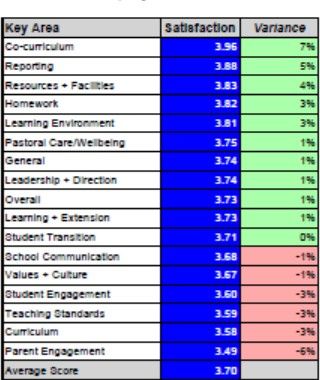
Part B - Curriculum
Chisholm Catholic College's Educational programs are developed in accordance with the
guidelines provided by the Bishops of WA (Religious Education) and School Curriculum and
Standards Authority (SCSA).
The College’s Curriculum planning accounts for the needs of all students and recognises
that each student is developing and achieving in different ways.

Implementation of Religious Education Curriculum
The Religious Education Program is fully implemented across Years 7 -12 in accordance
with Catholic Education Western Australia’s policies and curriculum as developed by the
Western Australian Bishops.
On average, the time allocation for teaching Religious Education in Years 7-10 is 165
minutes a week. In Years 11 and 12 where it is studied as Religion and Life (ATAR or
General), it is studied for an average of 270 minutes per week.
In addition to the hours of instruction, Liturgies, Year based retreats, and Christian Service
Learning (Chisholm Care) are provided for students. These activities of catechesis are
separate from the Religious Education program and are not part of the time allocation.
Teachers of Religious Education have the necessary accreditation stipulated by the CECWA
Accreditation policy.
Appropriate professional development is provided (includes the knowledge and faith
components of Accreditation and renewal) for teachers of Religious Education.

Teaching, Assessing and Reporting Policy Standards
Chisholm Catholic College implements the Pre-Primary to Year 10 Western Australian
Curriculum and Assessment Outline to meet the learning needs of all students and in
accordance with:
   •   The policy standards for Pre-primary to Year 10: Teaching, Assessing and Reporting
   •   The principles of Learning, Teaching and Assessment detailed within the Outline.

While the Curriculum and Assessment Outline provides mandated Learning Area content it
is the underlying principles of Teaching, Learning and Assessment that has guided the
planning of learning experiences for students in Year 7 - 10 and the professional
development of staff. Learning that encourages creative and critical thinking skills in
students that will allow them to be lifelong learners has been a focus for staff within
the College.
Link: https://k10outline.scsa.wa.edu.au/home

Reporting
Chisholm Catholic College reports to parents and guardians on student achievements
formally three times per year. Academic reporting for Year 7 to Year 10 students is in
accordance with the Western Australian achievement standards. Academic reporting for

                                               3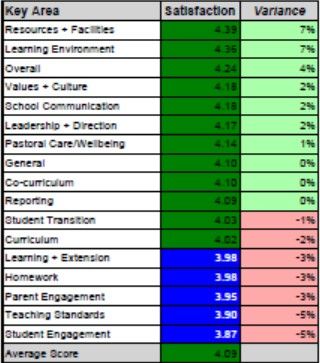
Years 11 and 12 students is based on the Western Australian Certificate of Education. The
College ensures that reports:
(a)       are readily understandable to those responsible for the student.
(b)       give an accurate and objective assessment of the student's progress and
          achievement:
          (i) in terms of the grades A, B, C, D and E
          (ii) in relation to the performance of the student's peer group.
(c)       include an assessment of the student's achievement in terms of the Western
          Australian achievement standards
(d)       include information about the student's attitude, behaviour and effort
Link: https://k10outline.scsa.wa.edu.au/    data/assets/pdf_file/0004/321754/2016-41979-Reporting-
          Pre-primary-to-Year-10-2016.pdf

Curriculum Planning
Our curriculum planning aims to provide quality educational experiences in order to meet the
individual needs of all of our pupils. This includes students being on a modified program
through a Curriculum Adjustment Plan (CAP) / Individual Education Plan (IEP). The Learning
Support Coordinator, in conjunction with other student support staff, develop the student’s
CAP / IEP which provides teachers with an explanation of the particular diagnosis and the
functional impact it can have on the student. Chisholm is continuing to expand the Learning
Support program which provides additional assistance to students with specific needs both
at an enrichment support level and through to an accelerated/extension level.
Individualisation of students’ learning is an important element of the curriculum offered at
Chisholm Catholic College to ensure that students are engaged, challenged and motivated.
The College has differing levels of streaming for Religious Education, English, HaSS,
Mathematics and Science in Years 7 to 10. As reported earlier, the College academic report
provides:

      •    the course grade achieved for the specific content and skills that are taught and
           assessed in the streamed class.
      •     a grade based on the standards set by SCSA in the Western Australian Curriculum
           and Assessment Outline
The College also offers a Gifted and Talented program (Stellatus) for Year 7, 8 and 9
students. Students with high academic potential are invited to join Stellatus where they take
part in a variety of cross-curricula projects and challenges, outside of the normal school
curriculum. Stellatus is a timetabled class. To identify Gifted and Talented students, a variety
of processes are used, including:

      •    Standardised tests e.g. ACER General Ability Tests (AGAT)
      •    NAPLAN results;
      •    School reports; and
      •    Teacher referral.
With parents being their child's primary educators, it is imperative that the College
communicates effectively with parents, beyond the formal reporting process to ensure that
they are fully informed about the curriculum and how their child is progressing. There are a
variety of communication processes implemented at the College including, but not limited to:
      •    Provision of all course outlines and assessment outlines through the Parent Portal
      •    Student-Parent-Teacher meetings
      •    Information sessions around teaching and learning priorities
                                                   4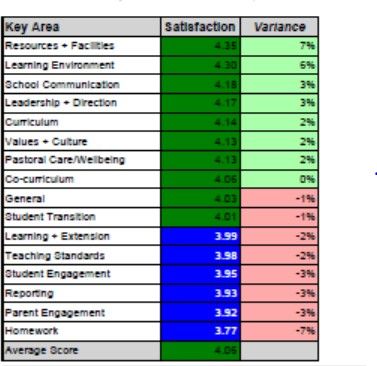
•    Support for students identified at educational risk
   •    Other interviews or meeting opportunities initiated by the College
   •    The College responds with due consideration for requests from parents for additional
        information.
   •    Telephone discussions and email communication occurs between parents and
        teachers.

Western Australian Certificate of Education
At Chisholm Catholic College all students enrolled in Years 11 and 12 are provided with the
opportunity to achieve their Western Australian Certificate of Education (WACE).
Achievement of a WACE signifies that a student has successfully met the breadth and depth
standard, the achievement standard and the literacy and numeracy standard in their senior
secondary schooling. The Curriculum in Years 11 and 12 at Chisholm Catholic College
caters for students who are university-bound, have a specific vocation in mind involving
further education and training or are planning to enter the workforce on leaving school. The
College offers a wide range of education and training courses and programs.
The College caters for differences in interests and rates of learning. Chisholm currently
offers a variety of courses being: ATAR, General, Vocational Education and Training (VET)
and Endorsed Programs. Students are also offered the opportunity to undertake Workplace
Learning which can be endorsed towards their WACE achievement. Chisholm Care
(Christian Service Learning) hours accumulated by students over Years 10, 11 and 12 are
also reported to SCSA who records this information on the students’ Western Australian
Statement of Student Achievement (WASSA).
Link:
https://senior-secondary.scsa.wa.edu.au/   data/assets/pdf_file/0015/338100/Your-Guide-to-the-
WASSA-WACE-and-ATAR-2018.PDF

Part C – Child Abuse Prevention
All staff will be completing the CEWA online Mandatory Reporting Training through Claned.
It is anticipated staff will have completed this training by the end of Term 1, 2021. In addition
to Mandatory Reporting laws, the school has Staff and Student Codes of Conduct in place to
ensure students’ safety at and out of school during school-related activities. A Parent Code
of Conduct is currently being developed. The College continues to use the Consent2Go
program for all school-related activities, and this has ensured that Risk Management
procedures are followed in the planning and at the time of activities. New staff to the College
in 2021 will receive CEWA training in regards to the Keeping Safe: Child Protection
Curriculum and also through learning area, Academic Council and Pastoral Care Meetings
where the KS:CPC is a regular agenda item.
Chisholm Catholic College has implemented the Keeping Safe: Child Protection Curriculum
(KS:CPC) since 2019. This is a whole school implementation, both within learning areas
and as an integral component of each year groups’ Pastoral Care Period (PCP)
Programme. The KS:CPC has been mapped to be age and developmentally appropriate for
students in all year groups and adheres to the Catholic Teachings. Online safety is a focus
in many years, not only with the KS;CPC, but also within the Information Technology
programmes and with guests such as Mr. Paul Litherland running student, parent and staff
sessions around e-safety education. Each learning area has reviewed all Teaching and
Learning Programmes from Years 7 to 12 and identified clear, explicit links to current

                                                5
syllabus content and the KS:CPC. This has been mapped for the whole school and Focus
Areas and/or Topics not addressed in learning areas have been embedded into the PCP
Programme. All teaching staff have access to the Global Edition of the KS:CPC Resource
documents to assist teachers with lesson planning to ensure core content is delivered, using
appropriate strategies and resources, ensuring that the delivery is explicit for the students to
identify practical self-protective skills and strategies. The collegial nature of lesson
preparation amongst teaching staff and their pro-activeness in consulting experts such as IT
and counselling staff for some topics has exceeded expectations and has ensured a
proactive, positive and effective implementation to date.
At the Parent Information Evenings, the Heads of Year include information regarding the
delivery of the KS:CPC in learning areas and PCP Programmes for their child, detailing the
skills and strategies presented and the reasoning and context. The CEWA Parent Flyer is
also available for Parents. A College Newsletter item is also included early at the start of the
2021 school year, to inform parents of the ongoing delivery of the KS:CPC Programme at
the College with their children.
Links: CECWA Child Protection Policy and Child Safe Framework Website
Part D – Governing Body Accountability
Chisholm Catholic College’s Strategic Plan encompasses broad strategic objectives for the
forthcoming five-year period and within that a School Improvement Plan that seeks to review
and focus on specific aspects of improvement.
In alignment with our system’s Strategic Directions, the College Leadership and its Advisory
Council, look to secure the future of this excellent educational community by identifying clear
areas of focus and intent, in regard to planning. This requires the College to have effective
strategic management and financial oversight combined with clear shared vision and
educational leadership in its approach towards quality Secondary Education. Chisholm has
recently engaged new architects who are in the process of developing a College Master
Plan. All College stakeholders have provided input so that improved teaching and learning
facilities will continue to provide a quality education.
As stated in the Bishop’s Mandate, Chisholm’s Evangelisation Plan provides the community
a means through which the ‘Church proclaims the Gospel of Jesus Christ, or evangelises in
the world today’.
The Evangelisation Plan is at the core of what we do as a College. ‘How we WORSHIP
(diverse liturgical opportunities) reflects what we BELIEVE (promote Religious Education as
the first Learning Area and integrate the Catholic curriculum) and determines how we LIVE
(witness the presence of God through Chisholm Care and charitable efforts).
Key areas of focus for Curriculum Learning Areas in 2021:
• Having implemented SEQTA last year, 2021 is a year for teachers to consolidate and
expand their use of this Learning Management System.
• Increased awareness and capacity to implement and deliver the KS Child Protection
Curriculum, relay the importance and necessity of this program to parents and
community.
• Partnering with external bodies to trial recent research and development.
6• Continue the use of learning intentions to ensure students’ lessons have visual
clarity, i.e. the following questions displayed in learning spaces:
• What am I going to learn?
• How will I learn it?
• Do I understand?
• Extend LA formal moderation processes that will provide enhanced comparability
when judging assessments.
• Adapt existing programs involved with physical literacy to ensure movement skills of
greater complexity can be mastered.
• Partner with reputable online education providers to provide quality online material.
• Establish a ‘Kitchen Garden’ programme with a view to introduce students to a world
of whole foods and sustainability.
• Highlight our school values of character, learning and compassion by working
towards four specific teaching/learning foci(4P’s):
• Prioritising the importance of relationships and communication
• Promoting excellence and building success.
• Planning / procedures that recognises the importance of our learning
environment.
• Propagate our Evangelisation Plan: “How we worship, reflects what we
believe and determines how we live”.
• Permit students to take more risks in producing practical pieces of work.
• Focus on Creative Writing by maintaining a vigilance on Reading, by emphasising
how to craft good characters and settings. It is anticipated that students will improve
their imaginative writing, their use of language and ability to engage an audience.
• Learning Support & Specialist Programmes
• Education Assistants will continue to support students not only in Enrichment
classes, but also other students who struggle with organisational skills.
Further streamlining of this support will cater for students who are high
functioning. This support will be offered on a 1-1 basis within the mainstream
classes
• Introduction of the ACCESS programme for Year 11 students who require
support across the curriculum in Literacy and Numeracy. Students will also
complete a Certificate II in General Education.
• For students with specific Learning Difficulties, testing facilities to cater for
additional time arrangements which mirror the arrangements granted during
examinations and later on as provided by the Schools Reporting Authority will
be provided.
• Meet earlier in the year with the CEWA consultant in respect of students with
a disability to assess the level of need and network early with parents in
consultation with the Consultant for disabilities.
• Increase the emphasis on “soft” career skills so students are more effectively
equipped for existing and rapidly evolving workplace trends.
• Further embracement of Project Based Learning as a vehicle for teaching and
assessing the General Capabilities (ie – 21st Century Skills) to Lower School (Years
7-10) students. Teachers will continue to develop their skills to more overtly and
better teach these skills.
• Teachers will continue to upgrade their ICT capabilities and practice as defined by
the AITSL standards. A focus will be around active digital and face to face
collaboration on projects with an entrepreneurial community aware perspective.
• Review Teaching and Learning programmes, particularly in lower school practical
subjects, to better align them with the outcomes and standards expected in Years 11
7and 12. It is anticipated this will provide a better transition for students to continue
studying the respective subject.
• Consolidate work done on the Curtin UniReady program.
• Provide opportunities for students to participate in external events/competitions.
• Improve teaching and learning by continuing to explore and integrate into students’
learning the six global competencies:
• Character
• Citizenship
• Collaboration
• Communication
• Creativity
• Critical Thinking
• Continue to explore relevant material that will enhance the PC period to ensure the
effective delivery of wellbeing and pastoral opportunities.
• Further Peer Coaching and collaboration for teaching staff in innovative classroom
strategies and pedagogy. This will involve:
• ‘learning walks’ which are designed to complement the staff formation and
development framework.
• providing effective feedback for teachers to actively reflect on their own
teaching ability through peer, student or self-evaluation.
• PL opportunities for staff to demonstrate and share enhanced practices (eg. staff
meetings and workshops)
• Continuation of a Staff Professional Reading portal to provide an opportunity to keep
abreast of emerging knowledge about teaching and learning. Staff will be
encouraged to critique the articles at Learning Area meetings.
• In line with the system’s strategic priority to provide greater opportunities for
indigenous students and families, Chisholm will commit to exploring new approaches
to increasing Aboriginal enrolment. Staff will work with the Aboriginal Education
Improvement Map (AEIM) to continue developing the Aboriginal Education Plan.
• Student self-evaluation as a means to measure success against criteria to help
students identify what they know, where they need to be and how to get there in their
learning.
• Continue to emphasise the College’s core values: CHARACTER – LEARNING
- COMPASSION
Aboriginal Education
Chisholm Catholic College is committed to the CEWA “Transforming Lives: Strategy 2025”
and creating an inclusive and outstanding learning environment for young Aboriginal people
and their families. The Aboriginal Education Team strive to ensure Aboriginal students have
equitable access and participation in the Catholic schooling process, and every opportunity
to achieve educational outcomes equal to that of their non-Aboriginal peers. In addition,
Aboriginal Education also incorporates teaching non-Aboriginal students about Aboriginal
culture, history and language and creating wider community relationships.
Our Reconciliation Action Plan outlines a variety of opportunities for engagement throughout
2021, through which we aim to improve educational outcomes for our Aboriginal students
and increase Aboriginal perspectives and cultural awareness amongst all staff and students.
We also aim this year to extend our connections with local primary schools and the
Aboriginal community.
8Our Aboriginal students have Personalised Learning Plans, weekly catch-ups in Aboriginal
PCG and at other times as required, and an incursion or workshop each term. Our
Aboriginal Liaison Officer, in conjunction with our Careers Counsellor, will be guiding our
Aboriginal students with their future academic pathways and opportunities.
•
Part E – Standard of Education
Chisholm uses a variety of tools and measures to assess and evaluate its ongoing
performance. Strategic planning is an important and necessary process that provides an
ongoing sequence of goals for improvement that is supported by a shared vision.
Each year Chisholm completes a comprehensive review of student performance in BRLA,
NAPLAN, OLNA and WACE and other specific assessment instruments. Chisholm offers a
rich Catholic education by offering an exceptional range of learning and development
opportunities.
Part F – Data Analysis
Chisholm Catholic College adopts a variety of processes and procedures to ensure that
student data is analysed and appropriate actions taken. The make-up and delivery of the
Curriculum at Chisholm is greatly influenced by the analysis of student data and results.
Chisholm uses BRLA, MYAT, NAPLAN, OLNA, ACER, WACE and VET results to reflect on
current practice and inform decision making. The Vice Principal – Teaching & Learning,
Deputy Principal – Excellence, Heads of Learning Area and the College Executive conduct
much analysis and discussion to identify trends, points of celebration and areas for further
development. Individual teachers are increasingly exposed to data as a basis for decision
making.
Achievement data is used in the allocation of classes and to inform the process of streaming
(Years 7 to 10) in subjects such as Religious Education, Mathematics, English, HaSS and
Science. The development and delivery of the Curriculum is heavily influenced by the
analysis of student data. One example is the adoption of procedures and actions to provide
students who sit OLNA with additional support and assistance outside of dedicated
mainstream classes.
Heads of Learning Area are required to present an annual report to the College Principal
which incorporates some analysis of student data such as NAPLAN or WACE results. The
Vice Principal — Teaching & Learning presents an annual report of the WACE results to all
staff and the College community. The Year 12 WACE results are analysed by the Principal,
Vice Principal — Teaching & Learning and Heads of Learning Area. The Principal and Vice
Principals liaise with each Head of Learning Area about the WACE results pertaining to
specific subjects, the conclusions that can be drawn and the possible improvements that can
be made. Time is spent with each Head of Learning Area establishing strategies to improve
outcomes for students within each Learning Area.
The College provides a Learning Support program that provides additional enrichment
assistance to students with specific needs. This includes, but is not limited to, students being
withdrawn from a particular class to work with an EA targeting specific learning aspects or an
EA providing supplementary support to a class teacher.
9The College conducts Parent and Student surveys. Chisholm Catholic College enjoys an
excellent reputation and record as a quality Catholic secondary school. This judgement is
not only made based on strong academic performances but also on the myriad of
opportunities in which our students are able to demonstrate excellence.
BRLA
CEWA decided not to proceed with The Bishops’ Religious Literacy Assessment (BRLA) in
2020 due to the impact of COVID-19. The 2019 data is included here.
BRLA – 2019
Calendar Year Chisholm Mean CEWA Mean
2012 554 530
2013 576 532
2014 573 544
2015 556 538
2016 563 535
2017 560 537
2018 564 539
2019 561 548
Table 1
Figure 1
The above results demonstrate a consistent higher BRLA mean score achieved by Year 9
Chisholm Catholic College students compared to the mean score for CEWA schools. While
Chisholm’s BRLA scores have been consistently higher since 2012, the College’s 2019
results indicate a reduced difference when compared to other CEWA schools. Interestingly
this downward trend for BRLA is also evident in the same cohort’s Year 7 and Year 9
NAPLAN results for Writing and Grammar.
10NAPLAN
The Education Council of Australia decided not to proceed with NAPLAN in 2020 due to the
impact of COVID-19. The 2019 data is included here.
NAPLAN testing informs student progress and achievement. It provides the college the
opportunity to target key areas of learning. Chisholm ensures it annually strives to maintain
its standing of high aspirations and excellence for all students.
The tables below for Year 7 and Year 9 NAPLAN Mean Scores show Chisholm students
have performed better across all domains when compared to the Mean Scores for CEWA,
State and National schools.
Year 7 2019 - Mean Score Comparison
Chisholm CEWA State National
Numeracy 586 567 556 554
Grammar 574 551 540 542
Spelling 579 555 546 546
Writing 545 527 514 513
Reading 570 556 544 546
Table 2
Year 9 2019 - Mean Score Comparison
Chisholm CEWA State National
Numeracy 628 608 599 592
Grammar 607 587 576 573
Spelling 612 594 584 582
Writing 584 576 557 549
Reading 612 598 587 580
Table 3
Figure 2 below, which clearly shows that students’ results at Chisholm have constantly
improved over time in all domains but one (Year 9 Writing), is further evidence that the
programs and strategies implemented are producing rewards. The results in the Writing
domain have been identified by the College’s Academic Council as a point of emphasis in
curriculum planning.
11Historical Year 7 and Year 9 NAPLAN data
Figure 2
Year 9 NAPLAN Numeracy – Proficiency Bands
Band 5 Band 6 Band 7 Band 8 Band 9 Band 10
Chisholm 0.00% 3.10% 15.60% 34.70% 34.70% 11.90%
Y9 Numeracy: % Students achieved > Band 8
100.00%
81.30%
80.00% 67.00% 63.60%
60.00% 53.10%
37.00%
40.00%
20.00%
0.00%
> Band 8
Chisholm CEWA WA Australia Similar Schools
12Year 9 NAPLAN Writing – Proficiency Bands
Band 5 Band 6 Band 7 Band 8 Band 9 Band 10
Chisholm 1.70% 13.30% 29.90% 39.50% 14.30% 1.40%
Y9 Writing: % Students achieved > Band 8
80.00%
55.20% 58.50%
60.00% 50.40% 46.00%
40.00% 33.20%
20.00%
0.00%
> Band 8
Chisholm CEWA WA Australia Similar Schools
Year 9 NAPLAN Reading – Proficiency Bands
Band 5 Band 6 Band 7 Band 8 Band 9 Band 10
Chisholm 0.30% 3.10% 20.40% 46.90% 24.10% 5.10%
Y9 Reading: % Students achieved > Band 8
76.10%
80.00%
63.60% 60.90%
60.00% 52.60% 50.30%
40.00%
20.00%
0.00%
> Band 8
Chisholm CEWA WA Australia Similar Schools
Figure 3
Student progress from Year 7 (2017) to Year 9 (2019) compared to ‘National’ schools
(Figure 4) shows that students have made significantly greater progress in all domains. The
data also shows that in three domains, Grammar & Punctuation, Numeracy and Writing,
there is a very small gap between the Chisholm Year 7 score and the National Year 9 score.
This scenario presented a good foundation for a significant number of the Year 9 student
cohort to achieve Band 8 or higher (Figure 3) across the three components that students
need to satisfy the Literacy and Numeracy requirement for WACE.
13Chisholm NAPLAN Scores Year 7 National NAPLAN Scores Year 7
2017 to Year 9 2019 2017 to Year 9 2019
640 640
620 Grammar & 620 Grammar &
Punctuation Punctuation
600 600
NAPLAN Score
NAPLAN Score
Numeracy Numeracy
580 580
560 Reading Reading
560
540 Spelling 540 Spelling
520 520
Writing Writing
500 500
YEAR 7 - YEAR 9 - YEAR 7 - YEAR 9 -
2017 2019 2017 2019
Figure 4
OLNA – 2020
Year 9 OLNA - 2020 Year 10 OLNA - 2020
300 273276 300 266277274
252
250 250
No. of Students
No. of Students
200 200
150 150
100 100
37 50
50 19 16 15 4 7
5 2 0 0 0 0
0 0
CATEGORY 1 CATEGORY 2 CATEGORY 3 CATEGORY 1 CATEGORY 2 CATEGORY 3
Numeracy Reading Writing Numeracy Reading Writing
Year 11 OLNA - 2020
300 Category 3 - Students who have demonstrated the
244248249 minimum standard.
No. of Students
250
200 Category 2 - Students who have not yet
demonstrated the standard.
150
Category 1 - Students who have not demonstrated
100 the standard.
50 73 2
0 0 0
0
CATEGORY 1 CATEGORY 2 CATEGORY 3
Numeracy Reading Writing
Figure 5
14Year 12 2020
Table 4
With the Education Council of Australia deciding not to proceed with NAPLAN in 2020 due to
the impact of COVID-19, Year 9 students in Western Australian schools were given the
opportunity to sit for the Online Literacy and Numeracy Assessment (OLNA).
Figure 5 shows that a substantial number of Year 9 students (more than would normally
qualify via NAPLAN) were able to achieve the required WACE literacy and numeracy
benchmark. Students in Years 10, 11 and 12 who do not meet the minimum requirements of
OLNA are provided with targeted literacy and numeracy interventions. This takes the form of
digital resources and extra specialised timetabled lessons. This additional support is having
the desired effect, particularly within the Literacy component where only one student (from
the Class of 2020) did not demonstrate the standard in the Reading domain and all students
achieving the standard in the Writing domain.
WACE – 2020
In 2020 there were 235 students who completed Year 12 of which 53.6% studied four or
more ATAR examination courses. Table 5 below shows the number of Chisholm students
who were recipients of SCSA awards in 2020.
Table 5
The Western Australian Achievement of Education (WACE) is awarded to students at the
completion of Year 12 who satisfy a variety of criteria regarding the completion of their
studies in Years 11 and 12. Chisholm’s WACE achievement rate was ranked 16th amongst
all Catholic schools.
The College ensures all students are provided with the best opportunities to achieve the
WACE. These include:
• breadth of curriculum – a wide variety of SCSA subjects and VET certificates are
offered catering for the needs of all students.
• all students have high quality, individualised, personal careers/subject counselling in
Years 10 to 12.
• students who do not pre-qualify with NAPLAN are provided with additional support in
Literacy and Numeracy to be able to meet the minimum requirements in OLNA.
15• VET certificates and Onsite (Workplace Learning) provide substantial credit towards
the number of “C” grade equivalents that can be achieved for WACE.
Table 6
SCSA encourages schools to upload Community Service hours completed by Year 12
students so that it appears on their Western Australian Statement of Student Achievement
(WASSA). At Chisholm, all students must complete the Chisholm Care program.
Table 7
The 2020 Year 12 cohort achieved 238 VET qualifications from Certificate II to Certificate IV.
In addition to offering students the opportunity to study a Certificate IV Business, the College
also offered the UniReady course in partnership with Curtin University. Both these programs
have provided students with an alternative entry pathway into University.
Chisholm will continue to offer Certificate courses and maintain high levels of professional
development and training with Registered Training Organisations to ensure best practice
and continued success in this area.
Table 8
Chisholm Catholic College has an established strong culture of success and the College is
proud of the academic results achieved by the Class of 2020. The continued success can be
attributed to many factors which include, high-quality teaching and learning provided by
professional and dedicated staff; a personalised and holistic education for all students;
individualised subject counselling for each student; consistent application and perseverance
of our students; the committed support of our parents.
16Chisholm’s median ATAR was ranked 29th amongst all secondary schools in Western
Australia.
Table 9
Table 10
Table 11
While the majority of students offered a university course originated from students studying
an ATAR pathway, students who successfully completed the Curtin UniReady program or
achieved a Certificate IV or submitted a preference via portfolio entry have also been
successful to pursue further studies at university.
Table 12
An additional ten students have secured offers from the University of Notre Dame.
The results in the ATAR triciles saw consistent results in the ‘high’ and ‘mid’ bands. This can
be attributed to the high quality student subject counselling, particularly with the introduction
and the opportunity for students to study a Certificate IV or the Curtin UniReady program
which attracted some students away from the ATAR pathway.
Table 13
17Surveys
Chisholm Catholic College is committed to collecting feedback annually from our Year 12
exiting students and parents/guardians, as well as our Year 8 and 10 parents/guardians. The
2020 summary of the survey data for each group is below:
Year 12 Exiting Parents/Guardians Year 12 Exiting Students Year 8 and Year 10
Parents/Guardians
Table 14
All of our results are in the excellent or good satisfaction rating. The overall satisfaction
scores for our Year 12 parents is 85%, Years 8 and 10 parents is 81% and Year 12 students
is 75%. Parent satisfaction ratings are similar to 2019; student ratings have dropped 5%
from last year.
Parent engagement, student engagement, teaching standards and homework appear areas
of lesser satisfaction. Professional Formation and Development (PFD) of teaching staff aim
to help staff reflect on their teaching and improve teaching strategies and standards. Our
Parent Engagement Group is a reference group that aims to boost parent engagement and
parent feedback. Improving student engagement and homework are other areas to explore.
Chisholm is very proud of our students’ learning environment, enhanced by the quality of our
resources and facilities. Our comprehensive pastoral care/wellbeing programmes are rated
highly by all parents and students surveyed. Parents also value highly the College’s
communication and leadership/direction. Our College Master Plan and the School
Improvement Plan will ensure a contemporary, innovative and modern teaching and learning
programme into the future.
18You can also read


