NO ORDINARY SCHOOL OF - Northern Ontario School of Medicine
←
→
Page content transcription
If your browser does not render page correctly, please read the page content below
NO
ORDINARY
SCHOOL OF
MEDICINE
MD ADMISSIONS
MD PROGRAM

Throughout the Northern Ontario
School of Medicine’s (NOSM) four-year
MD program, medical students have the
unique opportunity to live and learn in
communities across Northern Ontario.
Of course, time is spent undertaking patient-centred,
case-based, and small-group learning in the classrooms
and labs in Sudbury or Thunder Bay. But classroom
learning alone isn’t really NOSM’s style. You also have
plenty of opportunity to learn medicine and patient care
while learning in family practice clinics, academic health
sciences centres, pharmacies, rehabilitation centres,
nursing homes, and health-care centres where your
curriculum “walks through the door.”

NOSM will send you to some of the more than 90
communities across the 800,000 km² of Northern
Ontario—the School’s wider campus—where you will
learn to practise medicine that meets the needs of
real patients and communities, including Indigenous,
Francophone, rural, and remote populations. Gaining
clinical experience under the guidance of health
professionals, it is hoped that these experiences will
demonstrate the joys and challenges of practising
in the North. Experience and hands-on applications
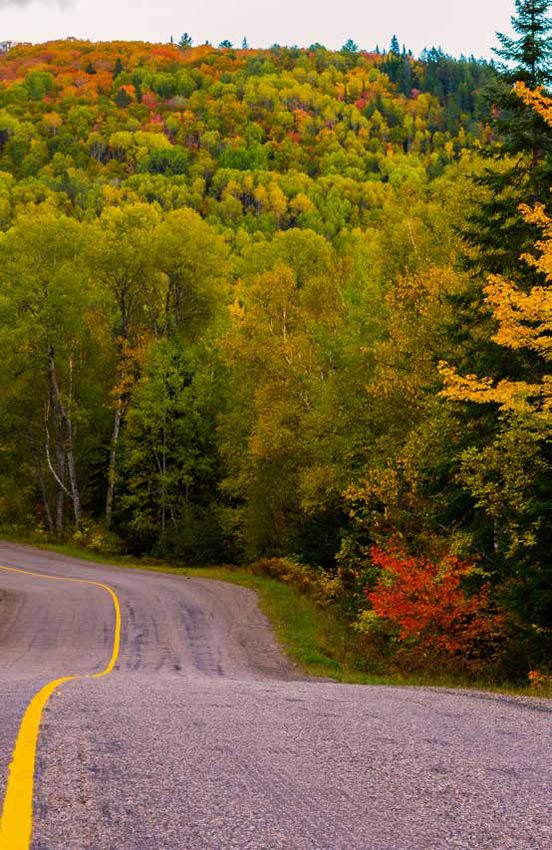
are powerful educators. Don’t just visit the incredible
landscapes of the North—choose them as your
classroom!

Deciding where to study may possibly be one of the
biggest decisions you will make. We hope that you head
off the beaten path and choose No Ordinary School of
Medicine.

Visit nosm.ca/NOSM to learn more.
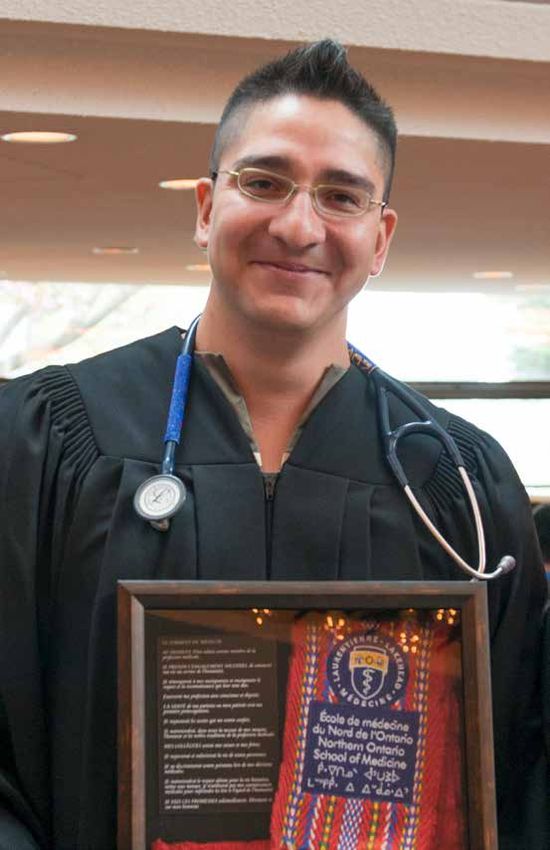
INDIGENOUS APPLICANTS

If you are of Indigenous ancestry (First Nations,
Inuit, or Métis, as recognized in the Constitution
Act, 1982) you may voluntarily identify as such.

If you choose to be considered in the Indigenous
Admissions Stream, you’re required to submit the following
documents as part of your application:

 •   A letter that declares your Indigenous ancestry and
     gives specific information about your First Nation,
     Treaty community, or organizational affiliation. The
     letter should include:

     ∙∙ Why you would like to be considered as a candidate
        in the Indigenous Admissions Stream;

     ∙∙ Details about your cultural and personal
        background; and,

     ∙∙ Examples of how you are culturally connected to
        your (a) Indigenous community, or (b) community.

 •   A letter of recommendation from your First Nations,
     Band Council, Tribal Council, and Treaty, community, or
     organizational affiliation. Choose someone who knows
     you well and can comment on your character and your
     suitability for medicine.

 •   Proof of your Indigenous ancestry.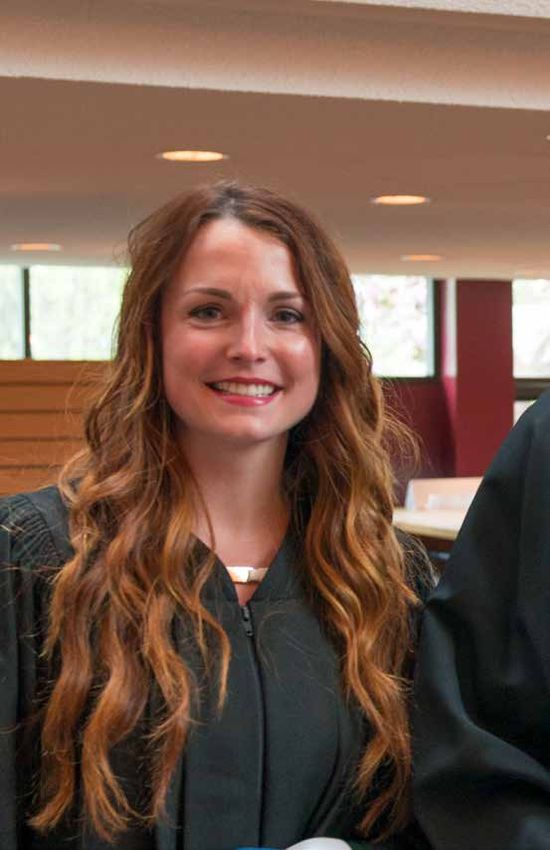
FRANCOPHONE APPLICANTS

The language of instruction and assessment for
NOSM is English. There will be opportunities for
you to do clinical placements with French-speaking
clinicians in French-speaking communities, if you
choose.

Other opportunities for learning in the French language
will include the availability of educational resources, self-
directed groups, and electives.

For the purposes of the admissions process, anyone
choosing the designation of Francophone on the
application form must be fluent in spoken French.
In addition, applicants must meet at least one of the
following criteria:

 •   One parent is Francophone and you attended at least
     eight years of French school (not immersion).

 •   You have a diploma from a French high school (not
     immersion).

 •   You can demonstrate your use of French in daily
     activities and a connection to a Francophone
     community.

Only applicants who meet the last criteria will be required
to provide a recommendation letter in French attesting to
their connection to a Francophone community. Your referee
should be someone who knows you well and can comment
on your engagement and connection to the Francophone
culture and community.

If you choose the Francophone designation on the NOSM
application, you will be required to demonstrate your
proficiency in spoken French.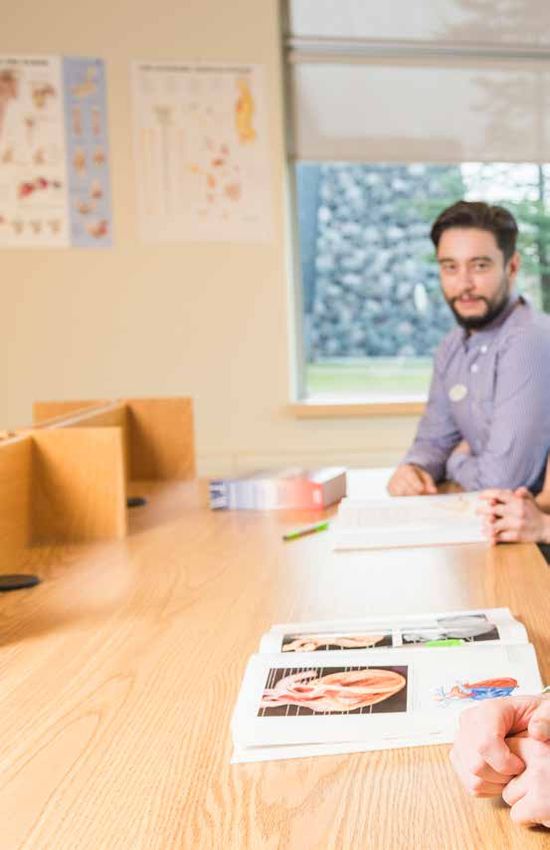

HANDS ON EXPERIENCE

NOSM medical students derive
considerable benefit from the School’s
distributed, community-engaged
learning model, spending a full forty
percent (40%) of their time in off-campus
placements.

Years One and Two
In the first two years of the MD program, you will spend
the majority your time in Thunder Bay and Sudbury,
undertaking patient-centred, case-based, small-group
learning in classrooms at Lakehead University and
Laurentian University. In addition, you will experience
three four-week placements in Indigenous, Francophone,
and rural communities in Northern Ontario.

Year Three
In third year, you will spend eight months living and
learning in one of 15 mid-sized communities across the
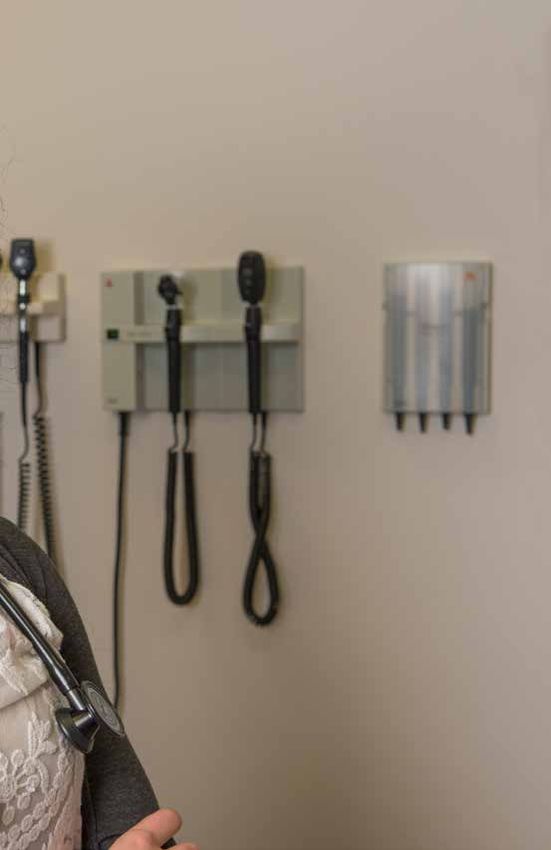
North. Working in family practice clinics and hospitals
with local faculty, your curriculum “walks through the
door,” allowing you to learn how to improve the health of
a patient and community over time.

Year Four
During your final year, you will based at either the
Thunder Bay Regional Health Sciences Centre (TBRHSC)
in Thunder Bay or Health Sciences North (HSN) in
Sudbury, where you will learn hospital-based medicine
by completing rotations in different clinical services of
the hospital. These rotations assist you in determining
whether you will choose to practice family medicine or
pursue a specialty.

Minimum Admissions Requirements
 •   Canadian citizen or permanent resident (landed
     immigrant).

 •   Four-year undergraduate degree. Applicants may
     apply in final year of their program.

 •   Mature applicants (25 years of age or older at the time
     of the application deadline) may apply with a three-
     year degree.

 •   Overall minimum GPA of 3.0 on a 4.0 scale.

 •   NOSM does not require the MCAT.

Apply Online
Ontario Medical School Application Service (OMSAS)
170 Research Lane
Guelph, ON
N1G 5E2
Tel: 519-823-1940
ouac.on.ca/omsas
NOSM learners are
literally “all over the map,”
spending time living
and learning in a variety
of Northern Ontario
communities. These
communities are
your classroom.
Lakehead University
Thunder Bay
Laurentian University
Université Laurentienne
Sudbury
Ottawa
All 800,000 km2
of Northern Ontario is
NOSM’s campus. Toronto
Your NOSM Campus Postgraduate Residency Education
Residency education at NOSM occurs at hospitals and
Indigenous Communities health centres across Northern Ontario.
First-year medical students spend four weeks in an
Indigenous community in Northern Ontario.
Northern Ontario Dietetic Internship Program
Forty-six week dietetic internships are completed in
Rural/Remote Communities communities across Northern Ontario and the area served
Second-year medical students complete two four-week by North Simcoe Muskoka Local Health Integration
placements in small, rural, or remote Northern Ontario Network (LHIN).
communities.
Physician Assistant (PA) Program
Comprehensive Community Clerkships (CCC) PA students complete 40 weeks of supervised clinical
Third-year medical students spend eight months rotations in rural and urban settings across Ontario,
completing their CCC in a mid-sized community in including 20 weeks in the North.
Northern Ontario.
Rehabilitation Studies
Clinical Rotations Audiology, occupational therapy, physiotherapy, and
Fourth-year medical students complete six core rotations speech-language pathology learners experience clinical
in a 12-month period at academic health sciences centres placements in a diverse range of practice and community
in Sudbury and Thunder Bay. settings ranging from four to 12 weeks in duration.NOSM stands for Northern Ontario School of Medicine. But did you know that the acronym NOSM also stands for “No Ordinary School of Medicine?” What does this mean for you? It means your path to becoming a health-care professional will be extraordinary. NOSM will take you beyond the lecture halls and textbooks to prepare you for a rewarding health-care career that’s sure to exceed your expectations. Deciding where to study may possibly be one of the biggest decisions you will make. We hope that you head off the beaten path and choose No Ordinary School of Medicine. Visit nosm.ca/NOSM or one of the following websites to learn more: • NOSM — nosm.ca/umeadmissions • OMSAS Instruction Booklet — ouac.on.ca/omsas thenosm thenosm thenosm nosmtv linkedin.com nosm.ca
You can also read


