NOISE EXPOSURE AND ERGONOMIC AT WORKPLACE - The Way Forward HUSDIN BIN CHE AMAT - DOSH
←
→
Page content transcription
If your browser does not render page correctly, please read the page content below

NOISE EXPOSURE AND
ERGONOMIC AT WORKPLACE
    - The Way Forward

          HUSDIN BIN CHE AMAT
               DIRECTOR
    DOSH WP KUALA LUMPUR/PUTRAJAYA
NOISE EXPOSURE AT
   WORKPLACE

                    2
SOUND is a sensation of acoustic waves
    (disturbance/pressure fluctuations setup in a medium)

Unpleasant, unwanted, disturbing sound is generally treated
as NOISE and is a highly subjective feeling
Factories & Machinery
(Noise Exposure) Regulations, 1989
➢ Permissible exposure limit (PEL):
90 dB(A) 8-hr TWA
➢ Action level (AL): 85 dB(A) 8-hr TWA
➢ 115 dB(A) at any time
➢ Impulsive noise w peak level 140 dB
➢Noisy areas to be identified
➢Employee noise exposure
monitoring
➢Issuance, maintenance,
inspection & training of hearing
Regulatory protection devices
Provisions ➢Audiometric testing programme
➢Noise Awareness Training for
employees with exposure
85dB(A): biennially
➢Noise warning signs at areas
90dB(A)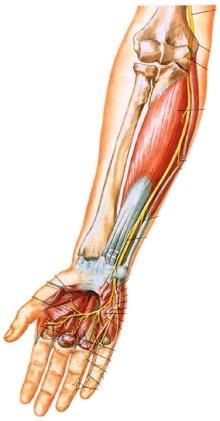
Noise Control

• Noise reduction activities to less than 85 dB(A)

   ➢ Engineering control
   ➢ Administrative control
   ➢ Both methods

• Control strategies:
  ➢ Sources
  ➢ Path
  ➢ Receiver
CONTROL AT SOURCE

                Proper design/   Vibration
                   selection     damping

Modification/                                  Use of
replacement                                  enclosures

                                 Reduction
                  Proper         of impact
                maintenance       forces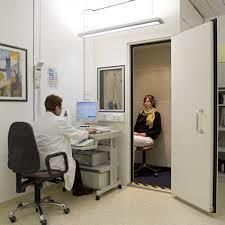
CONTROL AT PATH

Barriers                     Absorptive
                               Lining

               Shields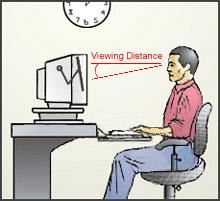
Noise Control

    Administrative Control      Hearing Protection Devices
•   Prevent unnecessary        ➢ Attenuation - Process of
    exposure                     reducing noise to acceptable
                                 levels
     – Rescheduling of noisy
       operation               ➢ NRR – Noise Reduction Rating
                               ➢ Ear plugs and muffs are rated
     – Education/awareness       with an NRR
     – Safe work practices     ➢ NRR marked on the package
•   Reduce exposure time       ➢ NRR is a measure of how much
     – Job rotation              noise is filtered out
•   Minimise number of
    employee exposed to
    high noise level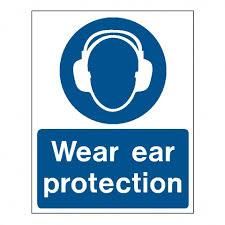
Way Forward.. NEW NOISE EXPOSURE
                REGULATION (201X)

 NOISE EXPOSURE (1989)              NOISE EXPOSURE (201X)
• Under FMA 1967                 • Under OSHA 1994
• “Action Level" = 85 dB(A) or   • "Action Level” = 82 dB(A) or
  daily noise dose equal to        daily noise dose equal to
  0.5;                             0.5;
• “P.E.L” = 90 dB(A) eight-      • “P.E.L” = 85dB(A) eight-hour;
  hour;                          • Penalty
• Penalty – RM1,000 (Apply to    - RM 50,000 and / or 2 years
  all provisions)                  jailed (Failed to conduct
                                   noise assessment)
                                 - RM 1,000 and / or 3 months
                                   jailed (Employees)
                                 - RM 10,000 and / or 1 year
                                   jailed (other provisions)
Additional Provisions For New Noise
       Exposure Regulation 201X

• Have an ICOP – for details

• Reduction of Noise Exposure – To provide
  evidences if only Personal Hearing Protectors
  can be used.

• Duties of designer, manufacturer, importer
  and supplier of plant for use at work
ERGONOMIC AT WORKPLACE
Ergonomics
• Adoption of the job and workplace to the worker by
  designing tasks depending upon:
   ➢ worker’s capabilities
   ➢ limitations

  fitting the task/job and work environment to workers

                                                         12
Legal Requirement
Objective of Occupational Safety and Health Act (OSHA )
1994
• To secure the safety, health and welfare of persons at
work
• To protect person (other than person at work) at place of
work
• To promote the occupational environment adaptable to
the person’s physiological and psychological needs
• To provide the means towards a legislation system based
on regulation and industry code of practice in combination
with the provisions of the Act.
13Why We Don’t Expect People To Fit
To Things?
• Demands and stresses imposed could leads to:
➢ discomfort
➢ errors
➢ lower productivity
➢ dissatisfaction
➢ injuries
➢ accidents
hassle pain WMSDs
WMSD – Workplace MusculoSkeletal Disorders 1415
Workplace Ergonomics Risk Factors Risk Factor due to work activities/task which can lead to fatigue, musculoskeletal disorders (MSD) symptoms and injuries or other types of problem: Physical risk factors Environmental factors
Physical Risk Factors

▪ Awkward or static postures
▪ Forceful exertions
▪ Repetitive motions
▪ Contact stresses/
  pressure point
▪ Vibration

       JKKP Malaysia           17
Environmental Factors • Temperature – hot/ cold • Noise • Lighting
Way Forward..GUIDELINES ON ERGONOMIC RISK
      ASSESSMENT AT WORKPLACE 2017

         Contents                           Purpose
1.  Introduction                 The purpose of this Guideline is to
2.  Planning and Conducting      provide a systematic plan and an
    Ergonomics Risk Assessment   objective approach in identifying,
3. Process for Initial Era       assessing and controlling
                                 ergonomics risk factors associated
4. Process for Advanced Era      with the work tasks and activities
5. Hierarchy of Control Based    in the workplace.
    on Ergonomics Approach
6. Review of Assessment
7. Responsibility and
    Accountability
8. Documentation
9. Instruction, Training and
    Consultation
10. Record Keeping
Why Ergonomics Risk Assessment (ERA)?
Enable us to:
1. Identify most ergonomics risk factors that may cause harm to
employees;
2. Determine the likelihood of harm arising from exposure to the
ergonomics risk factors;
3. Recommend appropriate control measures towards risk reduction.
The benefits are: ‐
1. Enable employers to plan, implement and monitor preventive
measures;
2. Reduce the risks of ergonomics‐related injuries and MSDs;
3. Reduce compensation cost, medical expenses and employee
absenteeism.HOW?
cting
Planning
and
Conducting
of ERA
21
Figure 2.1: Framework for Ergonomics Risk AssessmentTHANK YOU
You can also read


