NSAI Standards - Construction Sector Standardisation Programme to 2021- Supporting Ireland's Construction Sector
←
→
Page content transcription
If your browser does not render page correctly, please read the page content below
NSAI Standards – Construction Sector
Standardisation Programme to 2021
– Supporting Ireland’s Construction Sector
Standardisation in the
Construction Sector at a glance

                          63                                                             14
                          Technical                                                      Technical
                          Committees                                                     Committees

                          2912                                                           330
                          Standards (ENs)                                                participating
                                                                                         Irish experts

                          649                                                            140
                          Work Items                                                     Irish
                                                                                         Standards

                          43                                                             36
                          Harmonised                                                     Approved
                          Standards                                                      Work Items
                          Requests                                                       Requests

This data is current at the time of publication of this document and may be subject to change thereafter.
Contents

  Introduction                                                                            2

  Overview of the Standardisation Programme                                               4

  NSAI Construction Standards Consultative Committee – Introduction                       6

  NSAI Construction Standards Consultative Committee – Secretariat                        7

  Members of the Construction Standards Consultative Committee                            8

  NSAI Standards Technical Committees in the Construction Sector                         10

  NSAI Construction Standards Consultative Committee – Scope and Functions               11

  NSAI Standards Construction Sector Standardisation Programme                           12

  Construction Standardisation Programme Database                                        13

  National Standardisation Programme – Indigenous Standards                              14
  and National Guidance documents

  National Standardisation Programme – Maintenance of existing portfolio                 15

  National Guidance to Harmonised Standards falling under                                16
  the remit of Construction Products Regulation (EU) N0 305/2011

  National Guidance to non-harmonised Irish Standards                                    18

  Irish Standards referenced in the Technical Guidance Documents                         19
  to the national Building Regulations

  European Standardisation Programme                                                     20

  The Way Forward                                                                        22

                              NSAI Standards – Construction Sector Standardisation Programme to 2021   1
Introduction

      Engaging stakeholders
      to develop standards
      that benefit and
      protect consumers
      NSAI.ie

                                                                               GERALDINE LARKIN
                                                                            Chief Executive Officer

    NSAI (National Standards Authority of Ireland), Ireland’s official
    standards body was established by the National Standards
    Authority of Ireland Act 19961 and reports to the Minister
    for Business, Enterprise and Innovation.

    The primary aim of the Authority, is to provide the necessary technical services of Standardisation,
    Metrology and Conformity Assessment to underpin Ireland’s technical quality infrastructure.
    NSAI Standards, under the NSAI Act functions to develop, publish and promote standards that facilitate trade
    and provide a basis for technical regulation. NSAI is the National Standards Body (NSB) member of European
    (CEN, CENELEC, ETSI2 3 4) and international (ISO, IEC5 6) standards organisations.
    The construction industry contributes to approximately 9% of the EU’s GDP and 18 million direct jobs are provided
    by the construction sector in Europe. This sector drives economic growth in the creation of new jobs in the
    EU.7

    1 National Standards Authority of Ireland Act, 1996 Number 28 of 1996 – http://www.irishstatutebook.ie
    2 European Committee for Standardisation (CEN) https://www.cen.eu
    3 European Committee for Electrotechnical Standardisation https://www.cenelec.eu/
    4 European Telecommunications Standards Institute https://www.etsi.org/
    5 International Standards Organisation https://www.iso.org/
    6 International Electrotechnical Commission https://www.iec.ch/
    7 European Commission – https://ec.europa.eu/growth/sectors/construction_en

2   NSAI Standards – Construction Sector Standardisation Programme to 2021
Introduction

Ireland is currently in a climate of growth in the construction sector. Current government strategy for the
Construction Sector i.e. ‘Construction 2020 A Strategy for a Renewed Construction Sector’ supports this growth
and confirms the need for a strong and sustainable construction sector in Ireland and sets out a programme of
action to “deliver a strong, sustainable, well – financed, competitive and innovative approach to construction
and housing, building to the highest standards, at realistic levels and with consumer protection at its heart.”8
The National Development Plan 2018-2027, under Project Ireland 2040 commits to major regeneration and
infrastructural projects in Ireland.9
In parallel, the Government’s Climate Action plan 2019 details a sectoral roadmap designed to deliver a
cumulative reduction in emissions over the period 2021 -2030 and supports the principle underpinning Project
Ireland 2040 for compact, connected and sustainable development. The Climate Action Plan recognises the
importance in the Built Environment of improving “energy efficiency of our buildings, including our homes,
workplaces and schools by meeting higher energy performance standards and by increasing retrofit activity.10
Action 75 of the Climate Action Plan also identifies that an NSAI Standards Programme will be developed to
support climate action policy, supporting the supply chain for renewables, retrofitting and climate adaption,
including guidance for EV charging infrastructure in electrical wiring standards.
In line with Government policy, the NSAI Strategic Plan (2016-2020) sets out objectives underlying a strong
commitment to supporting standardisation work in the construction sector, including the establishment of
the Construction Standards Consultative Committee in 2017.
NSAI is delighted to have worked with the construction sector to develop and present this inaugural
publication of the NSAI Standards Construction Sector Standardisation Programme to 2021.
This publication introduces the NSAI Standards Construction Sector Standardisation Programme and highlights
the NSAI’s contribution to Ireland’s construction sector. Insight is provided into the extent of standardisation
activities in the sector, nationally and internationally, including the considerable input of Irish experts, the role
of the NSAI Construction Standards Consultative Committee and the way forward for standardisation in this
growing sector in Ireland.
Informed by National and EU legislation and policy, this Standardisation Programme is based on current ongoing
international activity in standards, the needs of the Irish construction industry and the vital input of stakeholders.
Given the expanse of the construction sector standardisation activities, NSAI through this Standardisation
Programme strives to focus resources efficiently to ensure maximum benefit for the construction sector in Ireland.

GERALDINE LARKIN
Chief Executive Officer

8 Construction 2020, A Strategy for a Renewed Construction Sector
   https://merrionstreet.ie/en/wp-content/uploads/2014/05/Construction-Strategy-14-May-20141.pdf
9 Government of Ireland, Project 2040, National Development Plan 2018-2027
   https://www.gov.ie/en/campaigns/09022006-project-ireland-2040/
10 Government of Ireland Climate Action Plan, https://www.gov.ie/en/publication/5350ae-climate-action-plan/

                                            NSAI Standards – Construction Sector Standardisation Programme to 2021       3
Overview of the Standardisation Programme

    There is significant ongoing work in standardisation by NSAI Technical Committees in support of our
    growing construction sector. Standards are written by industry, for industry. The construction industry by
    its nature is dependent on the voluntary standardisation process, nationally and internationally, to establish
    and share best practice and support regulations.
    NSAI Standards serves as a conduit to facilitate national experts to participate in international standards
    development work. There are 63 CEN technical committees supporting standardisation. NSAI supports 14
    national technical committees, upwards of 100 national technical bodies11 and approximately 330 experts in
    the construction arena.
    The European Standards programme supporting the construction sector, in which NSAI participates, is
    extensive. NSAI, as a member of CEN/CENELEC is obliged to adopt European Norms (ENs) as Irish standards
    (I.S. ENs), therefore it is vital that Irish interests are represented at the early development stage of relevant
    standards.
    Whilst it is NSAI’s policy to prioritise development of international standards, in line with government policy
    to support an open market economy, the construction sector also requires national or ‘indigenous’ standards
    to support local regulations, provide national guidance to international standards or to address local issues.
    The NSAI Standards – Construction Sector Standardisation Programme has been developed in consultation
    with stakeholders and is presented as a database found here: https://www.nsai.ie/standards/sectors/
    construction-standards/.
    It comprises of three main elements:
    a) a national programme including:
       u   new indigenous Irish Standards (I.S), and national guidance documents
       u   maintenance of the existing portfolio of national standards and guidance documents
       u   development of guidance to support implementation of CPR related (harmonised) standards
       u   National Annexes for the new suite of Eurocodes
    b) a programme to manage Ireland’s contribution to international (ISO/IEC) and European (CEN/
       CENELEC) construction standards
       u   particularly where the product is manufactured or widely used in Ireland
    c) promotion of construction related standards in Ireland.
    NSAI not only services the current standardisation issues through collaboration with stakeholders,
    but endeavours to be positioned as the point of contact for emerging standardisation work programmes
    of national interest directly and indirectly related to construction, such as, the Circular Economy, Building
    Information Modelling (BIM), amendments to the existing structural Eurocodes, energy and management
    of renewable technologies and climate change.
    Taking into consideration that standardisation needs to anticipate technical progress and innovation
    into the future, this comprehensive Standardisation Programme provides visibility of the extent
    of ongoing standardisation activities and challenges undertaken by NSAI construction technical
    committees and experts going forward.

    11 A technical body is categorised as a Technical Committee (TC), Sub-Committee (SC), Working Group (WG), Project Committee (PC) or an
        E-Committee (EC)

4   NSAI Standards – Construction Sector Standardisation Programme to 2021
Overview of the Standardisation Programme
No. of hours volunteered by experts
2500+ in 2018
470 171
Standards for EN’s in the construction
public comment in 2018 sector adopted and
published as Irish
Standards (I.S. ENs)
400+
in 2018 e.g.
I.S. EN 1992-4:2018 Eurocode 2
Irish Standards – Design of concrete structures
and Standards – Part 4: Design of fastenings
Recommendations for use in concrete12
referenced in the Technical
Guidance Documents to I.S. EN 16907-2:2018 Earthworks
the Building Regulations – Part 2: Classification of materials
Construction
standardisation
projects account
for up to 5
50% National publications
in construction
in 2018 e.g.
of NSAI’s national
standardisation programme. I.S. 465:2018 Assessment, testing
and categorisation of damaged
buildings incorporating concrete
30%
blocks containing certain
deleterious materials
of Standards resources S.R. 325:2013+A2:2018 Recommendations
allocated to supporting the for the design of masonry structures in
standardisation needs of Ireland to Eurocode 6.
the construction industry,
nationally and internationally.
12 NSAI Standards Archives https://www.nsai.ie/standards/search-buy-standards/new-irish-standards-2019/nsai-standards-archives/
NSAI Standards – Construction Sector Standardisation Programme to 2021 5NSAI Construction Standards
Consultative Committee – Introduction
The NSAI Construction Standards Consultative Committee (NSAI/TC 006) membership consists of a wide stakeholder
base in the construction sector including the Chairs of the NSAI National construction Technical Committees.
As is the case with all NSAI Technical Committees, NSAI/TC 006 operates under the functions outlined in the
NSAI Act 1996 and the NSAI Standards Terms of Reference for consultative committees. Through the Committee,
NSAI consults with the construction sector regarding standards matters. The Committee is chaired by Mr. Kevin
Sheridan and the Deputy Chair is Mr. Sean Downey.
The Technical Committees reporting to the NSAI/TC 006 are listed on page 10 and for Members of NSAI/TC 006
see pages 8, 9 and 10. Members of the Committee include regulators, state agencies, industry associations,
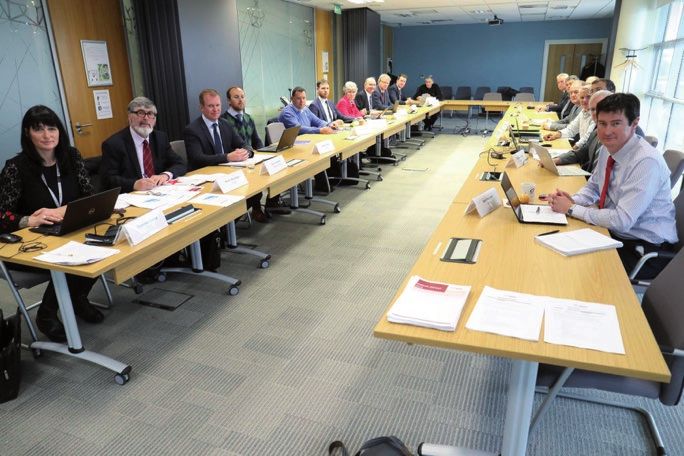
professional bodies and academia. The Committee meets typically twice a year at NSAI.
Kevin Sheridan EurBE, MSc, CEnv, FRICS, Sean Downey
FIET, MICE, FSCSI, FCIOB, FCABE, FIBCI MRICS, MSCSI, MCIArb, MCABE
Chair NSAI/TC 006 Deputy Chair NSAI/TC 006
“Valuable input by Members of the NSAI/TC 006 “I’m involved in Standards because I believe that
informed the development of the Construction construction companies, our members in particular
Sector Standardisation Programme for 2019 to 2021 (CIF), need to be aware of what changes are coming.
and resulted in the establishment of a new Working Also to try and understand, what we might get
Group for the promotion and communication companies involved in so they can engage, and
of standards and standards activities in the perhaps add value to their own companies and be
construction sector. I look forward to the continuing ahead of where standards need to be for the future
constructive engagement and collaboration of the of the industry, as its progressing, and as things are
key stakeholders in working with NSAI in this very changing internationally and changing in the market
challenging time for the construction industry.” that we serve.”
A Chartered Building Engineer, Chartered Surveyor, A Registered and Chartered Building Surveyor,
Chartered Environmentalist, and Chartered Sean is currently Director of Specialist Contracting
Construction Manager, Kevin Sheridan is Chairperson in the Construction Industry Federation. He is an
of the NSAI Construction Standards Consultative experienced manager in the construction sector
Committee. He is Secretary General and past having worked at senior level for major companies in
president of the Association of European Experts in the industry and also for the Construction Industry
Building and Construction. He is a Member of the Federation in the development and leadership of
Architects Registration Board and the Construction strategic initiatives in policy and administration.
Industry Registration Ireland (CIRI) Board. Kevin is He has developed a thorough understanding of
also a former Chairman of the Institution of Civil the varied and complex issues within the property
Engineers (Republic of Ireland region), former development and contracting industry and is skilled
Member of the Building Surveyors Registration Board in the facilitation of cooperative projects in industry
and past president of the Irish Building Control innovation, BIM and commercial delivery.
Institute. He served on the S.I. 105/2014-Building
Control (Amendment) (No. 2) Regulations (BCAR)
Board for alternative compliance proposals for Health
& Schools Projects and the BCAR Code of Practice
Committee.
6 NSAI Standards – Construction Sector Standardisation Programme to 2021NSAI Construction Standards
Consultative Committee – Secretariat
Therese Clarke, Technical Secretary James Clarke, Technical Secretary
NSAI/TC 006 Support NSAI/TC 006
Therese Clarke is a Senior Scientific Officer (SSO) James Clarke is a Senior Scientific Officer (SSO) in
in the Standards Division of NSAI. Therese is an the Standards Division of the NSAI. James has a
Industrial Chemist by profession, holds a Post background in Building Services Engineering and is a
Graduate Diploma in Environmental Engineering member of the Institution of Engineers of Ireland. He
(TCD) and a Masters in Occupational Health and is an alumnus of the Dublin Institute of Technology
Safety (DCU). and holds a Post Graduate Diploma in Global Energy
and Climate Policy from the University of London.
Following 10 years’ experience in industry Therese
joined NSAI as a Certification Officer for the ISO Within the construction sector, James has experience
management system standards ISO 9001, 14001 and in the design, construction and commissioning
18001 (portfolios in construction and manufacturing) of high-tech facilities for the world’s leading
and subsequently a Standards Officer. pharmaceutical and medical technology companies.
Therese is currently Technical Secretary to a number James joined the NSAI in 2018 and is currently
of technical committees in the construction sector Technical Secretary to several committees within the
including the Construction Standards Consultative construction and electrotechnical sectors including,
Committee, the Roads Standards Committee the fire safety, building services, switchgear, electric
Retrofit and Reactive Pyrite Committees. cables, electrical appliances and marine energy
technology.
NSAI Standards – Construction Sector Standardisation Programme to 2021 7Members of the Construction Standards
Consultative Committee
Membership of NSAI TC/006 also includes Chairpersons of the NSAI construction technical committees and
construction related technical committees, see page 10.
Representation/Role Name
Chairperson Kevin Sheridan
Deputy Chairperson (Construction Industry Federation) Sean Downey
Technical Secretary Therese Clarke
Technical Secretary Support James Clarke
Association of Consulting Engineers of Ireland (ACEI) Richard Crowe
Aggregates Panel Michael Byrne / Dermot McCarthy
Electrotechnical Consultative Committee (ETC) John McAuley
County and City Managers Association (CCMA) Mairead Phelan
Department of Housing, Planning and Local Government (DHPLG) John Wickham
Dept of Agriculture, Food and the Marine Robert Leonard
Engineers Ireland Murt Coleman
Enterprise Ireland Neil Kerrigan
Homebond Conor Taaffe
Housing Agency Norman Jackson
Ibec/Building Materials Federation (BMF) David Howard
Irish Concrete Federation (ICF) Liam Smyth
Irish Green Building Council (IGBC) Pat Barry
Irish Water TBC
NSAI Agrément Martin English
Product Manufacturer Michael Stack
Royal Irish Institute of Architects of Ireland (RIAI) Peter Andrews
Society of Chartered Surveyors of Ireland (SCSI) Noel Larkin
Solas Jo Cahalin
The National Disability Authority (NDA) James Hubbard
The Office of Public Works (OPW) Ciaran O'Connor
Transport Infrastructure Ireland (TII) Tom Casey
8 NSAI Standards – Construction Sector Standardisation Programme to 2021Members of the Construction Standards
Consultative Committee
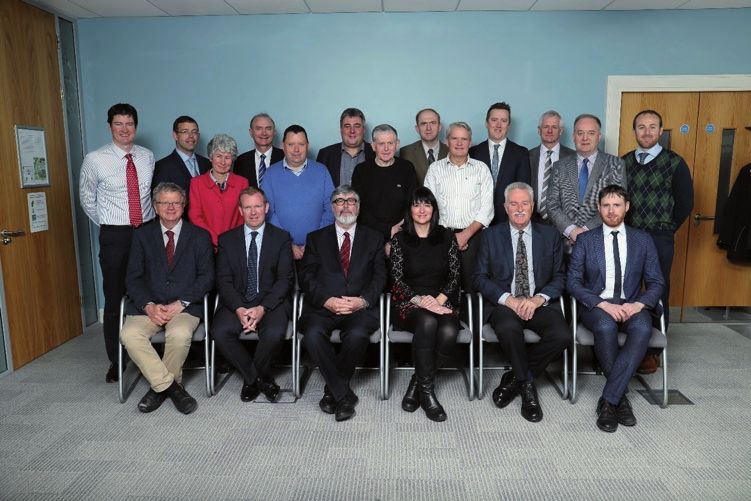
Construction Standards Consultative Committee at meeting 30th April 2019 at NSAI
From left back row: Ken Murphy NSAI, Gary O’Sullivan NSAI Agrément – guest speaker, Enda McDonnell Director Standards NSAI,
Ralph Montague Chair BIM Committee, Robert Leonard Department of Agriculture, Food and the Marine, John Wickham DHPLG,
Richard Crowe ACEI, James Clarke NSAI.
From Left middle row:Yvonne Wylde NSAI Manager Standards Technical, Derek Branigan Wavin Building Materials Federation (BMF),
Tom Casey TII, Martin English NSAI Agrement, Conor Taaffe Homebond.
Front Row from left: Jim Mansfield Chair Eurocodes Committee, Sean Downey Deputy Chair NSAI TC/006, Kevin Sheridan Chairperson NSAI
TC/006, Therese Clarke Technical Secretary NSAI TC/006, Peter Andrews RIAI, David Howard Ibec (BMF).
“Building Information Modelling (BIM) standards are dealing with the
production, management, sharing or exchange of digital architectural,
engineering and construction, and the sharing of information. Its incredibly
important work, because the built environment is important to everybody –
we live in buildings, we work in buildings, and infrastructure that makes up
and supports all of society, is important, and therefore so is the information
about our built environment. Being involved in the committee really
Ralph Montague Chair BIM
broadens your horizons and your outlook on how different people think
Technical Committee about the built environment, and operate in this sector”
NSAI Standards – Construction Sector Standardisation Programme to 2021 9NSAI Standards Technical Committees
in the Construction Sector
NSAI Construction Sector Technical Committees13
Reference Committee Title Chairperson
NSAI/TC 03 Concrete Committee Brian O'Rourke (Cork Institute of Technology)
NSAI/TC 06 Construction Consultative Committee Kevin Sheridan/Sean Downey (Construction
Industry Federation)
NSAI/TC 08 Timber Bill Robinson (Independent Service Provider)
NSAI/TC 11 Wastewater Engineering Joe Walsh (Irish Onsite Wastewater Association)
NSAI/TC 12 Slating and Tiling Michael Murray
NSAI/TC 15 National Eurocodes Jim Mansfield (Kavanagh Mansfield & Partners)
NSAI/TC 16 Fire Safety Michael Slattery (Michael Slattery Associates)
NSAI/TC 17 Roads Standards Gearóid Lohan (Colas Ireland)
NSAI/TC 19 Energy Performance of Buildings Sean Armstrong (Dept. of Housing, Planning
& Local Government)
NSAI/TC 31 Building Services Paul Martin (Sustainable Energy Authority
of Ireland/ CIBSE)
NSAI/TC 33 Cranes Padraig Delaney (Health and Safety Authority)
NSAI/TC 40 Retrofit of existing dwellings TBC
NSAI/TC 47/SC 22 Building Information Modelling (BIM) Ralph Montague (ARCDOX)
NSAI/TC 58 Reactive pyrite in sub-floor hardcore Michael Maher (Golder)/Paul Forde (DBFL
material Consulting Engineers)
Other Technical Committees related to construction
Reference Committee Title Chairperson
NSAI/TC 1 Gas Standards Consultative Committee Liam Nolan (Gas Networks Ireland)
NSAI/TC 23 Universal Design Standards Gerald Craddock (National Disability Authority)
Consultative Committee
NSAI/ETC/TC 2 Electrical Installations Charles Dunn (Independent Service Provider)
13 Chairpersons of construction technical committees and construction related technical committees are members of the Construction
Standards Consultative Committee (NSAI/TC 006). For further details on the NSAI Standards - Construction Sector Standardisation
Programme, please refer to the Construction Standardisation programme database found here: https://www.nsai.ie/standards/sectors/
construction-standards/
10 NSAI Standards – Construction Sector Standardisation Programme to 2021NSAI Construction Standards Consultative
Committee - Scope and Functions
Mirror the work
of the CEN
Construction Sector
Network forum
Develop
stakeholders
engagement
Provide direction and
advice to support
NSAI with resource
prioritisation
in existing and
new work areas Construction
Standards Input into Construction
Standardisation
Consultative programme
Committee
Advise Construction
Technical Committee
on Committee matters
Develop programme Stakeholders
for communication/ feedback
promotion of
standardisation
activity within
the sector
NSAI Standards – Construction Sector Standardisation Programme to 2021 11NSAI Standards – Construction Sector
Standardisation Programme
The Construction Sector Standardisation Programme There are considerable national variations in
will consist of national, European and international construction practices which provide plenty of
standardisation work. It aims to readily connect scope for national annexes to European documents
industry stakeholders’ with their specific areas of or even purely national supplementary standards.
interest with the view to improving stakeholder
To ensure the efficient use of NSAI resources,
engagement with this work.
the direction of standardisation activities will be
Given its expanse, work in the construction sector guided by the Construction Standards Consultative
is driven by a wide array of stakeholders such as Committee. In further recognition of the volume
manufacturers, National/European Associations, of standards activities, a focus group has been
laboratories and notified bodies, engineers, established to support the communication and
structural designers, academia, and researchers. wider promotion of construction standards.
The European program for standardisation in the
construction sector, in which NSAI participates,
includes more than 3000 work items on product
standards and test methods (for use in building
and civil engineering). Of these, approximately
600 standards are or will be harmonized under the
Construction Products Regulation (CPR), along with
about 1500 supporting standards (test methods).
International European National
European Standardization
and related activities
European Standardization
and related activities
12 NSAI Standards – Construction Sector Standardisation Programme to 2021Construction Standardisation
Programme Database
One of the challenges facing the Construction Standards Consultative Committee, was to provide information on
the breadth and depth of the work programme, in a relatively accessible way. Making data easily discoverable will
increase knowledge of NSAI Standards, and in turn enable stakeholders to locate, understand and benefit from their
use. In order to address this need, the committee has worked with NSAI to develop a database, which is available on
the NSAI website. The database contains comprehensive information about the National Technical Committees related
to construction, including the associated European Technical committee which they mirror (see example below). A full
version of the database can be downloaded from the NSAI Construction Sector Homepage.14
Given the level of standardisation within the Construction Sector (it is the biggest single area of work in the
NSAI) the Database collates large volumes of information in an effort to gain successful insights into Standards
Development activities, while providing full transparency, for the benefit of our stakeholders.15
The Construction Standards Consultative Committee, and National Technical committees will use this
information to support the future direction of any standardisation activities in the area of construction.
NSAI TC Technical National International International
Secretary Committee Committee Committee Title
t
Title Reference
c
CEN/TC 51 Cement and building limes
CEN/TC 104 Concrete and related products
a
CEN/TC 104/WG 15 Ground granulated blast furnace slag
r
CEN/TC 125/WG 1 Masonry units
t
CEN/TC 125/WG 2 Mortar
x
CEN/TC 125/WG 3 Ancillary components
NSAI/TC 3 Ken Murphy Concrete
CEN/TC 125/WG 5 Application of external rendering and internal plastering
E
Aggregates for concrete, including those for use in roads
CEN/TC 154/SC 2
and pavements Paving units and kerbs
CEN/TC 178 Paving units and kerbs
CEN/TC 178/WG 1 Precast concrete products
CEN/TC 229 Precast concrete productsz
Concrete – Specification, performance, production and
NSAI/TC 3/SC 1 Ken Murphy Concrete CEN/TC 104/SC 1
conformity
NSAI/TC 3/SC 2 Ken Murphy Masonry CEN/TC 125 Masonry
CEN/TC 38 Durability of wood and derived materials
CEN/TC 112 Wood-based panels
CEN/TC 124 Timber structures
CEN/TC 124/WG 1 Test methods
NSAI/TC 8 Pat Hayes Timber
ISO/TC 165 Timber structures
ISO/PC 287 Chain of custody of wood and wood-based products
CEN/TC 124/WG 3 Glued laminated timber
CEN/TC 124/WG 6 Wood poles
14 https://www.nsai.ie/standards/sectors/construction-standards/
15 Although the sources of data are dynamic, the database reflects a point in time and will be updated intermittently throughout the period
of the NSAI Standards – Construction Sector Standardisation Programme to 2021
NSAI Standards – Construction Sector Standardisation Programme to 2021 13National Standardisation Programme
- Indigenous Standards and National
Guidance Documents
NSAI membership of CEN and CENELEC carries with it an obligation to implement all European standards
as an identical national standard and withdraw any conflicting indigenous standards. Occasionally, national
standards are required to address particular local issues, bridge a gap between national and international
guidance, or to support local regulation.
The following diagram presents a number of indigenous standards planned for delivery under the Construction
Standardisation Programme.
For a comprehensive list of indigenous standards, please refer to the Construction Standardisation Programme
Database found here: https://www.nsai.ie/standards/sectors/construction-standards/
Q4/2019 Q4/2019 Q4/2019 Q4/2019
NA;201x to I.S. NA+A2 to I.S. I.S. 10101:201x I.S. 360:201x
EN 16941-1:2018 EN 1991-1-3 National Rules Revision of I.S. 360-
Guidance on the use of Amendment to NA to I.S. for Electrical Code of Practice: Safe
I.S. EN 16941-1 On- EN 1991-1-3: Eurocode Installations use of cranes in the
site non-potable water 1: Actions on structures (Revision of construction industry
systems – Part 1: Systems – Part 1-3: General ET 101:2008) – Part 1: General
for the use of rainwater actions-snow loads
Q4/2019 Q1/2020 Q2/2020 Q3/2020 Q4/2020
I.S. 391:201x Annex A to S.R. 18:202x S.R. 50-3:201x I.S. 844:202x
Standards – Revision Building Services
Fire mains Transportation
supporting - Code of Practice
for buildings Guidance on and installation
the Energy - Part 3: Hot and
– Installation, the use of I.S. of bituminous
Performance cold water supply
commissioning, EN 13139:2002- materials for
of Building for dwellings
maintenance Aggregates for roads and other
Directive (EPBD)
and testing mortar paved areas
Q4/2020 Q1/2021 Q1/2021 Q1/2021
I.S. 440:202x S.R. 50-4:202x S.R. 50-5:202x NA:202X to I.S. EN ISO 19650-2:2018:
Building Services - Code Building Services - National Annex to Organisational
Timber frame
of Practice - Part 4:Heat Code of Practice - Part and digitisation of information about
construction,
pumps for dwellings 5: Solar Photo Voltaic buildings and civil engineering works,
dwellings
- Design, Installation, Systems for dwellings including building information modeling
and other
Commissioning & - Design, Installation, (BIM) – Information management using
buildings
Maintenance Commissioning & building information modelling – Part 2:
Maintenance Delivery phase of the assets
14 NSAI Standards – Construction Sector Standardisation Programme to 2021National Standardisation Programme -
Maintenance of existing portfolio
An integral part of the Construction Sector Standardisation programme is the ongoing review and maintenance
by Technical Committees of Irish National Standards (I.S.s), Standard Recommendations (S.R.s) and National
Annexes, to reflect revisions to European standards (ENs) and national legislative and policy changes.
The standards shown below are a small sample of the extensive catalogue of technical standards and guidance
documents in the construction sector available from the NSAI standards catalogue. See www.standards.ie
Eurocodes
I.S. 361
Safe use of
tower cranes
S.R. 50-2 Code and self-erecting
S.R. 82 cranes
of Practice for
Slating and
thermal solar
tiling code
systems
of practice
I.S. EN 206
Concrete
prEN 17210 ET 101
Accessibility (under
and usability revision to
of the built I.S. 10101)
environment (under Wiring rules
development)
I.S. EN 771-3
Specification I.S. EN 13495
for masonry Thermal
units S.R. 325 insulation
Design of products for
masonry buildings
structures to
Eurocode 6 in
I.S. 813 Ireland
Domestic
gas S.R. 28 –
I.S. EN ISO
installations Bituminous
19650 Building
Information mixtures –
Modelling guidance to I.S.
(BIM) EN 13108 series
I.S. 3218
Fire detection
S.R. 21 systems for
Aggregates
buildings
S.R. 54
Retrofit of
buildings
NSAI Standards – Construction Sector Standardisation Programme to 2021 15National Guidance to Harmonised Standards
falling under remit of Construction Products
Regulation (EU) No 305/2011
Another key element of the national programme is the development of guidance supporting the implementation of harmonised
European standardisation of the Construction Products Regulation (CPR). NSAI works closely with the Department of Housing,
Planning and Local Government (DHPLG) in this regard.
John is a Chartered Member of Engineers Ireland and Chartered Member of the Institute of Structural
Engineers. In his current position as Senior Adviser Building Standards in the Department, he leads
a Team supporting the implementation of the Building Control Reform Agenda, the provision of a
strong and evolving building code in support of quality construction, sustainable development and
compliance with relevant EU requirements
“NSAI’s suite of Standard Recommendations contain important guidance on appropriate minimum
performance levels for specific intended uses of construction products in Ireland, and are an essential
reference for clients, specifiers, designers and builders to safeguard that all works should be carried
out using “proper materials…which are fit for the use for which they are intended and for the
conditions in which they are to be used” to ensure compliance with the Building Regulations.”
John Wickham, Building Control Reform has been a key priority for Government since 2011. The 2014 Building
Senior Adviser Building Standards
Control Amendment Regulations (BCAR) have brought a new order and discipline to bear on
– Department of Housing, Planning
and Local Government
construction projects and promote a culture of compliance with the Building Regulations. Building
Regulations aim to provide for the safety and welfare of people in and about buildings. The upkeep
of Irish Standards referenced in the associated Technical Guidance Documents is essential to ensure
that we continue to keep pace with technical innovation, climate change etc., ensuring safe and
sustainable buildings in urban and rural areas.
Currently, there are over 500 harmonised standards (hENs) covering a broad range of construction products. hENs have progressively
become the norm as conflicting national standards (e.g. Irish and British Standards commonly used here) are being withdrawn.
NSAI has produced additional guidance to some harmonised standards (hENs) in the form of National Annexes or Standard
Recommendations (SRs),setting out appropriate minimum performance levels for specific intended uses of the product in Ireland. A
list of these can be viewed on the NSAI website. Engineers, architects, specifiers and builders should check National Annexes and
Standard Recommendations to make sure they choose construction products suitable for their end use.
Harmonised standards under the Construction Products Regulation (EU) No 305/2011 are cited in the Official Journal of the
European Union (OJEU).16
Additional Guidance to Harmonised Standards falling under remit of Construction Products Regulation (EU)
No 305/2011
I.S. EN Reference Title Title/source of national guidance
I.S. EN 771-1:2011+A1:2015 Specification for masonry units – Part 1: Clay S.R. 325:2013+A2:2018+AC:2019
masonry units Recommendations for the design of
I.S. EN 771-2:2011+A1:2015 Specification for masonry units – Part 2: Calcium masonry structures in Ireland to Eurocode
silicate masonry units 6
NOTE:
I.S. EN 771-3:2011+A1:2015 Specification for masonry units – Part 3: Aggregate
concrete masonry units (Dense and lightweight S.R. 325:2013+A2:2018+AC:2019
aggregates) Provides non-contradictory
complementary information for use in
I.S. EN 771-4:2011+A1:2015 Specification for masonry units – Part 4: Autoclaved
Ireland of the following parts of Eurocode
aerated concrete masonry units
6 series of standards together with their
I.S. EN 771-5-2011+A1:2015 Specification for masonry units – Part 5: Irish National Annexes:
Manufactured stone masonry units ¢ I.S. EN 1996-1-1, Design of masonry
I.S. EN 771-6:2011+A1:2015 Specification for masonry units – Part 6: Natural structures – Part 1-1: General rules for
stone masonry units reinforced and unreinforced masonry
structures;
16 OJEU list of hENs https://eur-lex.europa.eu/legal-content/EN/TXT/PDF/?uri=uriserv:OJ.C_.2018.092.01.0139.01.ENG
16 NSAI Standards – Construction Sector Standardisation Programme to 2021National Guidance to Harmonised Standards
falling under remit of Construction Products
Regulation (EU) No 305/2011
I.S. EN Reference Title Title/source of national guidance
I.S. EN 845-1:2013+A1:2016 Specification for ancillary components for masonry ¢ I.S. EN 1996-1-2, Design of masonry
– Part 1: Wall ties, tension straps, hangers and brackets structures – Part 1-2: General rules –
Structural fire design;
I.S. EN 845-2:2013+A1:2016 Specification for ancillary components for masonry
– Part 2: Lintels ¢ I.S. EN 1996-2, Design of masonry
structures – Part 2: Design
I.S. EN 845-3:2013+A1:2016 Specification for ancillary components for masonry considerations, selection of materials
– Part 3: Bed joint reinforcement of steel meshwork and execution of masonry.
I.S. EN 998-1:2016 Specification for mortar for masonry Guidance is also provided on the use
– Part 1: Rendering and plastering mortar of masonry units (I.S. EN 771 series)
I.S. EN 998-2:2016 Specification for mortar for masonry ancillary components (I.S. EN 845 series),
– Part 2: Masonry mortar masonry mortars (I.S. EN 998 series) and
I.S. EN 13914-1:2016
I.S. EN 10025-1:2004 Hot rolled products of structural steels National Annex NA (informative)
– Part 1: General technical delivery conditions
I.S. EN 12566-1:2000+A1:2003 Small wastewater treatment systems for up to 50 PT S.R. 66: 2015 Standard Recommendation
– Part 1: Prefabricated septic tanks providing guidance to wastewater
treatment products in compliance with
I.S. EN 12566-3:2005+A2:2013 Small wastewater treatment systems for up to 50 PT
the EN 12566 series of standards
– Part 3: Packaged and/or site assembled domestic
wastewater treatment plants NOTE: Revision planned in 2020
I.S. EN 12566-4:2007 Small wastewater treatment systems for up to 50 PT
– Part 4: Septic tanks assembled in situ from
prefabricated kits
I.S. EN 12566-6:2013 Small wastewater treatment systems for up to 50 PT
– Part 6: Prefabricated treatment units for septic
tank effluent
I.S. EN 12620:2002+A1:2008 Aggregates for concrete S.R. 16: 2016 Guidance on the use of I.S.
EN 12620:2002+A1:2008 – Aggregates
for concrete
I.S. EN 12737:2004+A1:2007 Precast concrete products – Floor slats for livestock National Foreword and National Annex
I.S. EN 13043:2002+AC:2004 Aggregates for bituminous mixtures and surface S.R. 17: 2004 Guidance on the use of I.S. EN
treatments for roads, airfields and other trafficked 13043:2002 – Aggregates for bituminous
areas mixtures and surface treatments for
roads, airfields and other trafficked areas
I.S. EN 13108 Bituminous mixtures – Material specifications S.R. 28: 2018 Recommendation for the
Parts 1-7:2006+AC:2008 use and Implementation of the I.S. EN
13108 Series Bituminous Mixtures –
Material Specifications
I.S. EN 13139:2002 Aggregates for mortar S.R. 18: 2006 Guidance on the use of I.S.
EN 13139:2002 – Aggregates for mortar
Note: Revision in progress
I.S. EN 13242:2002+A1:2007 Aggregates for unbound and hydraulically bound S.R. 21: 2014+A1:2016 Guidance on
materials for use in civil engineering work and road the use of I.S. EN 13242:2002+A1:2007
construction Aggregates for unbound and hydraulically
bound materials for use in civil
engineering work and road construction
NSAI Standards – Construction Sector Standardisation Programme to 2021 17National Guidance to non-harmonised
Irish Standards
As part of the National Standardisation Programme, the relevant construction Technical Committees have also
developed national guidance to non-harmonised Irish Standards including the following:
I.S. EN Reference Title Title/source of national guidance
I.S. EN 13108 Aggregates for bituminous mixtures and S.R. 28: 2018 Recommendation for
Parts 8, 20 and 21 surface treatments for roads, airfields and the use and implementation of the
other trafficked areas Bituminous mixtures I.S. EN 13108 Series Bituminous
– Material specifications Mixtures – Material Specifications
I.S. EN 10080:2005+NA:2010 Steel for the reinforcement of concrete – National foreword with additional
weldable reinforcing steel – general advice
I.S. EN 1717:2000+NA:2011 Protection against pollution of potable National Annex available
water in water installations and general
requirements of devices to prevent
pollution by backflow
I.S. EN 206:2013+NA:2015 Concrete – Part 1: Specification, National Annex available
performance, production and conformity
I.S. EN 13670:2009+NA:2015 Execution of concrete structures National Annex available
I.S. EN ISO 19650-2:2018 Organisation and digitisation of National Annex planned
information about buildings and civil
engineering works, including building
information modelling (BIM) – Information
management using building information
modelling – Part 2: Deliveryphase of the
assets (ISO 19650-2:2018
I.S. 888:2016 Code of Practice for the procurement and Developed in response to a
use of unbound granular fill hardcore recommendation of the Governments
material for use under concrete floors Report of the Pyrite Panel 2012
See the NSAI standards catalogue for the full range of standards and guidance documents available:
www.standards.ie
18 NSAI Standards – Construction Sector Standardisation Programme to 2021Irish Standards referenced in the
Technical Guidance Documents
to the national Building Regulations
There are over 400 Irish standards and Standard Recommendations referenced in the Technical Guidance
Documents (TGDs) supporting the Building Regulations in Ireland.
The following table provides information for a sample of these standards. Further information is available
from the Department of Housing Planning and Local Government website17 and a full list of these standards
are available on the NSAI Construction Sector Webpage.18
Reference Title Publication Referenced in:
Date
I.S. 6:2004 Concrete Sewer Pipes 04/03/2005 Building Regs TGD H
I.S. 9:1976 Galvanised Cisterns for Domestic Water 01/05/1976 Building Regs TGD G
Supply
I.S. 36-1:1986 Bitumen Roofing Felts – Part 1: Fibre and 23/07/1986 Building Regs TGD B Vol. 2
t
Glass Fibre Based Felts
c
I.S. 36-2:1987 Bitumen Roofing Felts – Part 2: Polyester 20/07/1987 Building Regs TGD B Vol. 2
Based Felts
a
I.S. 57-1:1987 Damp-Proof Courses – Part 1: Bitumen 02/06/1987 Building Regs TGD C
r
Damp-Proof Courses
t
I.S. 57-2:1987 Damp-Proof Courses – Part 2: 27/04/1987 Building Regs TGD C
Polyethylene Damp-Proof Courses
x
I.S. 123:1964 Unplasticized PVC Pipe for Cold Water 27/05/1964 Building Regs TGD G
Supply
E
I.S. 132-1:1975 Stainless Steel Sinks for Domestic Purposes 20/11/1975 Building Regs TGD G
(Metric)
I.S. 132:1964 Metal Sinks for Domestic Purposes 17/12/1964 Building Regs TGD G
I.S. 134:1977 Polyethylene Pipe Type 32 16/11/1977 Building Regs TGD G
I.S. 135:1975 Polyethylene Pipe Type 50 26/05/1975 Building Regs TGD G
I.S. 156:1984 Cast Iron Baths 31/12/1984 Building Regs TGD G
I.S. 158:1987 Closed String Wood Stairs 12/05/1987 Building Regs TGD K
I.S. 161:1975 Copper Direct Cylinders 26/01/1976 Building Regs TGD G
for Domestic Purposes
I.S. 161:1975 Copper Direct Cylinders 26/01/1976 Building Regs TGD L
for Domestic Purposes
I.S. 166:1972 Concrete Surface Water Pipes 23/03/1972 Building Regs TGD H
I.S. 193:2006 Timber Trusses for Roofs 29/12/2006 Building Regs TDG A
17 Department of Housing, Planning and Local Government, Building Control Regulations
https://www.housing.gov.ie/housing/building-standards/building-regulations/building-control
18 NSAI Construction Sector Webpage:https://www.nsai.ie/standards/sectors/construction-standards/
NSAI Standards – Construction Sector Standardisation Programme to 2021 19European Standardisation Programme
Committee structure – how it works
NSAI Technical Committees monitor, comment and vote on draft Standards being developed by International
(ISO/IEC) and European (CEN/CENELEC) Technical Committees. The international and/or European Technical
Committee is ‘’mirrored’’ to the NSAI Standards Committee.
NSAI Construction Technical Committees are also responsible for developing indigenous Irish Standards. These
Committees may have a hierarchy of subcommittees dealing with different aspects of an area related to
construction.
Eurocodes Structure
A key flagship activity in the Construction Sector Over the next 2 to 3 years, NSAI Eurocodes
is the development of the Structural Eurocodes. Committee will be responsible for overseeing the
The Eurocodes are a set of harmonised structural review and revision of over 40 Eurocode National
design codes for building and civil engineering Annexes, to accompany the implementation of the
works specifying how structural design should be next phase of the Eurocodes to be delivered.
conducted within EU & EFTA member states and
The relationship between the national and European
are cited in Irish Building Regulations (TGD Part A).
structures is shown in the figure on page 22. The
NSAI Eurocodes Committee TC/15 is responsible for
Eurocode committee, chaired by Jim Mansfield, has
monitoring the work of CEN TC/250 and how the
9 subcommittees, involving over 20 experts. These
‘Structural Eurocodes’ design standards are to be
experts are considering in detail, the proposed codes
implemented in Ireland.
and NDPs for concrete, steel, timber, masonry, and
The Eurocode National Annexes allow for a national geotechnical design applications in Ireland.
choice or nationally determined parameters NDP,
where such choices/parameters are left open in the
Eurocodes for each country to determine (i.e. in the
areas of safety and climatic conditions).
“I believe it is extremely important for practitioners, whether in design,
construction industry or the academic life to become involved in
Standardisation. This is of huge value in terms of Continuing Professional
Development and is recognised as such by Engineering Institutions.
It develops one on a personal and professional basis.”
Jim Mansfield
Chair Eurocodes Committee
20 NSAI Standards – Construction Sector Standardisation Programme to 2021European Standardisation Programme
National Stakeholders
Small and medium sized enterprises
Consumer Organisations
Academia
Government Departments
Industry Representative Bodies
Citizens
Public Sector
Professional Bodies
National
NSAI
Annexes to
TC/15
Eurocodes
Structural
CEN
Eurocodes
TC/250
Revision
34 National Committees
European Commission
European Organisations and Associations
CEN Stakeholders
NSAI Standards – Construction Sector Standardisation Programme to 2021 21The Way Forward
“In recent years, our team has focused on strengthening engagement
with all involved in construction in Ireland, to ensure NSAI and stakeholder
resources are best directed to the needs of those responsible for the built
environment in Ireland.”
“NSAI welcome the establishment of the Construction Sector Group made
up of representatives of key industry bodies and “ensures regular and open
dialogue between government and industry on how best to achieve and
maintain a sustainable and innovative construction sector positioned to
Yvonne Wylde successfully deliver on the commitments in Project Ireland 2040.”19
Manager Standards Technical
Now, with the framework and work program in place, NSAI will continue to support government and industry
in this work and in facing other opportunities and challenges that will arise.
Remembering that the majority of standards for construction and construction products are developed
at European level, and that the nature of construction across the work is evolving to reflect all kinds of
change, from technological change to climate change, the team will continue to work together with industry
associations and professional bodies to set and meet realistic targets for the future, including:
1 Engagement in critical and new areas of opportunity including:
Eurocodes
Accessibility Climate
development Energy
of buildings change, Urban
and Building Retrofit of management
to address low carbon growth and
alignment Information existing and
needs technologies climate
with Irish Modelling structures renewable
of aging and Smart migration
regulation technologies
populations buildings
and design
2 Broadening
committees
and diversifying representation in national and international
(Considering for example, in relation to gender diversity the adoption by UNECE
of a Recommendation on Gender Responsive Standards calling on all Standards
Bodies to strengthen gender equality in the standards development)20
3 Promoting and improving the profile of key committee positions
Developing a robust framework for promotion of NSAI standards activities
4 and the use of Irish standards across the sector
Increasing the impact and influence of Irish experts through structured
5 training programmes and networking opportunities
Exploring and developing mechanisms for more effective collaboration
6 through the application of technologies, improved processes, and new
models of working with stakeholders.
19 Department of Public Expenditure and Reform policy information on the Construction Sector Group
https://www.gov.ie/en/policy-information/cae030-construction-sector-group/
20 UNECE Annual Report 2018 https://www.unece.org/fileadmin/DAM/UNECE_Annual_Report_2018_23x25_final_for_WEB.pdf
22 NSAI Standards – Construction Sector Standardisation Programme to 2021NSAI Standards – Construction Sector Standardisation Programme to 2021 23
24 NSAI Standards – Construction Sector Standardisation Programme to 2021
Head Office          T +353 1 807 3800
1 Swift Square,      F +353 1 807 3838
Northwood, Santry,   E info@nsai.ie
Dublin 9, Ireland
D09 A0E4             NSAI.ie
You can also read


