OAK PARK AND RIVER FOREST HIGH SCHOOL - ACADEMIC CATALOG 2021-22
←
→
Page content transcription
If your browser does not render page correctly, please read the page content below
OAK PARK AND RIVER
FOREST HIGH SCHOOL
    201 NORTH SCOVILLE AVENUE
         OAK PARK, IL 60302

 ACADEMIC CATALOG
      2021-22
                                1
                                Page
TELEPHONES
  Switchboard. ................................ 708.383.0700
  Attendance Office ......................... 708.434.3104
  Fax................................................. 708.434.3910
  TTY/TDD ......................................708.434.3949
ACCREDITATION: State of Illinois
OPRFHS WEBSITE (www.oprfhs.org)
Designed to provide important information for parents and students, the OPRFHS homepage is the online gateway to
the high school. This site provides contact information for all staff (email and voice mail), information for students
from daily activities to college and career planning tools such as Naviance, and access to library resources, including
a wealth of subscription databases, library catalog, pathfinders, downloadable eBooks and audiobooks and class
research pages. In addition, parents and students may access Academic Programs and Services including retrieval and
submission of assignments via teacher websites, google drive documents, and other online resources. Family Access
provides attendance, grades, and discipline information. The site contains detailed calendars for all school-related
events and activities. Our daily bulletin and HuskiEmail publications provide daily and weekly announcements and
events information to subscribers including the Board of Education and other OPRF parent and alumni groups. Take
time to visit our site and learn about the wide array of resources and opportunities available at OPRFHS.
Email Information
School district employees and board members may be contacted by email. A complete email and telephone directory
for all staff and the Board of Education can be found on the school’s website: www.oprfhs.org. Click on Contact
Directory in the bottom right-hand corner or the orange icon in the upper right-hand corner of the website landing page. You can
search for a contact by name or department.

EMERGENCY SCHOOL CLOSING
In case of snow or emergency conditions, school cancellation is announced:
 • Via OPRFHS Skylert call, text and email message,
 • On the front of the OPRFHS website, www.oprfhs.org
 • Via these outside sources (especially important to note in the event OPRF communication tools are down):
 • Metropolitan radio and television will provide periodic announcements relative to closing/modified schedule.
   We will be identified as Oak Park and River Forest High School, Cook County, District No. 200;
 • WGN Radio 720 AM or WBBM Newsradio 780AM;
 • TV channels CBS 2, NBC 5, ABC 7, WGN, Fox 32 or CLTV News;
 • Calling the Emergency Closing Center at 847-238-1234 or going to the emergency closing website at
   www.EmergencyClosings.com or http://www.emergencyclosingcenter.com/complete.html (Use search terms
   Oak Park and River Forest High School, Cook County, District 200, or our main phone number 708-383-0700.)
Early dismissals and/or late arrivals will be announced by the Communication Office.

              REGULAR BELL SCHEDULE                                              LATE ARRIVAL BELL SCHEDULE
            PERIOD                       TIME                                     PERIOD                     TIME
               1                  8:00 a.m. – 8:47 a.m.                             TCT               8:00 a.m. – 9:30 a.m.
               2                  8:52 a.m. – 9:39 a.m.                              1               9:45 a.m. – 10:21 a.m.
            Advisory              9:44 a.m. – 9:59 a.m.                              2*             10:26 a.m. – 11:06 a.m.
               3                 10:04 a.m. – 10:51 a.m.                             3              11:11 a.m. – 11:47 a.m.
               4                 10:56 a.m. – 11:43 a.m.                             4              11:52 a.m. – 12: 28 p.m.
               5                 11:48 a.m. – 12:35 p.m.                             5               12:33 p.m. – 1:09 p.m.
               6                 12:40 p.m. – 1:27 p.m.                              6               1:14 p.m. – 1:50 p.m.
               7                  1:32 p.m. – 2:19 p.m.                              7               1:55 p.m. – 2:31 p.m.
               8                  2:24 p.m. – 3:11 p.m.                              8               2:36 p.m. – 3:11 p.m.
                                                                               *Periods are 36 minutes long. 2nd period is 40
                                                                                minutes to accommodate daily announcements.
                                                                                                                                   2
                                                                                                                                   Page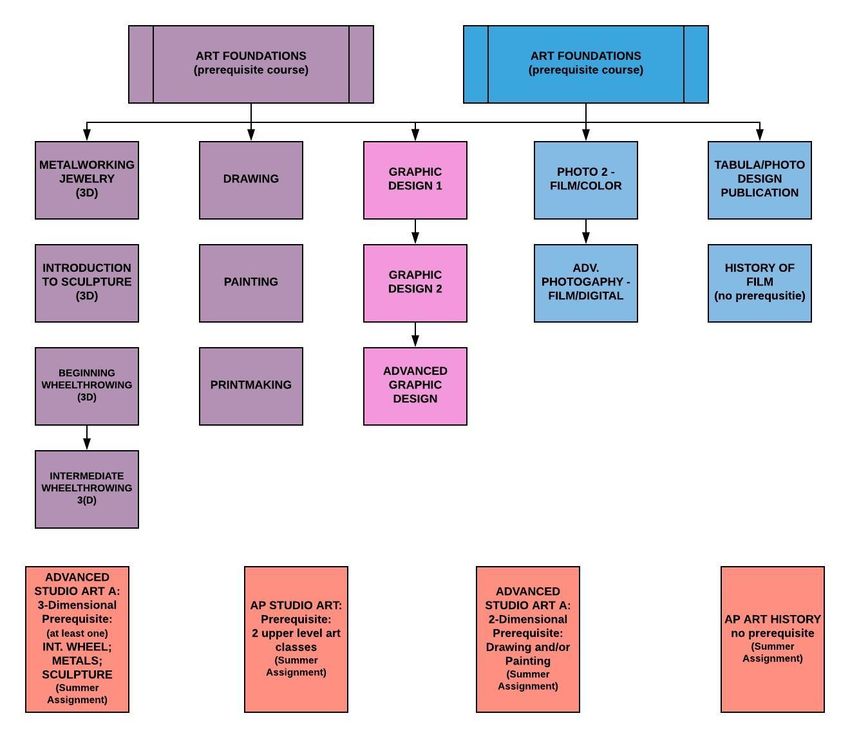
DISTRICT AND SCHOOL TELEPHONE NUMBERS
        Whenever possible, please use the direct telephone lines shown below to contact school employees.

                                   BOARD OF EDUCATION MEMBERS
             NAME                                  TITLE             EMAIL ADDRESS
Sarah Dixon Spivy                  Board President            sspivy@oprfhs.org
Craig Iseli                        Board Vice President       ciseli@oprfhs.org
Thomas Cofsky                      Board Secretary            tcofsky@oprfhs.org
Gina Harris                        Member                     gharris@oprfhs.org
Dr. Jackie Moore                   Member                     Jackie.moore@oprfhs.org
Thomas Cofsky                      Member                     tcofsky@oprfhs.org
Craig Iseli                        Member                     ciseli@oprfhs.org
Ralph Martire                      Member                     rmartire@oprfhs.org
Matt Baron                         Member                     mbaron@oprfhs.org

                                    EXECUTIVE CABINET MEMBERS
             NAME                                   TITLE                          PHONE NUMBER
Dr. Joylynn Pruitt-Adams           Superintendent                            708-434-3211
Dr. LeVar Ammons                   Executive Director, Equity/Student        708-434-3373
                                   Success
Ronald Anderson                    Chief Operations Office                   708-434-3220
Gregory T. Johnson                 Associate Superintendent                  708-434-3215
Roxana Sanders                     Assistant Superintendent/HR               708-434-3214
Cyndi Sidor                        Chief Financial Officer                   708-434-3264
Karin Sullivan                     Executive Director/Communications &       708-434-3691
                                   Community Relations
Chris Thieme                       Senior Director, Educational              708-434-3275
                                   Technology
Shalema Francois-Blue              Executive Director/Special Education      708-434-3106

                                     BUILDING LEADERSHIP TEAM
              NAME                                 TITLE                           PHONE NUMBER
Dr. Laurie Fiorenza                Director of Student Learning              708-434-3205
Susan Johnson                      Director of Student Activities            708-434-3174
Kristen McKee                      Coordinator/Learning Analytics            708-434-3225
                                   Support
Lynda Parker                       Director of Student Services              708-434-3258
John Stelzer                       Athletic Director                         708-434-3000

                                              DIVISION HEADS
               NAME                           DEPARTMENT                          PHONE NUMBERS
Dr. Kennedi Dixon                  Divisional Director, SPED                 708-434-3105
Dr. Julie Frey                     Mathematics                               708-434-3748
Helen Gallagher                    English                                   708-434-3378
Amy Hill                           History                                   708-434-3379
Matthew Kirkpatrick                Science                                   708-434-3749
Clay Reagan                        Physical Education/Driver Education       708-434-3250
Semaj Coleman                      Fine & Applied Arts                       708-434-3257
Claudia Sahagun                    World Languages                           708-434-3884
                                                                                                            3
                                                                                                            Page
DISTRICT AND SCHOOL TELEPHONE NUMBERS (con’t)
Whenever possible, please use the direct telephone lines shown below to contact school employees.

                                        COUNSELORS
                             NAME                        PHONE NUMBER
               Brandi Ambrose                       708-434-3711
               Meghan Cahill                        708-434-3716
               Julie Fuentes                        708-434-3709
               Jacqueline Hanson                    708-434-3705
               Joseph Herbst                        708-434-3707
               Darryl Hobson                        708-434-3207
               Kris Johnson                         708-434-3714
               Heidi Lynch                          708-434-3718
               Esteban Medina                       708-434-3718
               Pete Nixen                           708-434-3712
               Carolyn Ojikutu                      708-434-3713
               Darek Radziszewski                   708-434-3708
               Thaddeus Sherman                     708-434-3841
               Scott Sponsler                       708-434-3717
               Erica White                          708-434-3710

                               DEANS OF DISCIPLINE
                            NAME                PHONE NUMBER
               Brian Beyers                708-434-3724
               Janel Bishop                708-434-3726
               Amanda Neuman               708-434-3731
               Jonathan Silver             708-434-3725
               Alisa Walton                708-434-3727

                                                                                                    4
                                                                                                    Page
SCHOOL DISTRICT PHILOSOPHY

VISION
Oak Park and River Forest High School will become an ever-improving model of equity and excellence that will
enable all students to achieve their full potential.

MISSION
Oak Park and River Forest High School provides a dynamic, supportive learning environment that cultivates
knowledge, skill, and character and strives for equity and excellence for all students.

VALUES
      1. We believe all students are capable of high levels of academic and social success.
      2. We embrace our diversity and believe race, income, gender, and learning differences should not predict
         success.
      3. We believe trusting, collaborative relationships and strong communication establish a safe and respectful
         school community.
      4. We believe an excellent educational environment cultivates curiosity, imagination, character, leadership,
         critical thinking, and communication skills.
      5. We believe in allocating resources in equitable, transparent, and purposeful ways.
      6. We believe in adult learning and leadership that supports equity and excellence for all students.
      7. We believe in providing academic and social supports for all students.

CROSS REF: 2:10 (School District Governance), 3:10 (Goals and Objectives), 6:10 (Educational Philosophy and
Objectives)

ADOPTED: August 28, 2014

SCHOOL CREST AND MOTTO: THOSE THINGS THAT ARE BEST
The symbols of the seal stand for the name of the school: the acorn and oak leaves for Oak, the three small trees
for Park, the wavy lines for River, and the trees again for Forest. Thus, they represent Oak Park and River Forest.
The words on the seal are in the Greek language. In English, they are “Those Things That Are Best.” They mean that
each person should strive for the best things and high ideals. It is hoped that the motto will have this meaning for each
teacher and student.
The seal, worked in orange and blue upon a deep blue background, serves as the school flag. The flag was designed
by students in art classes.
The seal has been registered for copyright and cannot be used except for official school business. It was originally
designed by Mr. Lee M. Watson, a teacher in the school, and was first used in 1908.

                                                                                                                            5
                                                                                                                            Page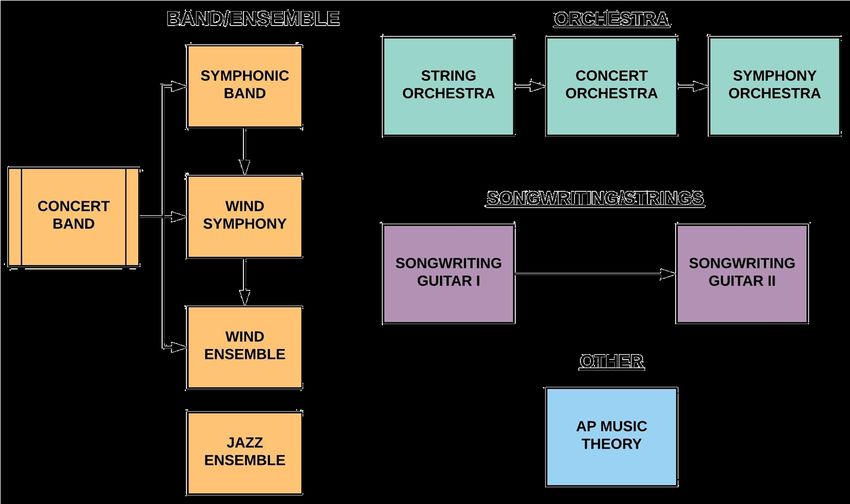
HUMAN DIGNITY AND DIVERSITY
The Board of Education recognizes the diverse character of the Villages of Oak Park and River Forest and asserts
that, in a society characterized by that diversity, it is important that persons in the school community understand
both their own heritage and the heritage of others.
Respect for the rights of others encourages understanding and interaction necessary to good citizenship. There shall be
no discrimination against any individual because of race, religion, nationality, gender, disability, physical
characteristics or sexual orientation.*
Each individual shall be considered as unique with individual strengths, talents, skills, and shortcomings; shall have
equal access to all school-related opportunities; shall be regarded in the same high esteem; and shall equally be
encouraged to fulfill his or her potential as a human being. OPRFHS is committed to providing an inclusive
education for all students where racial and economic predictability are eliminated in student achievement and success.
Negative or discriminatory behavior in violation of this policy shall be challenged wherever it occurs and dealt with
appropriately.
*Civil Rights are defined by local, state and federal laws. For purposes of this statement, "sexual orientation" is
defined as the actual or perceived state of heterosexuality, homosexuality, bisexuality, or gender expression.
Amended: November 19, 2009

TITLE IX COMPLIANCE
Oak Park and River Forest High School intends to be in full compliance with all provisions of Title IX of the
education amendments of 1972. Title IX requires all recipients of federal financial assistance not to discriminate on
the basis of sex in educational programs and activities or in the recruitment and employment of personnel. District
200 School Board Policy 101A states: “No student or employee shall, on the basis of his or her gender, be denied
equal access to courses of instruction, programs, activities, services, employment opportunity or employment benefits
of Oak Park and River Forest High School District No. 200, subject to applicable state and federal laws and
regulations.” Requests for additional information or written complaints regarding Title IX provisions should be
directed to the Superintendent of Oak Park and River Forest High School District 200.

STUDENT RESPONSIBILITIES
Much of the responsibility for obtaining an education at Oak Park and River Forest High School belongs to the
student. If you are a student, you are expected to assume the following responsibilities:
     1. Establish and maintain good communication with your teachers; speak up and make teachers aware when you do
          not understand; seek help when needed; be alert to academic expectations; show a genuine interest in your work.
     2. Be punctual and regular in attendance to all classes and commitments.
     3. Budget your time and complete all assignments.
     4. Eat balanced meals and get at least eight hours of sleep on nights preceding school days.
     5. Become familiar with the school’s dress and behavior expectations and comply with all school regulations.
     6. Become familiar with the school’s graduation requirements and the admission and graduation requirements for the
          college of your choice. Become cognizant of the advance preparation required for a desired job.
     7. Be aware of your academic progress; keep abreast of your progress in each class; be alert to the credits earned
          and those that must be earned to satisfy graduation requirements.
     8. Keep yourself and your parents aware of all important dates; be alert to PSAT/NMSQT, AP, ACT, and SAT
         registration and testing dates; be informed of all meetings related to college planning and financial aid.
     9. Maintain an accurate perception of the roles that success and failure play in your life. Recognize that you learn
         from your failures as well as your successes.
     10. Become aware of your personal strengths and weaknesses. Take full advantage of your strengths and strive to
         remedy weaknesses.
     11. Set realistic and challenging goals and strive to exceed your personal limitations.
     12. Regularly assess your progress toward personal goals. Involve others in the assessment process.
     13. Become actively involved in school. Support school activities as a participant and as a fan.
                                                                                                                            6

     14. Promote and maintain a healthy family relationship. Involve your family in your experiences and in your plan for
                                                                                                                            Page

         success.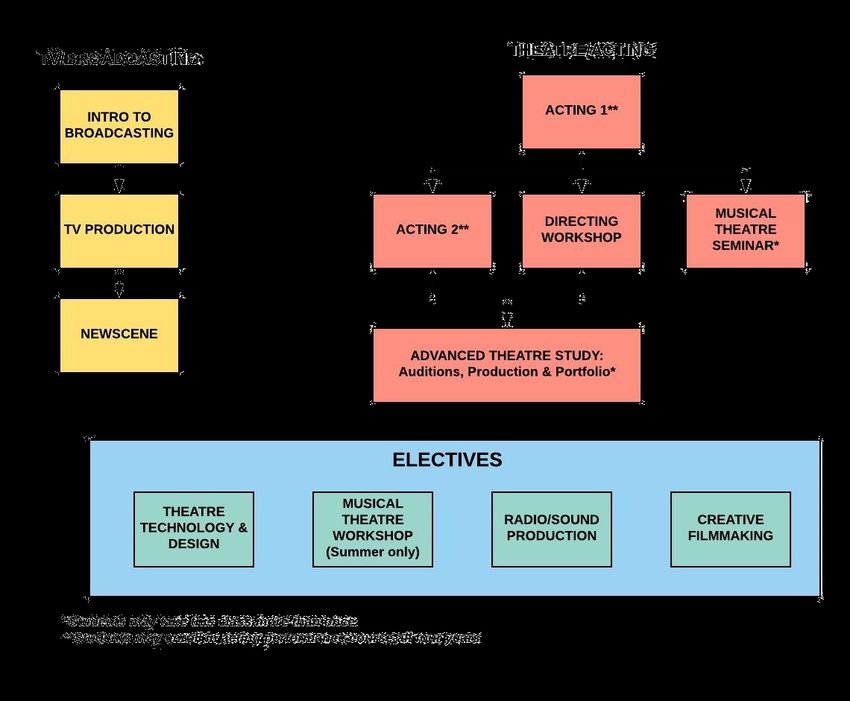
PARENT/GUARDIAN RESPONSIBILITIES
Parents are also expected to assume responsibilities for the education of their students. If you are a parent/
guardian of an OPRFHS student, you are expected to assume the following responsibilities:

      1. Provide a quiet study area in the home.
      2. Discuss work that is being done in classes and follow up to see that all assignments are completed. Use
         Family Access to stay abreast of your student's progress in each course.
      3. Communicate a genuine interest in schoolwork and assist with drill and practice whenever possible.
      4. Insist on punctual and regular attendance to school and to all classes and study halls during the school day.
      5. Refrain from scheduling family trips and other events that interfere with school.
      6. Notify the school on the day of the absence if an emergency necessitates a full or partial day of absence.
      7. Ensure that your student gets balanced meals and sufficient rest.
      8. Establish and maintain good communication with your student’s teachers and counselor; keep abreast of your
         student’s progress; share your student’s strengths and weaknesses; solicit the teachers’ help whenever there
         is a problem.
      9. Assist your student in developing a realistic concept of success and failure.
     10. Assist your student in recognizing his or her strengths and weaknesses.
     11. Assist your student in setting realistic and challenging goals.
     12. Assist your student in assessing his or her progress in attaining these goals.
     13. Encourage your student to strive to build upon strengths, to remedy weaknesses, and to overcome personal
         limitations.
     14. Provide constant support and appropriate recognition for your student’s efforts and accomplishments.
     15. Become acquainted with your student’s friends and their families.
     16. Encourage your student to become actively involved in curricular and co-curricular activities.
     17. Serve as a role model by attending and supporting school activities.

PARENT CONFERENCES
Scheduled parent-teacher conferences typically occur in the fall after the end of the first grading period. Parents
are notified by mail, email, and the school website of the date(s) of conferences and are invited to meet with their
student’s teachers to discuss the student’s progress toward achieving course objectives. In addition to this time that is
formally set aside for conferences, parents are welcome to contact faculty and administrators to discuss their questions
and concerns. While many topics can be handled by a phone conversation or by email exchange, some may require a
meeting. In such instances, parents should call or email a counselor or teacher for a mutually convenient meeting
time. Parents should not expect teachers, counselors, or administrators to be available without a prearranged
appointment.

                                                                                                                            7
                                                                                                                            Page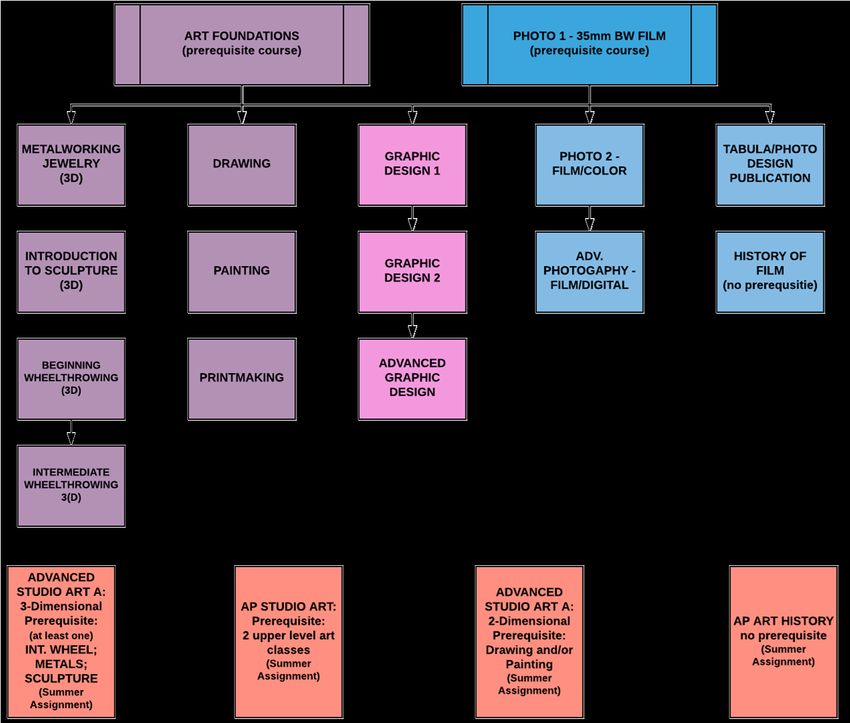
PARENTS RIGHT-TO-KNOW
In accordance with ESEA Section 1111(h)(6) Parents Right to Know, District 200 is notifying every parent that
you have the right and may request information regarding the professional qualifications of your child's classroom
teacher. This information regarding the professional qualifications of your child's classroom teachers includes, at a
minimum, the following:

   1. Whether the teacher has met State qualification and licensing criteria for the grade levels and subject areas in
      which the teacher provides instruction.
   2. Whether the teacher is teaching under emergency or other provisional status through which State qualification
      or licensing criteria have been waived. The baccalaureate degree major of the teacher and any other graduate
      certification or degree held by the teacher, and the field of discipline of the certification or degree.
   3. Whether the child is provided services by paraprofessionals and, if so, their qualifications.
   4. If at any time your child has been taught for 4 or more consecutive weeks by a teacher not highly qualified, the
      school will notify you. If you have questions, contact the Director of Student Learning.

INDIVIDUAL ACADEMIC PLANNING and MASTER SCHEDULE BUILDING
Individual student planning occurs throughout each school year. Students work with counselors who use teacher
recommendations and student and/or parent requests to select appropriate courses. After analyzing the student
requests, the administration develops a plan for staffing courses as well as purchasing equipment and supplies for the
following school year. During the second and third quarter and the development of appropriate staffing for courses,
course verification reports will be posted in Family Access. Parents have until mid-January to request in writing that
counselors make changes for the next school year. After mid-January, all course requests are considered final.
Changes will be considered only as a result of second semester final grades, completion of summer school classes, or
school scheduling error. NOTE: Requests to change lunch periods will be accommodated only for demonstrated
medical need as changing lunch periods causes imbalances in academic periods.

CLASS ADDITIONS/WITHDRAWALS
After the 5th day of school attendance, new classes no longer will be added to a student's schedule. If a student
withdraws from a class after the 6th week of school attendance, a grade of W will show on the transcript. If a student
withdraws from a class after the 9th week of school attendance, a grade of WF will show on the transcript. It is
expected that an in-person conversation will occur with the classroom teacher before a withdrawal request is made.

COURSE PLACEMENT CHANGES BETWEEN AP, HONORS, COLLEGE PREP,
AND TRANSITIONAL
Course placement requests may be initiated by a teacher, student, counselor, or parent. A request does not
automatically ensure a change can be made. If a class change request is granted, a move will only occur if space is
available. A student's performance in current and past courses plus any relevant test scores can be used in
evaluating a prospective course level change. It is expected that a conversation will occur at each level (student, parent,
teacher, counselor, Division Head) to ensure that the change is appropriate. Students and parents must be aware that a
prospective level change may alter a student's current schedule. In some cases, a preferred class may be full
which will prohibit a prospective change. Course level changes may occur within the first six weeks of the semester.
If a level change is requested after the first six weeks of a year-long course, the request will be reviewed by the
Division Head, Counselor, and classroom teacher at the end of the first semester.

CHANGE REQUEST: TEACHER, COUNSELOR, OR DEAN
Requests to change a teacher, counselor, or dean will not be considered until after the end of the first semester. The
person making the change request must first discuss the concern with the counselor or dean. If resolution is not
achieved as a result of the discussion, the student/parent/guardian must follow the District Decision and Appeals
process described in this catalog. If a counselor or dean change is made, the student will be moved to the
counselor/dean who currently carries the lowest caseload.
                                                                                                                              8
                                                                                                                              Page
COURSE NUMBERING SYSTEM AND DESCRIPTORS
Arabic numerals following a course title are used to designate the specific semesters of subjects which extend
over more than one semester. The Academic Catalog lists full-year courses as three-digit codes. A one-semester
course offered only during a specific semester contains four digits with the final digit reflecting the semester in which
the course is offered.
If the description of a course lacks the designation “Open to . . .” it may be assumed that the course is open to all
students. If no prerequisite is indicated, it may be assumed that there is no prerequisite for the course. All questions
regarding course descriptions should be directed to the Division Head of the division in which the course is offered or
to the Director of Student Learning.

STUDENT COURSE LOAD
The maximum number of semester courses a sophomore, junior, or senior may take is 7. Freshmen are limited
to 5 semester courses plus Physical Education/Health Education and, if they choose, a performance class (band,
orchestra, chorus, or acting) for non GPA-bearing weight. Freshmen not enrolled in a music or acting performance
course or in a curricular intervention program will be enrolled in freshman study hall.
In the summer term, a student may enroll for 1, 2, or 3 courses. Students who desire to take courses in the summer
term are encouraged to take them at Oak Park and River Forest High School. If a student needs courses not offered by
the Oak Park and River Forest High School Summer School, the student may take them in the summer term at
another accredited high school.

                                                                                                                            9
                                                                                                                            Page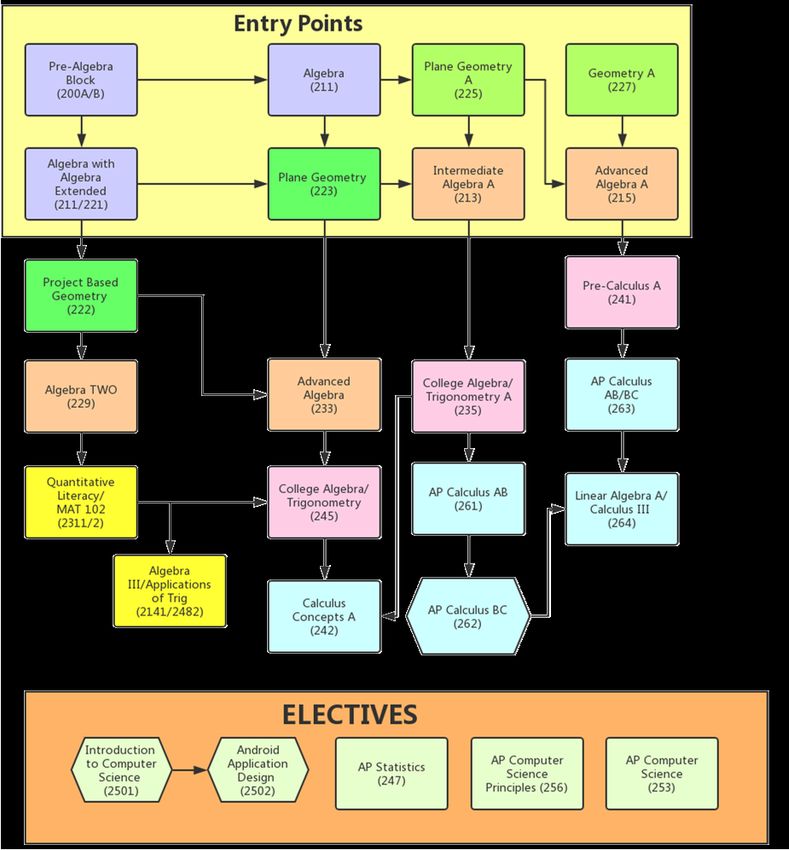
GRADUATION REQUIREMENTS (2020-2023)
A student must earn a minimum of 43 credits as specified in the table below to be eligible for an OPRFHS diploma. A credit is
granted for any credit-bearing semester course in which a student earns a passing grade. A student must enroll in at least 5 full-
credit courses per semester to be considered a full-time student. Requirements may be altered for Special Education students
according to the provisions of their Individual Education Plan (IEP). Summer field courses may not be used to satisfy any specific
graduation requirement; they may be used only to satisfy the elective requirement.

            Subject                         # of Credits                                    Comments
 English*                                     8 Credits
 Mathematics*                                 6 credits          2 Algebra, 2 Geometry, and 2 other math credits
 Science*                                     4 credits          2 credits must be in a laboratory science
 History*                                     4 credits          2 world history credits and 2 American history credits

                                                                 **State requirement beginning with the Class of 2020. Civics
 Civics**                                     1 credit           must be taken at OPRHS. Students must also pass the
                                                                 Constitution test within the Civics class.
 World Language/Culture                       1 credit
 Fine/Performing Arts                         1 credit
 Applied Arts                                 1 credit
 Computer Proficiency                         1 credit
 Financial Literacy                           1 credit           Financial Literacy or AP Economics fulfill this requirement
 Health Education*                            1 credit           Health Education is taken during the freshman year at OPRFHS
                                                                 as part of the freshman year core P.E. program.
                                                                 Students who take Driver/Safety Ed. outside of the Semester 1 or
 Driver Ed./Safety Ed.                        1 credit           2 of the regular school year at OPRFHS must take an additional
                                                                 PE elective credit.
                                                                 *7 credits of PE are required for the class of 2020.

                                                                 *6 credits of PE plus 1 Health and 1 Driver Ed are required for
                                                                 the Class of 2021 and beyond. Students shall be enrolled in a
                                             6- 7 credits        PE, Health or Drivers Ed/Safety Ed for every semester while in
 Physical Education                                              attendance at OPRF. A 7th credit of PE is required of students
                                                                 who take Driver/Safety Ed outside of the traditional school
                                                                 day of the regular school year.

                                                                 Students who receive a PE exemption need 1 additional elective
                                                                 credit for each exception.
 Electives                                 7 credits             May be increased due to reasons described above.
 TOTAL                                  43 CREDITS
*Denotes a state requirement; ** Denotes a state requirement starting with the Class of 2020.

Non-Credit State Requirements
SAT Exam: The state requires students to take the SAT to receive a diploma.
Writing-Intensive Courses: 4 credits: Two credits of writing-intensive coursework must be earned in English, and the other 2
credits may be earned in English or in any other subject in courses deemed writing intensive. The total number of credits required
for graduation is not increased by the writing-intensive course requirement. All English courses are deemed writing intensive.
Courses that satisfy the World Languages/Cultures requirement: All World Languages courses except Etymology; the
following History Division courses: Asian Studies, African History, Latin American History, Modern Middle Eastern History A, and
AP European History.
Courses that satisfy the Fine and Performing Arts requirement: All Visual Arts, Music, and Theatre/Broadcasting courses.
Courses that satisfy the Applied Arts requirement: All Family and Consumer Science, Technology and Engineering, and
Business Education courses except Financial Literacy. Computer Applications, and Computer Applications A satisfy the Applied
                                                                                                                                     10

Arts requirement only if the student has met the Computer Proficiency requirement by successfully completing Applied
Keyboarding/Introductory Microsoft Office.
                                                                                                                                     Page
Non-credit State Mandates (Cont’d)
Courses that satisfy EITHER the Fine and performing Arts requirement OR the Applied Arts requirement: Introduction to
Broadcasting, Radio/Sound Production, Television Production, Newscene, Theatre Technology and Design, Tabula/Photo Design
Publication, Directing Workshop.
Courses that satisfy the Computer Proficiency requirement: Applied Keyboarding/Introductory Microsoft Office, Computer
Applications, Computer Applications A, AP Computer Science Principles, Student Helpdesk Internship.
GRADUATION REQUIREMENTS 4-YEAR PLAN
Through the Family Access Portal in Skyward, parents and students have the ability to create a 4-year plan based on graduation requirements.
The 4-year plan tool is located under the “Career Plan” tab.
ACADEMIC PREPARATION FOR COLLEGE AND CAREER READINESS
Students planning to attend college should be aware that college admissions requirements may differ from and often exceed
the requirements for graduating from high school. Although admissions requirements vary among colleges and universities,
students planning to attend college should consider the following recommendations:
• 4 years of English
• 4 years of Math
• 3 years of History/Social Science
• 3 years of Laboratory Science
• 2 years of a World Language
Counselors discuss college admissions requirements along with academic demands as they help students identify colleges
and universities to which they would like to apply. Students will find specific admissions information on college websites. In
addition to a student’s specific high school courses and credits, other principal factors in considering an applicant for
admission to college include
• The rigor or difficulty of a student’s high school program
• High school grades
• Test results, including the ACT, SAT, and Advanced Placement tests
• Personal qualities, such as motivation, enthusiasm for learning, social adjustment, emotional
maturity, integrity, responsibility, special aptitudes and skills, achievement, and leadership
• Co-curricular activities and athletic participation, which demonstrates involvement in the life of
the school and/or the community
COLLEGE AND CAREER INFORMATION
College Representatives Program – Room 207. Each year more than 200 college representatives (college callers) visit
OPRFHS. Students are informed of these visits through a weekly College Callers Bulletin posted in the daily Student
Bulletin, Naviance notices, and reminder texts. College representatives meet with interested students in designated posted
locations. Juniors or seniors wishing to meet with a college representative during a class period must obtain a college
interview pass from their counselor and obtain the signature of their classroom teacher before the College Caller meeting.
OPRFHS Web Page and Internet Access. Resource information is available and easily accessible through the OPRFHS
website, www.oprfhs.org. Specific college, career, financial aid, scholarship, and other related post- secondary information
is located at http://www.oprfhs.org/academics under "Student Services." Other pertinent information related to post-
secondary educational planning can be accessed through the various Internet bookmarks.
STATE TESTS
OPRFHS administers standardized tests in accordance with the state's testing requirements. State tests include the following:
Test Required for Timeframe
SAT with Essay* All juniors except those whose IEPs specify the alternate assessment April
DLM-Alternate Assessment Juniors with IEPs that specify the alternate assessment March/April
English Language Learners who have not yet attained proficient scores
ACCESS for ELLs January/February
on a prior year’s ACCESS test
All students enrolled in a first-year biology course, regardless of grade
Illinois Science Assessment March/April
level
* The SAT is a graduation requirement for all Illinois public high school students, unless they have an IEP that specifies the Dynamic Learning Maps-
11
Alternate Assessment (DLM-AA) as the appropriate state test. Further information about required state assessments is available at
www.isbe.net/assessment/default.htm
PageTEST PREPARATION
The school contracts with test preparation companies to provide evening and Saturday classes for juniors and seniors
who are interested in becoming better prepared for the PSAT, ACT, or SAT. Letters are sent to the homes of
juniors notifying them of test prep opportunities. Information about test prep programs also appears in the student
bulletin, HuskiEmail, and in Naviance emails. There is a tuition charge (which varies according to program) for these
classes, and need-based financial aid may be available. Please contact the Director of Assessment and Research or
your student's counselor if you have questions about test preparation.
COLLEGE TESTING
SAT EXAM
The SAT is a multiple choice test of knowledge and skills in reading, math, and writing, which may or n may not
include a short essay. SAT Subject Tests are 1-hour tests, primarily multiple choice, in specific subject areas.
Website: www.collegeboard.org
SAT High School Code 143-245
SAT Test Center Code 14460
SAT test dates and registration deadlines may be found on the College Board website at
https://collegereadiness.collegeboard.org/
PSAT/NMSQT EXAM
The Preliminary Scholastic Aptitude Test/National Merit Scholarship Qualifying Test (PSAT/NMSQT) is administered
each year in October. It is a multiple choice test of skills in critical reading, math problem-solving, and writing. Juniors
who score exceptionally well on the PSAT/NMSQT may qualify for recognition or scholarships from the National Merit
Scholarship Corporation or the College Board. Tuition-based PSAT prep classes are available to juniors during the first
6 weeks of each school year. Further information is available in the office of the Coordinator of Assessment and
Research. Website: h t t p s : / / c o l l e g e r e a d i n e s s . c o l l e g e b o a r d . o r g / p s a t - n m s q t - p s a t - 1 0
AP EXAMS
Advanced Placement (AP) tests are given in May. Registration takes place in February. The tests are usually taken by
accelerated juniors and seniors who are enrolled in Advanced Placement courses. These exams may result in college
credit in the specific areas of English, history, mathematics, world languages, science, computer science, social
sciences, music, and art. Advanced Placement (AP) test dates may be found on the College Board website at
https://apstudent.collegeboard.org
ACT EXAM
The ACT assesses high school students' general educational development and their ability to complete college-level
work. The multiple choice tests cover four skill areas: English, mathematics, reading, and science. The writing test,
which is optional, measures skills in planning and writing a short essay. Students are advised to check with their
college(s) of choice as to whether the writing portion is required or strongly advised.
Website: www.act.org
ACT H.S. Code 143-245
ACT Test Center Code 174510
ACT test dates and registration deadlines may be found on the ACT website at
http://www.act.org/content/act/en/products-and-services/the-act/registration.html 12
PageGRADING
Grade reports are mailed to parents 2 times each semester. The following marks are given:
A (4 pts.) A is the highest mark and represents superior achievement.
B (3 pts.) B represents above-average work.
C (2 pts.) C represents average work. An average of C for 4 years should place a student above the lowest
quarter of the class and probably in the middle third of the class.
D (1 pt.) D represents below average work, but passing. A 4-year average of D will place a student in the
lowest quarter of the class.
F (0 pts.) F is the failure mark.
FX An F is changed to an FX when a failed course has been successfully retaken with the exact same
course. The FX mark is not computed in the GPA.
I Incomplete. Usually issued due to an extended excused absence, the grade is withheld until the work is
made up within a designated period of time. An I grade given as a semester grade must be resolved by
the end of the next quarter or the grade will be converted to an F. The I mark is not computed in the
GPA.
N Grade and credit are withheld due to excessive absences in a credit-granting course. The N mark is
not computed in the GPA.
P Passing. Under some circumstances, a student may request to be graded on a pass/fail basis. Unless
a student has special circumstances, a student may not request the pass/fail option for any course
specifically required for graduation. The request to exercise the pass/fail option must be made to the
teacher on or before the last day of the 9th week of the semester. The P mark is not computed in the
GPA. In some instances, passing a course will not meet the prerequisite for another course within the
same sequence and will require appropriate division head approval to move through the curriculum.
W Withdrawn. When a student withdraws from a course after the 6th week but before the end of the 9th
week of a semester or withdraws from OPRFHS at any time during a semester, he/she receives a mark
of W. The W mark is not computed in the GPA. A student who withdraws from a course during the first
6 weeks of a semester will have no indication of the course on his/her transcript.
WF (0 pts.) A student who withdraws from a course during the final 9 weeks of a semester receives a mark of WF.
The WF mark is computed in the GPA.
Students may not withdraw from a course if a mark of N has already been given in the course due to excessive
absences or tardies.
Grades for each quarter are independent of each other. Both quarter grades and the final exam grade (when
appropriate) are used to determine the semester grade.
A student who receives an F in a course may retake the exact same course and have a higher grade entered on the
transcript for the retaken course. The F for the original course then becomes an FX. For courses in which a student
has received a passing grade, no retakes are permitted.
13
PageMID-QUARTER FAILURE WARNINGS
Mid-Quarter Failure Warnings will be posted in Family Access for any student who is reported by the student's teacher
as receiving a D or F in any course by the midpoint of the 9-week grading period. Students and parents receive grades at
the end of each quarter and at the end of each semester via Family Access. The Mid-Quarter Failure Warning to parents and
students may include comments specific to the student's situation in the particular class. Comments may relate to areas of
concern or areas of particularly commendable performance. Teachers can use numbered or free form comments on the
notice to specify the areas in which the student needs improvement. Also, the notice includes a request that the parents
contact the teacher via phone or email to discuss the student's performance and determine the best course of action. Parents
may receive specific information that will help students improve their classroom performance and study skills and catch up
with assignments before the end of the quarter when course grades are given. Email addresses for all teachers can be found
on the school’s website at https://directory.oprfhs.org/search
GRADE POINT AVERAGE (GPA)
Completed coursework comprises the basic component in computing a student’s Grade Point Average (GPA), which is the
average of a student’s academic performance. Coursework in Physical Education (except for Health Education) and Driver
Education is excluded from the GPA. Coursework in musical performance, theatre performance, school publications, and
Newscene in the student's sophomore, junior and/or senior year will be included in the GPA.
This base GPA is then weighted by a factor called the Academic Program Index (API), representing the academic difficulty
of a student’s total program. The API is determined by the following formula: API = honors level points x .01 + 1.0
Honors level points may be accumulated by earning an A or B grade in any of the following courses.
FRESHMEN SOPHOMORES JUNIORS SENIORS
COURSES (9TH GRADE) (10TH GRADE) (11TH GRADE) (12TH GRADE)
African American Literature A
Humanities A
English Literature A Women's Literature A
ENGLISH English A English Literature A/J Work of One Author: Shakespeare A
FINE & APPLIED Advanced Studio Art A: 2D/3D
ARTS Computer Applications A Computer Applications A
Modern Middle Eastern History A
United States History A Philosphy A Modern Middle Eastern History A
HISTORY World History A World History A United States History A Philosphy A
Advanced Algebra A College Algebra/Trigonometry A
Advanced Algebra A Computer Science A (CATA) College Algebra/Trigonometry A
Computer Science A Geometry A Computer Science A (CATA)
Geometry A Intermediate Algebra A Intermediate Algebra A Computer Science A
Plane Geometry A Plane Geometry A Linear Algebra A/Calculus III A Linear Algebra A/Calculus III A
MATHEMATICS Pre-Calculus A* Pre-Calculus A* Pre-Calculus A Pre-Calculus A
Biology A
SCIENCE Biology A Chemistry A
TECHNOLOGY Biology A Chemistry A Physics A
Adv. Spanish Lit. & Composition A
Chinese 5-8 A
French 1-8 A
German 5-8 A
Italian 3-10 A
Japanese 5-8 A
Latin Poetry A
Latin Prose A
WORLD Spanish 1-8 A
LANGUAGES** Spanish Langauge, Literature, and Films A
AP English Language and AP English Literature and
ENGLISH Composition Composition
AP Studio Art
AP Art History
FINE & APPLIED AP Art History AP Music Theory
ARTS AP Music Theory AP Economics 1-2
AP European History
AP Psychology AP European History
AP United States History AP Psychology
AP United States Politics and AP United States Politics and
HISTORY AP United States History Government Government
AP Calculus AB
AP Calculus BC
AP Calculus AB/BC
AP Computer Science
MATHEMATICS AP Computer Science AP Statistics
14
AP Biology
AP Chemistry
AP Environmental Science
Page
SCIENCE
TECHNOLOGY AP Physics C
WORLD AP French 9-10
LANGUAGES** AP Spanish 9-10
*per requisites - if qualified **teacher recommendation, previous language experienceThere is no limit to the number of honors level courses a student may take; however, there is a limit to the number of
honors level points that a student may receive per semester. A student may receive honors level points for up to 3
courses in any one semester. “Extra” points from one semester may be carried forward to subsequent semesters. A
maximum of 24 honors level points will be included in the calculation of weighted grade point average.
In the last step of this process, the student’s GPA is multiplied by the API. This weighted GPA is used to determine
honor societies eligibility, scholarship awards, and scholarship cup. A student’s high school transcript will show the
unweighted and weighted GPAs.
Example: A student earns A or B grades in 3 honors level courses first semester. The Academic Program Index
(API) is calculated as follows:
API = 3 x .01 +1.0
API = 1.03
Suppose that the student’s overall GPA through the end of first semester is 3.4. The weighted GPA (WGPA) is
calculated as follows:
WGPA = GPA x API
WGPA = 3.4 x 1.03
WGPA = 3.502
If this student earns A or B grades in 3 or more honors level courses during the second semester, the API at the end of
the year will be 1.06.
Handling of Repeats of Failed Courses in the GPA. When a failed course has been repeated and passed, both the
failing and the passing grades will be listed on the student’s transcript, but only the passing grade for the repeated
course will be recognized in computing a student’s overall GPA. However, if a repeated course is failed more than
once, all failures except one will be counted toward the GPA.
Honors Level Points for Transfer Credits. Honors level points for A and B grades in honors level courses taken in
other high schools will be awarded to transfer students.
ACADEMIC GROUPING
For many years it has been the practice of Oak Park and River Forest High School to group students according to
their past performance in specific subject areas. For example, a student with excellent performance in mathematics
and science and average performance in other academic subjects would be placed in accelerated/honors sections in
mathematics and science and in college preparatory sections in English, history, and world languages.
Transition classes are designed for students whose past performance indicates a need for greater instructional support
or a varied pace of instruction.
The following factors are considered in determining the appropriate placement in academic groups:
1. Teacher and counselor profiles and recommendations
2. Past academic achievement in the relevant subject areas
3. Placement and standardized test results
4. Reading ability
5. Personal factors: study habits, motivation, attendance record
Academic grouping is used in some courses within the English, Fine and Applied Arts, History, Mathematics, Science
and Technology, and World Languages Divisions. In accelerated/honors and Advanced Placement classes, increased
emphasis is placed upon concepts, abstract relationships, critical thinking, and creative thinking. Less emphasis is
placed upon drills, examples, and descriptive materials. Students who earn a “C” or higher in courses eligible for dual
credit may receive college credit through Triton College for college level work completed in high school. (See Triton
Dual Credit Programs section of this catalog.) Students may also take the appropriate Advanced Placement
examination and may receive college credit for qualifying scores.
In deciding which level of a course to take, students are strongly urged to follow the advice of their counselor and the
recommendation of their current teacher of that subject. However, parents may override the teacher recommendation
through the appropriate measures. (See Course Placement Changes section of this catalog.)
15
PageAcademic Support Resources
Tutoring Center
The Tutoring Center is located in Room 293W and is open to all students before, during, and after the school day. The
tutors consist of content area teachers, academic support staff, and peer tutors. Tutors help students improve content
understanding, skill development, and skill application in their courses. Tutors also help students develop effective
strategies for completing homework and preparing for course assessments.
Off-Campus Teaching Program
Illinois School Code states that “it is the responsibility of each school district to provide educational support for
every student to meet Illinois Learning Standards.” To achieve that goal, the Off-Campus Teaching Program offers
academic support to students who must be off campus for medical or disciplinary reasons and to students who are
awaiting a private educational placement. Contact your student’s counselor for further information.
ELL Academic Supports
Students who have limited English proficiency as measured by the WIDA-ACCESS Placement Test will be placed in
the ELL Program. This resource is designed to help students improve their English skills and to assist them with
their needs in their academic courses.
Library Services
The OPRFHS Library has been serving the high school community since 1899. Students are encouraged to take
advantage of the Library’s collection of print books (including graphic novels), eBooks, subscription databases
(including JSTOR, The New York Times, and The Oxford English Dictionary), reference eBooks, a play script
collection, and audio books.
The Library supports recreational reading in various ways, including book talks offered by the librarians;
participation in the Abe Lincoln Award (a reading incentive program for Illinois high school students); and an after-
school book club. The Library is open from 7:30 to 3:30 every school day. The student’s ID serves as a library card
to check out materials. While fines are not incurred for overdue items, students will pay for damaged or lost print
books.
Students will benefit from using the Library and its resources during their years at OPRFHS. It is a place for
working with their teachers and classes on research assignments, selecting books for recreational reading, and
studying quietly. All are welcome.
Student Help Desk
The Student Help Desk is located in Room 293E/294. This student-run helpdesk assists students with first-line
technical support which includes distribution of Chromebooks, repairs and tech questions. Tickets for assistance can
be submitted by emailing helpdesk@oprfhs.org (anyone can open a ticket).
Testing Center
The OPRF Testing Center is open to students every school day from 7:00am to 5:00pm. The Testing Center is a
service that provides students the opportunity to make up tests (due to absence or retake accommodations) before
school, during Study Hall/lunch and after school. To utilize the Testing Center students must have their OPRF ID
and must store all materials such as; backpacks, cell phones, and electronics on the bookshelves provided, upon
entering the room. Once each student’s materials have been stored and their attendance has been recorded, the
student will receive their test and the Testing Center monitor(s) will administer the test using the standards and time
limits as designated by their classroom teacher(s).
BUILDING HOURS
The building is open to students at 7:00 a.m. each school day. Students not under the direct supervision of a teacher
or a coach are expected to be out of the building by 3:25 p.m.
BUILDING HOURS and DETENTION PROGRAM
The Detention Program runs Monday through Friday, 7:10 a.m. - 7:50 a.m., during all three lunch periods, and from
3:15 p.m. - 5:50 p.m. after school. All detentions during the week are held in Room 434. Saturday detention is held
from 8:00 a.m. - 11:00 a.m. in the North Cafeteria. Saturday detentions are not held when there is a 3-day weekend.
All detentions, with the exception of Saturday detentions, may be served in the Tutoring Center, Room 293 West,
16
before or after school. A student who chooses to serve detention in the Tutoring Center and who is actively doing
school work and not causing a disruption will serve one-half of the time owed. For example, a 2-hour detention
served in the Tutoring Center under the above conditions is reduced to a 1-hour detention.
PageHONOR ROLL AND DEAN’S LIST
Honor roll status is awarded to students who have done above-average classroom work during a specific grading
term. Above-average classroom work is defined as at least a 3.0 unweighted grade point average in a minimum
of 4 full-credit courses for which grades are awarded in accordance with the Board of Education’s policy on
grading. Grades in physical education and driver education are excluded in honor roll determination. Students who
earn a superior unweighted grade point average of 3.5 or higher will have their names placed on the Dean’s List.
SCHOLARSHIP CUP
The seniors who have the highest weighted GPA at the end of 7 semesters are awarded the Scholarship Cup.
The recipients are determined by figuring the cumulative weighted grade point averages of senior students for all
semesters at Oak Park and River Forest High School. To be eligible to win the Scholarship Cup, a senior must have
been enrolled at Oak Park and River Forest High School for a minimum of any 5 semesters preceding the award
and must be eligible to earn a diploma from this high school at the conclusion of that year.
CUM LAUDE SOCIETY
Membership in Cum Laude, the academic honor society, is based on a student’s GPA at the end of a junior's fifth or a
senior's seventh semester. The top 5 percent of the junior class and the top 15 percent of the senior class who
meet membership criteria are invited to join the society.
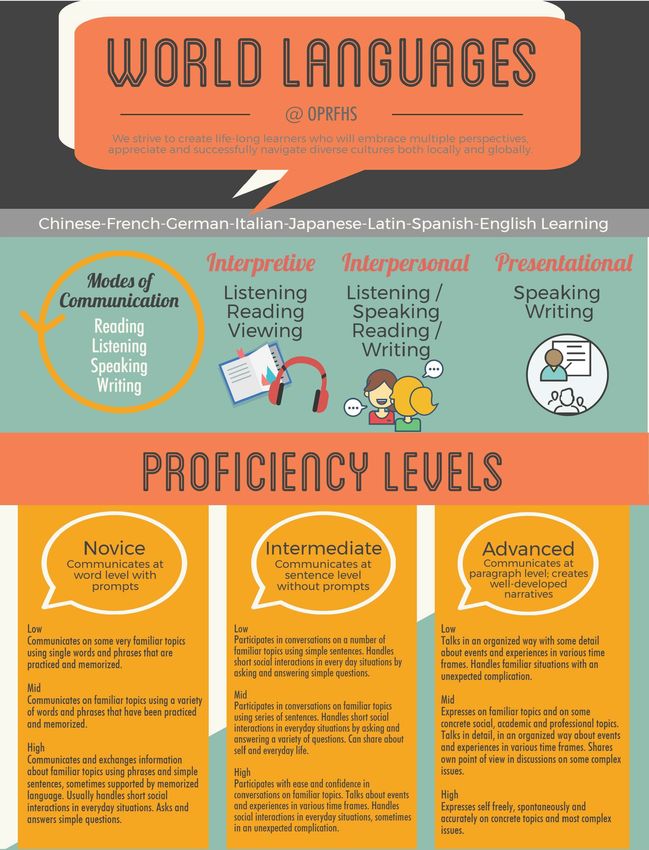
WORLD LANGUAGES HONOR SOCIETIES
Chinese. The Chinese Honor Society, which is sponsored by the National Council of Chinese Language Teachers,
was established in 2011. To qualify for membership, a student must be a junior in 3A or above in Chinese, have
maintained semester grades of A in the 3 preceding semesters of high school Chinese, have a minimum 3.2 weighted
GPA, have demonstrated interest in language and cultural activities, and have exemplified good citizenship. Students who
qualify will be given an application with the requirements for induction.
French. The Antoine de St. Exupéry Chapter of the Société Honoraire de Français, which is sponsored by the American
Association of Teachers of French, was established in 1981. To qualify for membership, a student must be a junior 3A or
above in French, have maintained semester grades of A in the 3 preceding semesters of high school French, have a
minimum 3.2 weighted GPA, have demonstrated interest in language and cultural activities, and have exemplified good
citizenship. Students who qualify will be given an application with the requirements for induction.
German. The Alpha Chi Chapter of the Deutsche Ehrenverbindung, which is sponsored by the American Association of
Teachers of German, was established in 1985. To qualify for membership, a student must be a junior in 3A or above in
German, have maintained semester grades of A in the 3 preceding semesters of high school German, have a minimum 3.2
weighted GPA, have demonstrated interest in language and cultural activities, and have exemplified good citizenship.
Students who qualify will be given an application with the requirements for induction.
Italian. The Dante Alighieri Chapter of the Società Onoraria Italica, which is sponsored by the American Association of
Teachers of Italian, was established in 1991. To qualify for membership, a student must be a junior in 3A or above in
Italian, have maintained semester grades of A in the 3 preceding semesters of high school Italian, have a minimum 3.2
weighted GPA, have demonstrated interest in language and cultural activities, and have exemplified good citizenship.
Students who qualify will be given an application with the requirements for induction.
Japanese. The Seiken Chapter of the Nihongo Yutoseikai, which is sponsored by the National Council of Japanese
Language Teachers, was established in 1991. To qualify for membership, a student must be a junior in 3A or above in
Japanese, have maintained semester grades of A in the 3 preceding semesters of high school Japanese, have a minimum
3.2 weighted GPA, have demonstrated interest in language and cultural activities, and have exemplified good citizenship.
Students who qualify will be given an application with the requirements for induction.
Latin. The Sigma Lambda Chapter of the Societas Honoris Classica, which is sponsored by the National Junior Classical
League, was established in 1985. To qualify for membership, a student must be a junior in 3A or above in Latin, have
maintained semester grades of A in the 3 preceding semesters of high school Latin, have a minimum 3.2 weighted GPA,
have demonstrated interest in language and cultural activities, and have exemplified good citizenship. Students who qualify
will be given an application with the requirements for induction.
Spanish. The Doña Perfecta Chapter of the Sociedad Honoraria Hispánica, which is sponsored by the American
Association of Teachers of Spanish and Portuguese, was established in 1979. To qualify for membership, a student must
be a junior in his/her third year of honors level Spanish, have maintained semester grades of A in the 3 preceding
semesters of high school Spanish, have a minimum 3.2 weighted GPA, have demonstrated interest in language and
cultural activities, and have exemplified good citizenship. Students who qualify will be given an application with the
requirements for induction.
Seal of Biliteracy Program. Oak Park and River Forest High School students have the opportunity to be recognized by
the State of Illinois for earning proficiency in English and an additional language. The Illinois State Board of
Education’s Seal of Biliteracy program will place an official seal on diplomas and an official recognition on transcripts
for students who qualify. Qualifications for the Seal of Biliteracy: Earn a minimum composite score of 21 on an official
administration of ACT, or earn a minimum score of 540 on the Evidence-Based Reading and Writing portion of an official
administration of the SAT, or earn a minimum overall composite score of 4.8 on the ACCESS for ELLs exam. Must have
17
earned a 4 or 5 in the Advanced Placement language exam they took as a junior or sophomore, or Earn a minimum score of
I-5 on all components of ACTFL’s Assessment of Performance toward Proficiency in Languages (AAPPL) exam, or a
minimum of Intermediate High on all components of AVANT’s STAMP exam. AAPPL, AP language exams or STAMP are
Page
options for students in 4th or 5th year language classes during the second semester.TRANSCRIPT
The high school transcript lists all courses a student has taken by semester, semester grades, weighted GPA, and
unweighted GPA. It is the official record of a student’s academic achievement while enrolled at Oak Park and River
Forest High School.
CLASSIFICATION OF STUDENT RECORDS
For complete information pertaining to student records, refer to District 200 Policy 5126 and the Administrative
Regulations for Policy 5126. Information retained for each student is classified as either permanent or temporary
record.
The student's permanent record consists of basic identifying information, the academic transcript, attendance
record, accident reports and health record, and a record of release of permanent information. Permanent records will
be kept for at least 60 years after the student withdraws or graduates from OPRFHS.
The student's temporary record consists of family background information, test scores, psychological evaluations,
special education files, teacher anecdotal records, and disciplinary information. Student temporary records will be
kept for at least 5 years after the student withdraws or graduates from OPRFHS.
INTERNSHIP/INDEPENDENT STUDY
Internship/Independent Study is an alternative program intended to meet the needs of those students who have
demonstrated a high degree of academic maturity and who possess the aptitude to pursue coursework with
substantially reduced student-teacher interaction. Students who apply for and are accepted into this program are fully
responsible for keeping the Internship/Independent Study going until its successful conclusion. In this
program, students may pursue academic credit under the supervision of a teacher endorsed or certified in the subject
area being studied and may complete credit requirements without attending regular class sessions. Internship/
Independent Study provides opportunities for academic enrichment beyond that which is offered in the published
curriculum or accessibility to coursework that cannot be scheduled into the student’s daily schedule. A student
may take only one Internship/Independent Study course per semester, and no more than four credits of Internship/
Independent Study may apply toward graduation, unless approved by the Director of Student Learning. No course
specifically required for graduation may be taken as an Internship/Independent Study, nor may specific state
mandates be satisfied through Internship/Independent Study. Furthermore, students may not exceed identified course
load limits during a given semester through the use of Internship/Independent Study without the approval of the
Director of Student Learning. Any student interested in pursuing Internship/Independent Study should consult with
the sponsoring subject matter teacher, the division head, and the counselor after securing parental approval. Division
head, counselor, cooperating teacher, and parental approval are required to participate in this program. Final approval
of the Assistant Principal of Student Learning is required. Further information and applications for
Internship/Independent Study can be obtained through your student’s counselor.
SENIOR INSTRUCTIONAL LEADERSHIP CORPS (SILC)
This program allows interested and capable seniors to partner with a mentor teacher and work as an instructional
assistant for one semester in that teacher’s classroom. The senior and the mentor teacher work together to define the
roles and responsibilities of the student assistant as well as to develop an evaluation plan designed to help the student
acquire and hone leadership skills. Students may also participate as a SILC tutor in the OPRFHS tutoring center.
Students earn 1 elective credit, evaluated on a pass/fail basis, upon the successful completion of their SILC semester.
Students interested in pursuing SILC participation typically select a course they have already taken or for which they
have a particular aptitude, as well as a teacher with whom they have developed a good relationship. Further
information and applications for SILC are available in the office of the Director of Student Learning.
CREDIT THROUGH EXTENSION, ONLINE, AND CORRESPONDENCE
COURSES
Credit earned through extension, online, or correspondence courses may be applied toward the satisfaction of
graduation requirements provided that such study commences after the successful completion of the 8th grade year.
Such credit shall be earned through the satisfactory completion of courses offered by an institution accredited by the
North Central Association of Colleges and Schools or any other regional accrediting association or by an institution
that is recognized by a state office of education. Students who wish to earn credit through extension, online or
correspondence courses MUST seek course approval from their counselor before enrolling in the course. Division
Heads must have the opportunity to fully review and approve the syllabus for any courses taken outside of
OPRFHS. Online courses should not be used to acquire the graduation credit in a laboratory or speaking based course
(this would apply to Science, Applied Arts/Technology, Fine Arts, and World Language Courses). Online courses
may not be used to satisfy the Civics, Health, and Physical Education graduation requirements.
18
A maximum of 4 such credits may be used on the OPRFHS transcript. Requests for credits to be applied to the
Page
permanent transcript must be received by the appropriate counselor prior to August 9 of the school year. If a student
takes a credit through extension, online, or correspondence during his/her senior year, the final transcript must beYou can also read


