OBD - Retrofits - Tampering - Inspection - Session 2: 10:50 - 11:50 - MODALES
←
→
Page content transcription
If your browser does not render page correctly, please read the page content below
Session 2: 10:50 – 11:50

                  OBD – Retrofits –
                Tampering – Inspection
                            Moderator: Dimitri Margaritis

             Mid-term results on the road to low emissions: 28 May 2021
Speakers:
Data access from On-Board Diagnostics (OBD)
Dimitri Margaritis (CERTH/HIT)
Simulation of retrofits
Haibo Chen (University of Leeds)
Real-world tests of retrofits
Arno Amberla (Proventia)
Tampering and inspection: technical aspects
Dimitri Margaritis (CERTH/HIT)
Tampering and inspection: legal aspects
Esther Tenge (Spark Legal Network)
Data access from On-Board Diagnostics
                (OBD)
                        Dimitri Margaritis
                           CERTH/HIT

    Mid-term results on the road to low emissions: 28 May 2021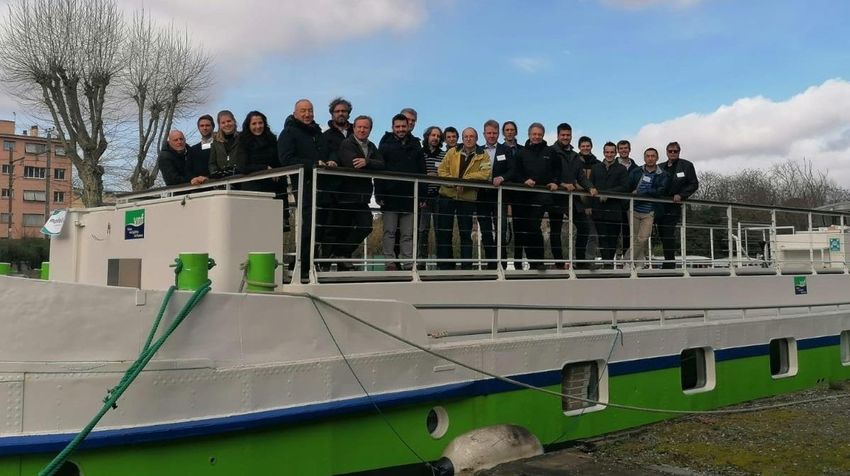
Dongles for OBD data access
• Dongles are often provided in various variants or models
• Mainly differ in the access interface, e.g., Bluetooth Cellular,
  RS232

• There is a huge number of dongles in the market that
  • all base on the ELM327 chipset, or
  • provide compatibility to the ELM327 commands

Indicative list of current OBD dongles with their
variants       Brand / Product
               OpenXCP
               Ford Reference VI
                                                     Link
                                                     http://openxcplatform.com/

                                                     http://openxcplatform.com/vehicle-interface/hardware.html#ford-reference-design
               CrossChasm C5 BT                      http://openxcplatform.com/vehicle-interface/hardware.html#crosschasm-c5-bt
               CrossChasm C5 Cellular                http://openxcplatform.com/vehicle-interface/hardware.html#crosschasm-c5-cellular
               CrossChasm C5 BLE                     http://openxcplatform.com/vehicle-interface/hardware.html#crosschasm-c5-ble
               DIY chipKIT-based VI                  http://openxcplatform.com/vehicle-interface/hardware.html#diy-chipkit

               Freematics                            https://freematics.com/products/

               Freematics ONE                        https://freematics.com/products/freematics-one/
               Freematics ONE+ Model A               https://freematics.com/products/freematics-one-plus/
               Freematics ONE+ Model B               https://freematics.com/products/freematics-one-plus-model-b/
               Freematics ONE+ Model H               https://freematics.com/products/freematics-one-plus-model-h/
               Freematics OBD-II UART Adapter V2.1   https://freematics.com/products/freematics-obd-ii-uart-adapter-mk2
               (for Arduino)
               Freematics OBD-II I2C Adapter         https://freematics.com/products/arduino-obd-adapter/
               (for Arduino)

               OBDLink                               https://www.obdlink.com

               OBDLink MX+                           https://www.obdlink.com/mxp/
               OBDLink MX BlueTooth                  https://www.obdlink.com/mxbt/
               OBDLink LX BlueTooth                  https://www.obdlink.com/lxbt/
               OBDLink EX                            https://www.obdlink.com/ex/
               OBDLink SX                            https://www.obdlink.com/sxusb/

               CSS Electronic                        https://www.csselectronics.com

               CANedge1                              https://www.csselectronics.com/screen/product/can-logger-sd-canedge1/language/en
               CANedge2                              https://www.csselectronics.com/screen/product/can-lin-logger-wifi-canedge2/language/en
               CL1000                                https://www.csselectronics.com/screen/product/can-bus-logger-canlogger1000
               CL2000                                https://www.csselectronics.com/screen/product/can-bus-logger-canlogger2000
               CL3000                                https://www.csselectronics.com/screen/product/can-bus-logger-canlogger3000

               Simma Software                        http://www.simmasoftware.com/j1939-adapter-j1708.html

               VNA2-ELD                              http://www.simmasoftware.com/eld-brochure.pdf
               VNA-232                               http://www.simmasoftware.com/j1939-to-rs232.pdf
               VNA-USB                               http://www.simmasoftware.com/j1939-to-usb.pdf
               VNA-WiFi                              http://www.simmasoftware.com/wireless-j1939-to-wifi.pdf
               VNA2-BT                               http://www.simmasoftware.com/wireless-j1939-to-bluetooth.pdf

               Pace                                  https://www.pace.car/de

               Pace Link

               LAWICEL
               CANUSB                                https://www.obd-2.de/shop/can-bus/20/can-car-sniffer-kit

               comma.ai                              https://comma.ai/

               panda OBD II Interface (white)        https://comma.ai/shop/products/panda-obd-ii-dongle
               panda OBD II Interface (gray)         https://comma.ai/shop/products/panda-obd-ii-dongle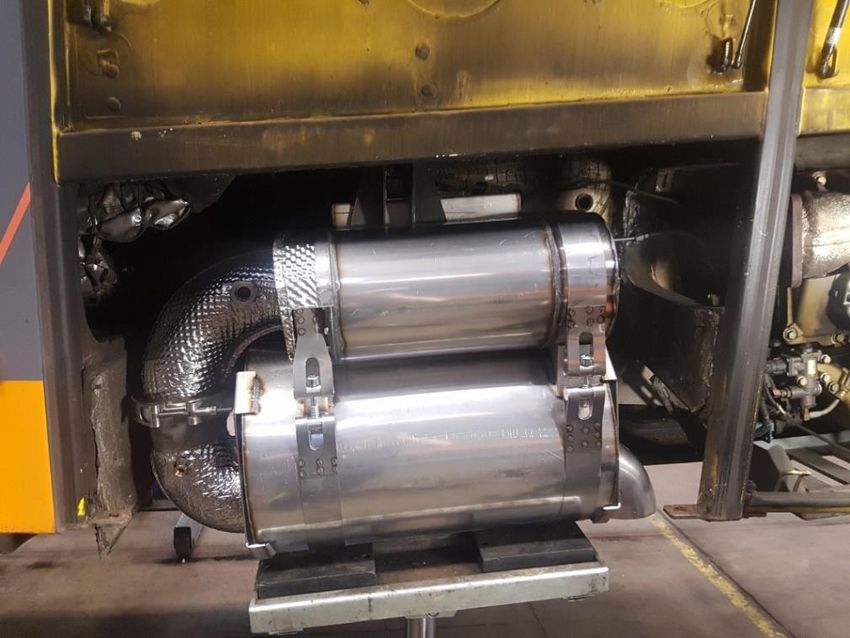
Selection criteria for a dongle
      Characteristics       Car          Heavy duty     Required                        Potential Dongles
                                           vehicle                 ELM327 compatible         OBDLink          Freematics One+
                                                                                             (MX+, LX)        (Model B, Model H)
      Supported           Raw CAN          Raw CAN         all         Raw CAN               Raw CAN              Raw CAN
      protocols             OBD             J1939                        OBD                   OBD                  OBD
                                                                        J1939                 J1939               J1939 (H)
      Accepted             ≥ 12V            ≥ 24V                        12V                   12V                 12V (B)
      maximal                             for J1939                                                               ≥ 24V (H)
      voltage
      Main connector    OBD II Type A   OBD II Type B                OBD II Type A         OBD II Type A      OBD II Type A (B)
                                         for J1939                  OBD II Type B for                         OBD II Type B (H)
                                                                         J1939
      Interfaces            Bluetooth Low Energy          one         Bluetooth         Bluetooth (MX+, LX)        BLE/BT
                                  Bluetooth                                                                          WiFi
                                      WiFi                                                                           USB
                                      USB                                                                          LTE/4G
                                    LTE/4G                                                                        SD / ROM
                          SD / ROM (on-unit logging)                                                          (on-unit logging)
      Features                 Geolocation/GPS                              -                    -            Geolocation/GPS
                           G-Force Accelerometer                                                                   G-Force
                                  Orientation                                                                  Accelerometer
                                Real Time Clock                                                                  Orientation
                                                                                                               Real Time Clock
      Data Exchange                  JSON                 one       non-proprietary       non-proprietary
      Format                          CSV
                               non-proprietary
      Commands                  ELM327 AT/ST              one         ELM327 AT            ELM327 AT/ST
                                                                                                                  custom
                                 documented
                                                                                                               programmable
      Developer                     NodeJS                one       broadest support     broadest support
      Libraries                     Python                            all important        all important
                                    Flutter                            languages            languages
                                 Ionic support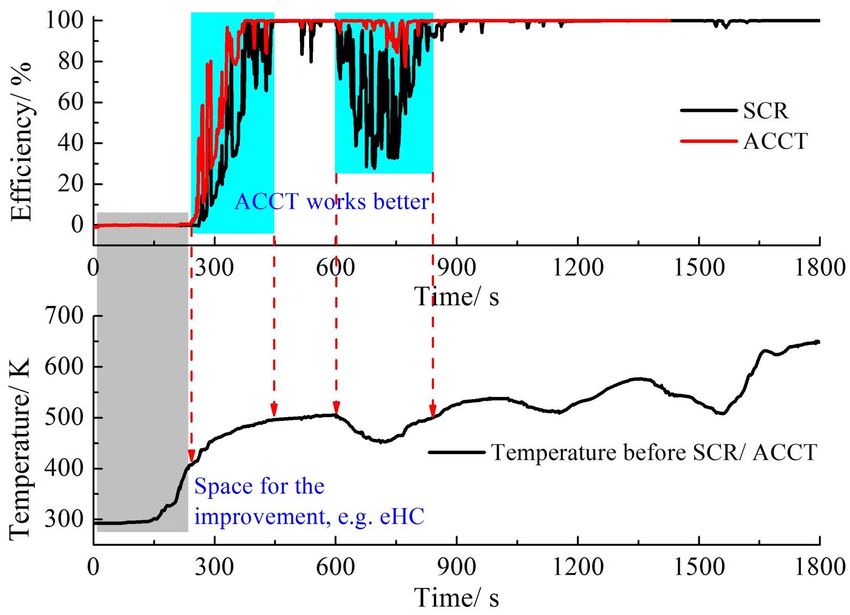
Do all vehicles provide the same data set?
• Availability of Public PIDs vs different cars
   • Number of PIDs/total PIDs
   • Number of emission-specific PIDs
   • Data versus age of the car; type of engine

• Sampling frequency
   • Avg/min/max; distribution; … of time
Is OBD a gate for comprehensive data?
• Open standard for OBD-purpose only covers a subset of all
  potentially available data accessible via the OBD/CAN-interface
• …but the remaining are non-standard, largely OEM specific
• OBD is also relevant only to passenger cars and vans, because HD
  vehicles have another kind of architecture and set of standards
• A serious effort should be made to “crack” the messages and obtain
  a larger sample of parameters that can be monitored for:
   •   Exhaust emissions level
   •   Maintenance
   •   Tampering
   •   Driving patterns of the motorist at the wheel
• But is “cracking” a legal act?
OBD vulnerability to tampering
• OBD suppressors: OBD fault code memory with diagnostic
  trouble codes can be erased
• An anti-tampering procedure is the development of a function
  that aims to specifically detect and prevent only the malicious
  DTC (diagnostic Trouble Code) deletion
• Solution (advises also by DIAS EU project)
  • Setting a permanent fault
  • Logging and reporting faults
  • Set the frequency of a DTC reset
Thank you
                             Contact:
                                   Dimitri Margaritis
                                   CERTH/HIT
                                   Email: dmarg@certh.gr

All slides © MODALES Partners, reproduction not allowed
without permission of the author of the slides.
Simulation of retrofits
MODALES mid-term event, virtual meeting, 28 May 2021
Dr. Haibo Chen & Dr. Jianbing Gao
Institute for Transport Studies, University of LeedsThe MODALES methodology:
“Real-world test” vs “Simulation & Modelling”
Traffic model Driving simulator
• Ground-truth data
• Performance under real-world conditions
• Real impact on AQ, exposure and health Vehicle model including
• Expensive and time-consuming
• Limited tests in terms of vehicle types,
traffic conditions, driving behaviours etc.
• Data quality due to unknown errorsPotential NOx control technologies
Based on ammonia generation (1-3), heat loss prevention (4), exhaust temperature increase (5-6), NOx adsorber (7)
No Technology Response Energy Penalty Complexity/Affordability/Adaptability Effectiveness
SCR*
1 Medium Low Medium/Medium/Medium Medium
(Selective Catalytic Reduction)
ACCT
2 Fast Medium/High Complex/Low/Low High
(Ammonia Creation and Conversion Technology)
ASDS
3 Fast Medium Complex/Low/Low High
(Ammonia Storage and Delivery System)
Thermal Insulation Technology
4 Slow Low Simple/High/High Low
(Insulation materials covering SCR system)
EHC
5 Fast High Simple/High/High High
(Electrically Heated Catalyst)
6 External burner Fast High Simple/High/High High
LNT
7 Fast Medium Medium/Medium/Medium Low
(Lean NOx Trap)
*: Commercially availableVehicle model including after-treatments
Powertrain model 1.Emission sources of the
vehicle model are based on the
emission maps, with the
signals of engine speed and
torque from powertrain model
as inputs.
2. Regarding the baseline
vehicle, the original after-
treatments include DOC, DPF,
and SCR system.
3.When considering retrofit
After-treatments SCR/ACCT technology ACCT, SCR
system will be replaced by
DOC DPF ACCT system; other sub-
models are kept the same
Emission sourcesPerformance comparisons between SCR and ACCT
1. NOx emissions after SCR and ACCT
systems are the same at the first 250s of
the WLTC (Worldwide harmonized Light-
duty vehicles Test Cycles) which is the
warm-up process of the catalyst, where
temperature is lower than light-off value
at the start of the driving cycle.
2. Compared with SCR, NOx emissions
drop significantly in the range of 600s ~
800s for ACCT.
177o 3. Hydrolysis and thermolysis reactions of
127o
ACCT fluid are much lower than AdBlue,
which causes lower NOx emissions for
ACCT system during some periods.Comparison of after-treatment layouts
NOx emission factors when SCR system is adopted
CO/ g/km HC+NOx/ g/km NOx/ g/km
Normal layout 0.012 0.076 0.069
Layout-1 0.012 0.054 0.047
Euro 6 emission regulations
Layout-2 0.024 0.057 0.034
Emissions Limits
NOx emission factors when ACCT system is adopted CO 0.5 g/km
CO/ g/km HC+NOx/ g/km NOx/ g/km HC+NOx 0.17 g/km
Normal layout 0.012 0.053 0.046 NOx 0.08 g/km
Layout-1 0.012 0.030 0.023 PM 0.005 g/km
Layout-2 0.024 0.032 0.008 PN 6×10¹¹#/km
1. CO emission factor is much lower than the emission regulation limits for all the three layouts.
2. The NOx emission factor over normal layout is close to the limits for SCR scenarios.
3. Regarding the total emissions of HC+NOx, layout-1 presents the best performance.
4. Layout-2 has the best performance if future emission regulations care more about NOx emissions.
5. ACCT system performs much better in terms of emission reduction than SCR system.Performance of retrofits for NOx reduction Engine-out NOx Pipe-out NOx (include cold start) Pipe-out NOx (exclude cold start)
Summary and next step
• When the retrofit is up and running, the pipe-out NOx emission is not
  significantly affected by driving behaviour, but the engine-out emission is.
• Both SCR and ACCT are not efficient for low exhaust temperatures.
• Detailed analysis and results can be found in scientific publications:
  1) “The effect of after-treatment techniques on the correlations between driving behaviours
     and NOx emissions of passenger cars”, Journal of Cleaner Production (5-year IF: 8.41),
     https://doi.org/10.1016/j.jclepro.2020.125647.
  2) “Impacts of De-NOx system layouts of a diesel passenger car on exhaust emission
     factors and monetary penalty”, Journal of Cleaner Production, under review.
• More work needed to understand how NOx retrofits perform in real-time
  under different traffic and weather conditions (e.g. engine-off at traffic lights,
  stop-and-go, cold start etc.) and on certain vehicles (e.g. hybrids).
NOx EMISSION ANALYSIS OF RETROFITTED
DIESEL-POWERED BUSES
Arno Amberla
Proventia
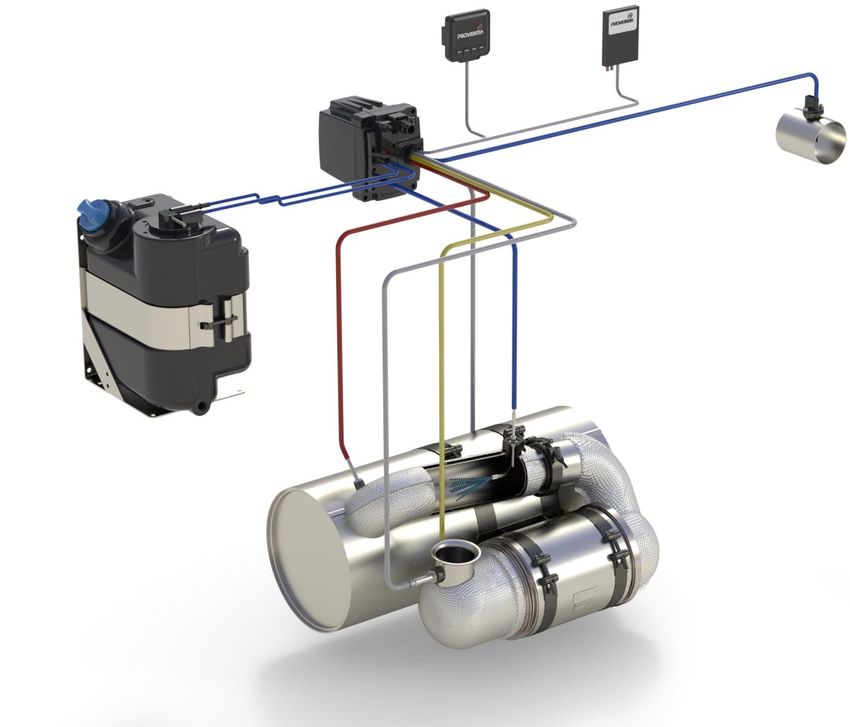
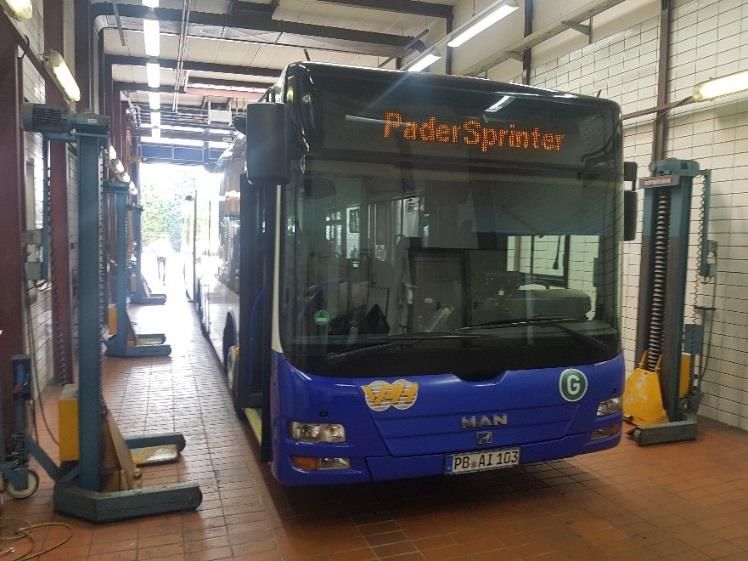
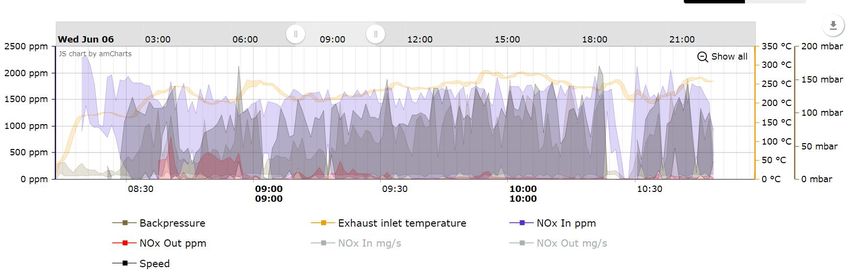
Mid-term results on the road to low emissions: 28 May 2021Overview Analysis of retrofitted buses with online emission monitoring telemetry Scope of analysis Key findings
NOxBUSTER®  City
                                                                                 PROCARE Drive
                                                             Driver
                                                             display

DPF+SCR Retrofit                               ECU &
                                               Dosing pump

System                        Level sensor

                                                                                       MAF

 For ADL E200                                                          NOx sensor 2
                   AdBlue
                   Tank                                                 Dosing
                                                                        nozzle
                                                                              Exhaust OUT
                      Temperature sensor

                                                              IN
                            Pressure sensor

                                              NOx sensor 1
Emission monitoring system enables large fleet’s to be monitored closely for real drive emission
Body type          Manufacturer            Count, n    Total, n
    Articulated                MAN               143      266
                           Mercedes-Benz         123
   Double-decker                ADL              325      950
                               Volvo             241
                             Wrightbus           301
                                VDL               83
       Solo                     ADL              284      457
                               MAN                60
                           Mercedes-Benz          81
                             Wrightbus            18
                                VDL               14
                                                       TOTAL 1673
NOx reduction efficiencies
Influence of ambient temperature
Maintenance importance

     In certain cases tampering has less negative effect, but still in magnitude of x 3…10
Conclusions • Retrofitting is effective way to reduce emission of heavy vehicles in cities • Ambient temperature and exhaust gas temperature have rather direct correlation (10 deg C difference vs 10 deg C difference) • In this study Euro 5 hybrids were operated at lowest speed routes. Electrification of buses moves these buses to faster lines and efficiency of retrofitted SCR systems improves
Thank you
                             Contact:
                                   Arno Amberla
                                   Proventia
                                   Arno.Amberla@proventia.com

All slides © MODALES Partners, reproduction not allowed
without permission of the author of the slides.
Tampering and inspection:
technical aspects
Dimitri Margaritis
CERTH/HIT
Mid-term results on the road to low emissions: 28 May 2021Common inspection failures on PTI (periodic technical inspection) (example) • Over 80 percent of the vehicles on the road have one or more service or repair that is needed, but has not been taken care of • That translates into over 160 million vehicles in the US alone
Mandatory Periodic Inspection data (example from Turkey)
• Brake and Tyre Inspection database of 2017-2019
• Meta Analysis performed
Mandatory Periodic Inspection data (example from Finland)
Tampering techniques for manipulating the EPS
• In general, there are four tampering techniques that used today
  for manipulating the environmental protection system (EPS)

       Tampering technique   Work description
       ECU re-flashing       A workshop alters the ECU flash and checks using test drives or dyno tests if
                             any errors or problems arise. In the end, the workshop alters the ECU code
                             in such a way that the requested EPS is deactivated, and no MILs are
                             activated or OBD fault codes are stored. (Mostly LD vehicles)
       Emulators             The majority of the emulators offered for HD vehicles are devices that attack
                             the SCR system. Most of these SCR or NOx sensor emulators are CAN only,
                             meaning they only communicate with the vehicle through the CAN-bus.
       Modifiers             Specific hardware solutions that are simpler to emulators in design and
                             mainly aim to alter the control state of an EPS
       OBD Suppressors       These devices sent specific CAN-bus messages to suppress the onboard
                             diagnostics of the vehicle (by periodically erasing the fault code storage).
Mandatory Periodic Inspection data: OBD scans
• PTI legislation has introduced an alternative test method where OBD testing is allowed, without any
independent assessment
• It is a part of the Roadworthiness Directive 2014/45/EU, where independent emission testing using
direct tailpipe measurement (measured at the end of the exhaust), can be replaced with an on-board
diagnostic (OBD) test for Euro 6 vehicles
• The OBD system is not an emissions test, but is a diagnostic monitoring of the components that are
part of the vehicle emission control system
• An independent study by CITA (International Motor Vehicle Inspection Committee) and with extensive
PTI testing evidence from France who have introduced OBD tests, has shown that measurements via
the OBD system are not sufficient to ensure that the exhaust emission levels continue to comply with
the requirements
• OBD and tailpipe measurement methods are needed to be able to measure the correct functioning of
the exhaust control system and for independent testing of the actual vehicle emissions
• An example, many diesel vehicles have had their particulate filter or the EGR (exhaust gas re-circulation system)
modified or removed and the engine management software changed to circumvent the OBD monitoring to avoid
performance problems, especially in urban environmentsMaintenance and tampering testing: method • Test vehicles sourced amongst VTT employees • First batch: six petrol fueled cars, MY 2006 to MY 2013 • Mileages appr. 100 000 to 200 000 km • Driven appr. 20 000 km since last maintenance • Test sequence: cold-start NEDC, warm-start ARTEMIS-Urban • Tests before and after service • Service consists of: change of oil & filter, new air filter, new spark plugs • OBD scan and printout before/after service
Basic Test Sequence – Petrol-fuelled Cars

    Pre-test: ”as is” -condition             Re-Test

                                   Service
Preliminary results – CAR B (1/2)
CO (g/km) NOx (g/km)
1,200 0,07
1,000 0,06
0,05
0,800
0,04
0,600
0,03
0,400
0,02
0,200
0,01
0,000 0,00
EU5 Type pre-service pre-service post-servicepost-service pre-service post-service EU5 Type pre-service pre-service post-servicepost-service pre-service post-service
Approval Approval
NEDC, cold NEDC, cold NEDC, cold ART-Urb, warm NEDC, cold NEDC, cold NEDC, cold ART-Urb, warm
HC (g/km) PM (g/km)
0,0035
0,120
0,003
0,100
0,0025
0,080
0,002
0,060
0,0015
0,040
0,001
0,020 0,0005
0,000 0
EU5 Type pre-service pre-service post-service post-service pre-service post-service EU5 Type pre-service pre-service post-servicepost-service pre-service post-service
Approval Approval
NEDC, cold NEDC, cold NEDC, cold ART-Urb, warm NEDC, cold NEDC, cold NEDC, cold ART-Urb, warmPreliminary results – CAR B (2/2)
CO2 (g/km) F.C. (L/100 km)
200 188 9,0
184 8,2 8,0
180
8,0
160
137 136 7,0
135 135
140 5,9 6,0 6,0 6,0
119 6,0
120 5,1
5,0
100
4,0
80
60 3,0
40 2,0
20 1,0
0 0,0
EU5 Type pre-service pre-service post-service post-service pre-service post-service EU5 Type pre-service pre-service post-service post-service pre-service post-service
Approval Approval
NEDC, cold NEDC, cold NEDC, cold ART-Urb, warm NEDC, cold NEDC, cold NEDC, cold ART-Urb, warmBasic Test Sequence – Diesel-fuelled Cars
< If PM/PN results show abnormal >
Pre-test ”as is” -condition 1st Re-Test DPF Cleaning 2nd Re-Test
or Renewal
ServicePreliminary results – CAR G (1/2)
CO (g/km) NOx (g/km)
0,900
0,600 0,790
0,500 0,800
0,500 0,700 0,662
0,400 0,364 0,600
0,500
0,300
0,222 0,400
0,182 0,199 0,286
0,200 0,300
0,180 0,204
0,075 0,200 0,1529
0,100
0,100
0,000 0,000
EU5 Type Approval pre-service post-service pre-service post-service EU5 Type Approval pre-service post-service pre-service post-service
NEDC, cold NEDC, cold ART-Urb, warm NEDC, cold NEDC, cold ART-Urb, warm
PN (#10^11/km) HC+NOx (g/km)
0,025 0,9
0,802
0,020 0,8
0,019 0,670
0,020 0,7
0,015 0,6
0,015 0,013
0,5
0,010 0,4 0,316
0,007
0,3 0,23 0,224
0,005 0,1882
0,2
0,1
0,000
EU5 Type Approval pre-service post-service pre-service post-service 0
EU5 Type Approval pre-service post-service pre-service post-service
NEDC, cold NEDC, cold ART-Urb, warm
NEDC, cold NEDC, cold ART-Urb, warmPreliminary results – CAR G (2/2)
MY2013, 1.6 TDI, DSG7, 291 000 km
CO2 (g/km) F.C. L/100km)
250 9,0 8,4
221 8,0
211 8,0 7,6
201
200
7,0
6,0 5,5
144
150
122 5,0
4,2
4,0
100
3,0
50 2,0
1,0
0 0,0
EU5 Type Approval pre-service post-service pre-service post-service EU5 Type Approval pre-service post-service pre-service post-service
NEDC, cold NEDC, cold ART-Urb, warm NEDC, cold NEDC, cold ART-Urb, warmMODALES tampering and poor maintenance
registration & reporting solution
MODALES ends here
Via OBD (or CAN) +
phone sensors Via WiFi or GPRSThank you
Contact:
Dimitri Margaritis
CERTH/HIT
Email: dmarg@certh.gr
All slides © MODALES Partners, reproduction not allowed
without permission of the author of the slides.Legal issues on tampering
Esther Tenge
Spark Legal Network
Mid-term results on the road to low emissions: 28 May 2021Overview Methodology Legal requirements on vehicle tampering Penalties and sanctions National strategies and initiatives regarding vehicle tampering Effectiveness of rules on tampering and enforcement
Methodology
Research on the legal situation on vehicle tampering across EU Member States

Data collection
1. Legal desk research in 14 countries (13 EU Member States + UK) carried out
   by national legal experts
2. Stakeholder survey (EU Survey) sent out to governmental and industry
   stakeholders, and associations

Comparative analysis aimed at identifying the commonalities and contrasts in
legislation on vehicle tampering across EU Member States
Legal requirements on vehicle tampering
EU law on type approval: Defeat devices are generally and explicitly prohibited
(tampering is only defined in the context of heavy duty vehicles)

EU law on periodic roadworthiness tests: Member States should consider
appropriate measures to prevent adverse manipulation of, or tampering with,
vehicle parts and components that could have a negative bearing on required
safety and environmental characteristics of the vehicle

National law on vehicle tampering: Few specific national requirements targeting
(the prevention of) tampering going beyond EU law
Legal requirements on vehicle tampering (examples)
Type approval
• NL: The use of defeat strategies that reduce the effectiveness of emission control equipment (both
  relating to heavy duty vehicles and light passenger and commercial vehicles) is prohibited
• DE: The German Road Traffic Act prohibits and penalises the preparation of offences related to vehicle
  tampering

Post-type approval
• FI: A vehicle used in traffic may not be repaired, modified, allowed to change or be equipped with an
  accessory after commissioning in such a way that the vehicle no longer meets the requirements that
  were in force in Finland at the time of the vehicle's first commissioning or later
• PL: The Director of the Transport Technical Supervision revokes the type-approval certificate in case of
  a negative compliance inspection result
• IE: If the emission control system fitted by the manufacturer is absent, modified or obviously defective,
  this may be recorded as a major deficiency in the context of roadworthiness testing
Penalties and sanctions (examples)
Type approval (mostly applicable to manufacturers)
• SK: Fine of 300 EUR to 50,000 EUR
• IE: Fine up to 5,000 EUR, a prison sentence of up to 6 months (or both) / fine up
  to 100,000 EUR, a prison sentence up to 12 months (or both)

Post-type approval
• LU: Imprisonment for eight days to one year and/or fine of 251 to 5000 EUR
  (Professional sellers may also face a criminal offence)
• FI: Fine of 70 EUR for intentional or negligent vehicle violation / a vehicle
  violation
National strategies and initiatives regarding vehicle
tampering (examples)
Access to the mileage history
• SK: Anyone can request a mileage certificate based on information from a
  national database when giving the VIN number of a vehicle and paying 8 EUR

Measuring of emissions
• BE: The Walloon Region of Belgium is testing a remote emission measurement
  equipment along a highway, with an Automatic Number Plate Recognition
  camera
Effectiveness of rules on tampering and
enforcement
Awareness of rules
• No official data or research identified at national level
• Media coverage of the topic and/or of the “Dieselgate” events could have cause awareness regarding rules on
  tampering in the Member States to have risen

Effectiveness of the national rules on tampering
• Studies generally identify national systems as proportionate and globally efficient
• Some gaps in national legislation were identified
• DE: Law prohibits odometer manipulation, but not the sale of manipulation devices

Effectiveness of the enforcement of rules on tampering
• Issues mostly relate to the lack of severity of the sanctions
• FI: Anti-emission tampering rules are not considered dissuasive enough according to a study
Thank you
                             Contacts:
                                   Esther Tenge
                                   Spark Legal Network
                                   esther@sparklegalnetwork.eu

All slides © MODALES Partners, reproduction not allowed
without permission of the author of the slides.
Questions / Discussion
Moderated by
Jean-Charles Pandazis
ERTICO – ITS Europe
If you have a question please write it in the chat boxWrap-up
Andrew Winder
Project Coordinator
ERTICO – ITS Europe
Mid-term results on the road to low emissions: 28 May 2021Next events
13-15 July 2021: XXI Congreso español sobre Sistemas Inteligentes de Transporte (21st
Spanish Congress on ITS), Madrid and online
• Presentation “Como reducir las emisiones de vehículos fomentando un estilo de conducción
favorable a las bajas emisiones y el buen mantenimiento del vehículo: Experiencia del proyecto
MODALES” by Joan Domingo (RACC) in congress theme 3: Movilidad Conectada (Connected Mobility)
• www.itsspain.es/xxi-congreso-its
11-15 October 2021: ITS World Congress, Hamburg
• Session accepted/confirmed on “Intelligent systems to help drivers and road authorities reduce
pollutant emissions: Beyond eco-driving” including the projects MODALES, uCARe, CARES and also
from the company HERE
• A technical paper on MODALES from the University of Leeds is also expected
• https://itsworldcongress.com
Targeted webinars on specific topics will also be organised as appropriate.
To be informed, stay connected to our media (on the next slide)Wrap-up
• Presentations will be made available on the project website in the next few days
• The webinar recording will also be made available on YouTube
Stay connected Search the #MODALESProject
Project website: www.modales-project.eu hashtag or follow @ERTICO
Contains news, events and a library section including
public deliverables and other publications
Join the “MODALES project” groupThank you very much for participating!
MODALES General Assembly on board the barge
“Naiade” in Toulouse, France, January 2020
www.modales-project.eu This project has received funding from the European Union’s Horizon 2020
research and innovation programme under grant agreement No 815189.You can also read


