October 5th, 2018 11th January, 2016 - Financial Derivatives Company, Limited
←
→
Page content transcription
If your browser does not render page correctly, please read the page content below
C XC b

         11th January, 2016
           October 5th, 2018
THE HIGHLIGHTS

Monetary Policy Committee maintains status quo

The Monetary Policy Committee (MPC), at its fourth meeting in 2018, maintained
status quo on monetary policy parameters. This means that the Monetary Policy Rate
(MPR) remains at 14% p.a., Cash Reserve Ratio (CRR) at 22.5%, Liquidity Ratio at 30%
and the asymmetric window around the MPR at +200/-500 bps. The committee was
confronted with a policy dilemma: to maintain status quo or to increase interest rates.
The option to increase interest rates was supported by the rising portfolio outflows and
the threat of inflation while the status quo option was supported by a wait-and-see
strategy. The Committee opted to get more clarity on the likely impact of anticipated
liquidity injections into the economy from pre-election spending and increased FAAC
disbursements from higher oil proceeds. We expect the decision to do nothing at the
same time the US Fed raised rates to increase capital outflows from Nigeria with a
negative impact on interest-rate sensitive sectors including real estate and trade.

US Fed Reserve raises interest rates by 25bps

The US Fed reserve raised its fund rate by 25bps to a range of 2-2.25% pa at its
meeting on September 25/26. This is the 3rd interest rate hike in 2018 and the 7th in the
last eight quarters. Key considerations for the Committee were a steady growth rate
(3.1% in 2018) amidst sustained low unemployment (steady at 3.9%) and declining
inflation (2.7% in August). The current strong macroeconomic fundamentals resulted in
the following projections at the meeting- growth rate of 2.5% in 2019, inflation at 2% for
the next three years and unemployment rate at 3.5% in 2019. The Committee also
hinted at the likelihood of five more rate hikes over the next two years. The consistent
increase in the US benchmark interest rate and the steady decline in its inflation rate
increase the real rate of return for investors interested in its market. This would heighten
capital outflows from emerging markets including Nigeria.

                                             2
Nigeria and Democratic Republic of Congo to have 40% of the world’s poorest
population by 2050

According to the Bill and Melinda Gates Foundation (BMGF), more than 40% of the
world’s poorest people will live in Nigeria and Democratic Republic of Congo (DRC)
by 2050. The Foundation projects that by 2050, Nigeria’s population will reach 429
million and 35% (152 million) of Nigerians will be living in extreme poverty. This forecast
follows the Brookings Institution report where Nigeria overtook India as the world’s
poorest nation with approximately 87million people living in extreme poverty. Bill
Gates, who visited Nigeria at the start of 2018, highlighted the need for Nigeria to
focus on human capital development as opposed to merely building infrastructure.
Left unaddressed, Nigeria’s increasing rate of poverty will result in a sub-optimal level
of development.

Federal Government suspends Nigeria Air indefinitely

The Federal Government of Nigeria (FGN) has announced its decision to suspend the
proposed national carrier, Nigeria Air, indefinitely. This comes two months after the
carrier was unveiled at the Farnborough International Air show in London. While the
specifics for the suspension remain unknown, the Aviation Minister, Hadi Sirika, has
assured that all commitments will be honored. Preliminary costs for the national carrier,
which was previously scheduled to launch its first flight in December 2018, had an
estimated take-off cost of $300mn. The decision to suspend the national carrier
project may shift the FG’s attention to other urgent needs in the Nigerian aviation
industry including airport concessioning, and maintenance, repair and overhaul
centers.

Central Bank of Nigeria revokes Skye Bank’s license

The Central Bank of Nigeria (CBN) has revoked the license of Skye Bank and
transferred its assets and liabilities to a bridge bank called Polaris Bank. This comes 27
months after the apex bank injected N100bn into the ailing bank owing to a failure to
meet its minimum capital requirements. The Asset Management Company of Nigeria
(AMCON) is set to capitalize Polaris Bank and commence the process of sourcing for
investors to buy out AMCON. In the meantime, CBN has injected approximately

                                             3
N786bn into the new bank and assured the security of deposits. The Nigerian Stock
Exchange notified the investing public of a suspension of Skye Bank’s shares, which
took effect on September 24th. We expect the liquidation of Skye Bank to further
spook already jittery investors and depositors.

Federal Account Allocation Committee disbursements up 3.8% to N741.84bn in
September

The Federal Account Allocation Committee (FAAC) disbursed a total of N741.84bn to
the three tiers of government in September. This represents an increase of 3.78%
compared to the revenue disbursed in July (N714.84bn). The increase in revenue was
supported by an increase in crude oil export sales volume from 37.4 million barrels in
July to 45.7 million barrels in August. This resulted in the savings of N40bn into the
Excess Crude Account (ECA). We expect FAAC disbursements to increase in the
coming months as Brent oil price hovers above $80pb.

Power output update (Review Period: September 1st-27th)

Average power output within the review period was 3,498MWh/h, 3.93% lower than
the output of 3,641MWh/h recorded in the corresponding period in August. The
decline was partly driven by high gas constraints at the Afam VI power plant within
the review period. Meanwhile, the Federal Executive Council has approved the sum
of $64mn for power supply to Escravos communities. According to the Minister of State
for Petroleum Resources, Ibe Kackikwu, the proposed project is capable of eliminating
the N18mn monthly stipend of the Nigerian National Petroleum Corporation (NNPC) to
provide power to the community. We expect average power output to remain
between 3,500-3,700MWh/h in the coming month provided that there are no
disruptions at gas stations.

                                            4
5
SOCIAL CORNER
The 70th Emmy Awards 2018
The 70th Annual Primetime Emmy Awards
was held at Microsoft Theatre in Los Angeles
on September 17, 2018 and was hosted by
Michael Che and Colin Jost.
During the event, director Glenn Weiss' took
his moment in the spotlight to propose to his
girlfriend when accepting his award for
Outstanding Writing for a Variety Special.
The Emmys is separated into two categories: comedy and drama. In the drama
category, Game of Thrones (GoT) had the most nominations (22), closely
followed by Westworld (21).GoT scooped two awards while Westworld bagged
three.
The award winners include:
Outstanding Drama Series: Game of Thrones
Outstanding Comedy Series: The Marvelous Mrs. Maisel
Outstanding Limited Series: The Assassination of Gianni Versace: American
Crime Story
Outstanding Variety Talk Series: Last Week Tonight with John Oliver
Outstanding Variety Sketch Series: Saturday Night Live
Outstanding Reality/Competition Series: RuPaul's Drag Race
Outstanding Supporting Actress in a Drama Series: Thandie Newton, Westworld
Outstanding Supporting Actor in a Drama Series: Peter Dinklage, Game of
Thrones
Outstanding Lead Actress in a Drama Series: Claire Foy, The Crown
Outstanding Lead Actor in a Drama Series: Matthew Rhys, The Americans
Outstanding Supporting Actor in a Limited Series or Movie: Jeff Daniels,
Godless
Outstanding Supporting Actress in a Limited Series or Movie: Merritt Wever,
Godless
6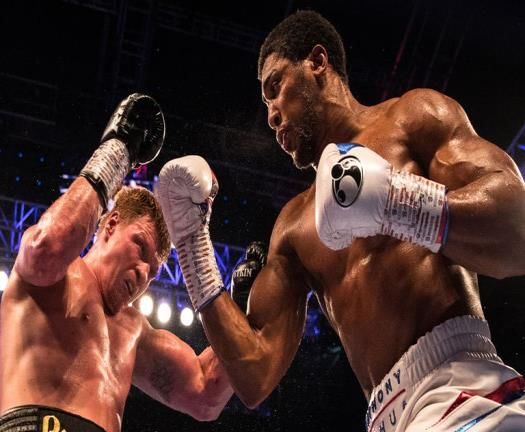
Outstanding Lead Actress in a Comedy Series: Rachel Brosnahan,
TheMarvelous Mrs. Maisel
Outstanding Lead Actor in a Comedy Series: Bill Hader, Barry
Outstanding Lead Actress in a Limited Series or TV Movie: Regina King, Seven
Seconds
Outstanding Lead Actor in a Limited Series or TV Movie: Darren Criss, The
Assassination of Gianni Versace: American Crime Story
Outstanding Supporting Actress in a Comedy Series: Alex Borstein, The
Marvelous Mrs. Maisel
Outstanding Supporting Actor in a Comedy Series: Henry Winkler, Barry
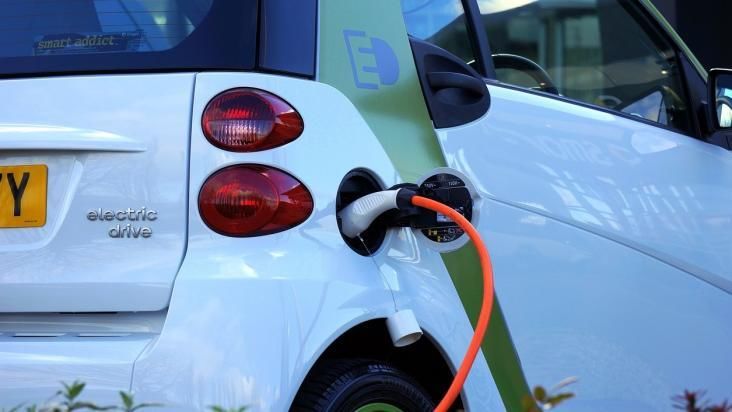
Qatar to manufacture electric car
Qatar has announced that it will produce
its first Qatari electric car in 2022. The plan
is to launch the car in conjunction with the
hosting of the FIFA World Cup in 2022.
The first version of this car will be named
‘Katara. It will have 700 horse power,
capable of driving 1,000km after only
10minutes of being charged.
Full production capacity of the plant will be reached after seven years, with 12
production lines running 24 hours a day. The initial production capacity of the
plant will reach 500,000 cars by 2025; it is expected to reach one million cars by
2035.
Chowberry Food Waste App
Chowberry is an app created by a Nigerian -
Oscar Ekponimo. It tackles Nigeria’s food waste
and solves the problem of food inequality.
This app connects people to food in the
supermarket that would normally be trashed.
The invention has already been taken up by
about 35 retailers and non-government
organizations who place orders at discounted
7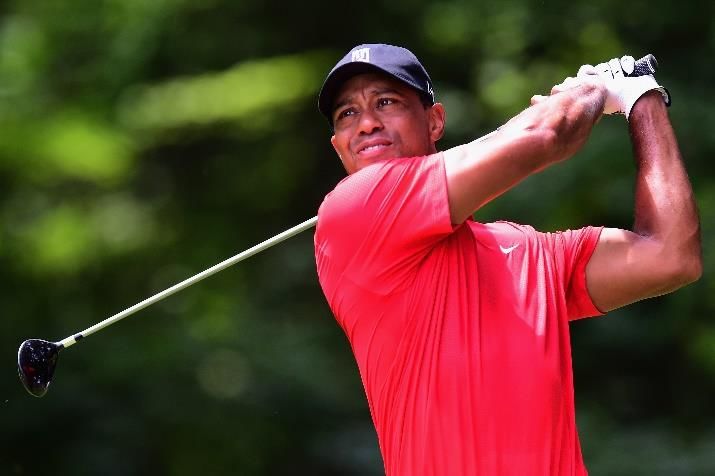
prices for charities and food distribution programs.
According to the United Nations, over 14 million people in Nigeria are classified
as undernourished. In the long term, we expect this innovation to eradicate
food wastage and to have an impact on reducing Nigeria’s undernourished
population.
Anthony Joshua makes it 22-0
Anthony Joshua (28) is a British professional boxer.
He began his professional career in 2012 and has
since won 22 successive fights with 21 knockout
wins and no losses.
The unified heavyweight world champion’s 22nd
win was against the Russian boxer, Alexander
Povetkin, who got knocked out in the seventh
round.
After retaining his titles, the 28-year-old said that he would like to face Deontay
Wilder, Tyson Fury and Dillian Whyte in that order. His promoter, Eddie Hearn,
also stated that their team will do its best to make sure that the fight with Wilder
will be held in the same venue next April.
Tiger Woods wins first title in five years
On September 23rd, 2018, Tiger Woods
sealed his first title in over five years in the
Tour Championship at East Lake Golf
Club.
This win is the 80th Professional Golfers'
Association (PGA) Tour Championship
that Woods has won in his career, trailing
Sam Snead who has a record of 82.
After this win, Tiger Woods is expected to go up to 13th in the world rankings
after hitting an all-time low of 1,199th in 2017.
8
9

TOP STORIES
CBN revokes Skye Bank’s license
The Central Bank of Nigeria has revoked the license of Skye Bank and
transferred its assets and liabilities to the newly licensed bridge bank, Polaris
Bank. The decision of the apex bank comes two years after a regulatory action
on the defunct bank in July 2016.
Asset Management Company of Nigeria (AMCON) has already injected
N786bn into Polaris Bank and will commence the search for investors to buy it
out. Meanwhile, the Nigerian Stock Exchange has notified the investing public
of a suspension of Skye Bank’s trading on the exchange.
Analysis & Outlook
Skye bank’s stocks recorded gains as high as 210% in 2018 (year-to-date). The decision
to liquidate the systemically important bank (SIB) will further dampen investor
confidence, which is yet to recover from the MTN saga and brewing negative political
sentiment.
Monetary Policy Committee (MPC) maintains status quo
The MPC held all monetary policy parameters for the 13th consecutive session at its
meeting on September 24/25. This means that the MPR was retained at 14% p.a.,
CRR at 22.5%, Liquidity ratio at 30% and asymmetric corridor at +200/-500 bps.
Key considerations of the Committee include weak GDP growth rate (1.5% in
Q2’18), reversal in the inflation trend, depletion in external reserves (now at
$44.38bn) and foreign portfolio outflows.
The Committee’s decision to maintain status quo was premised on the need to get
more clarity on the quantum and impact on expected liquidity injections into the
economy from sources including pre-election spending and increased FAAC
disbursements from higher oil proceeds.
10Analysis & Outlook
The MPC remained worried about inflationary pressures on the back of the incessant
flooding disaster in food producing states. The decision to maintain status quo at the
same time the US inflation is declining and its interest is rising makes the US a more
attractive investment destination. We expect this to result in capital outflows from
Nigeria in the coming months.
US Fed raises rates by 25bps to 2-2.25%pa
The US Federal Reserve raised its benchmark interest rate by 25bps to 2.0-2.25% pa
from 1.75%-2% pa at its meeting on September 25/26. This is the third rate hike in
2018 and the 7th in the last 8 quarters.
Considerations for the Committee were a steady growth rate (3.1% in 2018) amidst
sustained low unemployment rate (steady at 3.9%) and declining inflation (2.7% in
August).
The Committee projected a growth rate of 2.5% in 2019, inflation at 2% for the next
three years and unemployment rate of 3.5% in 2019. This resulted in the Committee
hinting at five more rate hikes over the next two years.
Analysis & Outlook
The immediate impact of an increase in US interest rates is a stronger dollar. This would
result in a decline in the price of dollar-dominated commodities including oil. On the
other hand, the consistent increase in US interest rate raises concerns about its impact
on emerging markets. Policy makers in markets such as Nigeria would further feel the
pinch of exiting foreign portfolio investors.
11BUSINESS UPDATE
(Review Period: September 17th – October 4th, 2018)
The Forex Market
At the parallel market, the naira traded at N361/$ throughout the review period. However,
it depreciated against the pound and euro to close at N480/£ and N417/€ respectively on
October 4th from N476/£ and N411/€ on September 17th.
At the interbank foreign exchange market, the naira started the period at N306.30$ before
depreciating marginally by 0.03% to close the period at N306.40/$. The naira also
depreciated by 0.18% to close at N363.57/$ at the IEFX window from N362.93/$ on
September 17th. Total forex traded in the IEFX window was $3.65bn, 14.78% higher than a
turnover of $3.18bn in the corresponding period in the August. The level of Nigeria’s gross
external reserves decreased by 2.44% (down $1.10bn) to $43.97bn as at October 3rd from
$45.07bn on September 17th. This resulted in a decline in the import cover to 10.77 months
from 11.04 months on September 17th.
12SOURCE: FDC Think Tank, CBN, FMDQ
The Money Market
Short term interest rates (OBB and ON) increased by 16bps and 9bps respectively to close at
11.67% and 12.58% pa. Total OMO sales during the period was N337.6bn compared to maturities
of N757.78bn resulting in a net inflow of N420.18bn. Average opening position of banks during the
period was N371.55bn compared to N417.54bn in the corresponding period in August. At the last
primary market auction on September 19th, the 182-ay and 364-day T/Bills tenors declined to
12.2% pa and 13.48% pa while the 91-day tenor remained flat at 11.00% pa. At the secondary
market, the 91-day, 182-day and 364-day tenors declined by an average of 101bps to 11.78% pa,
12.45% pa and 12.98% pa respectively.
Tenor Secondary Secondary % Primary Primary %
market market rates change market market rates change
rates as at as at rates as at as at
September October 4th September September
17th 2018 2018 (%) 12th 2018 (%) 19th 2018 (%)
(%)
91-day 13.08 11.78 -1.30 11.00 11.00 -
182-day 13.68 12.45 -1.23 12.30 12.20 -0.10
364-day 13.47 12.98 -0.49 13.50 13.48 -0.02
13SOURCE: FMDQ, CBN
The Stock Market
The Nigerian Stock Exchange All Share Index (NSE ASI) gained 0.69% to close at
32,423.57pts on October 4th from 32,201.98pts on September 17th. Total market
capitalization rose by 0.68% to N11.84trn on October 4th from N11.76trn on September
17th. During the period, the market recorded 4 positive days and 9 negative days.
SOURCE: NSE
14The Commodities Market
.
Brent oil prices increased by 10.26% to $86.06pb on October 4th from $78.05pb on
September 17th.
o Driven by anticipations of a tighter oil market owing to Iranian sanctions by
November.
Natural gas rose by 14.95% to close at $3.23/mmbtu from $2.81/mmbtu on September
17th.
o As a result of anticipated decline in stockpiles in the winter months.
Corn prices increased by 5.46% to $3.67/bushel from $3.48/bushel on September 17th.
o Owing to dry weather in Argentina.
Wheat prices gained 2.37% to $5.18/bushel from $5.06/bushel at the end of the review
period.
o On the back of unfavourable weather in producing countries – Australia and
Russia.
Sugar prices up 5.61% to $0.1223/pound on October 4th from $0.1158/pound on
September 17th.
o Amidst projections of a decline in India’s output in 2019-2020.
Cocoa prices declined by 8.77% closing the period at $ 2,040/mt from $2,236/mt.
o Driven by Ghana’s plan to boost output by approximately 1 million tonnes.
15
SOURCE: Bloomberg, EIA, Newsnow16
LIFESTYLE

Money 101 for Millennials: Seven Tips for Improving Your Financial Literacy1

When young adults become fully responsible for their personal finances for the first
time, they are often in for a rude awakening. Financial literacy is rarely taught in
school, and if their families didn't discuss credit scores, taxes and interest rates as they
were growing up, these newly-minted members of the "real world" can easily get
themselves into debt and other financial trouble.

Most millennials are now in their 20s and 30s -- the time when many people make
major financial decisions, like home ownership and long-term investment strategies. If
you're part of this generation and feel undereducated about your finances, follow this
advice from members of Forbes Finance Council.

1
 https://www.forbes.com/sites/forbesfinancecouncil/2018/03/28/money-101-for-millennials-seven-tips-for-
improving-your-financial-literacy/#1116858662f7
                                                    17
1. Take online courses.
Given millennials' propensity for technology, I would suggest they take a few courses
in basic economics, accounting and capital markets from the likes of Coursera,
Udemy or similar providers. The courses are affordable, well delivered and even fun. In
my opinion, they constitute the most efficient way to get updated on whatever topics
you are interested in, including finance.
2. List out your expenses.
Millennials are quite bright; they simply don't have the experience. Right away, I
recommend they make a list of everything they spend money on each month. Enlist
their parents in this endeavor if possible. After the amounts are added up, they should
ask themselves this question: How do I pay for all of this? This is the first step to
improving financial literacy.
3. Investigate passive income opportunities.
Unfortunately, there is no proper financial education in schools, colleges or universities.
Many parents fail in this area, as well. Most people work for money all their lives.
However, it is possible to learn how the money that you earn can work for you so you
eventually can replace your “job” income with passive income from your investments.
4. Understand the impact of your credit score.
Millennials looking to become entrepreneurs need to understand that their personal
credit might be the defining factor in their ability to access working capital. Getting
approved for funding is challenging when the borrower’s credit score is low. It is
important that they learn how to read a credit report, remain aware of their credit
score and understand the factors that affect it.
5. Talk to a trusted mentor.
There is a plethora of information available on the internet to support a self-help
approach. However, picking the brain of someone you know and trust is far superior.
Their most relevant insights are often tailored to your specific needs. Find someone
who you could consider a mentor, and bounce questions or thoughts off them.
186. Track everything to get your whole financial picture.
There are four basic things everyone should know about their finances: income,
expenses, assets and liabilities. Companies manage their cash flow, and individuals
should, too. There are tools that connect your bank, credit card and other accounts
to help you make sense of your finances -- many of them free of charge. Mint,
Quicken, Personal Capital are just some of the more popular ones.
7. Start saving.
If millennials get into the habit of saving money, they will look for means to either invest
or spend savings on something they always wanted. With today's availability of
information, and millennials being so used to Googling, they will start learning about
various financial products. Also, they should not be afraid of making mistakes and
losing some savings, as that will enrich their experience.
1920
CONTACT INFORMATION

        Would you like to open an account with us?

        Kindly direct all account opening enquiries to:

        Nosakhare                                                                                                                  Omoigui
        08078148762,                                                                                                       08160956889
        nomoigui@unitybankng.com

        For all other enquiries, contact:

        Phone number: 07080666000 / 07057323225-30

        Email address: we_care@unitybankng.com

        Website: www.unitybankng.com

        Address
        Unity                                                            Bank                                                             Plc
        Plot                         42,                         Ahmed                             Onibudo                            Street
        Victoria                                                                                                                      Island
        Lagos

                                           Connect with us on Social Media:

                                                          @UnityBankPlc

IMPORTANT DISCLAIMER: This commentary has been prepared by UNITY BANK. Opinions and any other content including data and market
commentary in this document are provided by us for personal use and informational purposes only. Nothing contained in this document constitutes
investment, legal, tax or other advice and is not to be relied on in making an investment or other decision. Any pricing included in this communication is
indicative and is not intended as an offer or solicitation for the purchase or sale of any financial instrument. The information contained herein has been
obtained from sources believed to be reliable but UNITY BANK does not represent or warrant that it is accurate and complete. Neither UNITY BANK, nor
any officer or employee thereof accepts any liability whatsoever for any direct or consequential loss arising from any use of this publication or its
contents. Any securities recommendations made herein may not be suitable for all investors. Past performance is no guarantee of future returns. Any
modelling or back-testing data contained in this document is not intended to be a statement as to future performance. UNITY BANK is incorporated as a
public limited liability company in Nigeria and is regulated by the central bank of Nigeria (CBN)

                                                                          21
You can also read


