OFFICE OF THE OFFICIAL SECRETARY
   TO THE GOVERNOR-GENERAL

        CORPORATE PLAN
              2021-22
←
→
Page content transcription
If your browser does not render page correctly, please read the page content below
OFFICE OF THE OFFICIAL SECRETARY
TO THE GOVERNOR-GENERAL
CORPORATE PLAN
2021-22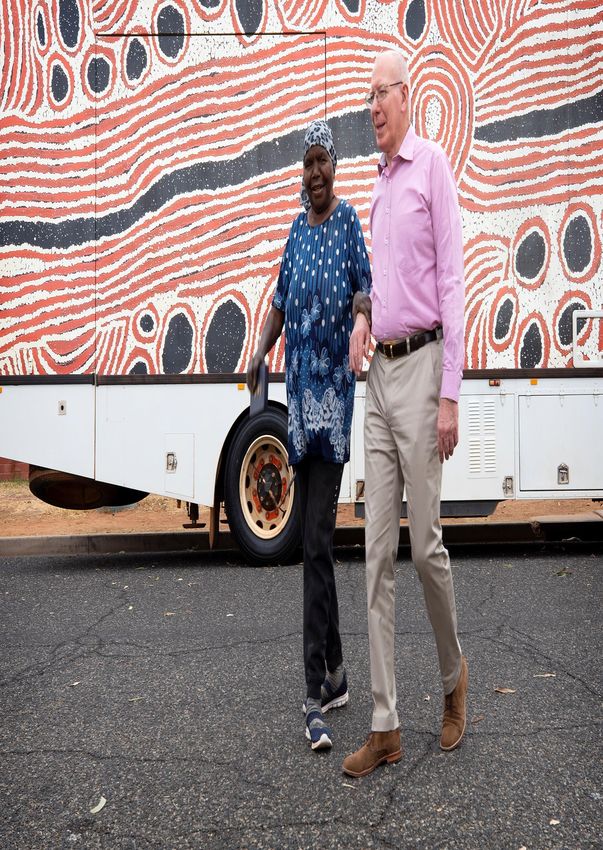
Contents

                 Official Secretary’s Statement ………………………………………………………………………….                                          1
                 Purpose ……………………………………………………………………………………………………………….                                                   2
                 Key activities to support our Outcome .…………………………………………………………….                                       3
                 Operating context
                 Component 1: Support for the Governor-General ……………………………………………..                                     4
                          Environment ………………………………………………………………………………………..                                              5
                          Capability …………………………………………………………………………………………….                                              6
                          Cooperation with others ……………………………………………………………………...                                        7
                 Operating context
                 Component 2: Administration of the Australian honours and awards system ……                            8
                          Environment ……………………………………………………………………………………………                                              9
                          Capability …………………………………………………………………………………………….                                              10
                          Cooperation with others …………………………………………………………………………                                         10
                 Risk oversight and management systems …………………………………………………………                                          11
                          Governance …………………………………………………………………………………………….                                              14
                 Performance ……………………………………………………………………………………………………….                                                  15
                 Appendix – List of requirements ……………………………………………………………………….                                          20

Front cover: The Governor-General and Mrs Hurley meet with veterans at the commemoration for the 75th anniversary of the end

of World War II, at the Australian War Memorial, 2 September 2020.

This page: State Entrance of Government House, Canberra.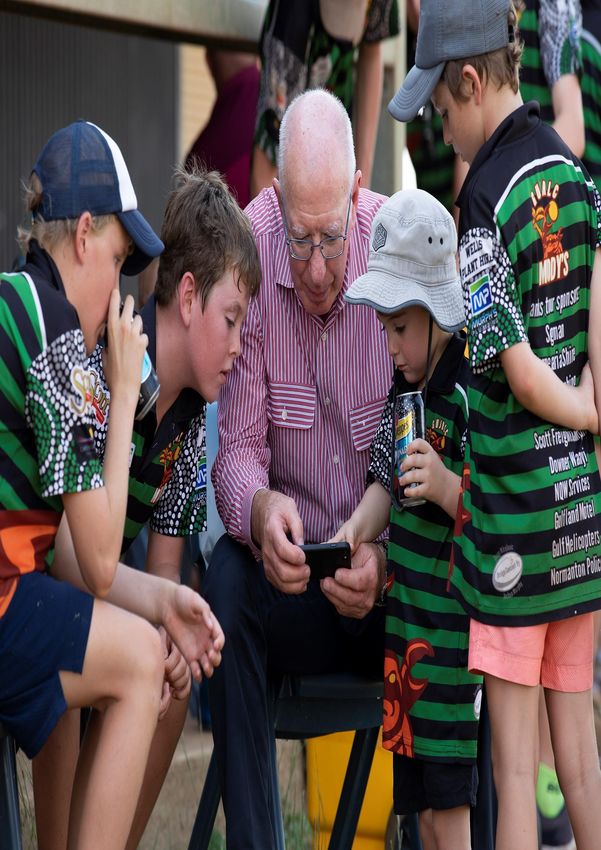
Official Secretary’s Statement

The Office of the Official Secretary to the Governor-General (the ‘Office’) supports the
Governor-General to encourage, comfort, inspire and uplift Australians from all walks of life
and to celebrate their achievements.

On 1 July 2019, His Excellency General the Honourable David Hurley AC DSC (Retd) was
sworn-in as Australia’s 27th Governor-General. In his swearing-in speech at Parliament House,
the Governor-General spoke of a ‘richness of spirit’ that exists in Australian society. In so
doing, he outlined his approach for his term and set the direction for the Office. The Office
has assisted the Governor-General to highlight to Australians their inherent strengths, their
concern for the common good, their humanity and decency, and their desire for a ‘fair go’.

The impacts of the COVID-19 pandemic on the back of the devastating bushfires in the
summer of 2019-20 will continue to influence the Governor-General’s term over the next
three years. In an environment where the nation’s social fabric has been stretched and
tested,the Governor-General’s priority will be to help bring Australians together, uplift the
discouraged and give hope. This will be delivered through a broad program of meaningful
outreach and engagement and incorporating the Australian honours and awards system.

As an Office we are motivated by supporting the Governor-General to reinforce the nation’s
shared values, promote community cohesion, and represent our broad national interests
here and overseas. We see our role as imagining new and powerful ways to enhance the
impact of the Governor-General’s work. We do this by thinking innovatively and strategically;
engaging and empowering our staff; and using the resources available to us effectively,
efficiently, economically and ethically to achieve planned outcomes.

As the accountable authority of the Office of the Official Secretary to the Governor-General, I am
pleased to present the Office’s 2021-22 Corporate Plan for the period 2021-22 to 2024-25, as
required under paragraph 35(1)(b) of the Public Governance, Performance and Accountability
Act 2013 (PGPA Act).

Paul Singer MVO
Official Secretary to the Governor-General

31 August 2021

                                                                                                 1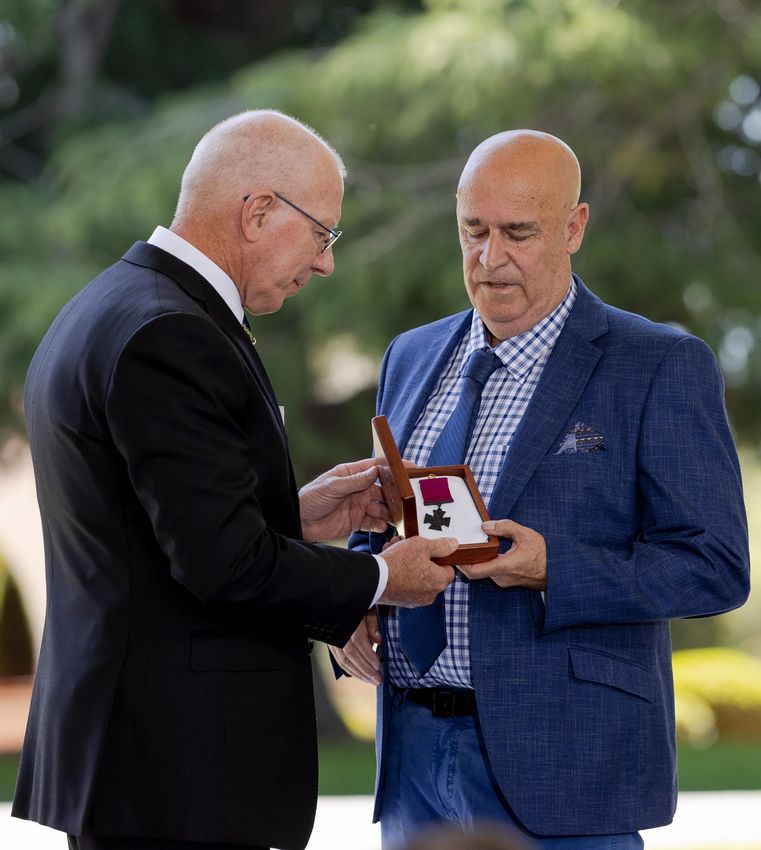
Purpose
The purpose of the Office is the facilitation of the
performance of the Governor-General’s role through the
organisation and management of official duties,
management and maintenance of the official households
and properties, and administration of the Australian
honours and awards system.

The Governor-General and Mrs Hurley meet with students in Normanton, Queensland, 18 November 2020.
Purpose
The Office was established in 1984, by amendment to the Governor-General Act 1974, to
support the Governor-General in the fulfilment of his or her responsibilities.
The planned Outcome for the Office is the facilitation of the performance of the Governor-
General’s role through the organisation and management of official duties (which are
constitutional, statutory, ceremonial and community-focussed in nature), management and
maintenance of the official households and properties, and administration of the Australian
honours and awards system.
The Office achieves this through a single program which comprises two components:
1. Support for the Governor-General
2. Administration of the Australian honours and awards system.
Key activities to support our Outcome
During the period of this Corporate Plan, the Office will focus on the following key activities
to assist the Governor-General and Mrs Hurley to perform their roles:
support the Governor-General and Mrs Hurley to uplift, encourage, inspire and
celebrate Australians
deliver effective governance and management arrangements in support of the official
duties of the Governor-General
ensure efficient and effective stewardship of the properties (Government House in
Canberra and Admiralty House in Sydney) in accordance with heritage requirements
and approved capital works and maintenance programs
understand, preserve and share the rich stories of the properties
inform Australians about the role of the Governor-General in contemporary
society
carry out the efficient and effective administration of the Australian honours and
awards system, including to increase the number of nominations for Australians from
parts of the community which have been historically underrepresented and help
ensure that the Order of Australia is, and is perceived to be by the Australian public,
the highest form of recognition of the efforts and achievements of Australians.
In fulfilling our purpose, the Office’s key activities will support the Governor-General to
recognise, encourage and reward community achievement; complement the work of
Parliament and government agencies; represent our broad national interests here and
overseas; and highlight the inherent goodness of Australians and our ability to overcome
adversity, particularly in the context of responding to the health, social and economic impacts
of the COVID-19 pandemic.
3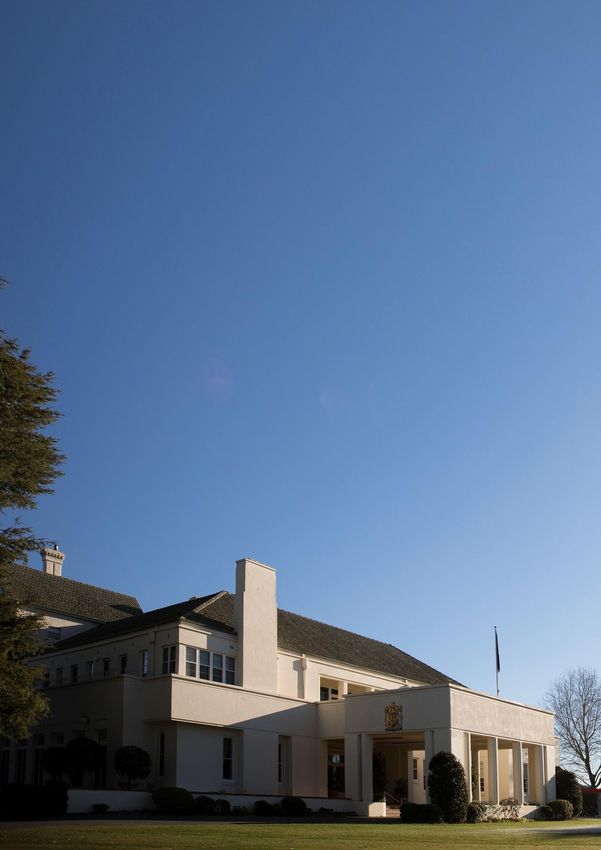
Operating Context
Component 1 - Support for
the Governor-General

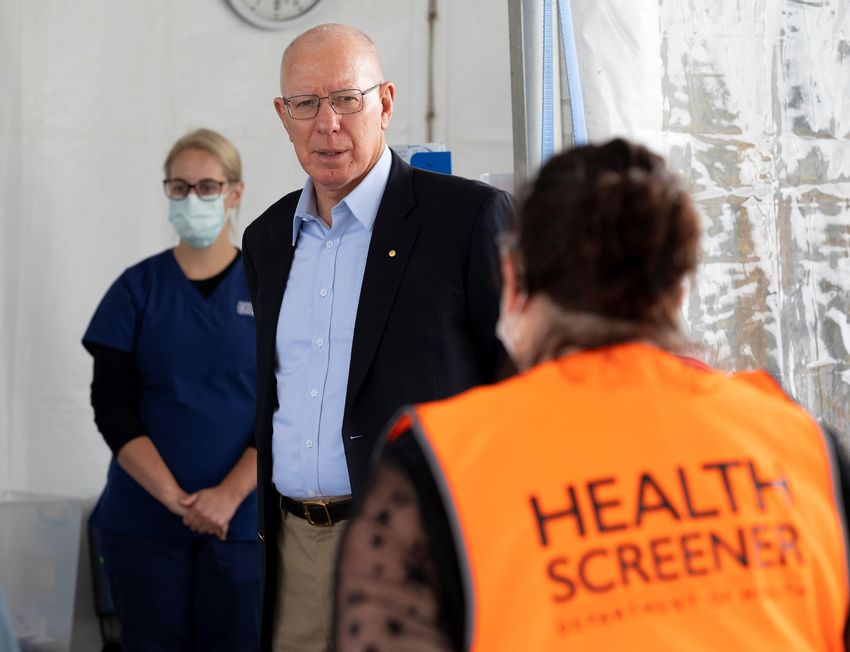
The Governor-General thanks frontline staff at the Devonport COVID-19 Testing Clinic,
Tasmania, 24 November 2020.
                                                                                        4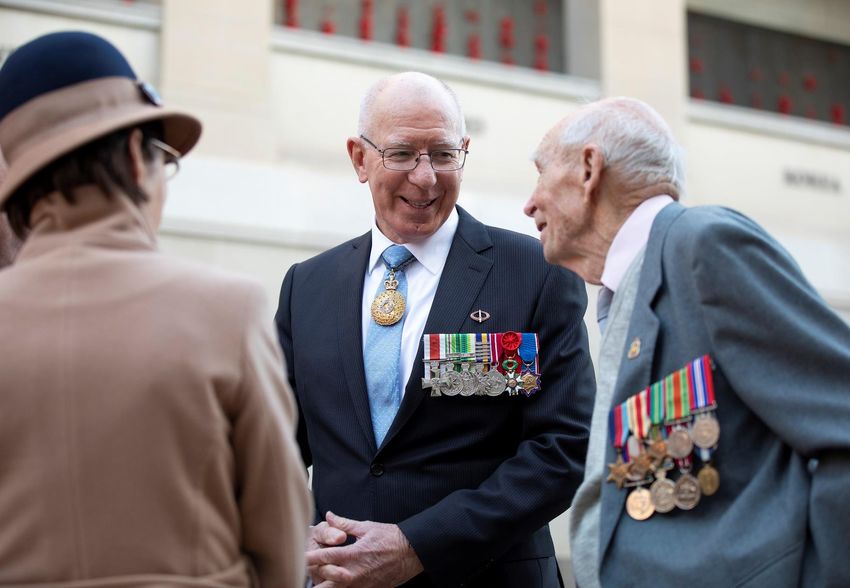
Operating Context – Support for the Governor-General
Environment
The Office is a small Commonwealth budget-funded statutory agency with offices located
at Government House in Canberra and Admiralty House in Sydney. It is not part of the
Australian Public Service and employs staff under section 13 of the Governor-General Act
1974. It has a unique role and a diverse workforce that performs functions that are both
typical and atypical (e.g. hospitality and horticulture) of other Commonwealth agencies.
The Office operates within its departmental budget and robust financial management is a
priority. This ensures that emerging or ongoing cost pressures, including significant costs
arising from the maintenance of the heritage properties, do not impact the Office’s
performance.
The Office’s operating environment is complex and changing. The COVID-19 pandemic and
other localised challenges caused by fire, flood, drought or other disasters influence the
way the Governor-General engages with the community. Importantly, while the ‘how’ may
change because of the operating environment, the ‘why’ does not. The Office continues to
support the Governor-General to uplift, encourage, inspire and celebrate Australians, and
facilitates engagement with as many Australians as possible through face-to-face events (as
conditions permit), digital engagement, and traditional and social media.
In providing support to the Governor-General, the Office is subject to varying degrees of
influence by external factors. These include:
maintaining the Governor-General’s program of national community engagement
when travel and gatherings are restricted as a result of measures in response to the
COVID-19 pandemic
managing the properties, including treatment of latent conditions associated with
project works
administering the Office and operation of the internal budget in a manner which is
responsive to Government policy and community expectations
increasing awareness and improving processes to mitigate risks and align with
external requirements relating to the overall physical and cyber security
environment.
Looking further ahead in the reporting period, a fundamental influence on the Office’s
operating environment will be the expected changeover of the Governor-General in 2024.
While there is no set term for a Governor-General, it is notionally for a period of five years.
5
Capability
Workforce capability
The Office has a highly skilled, diverse and flexible workforce. Investment in the development
and welfare of staff is a priority. We seek to support and empower our people to be
innovative, embrace change and work collaboratively to deliver outcomes that we are proud
of.
Leadership and development – the Office’s leadership and development framework
aims at improving staff skills, job knowledge, and to support personal and professional
growth. The Office has an online e-learning system which complements regular in-
person training that is delivered to individual staff, teams, and the Office as a whole.
Diversity and inclusion – the Office has established a Diversity and Inclusion working
group to promote and reflect the diversity of our staff, our stakeholders and the
community we serve.
Geographic location – the majority of Office staff are located in Canberra and there is
a small team based in Sydney. Effective internal communication within and between
sites and with travelling staff is a critical enabler of our performance objectives. The
impacts of COVID-19 have accelerated the Office’s uptake of videoconferencing
platforms to ensure continuity of purpose and collaboration of staff across both
locations and support staff while travelling with the Governor-General or remote
working.
A key focus is providing an adaptive and flexible workplace, particularly in light of the current
and anticipated ongoing challenges created by COVID-19.
In response to those challenges and the changing operating environment, the Office has
established a creative team (drawing on existing staff across the Office) to explore and
identify new and innovative ways to ensure our performance objectives can be met.
In 2021, a new Enterprise Agreement is to be negotiated for the period 2022-25.
Infrastructure capability
The Administered Capital Budget funding provided to the Office supports a program to
sustain the condition and capability of the Commonwealth Heritage Listed properties for
which the Office has statutory stewardship responsibilities.
6This property program is proceeding under the direction of the Management Committee
through the Property Sub-Committee (PSC). Planned expenditure under this program is
approximately $2.7 million per annum and will be prioritised to meet work health and safety,
accessibility and compliance requirements. The Office received additional Administered Capital
funding at Additional Estimates in 2019 for a project to protect and preserve the historic
Kirribilli Point Battery precinct at Admiralty House and this project is due for completion in
the 2021-22 financial year.
The Office also has a program in place, under the broad oversight of the PSC, to replace
departmental assets and equipment to maximise operational effectiveness and
support performanceobjectives. This program utilises Departmental Capital Budget
funding of approximately $0.4 million per annum.
Information and communications technology capability
The Office is responsible for its own Information and Communication Technology (ICT)
environment and provides a system that meets the needs of the Governor-General and staff
while ensuring reliability, security, timeliness, control and management of associated risks.
While some components are outsourced or managed by third-parties, the Office maintains
control over them. The Office’s ICT framework and resources are managed under the
direction of the Management Committee through the Information Technology Sub-
Committee (ITSC).
The Office’s approach to ICT innovation seeks to identify opportunities that can maximise
benefit within available resources. In 2020, the government approved additional funding for the
Office to modernise and strengthen its ICT capabilities. This funding will ensure the Office has the
appropriate capability to manage current and expected future requirements, while minimising
ICT-related business continuity and security risks. The ICT uplift is being overseen by a Project
Implementation Cell within the Office and is due to be completed in early 2023.
Cooperation with others
The Office works closely with the Department of the Prime Minister and Cabinet, its portfolio
department, on matters including the Governor-General’s constitutional and statutory duties. The
Office also works with the Department of Defence and the Department of Veterans’ Affairs in
relation to the Governor-General’s role as Commander-in-Chief of the Australian Defence Force;
the Department of Foreign Affairs and Trade with regard to international engagement and
protocol; the Department of Home Affairs and the Australian Federal Police on security matters,
and numerous other government and non-government bodies.
7Operating Context Component 2 – Administration of the Australian honours and awards system The Governor-General and Mrs Hurley host an investiture ceremony at Government House, Canberra, to posthumously award the Victoria Cross for Australia to Ordinary Seaman Edward ‘Teddy’ Sheean, 1 December 2020.
Operating Context – Administration of the Australian honours and
awards system
Environment
The Australian Honours and Awards branch supports the Governor-General to carry out
his responsibilities relating to the independent administration of the Australian honours
and awards system.
In addition, the branch provides secretariat support to the independent Councils and
Committee responsible for making recommendations on awards to the Governor-General.
The branch works with the Department of the Prime Minister and Cabinet on matters
including policy, administration and promotion of Australian honours and awards.
The Office places a high priority on ensuring that the Australian honours and awards system is,
and is perceived to be by the Australian community, the pre-eminent way to recognise and
celebrate the service and achievements of Australians. In relation to the Order of Australia,
ensuring that awards (both in administration and outcome) reflect the diversity of the
Australian community is essential to this objective. While the Office is not responsible for nor
resourced to undertake promotion or engagement in relation to the Australian Honours and
Awards system, the Office does seek to leverage opportunities to increase awareness of the
Order, particularly among parts of the Australian community that have been historically under-
represented in the number of nominations and, therefore, awards.
In administering the Australian honours and awards system, the Office is subject to challenges
resulting from external factors. These include:
Community expectations – reflected in commentary around the Order of Australia
and other awards, such as the National Emergency Medal.
Community engagement and nomination volumes – the introduction of an on-line
nomination form and the streamlining of the nomination process have resulted in a
notable increase of nominations over recent years. This places demands on current
resources and requires the Office to introduce initiatives to assist in meeting that
demand.
Government policy – the honours system is responsive to changes in honours policy,
regulations and the creation of new awards. This places new demands on staff and
budgets, through administration and procurement of insignia.
9Capability
Workforce capability
In addition to the workforce capability factors listed for component 1 (page 6), the Office has
a successful program for developing new case officers in the Honours and Awards branch.
This provides structured training and development over a two-year period to prepare
trainees for careers in the Office and the wider public sector.
Following several years of transition from paper-based to electronic workflow solutions, the
branch undertook an internal review of its responsibilities and capabilities in 2020. This work
has helped shape and streamline workforce operations to better suit current and future
needs.
Information and communications technology capability
The Office appreciates the increasing demand by the public to access the Australian honours
and awards system online. The Office has streamlined and simplified the nomination process
for honours and awards by making user-friendly smart forms available on the Governor-
General’s website. The Office will continue to automate processes within the system to
assist with reducing the time between the nomination and the announcement of an award.
A priority for the reporting period will also be to make better use of available data within the
honours and awards system to help promote greater diversity of recipients to better reflect
Australian society. This work is being aided by the additional funding to uplift the Office’s
overall ICT capability described in component 1 (page 7).
Cooperation with others
The Office works with the Department of the Prime Minister and Cabinet on matters
including policy, administration and promotion of Australian honours and awards; and with
the Department of Defence in relation to Defence honours and awards.
The Office also works with state and territory government departments and organisations,
including emergency service agencies around Australia, to administer some of the awards,
along with state and territory Government Houses to provide insignia and warrants for use
in local investiture ceremonies.
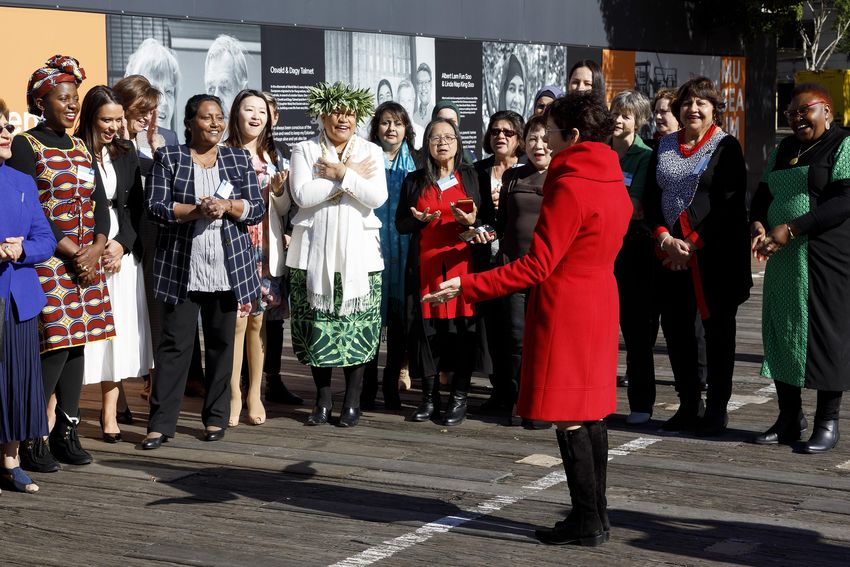
10Risk oversight and management systems The Governor-General and Mrs Hurley meet with a multicultural women’s reference group in Sydney, New South Wales, 9 June 2021.
Risk oversight and management systems
Risk oversight and management is an integral part of sound management practice and an
essential element of good governance. It is a primary focus and is taking on an even greater
importance in 2021-22 as the Office proactively plans and manages risk to ensure business
continuity, workplace health and safety, and delivery against outcomes during the ongoing
COVID-19 pandemic. The Office continues to actively manage risks associated with a
changing physical security and cyber security environment to ensure that our systems remain
robust, responsive and secure.
The Office actively manages risk in accordance with its Risk Management Framework, placing
a focus on:
Support for the Governor-General, including:
o managing internal and external events
o advising on a broad range of matters
o developing and executing an effective community engagement program
The effective stewardship of the official properties
The effective administration of the Australian honours and awards system
Maintaining and executing efficient and effective management systems
Building and maintaining a strong, engaged and capable workforce.
The Deputy Official Secretary performs the role of the Chief Risk Officer for the Office. In
accordance with the Commonwealth Risk Management Policy, the Office regularly reviews its
risk management framework, risk register, settings and supporting plans to ensure risks are
appropriately identified and risk controls are effectively implemented. Management and
mitigation of these risks is further reinforced through the Office’s daily operations and
administrative practices.
The Office’s risk assessment found that the types and levels of risk faced by the Office are
consistent with those of other organisations of a similar size and complexity. Strong risk
management processes exist, however a number of improvements to current controls
have been identified that will further mitigate the potential for risks to impinge on the
achievement of business objectives.
There are six strategic risks being managed by the Office which are outlined in the
following table with their corresponding controls.
12Strategic risk Selected controls1
Failure to provide sound • Written professional advice sought where required
advice on constitutional, • Broad internal consultation with senior management
policy and contextual • Reference to precedent
matters • Management framework and processes
• Increased individual accountability/responsibility through
internal control framework
Failure to manage the • Management framework and processes
internal and external events • Communications strategy
program • Reference to precedent and experience
• Engagement of high quality staff to manage the program
• Standard Operating Procedures in place
• Liaison with relevant third parties
Failure to manage and • Regular meetings of the Property Sub-Committee
maintain the property • Capital projects identified in the Property Works Plan
portfolio • Heritage Plans
• Landscape Management Plans
• Annual Condition Audits and Surveys
• Works and Maintenance programs
• Compliance programs
• Building Management Systems
Physical and/or cyber • Specialised armed security services operating 24 hours at both
security environment and/or properties, and accompanying the Governor-General for external
incident/event affecting the commitments
performance of official • Technical security surveillance
duties • Staff security clearances and checks
• Strict visitor control policy and procedures
• Business continuity planning and exercises
• Threat Assessments
• Secure IT gateway and internal firewalls, paired with close
engagement with the Australian Cyber Security Centre
Failure to provide adequate • Policies, processes and procedures
research and secretariat • Targeted training (such as the program for developing new case
support services to the officers)
Honours advisory councils • Quality Assurance methodology
and committee • Liaison with PM&C and promotion strategies
• Targeted recruitment and retention strategies
Failure to maintain a robust • Management, governance and compliance frameworks
governance system and • Audit Committee, Management Committee, and Sub-Committee
culture and appropriate scrutiny on processes and outcomes
management systems and • Mandatory training and leadership and development programs
practices • Establishment of relevant project teams to meet performance
objectives
• Annual Performance Agreements
1
This list represents the high-level strategic risks for the Office. A full list of risks and their treatments is
maintained in the Office’s Risk Management Framework, which includes a Risk Register.
13Governance
The Official Secretary, in his role as Chief Executive Officer and the accountable authority, is
accountable for the efficient, effective, economical and ethical use of resources and
performance. The Office recognises the need for a high level of accountability and places a
strong emphasis on meeting its governance obligations and responsibilities.
The Deputy Official Secretary, assisted by the branch Directors and the Chief Financial Officer,
supports the Official Secretary’s overall governance responsibilities by facilitating the
development of corporate and business plans; establishing policy and accountability
frameworks; and managing risk, fraud, legal issues, people, budgets, property, information
management, and security within the Office.
The Office has established several committees to support the Official Secretary:
Management Committee (including the Property Sub-Committee, Information
Technology Sub-Committee and the Security Sub-Committee)
Audit Committee
Workplace Consultative Committee (WCC)
Work Health and Safety Committee (WHS).
The Management Committee comprises the Official Secretary as Chief Executive Officer; the
Deputy Official Secretary as Deputy Chief Executive Officer; branch Directors of People and
Services, Honours and Awards, Project Implementation, and Strategic Engagement; the
Director of Communications and Creativity; and the Chief Financial Officer. The group meets
monthly to monitor performance outcomes and consider strategic issues including emerging
or ongoing risks. The Committee assists the Official Secretary to meet his statutory
responsibilities under the Governor-General Act 1974 and the PGPA Act.
A three-person Audit Committee is responsible for providing independent advice and
assistance to the Official Secretary on the Office’s risk oversight, control and compliance
frameworks and performance and financial accountability. The Audit Committee comprises
an independent external Chair and two independent external members.
The WCC, representing all staff of the Office, provides a forum for management and
employees to discuss matters affecting the workplace. Meetings of the WCC are chaired
alternately by a representative of the Official Secretary and a representative of employees.
The WHS Committee is chaired by the Director, People and Services. Membership includes
management representatives and health and safety representatives from across the Office.
The Committee’s responsibility is to facilitate discussion and cooperation on work health and
safety issues in the workplace.
14Performance The Governor-General and Mrs Hurley meet with staff and patients at the Purple House Dialysis Centre, Alice Springs, Northern Territory, 5 August 2020.
Performance

The Office has identified three organisational objectives to achieve its purpose.

                                    ORGANISATIONAL OBJECTIVES

                 1.                                     2.                                3.

    Support the Governor-                 Understand, preserve and          Support and empower our
   General and Mrs Hurley to               share the rich stories of         people to be innovative,
   uplift, encourage, inspire              Government House and             embrace change and work
   and celebrate Australians.                 Admiralty House.               collaboratively to deliver
                                                                              impressive outcomes.

                                     HOW WE WILL ACHIEVE IT

 Consistent with the Governor-          Present the Houses and            Promote a culture of
 General and Mrs Hurley’s               grounds to a high standard        accountability and innovation.
 priorities, design and deliver a       consistent with community
 program of meaningful                  expectations.                     Apply project management and
 outreach and engagement.                                                 design thinking methodology to
                                        Preserve the condition of the     encourage new ideas, enhance
 Celebrate endeavour and                Houses and grounds.               collaboration across work areas
 achievement, including through                                           and deliver impressive
 an honours and awards system           Make Government House and         outcomes.
 that represents the diversity of       Admiralty House accessible for
 Australia.                             the benefit of all Australians.   Empower and grow our people
                                                                          by building capability and
 Use established networks, such         Understand and document the       capacity.
 as patronages and media                history of the properties and
 channels, to engage, reach a           provenance of our collection.     Maintain a robust governance
 broad range of audiences and                                             framework.
 amplify activity.                      Become a leader in
                                        implementing sustainable          Provide our staff the direction,
 Optimise the guest experience          environmental practices.          resources, information and
 at Government House and                                                  autonomy they require to
 Admiralty House so that it is          Be proud of where we work.        deliver performance objectives.
 welcoming, warm and special.

                                                                                                             16
Performance measures
Outcome 1: The performance of the Governor-General’s role is facilitated through organisation and management of official duties, management and
maintenance of the official households and properties and administration of the Australian honours and awards system.
Program 1.1 – The objective of this program is to support the Governor-General and official functions. It comprises two components: support for the Governor-
General and administration of the Australian honours and awards system.
Component 1 Support for the Governor-General
Primary Qualitative and
Objective/s Key activities Performance measures 2021-22 2022-23 2023-24 2024-25
stakeholder/s quantitative targets
1, 2 and 3 Executive support - The Governor-General is Governor- General, The Governor-General Governor- As for 2021-22. As for 2022-23. As for 2023-24.
providing advice to the satisfied with the level of the Australian public, expresses satisfaction General’s level of
Governor- General, advice and administrative government agencies, with the support he satisfaction to be
planning, implementing and support provided that community receives to perform his assessed.
managing Their Excellencies’ enables him to successfully organisations official duties.
forward program of perform official duties. Feedback to be
engagements, andliaising sought from
with representatives of relevant
governments, related stakeholders.
authorities, and community
2 and 3 groups. The Governor-General is Governor- General The Governor-General Governor- As for 2021-22. As for 2022-23. As for 2023-24.
satisfied with the expresses satisfaction General’s level of
management of the with the management of satisfaction to be
Personal support -
households. the official households assessed.
providing support for Their
and properties.
Excellenciesand hospitality
services for official
2 and 3 functions. The properties are managed Responsible Baseline of property Targets to be Targets to be Targets to be Targets to be
in accordance with the department, National condition to be established after established established established
Administrative services - requirements of the Capital Authority, local established in analysis of after analysis of after analysis of after analysis of
providing governance Environment Protection and government consultation with baseline of 2021-22 2021-22 2021-22
advice and administrative Biodiversity Conservation independent property property baseline. baseline. baseline.
services tothe Office and Act 1999 and government services provider. condition.
managing the Governor- policies relating to heritage Property Works Property Works Property Works
General’s official properties, and with due Property Works Program to be Program to be Program to be
residences, including consideration of advice Program to be planned and planned and planned and
maintenance of property, provided by the National planned and implemented to implemented to implemented to
equipment and grounds. Capital Authority and other implemented to meet meet meet
relevant authorities. meet established established established established
targets for targets for targets for targets for
property property property property
condition. condition. condition. condition.
17Component 2 Administration of the Australian honours and awards system
Primary Qualitative and
Objective/s Key activities Performance measures 2021-22 2022-23 2023-24 2024-25
stakeholder/s quantitative targets
1 and 3 Researching and preparing The Governor-General and Governor-General, The Governor-General, Governor- Target to be Target to be Target to be
nominations for other key stakeholders are Council for the Order the Councils and General’s, the established established established
considerationby the Council satisfied with the of Australia, Australian Committee supported by Councils’ and after analysis of after analysis of after analysis of
for the Order of Australia, administration of the Bravery Decorations the Office and other key Committee’s level 2021-22 2021-22 2021-22
the Australian Bravery Australian Honours and Council, National stakeholders, express of satisfaction to baseline. baseline. baseline.
Decorations Council and the Awards system and support Emergency Medal satisfaction with the be assessed. .
National Emergency Medal provided. Committee, the support provided and
Committee. Australian public, activities conducted. Feedback to be
government agencies sought from
Providing secretariat support The Office will, over the relevant
to the Australian honours course of 2021-22, stakeholders.
advisory bodies. implement outcomes
1 and 3 Activities comply with the Governor-General, from the review of Assessment of As for 2021-22. As for 2022-23. As for 2023-24.
Undertaking the governing instruments for Council for the Order performance criteria to compliance with
administrative tasks honours and awards, of Australia, enhance and further targets.
associated with the including the Constitution AustralianBravery develop data sources
approval of recipients in the for the Order of Australia. Decorations Council, and measures. Governor-
Australianhonours system National Emergency General’s and the
and subsequent Medal Committee, Documentation to Council’s level of
announcement where the Australian public, contain references to satisfaction to be
applicable. government compliance with any assessed.
agencies activities related to
Procuring Australian governing instruments.
1 honoursinsignia, warrants The medals and insignia Governor-General as Assessment of As for 2021-22. As for 2022-23. As for 2023-24.
and investiture items. meet design specifications, Chancellor of the Quality assurance and compliance with
adequate stock levels are Order of Australia, compliance checklists targets.
Facilitating the approval maintained and control State and Territory completed.
of,and changes to, processes are adhered to. Government Houses Feedback to be
governing instruments sought from
within the Australian relevant
honours system. stakeholders.
18Component 2 Administration of the Australian honours and awards system (continued)
Primary Qualitative and 2021-22 2022-23 2023-24 2024-25
Objective/s Key activities Performance measures
stakeholder/s quantitative targets
1 and 3 Providing insignia to Insignia and other resources Governor-General, As above. Governor- As for 2021-22. As for 2022-23. As for 2023-24.
State/Territory for investitures and honours Council for the Order General’s, the
Government Houses, list announcements are of Australia, Australian Councils’,
service organisationsand accurate and issued in a Bravery Decorations Committee’s, and
individuals for issue, and timely manner. Council, National state and territory
arranging local investitures. Emergency Medal Government
Committee, the Houses level of
Australian public, state satisfaction to be
and territory assessed.
Government Houses
19Appendix
List of requirements
This corporate plan has been prepared in accordance with the requirements of:
• Subsection 35(1) of the PGPA Act; and
• The PGPA Rule 2014.
The table details the requirements met by the Office’s Corporate Plan and page number for each
requirement.
Requirement Page/s
Introduction 1
statement of preparation 1
reporting period for which the plan is prepared 1
Reporting periods covered by the plan 1
Purpose 2-3
Key activities 3, 16-19
Operating context 4-10
environment 5, 9
capability 6-7, 10
cooperation with others 7, 10
Risk oversight and management systems 11-14
Performance 15-19
20
2You can also read


