OLYMPIC GAMES BY CHARLENE NOTGRASS WITH MARY EVELYN MCCURDY - TABLE OF CONTENTS AND SAMPLE PAGES FROM
←
→
Page content transcription
If your browser does not render page correctly, please read the page content below
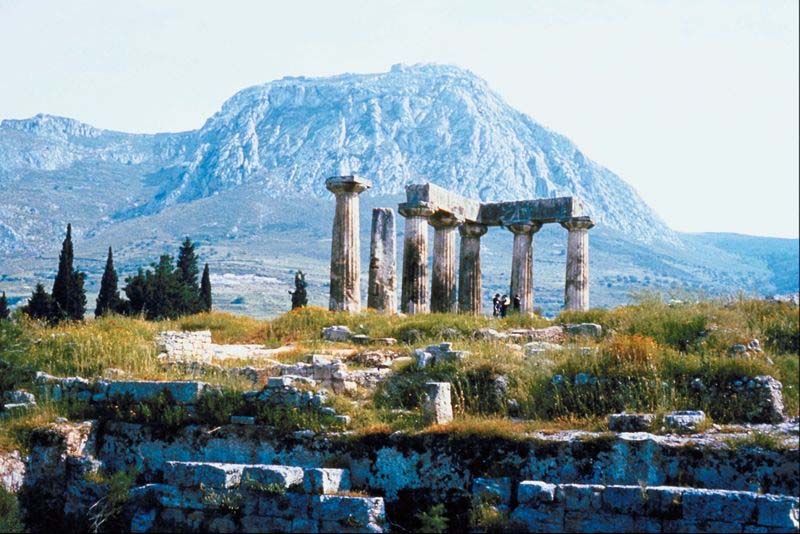
Table of Contents and Sample Pages from

 Olympic Games
       by Charlene Notgrass
    with Mary Evelyn McCurdy

    Copyright © Notgrass Company.
          All rights reserved.

To order your copy visit www.notgrass.com
          or call 1-800-211-8793.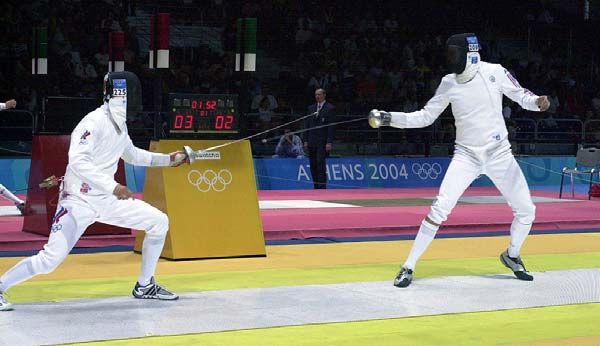
Olympic Games

    Interior Design by Charlene Notgrass and John Notgrass
          Front Cover Design by Mary Evelyn McCurdy

        This curriculum is an expansion of In the News: Olympics,
        written by Mary Evelyn McCurdy and published in 2004.
         Special thanks to Mary Evelyn for the original concept;
           for writing Lessons 1, 8, 39, and most of Lesson 38;
                   and for her significant contributions
                   to lessons 2, 4, 10, 11, 12, 16, and 40.

                      Copyright © 2012 Notgrass Company

                               ISBN 978‐1‐60999‐005‐3

            No part of this curriculum may be reproduced in any form.
            Contact Notgrass Company to purchase additional copies.

Scripture taken from the NEW AMERICAN STANDARD BIBLE®, Copyright © 1960,
   1962, 1963, 1968, 1971, 1972, 1973, 1975, 1977, 1995 by The Lockman Foundation.
                                  Used by permission.

                                Notgrass
                                                     company
                           Curriculum That Teaches the Heart, Soul, and Mind

                          370 South Lowe Avenue, Ste A
                                    PMB 211
                               Cookeville, TN 38501
                                 1‐800‐211‐8793
                                www.notgrass.com
                               books@notgrass.com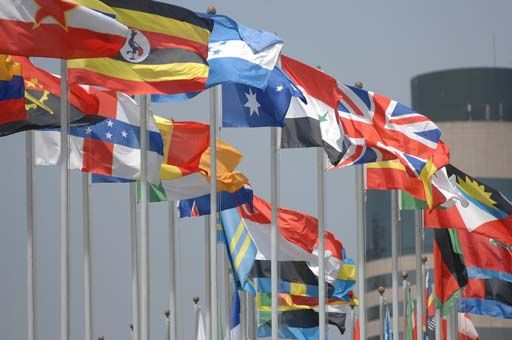
Table of Contents
Lesson 1
      The Ancient Games_____________________________________________________2

Lesson 2
      Ancient Games Crossword_______________________________________________4
      Bible Study: Greece & Asia Minor_________________________________________5

Lesson 3
      Sports Training in the Bible______________________________________________6

Lesson 4
      The Modern Games Begin_______________________________________________8

Lesson 5
      The Winter Games Begin_______________________________________________10

Lesson 6
      The International Olympic Committee____________________________________12

Lesson 7
      Nations of the Olympic Games__________________________________________14

Lesson 8
      Selecting a Host City___________________________________________________18

Lesson 9
      Qualifying for the Games_______________________________________________20
      Getting There and Settling In____________________________________________21

Lesson 10
      Opening Ceremonies___________________________________________________22
      The Olympic Flag_____________________________________________________23
Lesson 11
      The Olympic Oath_____________________________________________________24
      The Olympic Torch____________________________________________________24
      Olympic Spectators____________________________________________________25

Lesson 12
      The Olympic Motto____________________________________________________26
      The Medal Ceremony__________________________________________________27

Lesson 13
      An Olympic Games Timeline from 1896 through 1944______________________28

Lesson 14
      An Olympic Games Timeline from 1948 through 1968______________________32

Lesson 15
      An Olympic Games Timeline from 1972 through 1980______________________36

Lesson 16
      An Olympic Games Timeline from 1984 to the Present______________________38

Lesson 17
      Sports of the Summer Olympic Games___________________________________42

Lesson 18
      Aquatics_____________________________________________________________44
      Modern Pentathlon____________________________________________________45

Lesson 19
      Archery______________________________________________________________46
      Badminton___________________________________________________________46
      Fencing______________________________________________________________47

Lesson 20
      Basketball____________________________________________________________48
      Boxing_______________________________________________________________49

Lesson 21
      Canoeing and Kayaking________________________________________________50
      Cycling______________________________________________________________50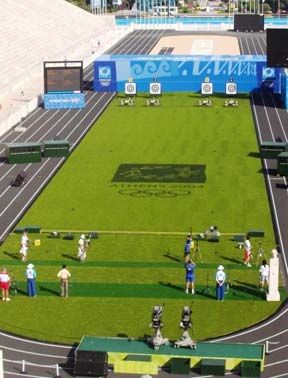
Lesson 22
      Triathlon_____________________________________________________________52
      Volleyball____________________________________________________________52
      Weightlifting_________________________________________________________53

Lesson 23
      Equestrian____________________________________________________________54
      Athletics_____________________________________________________________55

Lesson 24
      Football______________________________________________________________56
      Gymnastics___________________________________________________________57

Lesson 25
      Wrestling____________________________________________________________58
      Hockey______________________________________________________________59

Lesson 26
      Rowing______________________________________________________________60
      Sailing_______________________________________________________________61

Lesson 27
      Shooting_____________________________________________________________62
      Taekwondo___________________________________________________________62
      Judo_________________________________________________________________63

Lesson 28
      Table Tennis__________________________________________________________64
      Tennis_______________________________________________________________64

Lesson 29
      Handball_____________________________________________________________66
      Sports Matching_______________________________________________________67

Lesson 30
      Sports of the Winter Olympic Games_____________________________________68
      Biathlon______________________________________________________________69

Lesson 31
      Bobsleigh____________________________________________________________70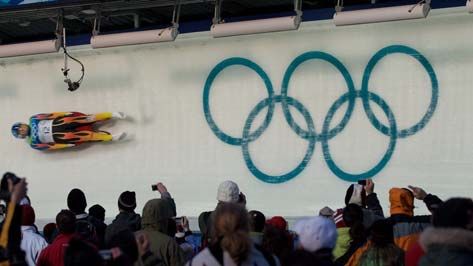
Lesson 32
      Curling______________________________________________________________72

Lesson 33
      Ice Hockey___________________________________________________________74

Lesson 34
      Luge_________________________________________________________________76
      Ice Skating___________________________________________________________76

Lesson 35
      Skiing________________________________________________________________78

Lesson 36
      A Winter Activities Album_____________________________________________80
      God Gives the Weather That Makes Winter Sports Possible_________________83

Lesson 37
      Outstanding Olympians________________________________________________84

Lesson 38
      Paralympic Games____________________________________________________86
      Special Olympics World Games_________________________________________86
      Olympic Sports Trivia Review__________________________________________87

Lesson 39
      A Review of Olympic Firsts_____________________________________________88

Lesson 40
      God Made Us All______________________________________________________90
      Bible Study: Run!______________________________________________________91
      Praying for the Olympic Games_________________________________________92
      Go Into All the World__________________________________________________92

Answer Key________________________________________________________________93

Image Credits______________________________________________________________97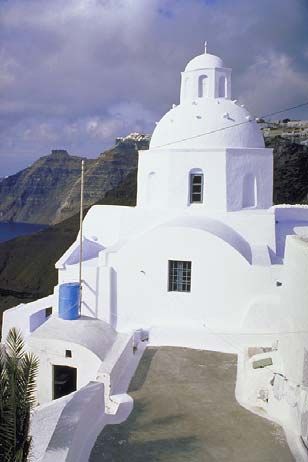
How to Use This Study
       The Olympic Games bring to mind athletes and uniforms, national anthems and
flags, victory and defeat, records and statistics. What is the history of the Olympic Games?
What does the Bible teach about athletic competition? What is the history of various
sports? When did people start playing basketball and volleyball? When did people begin
to ski and to skate? Who is the International Olympic Committee? How is a city chosen
to host the Games? Find out the answers to these questions and much more as you have
fun exploring the Olympic Games.

       What’s included in the forty lessons of Olympic Games?
          Bible Study
          History (with many historic photographs)
          Geography
          Physical Education
          Sports Vocabulary
          Creative Writing
          Grammar Activities
          Puzzles
          Review Questions
          Answer Key

       How many copies of Olympic Games do I need for my family?
       One per child. Students learn about the Olympic Games as they read and complete
activities in the curriculum. The study is interactive. Each lesson includes some kind of
written work that helps the student retain the information he or she has read.

       How long does it take to complete this curriculum?
       Lesson lengths vary. Allow 30 minutes for most lessons. Lessons with creative
writing assignments will take longer.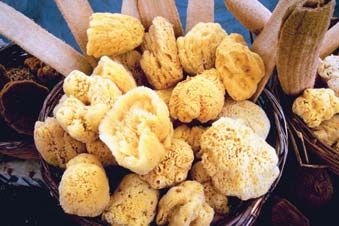
How can I make the study even more memorable?
       Have An Outdoor Family Olympic Games. Make up your own Olympic Games
celebration! Appoint your own Family Olympic Committee to plan everything. Pretend
you are having a torch relay by using a flashlight instead of a torch. Design your own
Family Olympic flag. Plan an Opening Ceremony, using your family members’ talents.
Design medals and make them out of paper. Designate a place for winners to stand while
you play his or her favorite song when they ascend the podium to receive their medals.
A front or back porch would make a good podium.
       Perhaps your family already enjoys some of the sports of the Games. If so, you can
have events in those sports. If not, you can make up your own events. Who can kick a
shoe the farthest? Who can hit a tree trunk with a ball? Who can pull up ten weeds before
everyone else?
       Perhaps your family doesn’t like competition. Perhaps the children have different
abilities and a skills contest would not be fun. You can simply hold events and give
everyone an award for participating.
       Just be sure that parents are involved in all the planning and that they supervise
all events.
       Have an Indoor Family Olympic Games. Instead of (or in addition to) outdoor Games,
you could have an indoor Family Games. An indoor Family Games could include board
games and cards. You could have a ball darts competition or see who can keep a balloon
off the floor the longest. Just make sure you are safe and have fun!

       For many years, our family has enjoyed following some of the sports of the Games.
We are careful what we watch. Sometimes the girls enjoy watching figure skating, while
the guys avoid it because some of the costumes are immodest. By writing this curriculum,
I am not endorsing everything about the Olympic Games. However, it is inspiring to me
to learn how people overcome obstacles to meet their goals. I love how countries work
together during those few days, even though they may have major political differences.
I hope this study of the Games encourages you to work hard to accomplish goals and
inspires your family to work for peace at home and in the world.

                                                               Charlene Notgrass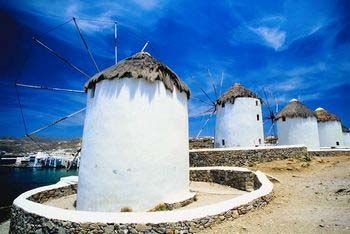
Olympic Games

   Medal Ceremony at the 2008 Beijing Games
3 Sports Training in the Bible
       The apostle Paul
was        almost   certainly
familiar with the ancient
Olympic Games. Twice he
wrote letters to the church
in Corinth, Greece. The
city of Corinth lies on
approximately the same
latitude as Olympia.
       In 1 Corinthians,
Paul used the imagery of                     Ruins of Ancient Corinth in Greece
athletic      training   and
competition to teach Christians to be disciplined in their Christian lives. In the ninth
chapter of 1 Corinthians, Paul even mentioned “the games.” In verses 24 through 27, he
talked about running, boxing, and self‐control and used other words that relate to athletic
training and competition. This is what he said:

             Do you not know that those who RUN in a RACE all run,
           but only one receives the PRIZE? Run in such a way that you
             may WIN. Everyone who COMPETES in the GAMES
            EXERCISES SELF‐CONTROL in all things. They then do it
             to receive a perishable WREATH, but we an imperishable.
             Therefore I run in such a way, as not without aim; I BOX
              in such a way, as not beating the air; but I DISCIPLINE
       my BODY and make it my slave, so that, after I have preached
                    to others, I myself will not be DISQUALIFIED.

6
In 2 Timothy 2, Paul encouraged his young “son in the faith” to be strong. He
taught Timothy, using the examples of soldiers, farmers, and athletes. In verse five, he
said:
Also if anyone competes as an ATHLETE, he does not win the prize
unless he competes according to the RULES.
The words that relate to athletics are in all capital letters. Find them in the puzzle below.
L P S J K G A M E S L M N D
O A E C O R I N T H I A N I
R U L E S E M A R K W I N S
U L F D G E A C T S R L T C
N A C E H C P R I Z E U H I
P B O F I E A A O J A K E P
E C N J O H N C P A T E S L
T A T H L E T E Q M H X S I
E A R D A N I E L E V W A N
R C O M P E T E S S U B L E
A O L Y M P I C R S T O O J
D I S Q U A L I F I E D N A
L B H E B R E W S O F Y I M
O O P H I L L I P I A N A E
E X E R C I S E S X Y Z N S
Pictures clockwise from top: White‐Washed Building
in Santourini, Greece; Greek Flag; Loufa Sponges from the
Mediterranean Sea; Greek Windmills; Island of Samos, Greece
711 The Olympic Oath
Athletes Taking the Olympic Oath on Opening Day of the Los Angeles Games, July 30, 1932
During the opening ceremonies an athlete from the host country takes the Olympic
Oath on behalf of all athletes. He promises to follow the rules and to behave with good
sportsmanship. Belgian athlete Victor Boin was the first to pronounce the Olympic Oath
in the Antwerp Games of 1920. Since 1972 in Munich, officials and judges have also taken
an oath. Since the 2000 Games in Sydney, the athletes’ oath has included a promise not
to use drugs.
The Olympic Torch
The Berlin Games of 1936 saw the first relay of the
Olympic torch. The torches of the Olympic Games are
unique, a new one being designed for each relay. The torch
is lit by a mirror reflecting the sun’s rays in Olympia,
Greece. It is then carried by relay, passing the torch on from
person to person, until it reaches the location of the Olympic
Games. There it is used to light the Olympic cauldron
during the opening ceremonies. For the 2004 Games in
Athens, Greece, the torch traveled to all five continents.
The final torchbearer of the 1964 games in Tokyo
was 19‐year‐old Yoshinori Sakai. Yoshinori was born near
Hiroshima, Japan on the day the first atomic bomb was
A Model of the 2012 Torch dropped on that city in 1945 during World War II.
24Olympic Spectators
Imagine the thrill of actually attending an Olympic event. This picture from the Library of Congress is
entitled, “Crowds gathering at restored Stadion for 20th century celebration of old games, Athens.”
Describe the scene on notebook paper. When you and a parent have proofread your work, copy it below.
__________________________________________________________
__________________________________________________________
__________________________________________________________
__________________________________________________________
__________________________________________________________
__________________________________________________________
2519 Archery
Archery was included in some Olympic Games from
1900 to 1920, but it did not become a permanent event until
the Munich Games of 1972. An Olympic target is 1.22 meters
across. It has 10 concentric rings. The bullseye ring in the
middle is 12.2 centimeters across. Archers shoot their arrows
from 70 meters away. Competitors vie individually and in
teams. See the photo from Athens 2004 at left.
The Bible often speaks of bows and arrows. One passage is Psalm
127:4. Copy it on these lines:
__________________________________________________________
__________________________________________________________
__________________________________________________________
Read about King David, his friend Jonathan, and what they did with arrows in 1 Samuel 20.
Badminton
Badminton has been an Olympic sport since the Barcelona Games of 1992. The
game is popular across Asia and Europe. In the modern game two to four players use
lightweight rackets to hit a shuttlecock back and forth over a net. The game is often played
on grass, but the Olympic game is played indoors on a marked court. A shuttlecock is a
piece of round cork with feathers sticking out of one side.
In the 400s BC, the Chinese played a form of the game, called ti
jian zi. In this game they kicked the shuttle. Later, ancients from Greece
and India played a form that used rackets instead of feet. During the
1600s, Euopeans played shuttlecock. British soldiers brought a version
of the game home from India in the mid‐1800s. The English Duke of
Duke of Beaufort
Beaufort introduced the game to royal friends at his country estate,
Badminton House. Thus, the game came to be called badminton.
46Fencing
Modern fencing has its roots in the ancient combat form of sword fighting. Fencing
competitions have been held in every modern Olympic Games. Olympic competitors face
one another on a 14‐meter by 1.5 meter metal playing area. Contests are held for three
types of swords: foil, épée, and sabre. The foil has a flexible, rectangular blade. The épée
has a triangular blade that is rigid. The sabre is V‐shaped, flexible and has an edge that
can cut.
Fencers wear protective clothing with wires. These connect to an electronic scoring
system which indicates whether a hit has been made. Olympic competitions are held for
individuals and for teams. A fencing team has three members. Each fencer on a team
duels each member of the opposing team.
Some of the words in the sentences below are scrambled. Unscramble them. Use these words as hints.
en‐garde lunge parry riposte touché
DA‐EGENR _____________ is the command made by the umpire to start a match.
To NLUEG ____________ is to put one foot forward and thrust the sword forward.
A RPYAR _______________ is a stroke that deflects the opponent’s sword.
An attack following a defensive move is a IOTESRP ______________.
OTUÉCH ______________ is a shout made when a fencer scores a hit.
For I will not
trust in my bow,
nor will my sword
save me.
Psalm 44:6
Menʹs Individual Epee Event at the 2004 Athens Games
4734 Luge
Vikings rode sleds as early as 800 A.D. Luge is French for “sled.” Luge became an
Olympic sport in the 1964 Games in Innsbruck. The Winter Games feature competition
for men’s singles and women’s singles. A doubles match is also held where men’s teams
and women’s teams can compete against one another. A team can be made up of one
man and one woman, but traditionally teams have either two males or two females.
In singles competition, competitors make four runs—two runs on one day and two
on another. The times are added together. The gold medalist is the athlete with the fastest
total time. Men and women use the same
track, but women start closer to the finish
line.
In doubles competition, pairs of
athletes take two runs on the same day
down the luge course. The pair with the
fastest total time wins gold.
Luge at the 2010 Games
Ice Skating
A type of ice‐skating blades that are centuries old have been unearthed from bogs
in The Netherlands. The Dutch have a long tradition of ice skating. Races were held there
as early as the 1400s. Figure skating was performed during the 1908 Games in London,
and it became an official Olympic Winter Games sport in 1924 at Chamonix. The Winter
Games include contests in figure skating for men, women, and pairs; ice dancing; and
two forms of speed skating.
Figure Skating. Olympic figure skating competitions include women’s singles,
men’s singles, pairs, and ice dancing. Singles perform a short program with eight set
elements. In the free skating component, skaters choose their own music and do an
original performance. Pairs skating also has a short program with set elements and a free
76skate. The pair must appear to skate as one unit. The
focus of ice dancing is complex steps in time with
music. Ice dancers perform a predetermined dance,
an original dance with set rhythms, and a free dance.
Ice dancing is similar to ballroom dancing. The focus
is on complex steps performed in time with the music.
The skaters maintain contact with each other, limiting
Ice Dancing in Vancouver
lifts and jumps.
Speed Skating. Men’s Olympic speed skating has been part of the winter Games
since the Chamonix Games in 1924. Women began to compete in 1960 at Squaw Valley.
Today there are ten events. Men and women compete separately in the 500 meter, 1000
meter, 1500 meter, and 5000 meter. Women also compete in a 3000 meter and men in a
10,000 meter. Team pursuit competition is held for women and for men. Skaters skate
two at a time and race against the clock on a 400 meter oval. They skate counter‐clockwise.
Short Track Speed Skating. The first Olympic short track speed skating
competition was held in Albertville in 1992. Today the Winter Olympic Games include
separate men’s and women’s races of 500
meters, 1000 meters, and 1500 meters. Men
also compete in a 5000 meter relay and
women in a 3000 meter relay. Skaters begin
in mass starts of four skaters and skate
against one another in heats on a 111.12
meter oval. Short track speed skaters also
Women’s 5000 Meter Speed Skating, 2010
skate counter‐clockwise.
Fill in the blanks.
1. _________________ rode sleds as early as 800 A.D.
2. The _________________ skated from village to village by the 1200s.
3. Women’s Olympic speed skating began at ___________________.
4. Centuries‐old blades have been found in __________ in The Netherlands.
7740 God Made Us All
Every Olympic athlete has been
created by God and in the image of God.
Each athlete uses the heart, soul, mind,
and strength that God gave him to
accomplish his goals. An athlete needs
the physical strength that God has given
him, but he also needs his heart so that
he can have courage, his soul so he can
Flags of the World at Olympic Park draw strength from his Creator, and his
in Seoul, South Korea
mind so that he can think quickly how
to handle every challenge.
The Bible talks about people who were physically strong.
What does the godly woman do in verse 17 of Proverbs 31? __________________
_____________________________________________________________________________
How is the son of Jesse the Bethlehemite described in 1 Samuel 16:18 (this is David
the shepherd, who is soon to be king of the Israelites)? ____________________________
_____________________________________________________________________________
_____________________________________________________________________________
_____________________________________________________________________________
According to Luke 2:52, when Jesus was a boy, He grew in four ways. List them:
1. _________________________ 2. _________________________
3. _________________________ 4. _________________________
Every Olympic athlete and every person in the world can say what the psalmist
says in Psalm 139:14. Copy it here: ______________________________________________
_____________________________________________________________________________
_____________________________________________________________________________
_____________________________________________________________________________
90Bible Study: Run!
Running has been a part of the Olympic games since their origin in Greece. The
Bible talks about our lives being a race which we must run with endurance.
Look up these passages from the Bible about running and answer the questions that follow.
Psalm 119:32
Where does the psalmist say he will run?
___________________________________________________________
Proverbs 4:10‐12
Since the father has led his son in upright paths, what will happen when the son runs?
___________________________________________________________
Isaiah 40:31
Those who wait for the Lord will run
and not be what?
____________________________________________
Proverbs 18:10
The name of the Lord is a strong tower.
What happens when the righteous run into it?
___________________________
Hebrews 12:1
Hebrews tell us to run our race with what? Nick Willis is a runner from New Zealand
who seeks to honor God with his athletic
_____________________________________ skill. He won a silver medal at the 2008
Beijing Games.
91Image Credits
@yakobusan Jakob Mantrasio (Flickr, CC‐BY‐2.0), 56 Magharebia (Flickr, CC‐BY‐2.0), 17b (Mawassi Lahcen)
416style (Flickr, CC‐BY‐2.0), 68bl Marcin Chady (Flickr, CC‐BY‐2.0), 79t
A tea but no e (Flickr, CC‐BY‐2.0), 72 Martin Dougiamas (Flickr, CC‐BY‐2.0), 1
Abeeeer (Flickr, CC‐BY‐2.0), 34tl Mary Evelyn McCurdy, back cover/author photo
Adam.J.W.C (CC‐BY‐SA‐2.5), 33t Matthew Mayer (WMC, CC‐BY‐SA‐3.0), 46t, 48b
Alberto.. (Flickr, CC‐BY‐2.0), 52b MatthiasKabel (WMC, CC‐BY‐2.5), 2
anja_johnson (Flickr, CC‐BY‐2.0), 16b, 90 Mb.matt (WMC, CC‐BY‐SA‐3.0), 86b
antmoose (Flickr, CC‐BY‐2.0), 87 mcmay (Flickr, CC‐BY‐2.0), 89
Argenberg (Flickr, CC‐BY‐2.0), 34tr mgrhode1 (Flickr, CC‐BY‐2.0), 83b
Athletes in Action West Europe (Flickr, CC‐BY‐2.0), 92 MJ‐TR (Flickr, CC‐BY‐2.0), 36t
birgit.pauli (Flickr, CC‐BY‐2.0), 74t Noahsachs (WMC, CC‐BY‐SA‐3.0), 61
Bundesarchiv (CC‐BY‐SA‐3.0), 11 (Bild 102‐11013A / poeloq (Flickr, CC‐BY‐2.0), 66
Unknown), 31 (R 8076 Bild‐0019) popejon2 (Flickr, CC‐BY‐2.0), 41
carlbob (Flickr, CC‐BY‐2.0), 51 pthread1981 (Flickr, CC‐BY‐2.0), 40
Carson Ting (Flickr, CC‐BY‐2.0), 21b Rick McCharles (Flickr, CC‐BY‐2.0), 33b
Clayoquot (Flickr, CC‐BY‐2.0), 86t Robert Scoble (Flickr, CC‐BY‐2.0), front cover/speed
cmaccubbin (Flickr, CC‐BY‐2.0), front cover/equestrian, skating, 77b
20, 54 Ronald Reagan Presidential Library, 39, 57
Dave Hamster (Flickr, CC‐BY‐2.0), 34tm s.yume (Flickr, CC‐BY‐2.0), 74b
David Jones (Flickr, CC‐BY‐2.0), 15m subactive_photo (Flickr, CC‐BY‐2.0), 16t
Ecthelioniii (WMC, CC‐BY‐SA‐3.0), 27 Tableatny (Flickr, CC‐BY‐2.0), back cover/discus
enviziondotnet (Flickr, CC‐BY‐2.0), 64 Tama Leaver (Flickr, CC‐BY‐2.0), 53
Flyour (WMC, CC‐BA‐SA‐3.0), 70t Tom Nguyen (Flickr, CC‐BY‐2.0), front cover/table tennis
iz4aks (Flickr, CC‐BY‐2.0), 32t U.S. Air Force, 47 (Sgt. Lono Kollars)
jack_of_hearts_398 (Flickr, CC‐BY‐2.0), 12 U.S. Army (Flickr, CC‐BY‐2.0), front cover/top skiing,
Jamesscottbrown (WMC, CC‐BY‐3.0), 3t back cover/skiing (unknown), 22b, 49, 58, 62b, 69t/b,
jeffwilcox (Flickr, CC‐BY‐2.0), 34b 70m (Tim Hipps, FMWRC Public Affairs unless
Ji‐Elle (Flickr, CC‐BY‐2.0), 35 otherwise credited)
jimmyharris (Flickr, CC‐BY‐2.0), 52t U.S. Navy (WMC), 88 (Petty Officer 1st Class Preston
Jon Wick (Flickr, CC‐BY‐2.0), front cover/bottom skiing Keres)
joncandy (Flickr, CC‐BY‐SA‐2.0), 24b Wikimedia Commons, 8, 23, 59, 63t (Henrik Probell), 84t,
Julianlimjl (Flickr, CC‐BY‐2.0), 13 91
JupiterImages, title page, 3b, 4, 5, 6, 7, 9, 10, 14, 15t/b, 16m, William Warby (Flickr, CC‐BY‐2.0), front cover/running
17t, 18, 19, 22t, 26, 29b, 30, 32b, 36b, 37, 38, 42t, 46b, Yoho2001 (CC‐BY‐3.0), 28
48t, 50b, 63b, 67, 68/icons, 73, 75, 79b, 80 (all except
bl), 81, 82, 83t For details on the licensing of images marked with these
kennymatic (Flickr, CC‐BY‐2.0), 77t Creative Commons codes, visit the websites indicated:
Kevin Pedraja (Flickr, CC‐BY‐2.0), 76t CC‐BY‐2.0 (creativecommons.org/licenses/by/2.0/)
Kezee (Flickr, CC‐BY‐2.0), back cover/seats CC‐BY‐2.5 (creativecommons.org/licenses/by/2.5/)
KhE (Flickr, CC‐BY‐2.0), 45 CC‐BY‐3.0 (creativecommons.org/licenses/by/3.0/)
Library of Congress, Prints and Photographs Division, CC‐BY‐SA‐2.0 (creativecommons.org/licenses/by‐sa/2.0/)
21t, 24t, 25, 29t, 42b, 44, 50t, 55, 60, 62t, 65, 70b, 71, 78, CC‐BY‐SA‐2.5 (creativecommons.org/licenses/by‐sa/2.5/)
80bl, 84b, 85 CC‐BY‐SA‐3.0 (creativecommons.org/licenses/by‐sa/3.0/)
97You can also read


