One Network Framework - RCA Forum 4 June 2021 - RCA Forums
←
→
Page content transcription
If your browser does not render page correctly, please read the page content below
One Network Framework

             RCA Forum
             4 June 2021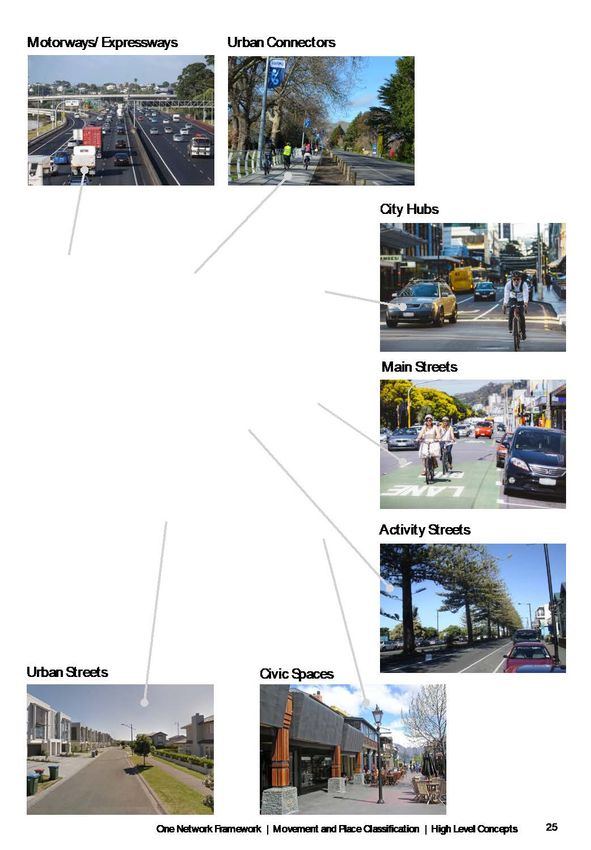
01   Recap on REG

              Strategic context behind the ONF
         02

Agenda        ONF – Using the ONF, Service
         03   Outcomes and Performance

         04   How to get help, next steps &
              transition planning
What is REG offering?
Partnership and co-design between local controlling authorities, LGNZ and Waka
Kotahi for sector improvement and excellence. REG is supporting this by:
allowing measurement of performance and to understand where the gaps in your
business are
enabling collaboration and ‘peer to peer’ learning
increasing investor confidence (locally and national)
changing culture and increasing confidence
continuous improvement
3
REG structure                                    Governance Group
                                                 4 Local Government
                                                    3 Waka Kotahi
                                                       1 LGNZ

                                                 Leadership Group
                                                7 Local Government
                                                   5 Waka Kotahi
                                                      1 LGNZ

     Evidence and Outcomes Working         Sector Excellence Working Group        Strategic Delivery Working Group
                 Group                           6 Local Government                     4 Local Government
          7 Local Government                        3 Waka Kotahi                          2 Waka Kotahi
             3 Waka Kotahi                       1 Contractors/CCNZ                     1 Contractors/CCNZ

                                 Supported by 9 Local Government Regional Champions

                                                                                                                     4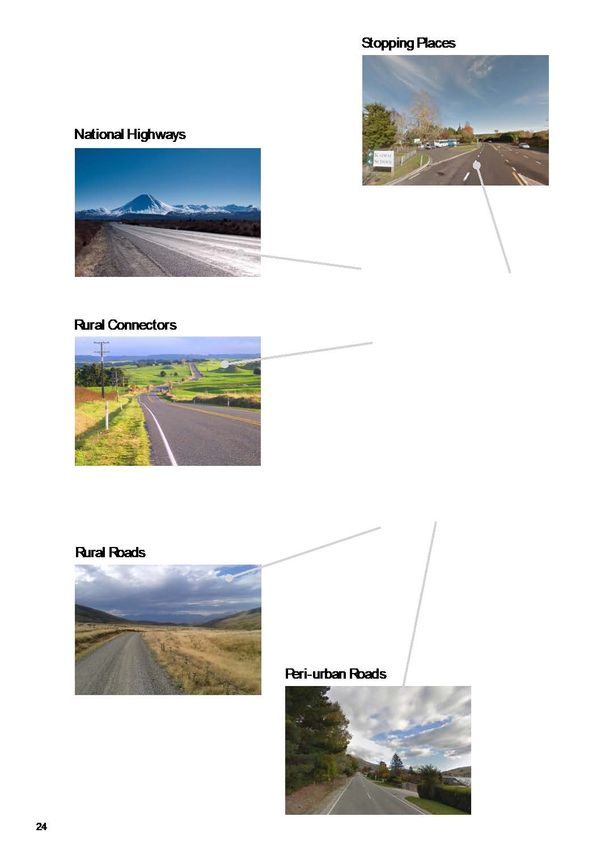
Why this and why now
• Desire for stronger integration between transport and land
  use
• Integration of movement and place
• Consideration of government broader outcomes
• Need for a more consistent approach to investment and
  decision making

                                                               5
Objectives of the ONF
The ONF Project will deliver:
• A classification and common language of movement and place, modes and
  street families
• Targeted levels of service and performance measures
• Integration with land use and transport planning, network optimisation, urban
  design and speed management activities
• Tools, templates and systems to support the classification, measurment and
  processes
• Alignment and integration with existing planning, investment and decision –
  making processes.

                                                                                  6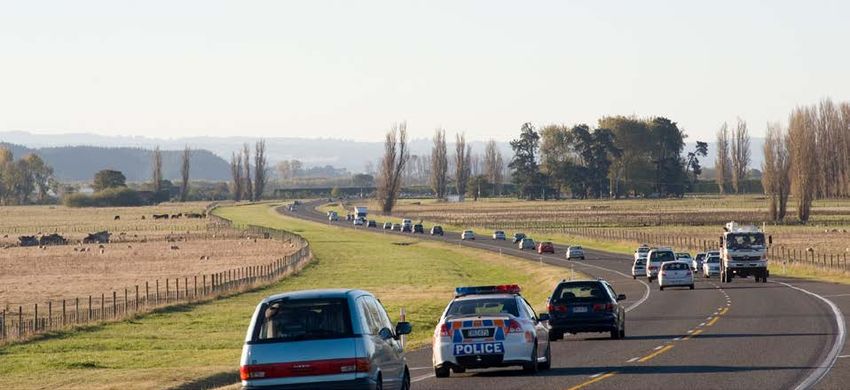
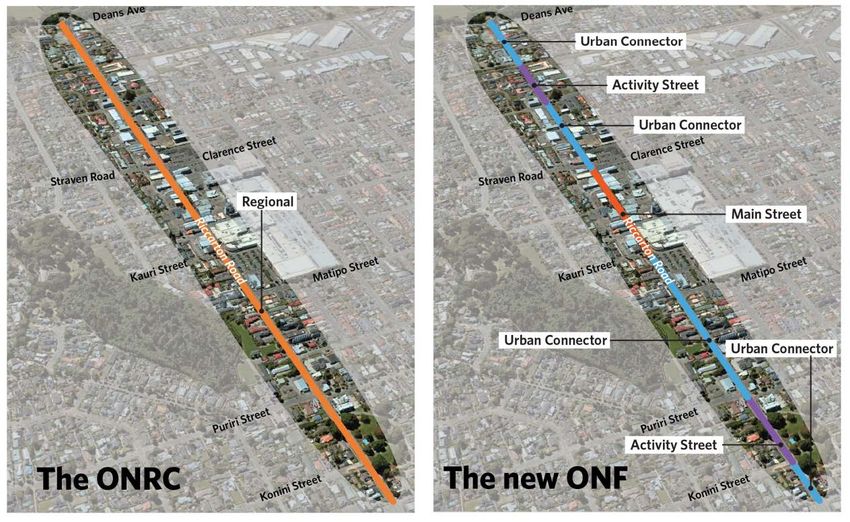
Evolving to ONF - Reflection on
 the success of ONRC
• Achieving a moderated national classification is
  the envy of many international jurisdictions
• The ability to compare performance and
  benchmark using the PMRT
• The improvement in data quality
• Supporting a consistent evidence base and the
  business case approach
• Enabling differential levels of service
• But, there is more work to do to realise the true
  value of a national classification.
                                                      7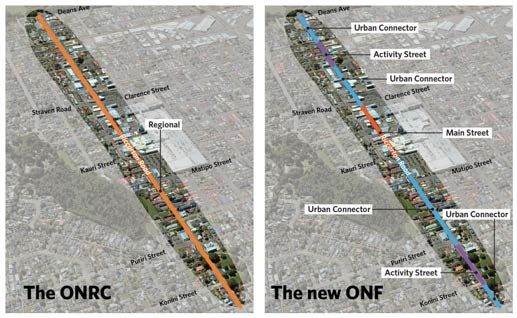
Government direction

               Government           Waka Kotahi long term
                   Policy          planning and investment
               Statement on               proposals
Ministry of
                   Land
 Transport
                 Transport
Outcomes
Framework
                   Ministerial                                   National
                 Expectation:                                    Land
                                                                 Transport
               Complete rollout
                 of the ONF
  National       across state                                    Programme
                highways and
   Policy
                  local roads
Statement on
   Urban
Development           Plus
                  influencing
                                  Local and Regional long term
               change occurring
                 at a national         and delivery plans
                      level

                                                                         8
Sources of inspiration

                         9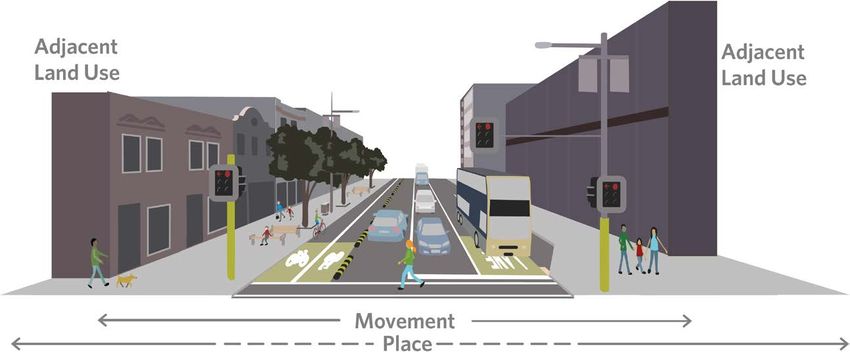
The benefit of ONF
Benefit                                                                    Benefit type
Aligns strategic transport plans at a national, regional and local level   Strategic fit
Improves efficiencies and equity in investment planning and decision       Operation cost savings
making
Enables consistency in measuring network performance and levels of         Value for money
service so that planners and designers can make informed, evidence-
based investment decisions
Acknowledges place function of roads and streets that can enable better Strategic fit
urban design outcomes
Enables better integration of land use and transport planning that can     Strategic fit
deliver improved wellbeing and liveability outcomes.
Uses language that Governance and the public understand                    Strategic fit

                                                                                                    10
The principles for change
Be relevant for both urban and rural settings, by developing a common language all practitioners can use
Prioritise ‘Place’ and its significance
Differentiate strategic networks of different modes of transport
Consider movement of people and goods via all modes of transport, rather than just vehicles
Align with spatial planning processes, tools and frameworks
Prioritise and protect human life and help embed the Safe System approach
Guide planning, operation and investment decisions in the short and long term.
Be simple to understand, use and interpret, providing additional layers of complexity only where needed
11Principles of ONF
Consider the role transport corridors
play in providing social spaces for people
Consider the future view of the corridor
Putting people,
place and movement
at the heart
of planning Cater for active or public transport
modes and ‘off-road’ routes
Shift the emphasis to the overall
movement of people and goods, by any
mode
12What ONF is not
A comprehensive network planning tool
• The framework it is not a network planning tool in its own right, and is
intended as a companion to other tools and frameworks
A design guide
• Many Movement and Place frameworks in use in New Zealand and
internationally are part of design guides or manuals, with classification
and street families being linked directly with form and function. The
One Network Framework is not intended to directly dictate design of
streetscapes, and carriageways, but to establish the function rather
than form of roads and streets, and give direction to how they should
perform.
14Rural
Urban
Intergegional Urban
M1 M1 Transit City Hubs
connectors Connectors
Corridors
M2 M2 Main Streets
Rural
Connectors
Movement
Movement Activity
M3 Stopping M3 Streets
Places
Peri-urban
Roads
M4 M4
Rural Local Streets
Roads
Civic
M5 M5 Spaces
P5 P4 P3 P2 P1
P5 P4 P3
Place
Place
15Movement
Movement definitions The Movement function within the One Network
Framework reflects the strategic importance of a
corridor for moving people and goods, across all
•M1 – Mass movement of people and/or goods on routes of
modes, and the scale of movement it intends to
national-level movement function. accommodate.
•M2 – Significant movement of people and/or goods on inter-
regional routes or primary corridors linking main centres
•M3 – Moderate movement of people and/or goods and on
routes connecting suburbs/districts
•M4 – Movement of people and/or goods within a
neighbourhood
•M5 – Local movement
16Place The place function reflects where people and activities are located and
results in demand for crossing the roadway, and dwelling on a street, as
well as travelling along it. ‘Place’ mostly corresponds to urban
•P1 – Place of regional/provincial environments (including small and medium sized towns and larger
significance cities) where local economic activity, inclusion and equity and social
•P2 – Place of city/district significance connectedness are important drivers for our built environment, in
addition to transport needs. In rural environments, places of
•P3 – Place of neighbourhood
importance can include sites of cultural importance or tourism
significance locations.
•P4 – Place of local significance
•P5 – Limited place significance
17Defining Mode Share within the movement classification
Transport Modes
Mode Prefix
Walking W
Cycling C
Public Transport PT
General Traffic GT
Freight F
W2 C3 PT4 GT4 F6
Plotting mode share onto a bar chart helps to demonstrate mode
conflict and assist in determining mode share priorities.
18Who is it for?
19Development timeline
RECLASSIFICATION
ROLLOUT EMBED
HIGH LEVEL DETAILED PREPARATION PROCUREMENT
ALIGNMENT ONF
DESIGN DESIGN ENHANCEMENTS
2019 – Jul 2020 Jul-Sep 2020 Sep-Feb 2021 Feb-Mar 2021 Apr-Jun 2021 Jul-Dec 2021 2021/2024
Detailed Design COMPLETE Implementation of ONF
With your help, our confidence on ONF is high across Waka Kotahi
RAMM enhancements Transition from
& automated ONF ONRC to ONF
complete Re classification
Transition from ONF fully
ONRC to ONF Integrated
Moderation
20ONF will integrate into Waka Kotahi work :
• Step changes identified in Arataki – particularly the relationship between
urban form and transforming urban mobility:
• NLTP development and management
• Investment planning and policy
• Road to Zero specifically the Speed Management Guide
• Technology, data collection and performance measures
• Mode Shift Plans
• Integrating in to State highway network management
• Network optimisation and integrated land use processes e.g. liveable
streets, urban design guidelines
21Case Study - Christchurch
Christchurch have mapped their district plan and network classification using ESRI.
This allows anyone to easily view the information
https://gis.ccc.govt.nz/portal/apps/webappviewer/index.html?id=7ab89da748a74e3d9eb668beb9df0571
2425
Service Outcomes and Performance | Core Set Measures
 • Provides differentiation for decision-making
 • Targeted to include 30 measures
 • Will form the basis for required reporting for all
   organisations
 • Most measures are inclusive of all modes of
   travel
 • Provide measurement consistency of key
   aspects of customer service
 • 10 Core Set measures identified a
   ‘Governance Set’. Predominantly ‘Strategic’
   level measures to be measured across the
   entire network and communicated up to high
   level decision makers.
 • Aligns with Waka Kotahi Benefit Framework
                                                        26
Useful to know?
• REGional workshops ongoing
• Sector engagement
commencing eg NZPI
• FAQs being developed
• ONF Website is up to date
• ONF community of practice
being established
28Introducing the ONF Website
nzta.govt.nz/one-network-framework
29nzta.govt.nz/one-network-framework Waka Kotahi – Claire Pascoe REG – Andrew McKIllop onf@nzta.govt.nz
You can also read


