Operating Principles for Impact Management - DISCLOSURE STATEMENT 2020 - Finance in Motion
←
→
Page content transcription
If your browser does not render page correctly, please read the page content below
Operating
Principles for
Impact
Management

DISCLOSURE STATEMENT 2020

                            1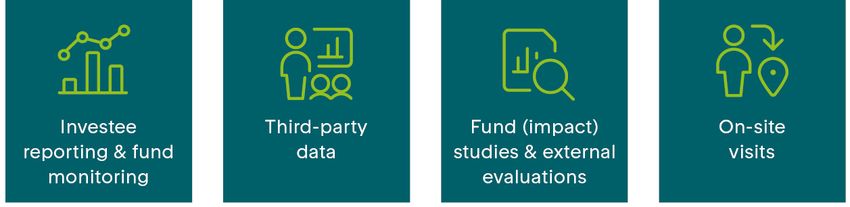
Finance in Motion (the “Signatory”) hereby affirms its
status as a Signatory to the Operating Principles for Impact
Management (the “Principles”).

This Disclosure Statement applies to the following assets
(the “Covered Assets”) under Finance in Motion’s Advisory:
    • European Fund for Southeast Europe
    • SANAD Fund for MSME
    • Green for Growth Fund
    • eco.business Fund

This Disclosure Statement applies to the following
assets (the “Covered Assets”) under Finance in Motion’s
Management:
    • Arbaro Fund

The total assets under advisory/management in alignment
with the Principles is USD 2.31 billion as of 31 March 2020.

The information contained in this Disclosure Statement
has not been verified or endorsed by International
Finance Corporation, the World Bank or any member
of the World Bank Group or the Secretariat or Advisory
Board. All statements and/or opinions expressed in these
materials are solely the responsibility of the person or entity
providing such materials and do not reflect the opinion of
International Finance Corporation, the World Bank or any
member of the World Bank Group. None of International
Finance Corporation, the World Bank or any member of
the World Bank Group shall be responsible for any loss,
claim or liability that the person or entity publishing this
Disclosure Statement or its investors, Affiliates (as defined
below), advisers, employees or agents, or any other third
party, may suffer or incur in relation to this Disclosure
Statement or the impact investing principles to which
it relates. For purposes hereof, “Affiliate” shall mean any
individual, entity or other enterprise or organization
controlling, controlled by, or under common control with
the Signatory.

Sylvia Wisniwski
Managing Director

                                                                  2
PRINCIPLE 1

Define strategic impact objective(s), consistent with the
investment strategy

The Manager shall define strategic impact objectives for the portfolio or fund to achieve positive and measurable social
or environmental effects, which are aligned with the Sustainable Development Goals (SDGs), or other widely accepted
goals. The impact intent does not need to be shared by the investee. The Manager shall seek to ensure that the impact
objectives and investment strategy are consistent; that there is a credible basis for achieving the impact objectives
through the investment strategy; and that the scale and/or intensity of the intended portfolio impact is proportionate to
the size of the investment portfolio.

As a leading impact asset manager, Finance in Motion          Founded in 2009, Finance in Motion is a long-standing
focuses exclusively on developing and advising funds          member of the impact investing community. In addition
whose purpose is to generate positive social and              to being a signatory of the Operating Principles for Impact
environmental impact alongside a financial return. In         Management, Finance in Motion is a signatory to the UN
addition to the impact to which we contribute through the     Principles for Responsible Investment, a member of the
                                                              GIIN Investors’ Council, and has been selected among the
funds, we, as a company, work towards impact by building
                                                              ImpactAssets 50 several times, most recently in 2020.
the impact investing market.

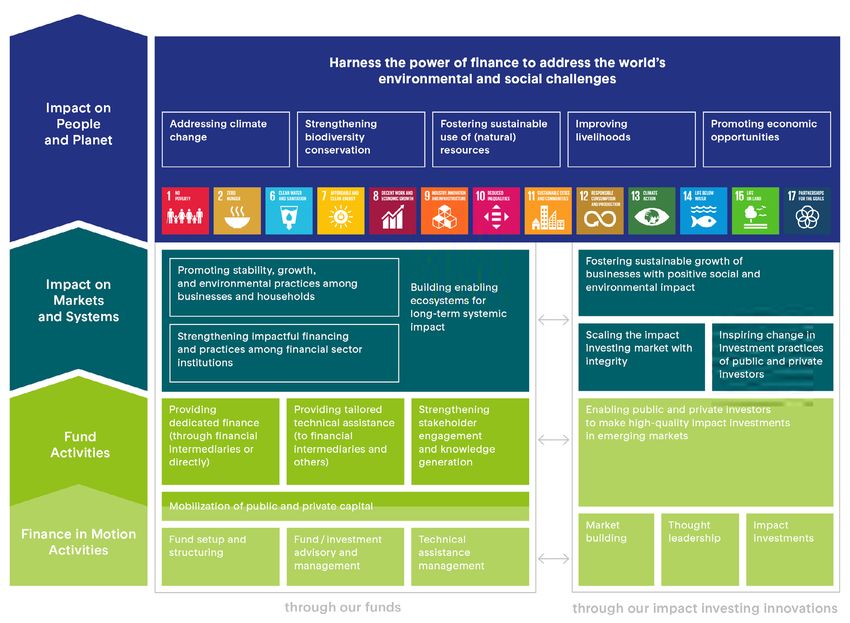
Figure 1: Finance in Motion’s Pathway to Impact

Principle 1                                                                                                             3
The funds we advise and manage apply a two-pronged The funds’ impact investment strategies draw on
strategic focus to investments: documented evidence to substantiate their contributions
towards the respective impact objective, including:
• Regional focus: The funds we advise and manage
are active exclusively in low and middle-income • The set-up of new funds is accompanied by careful
countries across five continents. and extensive market studies and stakeholder
• Thematic focus: Our funds target sectors with a mapping to ensure a tailored approach to local
high potential to positively contribute to addressing needs and realities.
social and environmental challenges. Their activities
are clustered around two thematic categories: • The strategic approach of providing dedicated
(i) Promoting a green economy: channeling capital finance through financial intermediaries is
to green sectors, including sustainable agriculture, considered particularly effective in building
sustainable forestry and renewable energy; and outreach, strengthening local systems, and creating
(ii) Promoting entrepreneurship and livelihoods: impact at scale.
channeling capital to local businesses and low- • In selecting measures to be financed, the funds draw
income households.
on documented evidence (including from external
The “what, why, and how” of achieving impact are sources) that supports, for example, the positive
defined right in the funds’ strategy documents, effect that access to finance has on promoting
including the issue documents, investment guidelines, economic development or that sustainable forestry
and business plans. Specifically, the funds work towards: has on CO2 sequestration, which is again recognized
• Strengthening biodiversity conservation as an important contribution to addressing climate
• Addressing climate change change.
• Fostering the sustainable use of natural resources The funds’ impact objectives and strategies are aligned
• Improving livelihoods with key international development targets:
• Promoting economic opportunities
• By providing solutions to important social and
In order to achieve their impact objectives, the environmental challenges, they contribute to the
funds provide debt or equity financing to financial Sustainable Development Goals (SDGs). In order to
intermediaries and companies within their target region, determine their contributions, the funds’ activities
which in turn are required to use the capital in line have been mapped against SDG targets.
with the funds’ respective impact goals. A large part of
investments are accompanied by technical assistance • By supporting activities that promote CO2 storage
initiatives. In the case of the debt funds, for example, the and sequestration and reduce energy consumption
technical assistance builds capacities required to sustain as well as CO2 emissions, three of the funds work
and scale the financing beyond the funds’ investments for towards the climate goals set out by the Paris
deep, long-term, systemic impact. Agreement.
Principle 1 4Figure 2: Contribution to the Sustainable Development Goals
We improve access to We contribute to economic We foster the sustainable We develop and advise
financial services for development by promoting management of natural blended finance funds
micro, small, and medium entrepreneurship and resources and reduced that bring together public
enterprises and low- supporting micro, small, waste generation. and private investors,
income households. and medium enterprises. strengthen networks and
knowledge exchange, and
mobilize funding for the
goals.
We foster sustainable We advance small-scale We mobilize green
and resilient agriculture industrial enterprises and finance and build
practices and increase help develop sustainable capacity, especially
access to finance for rural forestry and the in terms of greening
producers. renewable energy sector. financial sector practices.
We mitigate water scarcity We enable income growth We promote sustainable
by promoting sustainable among small businesses practices in fisheries and
agricultural practices that and the economic aquaculture.
improve water quality inclusion of women,
and increase water-use youth, and refugees.
efficiency.
We ensure access to We support transport We contribute to
sustainable energy by and waste management sustaining landscapes
promoting energy savings systems that reduce by fostering sustainable
and fostering renewable resource use and agriculture and forestry.
energy. pollution.
Principle 1 5PRINCIPLE 2
Manage strategic impact on a portfolio basis
The Manager shall have a process to manage impact achievement on a portfolio basis. The objective of the process is
to establish and monitor impact performance for the whole portfolio, while recognizing that impact may vary across
individual investments in the portfolio. As part of the process, the Manager shall consider aligning staff incentive
systems with the achievement of impact, as well as with financial performance.
Impact achievement is managed based on a Each fund’s impact management approach is aligned
holistic approach, mitigating potential negative risk with its respective impact objective. For the evergreen
and enhancing positive impact. The funds’ impact funds, for example, the respective impact objective
management endeavors to align with international is operationalized through annual fund performance
standards and good practices, including the Operating targets. These consider both financial and impact targets
Principles for Impact Management, the IFC Performance of quantitative and qualitative nature. Progress is then
Standards, and core responsible finance frameworks, as continuously monitored and reported on a quarterly basis
applicable.1 to the funds’ stakeholders. Quantitative and qualitative
impact performance is further communicated through
Impact management is integrated into every step regular publications on the funds’ websites and in annual
of the investment cycle. When it comes to selecting public impact reports.
investments for our funds, the potential for development
impact is a key factor. During the due diligence process, We are currently developing a new impact scoring
the alignment of an investment with the fund’s strategic tool for our funds under advisory to further strengthen
impact orientation is carefully reviewed. Only if an systematic impact assessment and support impact
investment meets the requirements for financial return management on a portfolio level. This new tool will be
aligned with industry frameworks, such as the Impact
and development impact potential, as well as key
Management Project’s dimensions of impact.
environmental and social requirements, will it proceed.
Pre-investment assessments also provide an opportunity Managing and meeting the strategic impact goals of the
to identify areas for improvement for which tailored funds under advisory is important to us as a company. As
technical assistance is then deployed to strengthen a fund advisor, our performance fee is based on our funds’
capacities and deepen impact. Impact performance development impact performance, in addition to meeting
financial targets.
and results are measured and reported across all funds.
Figure 3: Impact Management in Investment Process
Pre-Screening Due Diligence & Monitoring Reporting
Investment Preparation
• Consider impact alignment • Consider impact potential • Monitor performance • Report aggregated
• Initial capacity needs • Agree on eligibility based on regular investee performance on regular
assessment criteria for financing to be reporting basis
provided to investee clients • Engage in continuous
• Agree on capacity building dialogue with investee and
measures conduct on-site visits
• Agree on reporting • Conduct periodic in-
depth studies for selected
investments
1
The following refers to the management of positive impact. For details on the approach to managing negative risk, please refer to Principle 5.
Principle 2 6PRINCIPLE 3
Establish the Manager’s contribution to the achievement
of impact
The Manager shall seek to establish and document a credible narrative on its contribution to the achievement of impact
for each investment. Contributions can be made through one or more financial and/or non-financial channels.2 The
narrative should be stated in clear terms and supported, as much as possible, by evidence.
As a Fund Manager, we regard our contribution to the achievement of impact through both financial and non-
funds’ impact to include: financial channels, including:
• Fund setup and concept development: We play • Blending public and private capital: Utilizing public
an active role in setting up funds, developing capital to mobilize additional private funding for
concepts and continuously driving strategy and emerging markets allows the funds to achieve
innovation (for example, by developing a share class impact with scale.
to enhance local currency financing) to facilitate
• Combining targeted investments with customized
investments in emerging markets.
technical assistance: In addition to advising and
• Investing in impact: In addition to our own managing debt and equity funds, Finance in Motion
investments in entities that share our values and
manages technical assistance facilities to support
vision, Finance in Motion has itself invested in all
investees in strengthening their capacities.
funds under our advisory/management.
• Building enabling ecosystems: Financing is crucial
• Engaging in long-term partnerships: Finance
but not in itself wholly sufficient for markets and
in Motion’s geographical presence across the
individuals to thrive. The funds therefore aim to
investment regions not only results in a strong
support the systemic factors that contribute to
market understanding, but also facilitates a
continuous dialogue with the funds’ current and development, such as a conducive regulatory
potential investees. environment, sector knowledge-sharing, availability
of support organizations, and sustainable industry
• Sector and regional expertise: Finance in Motion’s
practices.
team brings to the table specialized expertise,
ranging from energy and resource efficiency to Against this framework, the particular impact
sustainable agriculture and financial inclusion. This contribution of a specific investment is checked
expertise is applied throughout the investment cycle
during the due diligence phase. During the investment
and, along with the strong local knowledge of our
preparation process, we also identify and agree on
regional presence, enables us to fine-tune strategies
opportunities to enhance our contribution to impact: for
and provide targeted support to our partners.
example, through technical assistance or a board seat to
At the fund level, the funds contribute to the drive the strategy and development of equity investees.
2
For example, this may include: improving the cost of capital, active shareholder engagement, specific financial structuring, offering innovative financing
instruments, assisting with further resource mobilization, creating long-term trusted partnerships, providing technical/market advice or capacity building
to the investee, and/or helping the investee to meet higher operational standards.
Principle 3 7PRINCIPLE 4
Assess the expected impact of each investment based on a
systematic approach
For each investment, the Manager shall assess in advance and, where possible, quantify, the concrete, positive impact3
potential deriving from the investment. The assessment should use a suitable results measurement framework that
aims to answer these fundamental questions: (1) What is the intended impact? (2) Who experiences the intended
impact? (3) How significant is the intended impact?4 The Manager shall also seek to assess the likelihood of achieving
the investment’s expected impact. In assessing the likelihood, the Manager shall identify the significant risk factors
that could result in the impact varying from ex-ante expectations. In assessing the impact potential, the Manager shall
seek evidence to assess the relative size of the challenge addressed within the targeted geographical context. The
Manager shall also consider opportunities to increase the impact of the investment. Where possible and relevant for the
Manager’s strategic intent, the Manager may also consider indirect and systemic impacts. Indicators shall, to the extent
possible, be aligned with industry standards5 and follow best practice.6
The impact assessment work is guided by each fund’s responsible finance practices as well as potential
impact objective and specific impact pathway, according outreach to the target group. This already narrows
to which a specific set of key performance indicators down the investment universe.
has been identified. For our funds under advisory, these
• During the due diligence phase, the impact
impact pathways consider both the direct impact on the
investee (for example, by improving capacity to serve the potential and opportunities to further increase the
micro, small, and medium enterprises [MSME] sector) as impact (such as through technical assistance) are
well as the indirect impacts on or through the investee’s considered. The scope of these assessments takes
end-clients (such as biodiversity conservation through into account possible leverage of our contribution.
implementation of green business practices). These
impacts are monitored throughout the investment.7 Findings are summarized in the investment proposal using
a set of guiding questions. Investment decisions are
Assessing the positive impact potential of an investment guided and approved by the investment committees or
starts in the pre-investment phase: boards of the funds under advisory. The members of these
• During pre-screening, the investee’s alignment committees represent a diverse institutional and thematic
with the funds’ requirements is assessed, including backgrounds, including representatives of development
environmental and social management and finance institutions.
3
Focus shall be on the material social and environmental impacts resulting from the investment. Impacts assessed under Principle 4 may also include
positive ESG effects derived from the investment.
4
Adapted from the Impact Management Project (www.impactmanagementproject.com).
5
Industry indicator standards include HIPSO (https://indicators.ifipartnership.org/about/); IRIS (iris.thegiin.org);
GIIRS (http://b-analytics. net/giirs-funds); GRI (www.globalreporting.org/Pages/default.aspx); and SASB (www.sasb.org), among others.
6
International best practice indicators include SMART (Specific, Measurable, Attainable, Relevant, and Timely), and SPICED (Subjective, Participatory,
Interpreted & communicable, Cross-checked, Empowering, and Diverse & disaggregated), among others.
7
See details under Principle 6.
Principle 4 8PRINCIPLE 5
Assess, address, monitor, and manage potential negative
impacts of each investment
For each investment, the Manager shall seek, as part of a systematic and documented process, to identify and avoid,
and if avoidance is not possible, mitigate and manage, Environmental, Social and Governance (ESG)8 risks. Where
appropriate, the Manager shall engage with the investee to seek its commitment to take action to address potential
gaps in current investee systems, processes, and standards, using an approach aligned with good international industry
practice.9 As part of portfolio management, the Manager shall monitor investees’ ESG risk and performance, and where
appropriate, engage with the investee to address gaps and unexpected events.
Finance in Motion takes a holistic approach to impact • Procedures and tools to support the implementation
management, combining managing and mitigating any of E&S management throughout the investment
potential negative impact with enhancing the positive cycle, such as structured due diligence and reporting
impacts. Compliance with a standard set of environmental questionnaires
and social (E&S) criteria as well as good governance and • Qualified staff and clear roles and responsibilities to
responsible finance practices are therefore key parameters ensure an effective implementation
when it comes to selecting investee companies.
Capacities and systems are carefully reviewed during the The ESMS guides the funds’ investees in undertaking
due diligence phase and, if required, action plans and their activities in a manner consistent with national and
improvement measures agreed upon. international standards and recognized frameworks,
such as IFC Performance Standards and ILO Core Labour
Each fund manages E&S risks through an Environmental Standards.
and Social Management System (ESMS) which is
tailored to the potential risks of the fund’s activities. Core Throughout the investment period, the funds also support
components of such ESMS are: strengthening the investees’ ESG management through
tailored technical assistance and capacity-building
• An E&S Policy, which includes an E&S Exclusion List
initiatives.
of activities that the funds will not finance
Figure 4: Managing negative impacts throughout the investment cycle
Pre-Screening Due Diligence & Monitoring Reporting
Investment Preparation
• Confirm alignment with • Assess ESG risks • Monitor ESG compliance • Report to the Board of
fund’s ESG commitments • Assess investee’s capacity and performance Directors and shareholders
• Review investee ESG track to manage ESG risks • Monitor implementation of
record • Agree on E&S action plan E&S action plans
(as required) • Monitor media/relevant
• Agree on ESG undertakings databases
8
The application of good ESG management will potentially have positive impacts that may or may not be the principal targeted impacts of the Manager.
Positive impacts resulting from ESG matters shall be measured and managed alongside with, or directly embedded in, the impact management system
referenced in Principles 4 and 6.
9
Examples of good international industry practice include: IFC’s Performance Standards (www.ifc.org/performancestandards), IFC’s Corporate Governance
Methodology (www.ifc.org/cgmethodology), the United Nations Guiding Principles for Business and Human Rights (www.unglobalcompact.org/library/2),
and the OECD Guidelines for Multinational Enterprises (http://mneguidelines.oecd.org/ themes/human-rights.htm).
Principle 5 9PRINCIPLE 6
Monitor the progress of each investment in achieving impact
against expectations and respond appropriately
The Manager shall use the results framework (referenced in Principle 4) to monitor progress toward the achievement
of positive impacts in comparison to the expected impact for each investment. Progress shall be monitored using a
predefined process for sharing performance data with the investee. To the best extent possible, this shall outline how
often data will be collected; the method for data collection; data sources; responsibilities for data collection; and how,
and to whom, data will be reported. When monitoring indicates that the investment is no longer expected to achieve its
intended impacts, the Manager shall seek to pursue appropriate action.10 The Manager shall also seek to use the results
framework to capture investment outcomes.11
Following the due diligence, comprehensive impact key commitments and objectives and builds lasting
monitoring accompanies all investments alongside the capacities within the investees.
financial monitoring. In order to assess progress against • Third-party data: External parameters and studies
performance targets and gauge final impacts on people are utilized to inform underlying impact assumptions
and planet, the funds combine a number of data sources: and model final impacts on people and planet.
• Fund monitoring: Data at a fund level cover a range • Studies and evaluations: The funds conduct in-
of data points on the funds’ activities related to depth (impact) studies and collaborate on external
resource mobilization, financing, and technical evaluations and assessments to collect additional
assistance. quantitative and qualitative information for a deeper
understanding of the funds’ impact mechanisms and
• Investee reporting: The funds’ investees are required
the scale of their final impact on people and planet.
to report on a set of predefined indicators, on a
quarterly or semi-annual basis, that allow for an • On-site visits: Finance in Motion’s staff operate
from 17 offices around the world. This local presence
understanding of how the funds are being used
allows for regular site visits and ongoing exchange
and who they are reaching. To collect data from
with our investees, and enables us to incorporate on-
almost 190 debt funds investees (largely financial
the-ground knowledge of regional market needs into
institutions) on nearly 150,000 active loans that the funds’ investment strategies.
are on-lent from the funds’ financing across five
continents, we have developed special software Throughout the investment cycle, we use this data to
solutions to facilitate collecting and analyzing the confirm if financing is being used for its intended
data. The requirement for regular reporting also and agreed-upon purpose and to monitor impact
creates an opportunity to raise awareness for funds’ performance.
Figure 5: Impact Monitoring & Assessment Approach
10
Actions could include active engagement with the investee; early divestment; adjusting indicators/expectations due to significant, unforeseen, and
changing circumstances; or other appropriate measures to improve the portfolio’s expected impact performance.
11
Outcomes are the short-term and medium-term effects of an investment’s outputs, while the outputs are the products, capital goods, and services
resulting from the investment. Adopted from OECD-DAC (www.oecd.org/dac/).
Principle 6 10PRINCIPLE 7
Conduct exits considering the effect on sustained impact
When conducting an exit,12 the Manager shall, in good faith and consistent with its fiduciary concerns, consider the
effect which the timing, structure, and process of its exit will have on the sustainability of the impact.
Our funds largely provide debt capital to support our particular investee. These top-ups are done in step with
investees in expanding their impactful lending portfolio. the growth of our investee and its portfolio. They provide
As such, our exit is already built into the investment an opportunity to review the development and continued
decision. In structuring the investment, however, the funds impact alignment of our investees.
under advisory consider, for example, the tenor of the
loan that would best contribute to achieving the impact For equity investments, impact considerations are taken
objective. into account when they reach the exit stage. Currently,
none of the equity investments have reached (or will soon
In many cases, we renew and increase our financing to a reach) this stage.
12
This may include debt, equity, or bond sales, and excludes self-liquidating or maturing instruments.
Principle 7 11PRINCIPLE 8
Review, document, and improve decisions and processes
based on the achievement of impact and lessons learned
The Manager shall review and document the impact performance of each investment, compare the expected and
actual impact, and other positive and negative impacts, and use these findings to improve operational and strategic
investment decisions, as well as management processes.
We conduct studies on the effects of investments on likely to support self-employment. Therefore, we
investee clients in collaboration with external research aim to achieve a portfolio balance of institutions
companies. These studies review effects contributed to that support microenterprises as well as those that
by the funds through both quantitative and qualitative strengthen the SME sector.
data and support the identification of lessons learned. • Facilitate scaling of innovations across the portfolio
In addition, we contribute to external evaluations, often or the funds, as in the case of a share class specially
conducted by public investors. devised for local currency financing. After launching
this instrument in one fund and observing its solid
The impact management system provides a constant
impact, we worked with our investors to introduce it
feedback loop and allows us to gain insights and
to two additional funds.
learnings to calibrate our strategy and planning for
deeper, broader impact. Priority areas and strategy going • Guide expansion into new regions and activities
forward is also a topic for the regular meetings of the with an evidence-backed impact agenda. One
funds’ committees. example is financial technology: Having piloted and
reviewed the potential of fintech innovations for our
Lessons learned are used, for example, to: target groups, some of our funds under advisory
• Inform portfolio composition to address the diverse now support financial institutions in identifying and
needs of our target group and work towards the implementing fintech in their operations.
full range of intended impact, our portfolio needs
In addition, we share our lessons and insights with a
to include various types of investee institutions. In
broader audience and the impact investing industry, for
terms of employment support, for example, our
example through the Finance in Motion Impact Investment
impact studies show that small enterprises are more
Report and our participation in industry working groups.
likely to create jobs while microenterprises are more
Principle 8 12PRINCIPLE 9 Publicly disclose alignment with the Principles and provide regular independent verification13 of the alignment The Manager shall publicly disclose, on an annual basis, the alignment of its impact management systems with the Principles and, at regular intervals, arrange for independent verification of this alignment. The conclusions of this verification report shall also be publicly disclosed. These disclosures are subject to fiduciary and regulatory concerns. As an impact asset manager, we are committed to will be updated annually. In accordance with the Principle transparent and accountable impact management. This requirement that signatories submit to an independent Disclosure Statement demonstrates the alignment of our verification, Finance in Motion will complete its first impact management approach with the Principles and verification in 2021. 13 The independent verification may be conducted in different ways, i.e., as part of a financial audit, by an independent internal impact assessment commit- tee, or through a portfolio/fund performance evaluation. The frequency and complexity of the verification process should consider its cost, relative to the size of the fund or institution concerned, and appropriate confidentiality. Principle 9 13
Publisher
Finance in Motion Gmbh
www.finance-in-motion.com

Disclaimer
The Funds and/or Sub-Funds advised by Finance in Motion are specialized investment funds/ limited partnerships governed by Luxembourg law and are
reserved for institutional, professional or other well-informed investors as defined by Luxembourg law. The issue documents or the assets held in the Funds
and/or Sub-Funds have, however, not been approved or disapproved by any authority. The information given herein does not constitute an offer or solicitation
in a jurisdiction where to do so is unlawful or where the person making the offer or solicitation is not qualified to do so or where a person receiving the offer
or solicitation may not lawfully do so nor does it constitute a commitment of the Fund and/or Sub-Funds to offer its shares, notes, and/or other instruments to
any investor. No guarantee is given as to the completeness, timeliness, or adequacy of the information provided herein. No investment may be made except
upon the basis of the current issue documents of the Funds and/or Sub-Funds.
Finance in Motion nor any of its shareholders, directors, officers, employees, service providers, advisors or agents makes any representation or warranty or
gives any undertaking of any kind, express or implied, or, to the extent permitted by applicable law, assumes any liability of any kind whatsoever, as to the
timeliness, adequacy, correctness, completeness or suitability for any investor of any opinions, forecasts, projections, assumptions and any other information
contained in, or otherwise in relation to, this document or assumes any undertaking to supplement any such information as further information becomes
available or in light of changing circumstances. The content of this information is subject to change without prior notice.
These materials do not constitute an offer to sell or an offer to purchase any securities. Any such offer regarding the securities described herein will only be
made by means of a confidential private offering memorandum. These materials are not for distribution in the United States or to US Persons, except pursuant
to available exemptions under the Securities Act of 1933 and the Securities Exchange Act of 1934. If these materials are distributed in the United States or to US
Persons by Finance in Motion, such distribution will be in compliance with applicable US federal and state securities laws and regulations including without
limitation SEC Rule 15a-6. Offers and sales to US Institutional Investors and US Major Institutional Investors, as these terms are defined in the SEC Rule 15a-6
and related interpretive guidance, are chaperoned by Global Alliance Securities, LLC (“GAS”), an SEC-registered broker-dealer and FINRA member (web:
www.globalalliancesecurities.com) in accordance with the requirements of SEC Rule 15a-6.
Not for distribution in or into Canada, Japan or Australia or to any person or in any other jurisdiction in which such distribution would be prohibited by
applicable law.
This document does not necessarily deal with every important topic or cover every aspect of the topics it deals with. The information in this document does
not constitute investment, legal, tax or any other advice. It has been prepared without regard to the individual financial and other circumstances of persons
who receive it.
© Finance in Motion 2020. All rights reserved

Principle 1                                                                                                                                                     14
You can also read


